A Little About Argentina
How Much Does Gas Cost?
Monday March 17, 2008
As promised in the journal entry of March 16, I will, sooner or later, divulge the current price of gas in Argentina. But before going straight to that critical point, I'd like to try and include some information about Argentina in general. In other words, the reader will have to suffer through some sort of educational, cultural, history lesson sort of thing before finding out the one thing they are probably most interested in. I'm not thinking Gross Domestic Product and Census details sort of information, but more of a hodge-podge of what we see and experience that's similar to our home (and home country) vs. what's different - along with perhaps a century or so of over-generalized historical perspective.
So starting with the latter (historical perspective) - I've read that up until the great world depression of the 1930's - Argentina was a modern, affluent, and developed nation on par with almost any western European or North American country. With over 90% of the country's population claiming European heritage, Argentina is one of the least ethnically diverse countries in the Americas. Interestingly enough, that "pure-European" heritage translates into a population with all colors of hair and eyes. In Chile, for a comparison, where the ethnic makeup is probably more heavily influenced by indigenous peoples, and hence technically "more diverse," black hair (or very dark brown) and brown eyes is an extremely dominant physical characteristic.
What with all that European cultural swagger, Argentina has a reputation among its neighbors for snobbishness, or having somewhat of a superiority complex. Argentineans might claim (and rightfully so) that the rest of South America is just jealous of their good looks, good fashion, fantastic dancing, and great soccer. So these-days why are things here (from a superficial economic perspective - like what a an upper or middle-class Argentinean can afford) not quite up to par with France, Italy, or even Spain?
During the last half of the 20th century Argentina suffered through political upheaval sequencing through Perón-ism (a whole intriguing story in and of itself - go find a book on the subject if you can't catch a production of "Evita") - and an extended period of corrupt government; inept presidents and domestically brutal military dictatorships, the latter having perhaps an even more heinous record of human rights abuses than Pinochet compiled across the border. A lot of people interpret the 1982 Falklands war with England as just a desperate attempt to whip up patriotic fervor and postpone the inevitable and immanent collapse by one of the worst of those regimes - but it's still an intensely emotional topic for many Argentineans (especially in the southern part of the country which is physically closest to the islands) and most guidebooks recommend against bringing it up as a casual topic of conversation.
Regarding Argentina during WWII, it officially declared war against Japan and Germany in 1945 - only after things were pretty much decided and it was safe to make such a daring political move. The reality was that the country was conflicted about the conflict - Britain was their major European trading partner, but Argentina's predominant cultural heritage comes from Spain and Italy - two countries with Hitler-friendly fascist rulers at the time. The fact that Nazi war criminals kept popping up in Buenos Aires and/or Bariloche for several decades after the war didn't do much for the international image of Argentina, or to dissuade a perception that the country was pro-Nazi during and anti-Semitic after the war (and no doubt some portion of the population was and still is - but in modern times the relatively small Jewish population of Argentina is prominent in both business and government and seemingly thriving without too much prejudice or repression).
Anyway, there was no post-WWII economic boom in Argentina, and the corrupt and incompetent dictators/presidents of the late 20th century drove the country towards financial ruin. Along the way they accumulated a massive international debt that could only be repaid by borrowing more and more, and eventually everything fell apart. Outside regulators from the World Bank had pegged the value of the Argentine peso to the US dollar, which artificially controlled inflation and the debt (from the international perspective) but hamstrung the economy and made Argentina unable to compete and export products on the international market.
In 2001, unemployment was approaching 20 percent and domestic inflation was spiraling out of control. With talk of an impending devaluation of the peso, people began emptying their bank accounts and the banks announced a limit on withdrawals. Then on one night in late December, the people of Buenos Aires took to the streets banging pots and pans and fighting with the police in a massive simultaneous display of civil unrest. The president resigned within days. After two weeks and three interim presidents who couldn't figure out what to do, a guy name Eduardo Duhualde stepped in. He devalued the peso and announced to the rest of the world that Argentina would default on all its international loans.
Surprisingly enough, devaluing the peso seems to have been what was desperately needed (along with a non-corrupt government that didn't borrow and steal money). Suddenly, Argentine products were competitive on the world market and Argentina was an inexpensive place to visit. In merely 6 years since the worst of the worst, the Argentine economy has expanded rapidly, unemployment is down drastically, and there is a large trade surplus. But the legacy of that economic collapse and those unpaid loans is still here (although the recent president did give out a "take-it-or-leave-it" reduced value payback offer).
The roads are not in great shape, with many major routes un-paved (like the legendary "Cuarenta"). Primary and Secondary schools have to serve double-duty, with half of the children attending school in the morning from 8am to noon, and the other half in the afternoon from 1-5pm. Fifty percent of the population is covered by public health care, which is modern and pretty good (especially in Buenos Aires), and almost all the rest are covered by trade union insurance plans. Health care outside of the "major" cities (of which there are less than half a dozen) is typically more limited and less modern. People go to Mendoza or Buenos Aires for serious medical issues.
At least now things are stable, people are working, and can afford not only to live and eat, but enjoy themselves while doing it. It seems only logical - it is a country rich in resources with an educated and energetic population. It's understandable if they are still a little wary about government in general, and the suspicion and reluctance to trust in and cooperate with their government in matters of law and public policy is another fall-out from those years of abusive and incompetent leaders. It's the flip-side of the coin and we've heard the people complaining about their own lack of respect for the law as well as their government.
For Americans, I think its hard to conceive that a wealthy and educated people could be so mishandled and manipulated by their own government - how could they let that happen? As a possible and partial answer, among other reasons, there was a growing presence of increasingly extreme (and often violent) leftists during the cold war, and this may have been one of the reasons that some people initially put up with and even supported drastic measures from a heavy handed government. I think it's similar to what went on in Chile - leftist and right-wing political factions were both powerful and very far apart in their thinking and there wasn't much of a middle ground. Protests and riots in Buenos Aires were practically everyday occurrences in the later years of the 20th century (and not unusual even now - I guess it's a habit that's hard to kick), so apparently many people were trying to fight the system the best they could along the way.
Heading towards some mundane details of what we travelers experience day-to-day in Argentina:
It is far from a lawless, dangerous place, that's for sure. At least outside of the slums of Buenos Aires and perhaps a few other larger northern cities. We feel quite comfortable and secure driving around on the highway, parking our car on the street, and walking around in the small to medium-sized cities we've visited here in the south. Hitchhiking is still quite popular and common in Argentina, and one of our guidebook even recommends both doing it and/or giving riders a lift.
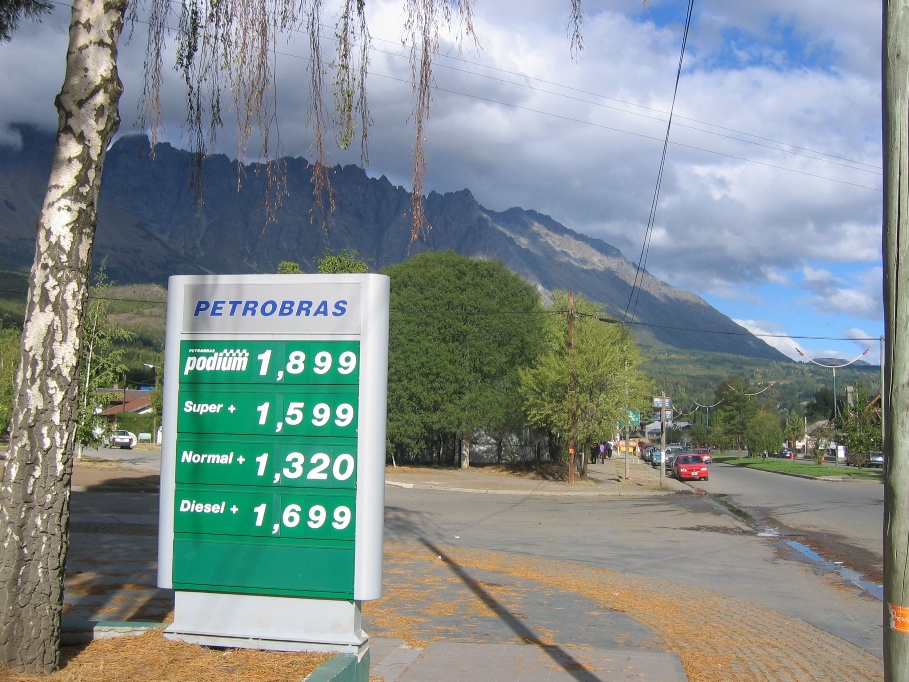
What does gasoline cost? Interesting question. Argentina produces and exports oil. Most of it is produced in the southern provinces of Santa Cruz and Chubut. The government grants several incentives (or "thank-you's") to the people who populate Argentina south of the 42nd parallel line of latitude. One of these is a more-subsidized, reduced price of gasoline (I think the price is subsidized even in the north but less-so). This means that regular unleaded costs a little more than $1.25/gallon and diesel is about $1.80. In Buenos Aires, the price is more like $2.25/gallon for regular unleaded. This is probably one of the cheapest gas prices in the world. In some moderately large cities - Ushuaia, El Calafate, and here in Esquel - they have a separate pump for foreign license plates, where the gas costs almost twice as much (No government subsidies for foreigners!), but in all small towns and even in the "pretty big" cities of Comodoro Rivadavia and Trelew, I paid the local price - perhaps because the attendant didn't notice my Chile plates or didn't really care.
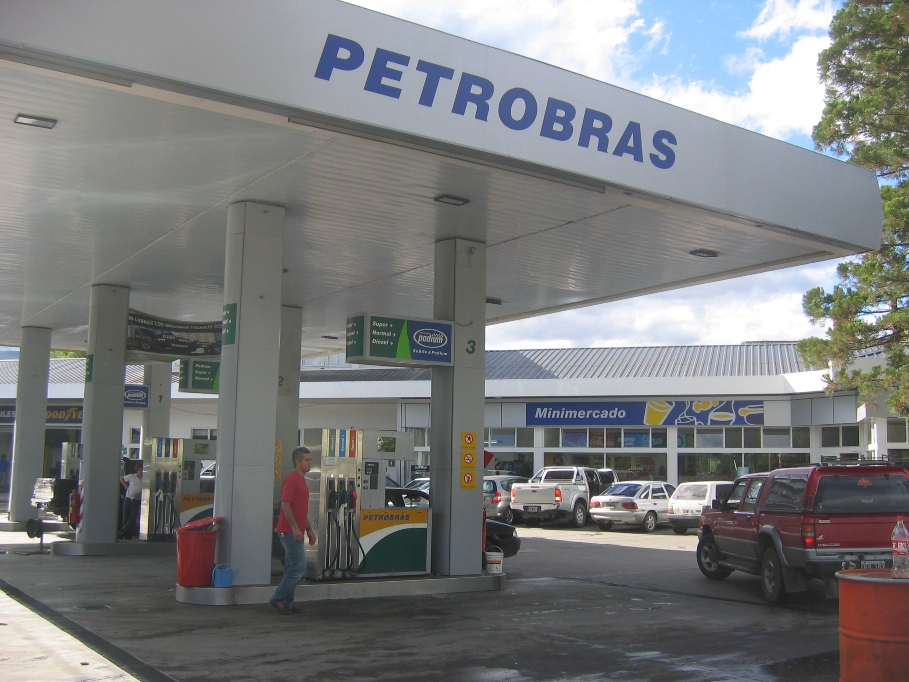
Today in El Bolsón, I pulled up to the "Foreign Plates" pump and asked the attendant to fill the tank. He told me that if I drove 10 kilometers south to the small town of El Hoyo, I could pay 1.57 pesos per liter instead of 2.87 per liter which is what he would have had to charge me. They don't have a "foreign plates" pump at the small gas station in El Hoyo. I took the advice. Interestingly enough (and something I don't quite understand), is that although El Bolsón is, according to my topo map, technically just north of the 42nd parallel, the "domestic plates" price for gas here is as cheap as anywhere further south. Maybe there's a little bit of political wrangling at work here by the local government on behalf of their community. Obviously, I just don't understand the local laws and rules very well. Or perhaps the 42nd parallel, just like the boundary of Patagonia, is a loosely defined concept.
A Gas Station in El Bolsón, Argentina. Pretty normal looking, except for that price!
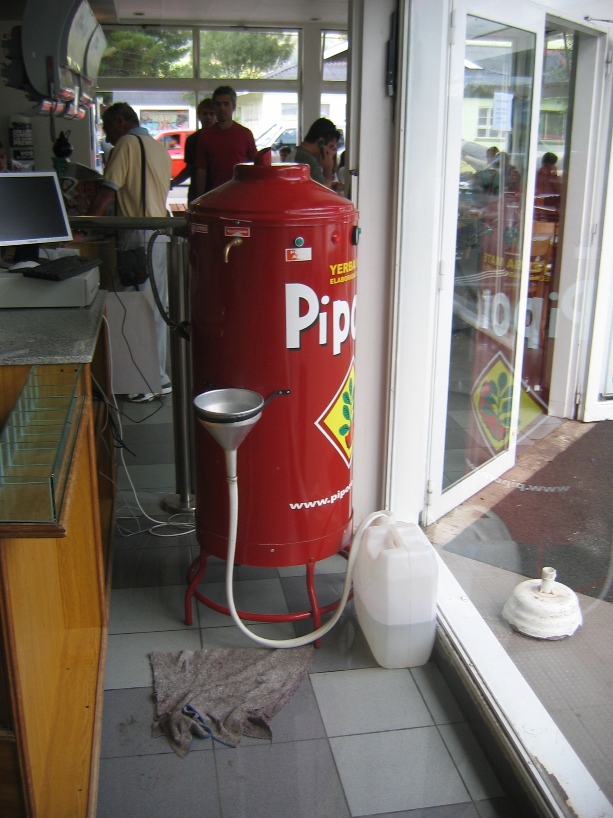
One thing we like about gas stations in both Chile and Argentina is that they usually have a pretty good little store and snack-bar kind of fast-food restaurant (called a confiteria here in Argentina). Since most restaurants close between 2pm and 8pm in the afternoon in Argentina (not in Chile, though), confiterias are extremely popular for anyone skipping siesta. The red contraption in the bottom picture is an interesting and uniquely Argentine feature - a free hot water server. Argentineans love to drink yerba máte, a bitter loose-leaf herb mixed with hot water in a gourd and drunk through a silver straw. The preparation is too involved and personal for cafés and restaurants to deal with, so Argentineans carry hot-water thermoses and their personal máte-making paraphernalia wherever they go. Confiterias are expected to provide free máte water.
One of the disadvantages of that cheap gas price in the south is availability. Sometimes, especially during the summer when there is increased demand because of tourists visiting from the northern provinces and other countries, all the gas stations in a local region run out of gas. The gas companies know that there is a greater usage during the summer, but they don't like to sell their gas at this "cheap price" (perhaps the subsidy doesn't fully make up the difference). So occasionally there are gas shortages that leave locals immobile and tourists stranded for a few days. Luckily for us, we've avoided being stranded, but I did have to drive around Trelew and Gaiman running on fumes one afternoon until we found a station that hadn't run out of gas for the day. Someone told me later that the station I was able to fill up at ran out just a few hours later. Then all the stations got more gas late in the next day - a mere 24hr shortage.
Food in the grocery stores, lodging, and meals in restaurants are inexpensive, but not extremely so. Shortly after the crises in 2001, Argentina was insanely cheap for foreign visitors. Now it's just somewhere between a really good and pretty good deal. In other words, the best time to buy a condo or apartment in Buenos Aires was 4 or 5 years ago and you missed out on a fantastic opportunity (unless you noticed what was going on and bought something already).
The educated middle & upper class of Argentina is a large percentage of the population, but their wages took a huge hit after the crisis in 2001 (many who could manage to do so left to work in North America or Europe for a year or two). In 2005, the legal minimum monthly wage was raised to 450 pesos and the average monthly salary for the entire country was 540 pesos (divide by three to get approximate dollar amounts). I have no idea how those statistics were calculated (per capita? per working adult with job? per adult between 18 and 65 years old?). No matter how you do the math, that's not much dinero!
In 2004, the average annual salary for an engineer in Buenos Aires was a little over $10,000 US. These figures were growing rapidly over what they were in 2002, and I suspect that they may have more than doubled (or tripled or quadrupled?) in the last 3-4 years. I think wages must be substantially higher now in 2008, especially for professionals - we see an awful lot of brand-new $30,000 pickup trucks (made-in-Argentina Toyota Hilux) on the road - but perhaps many of these are "business-owned" vehicles.
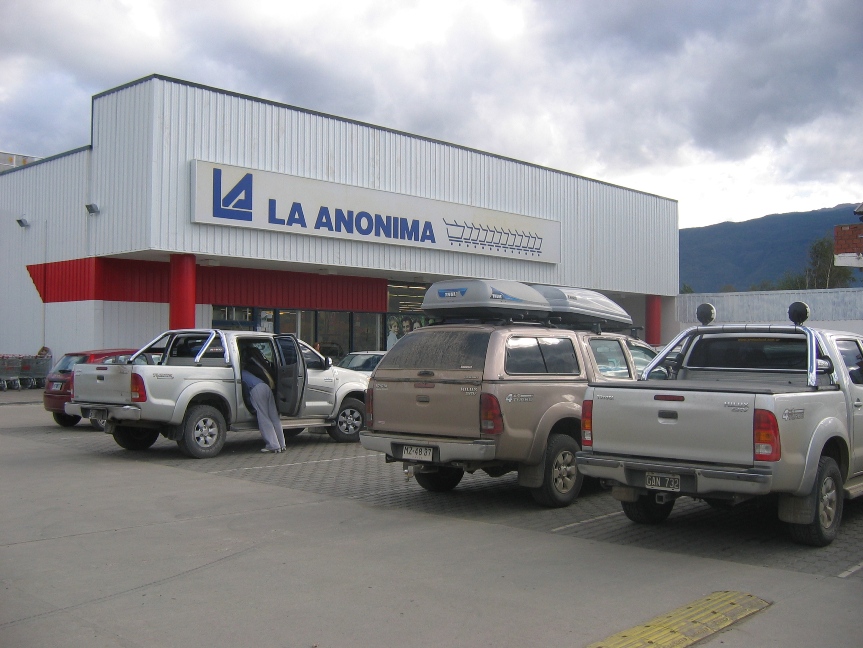
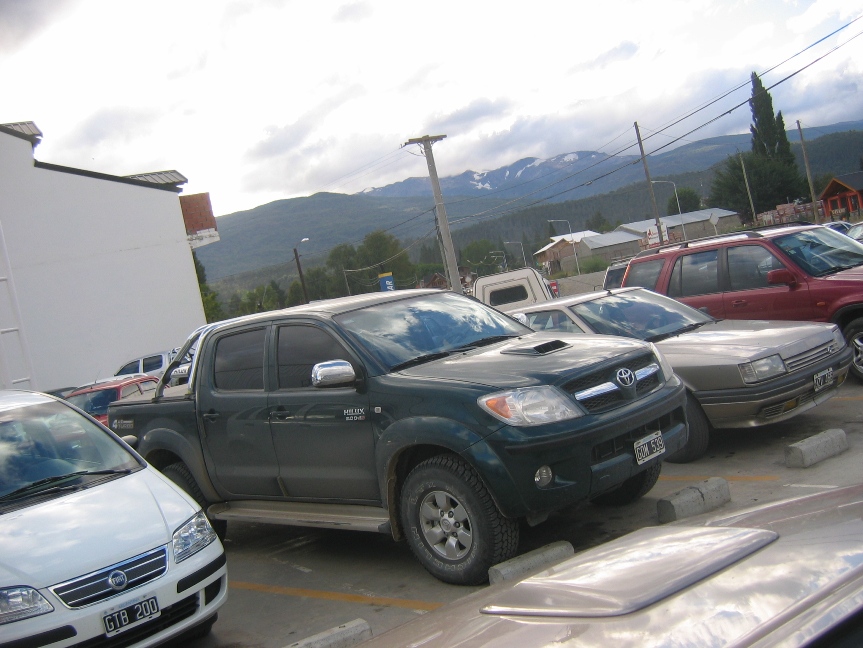
We aren't the only ones driving a turbo Hilux - but perhaps the only ones with a cap over the bed + two luggage racks!
In any case, when we meet an Argentinean couple or family from Buenos Aires that's on vacation, dressed nicely and driving a decent car, and then tell them that we went to Antarctica, their eyes get big (they know how much it costs), and then they say something like "For any Argentinean, it is not possible to do something like that!"
I've mentioned and complained that public smoking in Argentina is allowed, accepted, and tolerated - I think that Argentina is on the trailing edge of the civilized world with respect to that issue. Upscale restaurants in tourist cities like Ushuaia or El Calafate might be non-smoking, but often not. One side or corner of a restaurant with tables marked "No Fumar" doesn't really help much when four people at the table 10 feet away all light up. We try to go out to eat early and finish before places get busy. Outdoor tables offer relief, but this option may diminish as fall and winter approach.
Chile, on the other hand, which has inferior fashion, a frumpier (but quaint, charming, and folksy) national dance, and which habitually gets thrashed by Argentina in soccer matches, can at least pat itself on the back long and hard with respect to combating tobacco use and trying to improve national health. Their average wages were also higher in 2005, and may still be so today but I'm not sure about that. Based on our casual observations, Argentina just feels more developed and wealthy, but we've only visited a relatively sparse and rural part of the country and this appearance may be in-part simply due to historical momentum!
In so many ways, Chile seems more primitive and hard-edged then Argentina, but Chileans have a reputation of being serious and hard-working for a reason. Although it is trying to implement progressive social policies, the government is economically cautious with the recent huge surplus achieved from the profits of the state-owned copper mines. They are investing most of the surplus for the future vs. spending it all as fast as they can (can you imagine living in a country where the government invests money vs. spending more than it has?).
Anyway, there you have it. Gas is cheap in Argentina, but the people earn wages that someone from the US couldn't dream of living on. To offset low wages, the cost of living is very low, and the country has a trade surplus (they can't afford too many foreign-made goods!). It means that international travel and luxury cars are not in the typical Argentinean budget - but fashionable clothes (or managing to look good and fashionable on a budget) and a clean little Toyota sedan (or 1970's pick-up) are. On another digression, I could talk some more about all the cool old vintage cars - like 1950's Ford Futuras and Falcons - we see roaring (and sometimes rattling) down the highway.
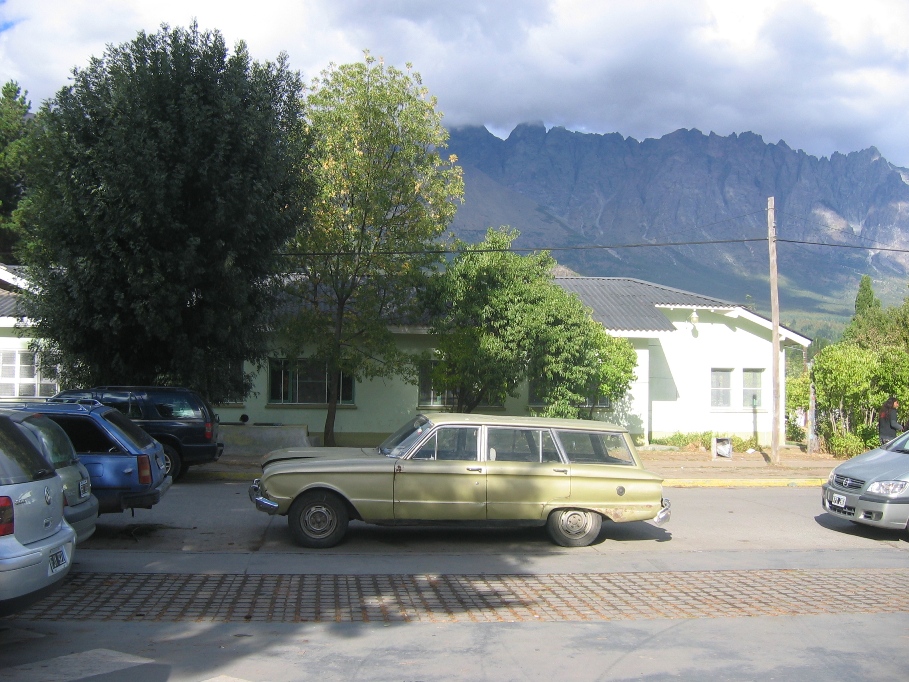
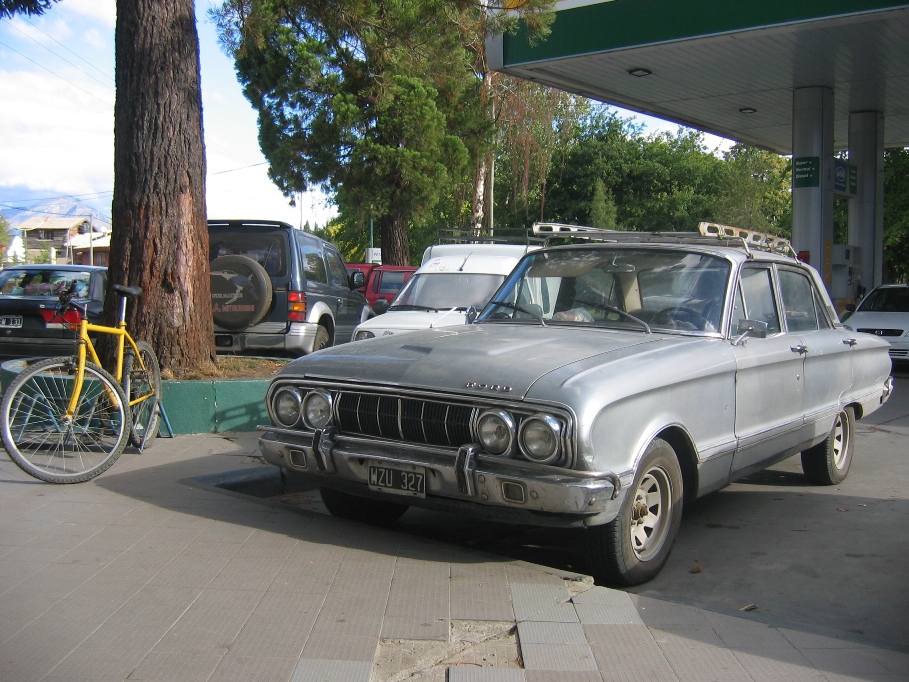
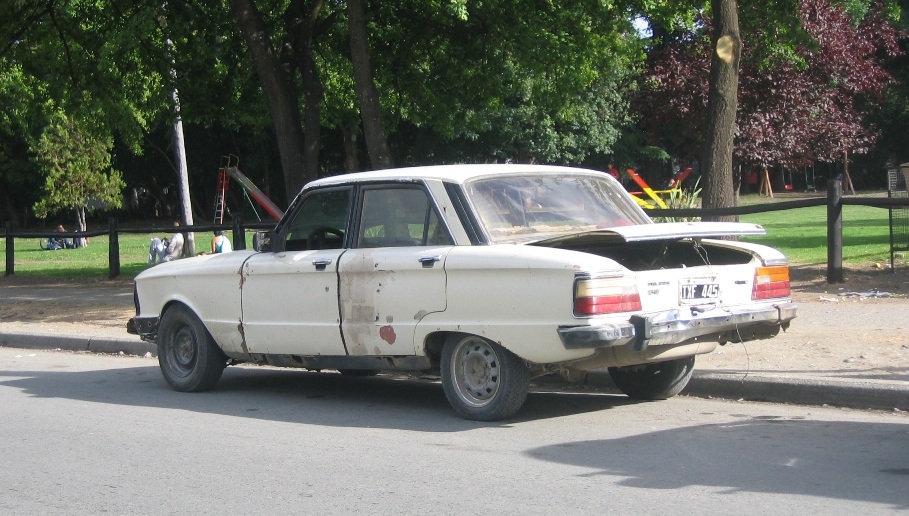
On the spur of the moment, I grabbed my camera before heading to the gas station - these cars were all parked in or next to the gas station parking lot. Not all of the old cars from the 50's are junkers. We've seen some shiny and nicely maintained (or restored) versions of these old Fords and even a Chevy Nova or two - very cool.
That's enough history and social commentary for now and perhaps for the entire rest of our stay - at least as a direct topic. I certainly hope so. Please keep in mind that the research and data is superficial and hastily performed. There may be minor mistakes in the details and even more significant mistakes in their interpretation . I certainly hope I haven't gotten anything too wrong. It's a beautiful place to visit, the people are gracious and hospitable, and we're enjoying ourselves tremendously.
-Rolf