Comodoro Rivadavia - Bahia Bustamante
Fruit of the Land and Fruit of the Sea
(Oil & Seaweed)
Wednesday February 27, 2008
All of our guidebooks mention Comodoro Rivadavia, but none of them have much to say other than the basics of where to sleep and eat. It is an oil-industry town, and other than being the largest city in Argentine Patagonia (population-wise), there is little to recommend the city to travelers other than an airport and the conveniences of typical metropolitan services. After a long string of estancia stays, we decided to give the place a 48-hour try in order to avail ourselves of some of those services; such as, among other things, internet, a laundromat, and an auto-service center (normal maintenance).
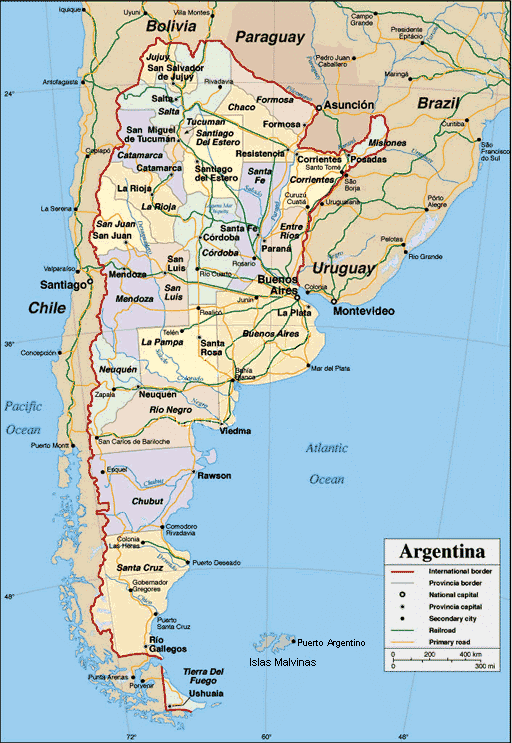
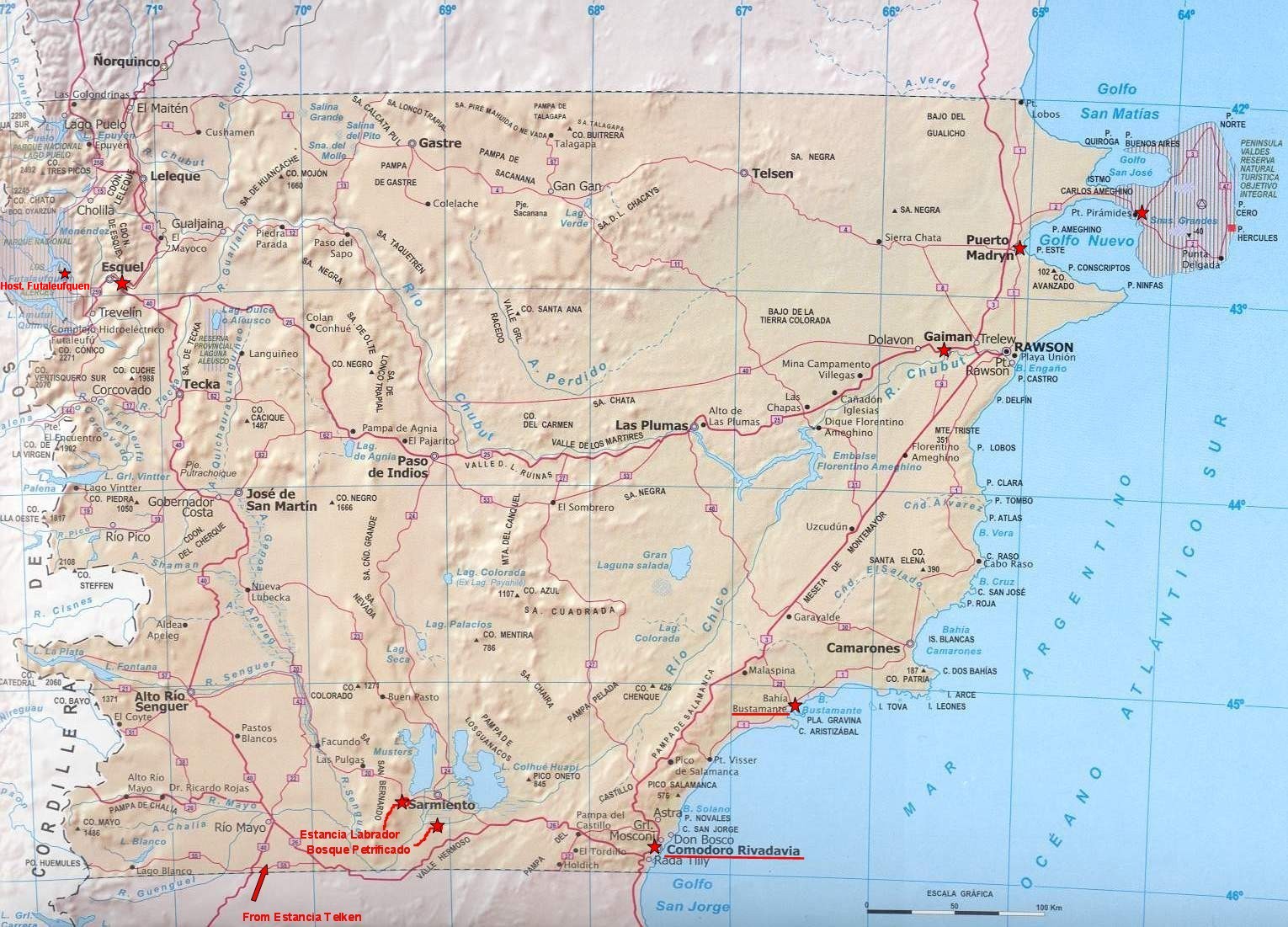
You can see that Comodoro Rivadavia rates a dot on the map of Argentina as well as the Chubut Province map. Bahia Bustamante rates no mention on the map of Argentina, but it does get a tiny little dot on the Chubut map. I've added red stars to the provincial map showing not only Comodoro Rivadavia and Bahia Bustamante, but future destinations on our itinerary as well.
Knowing full well not to expect much, and having booked rooms in one of the two "luxury/business" hotels in town, we still were pretty well set to leave Comodoro Rivadavia yesterday, without longing or regret, after those 48 hours had expired. The stop-over did serve the primary purpose; we used the internet, got laundry done, got an oil-change for the truck, and finally found batteries for two dead watches. Lynn and I even went to a movie on Monday night. Then on Tuesday, before leaving town forever for the first time, we visited the Museo Nacional del Petróleo, a diversion that the guidebooks recommend (along with climbing the dirt hill in the middle of town for a good view of the coast) for anyone "stuck in town for more than a day."
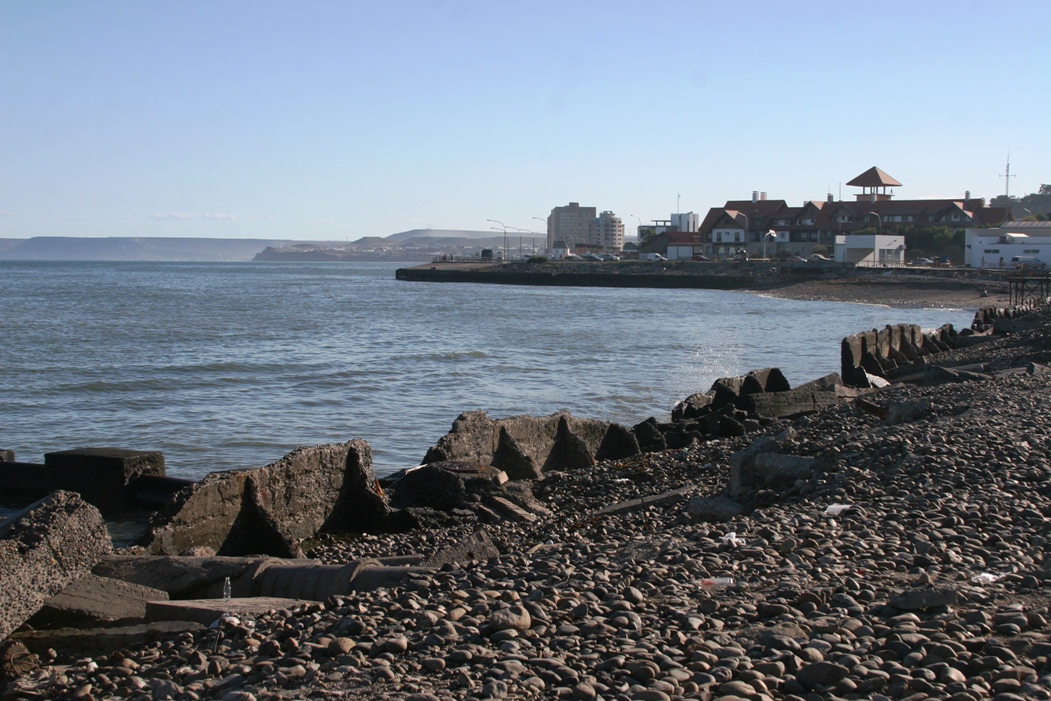

The shoreline of Comodoro Rivadavia - note the dirt hill that can be climbed for "something to do" in the background of photo #2. Along the shore there is a small dusty park, two waterfront restaurants, a large truck-yard, and a pipe-fed offshore tanker filling station, and a gradually shrinking vista of some sort of "more of the same." It was warm during our visit, and the beach was fairly busy with people sun-bathing and even swimming.
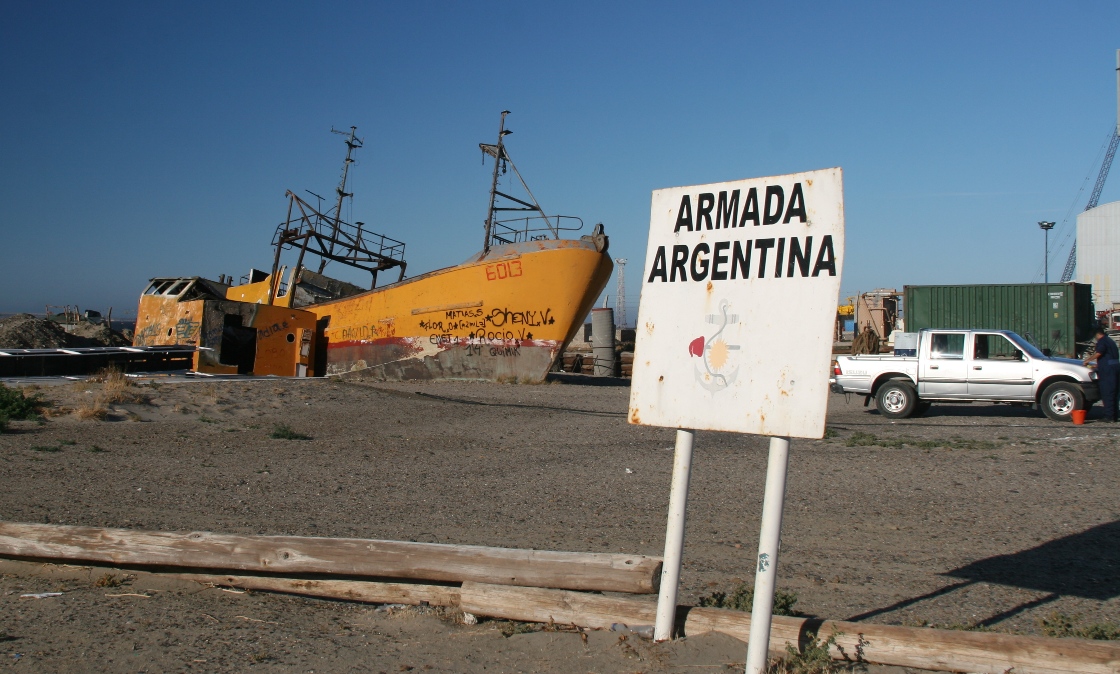

Comodoro Rivadavia is obviously not a military stronghold.
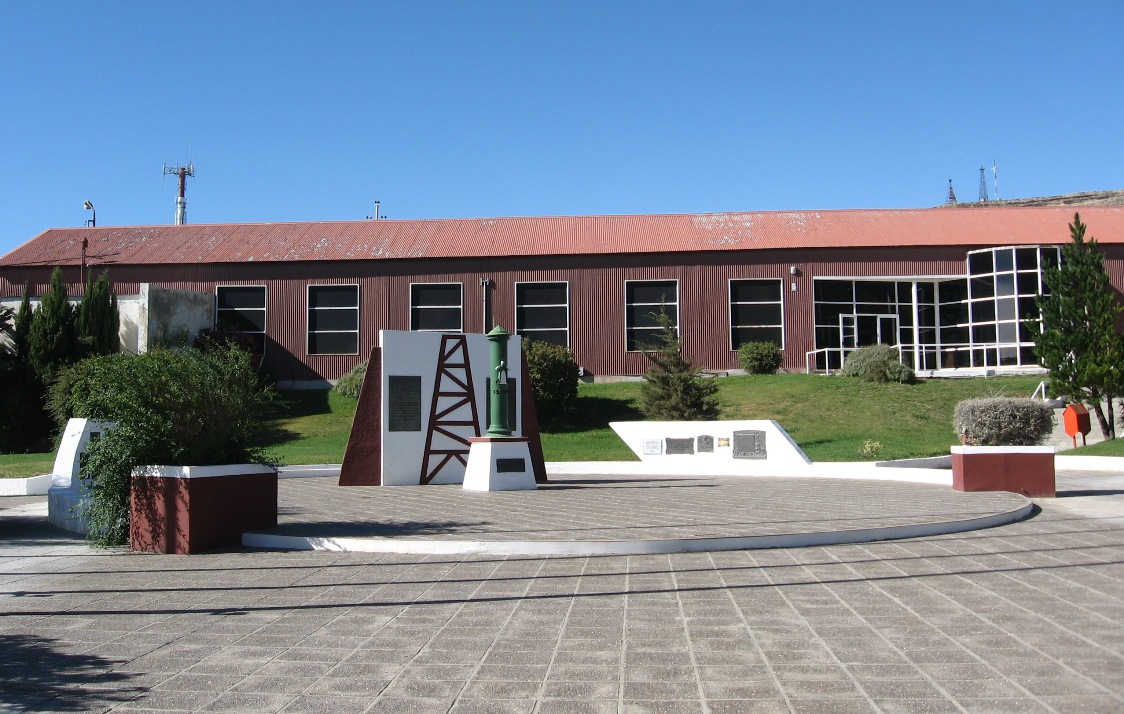
The petroleum museum is located a couple of kilometers north of downtown near a small university - a slightly less congested but almost equally frenetic (traffic and road-construction wise) part of the city. The first feature encountered by visitors is the monument to the first productive oil well (the monument is locates on the actual spot) of Chubut Province. The museum itself features a hodge-podge of geological and historical exhibits ranging from panels describing the Big Bang (why not start at the beginning?), to a display of several old typewriters, and pictures of a small aircraft crash that happened nearby in the 1930's.
But of course, there are oil exploration and production related displays as well. Perhaps they didn't have enough material relating to the primary topic to completely fill the building, so the typewriters and Big Bang and plane crash and local heritage material was added to fill up the space. The grounds around the museum building contain various types of machinery, pumps, wells, and transportation equipment that has been used throughout the approximately 100 years that Chubut Province, Argentina has been producing oil.
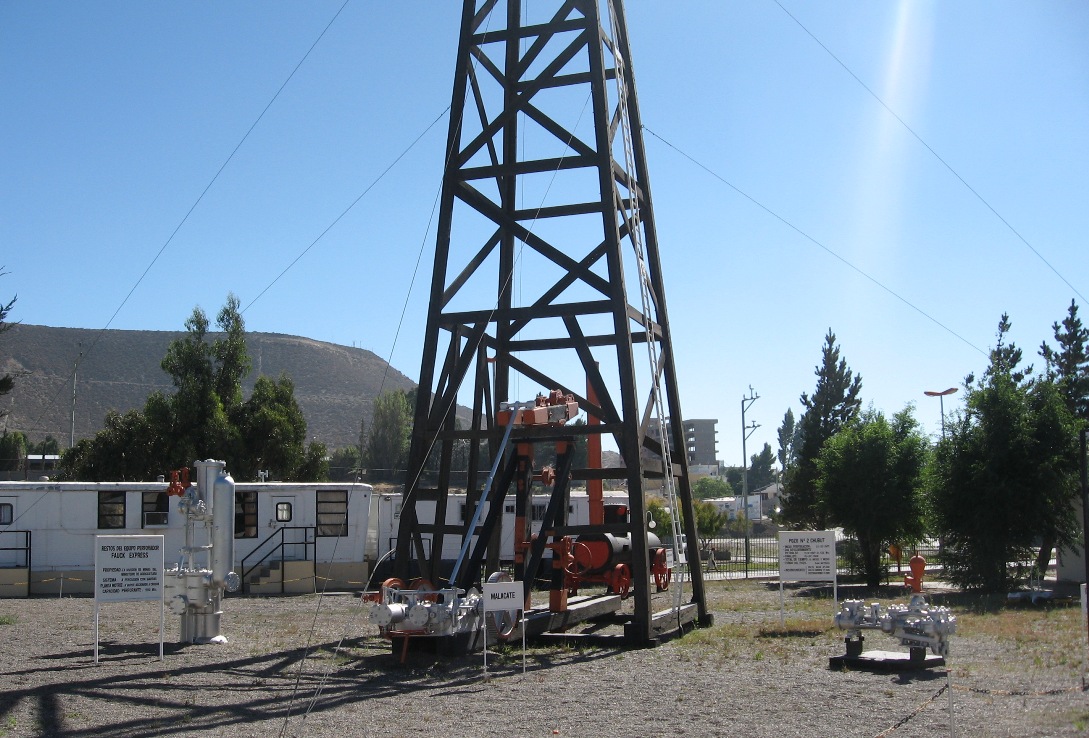
An old well.
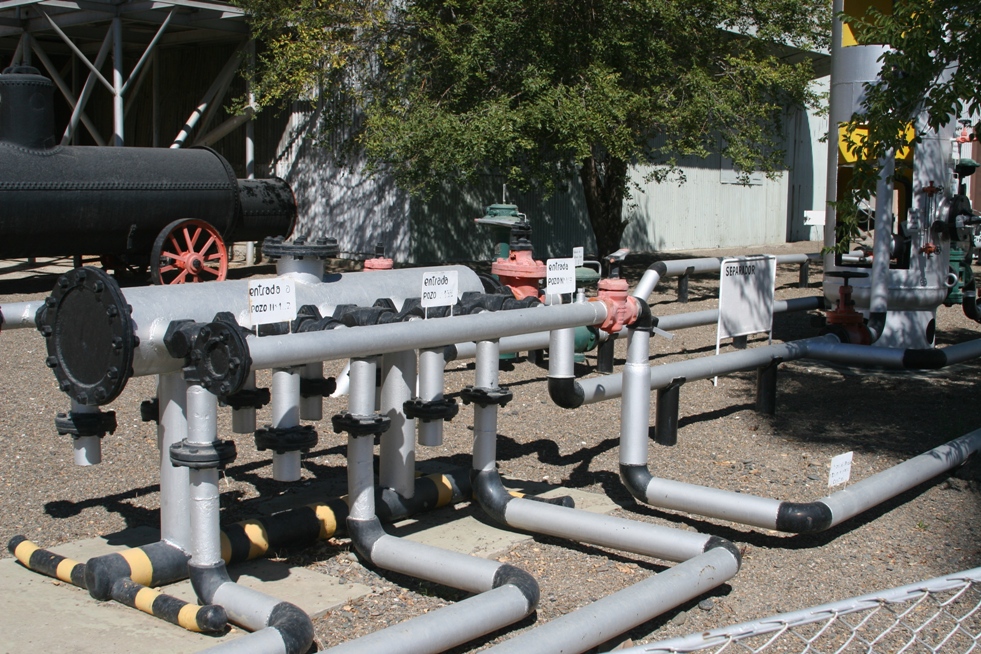
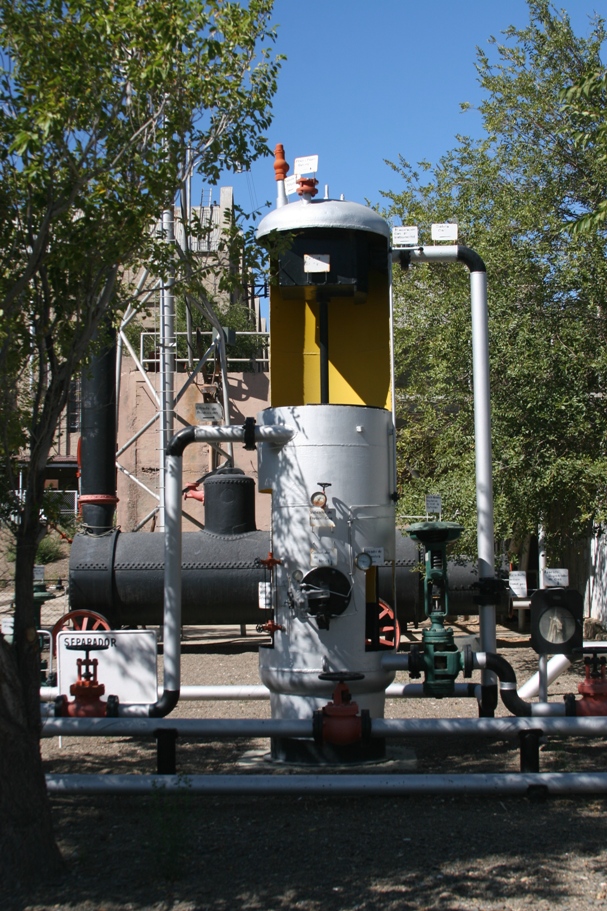
An example of an old "in-the-field," separator. Straight-from-the-ground crude oil is heated in a tank so that any water contained in the fluid is evaporated off. We've seen several places along the road which appear to be slightly more modern versions of an evaporation processing facility.
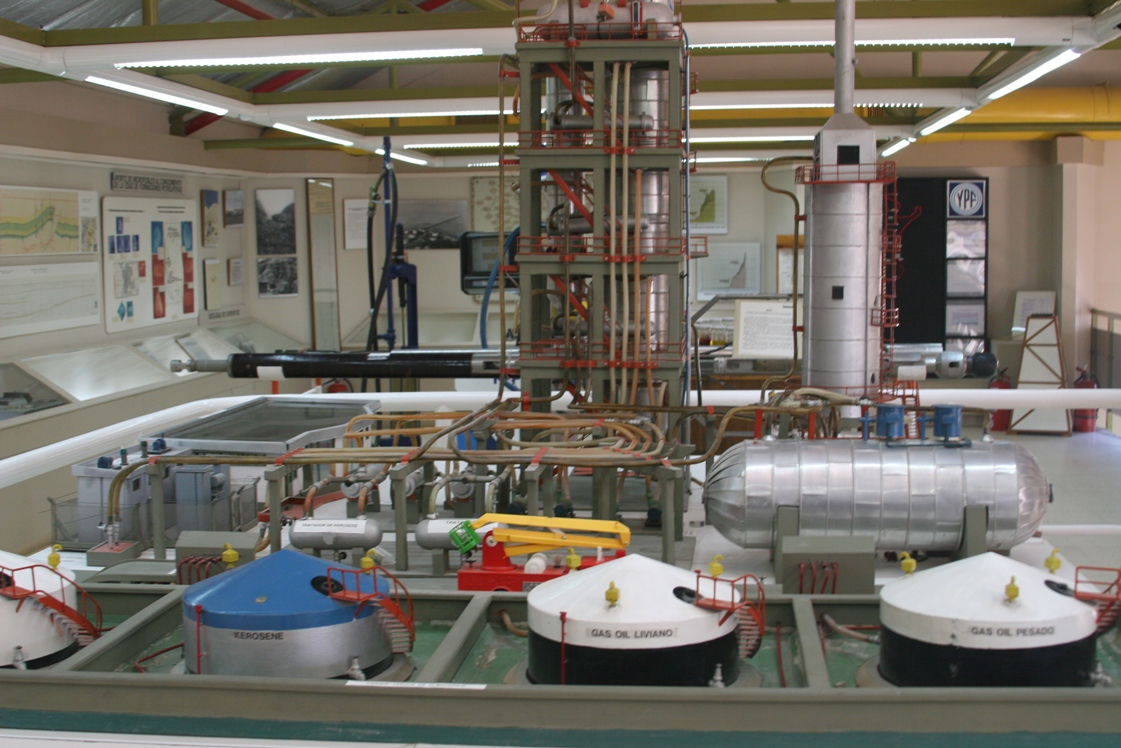
And this is an example of the type of scale exhibit featured in the interior of the museum - a refinery of sorts.
After a little more than an hour spent in the petroleum museum - half with a guide who spoke a little English and the other half spent with a guide who spoke only Spanish - our brains were rather fatigued with the whole topic (at least mine was). It was nice to hit the open road and leave Comodoro Rivadavia behind. Our second, "Spanish-only" guide recommended a small fishing village a dozen kilometers up the coast as a scenic place to have "excellent seafood" for lunch, so we heeded the advice and headed north through the construction maze towards Caleta Córdova.
We found the quaint little coastal fishing village without too much problem, but finding a a place to eat was much more of a challenge. There were restaurants and confiterias no-doubt, but none of them seemed terribly interested in bothering to serve lunch. Drapery-covered windows and "cerrada" signs seemed to be the singular common feature throughout the town. Finally we stumbled upon an open establishment right along the beach that was willing to serve us. As we eventually learned, the town had been without electricity all day, so we were lucky to have found one place willing to stay open and cook.
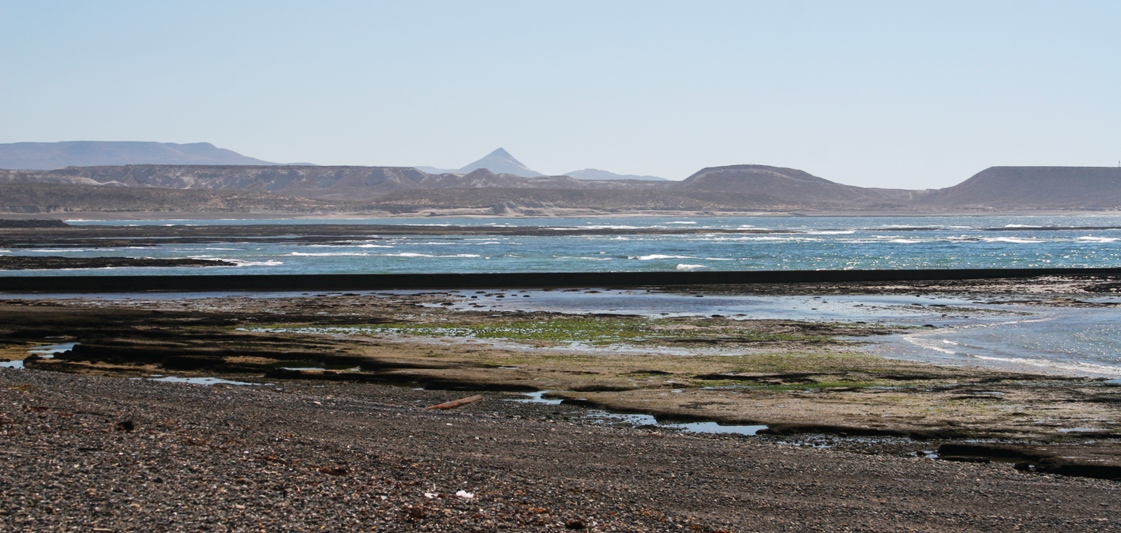
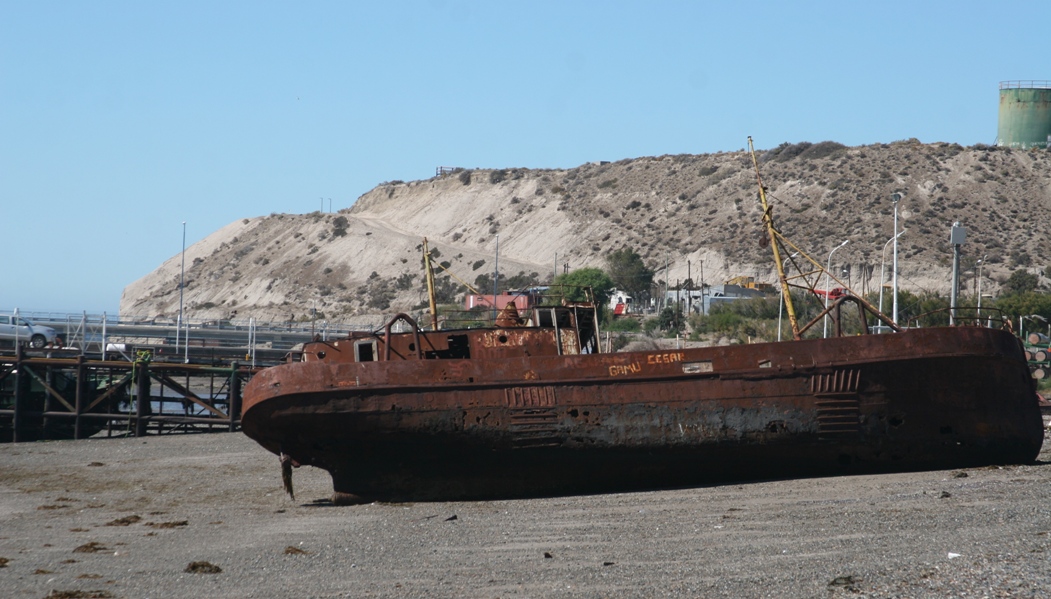
The beachfront of Caleta Córdova. Here's something the guidebooks won't tell you - call and check if they have electricity before driving there for a meal!
The only way to leave Caleta Córdova was to head back from whence we came, and then from Comodoro Rivadavia we could leave forever for the second time, head north on the main ruta 3, and get more than a few kilometers away from the place. After slightly more than an hour on the main highway, which was running a fair distance inland at that point, we turned off on a dirt track that lead 30 kilometers back to the Atlantic coast at a place called Bahia Bustamante.
The decision to spend a night in Bahia Bustamante was made fairly recently, after it was recommended to us by Sylvia Braun of Hosteria Monte León. It certainly turned out to be a pleasant antidote to the industrial kludge of Comodoro Rivadavia. The physical geography of Bahia Bustamante is a shallow protected bay with a long, narrow sandy point at the southern end. These physical features make for comfortable ocean swimming, and it was the first time we were able to enjoy something like that during our whole trip. We had expected to be able to swim somewhere in Chile but the water was insanely cold everywhere we went along the Pacific coast. It was fantastic to finally dip our toes in tepid, comfortable water and enjoy a balmy, gentle ocean breeze (vs. a frigid, near-hurricane, gale!).
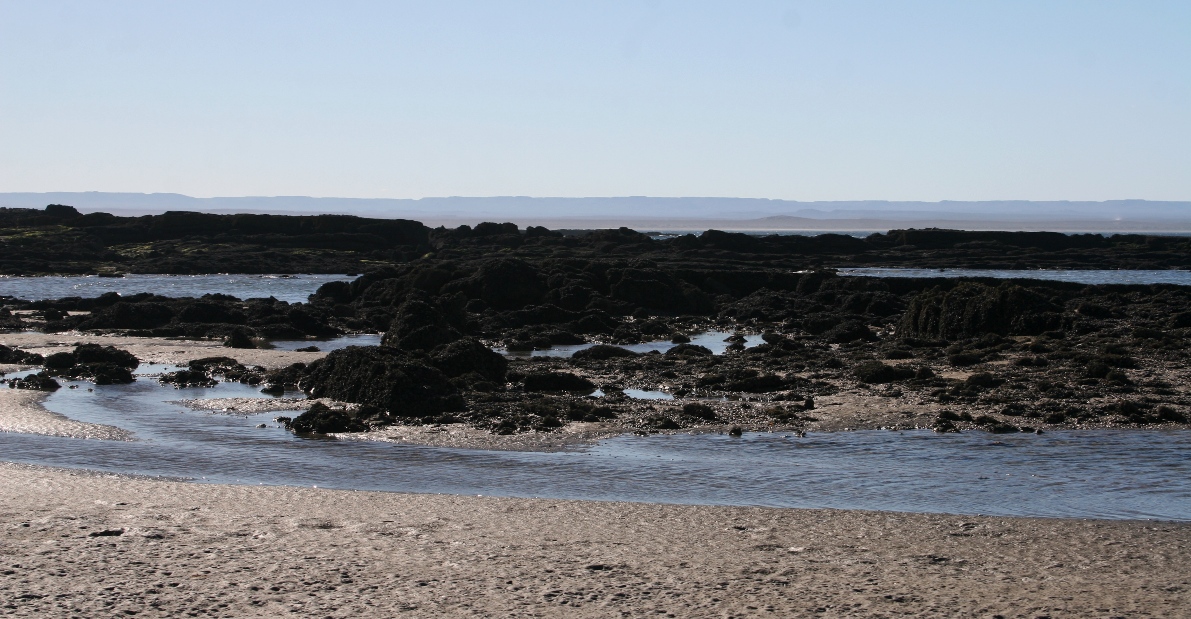
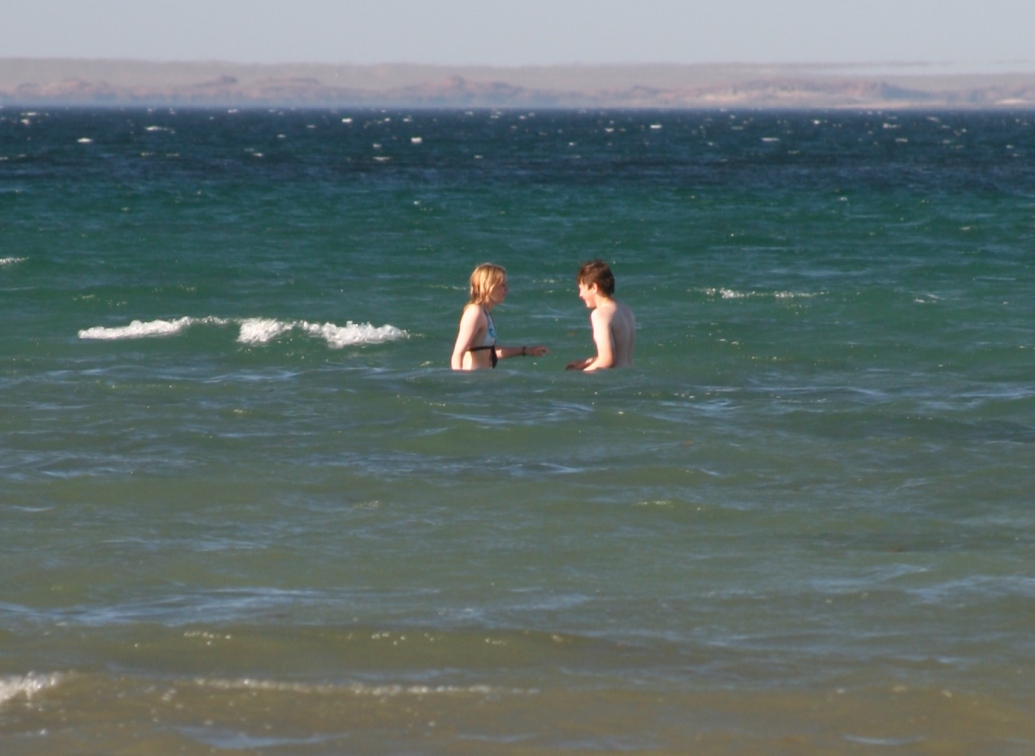
Swimming off the point at Bahia Bustamante.
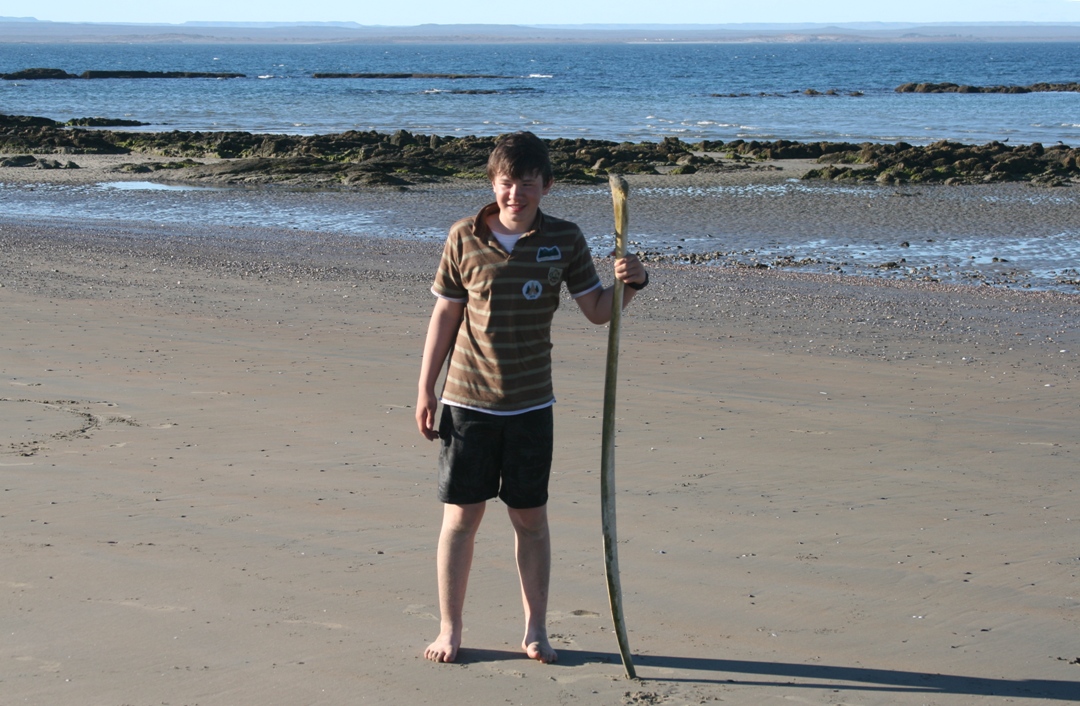
Tom poses with a whale rib that had washed ashore.
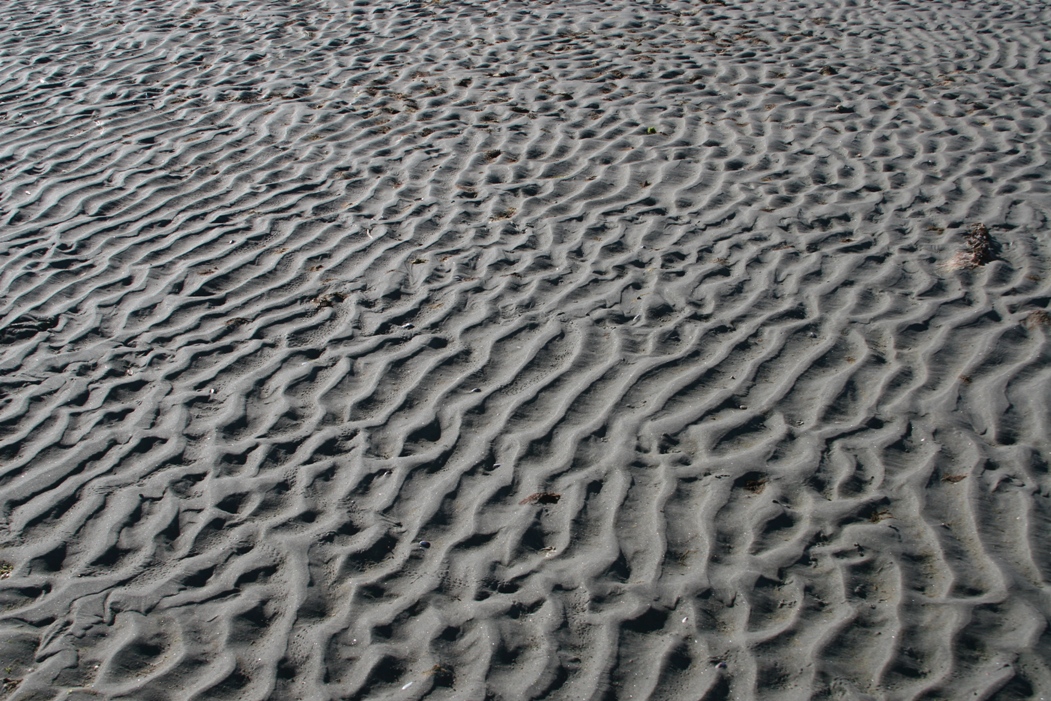
Patterns in the sand.
The human history of Bahia Bustamante is rather unique for Argentina, I suspect. One other notable physical aspect of the shallow bay is (or at least it used to be) large quantities of seaweed. A man who had immigrated to Argentina from Spain as a teen first came to this bay in 1958. After noticing the enormous seaweed beds, he decided to make a business venture out of his discovery. He built a complete town where there used to be nothing but dirt - houses, a chapel, and a pipe to bring fresh water from the nearest available source dozens of kilometers away. This was all in order to harvest and package the seaweed that was here in abundance.
By the mid-60's, Bahia Bustamante was producing a lot of commercial seaweed and derivative products. Being of Spanish decent, the man first went to Spain to try to sell his product, but the Spanish market wasn't big enough or lucrative enough for what Bahia Bustamante was able to produce. The logical solution was to sell to a bigger & better market, so he headed for Japan. Here he found his market, and eventually his bride as well.
After a few decades of successful commercial operations at Bahia Bustamante, the seaweed stopped drifting ashore in massive quantities (or they harvested all that was here to harvest), and Bahia Bustamante could no longer produce commercially viable quantities of its primary product. These days, what keeps it from being totally abandoned is the grandson of the original founding father, an enterprising and hard working young man who now runs a tourism enterprise using refurnished old cottages and warehouses of the town.
We learned some of this from the Bahia Bustamante web-site, but many more details were filled in by Mimosa, the elderly woman we met shortly after our arrival in the almost-ghost-town current incarnation of the former seaweed factory. After Mimosa helped us get situated in our little tourist cottage, we went off to the beach for a swim. Then while we were waiting for dinner in the public lounge and dining room, she joined us again and told us some more things about the place. It was then that we learned that this woman Mimosa was the now-widowed Japanese bride of the man who had founded the whole village and enterprise here almost exactly one-half century ago.
What a lucky coincidence for us! Being the widow of a wealthy former seaweed magnate, Mimosa now spends most of the year living on a country villa in Spain, and much of the rest of it traveling. But at least once a year she comes to visit the grave of her former husband here at Bahia Bustamante, and also to spend a little time visiting with her grandson. Now she gave us her undivided attention and shared personal stories and family photos with us while we waited for dinner. We couldn't have hoped for a better guide to tell us about the place.
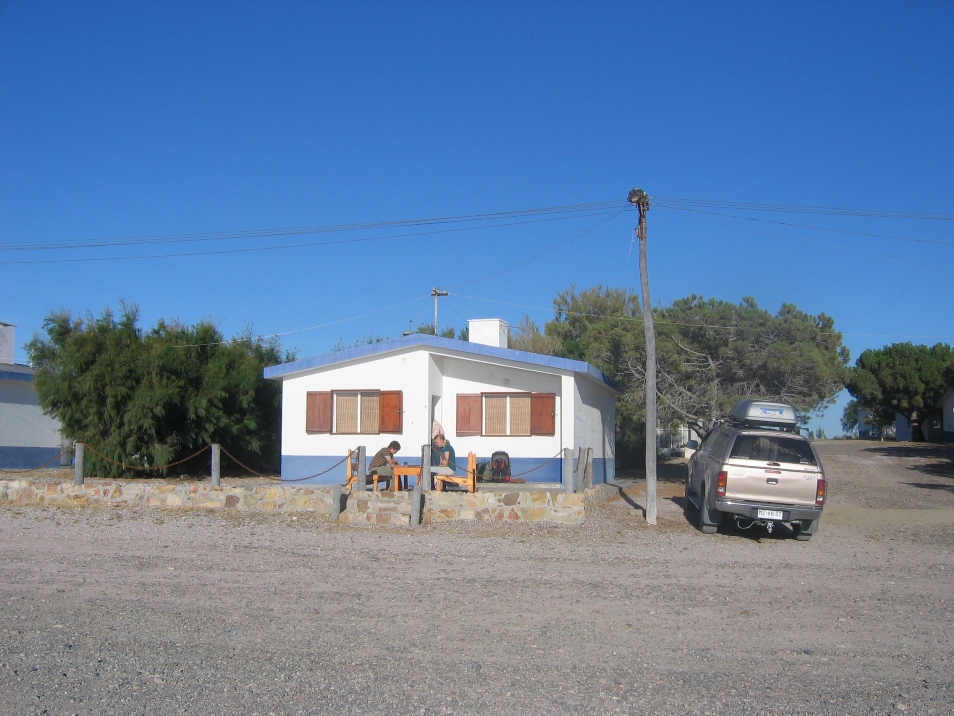
Our cottage at Bahia Bustamante.
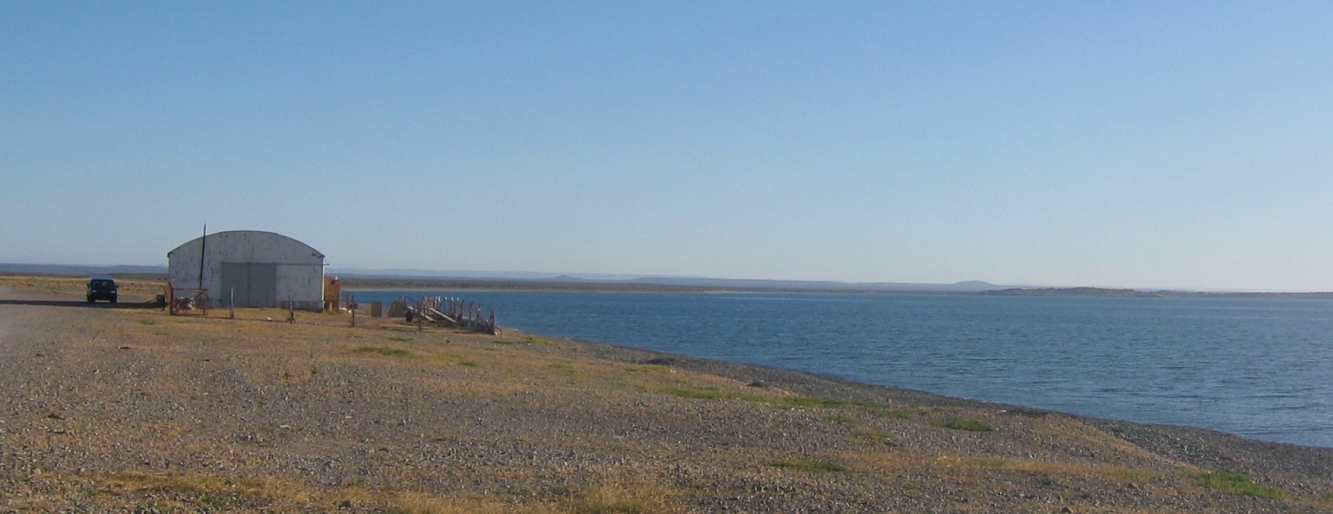
Looking along the waterfront at an old warehouse.
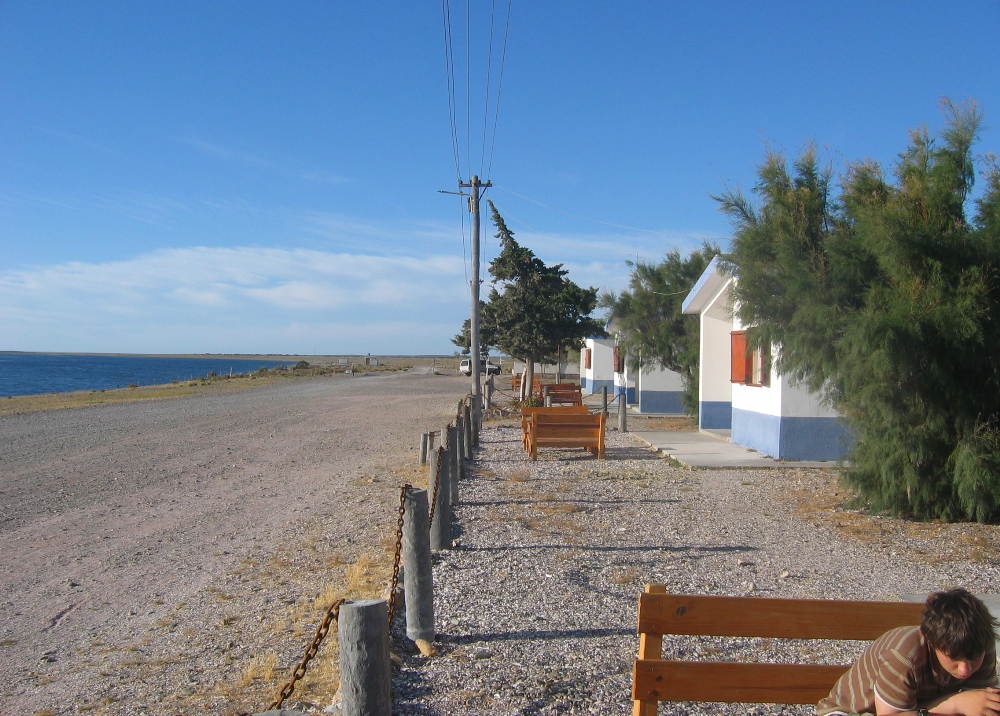
Looking the other direction along the waterfront - along the row of four little houses that have been converted into tourist cottages.
*************************************************************
Today we got up, packed the car, and drove to the "next place," - a small town called Gaiman. Gaiman is not far from the larger city of Trelew (population of almost 100,000?), being located 15 kilometers further upstream along the Chubut River. From the Atlantic coast to the edge of the Andes, most of the cities and towns located along the Chubut River were founded and originally settled by Welsh immigrants who came to Patagonia looking for religious freedom and a better life. We'll learn more about that history and heritage soon enough I'm sure. But for now, what I can show and comment on with some tiny level of experience and authority is what we saw during today's drive.
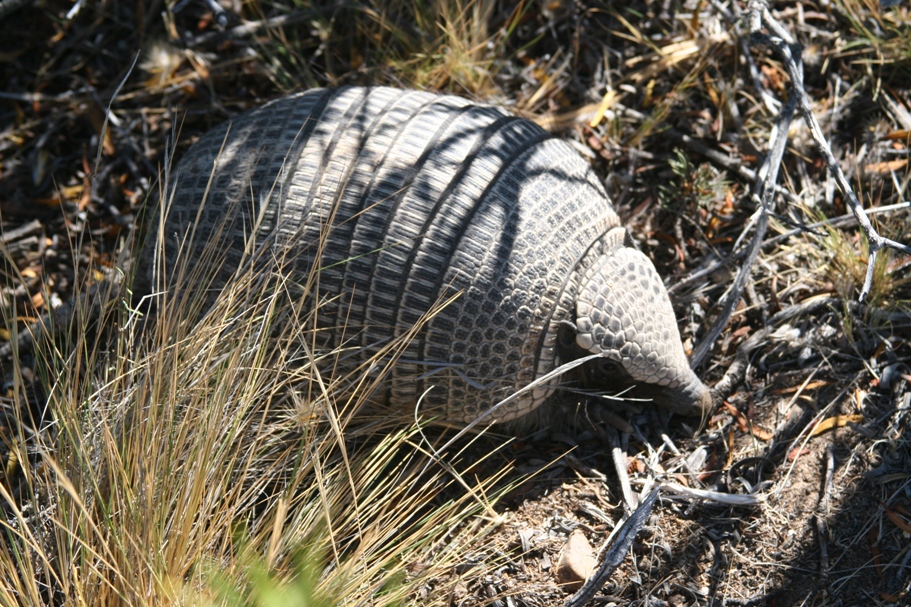
For starters, Lynn was finally able to track down and take a close picture of one of those cute little armadillos called "Pichi" that we've seen now and then scurrying near or across the road.
We commenced the drive following a dirt-road north along the coast until we arrived at the cape that marks the north end of Bahia Bustamante and the southern end of whatever bay is directly north of that cape. Another chance to see penguins, guanaco, and sea lions!
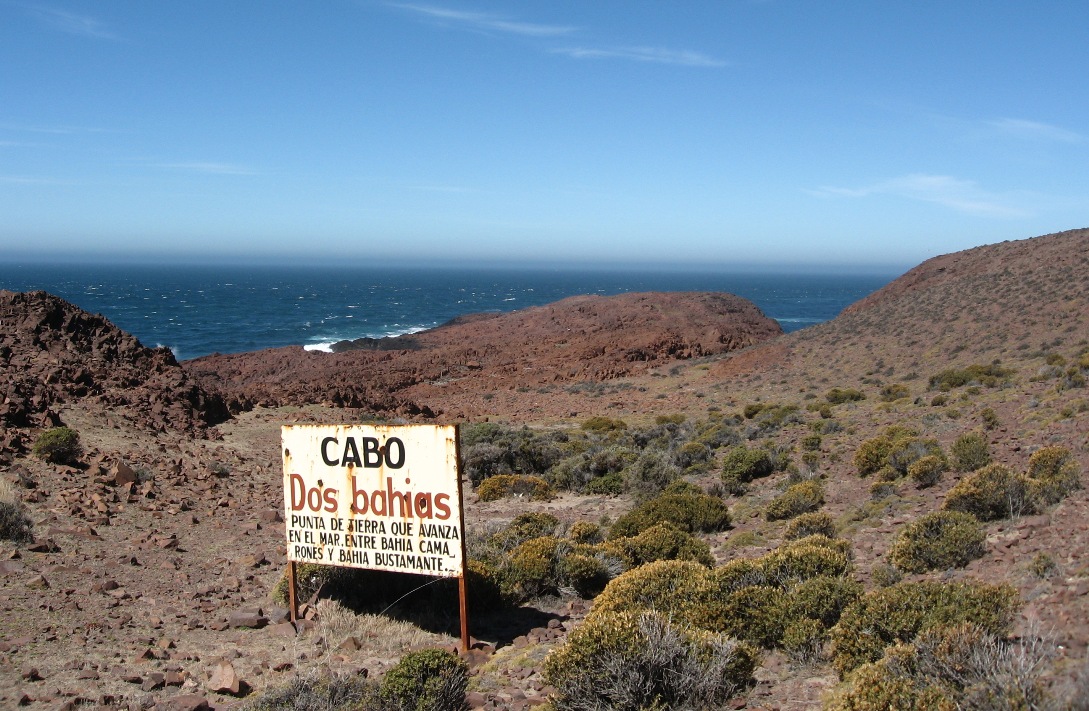
Cabo Dos Bahias - a Cape with a bay on either side of it.
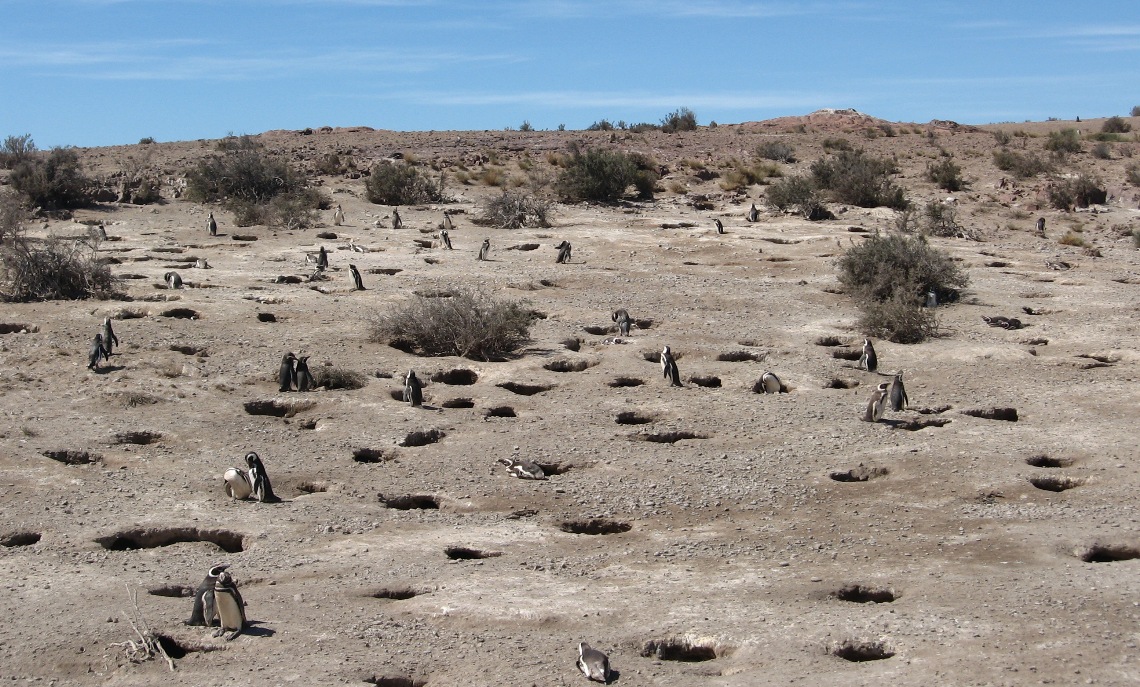
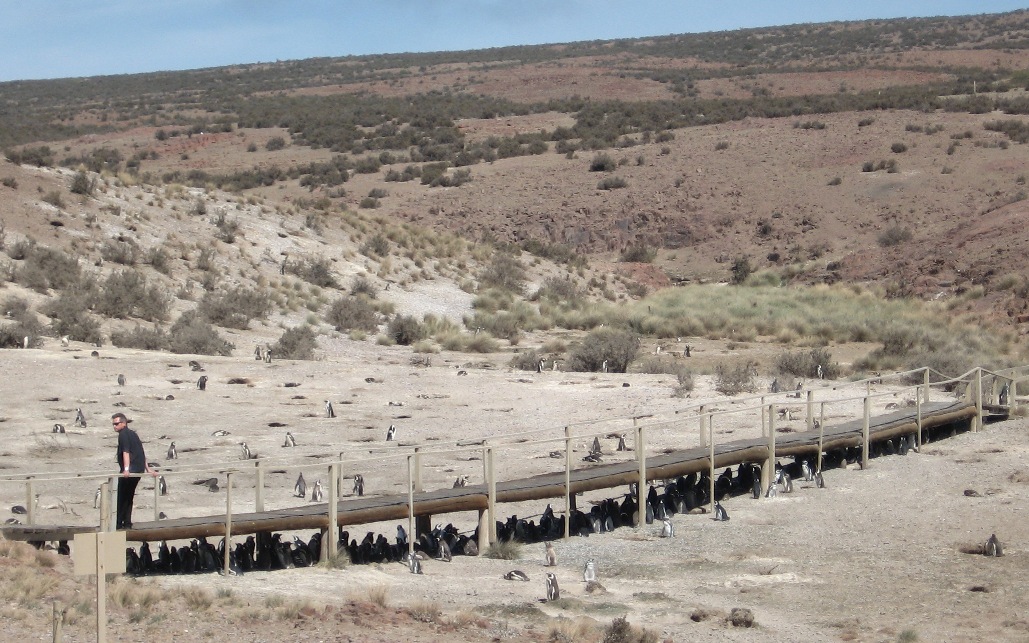
Penguins in the hot sand on a hot sunny day. They didn't look too comfortable. The chicks are almost completely fledged (possessing of adult plumage and ready to swim), and all of them , adults and chicks alike seem to be tired of the land-bound way of life.
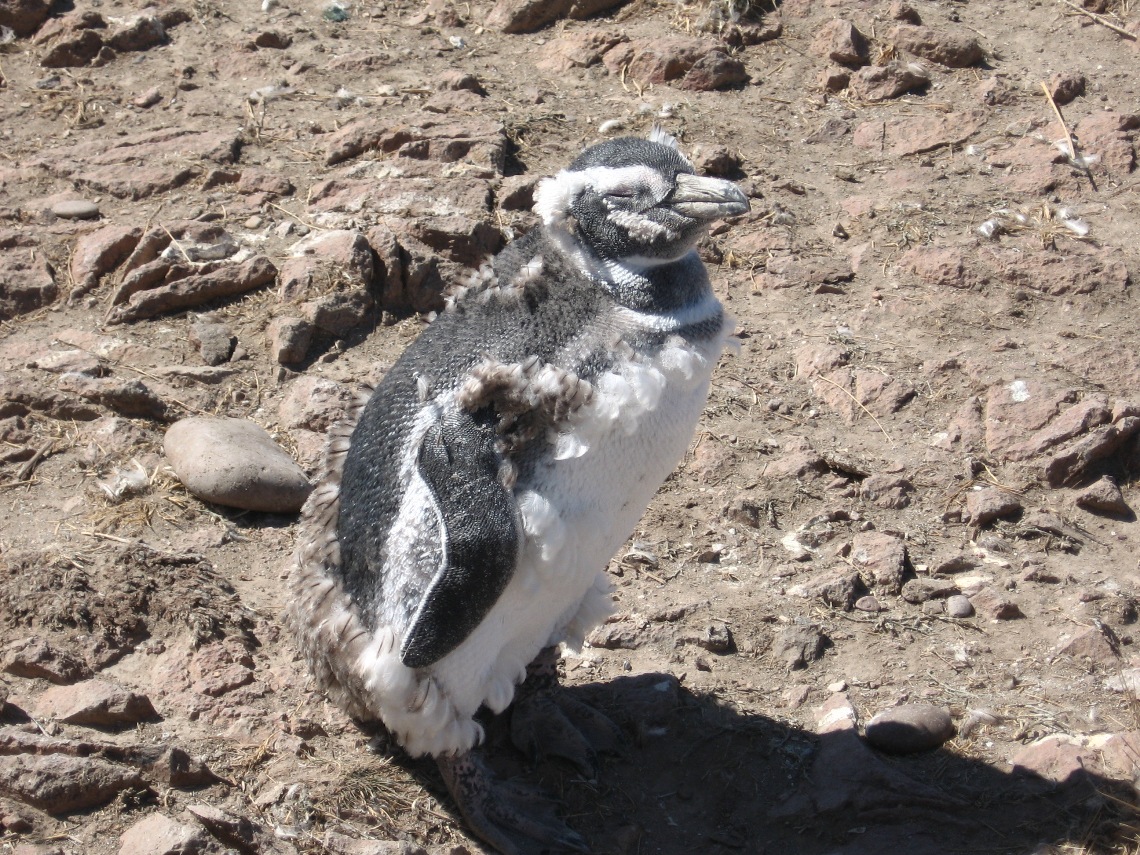
Not only do the chicks need to get their adult feathers, each adult molts completely and sprouts a new set of feathers. The entire colony has to get new feathers before they can swim off to sea. Within a few weeks, most if not all the penguins here will have swum out to sea.
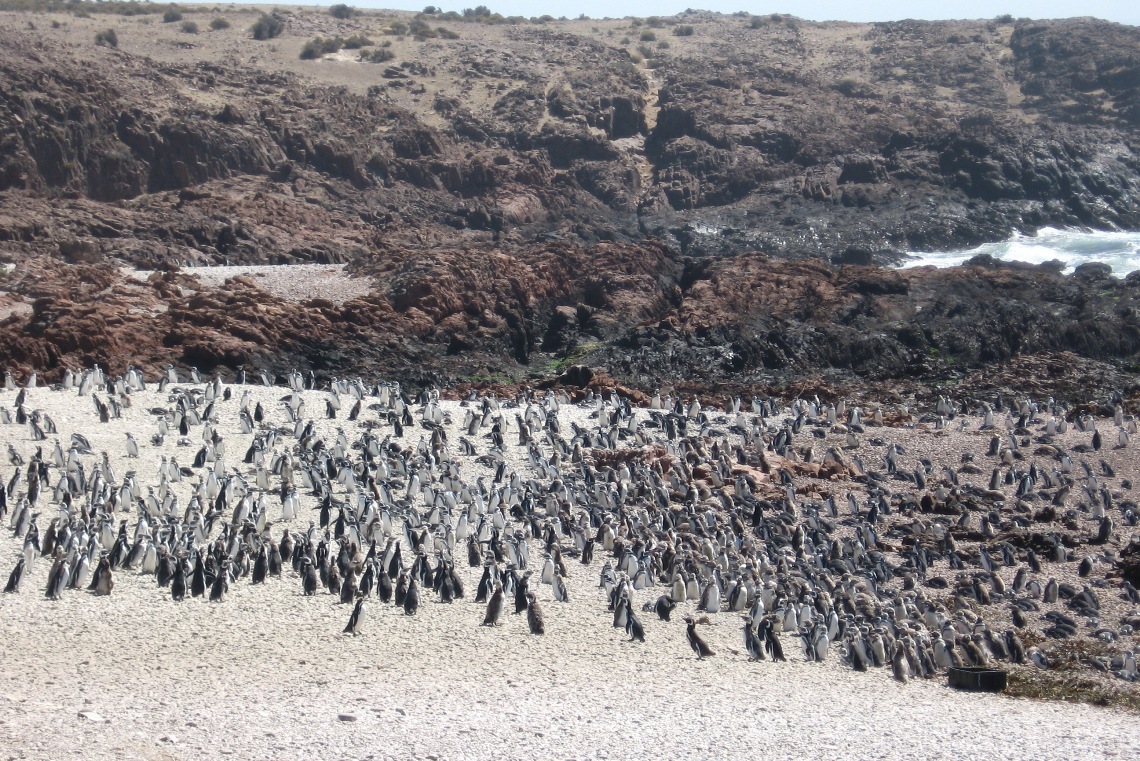
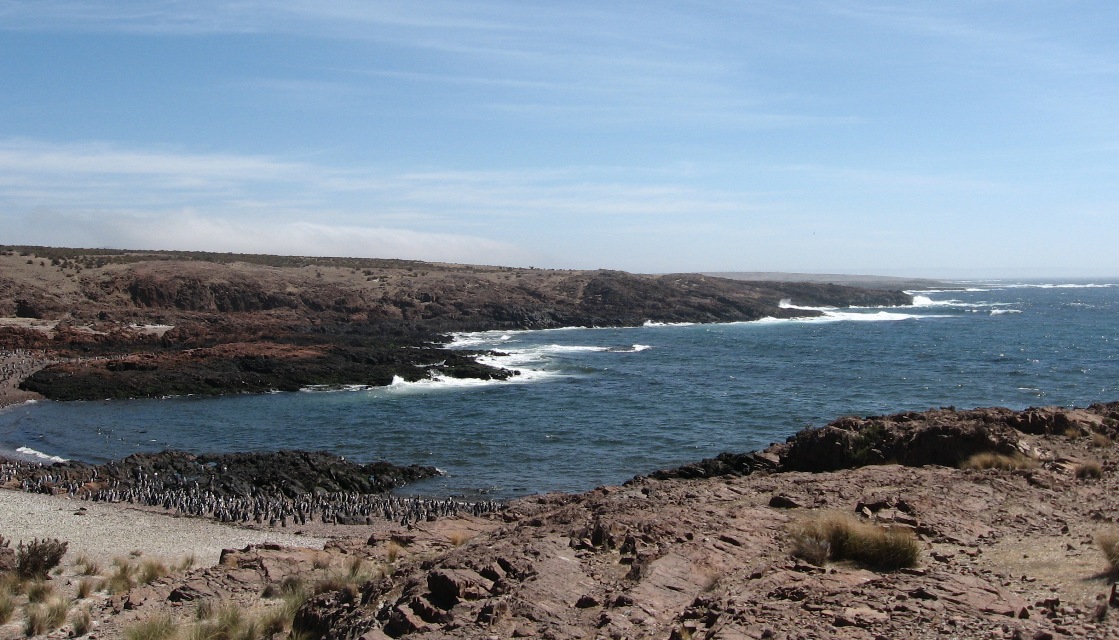
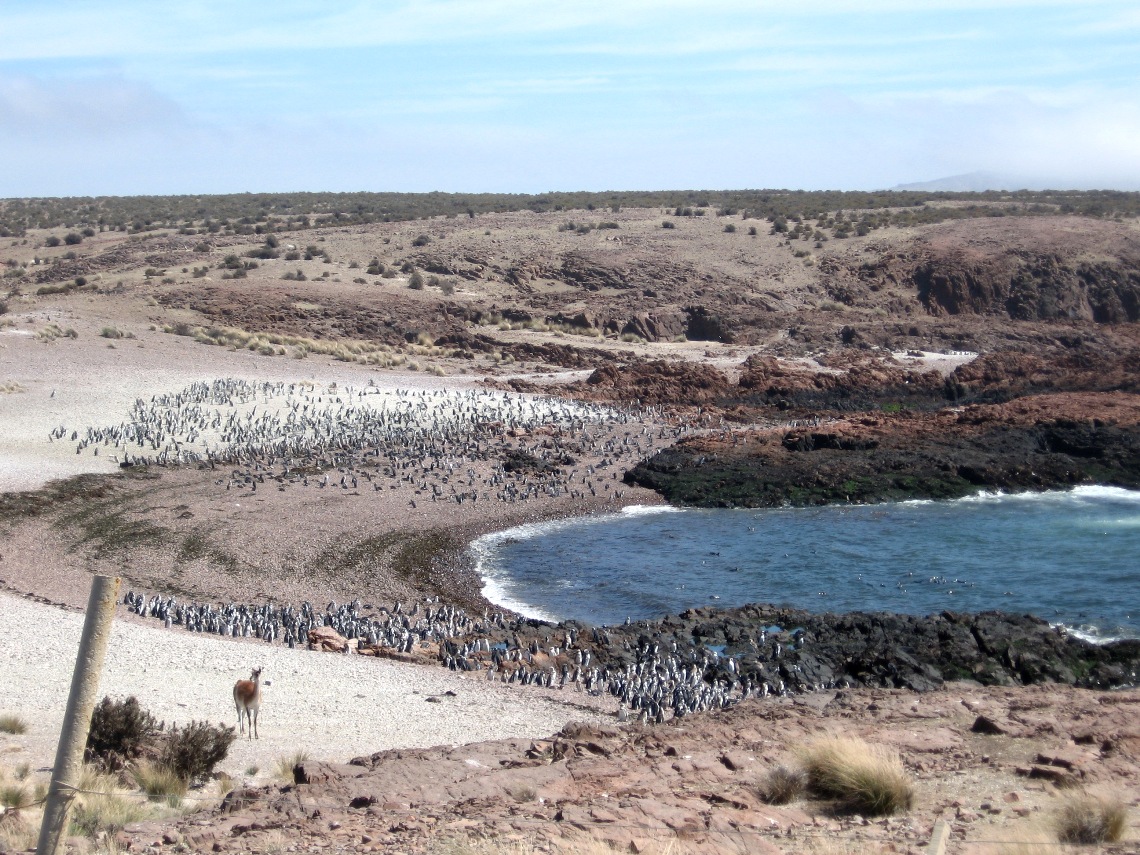
Congregating near the water and taking a cooling dip now and then - these birds are ready to go and just hanging out waiting for their relatives before they leave the beach and swim out into the ocean where they'll stay until next breeding season.
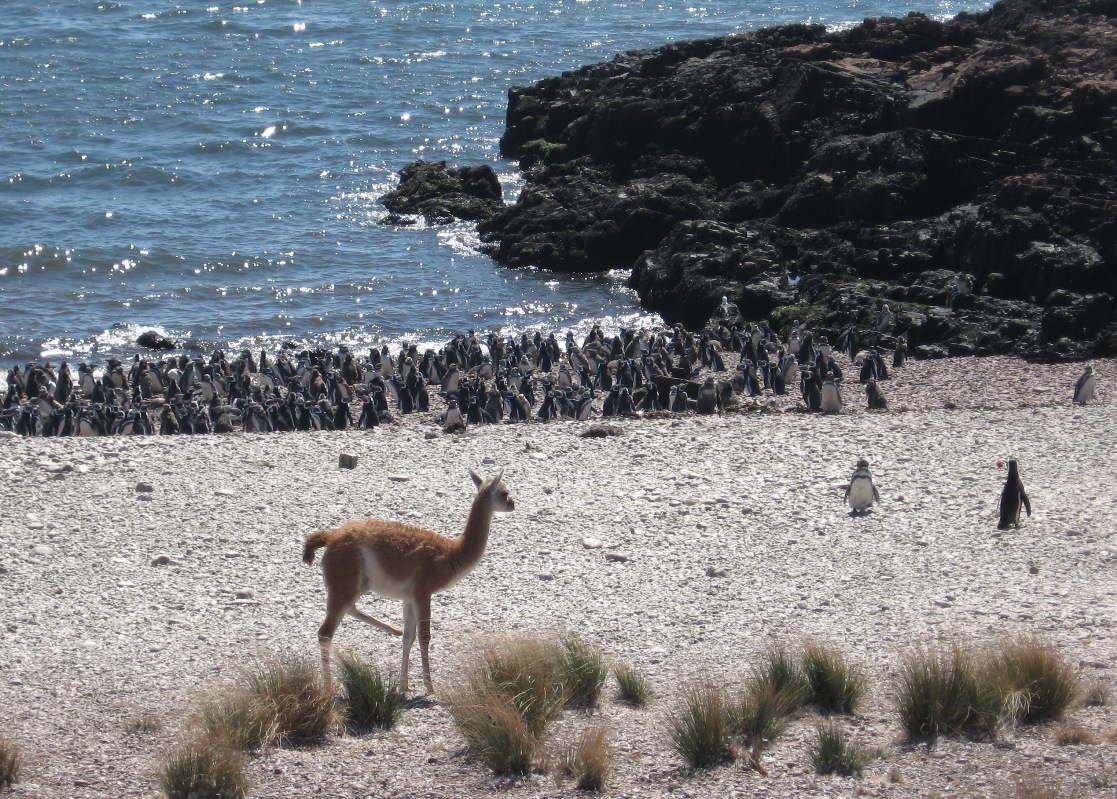
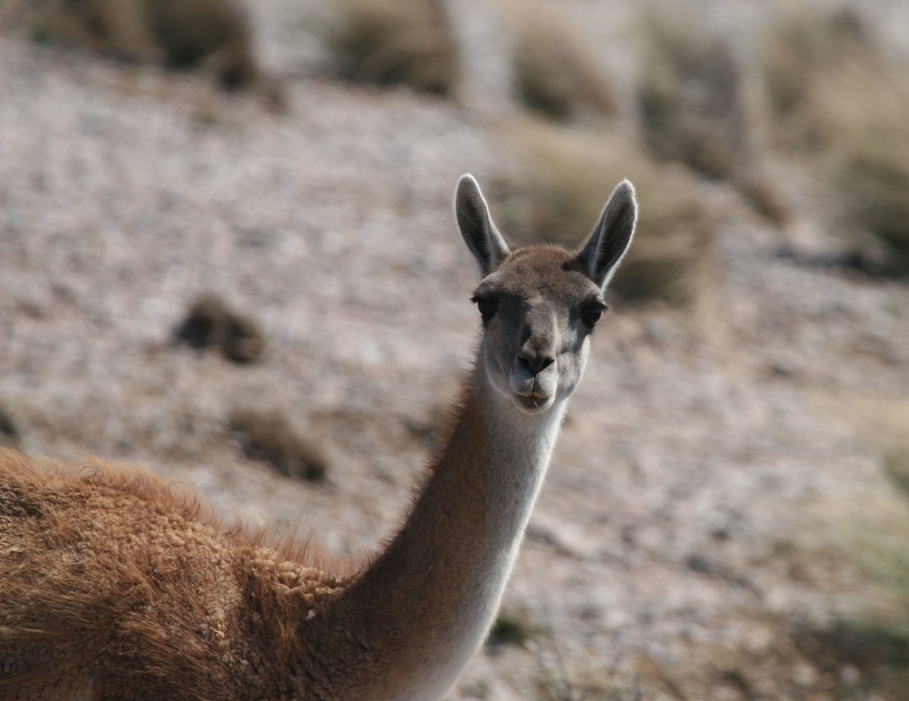
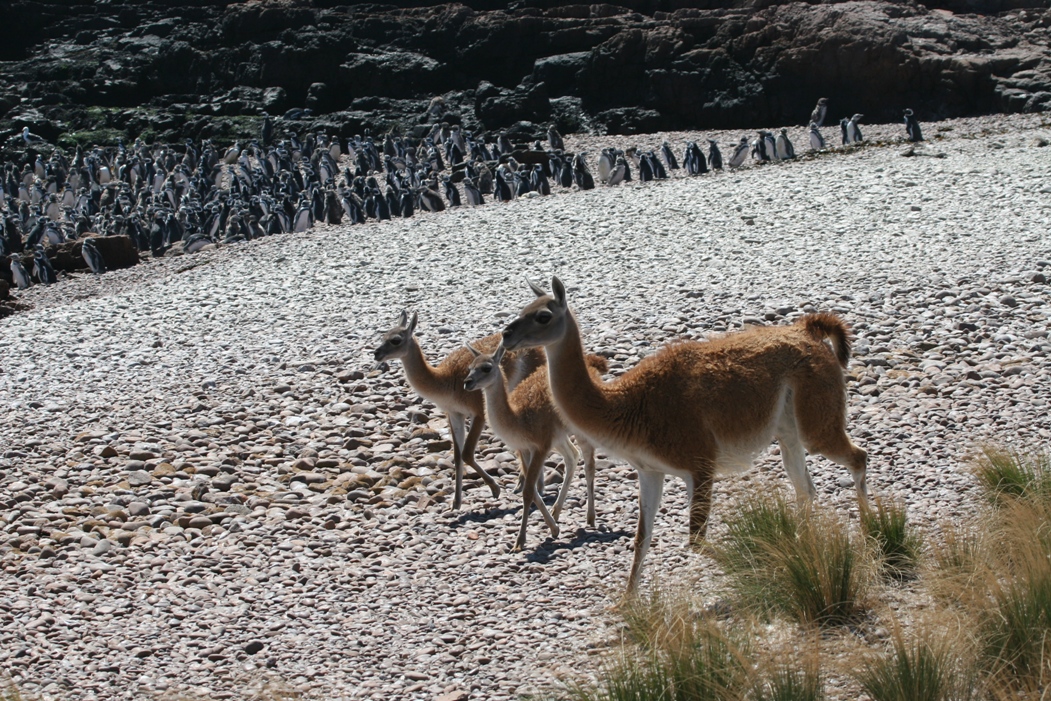
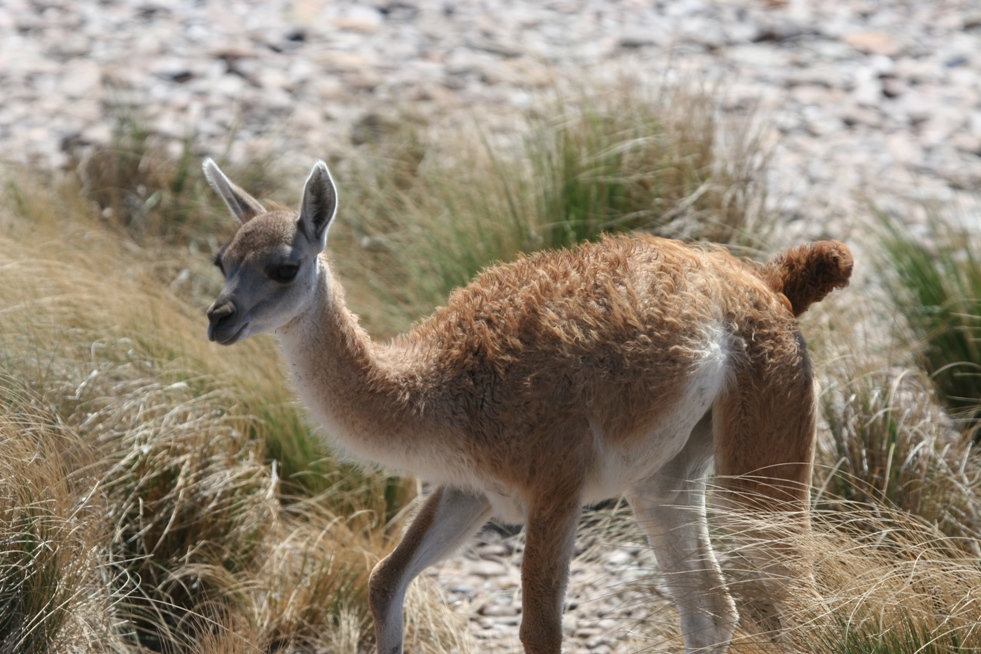
Penguins aren't the only animals who have babies in the Spring - these baby guanaco were surprisingly curious and one, in particular kept following Lynn around.
The sea lion colony was located on an island; close enough for us to look at them with binoculars but too far away for really good pictures. No problem, we're going to Peninsula Valdes in a week, a place famous for sea lion colonies and killer whales that feed on them. We're sure to see plenty of sea lions there, and with any luck, an orca or two as well. The prospect of witnessing an orca attacking and feeding on a young sea lion presents an intriguing and perhaps slightly frightening image. It would be a rare but not unheard of event, since the orcas of this region are known to, on occasion, actually ride the waves ashore during high tide to snatch sea lion pups.
But for the next few days, we'll have to make due with the pastoral beauty of the Chubut river valley and it's Welsh heritage. Something slightly new and different, and interesting we hope as well.
-Rolf