Gaiman - Posada Los Mimbres
Welsh Heritage, High Tea, & Dinosaurs
Sunday March 2, 2008
The Welsh were among the first Europeans to successfully settle in Patagonia. Motivated by a desire to flee English oppression, find a safe haven to practice their religion and language, and responding to an explicit invitation from a minister in the Argentine government, 153 Welsh men, women, and children set sail from Liverpool in May 1865 and eventually arrived in what is now Chubut Province. Upon their arrival in Argentina, the inveterate miners found the going much tougher than they could have possibly imagined, attempting to develop agriculture-based communities on the arid and windy Patagonian steppe. But before the harsh new world was able to get the better of them, they realized that the Chubut river, surrounded by a naturally deposited silt levee of sorts, ran higher than the surrounding flat valley. Coupled with their ingenuity and determination, this bit of good fortune proved to be a critical turning point for their enterprising intentions.
Gravity-fed irrigation and the support of several subsequent shiploads of countrymen allowed Welsh settlers to turn the Chubut valley into a fertile patchwork of orchards, crops, and pastures. The Welsh historical influence on the Chubut valley region of Argentina is so pronounced that the actual Welsh language is still spoken here in the 21st century - perhaps even more so than in Wales. Although these days all the road signs are in Spanish, and the majority of the current residents of Chubut probably couldn't trace an original Welsh settler in their ancestry, the Welsh heritage and cultural influence is indelibly stamped on the region.
And you can't come to visit or read this journal without learning something about it. For the past few days, we have been staying on a small farm (called a "chacra") near the village of Gaiman. Gaiman is perhaps the quintessential Welsh village in Chubut Province. Each spring, the town sponsors a festival of Welsh choir music, and during most of the rest of the year (except for perhaps the coldest and darkest months of winter), visitors come by the busload to visit one of the dozen or more "traditional" tea houses scattered around town. In 1995, Diana Princess of Wales arrived not by bus but by helicopter in order to adorn this tourist ritual with a British royal blessing. The town fell all over itself and has not yet nor will perhaps ever forget the honor.
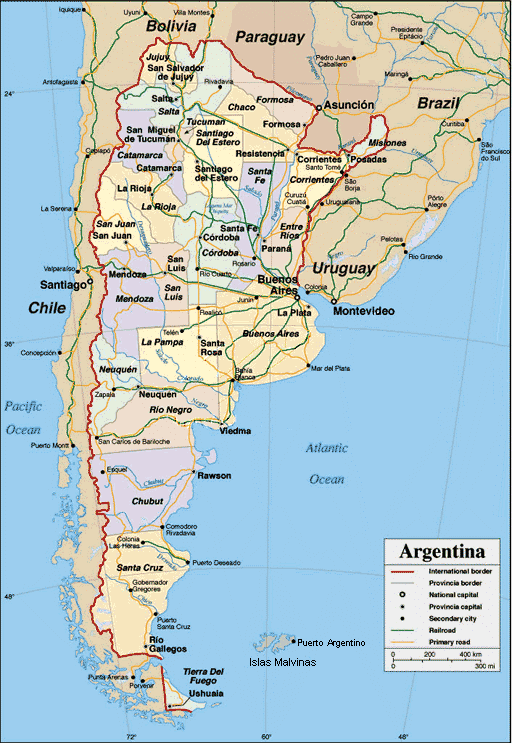
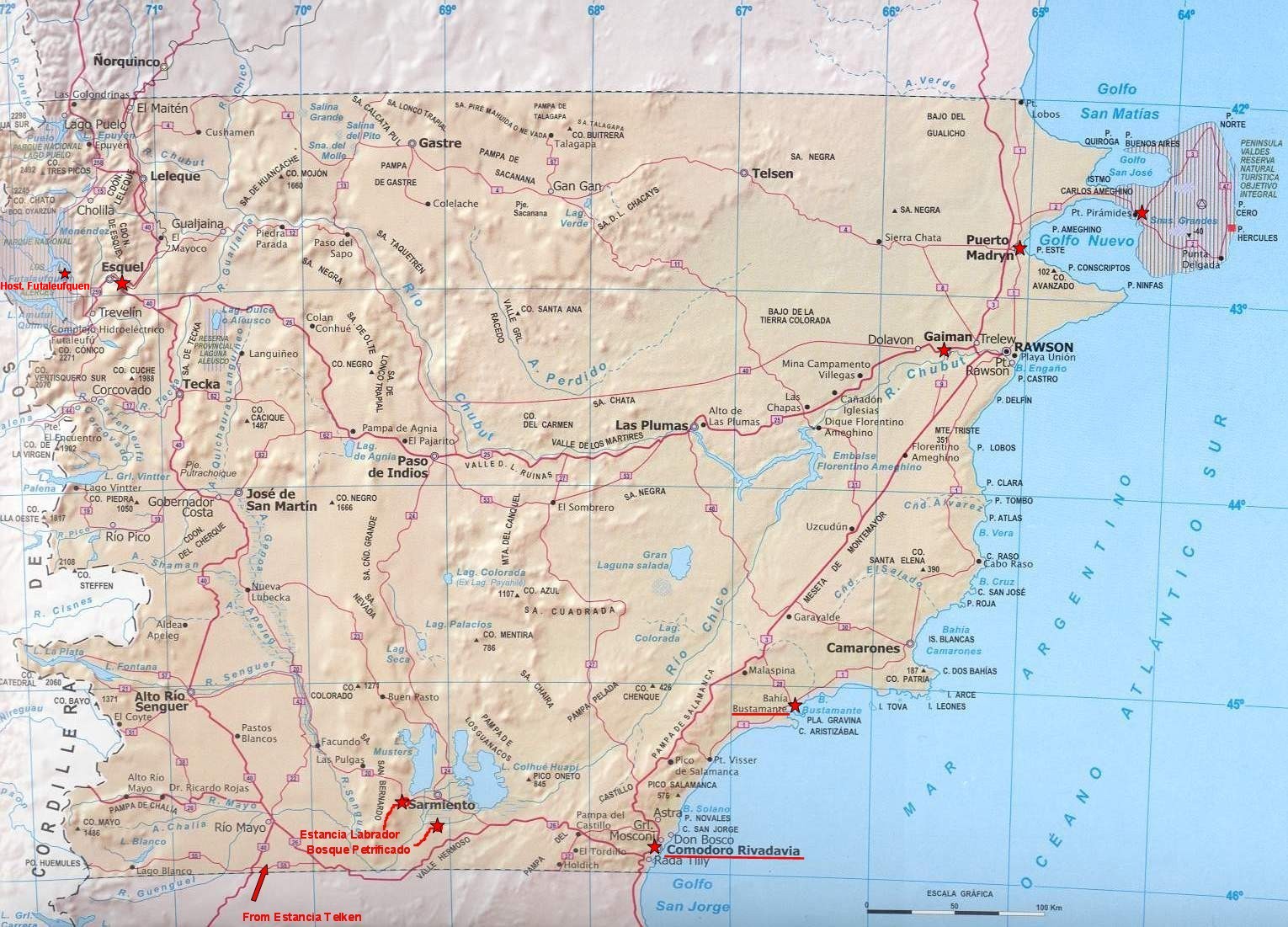
Maps of Argentina and Chubut Province. Gaiman rates a red star on the Chubut Map because we slept there.
We arrived at Posada Los Mimbres (Chacra #211 on the outskirts of Gaiman) Wednesday the 27th after a long day of driving up along the coast from Bahia Bustamante, apparently bringing a heat wave along with us. So we hid indoors for most of the day Thursday, waiting until the heat was dropping in the late afternoon to venture into town.
A short walking tour through the two or three blocks of "old town" Gaiman led us by the first schoolhouse, and then the nearby home of the first Welsh settler and founding father of the community.
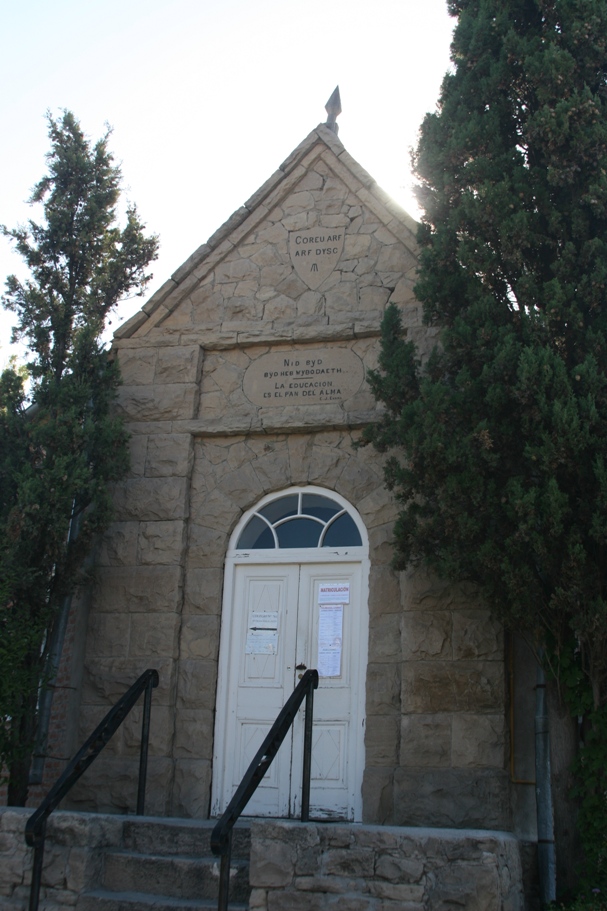
The old schoolhouse,
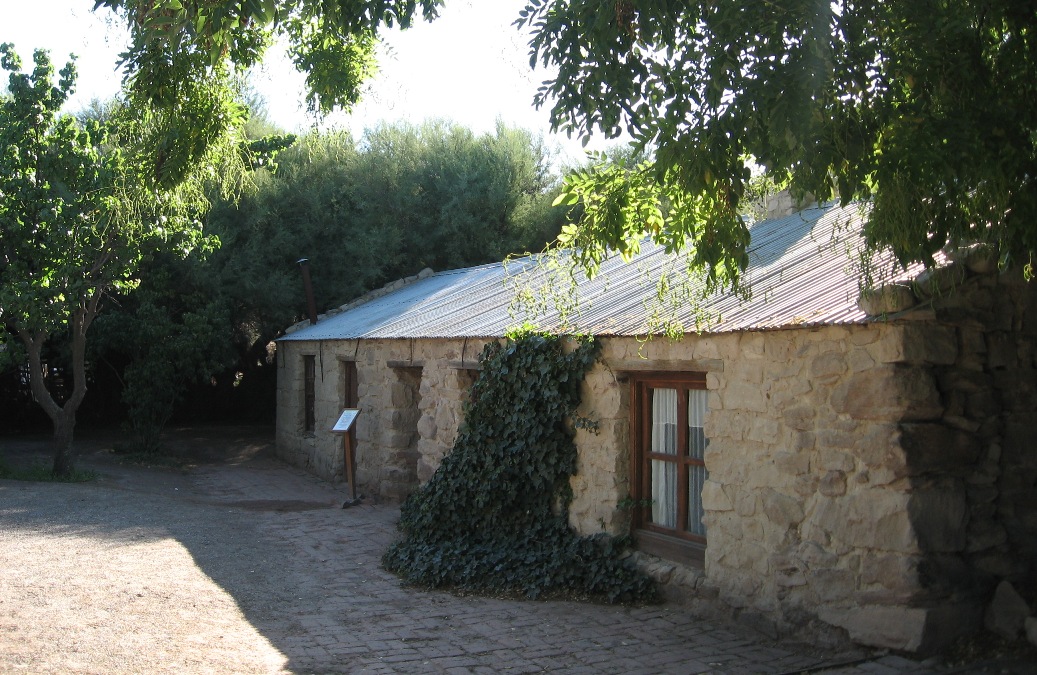
and even older first house of any sort.
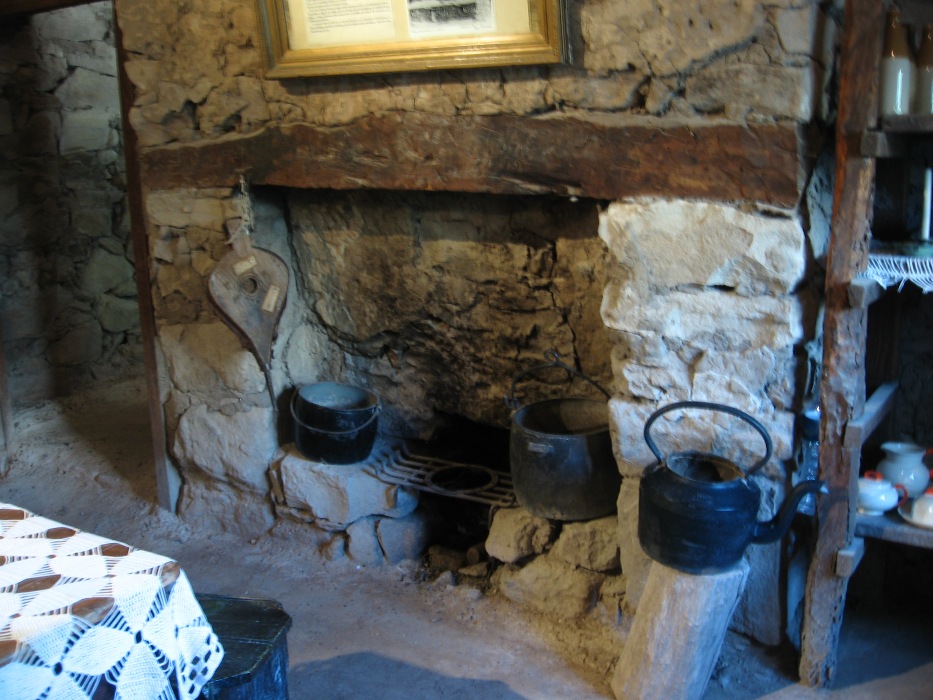
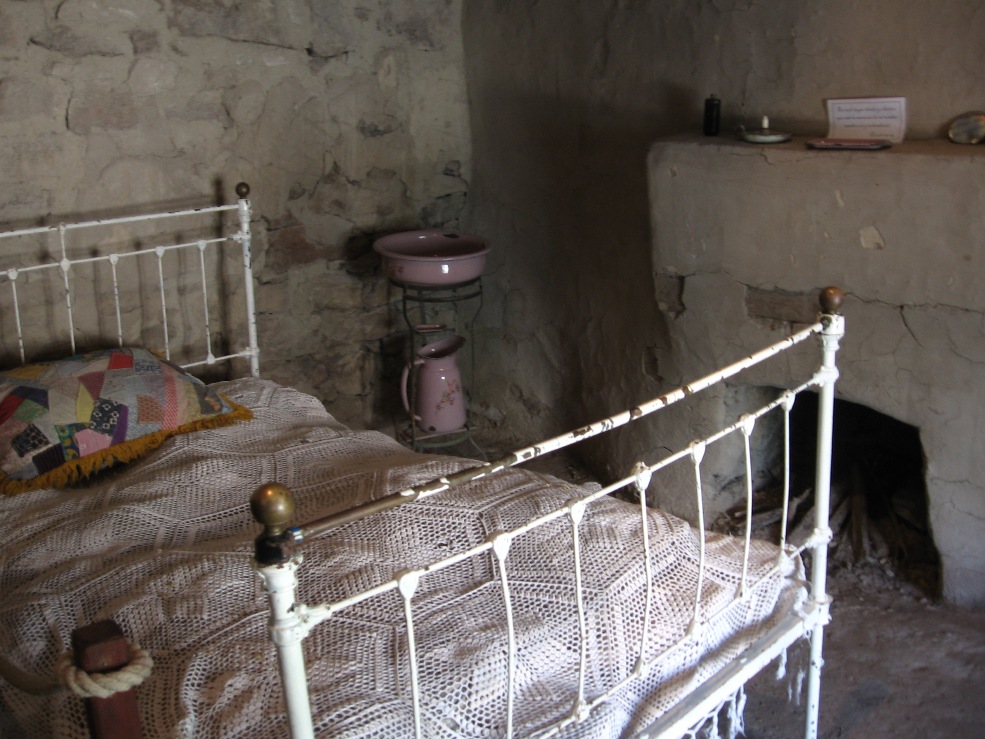
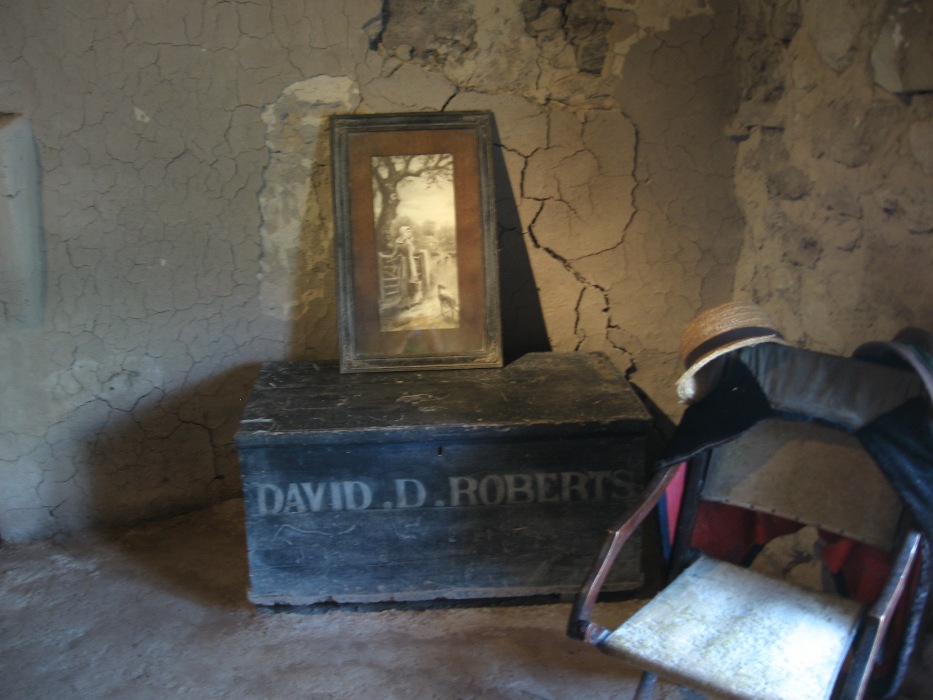
Founding father of Gaiman, David Roberts arrived with his wife in 1874, after their ship had sunk (along with most of their belongings) off the coast of Brazil. They had managed to salvage one trunk (in the far right photo), which still sits in the small stone house they built and lived in, and around which the town of Gaiman grew into existence. Interesting enough, the Roberts' ill-fated ship brought a contingent of Welsh who had been living and working as miners in Pennsylvania, USA.
Traipsing through that dusty old stone house dried out our throats, so we just had to alleviate the discomfort with some tea. Which tea house to visit? The choice was difficult. Something more quaint and traditional? Or how about the one that Princess Di visited - the big one with the well manicured gardens and a high probability of having tour busses parked in the driveway? We decided to go with smaller and quainter for teahouse visit #1, "Ty Gwyn," which means something like "White House," in Welsh.
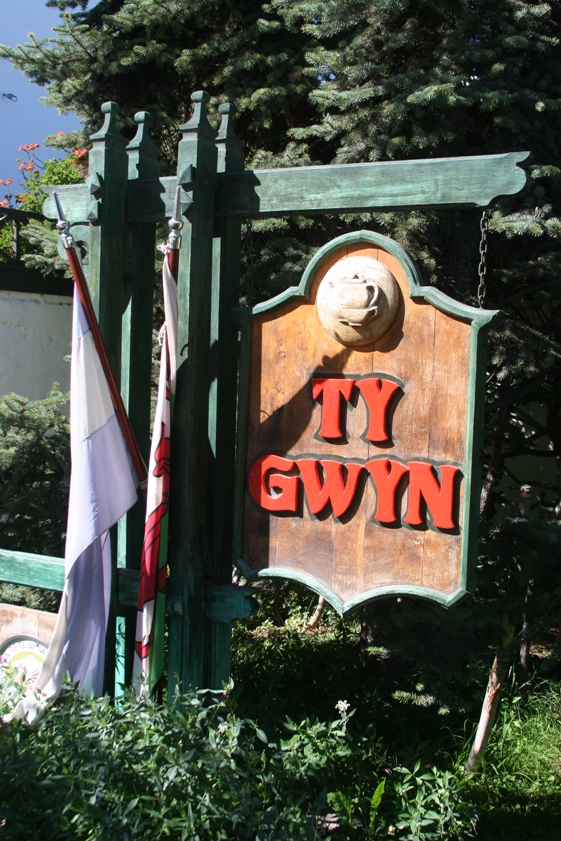
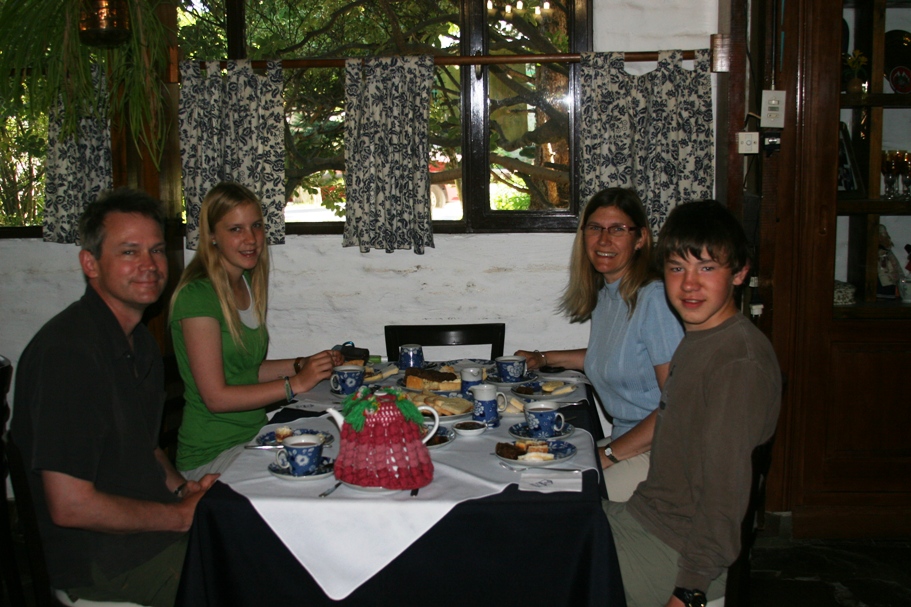
Fortified by caffeine, scones, and black raisin cake, we now had the energy to walk a few blocks along the river away from downtown in order to see something very different. A native son of Gaiman has spent more than 20 of his 80-plus years of life working on something he calls the Desafio and that the Guinness Book of World Records calls the "Worlds Biggest (only?) Recycled Trash Park/Museum." My Spanish-English dictionary says that "desafio" means both "challenge" and "defiance," and both words are appropriate for the as-such named eccentric and quirky magnum-opus here in Gaiman.
The best way to try and describe the exhibits of the desafio is not with words. It's better to let a handful of pictures speak for themselves (and the museum). Just exactly how many thousand beer cans and 2 liter plastic bottles are hard at work "being art" here in this park? - perhaps Guiness has a clue. My best guess would be "more than you could ever imagine."
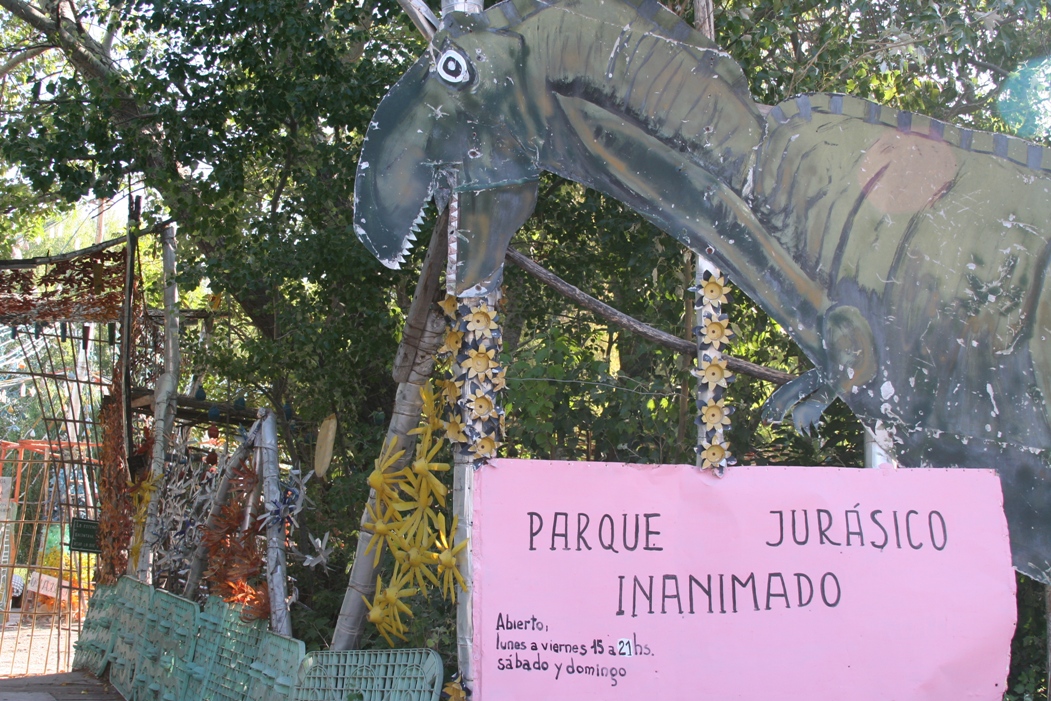
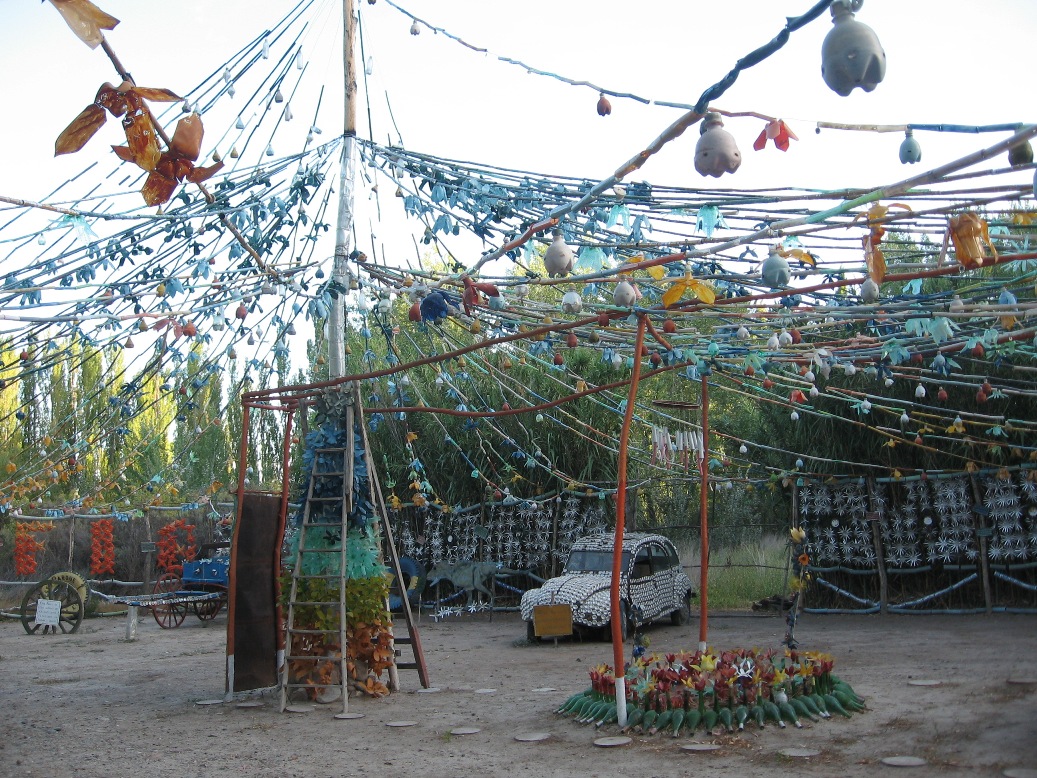
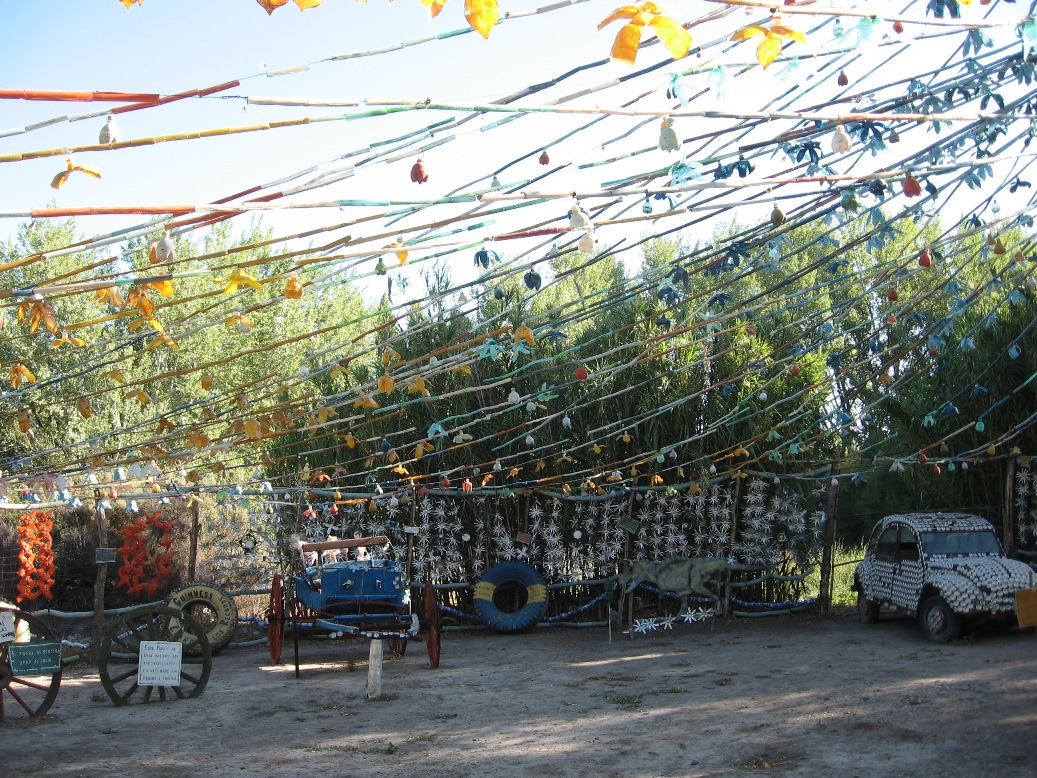
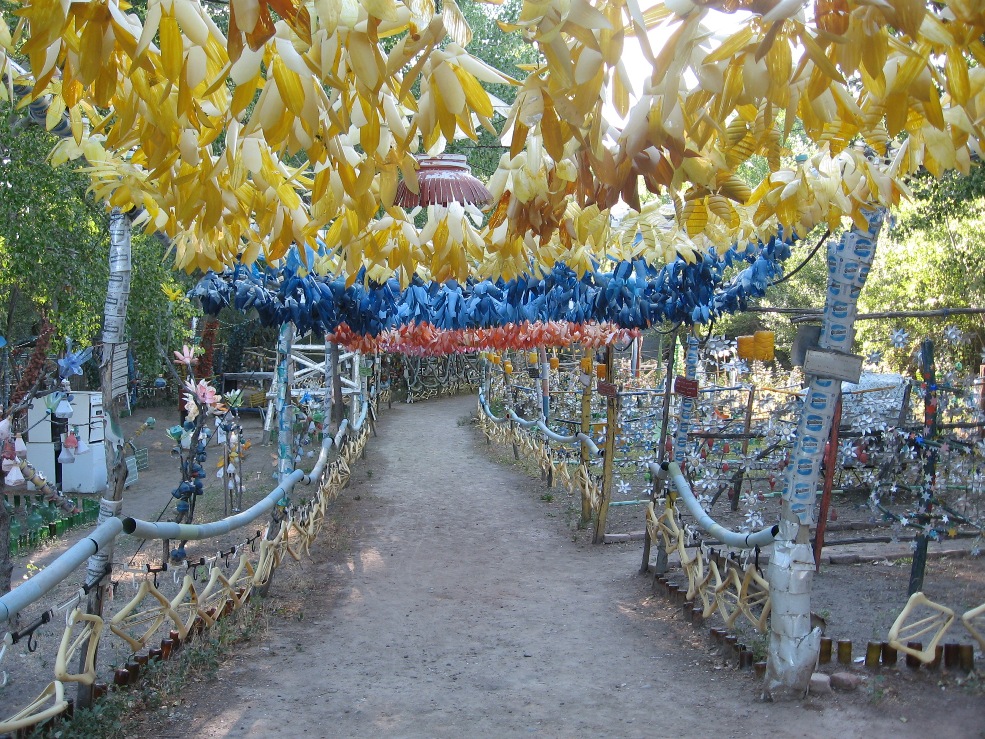
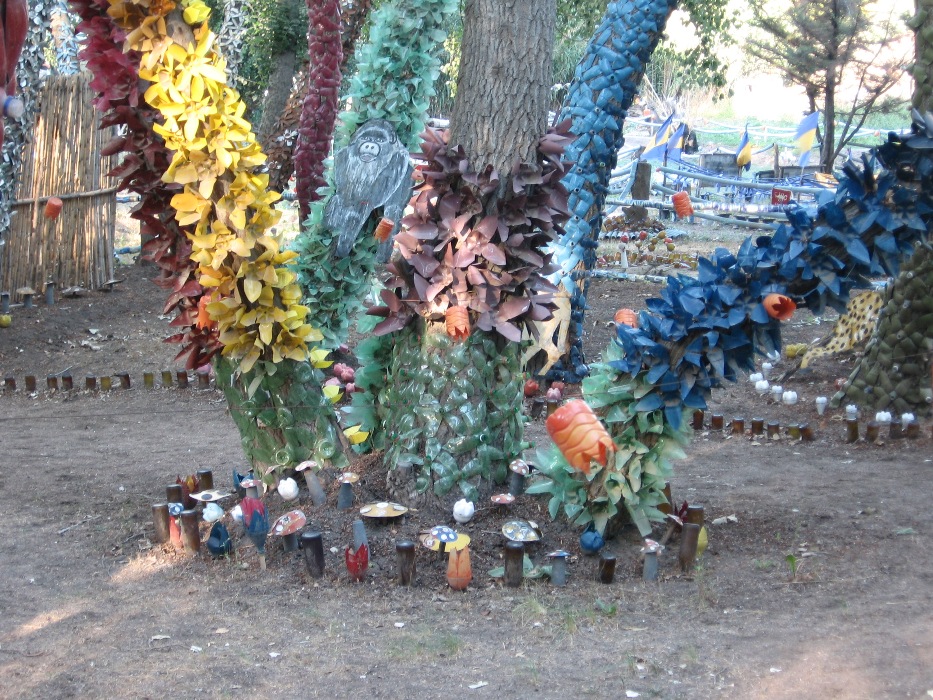
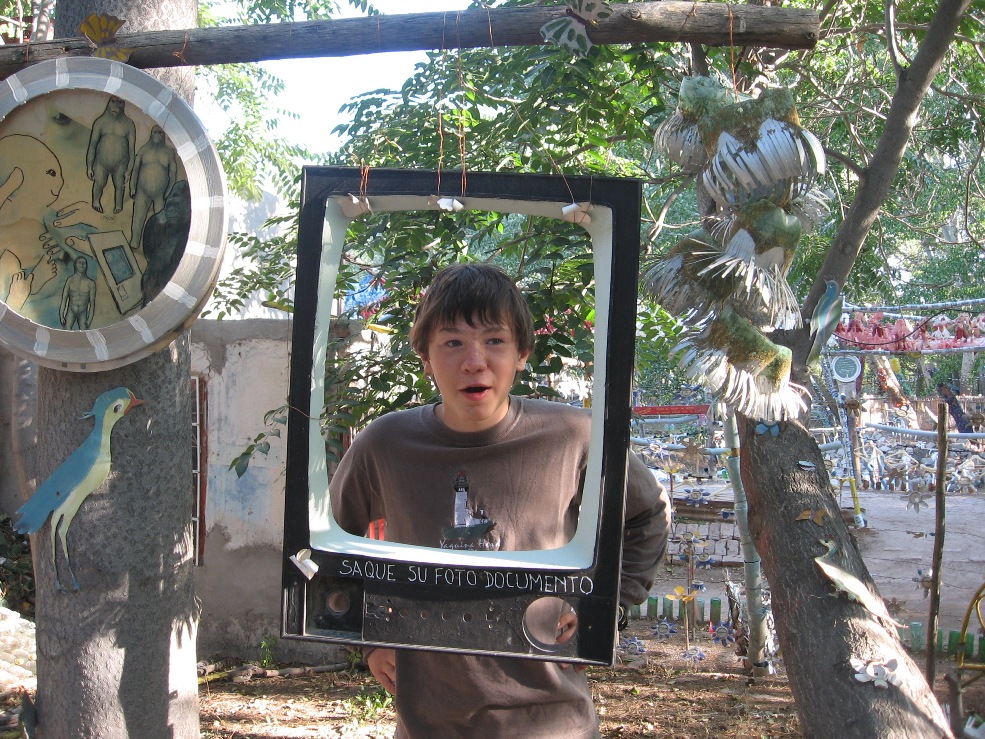
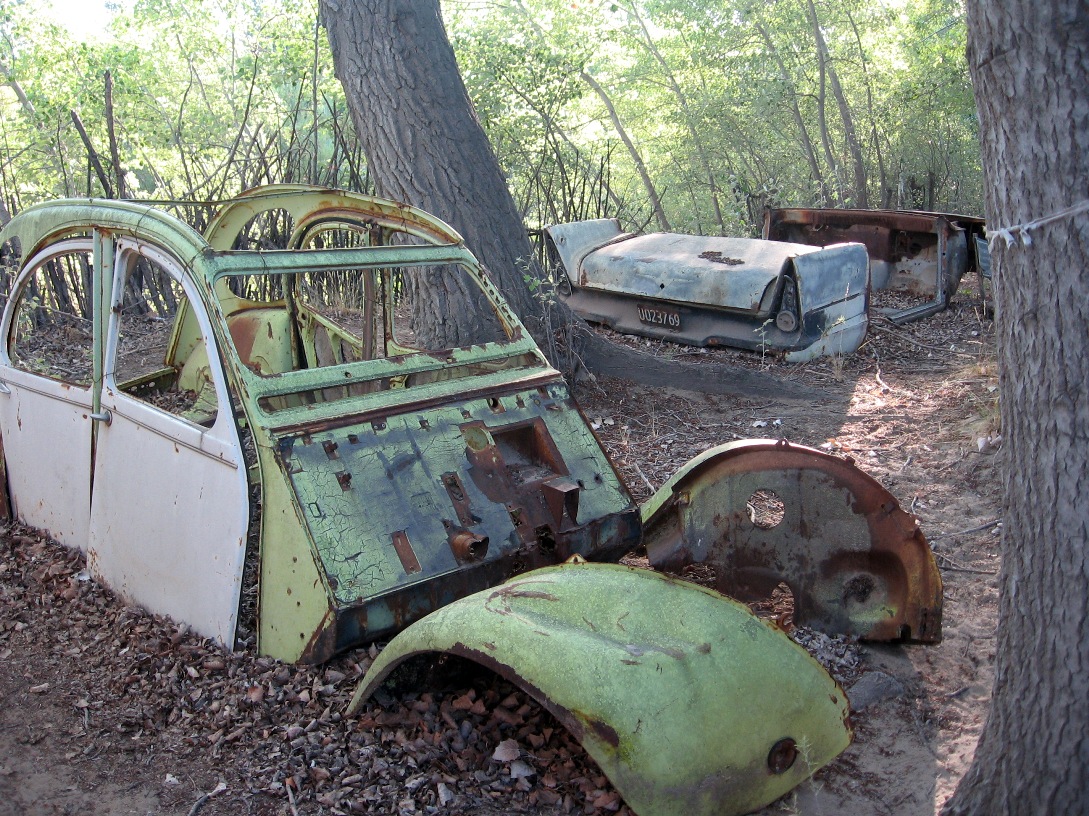
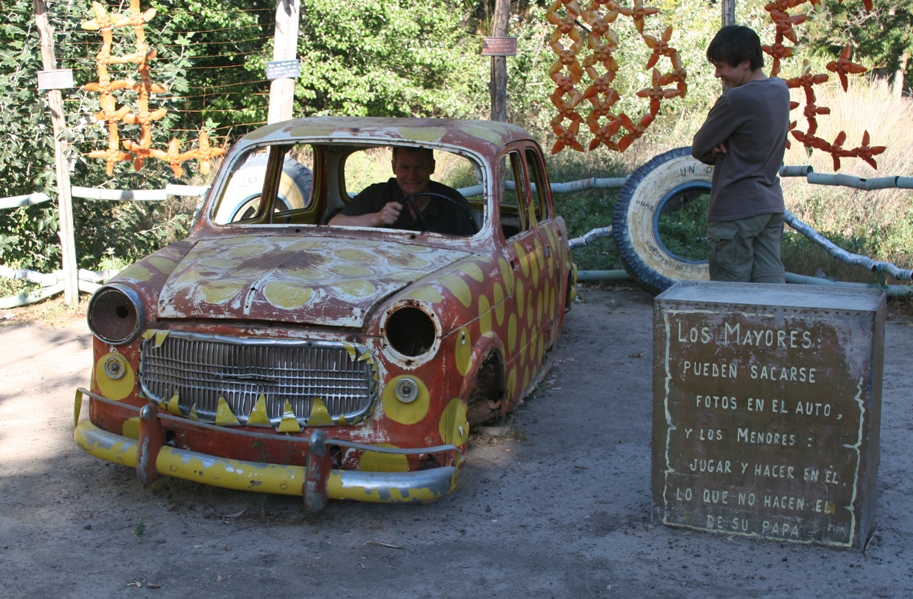
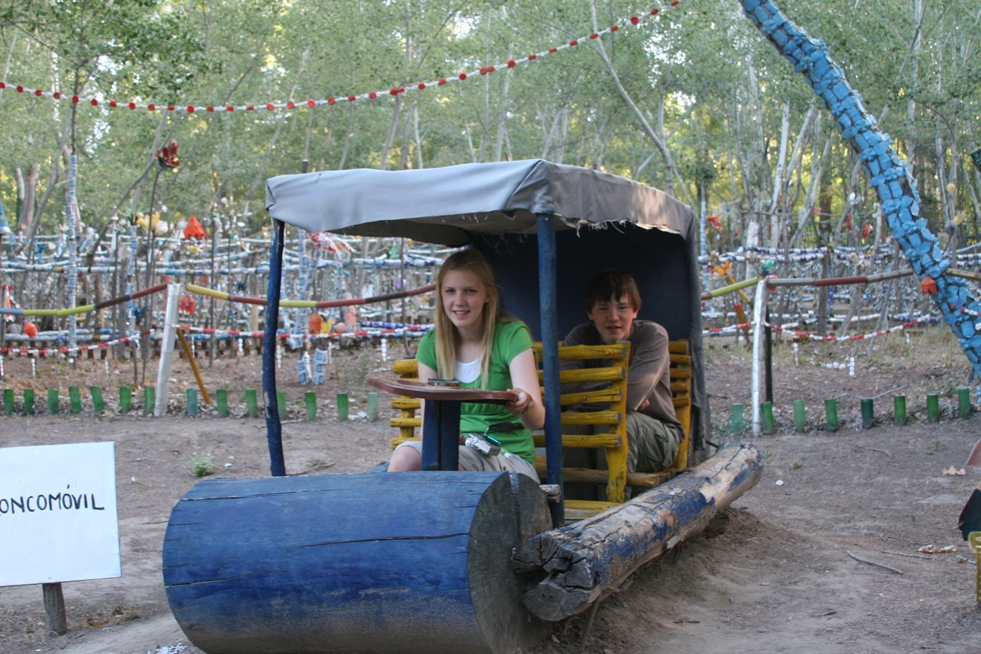
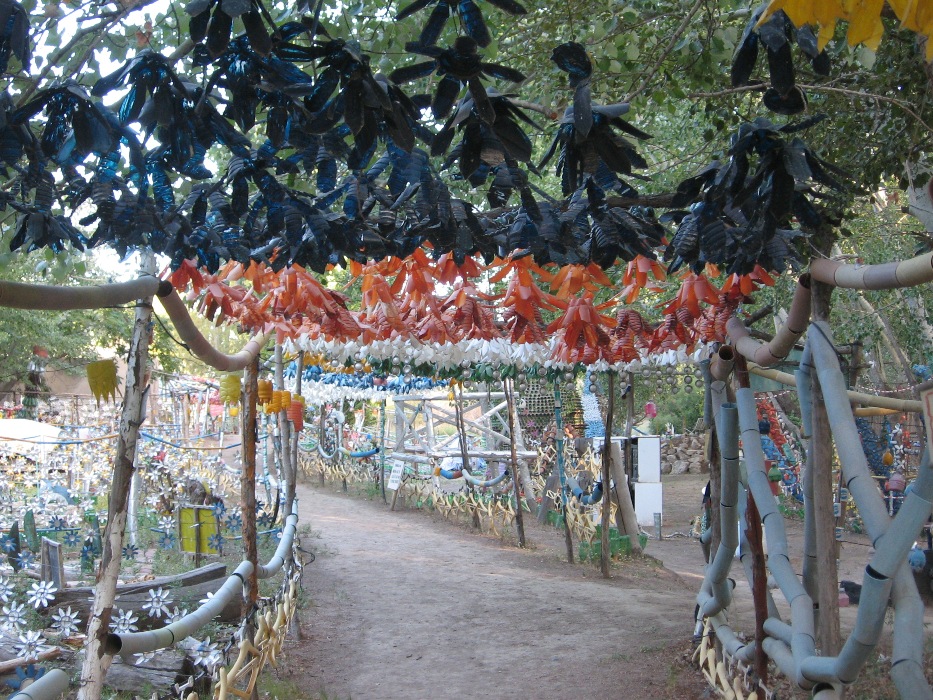
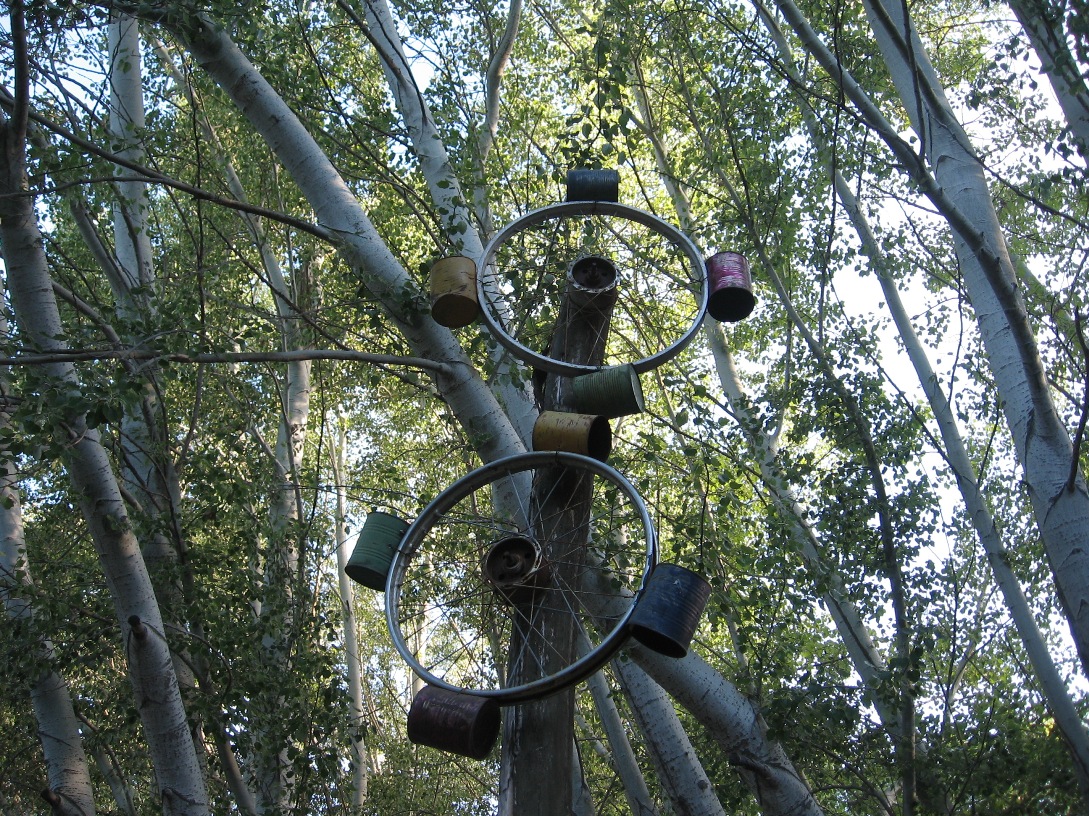
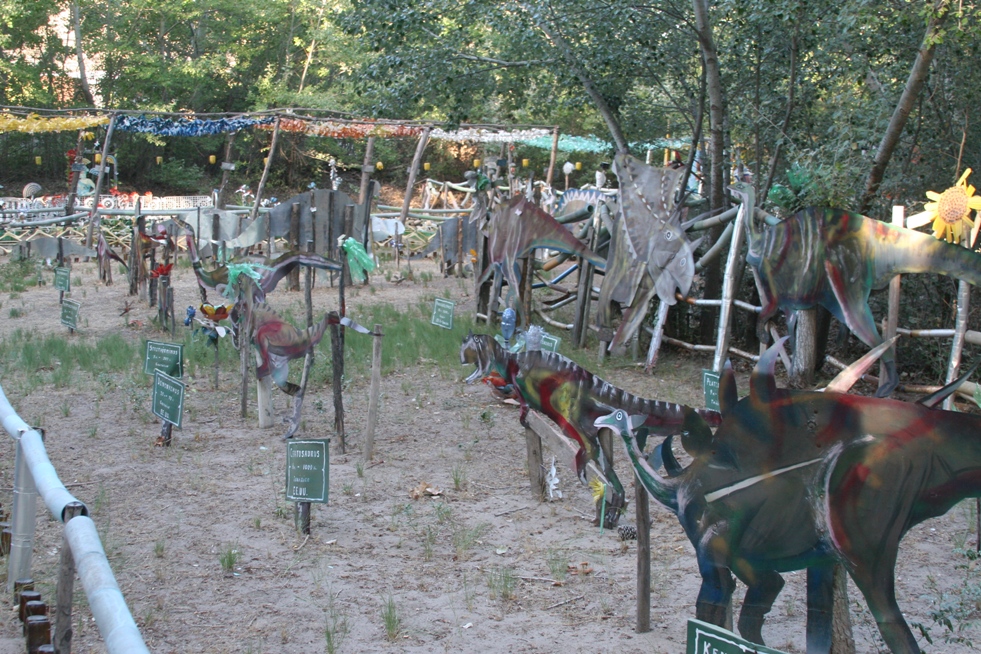
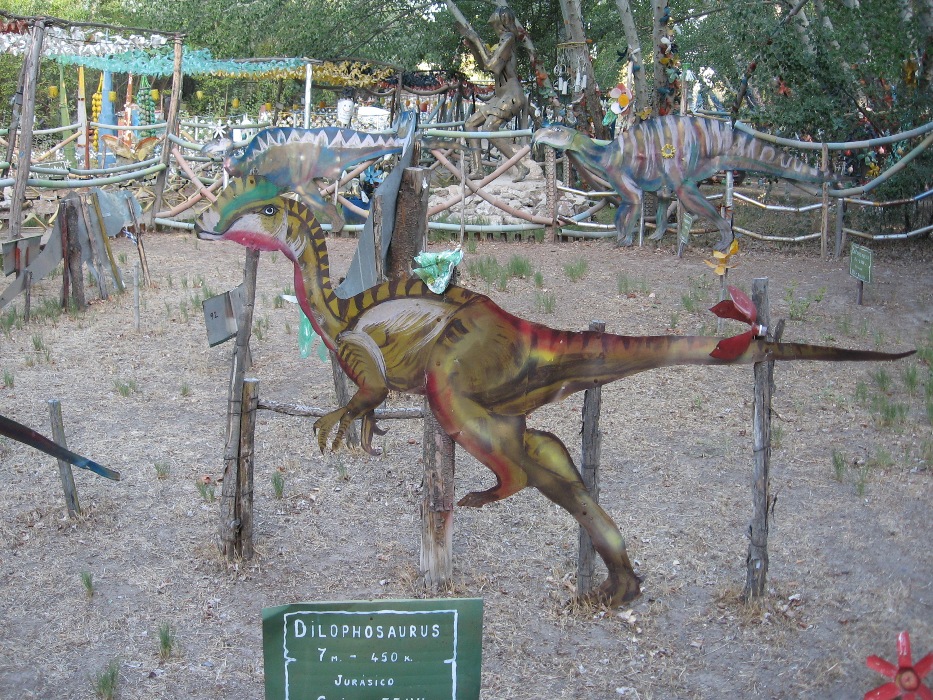
The desafio contains worlds within worlds, like the dinosaur park, auto-show, labyrinth, zoo, hall of "fine art,"
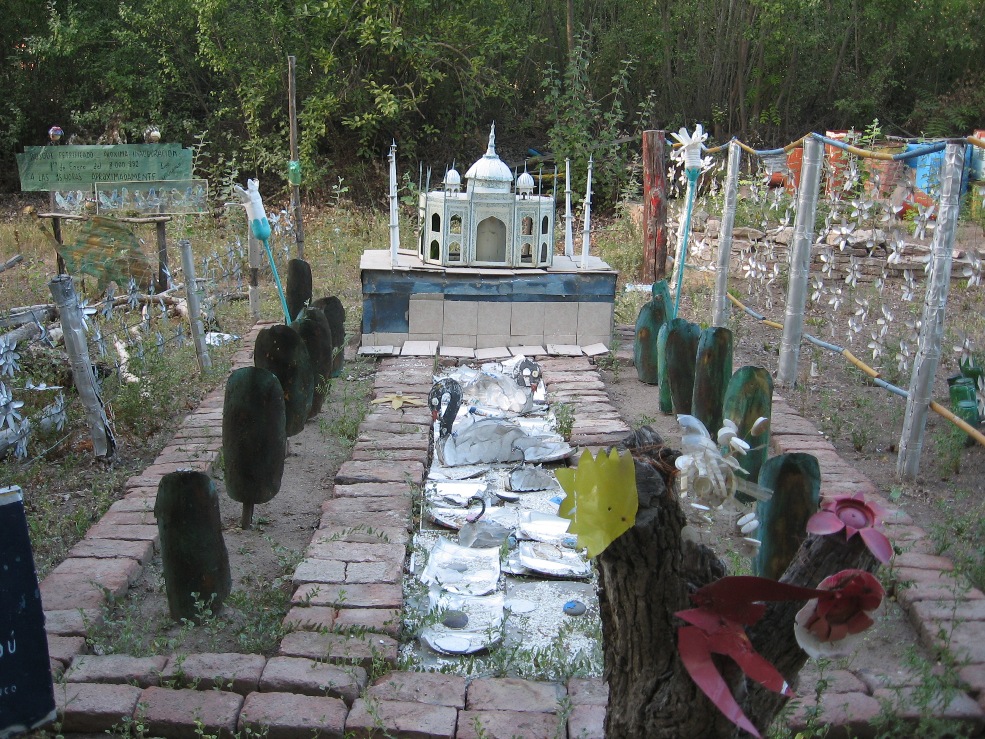
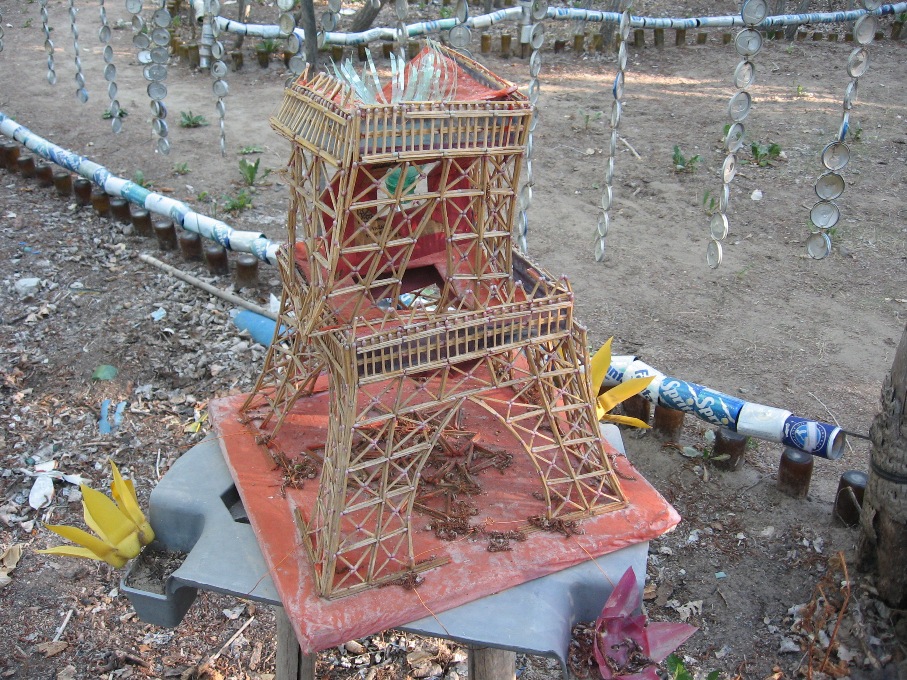
Taj Mahal & Eiffel Tower replicas (is that what that second one is?),
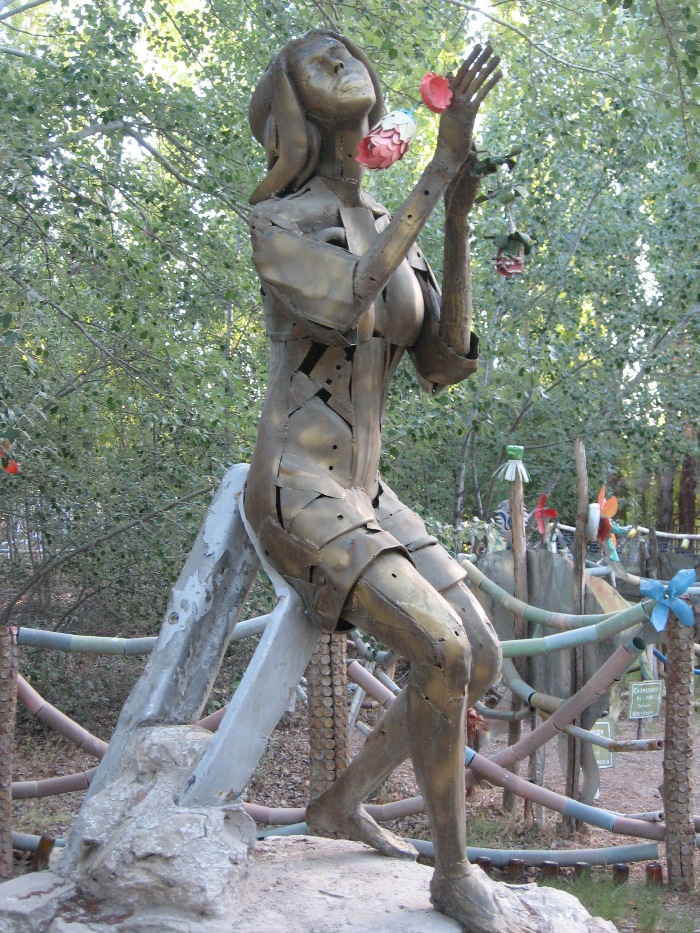
statues,
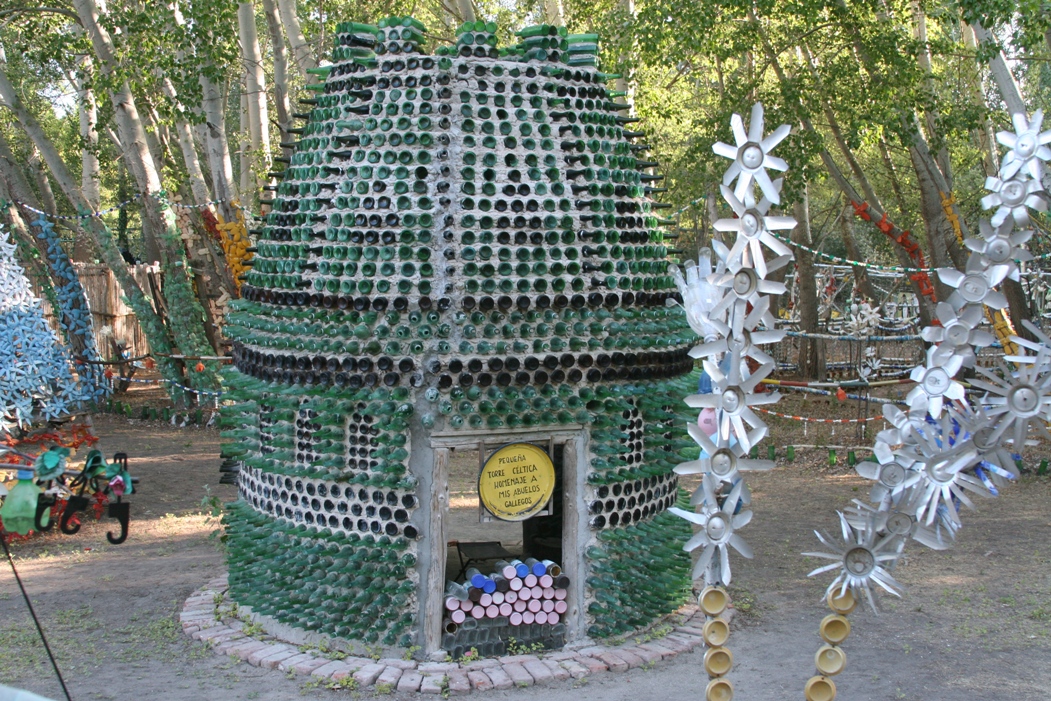
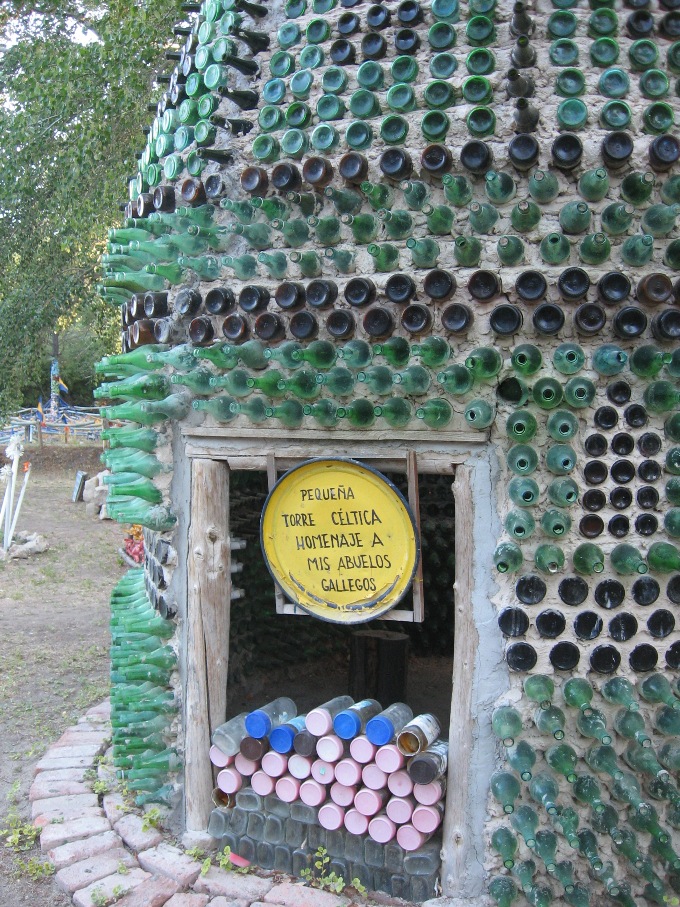
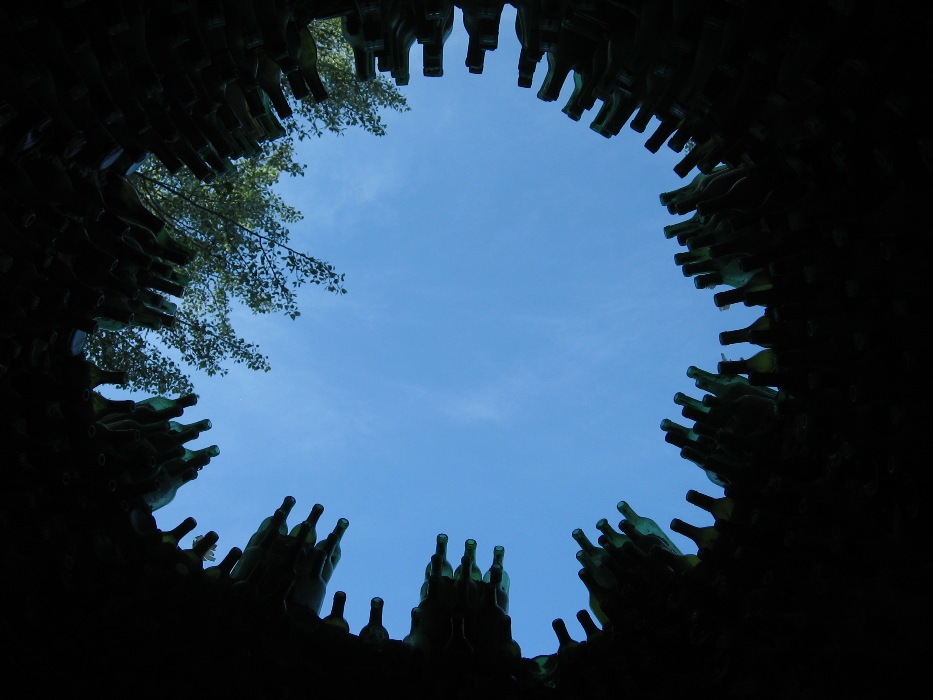
a bottle&mud traditional Welsh country house replica,
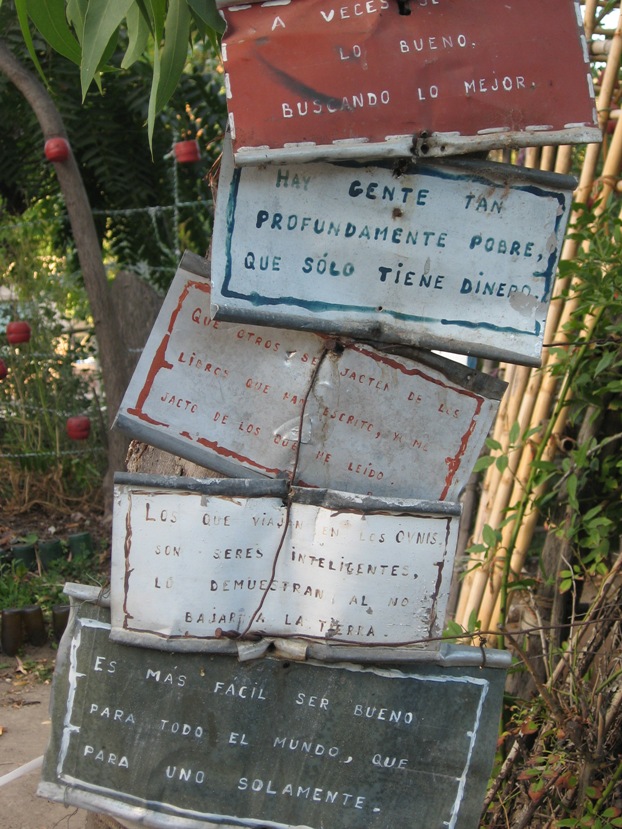
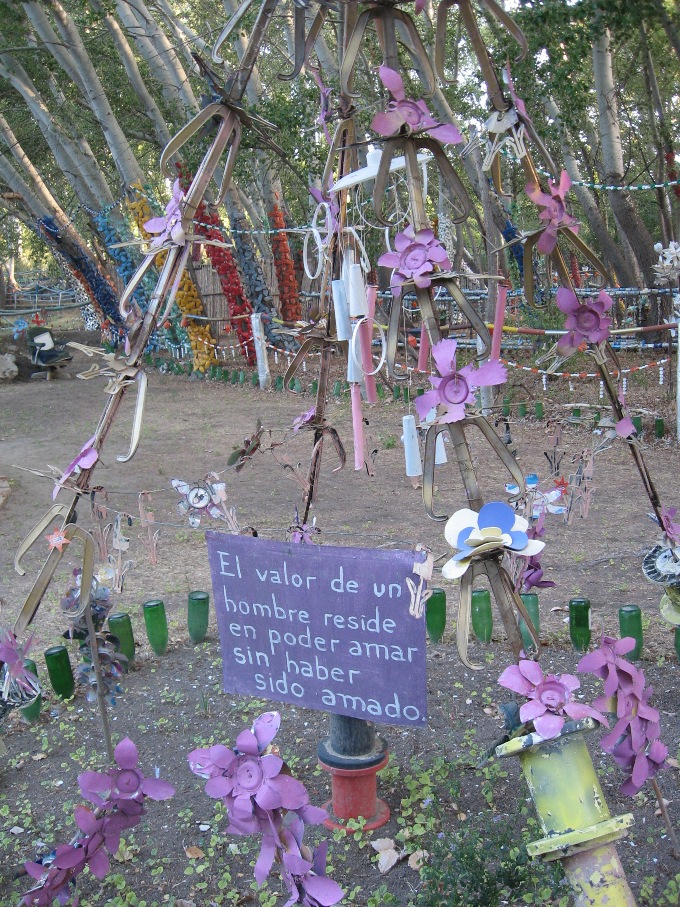
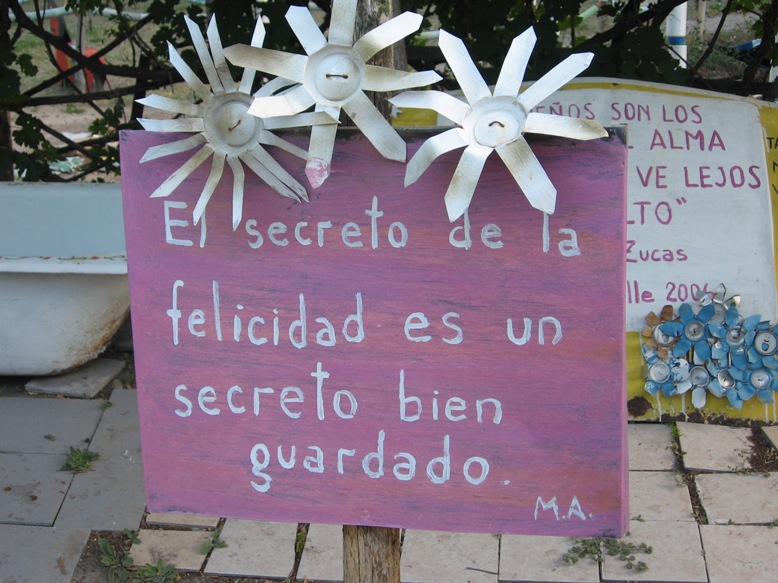
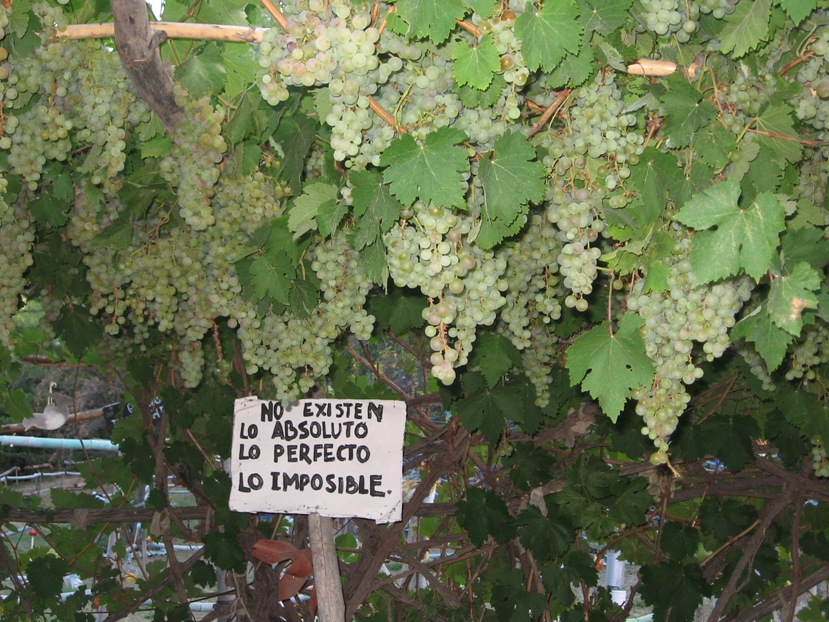
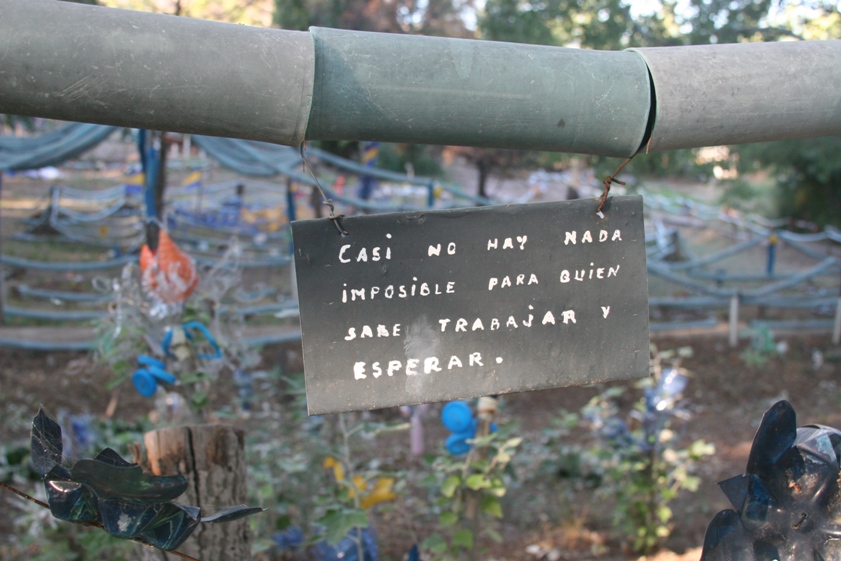
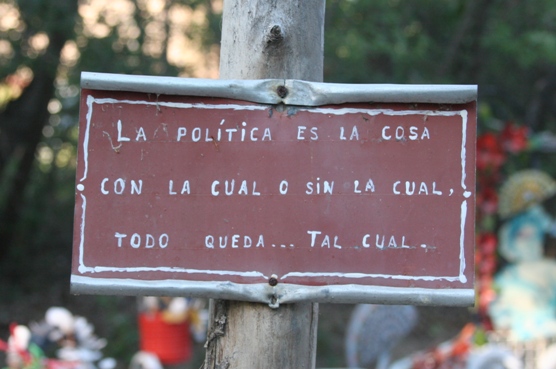
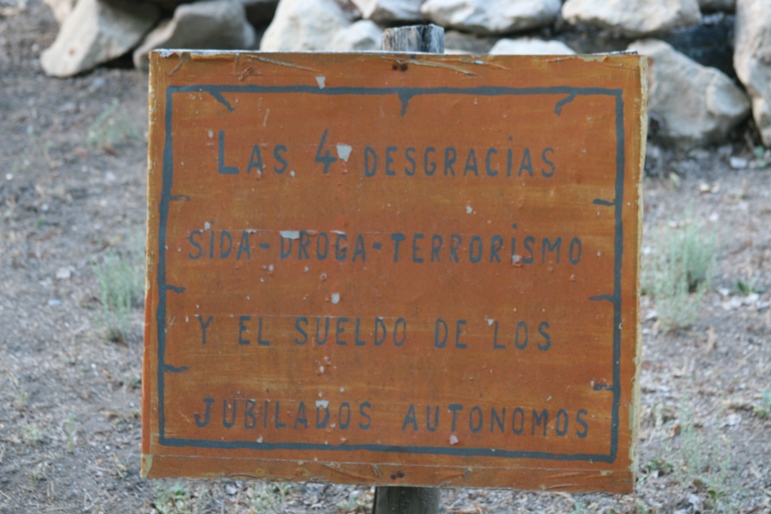
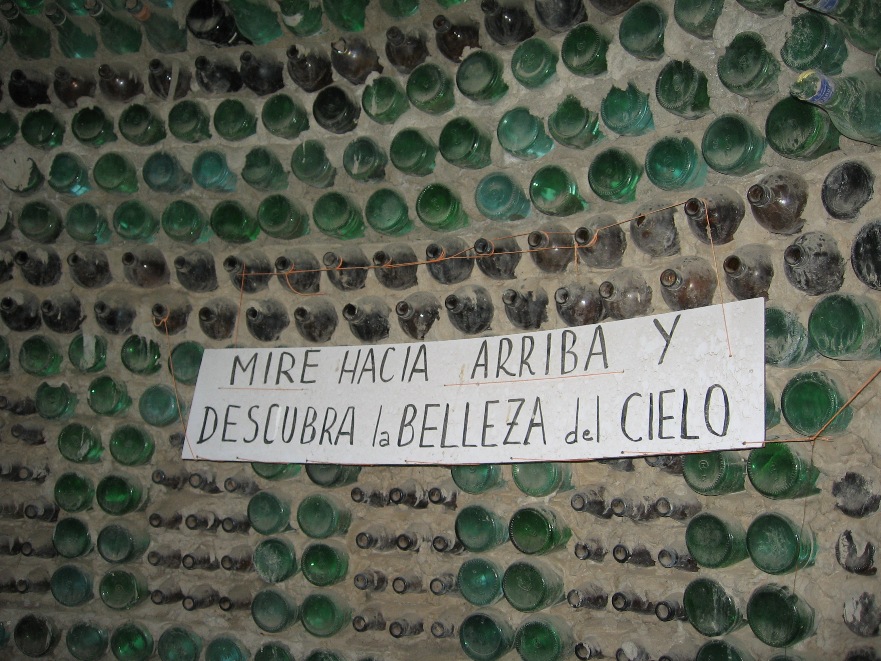
lots of poetic little slogan placards (there are about 50 more...),
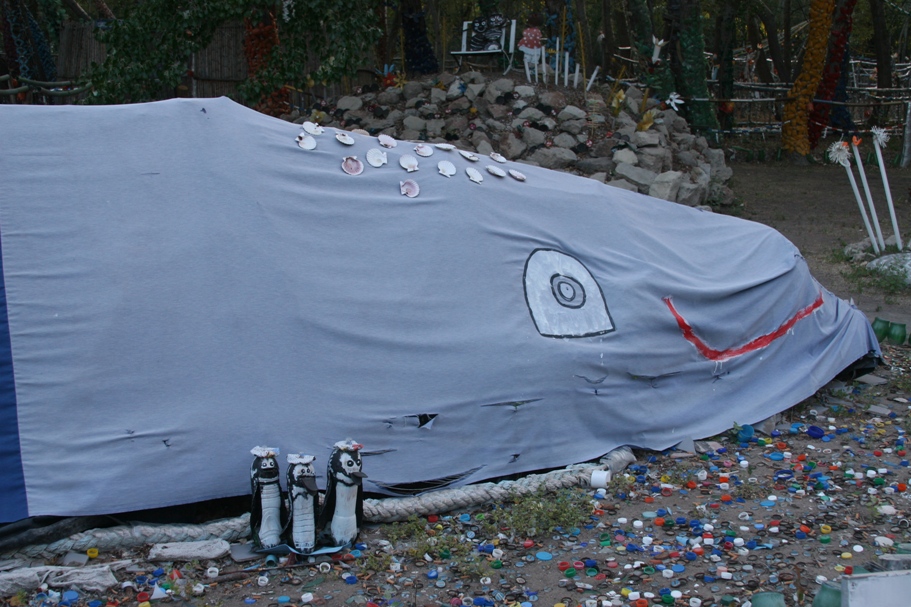
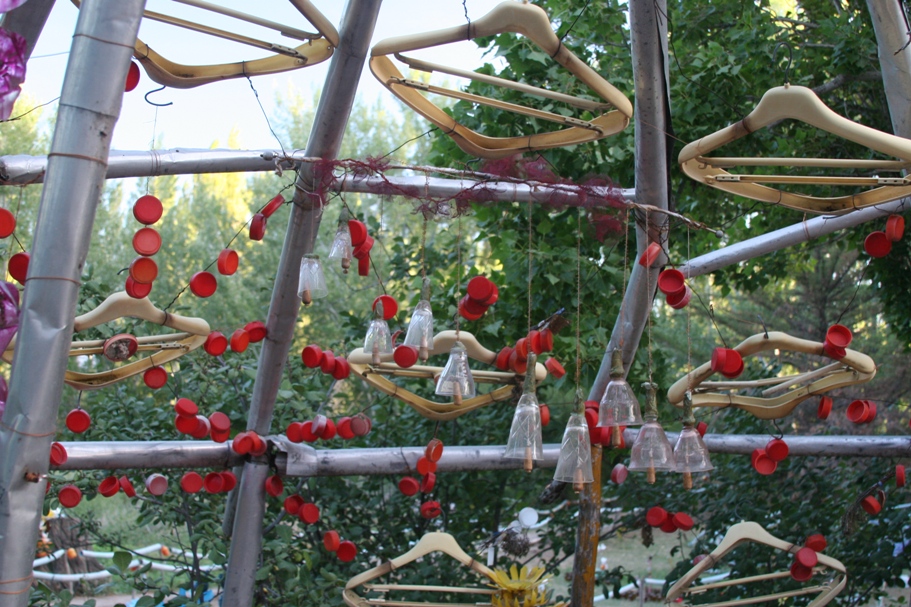
whales, glass bells,
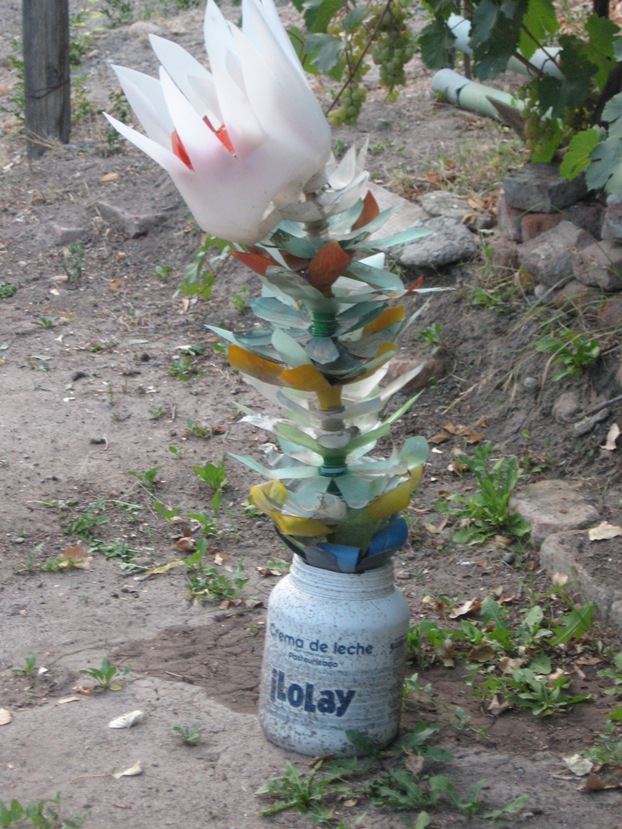
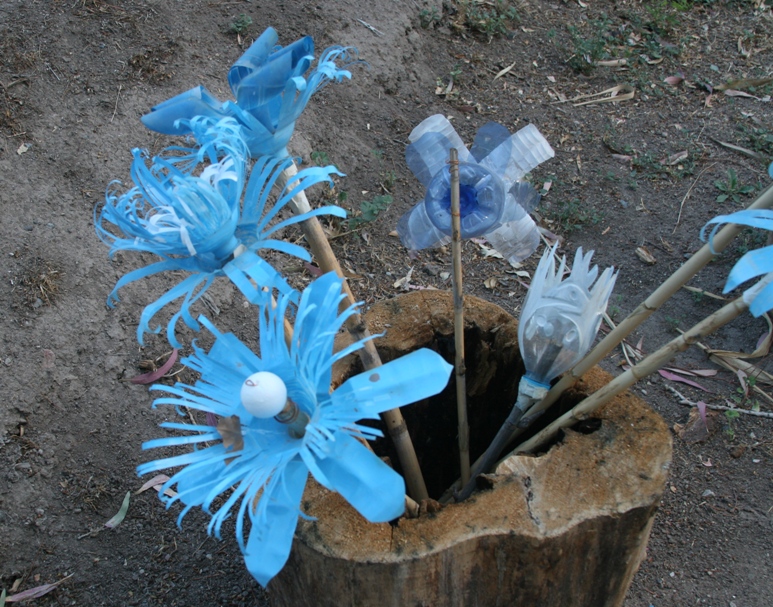
flowers,
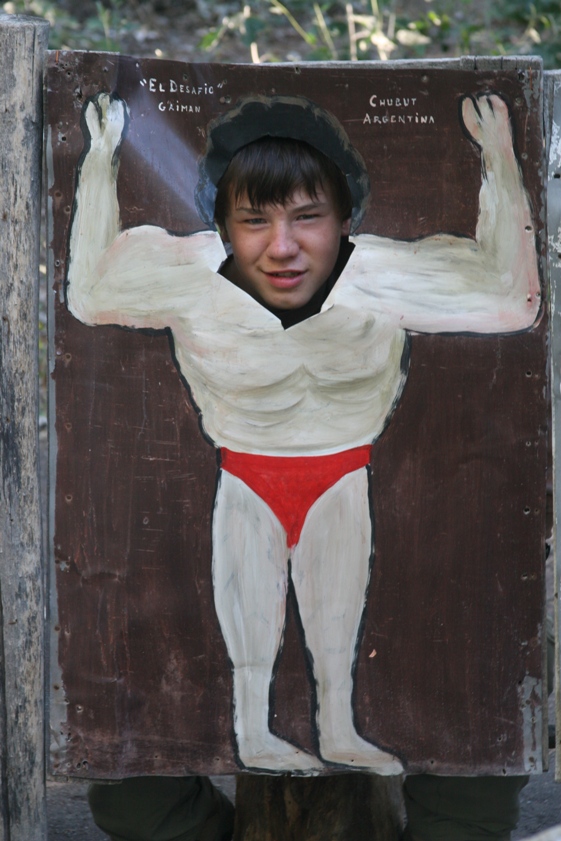
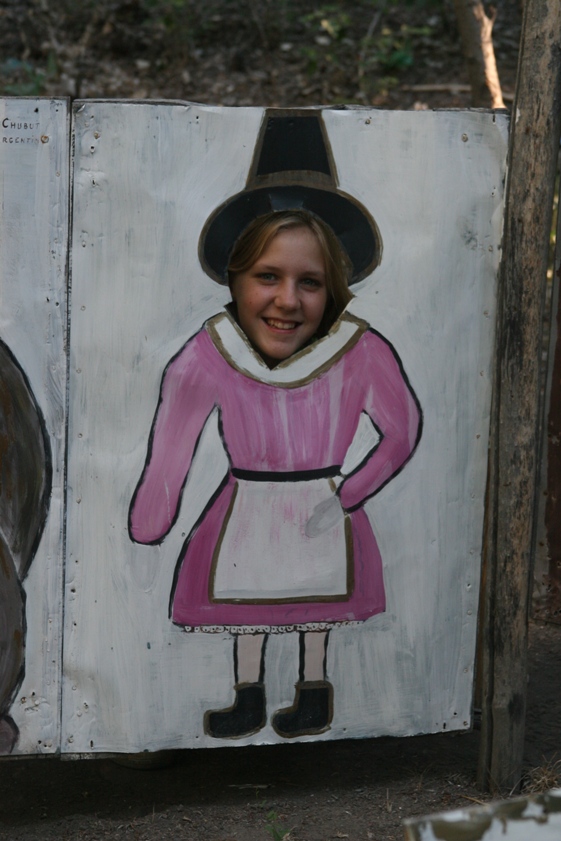
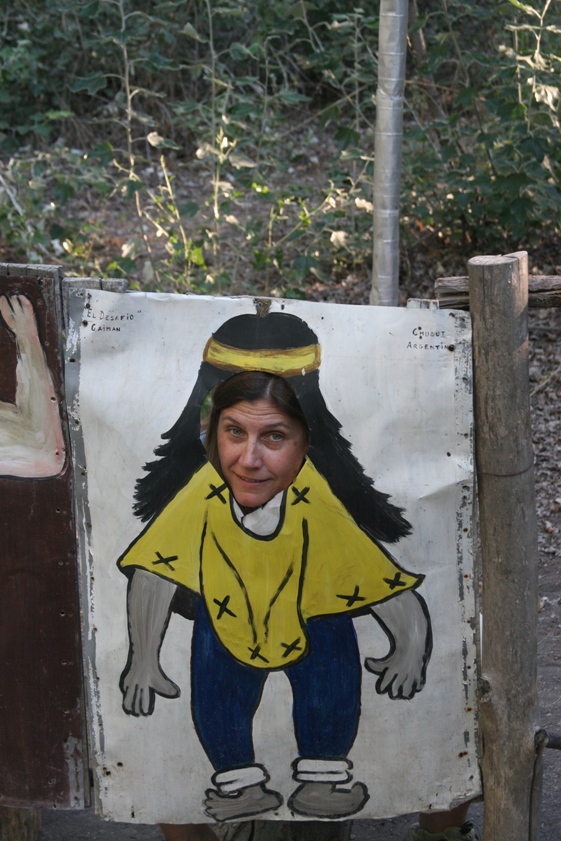
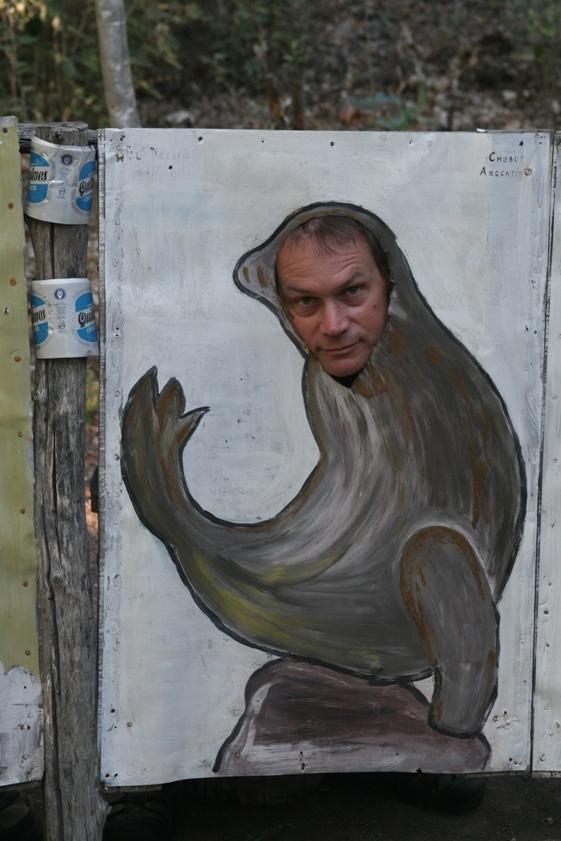
and strange-bodied people. Quite an experience!
*****************************************************
Before the Welsh came to Chubut, and even before the first Paleolithic humans wandered down from North America - way way way before - dinosaurs lived here. Apparently massive quantities of them, as evidenced by the treasure trove of fossils that have been discovered in Chubut during the relatively short time span of a couple of decades. Although most of these fossils have dispersed among university labs and museums around the world, the paleontology museum in Trelew (a "real" city of almost 100,000 residents located about 15 kilometers from Gaiman) sports an impressive collection of fossils that have been allowed to remain close to the place where their original animated incarnation lived and breathed, and where they were eventually extracted from the dirt, millions of years later, by modern human scientists.
The heat wave in Gaiman continued, and the air-conditioned museum of Trelew beckoned.
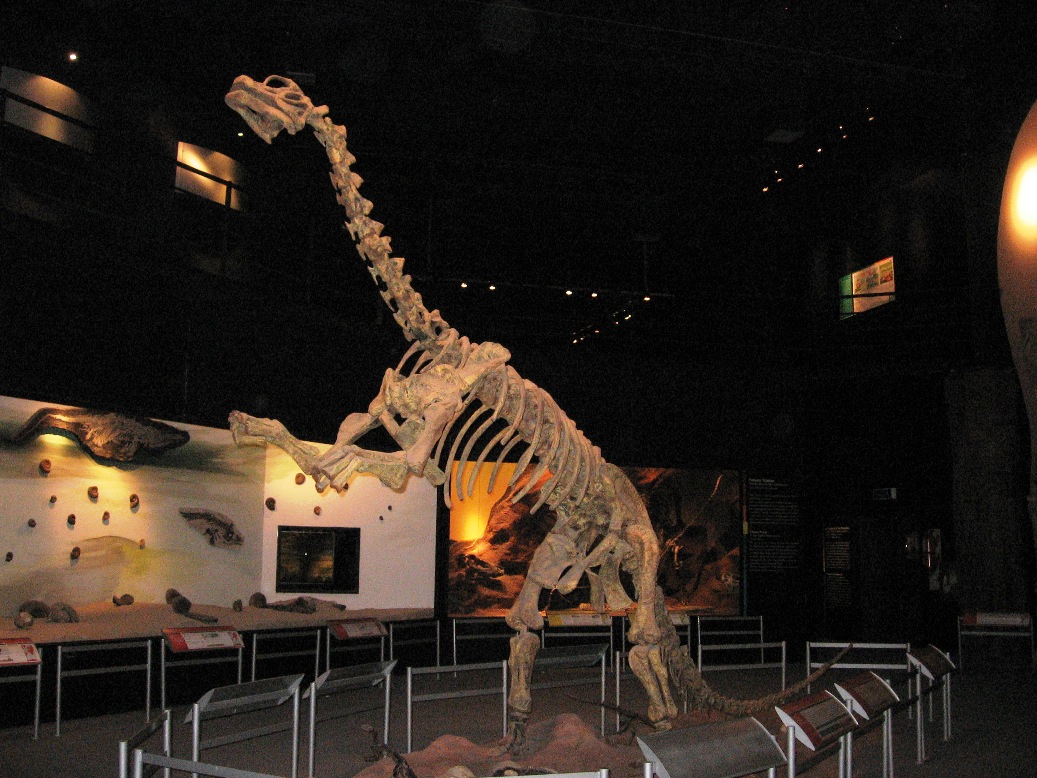
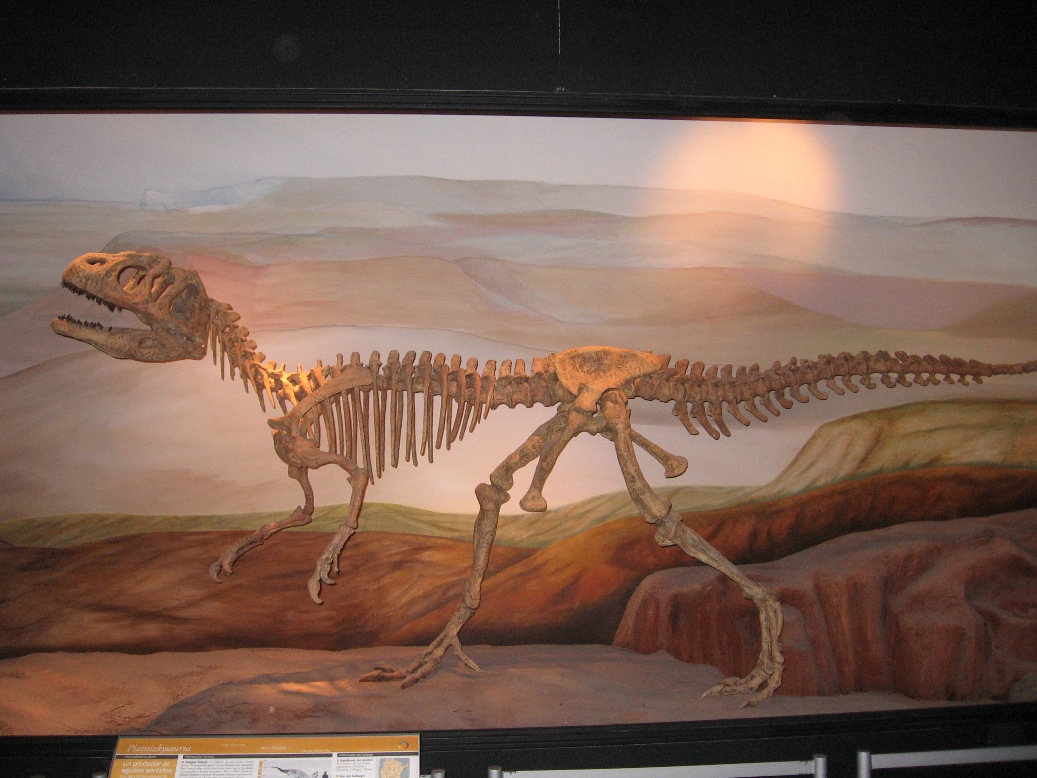
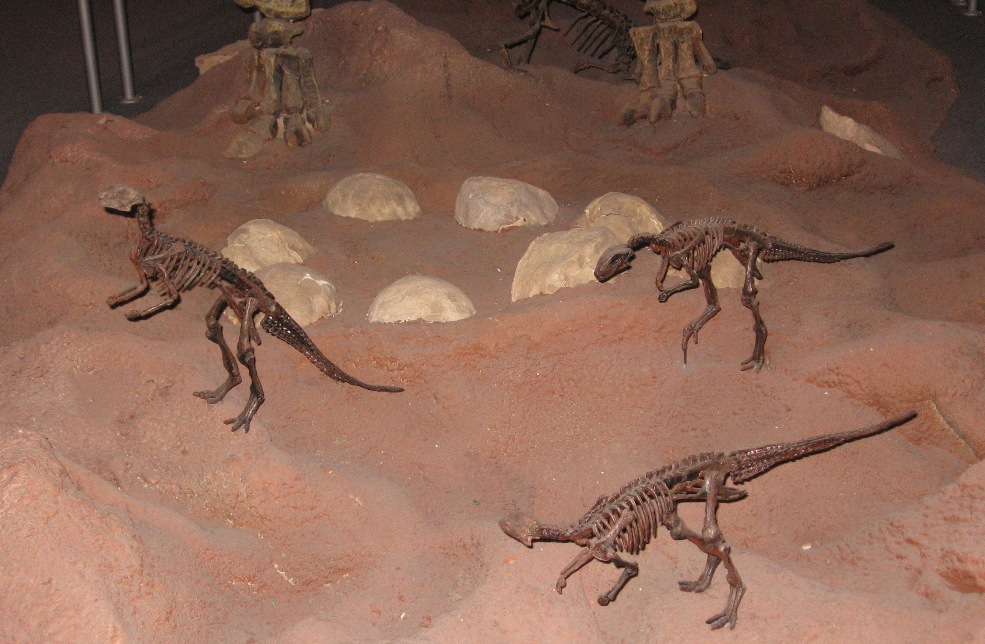
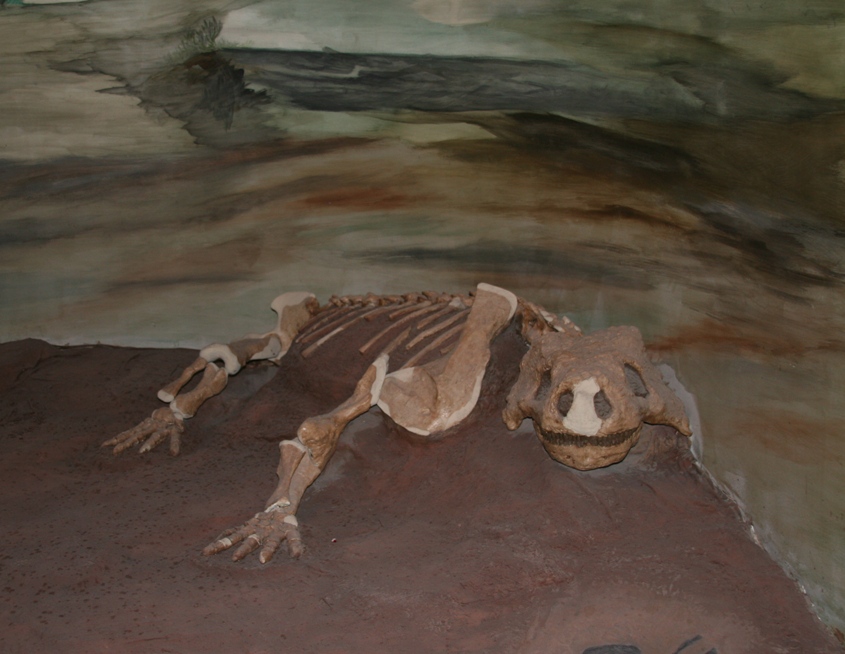
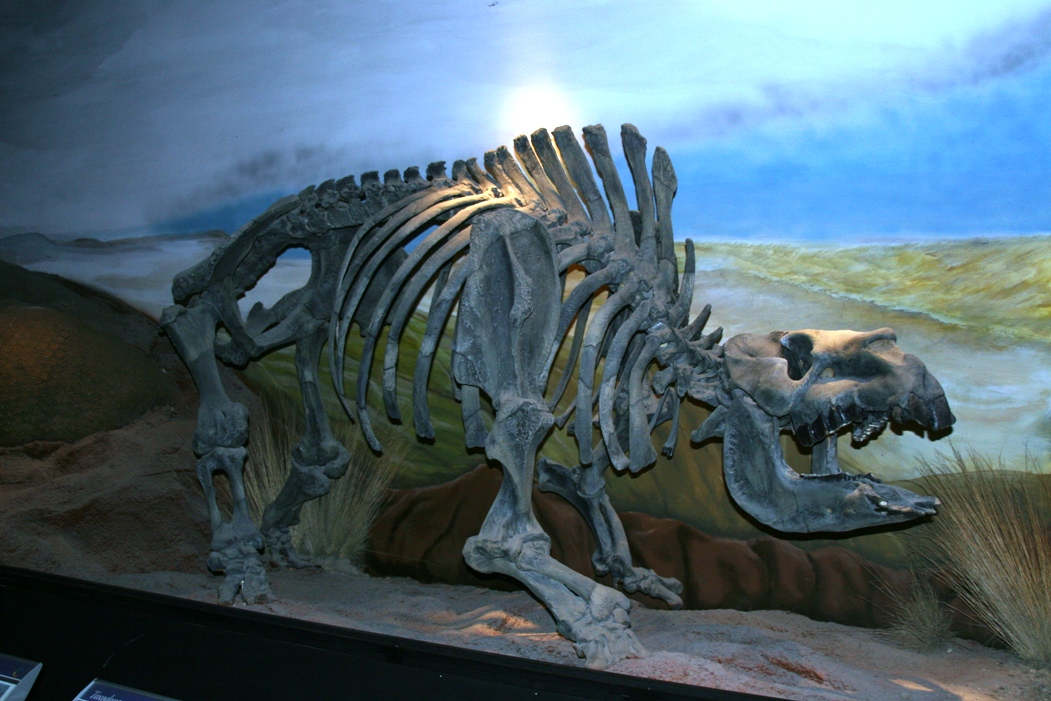
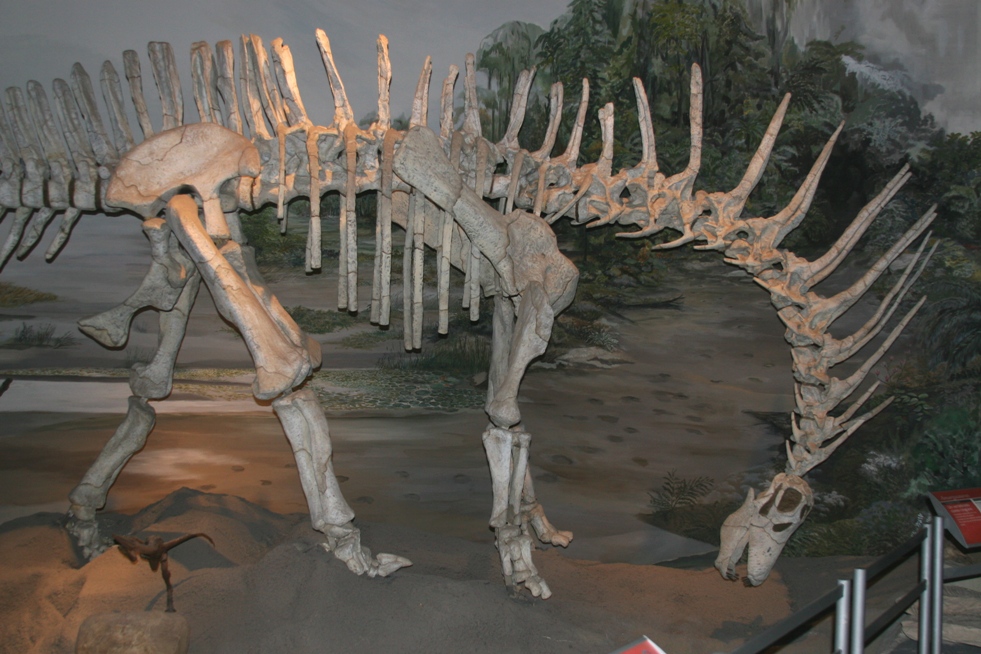
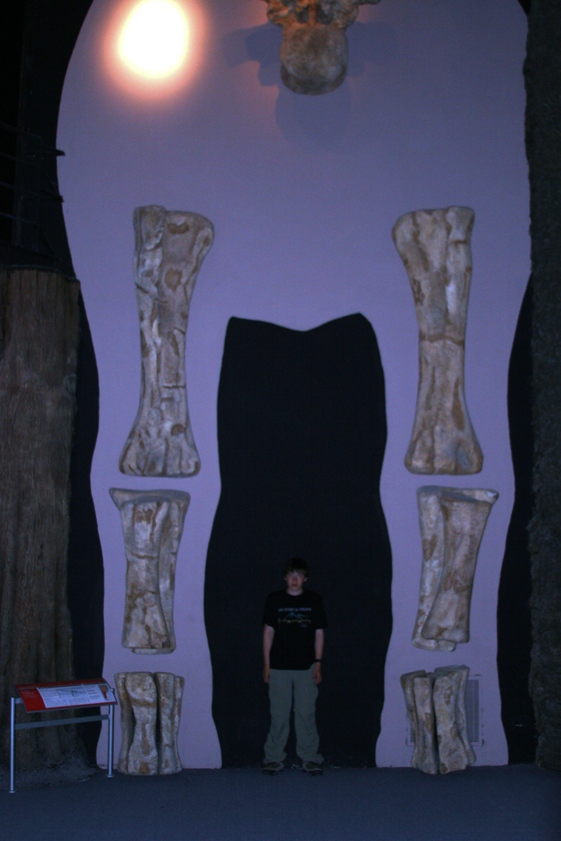
Tom stands between the legs of an Argentinasaurous, the largest dinosaur as yet discovered in the entire world.
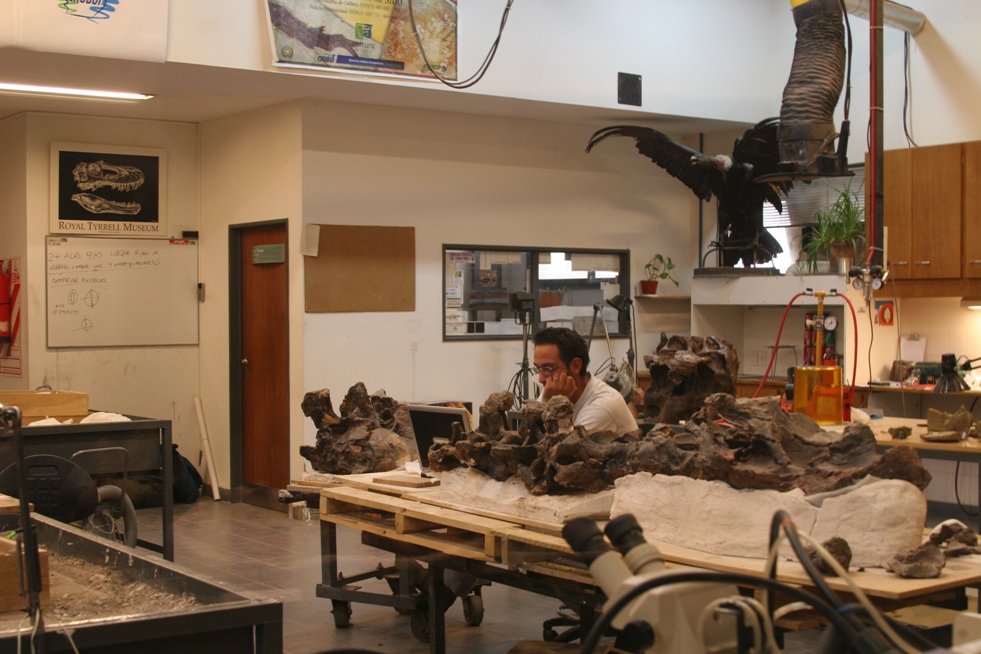
The hard work behind the glamour of the exhibits.
So what could we do when we weren't sipping tea, walking through the recycled trash, or looking at old bones? Well, our lodgings at Posada Los Mimbres did provide a very comfortable place to do schoolwork, take walks, relax...
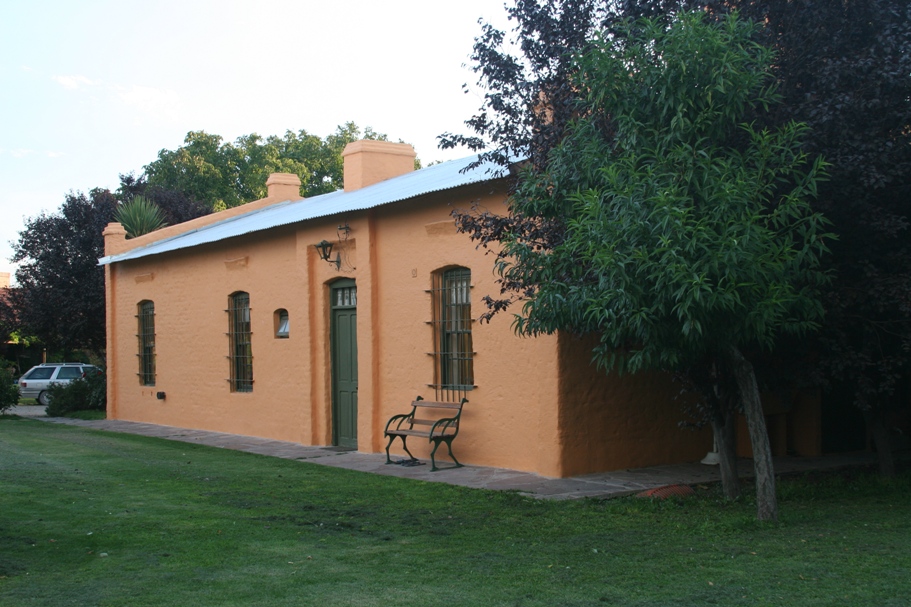
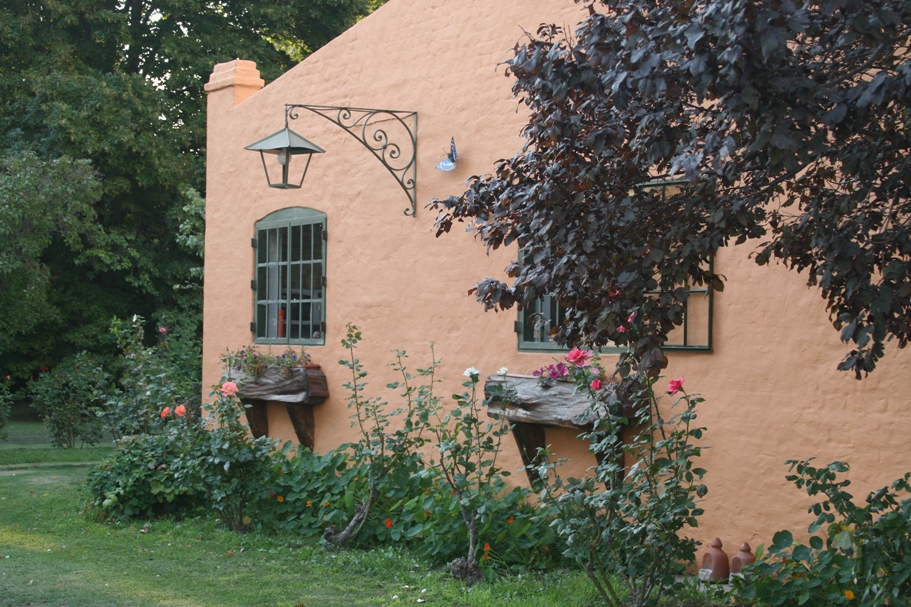
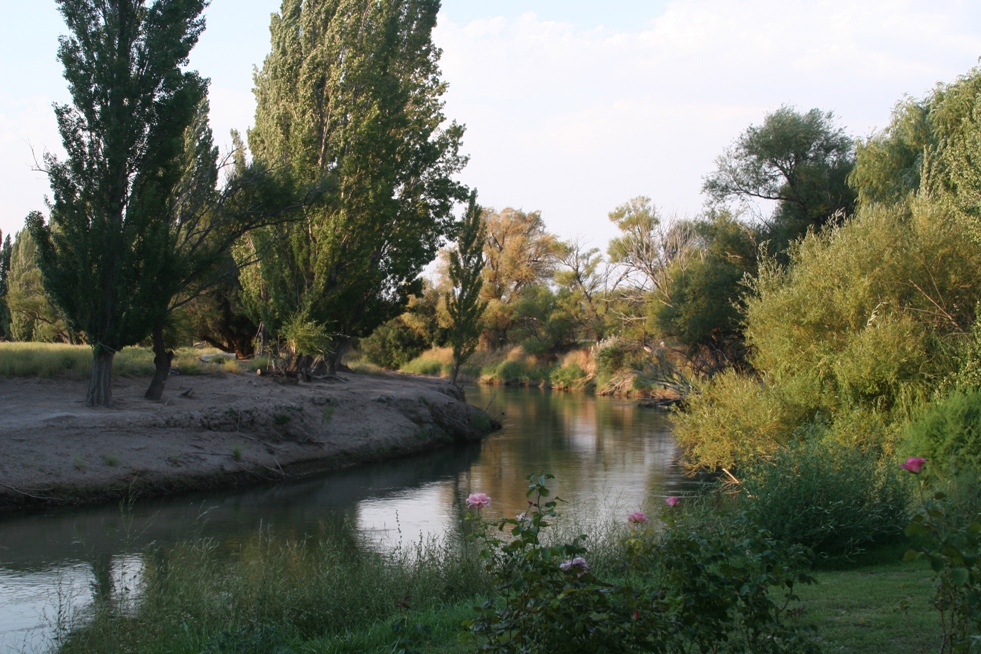
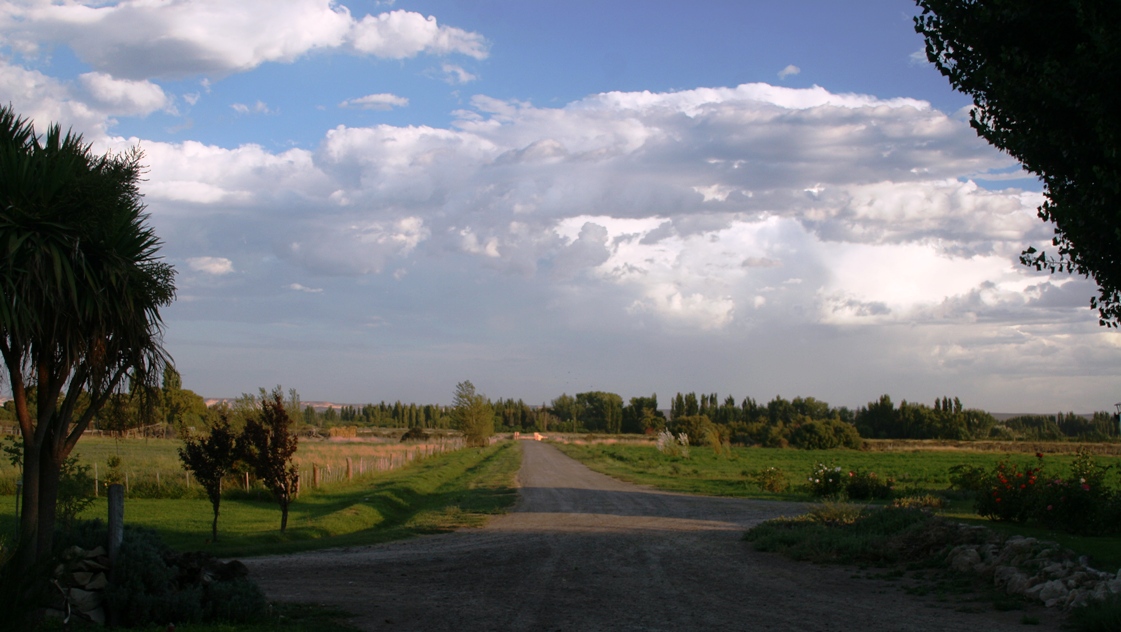
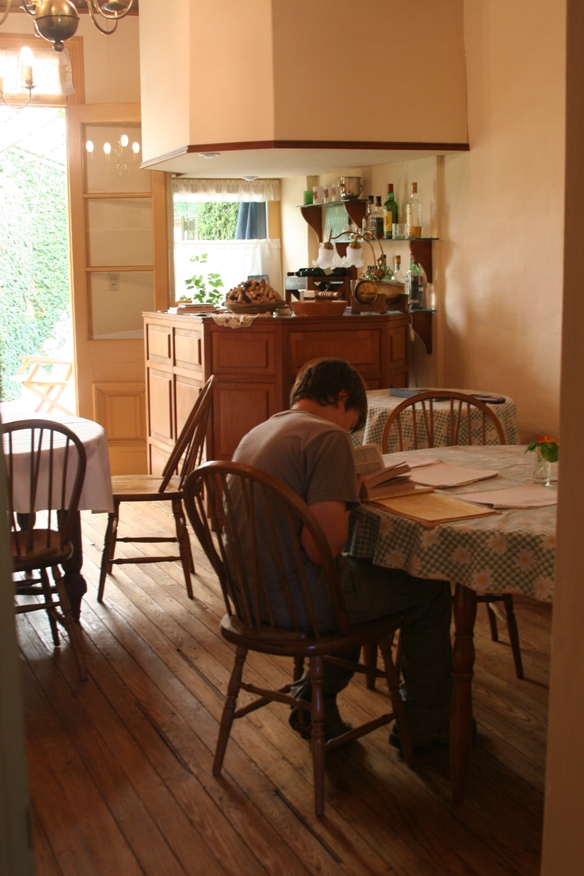
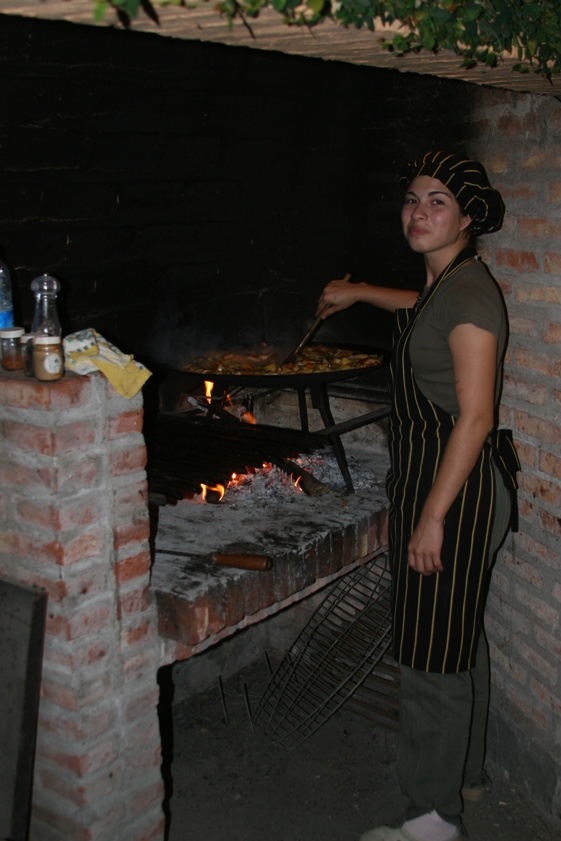
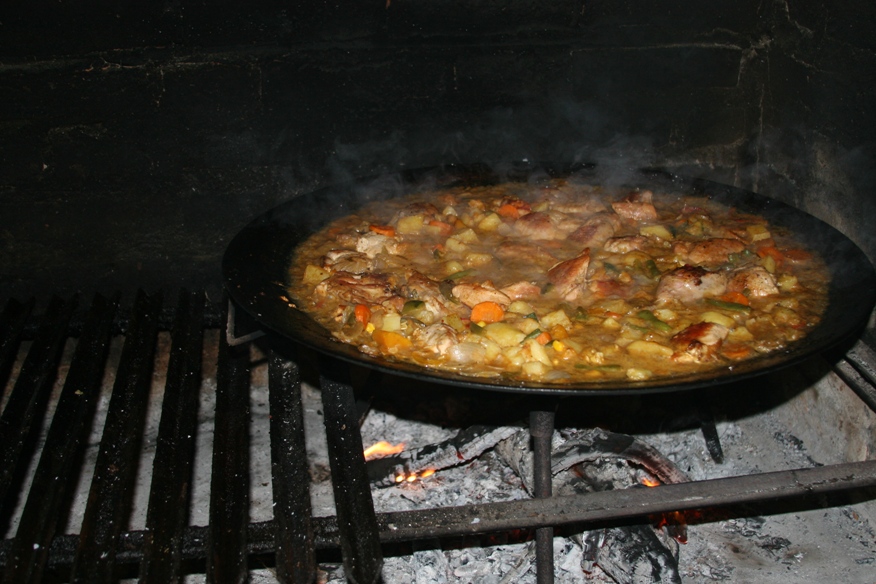
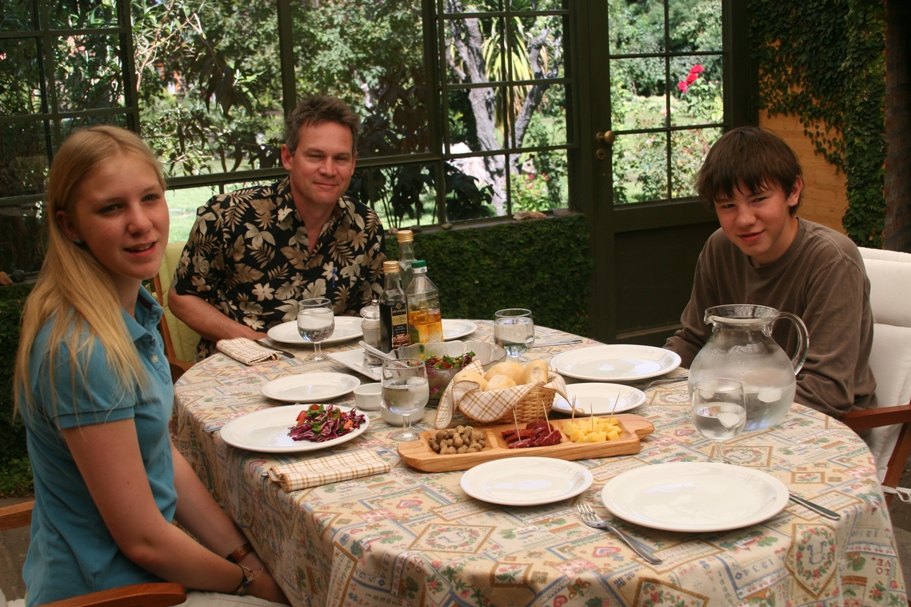
and eat (among other things!).
Finally the heat wave broke to some degree, and on Sunday we could stand to walk around in the middle of the day in order to visit the nearby outdoor "Parque Paleontologico," which was open only between 10am and 4pm and not something we wanted to do on an extremely hot day. The grounds of the park are a gradually ascending canyon wall located about 10 kilometers from Gaman. The site offers a convenient glimpse at the most recent 40 million years of natural history in this region. Although 40 million years wouldn't take us back quite far enough to encounter dinosaurs (and none of the myriad dinosaur fossils of Chubut were not discovered in this particular place), the park features an interesting collection of mammal and invertebrate fossils, displayed under glass protective cases, and all shown in the exact place where they were found.
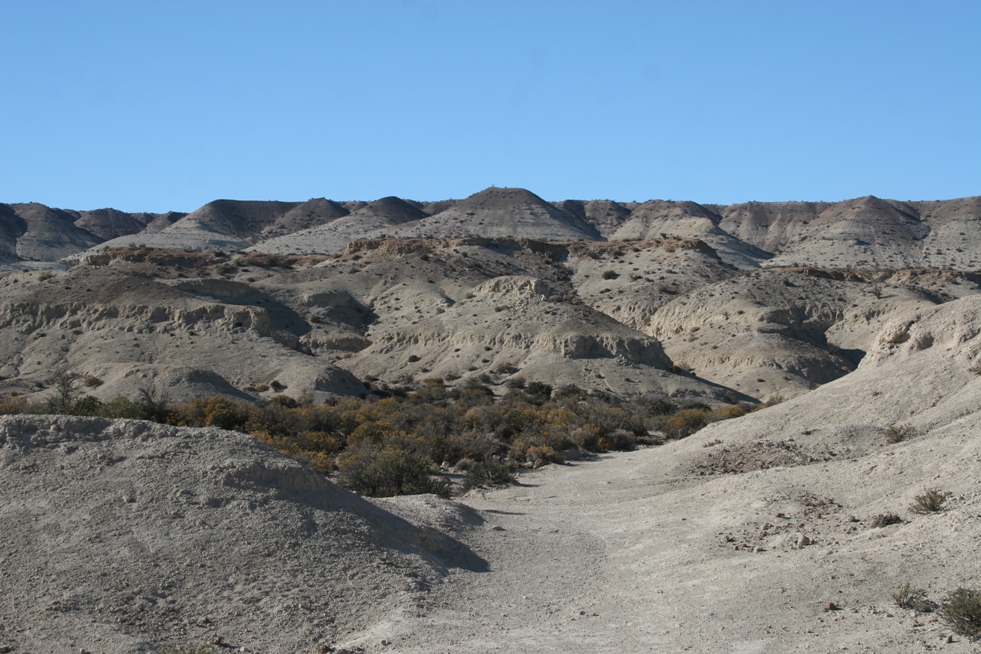
The walls of the Chubut River Valley not far from Gaiman.
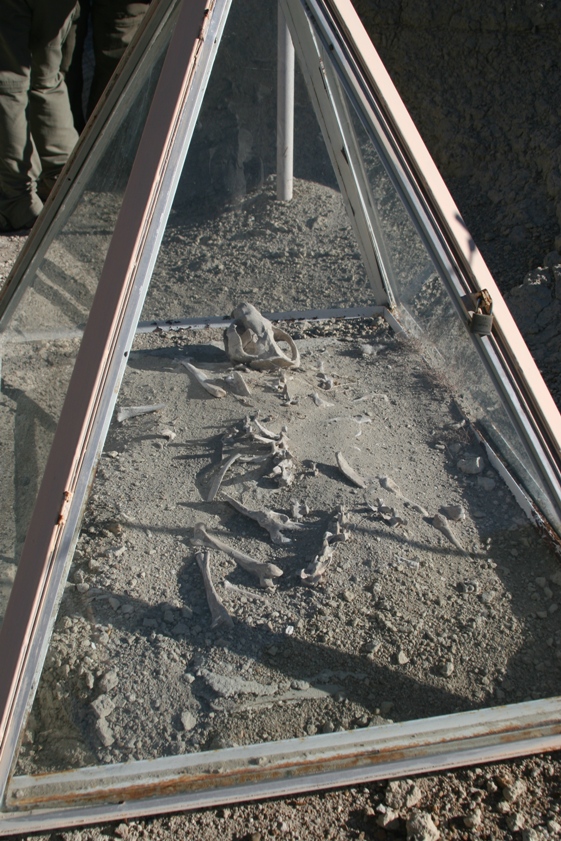
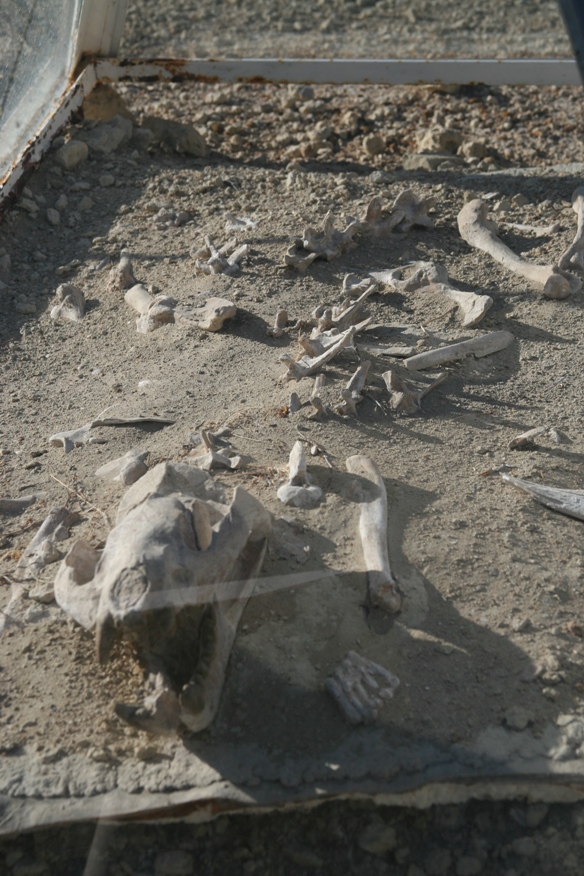
This is the fossil of an marsupial predator and ancestral relative of the modern-day wolf.
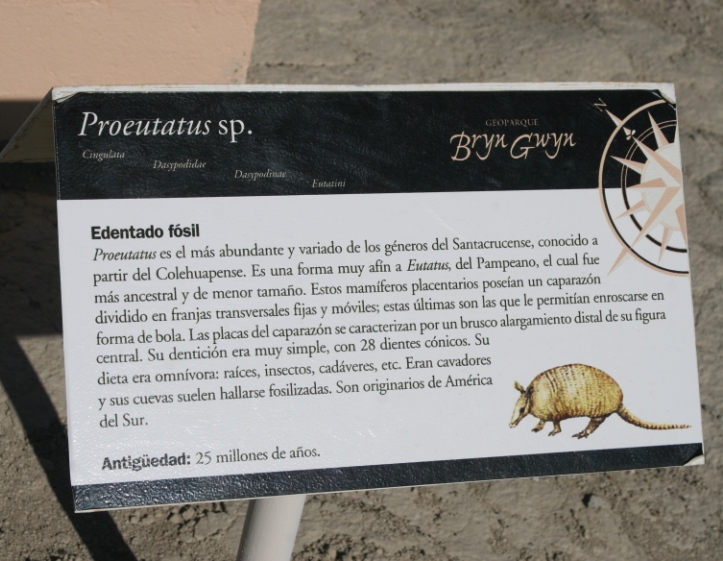
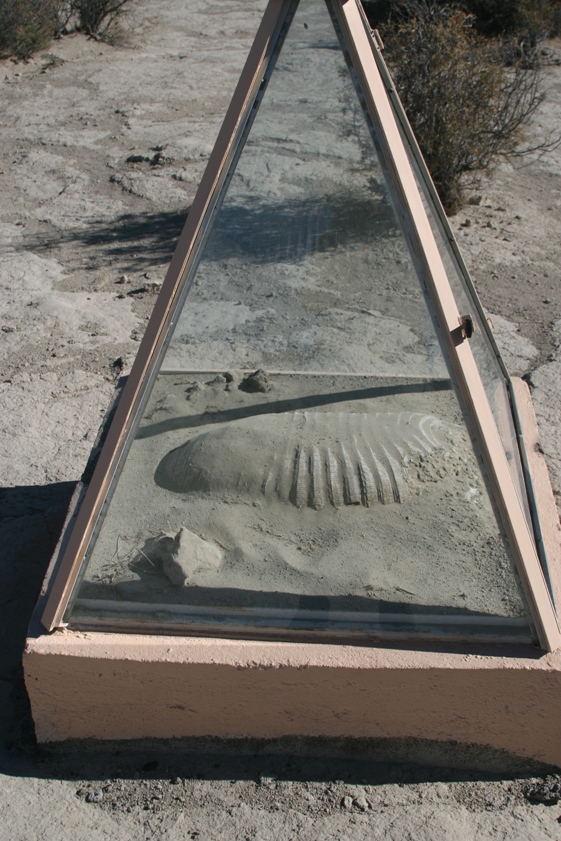
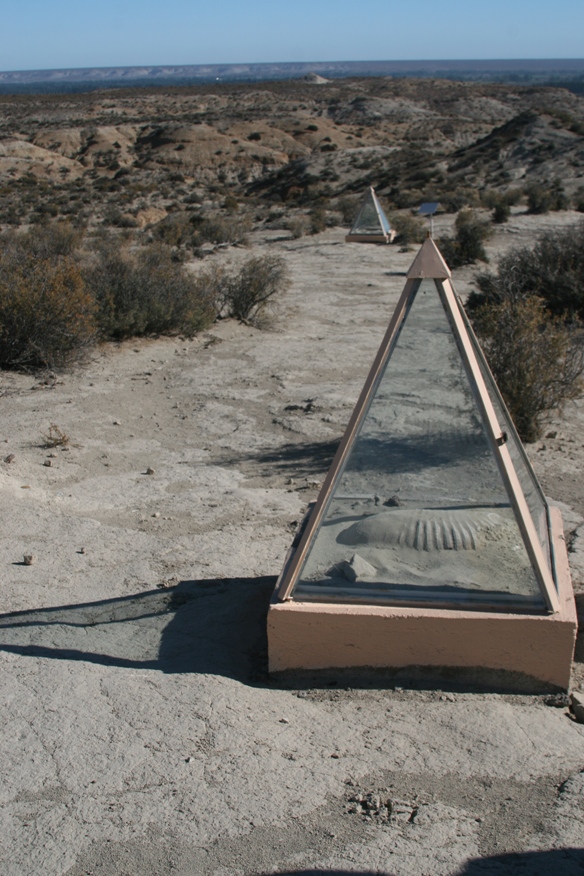
Here we have an ancient armadillo of sorts.
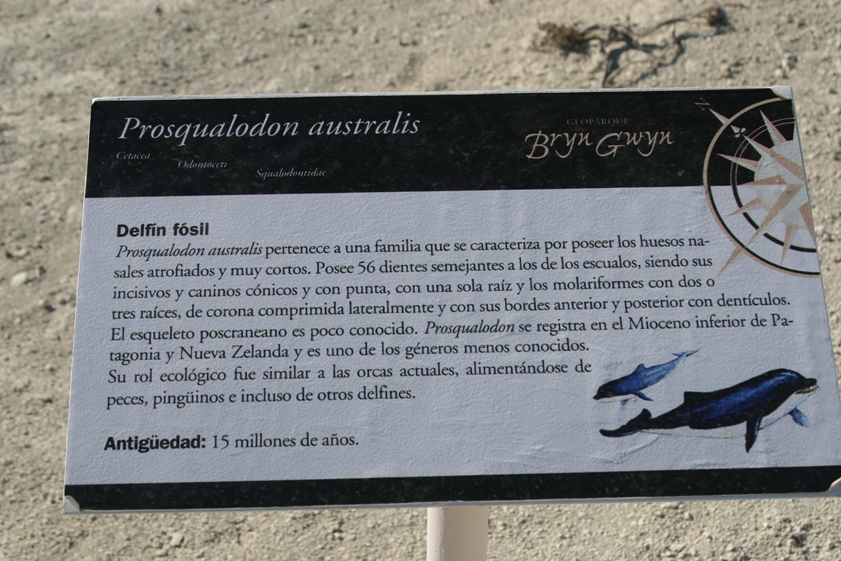
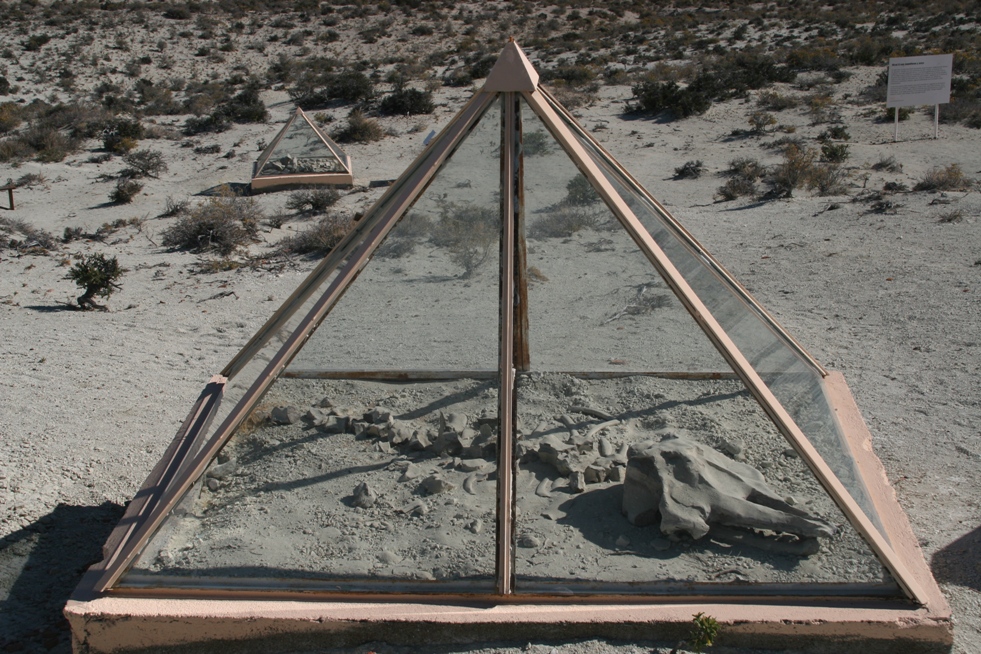
For a few million years, this region was covered by an intrusion of the Atlantic ocean - hence the upper layers of the canyon wall sediments are rich in marine fossils like this prehistoric dolphin.
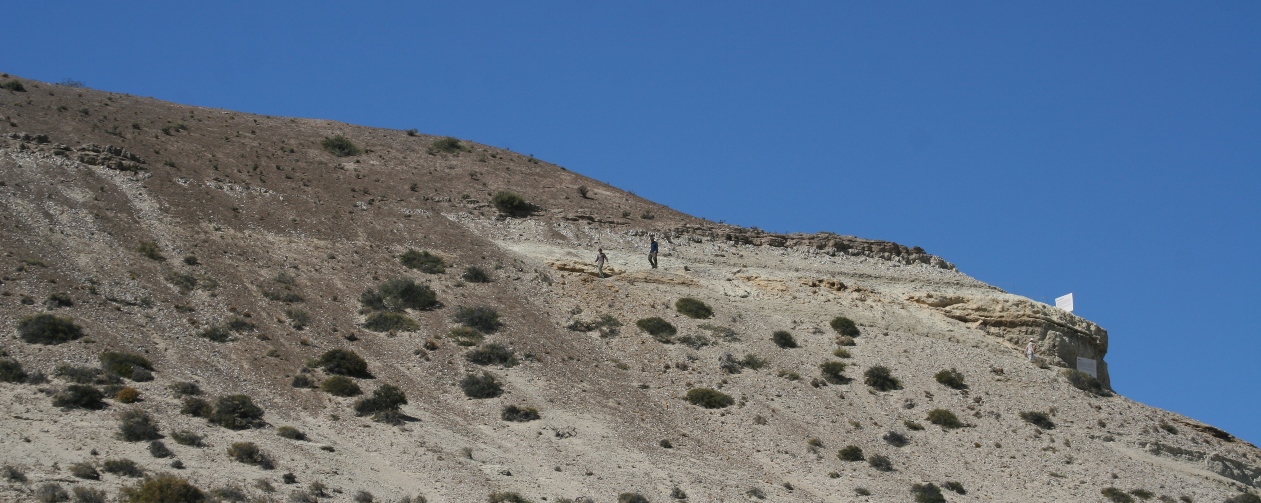
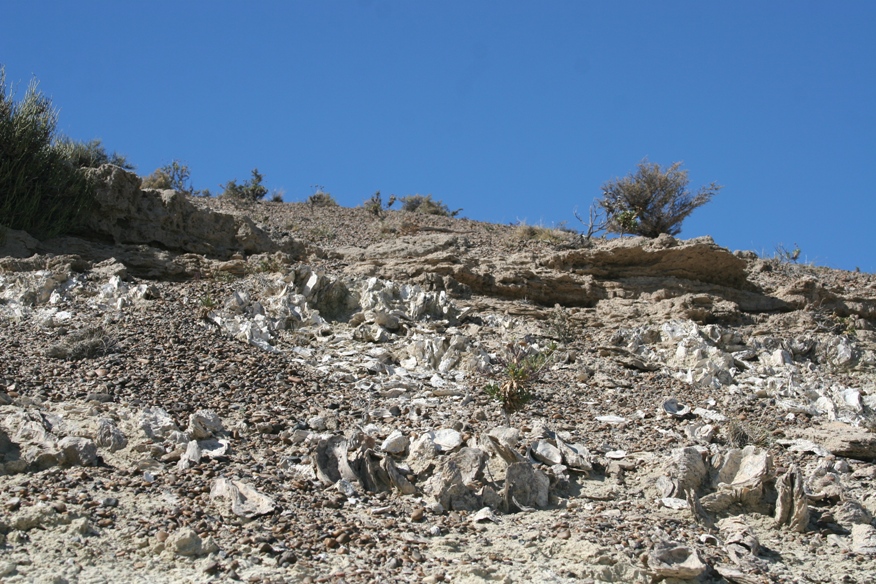
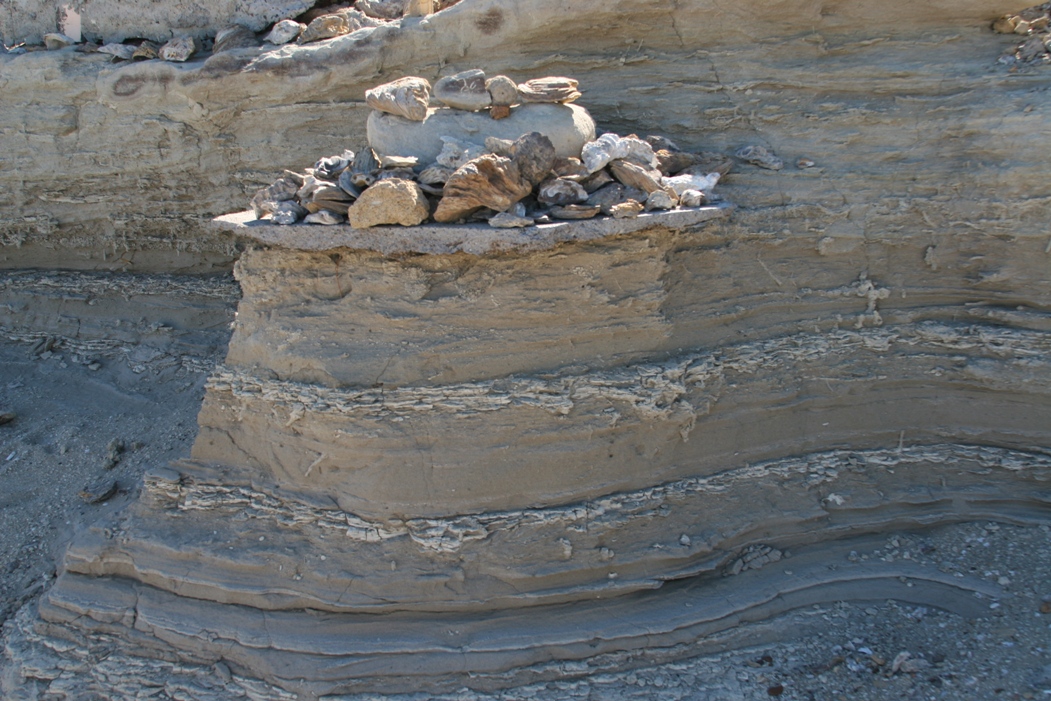
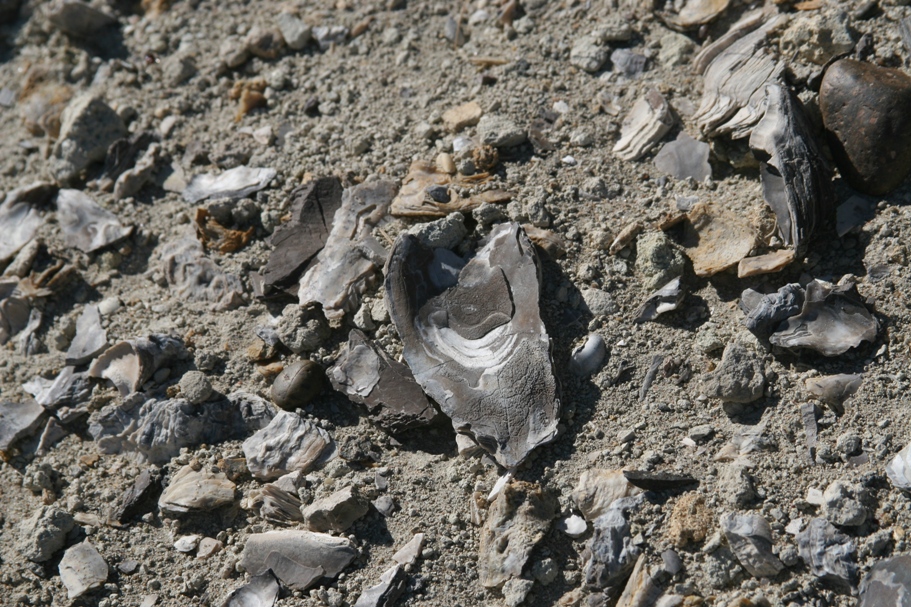
Close to the very top of the canyon wall, the intrusion of the ocean left sedimentary layers littered with shells.
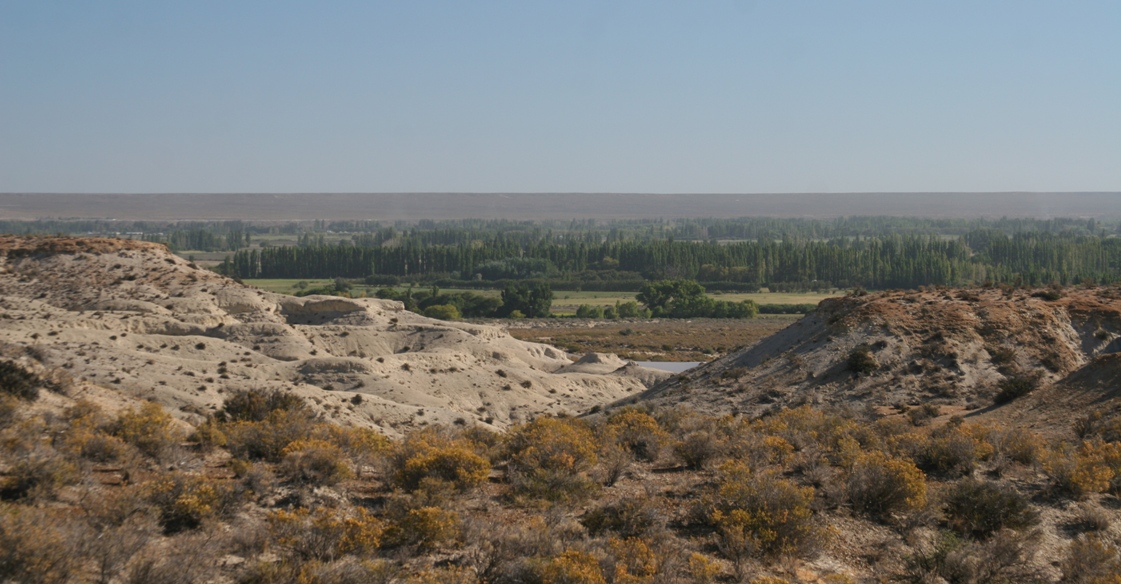
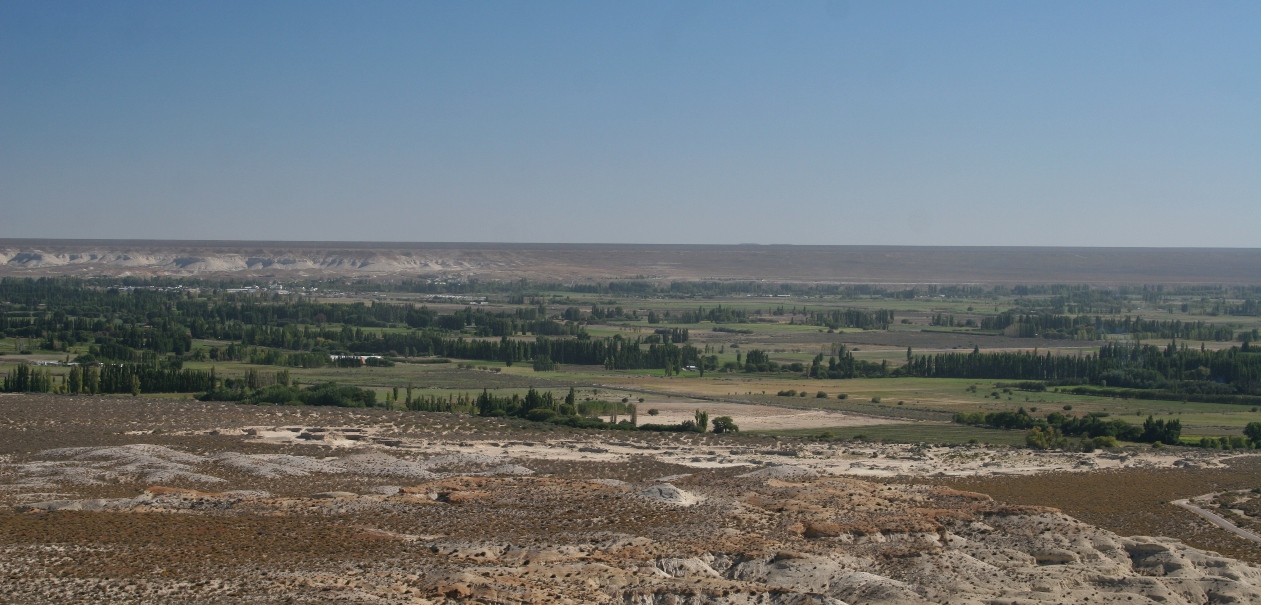
And from the very top of the canyon wall, the view down towards the well-irrigated Chubut River Valley displays the amazing accomplishment wrought by those tireless Welsh immigrants.
Sunday afternoon gave us one more chance to sip tea, and this time we opted for the famous place that Princess Diana chose 13 years ago - "Ty Te Caerdydd."
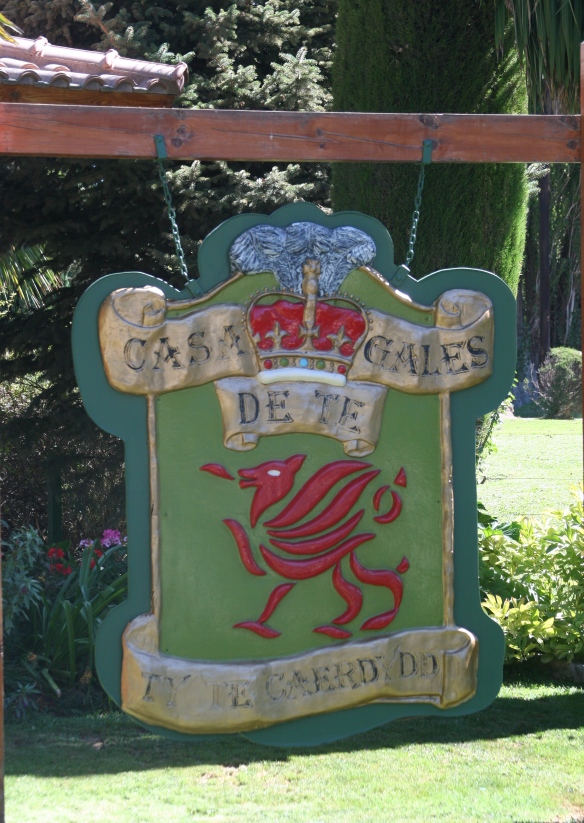
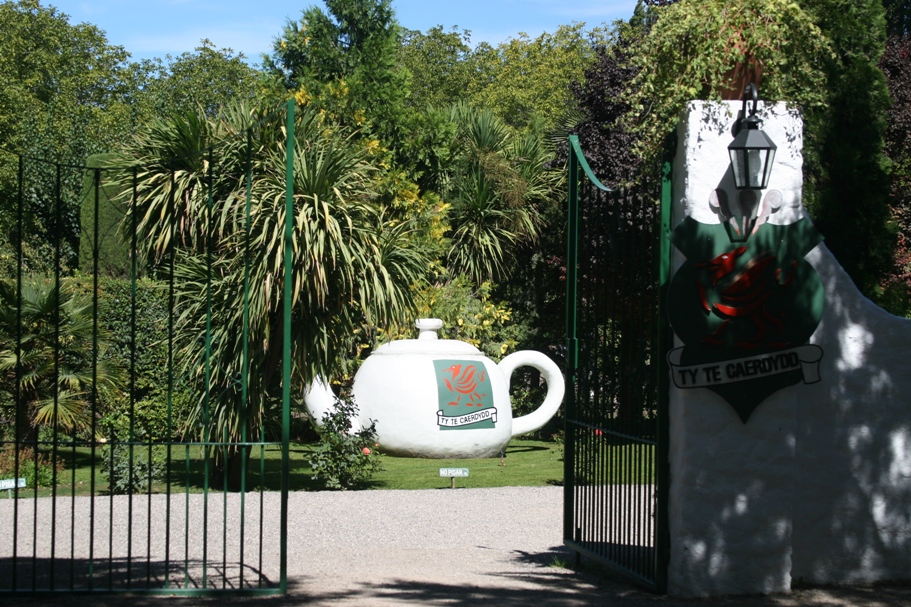
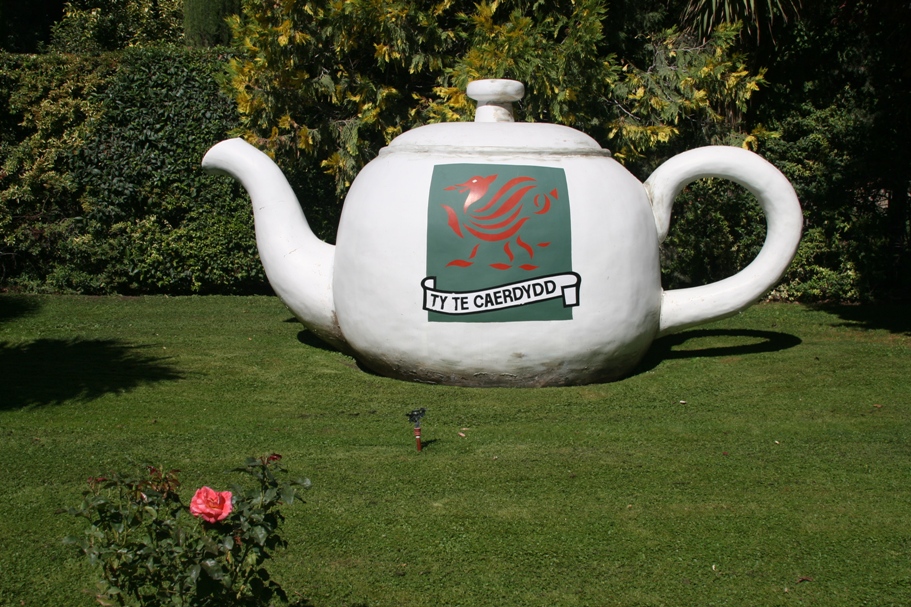
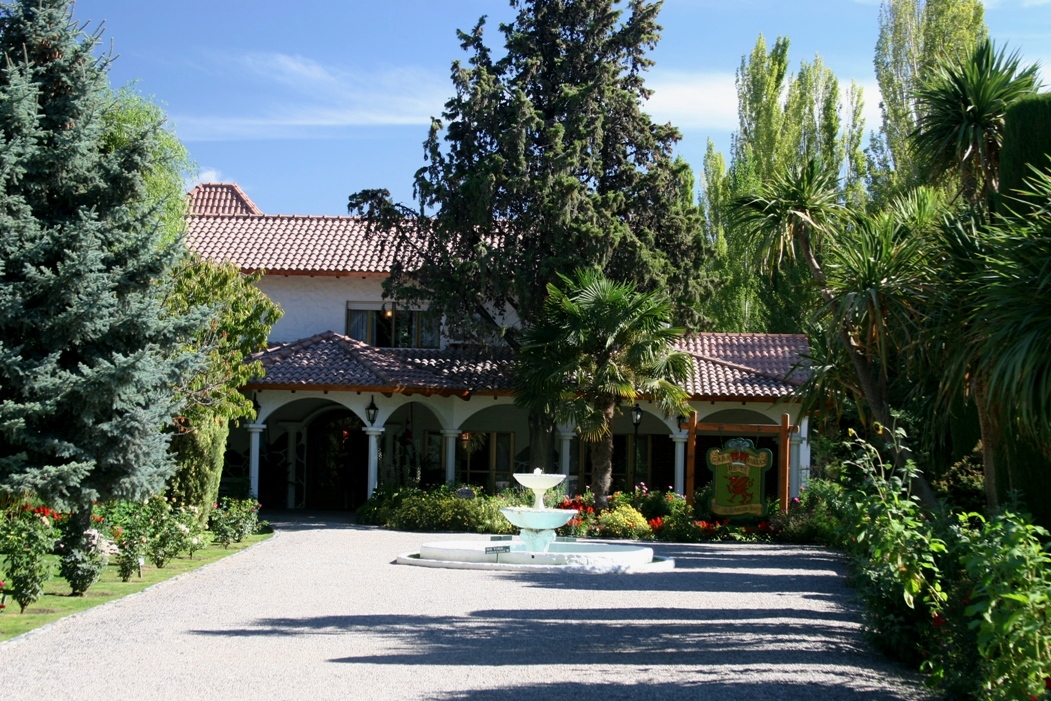
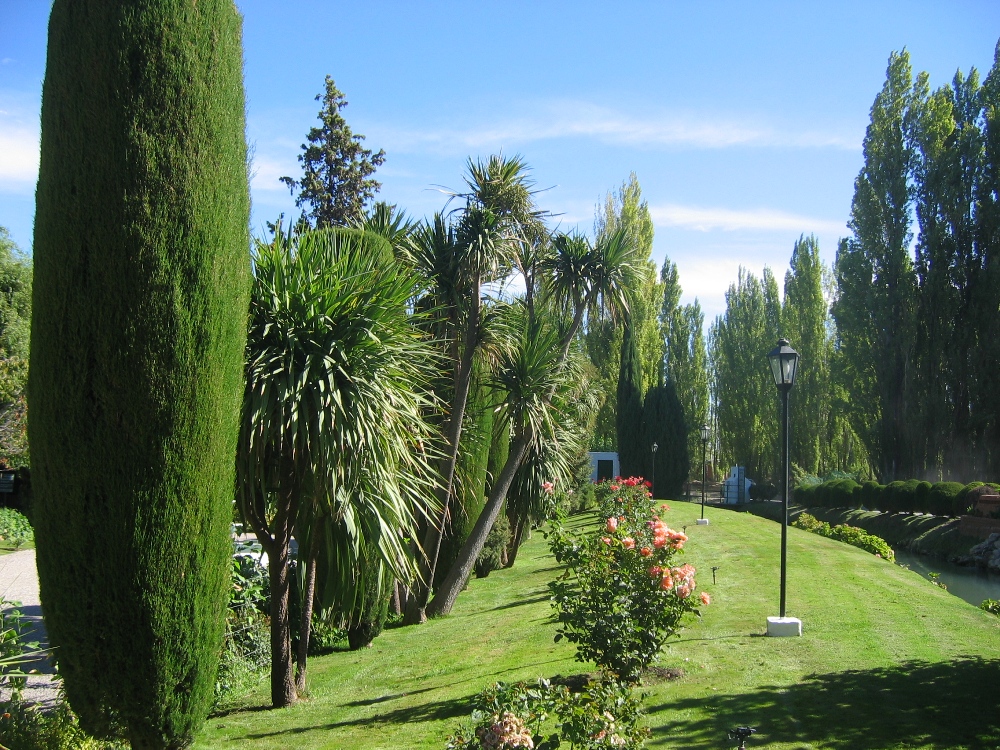
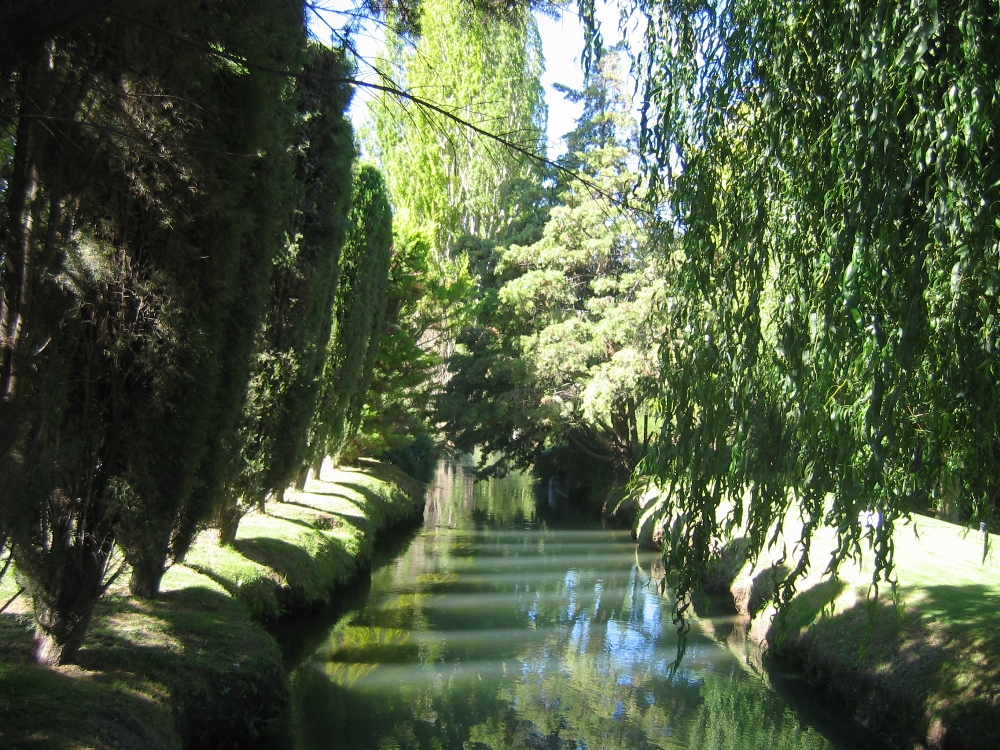
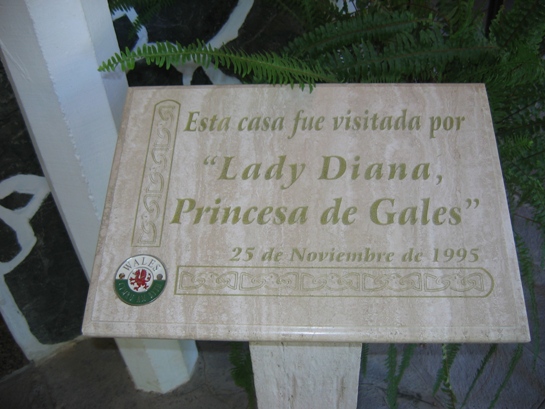
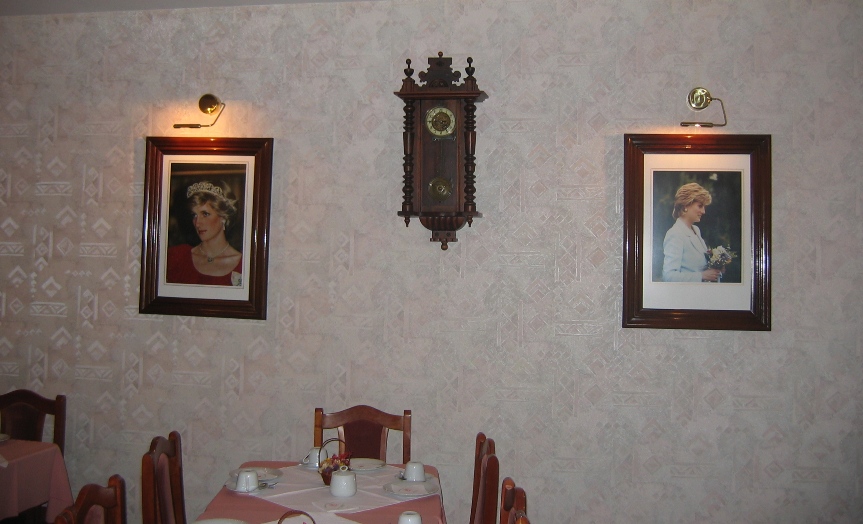
Of course, they are still very proud of the royal visit...
Tomorrow we'll leave for Peninsula Valdes. Unfortunately, we probably won't see any of the Southern Right whales who breed in the bay south of the peninsula during the winter months, but there will be Southern sea lions and Southern Elephant seals, the former teaching their recently bred pups how to swim and hunt fish. If we're "lucky," we might even see orcas trying to eat the sea lion pups by plucking them right off the beach - a behavior unique to orcas of this region and a gruesome, exciting show. Being there for just a few days, the odds are we won't be able to see such an amazing event, but we'll go and stand watch over the sea lion nurseries for sure.
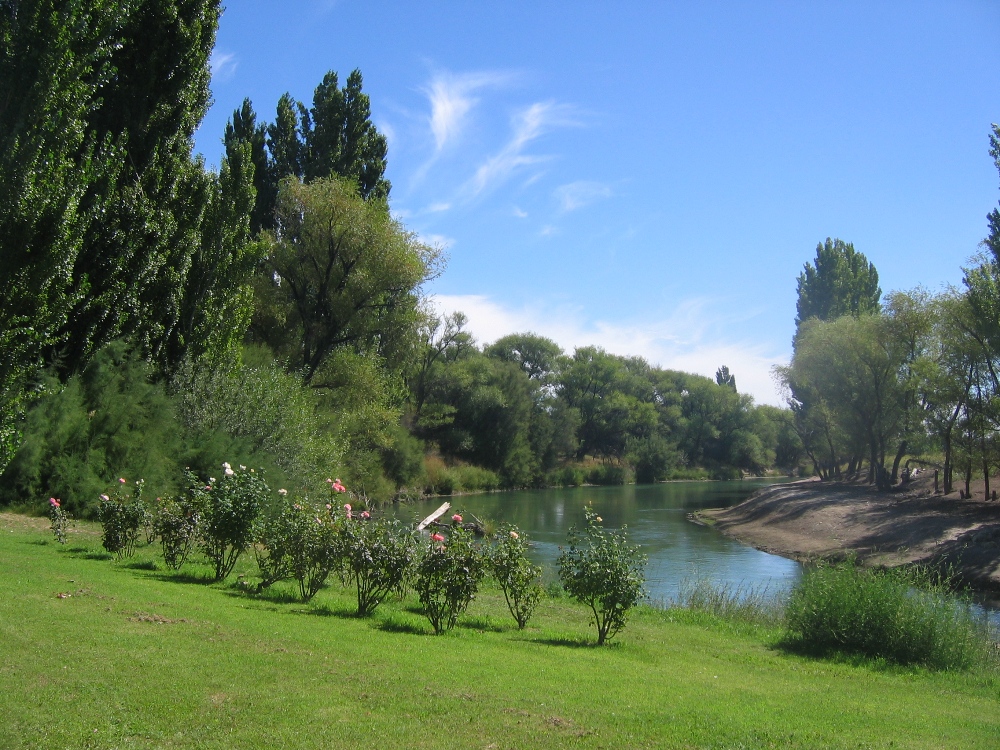
But for now, during the rest of today, all there is left to do is pack up and say goodbye to our hosts at Posada Los Mimbres, and goodbye (for the time being) to the Chubut River!
-Rolf