Puerto Pirámides - Peninsula Valdes
& Puerto Madryn
Watching & Waiting
Sunday March 9, 2008
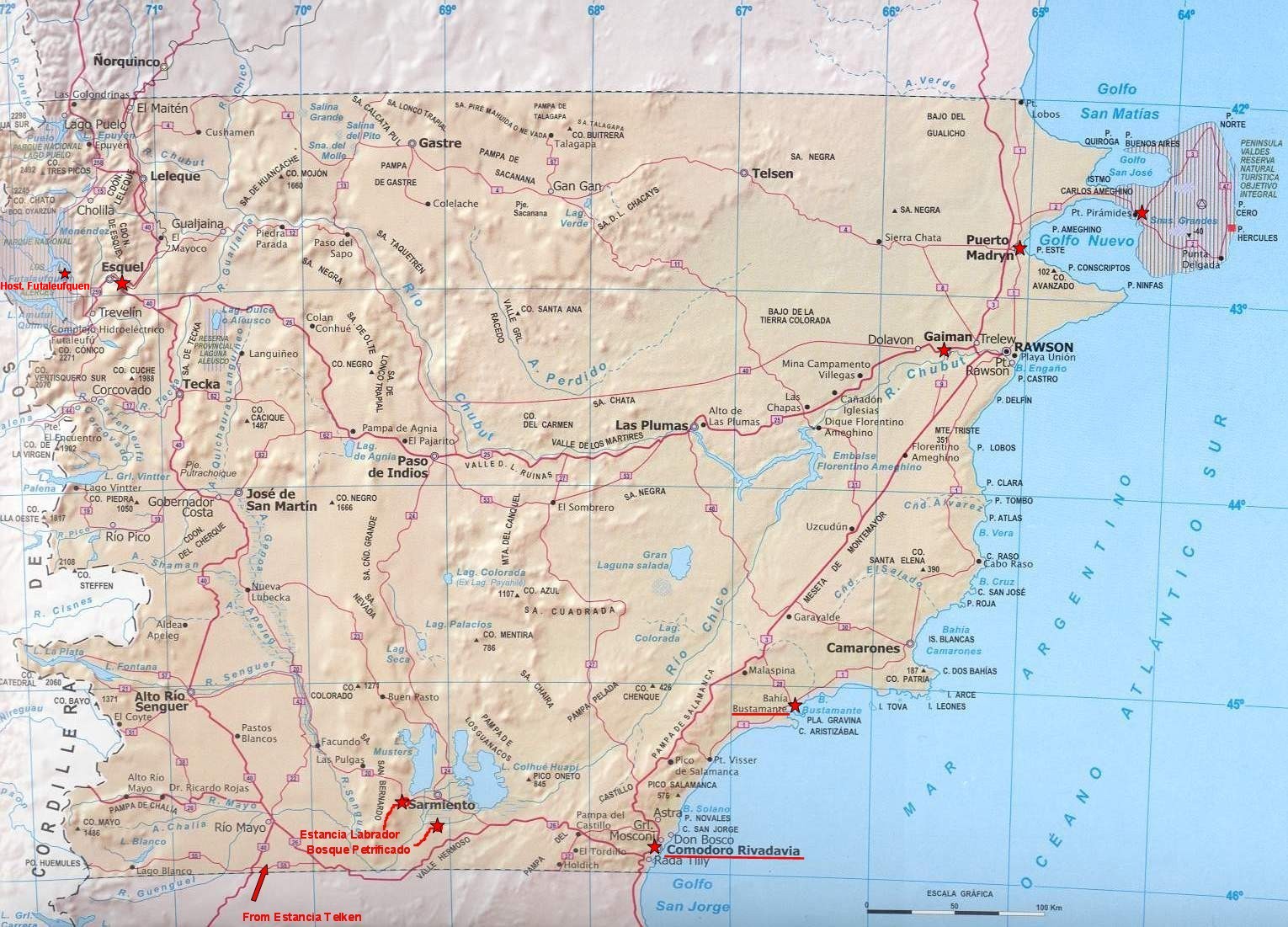
As you can see on the map of Chubut Province, Peninsula Valdes is not far from Trelew & Gaiman. The relatively short trip of about 150 kilometers allowed us to take a leisurely pace on the drive from Gaiman last Monday. In fact, we managed to make an almost-all-day affair out of it, first stopping for lunch in the conveniently located half-way point city of Puerto Madryn, and then poking along a dirt road that hugged the coast most of the rest of the way up to the peninsula.
As the map also shows, Peninsula Valdes (northeast corner of Chubut Province) looks like a formerly broad peninsula whose neck has been squeezed down into a very narrow isthmus by the intrusion of large bays from both the north and south. Although the shape is intriguing and unusual, it is not this feature, nor not much else about the physical land, that generates so much interest in and human visitors to this unique place.
The land of Peninsula Valdes is little more than a dusty pan covered in sparse scrub, flat in the extreme and even dropping below sea-level into some large salt flats the interior. The fascination with Peninsula Valdes is along the perimeter and in the waters of the surrounding ocean and gulfs. Large quantities of Southern sea lions, Southern elephant seals, and Magellanic penguins breed on the beaches of the peninsula. Also, out in the water, the Golfo Nuevo is a seasonal breeding ground for the Southern Right whale, and pods of orca populate the surrounding waters on all sides. And of course, there are birds of all sorts flying, eating, nesting, and doing all the other things that birds do.
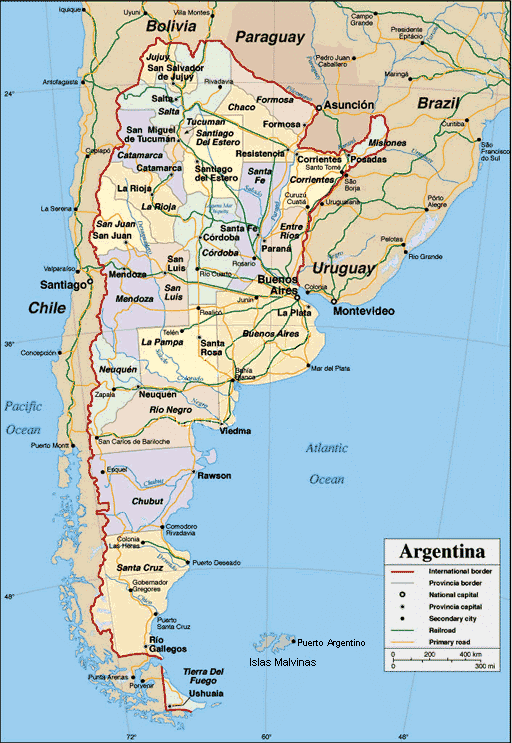
The heavily recycled maps of Argentina and Chubut Province.
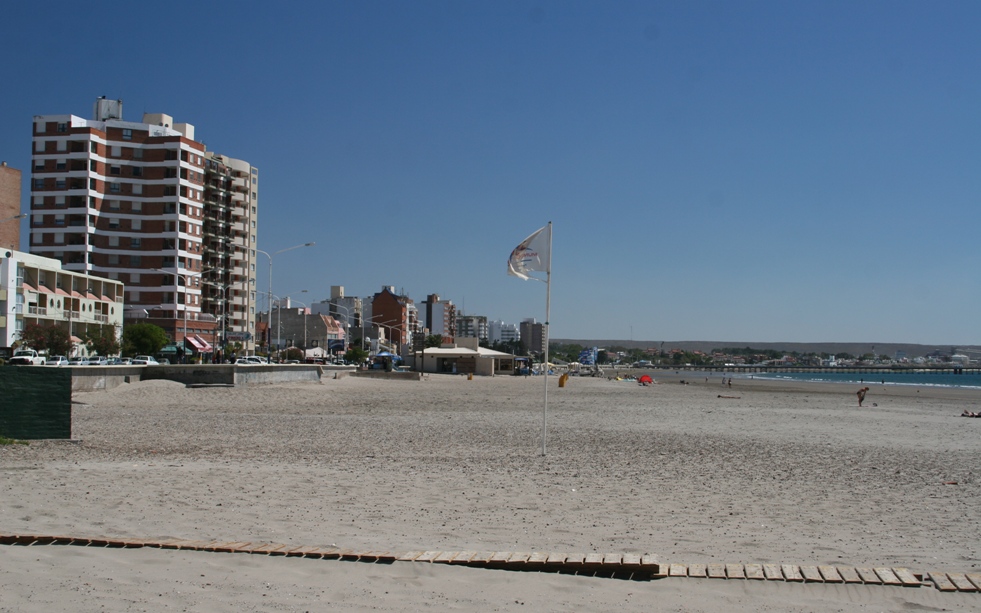
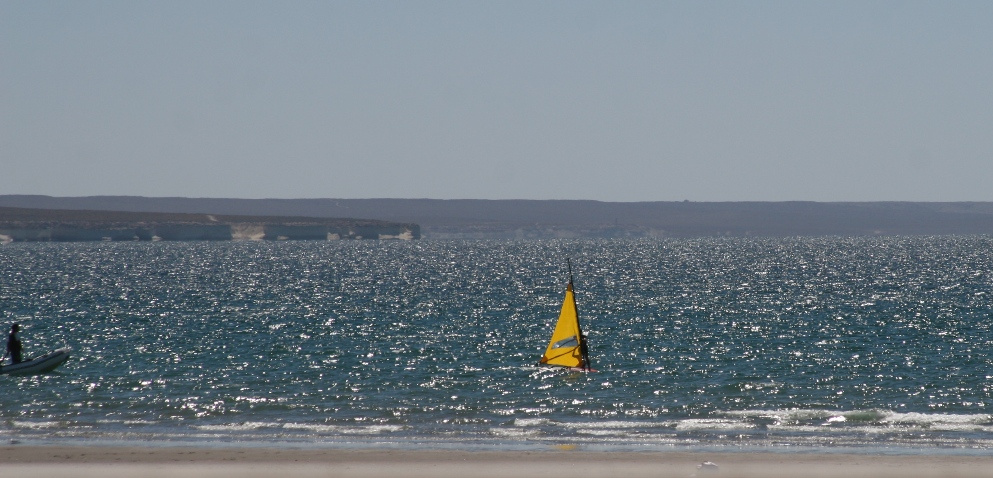
It was a beautiful afternoon at the beach in Puerto Madryn, and a nice scenic spot to have lunch.
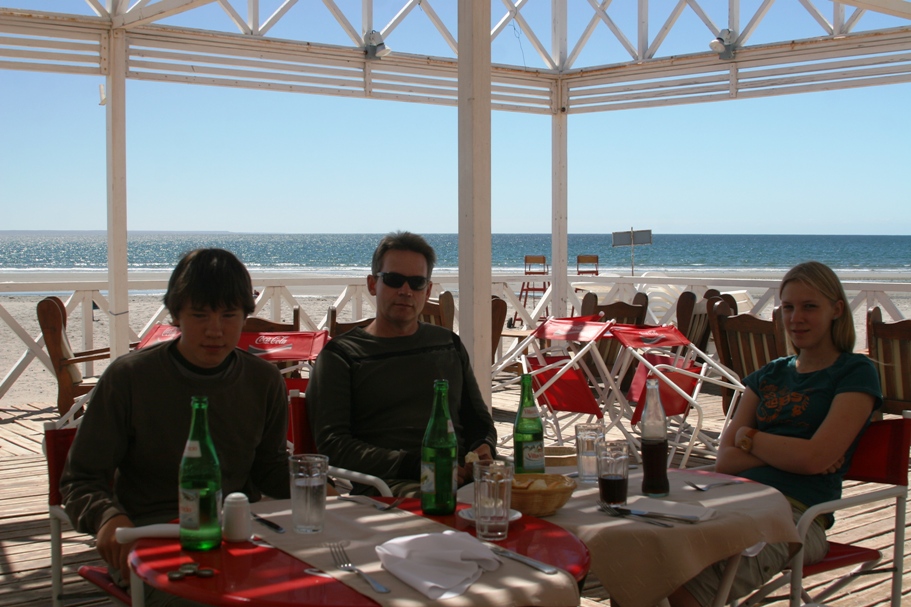
The food was good, the weather was fine... I'm not sure why we don't look more enthusiastic about the situation.
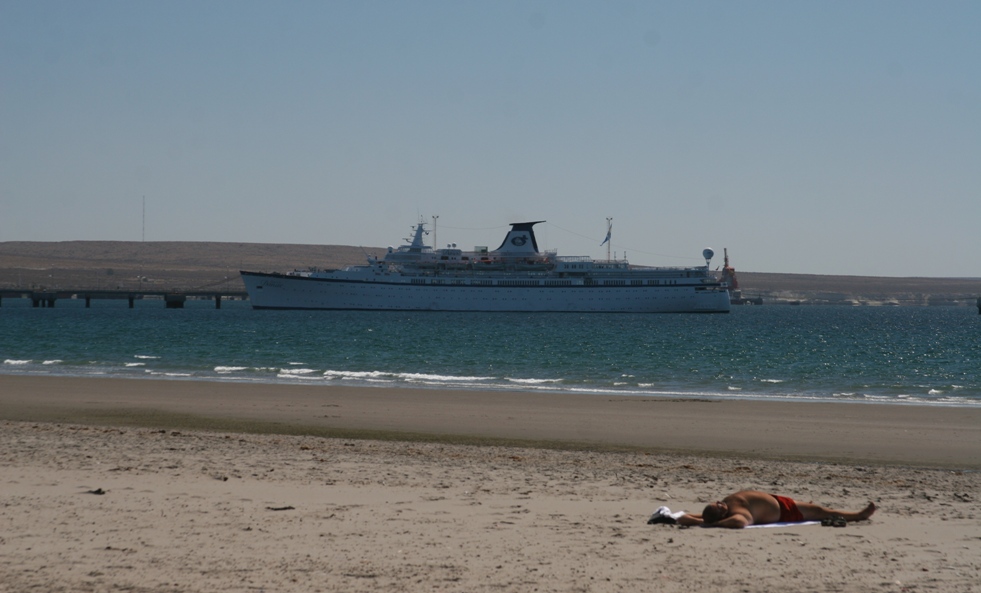
They had told us that the whales were all gone...
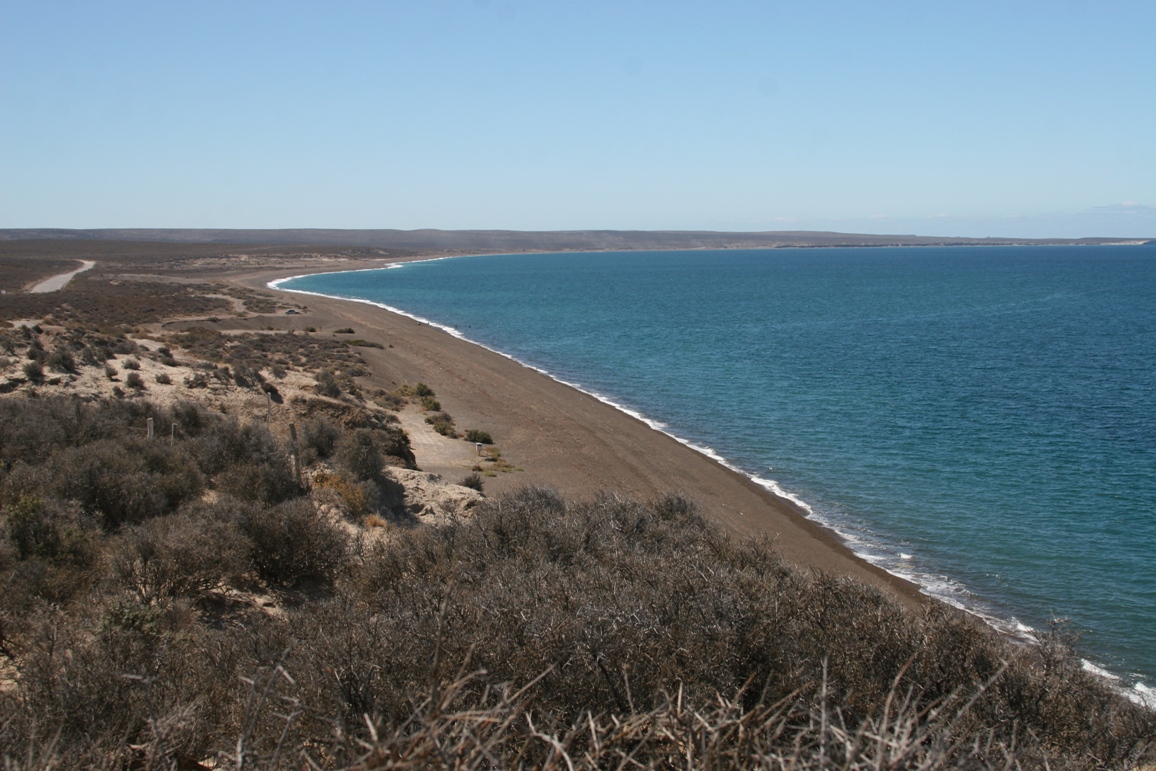
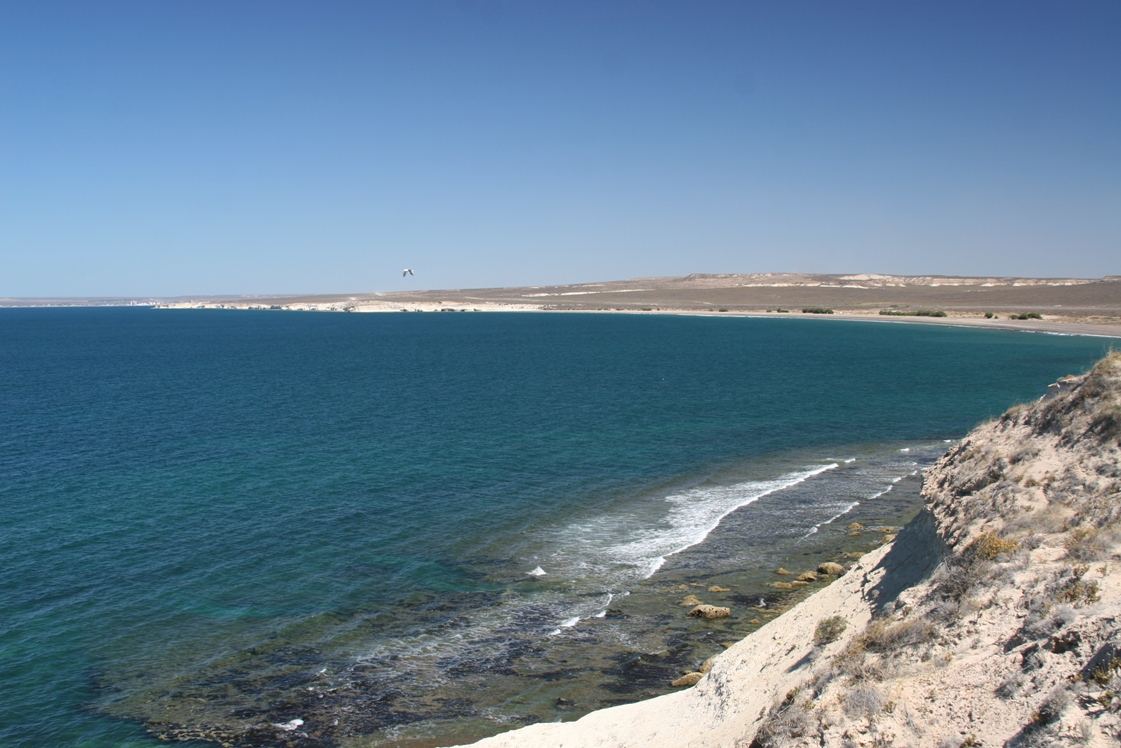
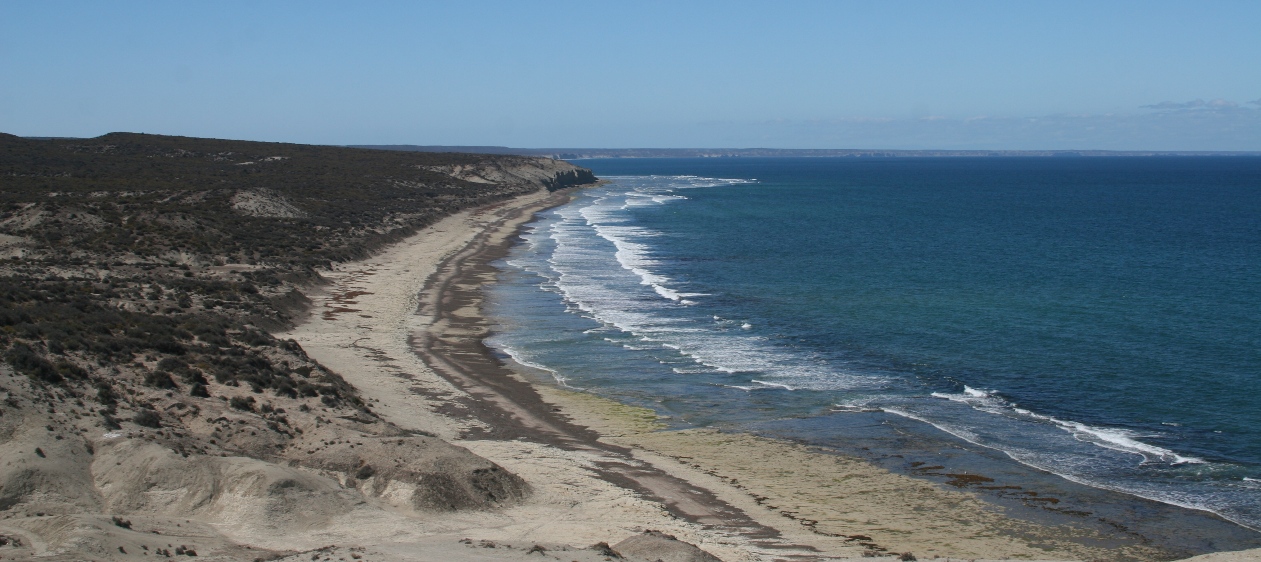
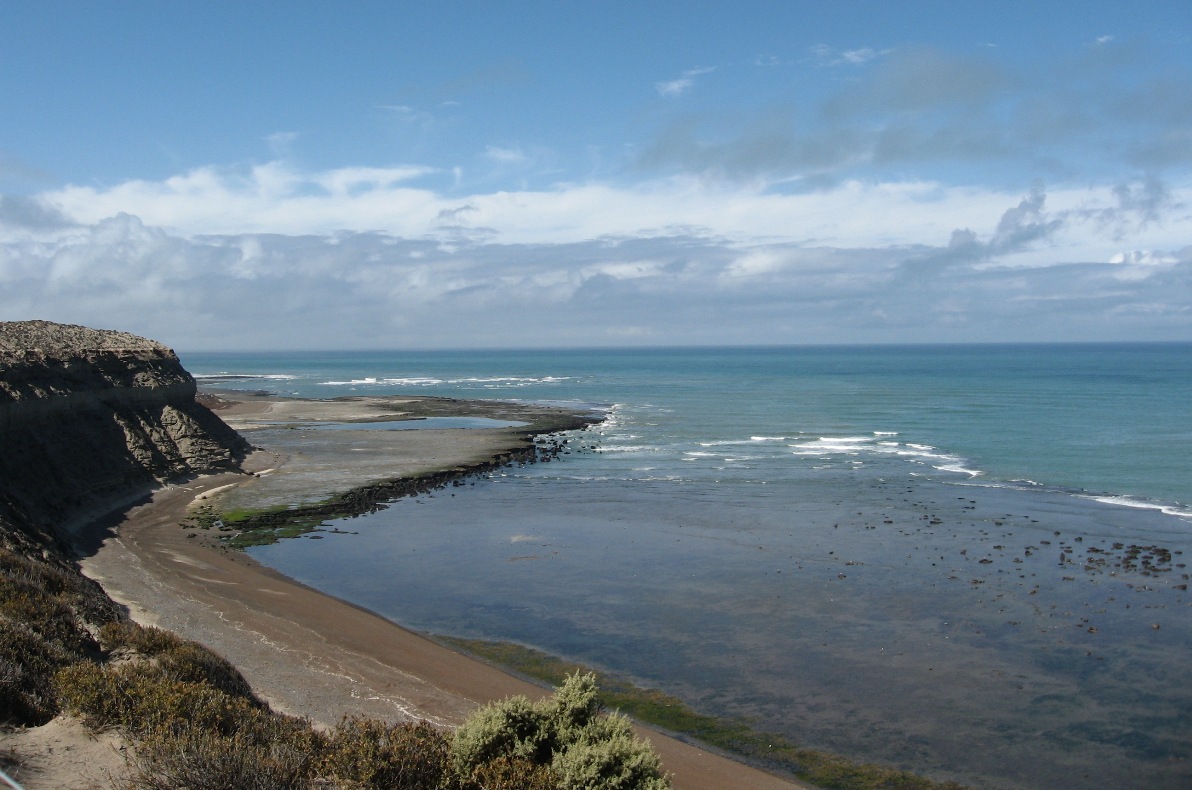
Driving north out of Puerto Madryn, we followed a dirt road which hugged the shoreline as it gradually curved eastward along the top end of Golfo Nuevo.
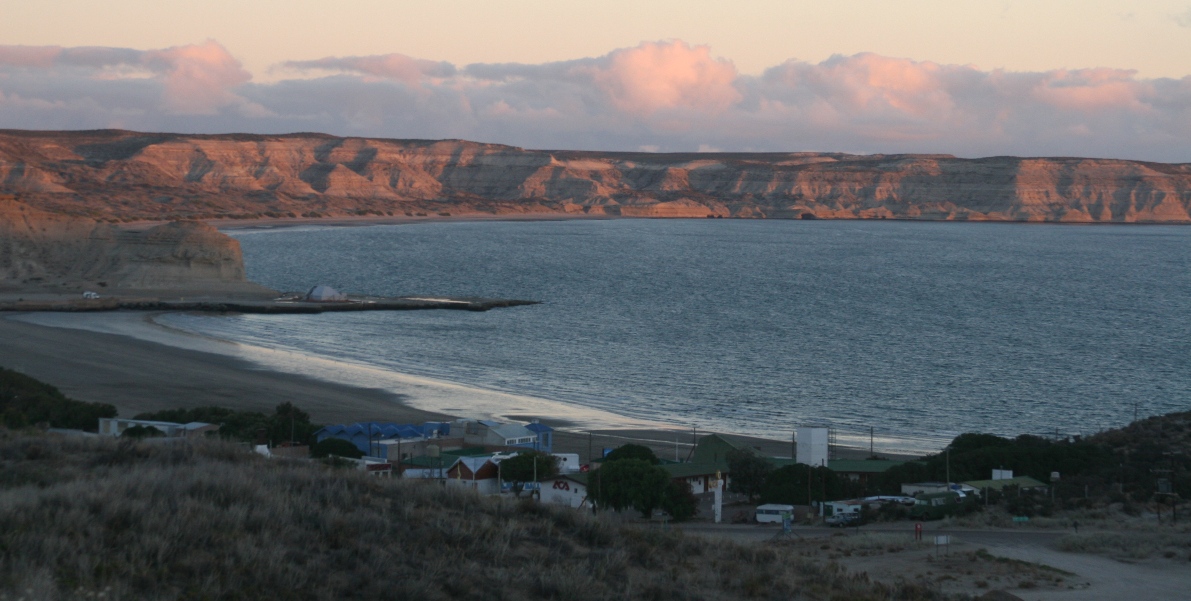
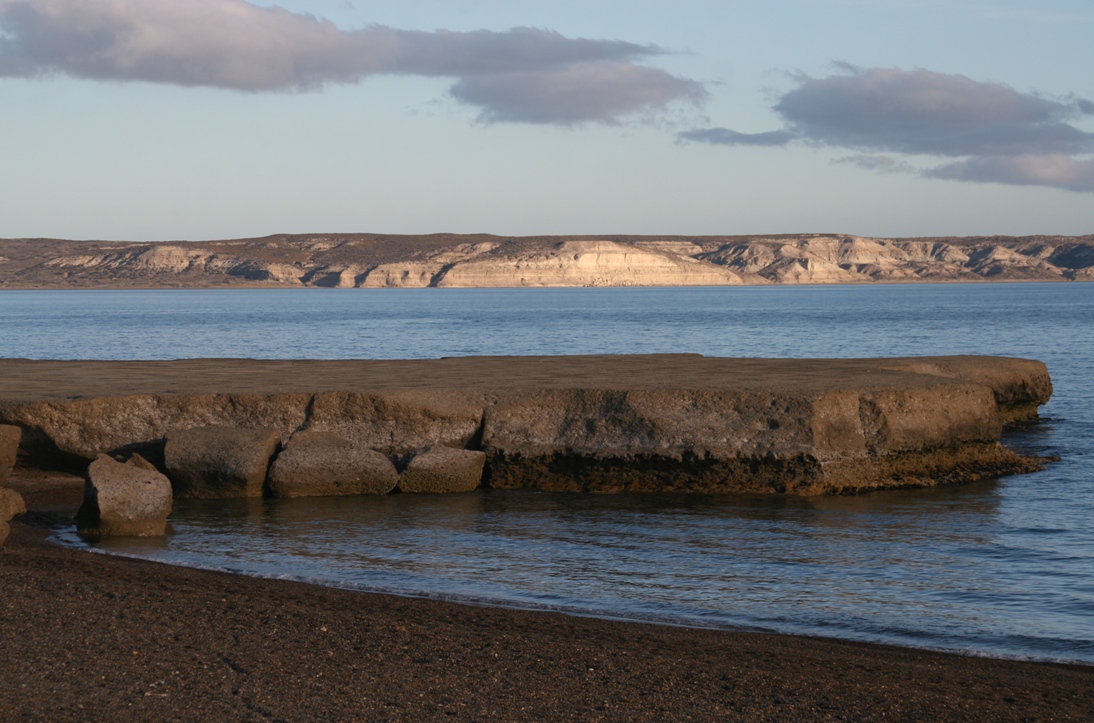
Then after crossing the narrow isthmus and starting to curve southward, we dropped down to the shore at Puerto Pirámides, the closest thing to a town on the entire peninsula. OK, I think it deserves outright "town" status, considering that there is a gas station, one ATM, two hotels, campsites near the beach, excursion operators (mostly for whale watching trips and diving), and a smattering of restaurants and shops.
We knew in advance that the whales wouldn't be here when we came, but we were hoping to see everything else. Being near the end of the sea lion and elephant seal breeding season, a time when the pups are starting to learn to swim and fish, this is also a time of year when orcas hunt the pups in the shallow waters along the beaches. The orcas of Peninsula Valdes generate a lot of interest and are subject to a great deal of study. Many of them are permanent residents (born locally, identified, named, and tracked by biologists), and it is in this place where orcas have exhibited a behavior not seen anywhere else in the world. Not only will the orcas cruise in close to the shore to snag their prey, they sometimes ride waves completely ashore, beaching themselves just long enough to grab a sea lion pup before the next wave arrives to carry them back out into deeper water.
It's not something that happens everyday, even in the prime pup-hunting season. Given the fact that the tide must be high, there are numerous colonies of sea lions spread out around the peninsula, and that the orca pods are relatively few, you have to be very lucky to even see orcas at all, let alone witness an attack. But we were here for four days without much else to do on the agenda, so we spent a fair amount of our time here standing along the edge of a dirt cliff overlooking cacophonous clusters of sea lions, scanning the water with binoculars looking for big black dorsal fins.
On the day of our arrival, the tide chart showed high tide scheduled for about 7pm at the beach viewing overlook near the middle of the east-facing shore of the peninsula. We checked into our hotel and skedaddled right on over to the coast (an 80 minute drive on extremely dusty roads). Upon arrival at the tourist overlooks we saw female Southern elephant seals and a few penguins - but no orcas.
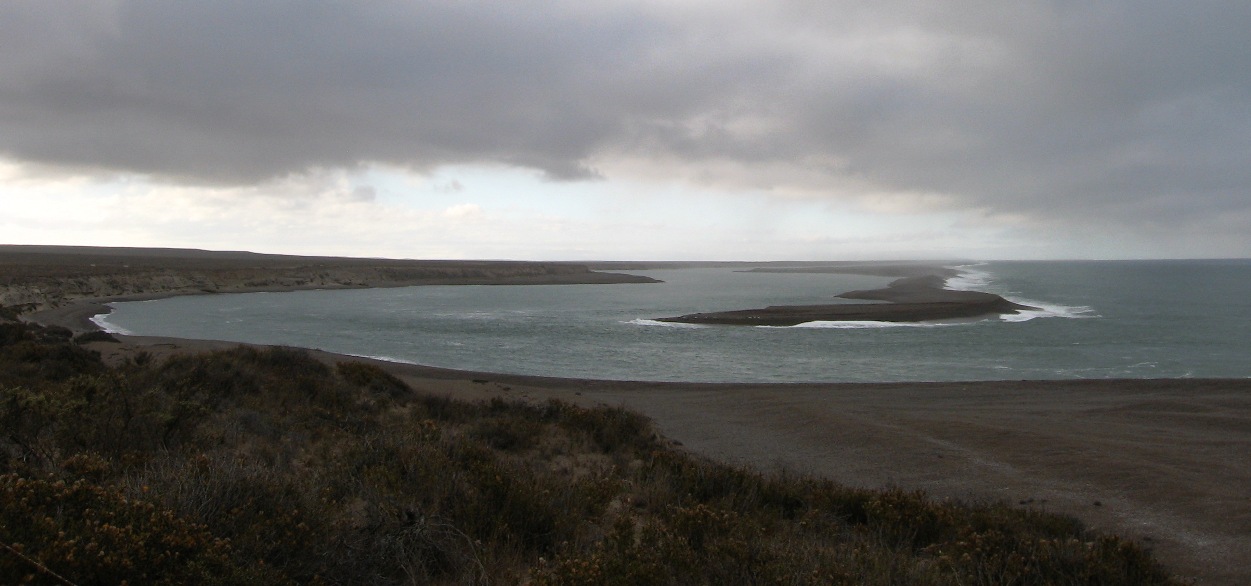
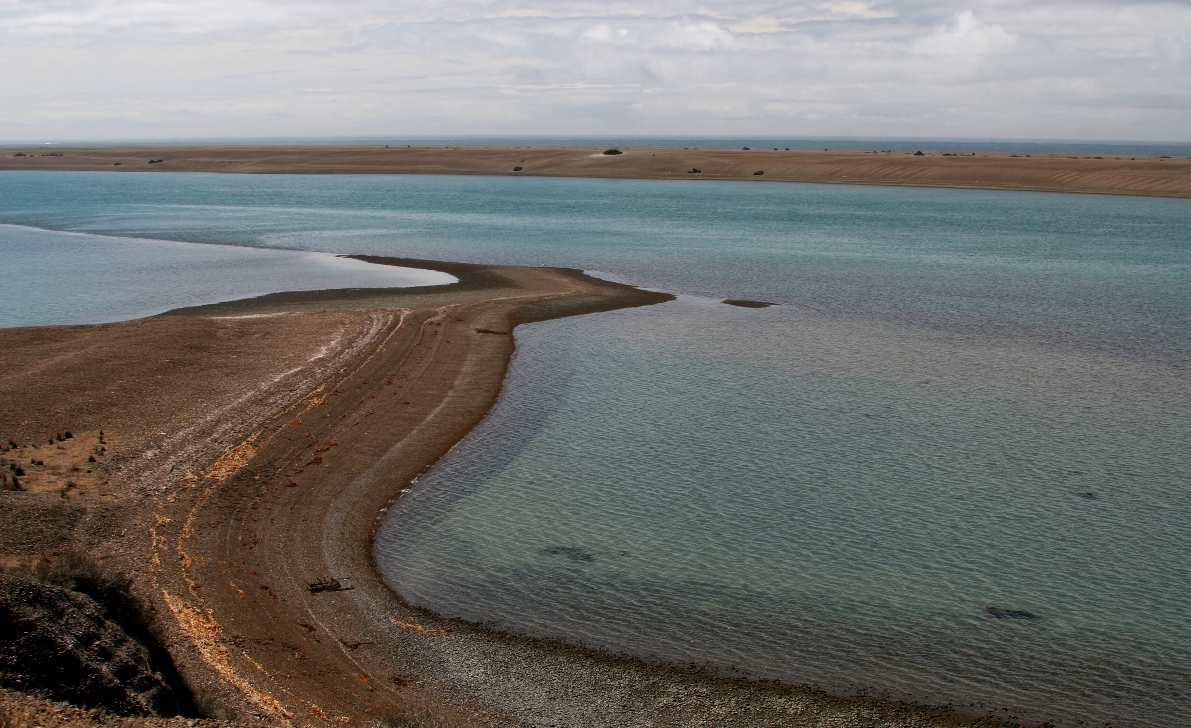
The Caleta Valdes is a sand spit that parallels the eastern shore for more than 30 kilometers. From this lookout looking north we were able to see the southern tip of the sandbar and the interior channel filled with water during high tide.
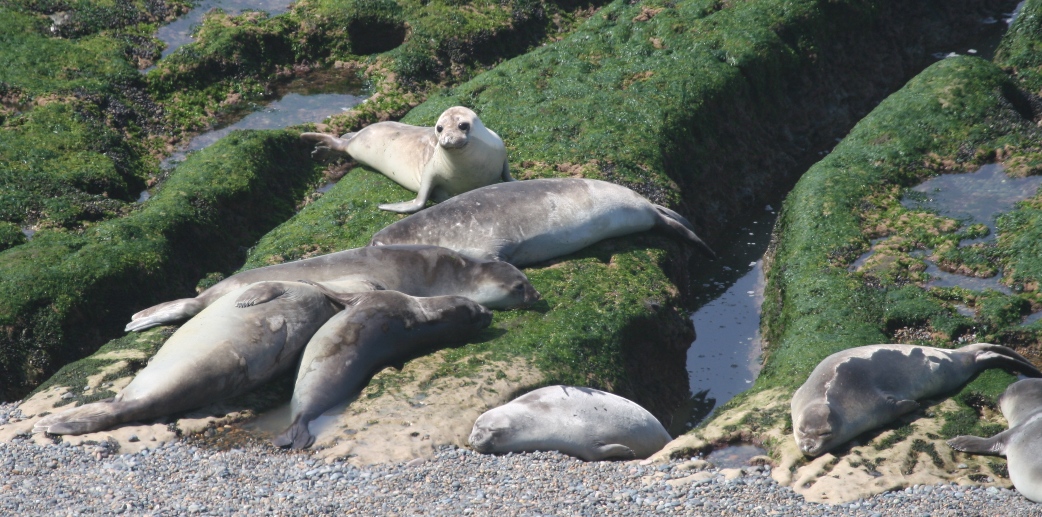
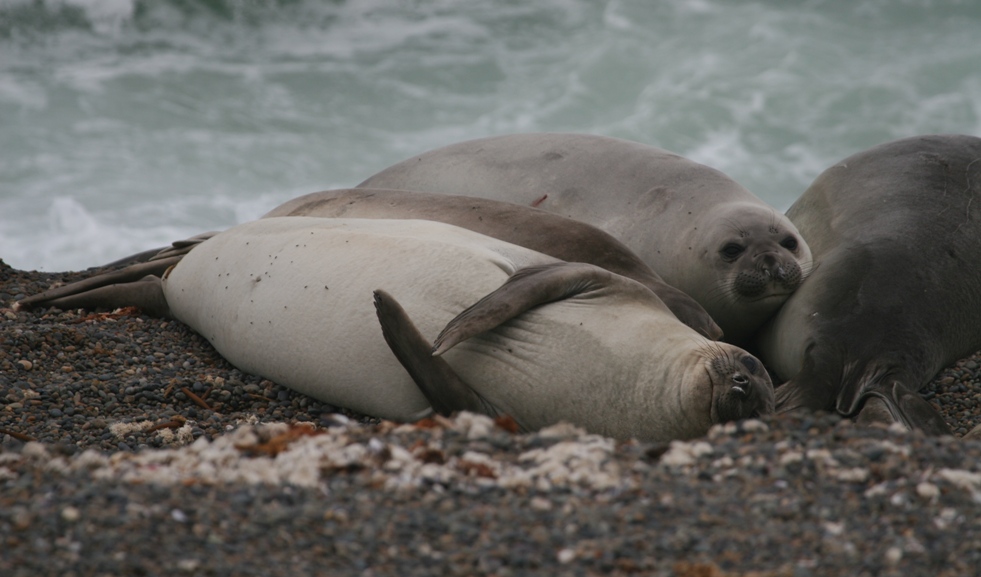
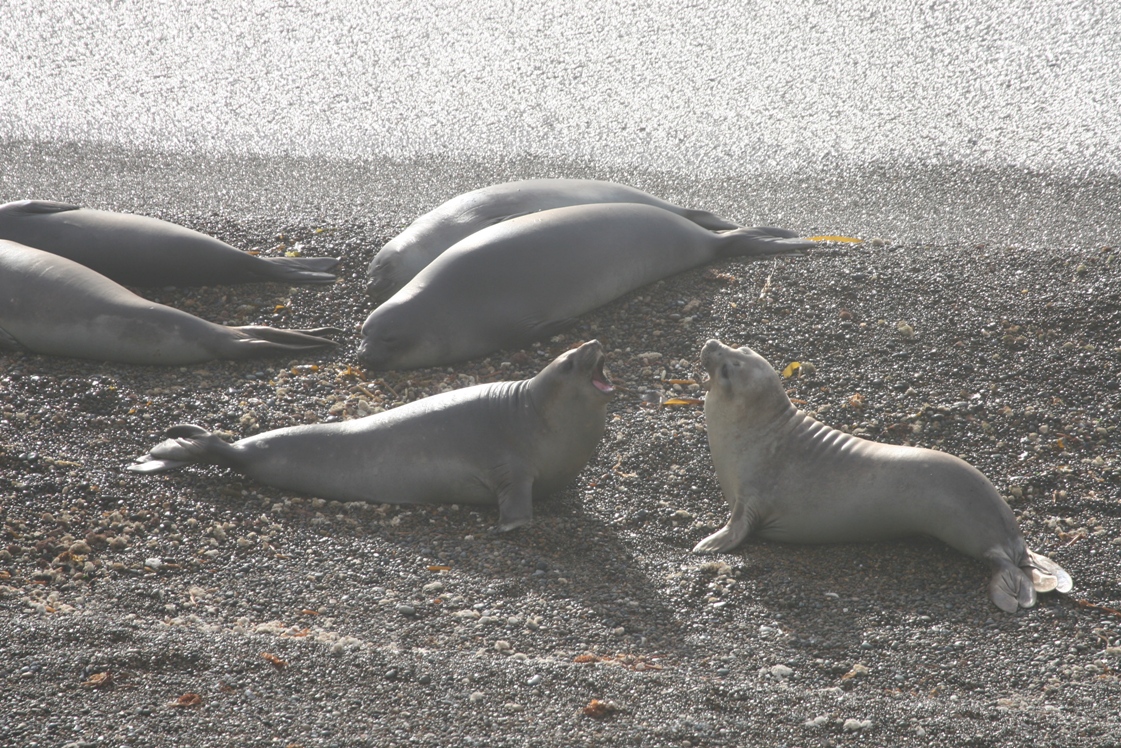
Female Southern elephant seals on the beach. The breeding season is pretty much over for the elephant seals, and these females and pups seemed to be free from the annoying presence of adult males. At this time, the pups are virtually the same size and weight as their mothers, which have lost almost 200 kilos (half of their original weight) nursing them.
Tuesday the high tides for the best orca viewing beaches were inconveniently early and/or late in the day, so we took a day-off from the orca search and - after a long session of school of course - enjoyed a warm afternoon at one of the beaches near Puerto Pirámides.
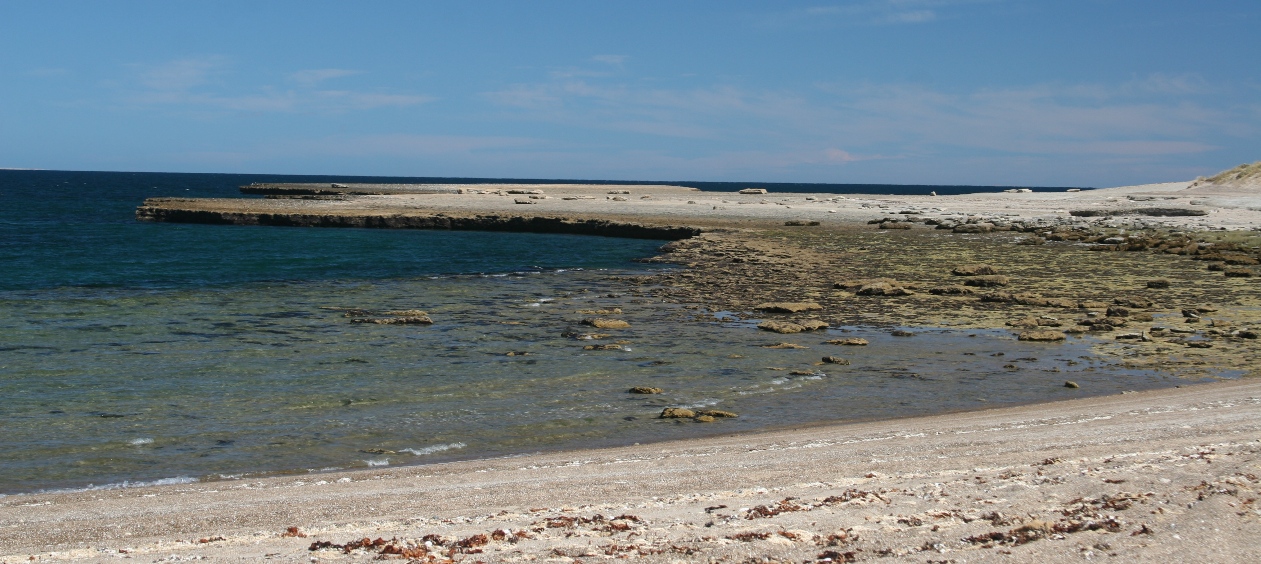
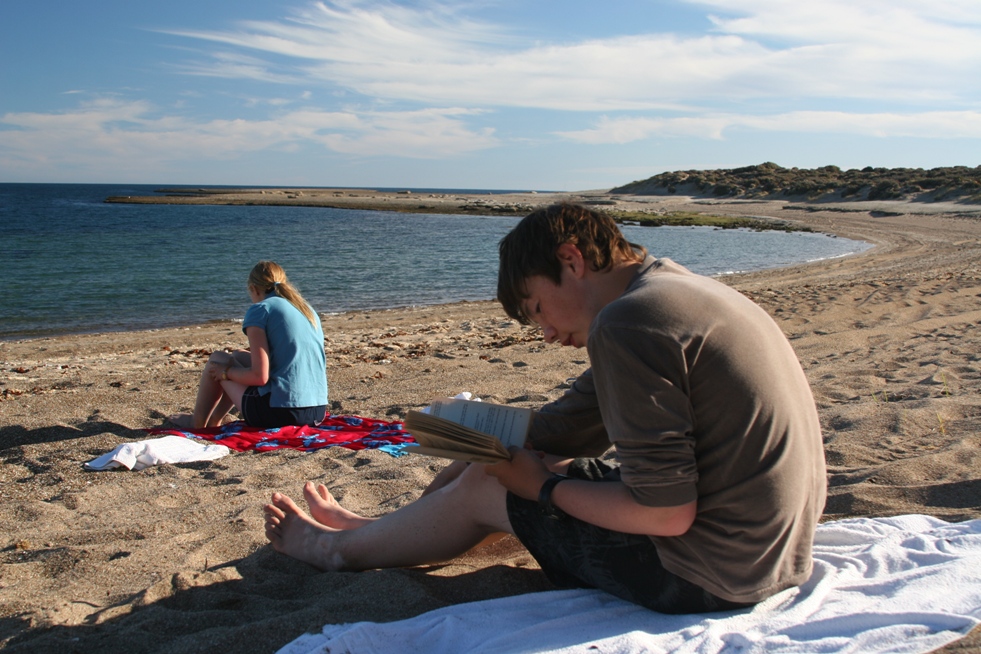
Tom read aloud from the play The Night Thoreau Spent in Jail for "English Literature" class.
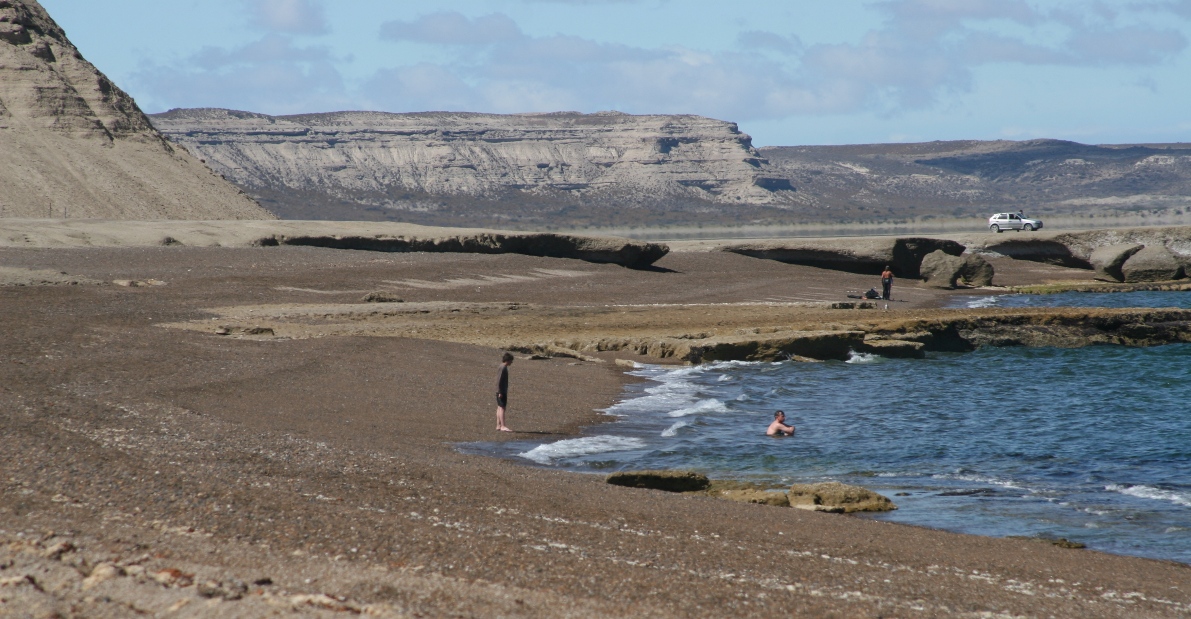
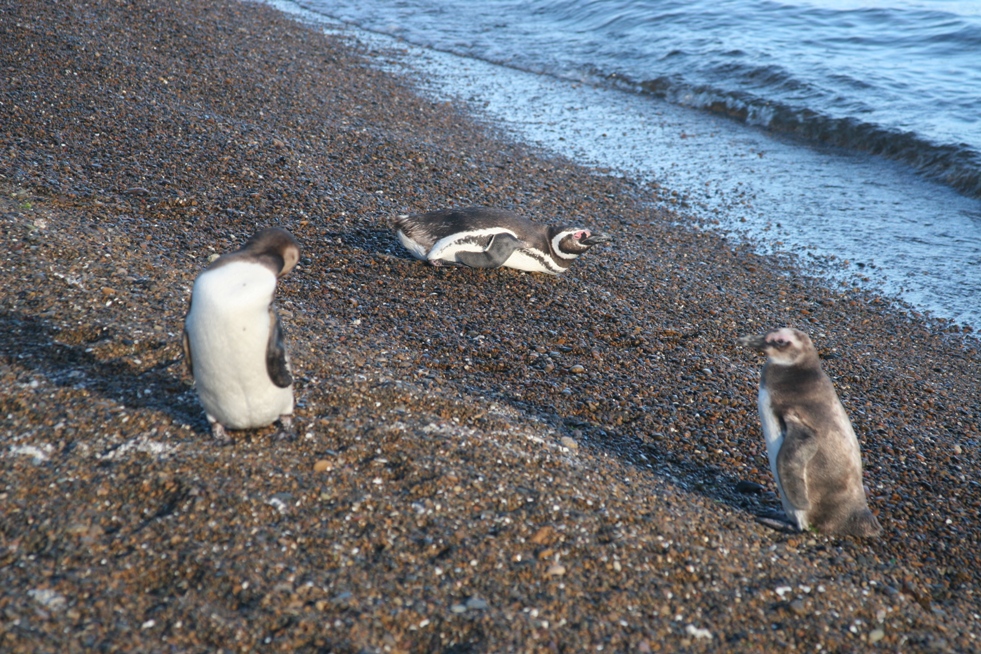
I swam with the little jellyfish and Penguins, neither which bothered me much, but I can't be certain that I didn't bother them.
Early Wednesday morning we made our first visit to Punta Norte, located at the northeast corner of the peninsula, and a place which is probably the best spot to see orcas - at least according to the personnel in the visitor center. High tide was due at about 10:30, and we had been told that orcas may show up anytime between 2 hours before and 2 hours after.
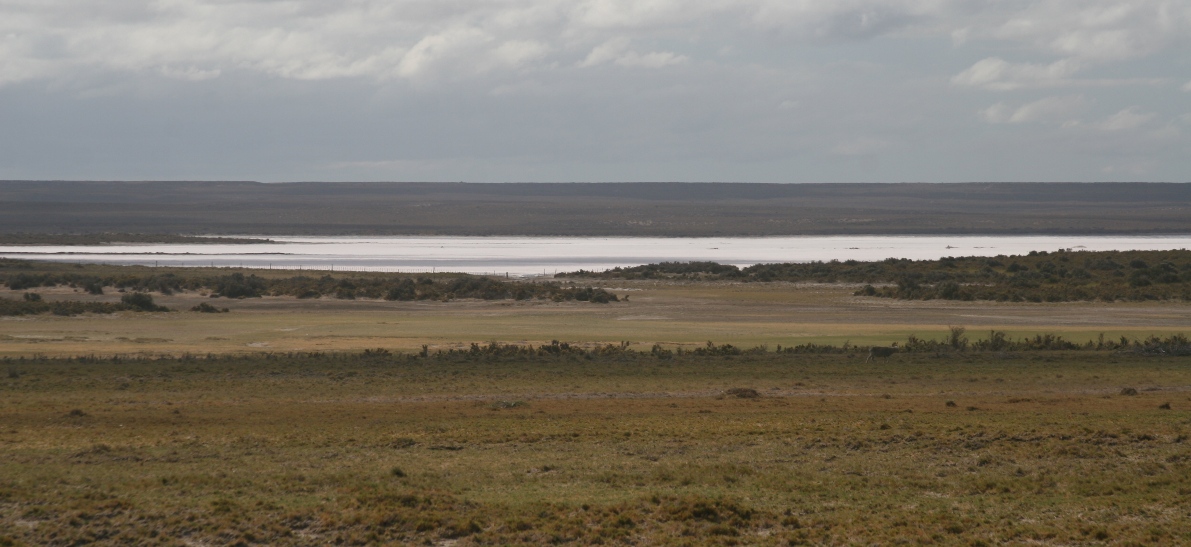
A below-sea-level salt flat interrupts the flat dusty plain of the Peninsula.
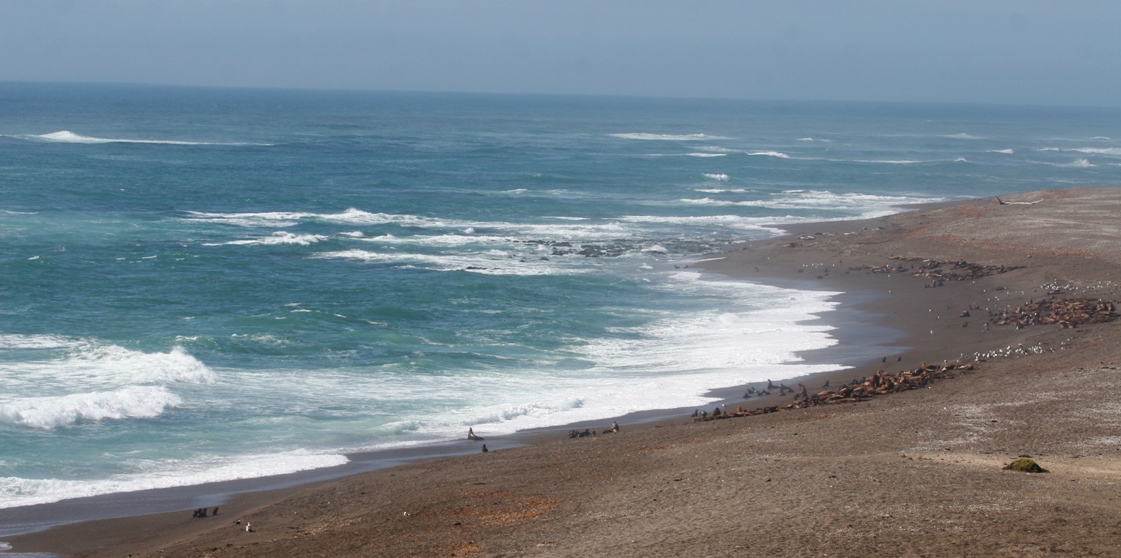
After our early-morning dusty drive, we arrived at Punta Norte barely half an hour before high tide. No worries, according to the park rangers (or whatever they are locally called), we hadn't missed the orca show.
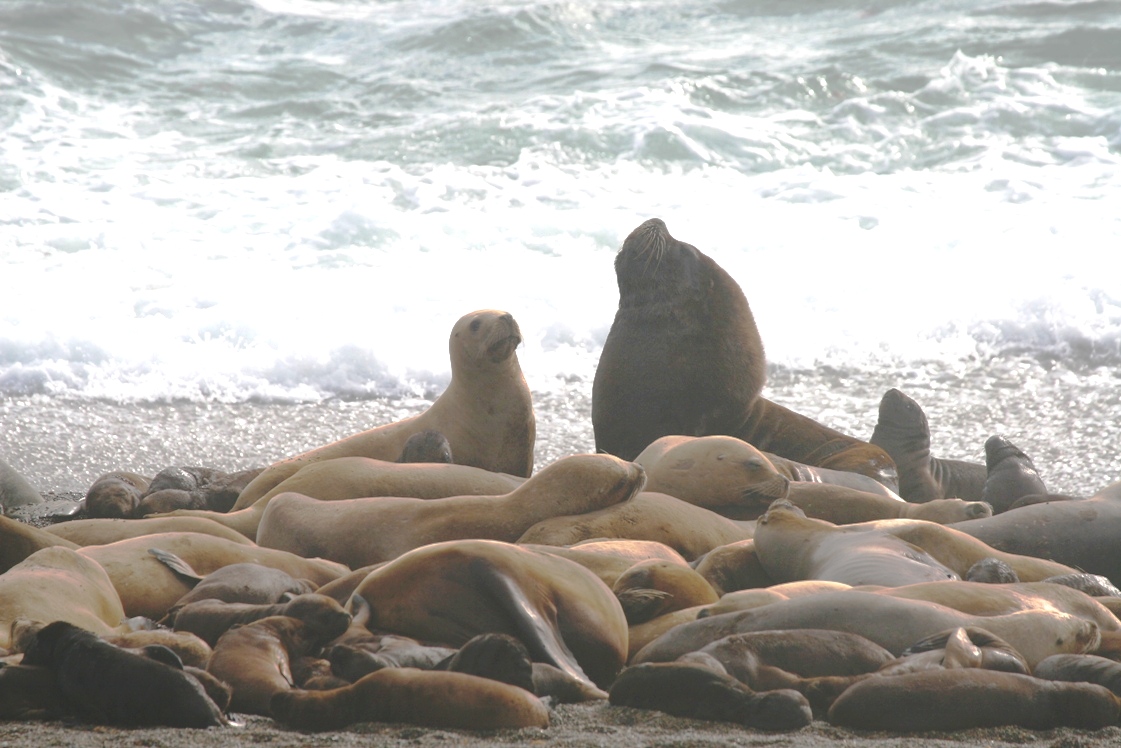
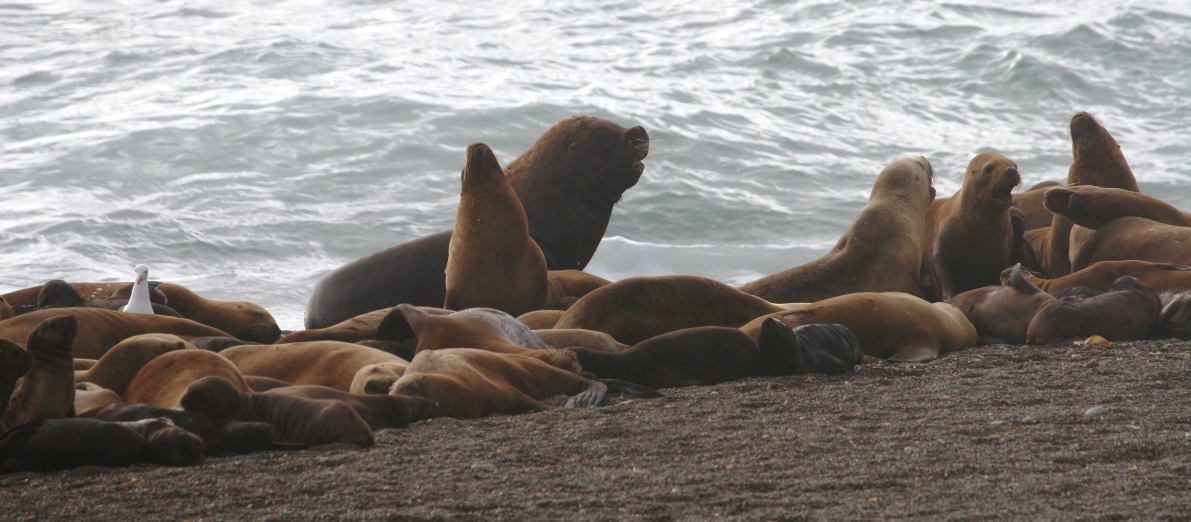
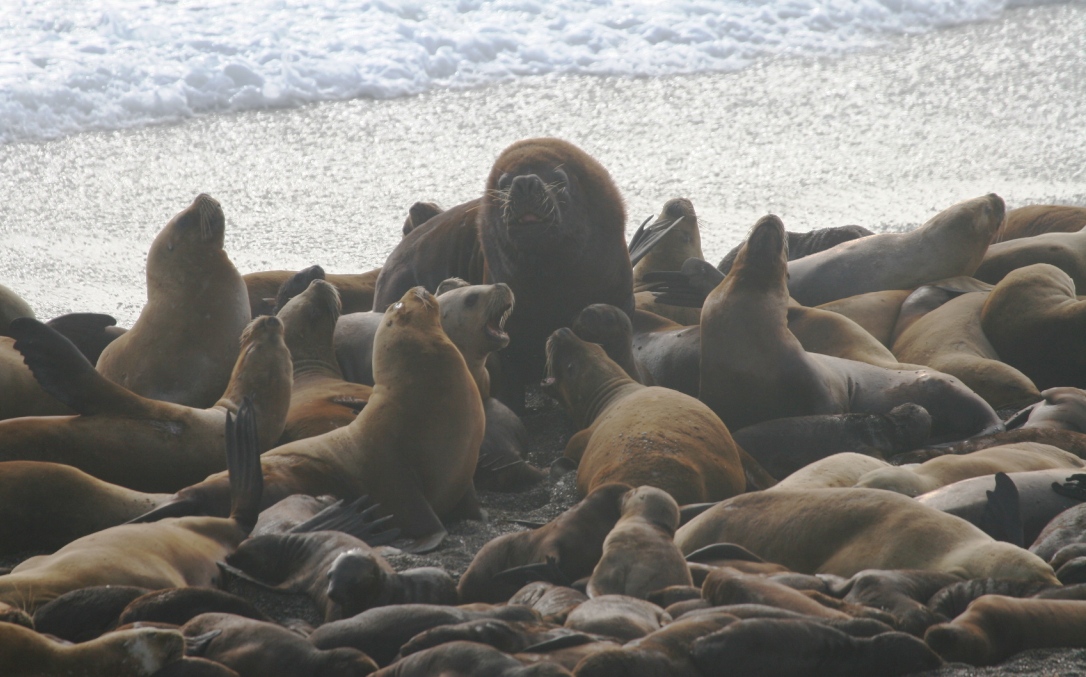
Watching the sea lion colonies,
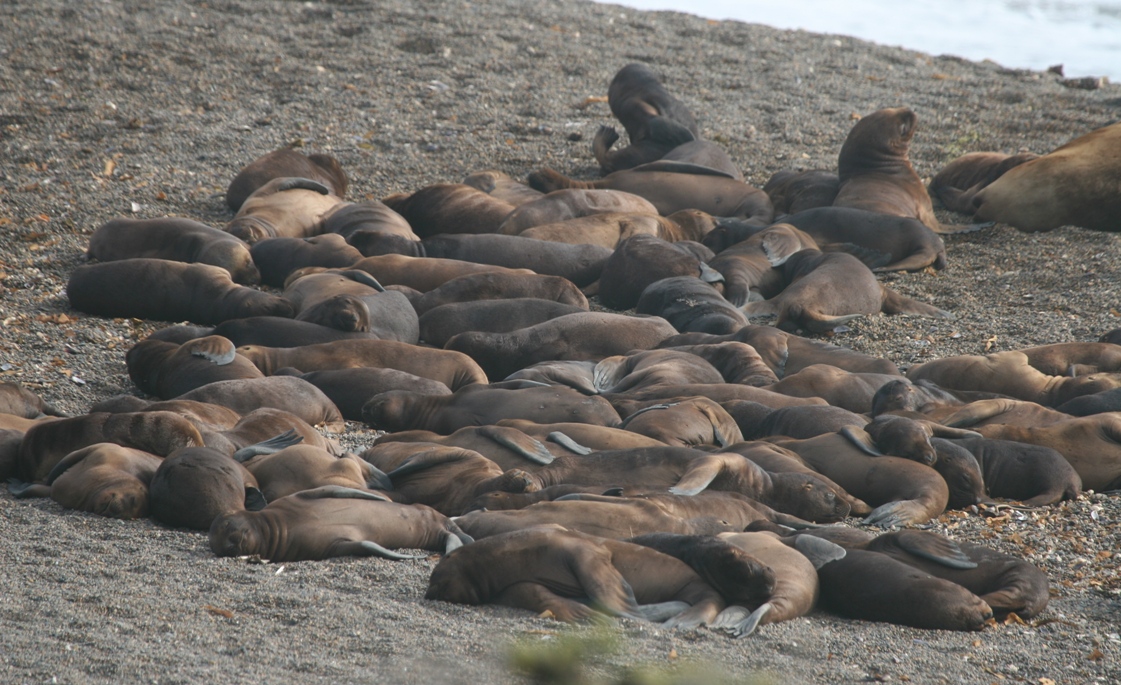
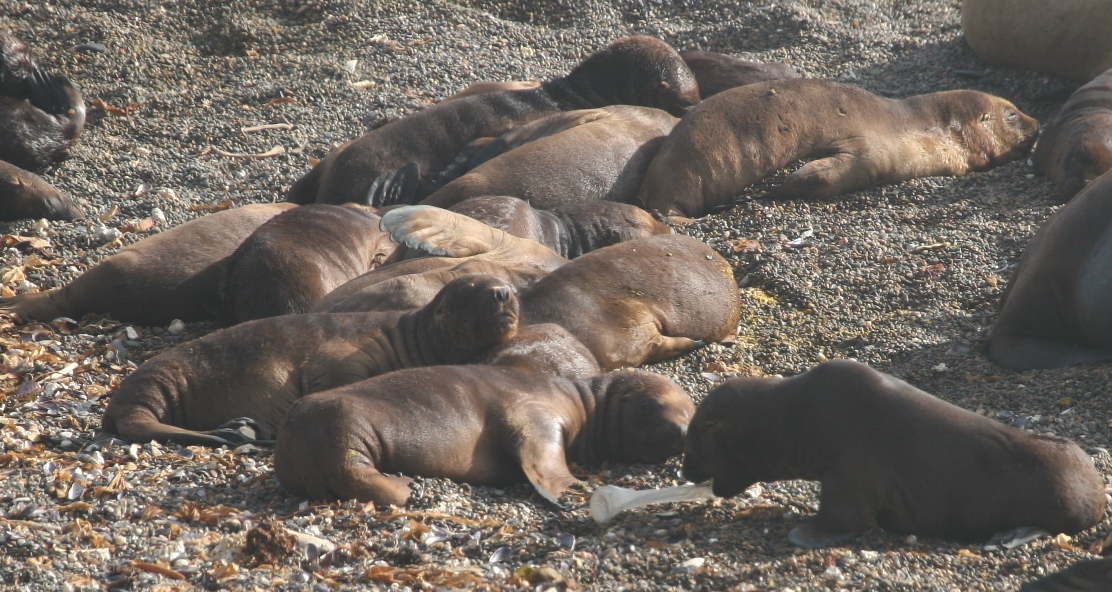
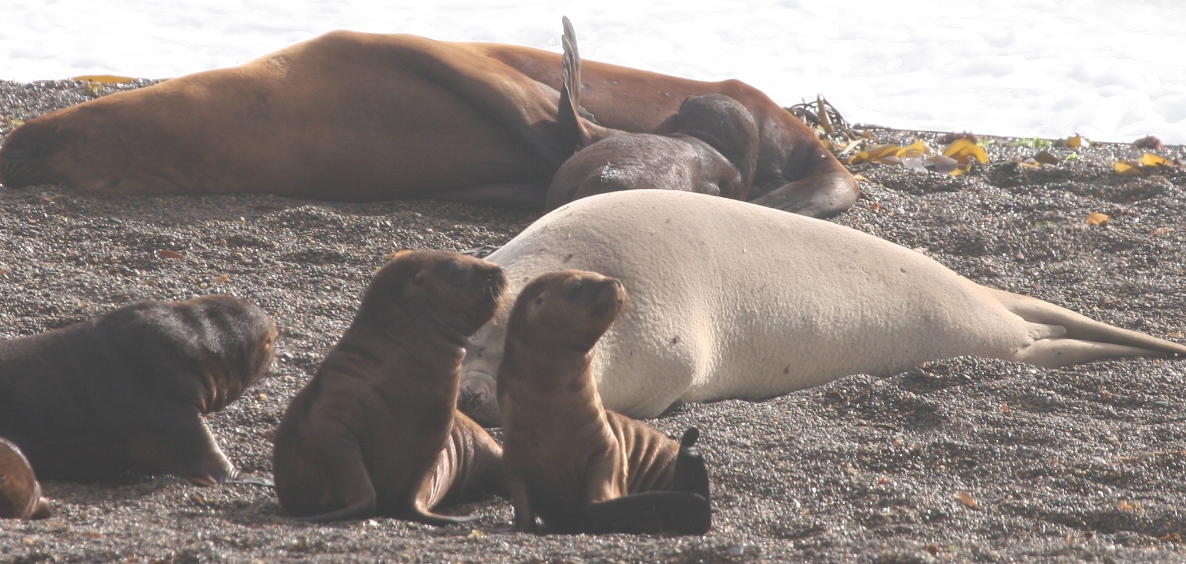
especially the antics of the sea lion pups was entertaining enough.
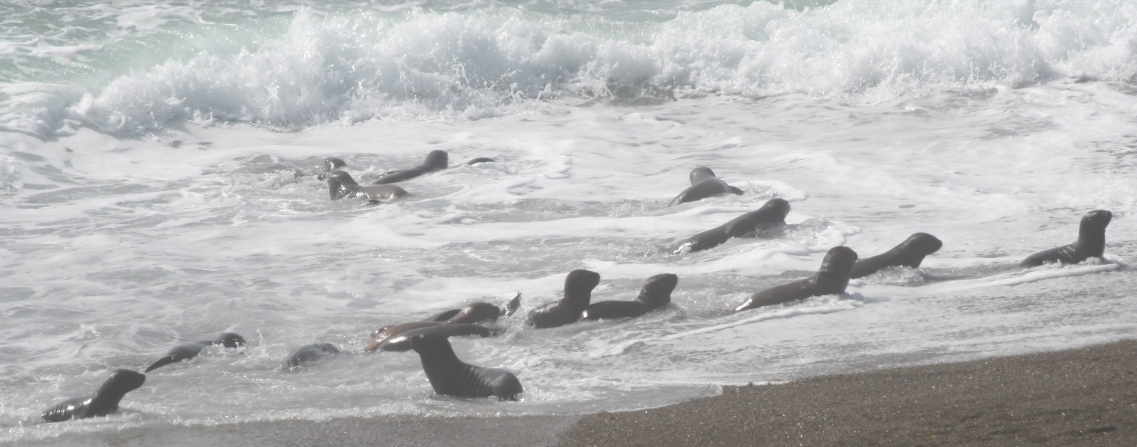
A gang of pups plays in the surf - mmmm they sure look tasty.
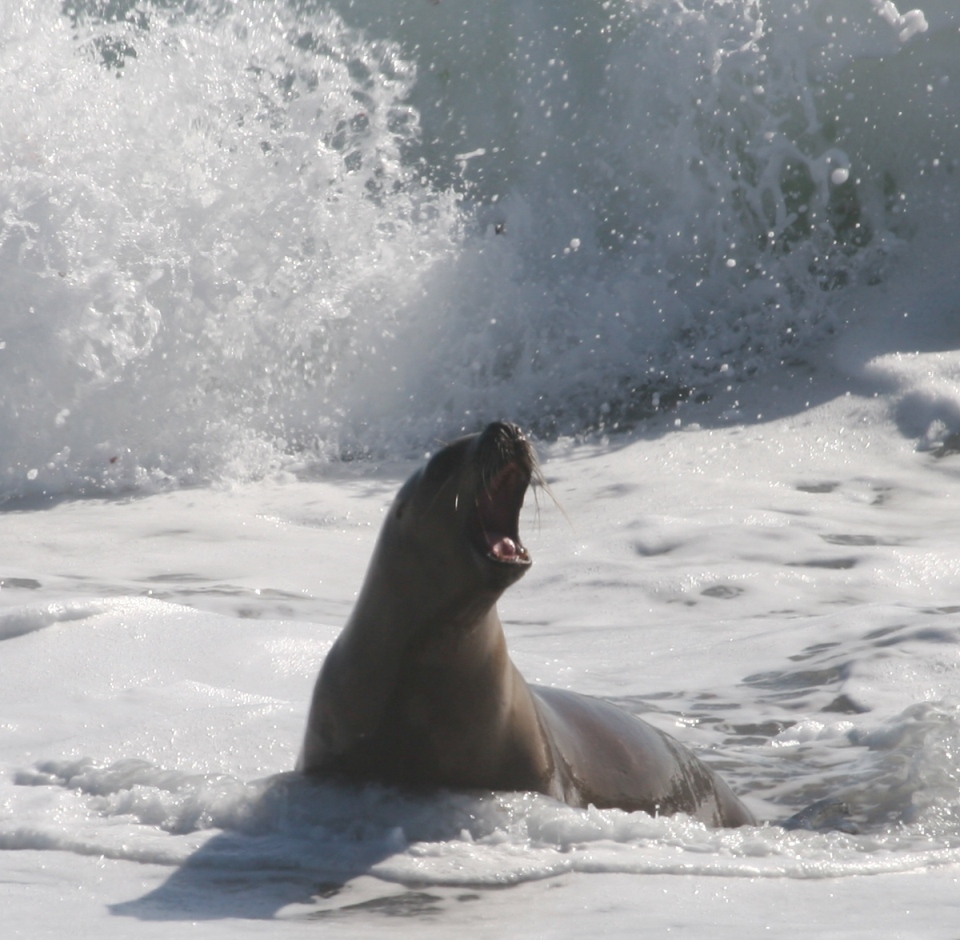
A mother is yelling about something.
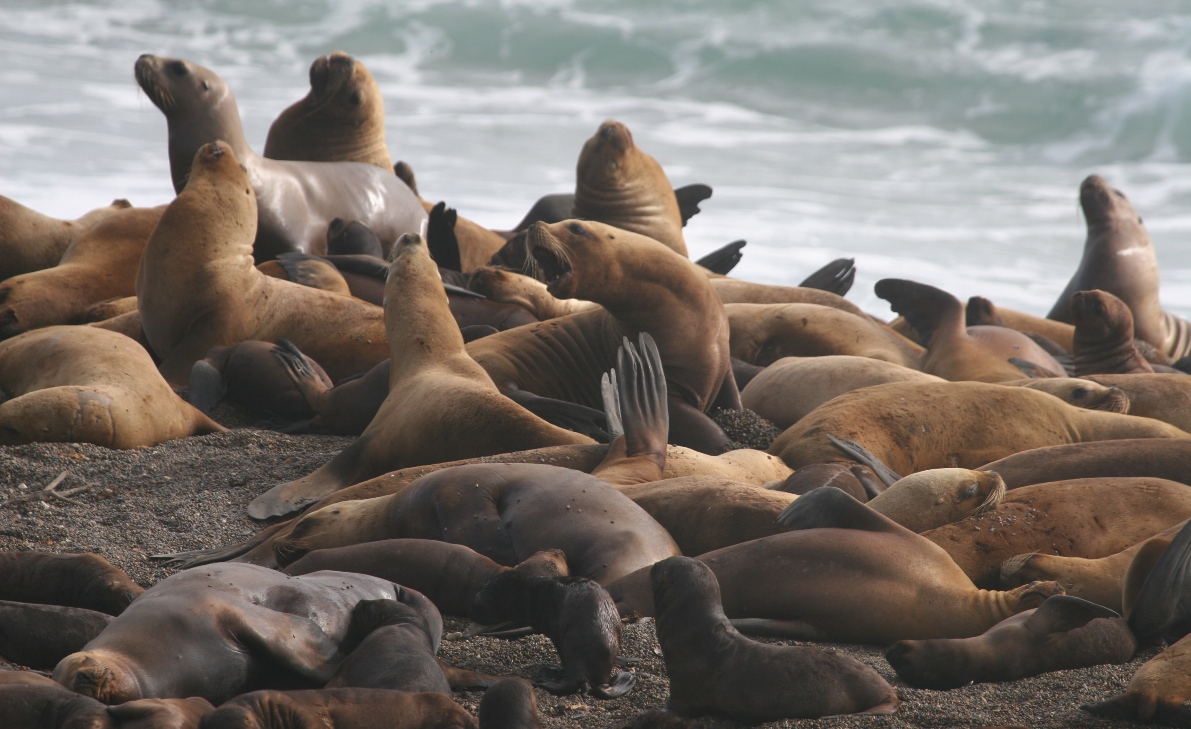
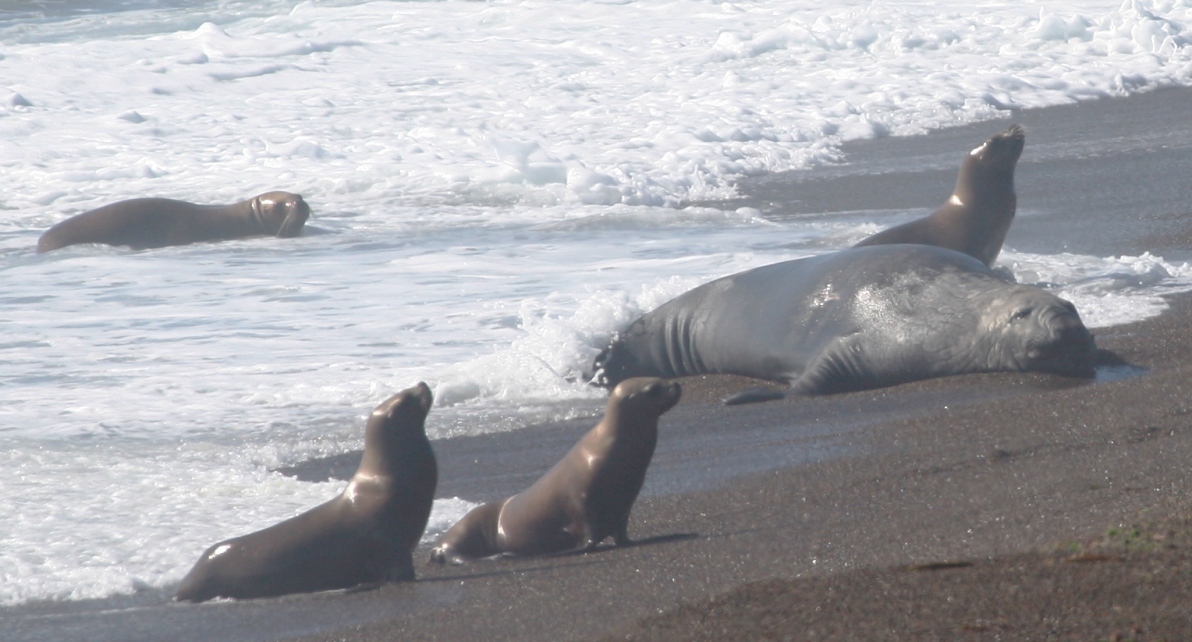
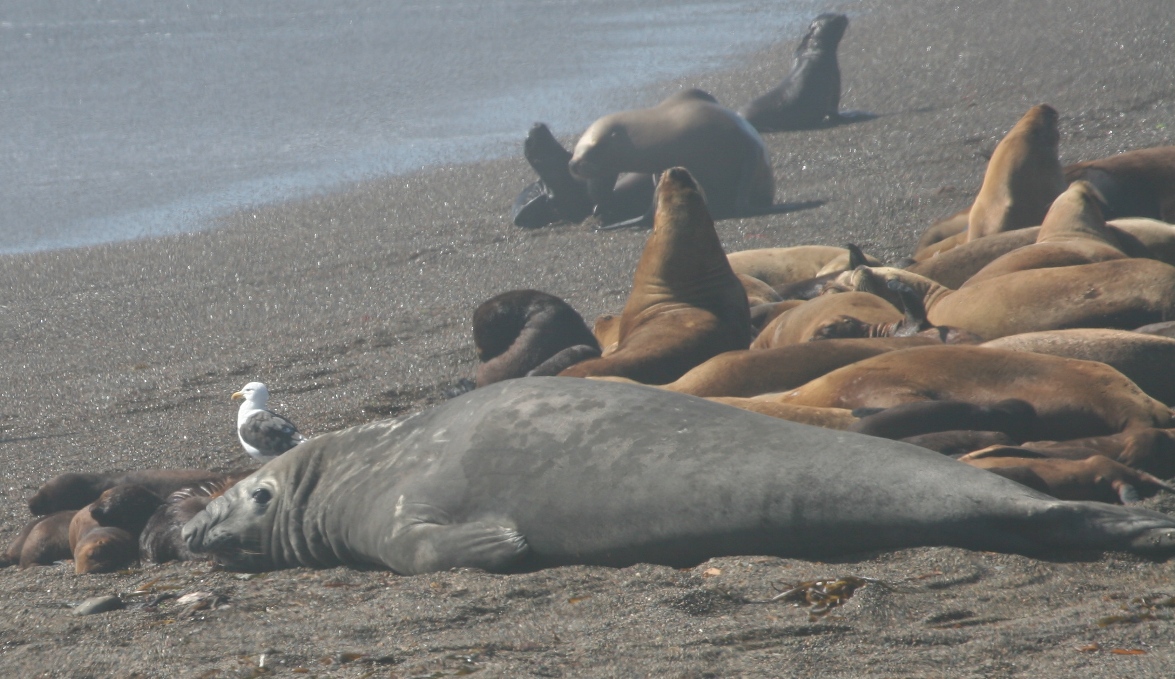
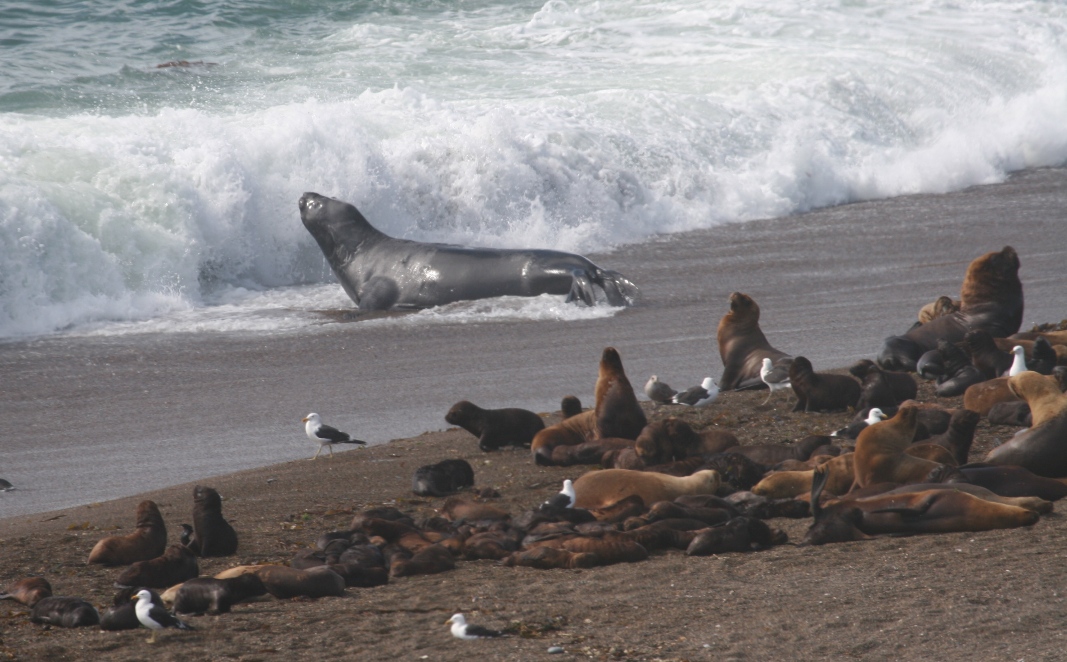
So here is where a few male elephant seals were hanging out - mixed in with (and ignored by) the sea lions and far removed from the colonies of elephant seal females and pups along the eastern shore. The male Southern elephant seal is the largest seal in the world, weighing as much as 4000 kilos. With females of the species weighing no more than 900 kilos, the gender size variation of this animal is one of the largest of all the world's species.
So it turns out that things do live on the interior land of Peninsula Valdes as well as on the beaches and in the water. Other than the sheep put here by several active ranches, that is...
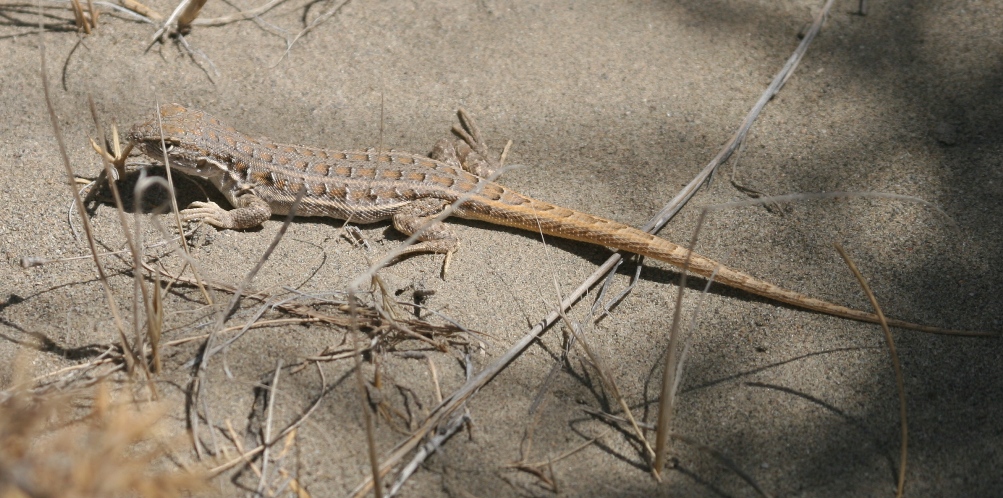
Like lizards,
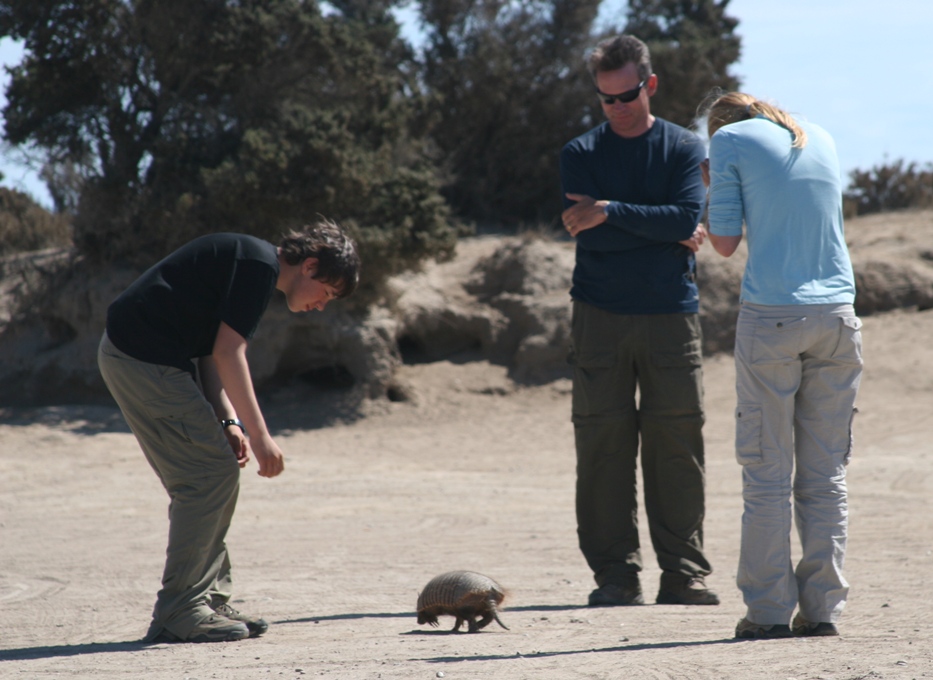
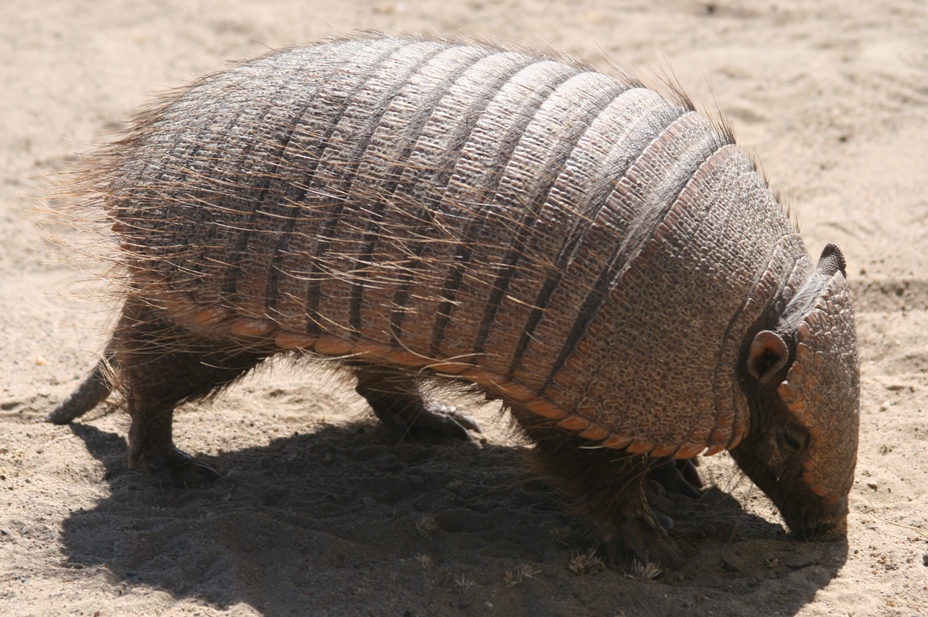
and the little South American armadillo that they call a "pichi" (the one's living around the Punta Norte observation center were obviously very used to humans),
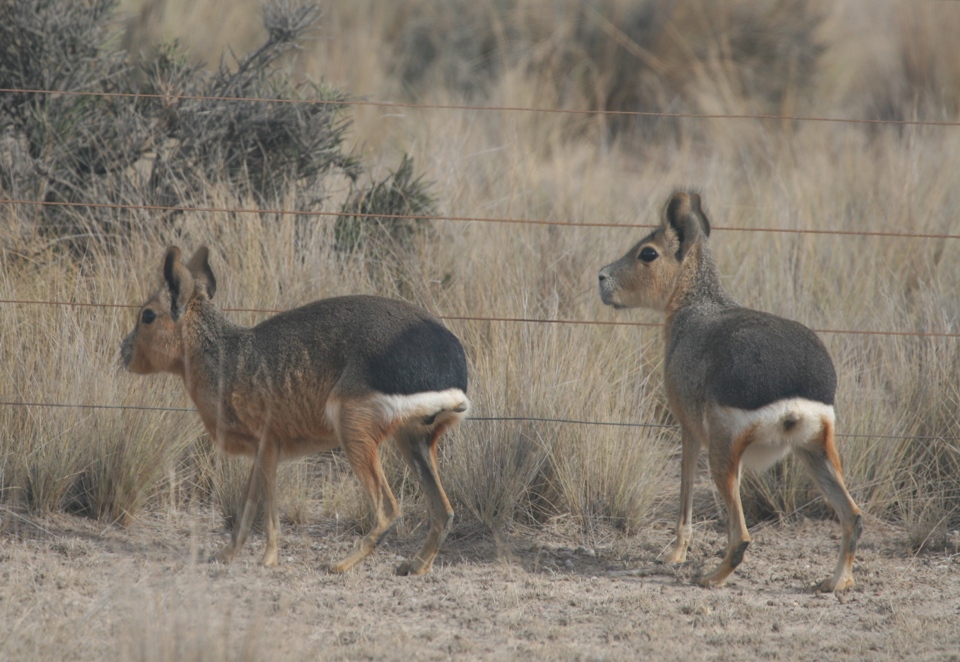
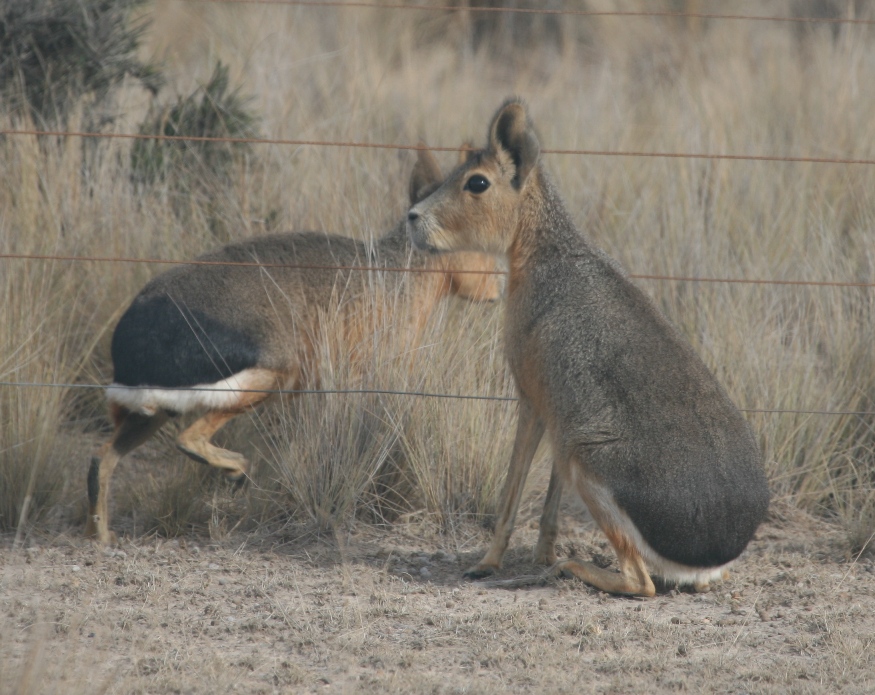
and this very interesting cavy - a bunny-sized rodent that wears a skirt and hops like a deer.
Alas, two more trips to Punta Norte yielded no glimpse of orcas, although an American naturalist encouraged us to keep looking as the situation and timing were very conducive to a close orca encounter and perhaps even an on-shore attack of the seal pups. A pod of five was reported sighted twice during our visit, but never when we were around to see them and both times just swimming along pretty far offshore. We'll just have to content ourselves with buying an orca video DVD from one of the tourist shops.
Four days doesn't quite take up a whole week, and for the last three days, we've been hanging out back in Puerto Madryn. Other than a good load of schoolwork, we didn't do much - but we did spend an afternoon at the city's new "Eco-Center" museum.
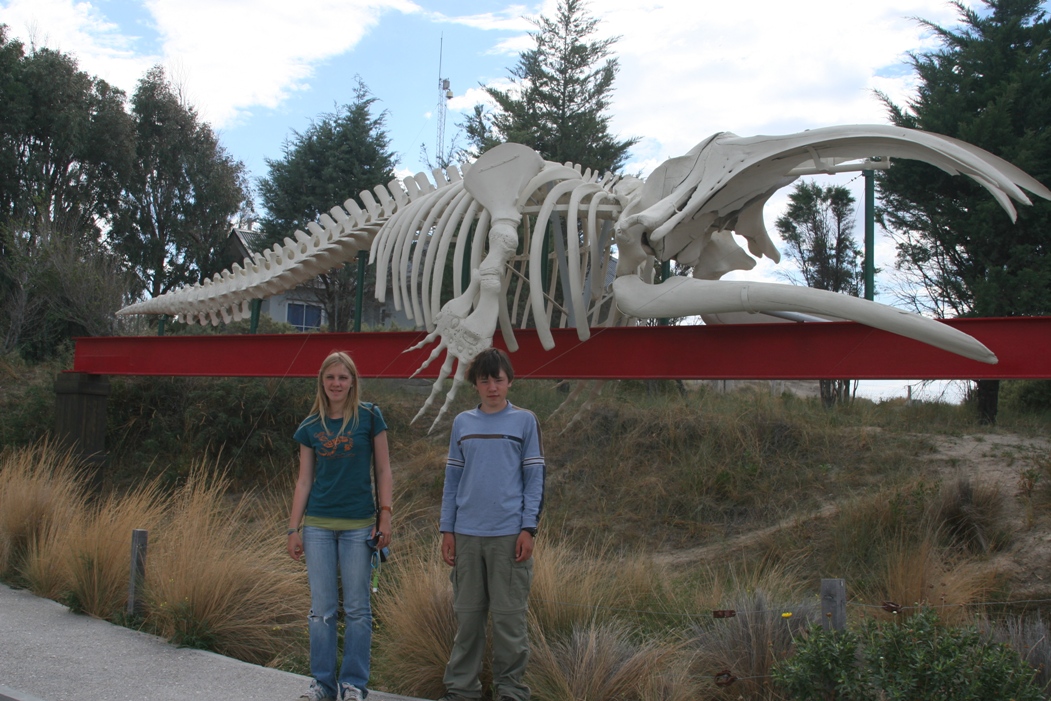
With Tom and Anna standing in front of a Southern Right whale skeleton in front of the Eco-Center, you can see just how large a 14 year-old human being really is.
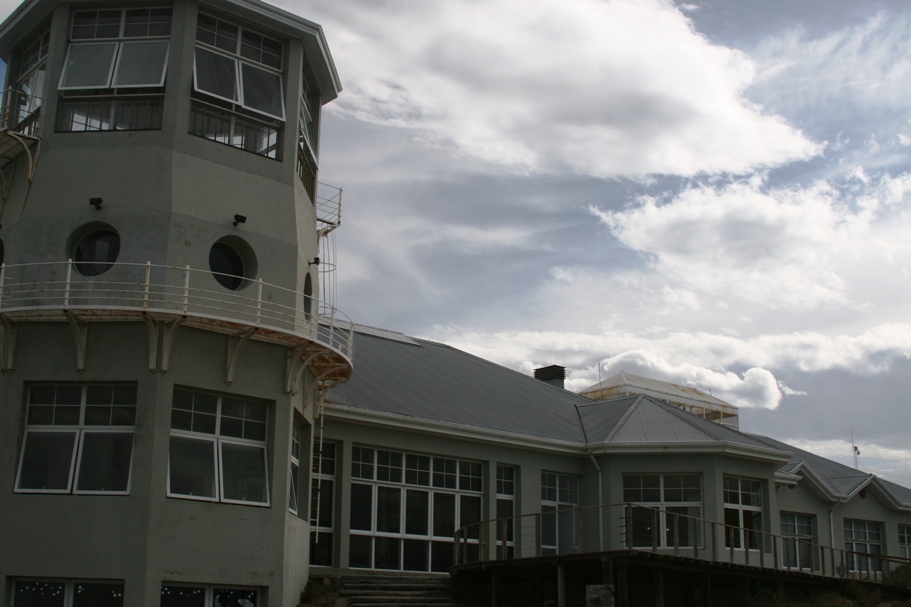
The Eco-Center.
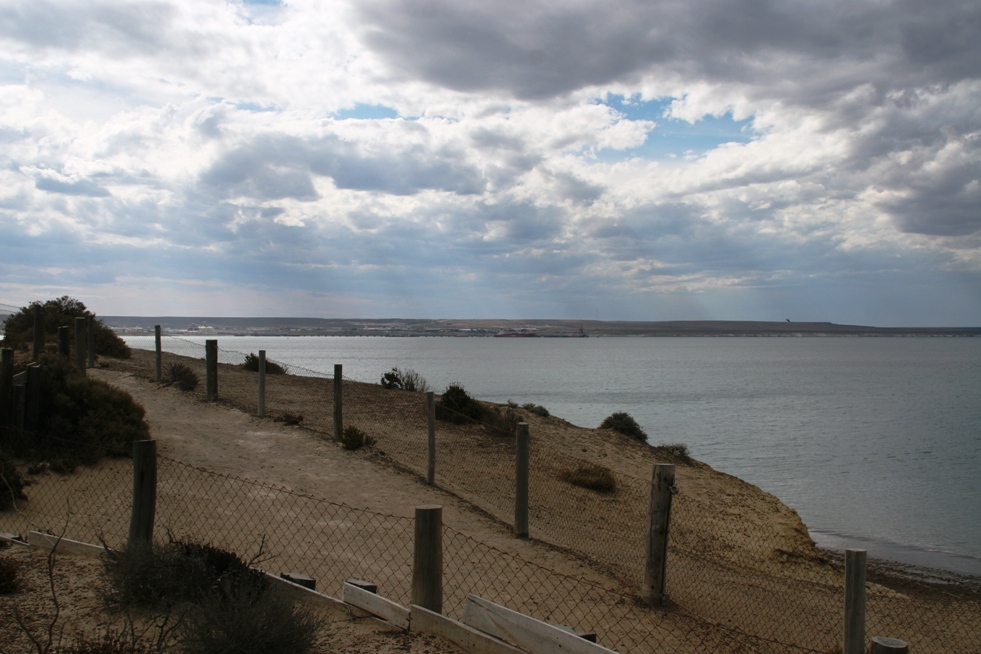
Although the views of Golfo Nuevo and the city of Puerto Madryn that we enjoyed standing on a large observation deck of the Eco-Center were nice enough,
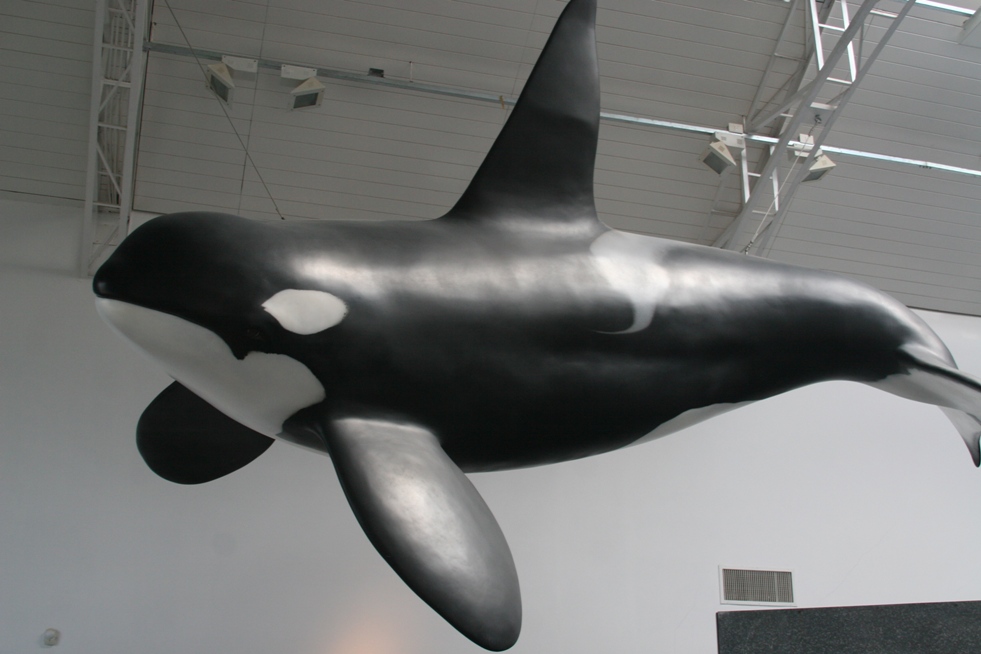
the exhibits inside were really excellent - we learned a lot about the nearby marine currents and life in the southern Atlantic ocean off the coast of Argentina. And we finally got to see, not just any orca, but a flying one!
So tomorrow we leave another recently new place again. Where shall we go next? Further north along the coast, or east back to the mountains to experience a more northern and verdant region of the eastern Andean cordillera? Perhaps the next journal entry will contain the answer. I can't wait to find out.
-Rolf