Sarmiento - Estancia Labrador
Another New Home
Saturday February 23, 2008
Last Thursday marked our departure from Estancia Telken and the Santa Cruz Province too. Petty, Coco, and Brian had to leave early in the morning for a shopping run to Perito Moreno Town (they were expecting the arrival of a large group later in the day), and said goodbye and left us shortly after we got out of bed and wandered into the kitchen. Diana and Carolina, the two cook/housekeepers, spent a little more time with us before we left as well, with Diana handling the business of canceling the bill, and Carolina preparing egg-salad sandwiches and cake for our lunch on-the-road.
After driving north to Perito Moreno town on a small stretch of paved route 40, we spent a little more than 2 hours on what we had been warned in advance was probably "the worst of the worst" - a really dreadful 120 kilometer stretch of washboards and ruts on a gravel/dirt section of route 40. Heeding the advance warnings, we took it pretty slow and avoided any serious problem. There is work in progress to pave this section of the road (and most if not all sections of route 40). From what we saw happening along the drive, I'd estimate the completion date of that project to be somewhere between the years 2020 and 2030, but that may be overly optimistic.
Our arrival at the crossroads town of Rio Mayo marked two major transitions in our travels. We were now in Chubut Province, another large chunk of southern Argentina that extends from the Atlantic to the Chilean border - generally considered to be still part of Patagonia or "the south" at least. The second major change was that we were at the end of the gravel. If we were to have continued north along route 40, we would have enjoyed a smooth ride on pavement. As it was, we turned right and headed northeast on route 22, also paved. Looking ahead and tracing our planned route on the map out through the next few weeks, we see, with one small short exception, solid red lines. This means hard pavement and no (or less) dust!
After only a little more than one hour more spent on the paved combination of routes 22 and 20, we arrived at Estancia Labrador, a few kilometers outside of a small town called Sarmiento. The owners of Estancia Labrador are good friends of Petty and Coco. Annelies Gerritsen and Nicolás Ayling operate what they call a "chacra," which is a smaller establishment than a large cattle ranch type of estancia. They dabble in a variety of enterprises on their moderate parcel of land (I never asked the details but it appeared to be less than a hundred hectares and perhaps only a dozen or so...). There are fields of alfalfa, a little more than one hectare of cherry orchards, bee boxes, and of course sheep. In the small house, the two back bedrooms are rented out to tourists (us at the time). Also, Annelies and a couple of hired helpers make jams, chocolates, and the Argentinean special cookies "Alfajores" in the kitchen throughout the day to be sold in the small shop under the water tank in front of the house.
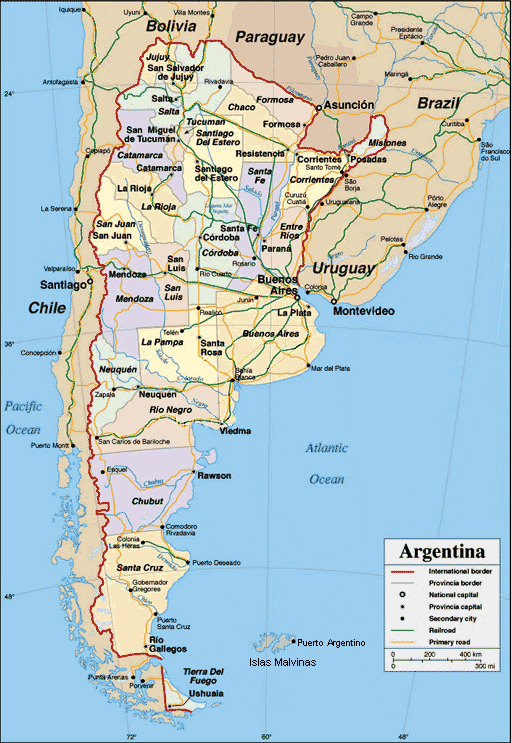
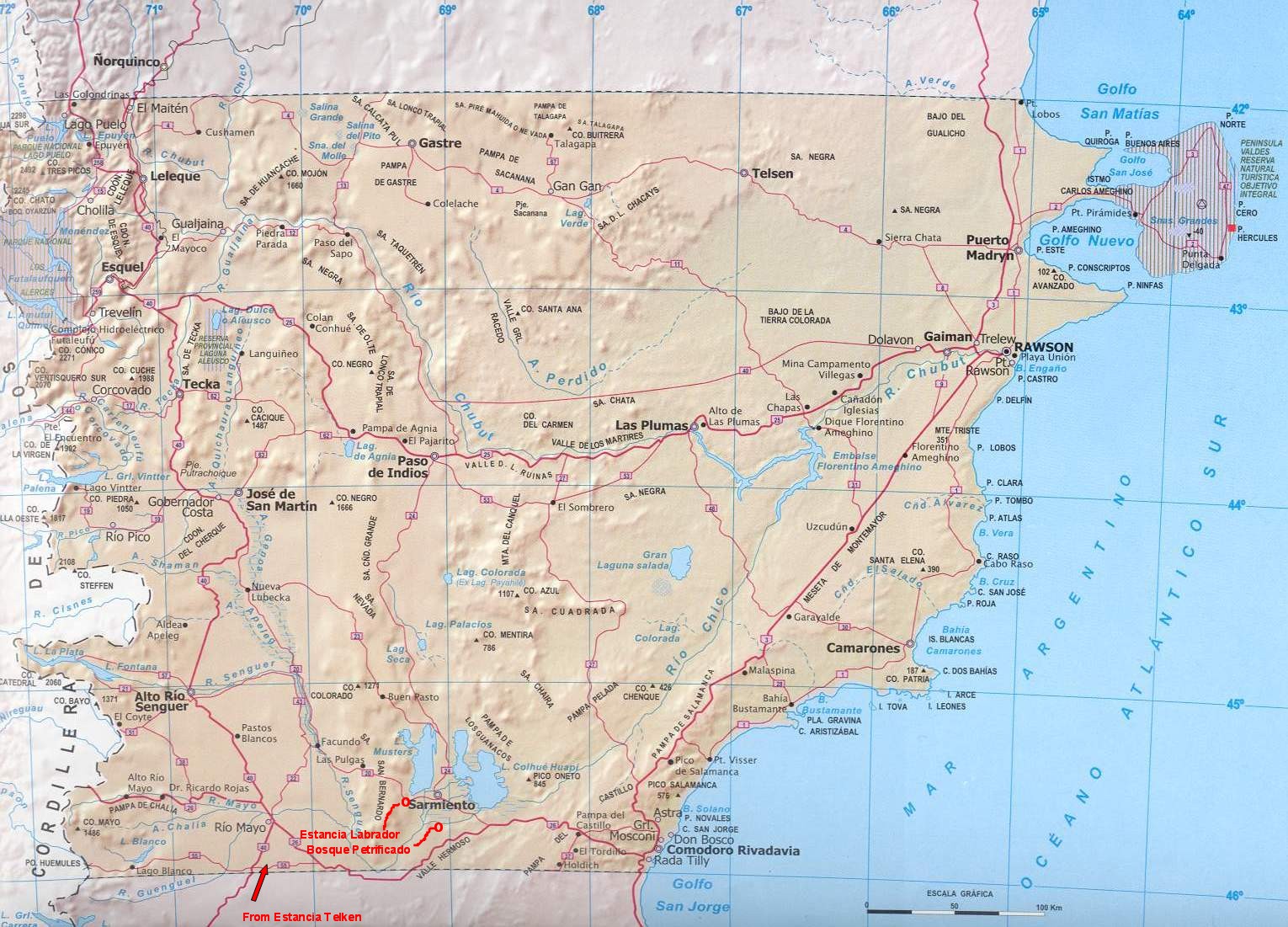
Here are two maps, the crude "overview" of Argentina and a map of Chubut province. Where we are near Sarmiento is marked in red on the Chubut map.
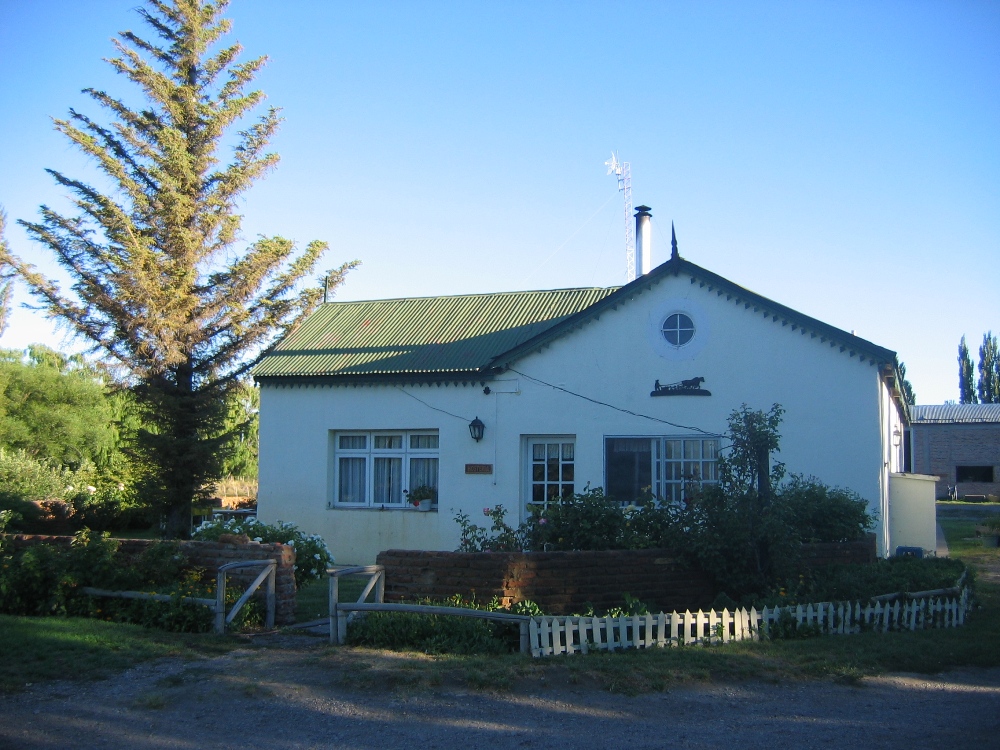
The main house of Estancia Labrador.
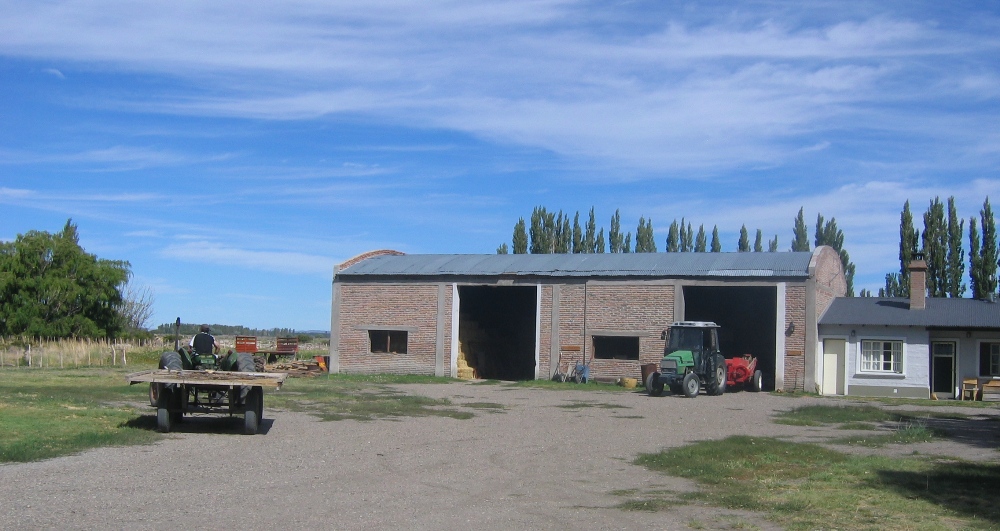
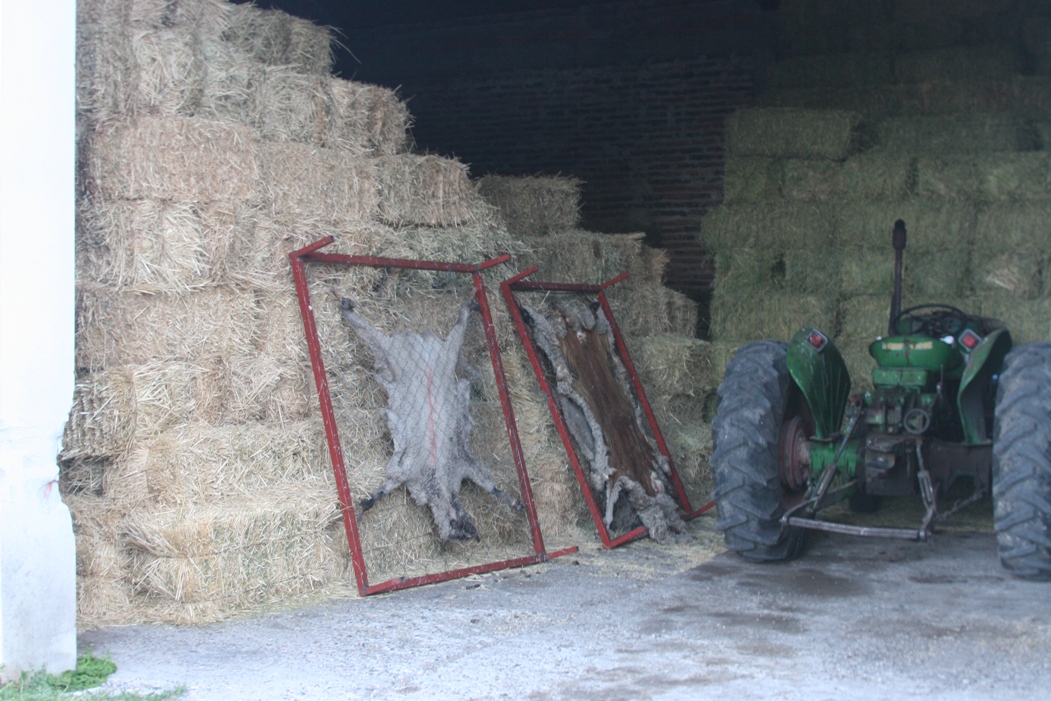
The barn.
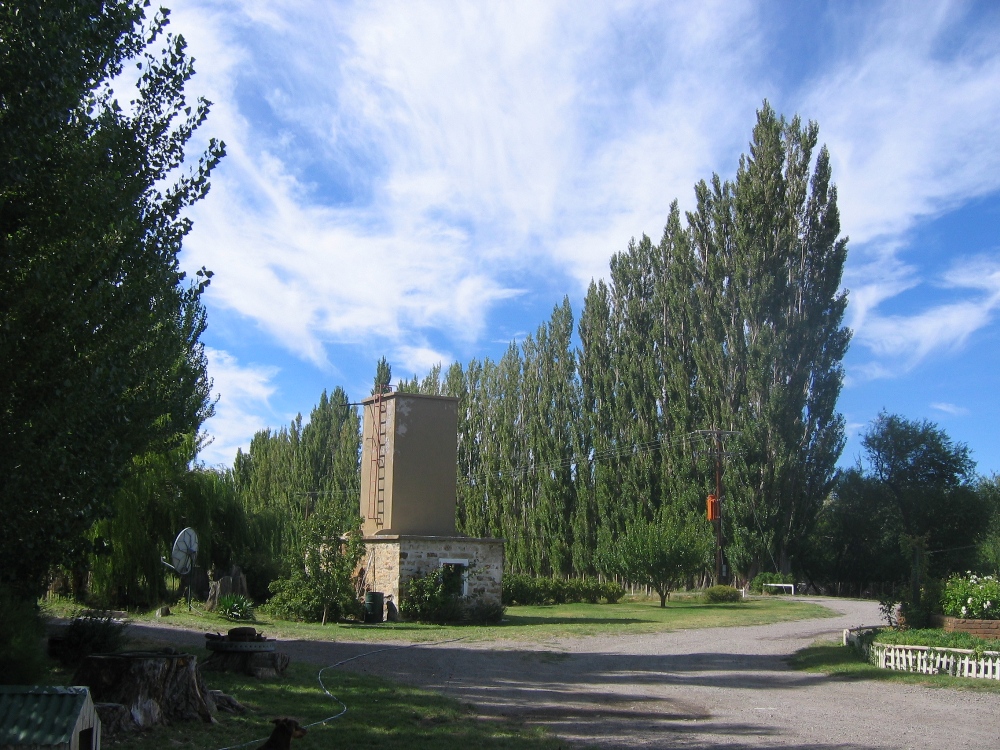
The water tank sits above the candy/alfahor store.
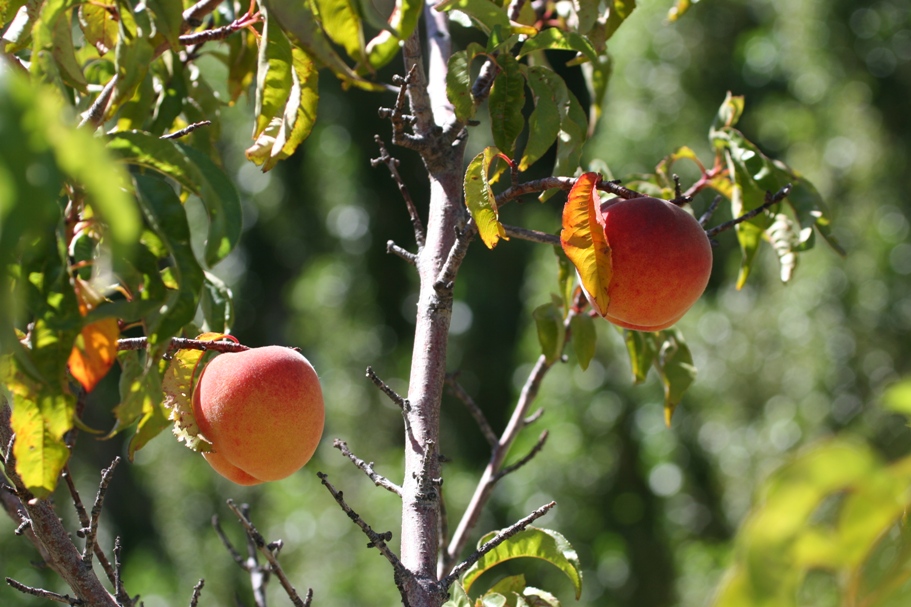
Peaches in the yard,
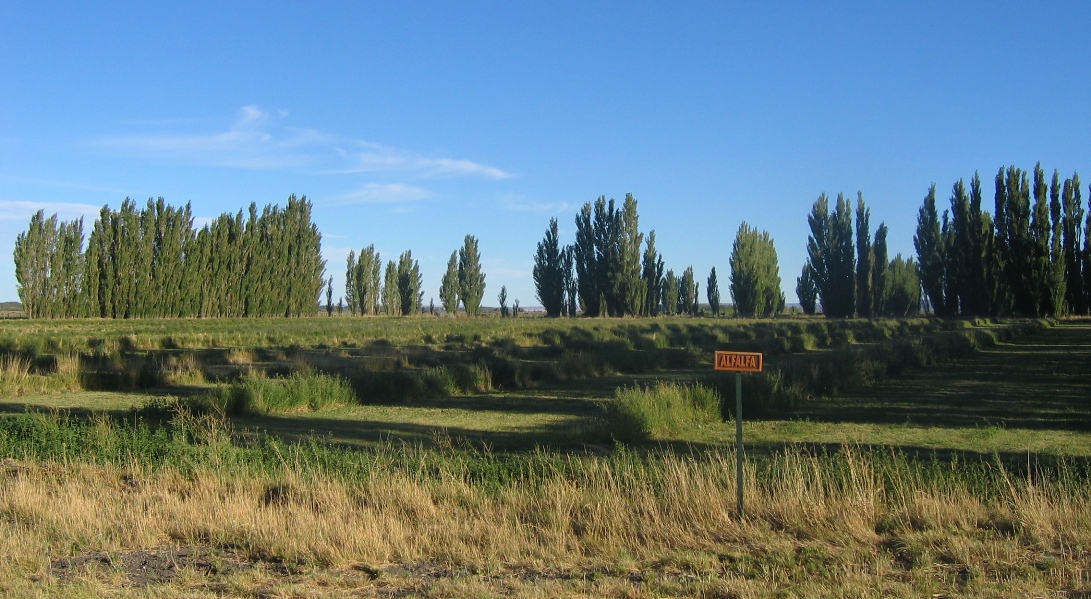
and alfalfa in the field.
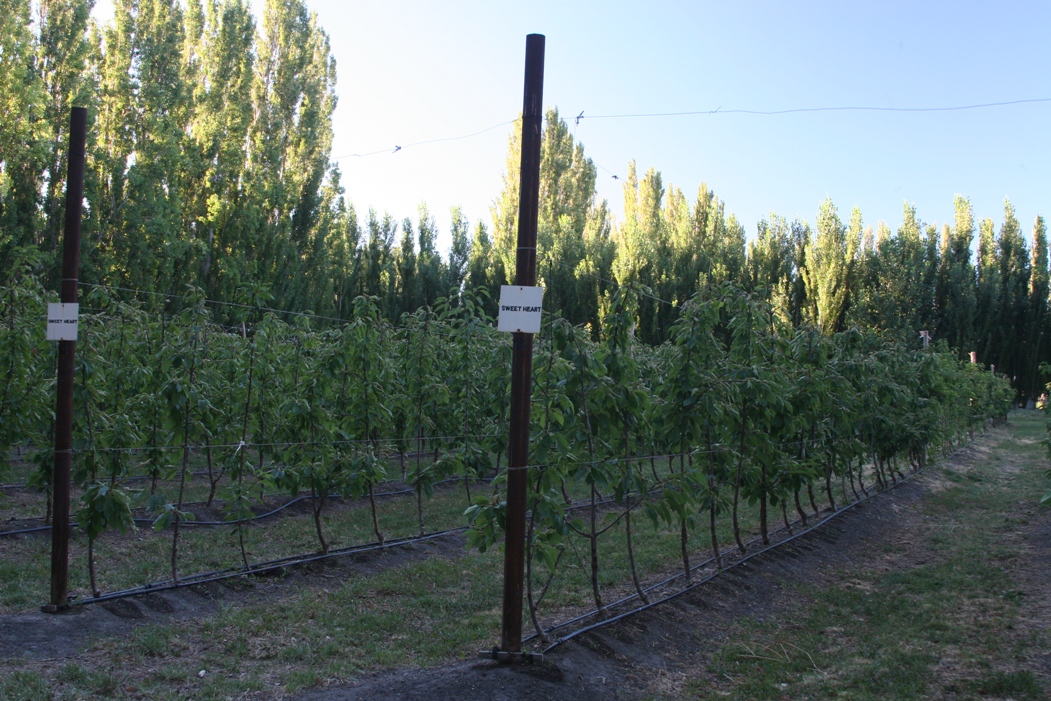
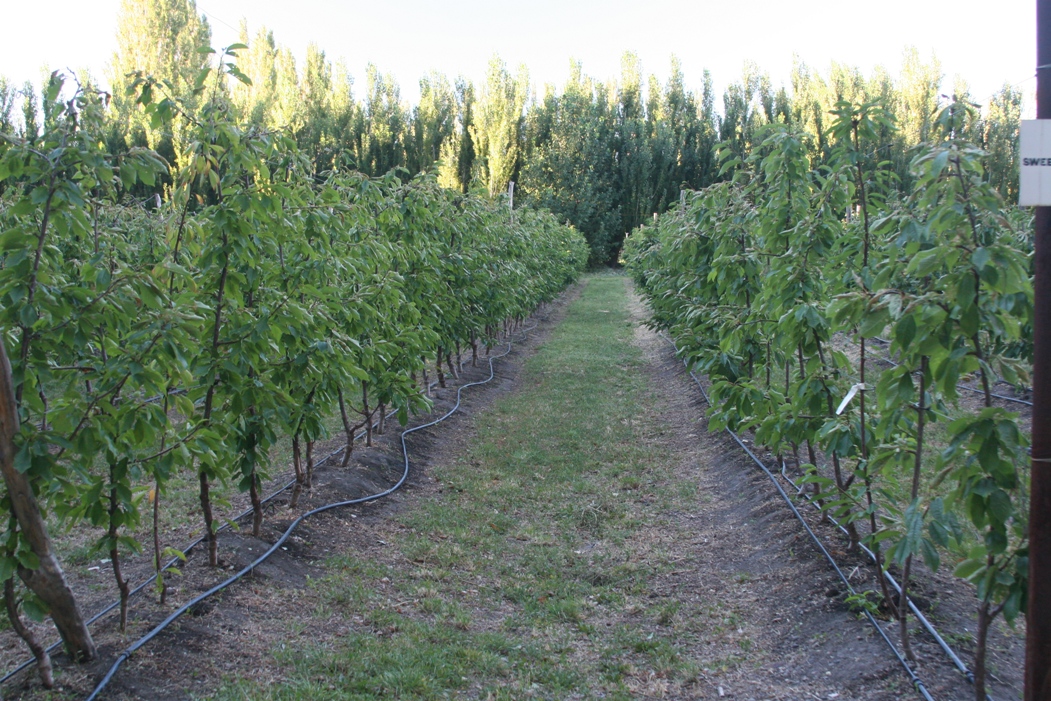
The cherry orchard. Annelies is pioneering, locally, a technique of cherry production in which the trees are grown almost like raisin grapes. She says the total yield is perhaps a slight bit (but not really much) less than that of larger trees, but that the labor to maintain and pick is much lower.
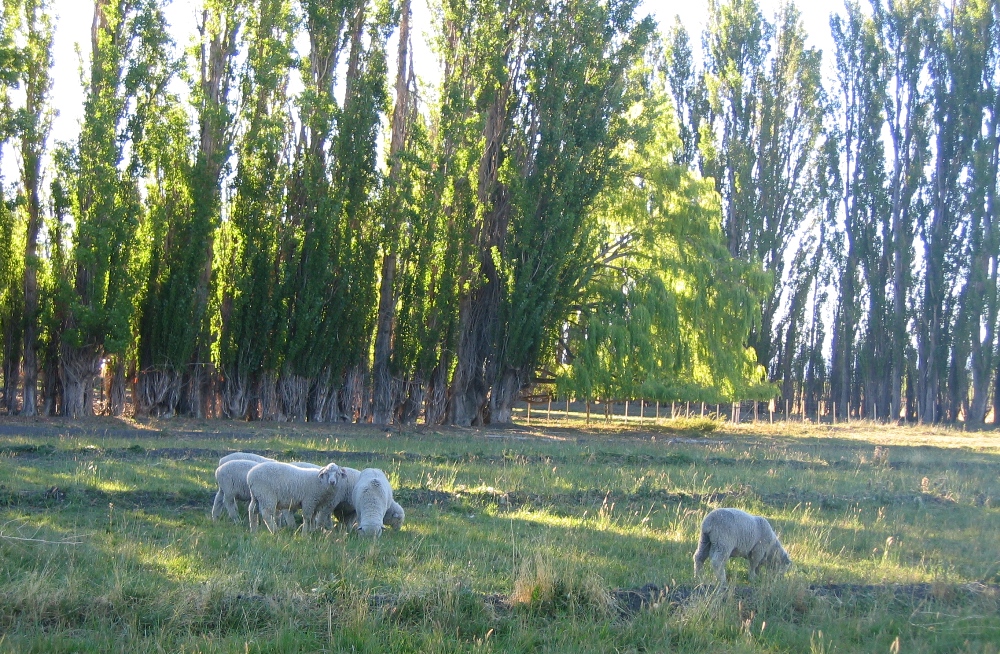
And every estancia or chacra must have sheep! They use long tall hedges of Poplars to separate the fields and provide a break of sorts to protect against that fierce Patagonian wind.
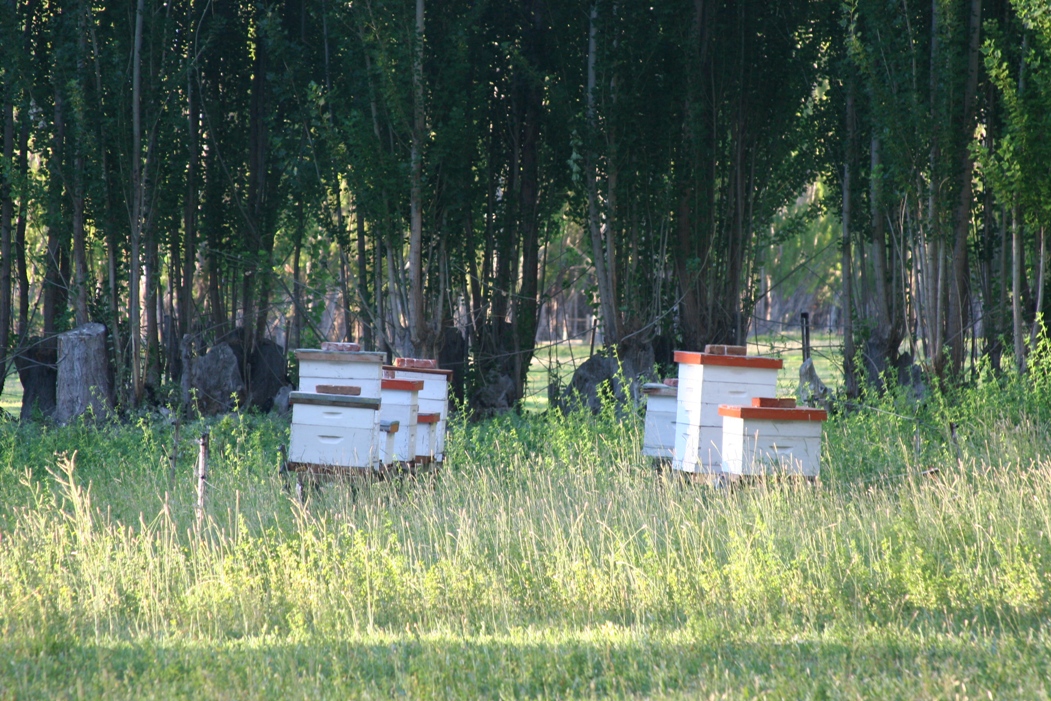
The bee boxes - the bees provide pollination for the cherries, and honey for the store.


One morning during our visit, Annelies and the local "Bee Consultant" performed the annual honey harvest. They removed each section of comb intact in its frame, and then centrifuged the frames to extract the honey while leaving the comb intact. After they get all the honey out, they return intact combs back into the boxes above the nests. The idea is to let the bees go right back to work making honey without having to build new combs.
Estancia Labrador is a quaint and homey place to stay, but even the hospitality and the good home-cooked food might not keep too many people content to hang around Sarmiento for very long. A quick drive around the town didn't leave me with high hopes for much in the way of amusement or entertainment (or even a decent lunch). There are two very large lakes to the north of town, and although they are quite pleasing on the eye, the Patagonian winds make them unpredictable and dangerous for small and even moderately large boats. But as we soon enough discovered, there were plenty of entertainments and diversions to enjoy while we were here for three nights and two long (full) days - in the surrounding region, on the chacra, in the town itself, and on the nearby lakeshore.
The "surrounding region" attraction is another petrified forest, of which there are at least three (and perhaps more) sprinkled around Argentinean Patagonia. At the dinner table on our first evening at Labrador, we mentioned to Annelies that we were considering visiting the petrified forest on Sunday, the day we'd be leaving, but she gave us the following advice, "Here in Patagonia, you can't plan anything ahead, so if the weather is good tomorrow, or the next day, you should go to the forest when you can."
We should have figured that out by now. That infamous wind can completely wreak havoc with any and all outdoor plans.
Friday morning dawned mostly clear and mostly devoid of wind, so Annelies told us to go to the forest now while the going was good, so we heeded her suggestion and drove the 30km south of Sarmiento to the site of the petrified forest.
All of the petrified forests of Argentinian Patagonia are connected by a similar history - a story that is also linked to the oil deposits and dinosaur fossils that are another prominent physical feature of the region. Millions of years ago, before the break-up and relocation of various continents, this was a tropical region covered in rich vegetation and dense forests. The most recent location of South America and the growth of the Andes turned the region into an arid, mostly barren place, and the dinosaurs and plants became buried and subsequently turned into fossils and oil over a very long period of time.
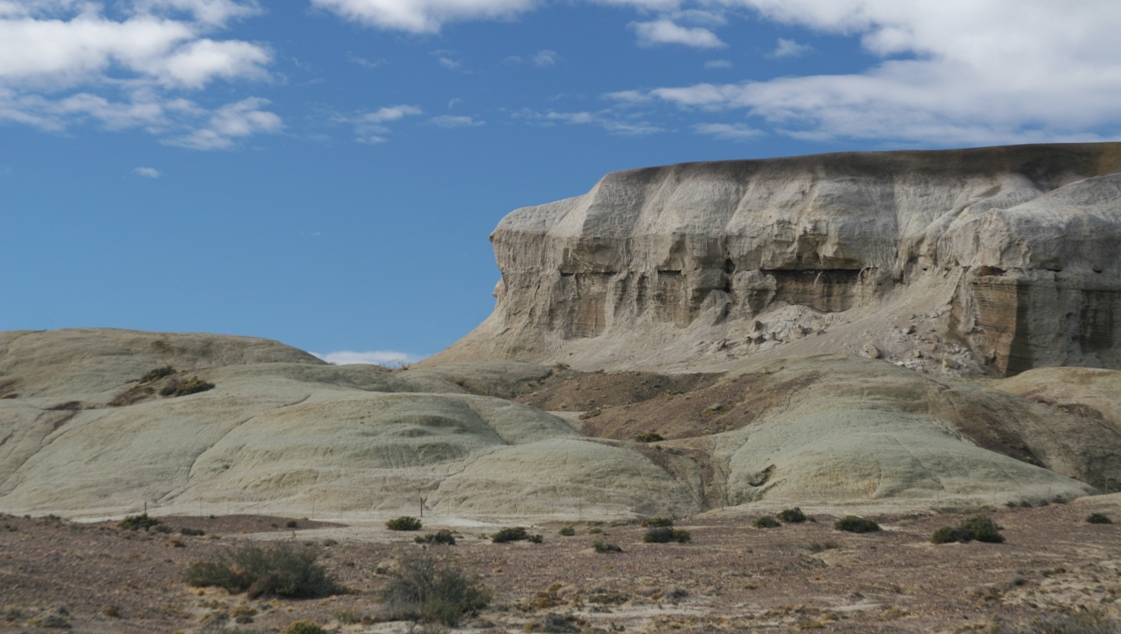
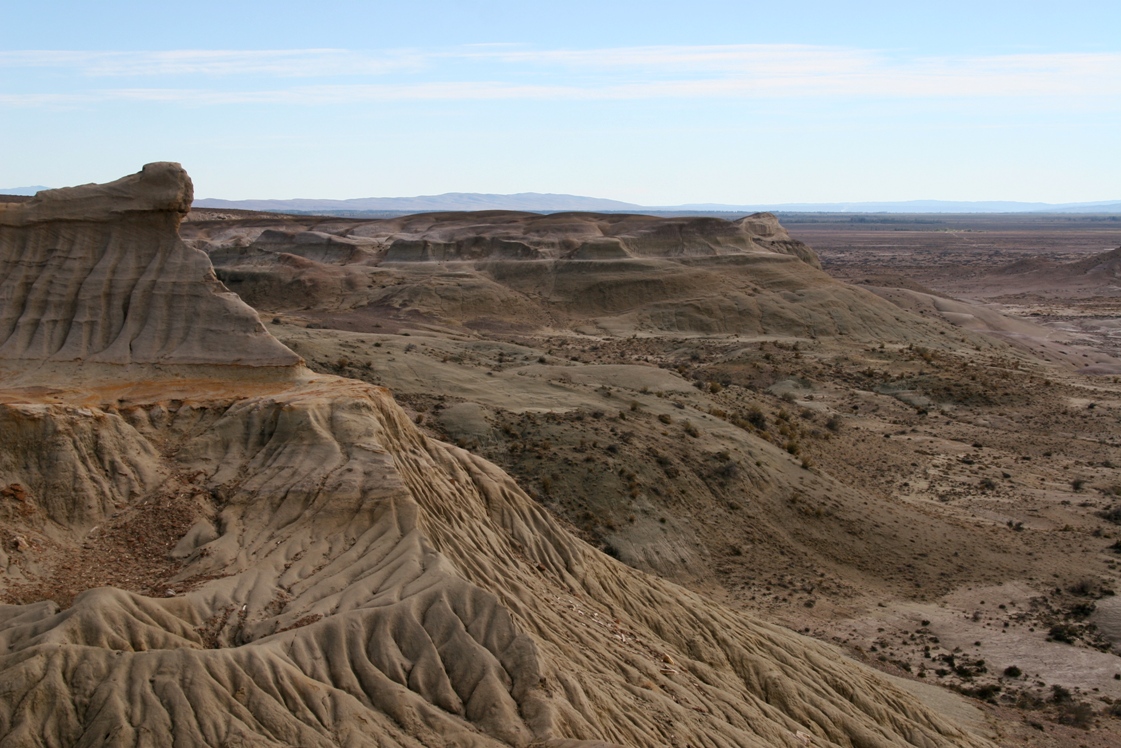
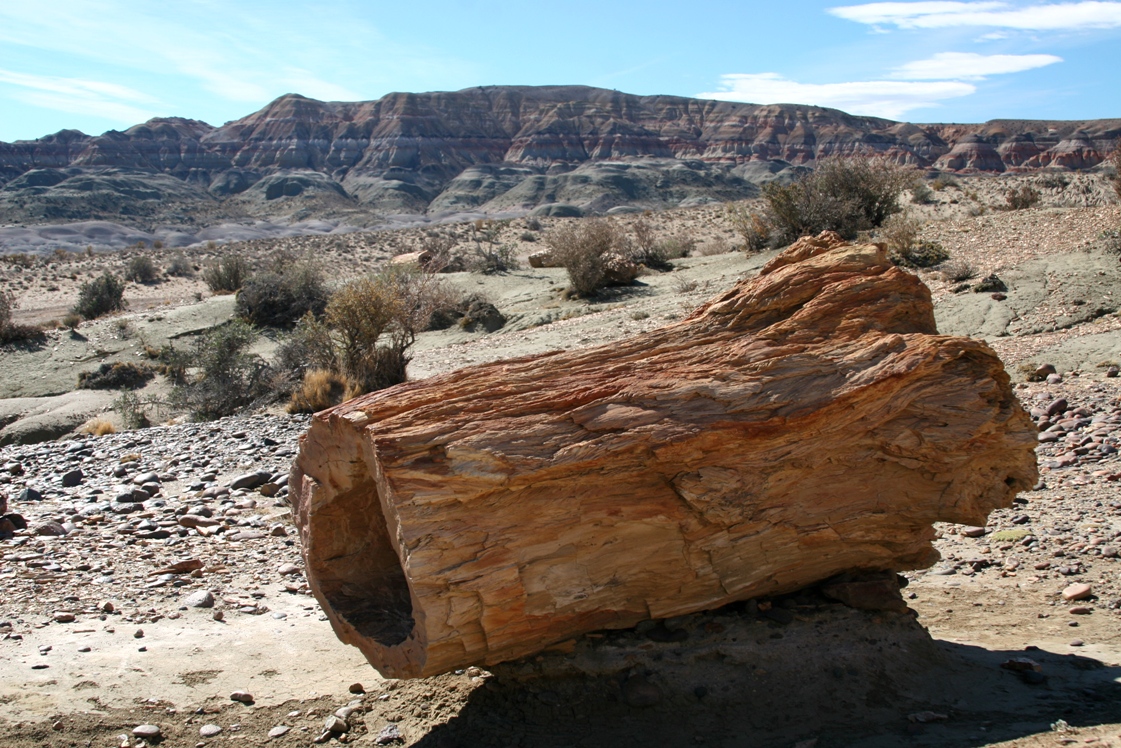
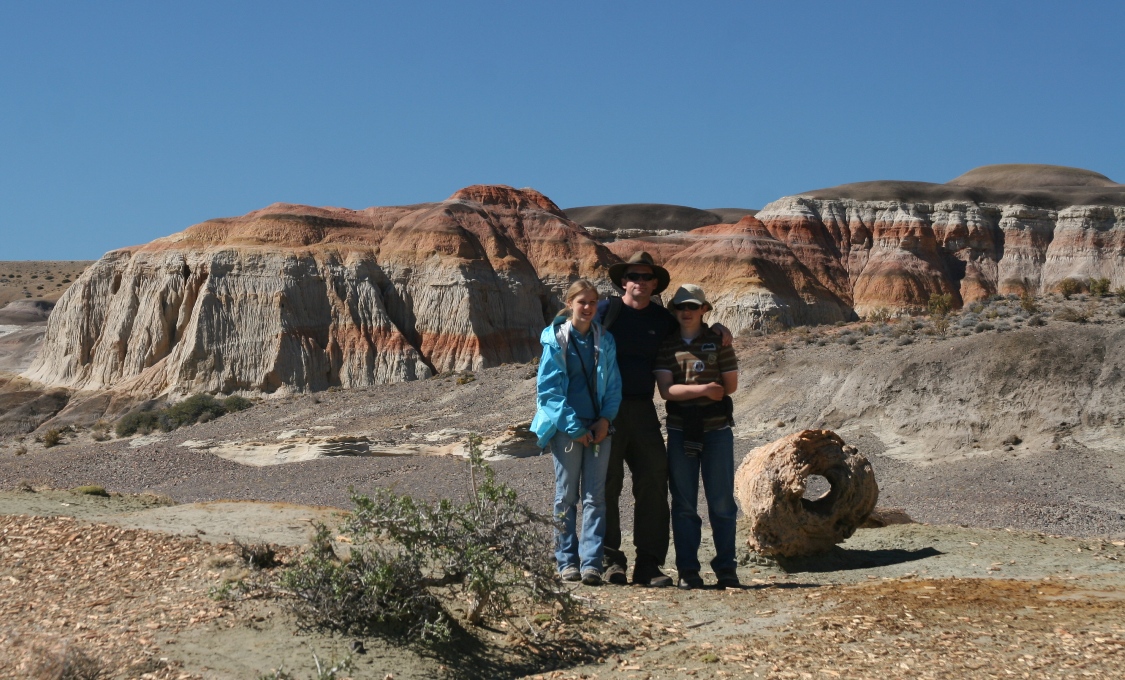
The scenery here at Bosque Petrificado José Ormachea was quite different than what we experienced at Monumentos Natural Bosque Petrificado (way back on Friday December 14th on our drive down the coast and our third day in Argentina). Here there seems to be a lower density of actual petrified logs and pieces of wood, and they are less deeply colored than those of "Monumentos Natural." But what is here is spread out over a much larger area (all told there may be more actual large petrified trunks visible on the surface), and the physical beauty is quite spectacular - reminiscent of the Painted Desert in Arizona, the wind-shaped dry canyons of Utah, and the Badlands of South Dakota.
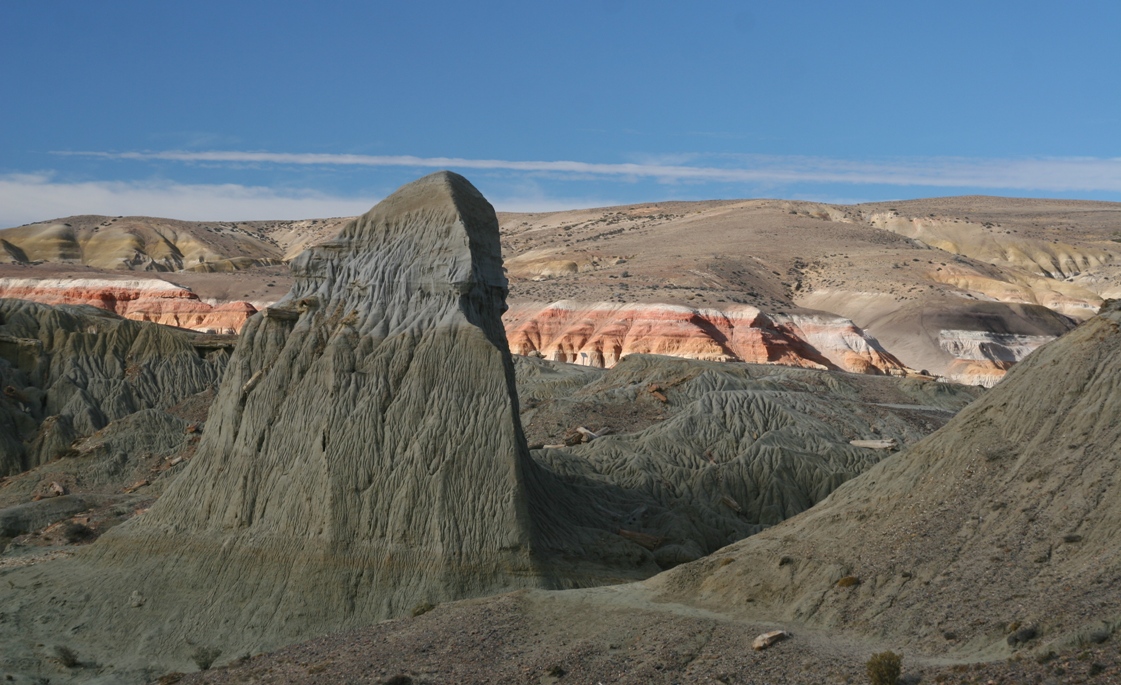
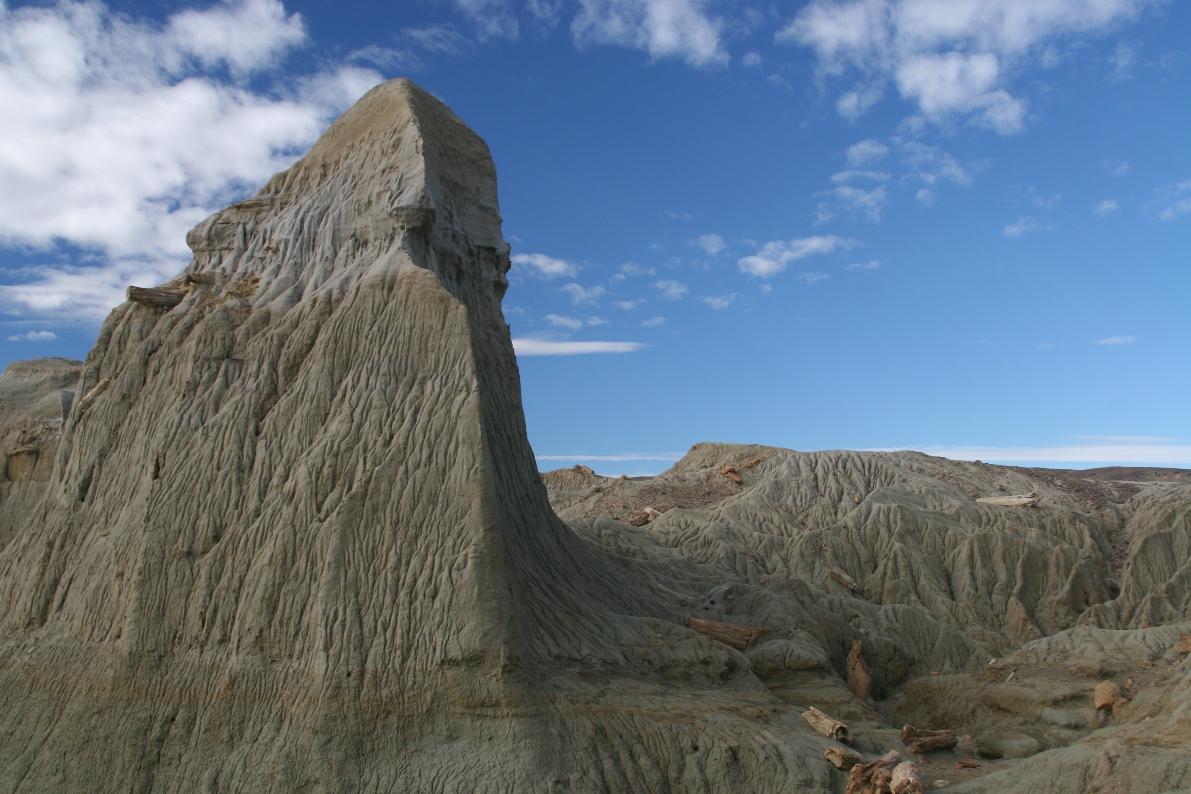
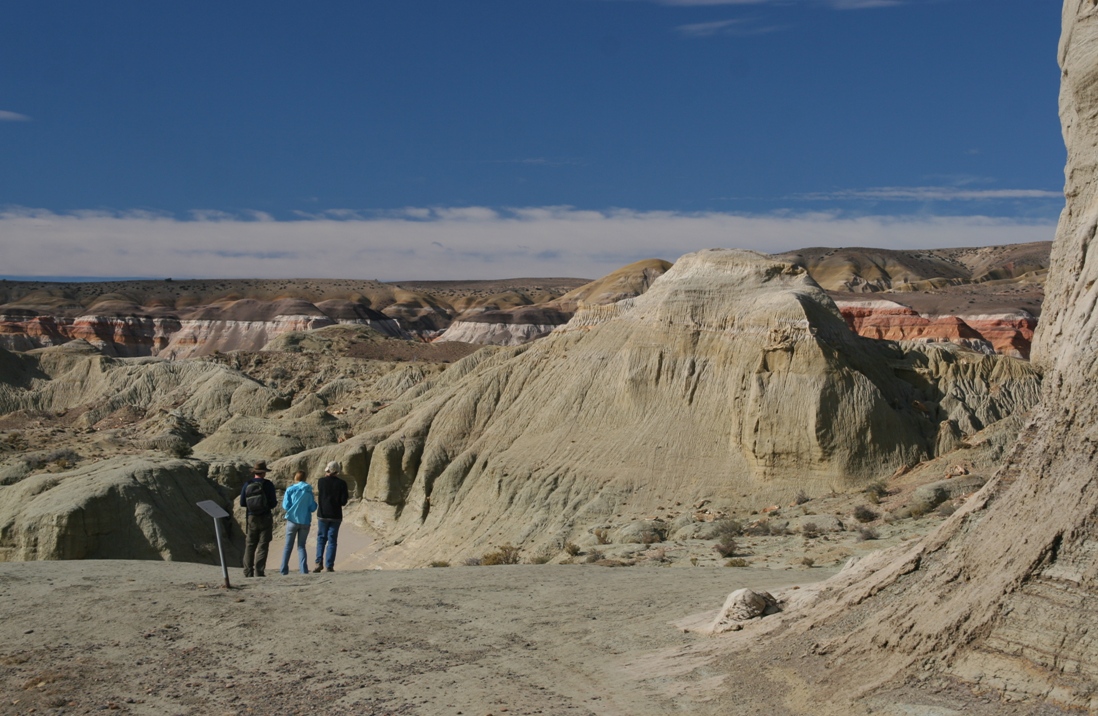
The initial passage of our one-hour walk lead us around a couple of large, strange, pointed mud humps.
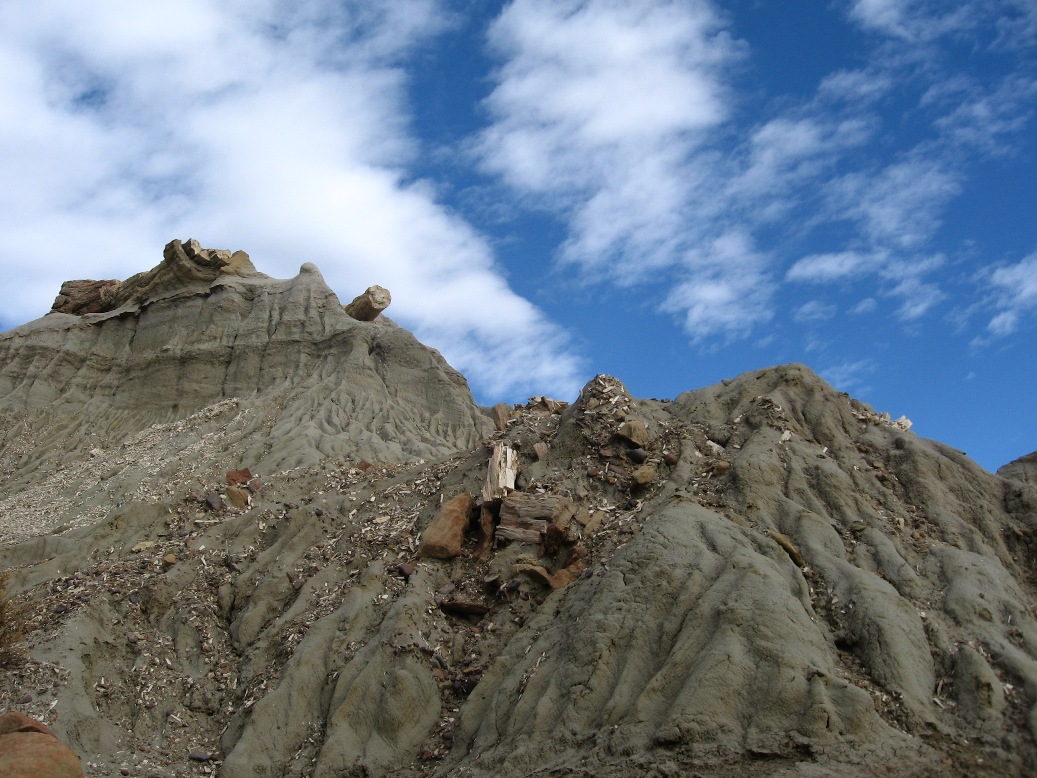
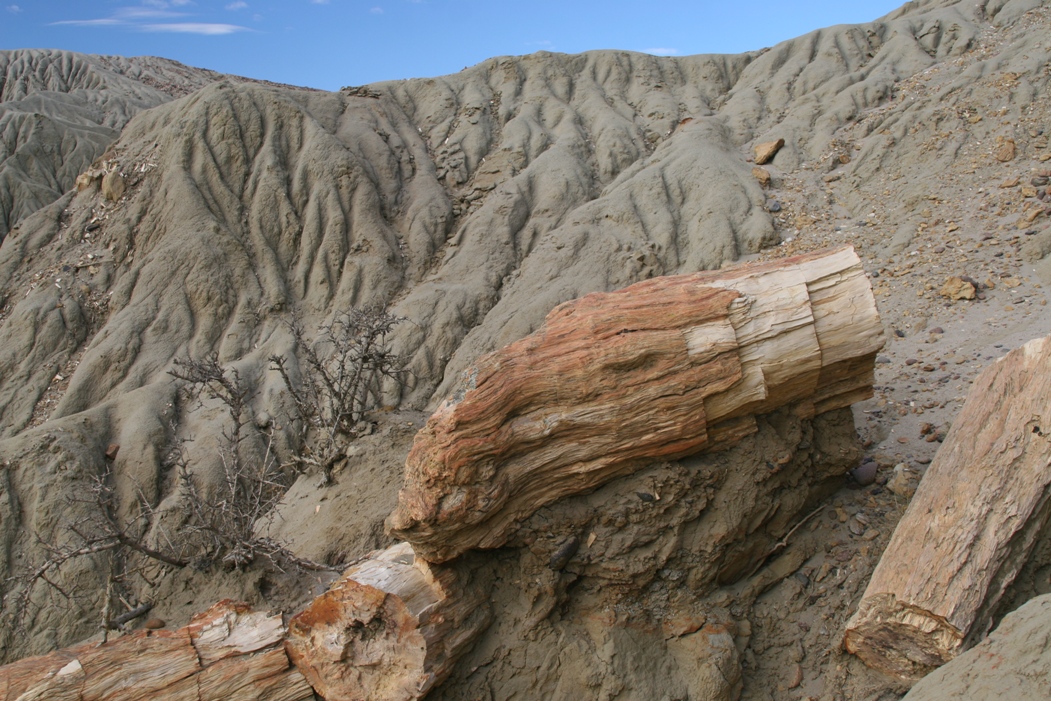
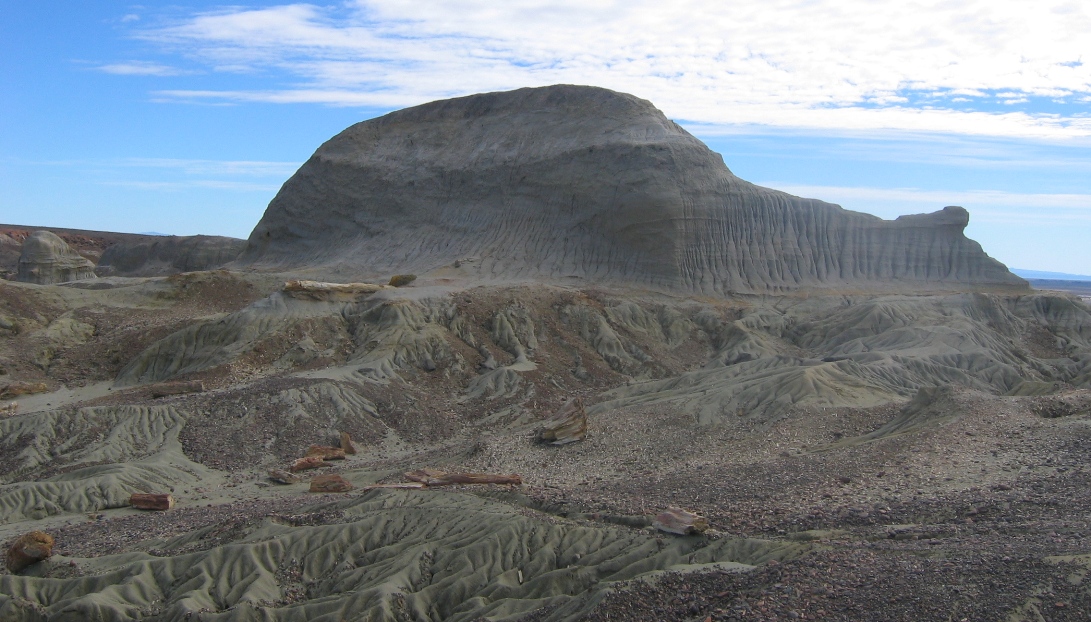
Then just around the corner from those, we encountered an erratic jumble of petrified logs sticking out of the mud. The arrangement appears like a giant tsunami had washed through here to destroy the trees and leave them scattered in the dirt, but the current theory is "uprooted by big storm and then buried by the ash of a great volcanic event." The timing and chemistry of the two cataclysmic events must have been "just so" in order to promote the fossilization process.
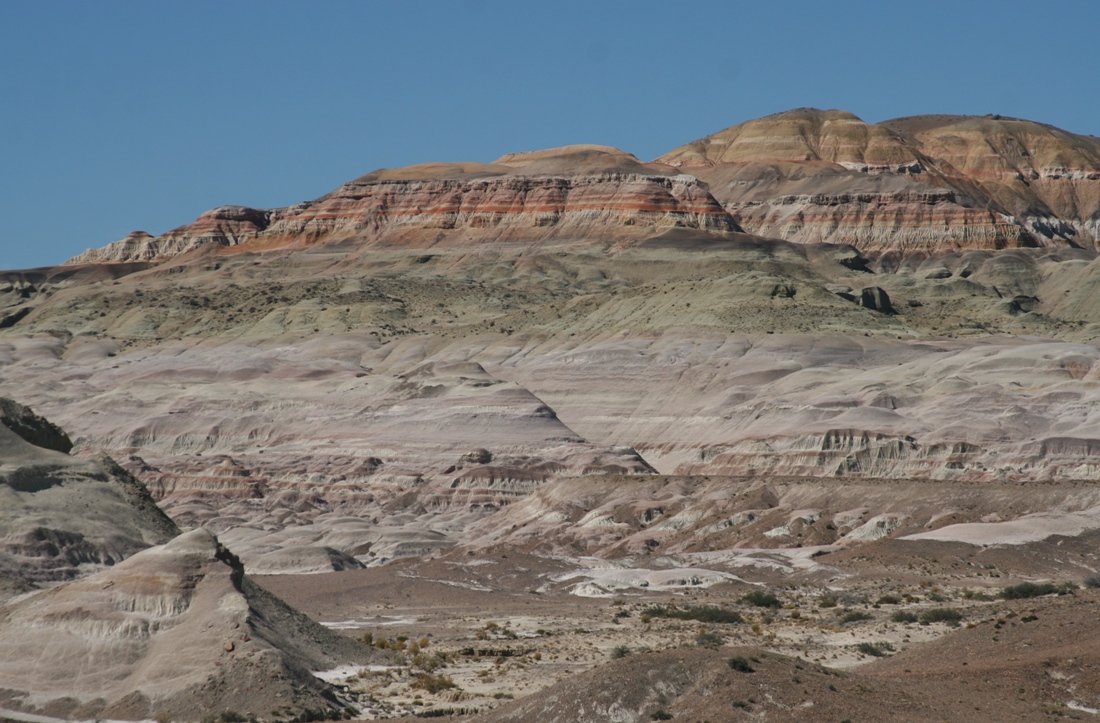
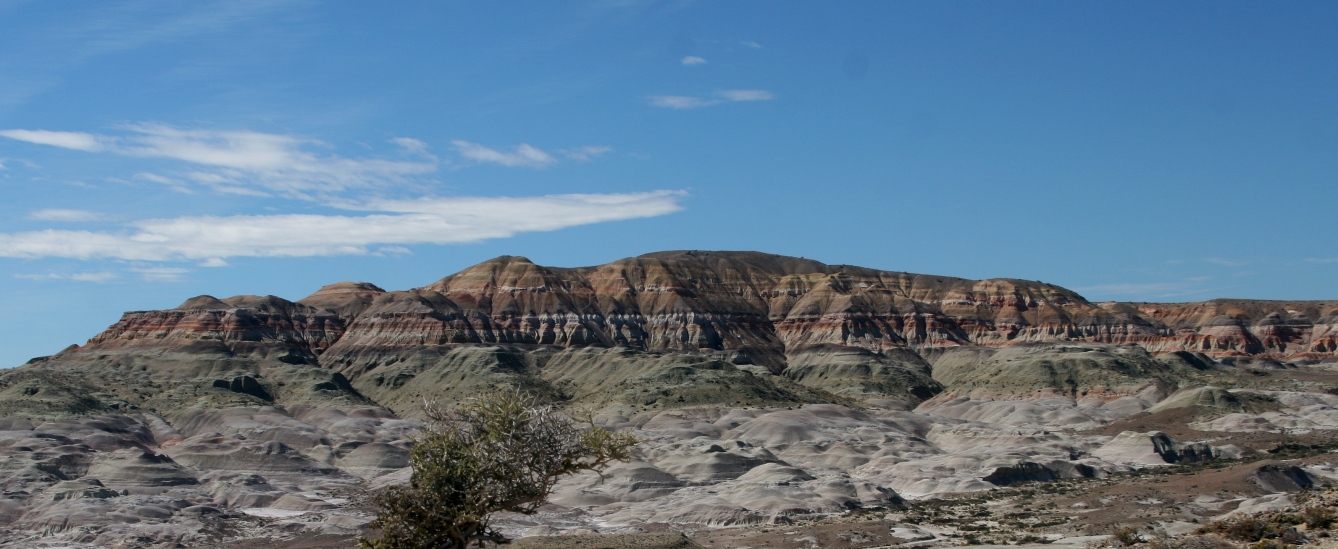
Off to our left, the view was of a place called Valle de La Luna (Valley of the Moon).
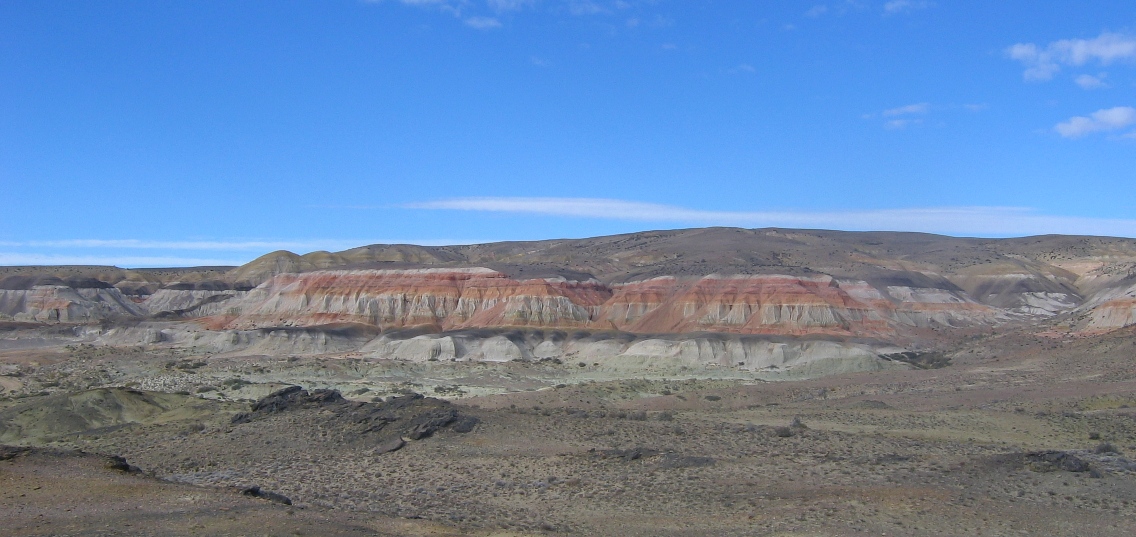
At a fork in the trail, we declined the left option which led down into the Valle de La Luna, and took the right-hand fork which led almost directly ahead towards Cerros Colorados (Red Hills).
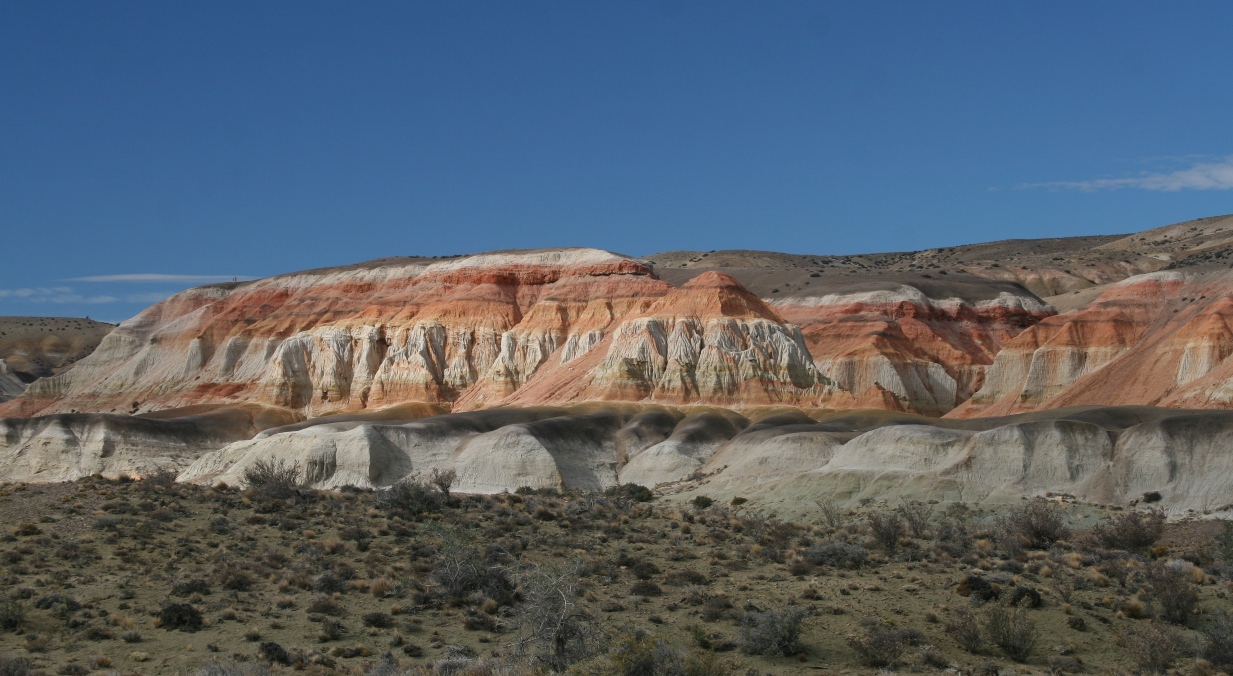
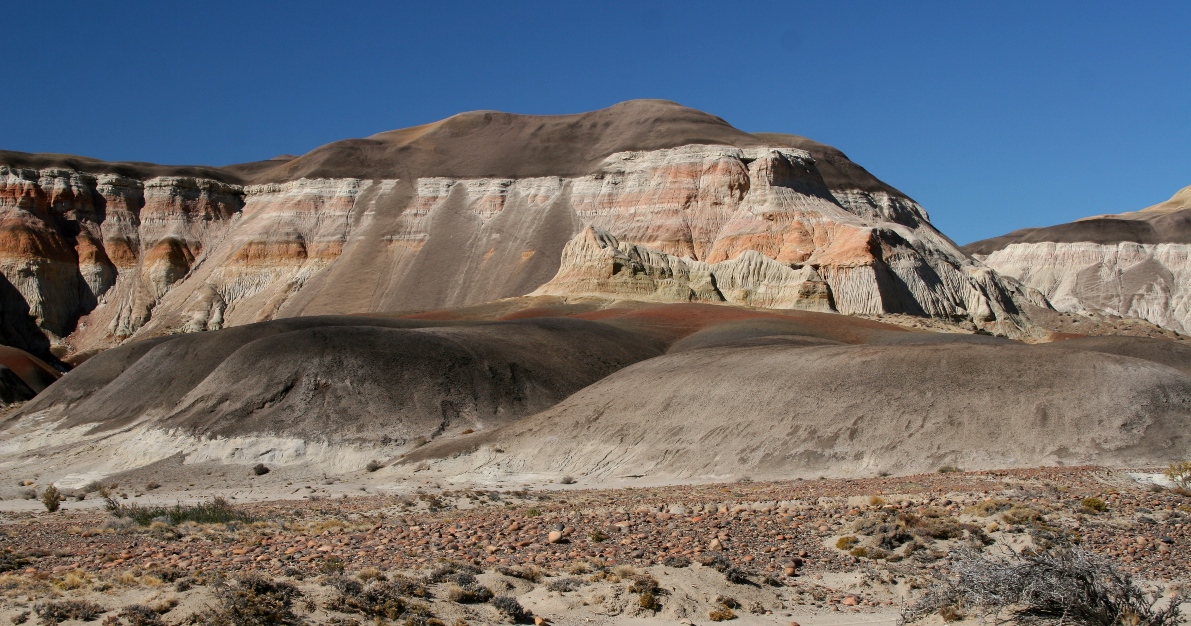
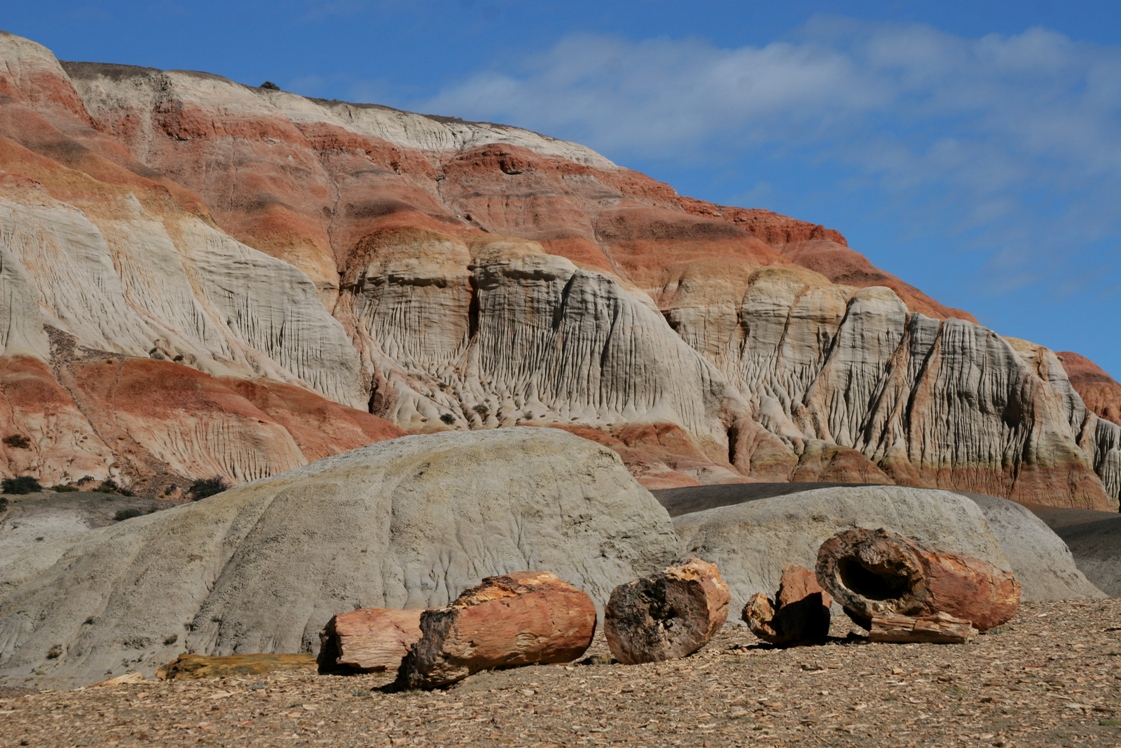
Why they got the name red hills should be pretty obvious.
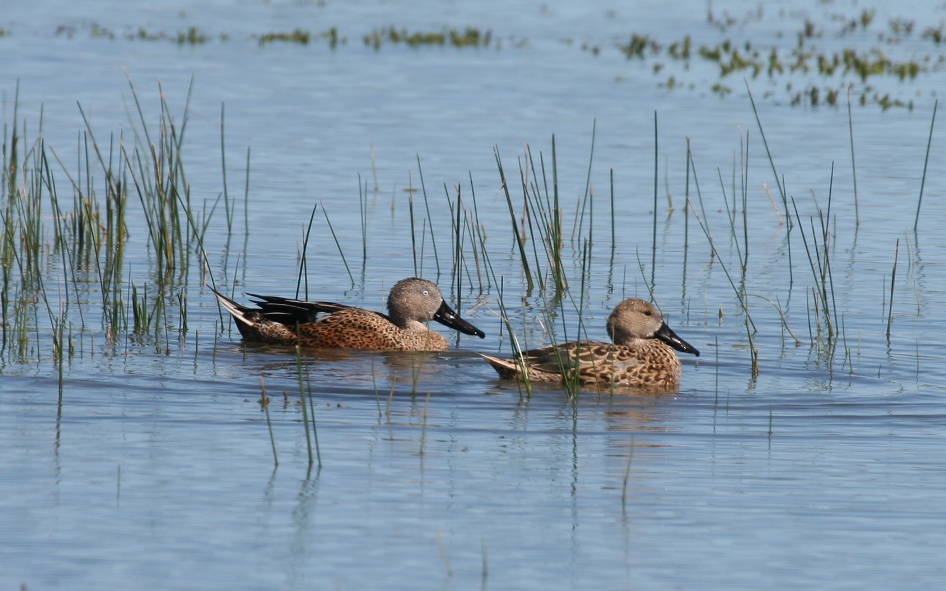
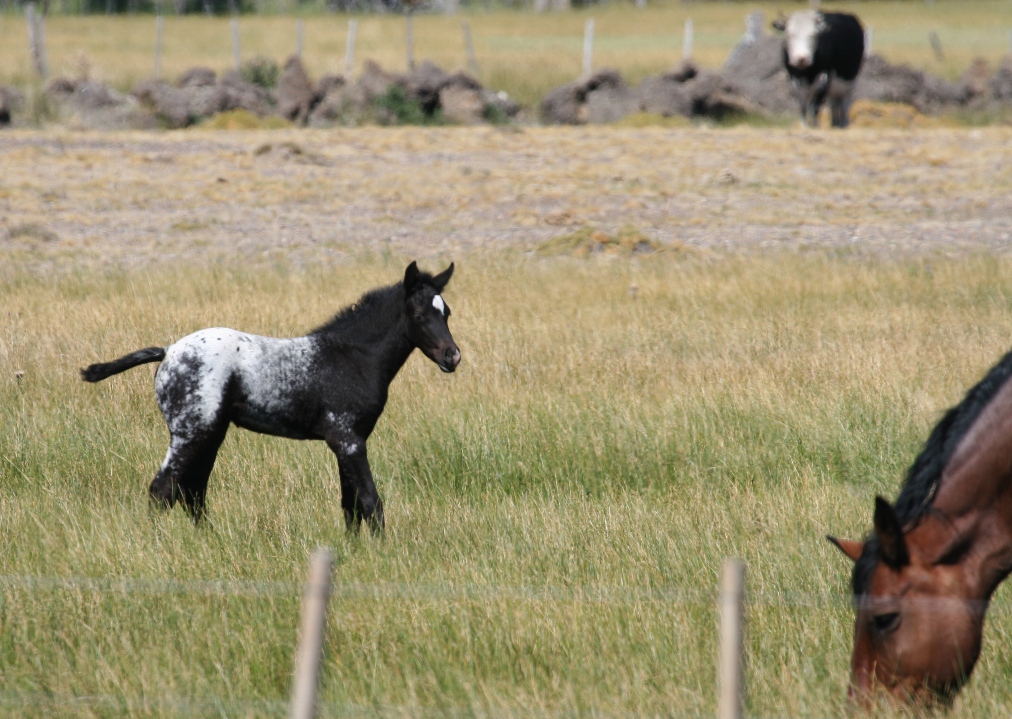
On the drive back to Estancia Labrador, just a few kilometers from the austere and arid landscape of the petrified forest, we were driving along marshy ponds and grassy pastures. The two huge nearby lakes feed a handful of streams which in-turn create an environment in stark contrast to the dry Patagonian steppe (also perhaps an explanation for the early settlement and long history of Sarmiento). The irrigated land supports a great variety of wildlife - humans and their domestic animals, too.
Being able to check "Visit the Petrified Forest" off of our list of things to do near Sarmiento, we were left with "Visit the Museum," and "Visit the Lake." Today the weather was just as good if not better than yesterday, so as it turns out we were quite lucky to have two low-wind and comfortable temperature days in a row. We had to drive through Sarmiento to get to Lago Muster, so it made sense to visit the museum first.
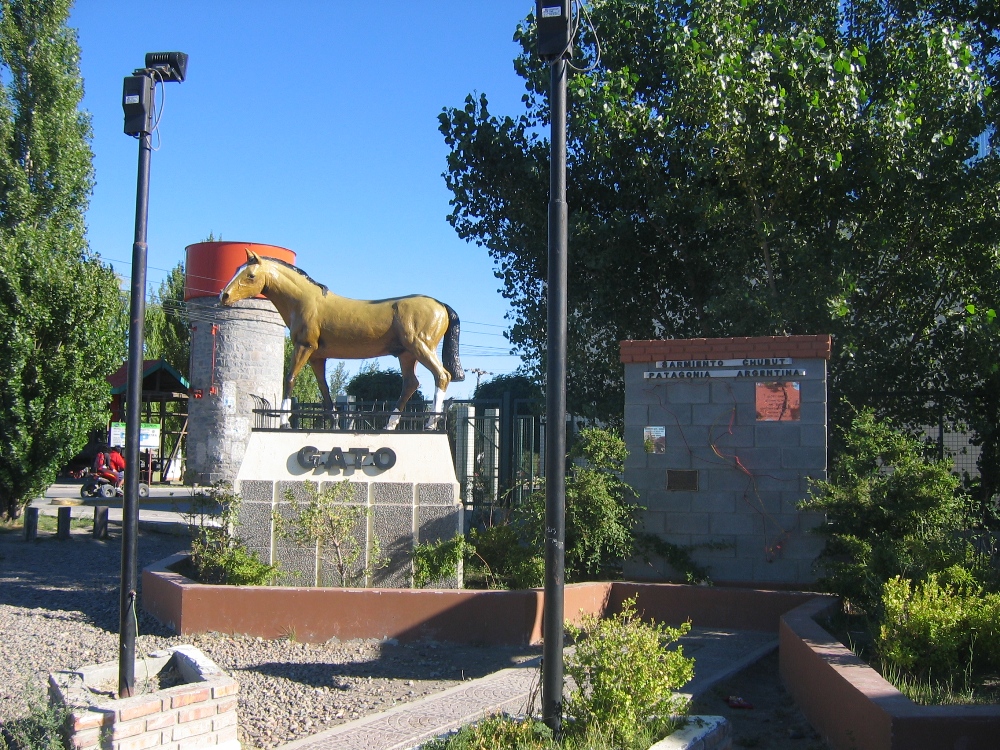
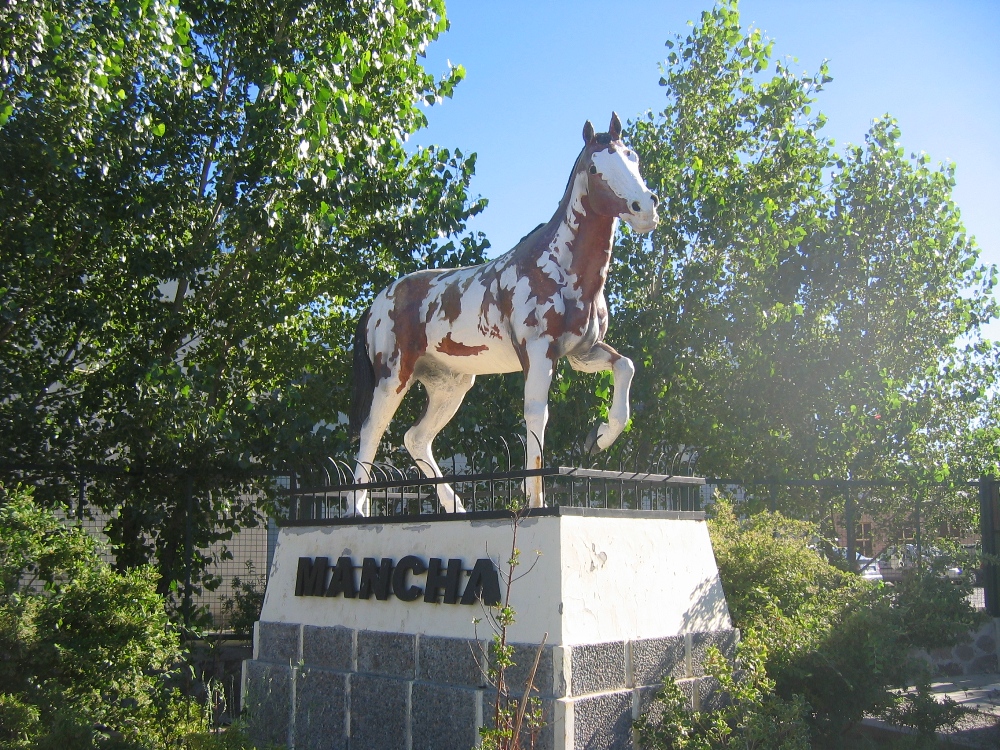
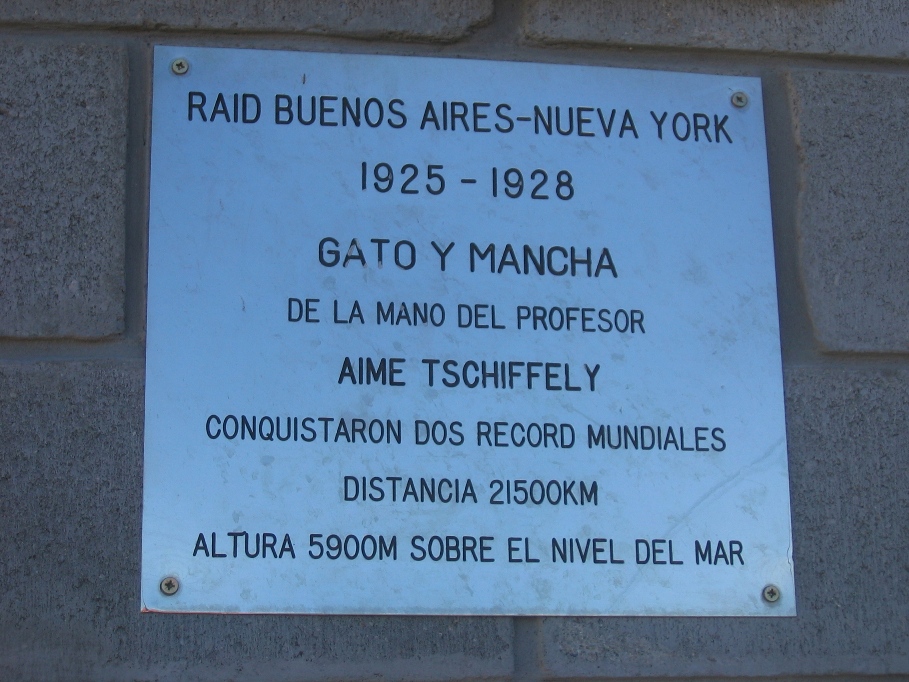
Across from the tourist office (where we arranged for a museum tour), Sarmiento proudly displays two statues and a plaque honoring its most famous native sons, or more accurately, colts (or perhaps mares?). Mancho and Gato were the two horses that an Austrian immigrant doctor rode from Buenos Aires to New York city. The doctor never lived in Sarmiento, but his two sturdy horses supposedly were bred and raised here.
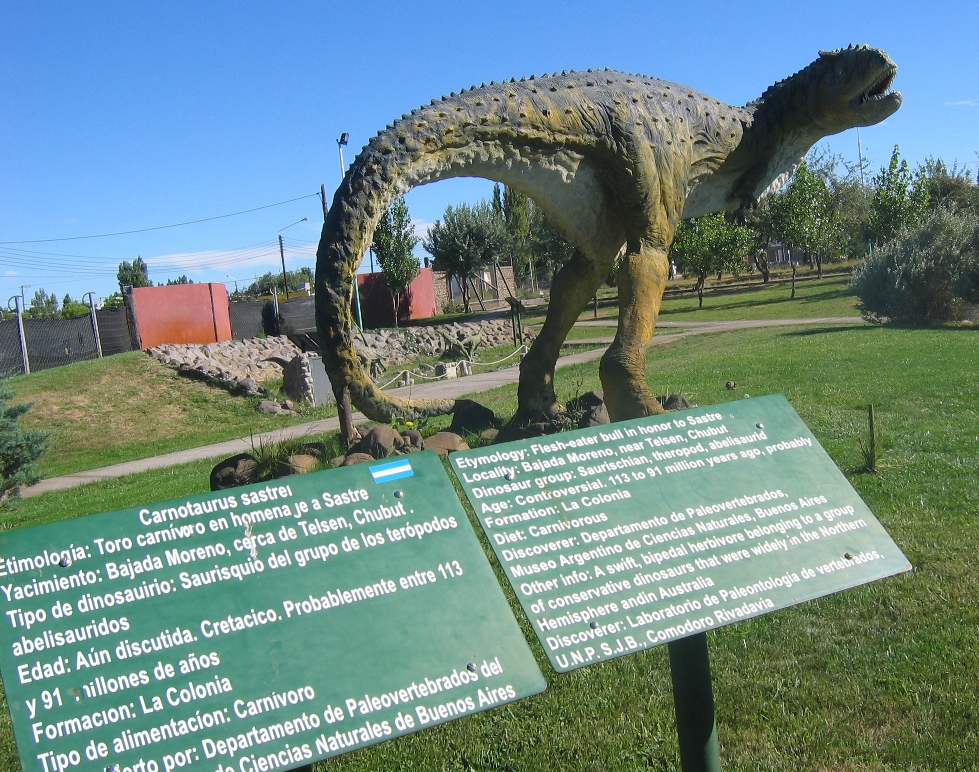
Stage one of our museum visit was a guided tour through the dinosaur park - a collection of life-size replicas showing all of the various types of dinosaur bones that have been discovered in the area (within about 100 kilometers of Sarmiento). The actual bones are in various museums, but we will hopefully see many of them when we visit a very large and famous paleontology museum a week from now in the city of Trelew.
The accompanying plaques tell all the needed data, although there are a few obvious mistakes in the English versions due to bad translation.
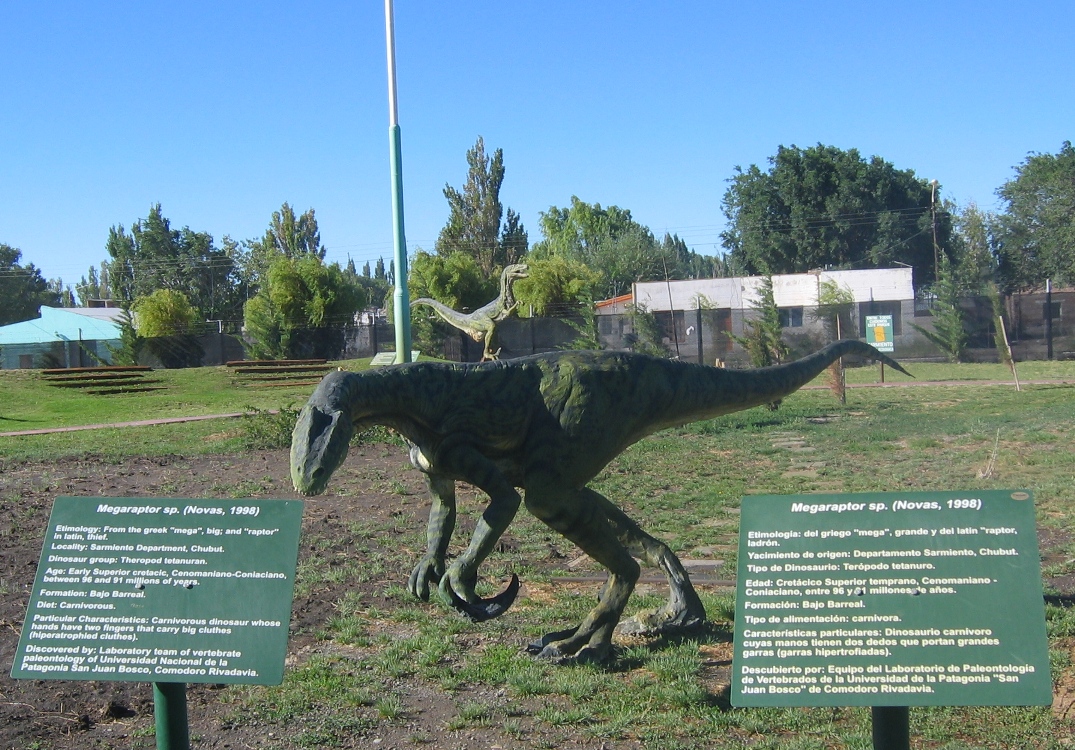
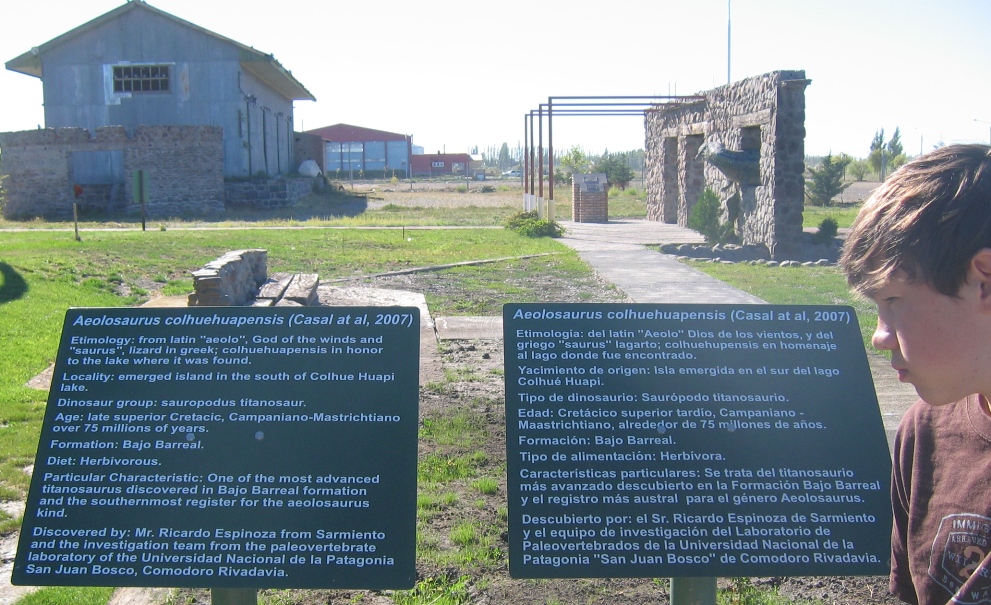
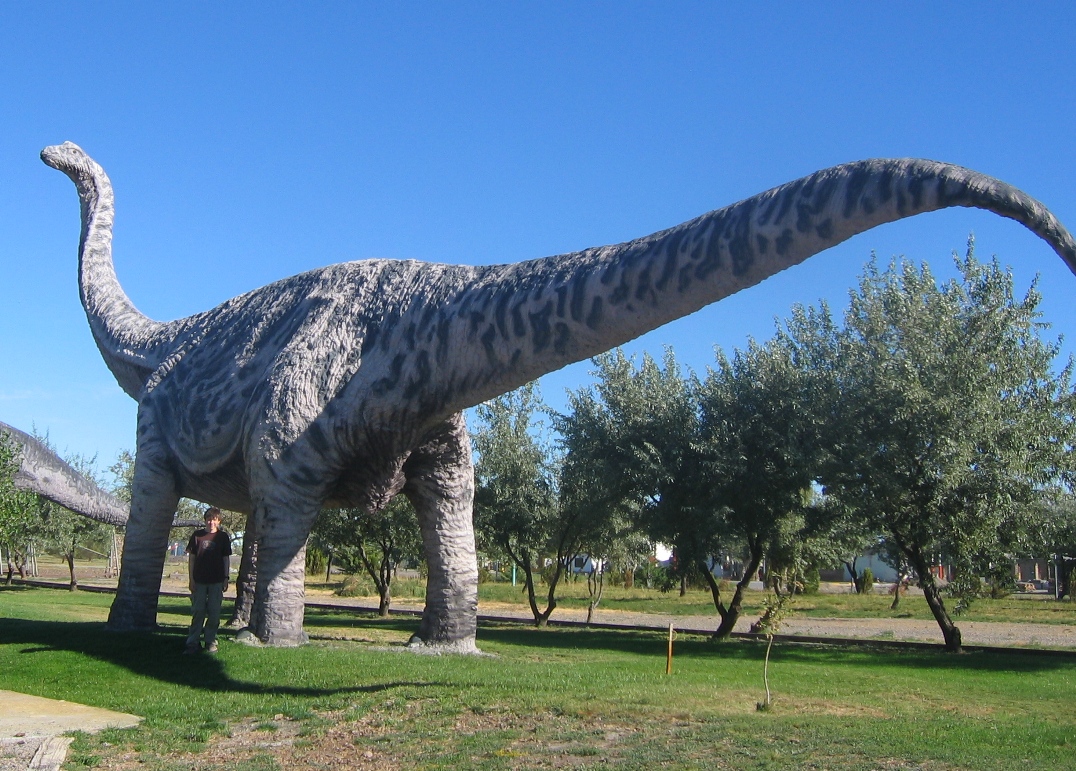
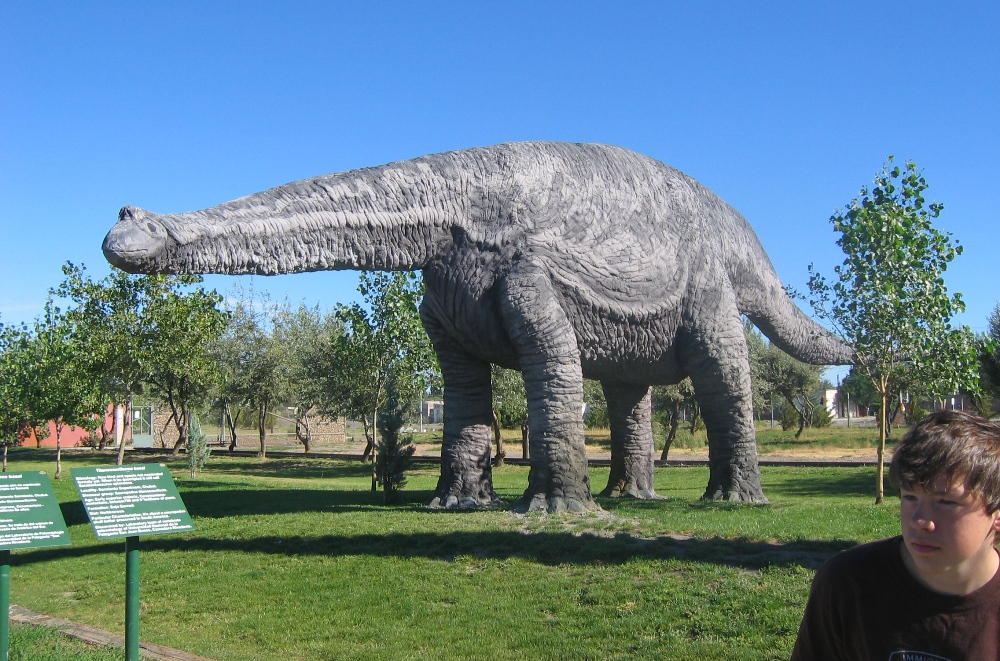
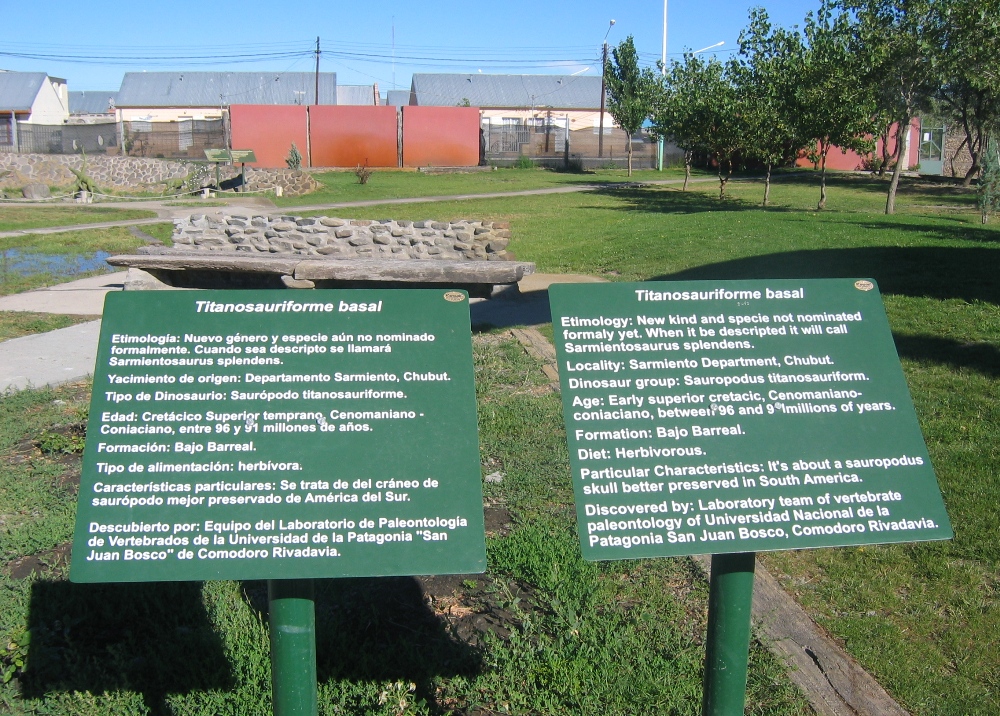
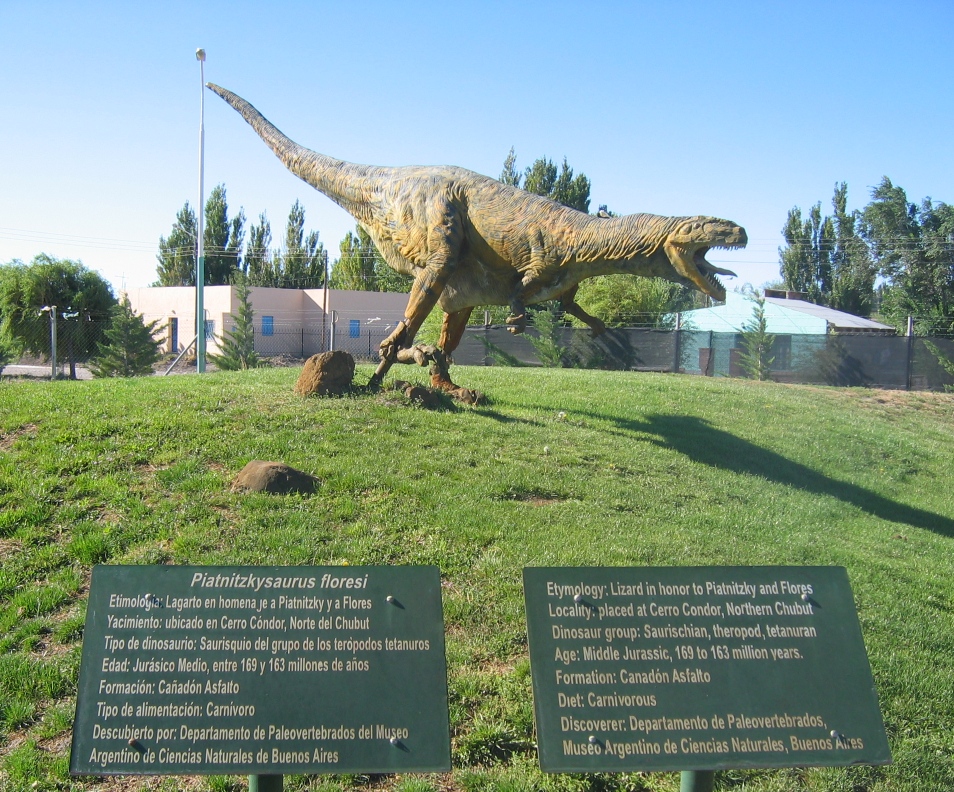
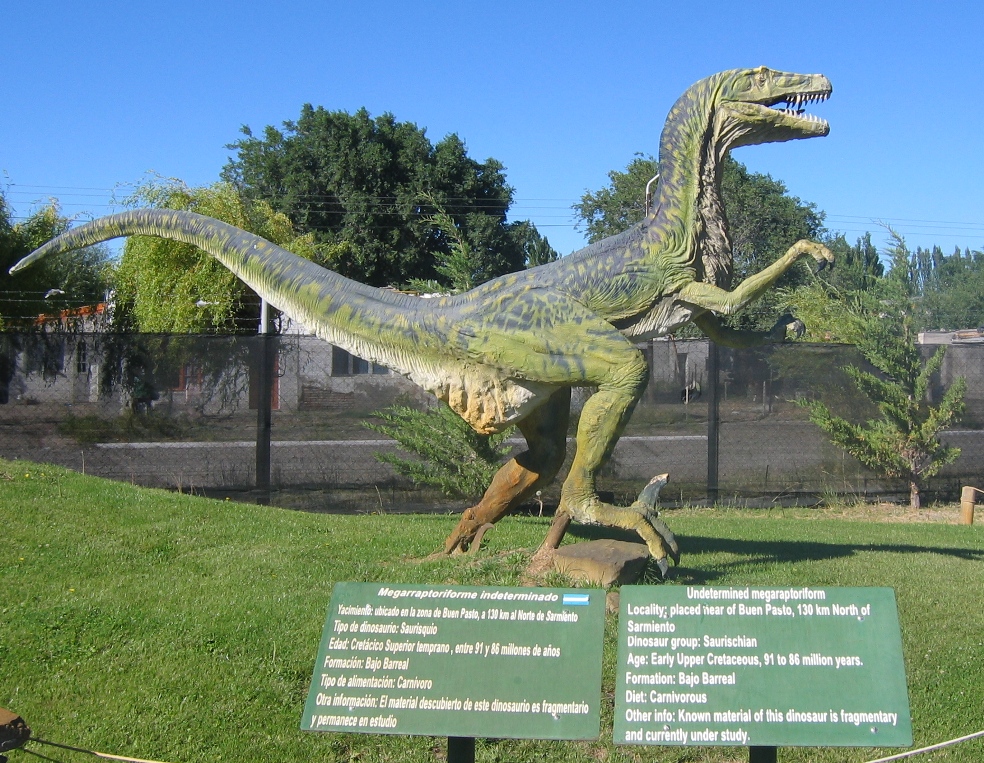
The indoor museum of Sarmiento is located in the re-constructed train station (the original burned to the ground in 1993). The primary focus of the museum is Tehuelche and even some pre-Tehuelche artifacts.
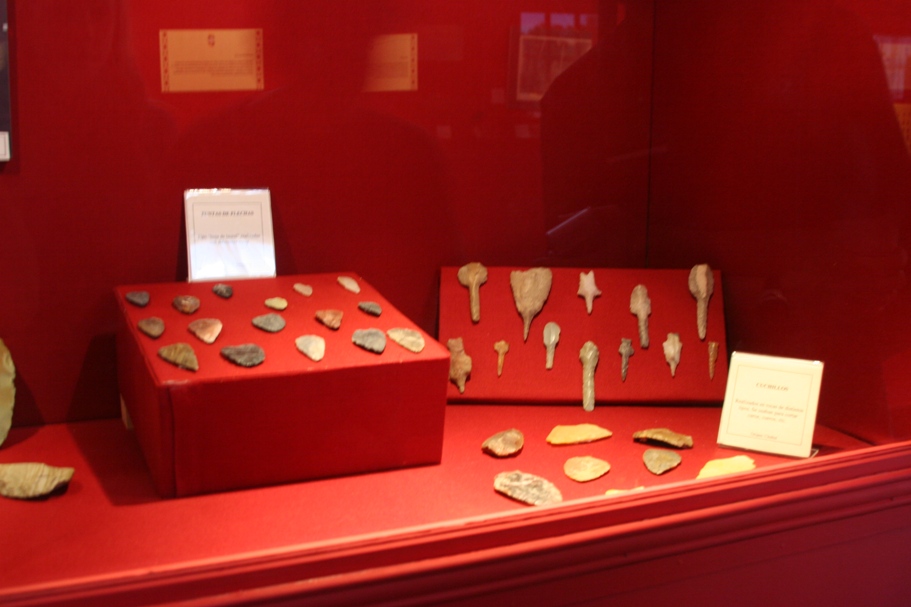
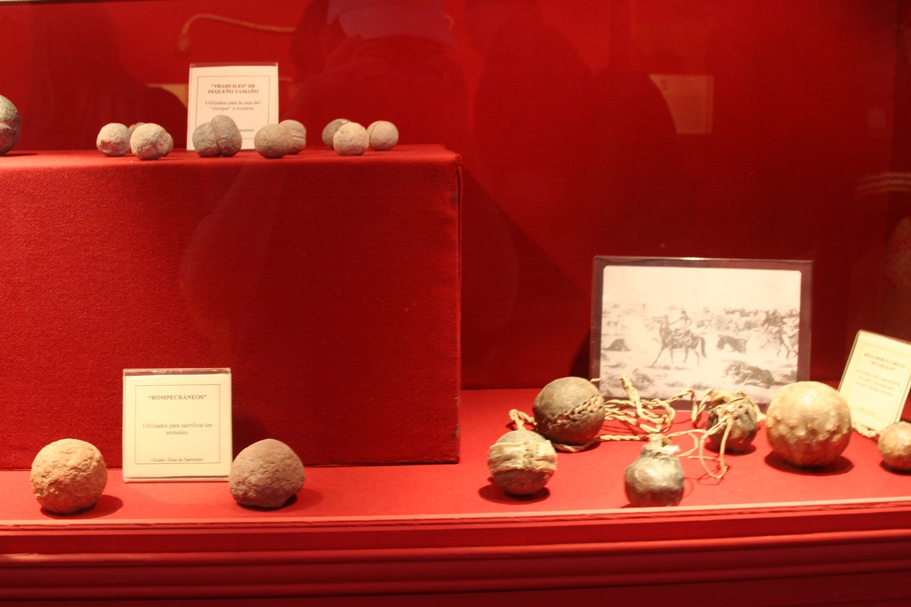
Arrowheads, stone and wooden tools.
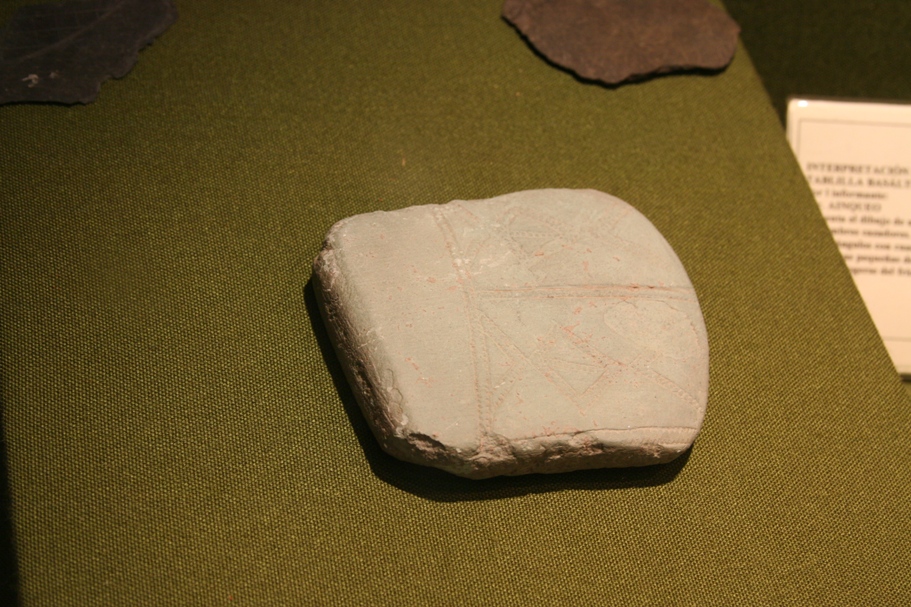
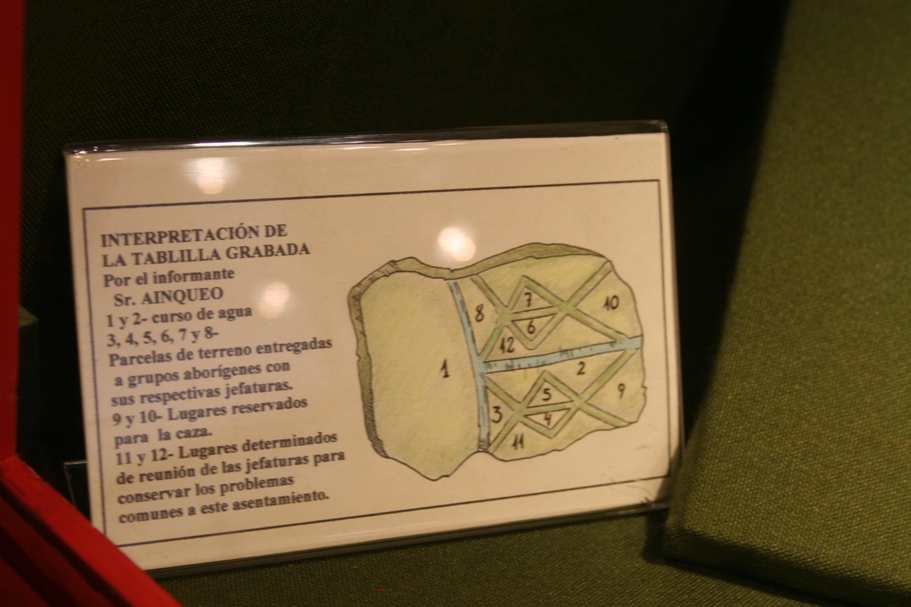
This clay tablet is assumed to have been used to divide up the hunting and gathering territory between different clans of ancient nomads of the region. It is very old (pre-Tehuelche). The museum guide told us that there is one other similar tablet like this in a museum in France, the other having been discovered in the region of ancient Babylonia. Another one of those creepy coincidences that link primitive cultures from vastly distant parts of the globe who lived long before the assumed age of world-wide exploration and travel.
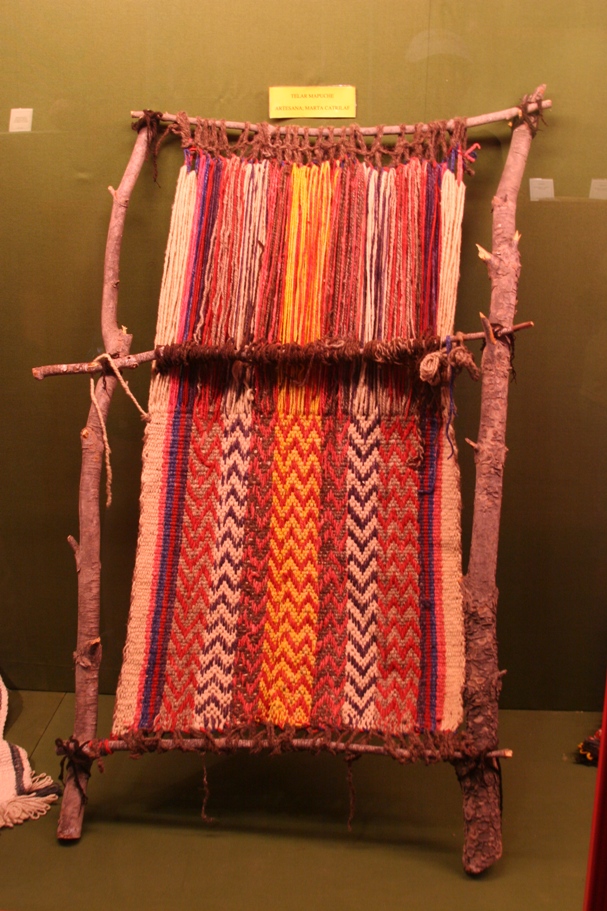
This weaving was made by a Tehuelche woman. She died before the work was finished, and now they display it as it was when she died.
Seeing the museum and talking with the guides helped us connect to Sarmiento a little bit more. When I first drove around looking at everything, I mostly saw cinderblock, dust, and drab, but walking around on a nice sunny weekend, now we noticed kids riding bikes and families getting ready to go to the lake. Talking with the museum guides (one who pestered us pretty relentlessly about our views on the upcoming US presidential election) gave us a slight bit of personal connection as well. After purchasing food for a picnic at "Todo Pollo," we headed for the lake.
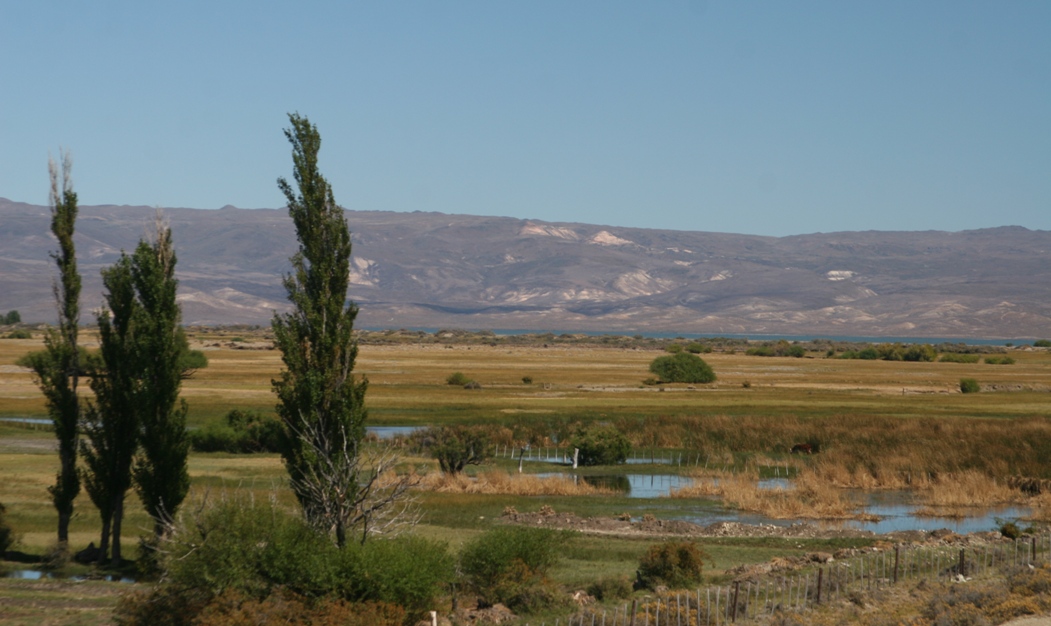
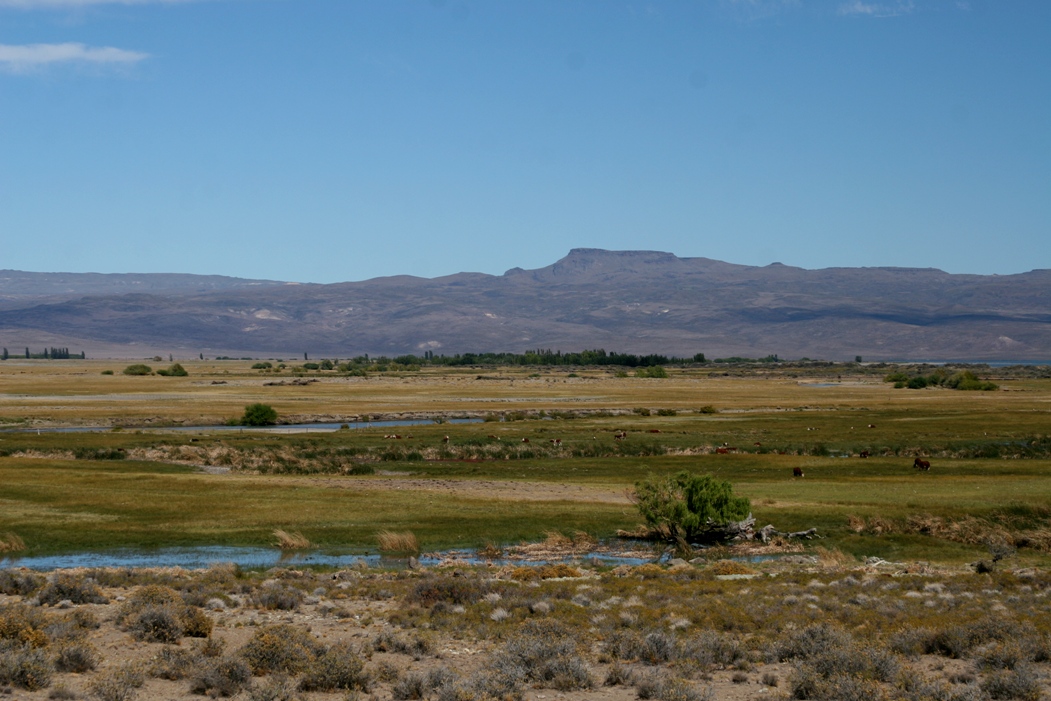
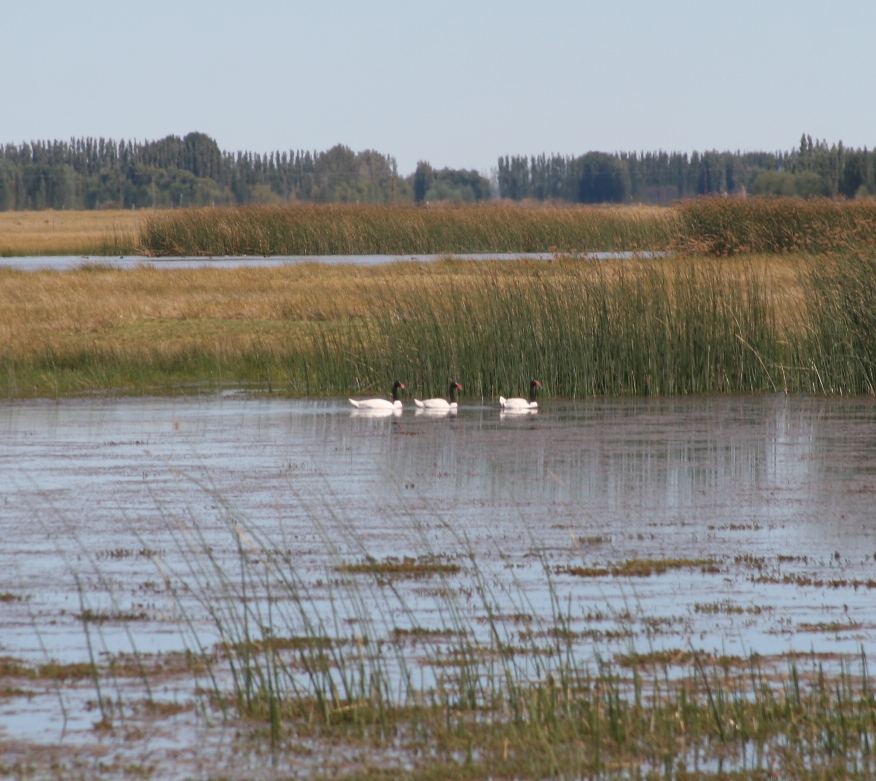
We drove 8 kilometers from the back-end of town in order to get to the lake, and the road passed through a combination of marsh and grazing land.
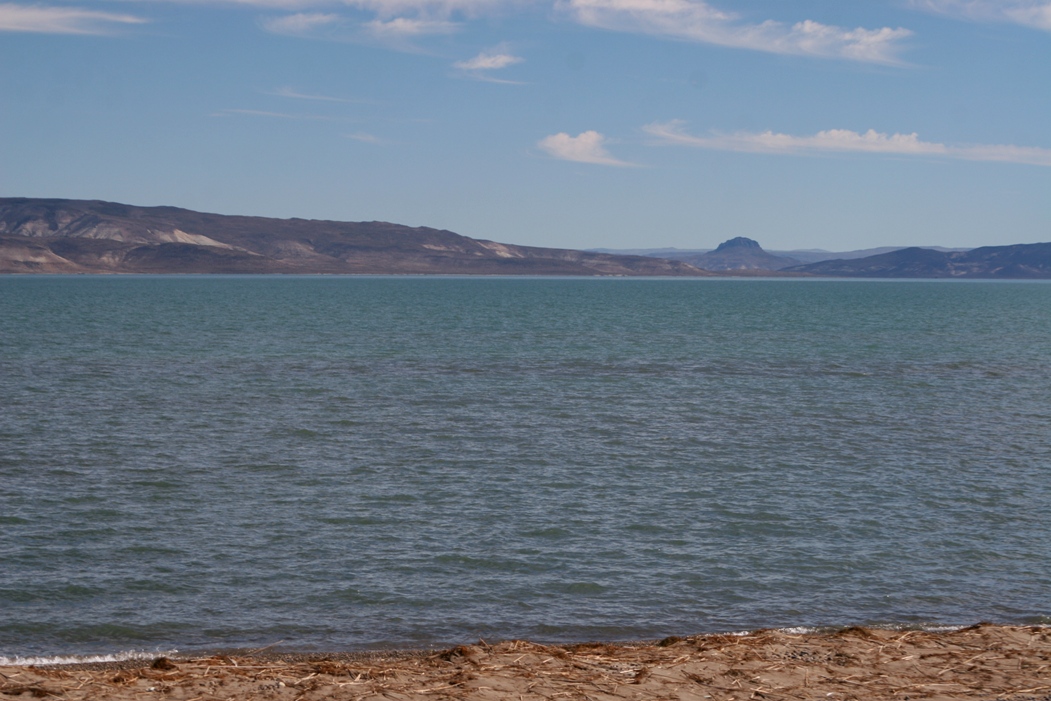
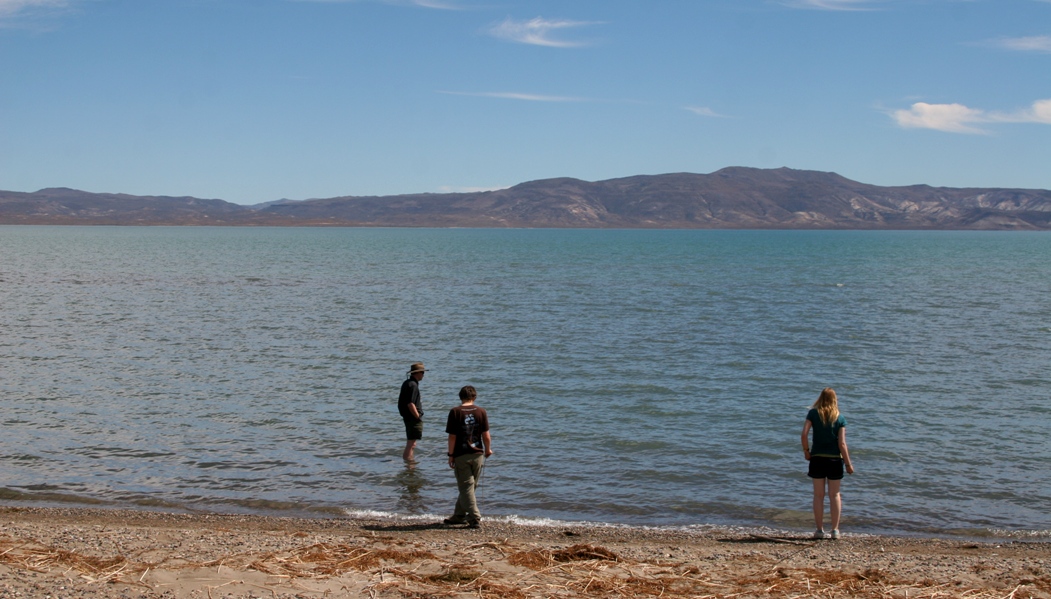
Lake Musters - This and the sister lake of Colhué Huapi supply all the water for the coastal city of Comodoro Rivadavia (largest city in Chubut Province with a population of over 100,000). They still let you swim there, just not too close to the intake pipes at the pumping station. It was a beautiful, warm afternoon, and about the time we evil parents (Lynn and I) decided to drag Anna and Tom (the suffering children) back to the estancia for some schoolwork, the folks from the town began arriving in droves.
Tomorrow we'll leave and drive to that biggest city in Chubut - Comodoro Rivadavia. I'm still working on being able to say it in less than 4 seconds without stammering. It's an oil town with seemingly little in the way of interesting tourist diversions, but we'll take advantage of the opportunity to use the internet, do laundry, and service the truck, at the least. Maybe there's time for the famous, Comodoro Rivadavia "Oil Extraction and Production" museum as well.
-Rolf