San Martín de Los Andes
Grocery Shopping
Wednesday May 7, 2008
What's it like to shop for food in Argentina? I started trying to answer that question in a normal journal entry, and I'm afraid that I got a little carried away. But I already wrote it, and somebody out there might like to read about the price of chicken wings in San Martín de Los Andes (Hi Mom!). !
Here in San Martín, there is one large "La Anonima" store (one of the main grocery chains in the country), a small "La Cumbre" store (a chain of "small grocery stores"), and another medium sized grocery store (name I forget and that isn't a chain as far as I know), all within 5 blocks of our house. There is also one small produce store which may have carrots when the others run out, and a health food store next to the produce market that sells stuff like nuts, natural grains, and spices.
The proprietor of the little produce market talks to me as if I were a three year-old, ever since I accidentally asked for onions when I wanted a squash (I said "se-boy-sha" instead of "sa-po-sho" - I constantly mix those two words up). Now when I bring something up to the counter she smiles, holds it up, and repeats the Spanish name for it two or three times slowly and clearly. Then she says the price per-kilo slowly and clearly and then repeats it two or three times. Likewise with the final price, the amount I give her, and the change. I'm not at all offended, because she's not condescending - I think. If everyone offered me such gracious consideration. I'd be far further along in my command of Spanish. Well, maybe not. It's understanding the fast, fluid speech that I need the most work on, and that's one of the primary things I ask my tutor to help me with (I ask her to first go fast, and then slow down and repeat it once, then go fast again, etc...).
Although the grocery stores here don't have as much variety as we might like, the town has many gourmet shops selling things like freshly made pastas, empanadas made-to-order, chocolates, fresh ice-cream, natural honey, preserves, and smoked meats (trout, deer, and wild boar) and cheeses. We've been told more than once that everyone gains weight when they move here, no matter where they came from.
There's an interesting contrast with Chile on the food topic. Food is cheaper in Argentina than in Chile - especially restaurant food. This is true even here in San Martín, which people tell us is one of the most expensive possible places to live in Argentina. Restaurant food, in general but especially so in smaller cities, is more varied and interesting in Argentina than in Chile. But the grocery stores we remember frequenting in Chile actually had more "international" products and overall variety than what is available here in San Martín. In Chile, a "Lider" store would usually have Mexican Foods like refried beans and jars of salsa, Asian foods like water chestnuts and chow mien noodles, more types of coffee, and Peanut Butter on the shelf. These all seem to be a little more difficult to find in a grocery store in the south of Argentina - and are not available at all as far as we've been able to tell here in San Martín.
In Chile, by law, restaurants that serve minors (well over 90% of them) are completely smoke free. In Argentina, it seems like less than 10% of the restaurants are completely non-smoking, and not many more than that offer a truly isolated non-smoking section. So the odds are that you can order a more interesting and less expensive meal in Argentina - but getting to eat it without breathing cigarette fumes is sometimes possible but often not. Fortunately, we've found a couple of good completely non-smoking restaurants in San Martín, and a few others with reasonably-well separated non-smoking section. Sometimes we just play the "get there when they open and try to finish before any smokers show up" game. My take on it is that the odds of finding a non-smoking restaurant increase directly along with the presence and influence of foreign tourists.
Argentina makes some good wine, but apparently there are fewer regulations on what the wine producer can and can't do than in Chile. A Chilean told us that it's legal to add water to the juice when making commercial wine in Argentina (I don't know if that is really true but he swore it was), and that you really don't know what you're getting inside a bottle of Argentine wine, regardless of price. We've found a few kinds of wine we like well enough here in Argentina so as not to give that topic much more thought. Both countries are clearly capable of making good wine, and a wine snob should be able to make do in either place. It's probably safe to say that the mid-range and lower-end stuff from Argentina is more erratic.
********************************************************
Here are a few specifics about what exactly is, isn't, or might be available in La Anonima on a random afternoon (and I stalked the aisles with a camera just a few hours ago to add some visual-aids to the commentary):
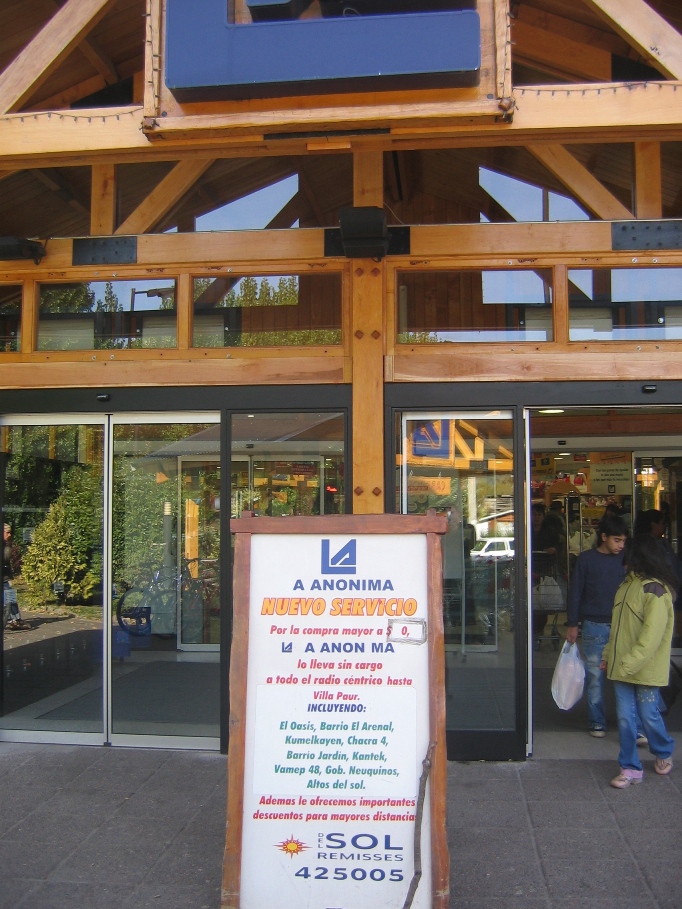
Entry to the La Anonima in San Martín- you might wonder about the choice of words for the name. In Argentina, the very first corporations (and the fore-runners of publicly held companies) were called something like "Anonymous Business Societies," so here the word "anonima," in addition to "anonymous," also has a connotation of "corporate." The signboard advertises one of their nicer services - free round-trip taxi service to downtown and the nearest suburbs for purchases greater than 180 pesos (about $60 US). Zoom in and you'll see that some wise-guy changed posted a zero over the "180." Or maybe Wednesdays are free taxi ride day, no matter how little you buy.
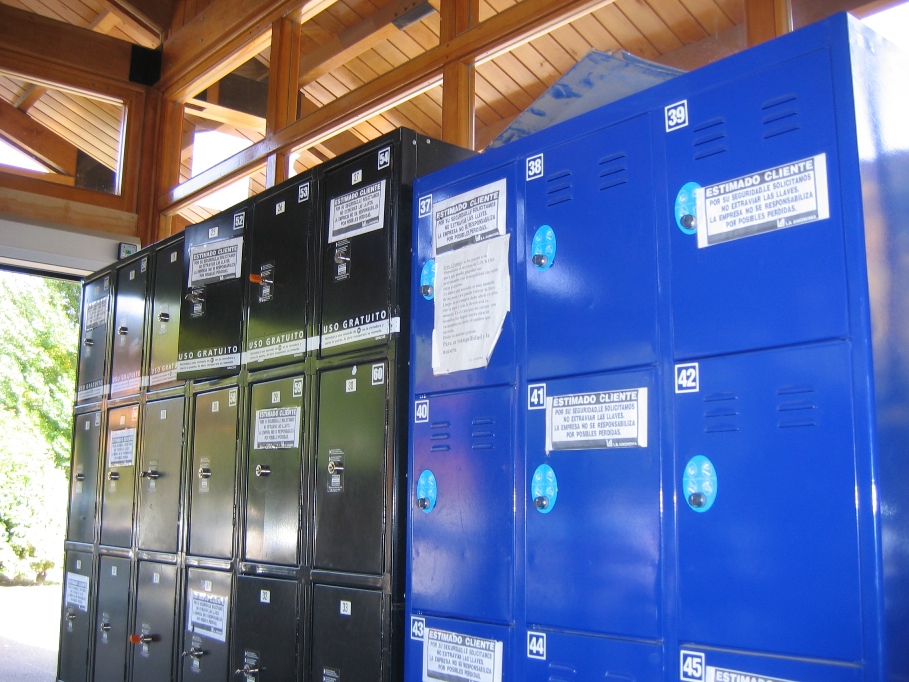
Passing the lockers on your way in. Any sack, backpack, briefcase, etc... other than a small purse (big enough to hide merchandise) must be stashed in the lockers before passing the security sensors at the entrance to the store aisles.
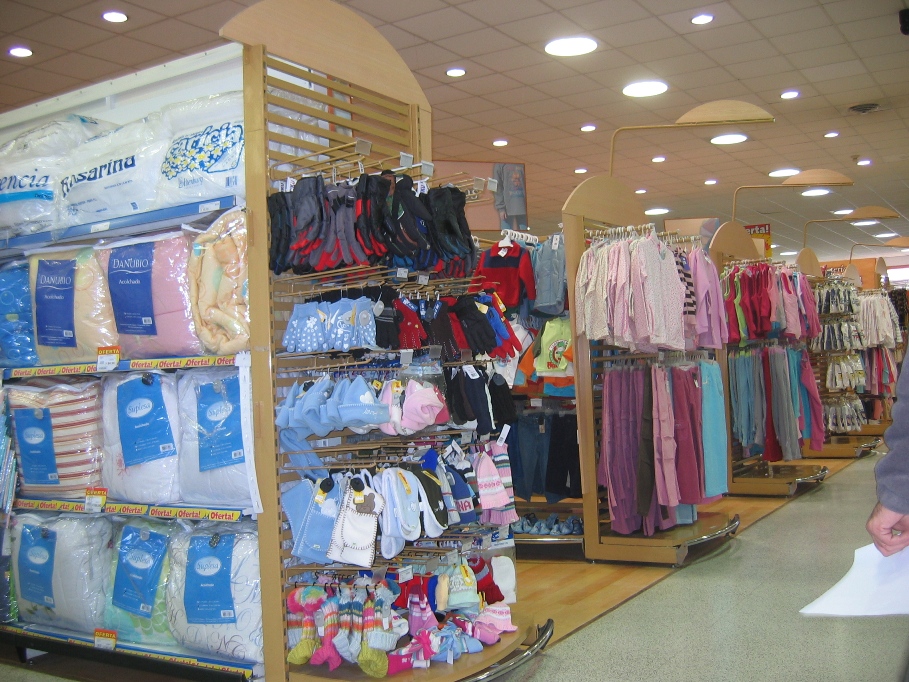
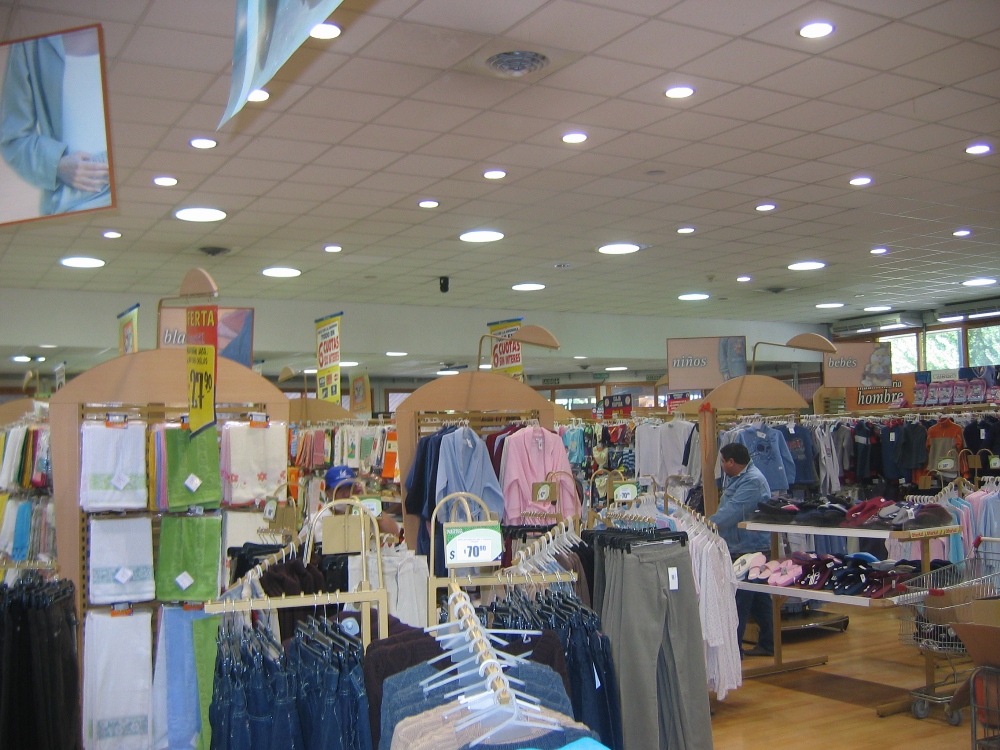
Entering the "Super-Store," you walk by some home appliances and blankets before getting to the food. Off to your right is the clothing dept.
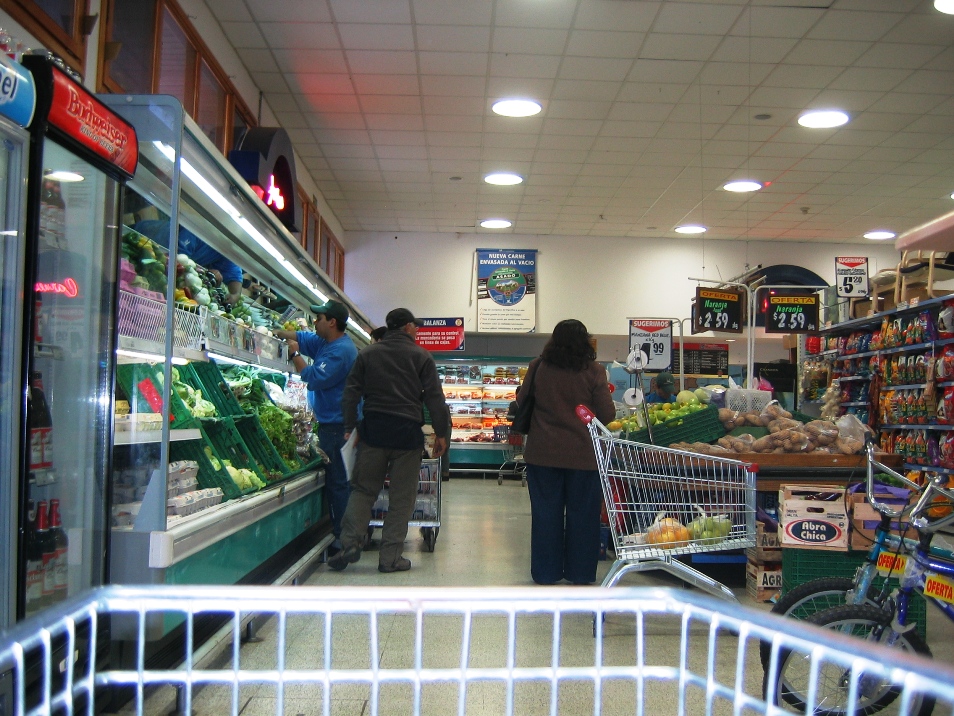
Produce.
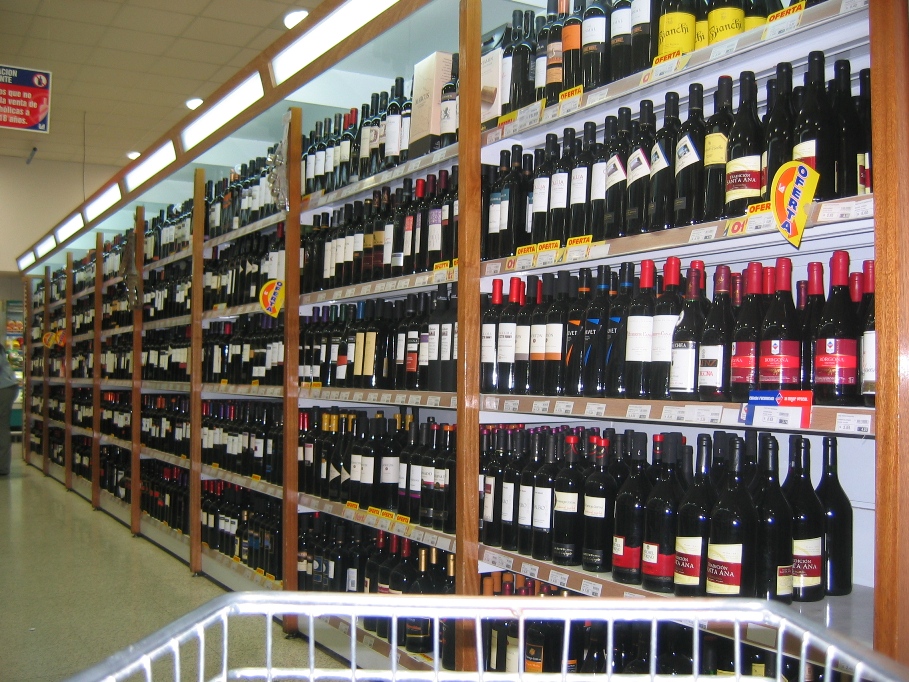
Siempre lo más importante...
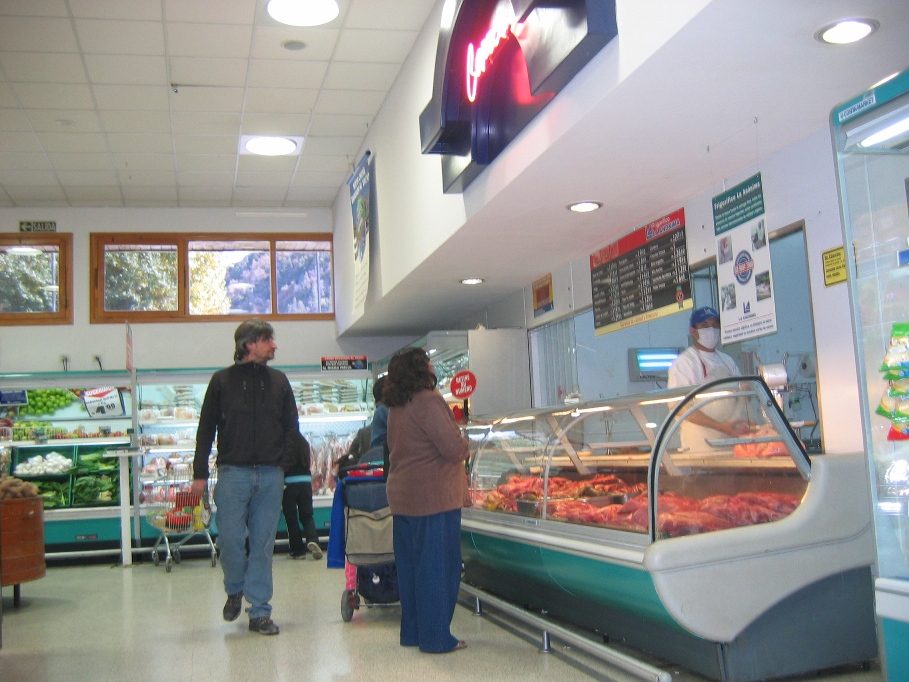
They always have beef, lamb, and one or two kinds of fresh sausage, cut to order and served from a case by an employee. Sometimes but not always, they have
pre-packaged beef, lamb, sausage, and chicken out on a shelf. It probably depends on how much free time the guy behind the counter has along with how much product is back behind the counter. If we want chicken, I buy it at the "Pollo" (specialty poultry) store a mere block and a half from our house, which sells very fresh chicken at a very cheap price. The variety and quality of produce al La Anonima is hit or miss, and the other stores (including the little produce-only market) aren't much different.
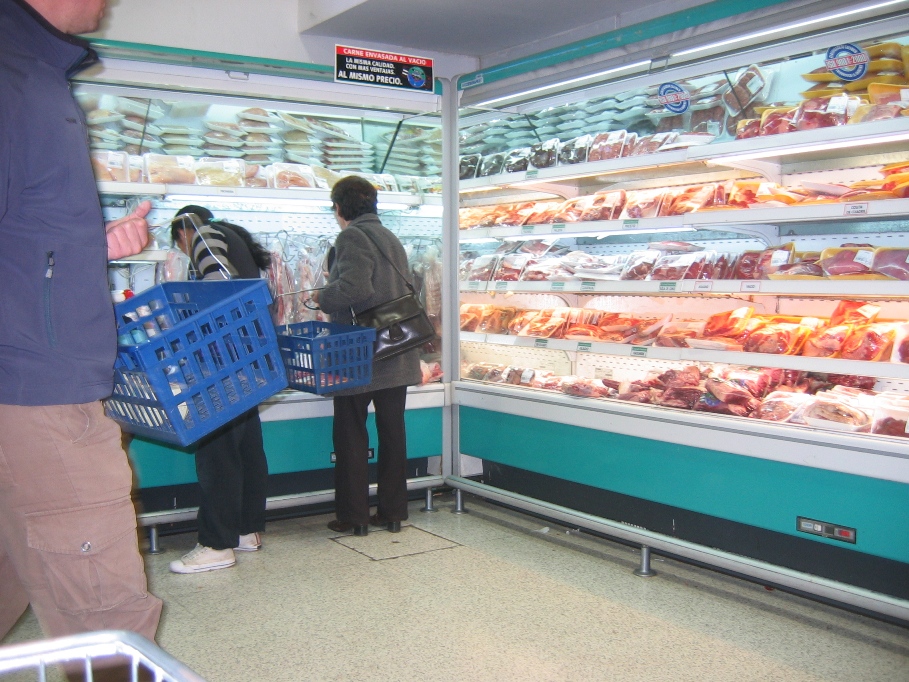
Today was a "good day" for the packaged meet shelves. I've seen them completely empty at times, especially before a holiday day or right before the weekend.
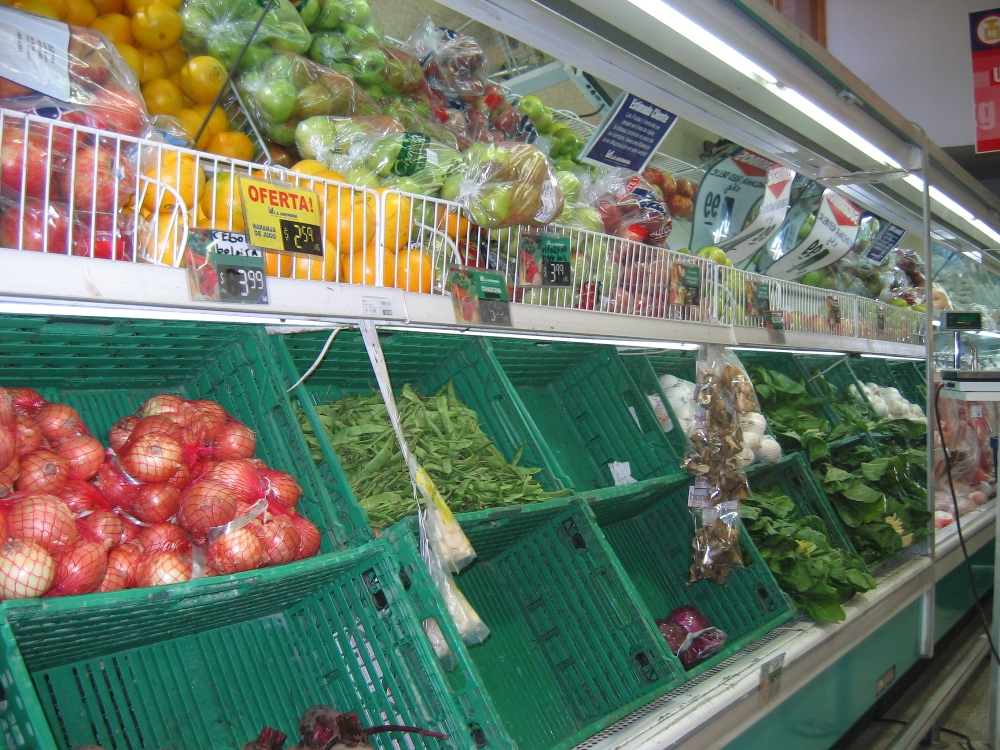
Today was a "bad day" for produce - terrible lettuce and lots of nothing. Yesterday there were four different types of lettuce and decent celery (which was an exciting find).
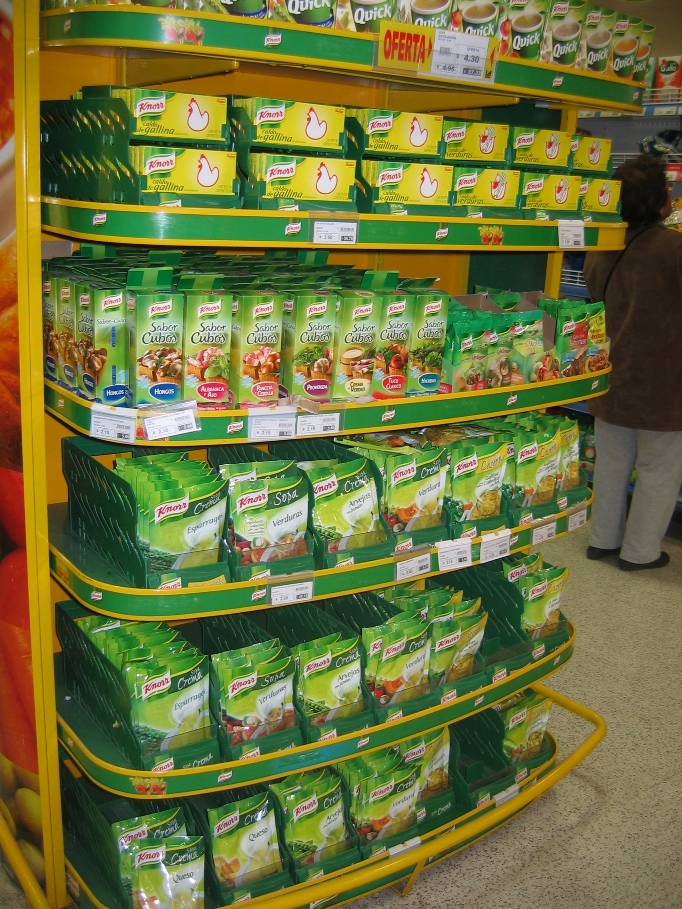
There are no canned soups or baby food in jars. Apparently, these are "make your own" items in Argentina (or at least in San Martín). The "soup department" at La Anonima is ruled by Knorr, and consists of bullion cubes and chicken/vegetable/onion/mushroom powder packets, all of which contain MSG and a long list of other chemicals. Some of the local restaurants serve excellent home-maid spinach, pumpkin, leek, pea, and/or spinach soup. Some of them serve bad soup made from the powder packets, too.
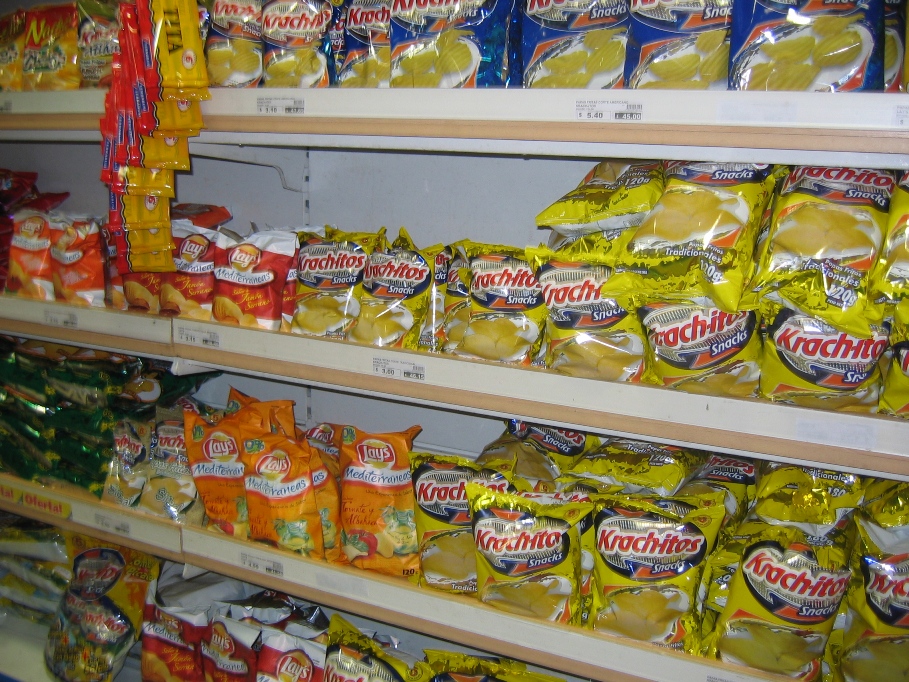
A truly dreadful snack food section. How can these people survive without tortilla chips? Actually, they do have two different brands of tortilla chips. Both are "Pizza Flavor" and taste awful. For Asian food there are limp been sprouts (sometimes) in the produce section and soy sauce in the condiment aisle. For Mexican food there is virtually nothing - well, they have all the ingredients for guacamole and salsa fresca other than Tobasco or any other similar hot sauce. When available, hot chile peppers (Ahi) are a possible substitue. Packaged snack foods and breakfast cereals don't rate much attention and that's generally fine by us - we make popcorn and oatmeal on the stove - or better yet, go out and buy fresh hot churros from the corner bakery. We all miss good, authentic Mexican tortilla chips along with all other types of Mexican food.. It's completely understandable why there are so few packaged cereals or pre-packaged breads in the grocery stores - there are scores of little bakeries sprinkled around town providing fresh bread, media lunas (croissants or literally, "half moons"), cookies, pastries, churros, cakes, torts, and all sorts of wonderful smelling and tasting baked goods.
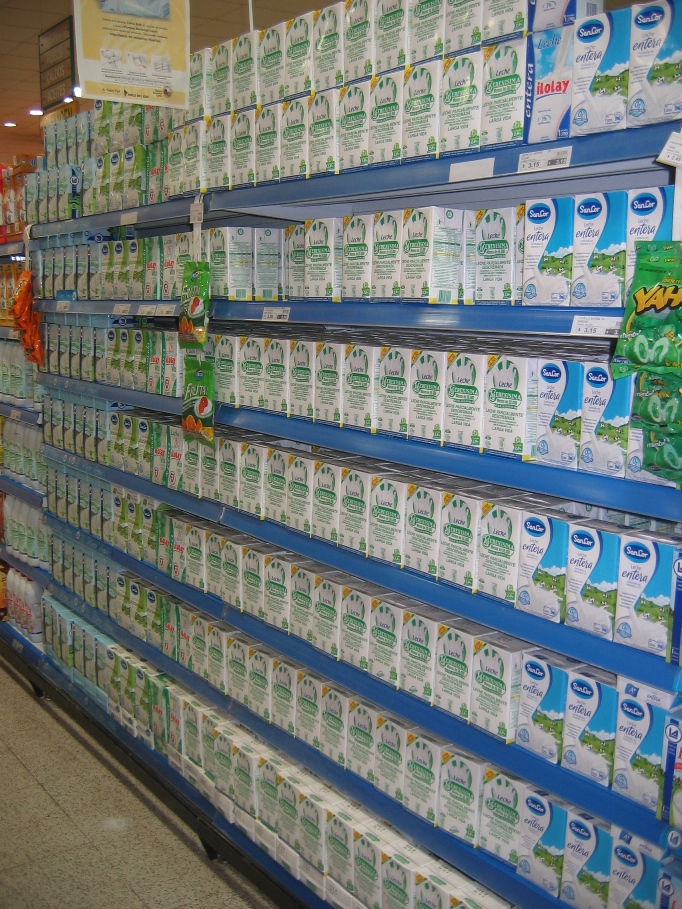
Milk and cream is all UHT (Ultra High Temp) pasteurized and most of it is stored and sold at room temperature. It tastes sort of like milk but not exactly. There is no skim milk here - only 1.5% and whole milk. Yogurt comes in various constancies of vanilla and strawberry. On a lucky day we can find peach or mixed-tropical fruit flavors. We rely on ice-cream from Abuela Goye for calcium.
If shelf space is a reliable indicator, mayonnaise is far more popular than mustard or ketchup. "Salad dressing" in both Chile and Argentina means olive oil and vinegar (hopefully balsamic), served un-mixed from the bottle at the table, sometimes accompanied by a few slices of fresh lemon. Bottled salad dressings don't exist. Well, I think they sold it in the grocery in Chile but no one other than foreigners like us probably ever buys or uses it. The classic Argentinean sauce for barbecued meats is called chimi-churri, and it's delicious. It's also a "make your own at home" item, as well.
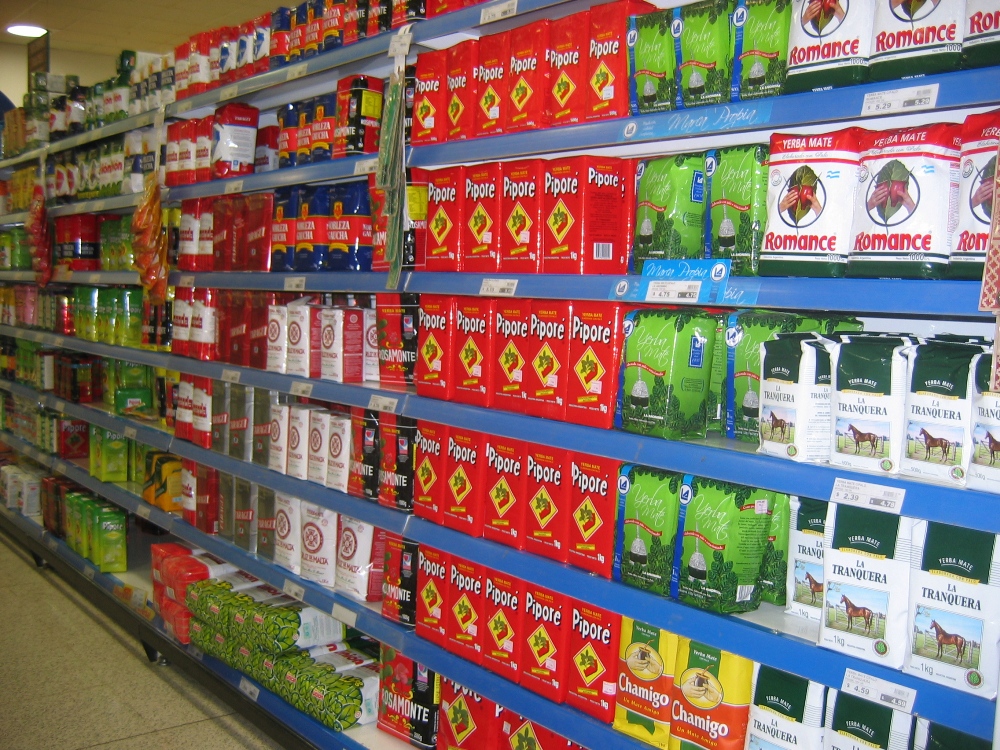
The yerba máte section. Argentineans drink four times as much máte as coffee. Preparing and serving it is somewhat of a ritual, and sharing your máte cup (and straw) is an obligatory gesture of friendship and hospitality. We had read that máte is a "mild stimulant." I remember drinking coca tea in Peru and thinking it wasn't as strong as normal black tea, so I figured máte would be pretty mild as well. It sort of is... but not really. At first I drank it like I would coffee or tea (ingesting an amount similar to a full cup of coffee when I drank it). Then I realized that I hardly slept at night after a day when I drank máte, no matter how early in the day I had had consumed the stuff. Now I drink just a few small sips per day if any at all. Smoking cigarettes and drinking máte all day must make for a powerful combination of stimulants. No wonder some of the women here look like they weigh less than 90 pounds.
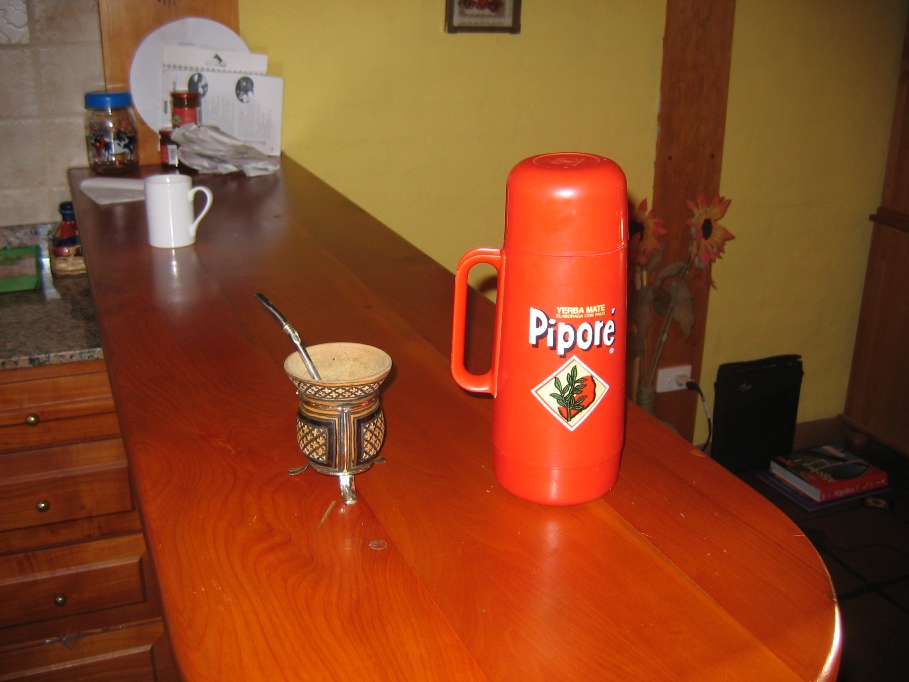
Back home with your sack of máte, you can now get ready to drink it. There is a strict social etiquette involved. If someone else is around, you should offer them a sip before you take one yourself. Not to do so is a snub. Communal straw (the "bombish") sharing is the norm. Bombishes and the drinking vessels are elaborate works of craftsmanship. The drinking vessel is traditionally a hollowed-out gourd but wooden and even artsy ceramic versions are acceptable. Various clinical studies support both sides of the argument that either significant germs are spread or that the water is hot enough to kill enough of them not to worry about it.
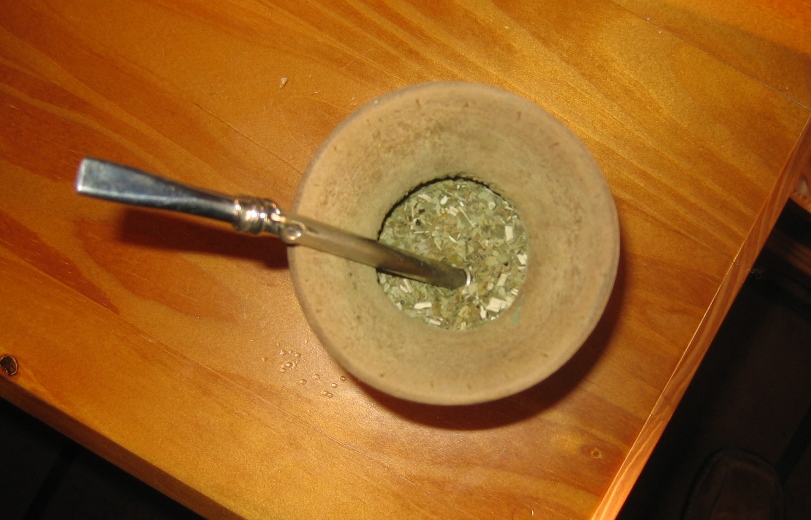
Here's what the stuff looks like - basically a dried and chopped up bush - like tea or marijuana. Add a little hot water, wait a few seconds, then offer it to the closest person to you. Then add a little fresh water, and offer the gourd to the next person in the room. Finally, you can have some. Repeat the cycle until everyone starts turning down the offer for more, which, if you are properly prepared to serve máte, should happen before the water runs out. It doesn't cause hallucinations, and I don't think anyone has ever gone on a máte-induced crime spree or serious rampage of any sort, but I could be wrong.
Back to the topic of our supermarket trip, there are a few other aisles that I deemed even too boring for this article, so we'll move along to the checkout aisle - nothing too unusual or different going on there either. There is a "caja rapida" for 15 items or less, and every aisle has a sign showing that pregnant women and anyone else with any sort of disability gets priority front-of-the-line service - a decent policy. I'm happy to be able to say that I not only understand the announcements over the loudspeaker reminding shoppers that they aren't allowed to sample the produce before they pay for it, but that I can also understand almost everything the checkout clerks say to me. On a good day, they can understand me. On a really good day, I can even joke with them a little.
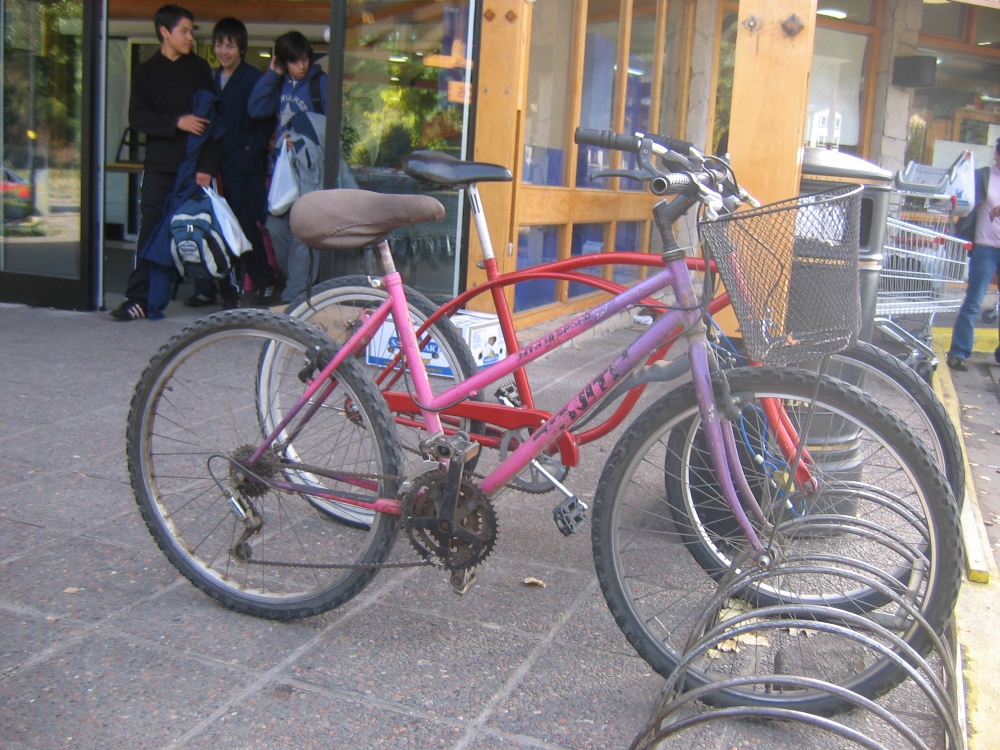
The store has two or three armed security guards inside watching the shoppers, but not everybody locks their bike out in front.
While almost every restaurant serves fresh trout, there is absolutely no fish market in town that sells fresh fish. How does that work? Bebe told me that the all the restaurant trout comes from a couple of regional fish farms that supply the restaurants directly. Apparently, the locals don't like to cook fish for themselves. It's an oddity, because the restaurant trout is excellent. In the way of seafood, the grocery stores and the one "fish market" in town only sell packs of frozen shrimp and a type of white fish (frozen or recently thawed) called merluza.
The meat here is excellent and costs about half the price of what it would cost at home (if that much). And this is in a town that is supposedly one of the most expensive places to live in Argentina. Boneless, skinless chicken breast from the specialty store is about $3 per pound and freshly made sausage is about $1 a pound. Meaty, succulent chicken wings are less than $1 per pound. Beef and lamb is the pride of Argentina, and they produce and consume massive quantities of an excellent quality product.
Produce is generally a little cheaper than it would be at home in the USA, but quite seasonal. Packaged food is less of a bargain, and in some cases, more expensive than what we pay in the USA. I went into a corner meat marked and asked the lady at the counter if they ever sold ground chicken meat, or would consider grinding some for me. She looked confused, but it wasn't because of my bad Spanish, it was just such an odd question.
She understood what I was asking, and I think just not to be rude, she passed along the question to the busy butcher hacking away at a table a few feet behind her. He wiped off his hands on his apron and turned to face us both, probably just to make sure he had heard the question correctly. She asked him again, and then I tried to explain that I would like ground up chicken breast - just like the ground beef right there. "Could you possibly run some of that boneless chicken breast meat through your grinder?" His initial look of confusion slowly changed to a sort of horrified distaste as he gradually comprehended the question. Then he simply blurted, "No. Never," turned around, and went back to work. The lady smiled meekly and shrugged. I wonder what they were thinking... perhaps something like,
"Crazy Gringo! What horrendous devil-worshipping ritual would he perform with a ground up chicken, anyway?"
They sure do love their traditional asado here in Argentina.
It's obvious that someone can be happy and not only live but eat well here too, even without ready-made guacamole, canned mushroom soup, and four different colors of cool-whip. That's not to say we don't miss some things. If you happen to be from the US, you just have to adjust your expectations a little and be content with things like fresh hot empanadas, bakery bread, pastries, smoked meats, regional fruit preserves, home-maid chocolates and ice-creams, deer and trout specialties (from the restaurants)... there's a long list of tasty things and I could continue but I think you get the idea. As a woman in the yarn shop told me and Lynn today (again, like we haven't heard something like this from at least 10 different people already),
"Everyone who moves to San Martín gains weight the first year they live here!"
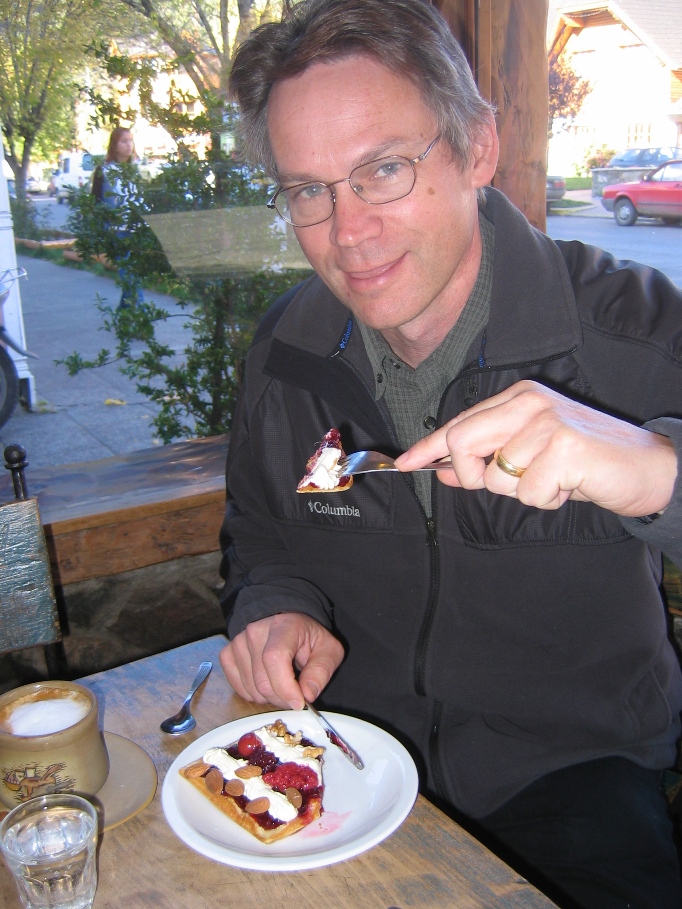
Who am I to prove them wrong?
-Rolf