San Martín de Los Andes
Good-bye Farm Strike (we hope), Hello Rain
Tuesday May 20, 2008
Tom checked his rain gauge at noon today, and reported that we had received 2.75 inches since he last checked and emptied it at noon yesterday, when the gauge measured 3.00 inches. It was sitting at 2.25 inches before he emptied it out at noon the day before that. It started raining more than a full day before he put out the gauge to begin with, so I think it's a reasonable estimate that we've received somewhere between 9-11 inches of rain in the last four days. Before this past weekend, the weather here had been unusually (according to the locals) nice for autumn, with light wind, lots of sun, and the typical daytime high temperature around 60 degrees F. But now it's obviously payback time.
Unfortunately, the Indian summer ("veranito") left in a hurry and the current rains seem intent on making up for their late arrival with volume and persistence. We should have suspected that something was up when the municipal work crew (I now think of them as the "Beaver Brigade") passed down our street last Thursday, raking all the leaves in the gutter into a series of tall piles in the gutter. They couldn't collect all the piles before the rain came, however. Perhaps they have a "no outdoor work in the rain" (or more likely "no work on Saturday and Sunday") clause in their contract, because a few assorted piles remained scattered around town throughout the weekend, damming the gutter to produce substantial ponds bordering on small lakes upstream of what, unimpeded, would have been a 3-4 foot wide rushing river running alongside the curb.
These days, if you didn't happen to have high boots on, crossing the street without soaking one or more feet (and sometimes even just walking down the sidewalk) requires reconnaissance, planning, agility, and courage.
"To jump or not to jump, that is the question." If you clear the puddle or make it too the shallow-end, it was worth the effort. If you fall short, the splash can cause far greater damage than you would have suffered with a simply quick-step through the lake-puddle. I even break down and take the truck out and drive for short errands if it is really pouring.
Hard rain makes a dull roar on the sheet-metal roof of our house, and only on Sunday night (the third in a row with almost constant heavy rain) was I able to sleep through most of it. Then it was even louder last night and none of us slept very well. This may all seem mundane and trivial to someone from Portland or Seattle, but for us, this living in a semi-paved bog thing is somewhat of a novelty. I hope that either the rain lets up or we leave town before the fun wears off. A trip to the shoe store to buy rubber boots is definitely on the near-term agenda. Then the puddle situation should be moot - but when it starts to snow, then what? Tire chains and a shovel or two?
Anyway, I did mention that before this recent arrival of wetness, we had been enjoying marvelous weather, and we do have some fresh pictures to prove it. The week before last was quite pleasant, and since the forecast called for a partially cloudy Mother's day, we decided to take our Mother's Day excursion on a balmy, clear Thursday during an afternoon free of Spanish or Pilates classes. On one of my trips to the real estate office to pay our rent bill, Laura (#2) showed me some pictures of a nearby lake and canyon. She and her boyfriend took the pictures on the May Day holiday. I was intrigued enough by her photos to suggest that we visit this place to Lynn, but of course she was already thinking the same thing after merely reading about the place in local tourist brochures and guidebooks.
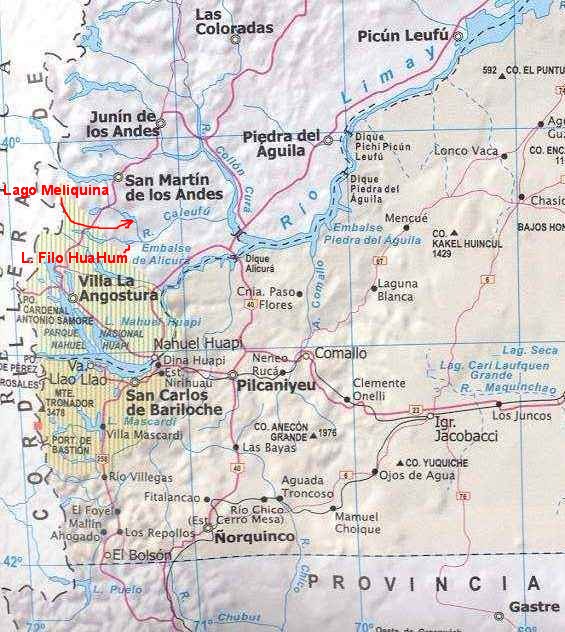
For those of you with quantitative curiosity, start your satellite search at 40 degrees 10 minutes south, 71 degrees 21 minutes west, and use the following map to track down to the lakes we visited.
This link will point you towards a lot of internet satellite picture service:
For those of you who don't care to play with your computer more than you have to, you can just read on and look at the following pictures.
We started out by heading down the Ruta de Siete Lagos for the fourth time. A short distance after the road had turned to the left and southward away from Lago Lacár, we took another left turn onto a dirt road paralleling a river. Then after 10 kilometers or so when the river had lead us to a new lake, Lago Meliquina, we stopped for a picnic lunch along the its shore.
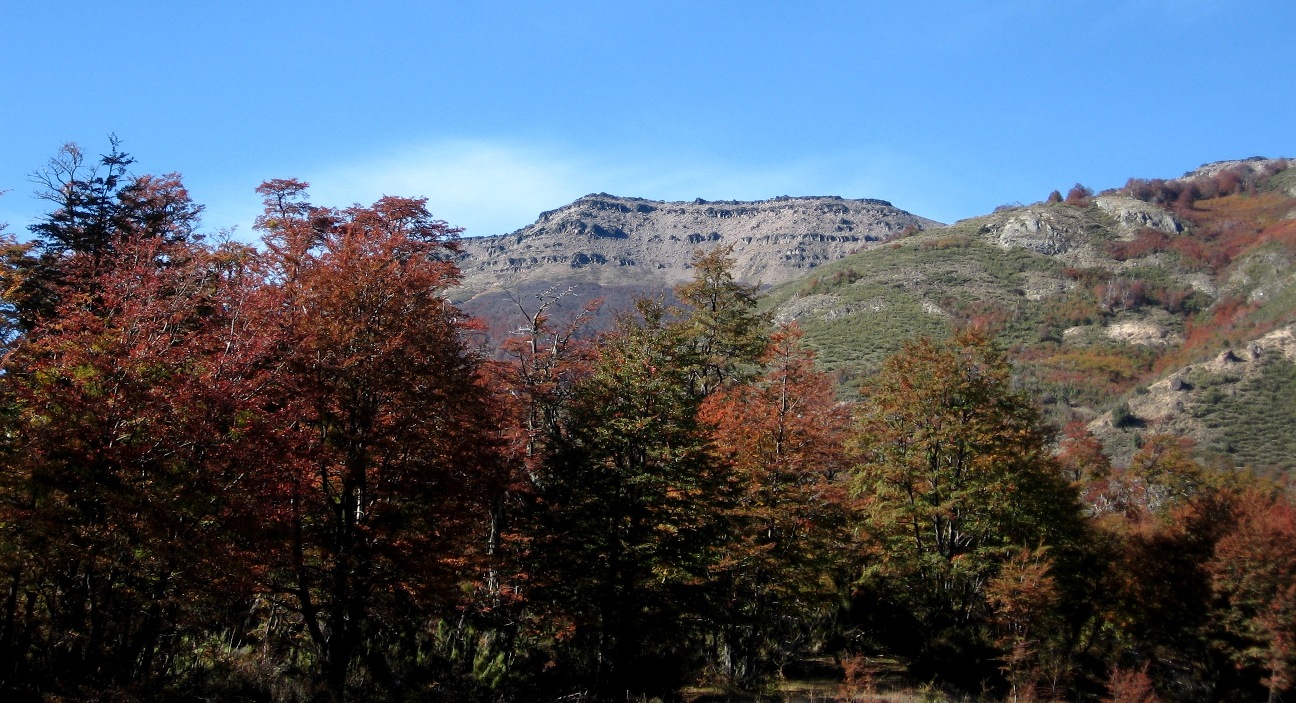
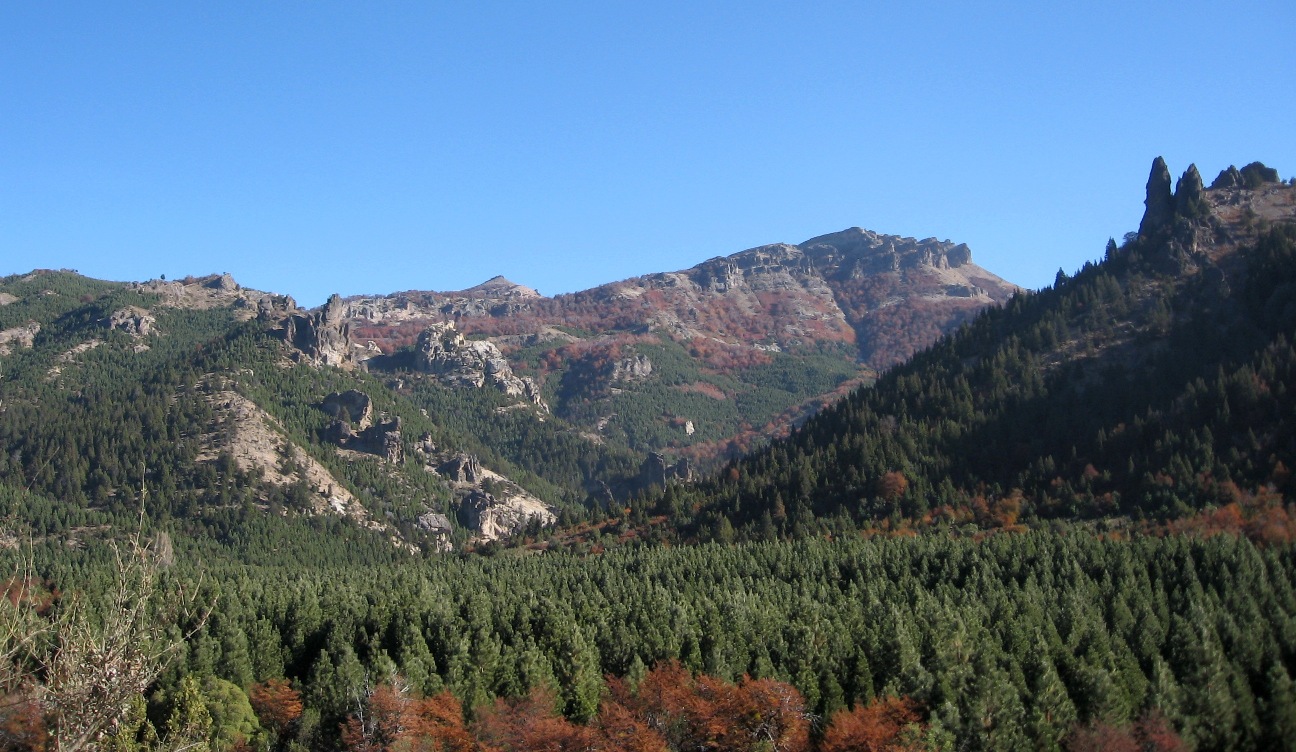
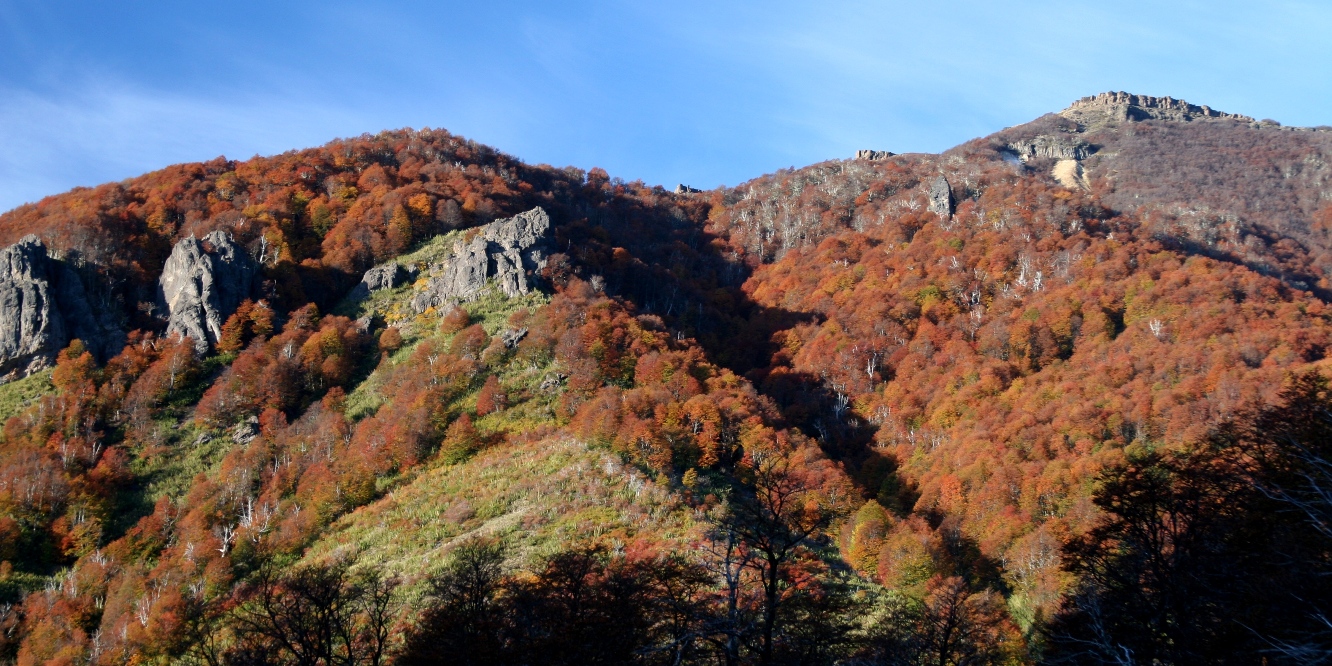
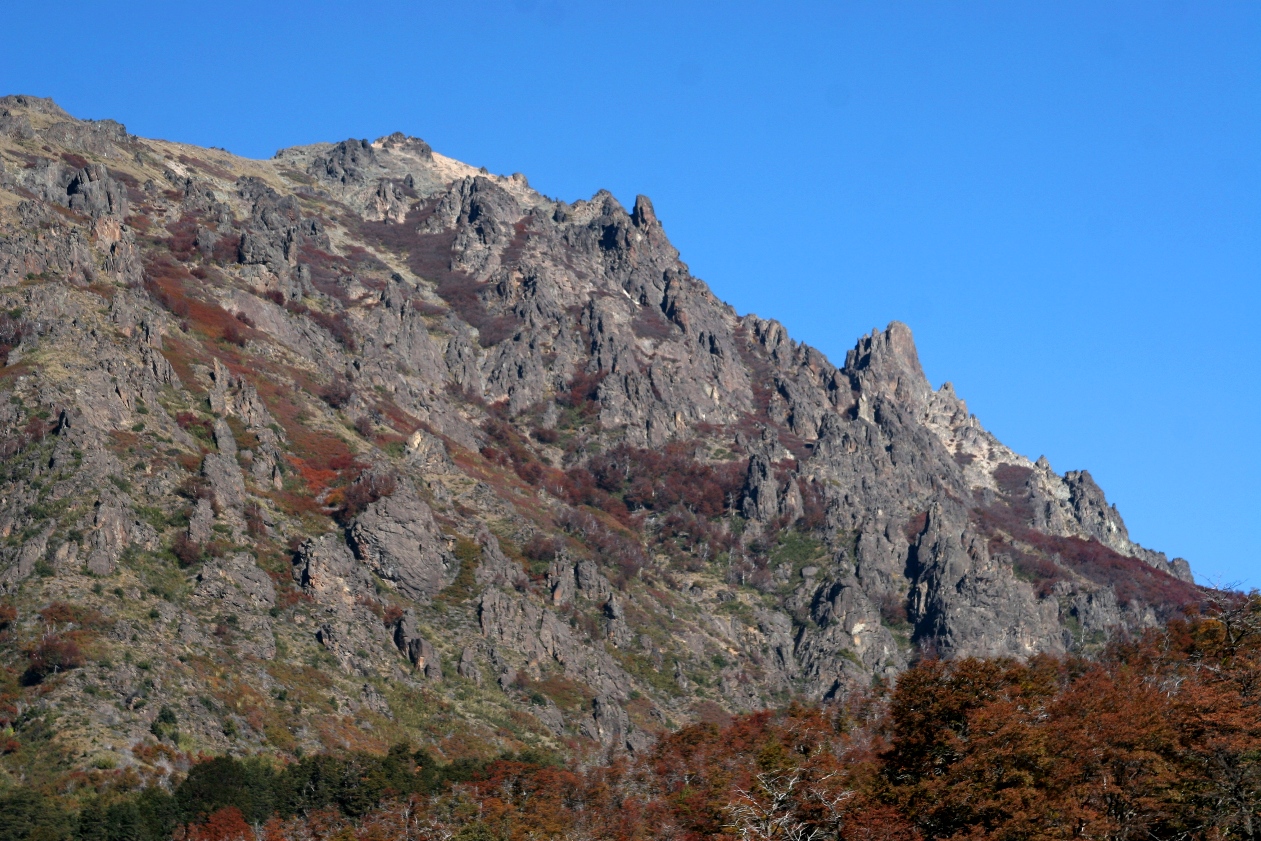
The leaves of the Lenga trees (a type of deciduous Beech) provide patches of flaming red color mingled with the evergreens.
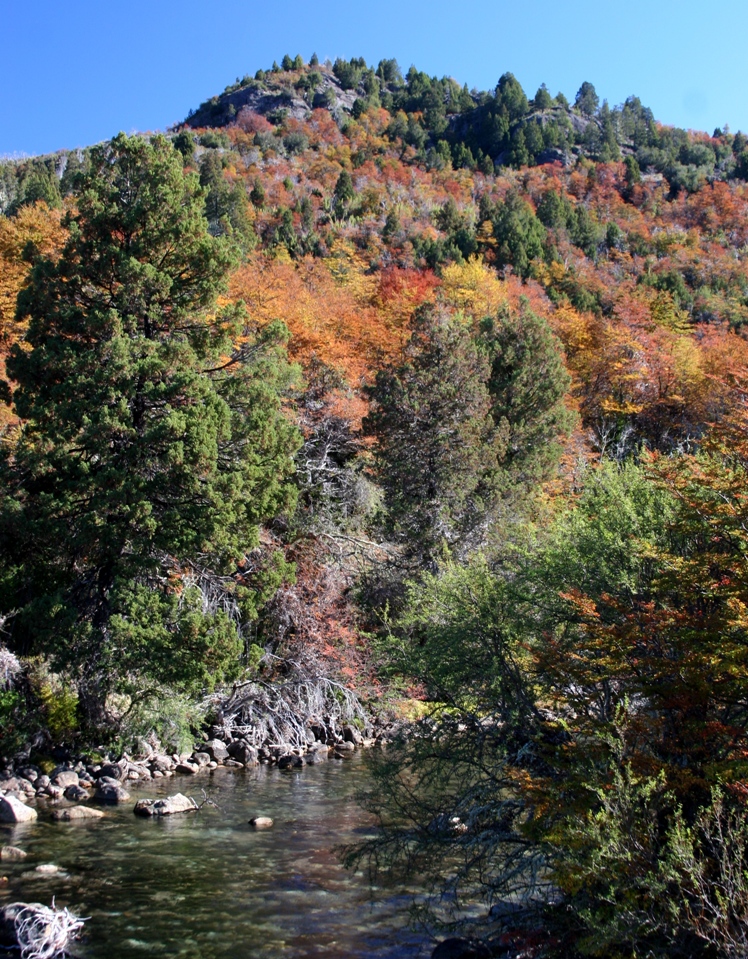
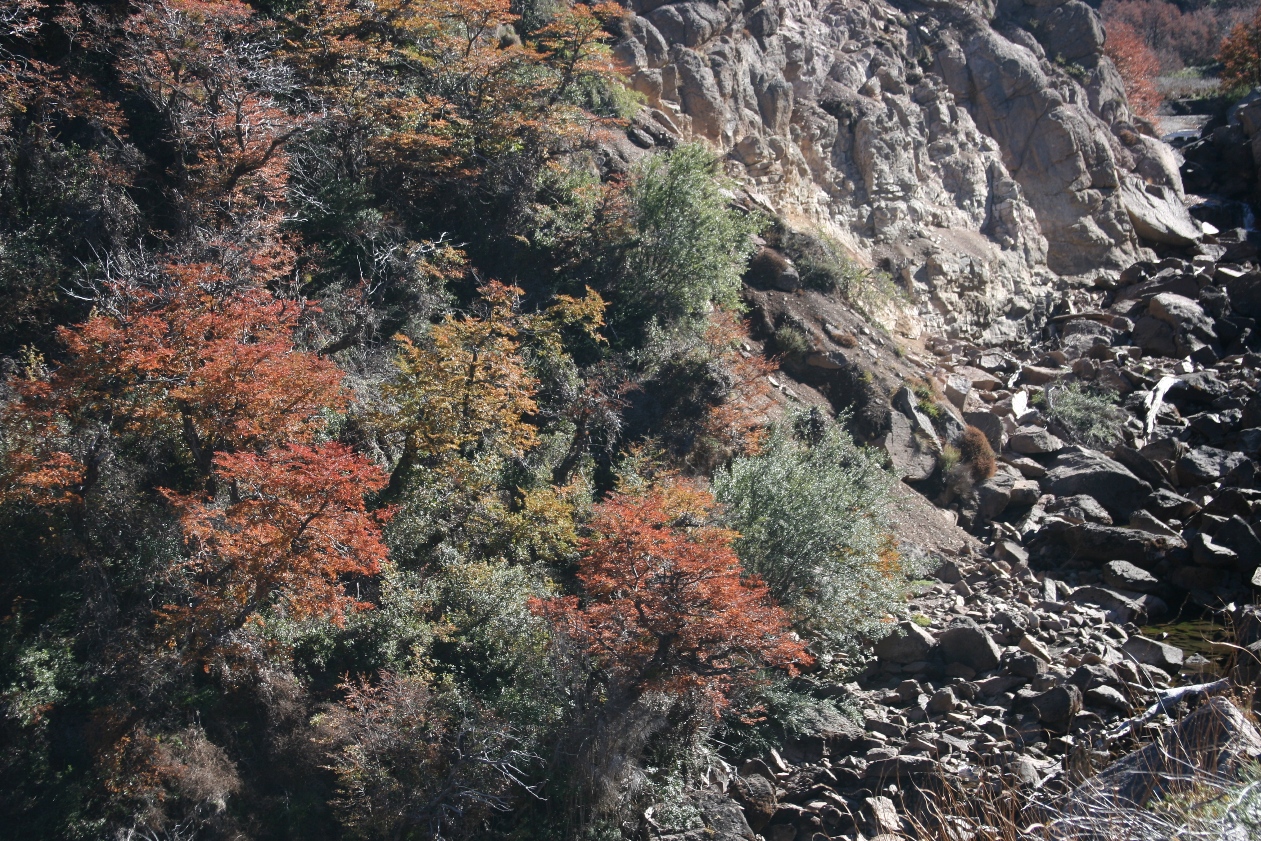
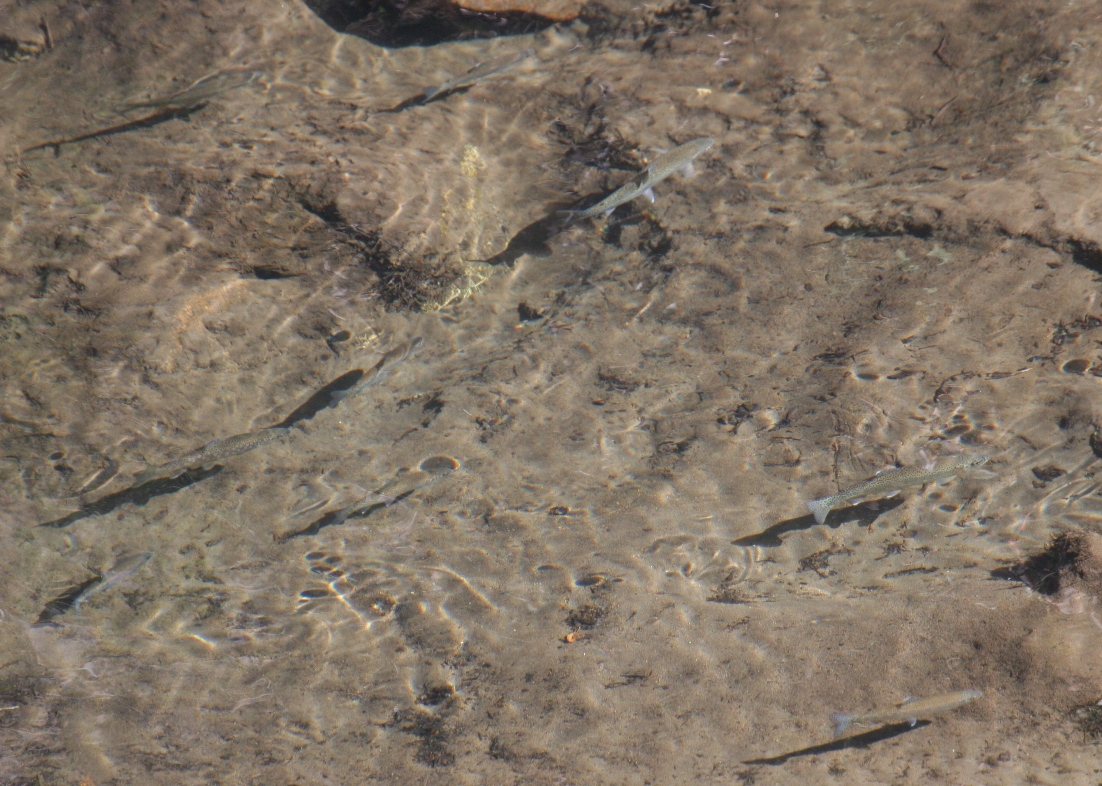
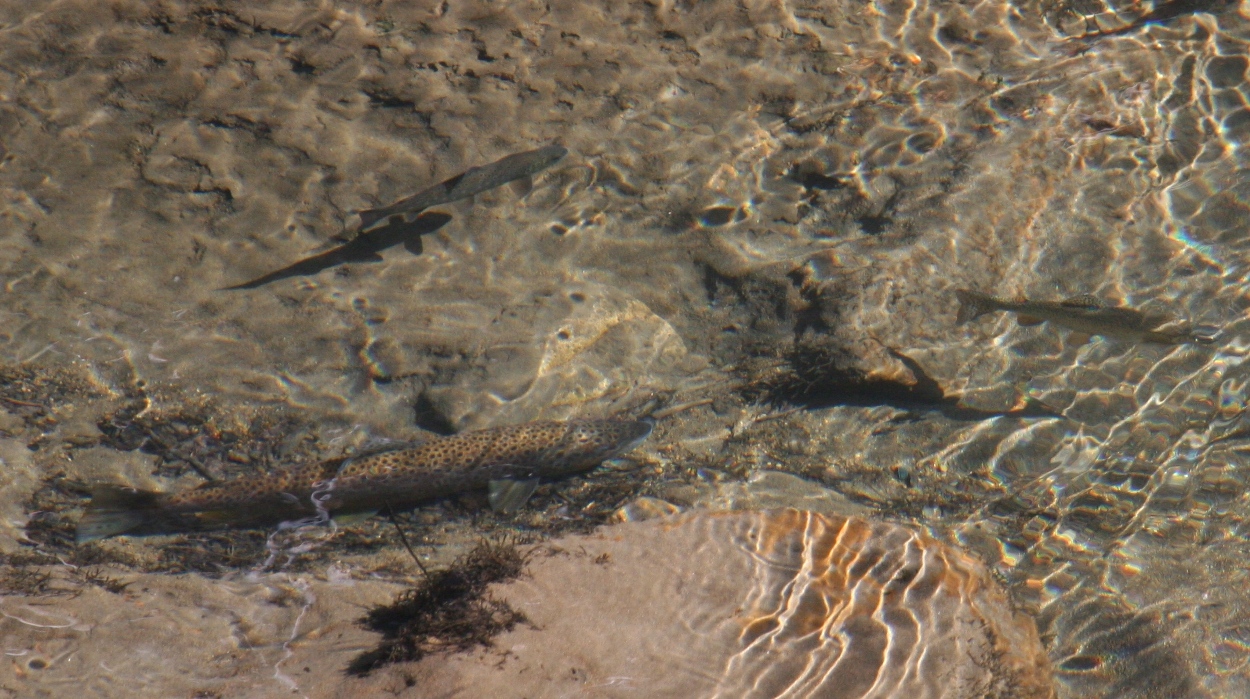
The rivers and lakes are still full of those tempting trout.
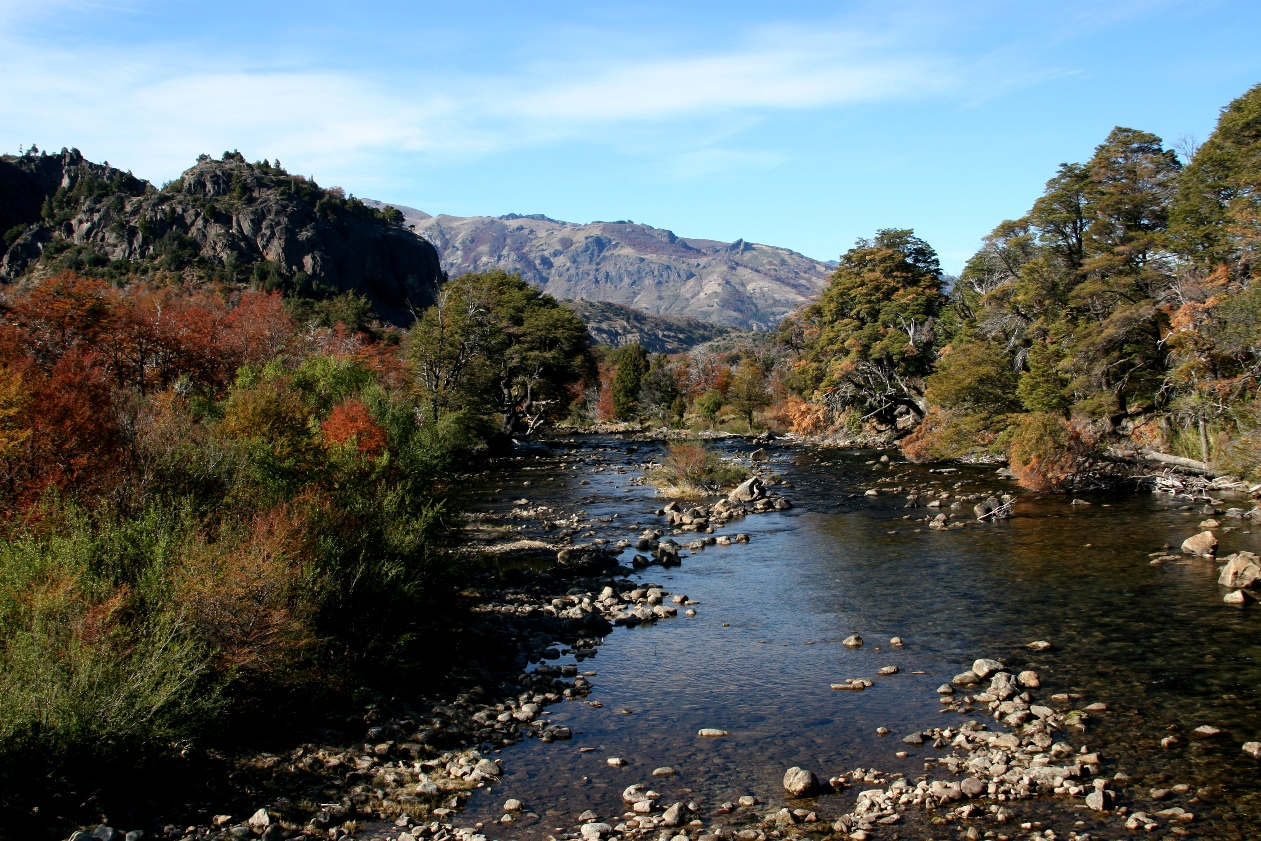
This river flows out of Lago Meliquina heading somewhere else, downstream and most likely lower in elevation.
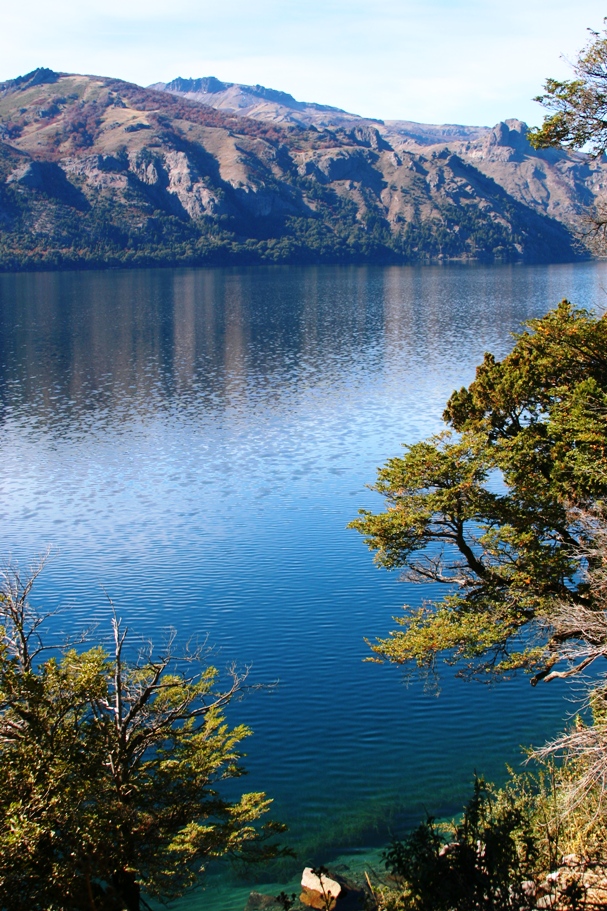
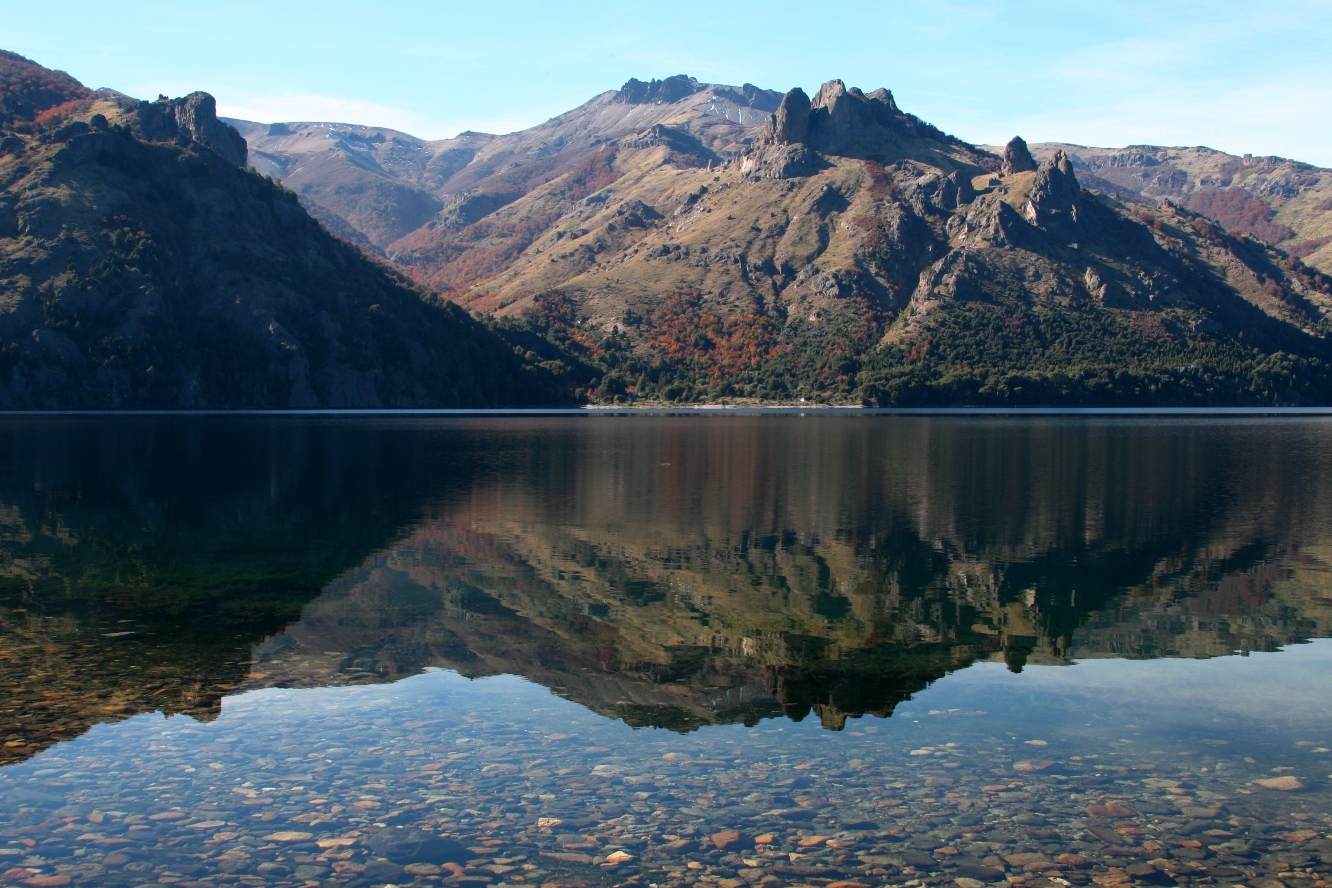
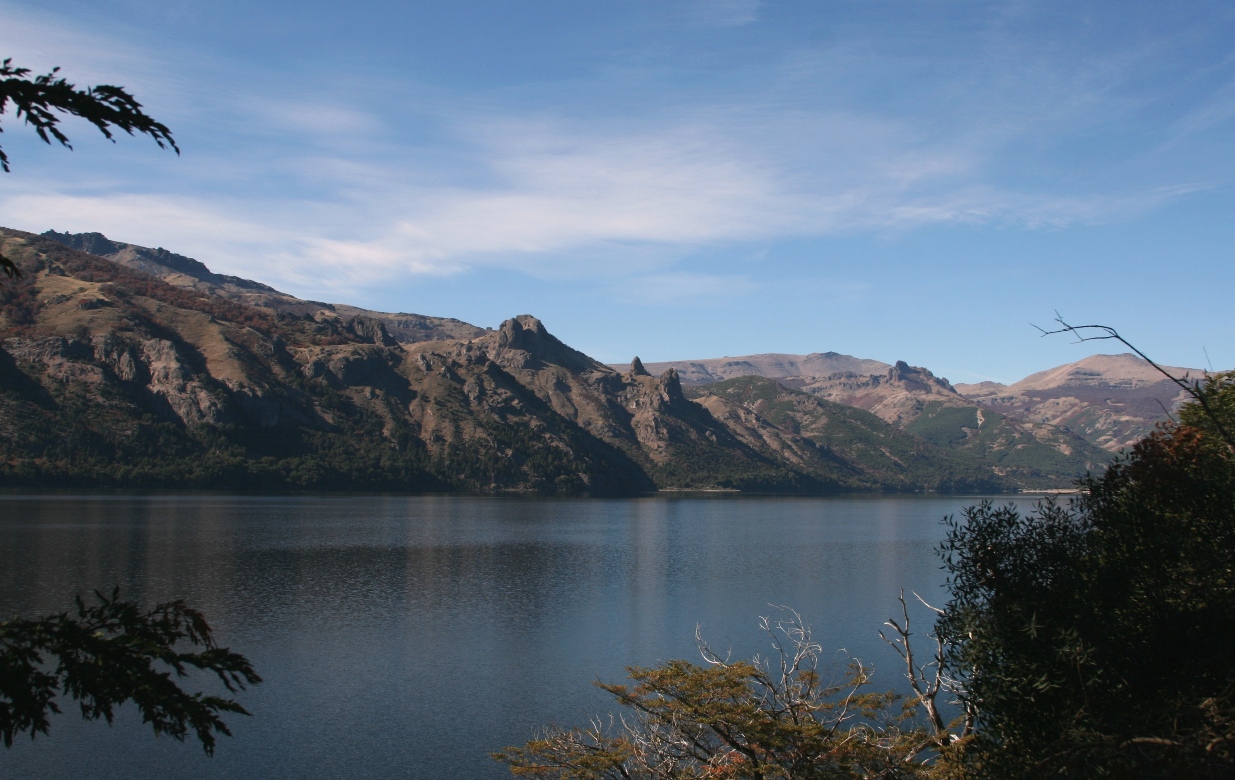
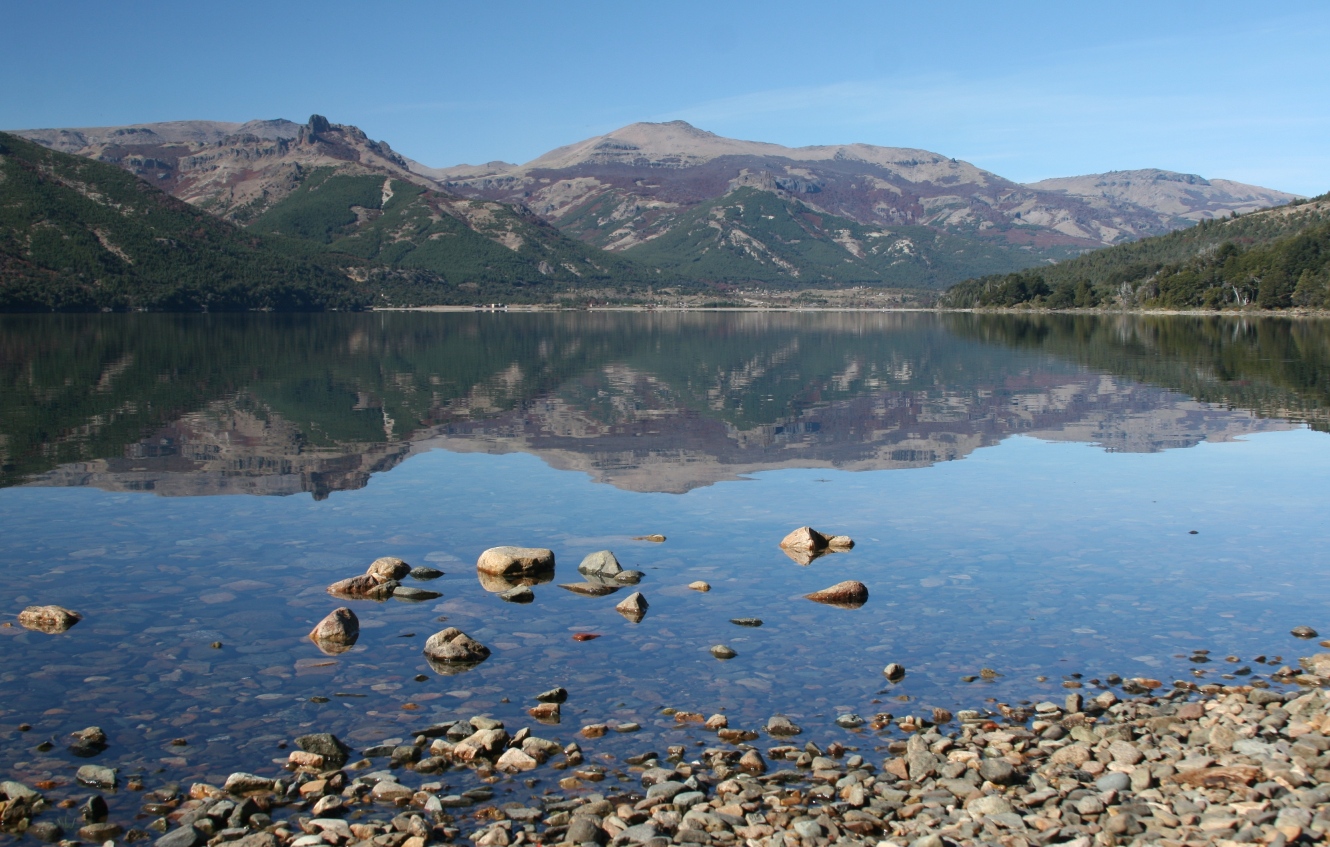
Lago Meliquina on a calm, sunny Autumn afternoon.
Dang those crowds!
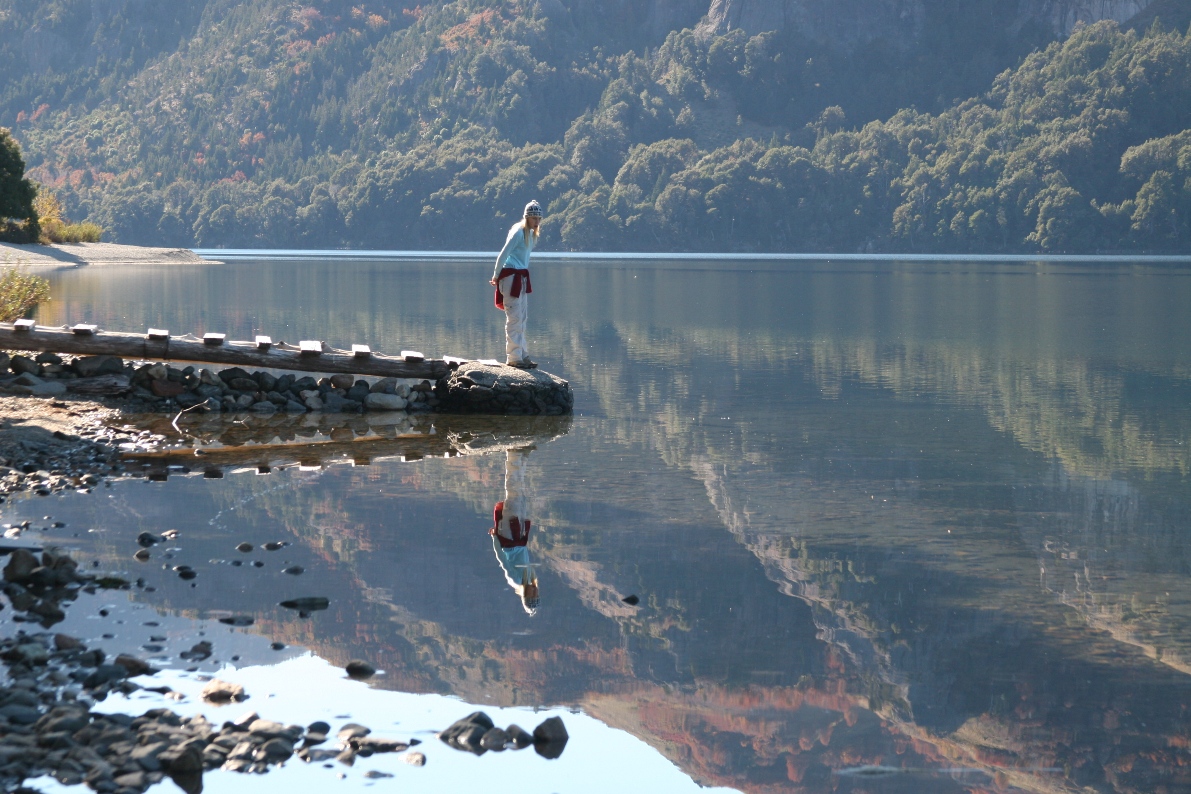
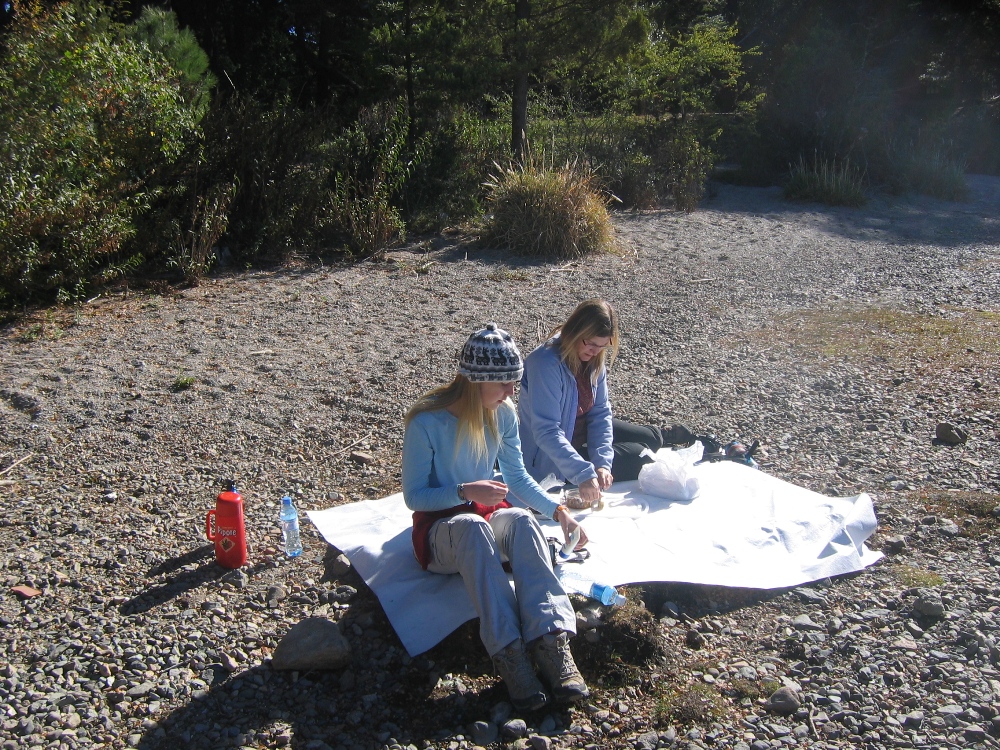
Perfect spot for a picnic. We even remembered the máte.
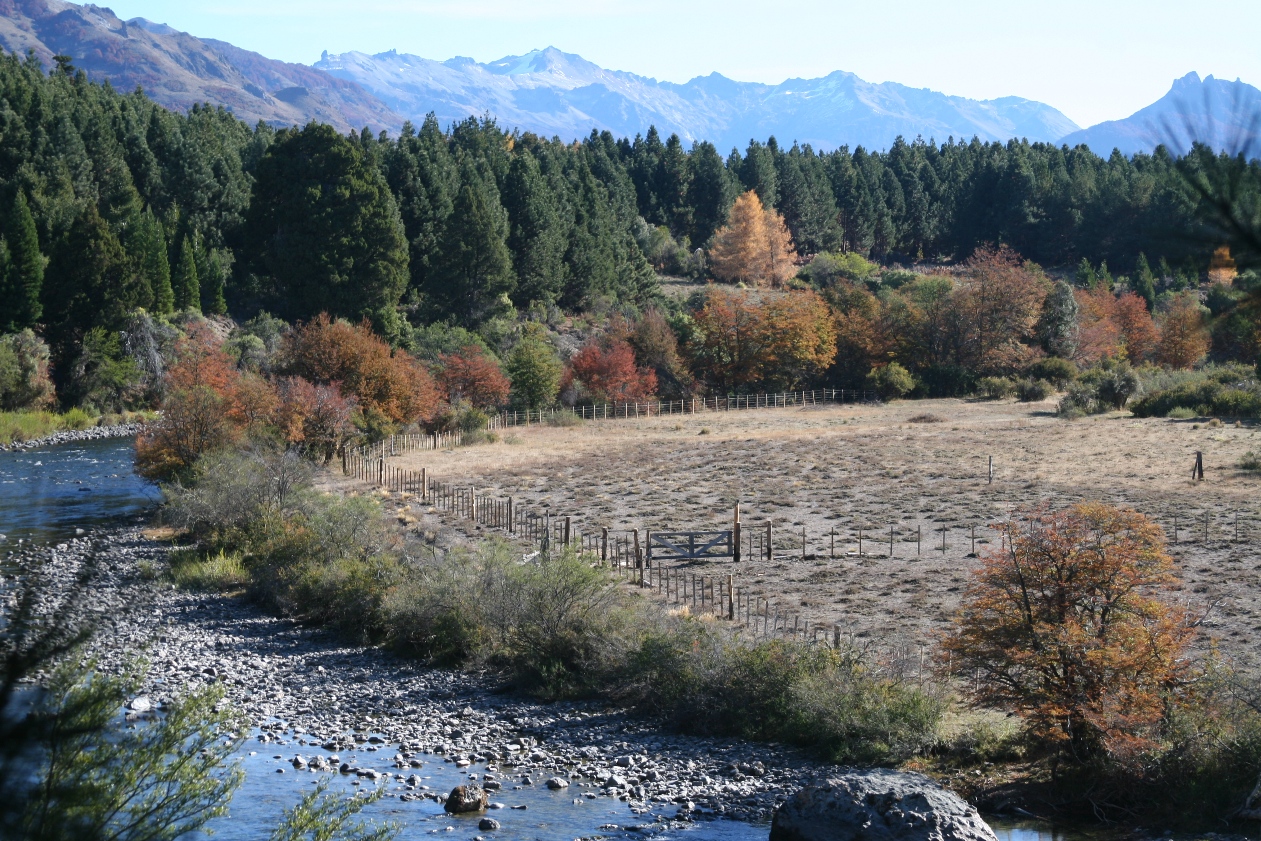
After our lunch, we continued eastward along the road until we came to a fork, took a hard right, and began following a different river,
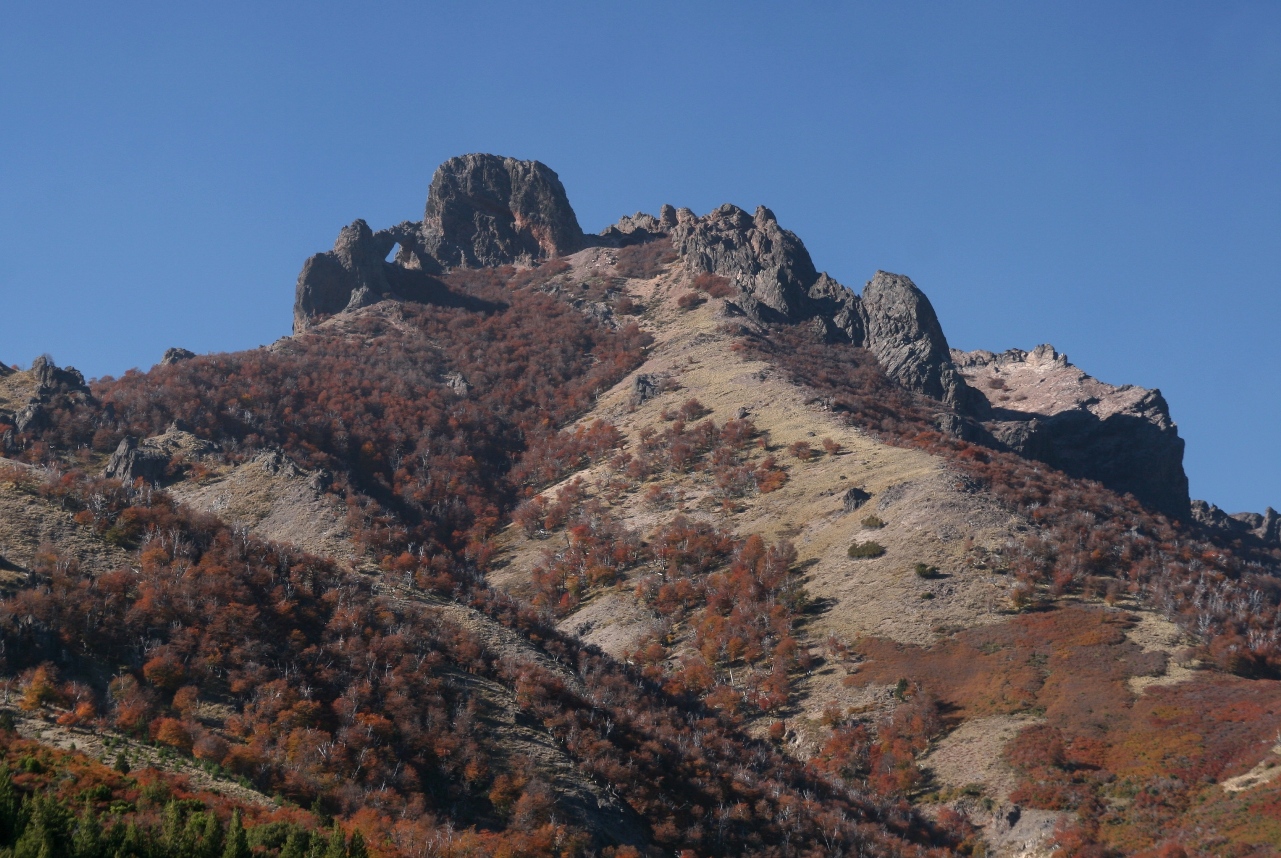
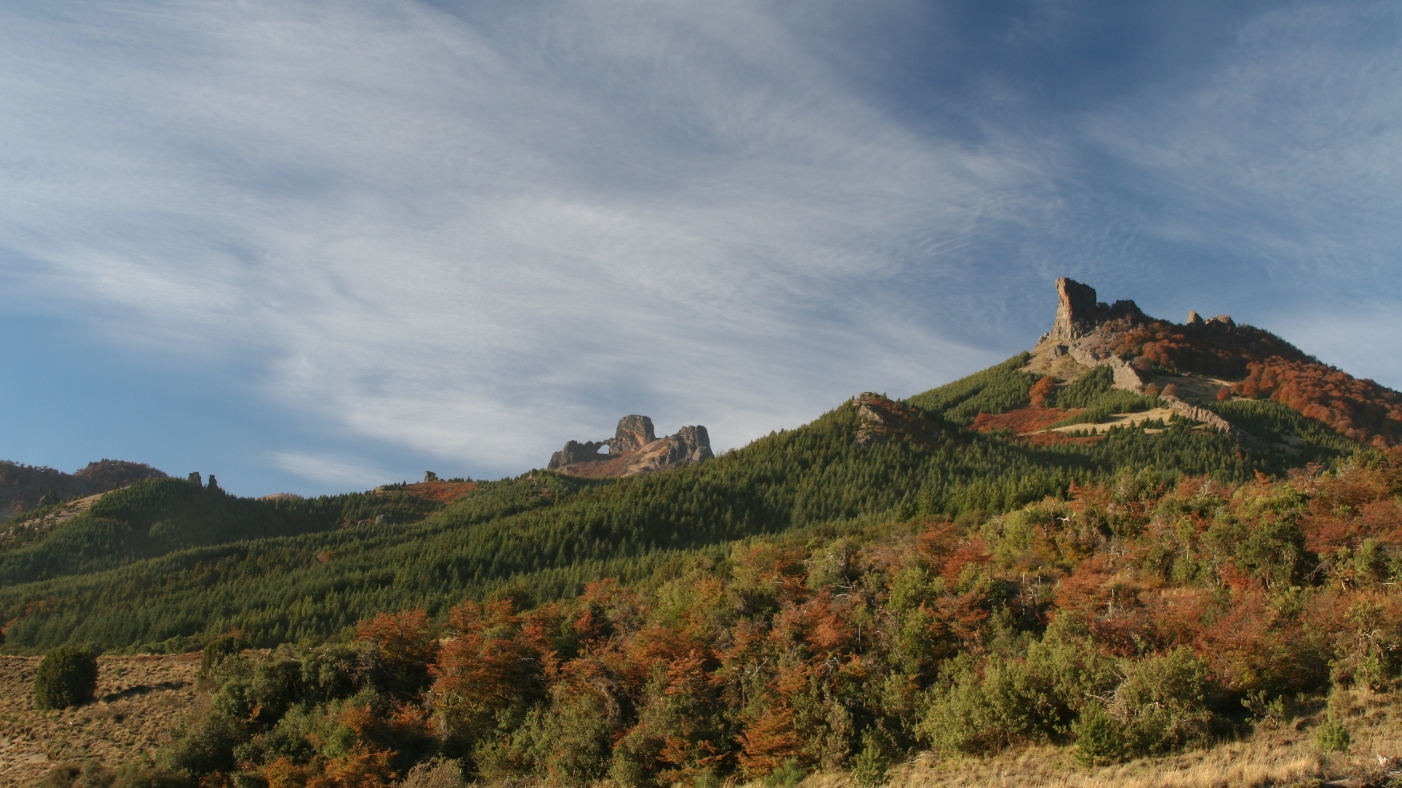
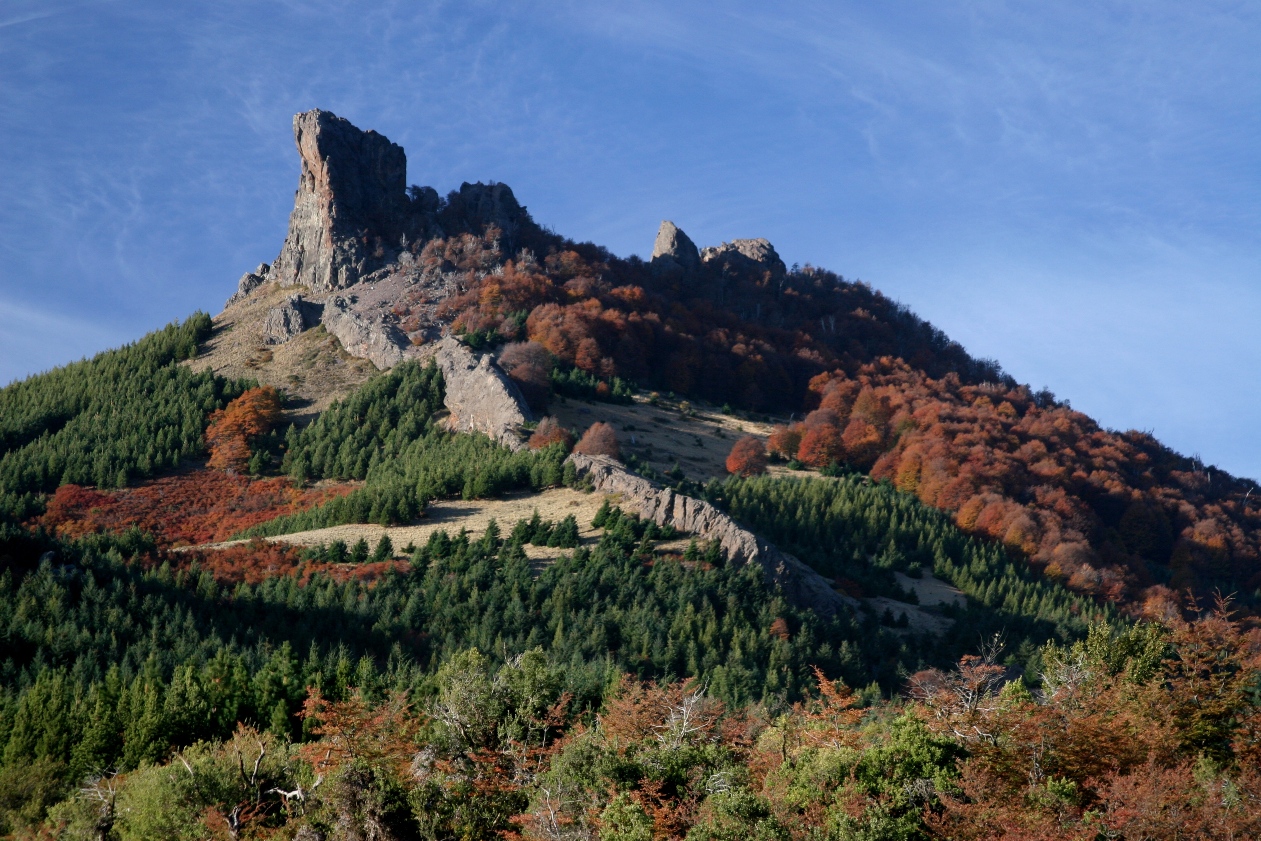
passing some incredible rock formations,
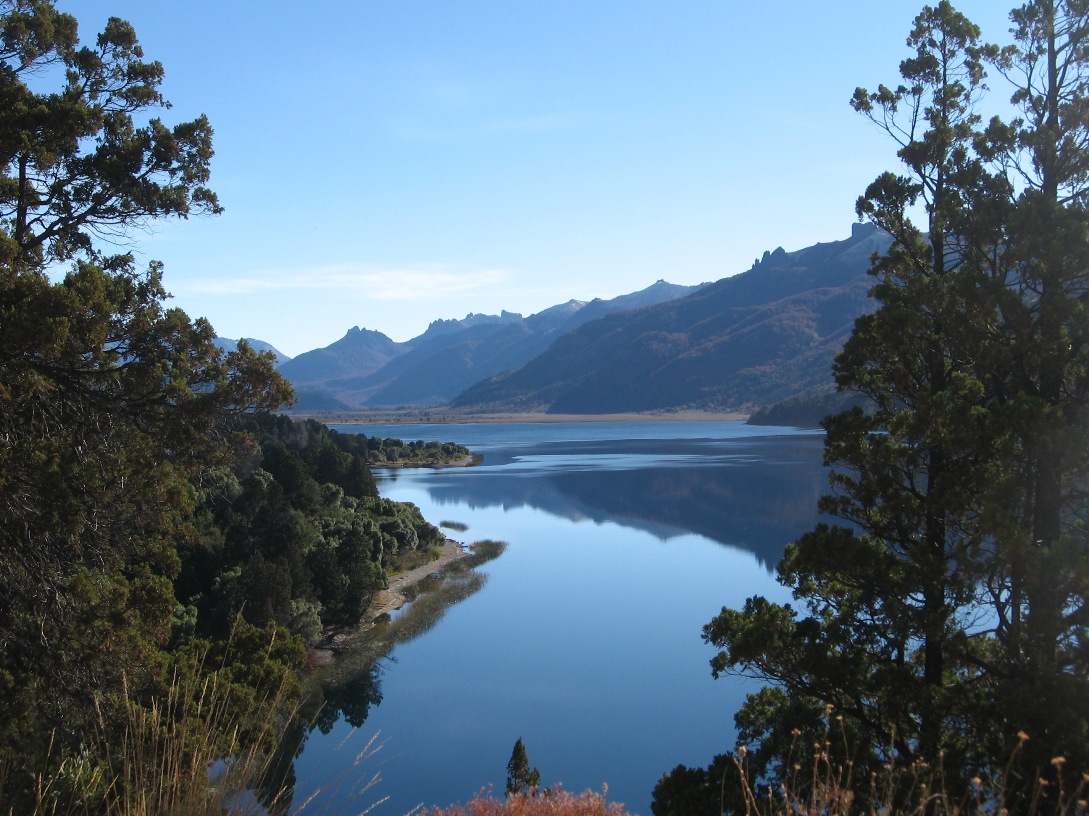
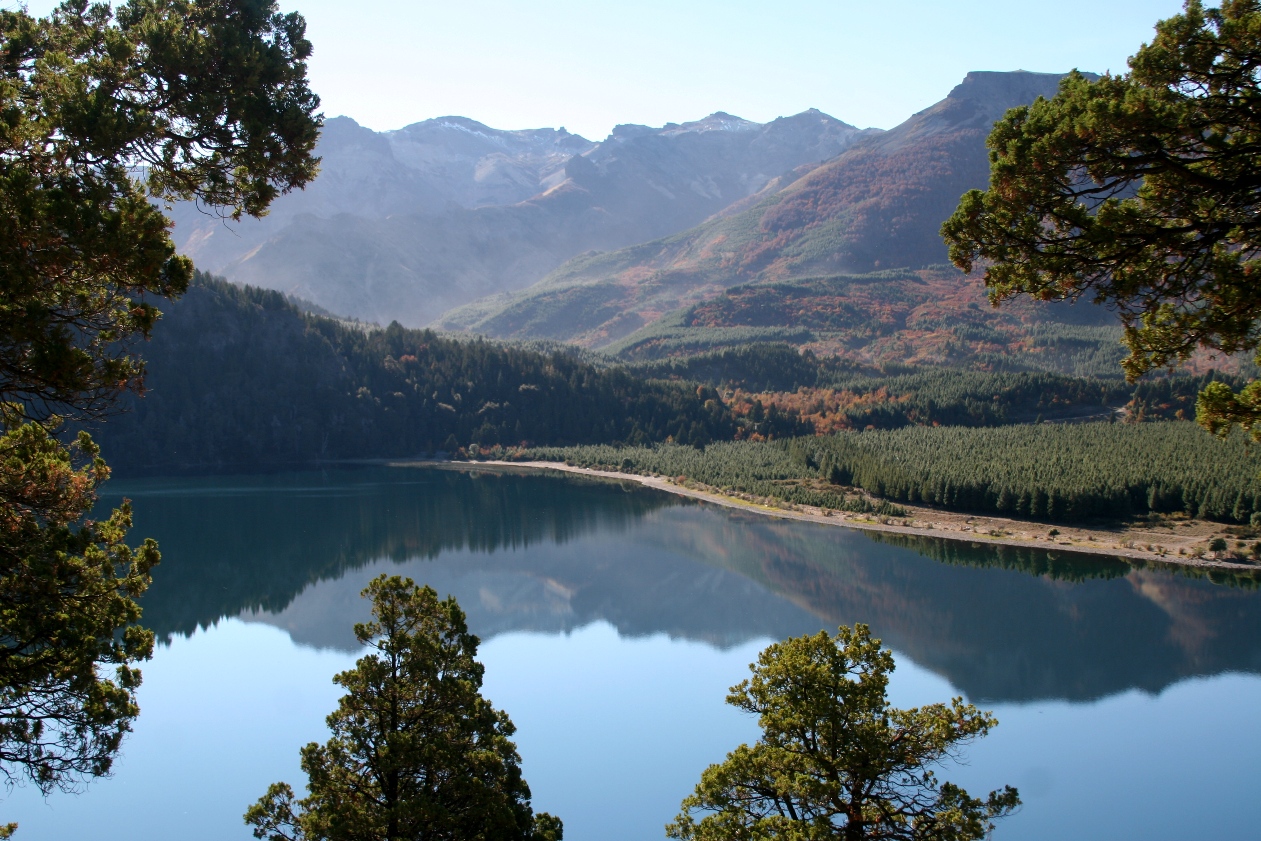
and then finally arriving at Lago Filo HauHum.
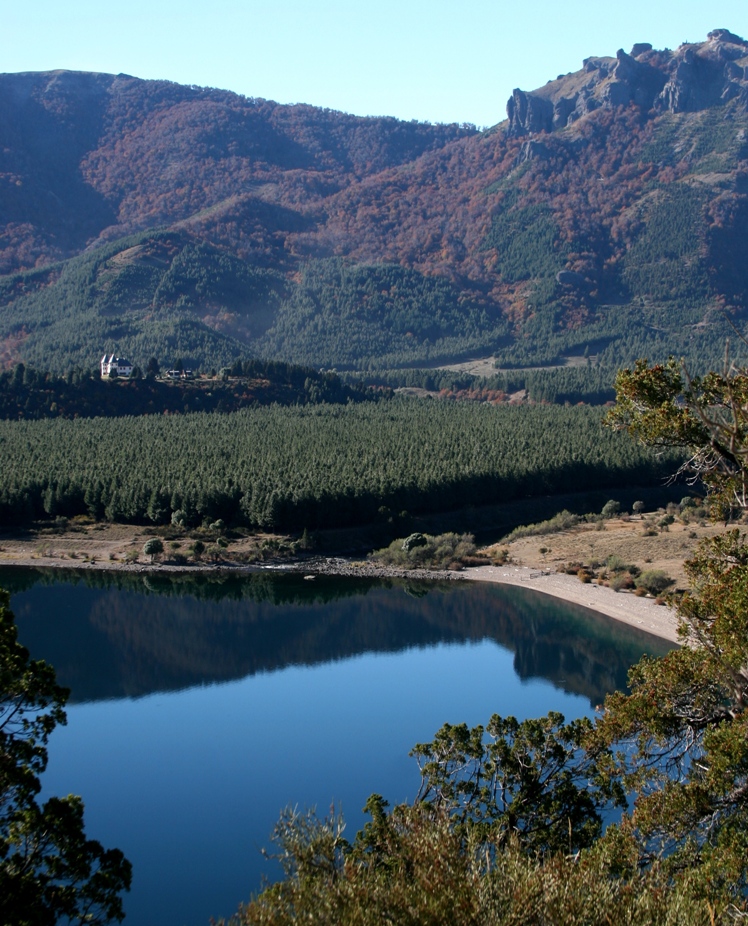
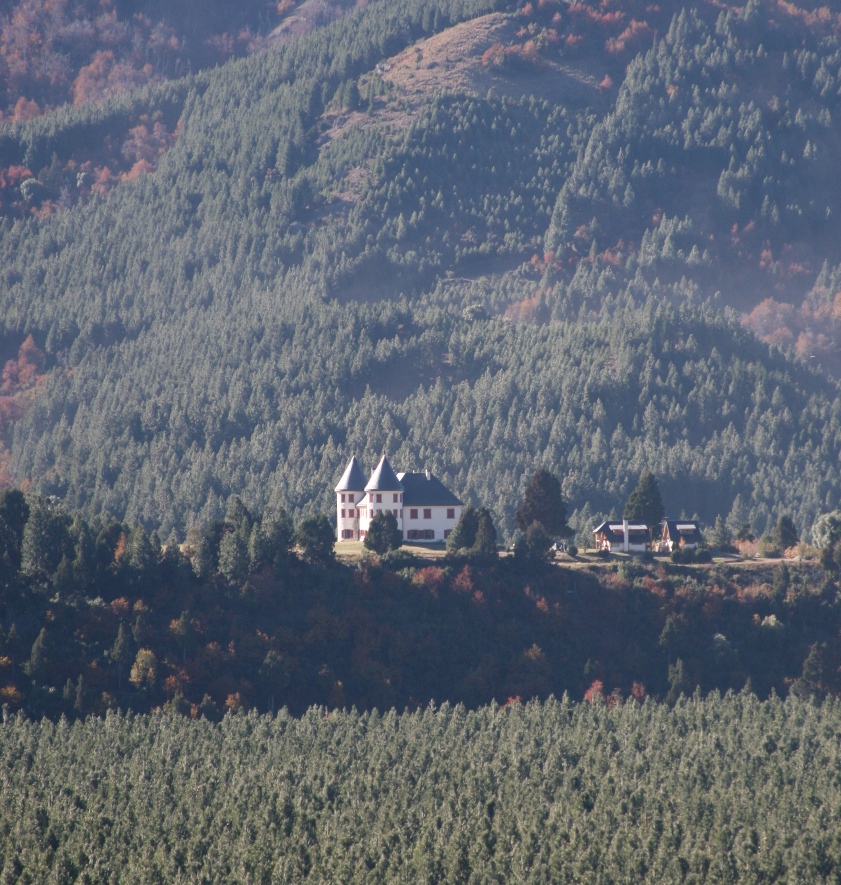
The estancia for a pine tree plantation across the lake.
I want to live there!
After backtracking to the road junction, we turned east again and continued along, climbing up through and towards the end of a narrowing valley, until we reached a crest in the road called "Paso Mendoza."
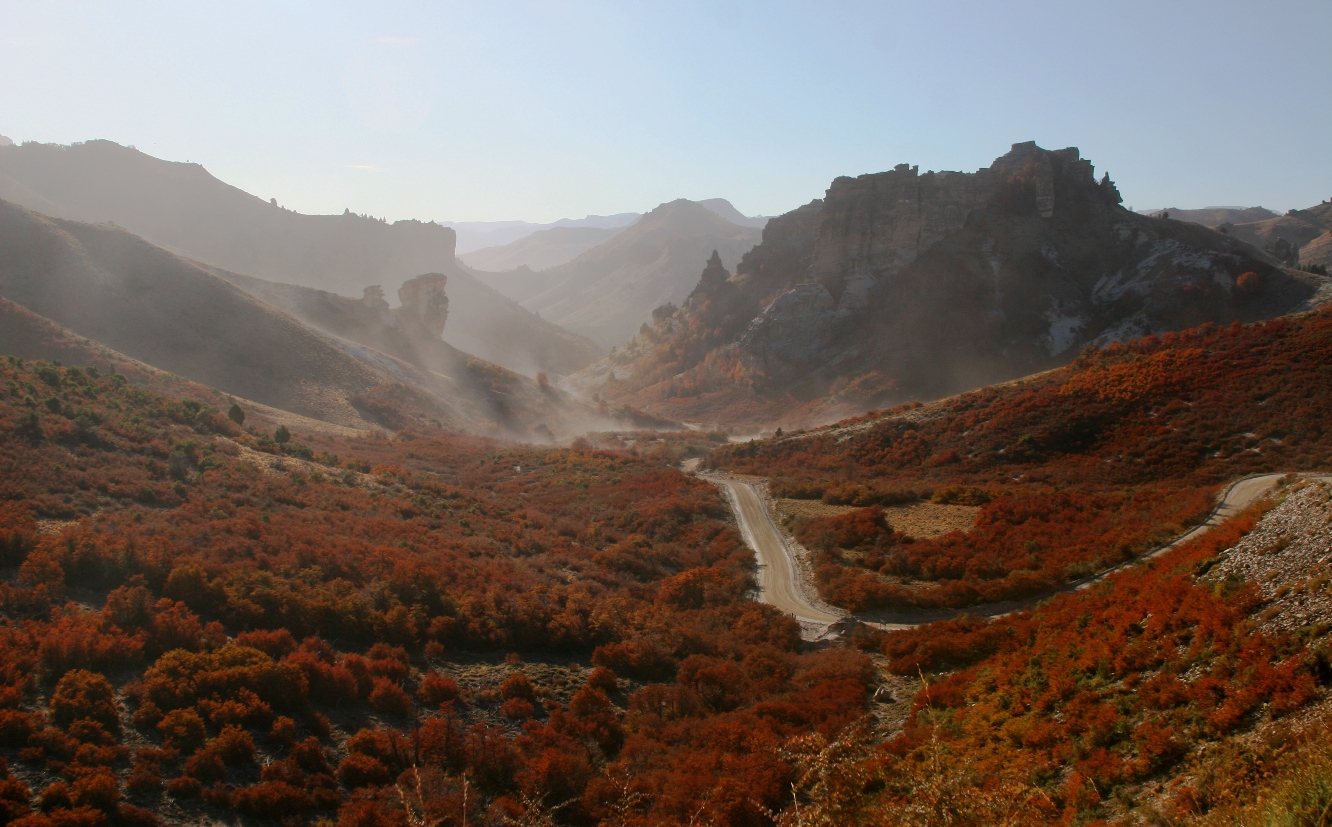
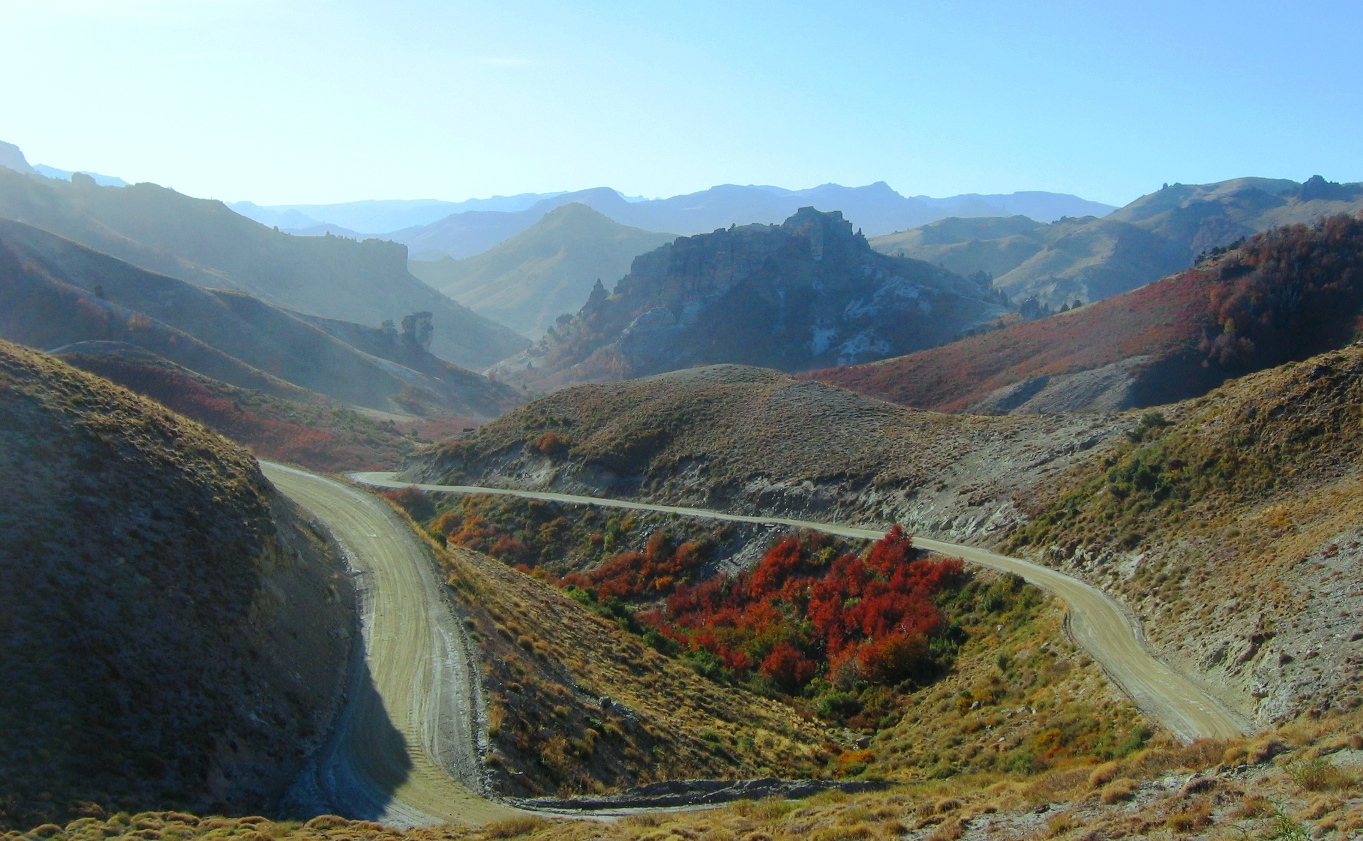
Looking back where we came from...
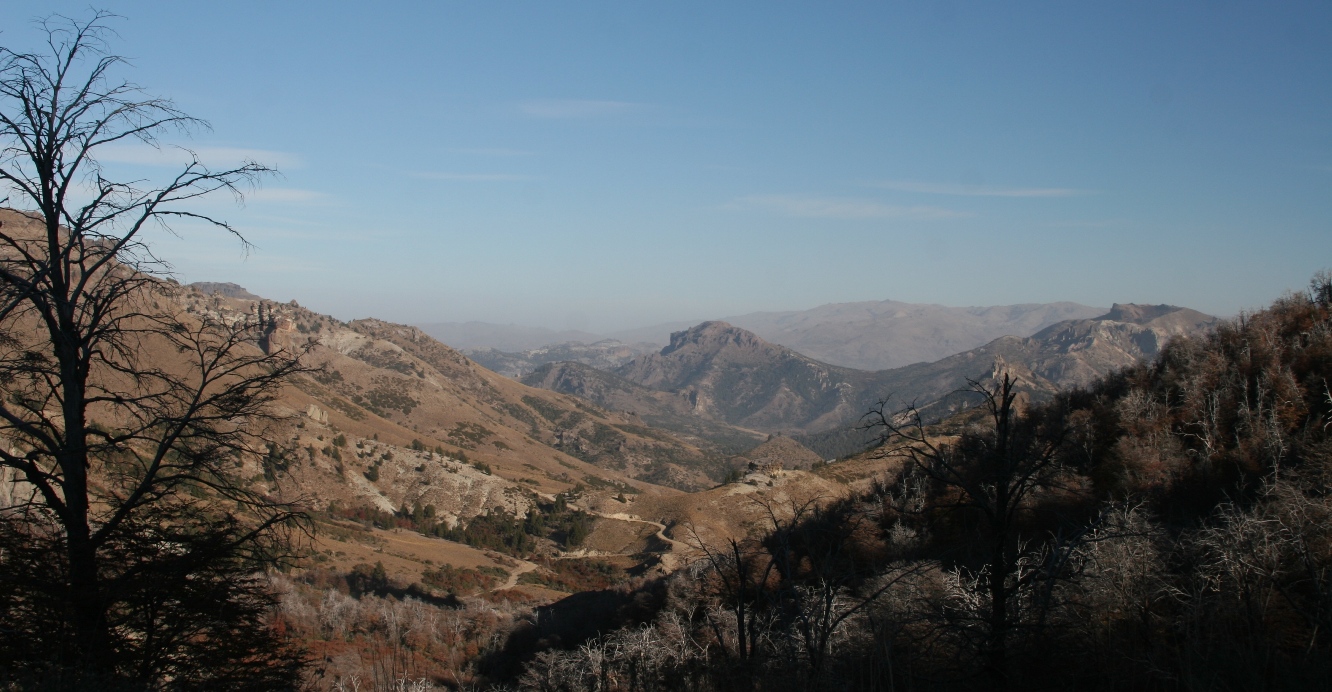
and forward down into the valley on the other side.
This was far enough for one day. It was time to head for home. We're loosing daylight pretty rapidly these days, and the afternoon daylight disappears all too soon.
But this was a good location to take some more "Fall Color" pictures...
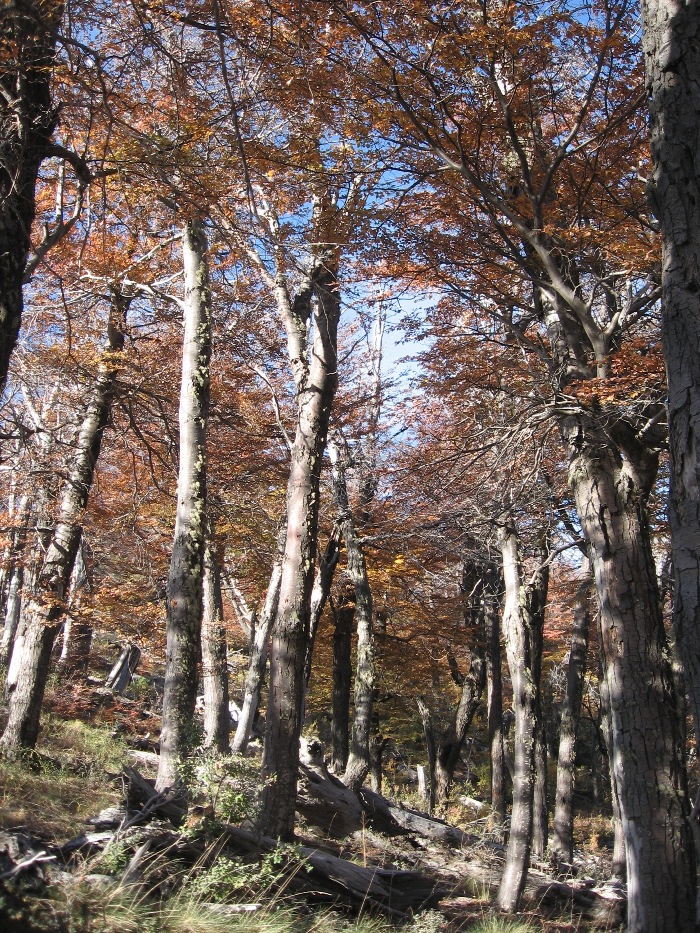
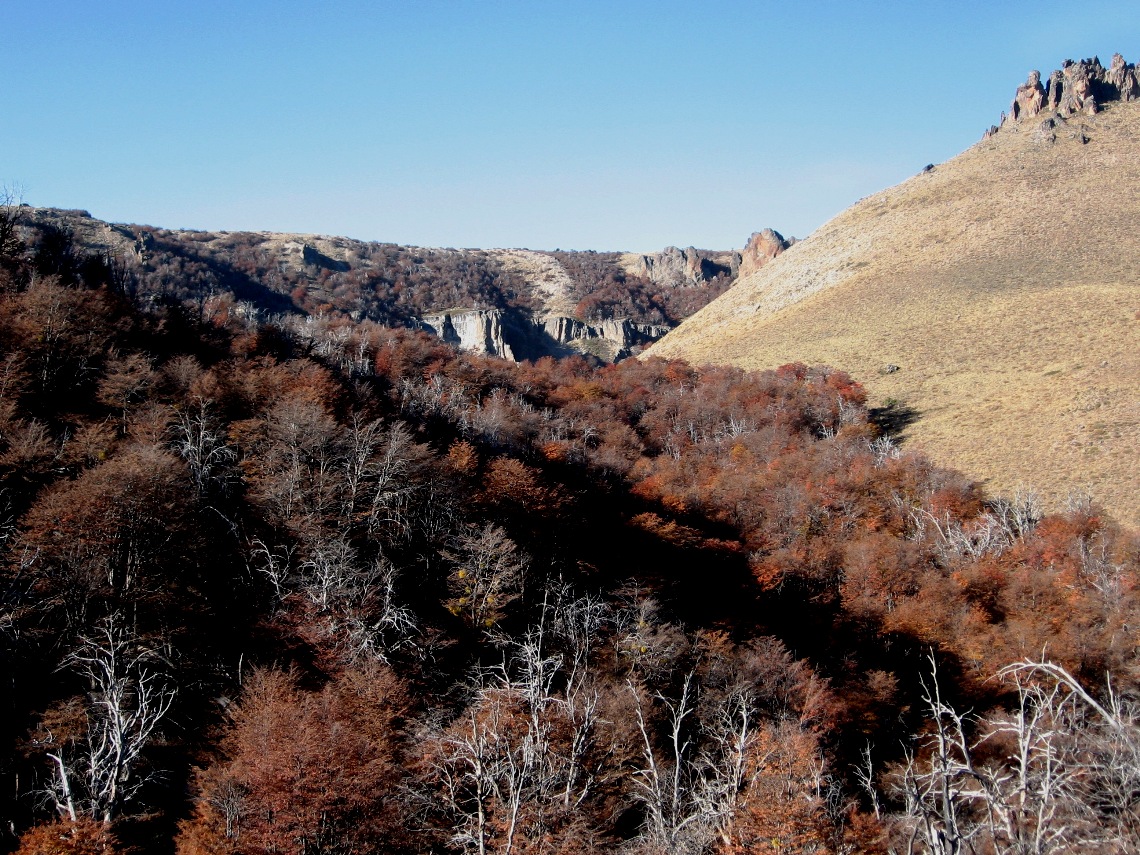
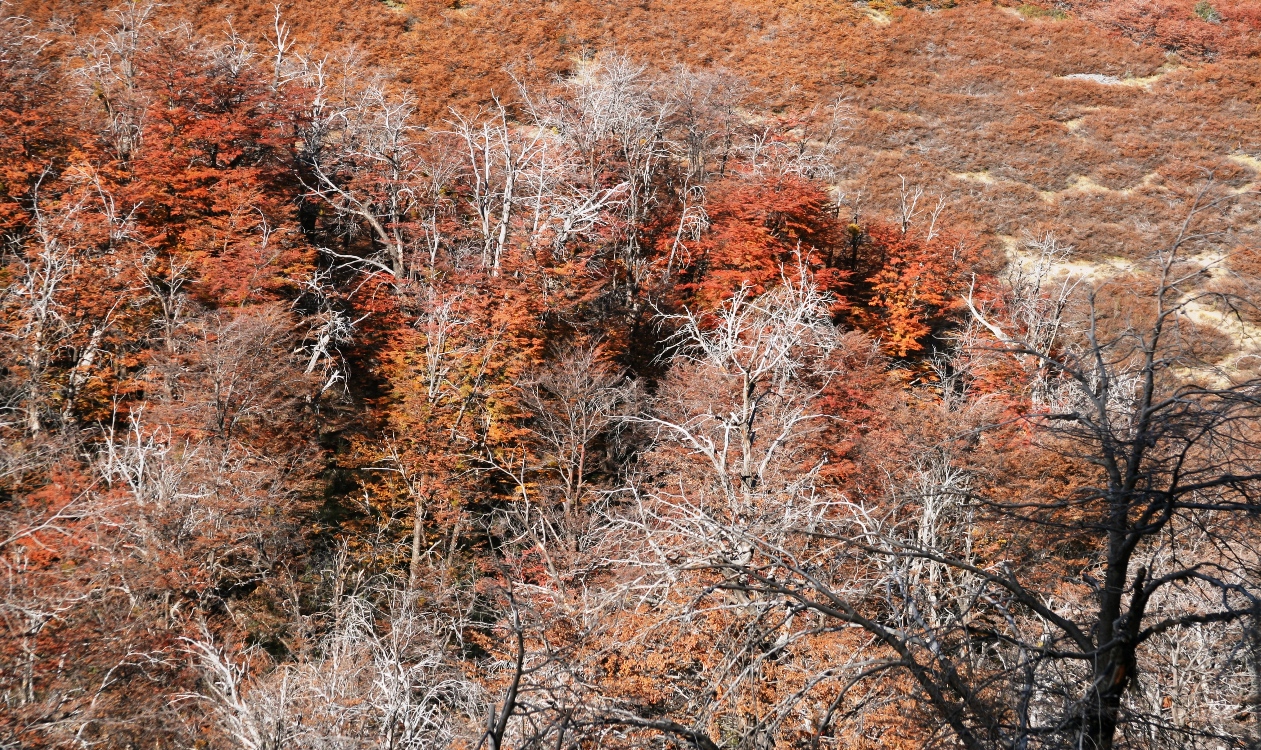
of trees,
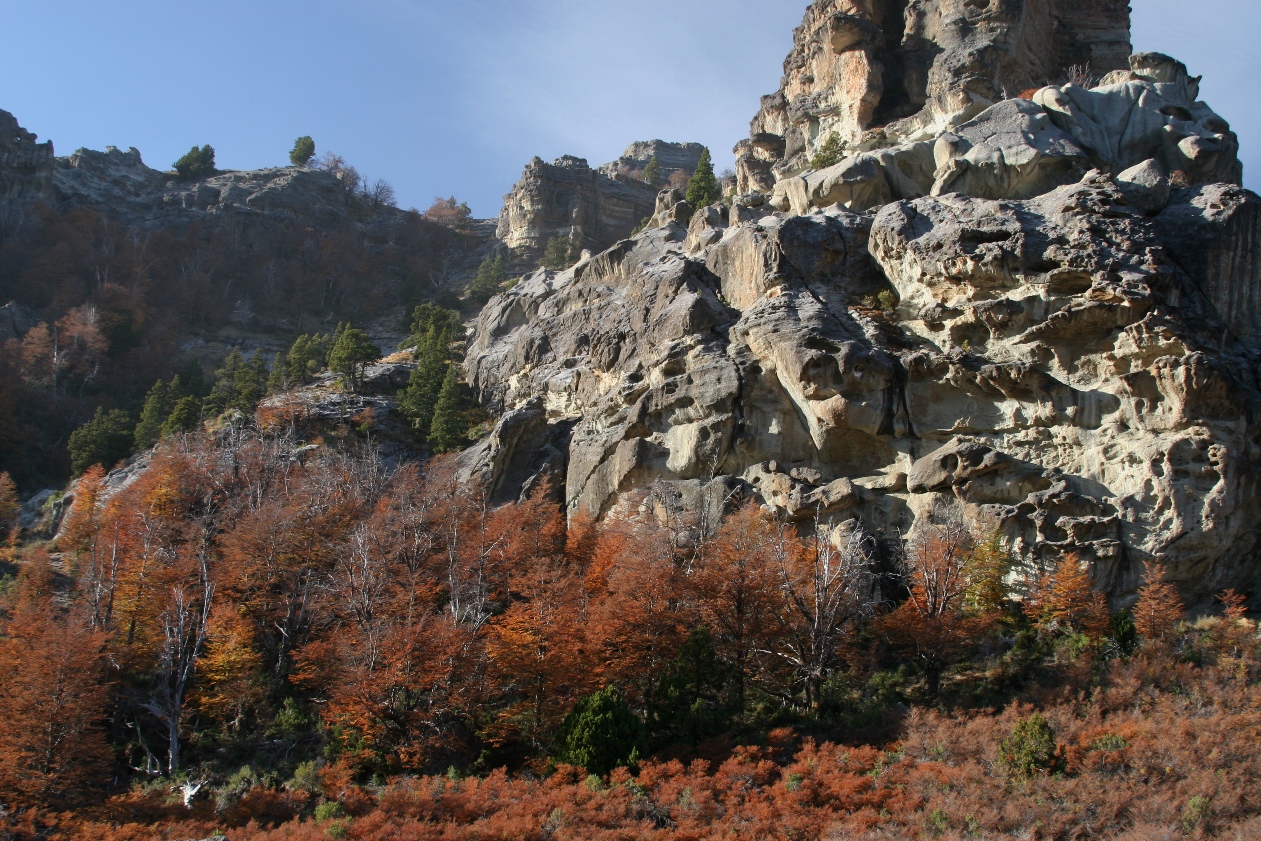
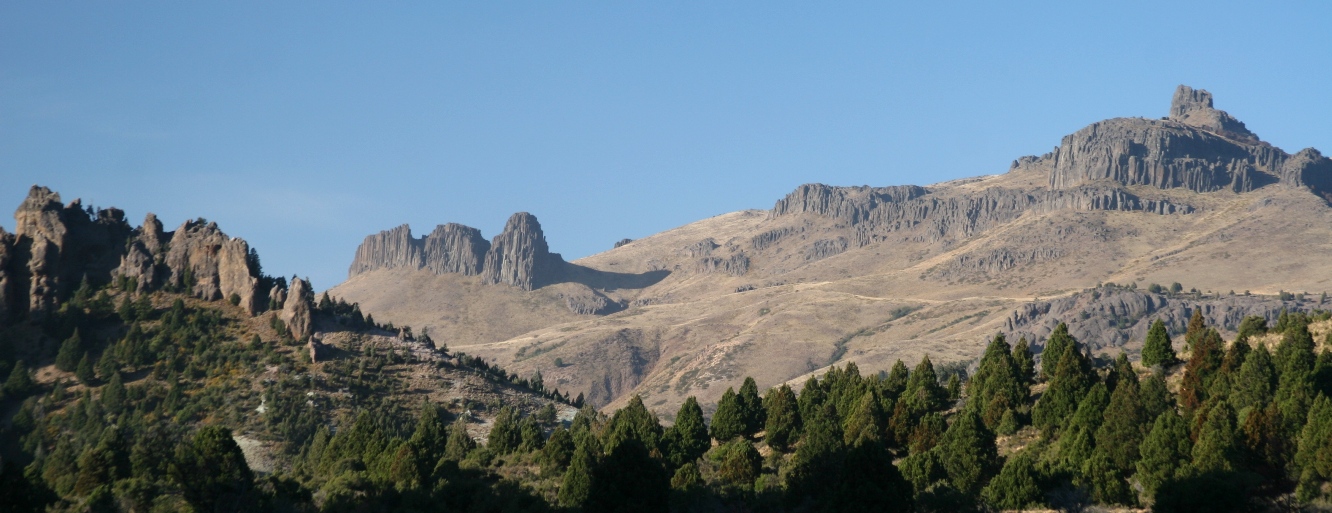
and rocks.
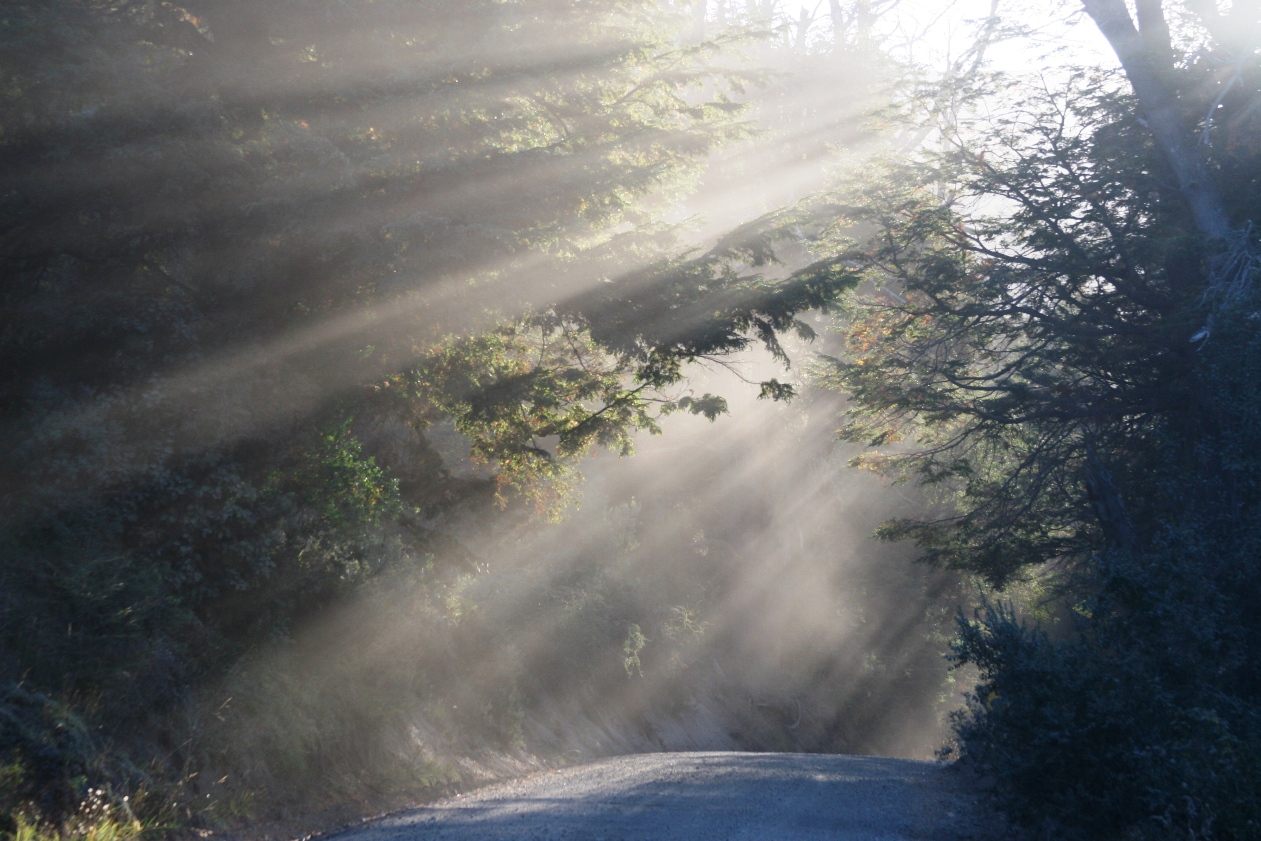
Driving back along through the forest on the south shore of Lago Meliquina, the haze gives the road an "enchanted forest" look. Is it magical fairy mist? No, just dust kicked up by another vehicle.
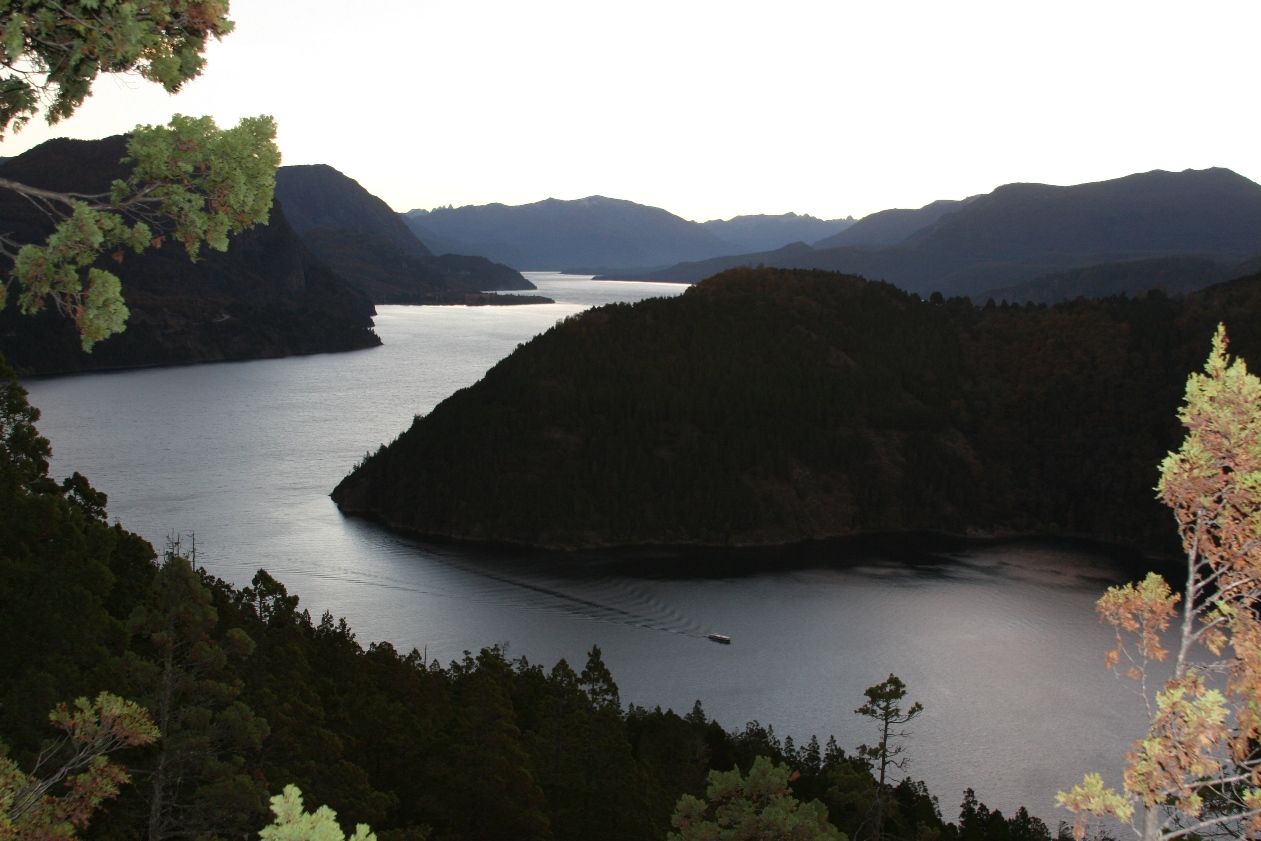
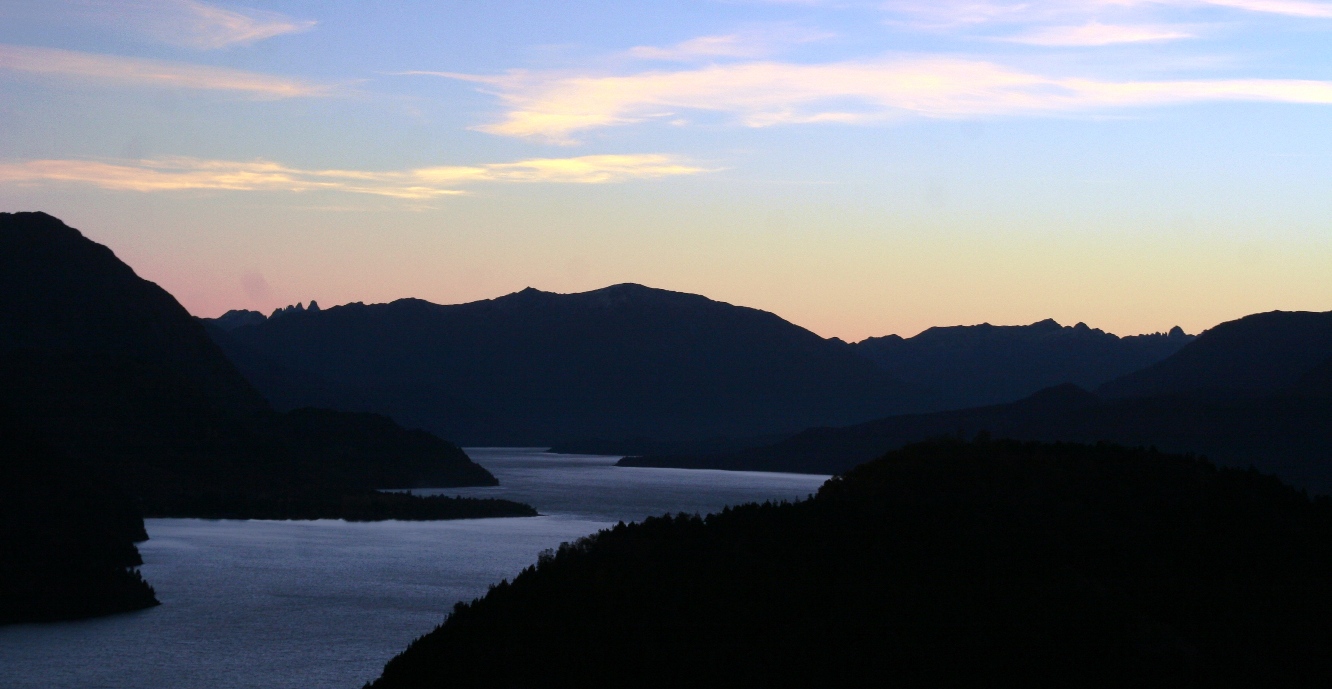
Back in San Martín de Los Andes - looking west out over Lago Lacár in the late afternoon.
*******************************************************
On the social, political scene here, the farmers are hinting that recent concessions by the government may be adequate reason for them to stop striking, discontinue their sporadic highway blockages (they like to drive a long line of tractors down the road in all lanes at about 5 miles an hour), and content themselves with private verbal negotiations with the government - at least for now. It augers well for the situation and is good news for Argentina, but I wonder what the local news will feature now? I'm assuming there will be a flood of new stories entering the spotlight when the pond of lesser controversies that was held back by that virtual pile-of-leaves agriculture strike is allowed to rush back into the media gutter.
... Like the doctors and nurses at a hospital in Buenos Aires who went on strike for 72 hours to demand an "emergency salary hike" (leaving patient care for all but the critically ill up to the security guards), or the pilots who went on strike for 24 hours and shut down all domestic flights in the entire country for a day - it seems to me that these are the more routine, day-in, day-out kind of labor issue for Argentina. It is comforting to think that for the next month we might be able to count on buying butter, or even driving to Buenos Aires when we want without disruption. That is, as long as we can buy the gas to do it. From what I've been told, domestic plane flights are always an iffy proposition in Argentina.
Actually, all of those other "minor" local and national stories have gotten continual coverage in the newspapers, along with international news like the Chinese earthquake, Chilean volcano eruption, and US presidential race. It's just the Argentine TV news cameras that seemed completely hypnotized by squadrons of farm tractors driving down the highway and dramatic speeches by agricultural union president Alfredo De Angeli or La Presidenta de Argentina Christina Fernández de Kirchner.
How can I know all this? I can figure out basic, earth-shattering news by reading the headlines on TV. Listening to the newscasters usually gives me a better but still vague idea about the details. Reading the newspapers is particularly challenging for me - the formal media vernacular sends me flipping through my Spanish-English dictionary about once or twice per sentence. But the search frequency is gradually tapering off, now that I've covered many of the basics. I may not be able to pull them out of my head at a moment's notice, but I do recognize Spanish words like "charged," "acquitted," "bribe," "shot," "shoot," "bullet," "wounded," "killed," "strike," "demand," "judge," "trial," "sentence," "controversial," "authority," "dignitary," "settlement," "Hillary," "Obama," and a handful more when I read them. And of course, when I'm totally confused, I just remember to ask my Spanish tutor Christina what the heck's going on.
That's enough for now. Given that the rains are here, Lynn and I are planning trips to see painting and photography exhibits, and perhaps we'll even give that public indoor pool a try. Lynn has a new loom, goes to weaving class, and is cranking out scarf and pot-holder sized "practice pieces" with surprising rapidity.
Tom and Anna are still chugging along with schoolwork, driven by the desire to finish the 8th-grade school year completely before we return home in early July.
The local cultural events flyer lists the formation of a new youth choir and instrumental group with the first practice commencing tomorrow evening. Lynn and I wonder if we can somehow convince (force?) Tom and Anna to go check it out.
This coming Sunday, May 25th, is the biggest national holiday of the year in Argentina, a "Day of the Revolution" similar to Cinco de Mayo in Mexico. There is a parade planned, but as I can foresee and Christina confirms, "Here in San Martín, the 25 de Mayo parade is rained-out more often than not." Lynn and I are going to look into the possibility of a visit to Buenos Aires just before we leave Argentina and head for home. But if the snow comes early enough, maybe we'll just stay here and ski.
In the mean time, Tom and Anna just reported that the rain Tom collected last night has a PH of 5.0 (less than the 5.4 boundary that technically defines acid rain). This is interesting. Is it acidic because of the recent nearby volcano eruption? Or perhaps it's partly because of all the wood fires in the neighborhood. Whatever the case, now it's time for a different type of chemistry studies.

Good thing we have clay and toothpicks.
-Rolf