El Calafate - Parque Los Glaciaras
May We Enter Your Country, Please?
Tuesday January 22, 2008
We've returned to Argentina since the last journal entry, although it wasn't the easiest border crossing we've experienced. After I'd concluded that just almost everything about Argentina is laid-back and relaxed, we encountered the Anti-Amigo in the form of an Argentine customs agent at a border crossing not far from Puerto Natales. This was the last place we expected to encounter a bureaucratic hassle - a sleepy little outpost along the Patagonian frontera, although it did seem to be a popular bus route between two major tourist destinations: Puerto Natales/Parque Torres del Paine in Chile, and El Calafate/Parque Los Glaciares in Argentina. And the most surprising thing of all was that it wasn't the Chilean immigration or customs that hung us up, it was the Argentineans!
The essential issue was that the Argentinean customs agent told us that it was illegal for someone who "isn't Chilean" or "who doesn't live in Chile" to bring a Chile-registered car into Argentina. Now the Chilean government thinks that since I have a tourist visa and since I registered myself with the Chilean tax board (got the equivalent of a SSN), I am Chilean enough to buy, own, insure, and drive a car in Chile using my US passport and driver's license as identification. The other four Argentine aduanas we'd dealt with had no problem with us bringing the car into Argentina.
This story wasn't good enough for the Argentinean customs guy ("aduana") at the Rio Turbio border crossing. He glowered angrily as he stabbed at our documents, and puffed aggressively on a perilously short cigarette dangling from the middle of his scruffy beard . The sign on the wall directly behind him proclaimed "NO FUMAR," with a red circle around and slash through the picture of a cigarette to help clarify the point for anyone who couldn't read (or thought it was important to uphold or obey the details of the law). Eventually he told me that he would do us "a big favor" by letting us return to Chile without impounding the vehicle. I figured that we would return the favor by not reporting him to his superiors and not making him swallow his lit cigarette.
The whole situation was extremely strange. The immigrations people looked a little nervous as soon as I walked up to the counter and plunked US passports down. There were back-room consultations with our documents and periods of time where we were left alone to haggle with the aduana. It's almost as if everyone (other than the aduana) cleared out because they couldn't stand to watch. A very likely scenario was that this was a set-up for the aduana (and possible cohorts?) to solicit a bribe, but after mulling it over for a minute or so, I decided just not to go there (How would I even go about it? How much would he want? What would I say? "Is there anything at all (wink) we can do?"). No, the possible consequences of a failed or inadequate bribe attempt seemed far too awful to even think about so I concluded that we really needed to just turn around and go. Admittedly, the other possibility is that this guy was right and almost every other aduana in Argentina is lax and doesn't want to deal with the hassle of hassling foreigners for committing a "who cares anyway?" sort of crime. I'd much rather believe he wanted a bribe.
Considering the fact that there were two other border crossings located within an hour's drive (and one of them only 15 minutes away), the best option seemed to turn tail and run. After retreating a couple of kilometers back to the Chilean border station we had a new but relatively minor problem. We were trying to enter Chile from nowhere, since we had technically left but then never entered any other country. The Chilean immigration and customs officials were totally confounded by the actions of the Argentinean guy, and their first recourse was to write a "special note" on our vehicle papers declaring that I, as far as they are concerned, do have the right to own, drive, and leave the country with the car.
I thanked them for their sincere offer to help, but told them that I thought it was probable that the Argentine aduana would get extremely angry at this gesture belittling his authority and judgment, and take our car away for sure! They eventually agreed to re-stamp everything and give us all the necessary re-entry documents. Then we drove 10 kilometers south, turned left at a cattle transport checkpoint and took a rough dirt road five kilometers east to a tiny little office at a very seldom-used border crossing. The Argentinean agents here looked just as stern as the guys at the other place, and the immigration agent was in the process of asking a carload of three Chilean women a ton of questions.
I tried to look confident and carefree, but I was getting a little nervous. Lynn had warned the kids vehemently - "Don't say anything!" (you never know who might understand a little English!). After I managed to answer a couple of sternly posed questions about where we were coming from and where we were going with plausible answers delivered in acceptable Spanish, the uniformed customs guy dropped the formalities, became real chatty, and asked us a few personal questions about our "vacaciones." Now it was time to visit the aduana guy - the moment of truth. I laid all the documents that I'd been required to show in the past down on the counter, along with a few more that I'd never been asked to show. He picked up the first one, a form I had filled out describing our vehicle, and commenced poking at a computer. Then he picked up the R.U.T. card (my Chilean Social Security card), stared a long moment, and got a confused look on his face. My heart sunk. Then after an unbearable 10 seconds he passed it over to me and said something like "I don't need it," and started pounding papers with his rubber stamp. Then we sighed a giant, collective (albeit secretive), sigh of relief!
We had planned to eat lunch in Rio Turbio, a small city on the Argentina side of the border with "very nice and very inexpensive restaurants," according to the hotel staff in Puerto Natales. But since Rio Turbio was located dangerously near the border crossing station with the "bad guy" in it, we decided to take our lunch at the "conferteria" counter in the gas station of a dumpy little town a few miles to the south of Rio Turbio. Then we drove by the intersection leading back towards Chile and the site of our failed crossing attempt with not so much as a sideways glance. The whole escapade added 2-3 hours to our drive to El Calafate, but as Geoff pointed out as we were eating our pre-packaged meatloaf sandwich (the only one left so we all had to share) and ice cream bars, "At least you'll have something to write about now." And so I did, and now I did it.
*****************************************************************
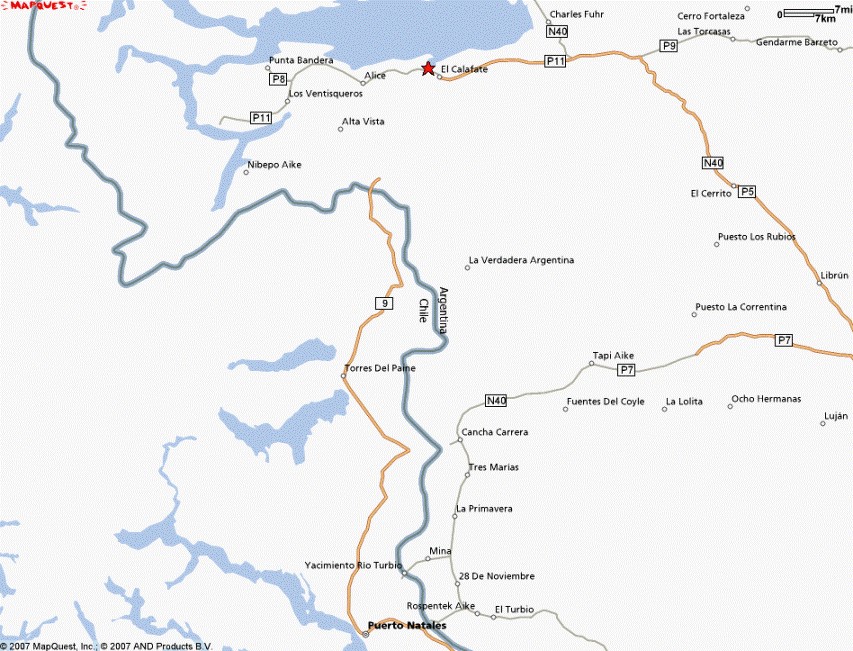
Here's the mapquest map of El Calafate (showing our approximate route from Puerto Natales).
You can click the map if you want to use mapquest to zoom in or out.
And you can also click here to download a map of Santa Cruz province, Argentina.
Every so often, we need to spend a few days doing next to nothing - or not doing the usual "tourist on vacation" kind of things. We might call these "work days" or we might call them "days off," but they are occupied with the more mundane aspects of a mobile household - laundry, schoolwork, repacking/reorganizing, and shipping whatever we want to save but don't want to travel with back home. That's how we spent a lot of our time in El Calafate, although we did spend one afternoon visiting the nearby nature preserve (a former water treatment site). El Calafate is not known to be a major schoolwork and laundry-doing destination, but it is popular with tourists who want to visit the nearby Parque Nacional Los Glaciares. This park is one of several Argentinean Patagonia counterparts to Torres del Paine and many other tourist destinations over on the Chilean side of southern South America.
Being a tourist town, El Calafate as plenty of souvenir shops, good restaurants, and places to lodge. We stayed in comfortable cabañas located very near the main avenue, so whenever we needed a break to eat or shop or just walk around, all we had to do was walk out the door - very convenient. Eventually, we'd have our chance to visit the national park and see more fantastic scenery, but for now...
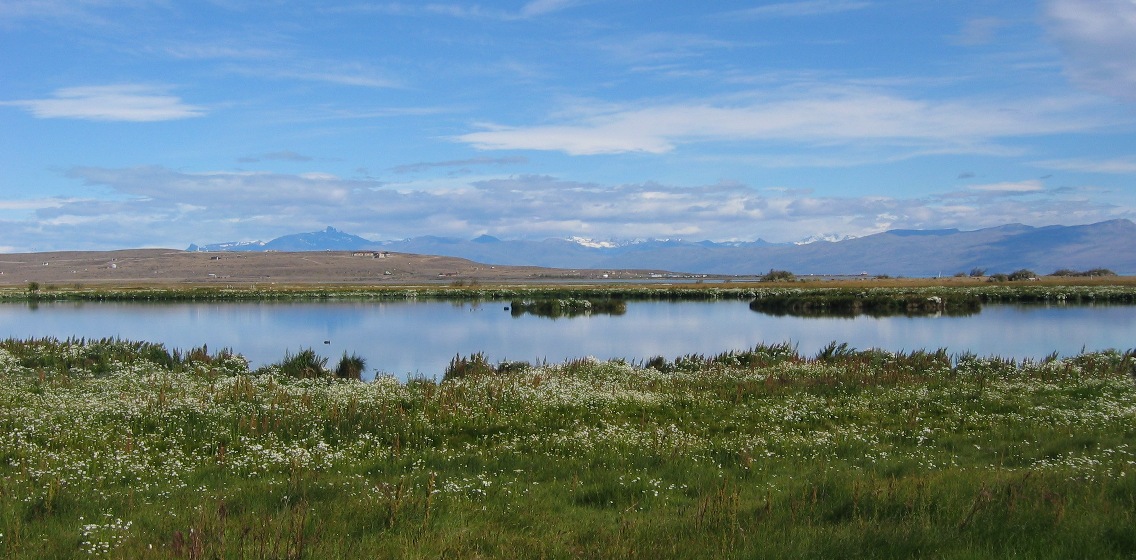
The laguna north of town where the water treatment facility was returned to nature (but still has a faint odor).
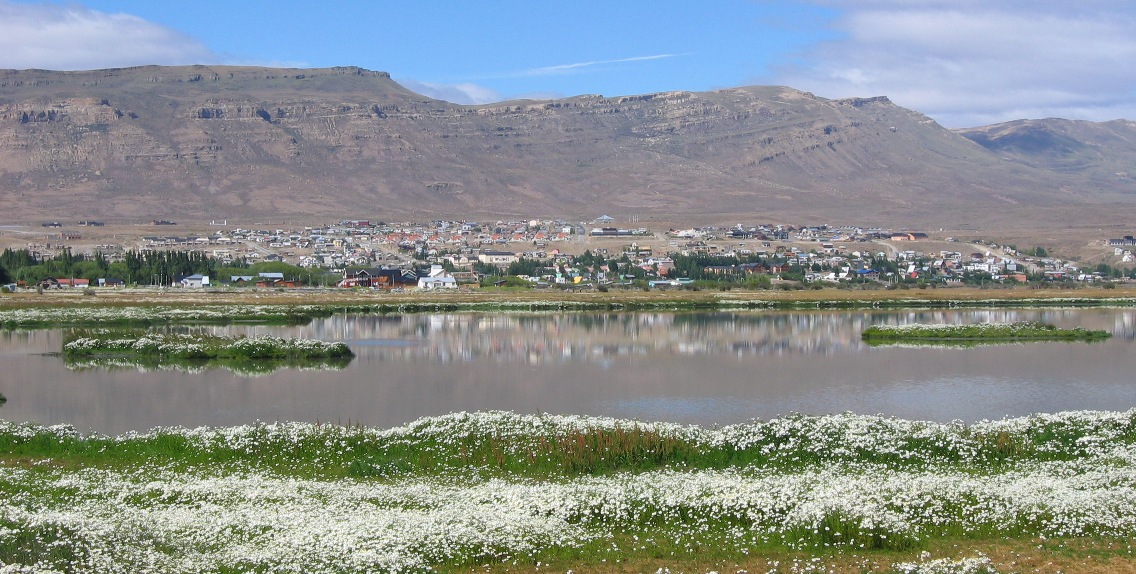
Looking back at El Calafate (it really isn't very big).
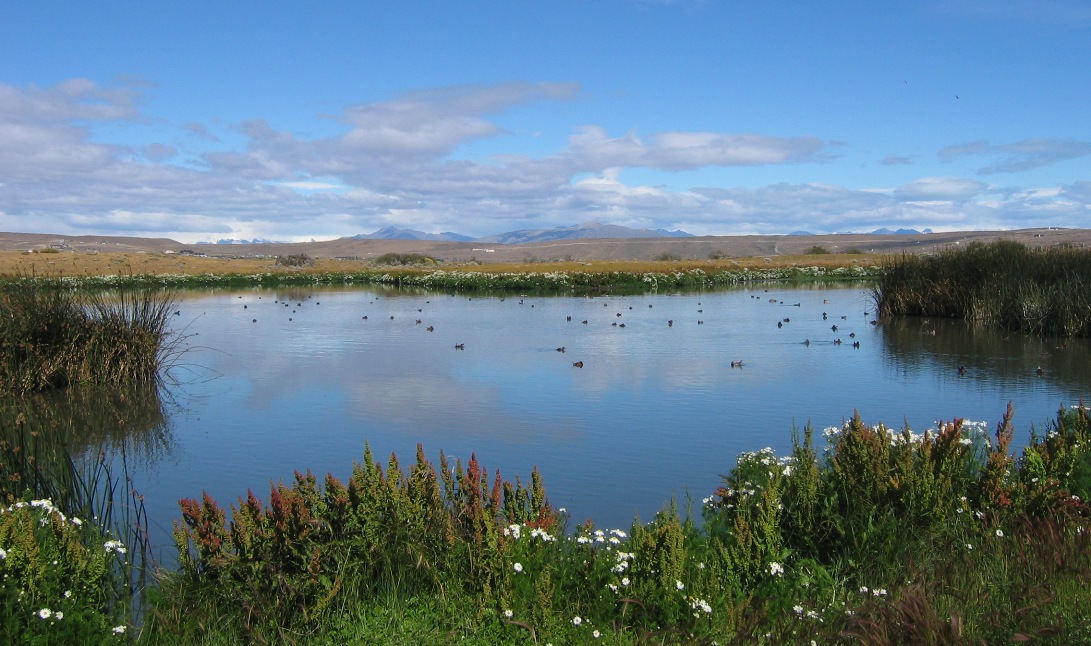
A herd of ducks in the pond.
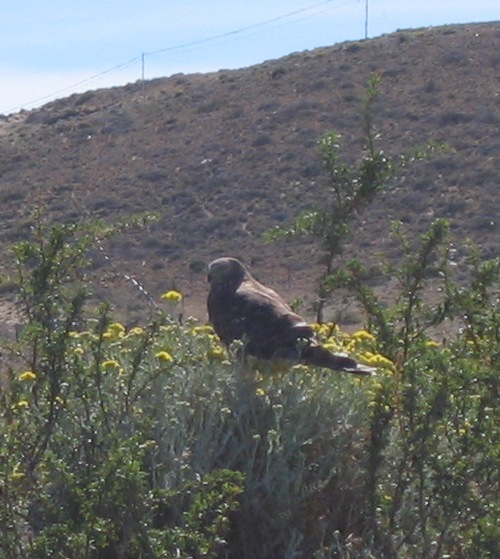
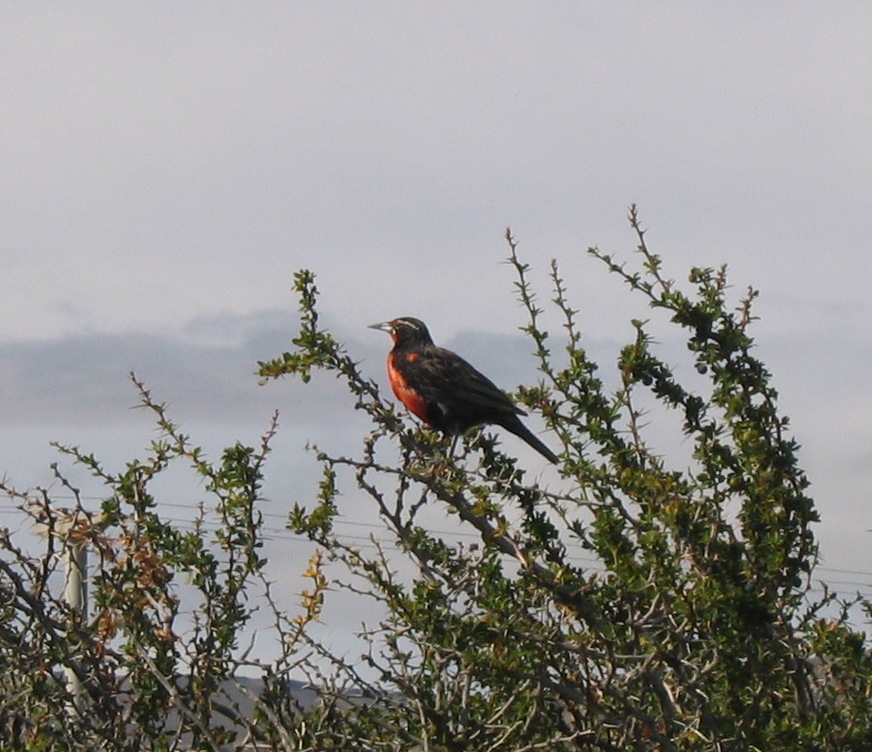
A hawk and a "South American" (not sure what the actual real name is...) meadowlark.
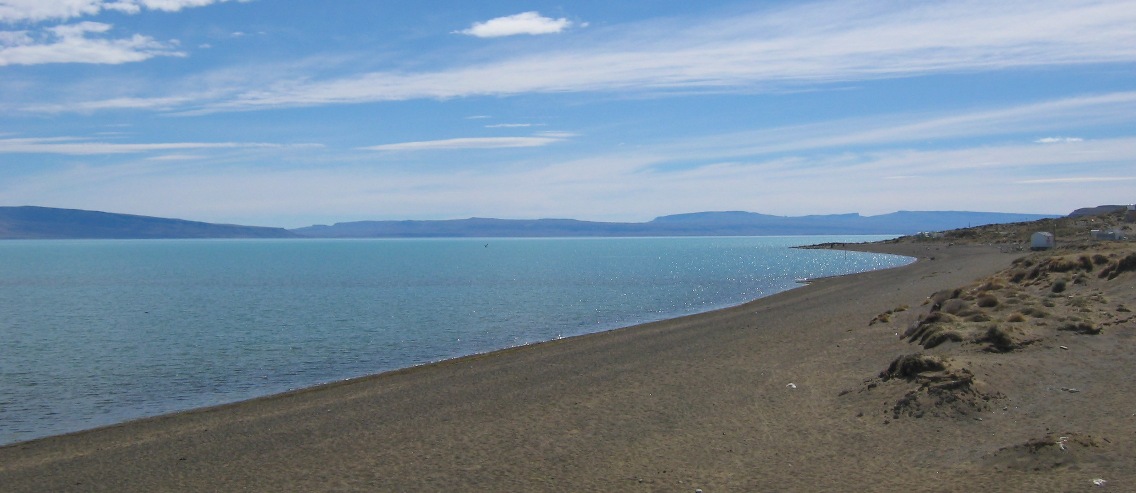
Just north of the lagoon, the turquoise waters of Lago Argentina shimmer in the afternoon sun.
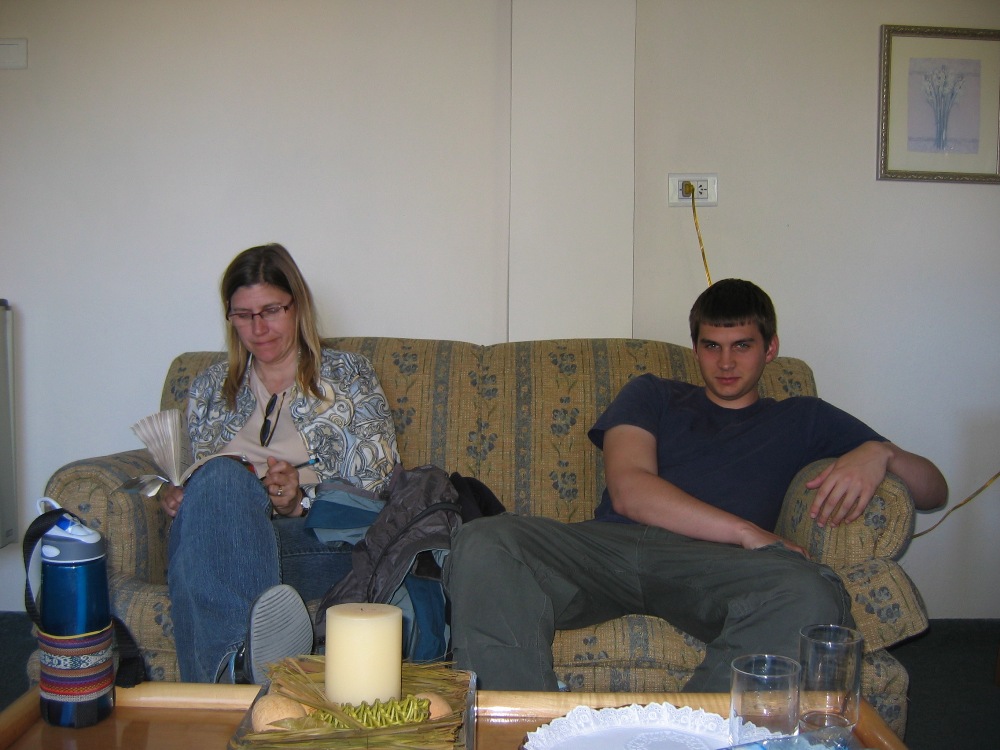
And after walking around the lagoon in the afternoon, we hung out in the public salon of our cabañas complex waiting for a couple of taxis to take us to a tiny harbor on Lago Argentina about 50 kilometers west of El Calafate. At the harbor we boarded a small boat. The "Leal" took us and 7 other tourists on a two-night, two-day tour of the eastern arms of the lake, which are fed by several massive glaciers extending down from the Southern Patagonia Ice-field.
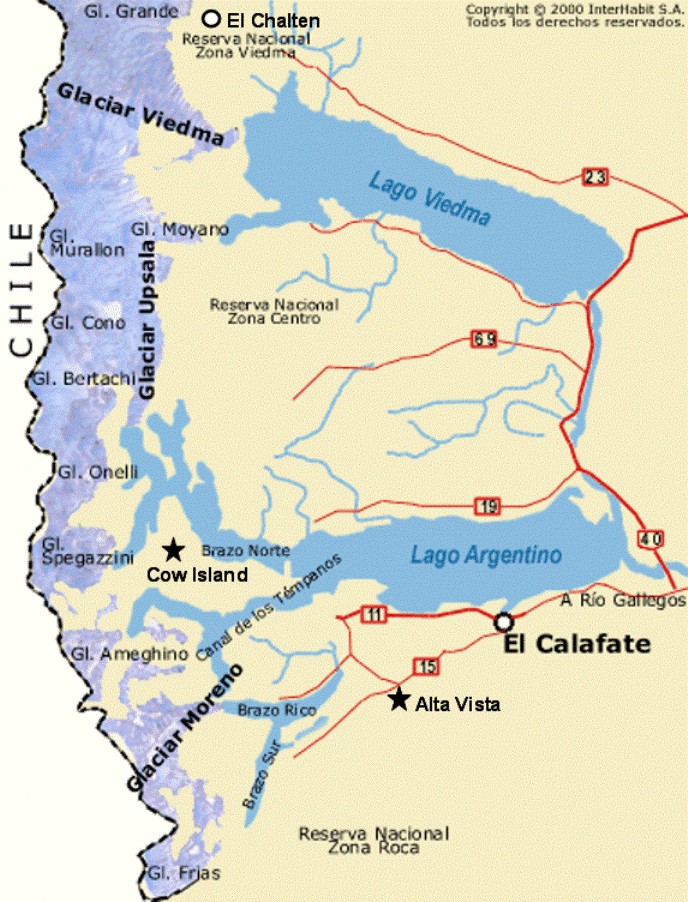
Map of Parque Los Glaciares.
Perhaps the most well-known glacier in Parque Los Glaciares is Perito Moreno. It definitely has the longest wikipedia entry...
http://en.wikipedia.org/wiki/Perito_Moreno_Glacier
But we didn't visit that one first. After eating dinner and sleeping overnight on the boat, we spent the first day cruising up the north arm (Brazo Norte) of Lago Argentina, which then further split into the Upsala and Spegazzini arms. At the end of each of these narrow branches of the lake, the boat took us near a massive glacier.
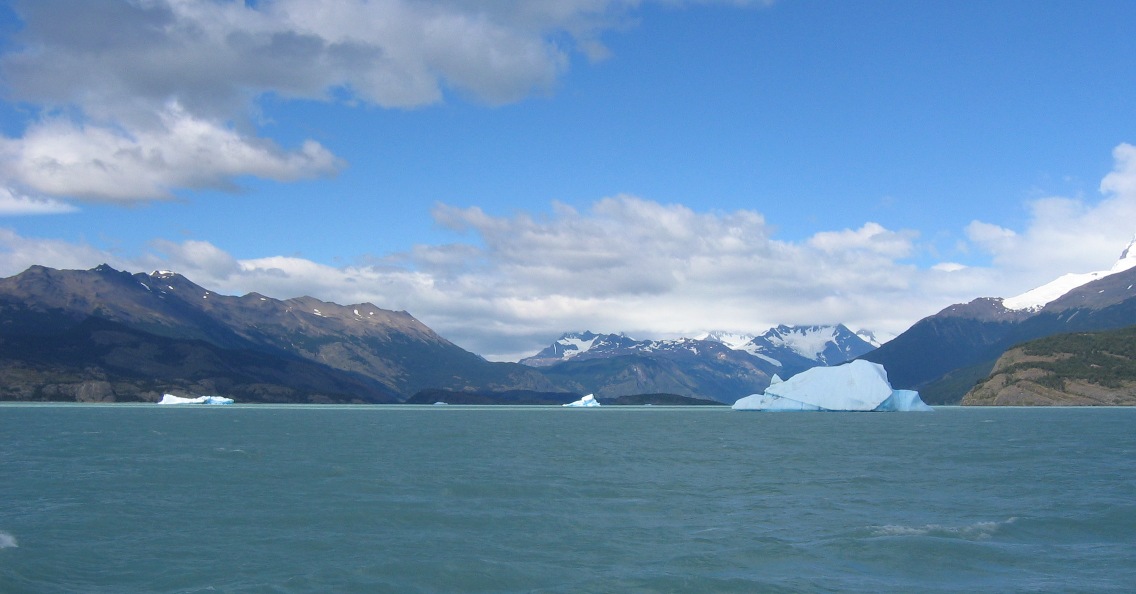
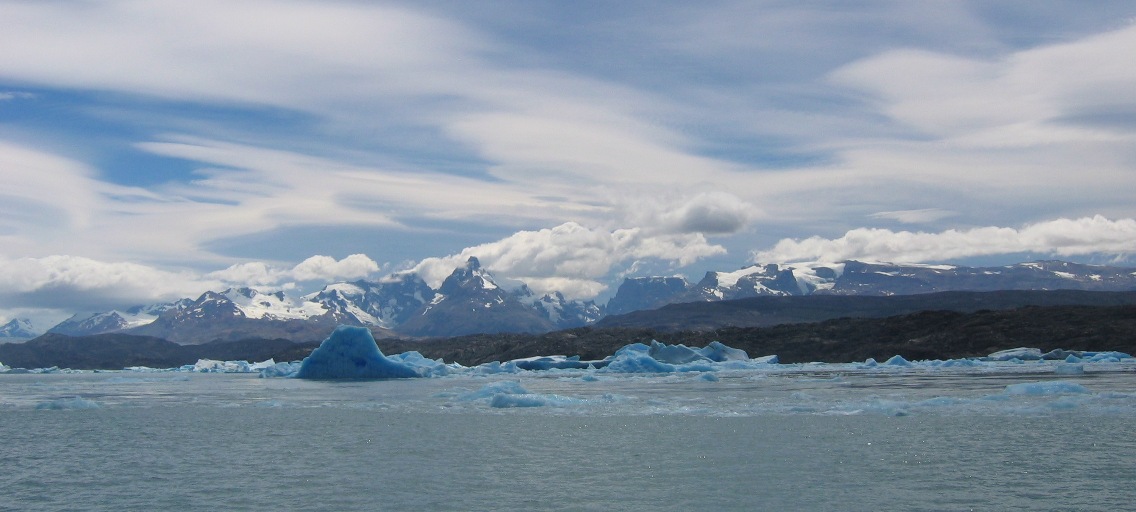
Cruising up the Brazo Norte of Lago Argentina.
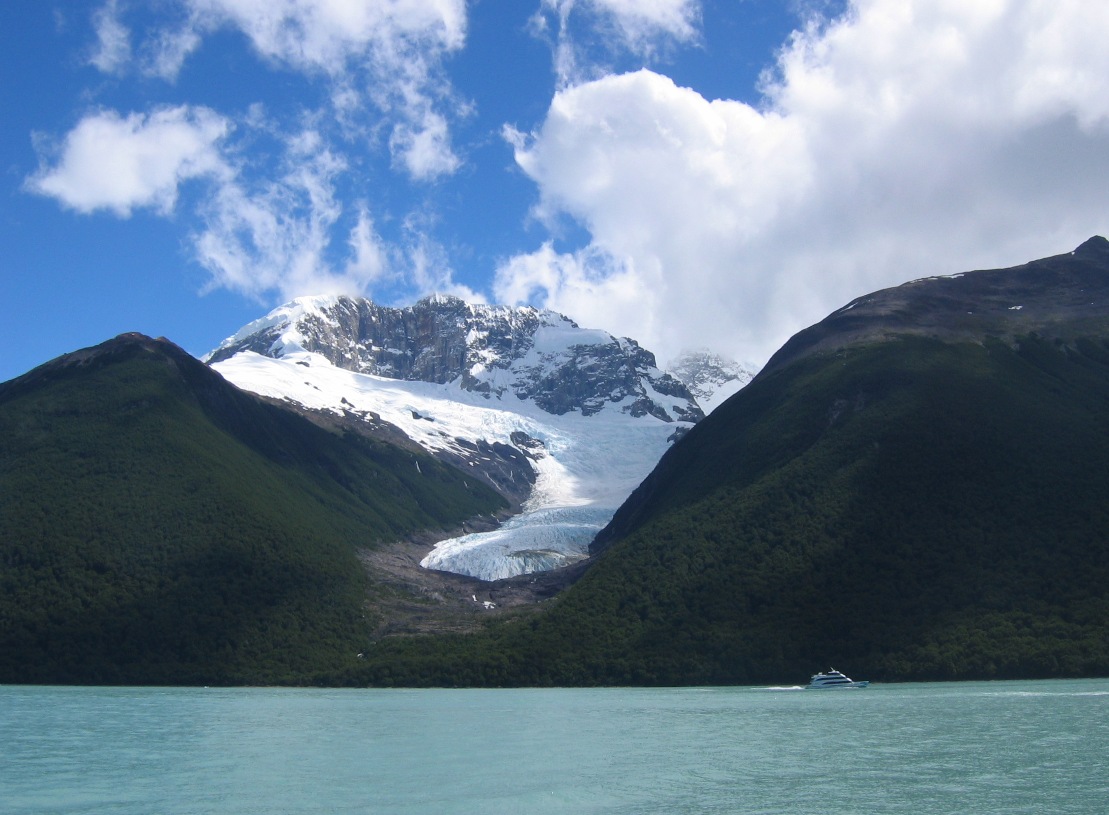
Glacier Onelli used to reach the water, but now it has retreated pretty far up the hillside.
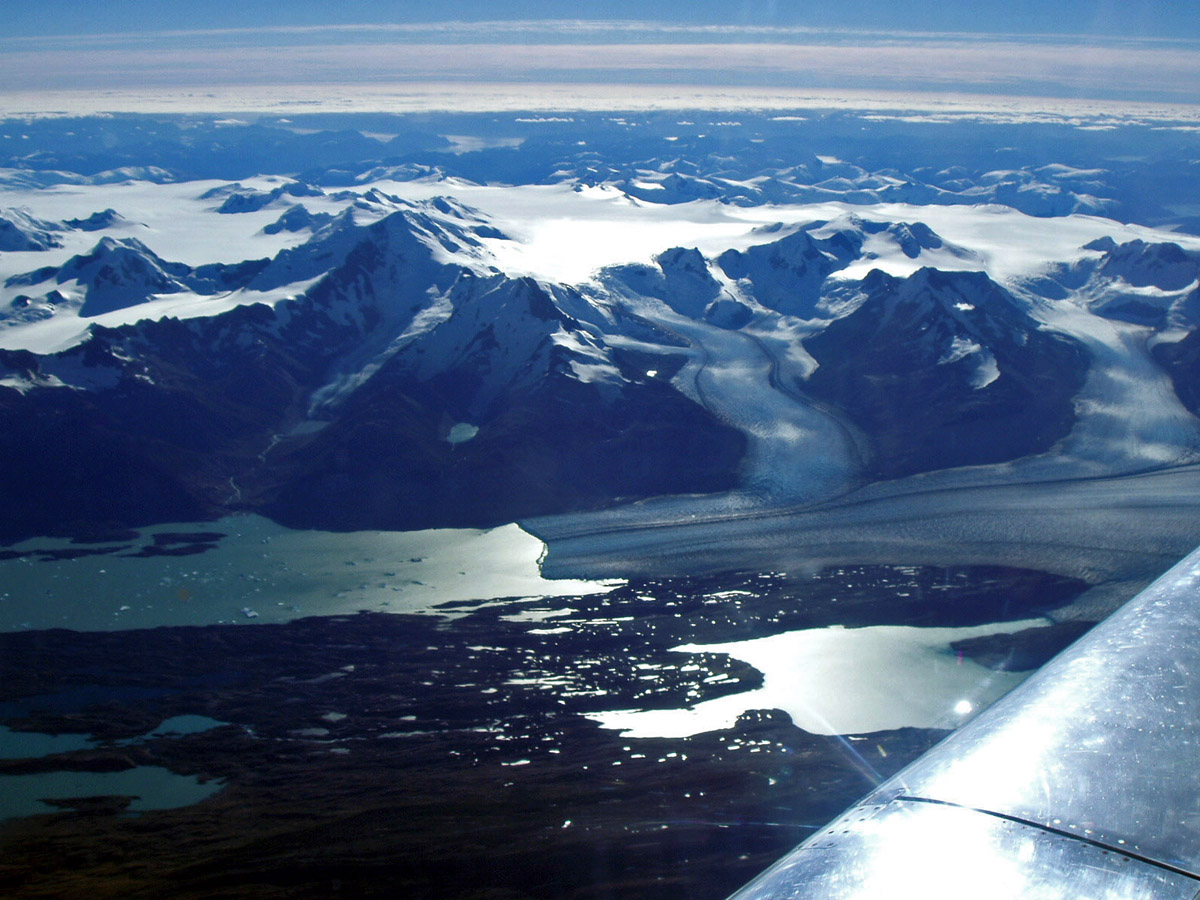
This picture of Upsala Glacier I took from wikipedia. This glacier has retreated 5 kilometers in less than 30 years, and is often cited as an example of global warming.
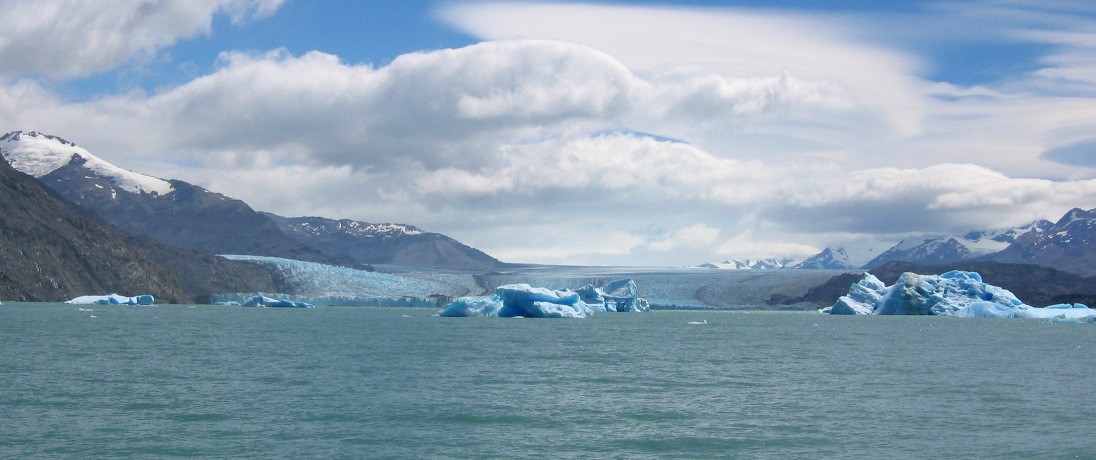
Here's our own picture. As the boat approached the glacier, with the captain steering carefully around lots of ice, we observed a huge iceberg first roll over, then crumble into thousands of small pieces. Global warming may be a serious problem, but it makes for a great show. As Upsala melts, it calves huge chunks of ice that in turn become huge icebergs - the biggest float lazily past El Calafate a few days or weeks later.
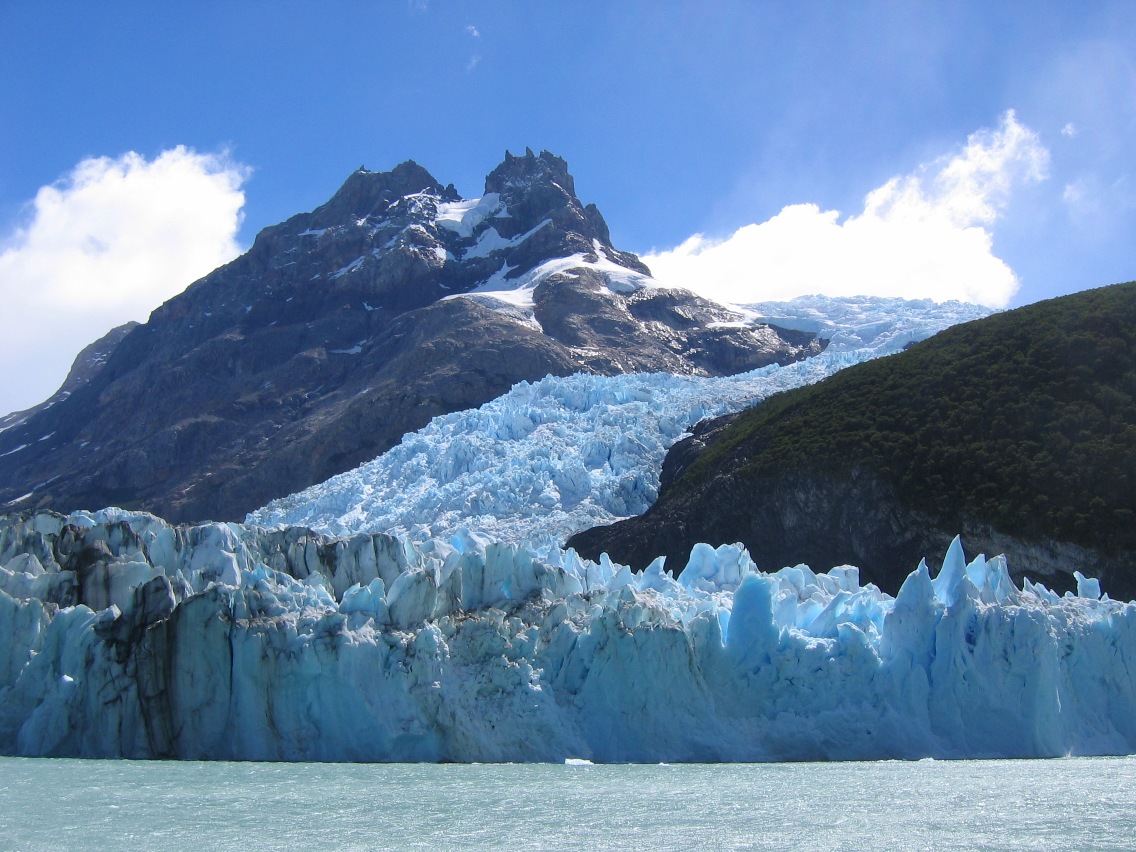
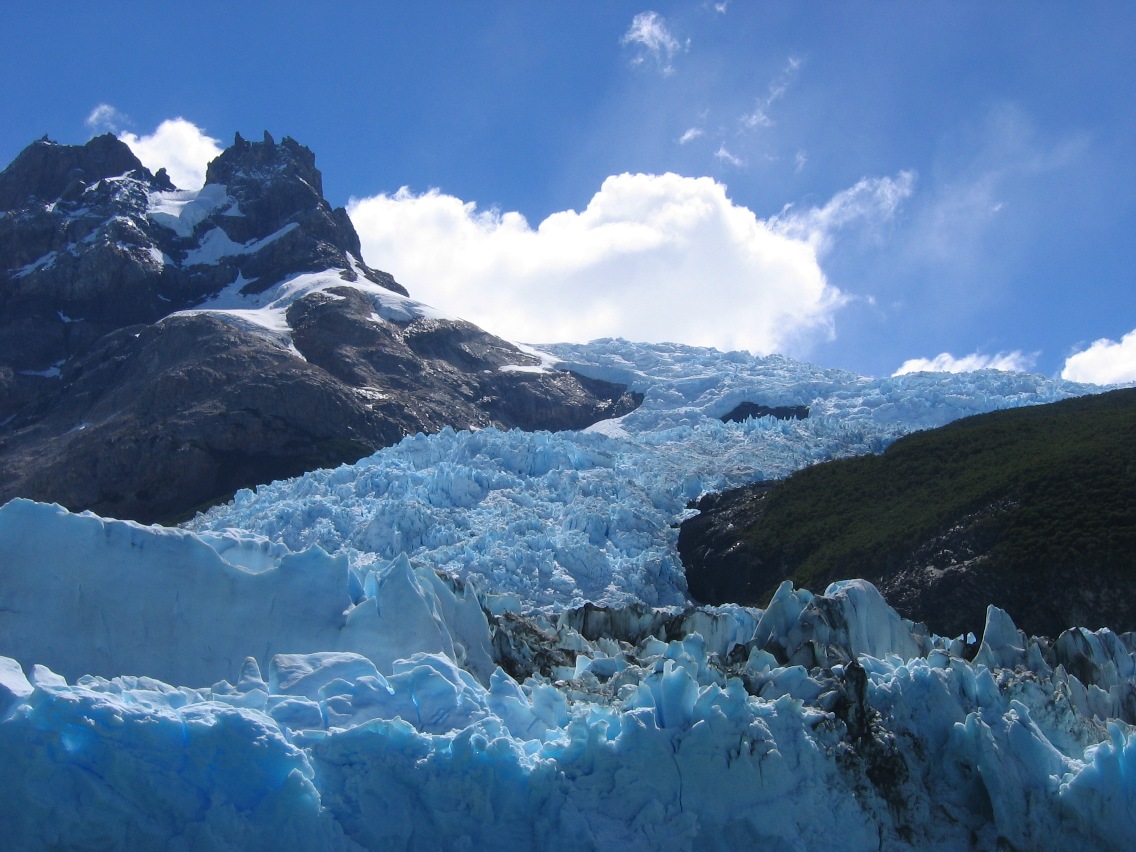
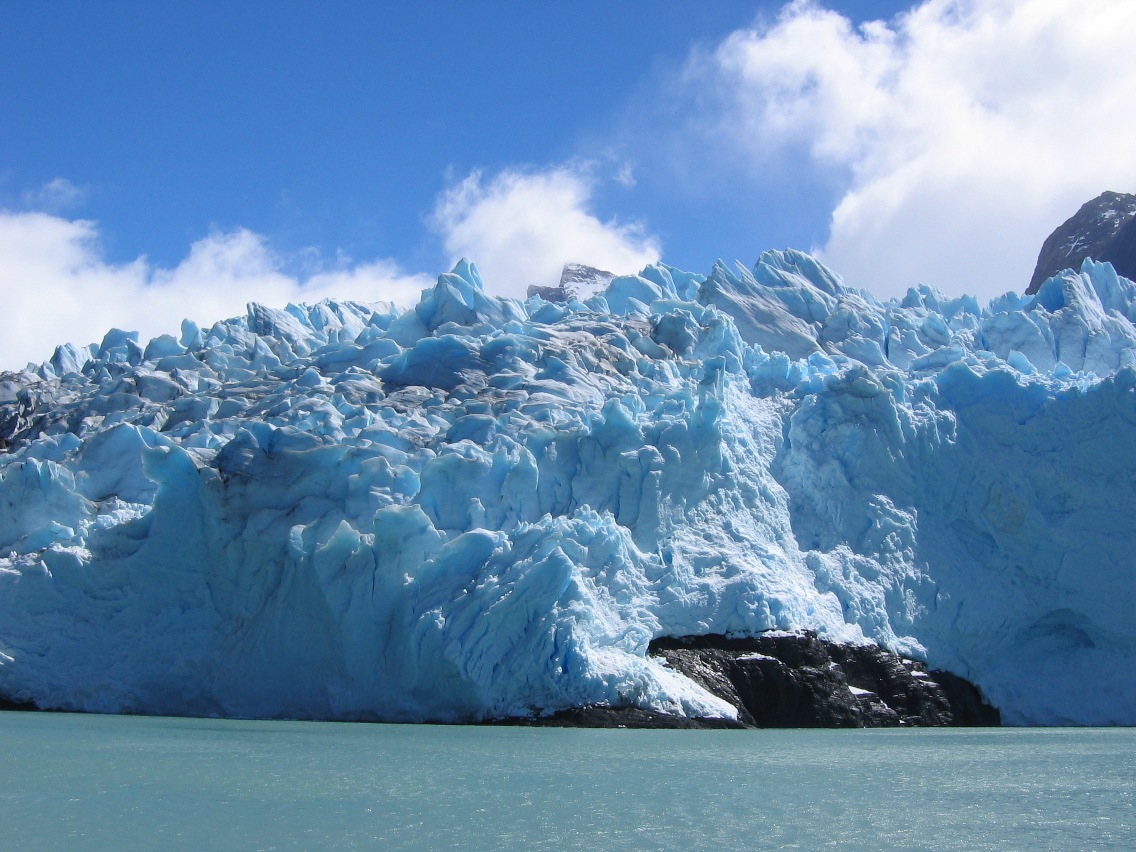
Just a few kilometers to the south, up a different arm of the lake, the boat took us to Spegazzini glacier, not as large as Upsala, but taller at the terminus which makes it pretty awesome in its own way.
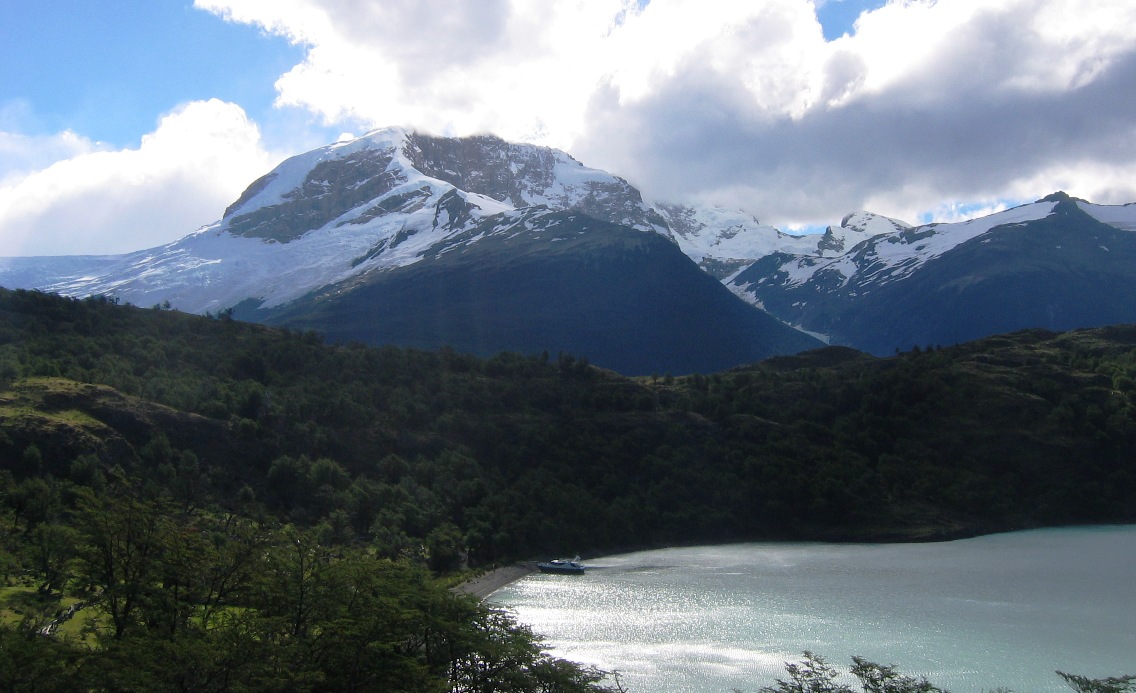
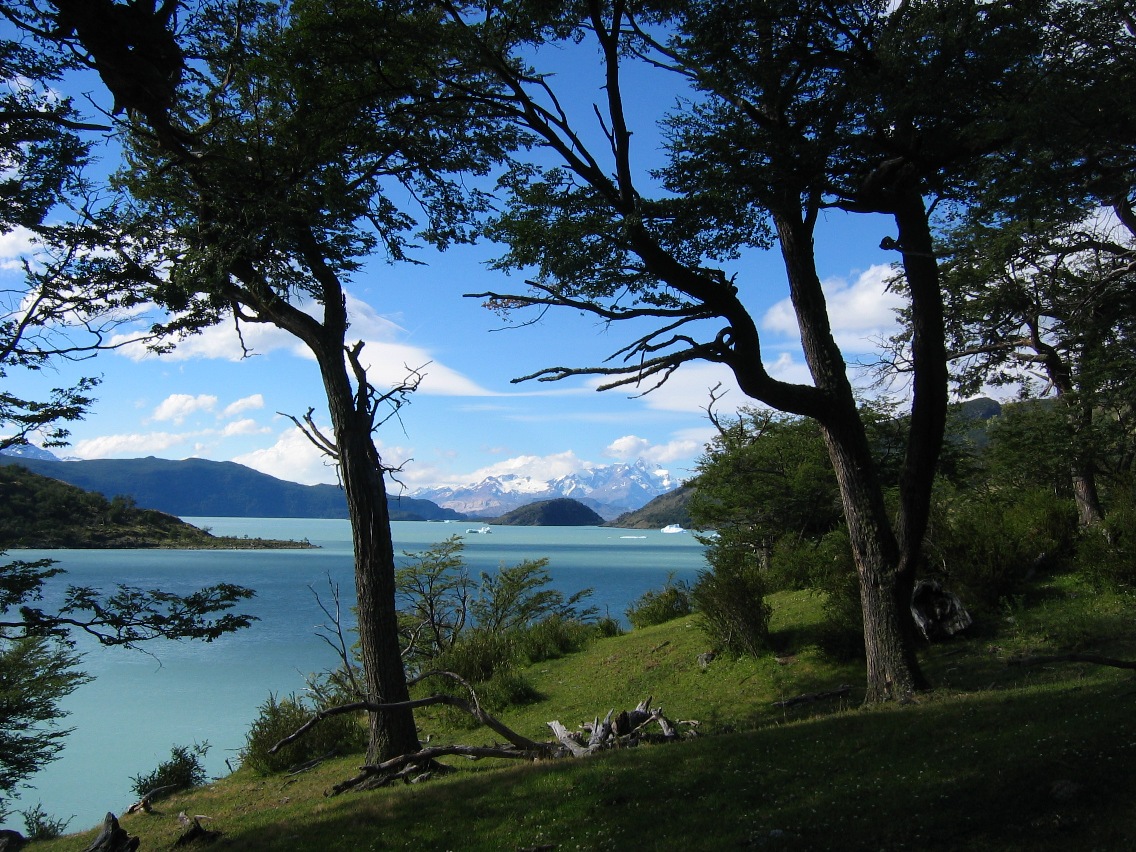
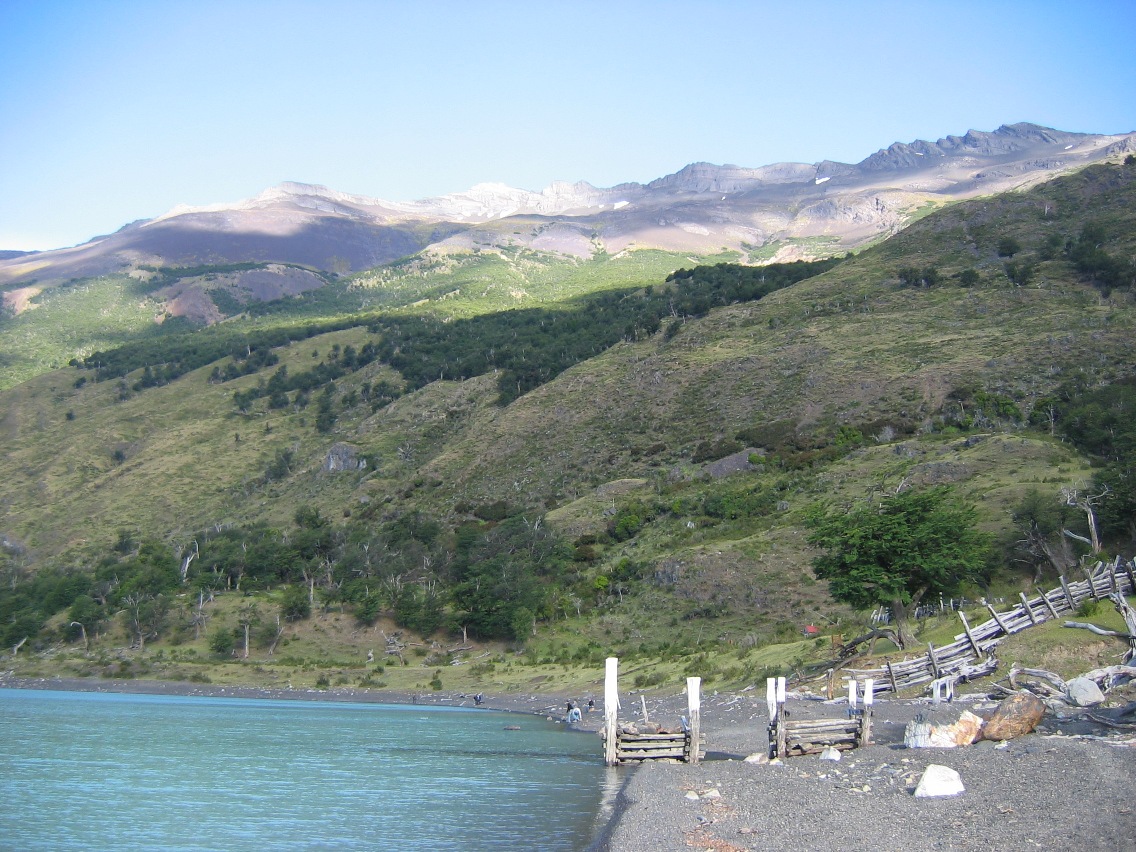
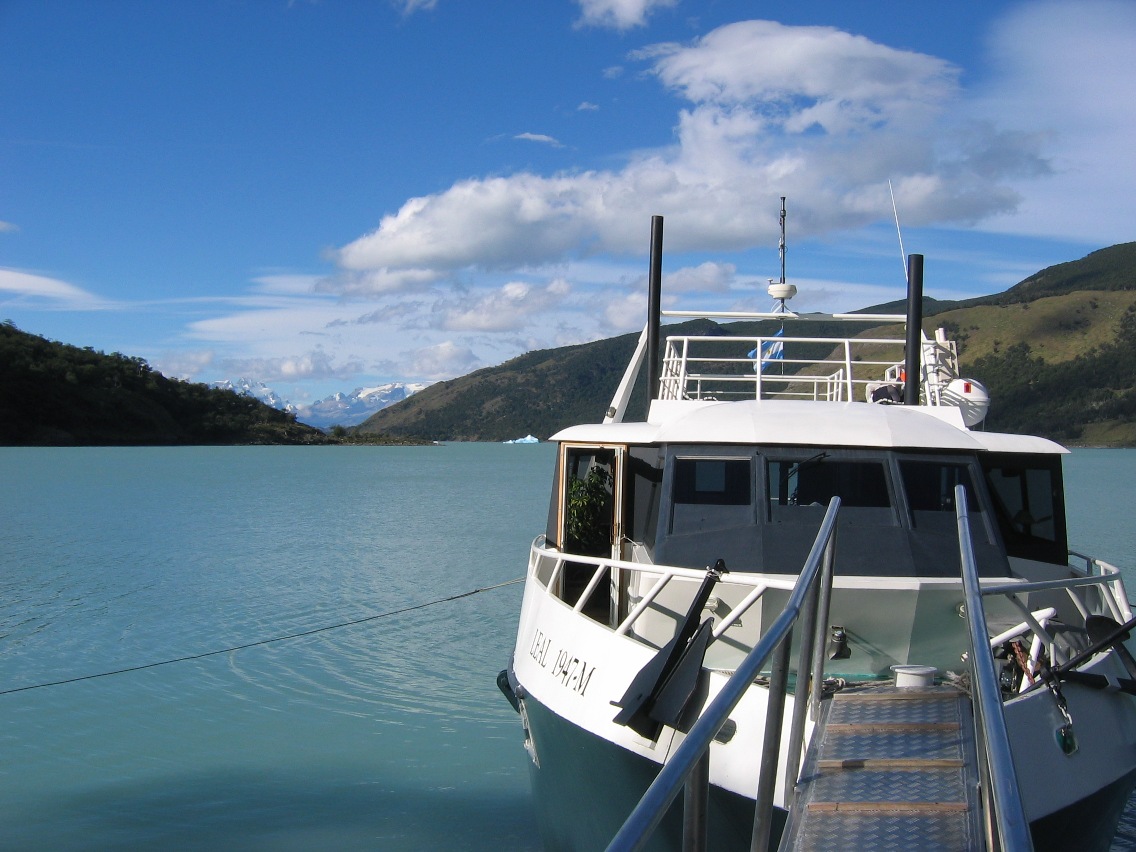
And for our final resting spot (of the day), we moored on the shore of a peninsula that the maps call Peninsula Avellaneda. Our guide told us the locals call it "Cow Island." Although it isn't really an island, it might as well be as far as the "wild" cows and horses that live there are concerned. The connection with the mainland is obstructed by the ice-field. An ranch used to graze cattle on the peninsula, but when the land was incorporated into the national park, the enterprize had to relinquish its property and cease operations. But they left some cattle, which have since thrived and multiplied from several hundred into several thousand. It was OK with us, they kept their distance and didn't moo so loud that we couldn't sleep.
The next day, Tuesday, we sailed back down south to see the signature glacier of the park (and the only one you can get to by car or bus), Perito Moreno. Unlike most of the other glaciers in the park, due to a unique micro-climate, Perito Moreno is in equilibrium and neither retreating nor advancing.
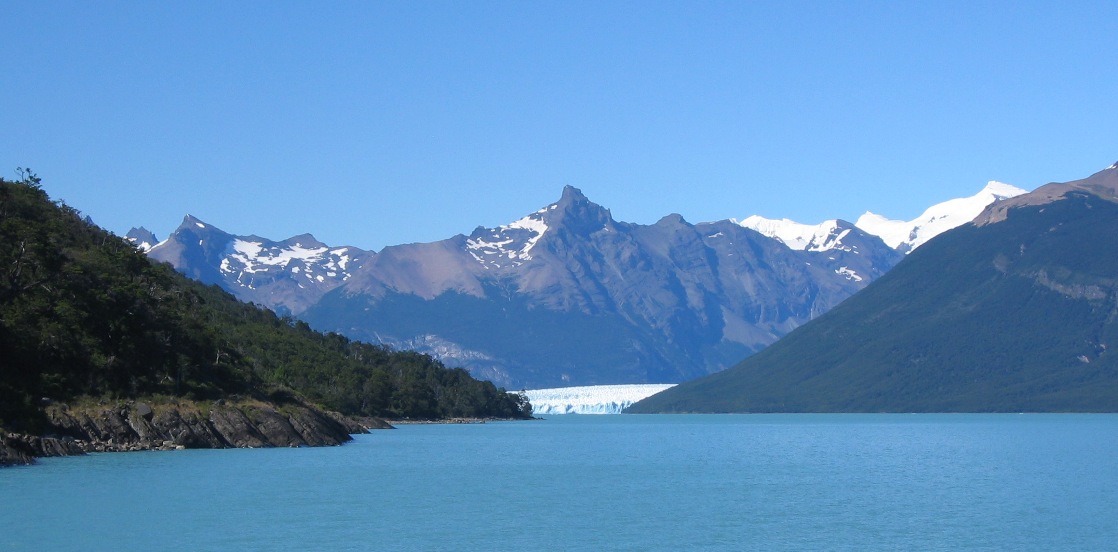
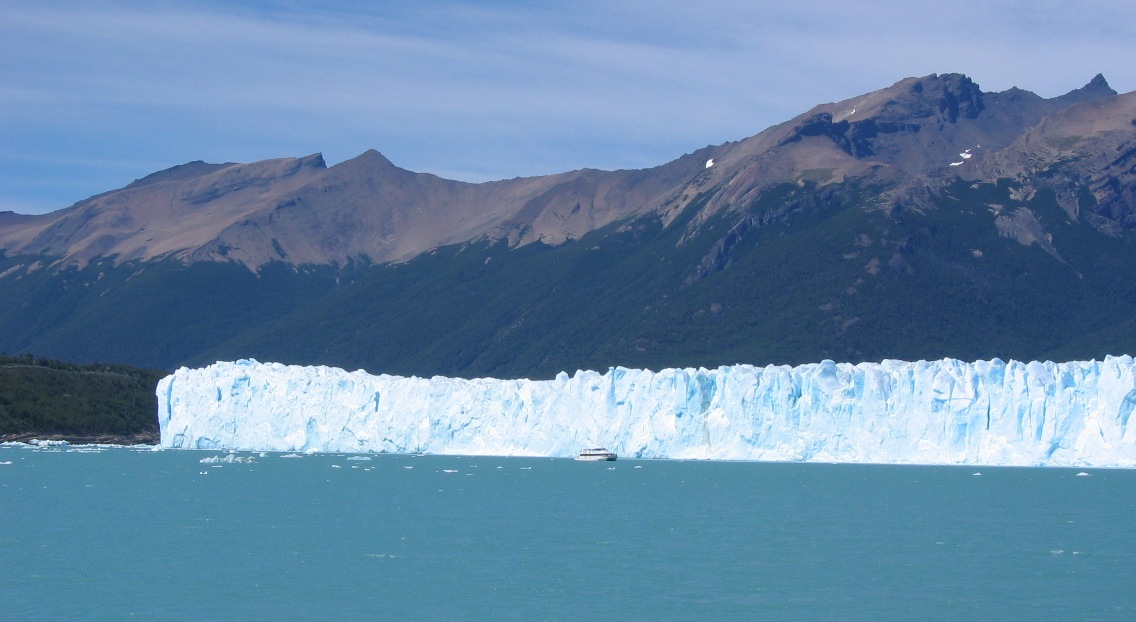
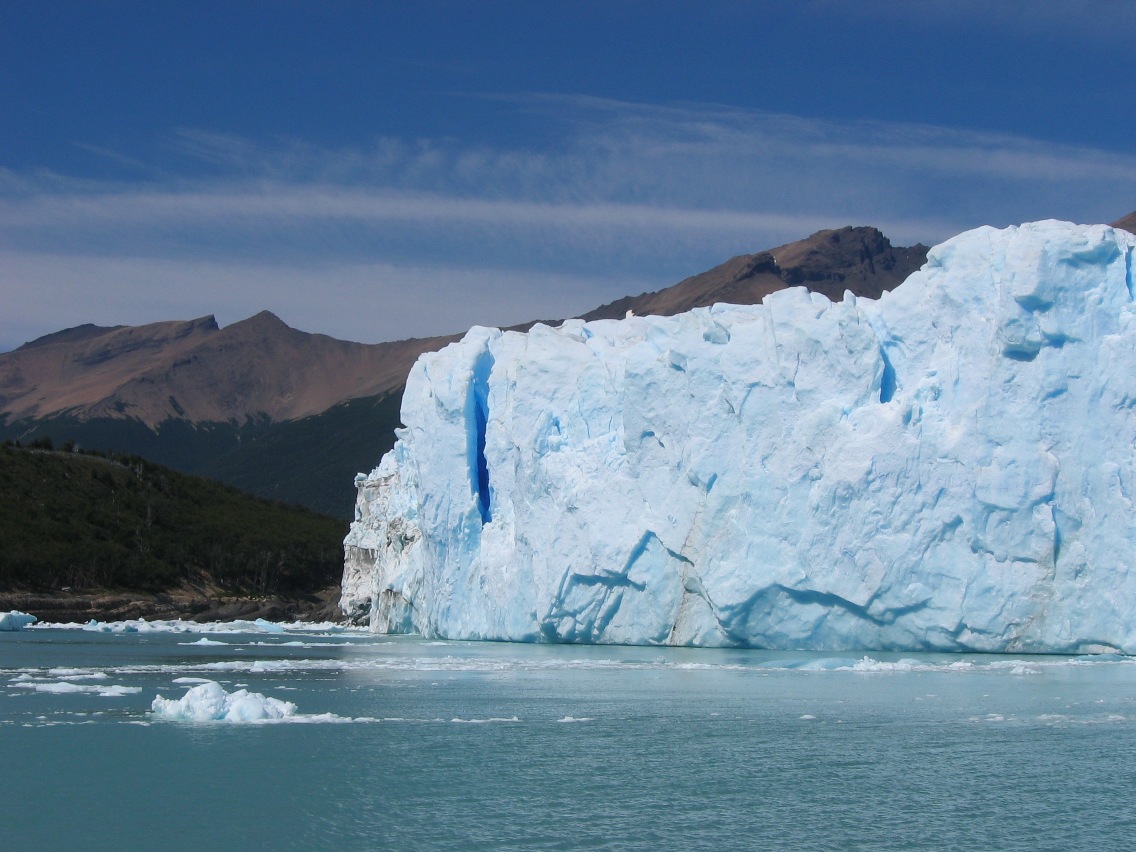
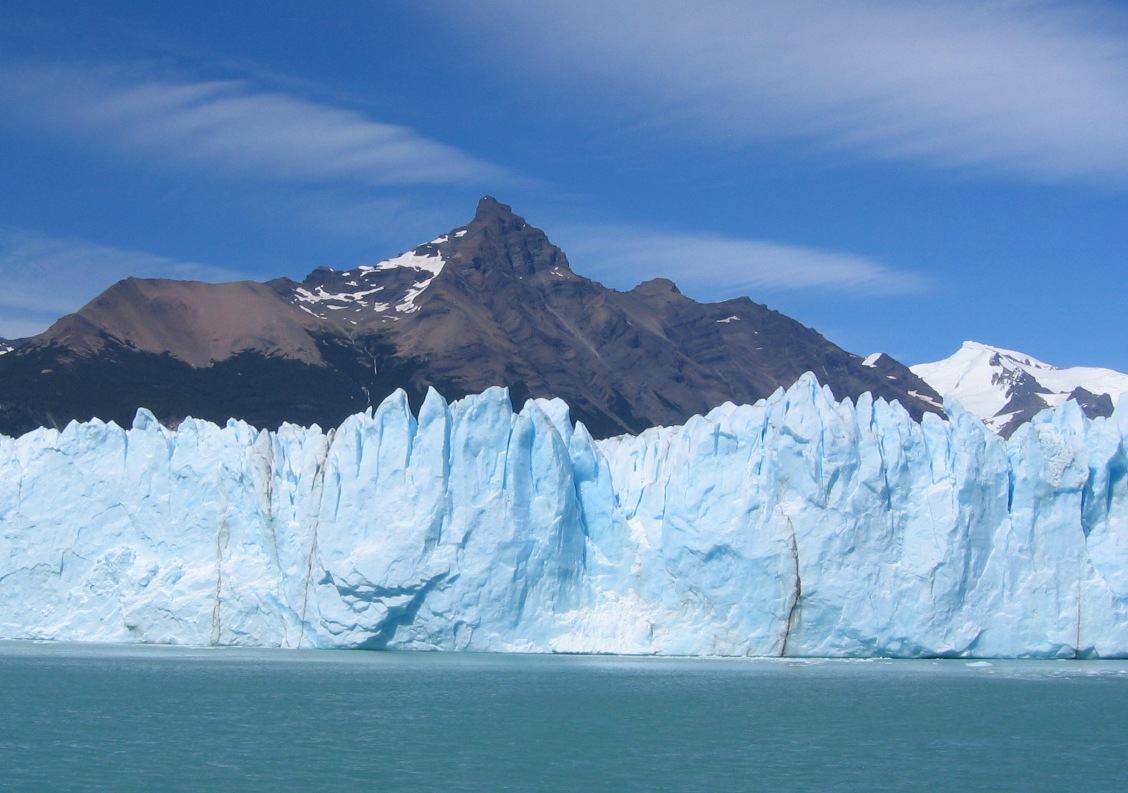
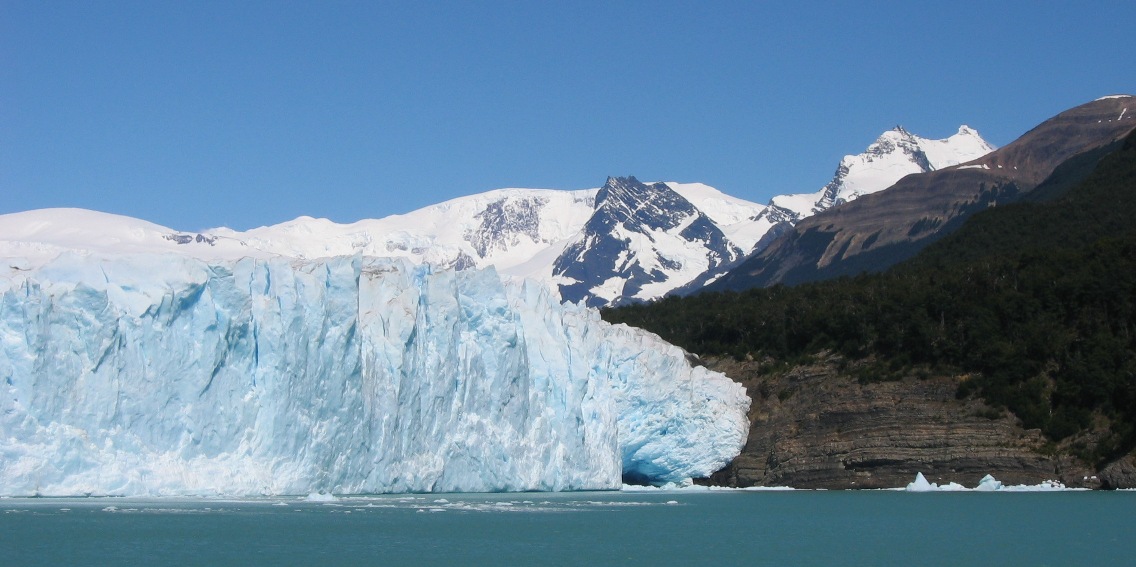
Perito Moreno Glacier does have a periodic habit of crossing over a narrow channel of water between two arms of the lake. It eventually bumps up against the peninsula on the other side of the channel, closing off the "Brazo Rico" from the rest of the lake. When the glacier is "closed" as they call it, Brazo Rico cannot drain and the water level rises due to in-flowing streams and the melting glacier. Eventually, the water pressure eats an underwater tunnel through the ice of the glacier so the closed off section of the lake can flow out and drain. The flowing water increases the tunnel until it extends above the surface of the water, and eventually the "ice bridge" collapses in an incredible rupture. The spectacular rupture happens only once every 4-8 years or so (and once it stayed closed for a full 16 years and then had a really enormous rupture). There are pictures of these incredible ice-plosions in just about every pictorial essay about the glacier, but not here (I think there is one picture of "the rupture" on the wikipedia website). Scientificos think the next rupture will happen later this year in the fall (March or April, perhaps). I don't think we'll hang around to see it, I mean, what if we camped out there waiting to see the rupture for a month or two, and then it happened at night?
-Rolf