El Calafate - Hosteria Alta Vista
Living the Estancia Life, Walking On (Frozen) Water
Saturday January 26, 2008
Shortly before 4pm on Tuesday afternoon, the "Leal" boat dropped us back off at the same little dock we had embarked from the previous morning . We had already tipped the staff and said our sloppy and emotional goodbyes to the other tourists on board: 2 Italian couples, 2 sweet old Argentinean ladies, and the friendly young man from Buenos Aires who gave us his email and offered to "show us around" if we ever made it up to his home town. The boat served unlimited free wine with lunch, and the Italians especially took full advantage of it. After this emotional "good-bye most likely forever," we all turned around and climbed into a minibus to enjoy a 30 minute reunion during our transfer back to El Calafate. Our family needed to go back to town to fetch the truck, which we had left it in the driveway of Santa Monica Apart Hotel. After the bus dropped us off and we said goodbye to everyone for the second time, we climbed into our own vehicle and started driving back almost the same direction we had come from.
After 4 nights in a cabaña at Santa Monica Aparts and then 2 nights in small cabins on the boat, we were headed for 5 nights of spacious luxury at the tourist guesthouse of a working estancia (sheep ranch). The ranch is Estancia Anita and the tourist guesthouse is called Hosteria Alta Vista. After driving thirty kilometers southwest on a dusty dirt road, we passed some work buildings for the estancia (including the all-important shearing shed) , and then arrived at the drive leading to the hosteria a minute or two later.
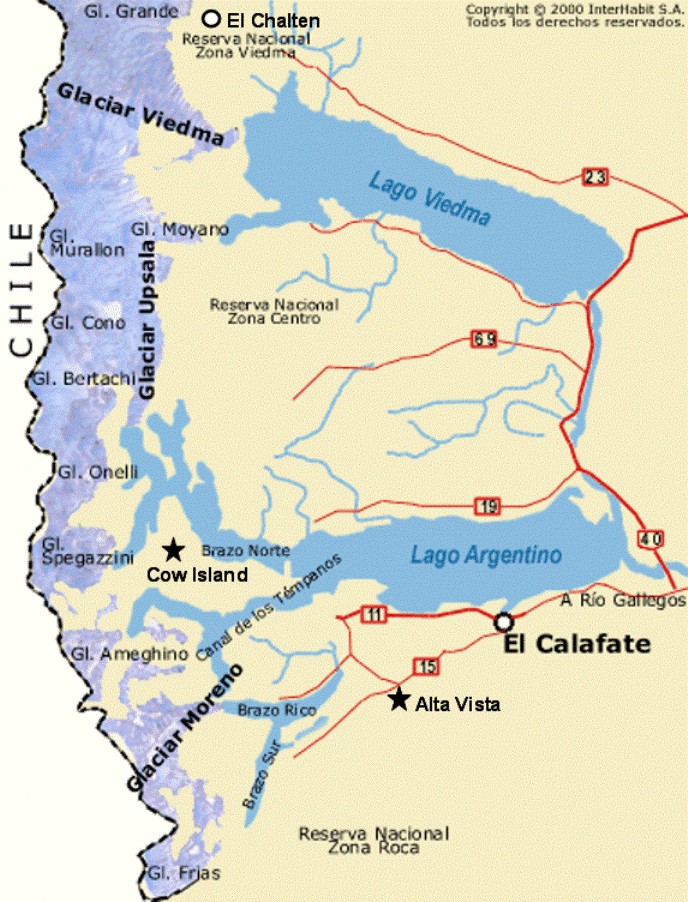
This map shows where Hosteria Alta Vista is in relation to El Calafate, Parque Los Glaciares, and Perito Moreno Glacier.
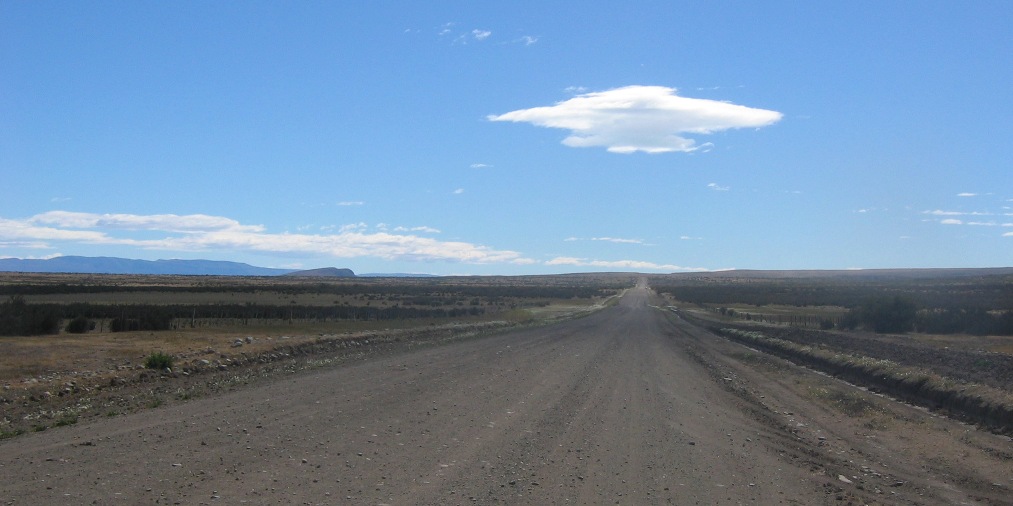
Heading down the road away from El Calafate and towards Hosteria Alta Vista.
The main building at Hosteria Alta Vista is a beautiful old house, and we were very happy to have the chance to stay there for a few days.
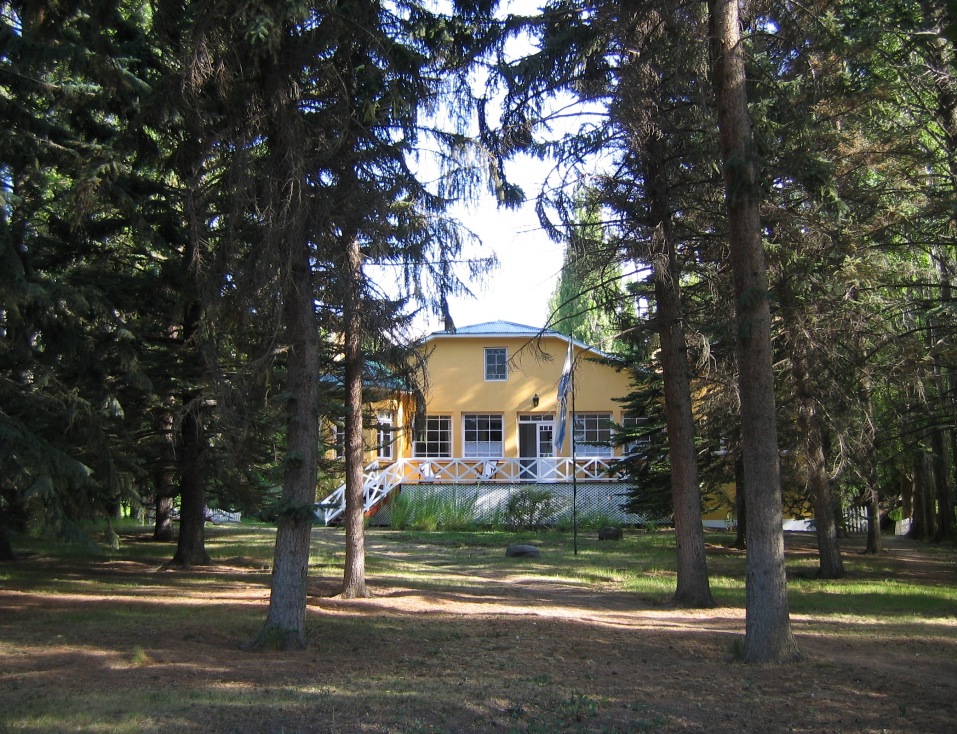
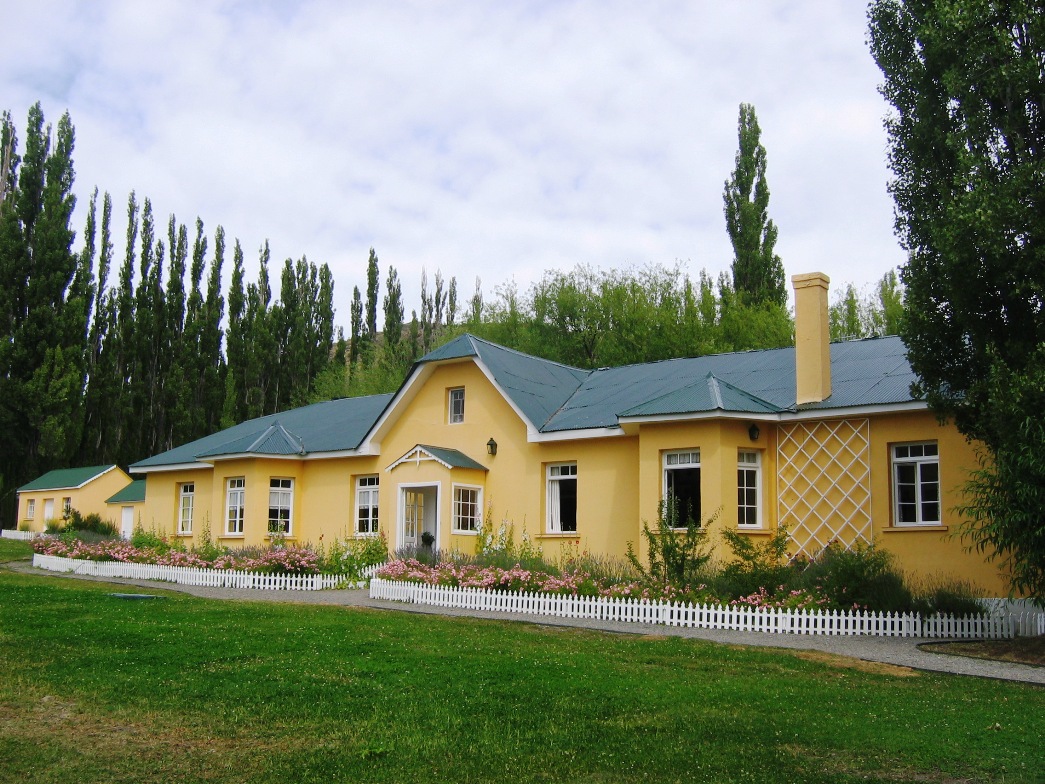
The main guesthouse.
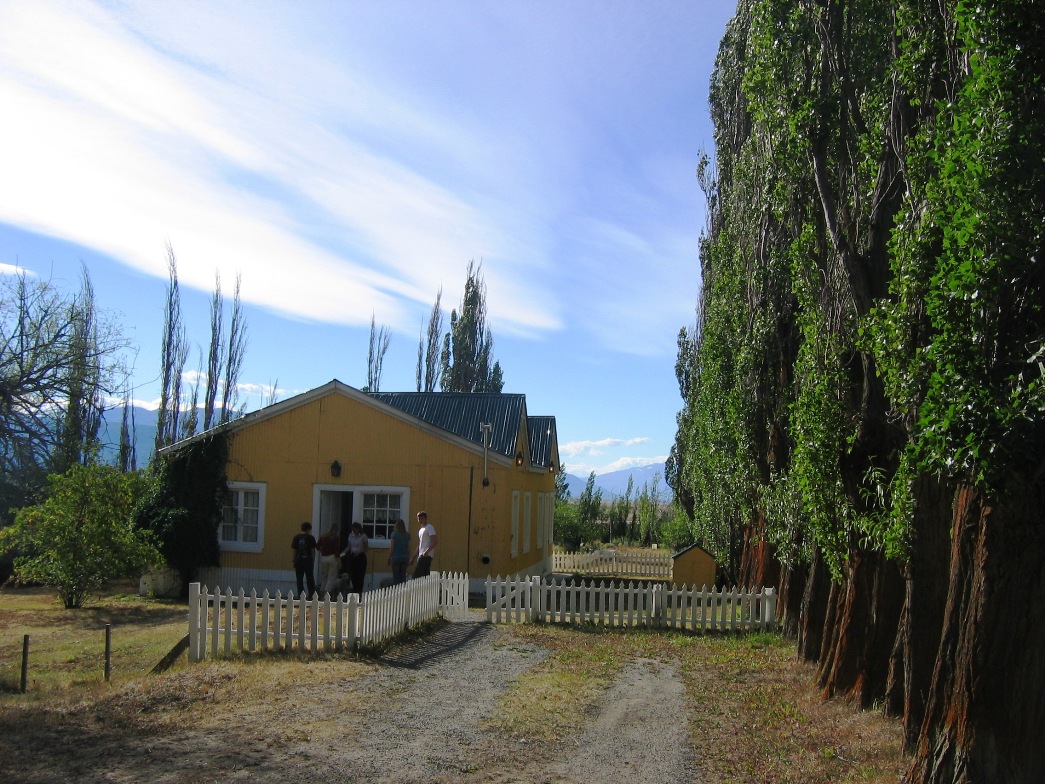
The generator building (there are no telephone or power lines out here!)
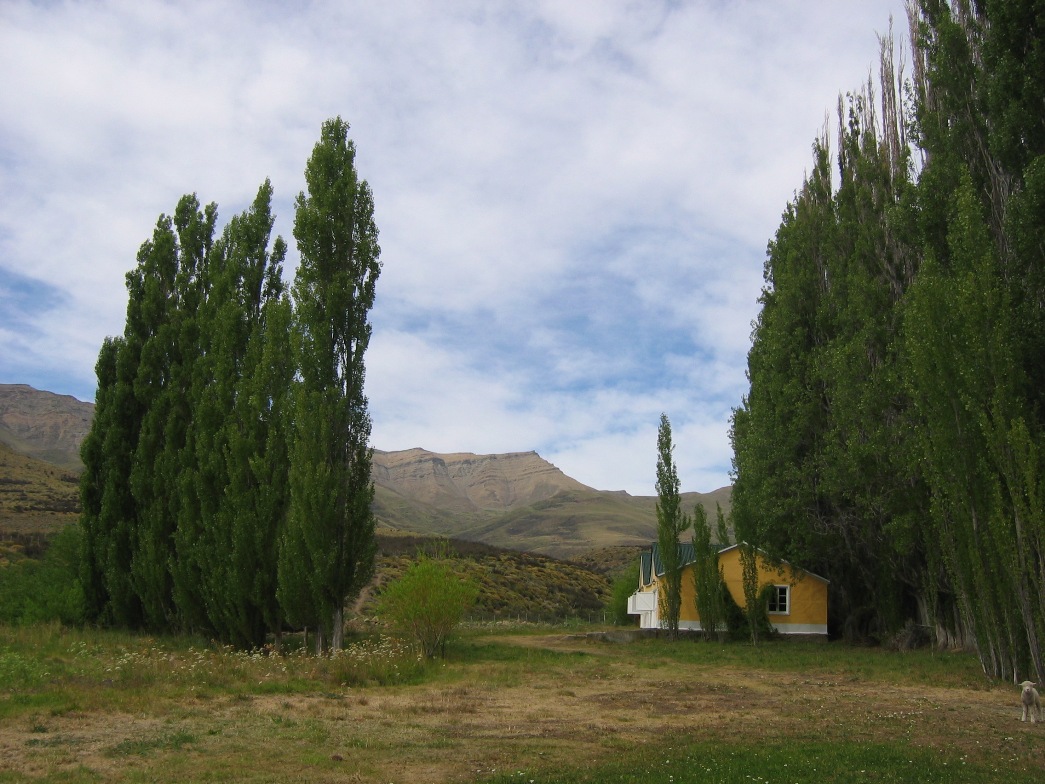
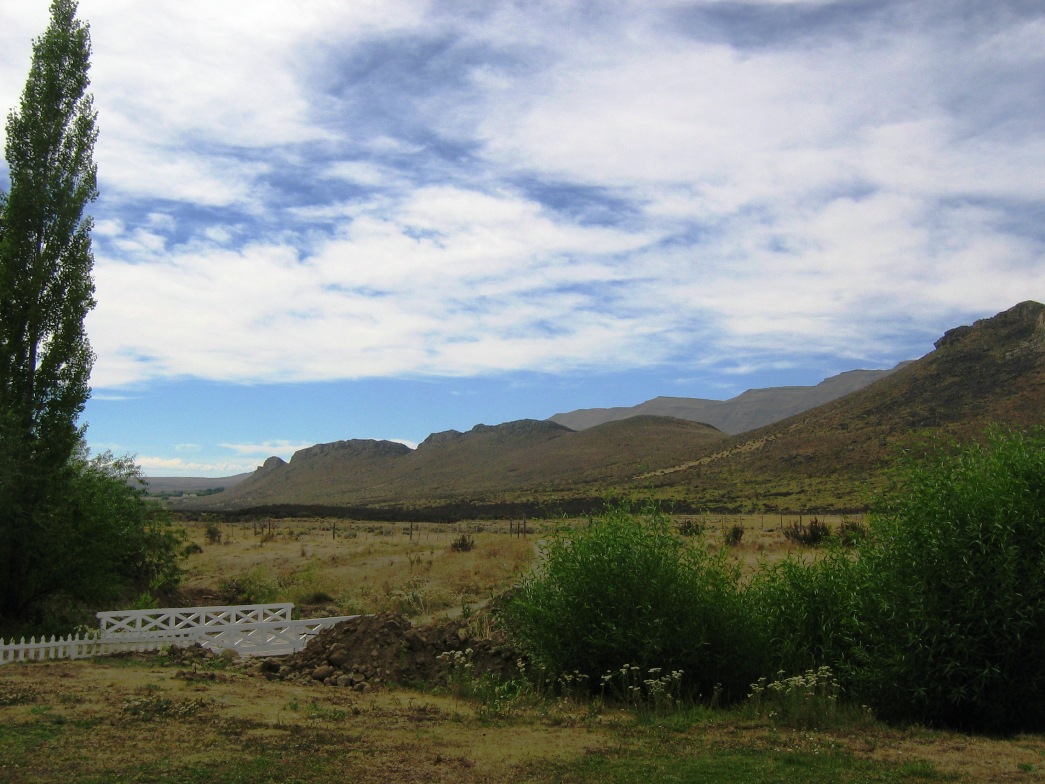
Worker housing, work sheds, and a view of the surrounding hills.
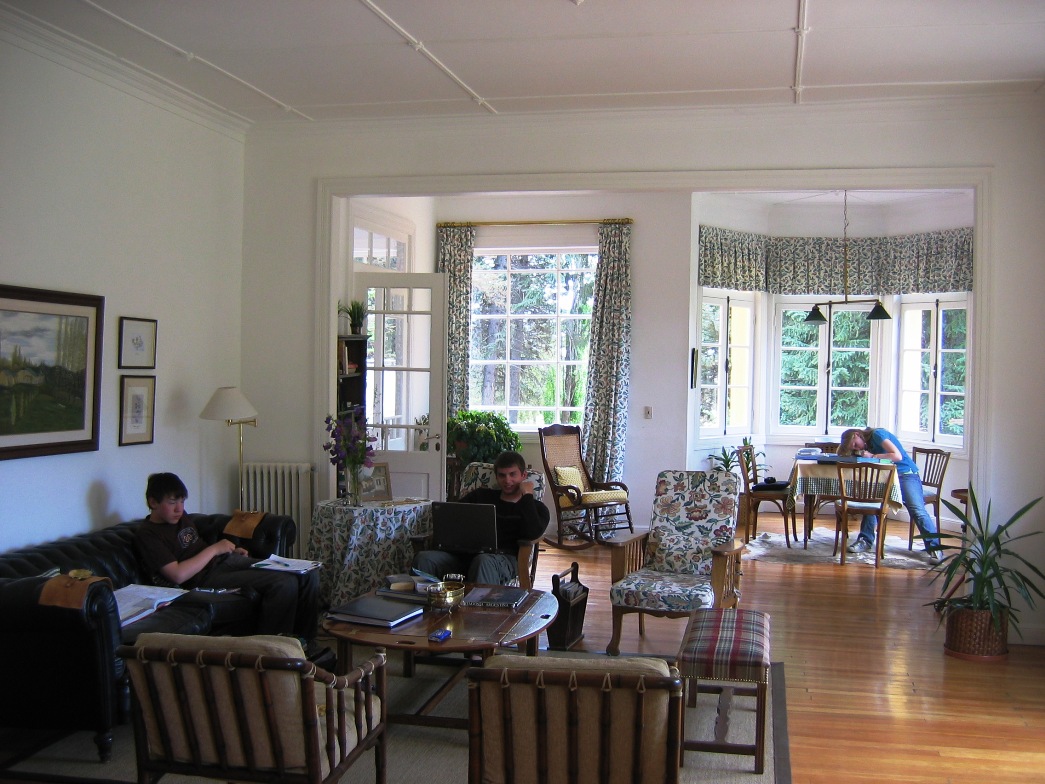
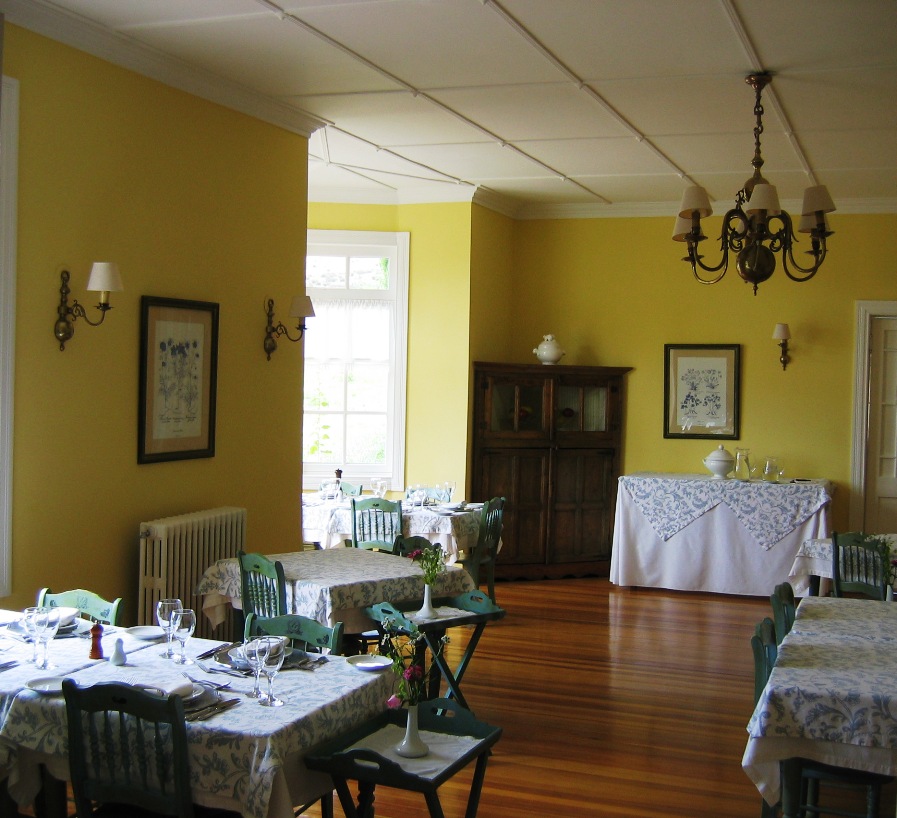
Living and dining rooms - not too shabby.
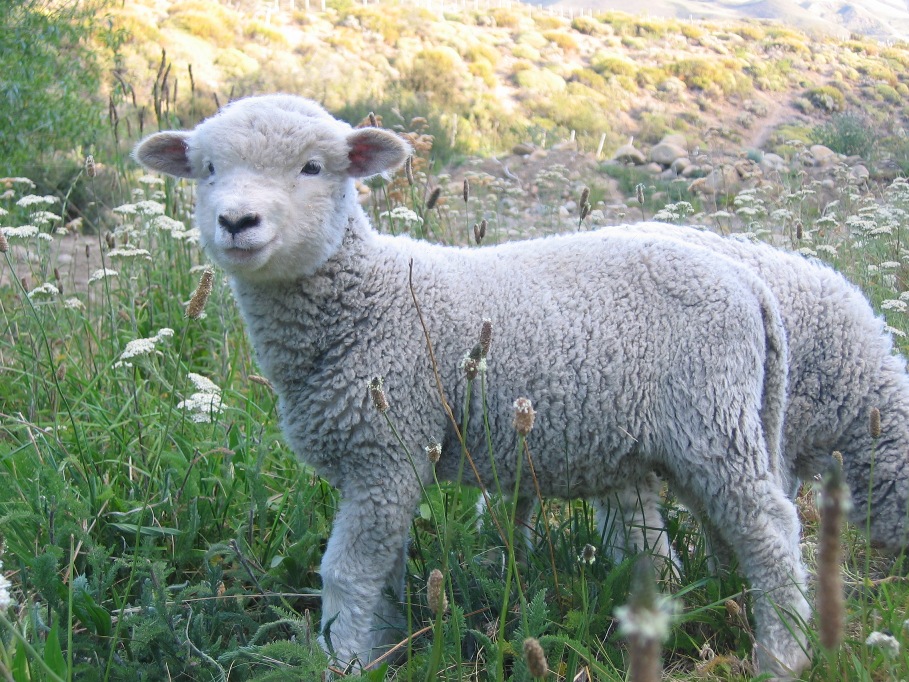
A young woman named Tamara greeted us when we arrived and then helped us settle in. She and her husband Frederico are the managers of the hosteria, and we would spend a fair amount of time with each of them during the next few days. Within minutes, we also met two lambs romping around the lawn of the house, Angelo & Pericón. Frederico found both of them abandoned out in the hills a couple months earlier. Tamara adopted them both and has been raising them as pets. Now they run around the grounds like puppies. When Frederico first discovered Angelo, he was hiding in a small hallow at the base of a rocky outcrop. Alone and weak with the eagles already starting to peck at him, Frederico literally rescued him from the brink of death, and Tamara nursed him back to health with bottles of milk and loving care. Now Angelo dotes on Tamara like she is is adopted mother and savior, because she is both for sure.
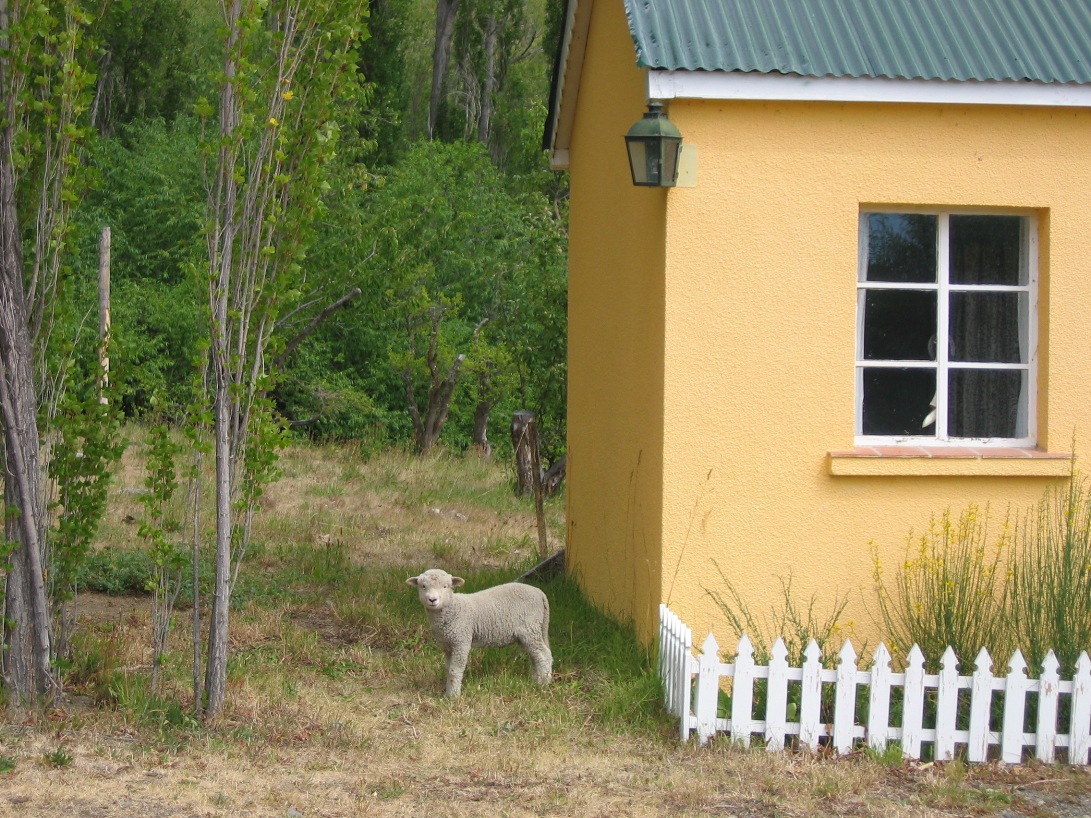
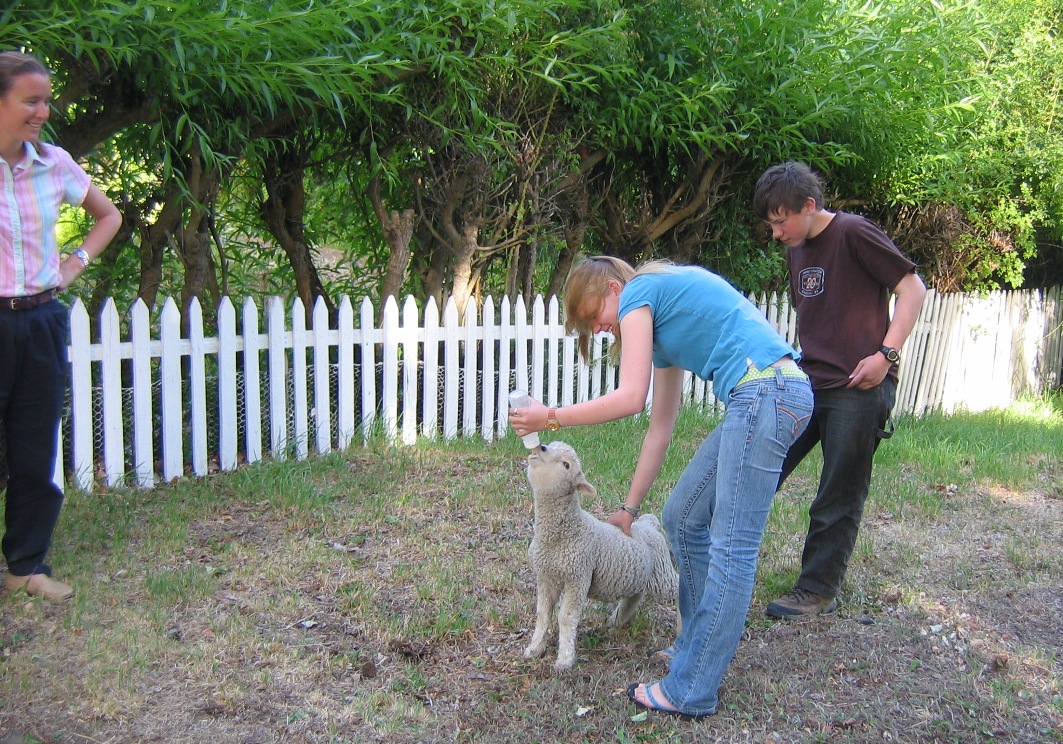
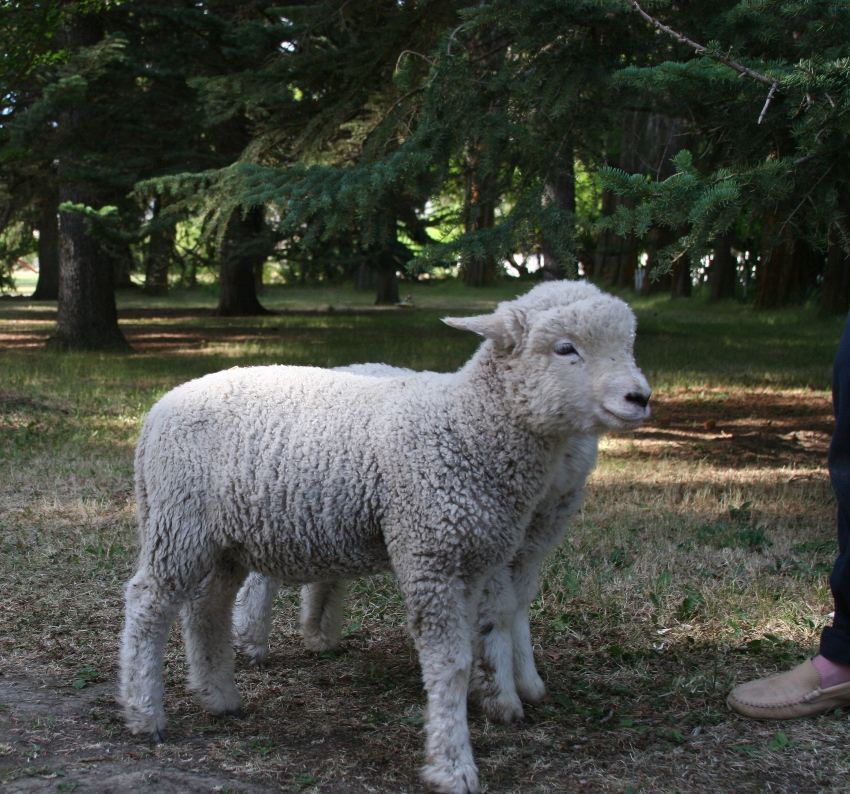
The house at Hosteria Alta Vista originally the home of a family that owned and operated the sheep ranch known as Estancia Alta Vista. The neighboring ranch Estancia Anita bought Alta Vista in the 1980's and turned this house into a tourist hosteria. The last morning during our stay, Frederico drove us a couple of miles over to Estancia Anita to look at the shearing shed and some of the other buildings of the still "working" sheep ranch Anita. For a month or so during the spring, the holding pens and shearing shed are extremely busy, but since this was now the middle of the summer and the flocks are at summer pasture far up into the hills, the buildings were quiet and vacant.
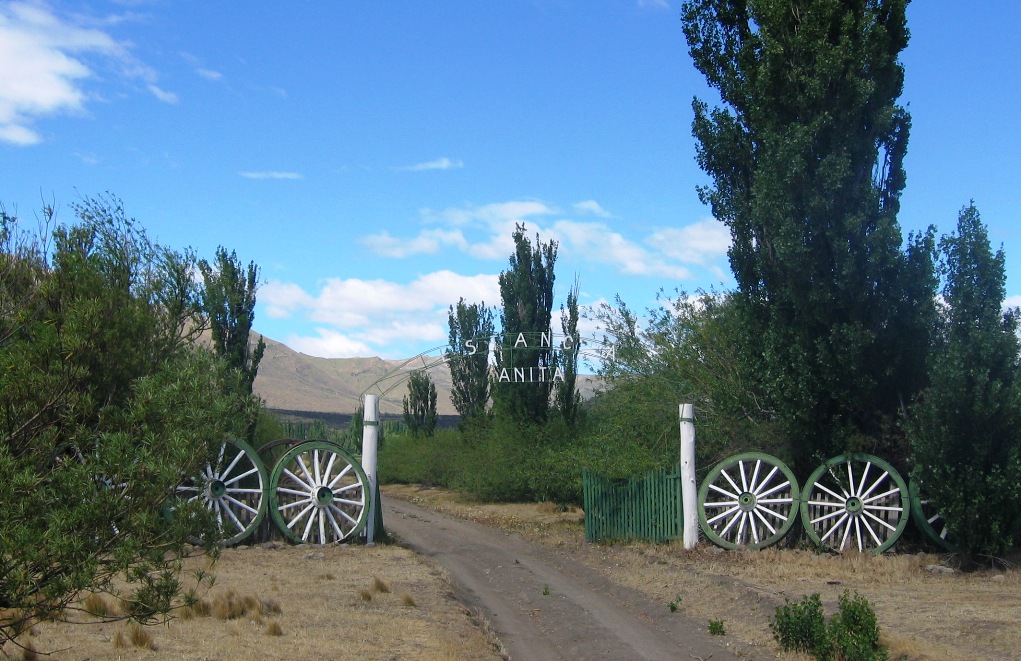
Entrance to Estancia Anita.
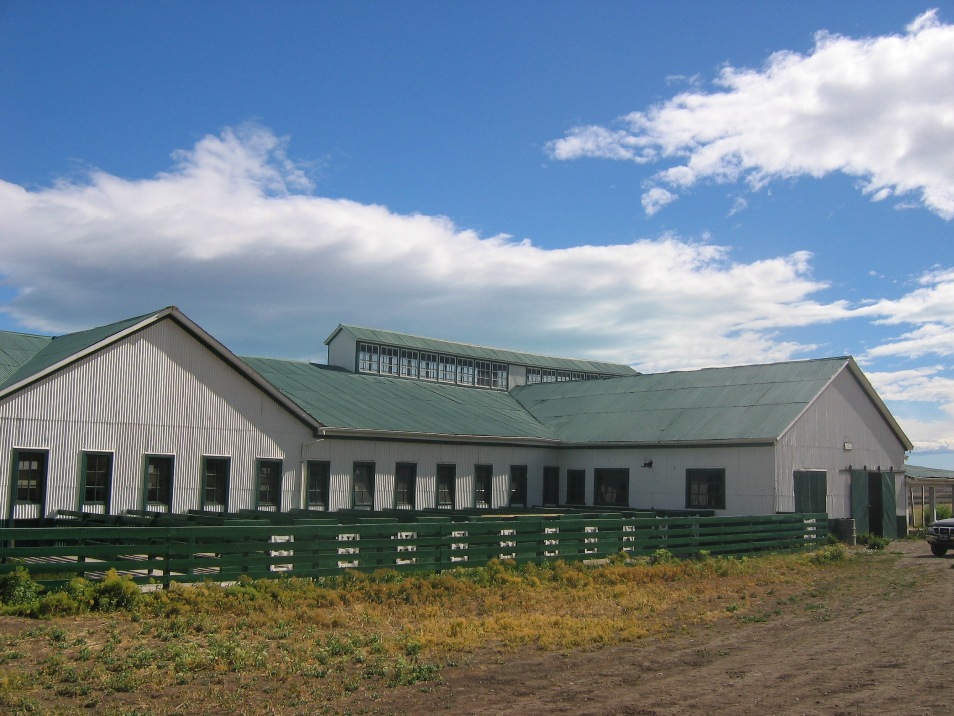
Galpon de Esquila (the shearing shed).
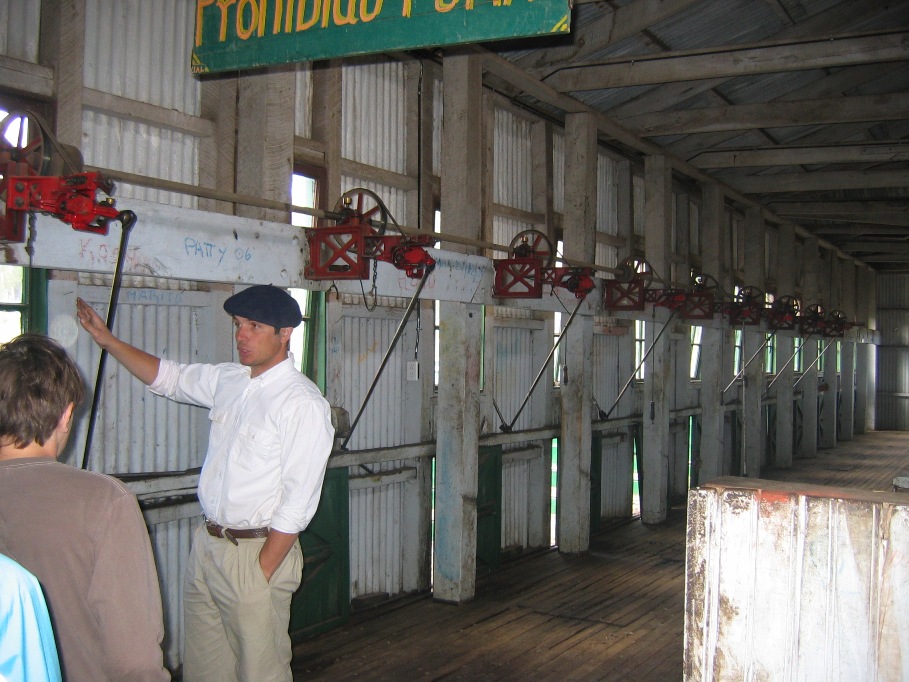
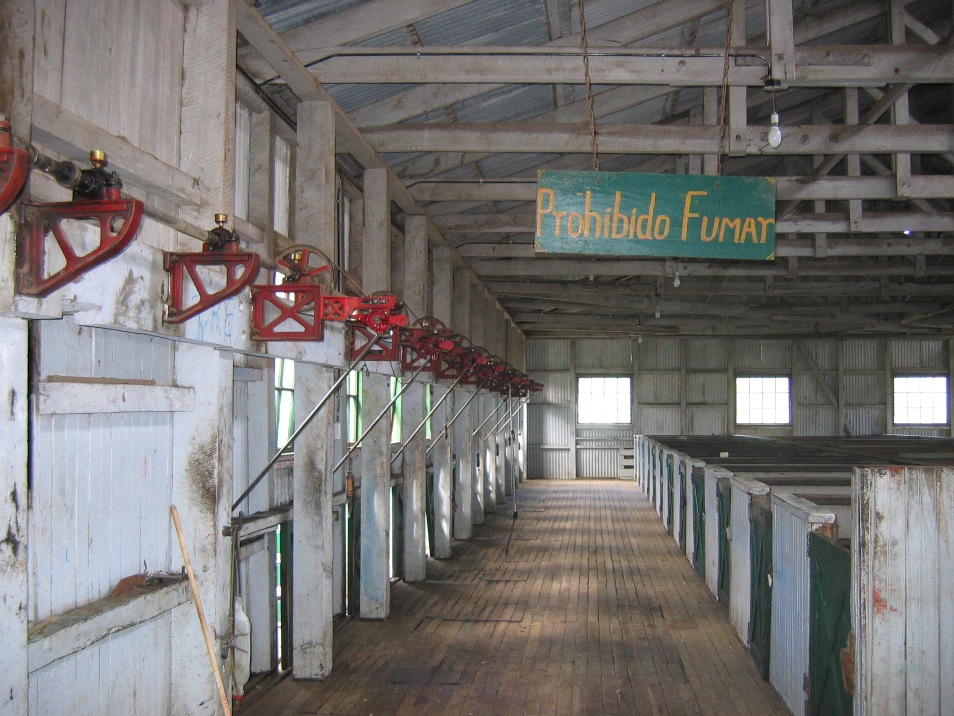
Frederico describes the shearing station and the shearing process.
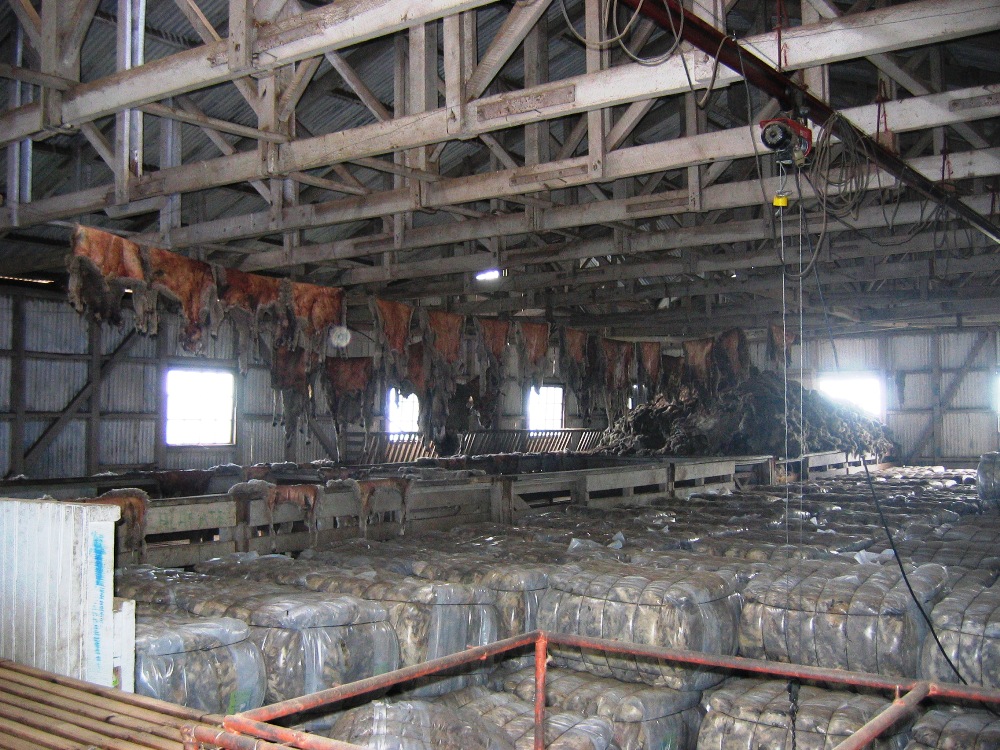
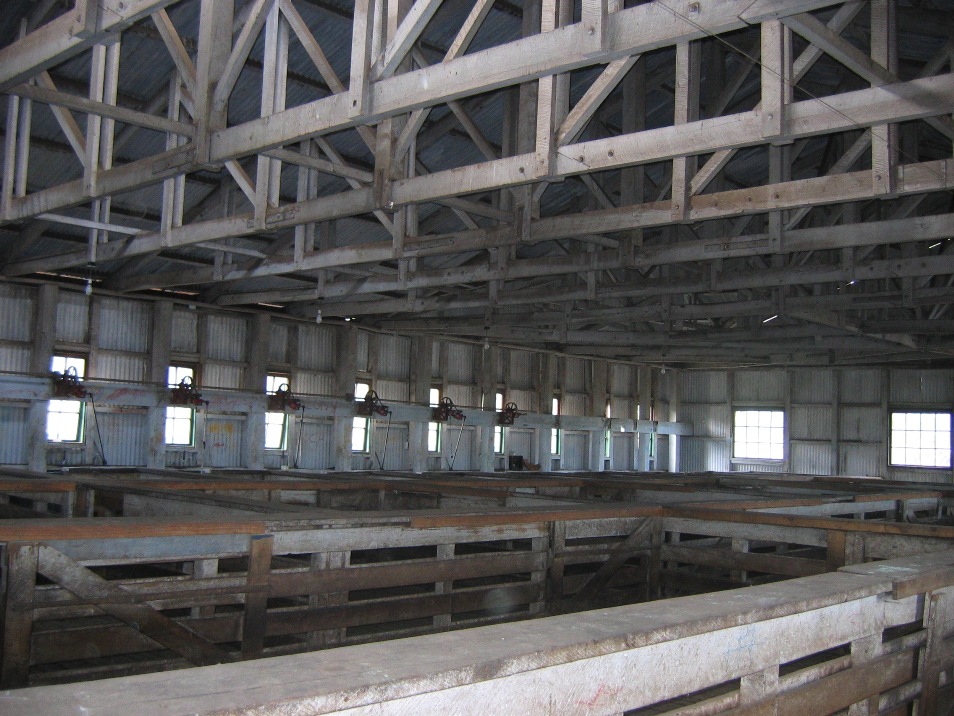
Some left-over packages of wool, and the interior holding pens.
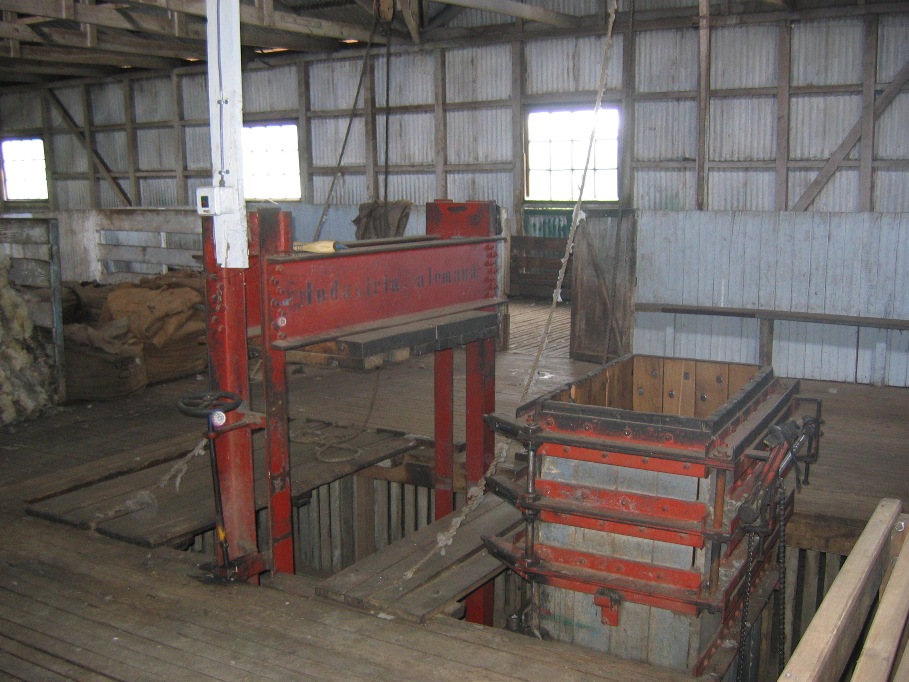
This machine is used to compress and then plastic-wrap bails of wool.
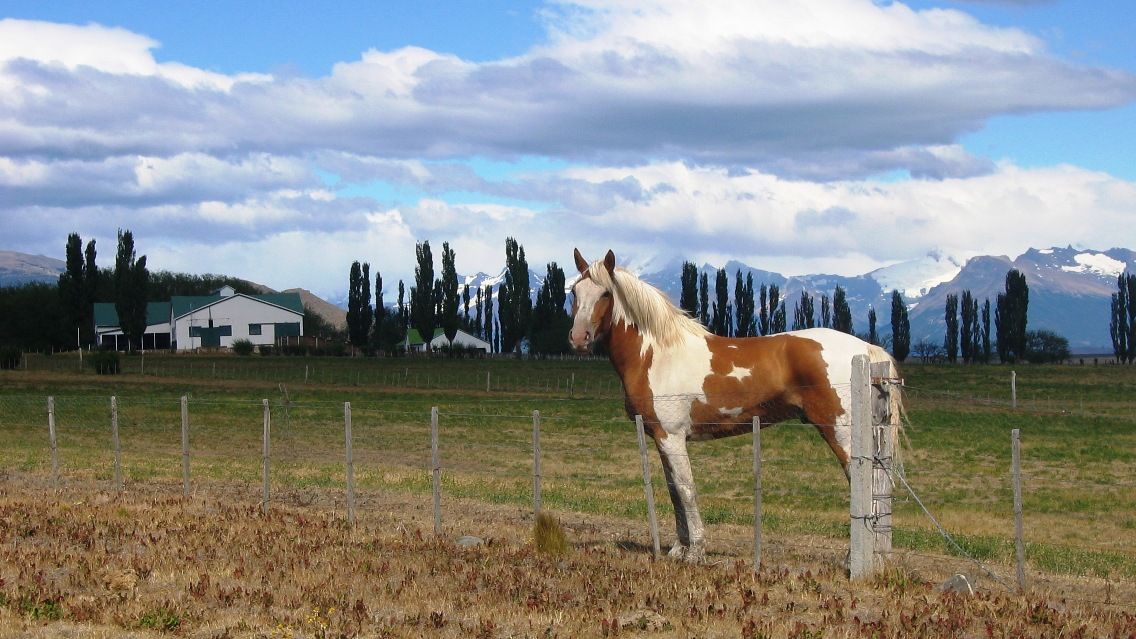
There were several horses in a nearby fenced-in field. Frederico told us that they were formerly "wild" horses in the process of being tamed and broken by the gauchos of the ranch - a process that can take a lot of time if the horses are not at all used to interaction with humans.
The morning after our arrival (Wednesday), the twins concentrated on schoolwork (I don't remember what Geoff did). In the afternoon Frederico took us and a few other guests on a two-hour horseback ride into the surrounding hills.
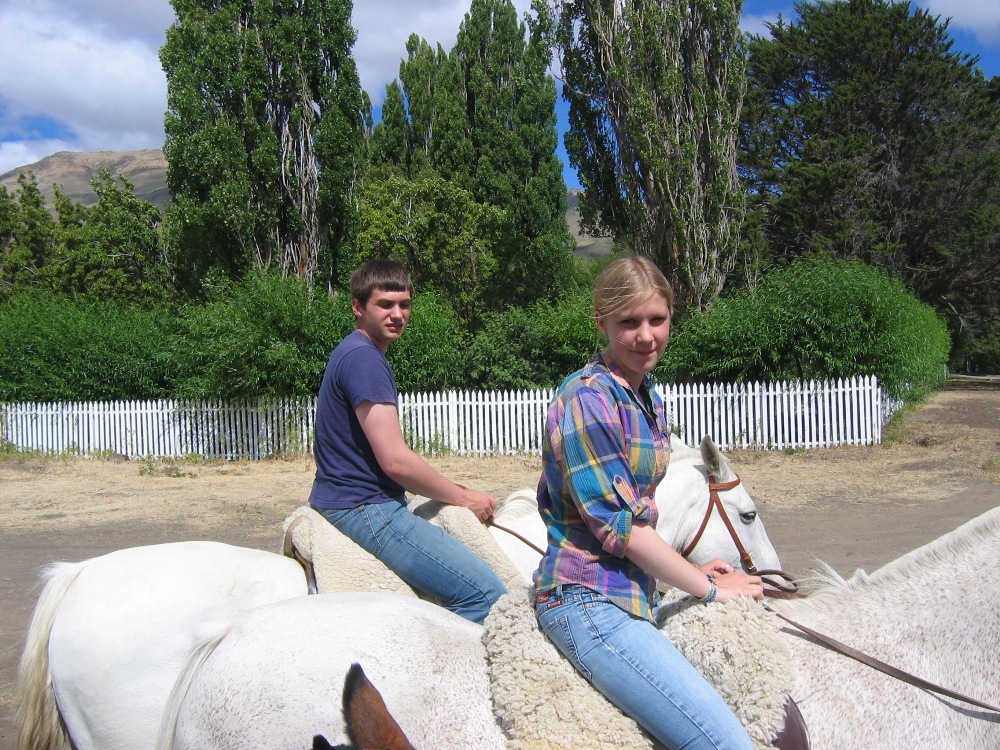
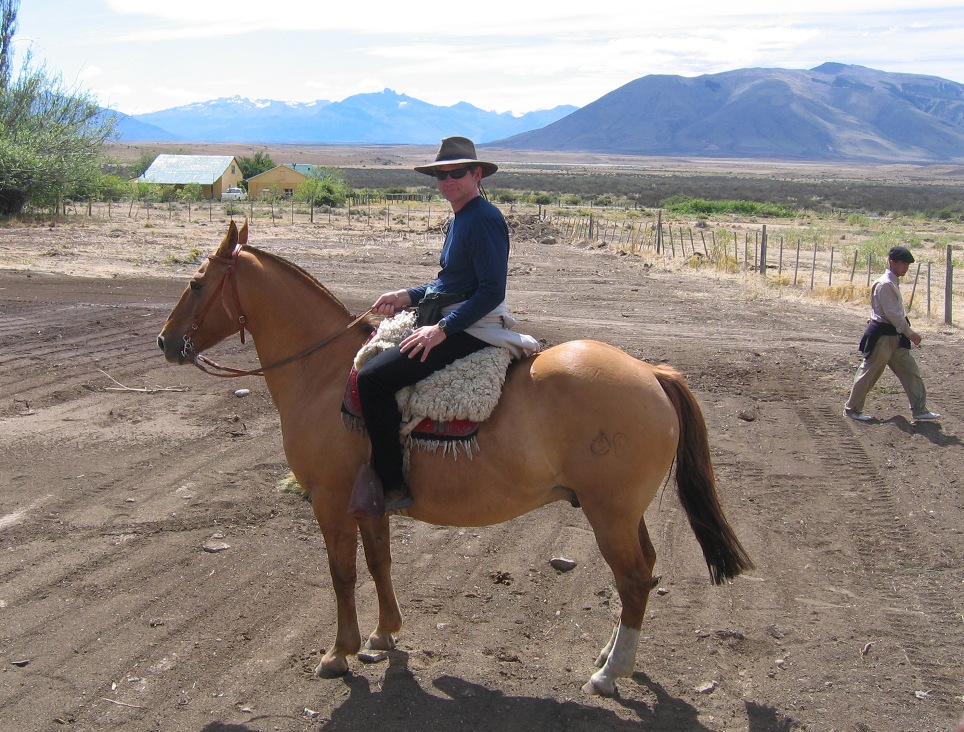
Getting ready for the cabalgata.
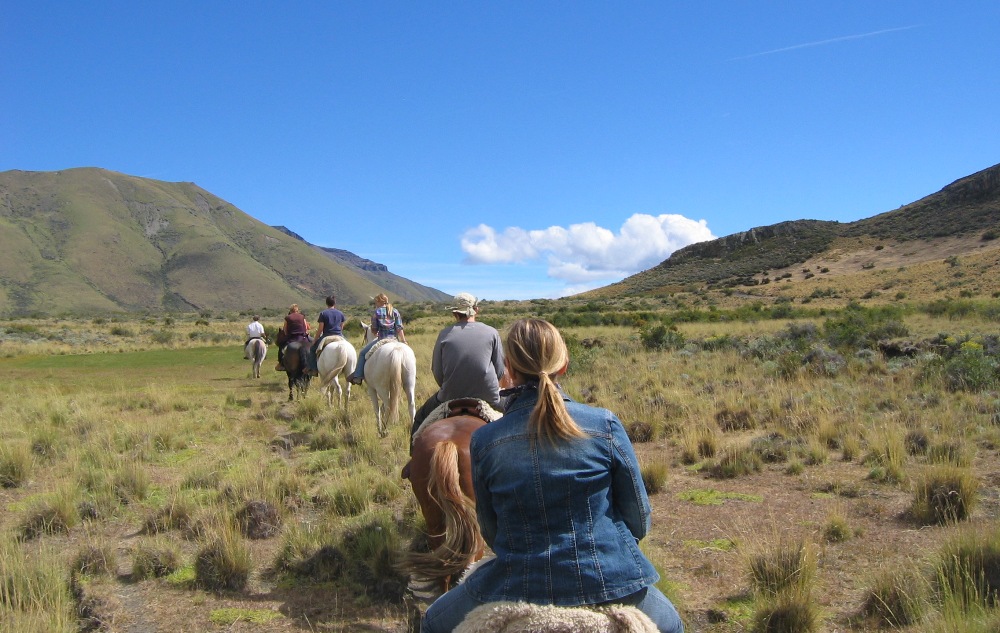
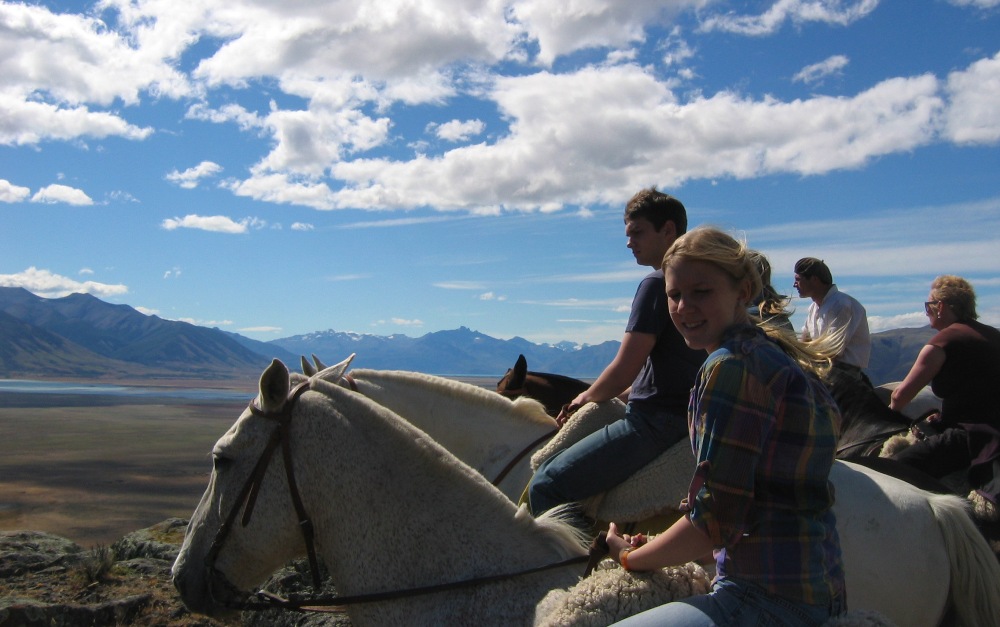
On the trail.
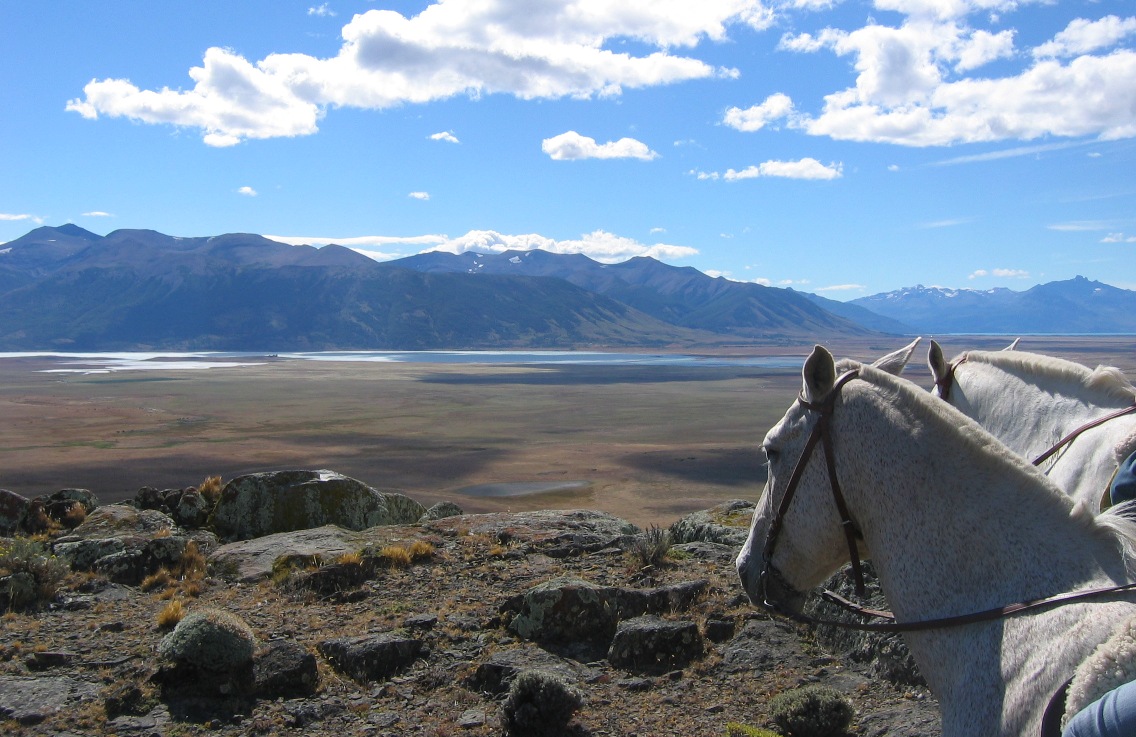
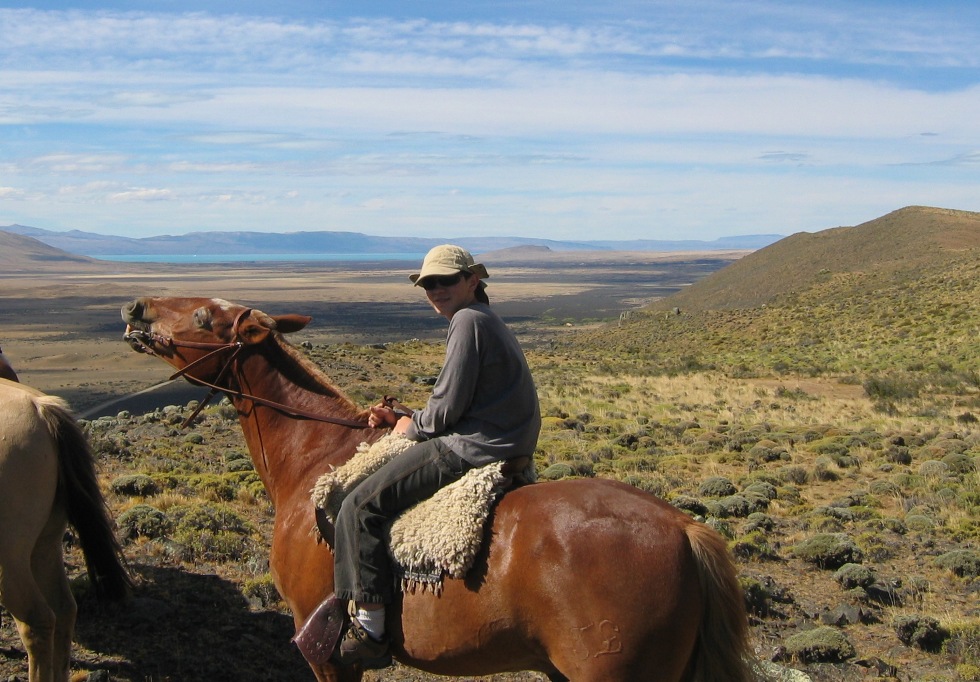
Viewpoint looking north towards the Brazo Rico of Lago Argentina.
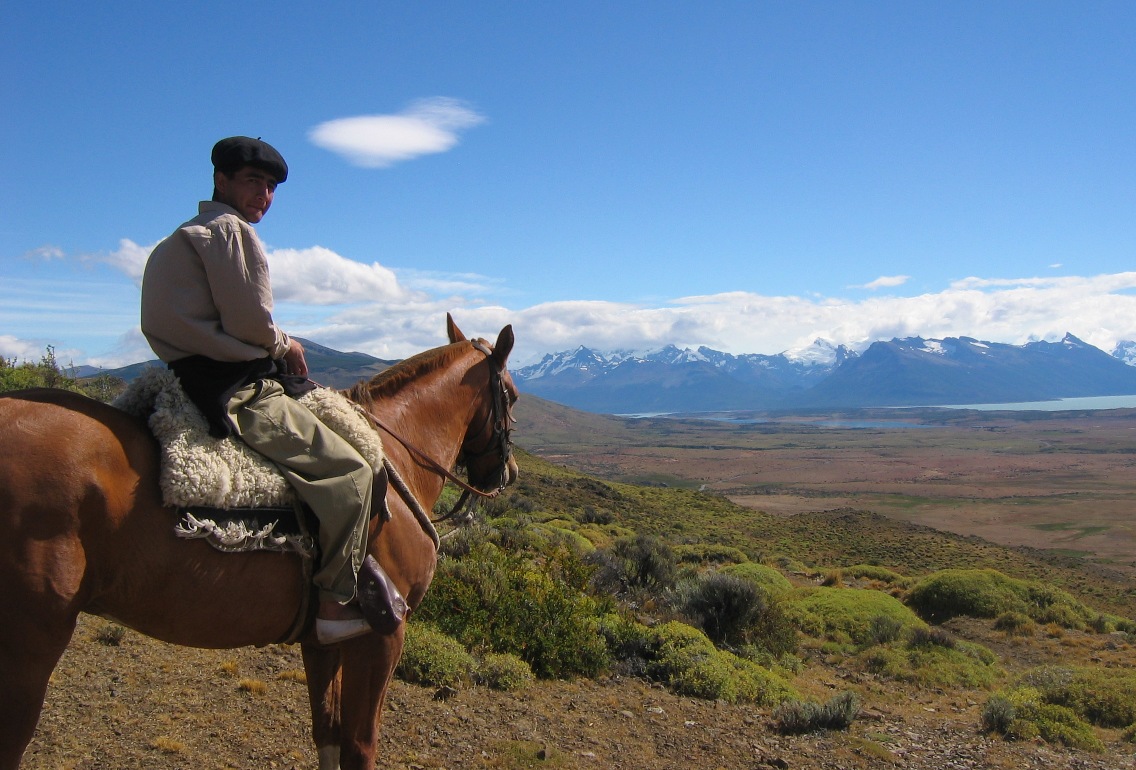
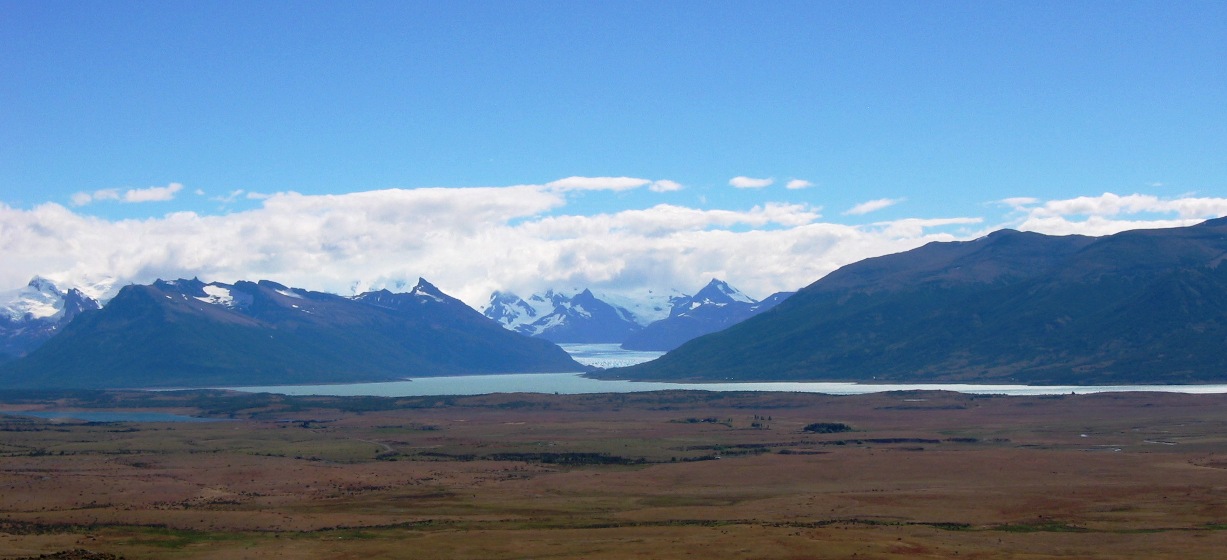
And a little over to the west, Perito Moreno Glacier.
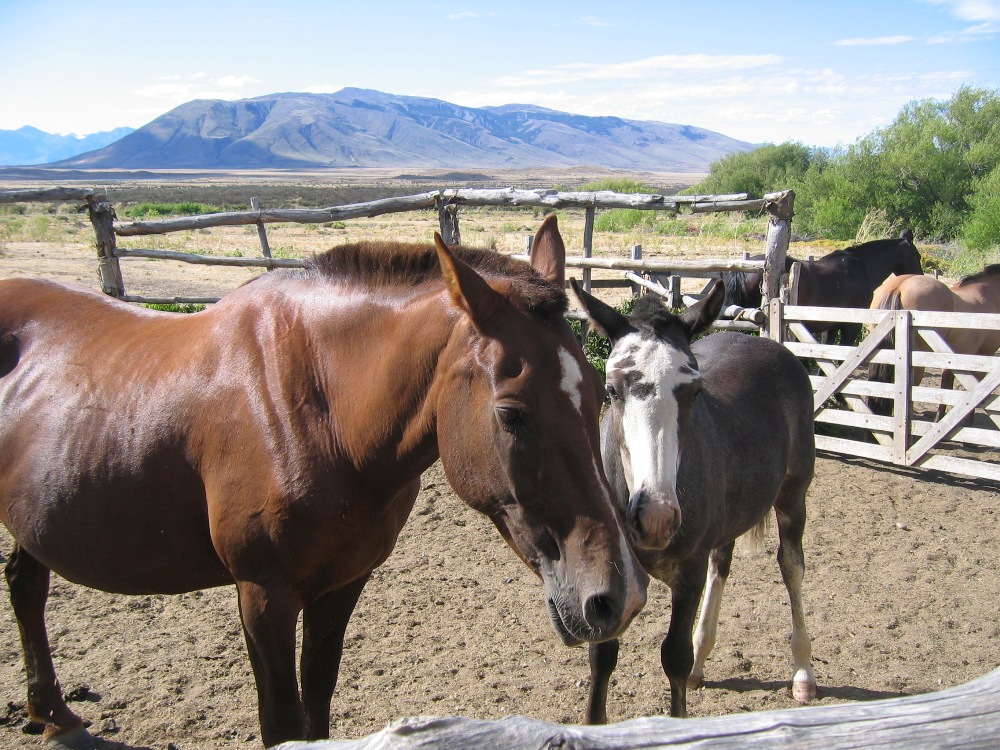
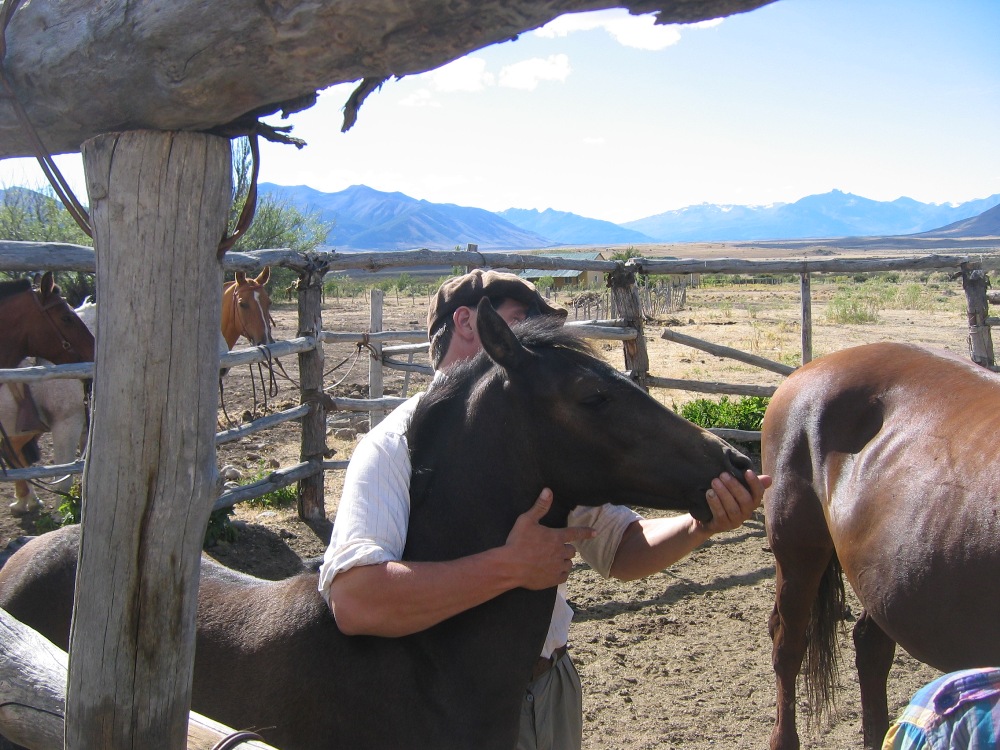
Back at the coral, Frederico showed us how he gets a young horse used to being handled by people.
Thursday, we drove north around the eastern edge of Brazo Rico and then westward along the its northern shore into the national park. Tamara had made us reservations for a "trek on the glacier" tour. First a boat took us and about 60 other tourists back across the Brazo Norte to the southern shore, very near the face of glacier Perito Moreno.
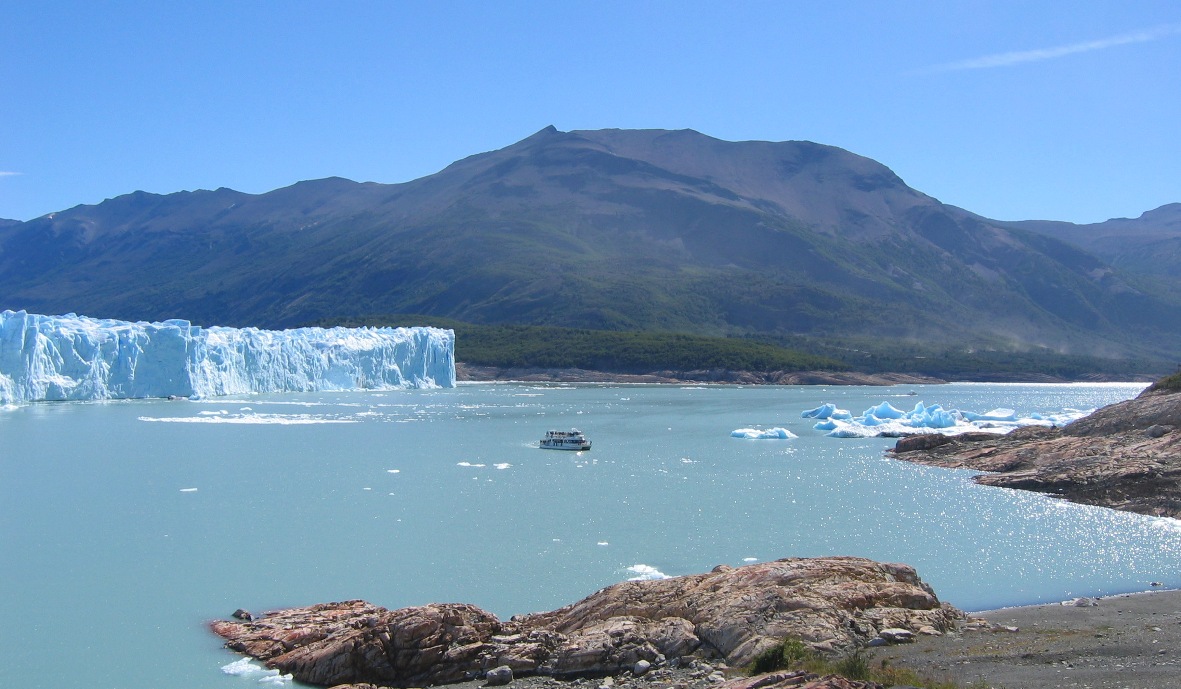
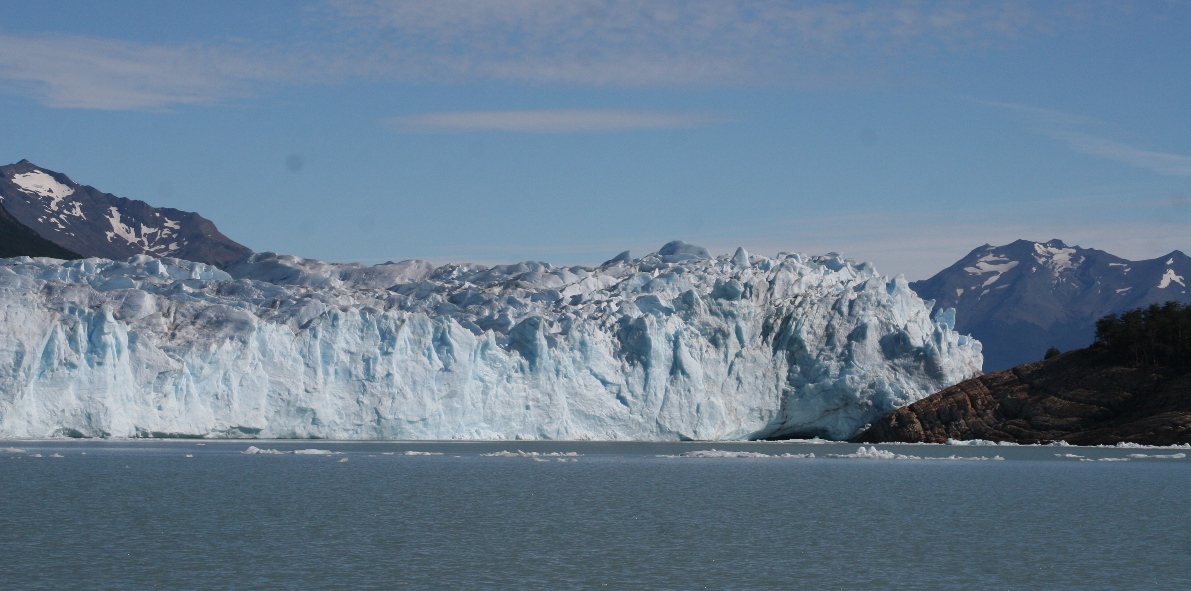
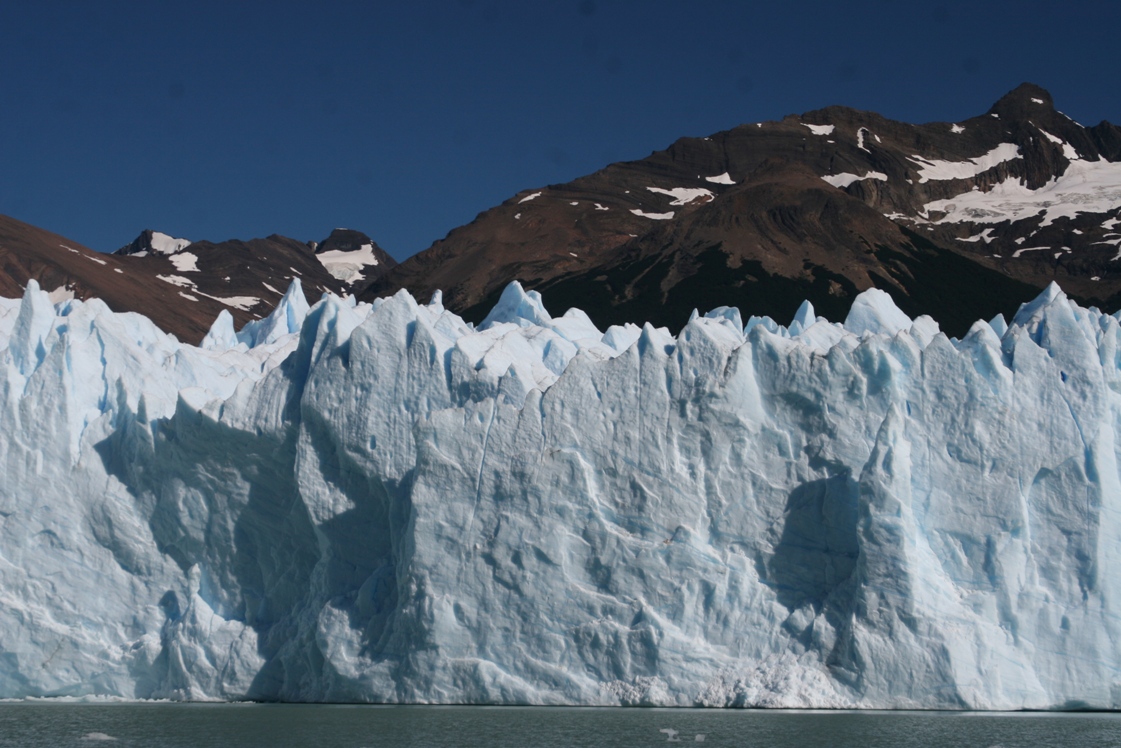
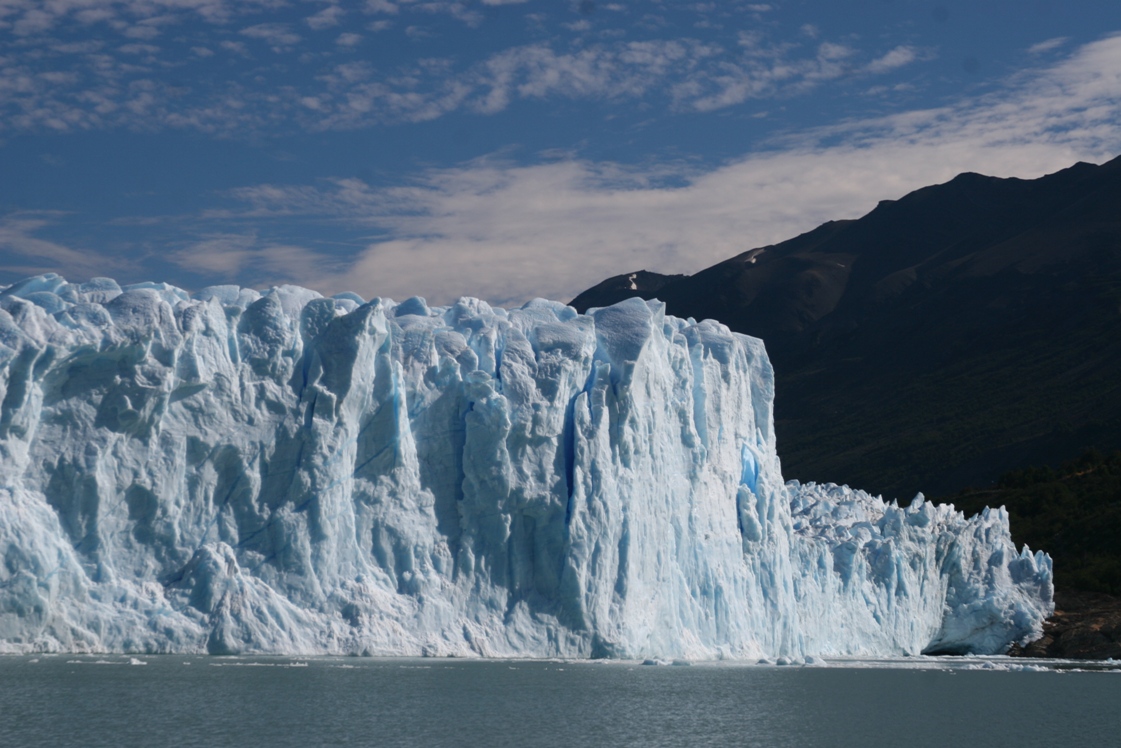
Views from the boat.
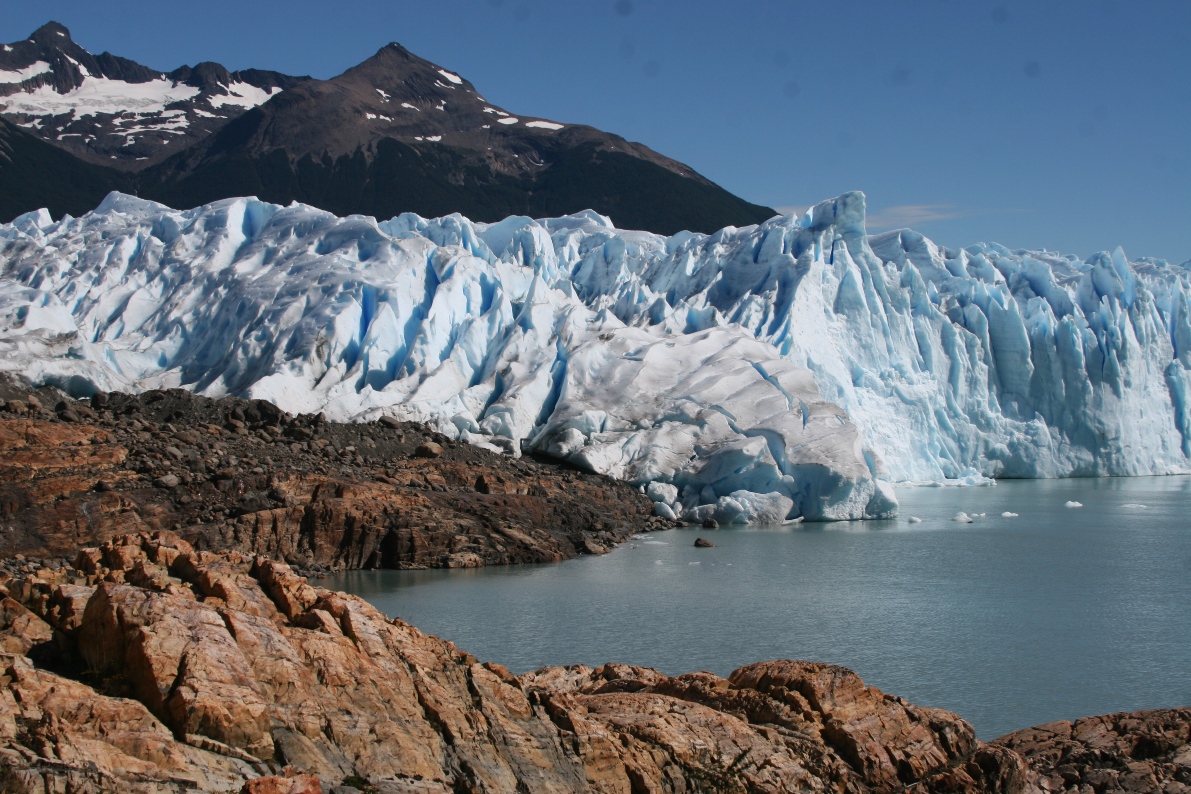
View from where the boat put us ashore on the rocks.
After a short hike up the hill to a couple of small buildings, the guides separated the tourists into smaller hiking groups of 15-20 persons, gave us an overview of what we were about to do (walk on a glacier), and then led us to the edge of the ice.
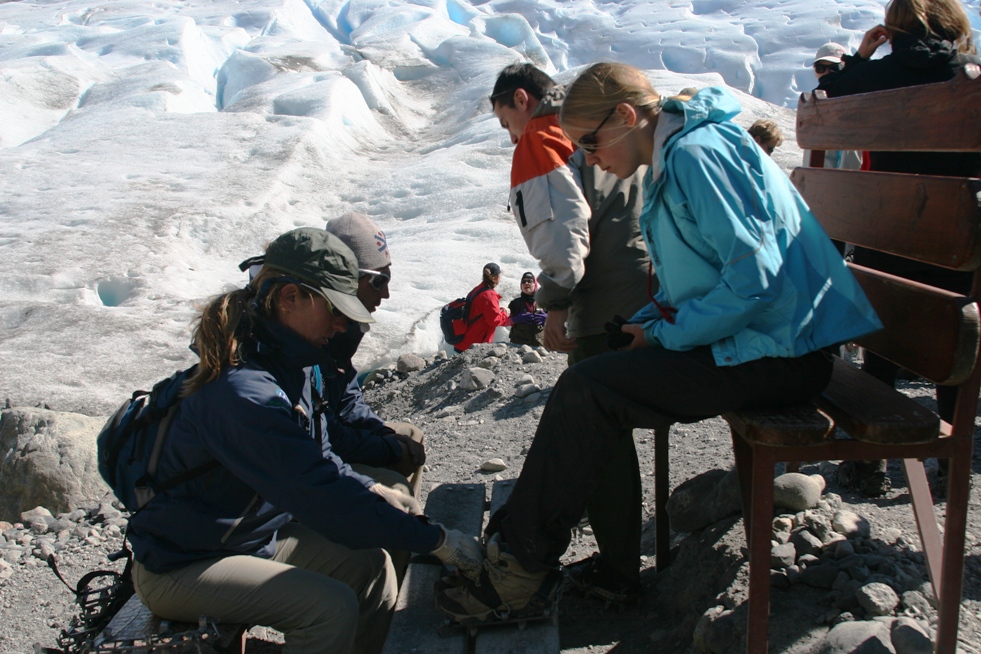
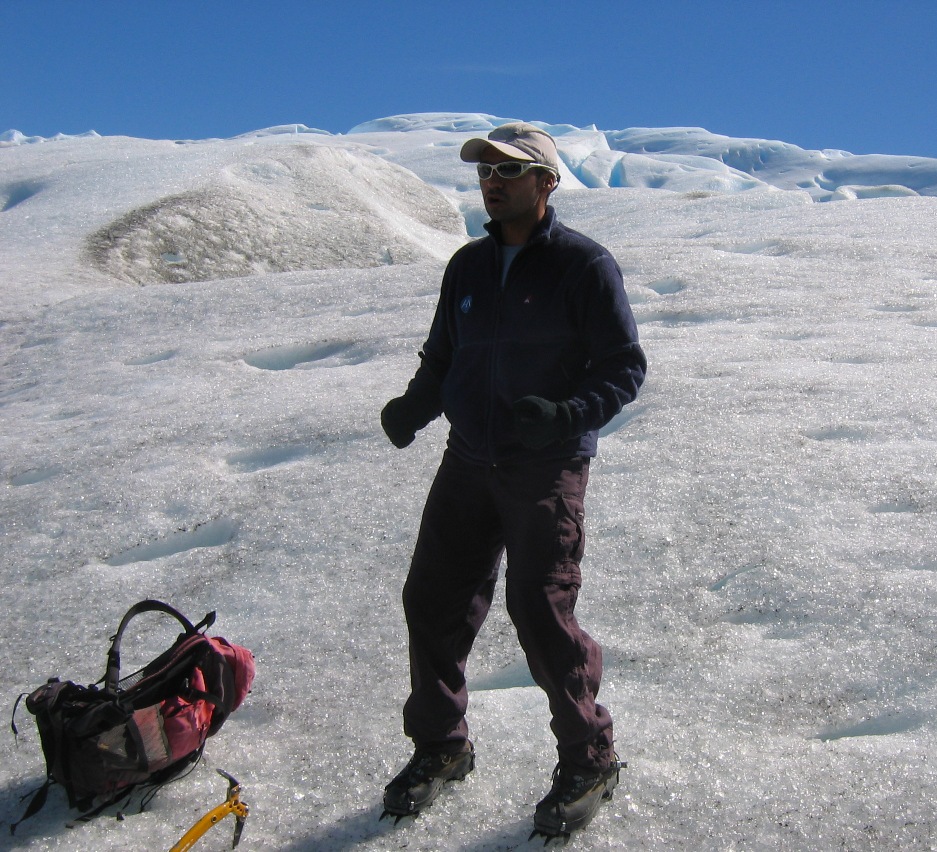
The guides helped the tourists put on crampons, and gave us a short safety lecture and demonstration of how to walk with spikes attached to our feet. Rule #1 - don't step on anyone else's foot.
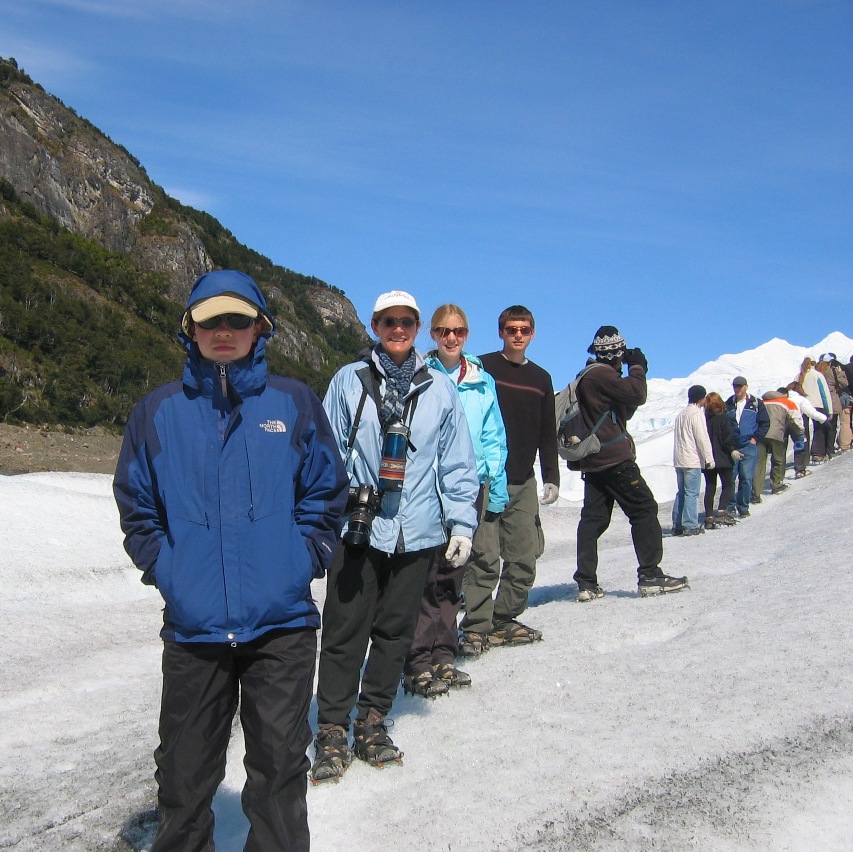
Ready to go.
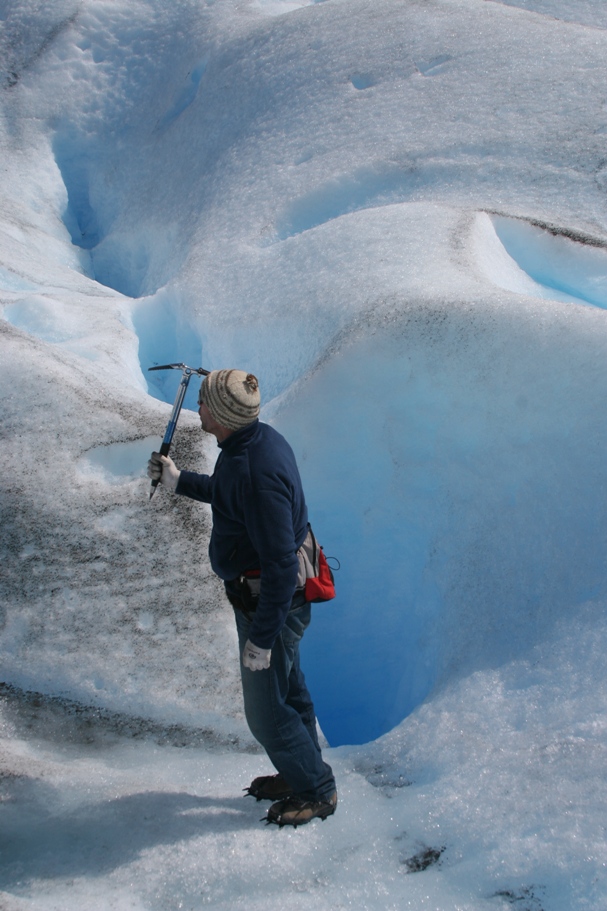
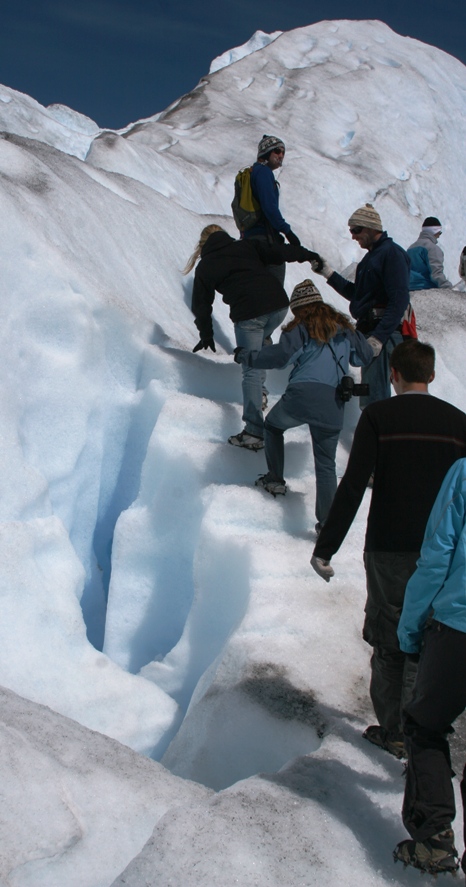
And off we went.
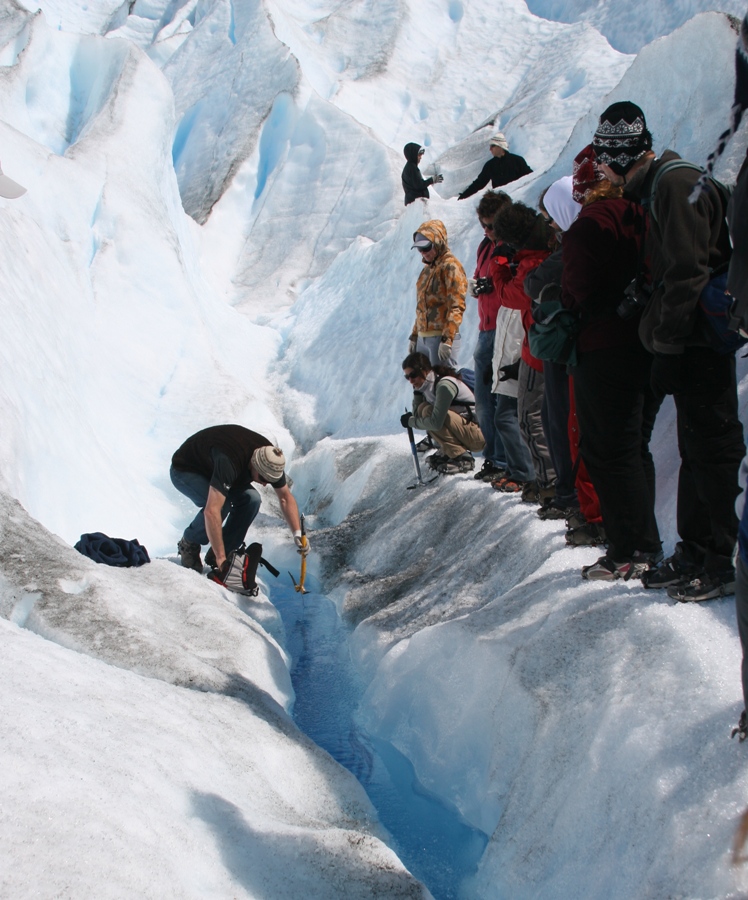
The guides were great. Here one of them fishes a camera that a careless tourist had dropped into a water-filled crevasse.
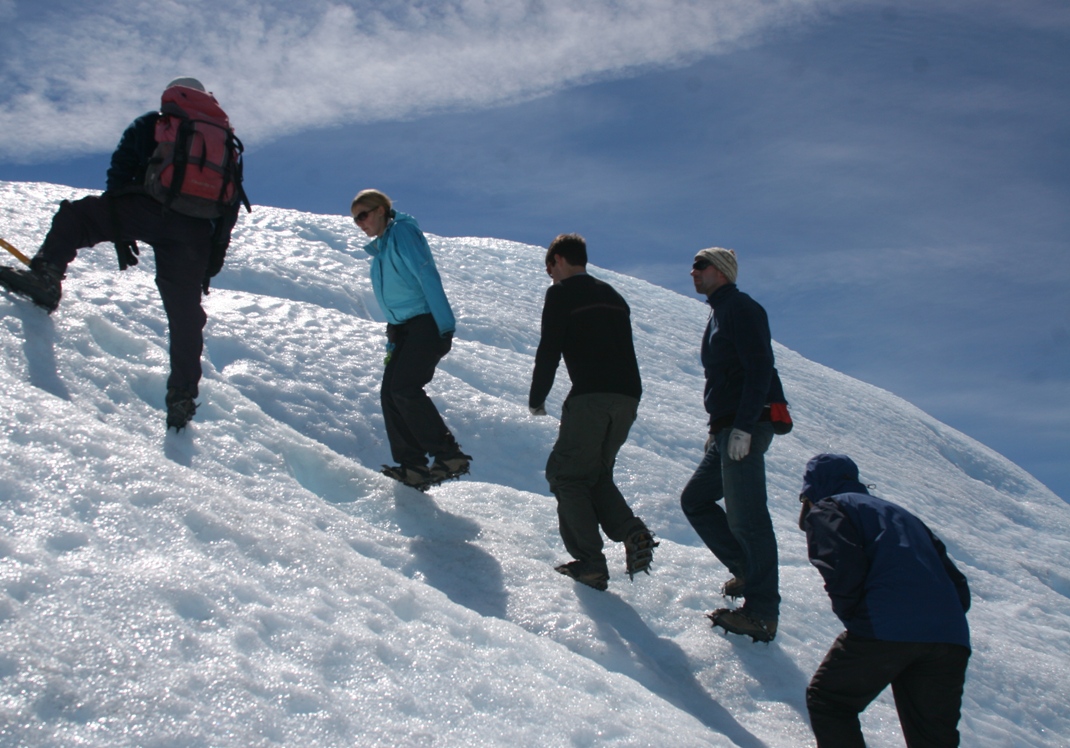
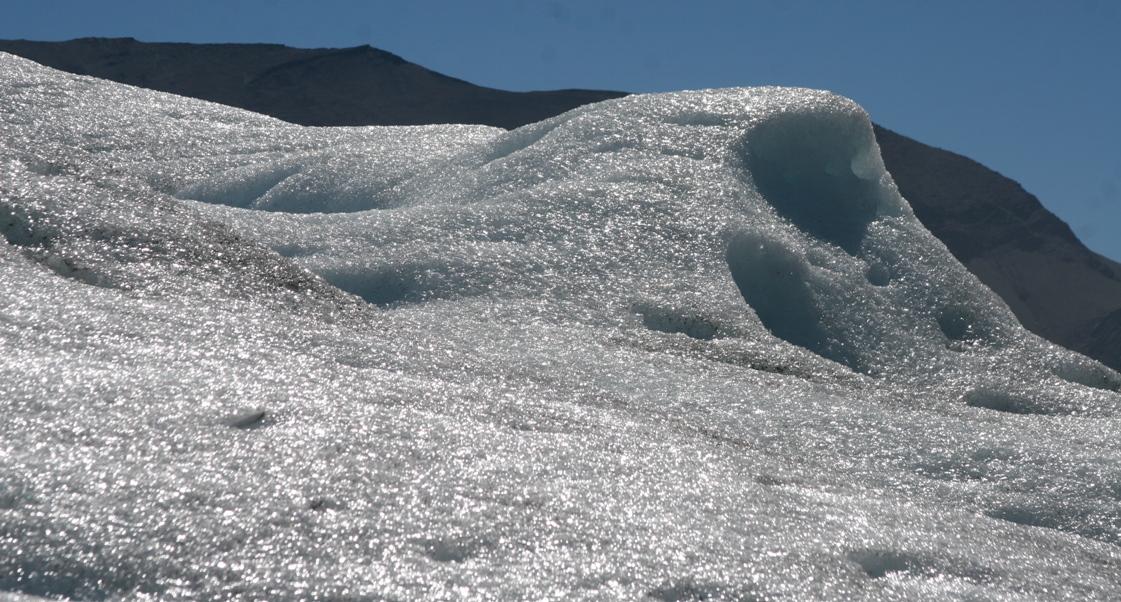
Having fun.
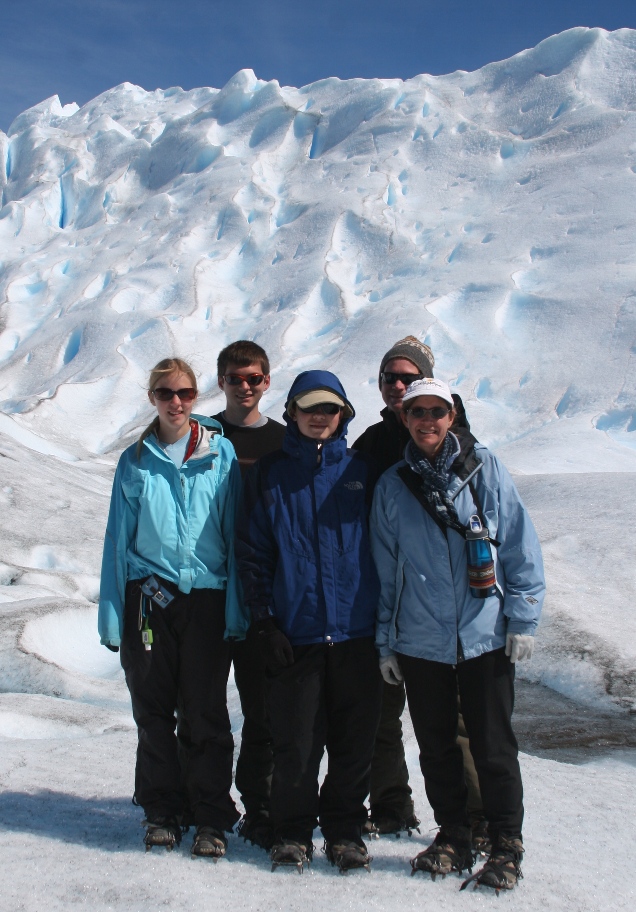
Posing for the family photo.
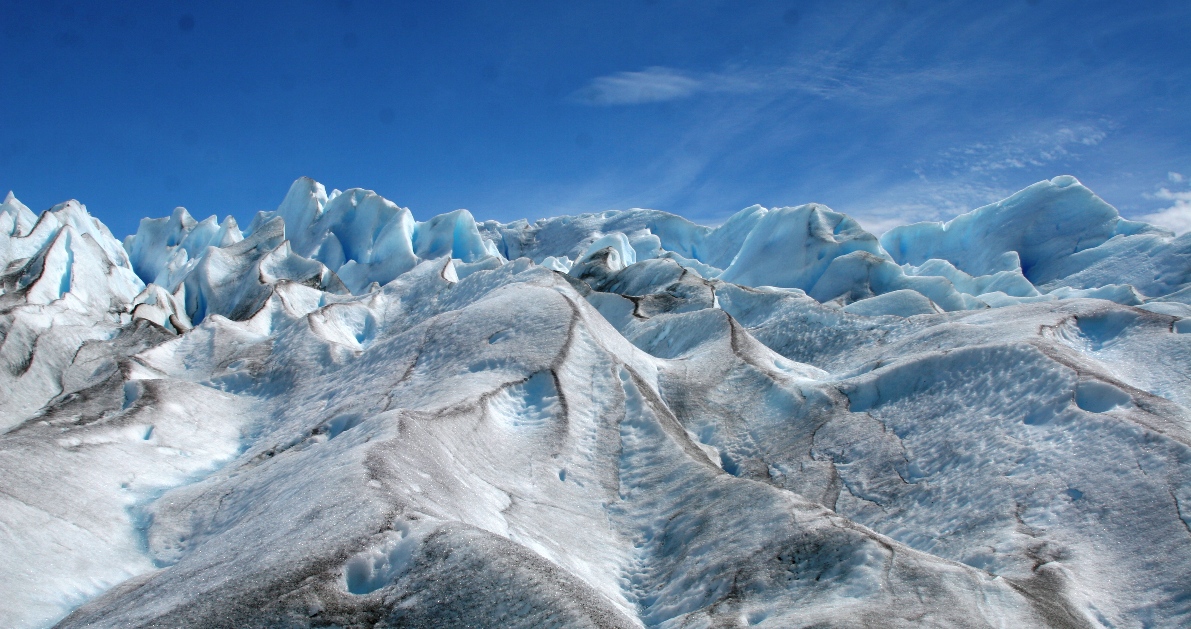
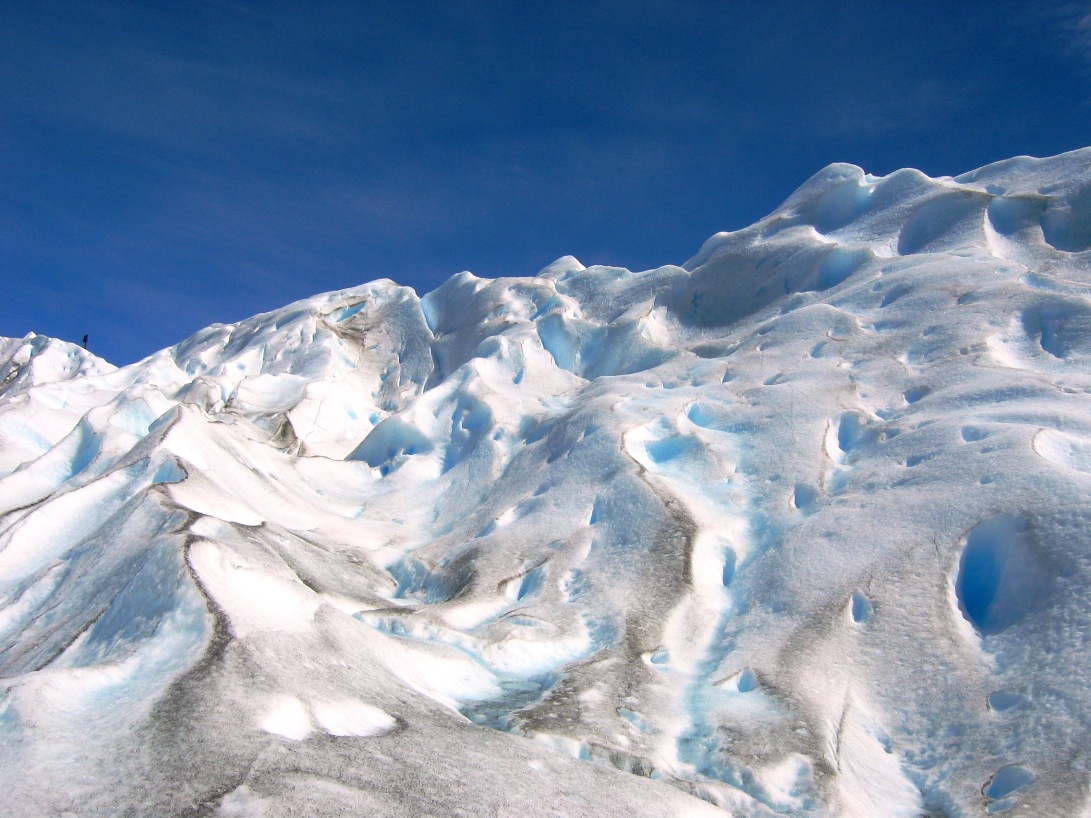
Is it the top of a giant meringue pie?
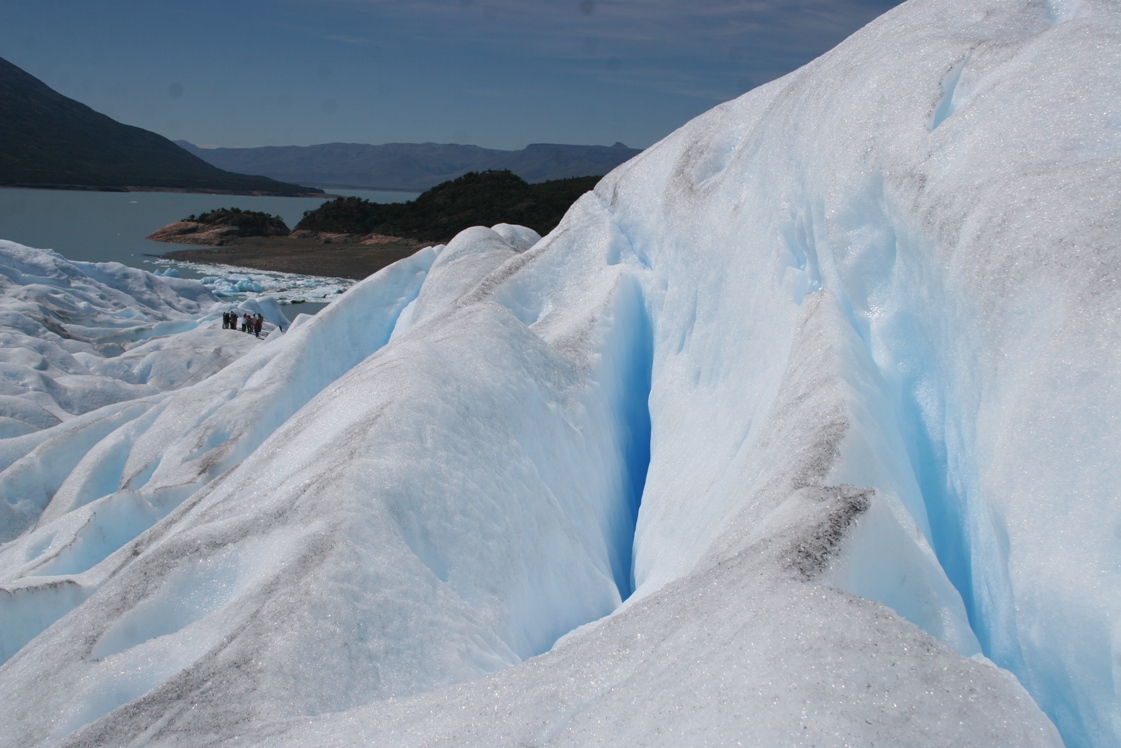
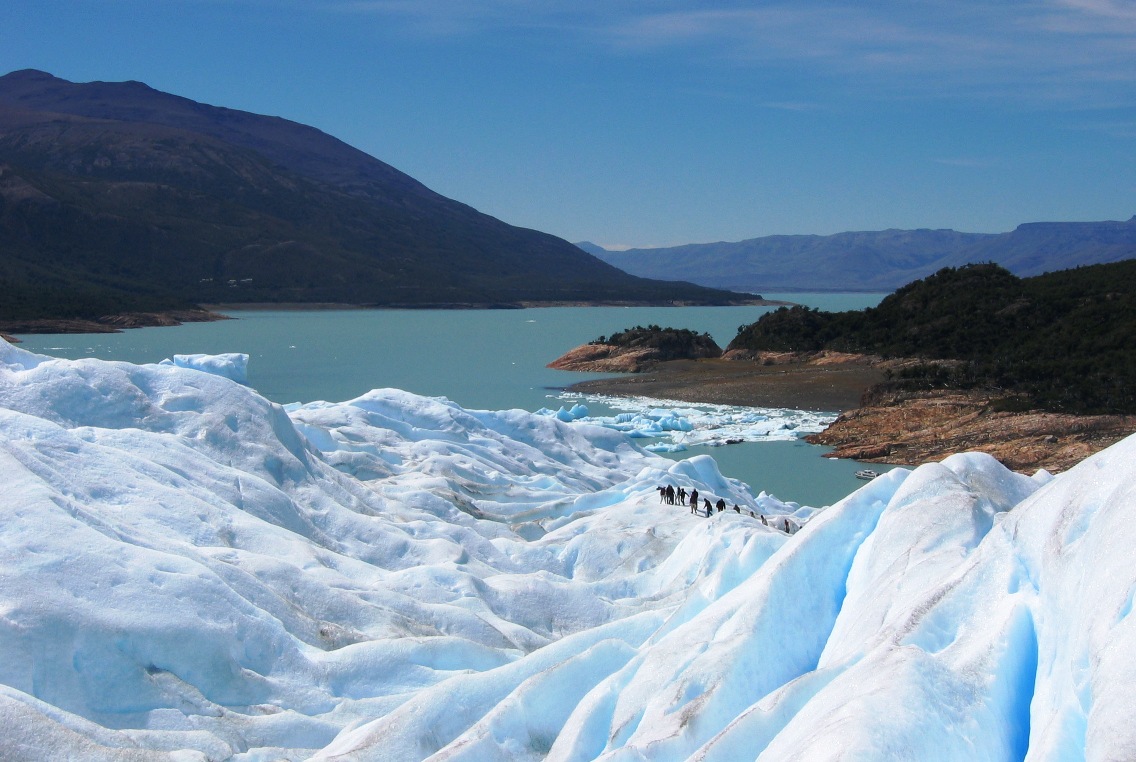
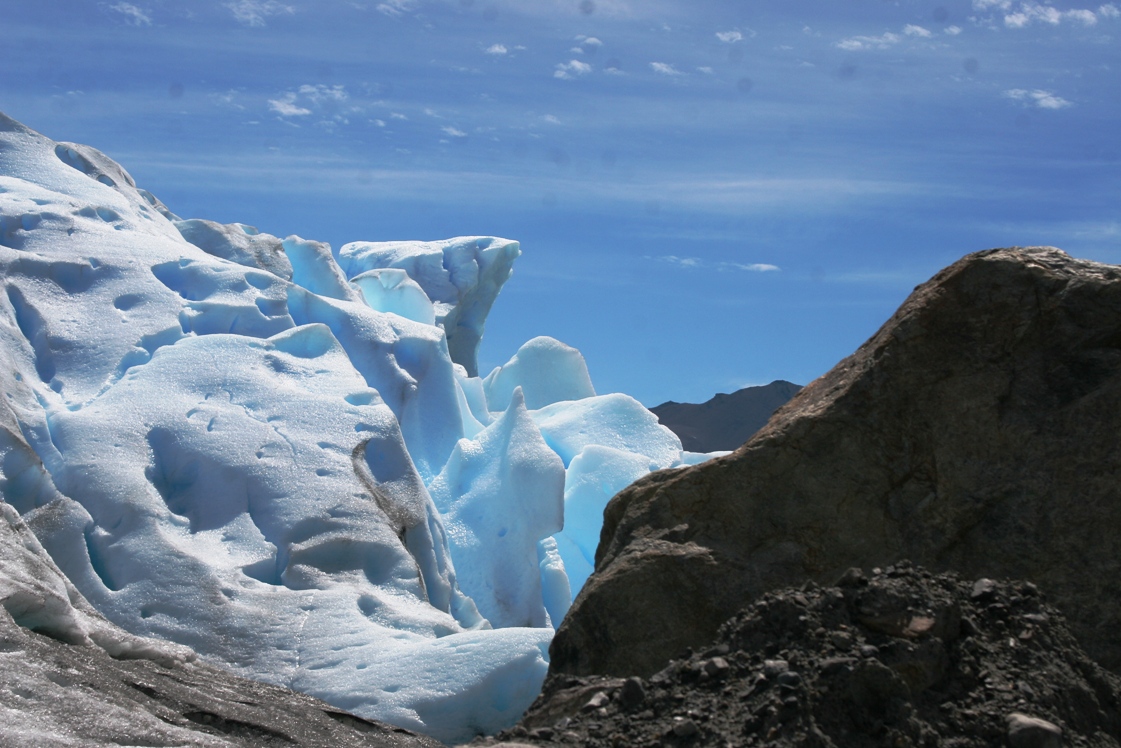
Looking back down towards the lake.
After the boat deposited us back on the side of the lake where we had parked the truck, we drove further westward till we came to the end of the road. Here there are a series of viewpoints located right above the spot where the glacier Perito Moreno butts up against the end of the peninsula.
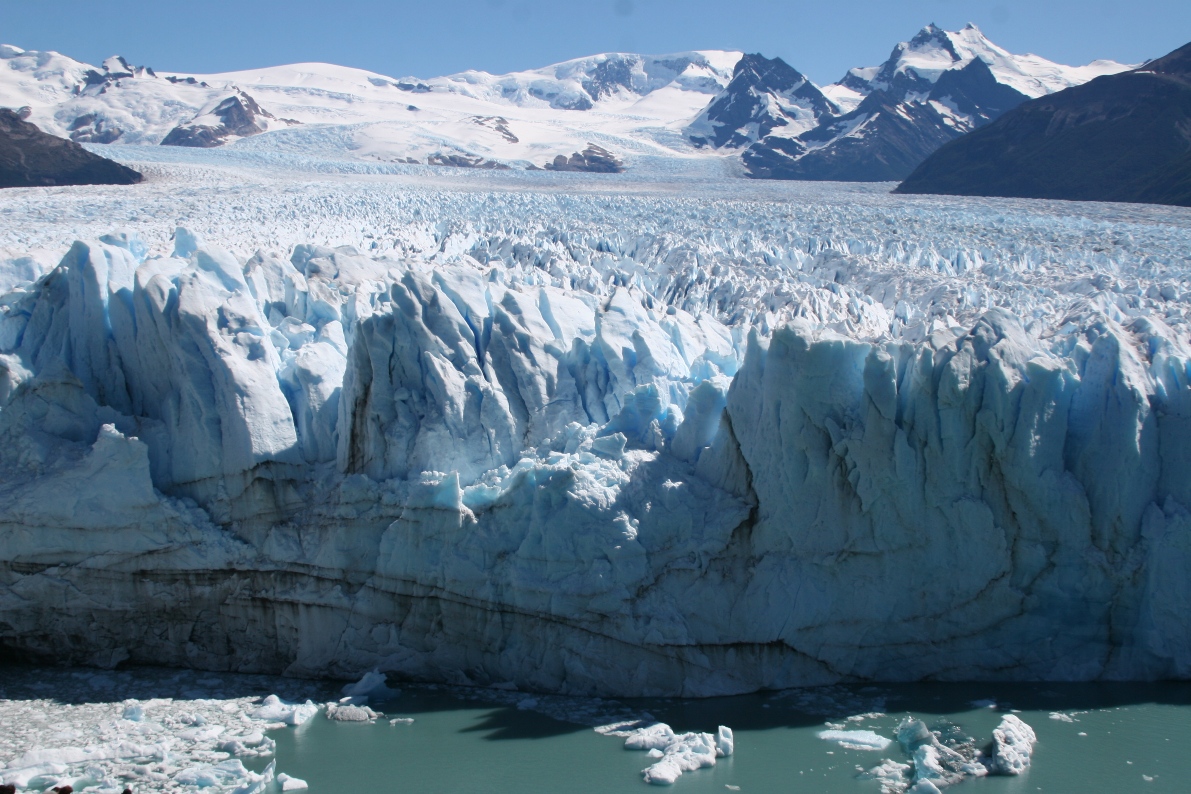
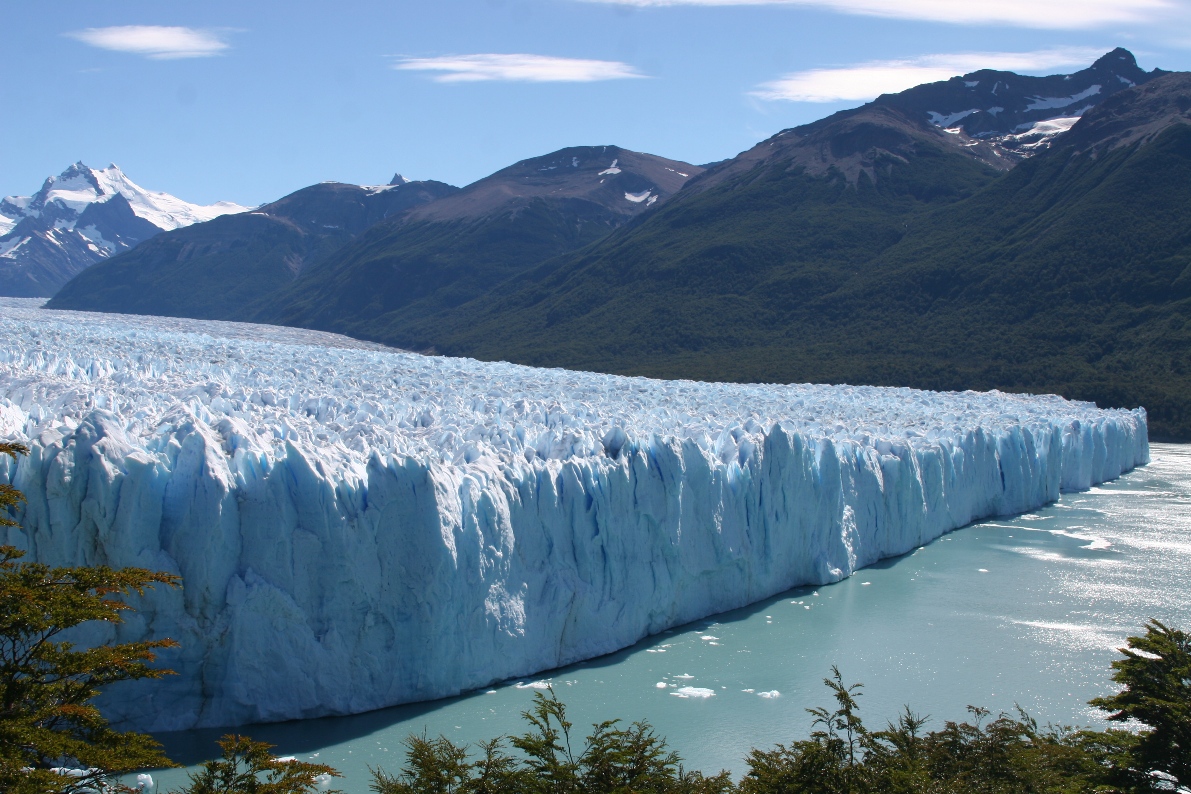
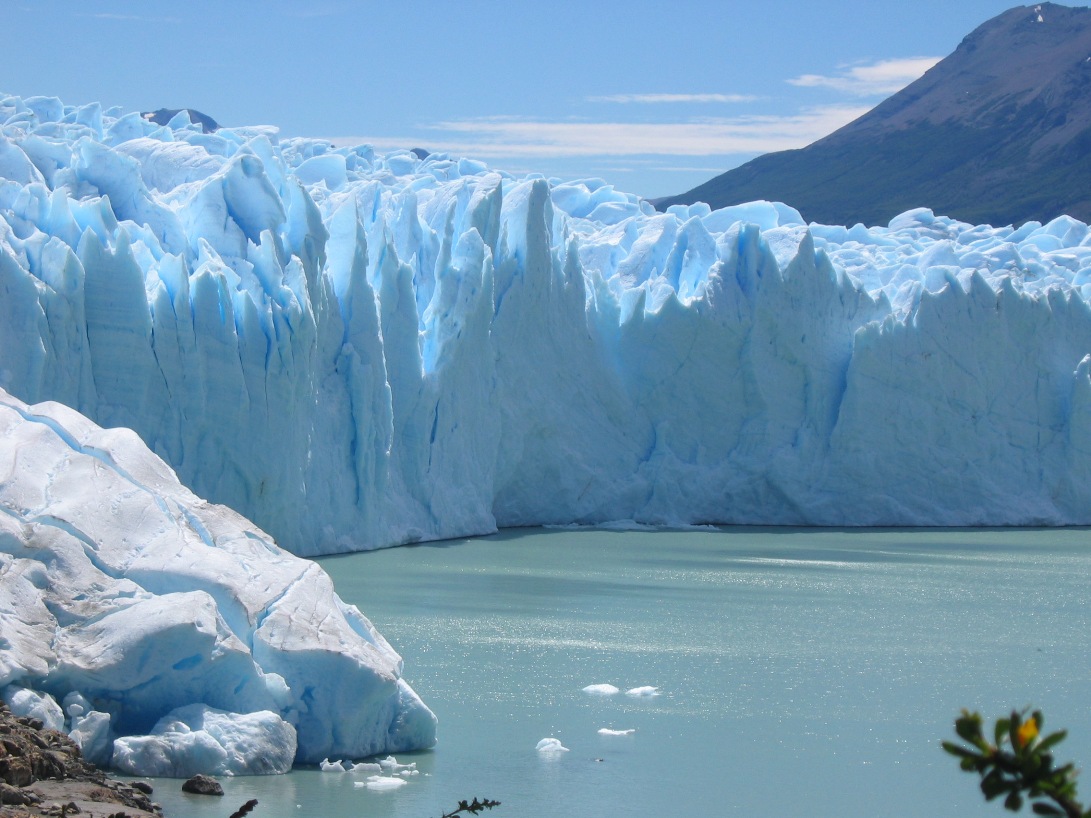
And this is what it looks like from the viewpoints.
The warm sunshine was wonderful, but we were all quite tired after spending most of the day walking around in it. The hosteria served up an excellent remedy in the form of our dinner - a traditional Patagonian asado (barbecue) featuring an assortment of grilled meats.
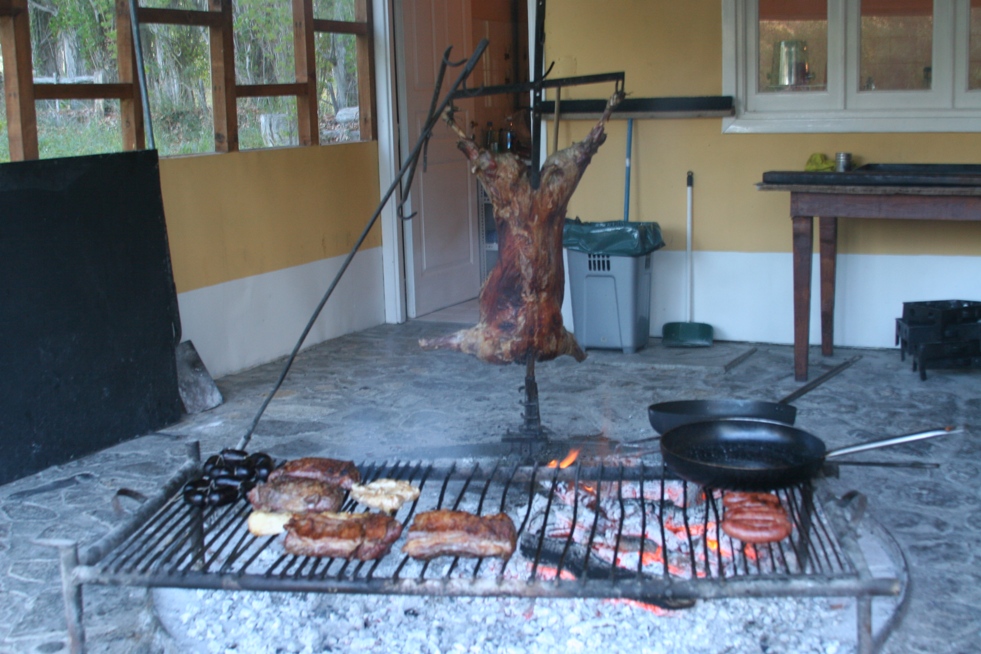
And of course, the lamb in the back is NOT Angelo.
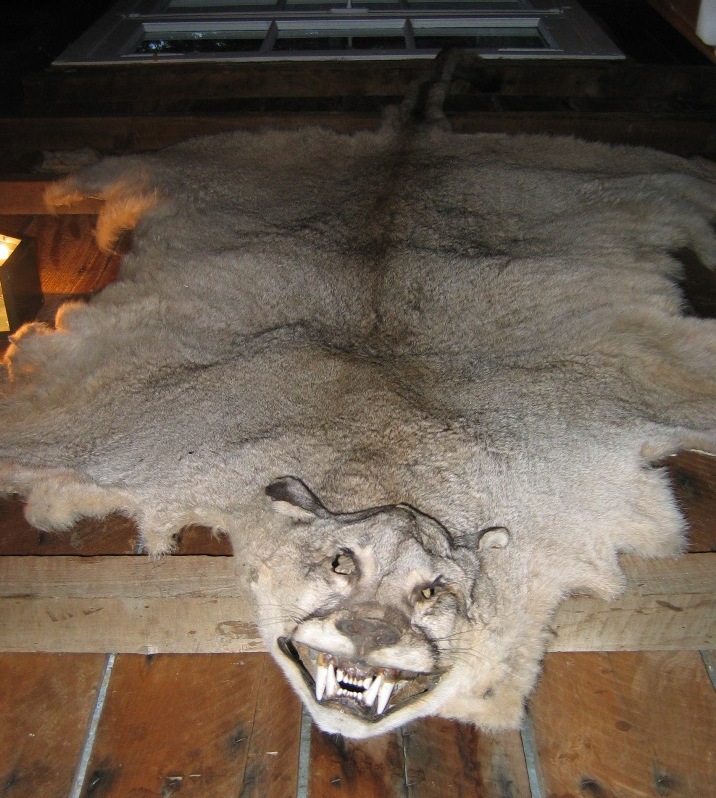
A puma skin decorates the wall of the dining hall where we enjoyed the asado. While riding out on in the grazing lands, we had noticed many sheep skeletons and bones littering the countryside. Frederico told us that for an estancia with 20,000 sheep, it is normal for about 1000 of them to die each year while grazing out in the fields. He guessed that about half of the deaths would be from injury, illness, or old-age, and the other half would be from the predation of pumas - the cost of doing business in a natural environment.
Friday, we simply hung around the guesthouse. Tom and Anna did schoolwork, Rolf and Lynn helped Tom and Anna as needed, and Geoff worked very hard at relaxing.
Today (Saturday) was our last full day at the ranch. Frederico took us for a longer horseback ride for our principal diversion and entertainment of the day. We left in the late morning and after a couple of hours, we stopped where a small truck-track reached a deep-cut stream. Tamara had driven out with a picnic lunch, and we all enjoyed it together before riding back to the house. It has been unusually warm the last few days, but today the heat wave finally broke and the weather was cool and slightly breezy. There were a some pretty dark high clouds but they delivered no more than a few sparse drops of rain. Frederico had been urging them on all day but to no avail. Many small streams running down from the hills have gone completely dry and the ranch desperately needs more water, especially considering that there are still a couple more months of summer left to go.
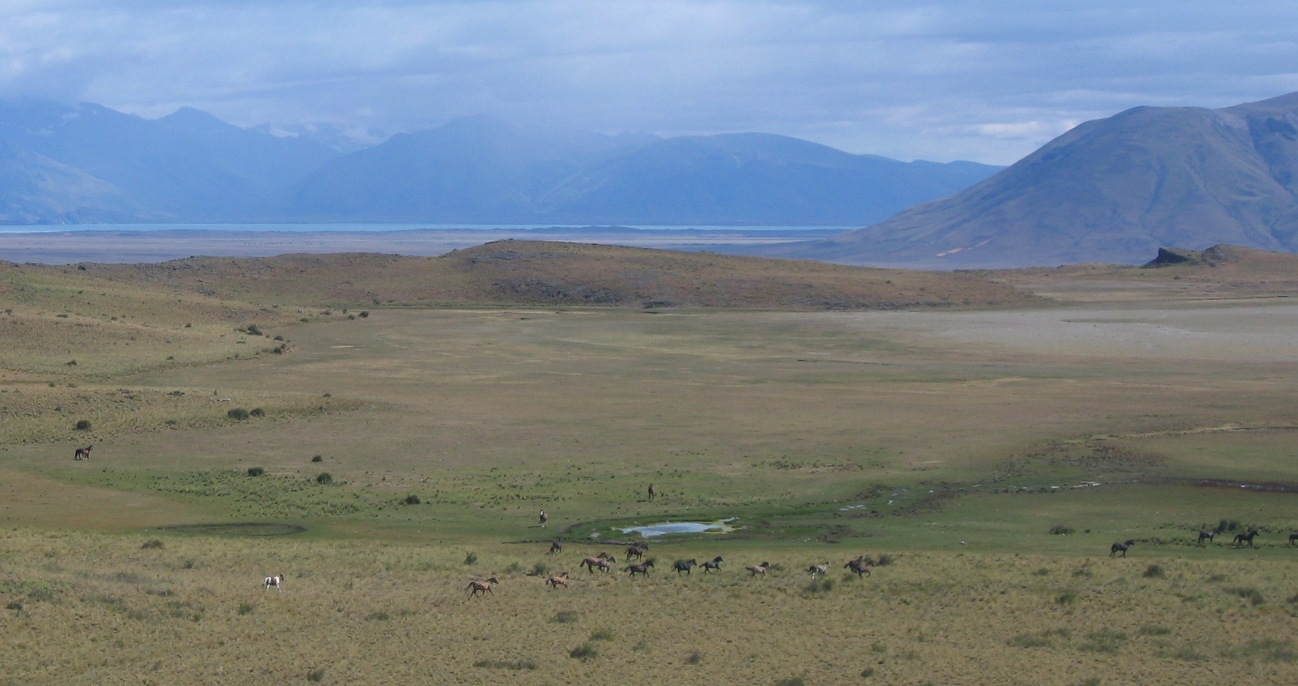
One of the highlights of this ride were the several small herds of wild horses that we encountered along the way.
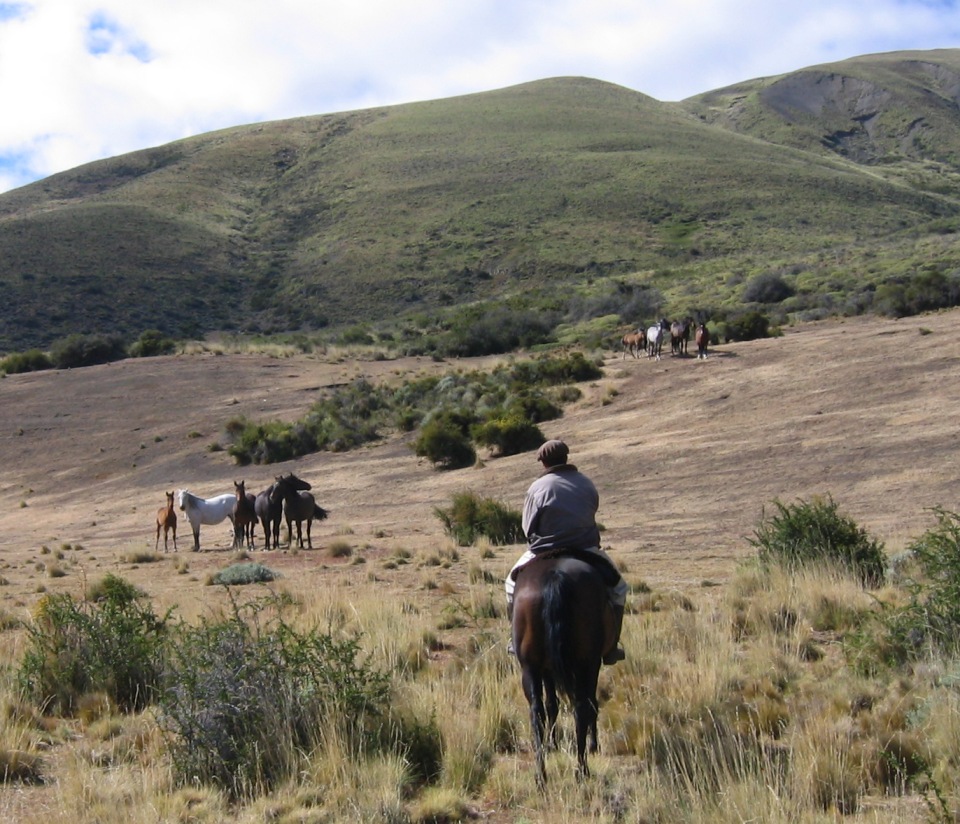
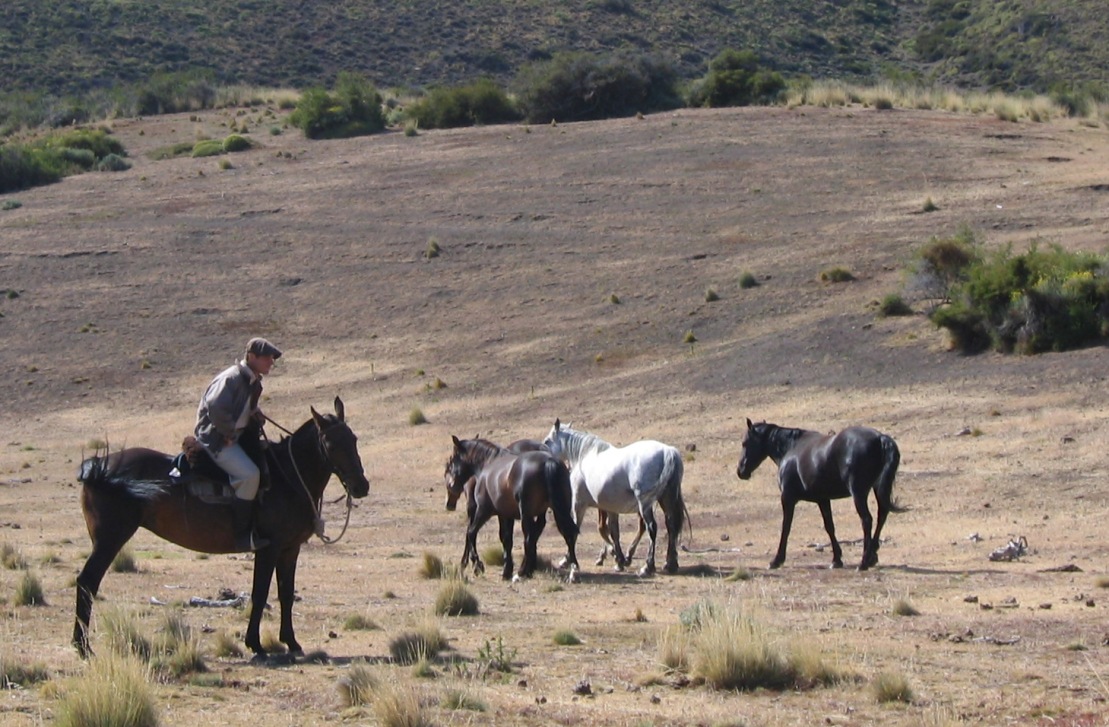
Here Frederico tries to get close to a small group of wild horses.
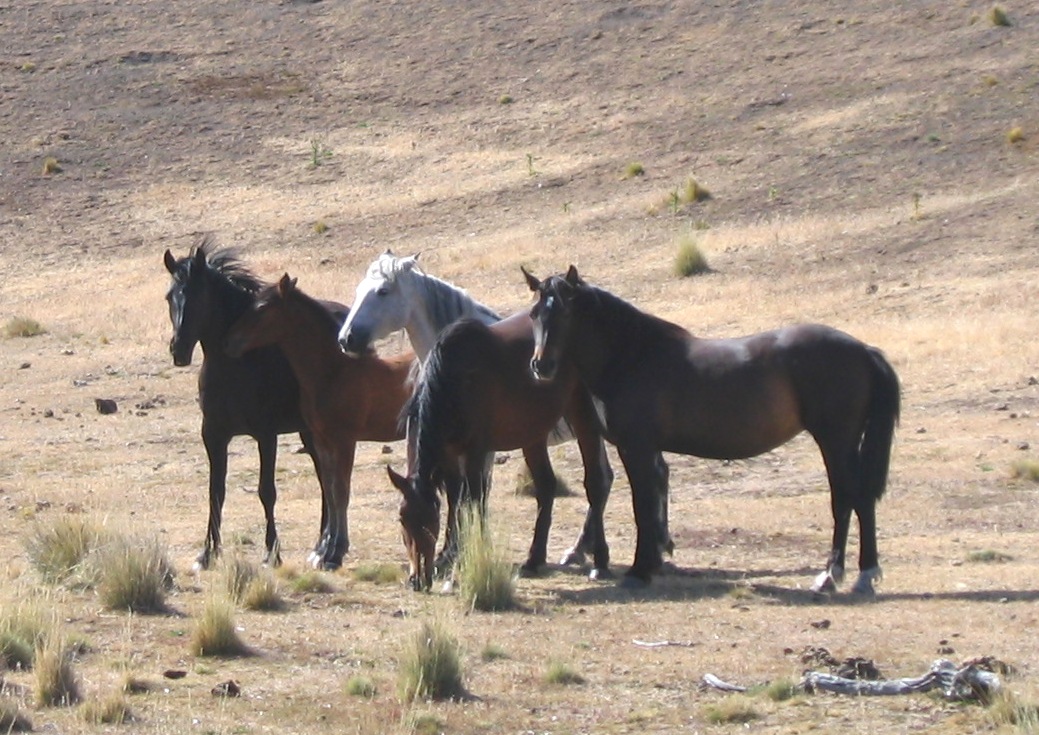
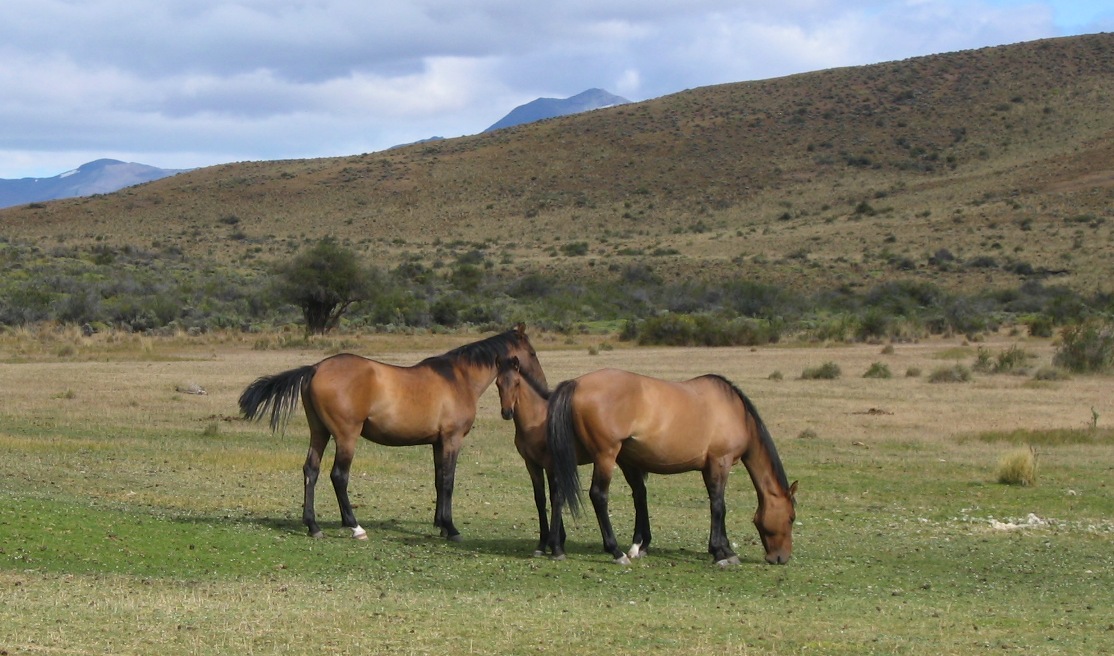
They looked at us with curiosity, with the foals neatly tucked between or behind their parents.
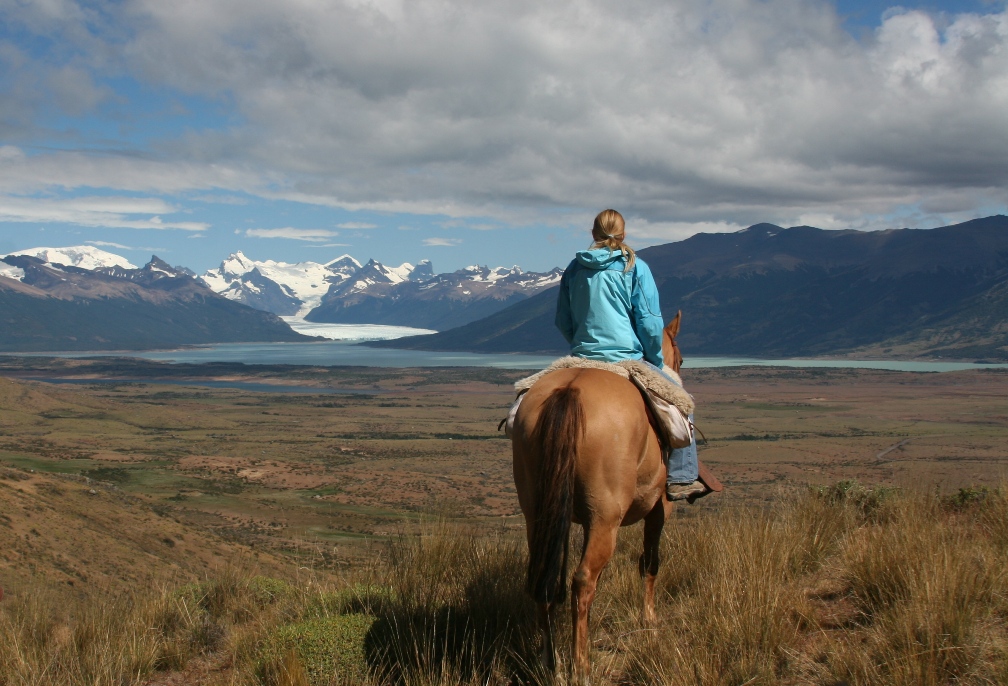
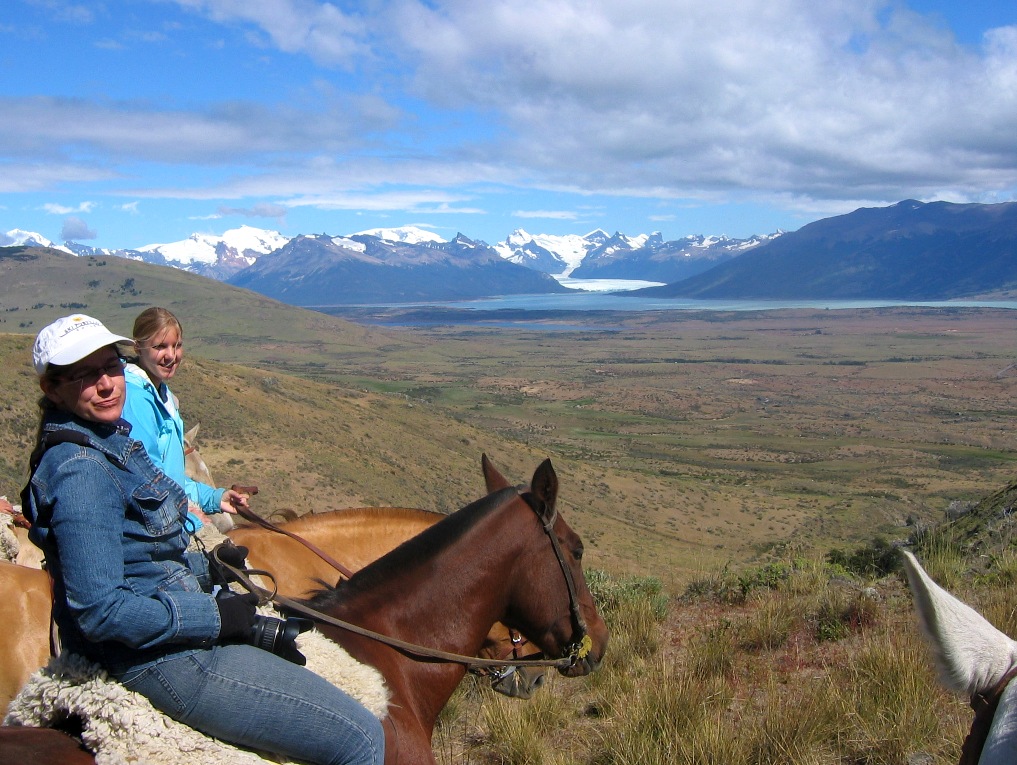
And of course, that amazing glacier was still there.
Tomorrow we'll drive a few hours up to a small town called El Chalten which is located at the very north end of the national park. We'll won't be staying at a fancy estancia, but we should be able to survive the return to more modest accommodations. Too much luxury and the kids start expecting it all the time! Staying at Hosteria Alta Vista certainly was very enjoyable and it was a great place to get a little taste of the workings of a traditional Argentinean sheep ranch.
Although both Anna and I take many of the pictures that are posted here in the journal, the really good ones usually come from Lynn.
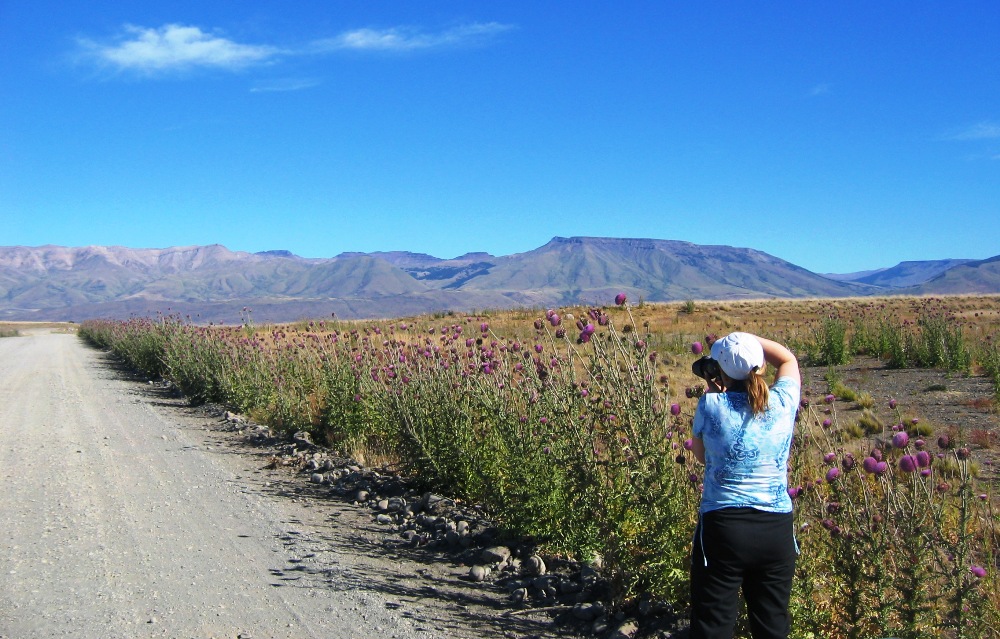
She takes her time and checks all the possible angles and views.
It probably helps that she's using a pretty good camera. But I have to admit, she's definitely got an eye for composition.
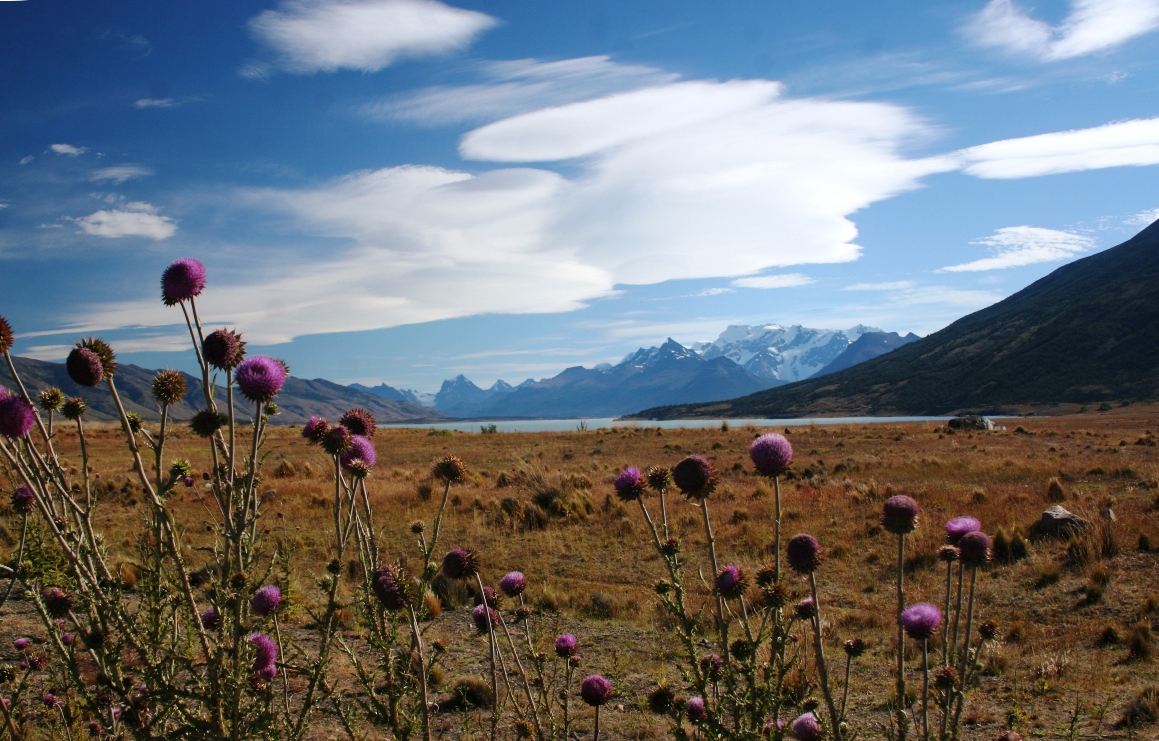
-Rolf