Estancia Telken - Cueva De Las Manos
People And Nature - Hand In (and/or Over) Hand
Sunday February 17, 2008
Yesterday, drive from Parque Perito Moreno north to Estancia Telken was as uneventful and boring as we had hoped, so there are no exciting tails of danger or survival to recount. It was just another long slog over gravel and dirt. As a minor but positive note, the obvious finally dawned on me - to stuff towels in the cracks near the tailgate of the truck as best as possible, and tape over any other noticeable crack inside the truck bed. The remedy was applied in El Calafate and seems to be working quite well as a dust prevention measure.
Estancia Telken is a wonderful and homey "little" family operation (actually, about 21,000 hectares of bunch-grass grazing land with at least one Andes-fed clear-running stream), but seeing as how we'll be here for a couple more days, I'll save more about that until the next journal entry. The highlight of our day today was a trip to the nearby Cueva De Las Manos, the UNESCO World Cultural Heritage site I alluded to previously as being a primary reason for heading up the ruta 40.
Hands painted in both negative (paint where the hand "isn't" to create an outline) and positive (paint where the hand "is") images are a common artistic motif of the ancient people who once populated this region as far back as 10,000 years ago. There is no real record of anything regarding this civilization, other than the rock paintings they left on the walls of overhanging cliff "caves," and social and commercial detritus in the form of tools and bones that they left buried in the dirt to be excavated and examined by modern-day archeologists. After eating breakfast in the kitchen with Coco, the aging but still hard-at-work patriarch of the estancia, we saddled up the Toyota and headed back south down the same road we arrived on the day before.
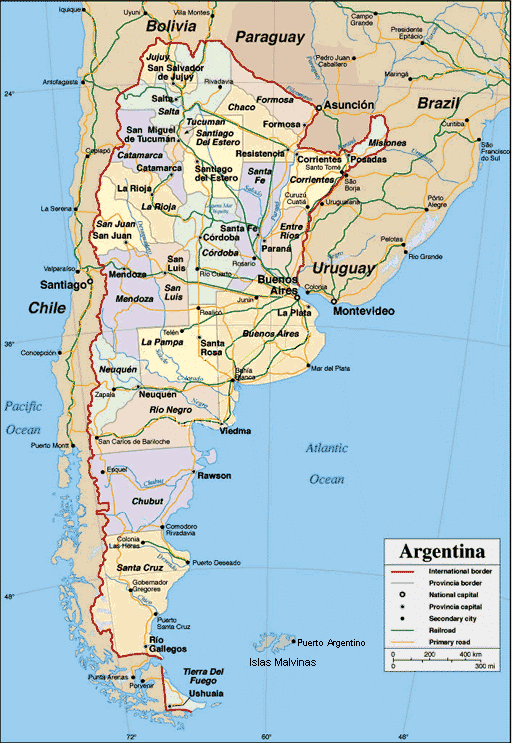
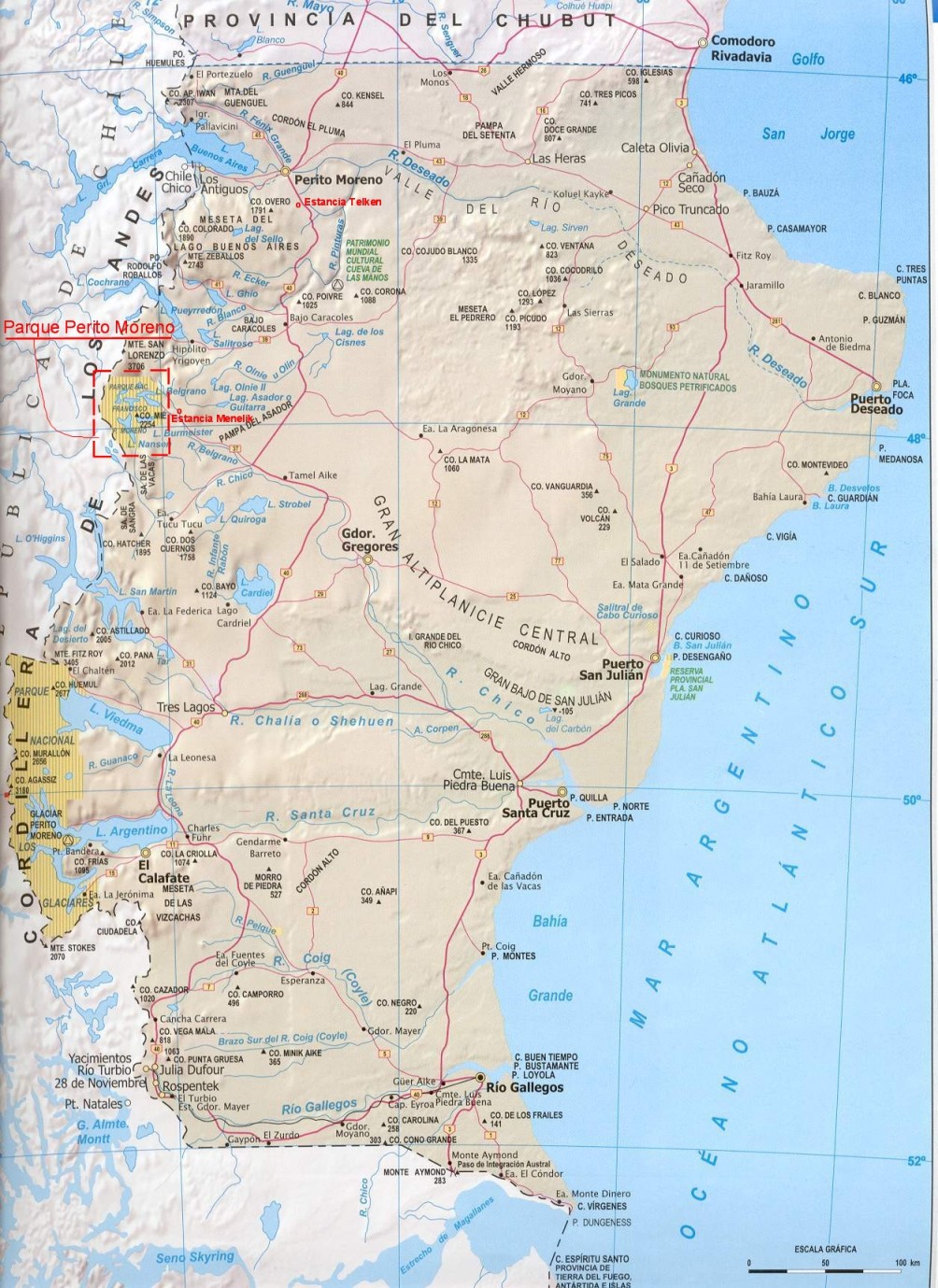
These maps show Argentina and Santa Cruz Province.
The "red" text in the Santa Cruz map shows the location of Estancia Telken, and Cuevas de Las Manos are shown in green text slightly to the southeast of Estancia Telken.
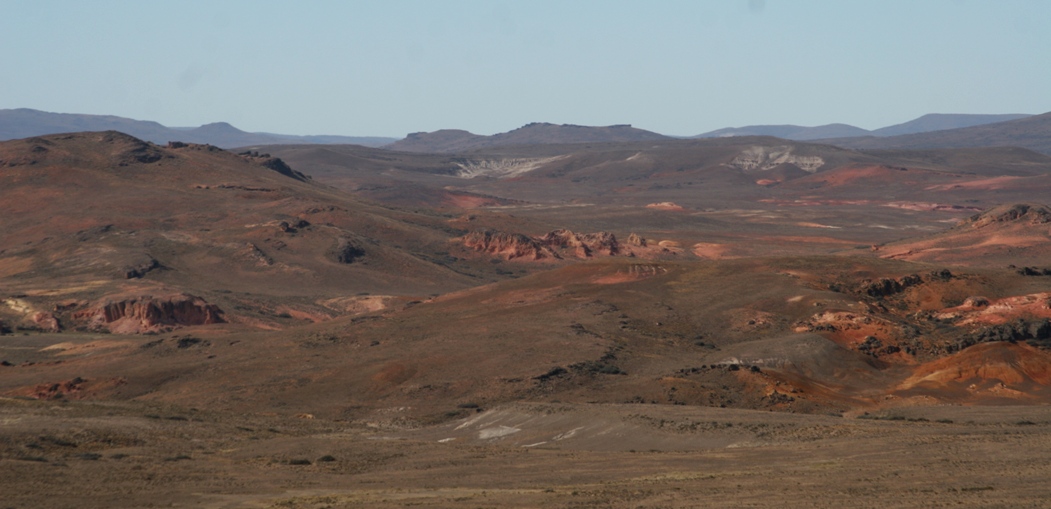
Thirty kilometers south of Estancia Telken, we turned eastward and headed down a narrow track towards the north side of the Rio Pintura canyon.
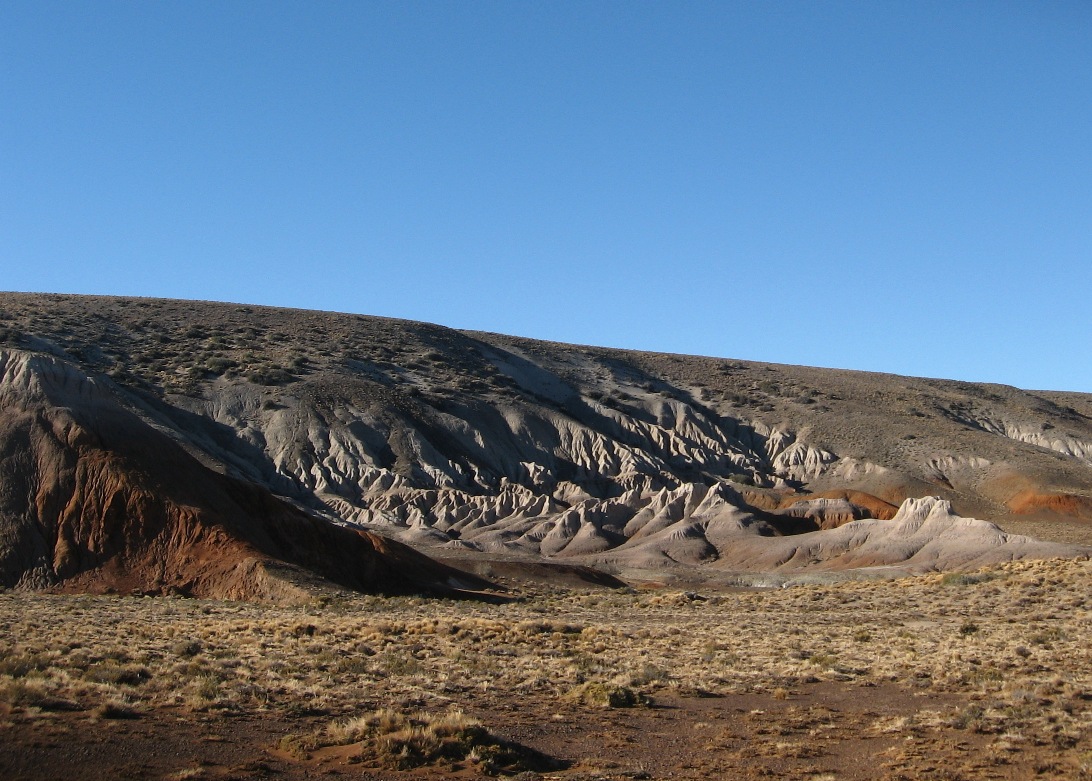
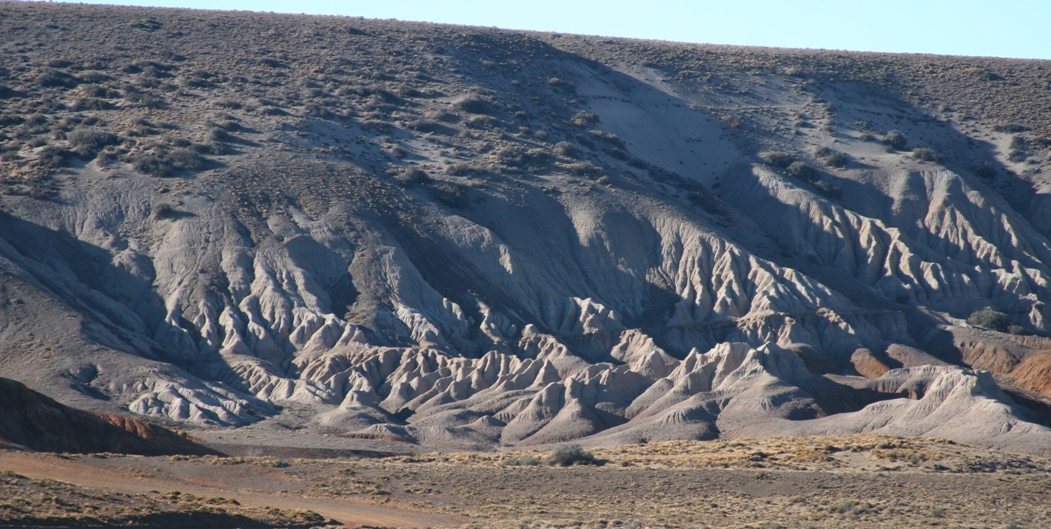
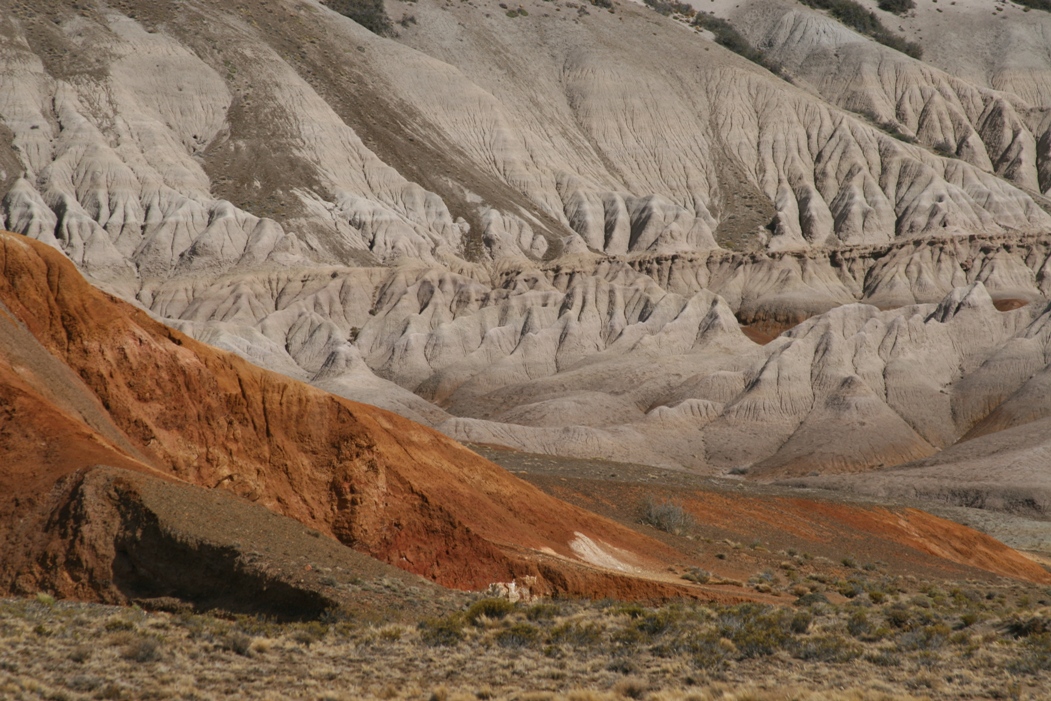
The wind-and-rain eroded hills.
The land north of "the cuevas" is private land owned by a very large estancia, and as such, we had to stop and pay our entrance fee to the cultural site at an office of the estancia, as well as register our presence for the day and sign a statement promising that we wouldn't do anything stupid.
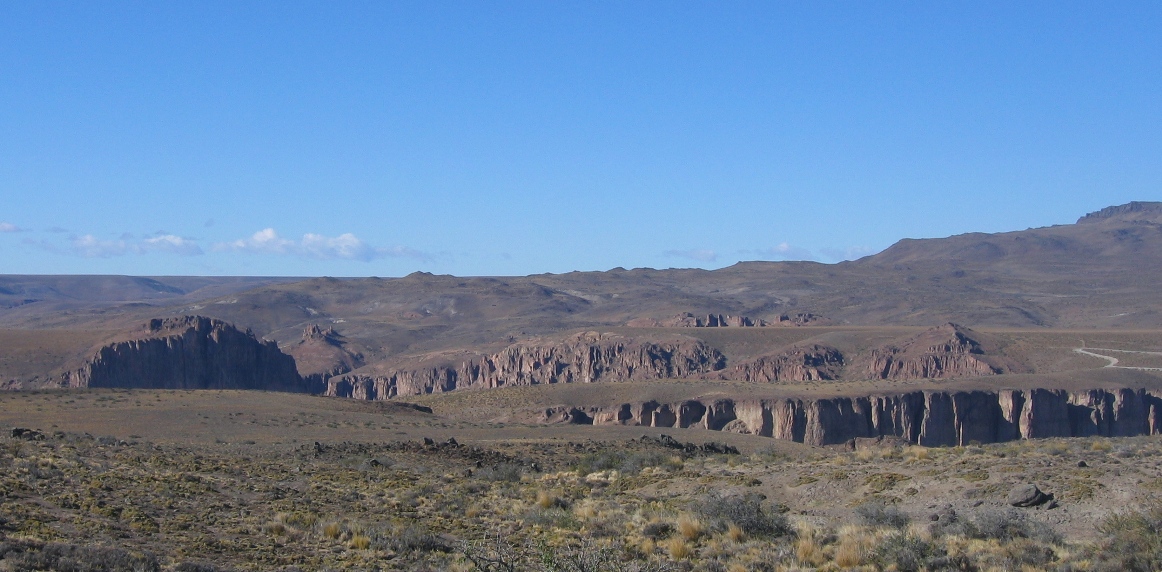
After paying our entrance fee, and driving another 16 kilometers south, we started noticing the rim of the Rio Pintura canyon.
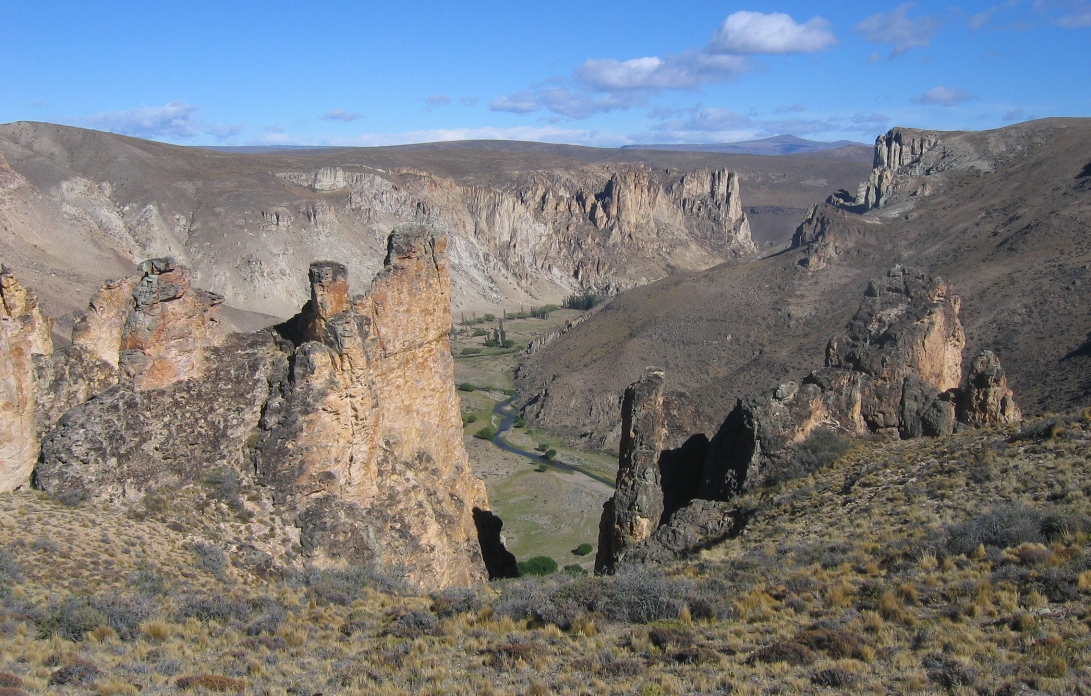
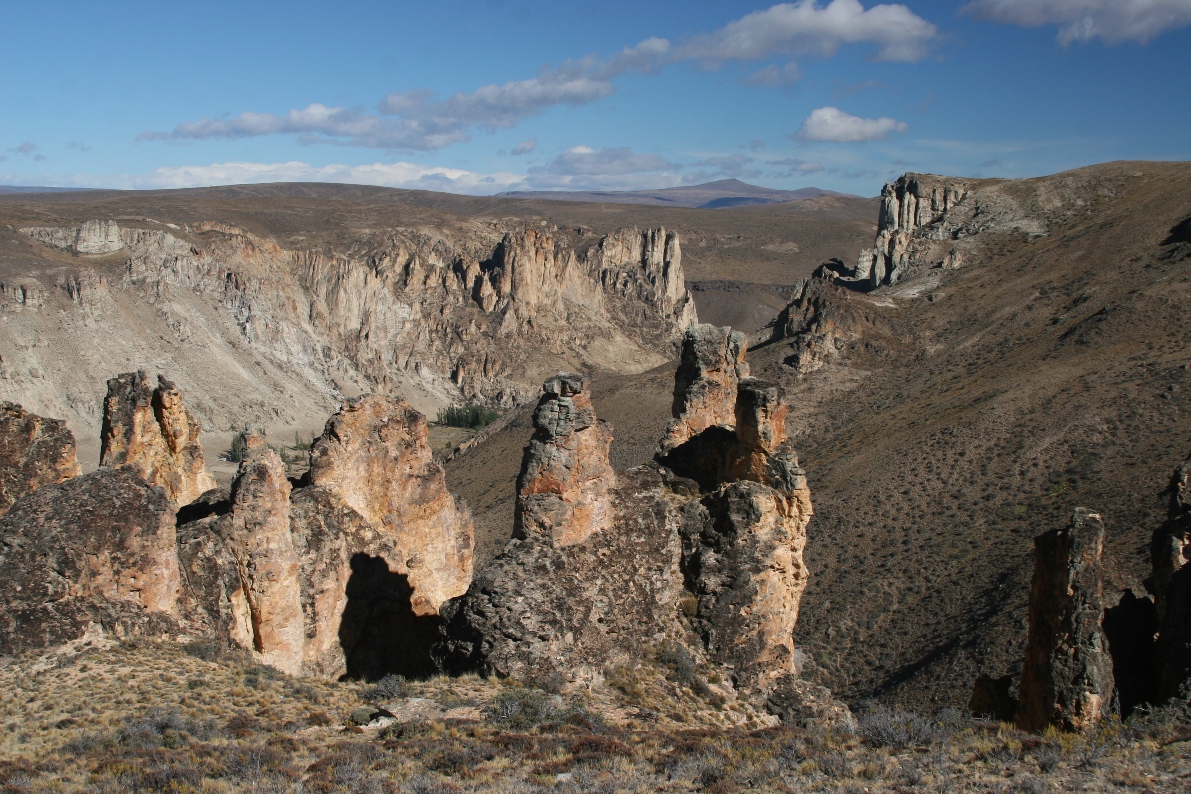
A slight detour off to the right, along a barely discernable track, led us to this viewpoint of the river canyon.
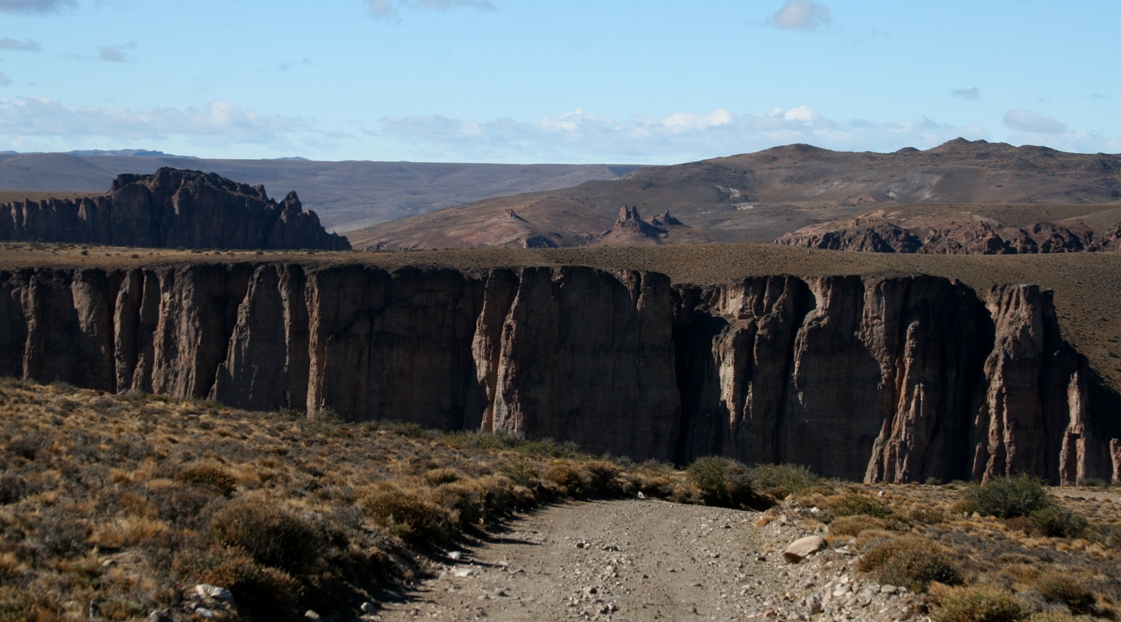
Then back on the "main road" we drove towards another section of the canyon where we would be able to see the famous cuevas.
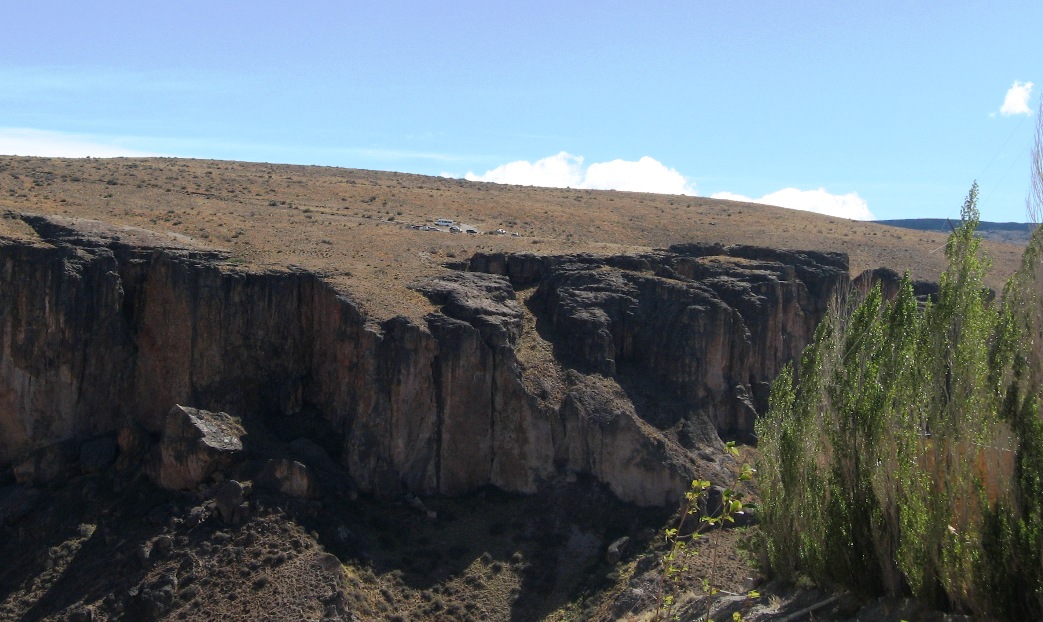
Finally the road stopped and we parked on the edge of the canyon (can you see the cars in the picture?).
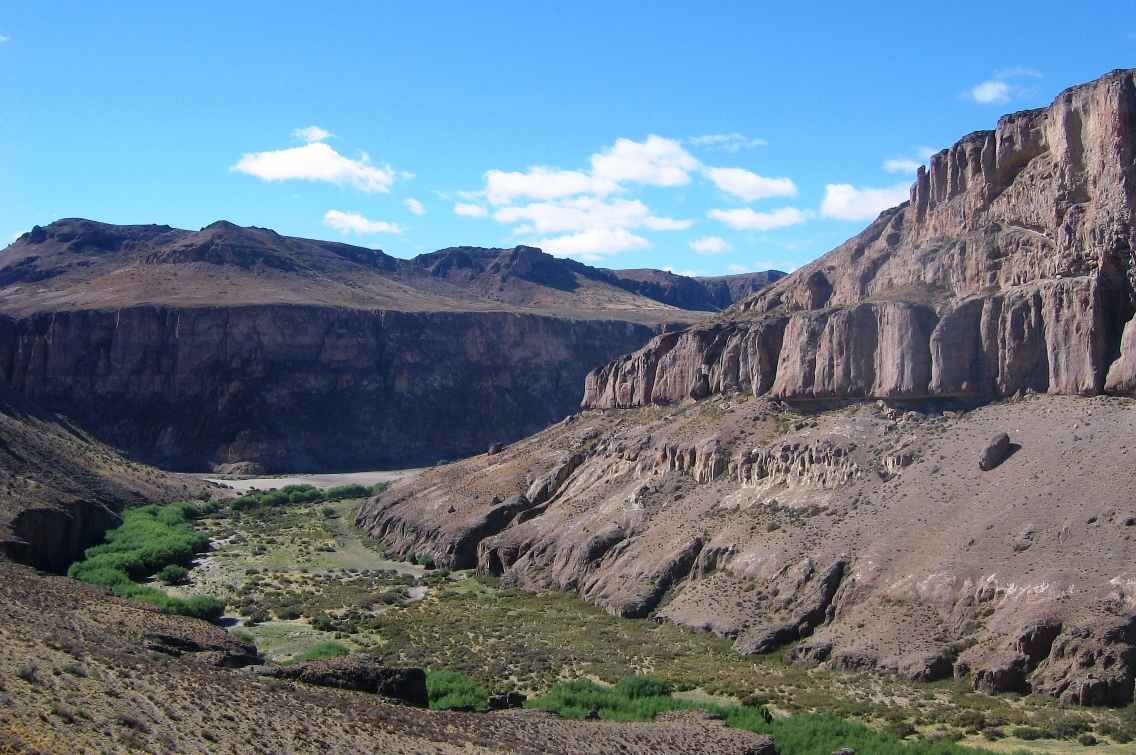
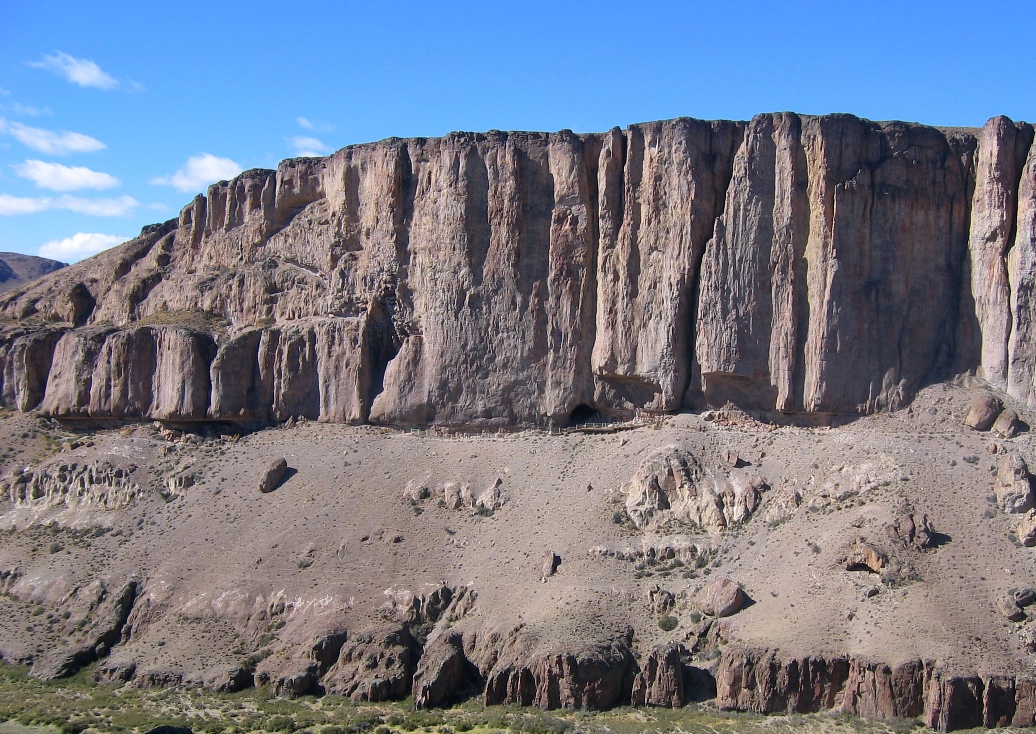
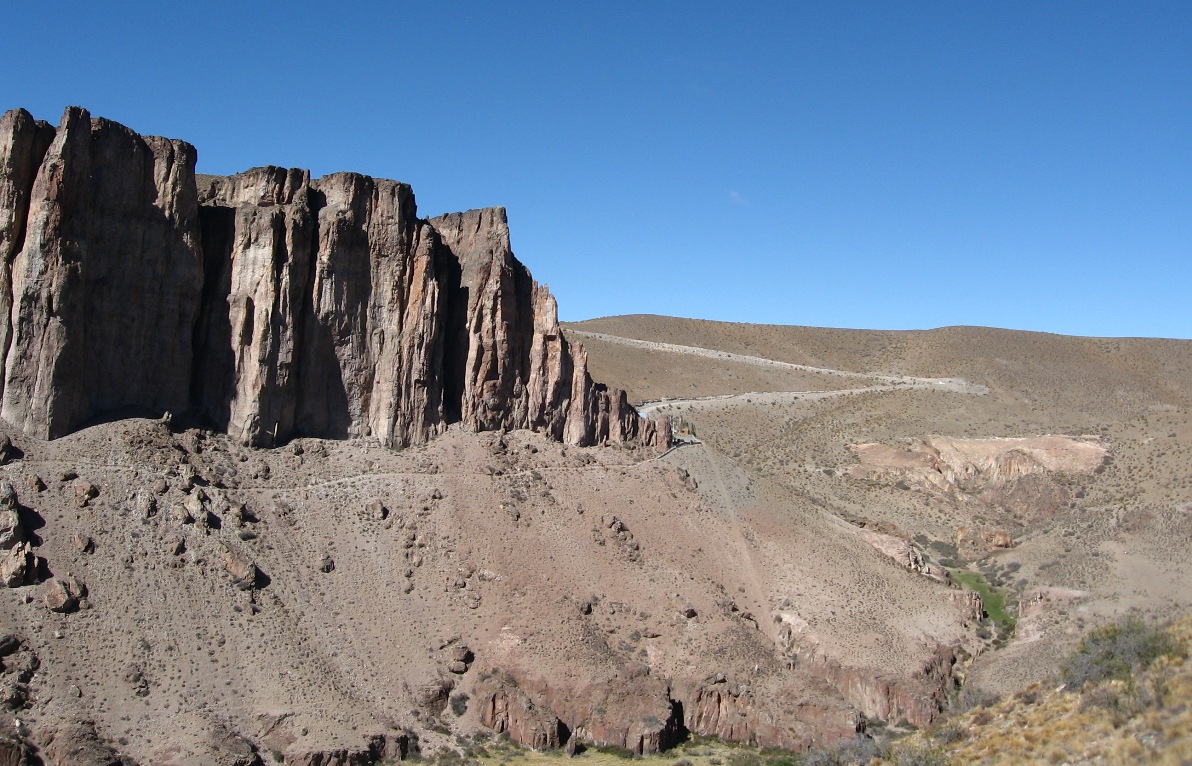
Looking directly across the canyon from where we parked, we could see the cliff where the cuevas are located.
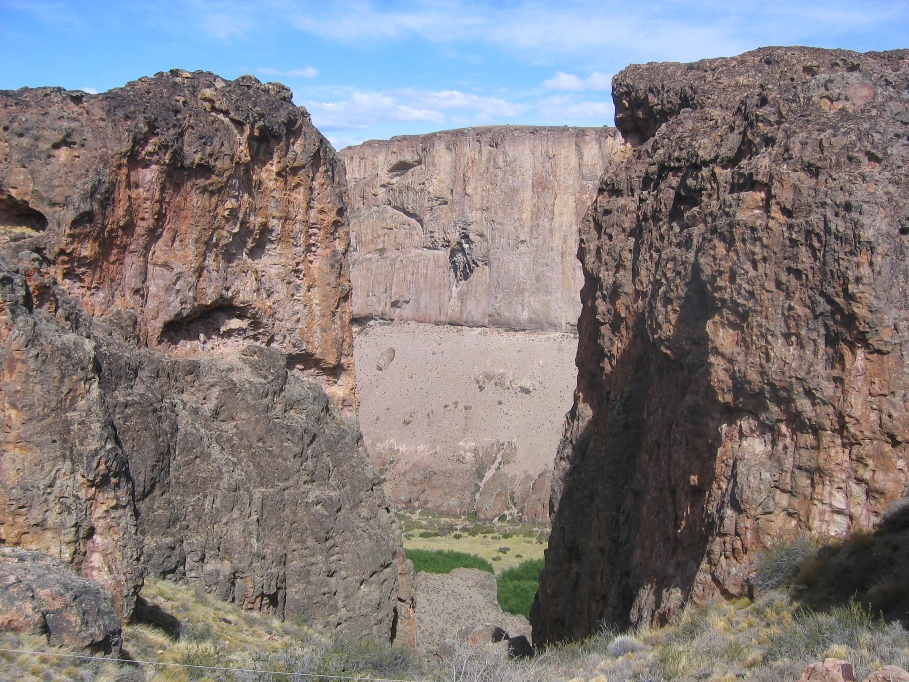
But first, we had to walk down into the canyon, across the river, and then back up the other side. This is the view of the slit in the canyon wall that we used for the decent.
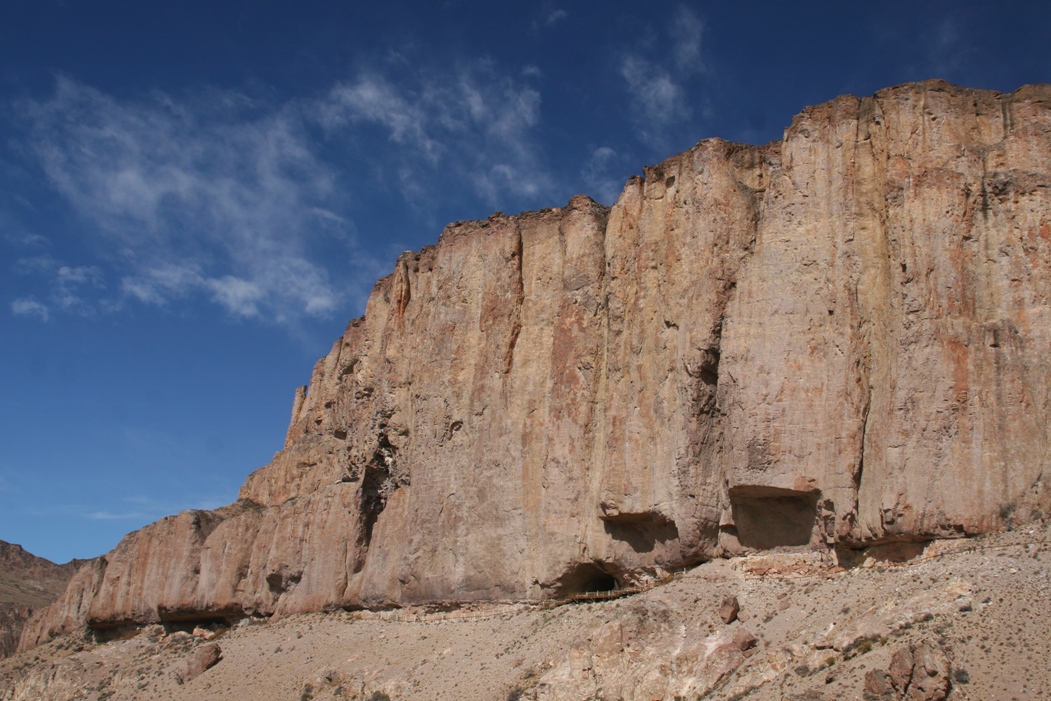
As we walked down the trail into the canyon, our view of the cliff wall and the overhangs which are home to famous paintings became closer and sharper. In this picture you can see the handrail running along in-front of the cuevas.
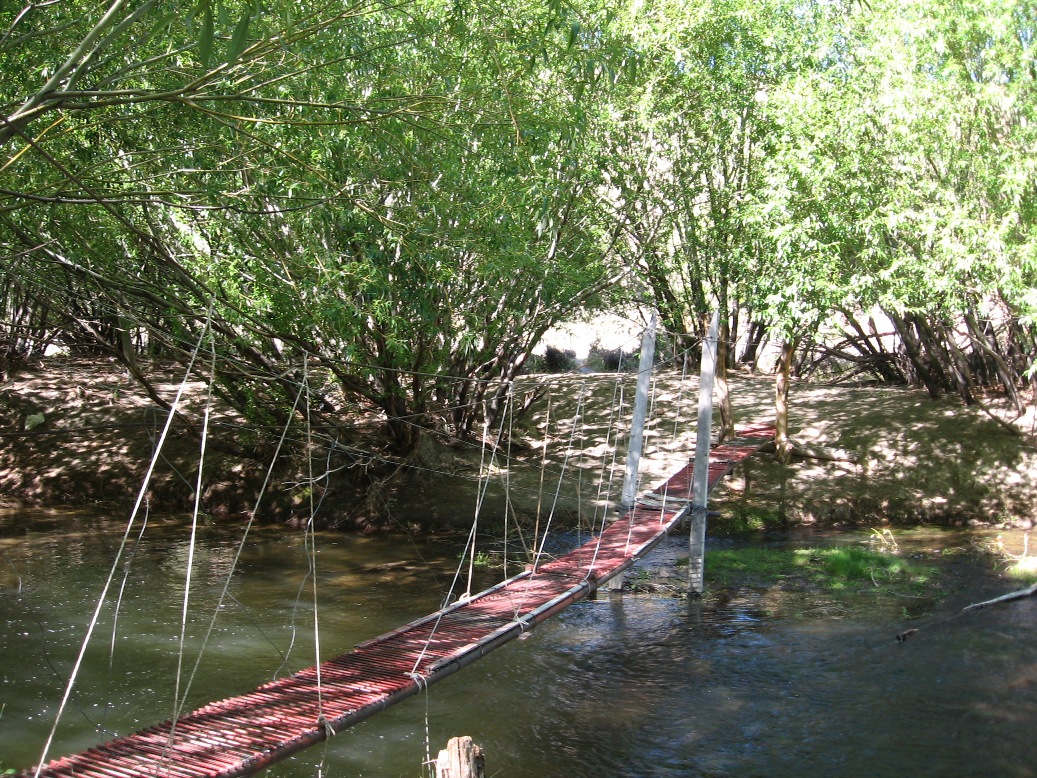
Crossing the river at the bottom of the canyon.
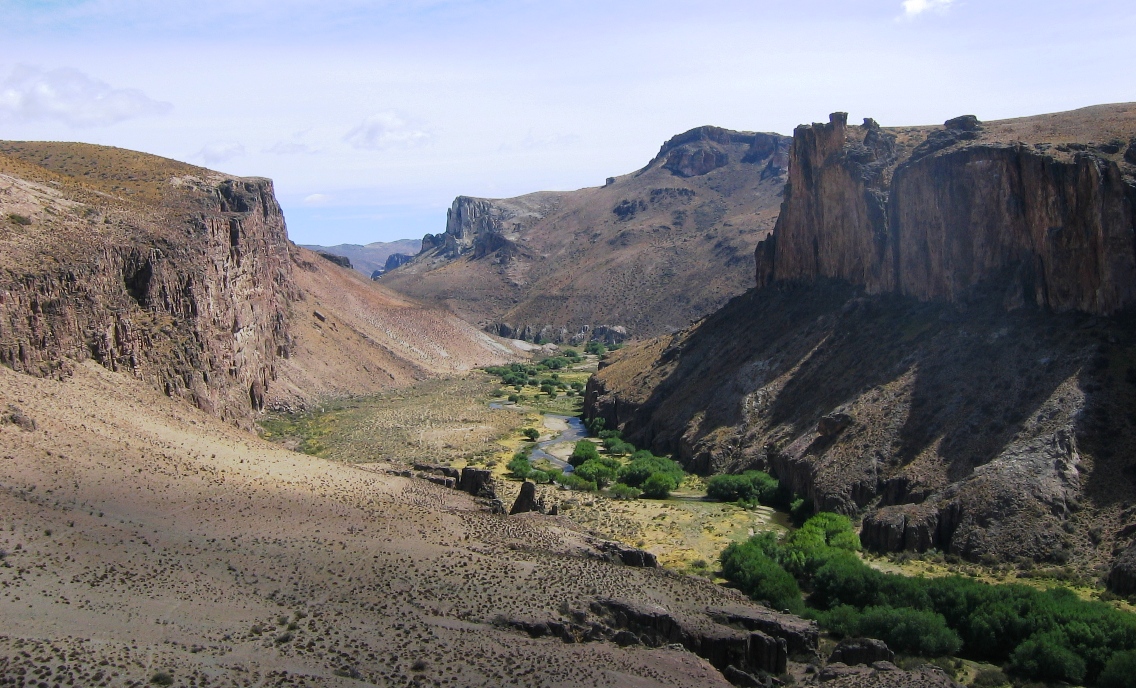
And a fairly steep but smooth (and aided by wooden steps in one spot) ascent of the other side led us to a visitor's center and this view looking west and "upstream" along the canyon.
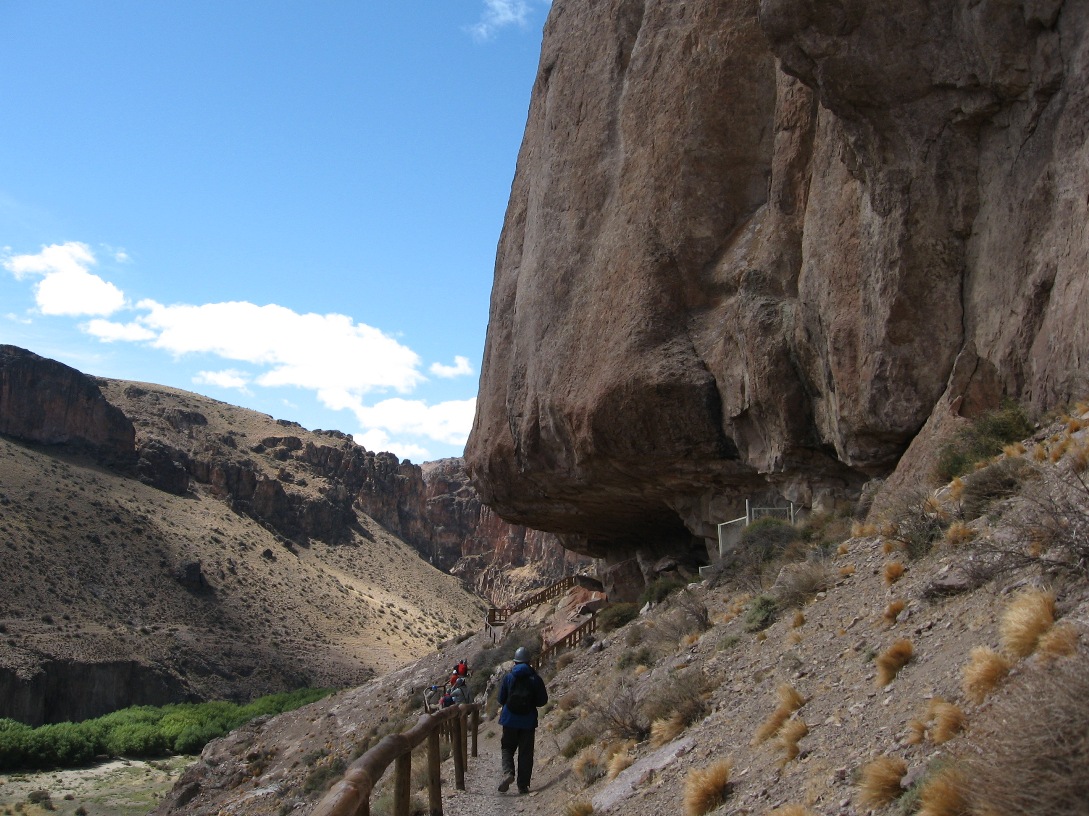
It was a busy day for visitors, and when we arrived at the visitor's center shortly after 1pm, we were told that we would have to wait until 2pm to go with the next guided tour. At 2pm, we joined with a group of about 25 other visitors, doffed flimsy plastic hard-hats, and trudged along behind a guide who led us down the walkway to see the famous paintings. The guide spoke in rapid Spanish, and occasionally gave, for the benefit of ourselves and the 11 Germans in our group, a re-play of the commentary in halting but mostly-understandable English.
As a general summary and overview, the cave paintings in this site were made by an indigenous civilization with roots in the region dating back as far as the most recent ice-age would allow local human habitation. As our guide told explained to us, the paintings in the various niches and undercut overhangs can be grouped into three distinct eras, and although the paintings of hands are common to each, more colors and a greater variety of figures were introduced in each the successive era. The basic painting technique for the negative images is speculated to be something like this: pulverized rock powders were mixed with some form of organic liquid (saliva, blood, spit, eggs?) to make the paint, and a hollow bone (most likely a long, straight guanaco or rhea femur) was used as a blow pipe so the could spray the paint over a hand pressed against the wall. Of the hundreds of hands painted in several different locations, almost all are left-hands. Our guide mentioned that other than the possibility of an unknown importance of the left hand to this culture, perhaps almost all the people were right-handed and hence had to hold the blow pipe in that hand in order to paint the free hand that was "left."
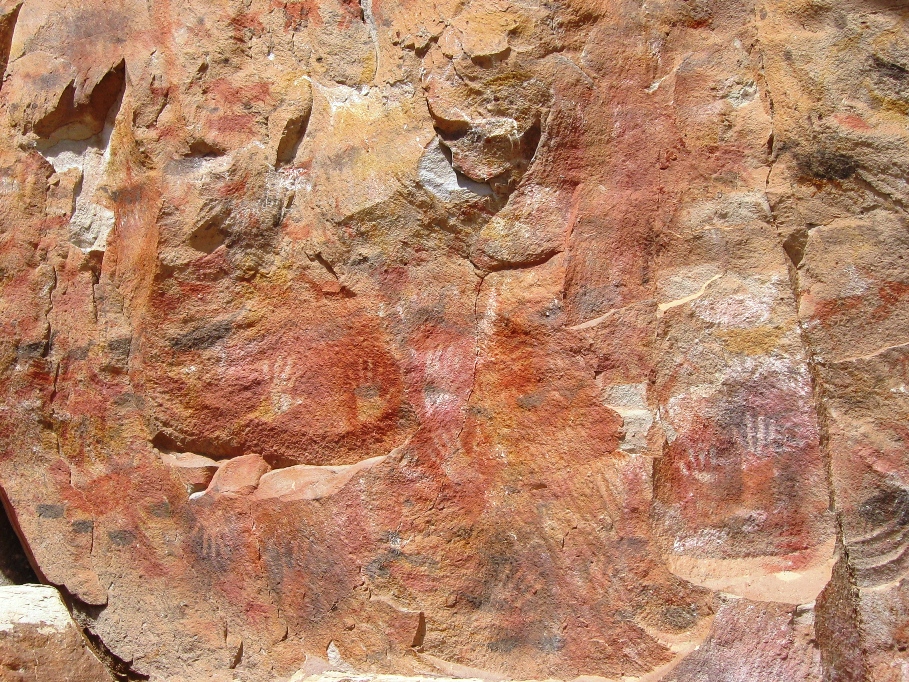
Some of the first hand images we came to walking along the edge of the cliff.
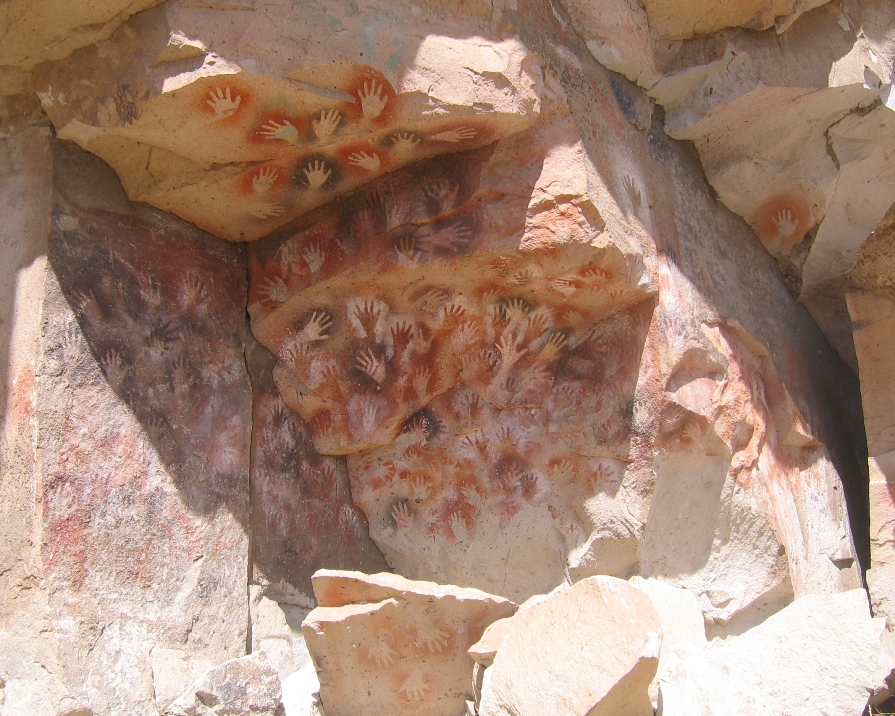
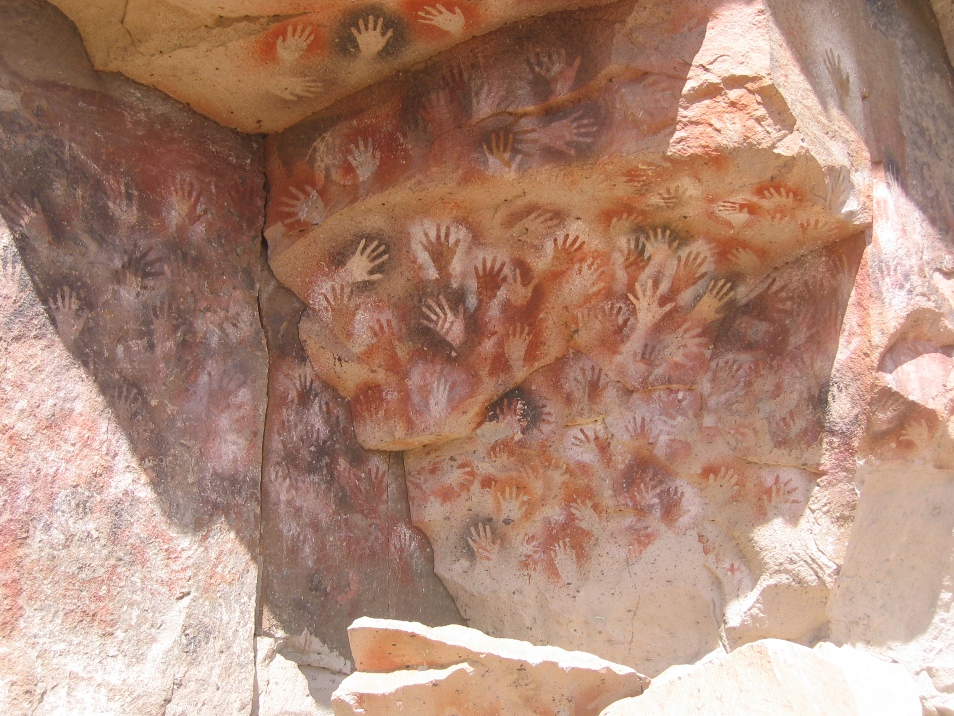
These images are particularly vivid and clear; astounding when you consider that they are almost 10,000 years old.
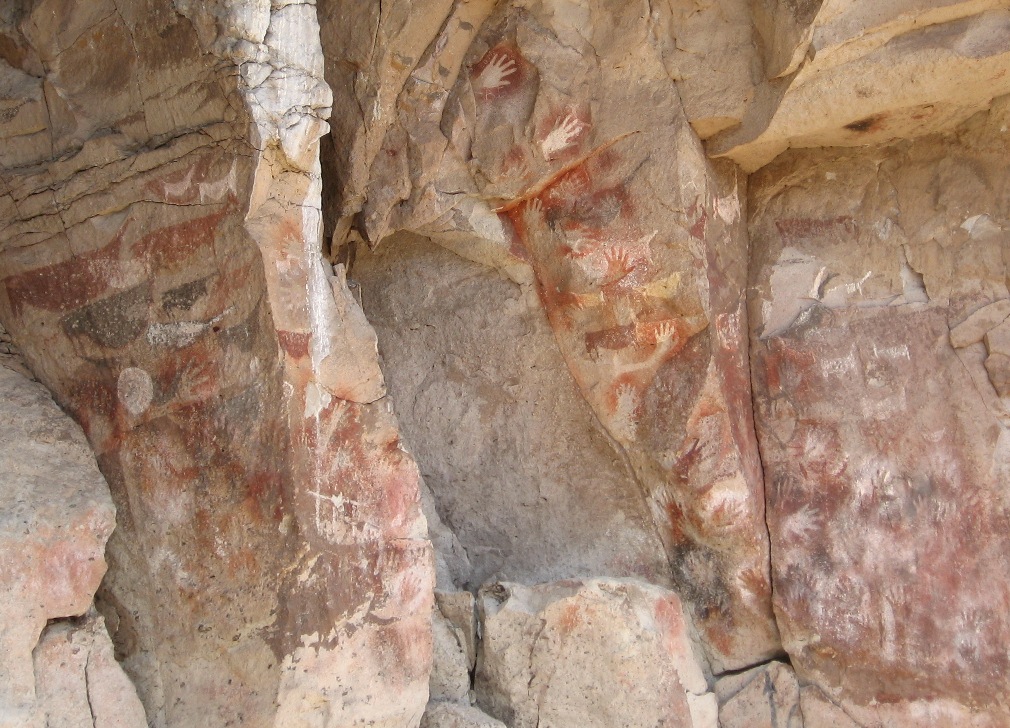
The second era (6000-3000 years ago) is marked by the introduction of white paint and the positive images of guanacos and other animals. The white guanaco painted inside a bigger red one is assumed to be a pregnant guanaco. There are also a few very basic geometric shapes like the white circle (moon?) hanging out with the pregnant guanacos. It is a legend (fact?) that the guanaco only give birth during a full moon.
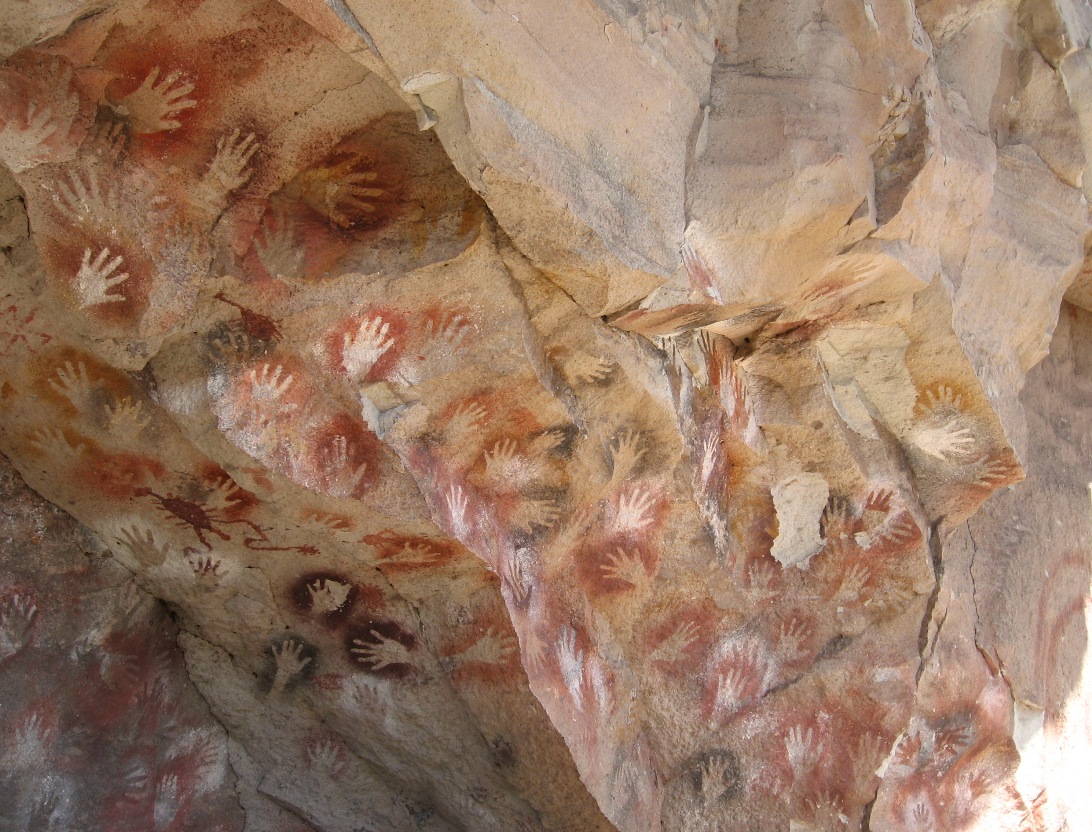
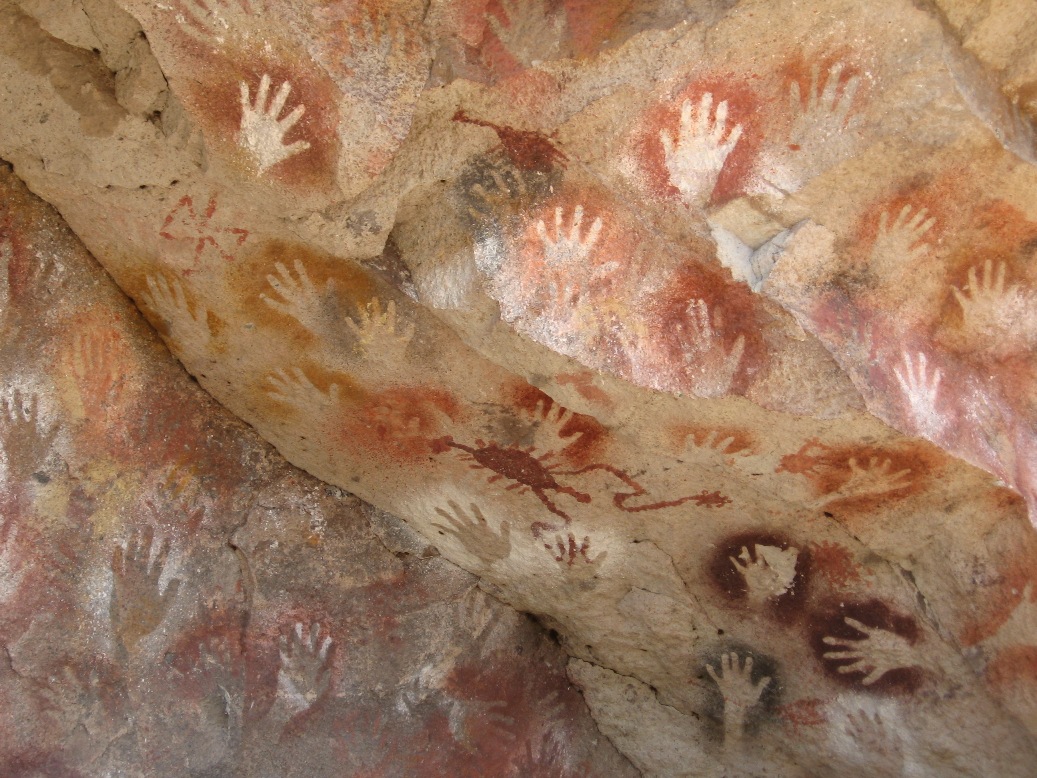
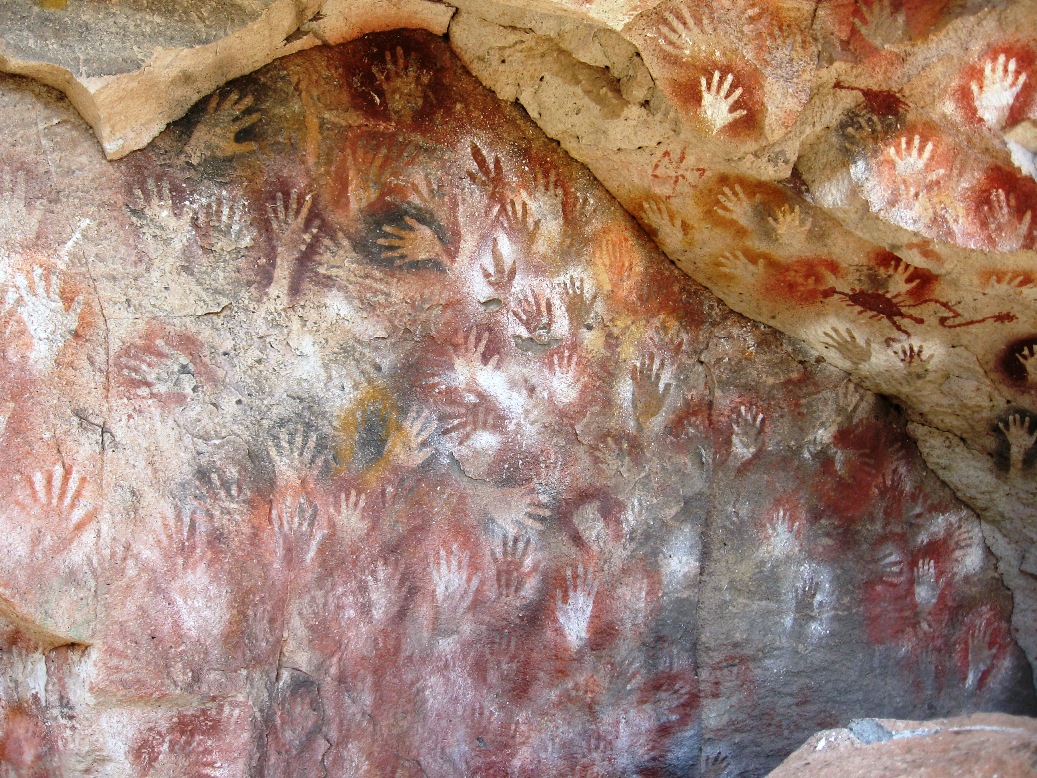
Along with the hands, I can see at least one "positive" image guanaco, and something else that our guide told us was "a magic creature of some sort" (in other words, no one has a clue). There is also a simple geometric shape that means who knows what (the two triangles on either side of a line), and there are both positive and negative rhea feet.
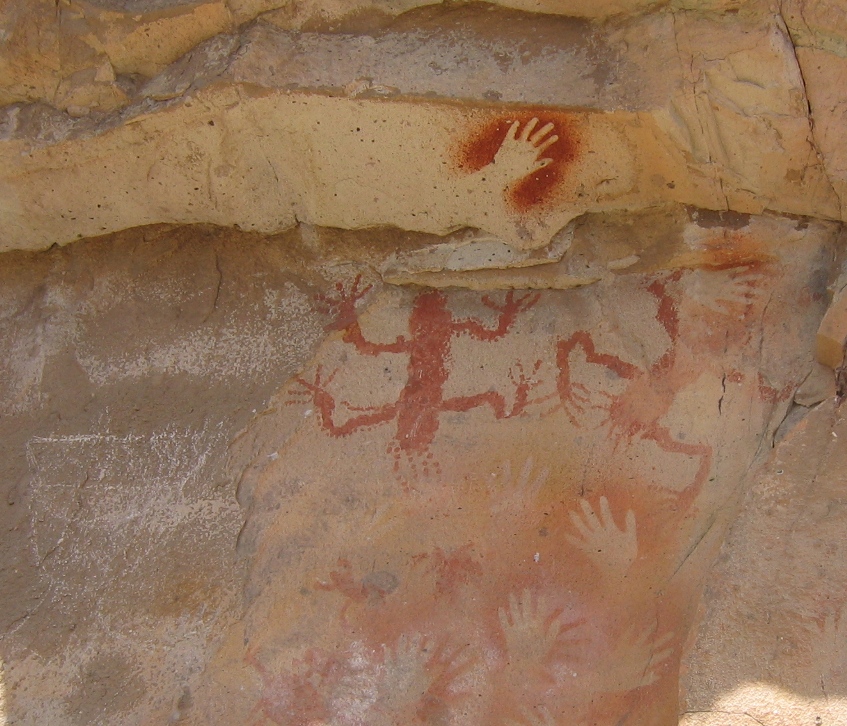
These are positive images of a local type of lizard.
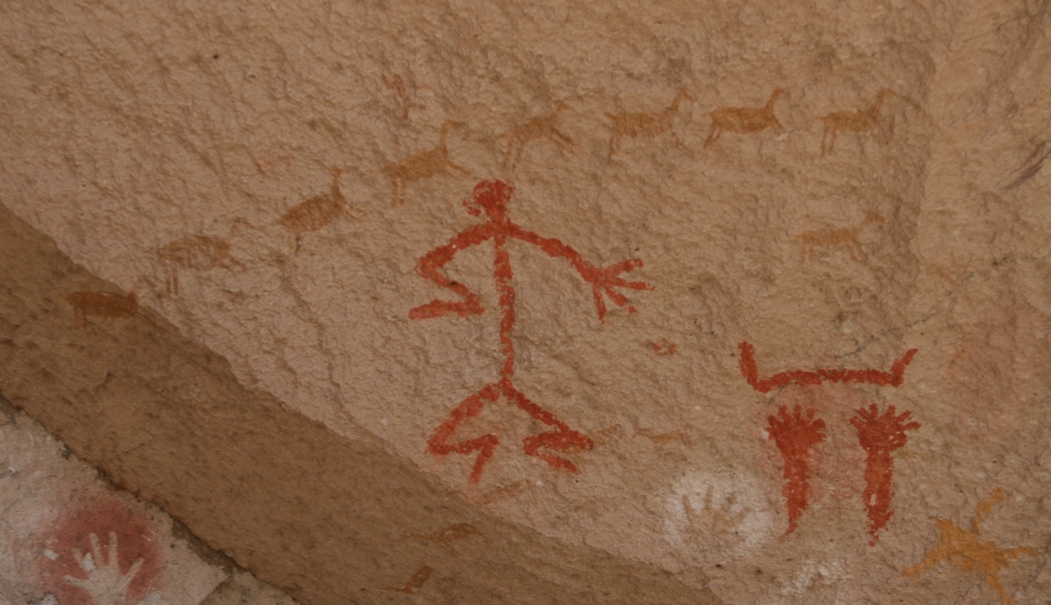
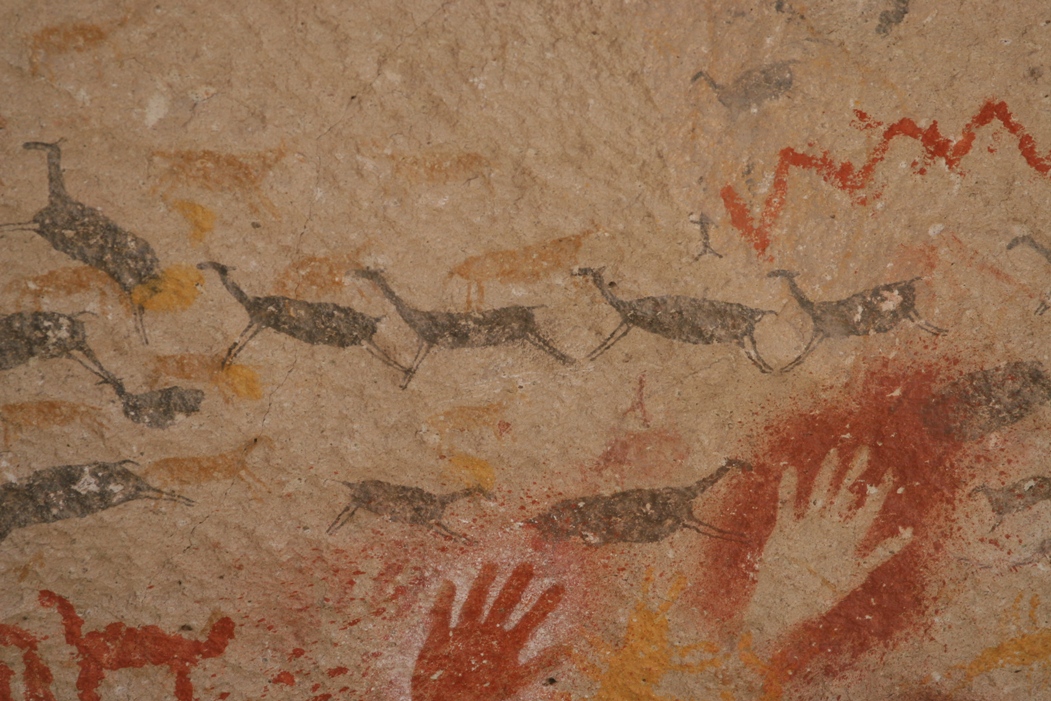
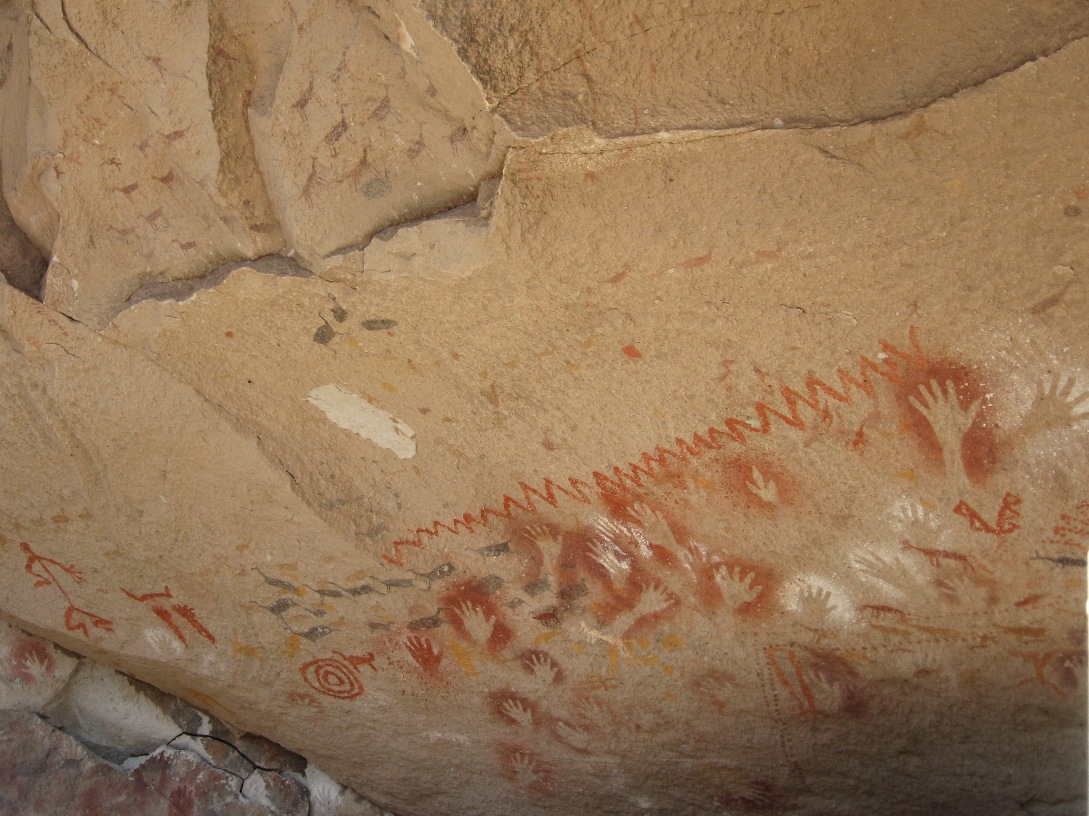
In the most recent era (about 3000 years ago at the start and lasting I forget how long), yellow and black colors show up, and the paintings become much more "sophisticated," with hunting scenes and complete human and animal forms.
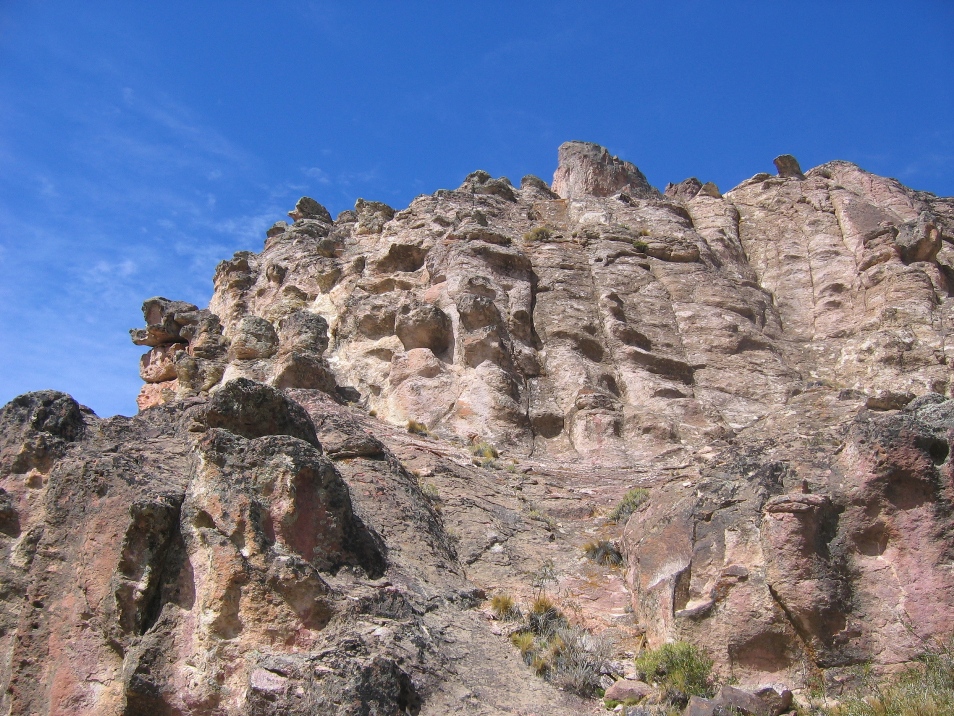
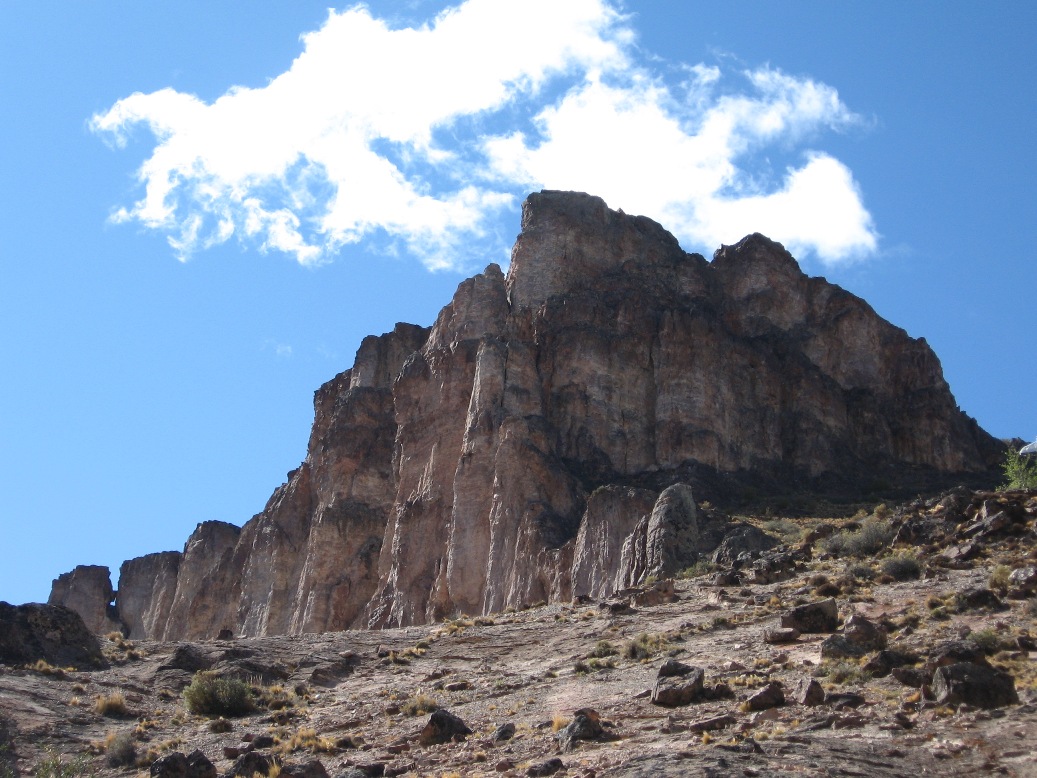
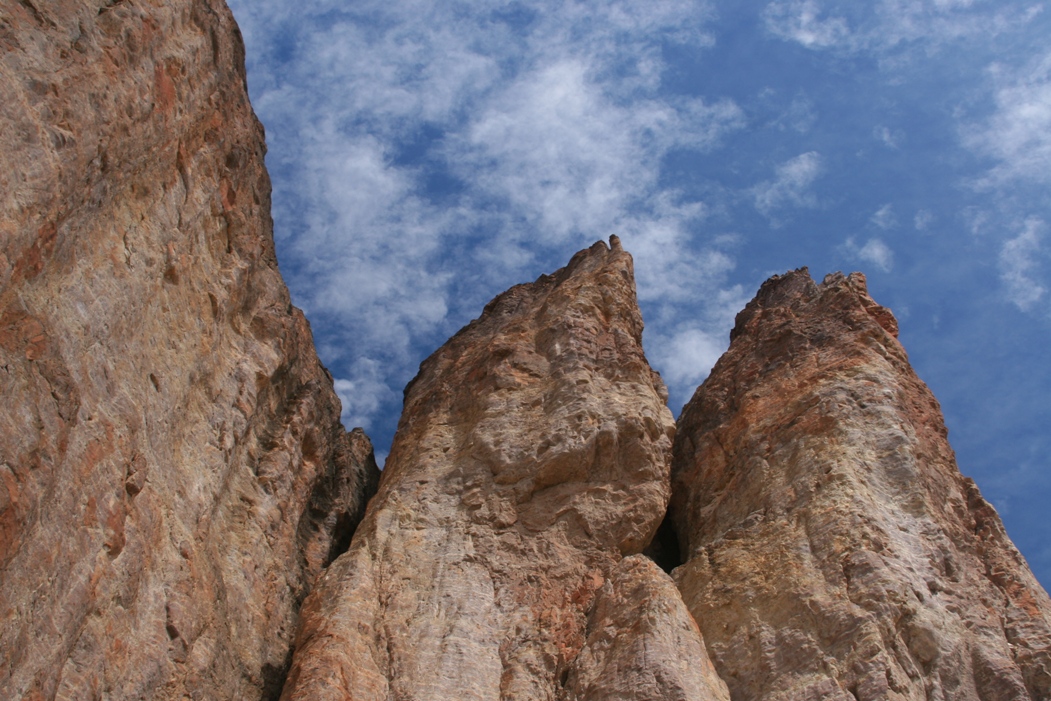
Then after our 1-hour guided tour was over and we reluctantly returned our lovely helmets, we walked back through the canyon, marveling once again at the amazing rocks and cliffs.
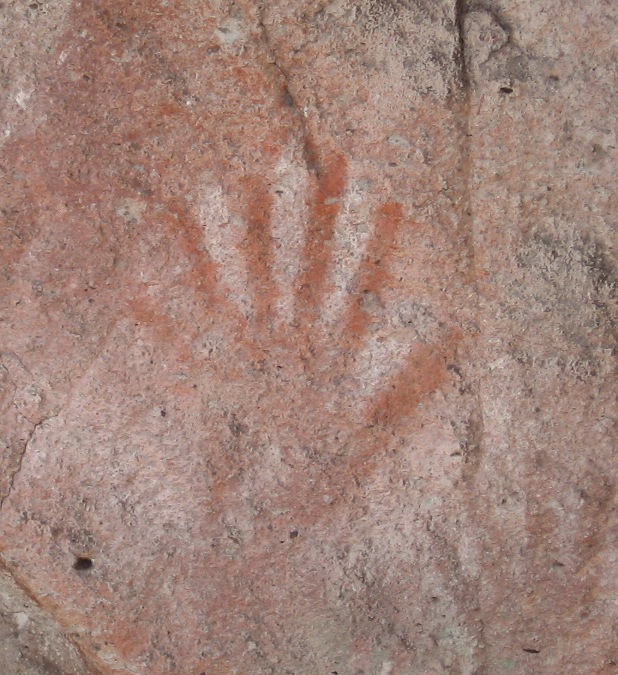
Hmmm, is this a recently added defacement? Our guide told us it was an authentic original (according to carbon dating techniques). It's a shame that they didn't have pianos back then, so that this person could take advantage of their "gift."
-Rolf