Rio Gallegos
Museum Tour
Monday December 17, 2007
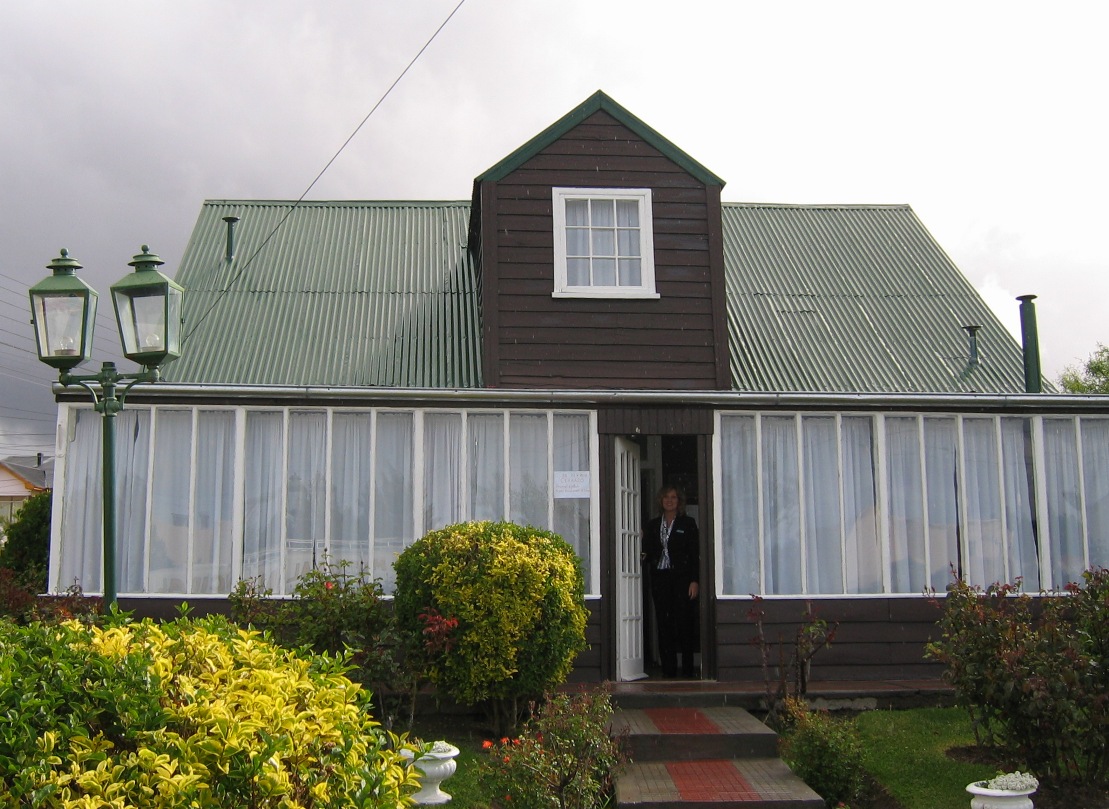
This journal entry should really be included in the previous, since it's just pictures of the museum tour that we took later in the evening yesterday. We gathered at a little tourist kiosk (converted from an old train coach), joined a handful of other tourists, and boarded a minibus. Oops - it wasn't going to be a "walking tour" like I had somehow assumed. The first stop was an "old house" museum, one of the first built and lived-in by European settlers. Somehow we spoke just enough Spanish to fool the guides into thinking we could understand them, so they gave us very personal attention and rambled on and on with very interesting, detailed, but only partially understandable (by us) explanations of what we were seeing.
Solar energy technology as applied in the early 1900's - build the house facing East with a large, glass windowed porch in front of the main house. The porch collects the heat of the sun and radiates it into the house in the afternoon when the sun is overhead and towards the rear. At night, the porch gets cold but isn't a direct part of the house (and still helps block wind).
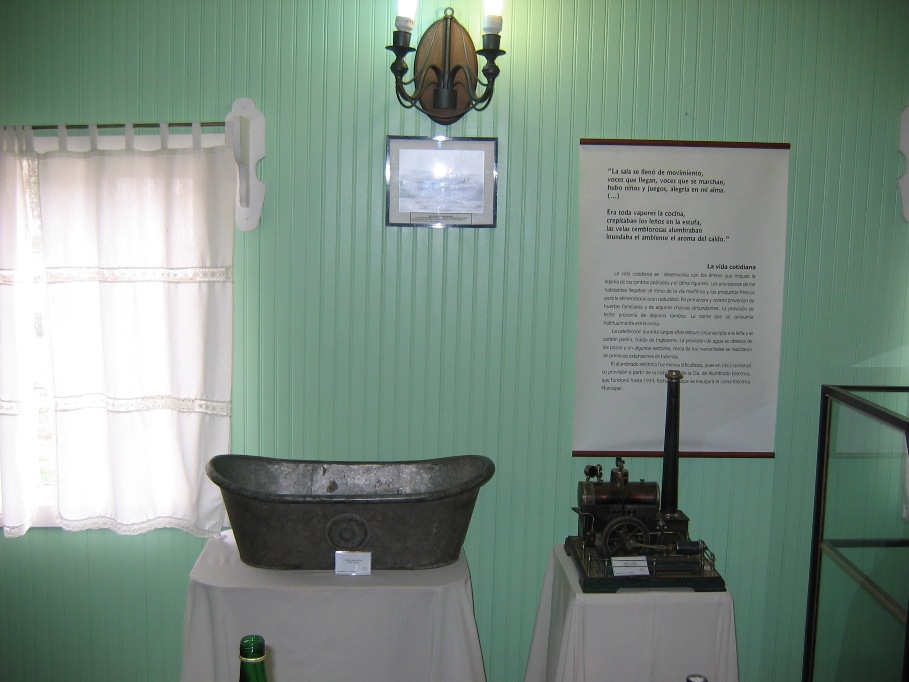
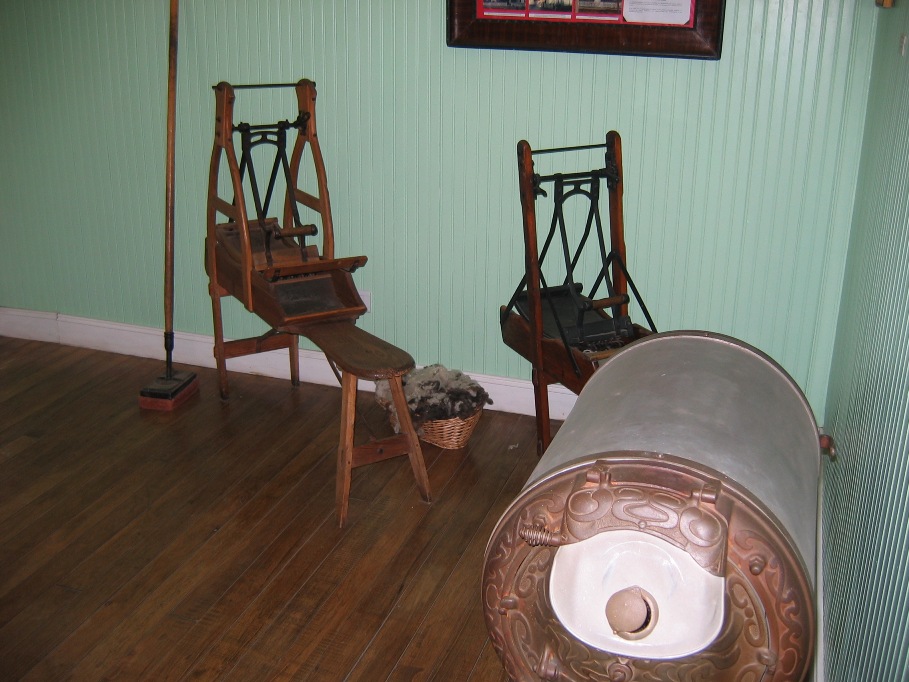
Various exciting antique gadgets...
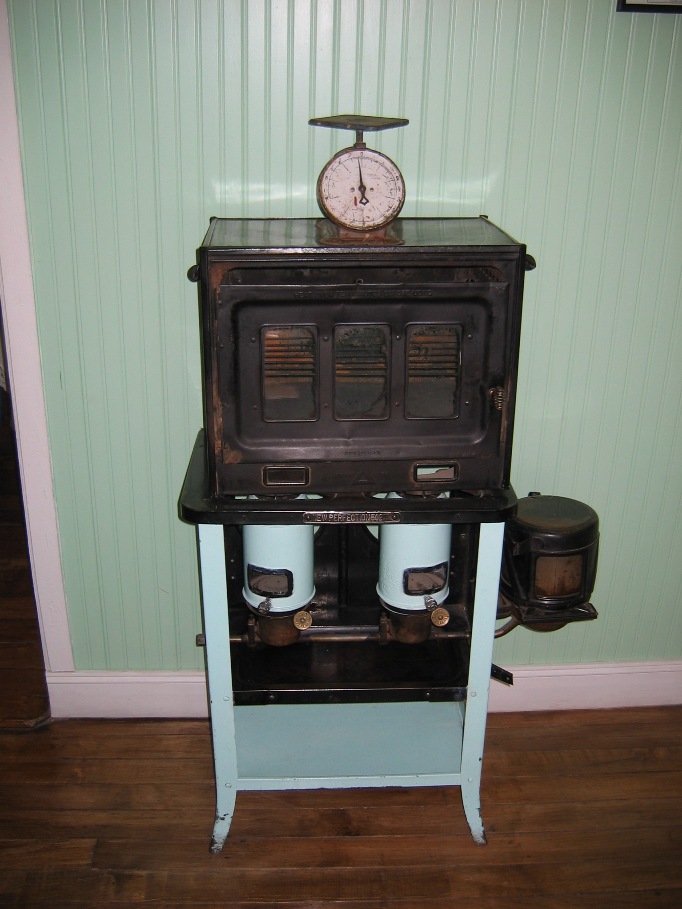
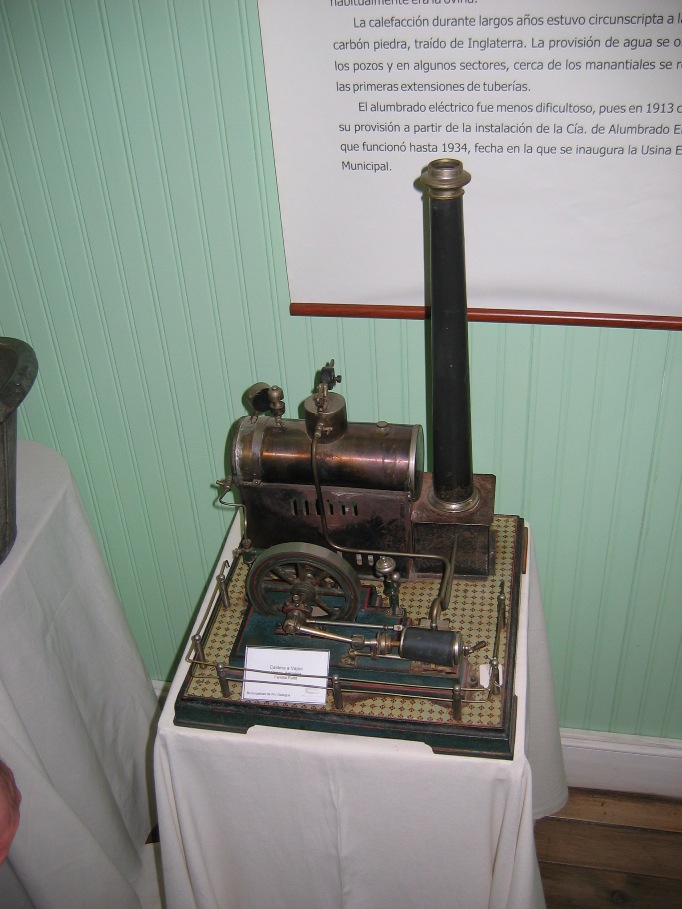
Including an oven imported from the USA (left) and a humidifier.
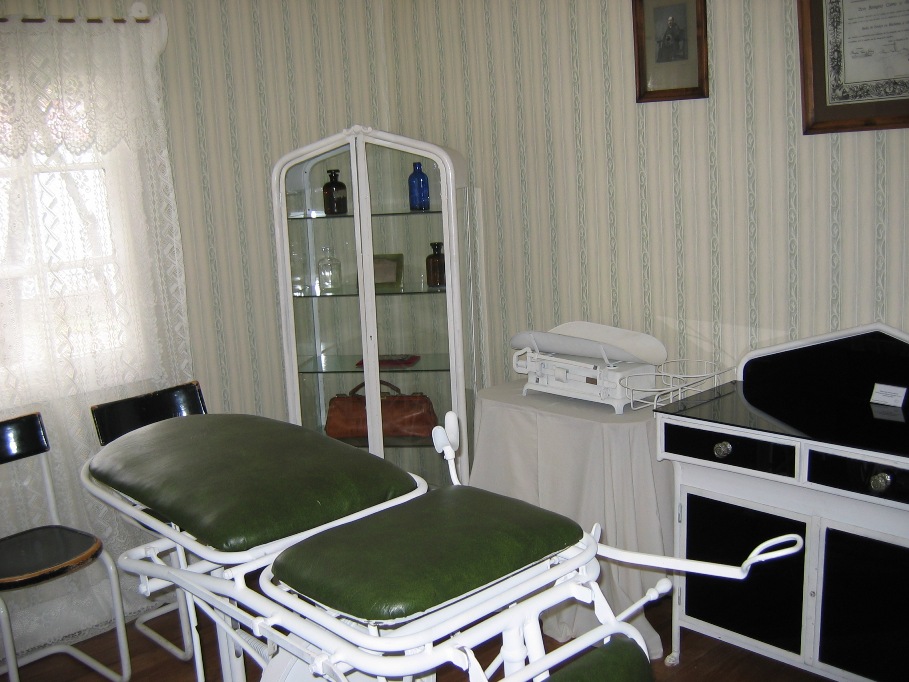
The second or third owner was a doctor, so one of the main floor rooms had been his exam-room. A small town doctor in a coastal frontier town of Southern Argentina had to practice every branch of medicine.
The second museum was a very unimpressive naval museum, and the third (no pictures), was a slightly more polished but not much larger coast guard museum. Both, but especially the coast guard museum, devoted a lot of wall space to pictures and memorials about the Falklands (Malvinas) war of 1982. This is an important subject to this region of Argentina, it being the closest to the actual islands. There are bumper stickers and highway signs declaring "The Malvinas Belong to Argentina!" etc... I just read in the newspaper that Argentina wrote some formal letter to the European Union contesting a statement by England in the recent accord/treaty of Lisbon about territory and property. England stated something like "The Falklands obviously and clearly belong to Great Britain," and in the letter filed by Argentina, they stated that "The Malvinas are clearly and obviously contested territory, and we are looking forward to re-opening a dialogue with Great Britain so that the issue can be finally and properly resolved." Somehow I doubt England will respond or acknowledge the letter...
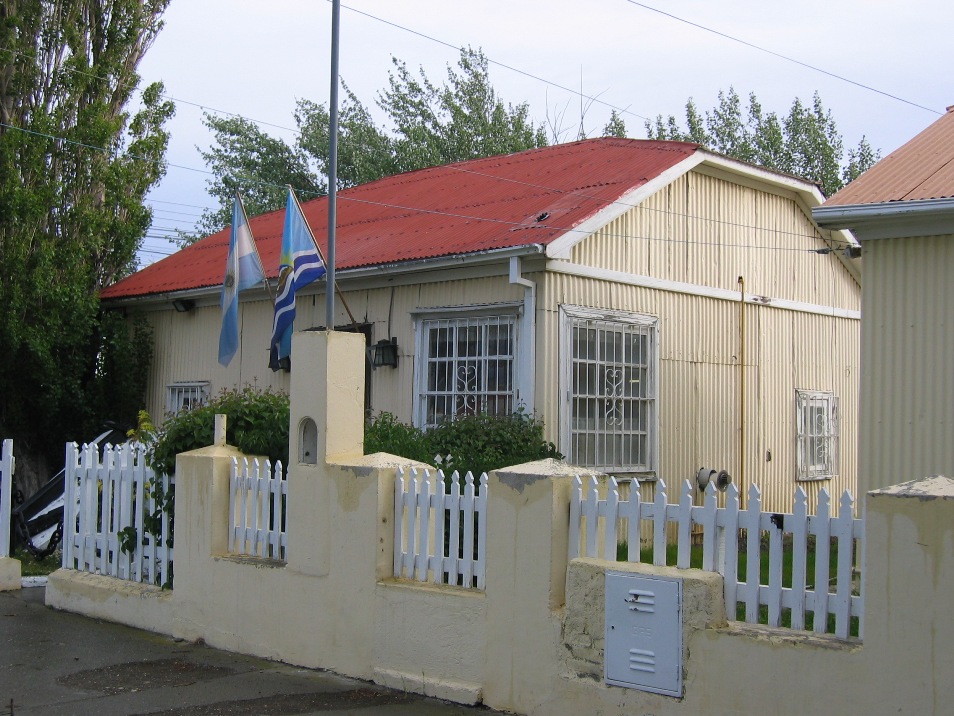
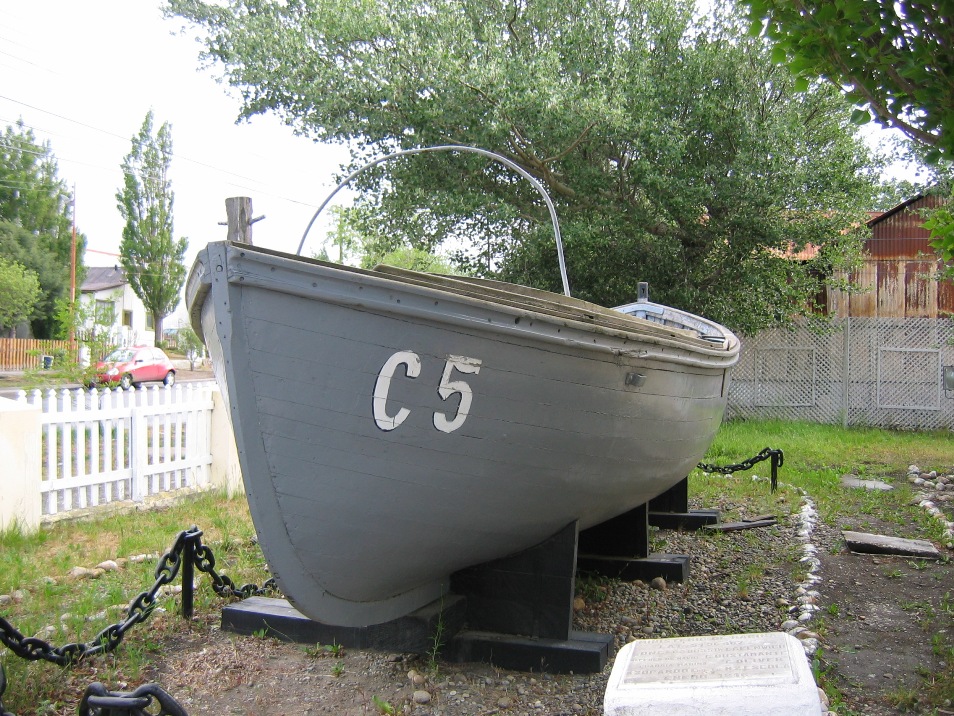
The naval museum and its impressive ship in the yard.
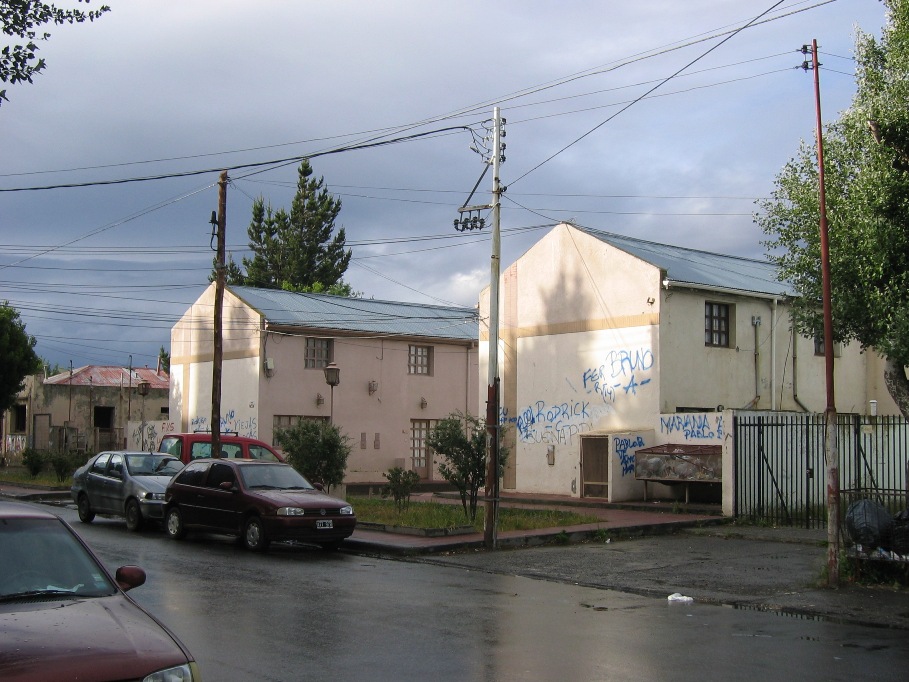
And across the street the not-so-impressive apartments covered in graffiti...
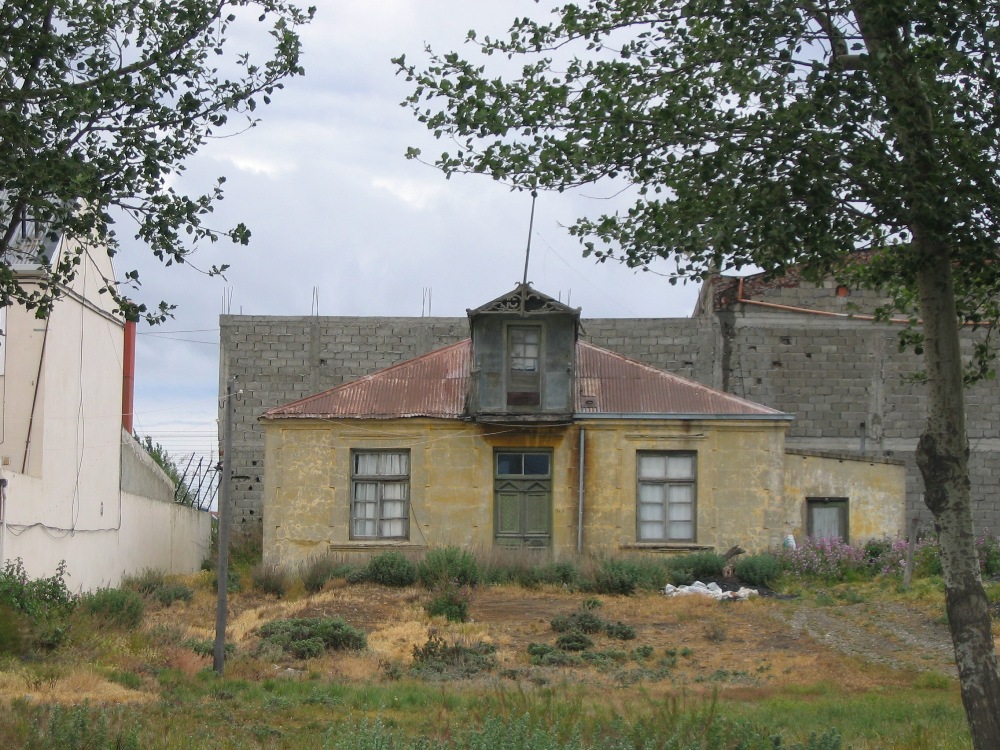
We did do a little walking between closely situated museums, and on way passed this other old house from frontier days. The guide told us that the city would like to turn this house into a museum as well, but there is an old hermit lady living in it and they have to wait until she moves out or dies.
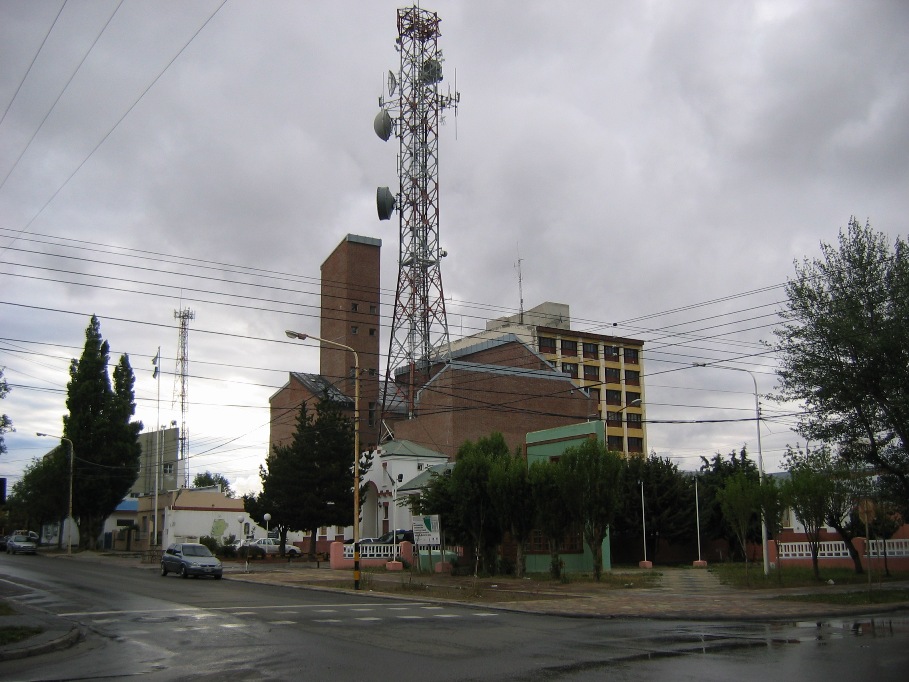
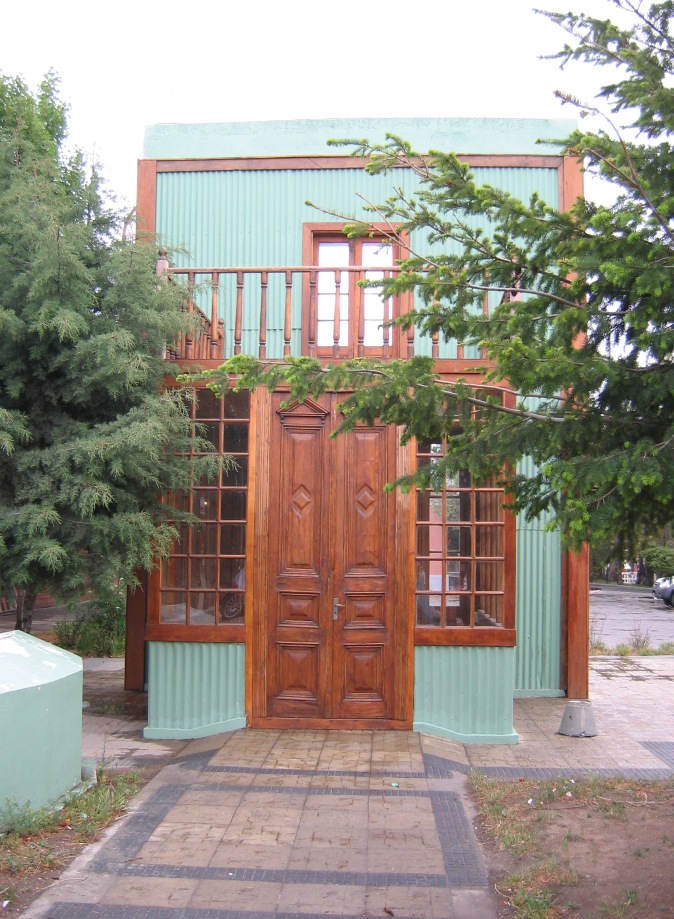
And the last point of historical interest on this incredible tour of Rio Gallegos is the balcony from which the first president of Argentina ever to visit Rio Gallegos spoke to the residents of the city. The balcony fronted an old building which is no longer there. The city would like to re-build it if anyone would care to donate them a few hundred thousand dollars.
The guides also told us about the anomaly of ocean tides in Rio Gallegos. For some reason (that they didn't elaborate about), there are four pronounced tide changes per day here instead of the usual two. This makes building a port right at the mouth of the river where the city is located complicated and difficult. So the main port is located on a peninsula (island?) that sticks out on the far side of the river. This only begs the question - "Then why didn't they build the city over there in the first place?" and then the second question - "Why did they build this city here anyway?"
We were tired, I wasn't up for going through the effort of forming those questions in Spanish and then not be able to understand more than 20% of the answer. I recently tried to find out the answer on the internet. There is some mention about shipping out coal from a nearby mine (reason for the city to exist in the first place), a lamb packing and shipping industry (reason for it to still exist), but I couldn't find any explanation for the 4 tides per day - just several references to the very high tides that make navigation difficult and problematic. Perhaps the proximity of the Pacific Ocean just around the corner has something to do with it. I doubt the sun and moon have special gravitational fields in the vicinity. Once again, similar to Caleta Oliva and Puerto San Julian, the most important thing to us about Rio Gallegos is that it was on our way, and had a hotel, gas stations, stores, and restaurants.
-Rolf