Cascada Las Animas
Cabalgata, Hacer Rafting, Watchdogs, & Geology
Wednesday October 10, 2007
Although we could have easily spent another few days in Santiago, we have a lot of Chile to cover in the next two and a half months - and we have a December 20 arrival date scheduled for Ushuaia Argentina at the southern tip of Tierra Del Fuego. So last Thursday we packed up and headed out of the city, making sure to stop by the mall for one last shopping fling on the way out of town. Our destination, where we've been for the last 6 days, is the tourist complex of Cascada Las Animas. Located less than 70 kilometers southeast of Santiago in the narrow valley cut by the Maipo river as it rages down from the Andes, Cascada is a popular weekend destination for residents of Santiago who are looking for a horseback ride, river rafting trip, summer swim, or simple picnic.
We're here in the Spring, temporada in-betweenada, and the nice pool has not been put into service yet, the cabañas are mostly vacant (except for Saturday night), and the restaurant menu is extremely limited. At least the restaurant is functioning, and the horseback and rafting trips are available on the weekends. Sightseeing up and down the valley and teaching/learning school can easily occupy us for the rest of the stay.
But we certainly would like to ride horses and raft on that river. I'd been wondering what to call a "horseback ride," and hadn't been able to find a direct translation in any of our English-Spanish dictionaries. I could say "we'd like to ride horses," or "how many hours is the trip?," but I wasn't sure how to say "we'd like to take a horseback ride," or "how long is the ride?" The big "Cabalgatas" sign here at Cascada solved that mystery ("horseback ride" = "cabalgata," at least here in this part of Chile). Also the "Carpa" sign near the campgrounds clued us in on the local word for "tent" (my dictionaries have a much clunkier sounding expression for tent that literally means "country store"). I suppose I should have figured out the tent thing from the word on the tent-box in the outdoor store in the mall, but sometimes I need a little repitition.
Now when it comes to things like adventure sports, Chilean Spanish is a hodgepodge of Spanish, German, and English expressions. There is no direct Spanish verb for the relatively new adventure sports of rafting or kayaking, but there are a mixture of Spanish and German words used for the traditional European style of alpine mountain climbing. "Hacer" is the verb that means "do" or "make." So the safe bet on what to call things like snowboarding, kayaking, rafting, and/or skateboarding is simply "hacer snowboarding," "hacer bungee jump," etc...
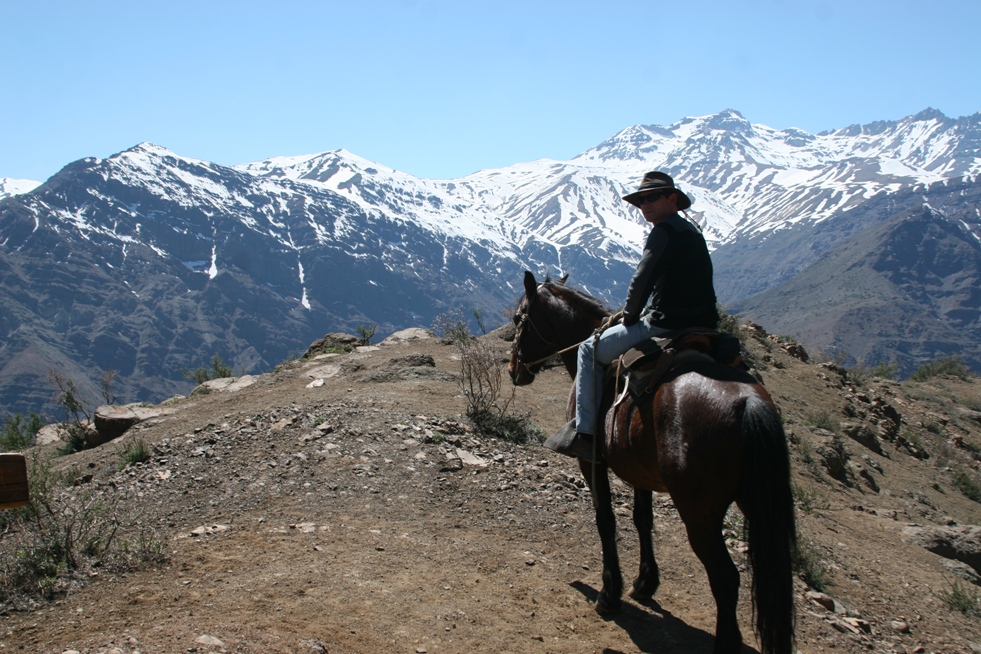
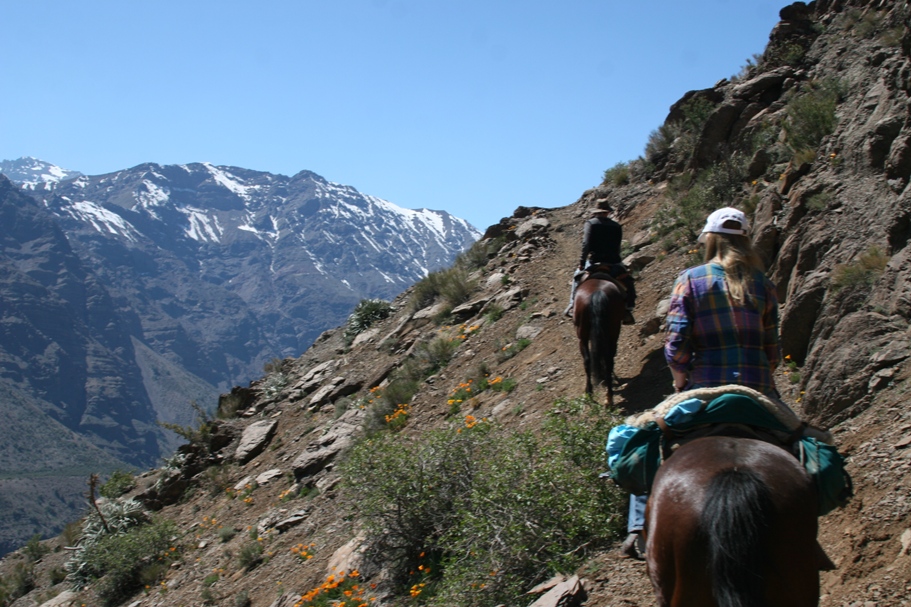
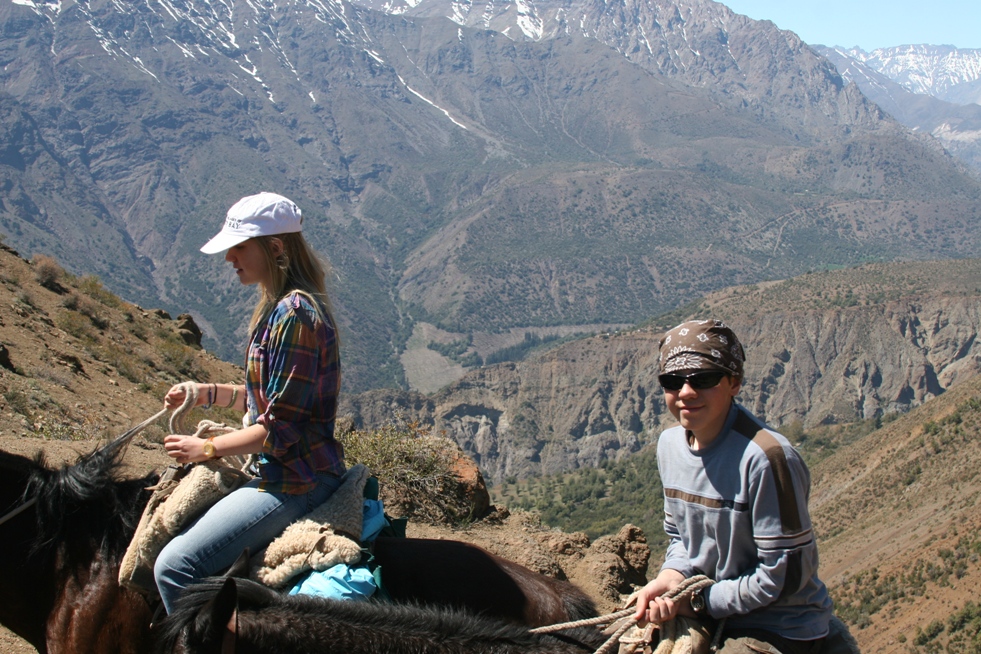
Sunday, we arranged for a 6 hour guided cabalgata. Saturday, the twins and I decided to hacer rafting, but Lynn opted to rest her saddle-sore bottom.
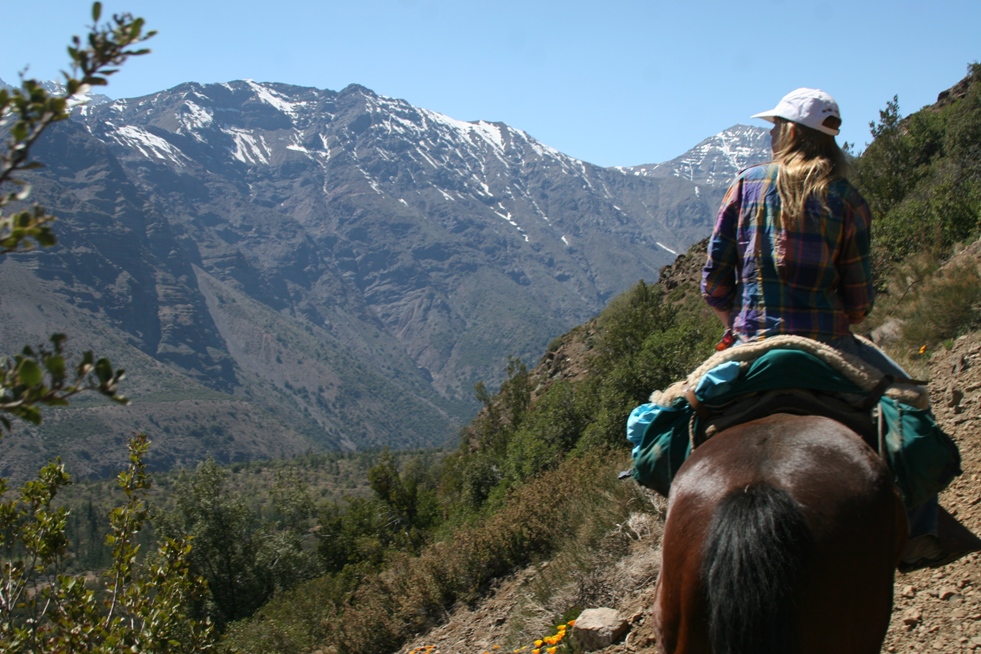
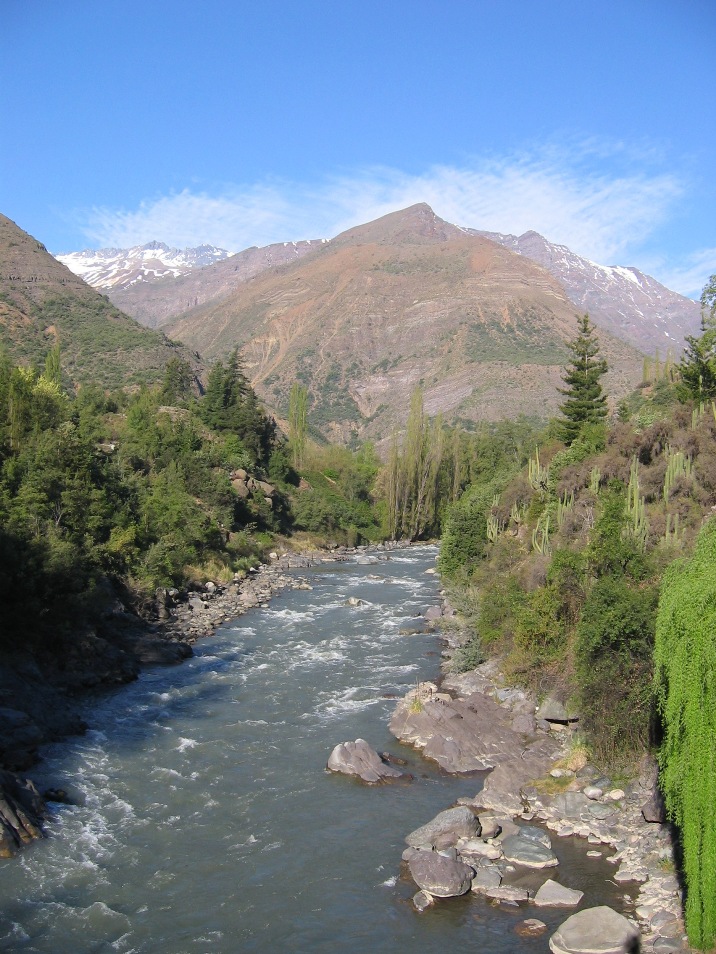
Similar to the Hurtado Valley, but different - the ride up the wall of the Maipo valley gave us breathtaking views of an astounding valley set in a slightly less arid environment.
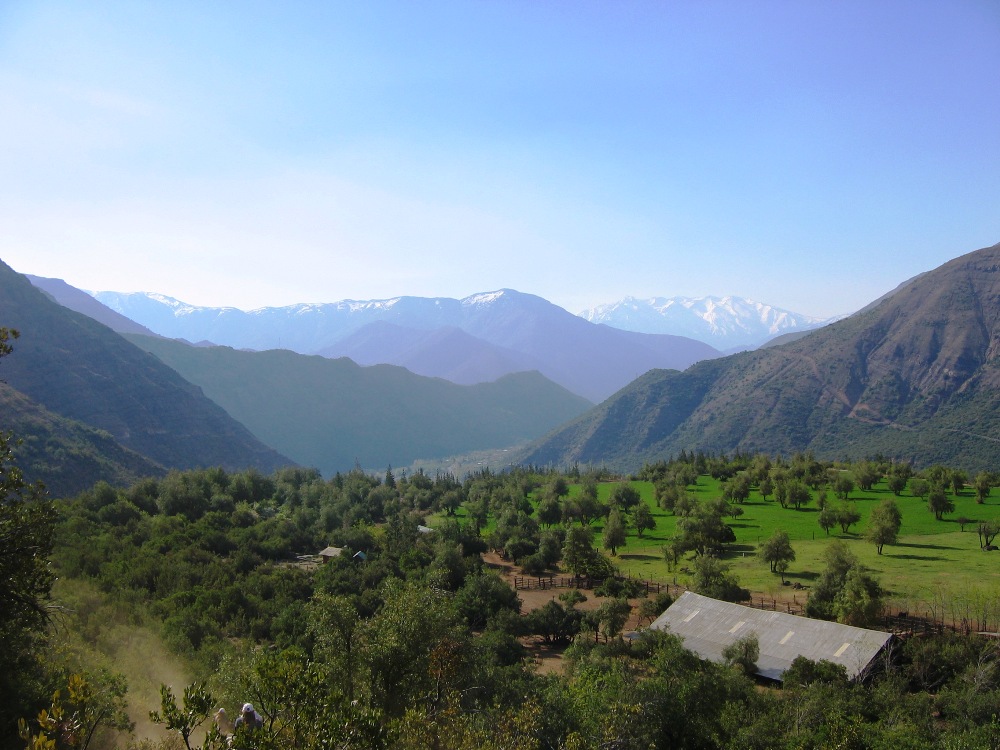
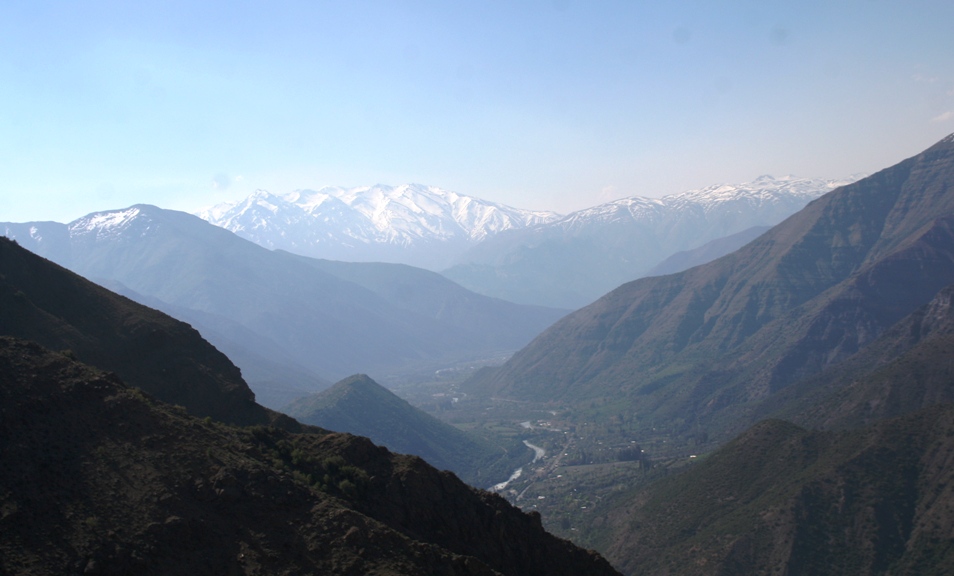
Looking downstream, roughly towards Santiago.
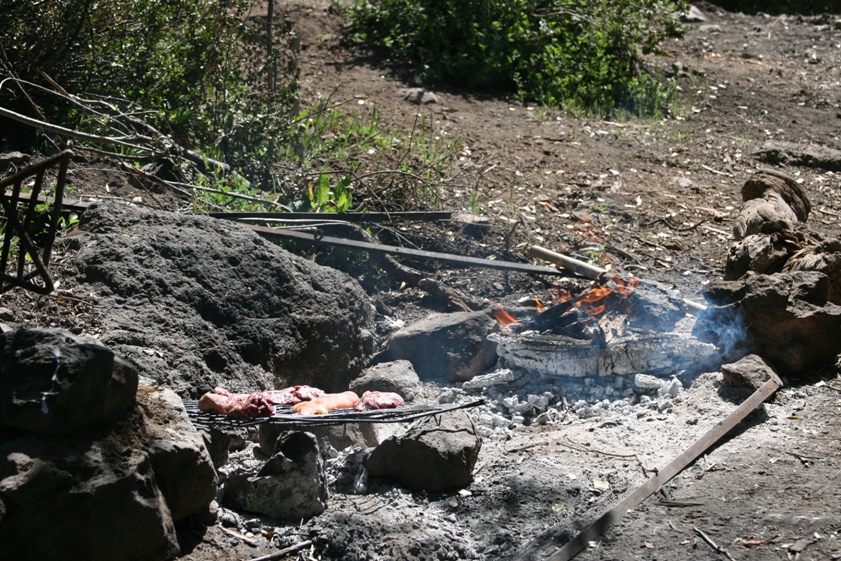
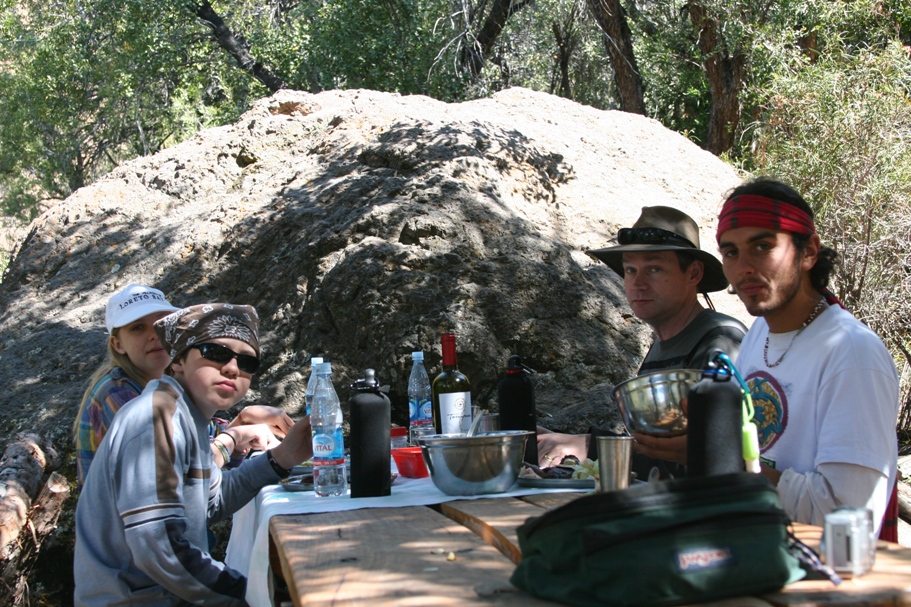
After climbing for a couple of hours, we reached the top of one of the nearby hill/mountains on the southwest bank of the river. Continuing onto the side of a neighboring and even larger hill, we arrived at the lunch break location for the calbagata tours. Here our guide Diego made a wood fire and barbecued our lunch.
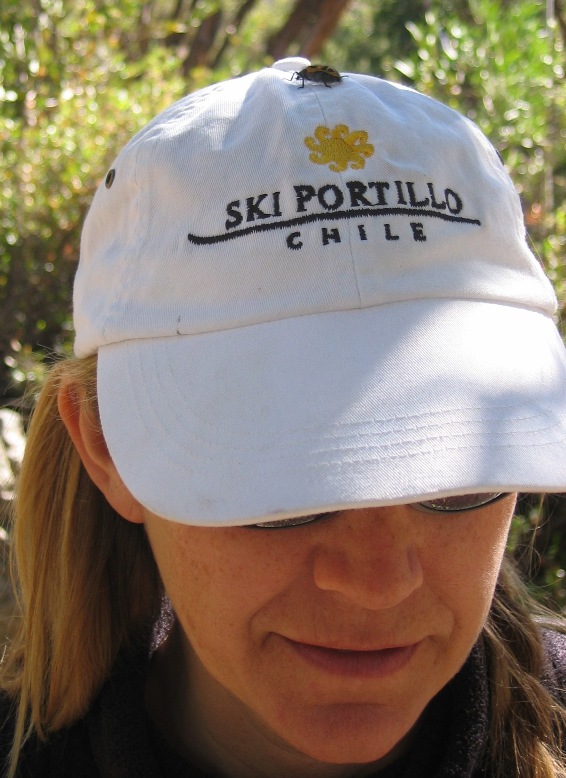
Big fat beetles hummed around lazily during our lunch - they were all over the place. Diego told us they are called "Pololos," which is a Chilean slang word for "boyfriend." So Lynn finally got herself a Chilean boyfriend.
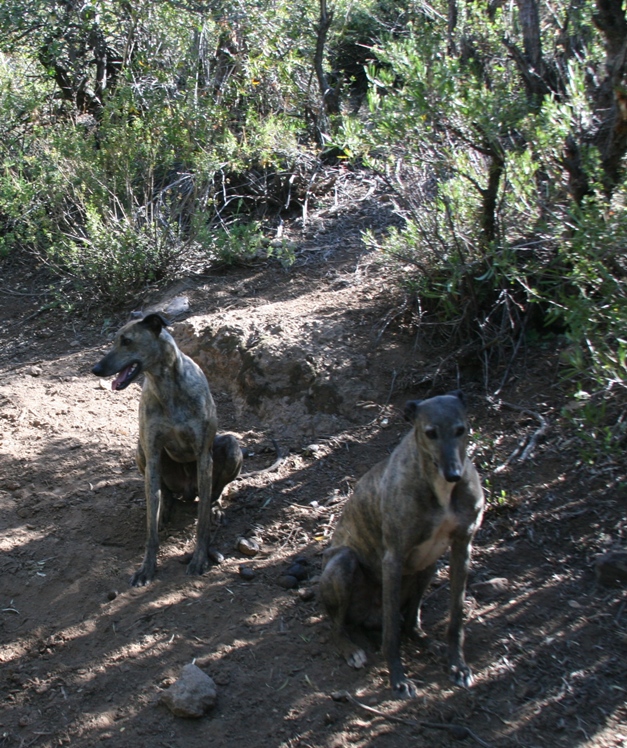
Diego's greyhounds accompanied us on the ride.
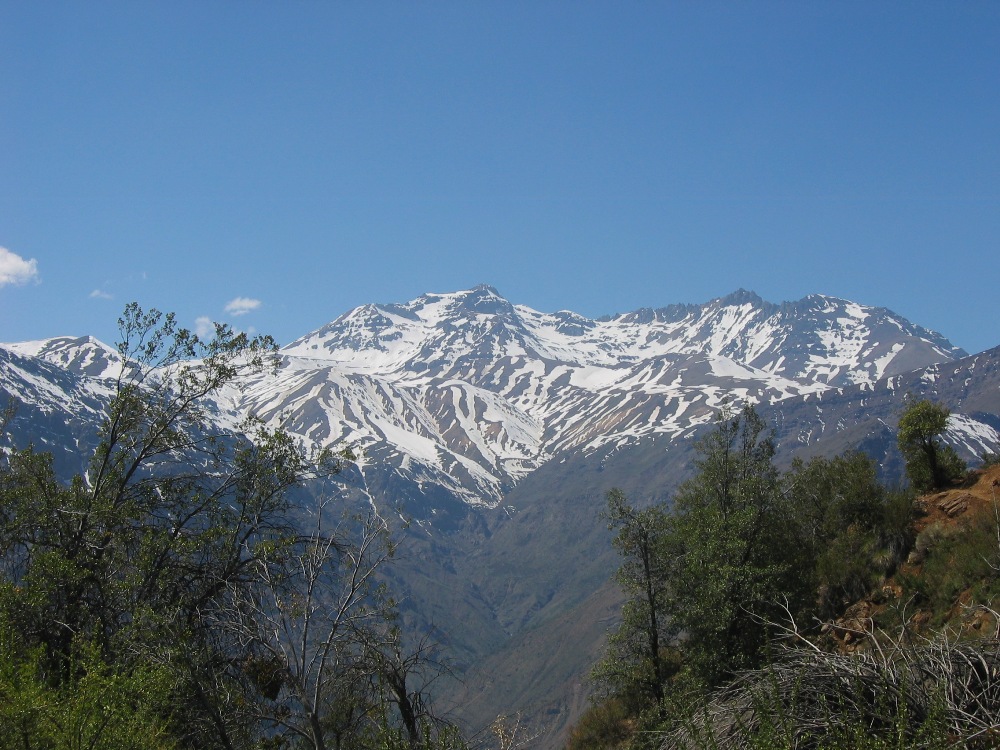

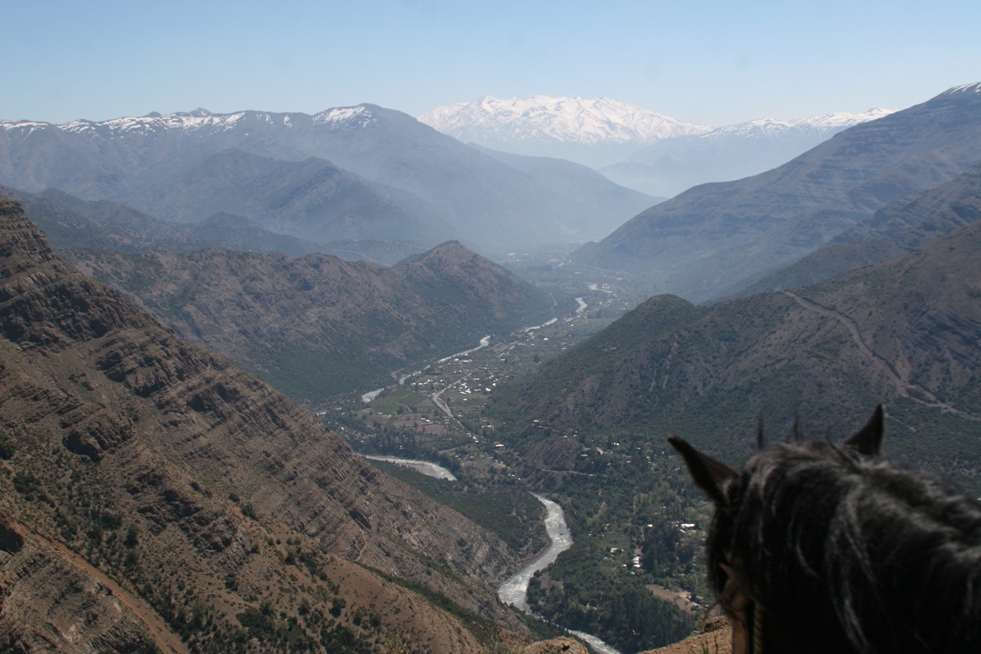
Views from near the barbecue spot.
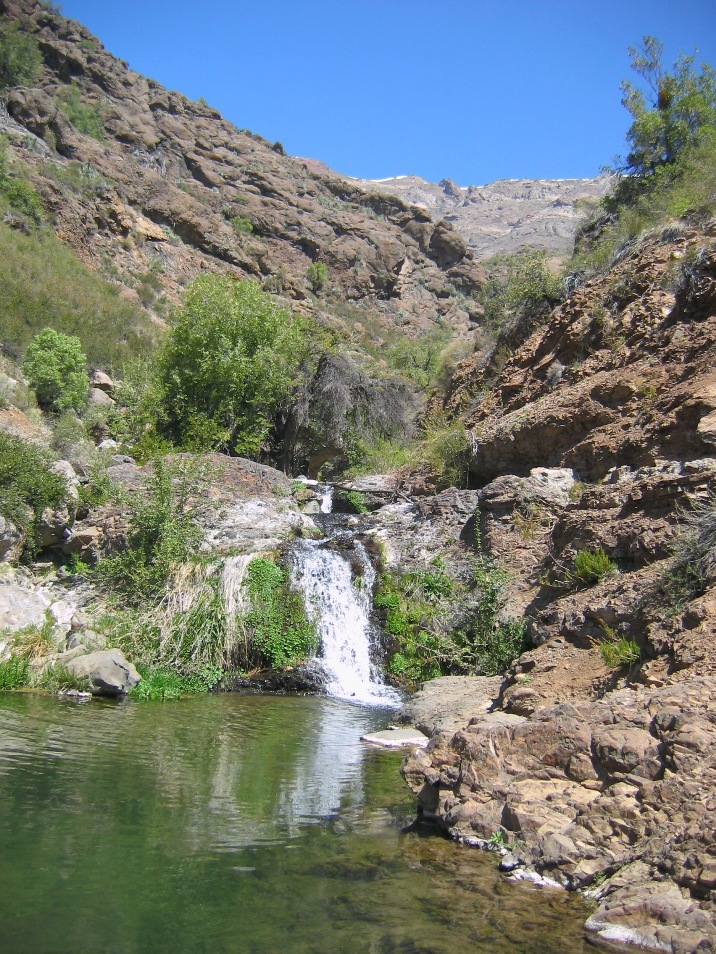
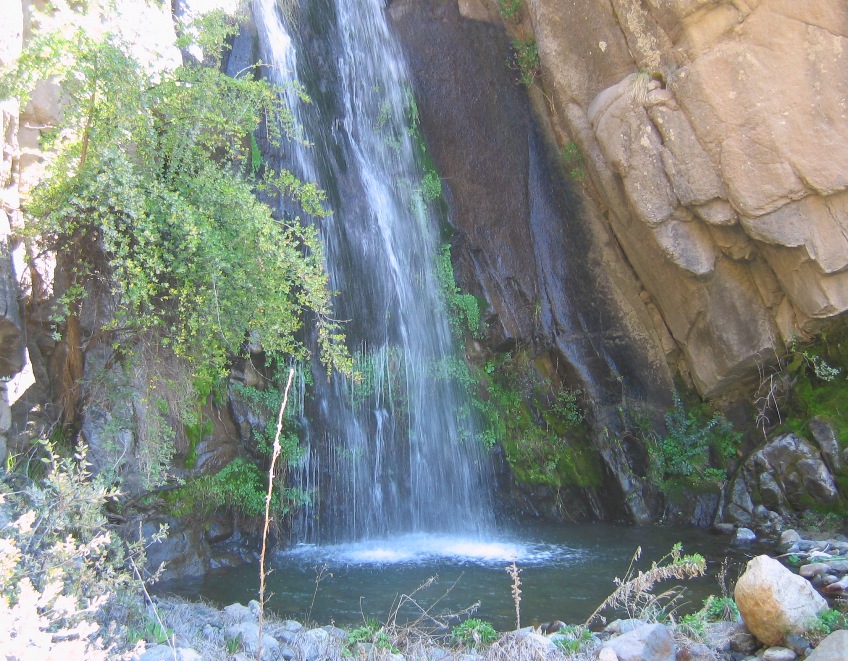
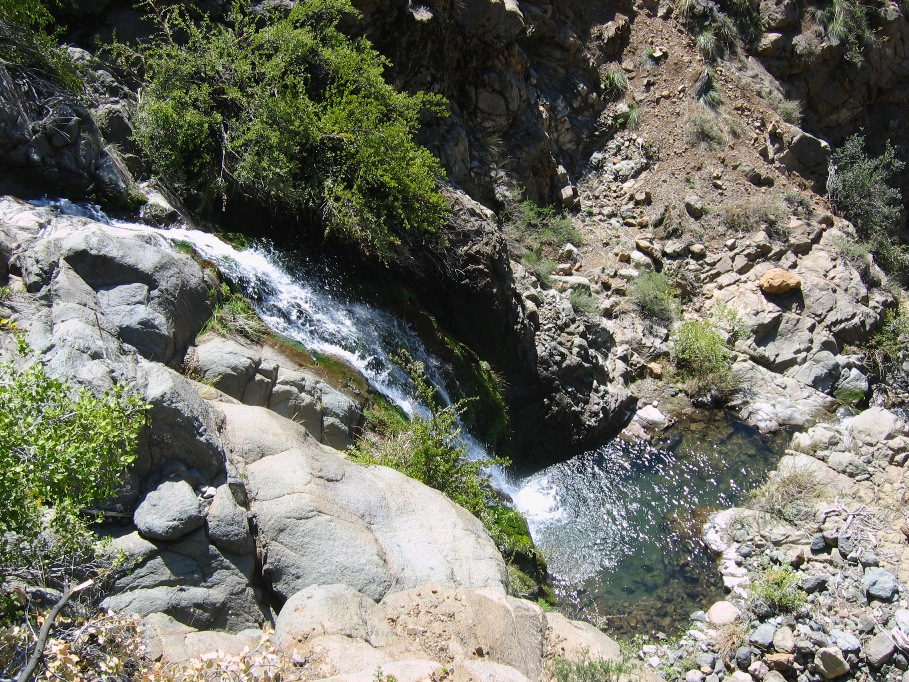
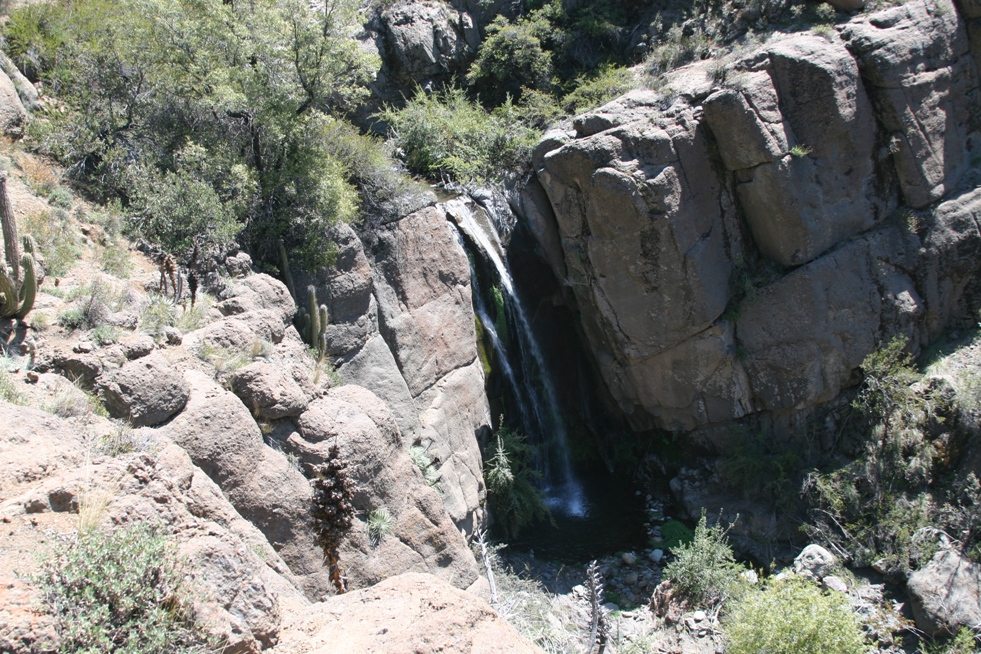
These are pictures of waterfalls on a side stream that feeds the Maipo river. We ate lunch near the stream and took a few short walks to get various views of these three different "cascadas." The largest (second and fourth pictures) is visible from the valley floor and framed by the entrance gate to Cascada Las Animas.
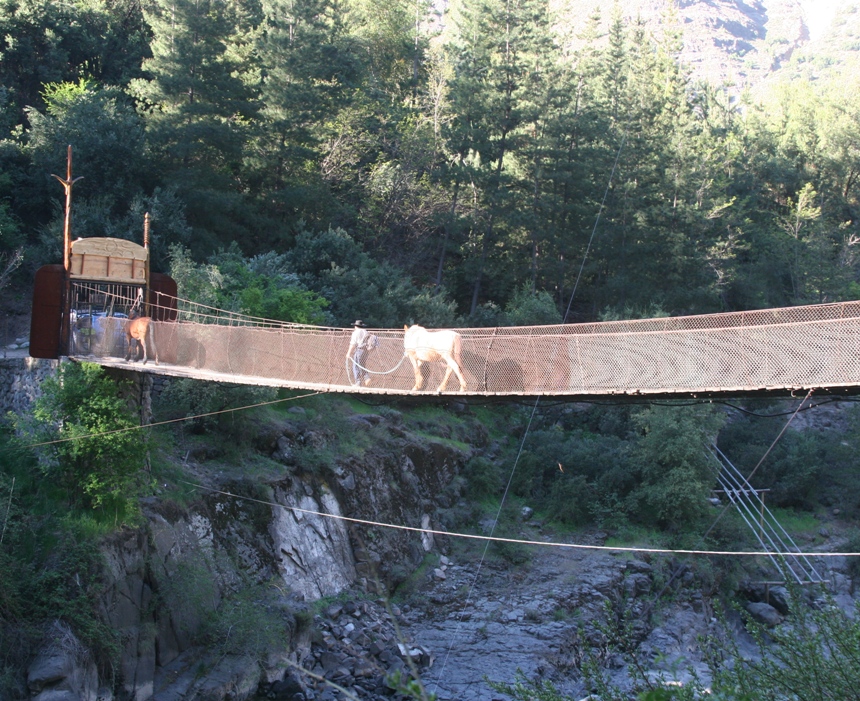
Finally, back down at the valley floor in the late afternoon, we crossed the Maipo river back to the grounds of Cascada Las Animas.
Sunday it was time to hacer rafting, and by some amazing mysterious manner, we were able to obtain these photo's of the twins and me in our raft.
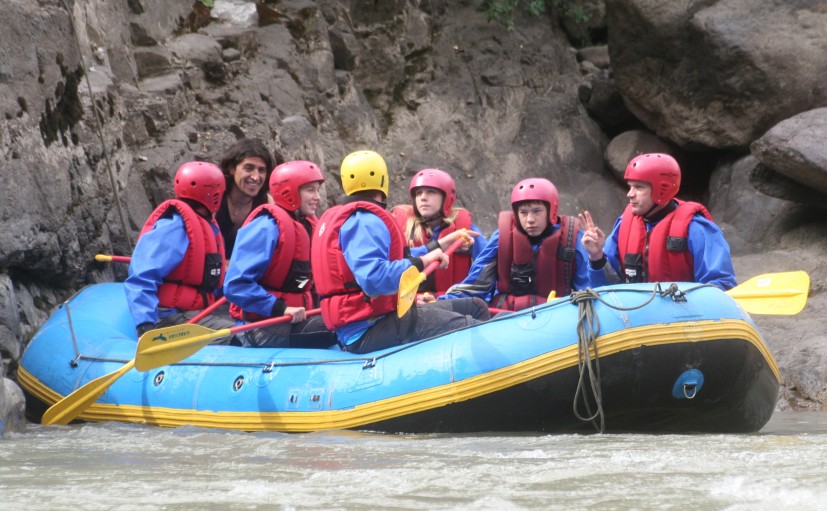
Getting ready to go...
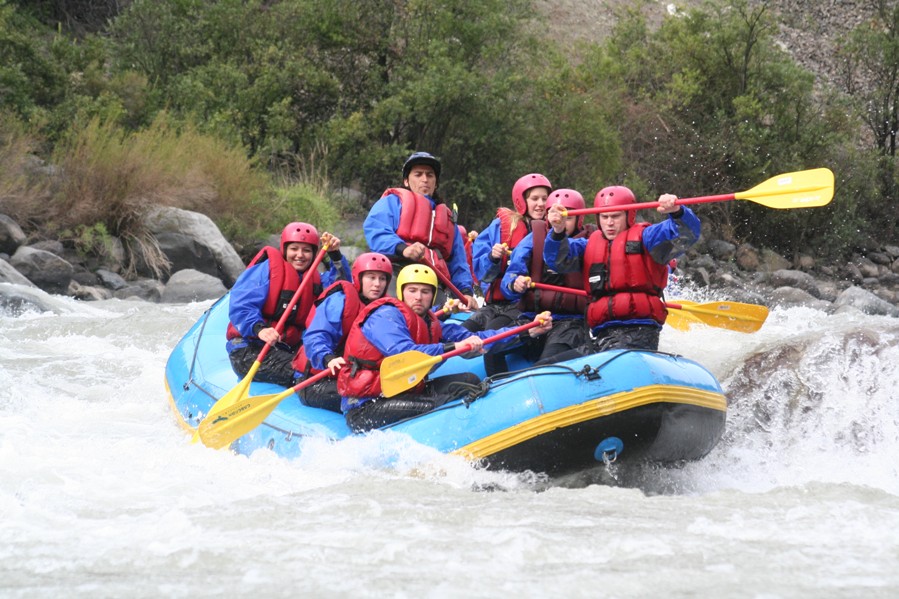
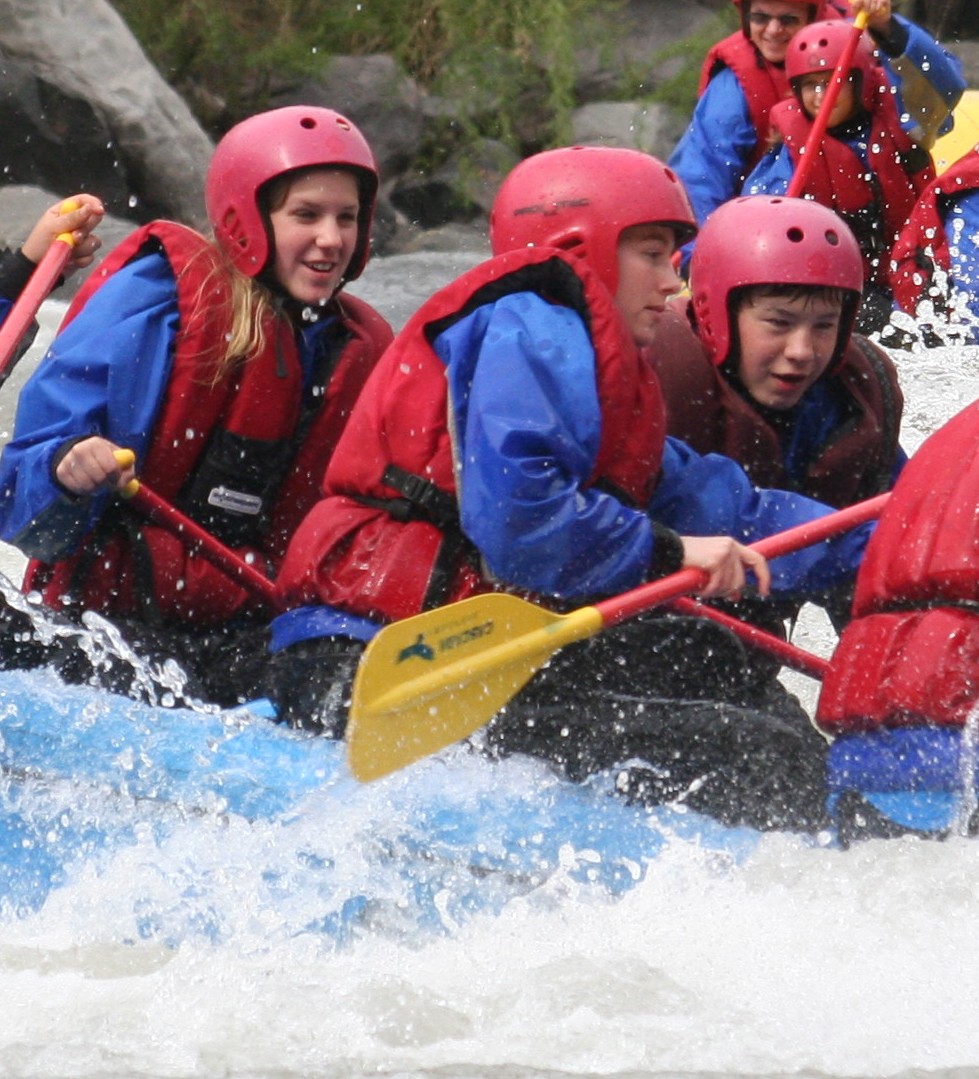
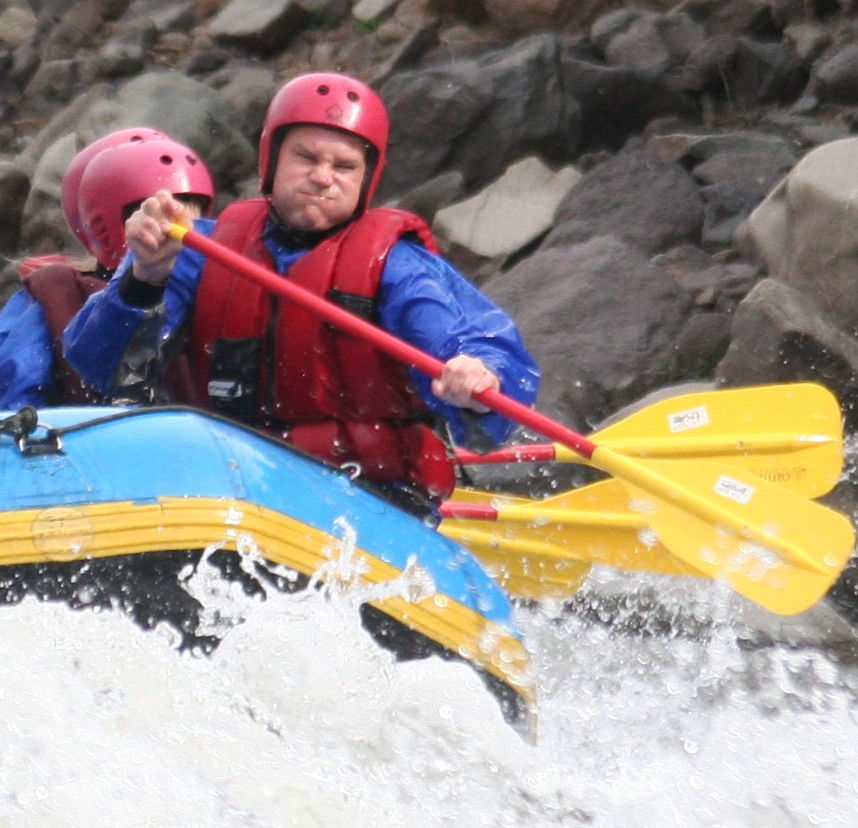
The twins were a little hesitant, but I was determined to make funny faces for the camera.
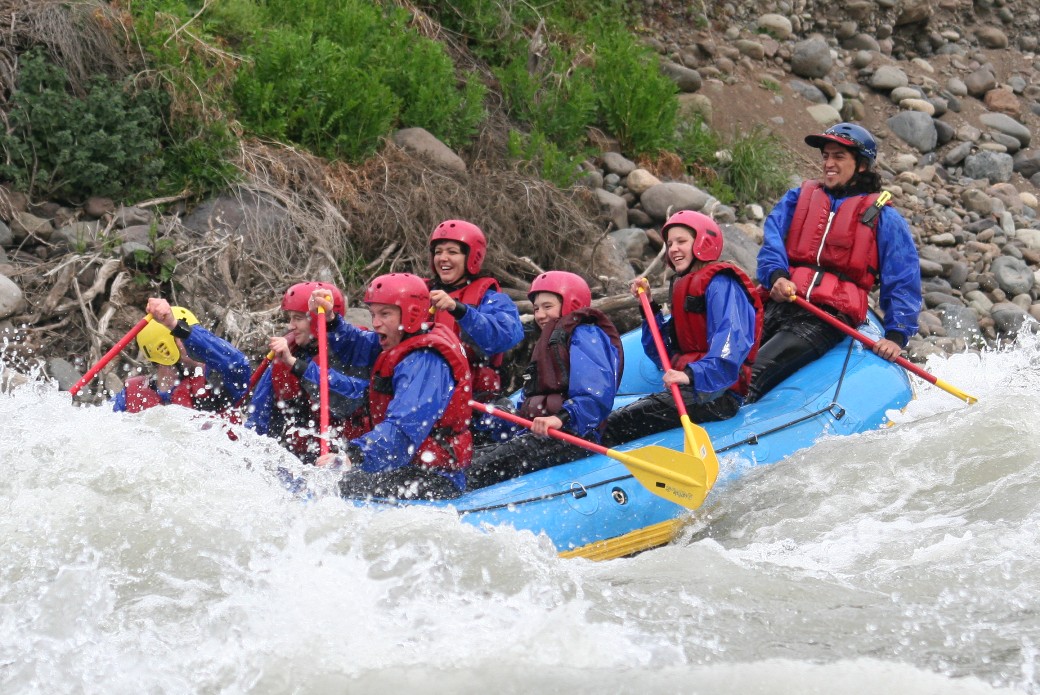
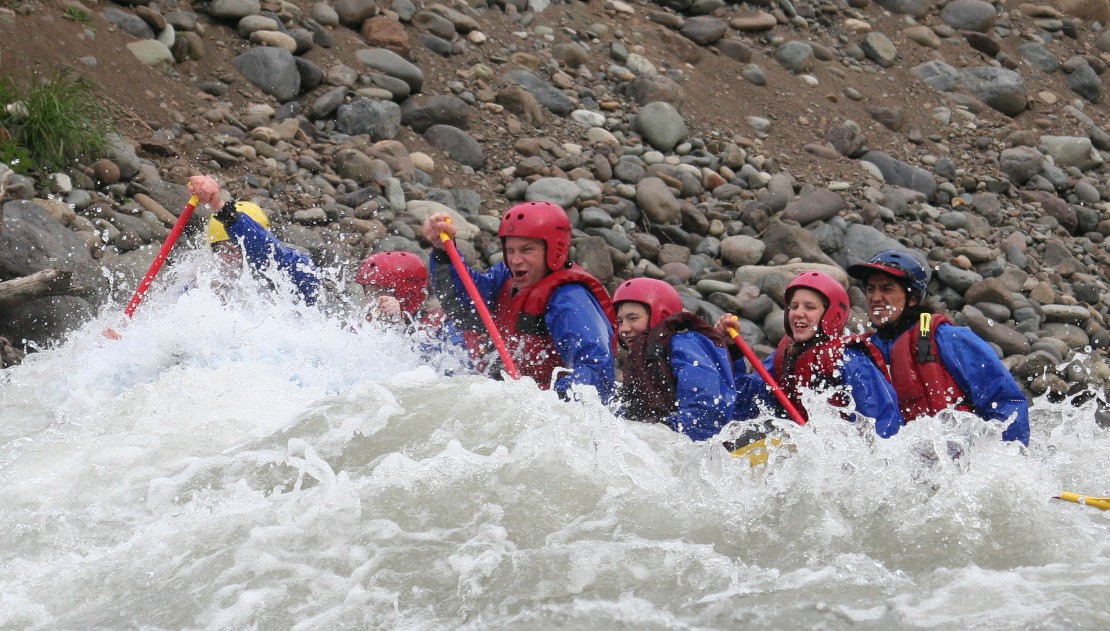
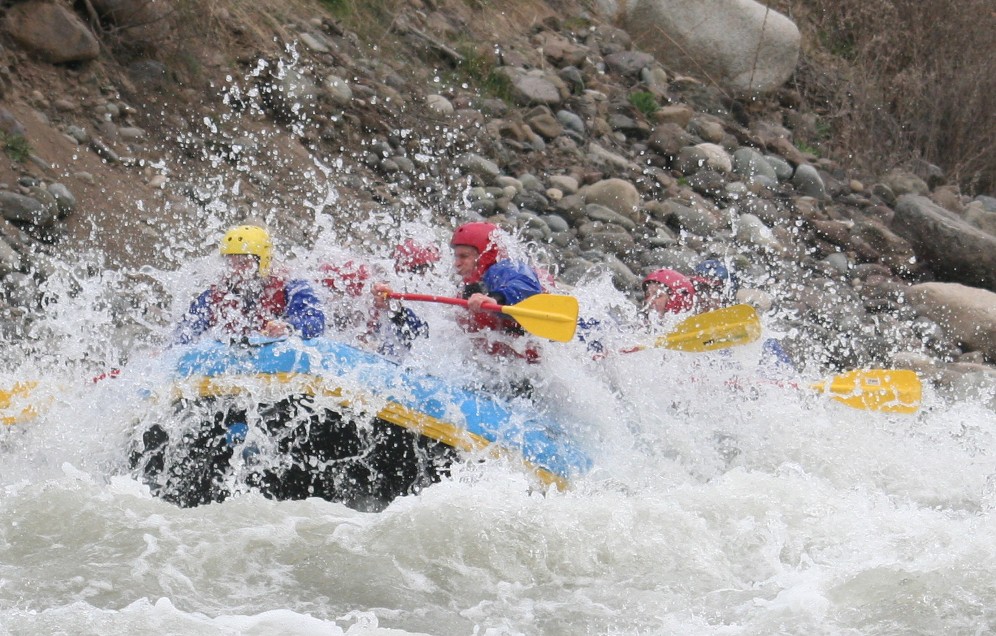
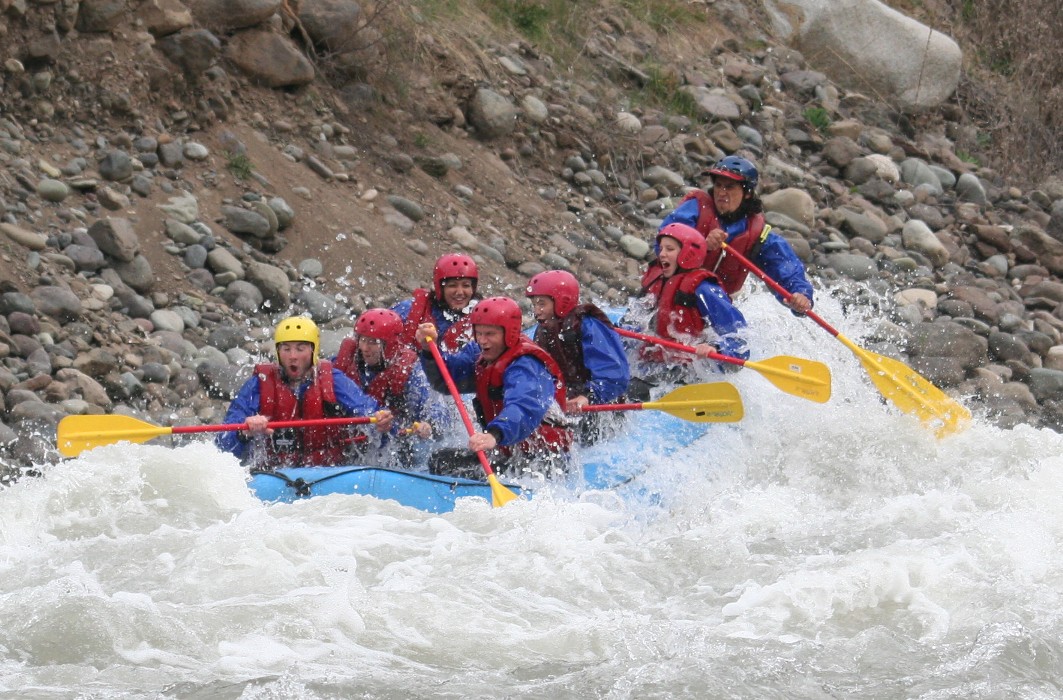
Running the rapids. We spent about an hour and a half on the river, and it was almost all one long non-stop rapids. There were a few calmer spots, so we were able to jump out of the raft and float alongside for a few minutes for the exhilarating experience of swimming in 40 degree (Farenheit) water.
Now what was our lodging like here? Well we had a two bedroom cabaña, with kitchenette, wood-burning stove, and two guardian dogs. The dogs adopted us soon after we arrived. The young soon-to-be mother female Sofira liked to throw us pathetically cute looks of subjugation, while her little boyfriend Cholo liked to play the tough guy and trot around protecting us and growling at any other persons or dogs who wandered within 50 feet of our cabin or ourselves (as we walked to and from the restaurant, for example). The first night we were here, a large dopey Weimeranner-type tried to horn-in on Cholo's territory, and had staked out a spot on the porch when we returned from dinner. Sometime in the darkest, latest, middlest part of the night, Cholo decided to forcibly evict the much larger dog by force, and the two were howling, barking, and growling until I took a stick and waved it around at both of them. The next morning, Sofira and Cholo were parked right in front of the door.
Cholo's protection seemed useful some of the time, as he was very good at preventing Sofira from jumping up on us (which she always seemed to want to do). Off and on throughout the night he would start growling like a rabid bear and sometimes break out into frantic barking. A peak out the window confirmed that the the problem was never a human intruder or other serious threat to the residents of the cabaña - just another dog who wanted to share the warm spot on the porch near the leaky door. Alas, Cholo's ability to act tough far exceeded his ability to protect something of actual value to us.
One morning I was going back and forth collecting little sticks for kindling to start the wood-stove, and I was kicking my sandals on and off on the front porch as I went in and out. On one trip back outside, I found only one sandal. When I went back inside, Anna said she had seen a "big black dog" run off with something in it's mouth. Oh great. Cholo was nowhere to be found. Tom walked up and down the little access road for the cabañas till he found Cholo, who claimed no knowledge or interest in the incident. Later I walked all around the whole grounds until I found a larger black dog lying on a porch, then my sandal lying in the grass nearby not too much later - fortunately still intact. Cholo would have to do a lot better than that if he wanted any serious compensation (like food vs. simple head scratches) from us.
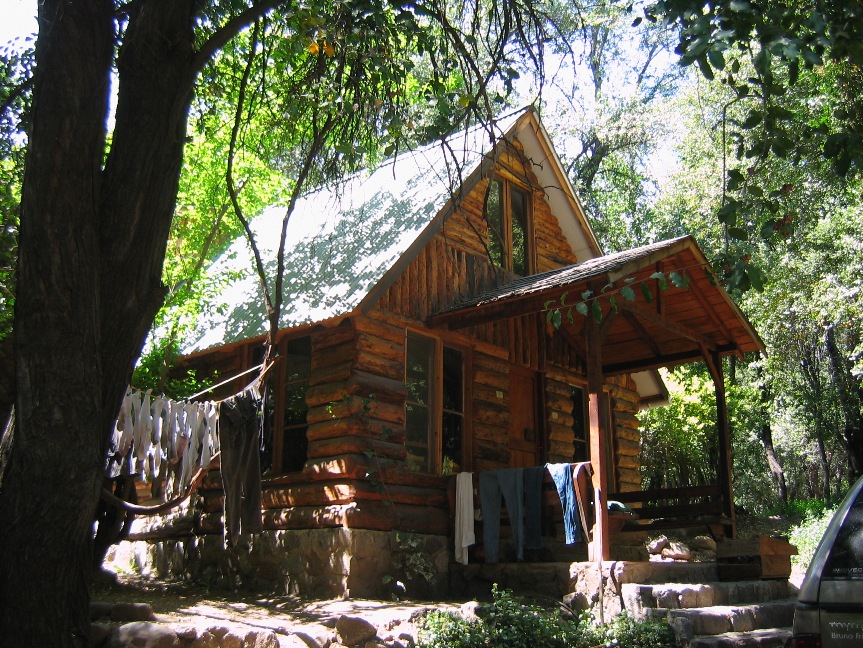
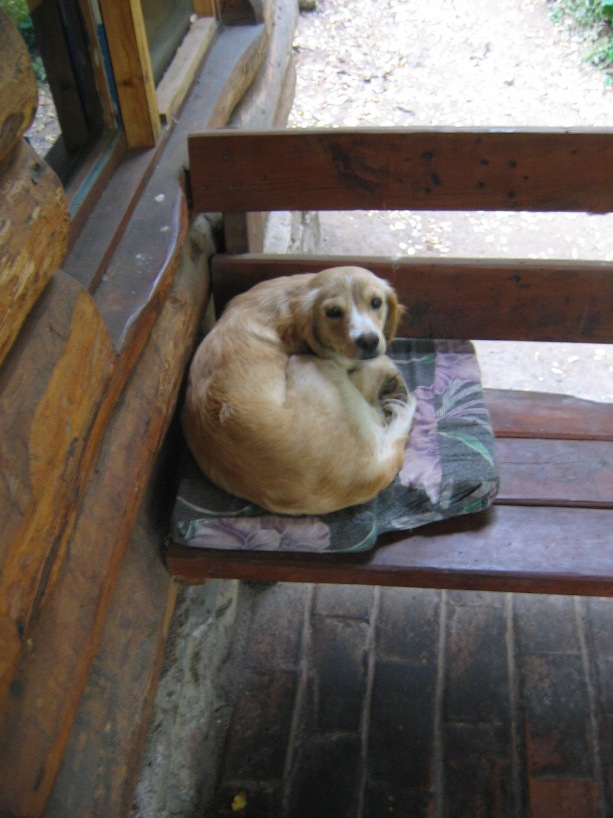
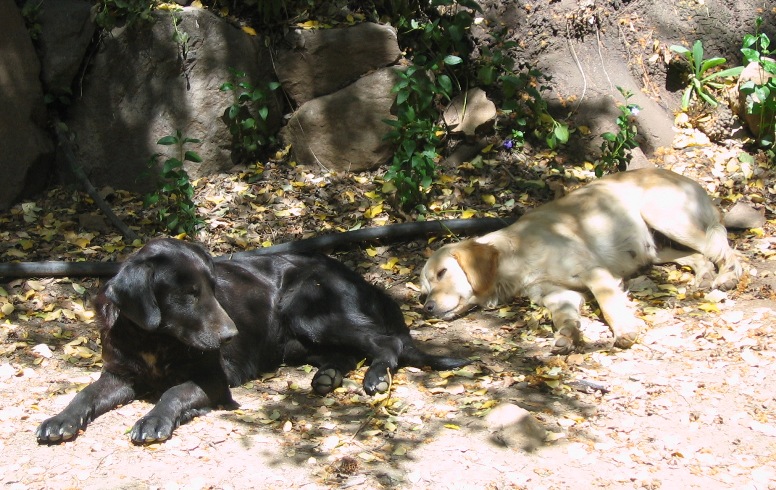
Cabaña Numero Dos - Sofira - Cholo and Sofira
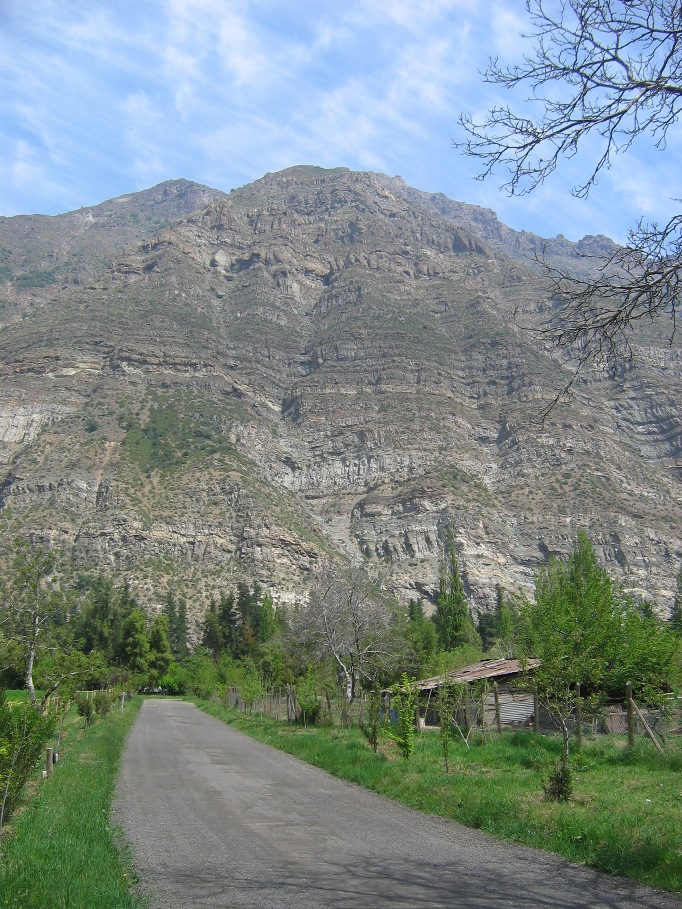
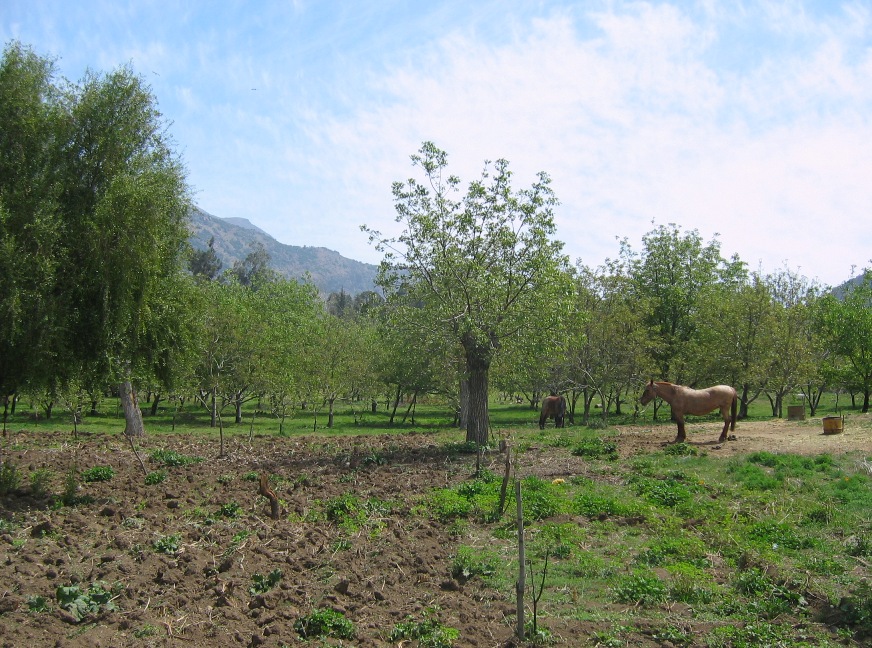
The road leading from the reception office of Cascada Las Animas back to the campground, pool, picnic grounds, cabañas, etc... The wood shack in the first picture is actually a private home where a family lives. The second picture is their field and orchard. The day we arrived, the man who lives here was plowing that field by hand with the help of the horse in the second picture.
So what exactly do our children do for schoolwork, and how do they do it? Much of the time they are reading and writing on their own. Sometimes Lynn conducts a discussion, like on a history or science subject. I am enlisted as the Spanish teacher from time to time. Here at Cascada Las Animas, with our own "house" and the time and space to spread out the classroom, Tom and Anna were able to do some science lab work. They grew crystals (a new type different from those they grew back at Las Tacas), and collected rocks to analyze and categorize. In the evenings, we watched DVD's of the BBC science documentary series "Earth Story," which explains the history of human science leading towards the modern theories of plate tectonics, continental drift, and the formation of great mountain chains.
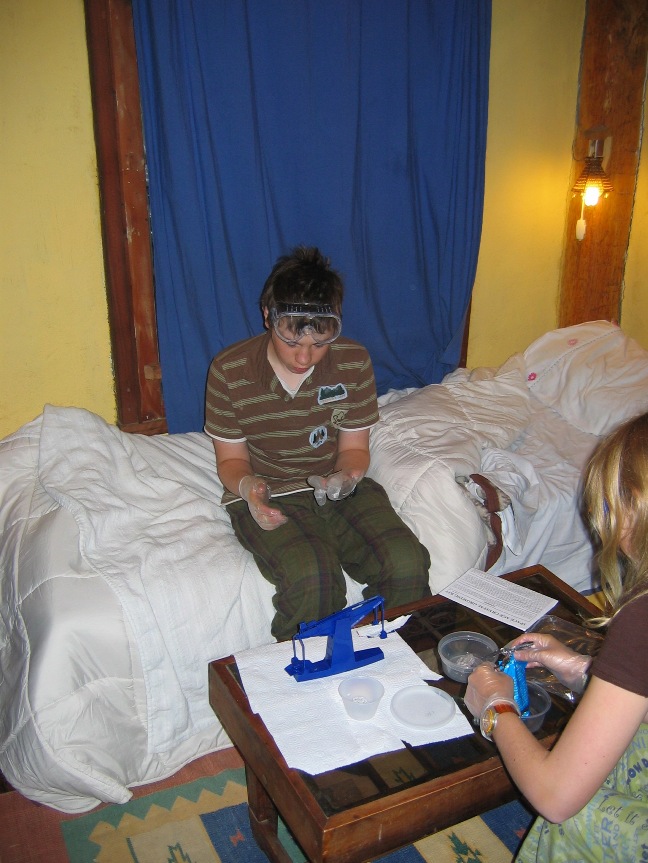
Tom prepares a solution for growing crystals.
Then after covering all this theoretical stuff "in the classroom," we walked outside and stared at the heavily layered cliffs across the river with a new understanding of what we were looking at - how and why it got there, and just why it might look the way it does.
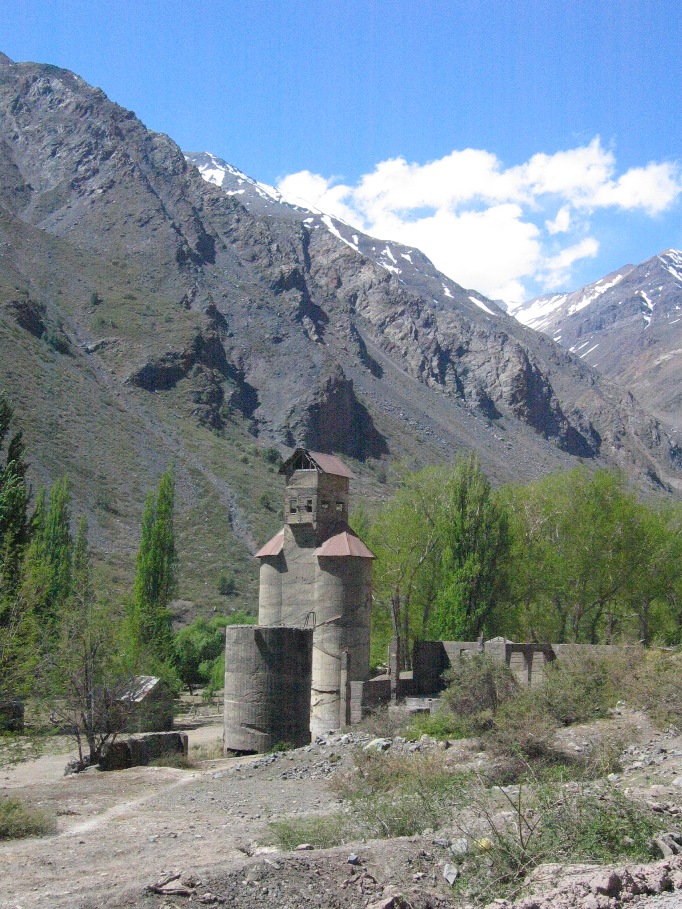
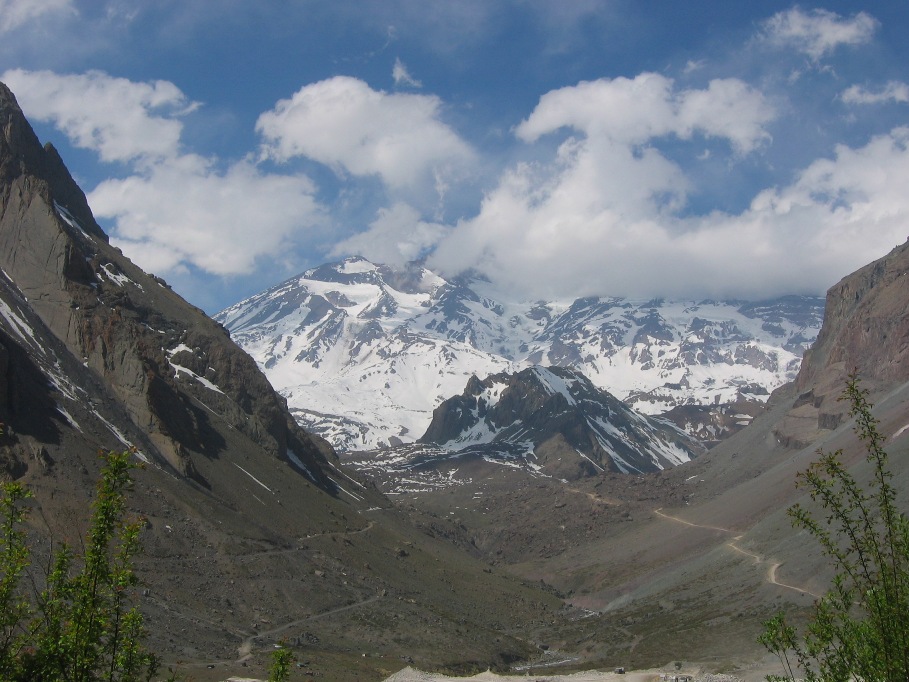
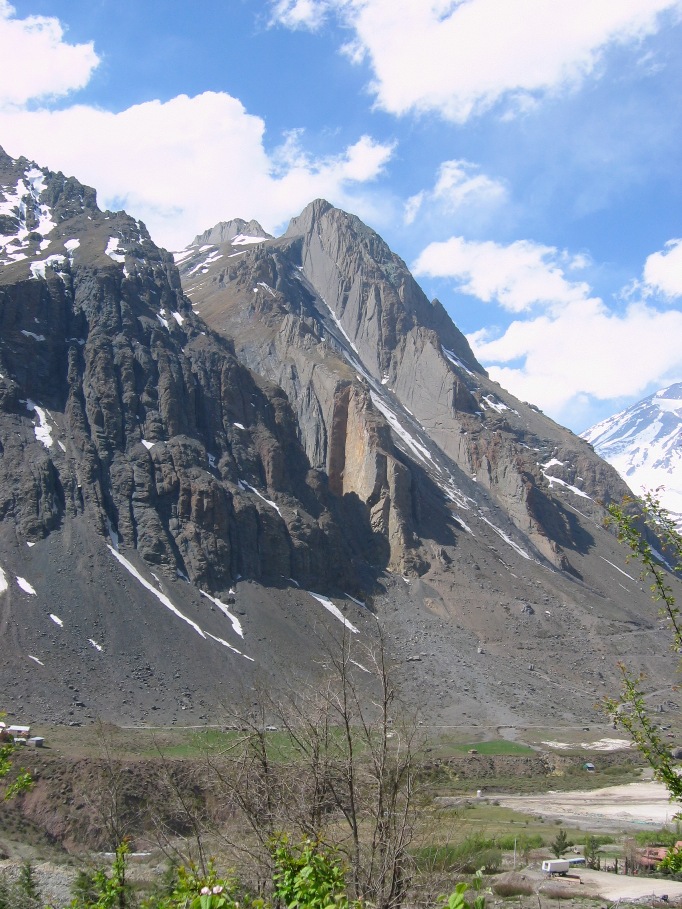
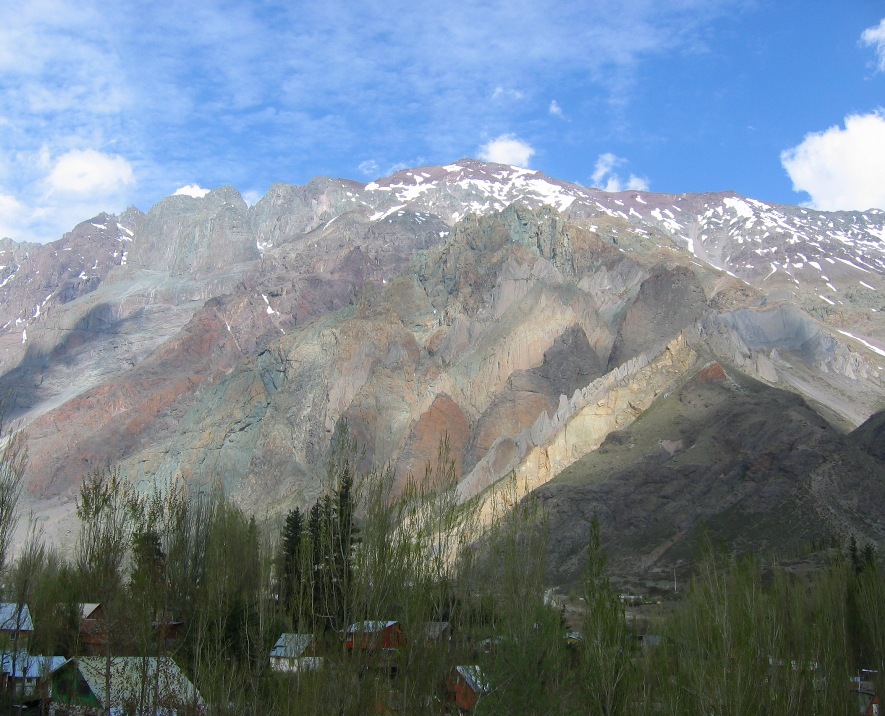
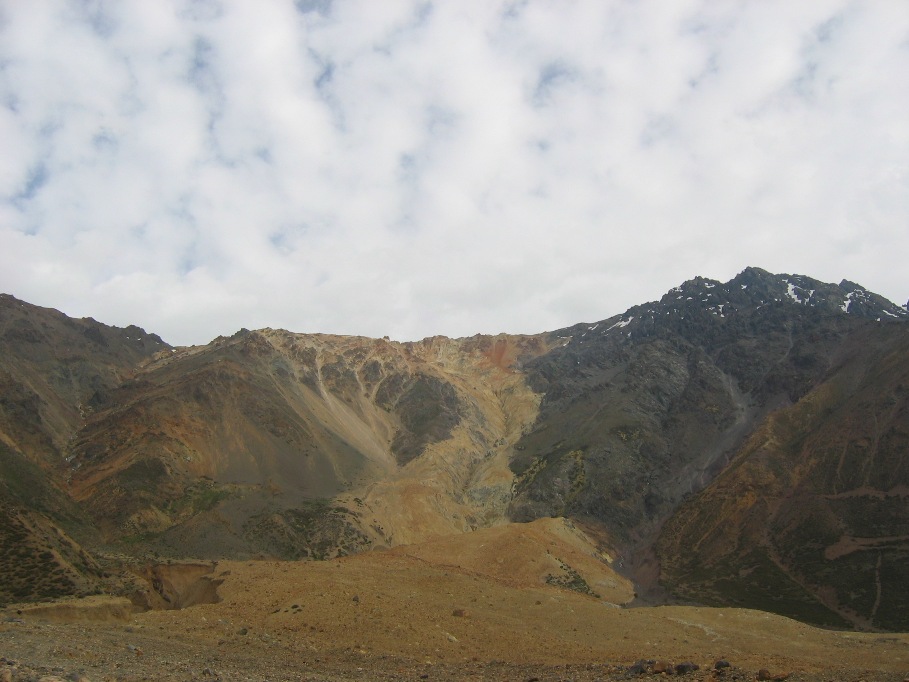
Pictures from the "upper" Maipo valley, about 30 kilometers upstream from Cascada Las Animas, and a shorter distance from the border with Argentina.
-Rolf