Central Valley
Vineyards, Waterwheels, & Spas
Sunday October 14, 2007
This journal entry is dated Oct 14, but I'm really writing it on Monday Oct 22 - almost two weeks since the last journal entry. I can blame and/or explain the long delay on a mixture of issues and occurrences, but in short, a combination of stationary waking hours and adequate technological resources has been difficult to come by. Or to put it differently, I didn't have sit-around time between 6am and midnight along with a working computer and power supply.
But all the while the family was still doing new things, visiting new places, and taking pictures. The journal between then and now (the real now of Monday Oct 22), is broken into several entries, just to try and keep any one from being absurdly long or having way too many pictures.
Since I have to think back more than 10 days to begin the following chronology and pictures, I may be brief and perfunctory with the descriptions in order to "catch-up." I'm sure most people would appreciate an increased picture to words ratio - but I can't be sure that jotting down a few memories won't trigger a flood of various and sundry details.
In general, we started a meandering, wend-our-way southward journey when we left Cascada Las Animas on Wednesday the 10th. This began with a couple hour drive through the flat open wine country irrigated by the Maipo river directly south of Santiago. We spent the night at Termas de Cauquenes, "...one of loveliest and most luxurious hot springs resorts in Chile," according to one of our guidebooks. It was also expensive enough to make me glad to be spending only one night. The high cost of the rooms might also explain why tour busses bring visitors to enjoy the thermal baths by day, and then take them home before nightfall. The beautiful facility has a long and rich history, and notables such as Charles Darwin and the great liberator of Chile Bernardo O'Higgens have soaked in its Carrera marble tubs. Lynn and I decided to try a "matrimonial tub" which was a modern contraption with jacuzzi jets, and were slightly disappointed to find the water, which we had been cautioned to expect to be between 104 and 110 degrees F, turned out to be no more tepid than the tail end of a long bath.
But while the hot baths were very mineral but not quite so hot, the food was extremely good - a gourmet Swiss chef's version of the comida tipica chilena that we'd gradually been growing tired of - and the grounds and spa building were truly magnificent. The neo-Gothic sala de baños looks like an old chapel, having original marble tubs and stained glass window that were installed in 1876 (the Jesuits had maintained and operated the spa for many years).
The grounds of the facility include a section of wooded trails on the across from the adjacent river, which also featured a full-function playground!
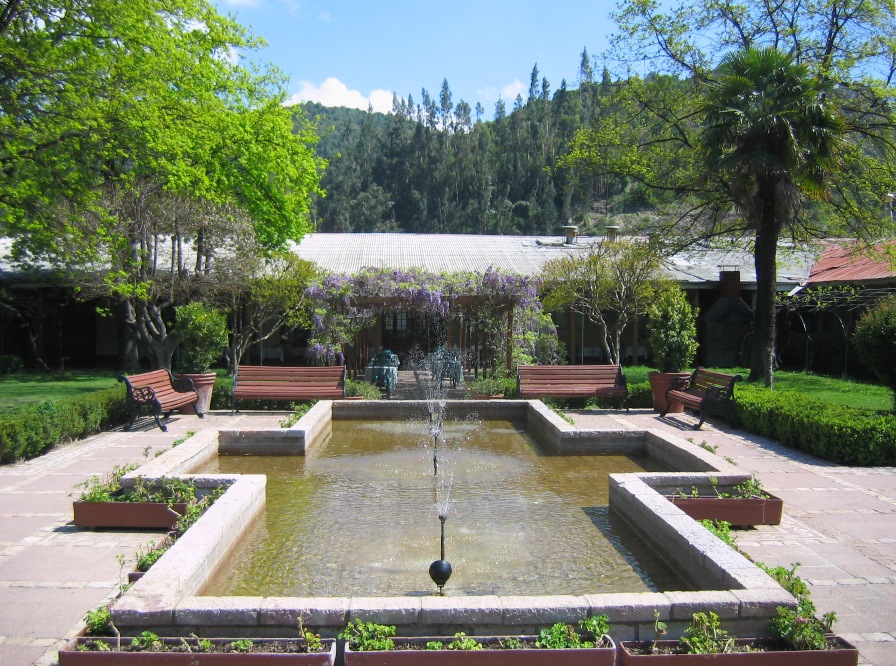
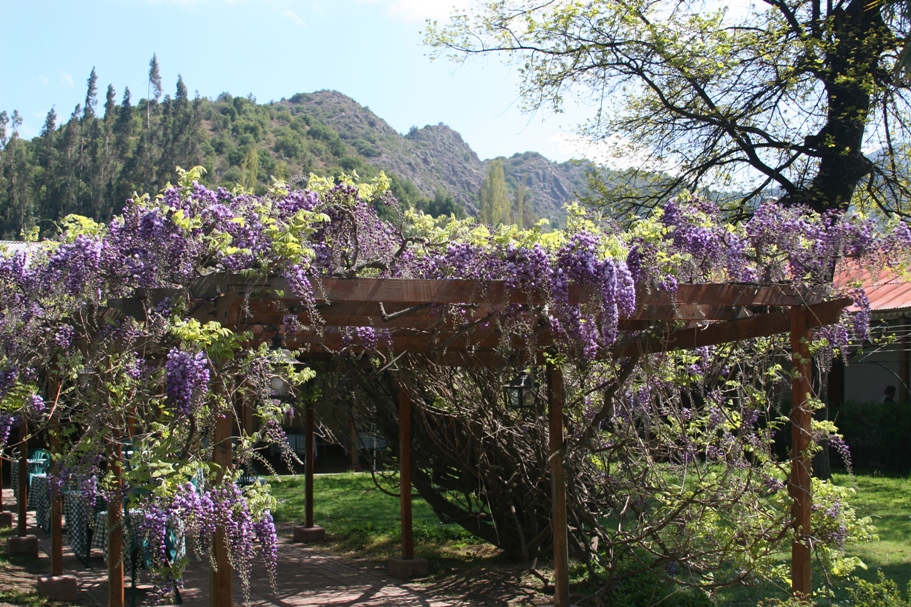
Fountains and wisteria on the grounds of Termas de Cauquenes.
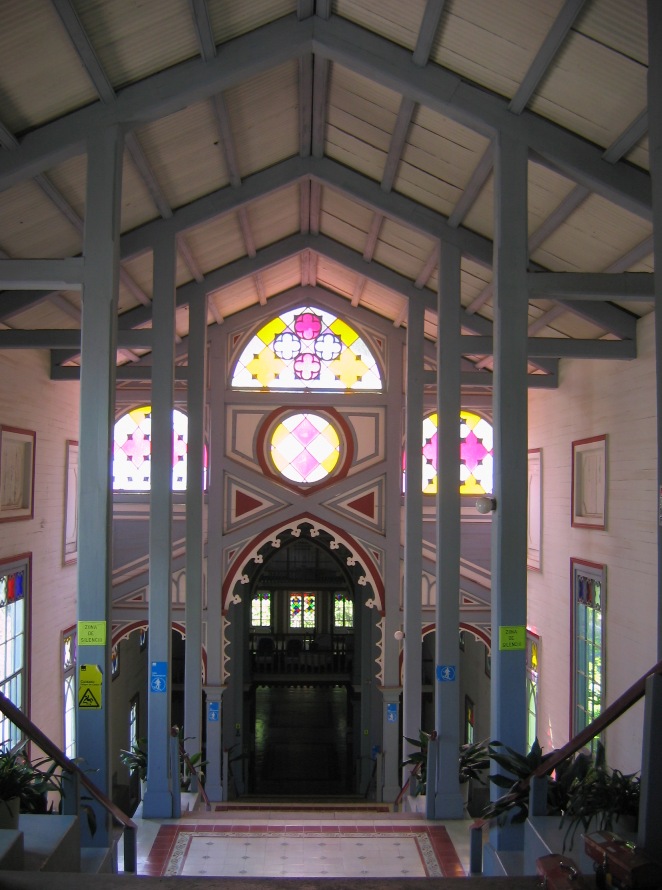
Sala de Baños
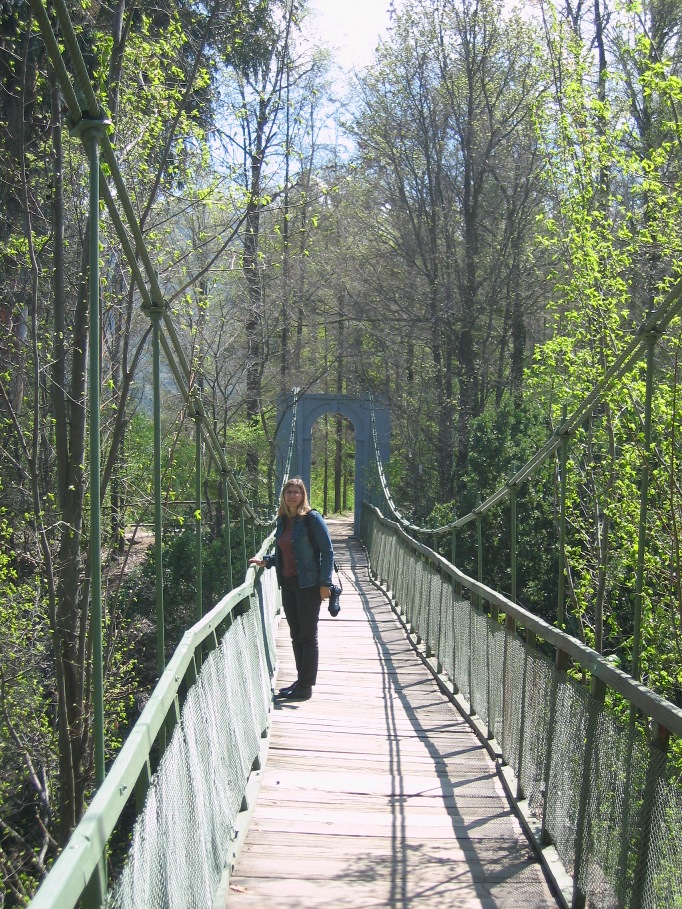
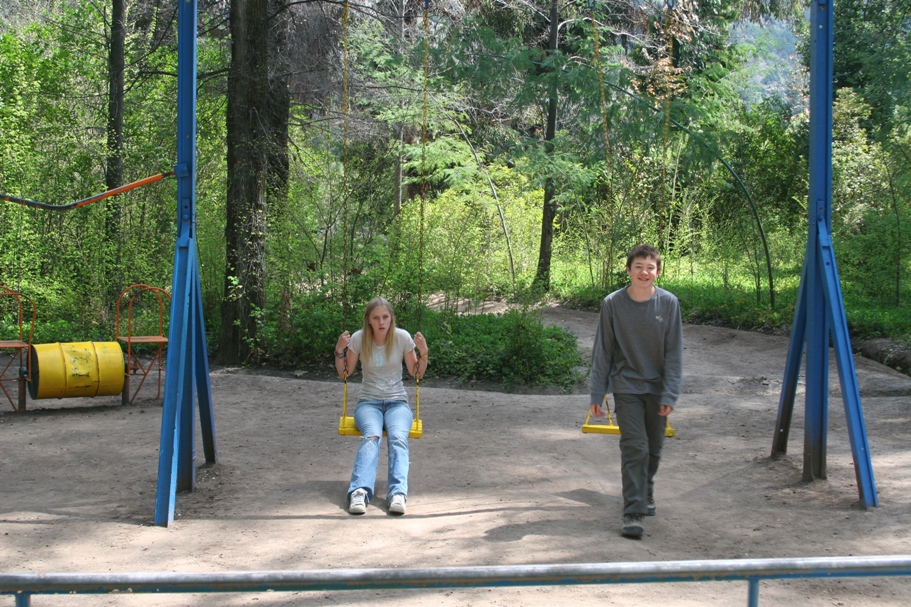
Walking in the nearby nature park. Tom and Anna had no trouble reverting to a 8 year-old version of "recess" for a little exercise.
In the morning before we left, while the kids were loading the car, an old man walked a donkey by us and they both stopped in the parking lot right in front of a large glass wall of the reception office. Soon the donkey started braying frantically, and we all started laughing, including the old man. He moved the donkey a few yards to the side and it quickly calmed down. We walked over to pet the donkey and he explained to us (mostly with sign language) that they donkey had gone crazy when it saw it's own reflection in the window. Then we all had another good laugh, and fortunately, the donkey didn't seem to care. Now Anna wants a donkey as well as a horse, too.
Thursday we drove another hour or two down ruta 5 and stopped to spend the night in the town of San Vincente de Tagua Tagua. There is nothing much to see in this town, but it's not far from the small village of Larmahue, where we went in the late afternoon to see the ancient waterwheels that give the place some notoriety and charm. These irrigation devices date back to early colonial times and are supposed to be derived from the irrigation techniques of the Moorish inhabitants of medieval Spain. There still were 80 of them in 1988 but now only 25 remain. At least 17 are now protected as national monuments of Chile.
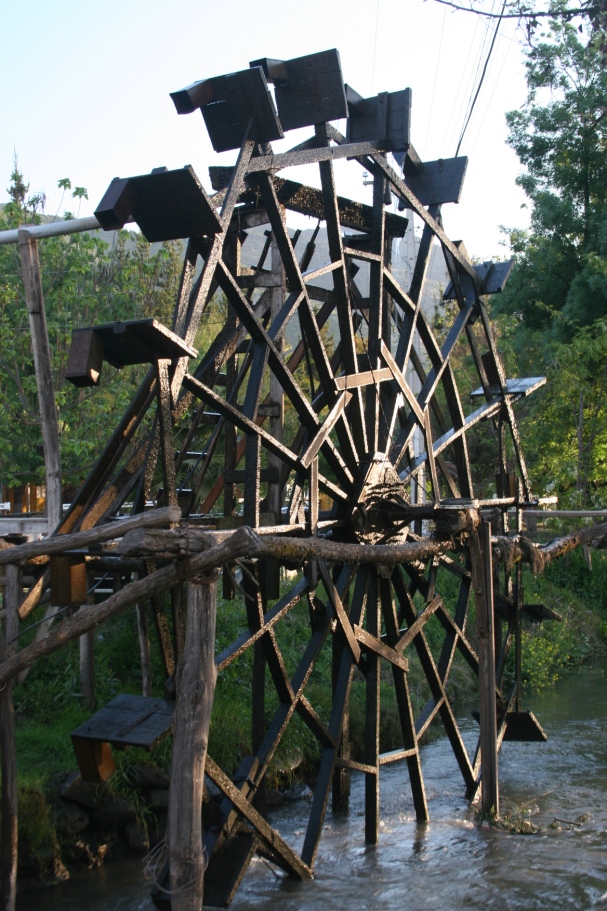
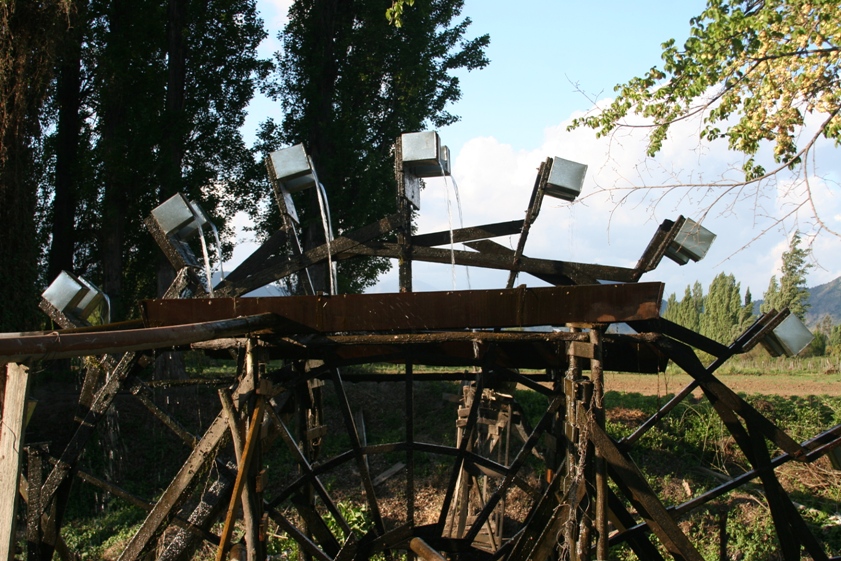
Basic water-wheel for irrigation technology: Small cans or buckets are mounted on water wheel paddles with the top (opening) of the can facing downstream when they enter the water. If the cans were mounted with the opening facing upstream, they'd dump the water out on the trip from the river up to the top of the wheel! The paddles go slow enough that the cans can fill even though they point downstream. At the top of the wheel, they spill out into a trough that feeds pipes running down towards the nearby field or garden that needs the water. Open or close a valve on the pipes as needed.
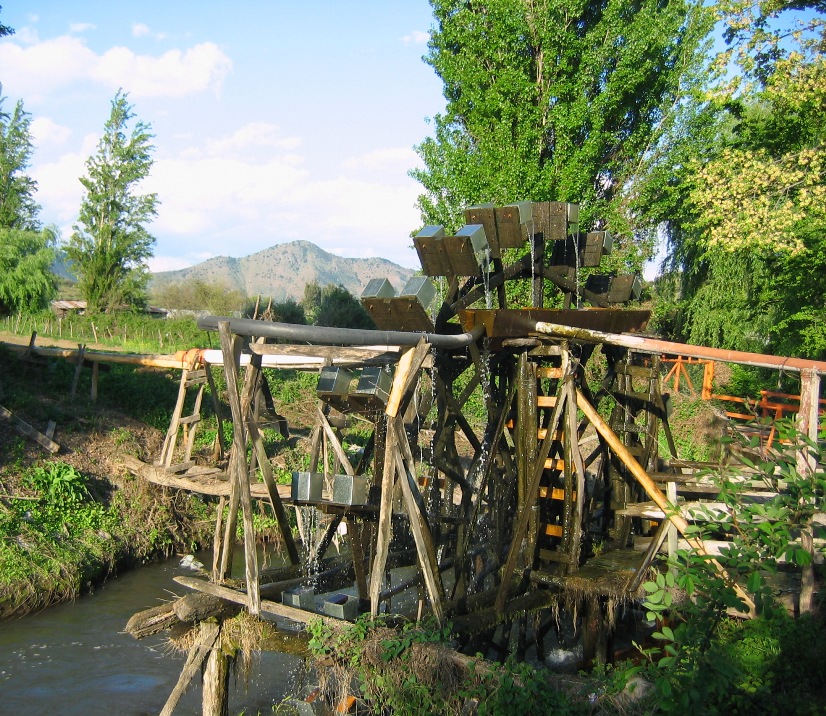
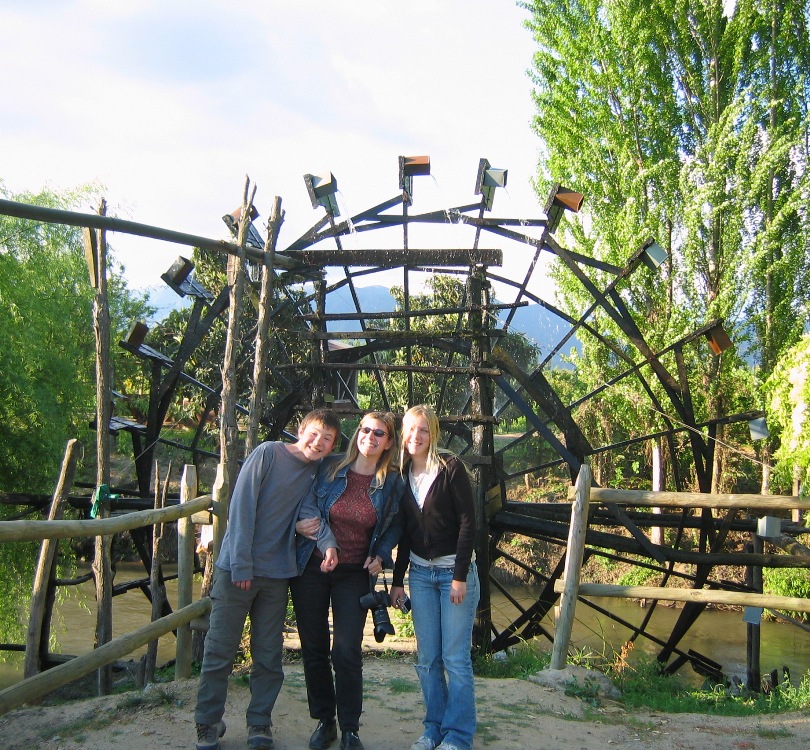
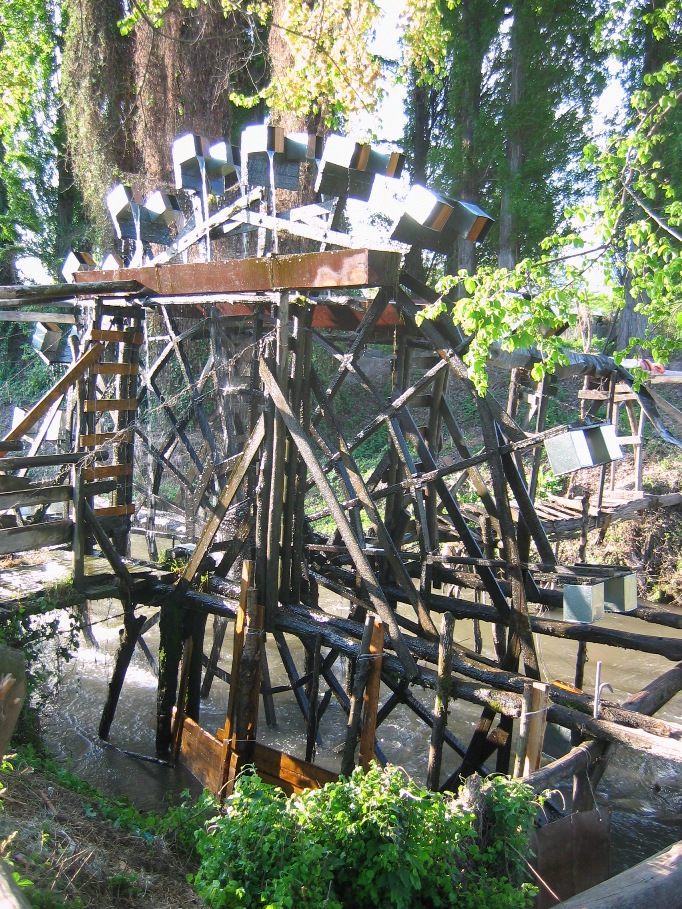
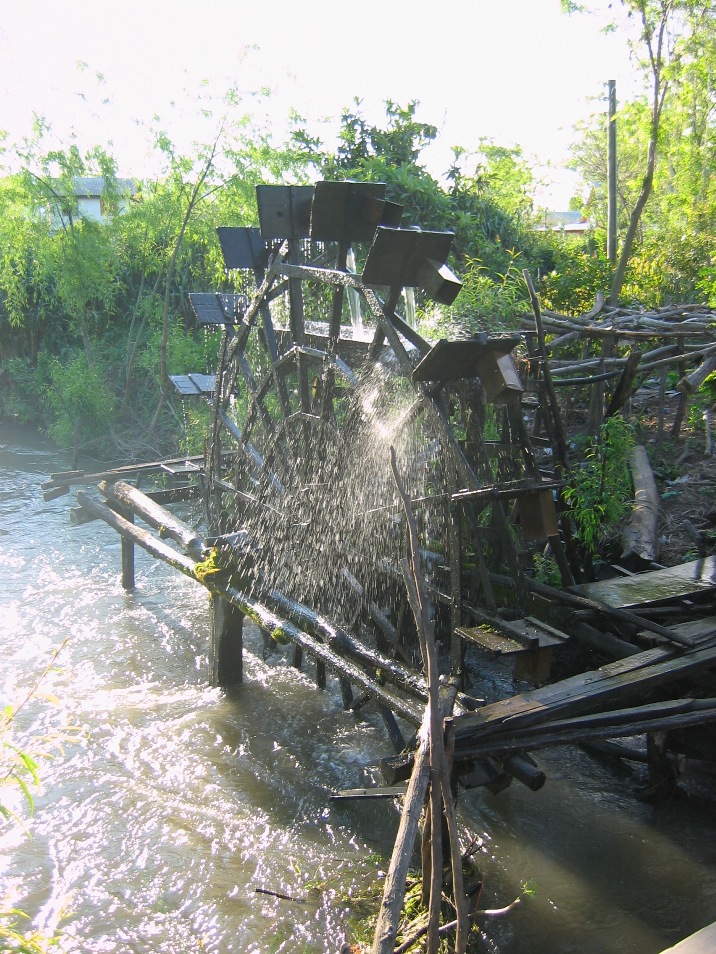
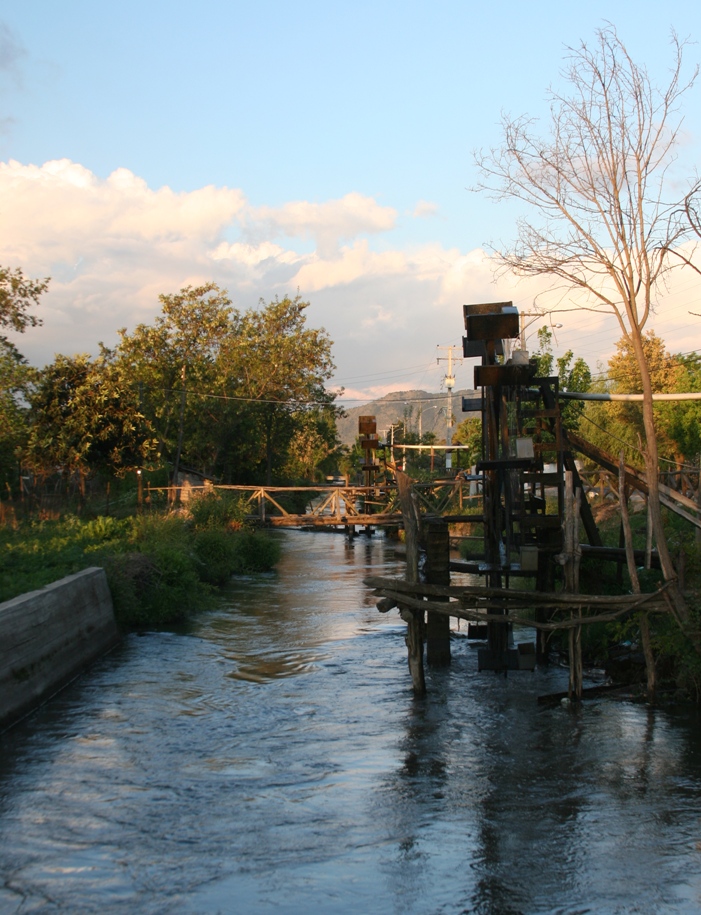
As we walked up and down the road peeping at various waterwheels, several different people came up and extended personal invitations to come to the upcoming weekend festival in Larmue, a very hospitable gesture. I knew we'd be a few hundred kilometers south by then, but it was worth considering changing our plans - no where else had a whole town invited us to their party.
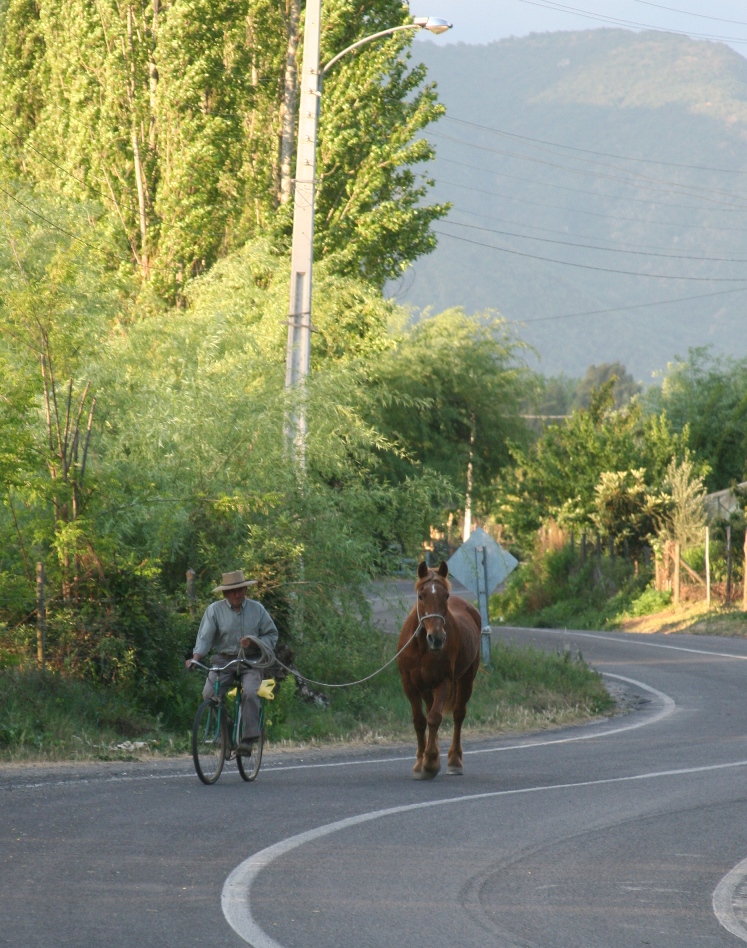
A man bringing his horse back from a grazing field home to his stable in the late afternoon.
Another interesting historical curiosity located near San Vincente de Tagua Tagua is the nearby basin of a valley which used to be a lake. The lake was drained in the 19th century to create farmland, and the uncovered lake bed revealed fossilized mastodon skeletons along with 11,000 year old tools and remains of the ancient paleo-American people that had hunted the mastodons for food (the proof is in the weapon scars on the mastodon bones). We drove to this valley on Friday morning, not knowing what we might find in the way of museums or monuments. After a half hour of poking around, we finally found a small museum at the back of the local grade school.
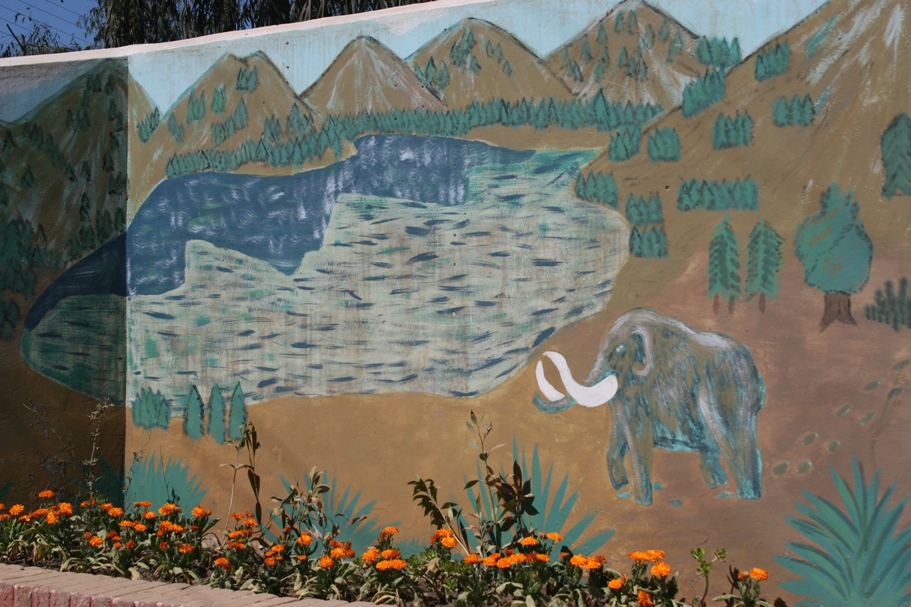
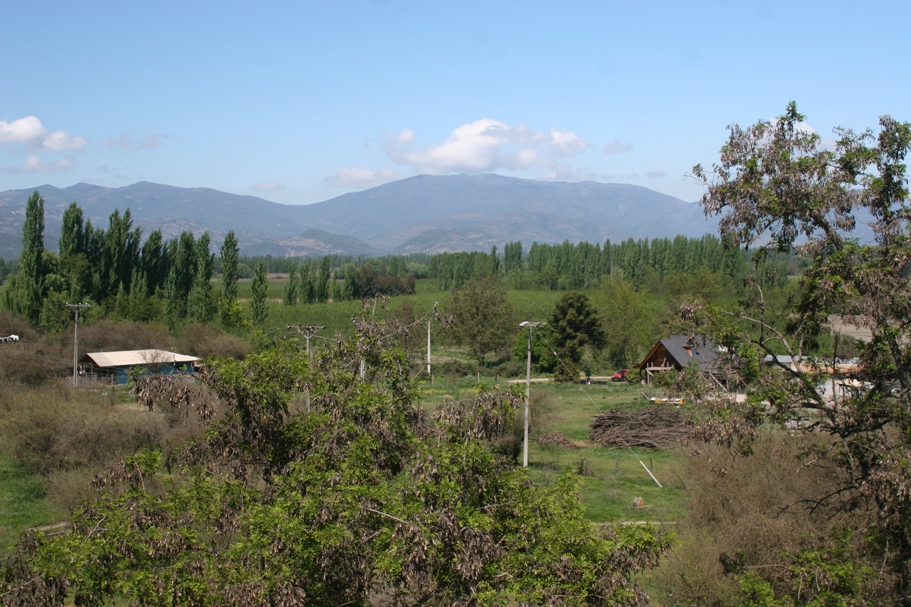
Artist's rendering of the original Lago Tagua Tagua (with frolicking mastodon), and a view of the current valley where the lake used to be. Of course this is another place that Charles Darwin poked around in during his 19th century travels through Chile.
Allowing a few minutes for the giddy stupor of treading in mastodon footsteps to wear off, we then drove back to ruta 5 and turned south once more. After a mere 10 minutes on the highway, we had clearly missed the proper exit for our intended lunch stop at a famous old hacienda, but we backtracked through the back-country dirt roads and eventually arrived at Hacienda Los Lingues.
Now while Termas de Cauquenes was expensive - spending the night at Hacienda Los Lingues would be more than twice as expensive as the really expensive Termas, so we had signed up for a luncheon tour but no overnight sleeping at this famous old estate. The land for this hacienda was originally gifted to the governor of Santiago by the King of Spain, and the property has been passed down through the same family ever since. Talk about being born with silver spoon in your mouth - how about being born with a few thousand acres of prime vineyard and horse ranch in your domestic portfolio?
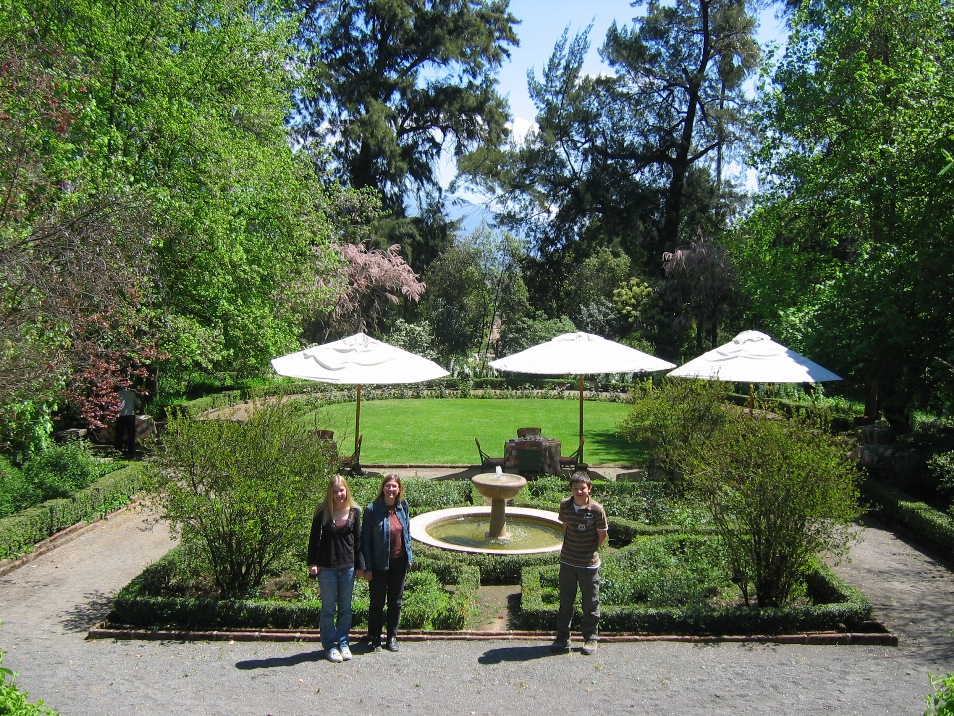
Lunch terrace at Hacienda Los Lingues.
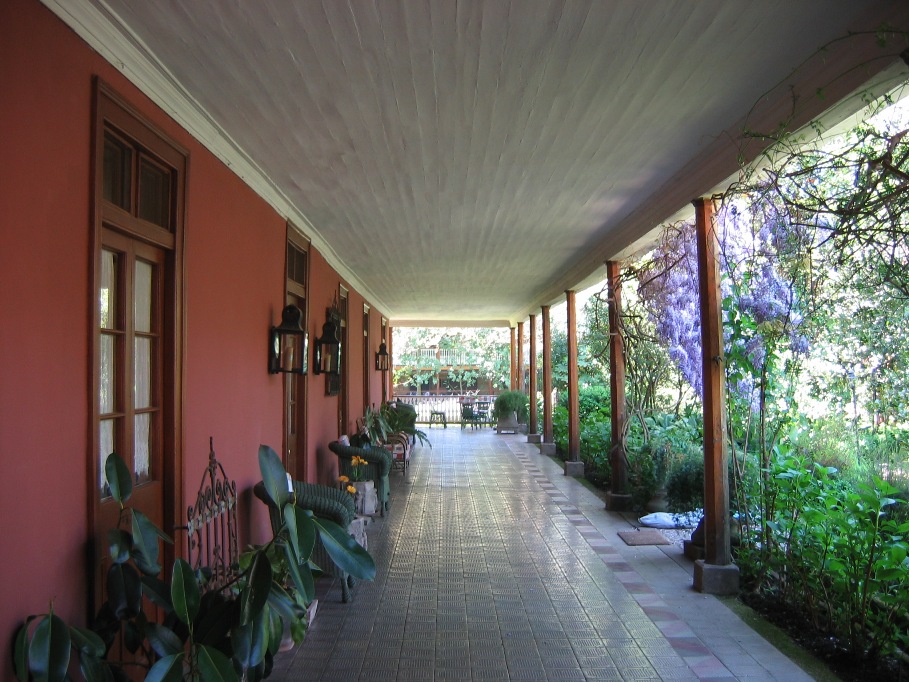
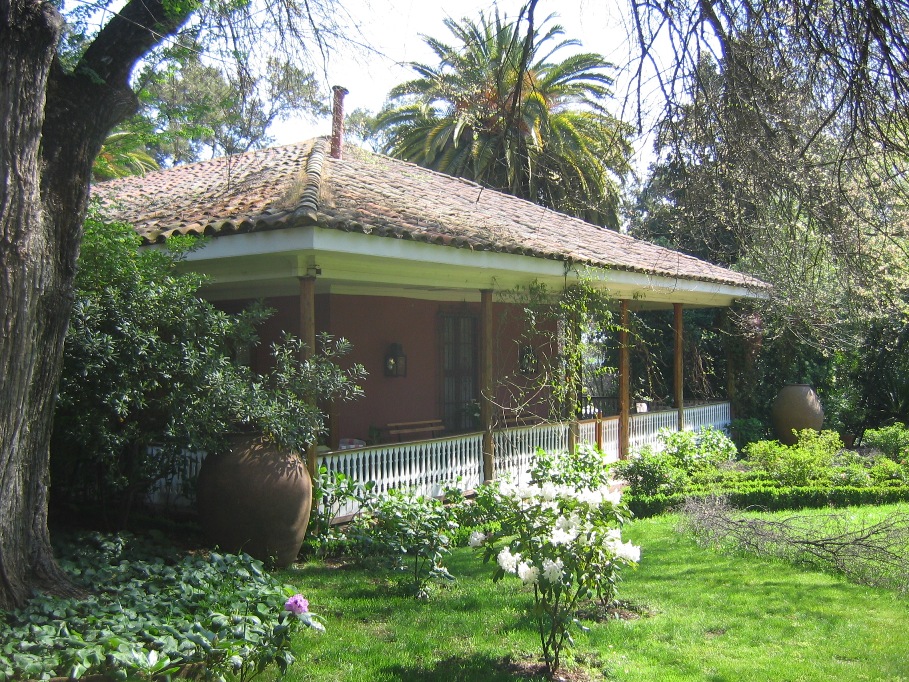
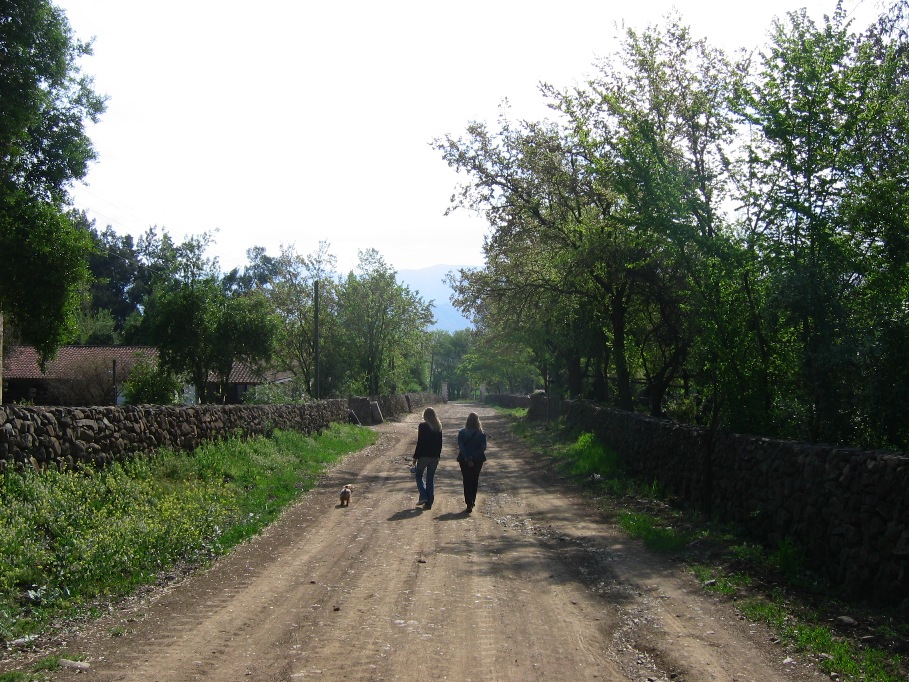
Hacienda buildings and grounds. Two Yorkshire terriers adopted us shortly after our arrival and sat at our feet while we ate lunch. Then they followed us around dutifully throughout the rest of our tour and visit.
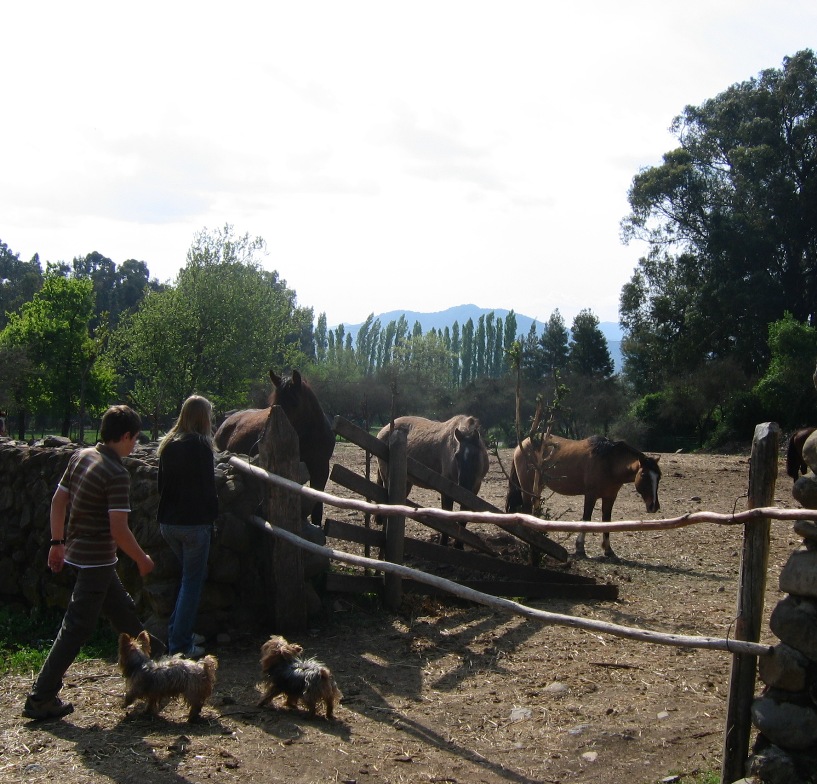
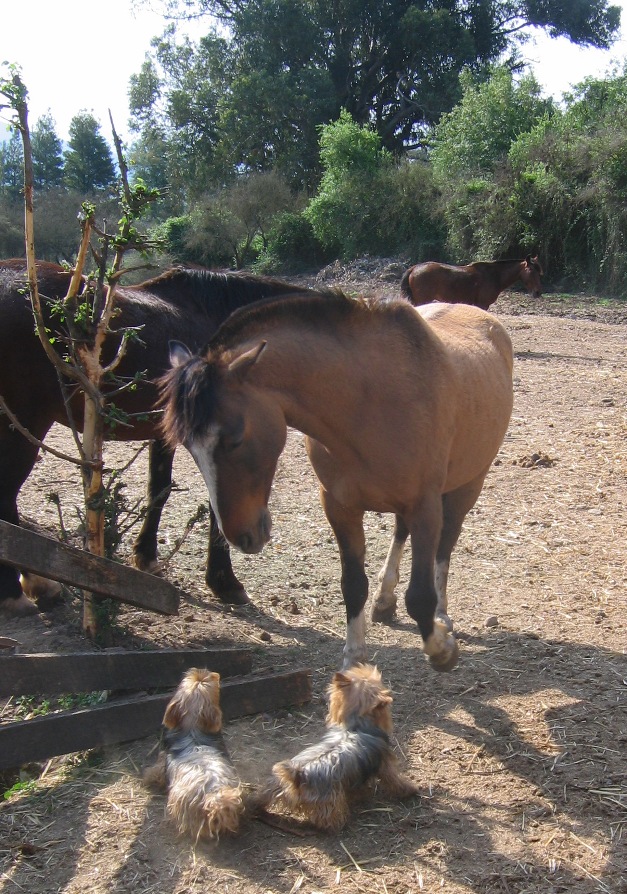
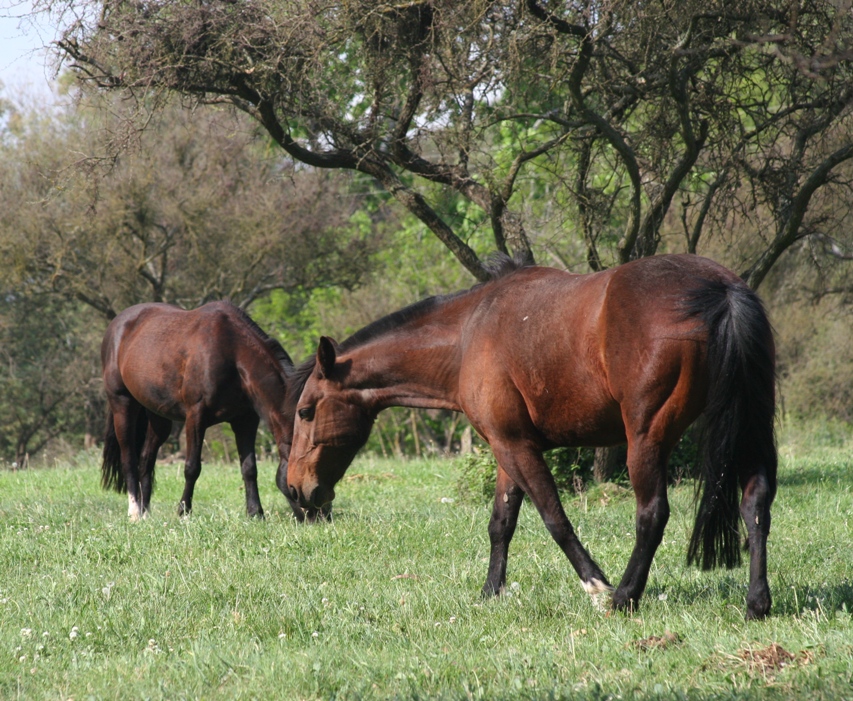
The Hacienda breeds some of the finest purebred Aculeo horses in Chile, and we marveled at their majestic strength and beauty. The little Yorkies simply yapped in their noses.
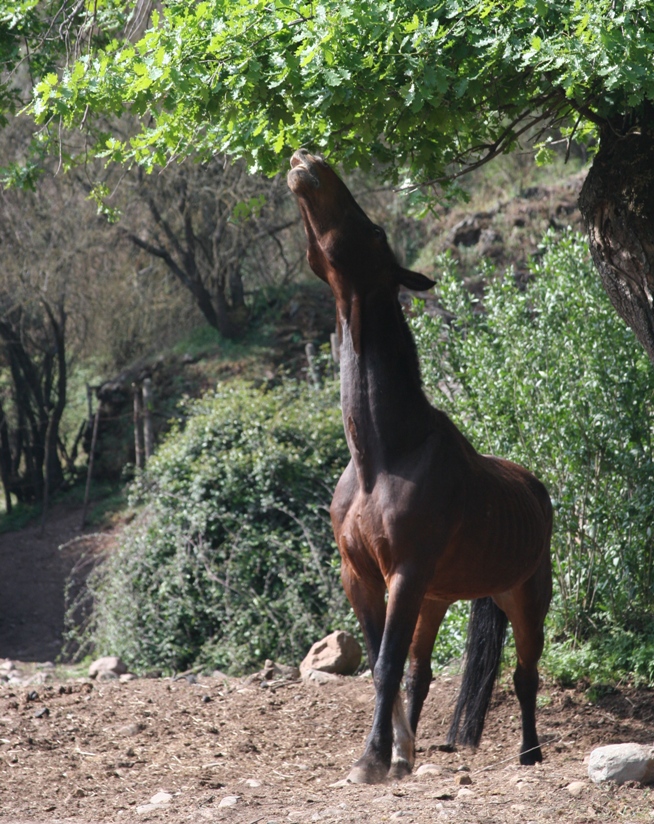
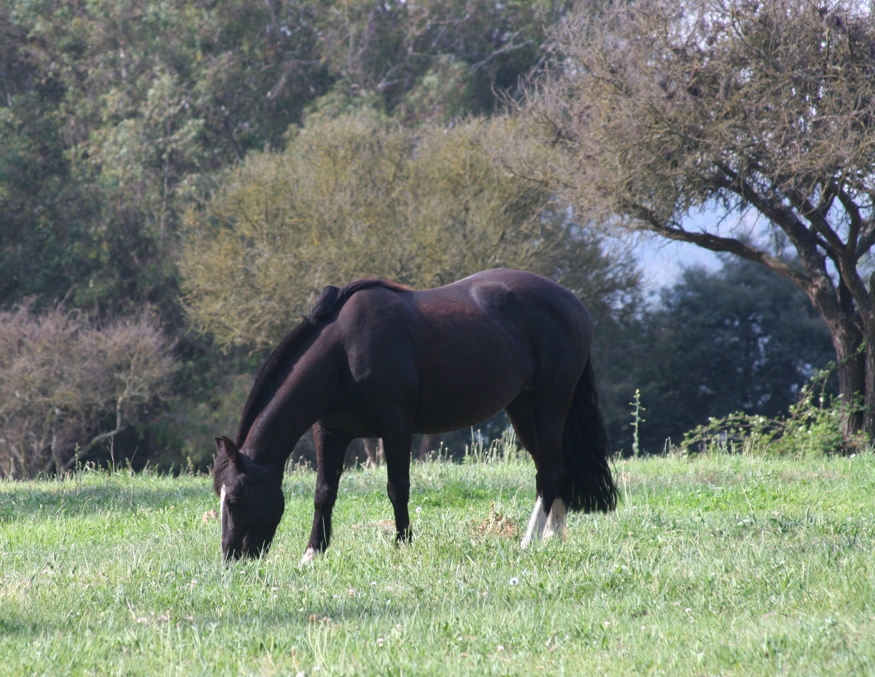
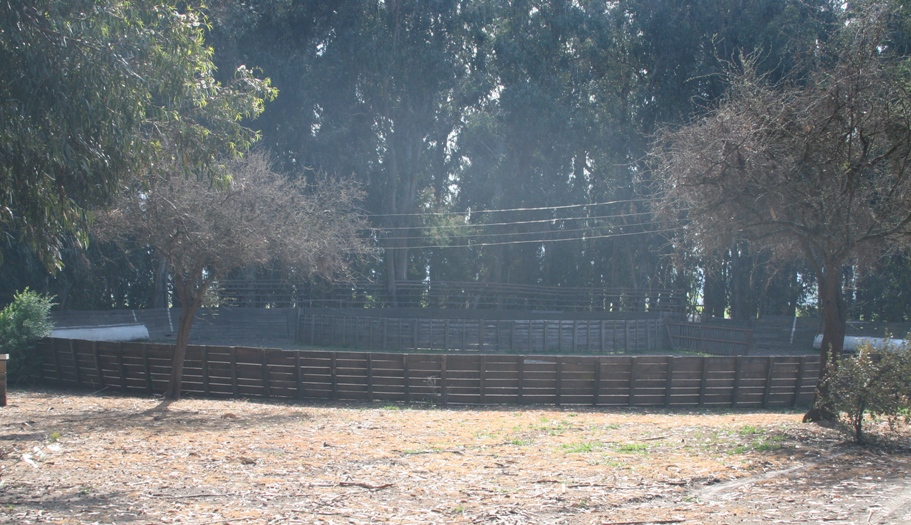
The half-circle ring for a Chilean rodeo is called a "media luna" (half moon). We haven't seen a live Chilean rodeo yet, but apparently they are commonly held throughout the summer, and most towns feature a community media luna. We hope to see one before too long. The action in a Chilean rodeo is a very specific form of rounding up a cow (steer or bull?) and I'll probably be able to understand and explain better after seeing it live.
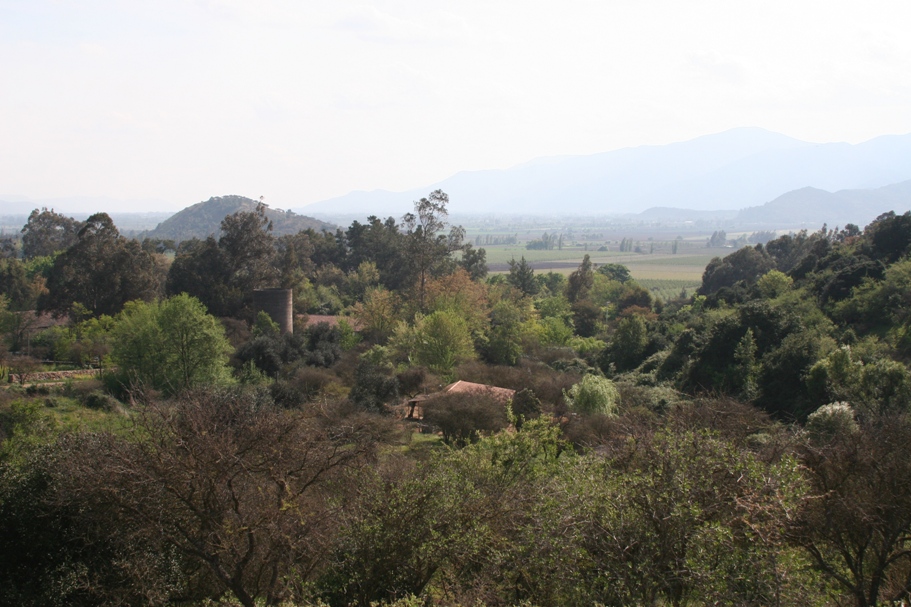
View of the hacienda grounds and surrounding vineyards from a nearby hill.
Walking around the grounds of Hacienda Los Lingues helped us shake off the post-luncheon (with excellent wine) drowsiness, so it wasn't too painful to drive 40 minutes south and then another 45 minutes west away from ruta 5 to get to the town of Santa Cruz. Santa Cruz is in the heart of what is arguably the best red wine producing region of Chile - the Colchagua valley. It is also is the home of the luxurious Hotel de Santa Cruz and the amazing historical museum Museo de Colchagua, both run by a foundation set up by an immensely wealthy arms dealer named Carlos Cardoen. We stayed in the hotel and visited the museum, the latter being the most eclectic and fascinating collection of Chilean historical items (natural and human history, pre-colonial up through modern times) we've seen in one place.
We arrived in Santa Cruz on the Friday afternoon of a very busy holiday weekend in Chile. As we soon realized, Larmue wasn't the only town having a festival. This was a three day weekend for the whole country, Monday being the holiday "Día de las Razas." This is the modern Chilean incarnation of Columbus day, which like in many other countries and/or communities in the American continents, has been changed to include (or be replaced by) an emphasis on honoring the various cultures of indigenous peoples.
Here in Santa Cruz, the plaza was ringed by the booths of a craft show featuring works from Chile, Peru, Bolivia, and Argentina - items such as hand woven ponchos and shawls, baskets, leatherwork & horse tack, embroidery and more...
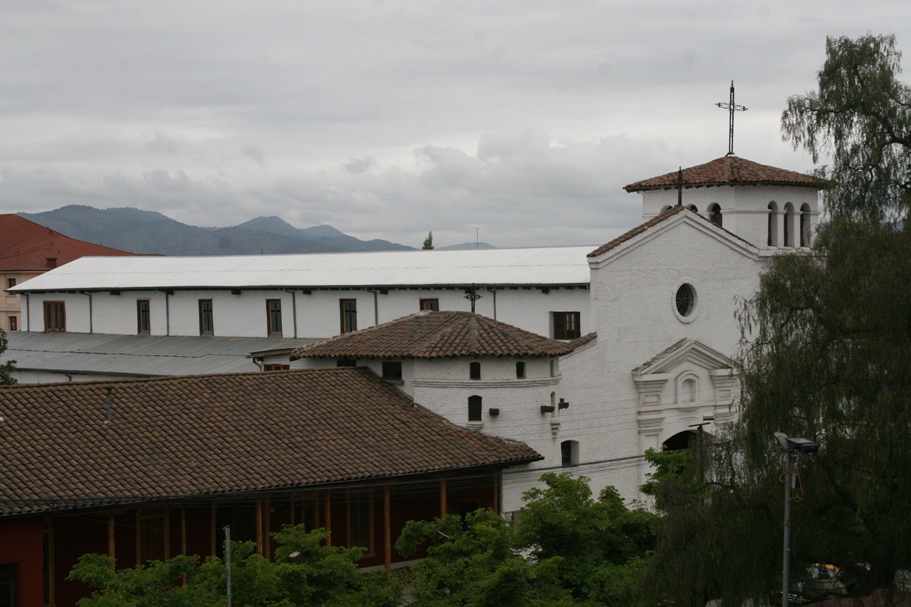
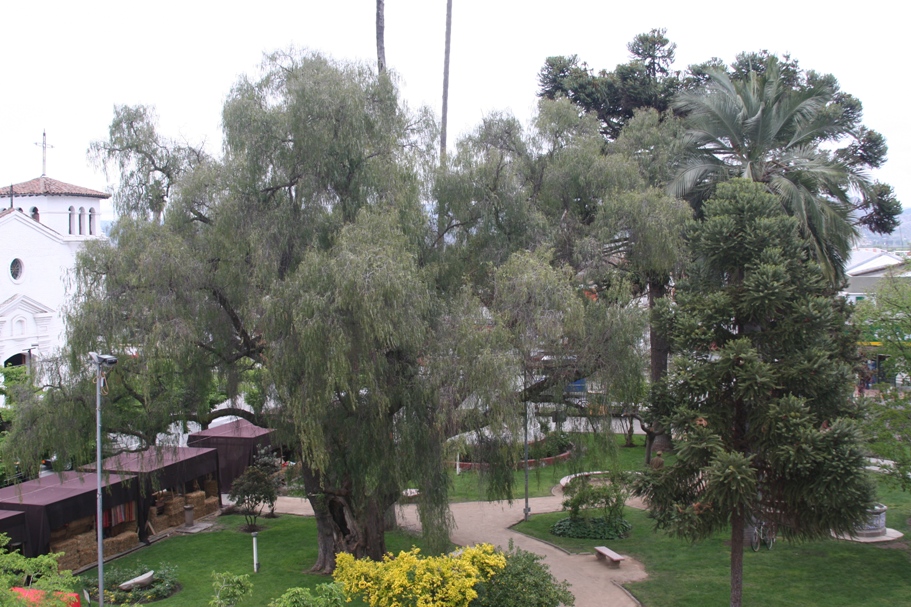
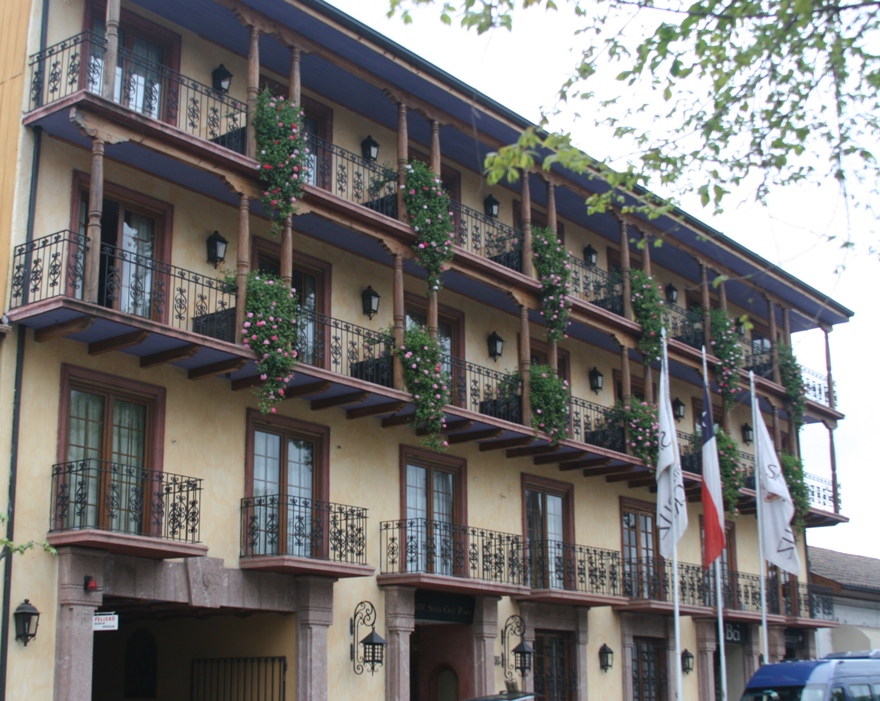
Plaza de Armas Santa Cruz and the stately hotel.
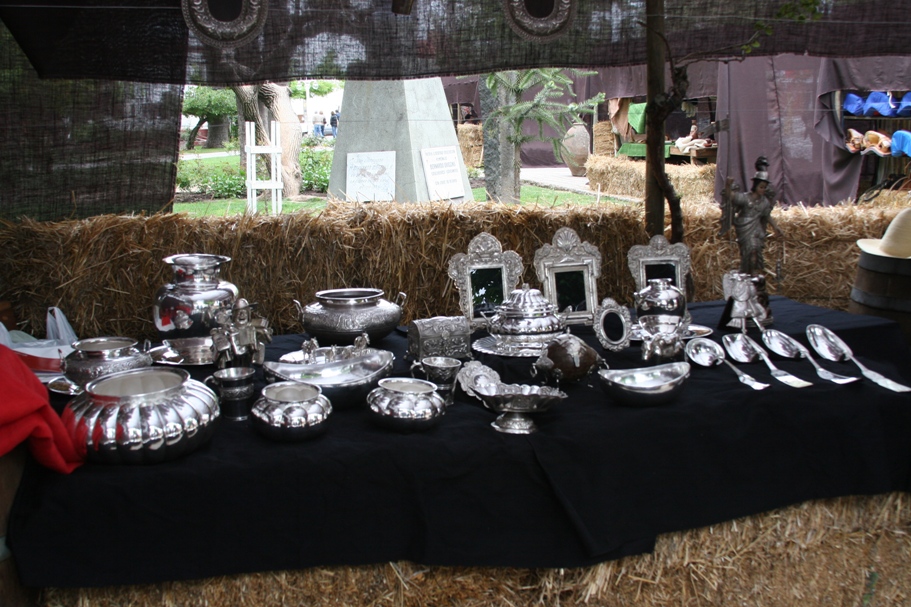
Bolivian Silver
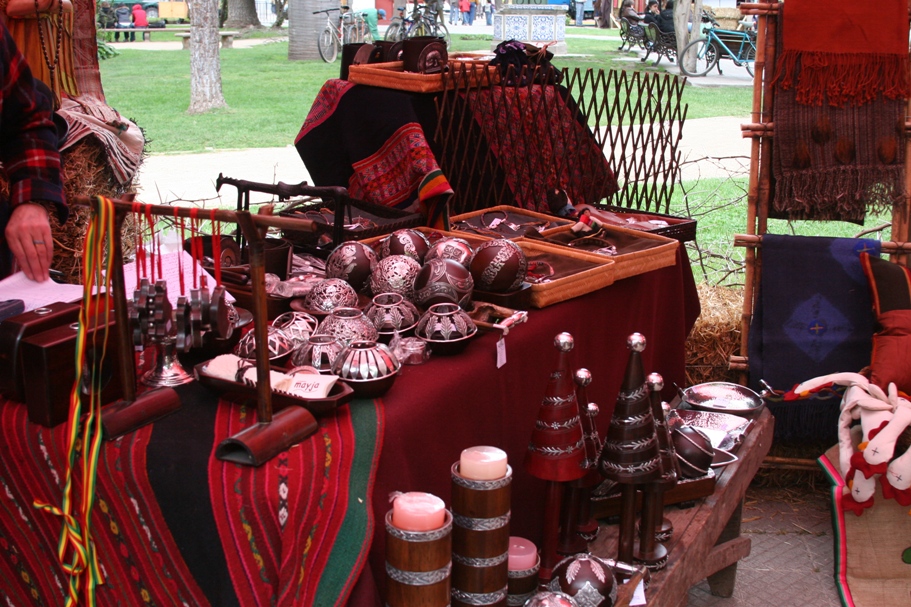
Argentinian gourd&silver pieces (the small bowls are used for the favorite drink of Argentina - "mate").
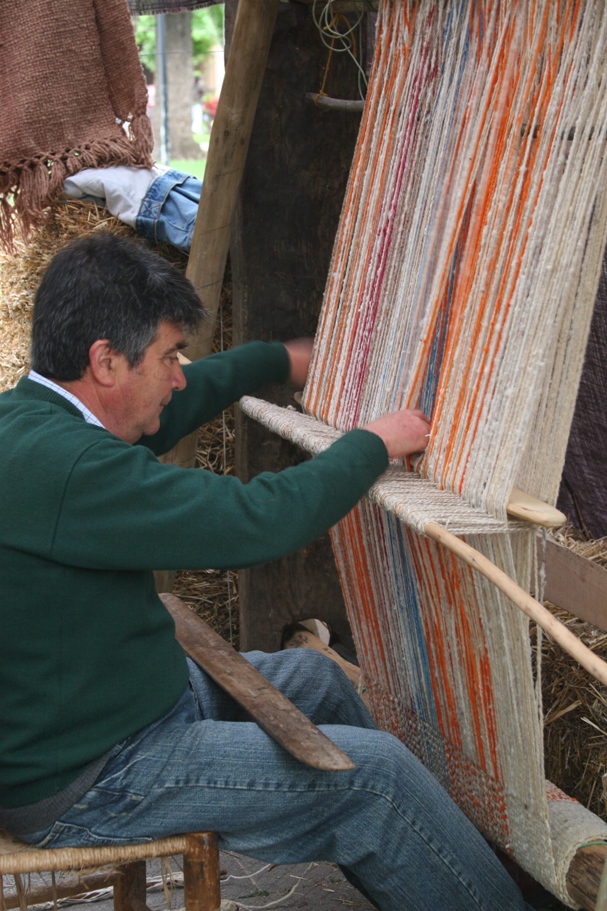
A Peruvian weaver.
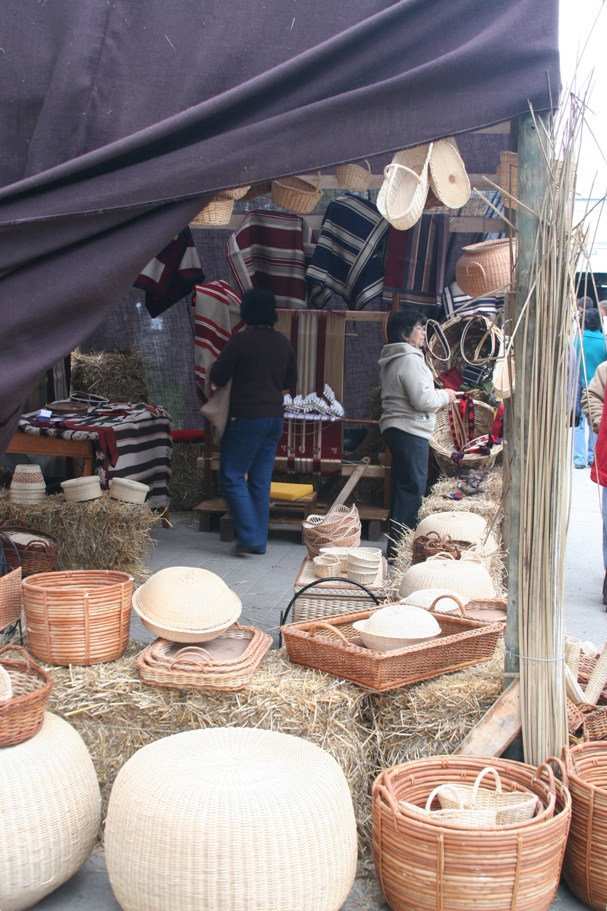
Baskets from someplace or other in South America...
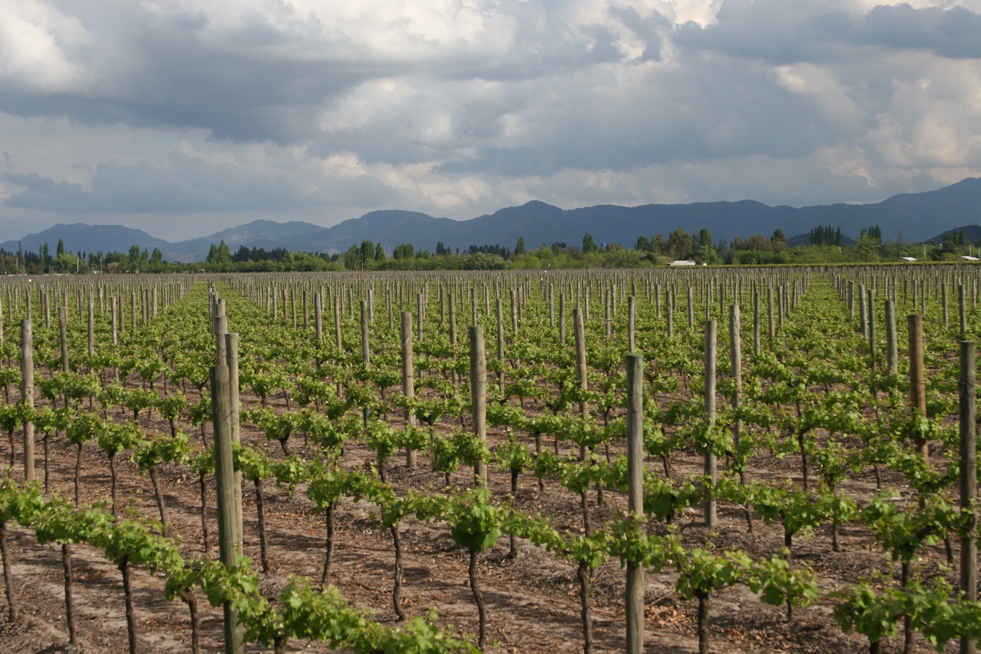
Lynn and I did manage to fit one short wine tasting excursion into the agenda, slipping out for a couple of hours on Saturday afternoon to visit the nearby vineyard Viu Manent.
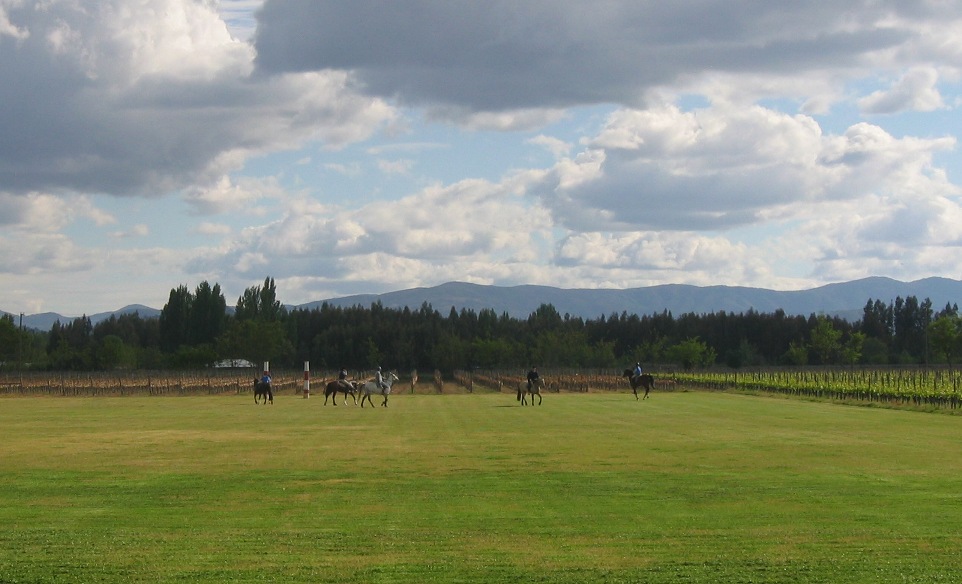
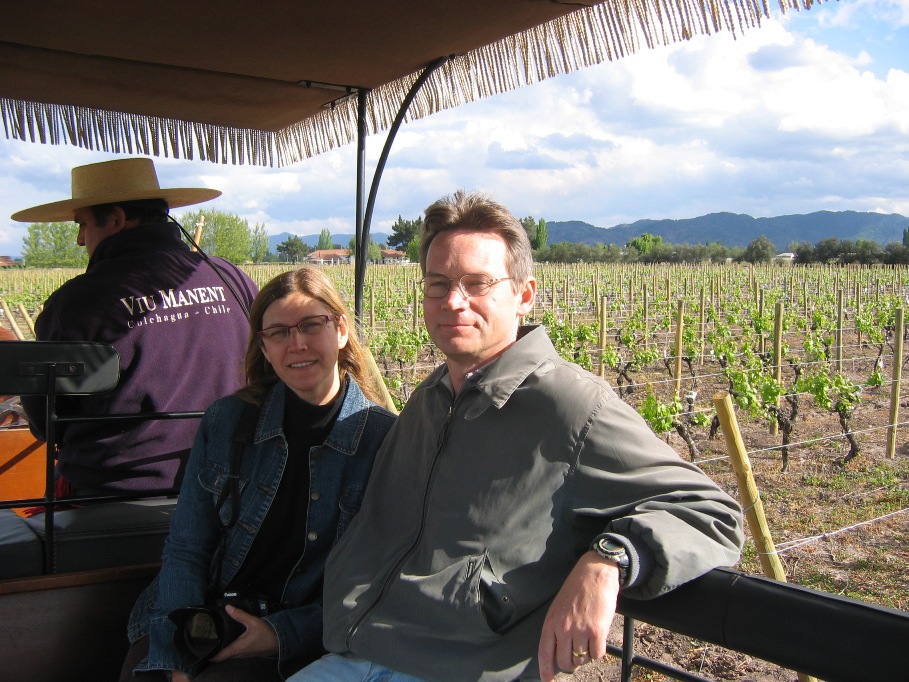
Polo in Chile?
Where will we be heading next? Slightly further south, I think.
-Rolf