Termas Chillán - Concepción
Laundry & Spa Time, Earthquakes, Coal Mines, & Computer Parts
(I hope)
Tuesday October 23, 2007
As astounding as it may seem, we passed three nights in a condominium at a spa and ski resort located near a picturesque volcano - without taking any pictures! How can this have happened? I suppose I just expected that Lynn would be taking her typical assortment of artsy pictures. But she was plenty distracted and busy just trying to recover from the Siete Tazas experience, do some laundry, and get the twins back on track with schoolwork. The ski resort had stopped operating their lifts just a few days earlier and not much was happening except a doctor's convention. We arrived at the condo late Tuesday afternoon, after taking a longer than usual drive from Reserva Siete Tazas. The last 10 kilometers stretched along a dirt road in pretty bad shape, but we didn't pass a Carabinaro checkpoint and drive into a ditch (note that I like to say "we" vs. "I" regarding driving into ditches). Grey clouds filled the sky and hid the tops of ski-runs on the nearby volcano for the next two days, and it was raining nastily when we left on Friday. This was the first time we'd been rained on (meaning an all-day outright downpour and not just a brief sprinkle) since arriving in Chile more than three months ago.
Once checked in at the condo, I was happy to have internet access after a couple of days of electronic roughing it, and clicked and clacked away reading and writing email for an hour or so before going to bed. I also plugged in the computer charger before going retiring to recharge the computer battery overnight.
Oddly, the computer battery wasn't charged the next morning. I puzzled and plugged and un-plugged and scratched my head - and before too long realized that the charger was simply failing to charge the computer battery. Then I remembered that I had left the computer plugged in at the cabañas of Las Catas overnight - which meant that if there was a voltage spike when the generator was turned off in the middle of the night, it likely fried either the battery charger or some part of the charging circuitry in the computer; or perhaps even both. Ay Caramba! My battery was down to about 25 minutes of available power before I realized that this 25 minutes might be the effective total remaining lifespan vs. simply the time left before the next re-charge. Now what?
My preoccupation with this problem over the next couple of days did not help calm or improve in any way the general emotional state of our condominium household. Although the ski season was over, the spa in the nearby hotel was definitely still up and running, and Lynn tried to rid herself of some of her pent up stress and frustration with a massage and facial. Anna and Tom both seemed to be in a funk, bickered even more than usual, and were impatient and exasperated with their school assignments (which did not in the least help improve their parent's mood). We did manage to get our laundry done using coin-op machines in the condo basement, but only after enforcing our right as paying customers to horn in between the many loads of numerous resort staff. They had obviously saved up massive quantities of their own laundry to do this week, it being right after the long holiday weekend at the end of the ski season.
I looked up computer service centers for Concepcion, Chile on the internet using the kids' laptop - fantasizing that I might be able to find a replacement battery charger at the next city we were heading for. I also racked my brain for some sort of "Plan B" for express shipping a charger from the US to some hotel on our future itinerary, or "Plan C" for adapting some other sort of charger or power supply using who-knows-what for raw materials and tools. That was pretty much all I could do about it for the time being, other than fret.
The end of our 3 night stay at Termas Chillán arrived quickly, and no one seemed too sad to be leaving. There was nothing really wrong with the place, but not really too much to do there either, especially without good weather. As an indication of our anxiousness to leave, we were packed and on the road by 10:45am - no small feat for our traveling classroom, especially considering that we packed up in a steady downpour. It took less than three hours to drive to Concepción, and then another half an hour or so to negotiate the traffic jams caused by flooding in the downtown streets, but we were parked and unloaded in a hotel by 2:30pm, and finished with lunch by 4:00 . Now I had about two hours left before various computer service centers were due to close for the weekend - two hours during which I dearly hoped that a visit to one of them would leave me smiling and in the possession of a new or repaired charger. Yeah right!
This was an adventure I had been anticipating hopefully, but all the while a little bit of me was dreading the possibility of humiliation and failure. The first stop, an "authorized IBM/Lenovo service center" looked promising, but the bored service receptionist simply shook her head and told me "25 days" when I asked her how long it would take to get a new one. Finally, I wore her down with persistence and bad Spanish and she reluctantly consented to take a short break from holding down her chair and go ask a technician. The technician was slightly more helpful, being willing to measure the voltage at the output of the charger and indeed confirm that it was broken. But he wasn't interested in doing much else - like open it up and try to fix it, for example. He did write down one address for a commercial computer service center in town that "might sell something like this."
I relived a similar process at 4 or 5 more stores and/or corporate service centers, with bored and uninterested cashiers or receptionists shaking their heads and sending me off across town towards other useless and unhelpful stores, laboratories, or supposed repair shops. The raincoat I wore protected me from occasional spatterings of the residual storm, but also, along with my emotional state and physical exertions, caused me to sweat profusely. The coat hid my sweaty shirt but not my glistening forehead. I spoke guttural, grunting, gringo Spanish without hesitation, and my mood passed from hopeful, to slightly panicked, to irritated frustration, and then finally, defeated resignation.
Finally, I trudged back to the hotel to formally give up and try to relax, but as I told Lynn about the whole debacle, I heard myself mentioning that I had passed a little hardware shop with some electrical supplies in the window right after the first failed repair center visit. At the time I imagined buying a simple transformer and cutting, taping and/or soldering some sort of mess, and now I decided to go back and see what they might have to sell. Back inside this shop at a little after 7pm, I found Jose Antonio and his Arab-looking sidekick Nestor both somewhat competent with matters electrical, and perhaps what seemed even more surprising, both willing to lift a finger to help me.
Nestor hacked apart the old charger with a screwdriver and poked around with a meter until he found the damaged circuitry - clearly un-repairable. Jose Antonio searched their stock-room and found a "generic" multi-voltage/multi-connector charger, but it didn't have enough current for my battery. They said they could get a higher current version in a mere 7 days (lightning speed for Chile). Under pressure from me for a faster solution, they admitted that they could express ship a used replacement charger (the exact same part) from Santiago, have it by Tuesday next week (the day we were planning on leaving Concepción), but it would be "very expensive," - an extra $60 for the shipping. I tried to look like this was a very sobering and difficult decision with a 5 second pause, and then told them to go for it. I couldn't believe how lucky I was to stumbled upon this pop & pop operation, and that none of the "authorized professional service centers" or slick-looking computer stores were worth a damn in comparison (also that none of them had mentioned this shop). So now I was free to ignore the problem and start paying attention to where we were and what we were doing, at least until Tuesday!
**************************************************************************
So just what and where is Concepciòn, Chile? It is a large port city located at the mouth of the great river Río Bio Bio. With a population of over 200,000, Concepciòn is Chile's second largest city and the regional economic and administrative seat of power. The Bio Bio cuts a 380-kilometer diagonal slash across the country, and was long considered as "La Frontera" - the southern boundary beyond which Spanish colonization was unable to spread, fiercely repulsed by the native Mapuche population. Today it is a natural demarcation that separates the gentle pastures and fields to the north, and the volcanoes and lakes to the south.
Saturday we walked around town, visited the art museum near the local university campus, and swam in the heated indoor pool of our hotel. Our guidebooks defend Concepciòn's general lack of civic splendor, noting that the was city has been raised to the ground repeatedly by earthquakes and Mapuche raids ever since its founding in 1551. Nevertheless, the weather on Saturday was warm and pleasant, and we found the grounds of the university, the art museum, and the nearby Plaza Peru to be a charming and relaxing place to hang out for the afternoon.
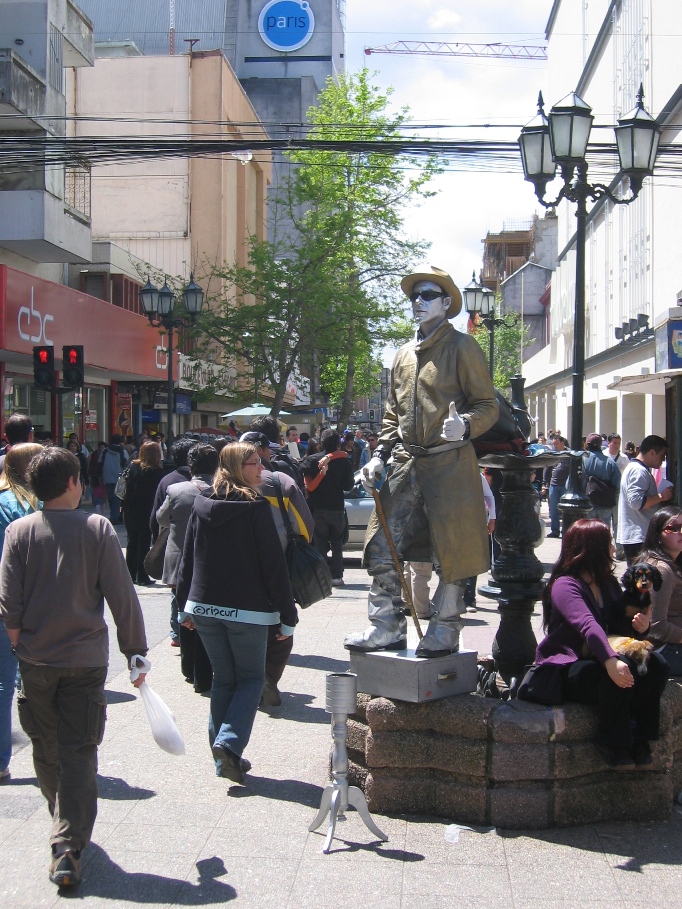
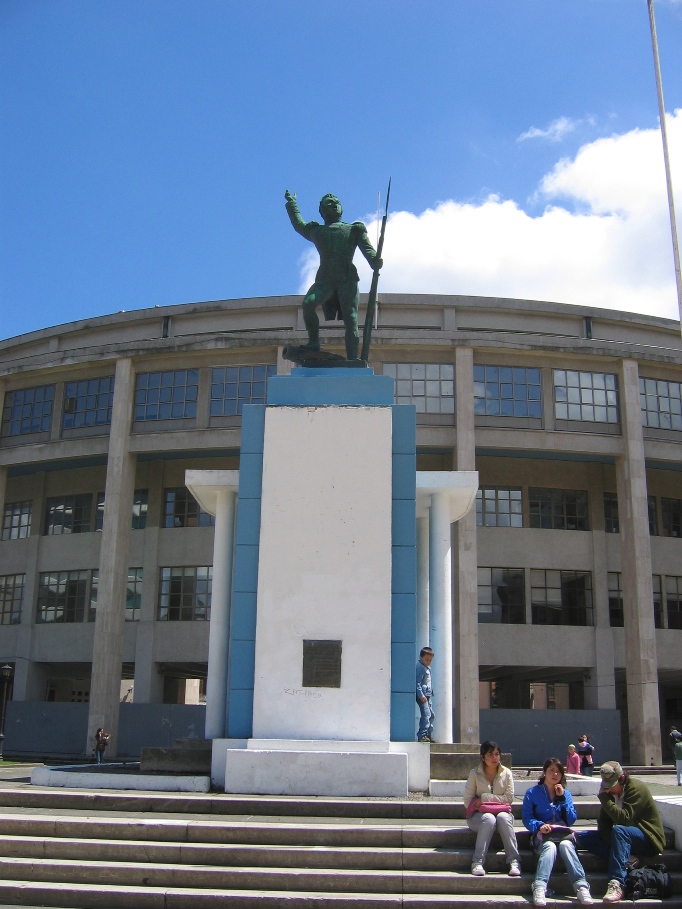
Sights of Concepciòn on our walk between Plaza de Independencia and Plaza Peru (near the university).
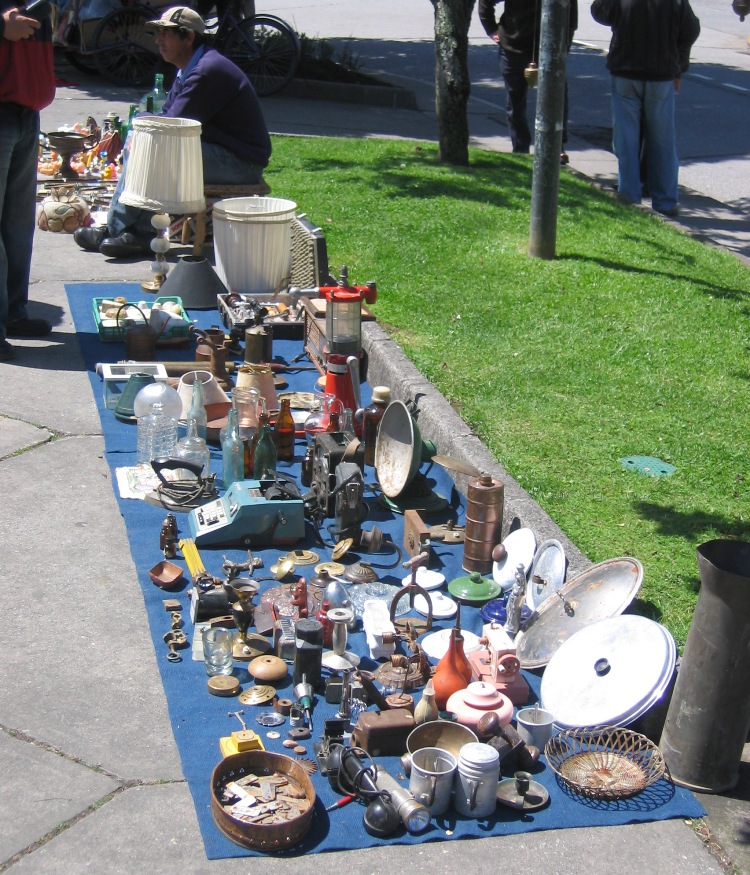
Purveyors of fine junk spread their wares out on blankets in Plaza Peru. Later in the afternoon, when I returned here with Anna to re-visit a chocolateria that had captured her fancy, there were several people singing opera (very well!) in the plaza.
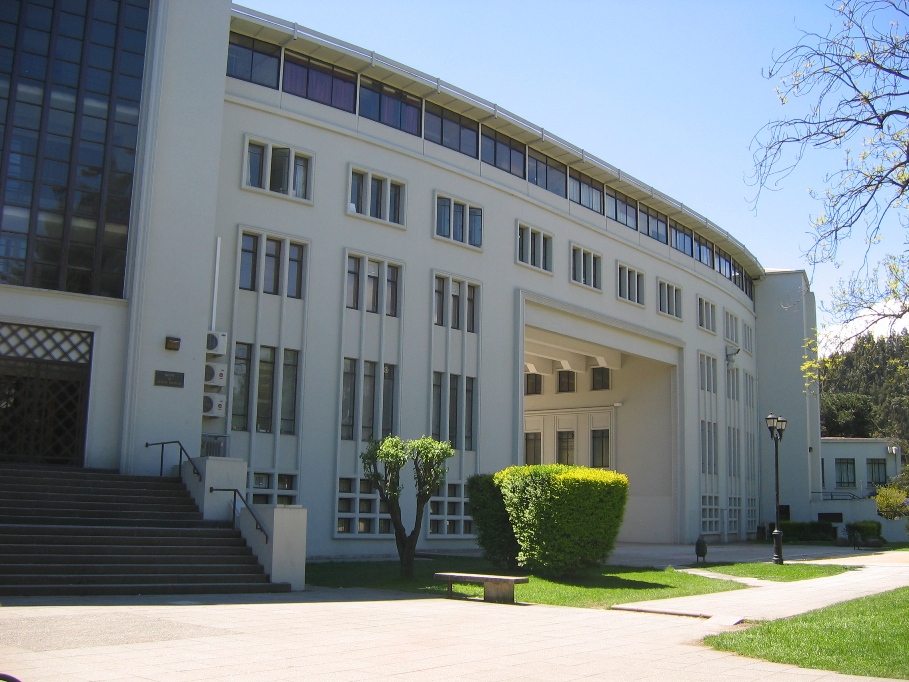
The campus of Universidad Austral de Chile, the country's third largest university which is funded entirely by the lottery.
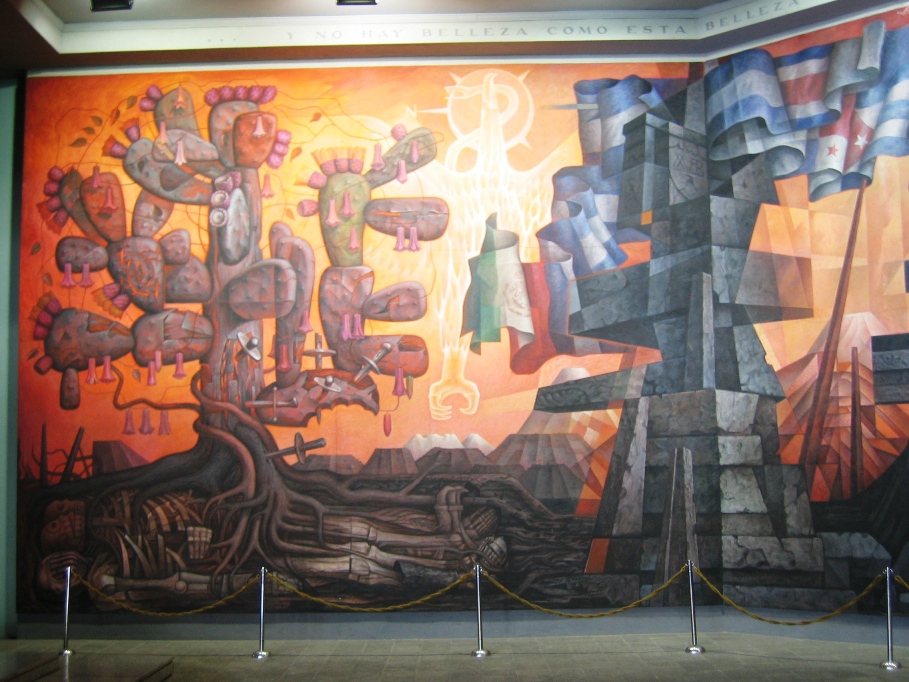
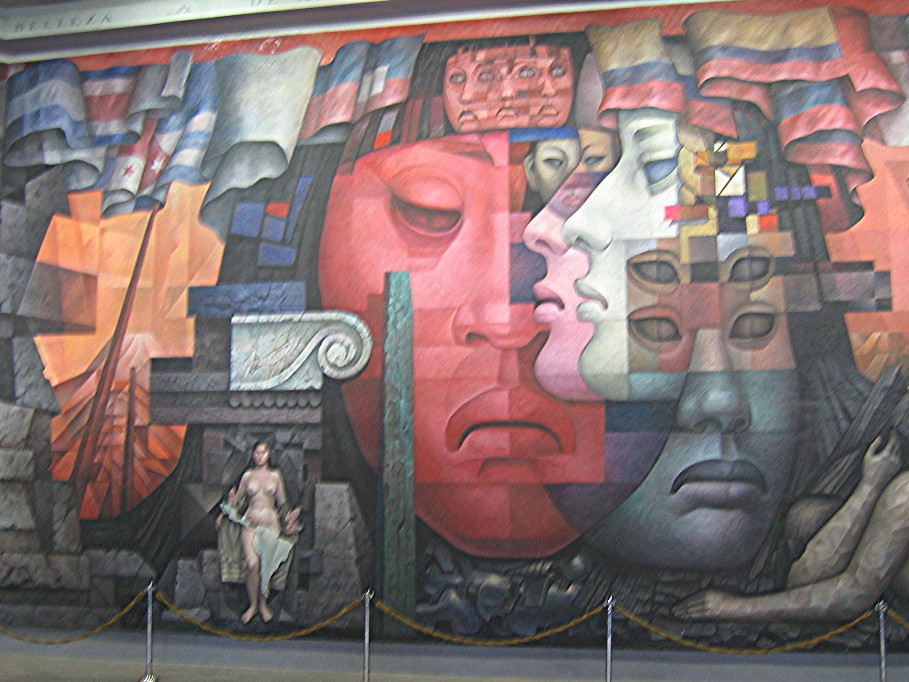
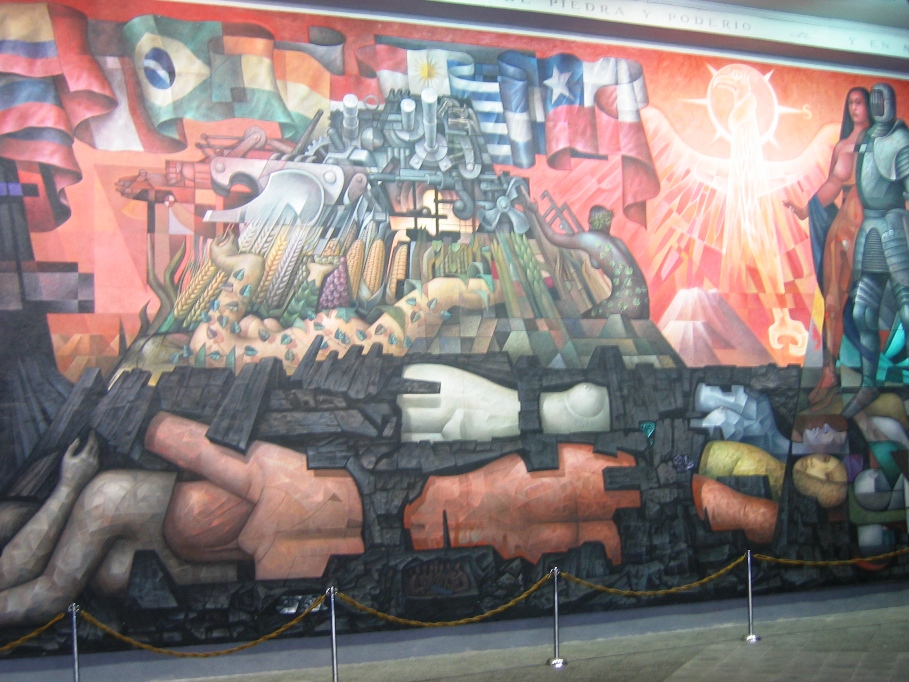
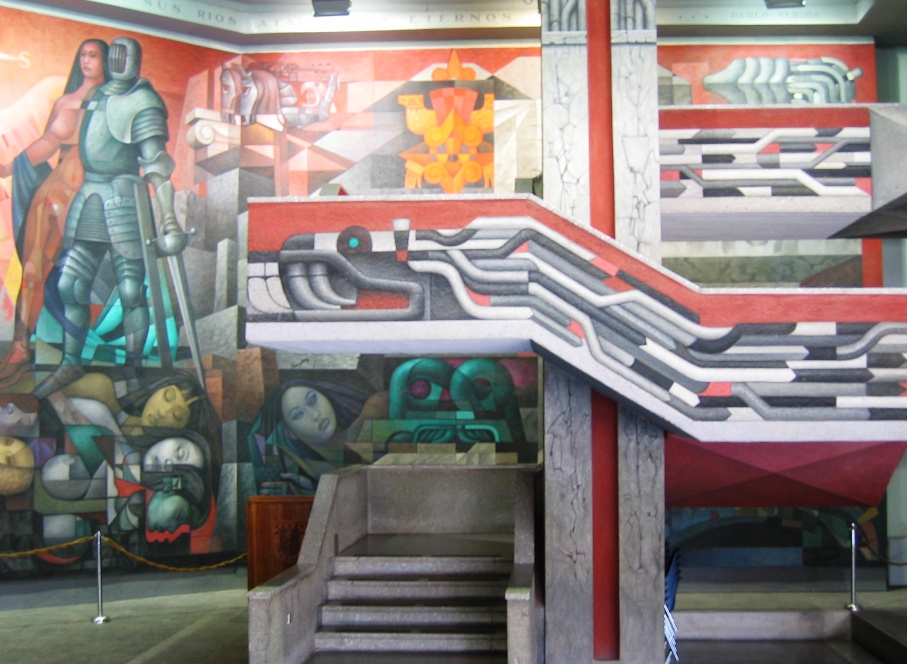
The pride of the nearby Casa del Arte is this mural by the Mexican muralist Jorge Gonzales Camarena, produced and gifted with the support of the government of Mexico.
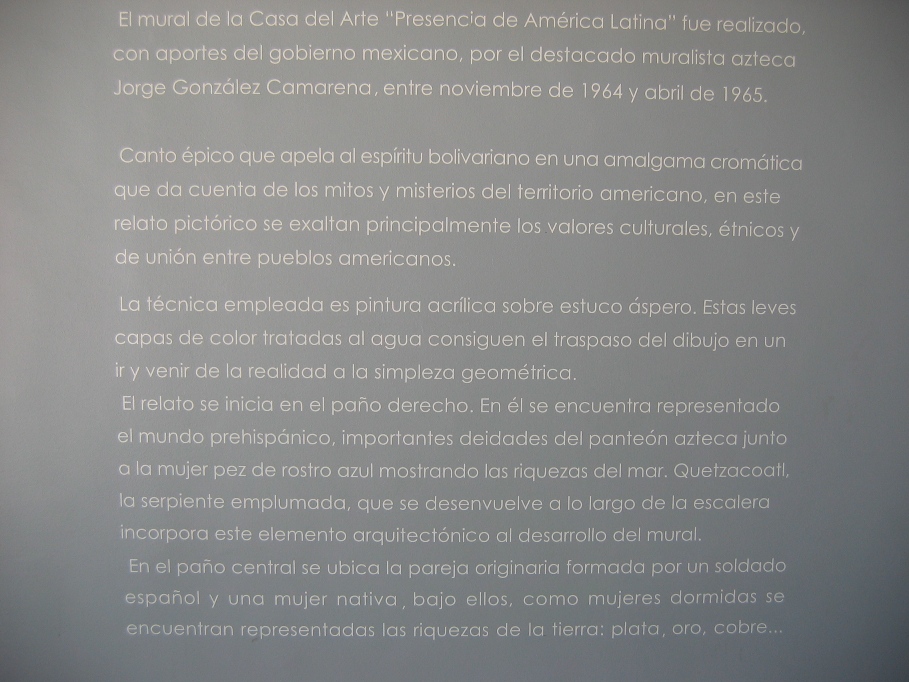
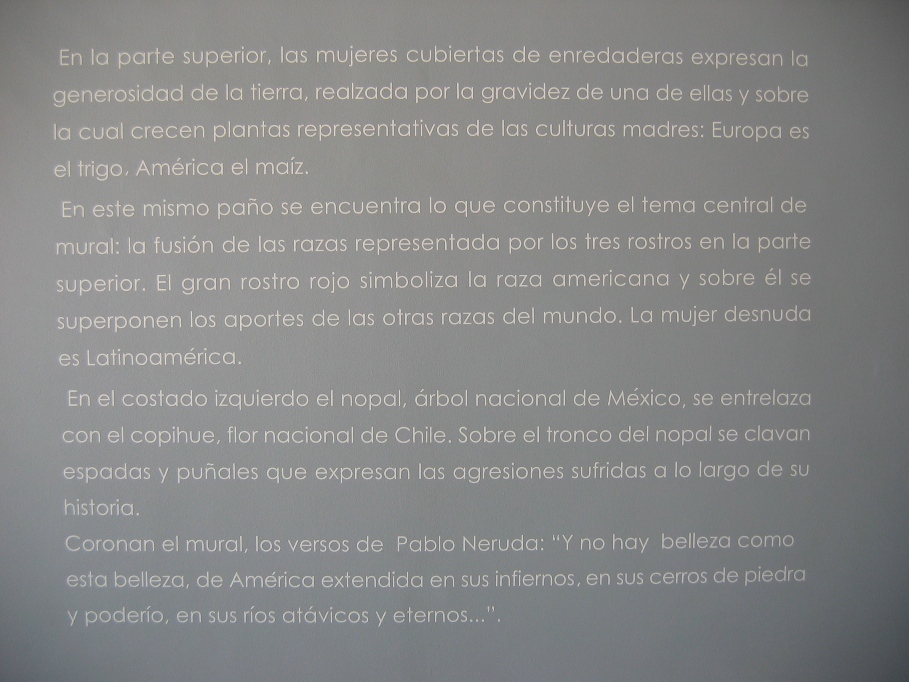
Explanation of the various features and figures in the mural.
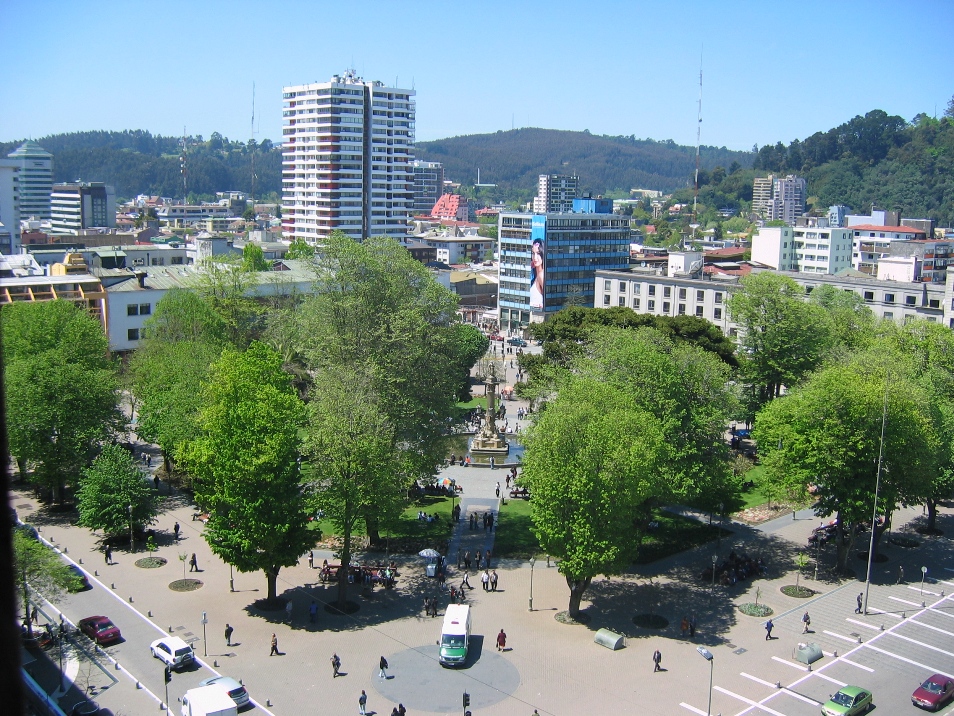
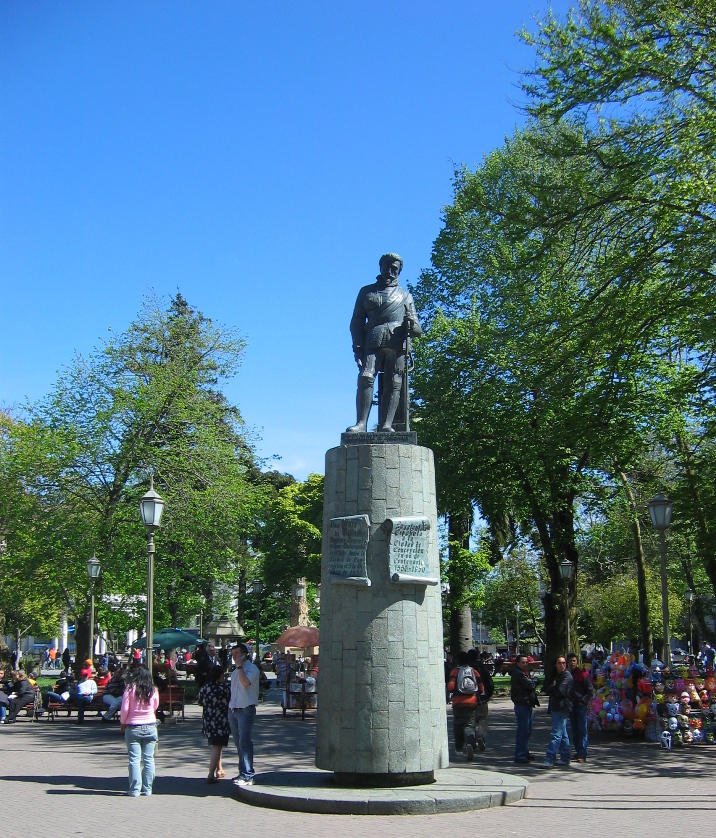
Plaza de Independencia - the left picture was taken from our 11th floor hotel window.
Late Saturday afternoon, at the end of a solo elevator ride up to our hotel room, I entered the hall to find both Lynn (at the end of the hall) and the twins standing out in the hall calling out to each other. As soon as they saw me they all exclaimed "Did you feel that?!!!" Apparently I had ridden out an earthquake in the elevator blissfully unaware that the old elevator was rattling any differently than usual. They all seemed a little shaken. I decided to investigate that history of earthquakes that have leveled Concepciòn over the years. Right away, the internet told me that in 1960, Concepciòn was leveled by the largest earthquake ever detected by scientific monitoring equipment - 9.6 on the Richter scale! Accurate fatality figures were never established but estimated at perhaps 5000 or more, since the resultant tsunamis traveled and killed throughout the entire Pacific ocean. Back in 1939, 30,000 people were killed by a "smaller" earthquake near Concepciòn and the resultant tsunamis. Wow! Maybe I should read that disaster preparedness pamphlet posted on our hotel room doors that the kids have been talking about. It says our hotel is "earthquake proof." I'm not sure we believe that, but statistically speaking, I think we'll be out of town before the next big one and won't be around to find out.
Sunday we drove south along the coast a few dozen kilometers to visit the soot-stained town of Lota, home of Chile's first and largest coal mine, opened by the Santiagan Matías Cousiño in 1849. Operating with manual labor and not much technological change up until 1977, this mine is/was the only the world's only mine operating under the floor of the ocean. The mine is still open for tours, and the Cousiño family bequeathed a beautiful public gardens to the city on the hill above the mine - also the site of their formal palatial home which was destroyed by the 'quake in 1960.
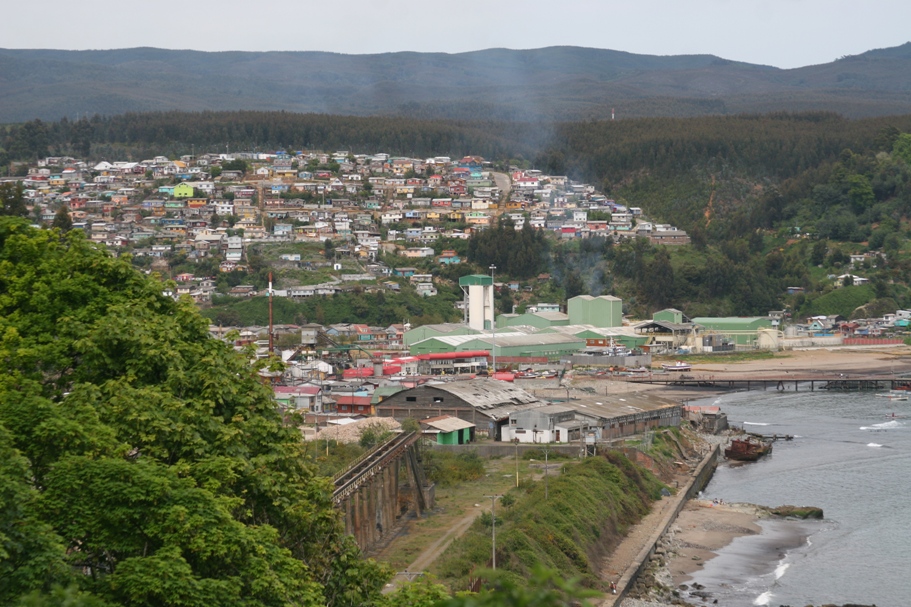
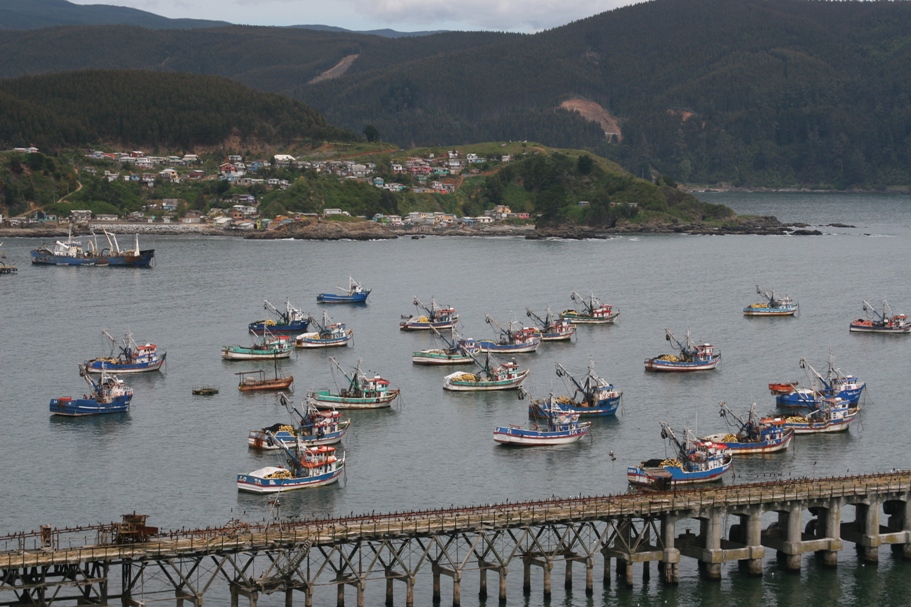
The city and harbor of Lota, Chile.
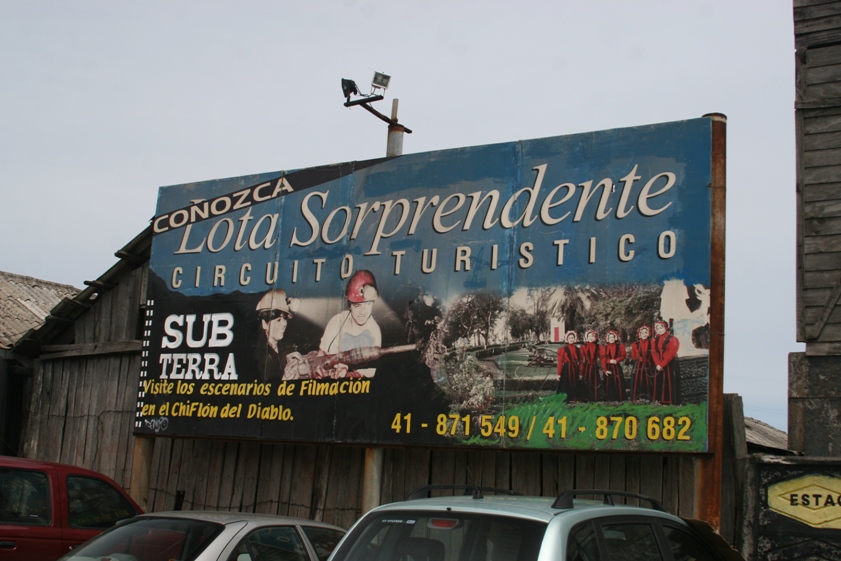
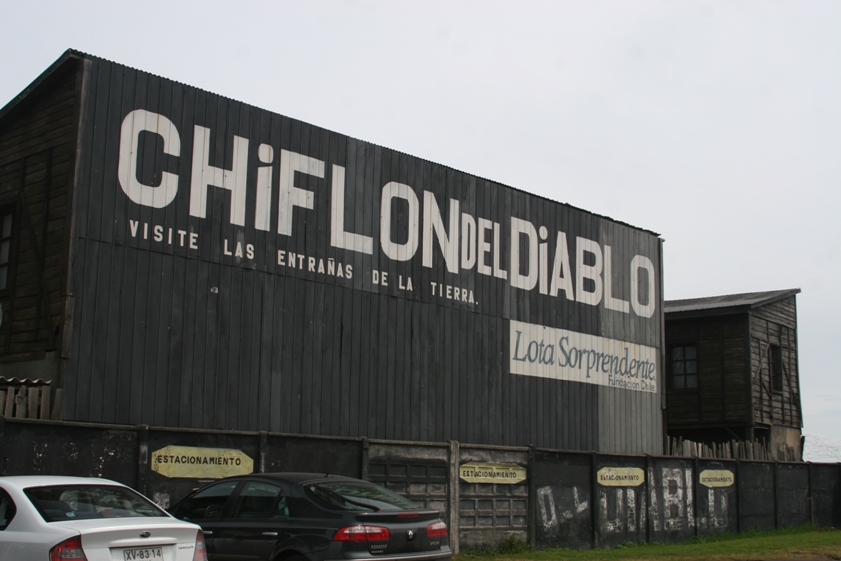
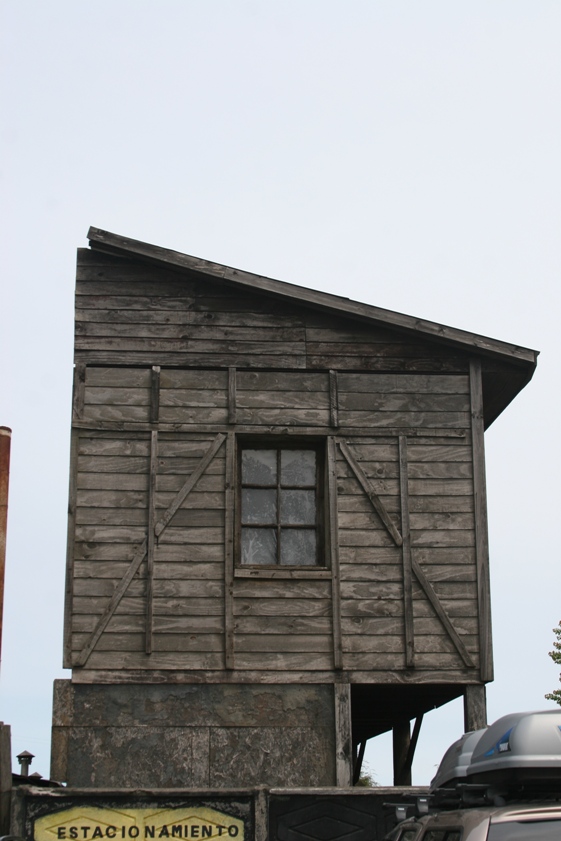
Mina Chiflón del Diablo (from the surface near the mine entrance!). Our tour guide told us that the word "Chiflón" (which means current or breeze) in the name comes from the fact that the mine had two long primary shafts that were cross-connected at the end. There was a natural flow of air down one shaft and out the other and this was the "chiflón."
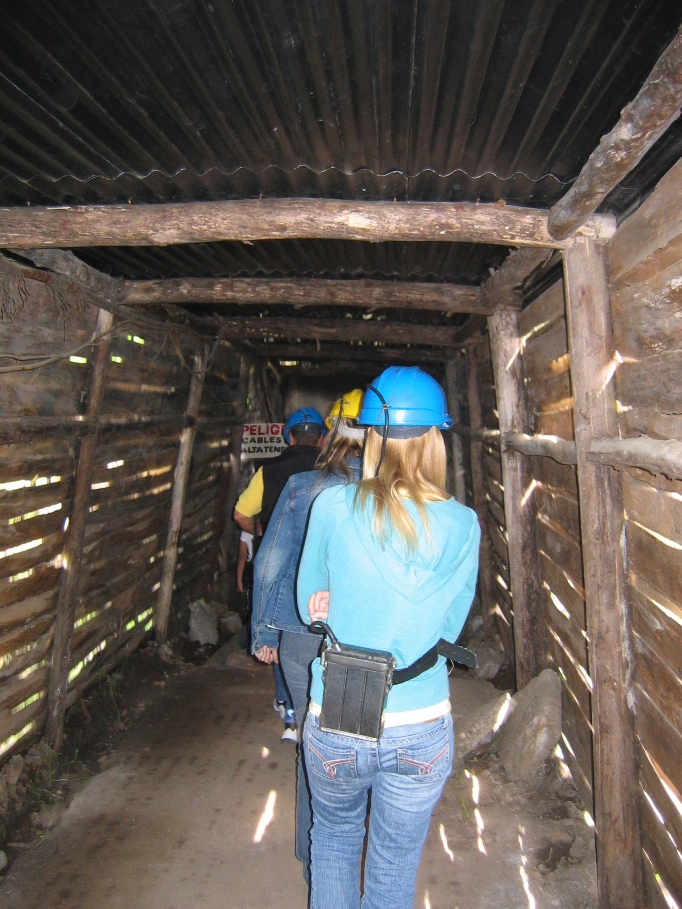
Heading into the mine.
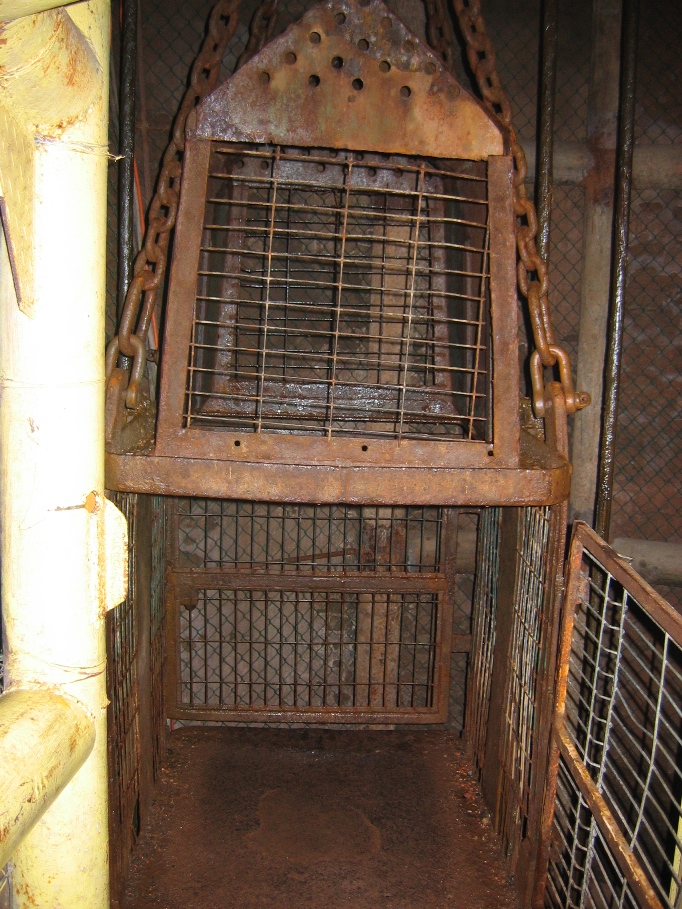
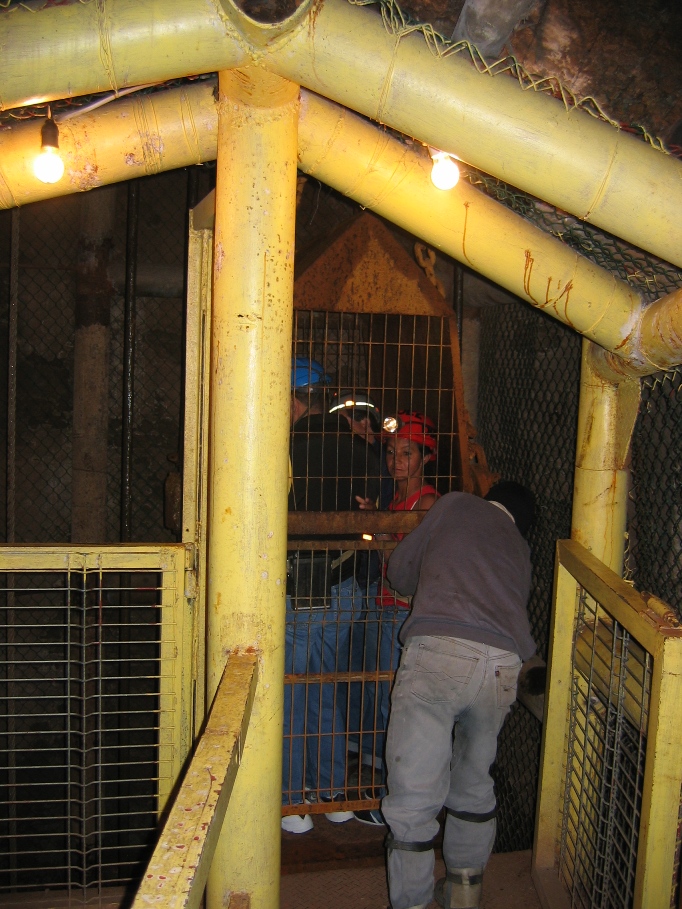
After a short walk, it was time to drop down 40 meters in these little cage "elevators."
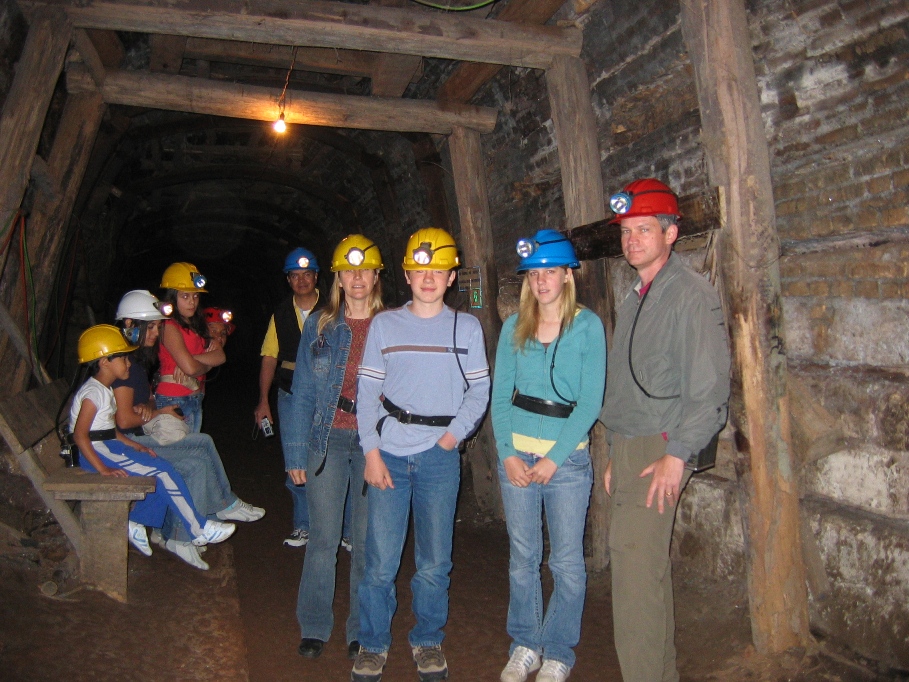
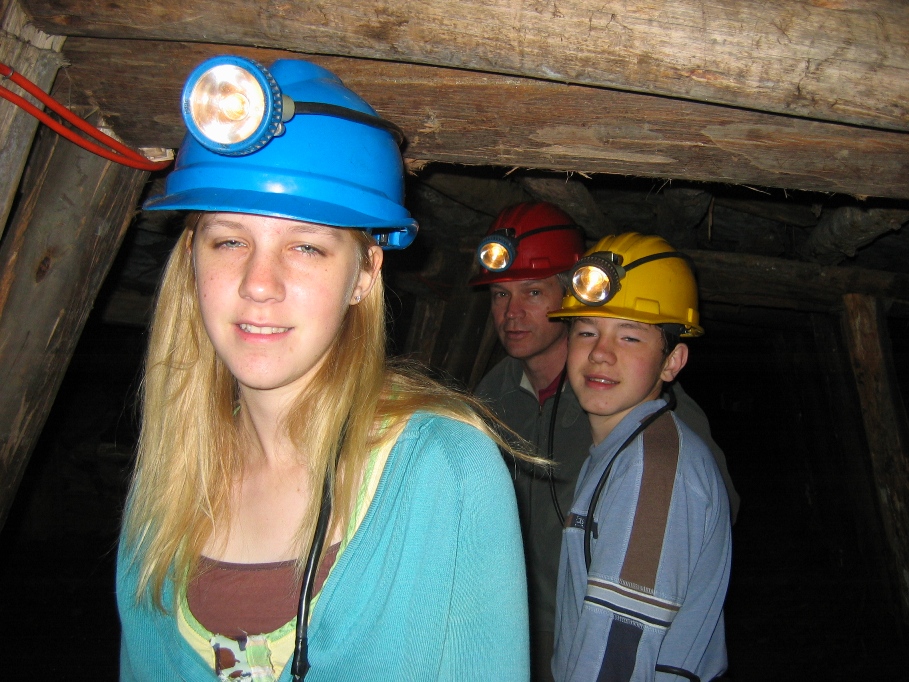
Down in the mine.
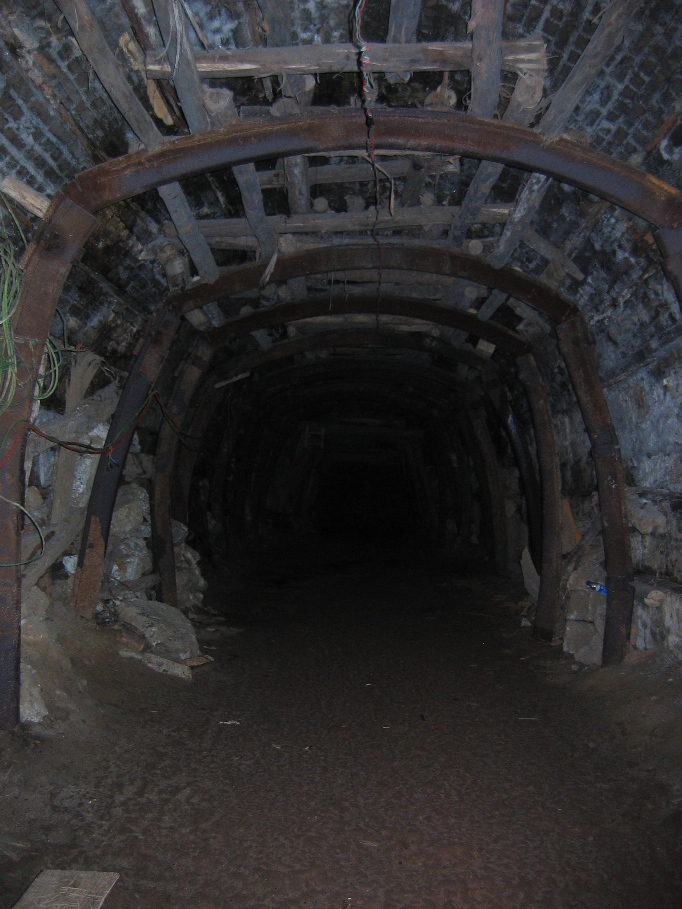
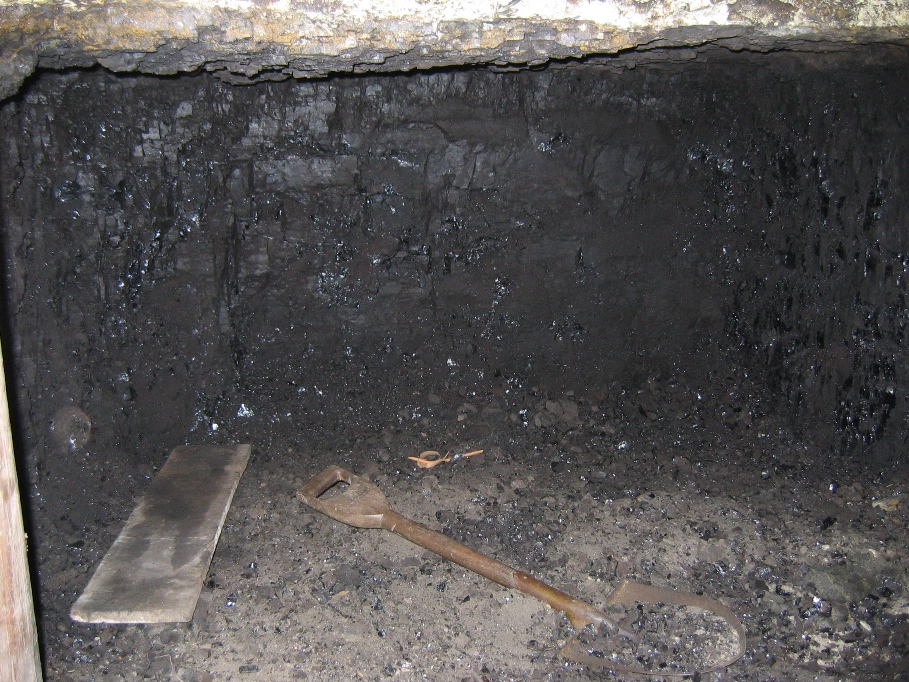
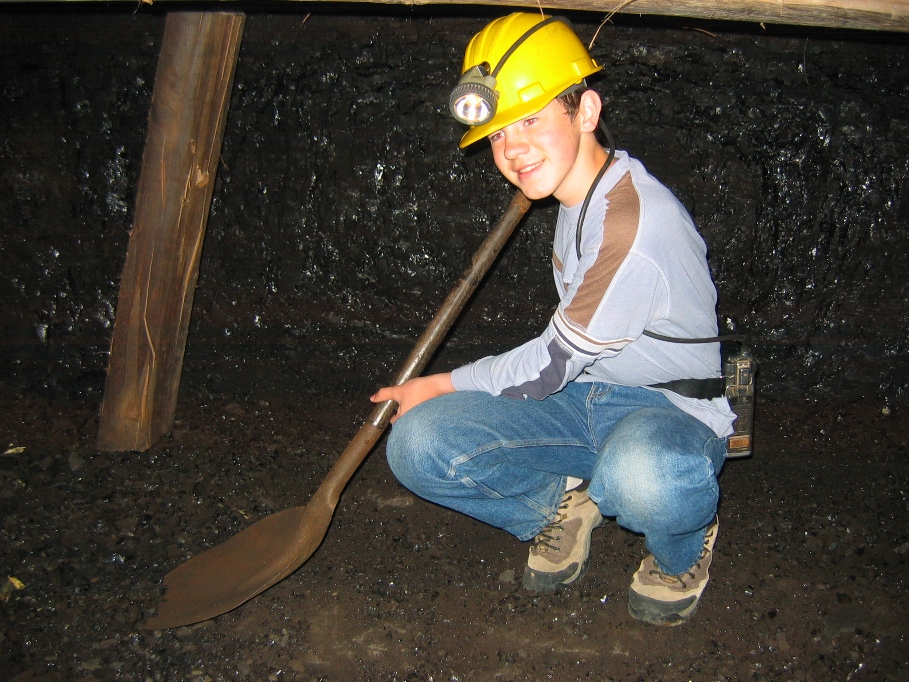
As our tour guide stressed - this was not a "high tech" operation. The coal of this mine was removed by men wielding picks, shovels, and in later years, hand-held hydraulic drills and jack-hammers. They dug into coal veins no more than a few feet thick, often crawling on their hands and knees. Horses towed rail-carts laden with 1000 pounds of coal out of the mine up a surprisingly steep ramp in the first shaft. Our guide had personally worked in this mine for over 20 years, and he told us that his work shift was 12 hrs a day, 7 days a week. During the winter months, he never saw the light of the sun. Later we were to see museum pictures of some of the workers as they exited the mine after a day at work, and they looked just a tad blacker and grimier than Tom in this picture!
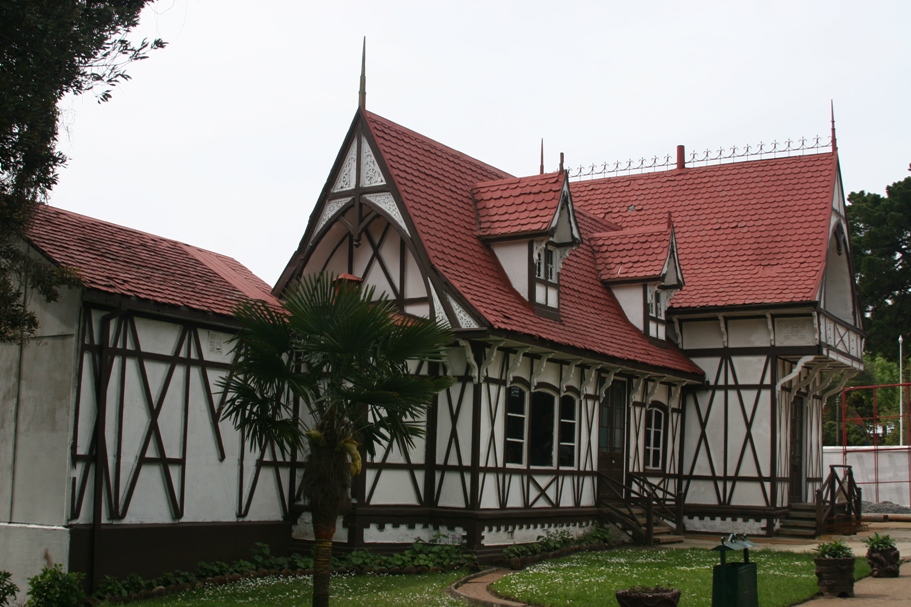
The original Lota house built for mine owner Matías Cousiño and his family. A more recently constructed and much larger & grander house owned by the Cousiño family was completely destroyed in the earthquake of 1960.
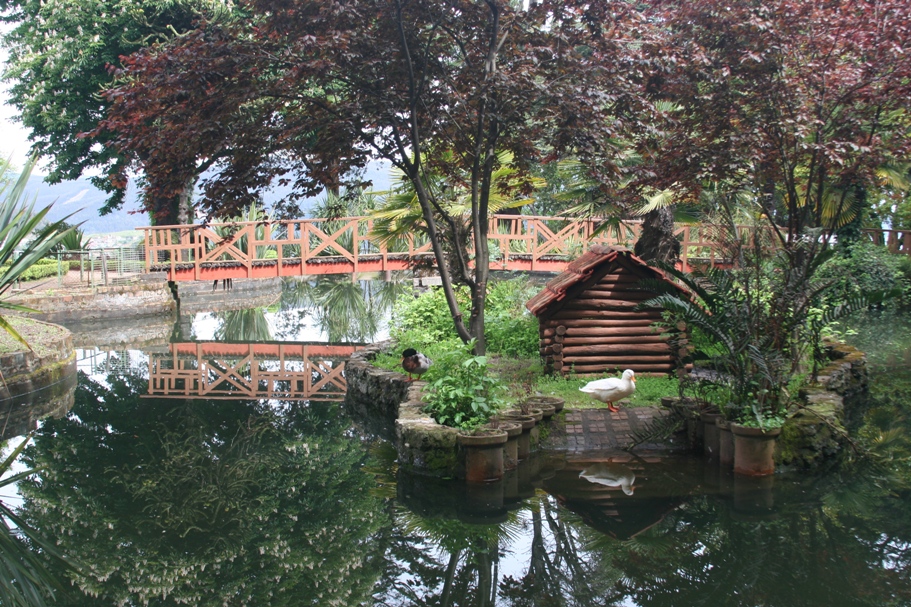
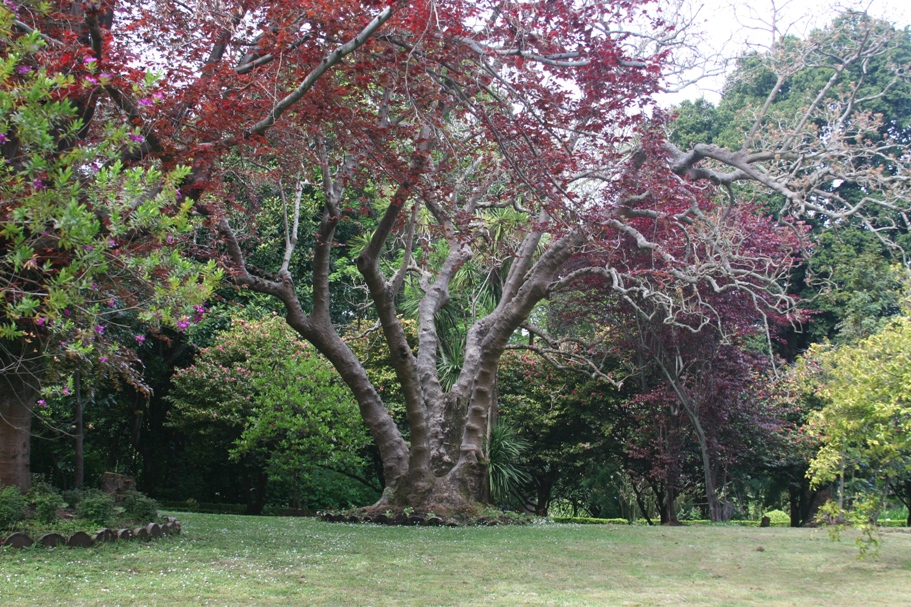
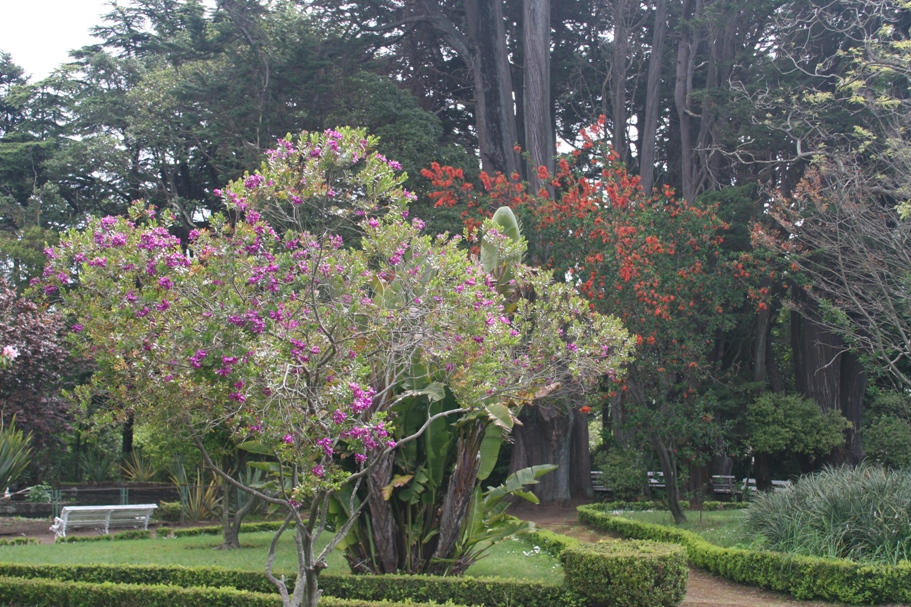
Grounds of the Parque Lota donated to the city by the Cousiño family (the grounds of their former estate).
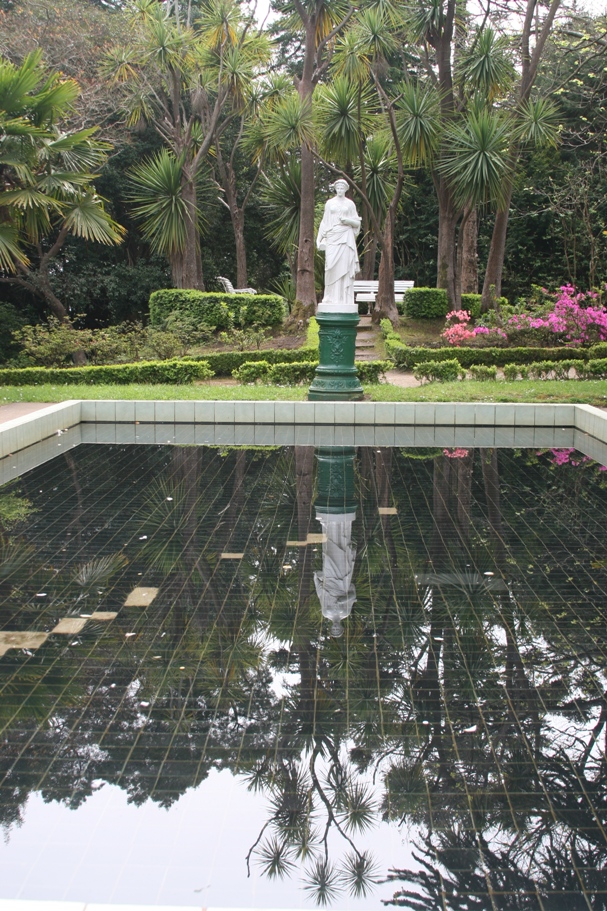
More Parque Lota.
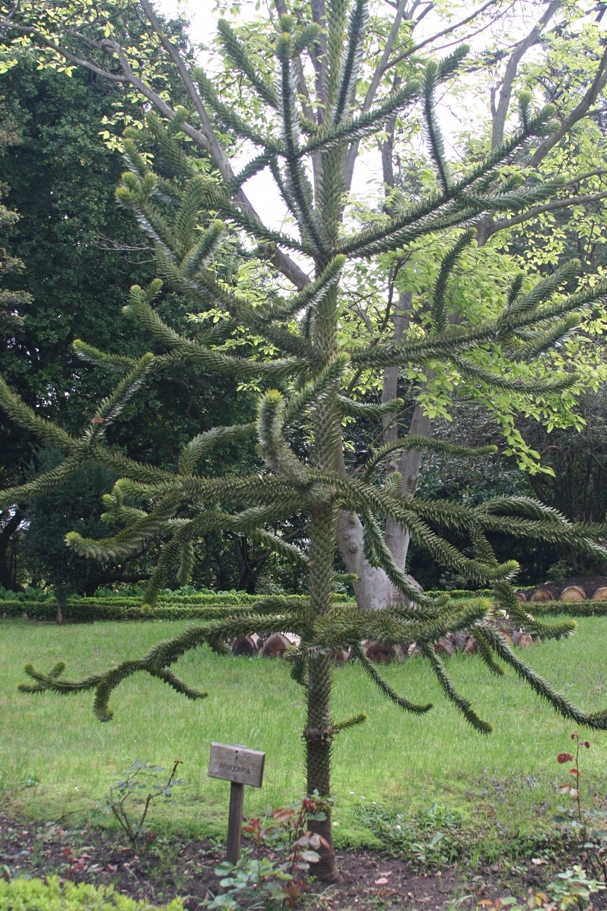
The signature tree of the Lake District in Chile is the Aurucaria - this is a very small one! A full grown tree has a tall bare trunk with all the foliage forming an umbrella shape at the top.
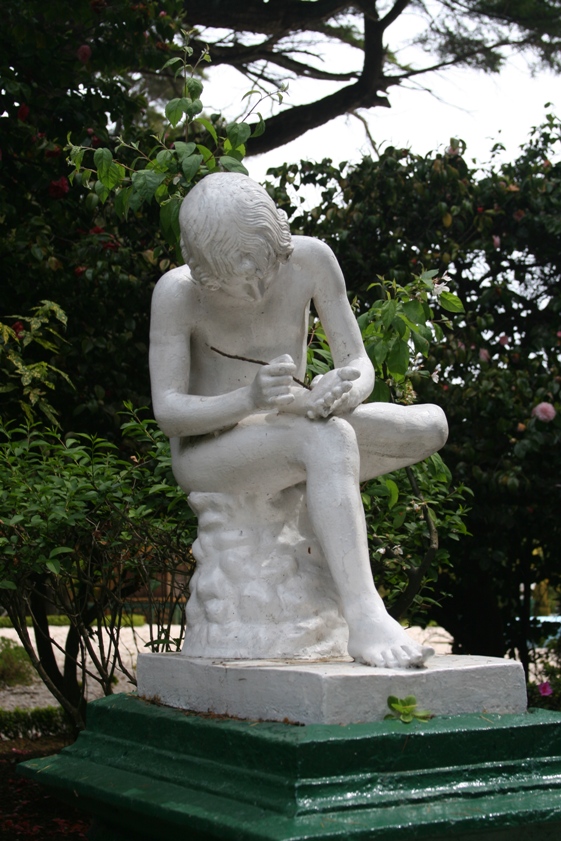
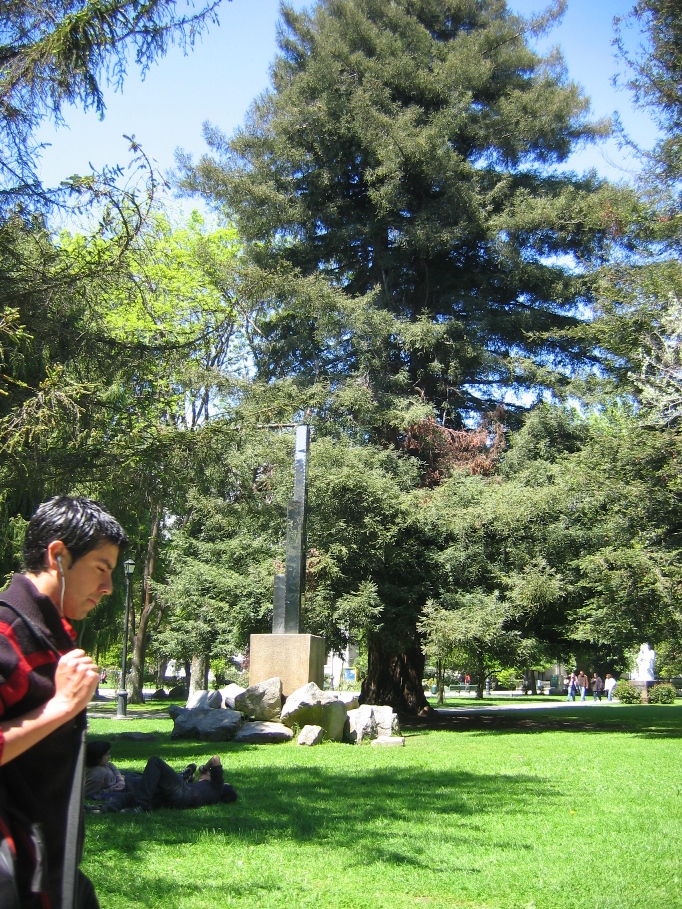
This statue looks like he is writing on the bottom of his foot, thanks to carefully placed addition of a little stick that some thoughtful park visitor had added.
*****************************************************************
Monday was a lay-about, schoolwork sort of day, with nothing more strenuous than another visit to the hotel pool on the formal agenda. Tuesday, we packed up the truck and then laid around in the hotel rooms watching TV while I nervously awaited a call from Nestor. He had told me to expect the new battery charger to arrive in his shop at 1:00pm (mas o menos). With shocking promptness, my cell phone rang at 1 minute past the hour and Nestor told me he had it. About 5 minutes later, I had it. Fourth potential disaster - averted!
-Rolf