
Chiloé
Island Living, Island Fever
Tuesday November 27, 2007
Click the map if you want to zoom or pan the Mapquest map of Chonchi, Chile...
The island of Chiloé has several distinguishing features which set it apart from mainland Chile and pique the interest of perspective visitors - or myself within our family at least. Quoting the "Bradt Travel Guide to Chile," for example:
"Only a narrow stretch of water separates Chiloé (Place of Seagulls) from the Chilean mainland, but crossing it is like crossing into another country, and another century. The island, 250km long and 50km wide, is often shrouded in rain and mist, but when the sun shines it is extremely beautiful. The Pacific coast is almost uninhabited, but on the island's sheltered northern and eastern sides there's an emerald and gold patchwork of potato and wheat fields, and all the island's towns. To the east there's also an archipelago of 40 some islands, a fair number large enough to be inhabited and dotted with farms and small attractive villages. In the interior is a virgin forest, which gets higher and denser as you move southward and west towards the Pacific."
So what are we waiting for?
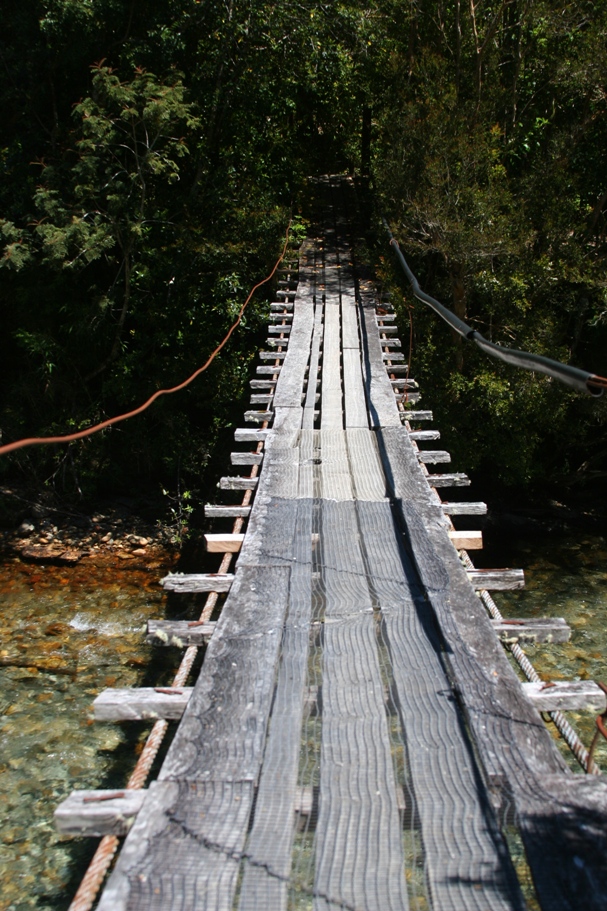
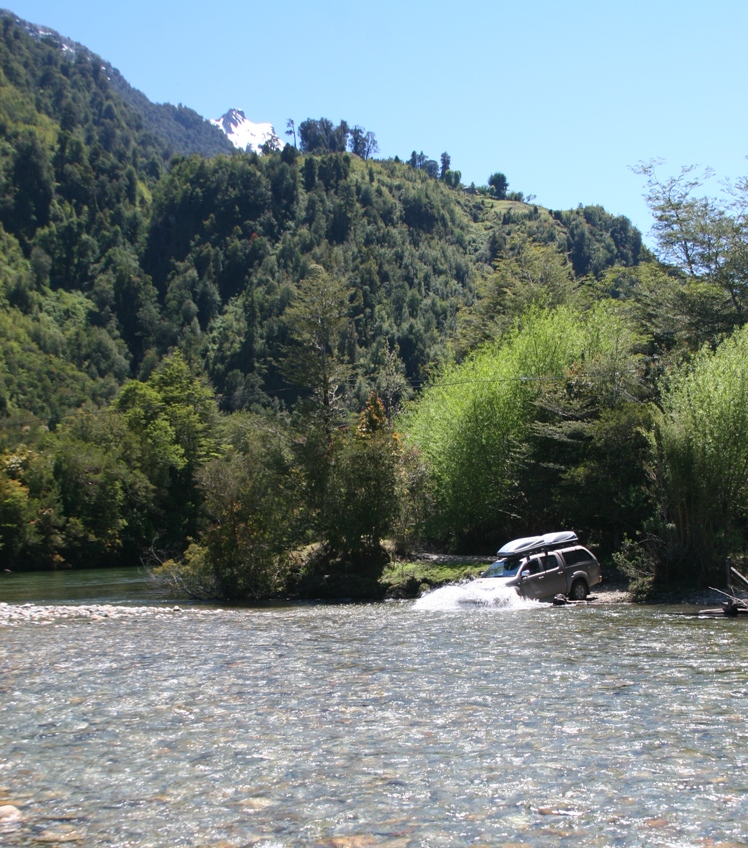
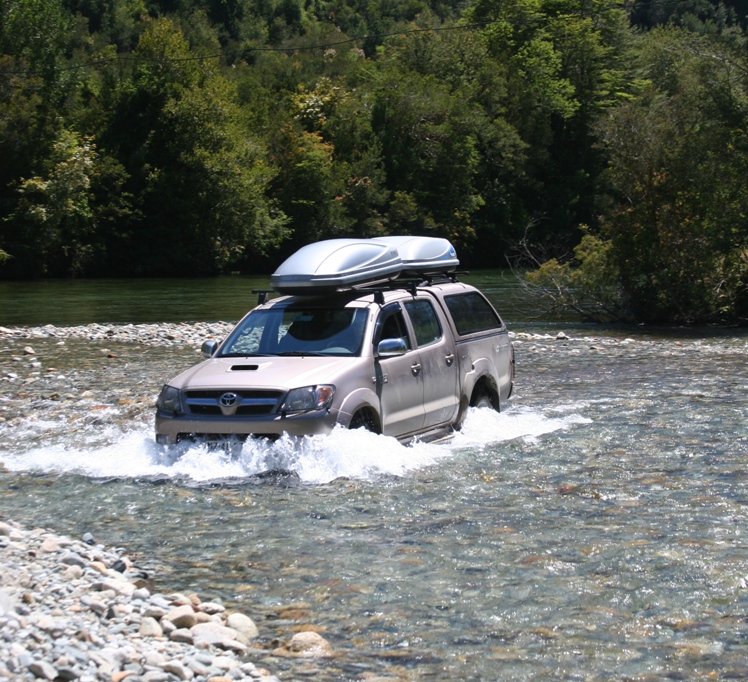
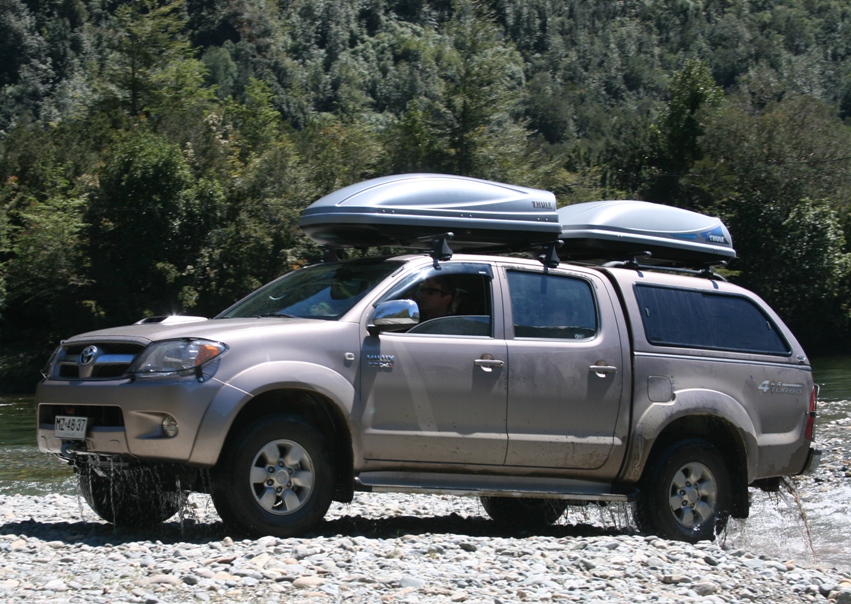
We started our journey from Cochamó to the island of Chiloé by re-traversing the stream near Campo Aventura. The bridge just wasn't quite wide enough for the truck. Now this may be daily routine for the proprietors of Campo Aventura, who bring groceries and supplies across this stream on a regular basis, but for us urbanites, that first plunge into the stream is always good for a little hair-raising excitement.
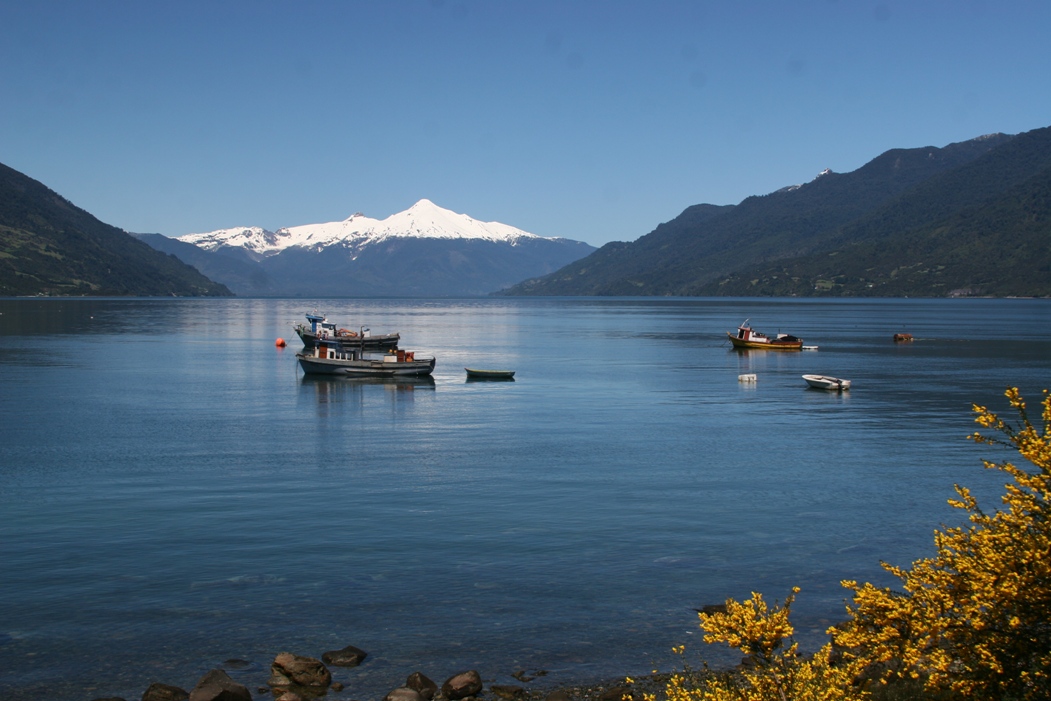
One last look down the fjord as we passed through the village of Cochamó.
We had booked a room back in Puerto Varas (along the shore of Lago Llanquihue) to spend one night in a town certain to have post offices and banks before heading onto the island of Chiloé. Puerto Varas is also just plain very attractive and comfortable. After spending a warm sunny afternoon and the ensuing night in a very comfortable and reasonably priced hotel right on the shore of the lake, it was tempting to forego the plans to visit Chiloé and simply hang out in Puerto Varas a little longer. Time will tell if we should have stayed or not...
The next morning broke sunny and warm again, but the forecast was for clouds and showers. Sure enough it was pretty glooming by the time we reached the ferry crossing to Chiloé in the middle of the day.
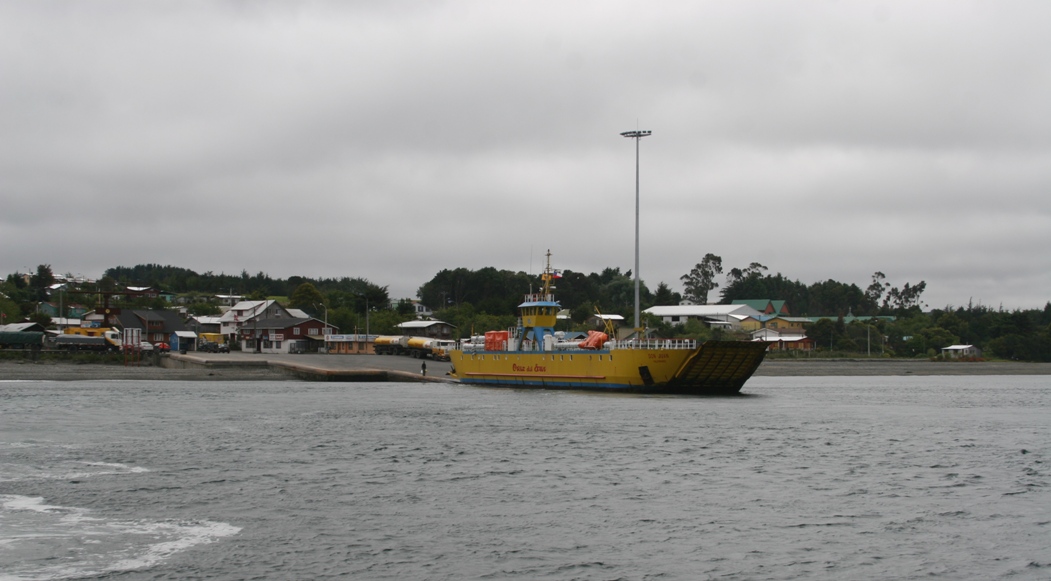
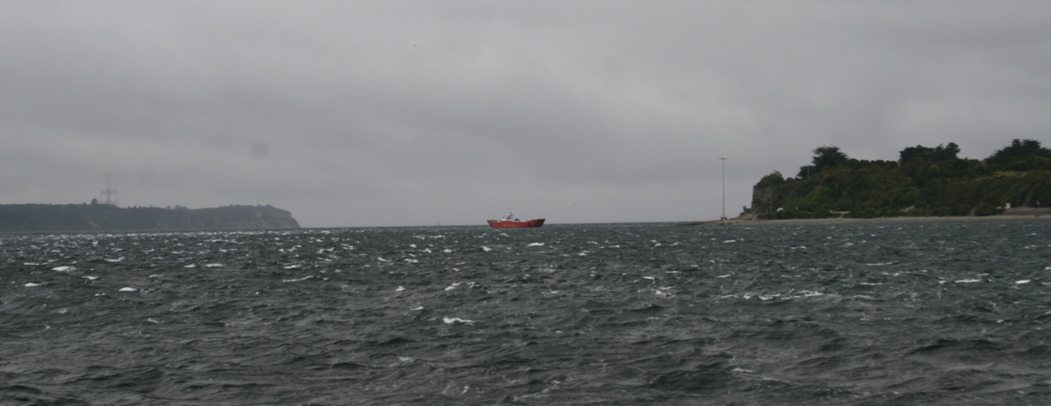
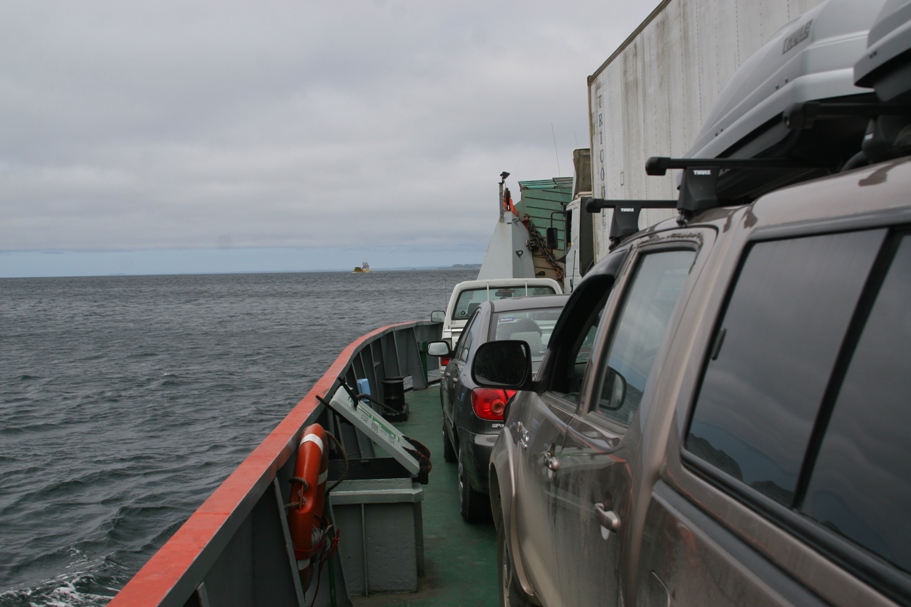
Crossing over to Chiloé.
Ancud is the largest city on the island, and located not far from where we crossed on the ferry at the northern end. We arrived at the hotel which was reputed to have "the best lodgings in Ancud" in time for lunch. The discrepancy between the tiny, dingy rooms of Hosteria Ancud which cost more than our really nice hotel in Puerto Varas was an immediate disappointment, but I hoped to eventually find some amusement and adventure in town.
The next day was Thanksgiving, and we took our main meal along with a tour-bus-load of travelers at a small restaurant on the beach. Having not the choice of turkey nor even chicken, we lunched relatively lightly - caldillo de congrio (fish stew) for Anna, chupa de jaiba for Lynn (crab in cheesy cream sauce baked in a clay pot), clams a la parmesan for Rolf (clams with some creamy yellow cheese that isn't even remotely like Italian parmesan cheese), and barros luco for Tom (Chilean cheese-steak sandwich).
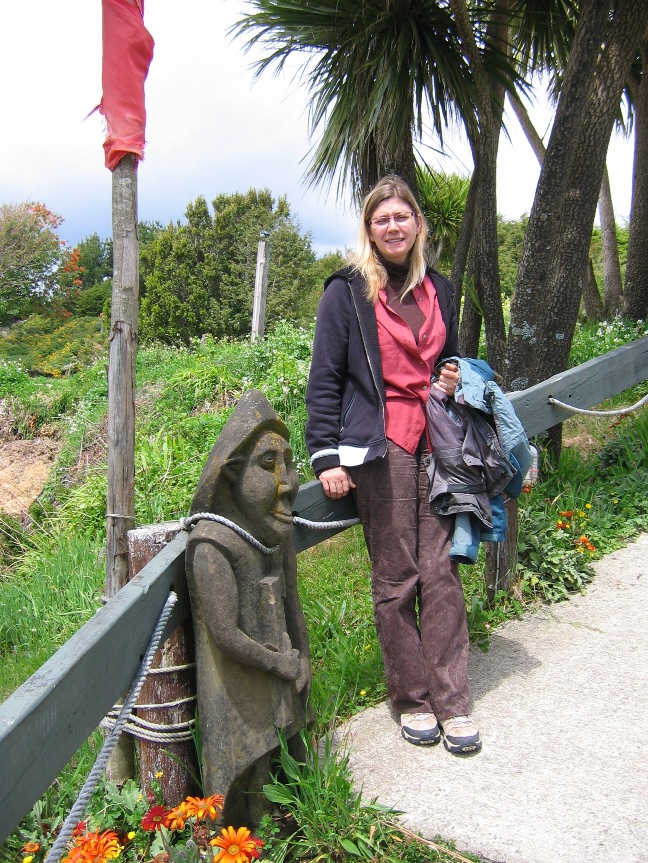
Lynn poses with a local fisherman. Ancud, Island of Chiloé, Chile - Thanksgiving Day 2007.
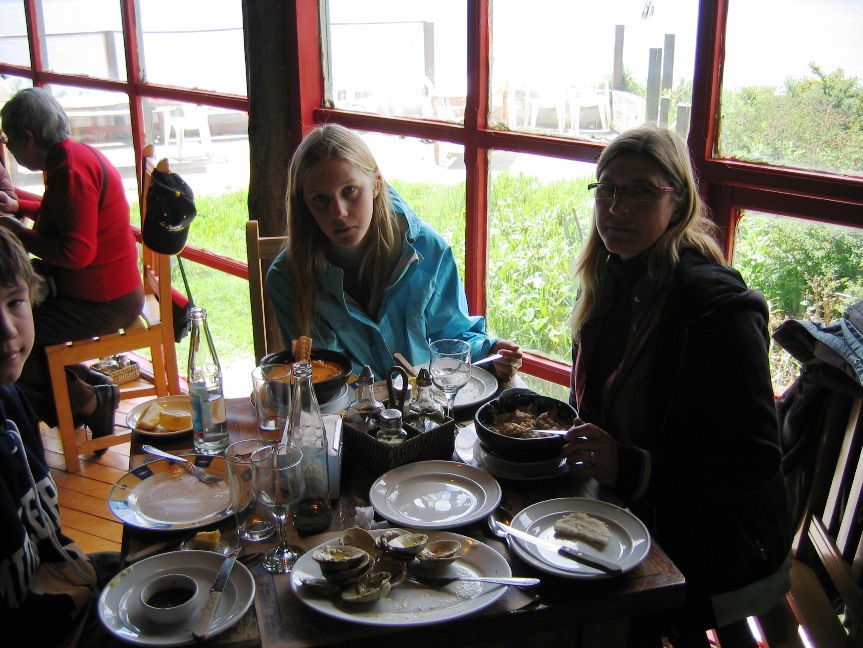
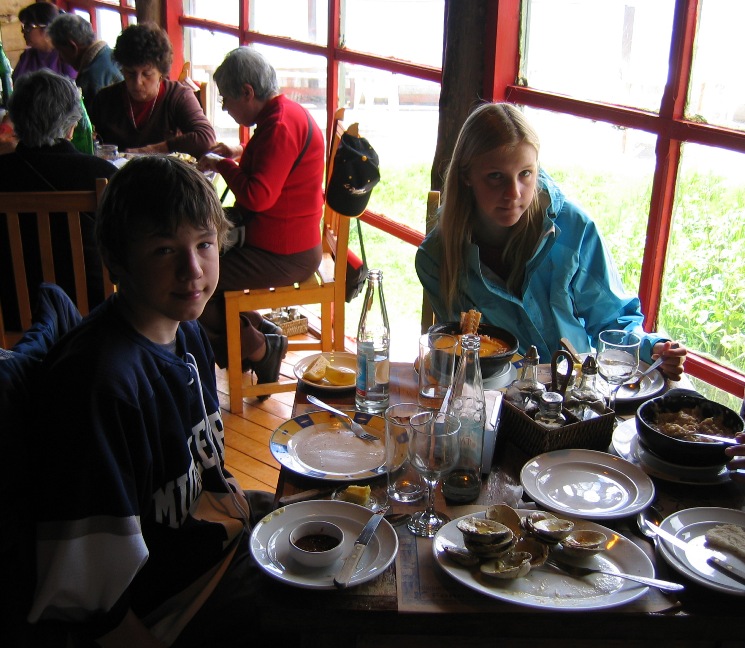
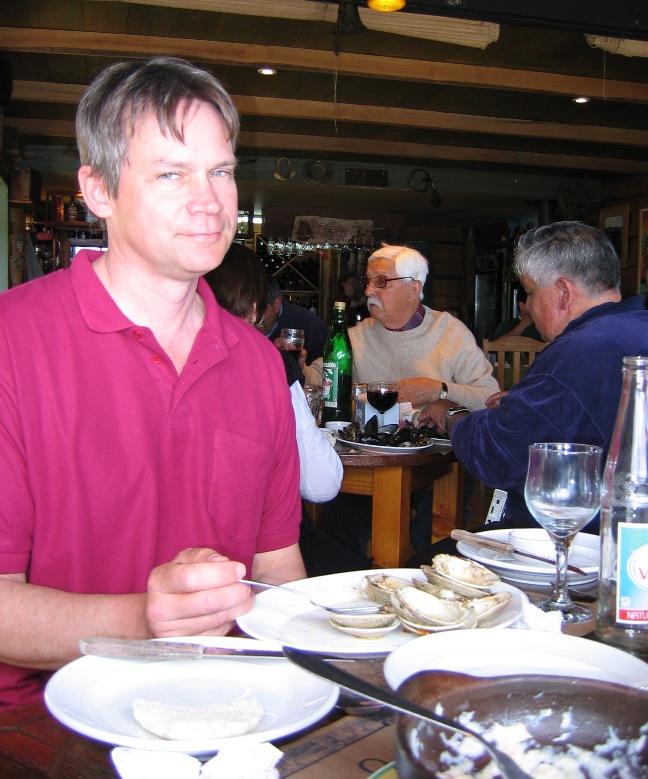
Thanksgiving dinner... the people from the tour bus were gorging on the local traditional feast (which Anna, Lynn, and Rolf lunched on the day before) - a smorgasbord of ribs, fish, shellfish, sausage, and potatoes which is cooked either in a pot as a stew, or barbequed in an earthen pit similar to an Hawaiian imu). Anna seemed to be the most bummed out that she wasn't eating Turkey.
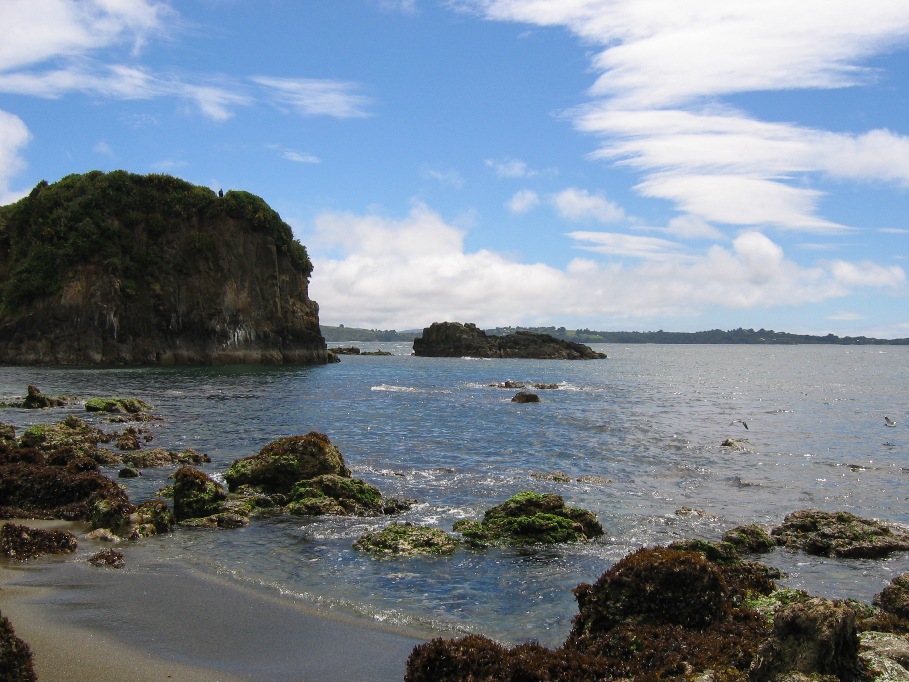
The beach near our Thanksgiving lunch spot.
Motivated by the glamour of our hotel and the glamour of Ancud (museum closed because the workers were on strike - artesanal workshops closed for no known reason, lavenderia that shrunk Anna's sweatshirt and turned all our white clothes blue, etc...), we decided to leave after just two nights and head south to Chonchi, located on the eastern coast facing the Gulf of Ancud, about halfway down the Island. This would also lead us through and amongst the charming fishing villages of the eastern shore, as well as closer to the National park located directly westward on the Pacific shore.
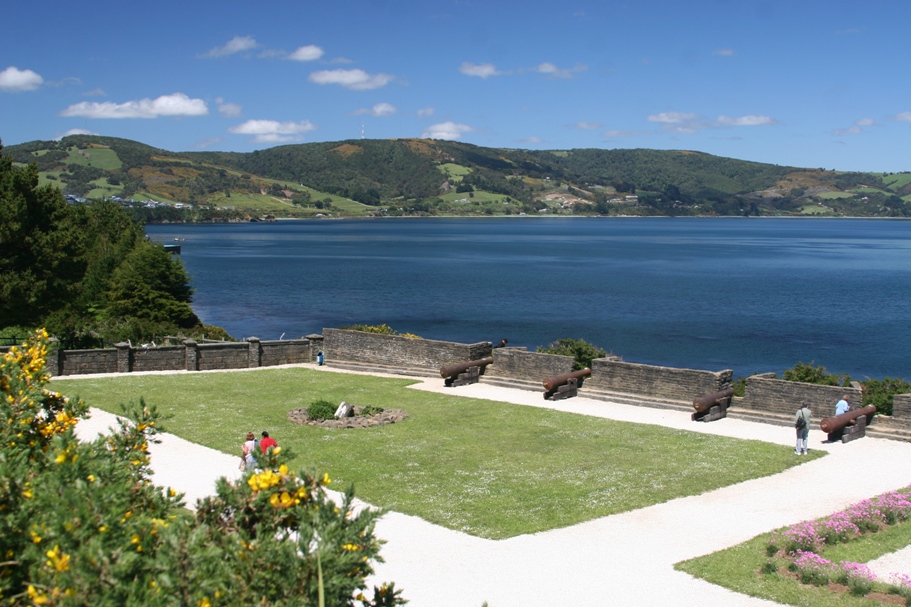
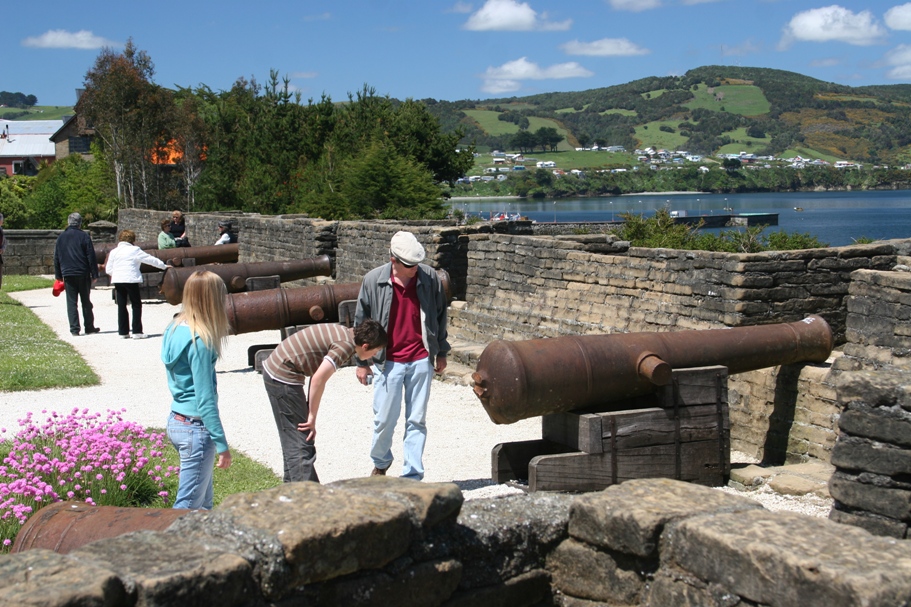
The old fortress in Ancud (build 1770) was worth a stroll before we hit the road,
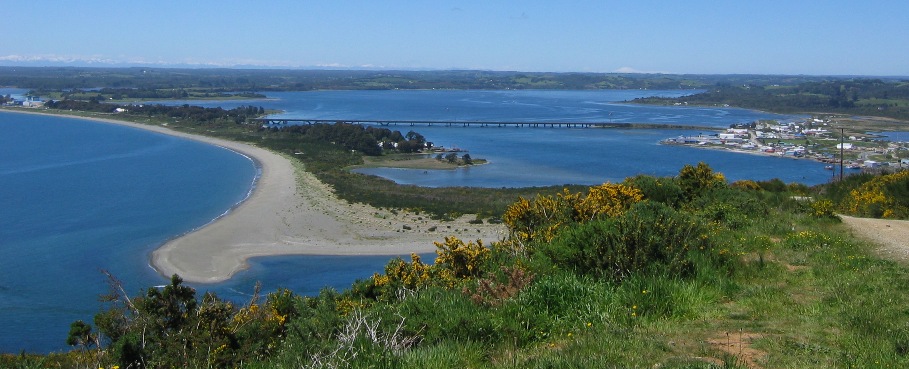
and we took "the scenic route" out of town so we could ascend a hill and look down on the causeway leading to the city.
And then, instead of taking the straight shot paved road down the center of the Island, we snaked, via a series of gravel roads, southward along the eastern shore.
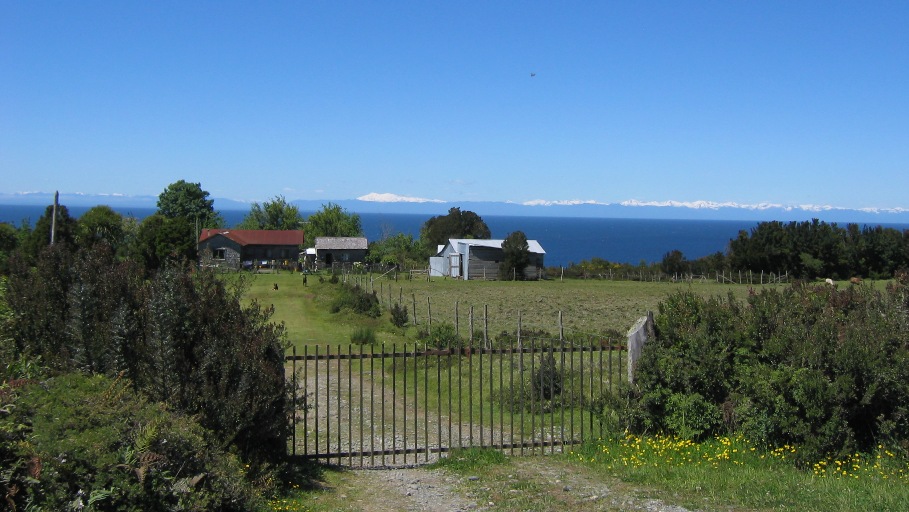
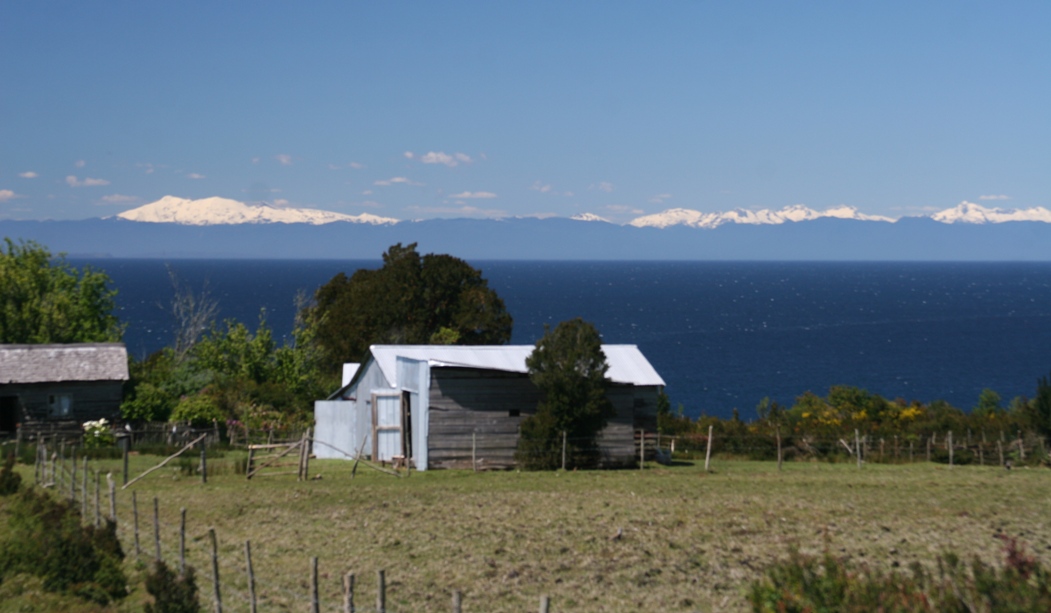
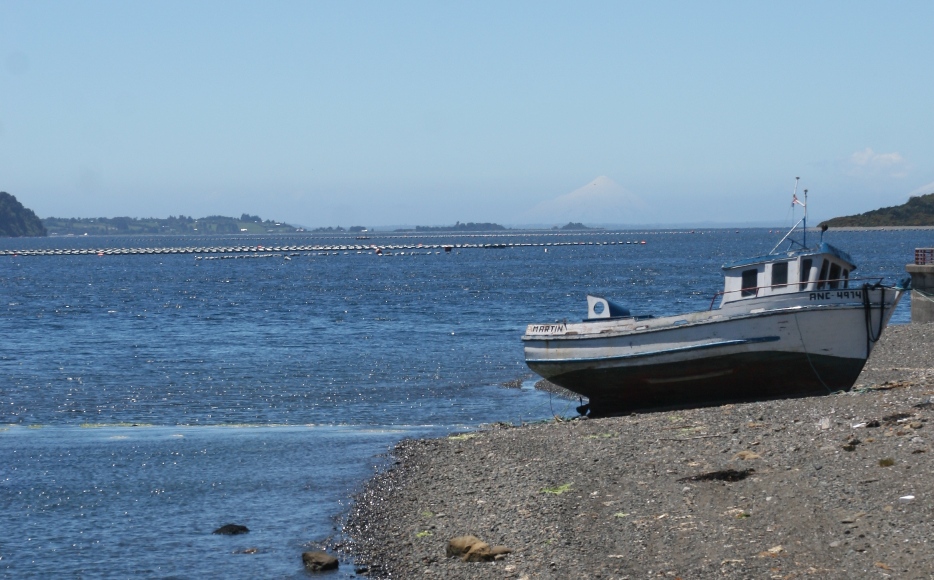
Mainland Chile and the Andes are visible from the eastern shore of Chiloé.
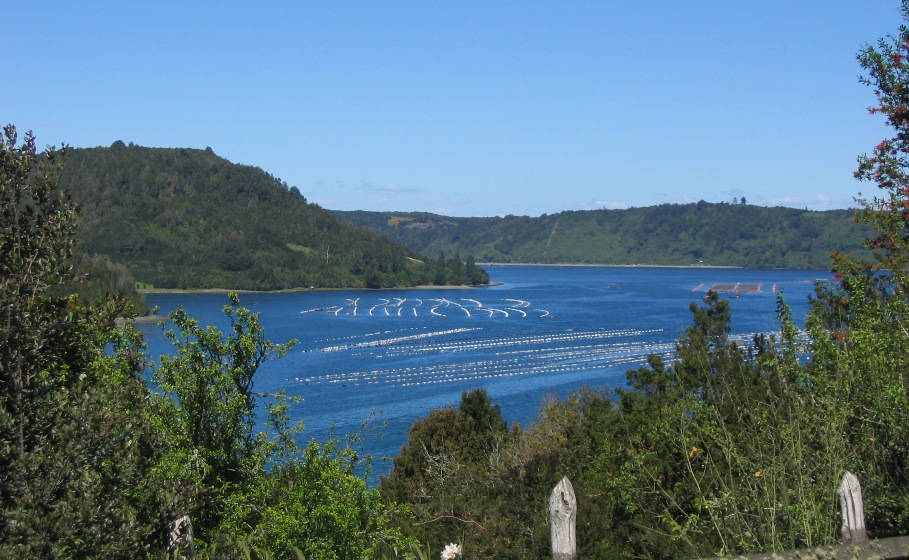
The white buoys of a mussel/clam farm and the orange buoys marking the nets of a salmon farm in the estuary waters between Chiloé and one of the many smaller islands lining its eastern shore.
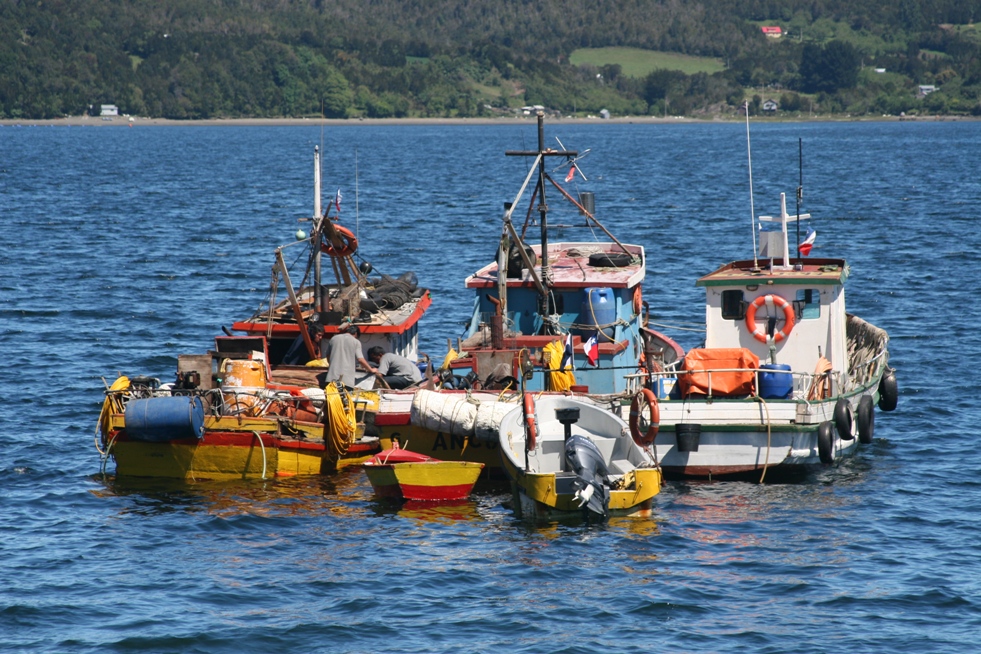
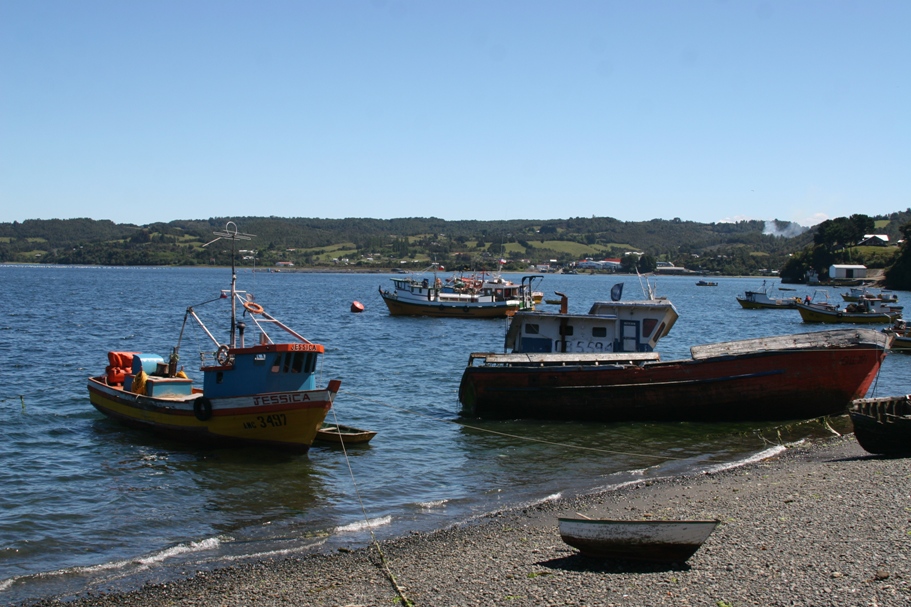
We saw boats for work, boats for transportation, but nary a single one that looked like it was meant strictly for pleasure (and nothing with a sail on it for sure!),
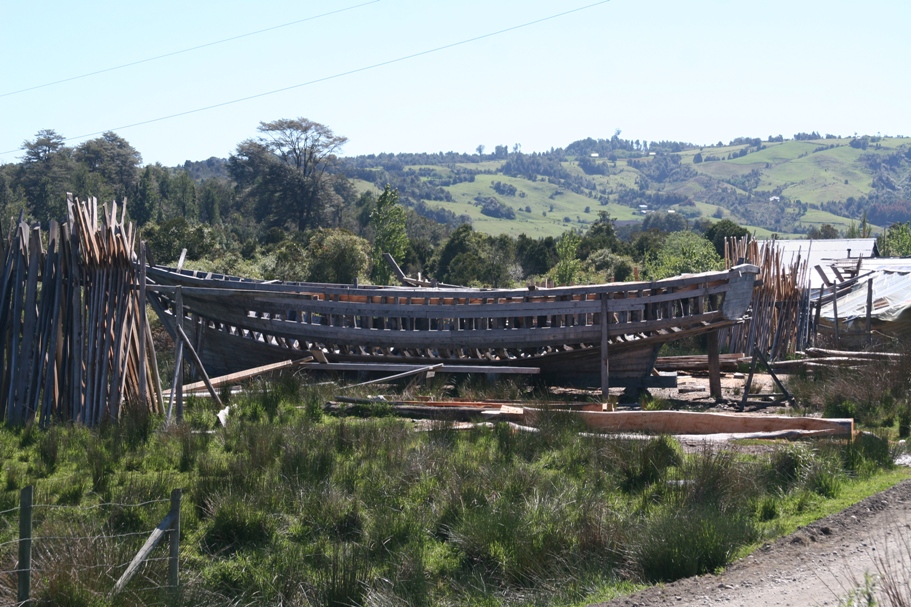
but we did see a few "works in progress."
We arrived at the coastal town of Chonchi in the early evening and checked into a "hospedaje" in time to feast on fresh, wild salmon and some local new potatoes. Our chef and hospedaje proprietor Carlos informed us that Darwin had speculated that the potato may have originated on Chiloé when he observed them growing wild on the island (something he saw nowhere else) - a speculation which has been given more credibility by modern researchers.

Our hospedaje is located where Chonchi meets the beach. The location has some advantages - scenic views and proximity to waterfront shops and the grocery store, for example. There are also disadvantages, being so close to the sandy shore, it has settled precipitously and few doors or windows close and/or open all the way (including bathrooms). The public road leading to the beach is a popular weekend nighttime hangout for young people who gather to drink beer, smoke pot, and socialize into the small hours of the next day - right under the windows of our rooms that don't close. And then on Monday night, when no individuals were out and about partying, a caravan of large, loud, flat-bed diesel trucks paraded out onto the pier to get loaded with box upon box of seafood from the nearby salmon and shellfish farms - a process that lasted most of the night.
On one hand, we got a real good feel for the town, it's people, and it's industry. We also met some interesting travelers coming and going through the hospedaje. On the other hand, we didn't sleep much. While our host/proprietor provided generous home-cooked meals (served on almost-but-not-quite-clean plates) and valuable sight-seeing advice, it was difficult to remain in a good mood after nights spent on mattresses that killed the backs of the adults while listening to the various aggressive noises of this town that never seems to fully quiet down. To be fair, it is budget lodging with a well-meaning and very helpful proprietor, but to spend more than a few days in a glorified bunk-house in desperate need of a deep-cleaning - never quite getting the good night's sleep that you crave more and more each day - the overall experience can be a little tiresome. And considering that were' on an island and that the ferry we'll take to leave only runs twice a week, it can be even downright claustrophobic.
But we're here till Wednesday (a full five night stint) without too many other options. We have reservations to exit the island on the southern most ferry which crosses to a town on the mainland which is not accessible from the north by roads. And the ferry runs only twice per week with reservations required (especially for a vehicle). Our reservation is for next Wednesday.
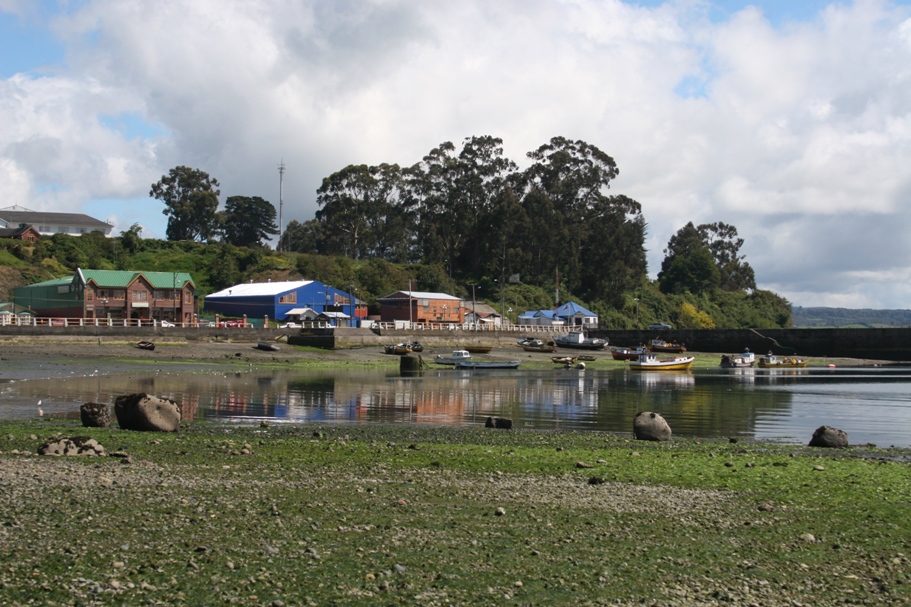
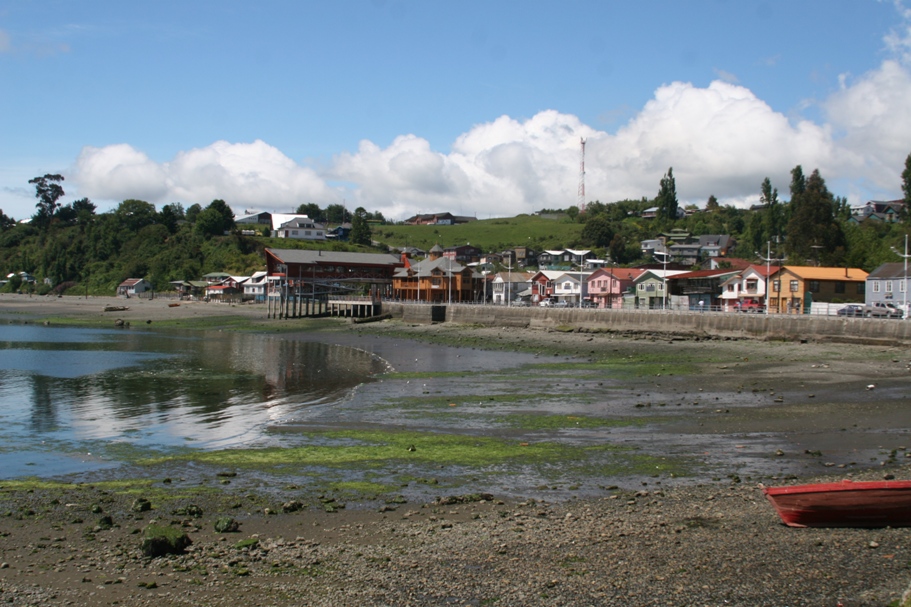
Chonchi calls itself "The City of Three Levels," and the waterfront is clearly the bottom of the three. Another interesting aspect of Chiloé is the enormous tidal swing measuring 6 meters or more.
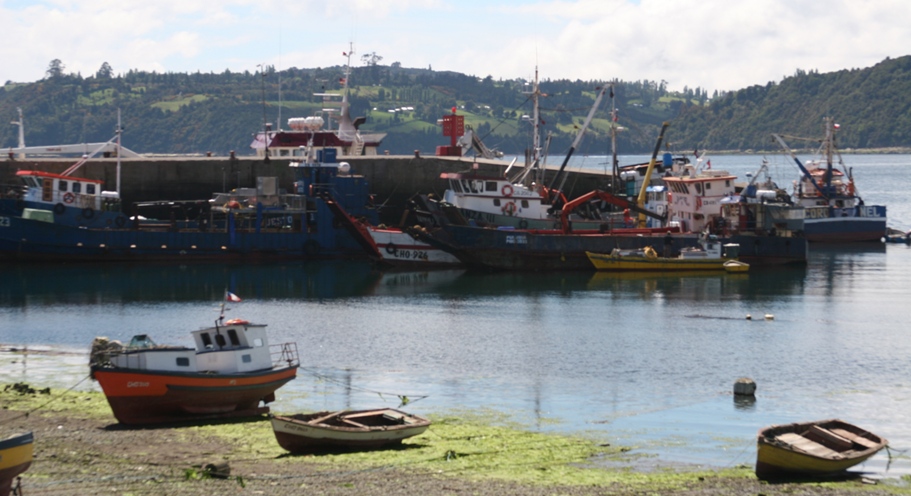
The main pier (where the trucks loaded up with farmed salmon all night long).
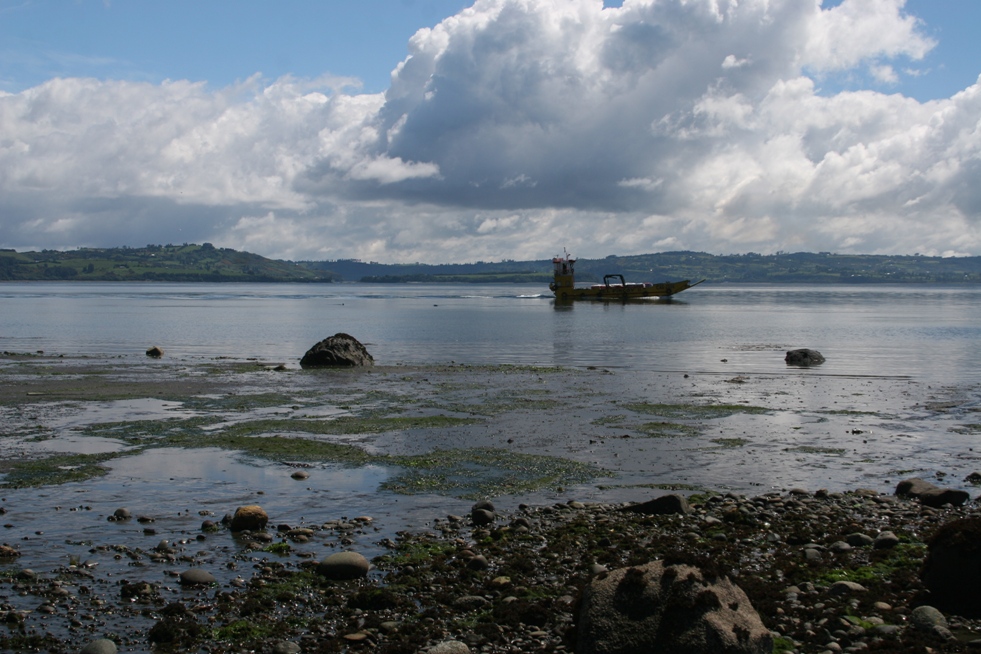
Looking out from the shore in front of our hospedaje.
OK - now what did we do during the day to forget about our bad beds and aching backs? Visit the main island and some of the smaller adjacent ones, and here's the summary of activities, observations, & excursions:
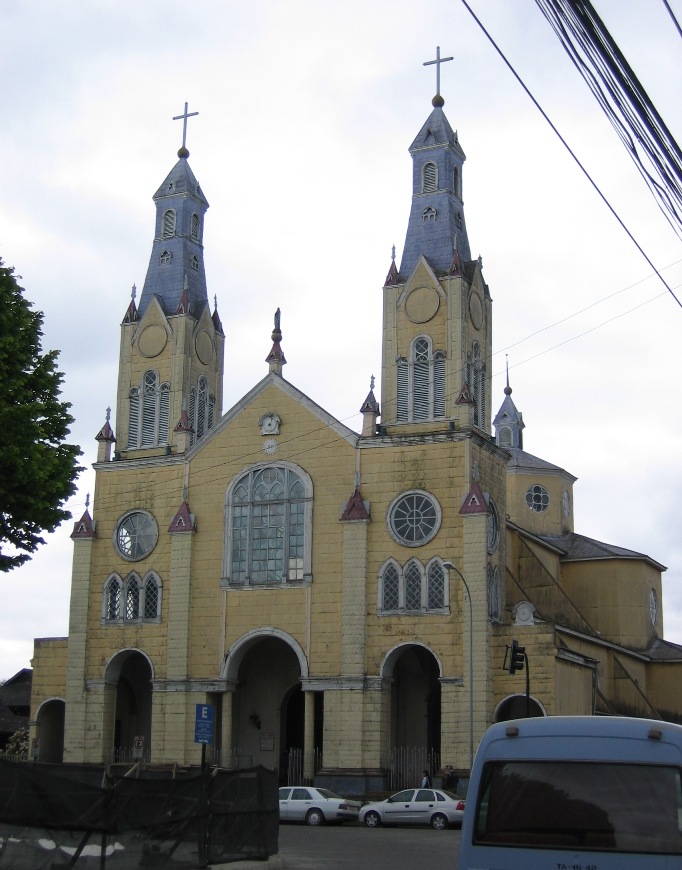
Chiloé is famous for its collection of old, unique, wooden churches, many of which have been declared UNESCO heritage sights. So we dutifully took note whenever we passed one and tried to get a good picture of it. The last one in this series of pictures doesn't really fit the style of the the classic single-steeple church of Chiloé, beeing a large cathedral in the second largest city on the island (Castro), but it's an interesting bit of architecture nevertheless.
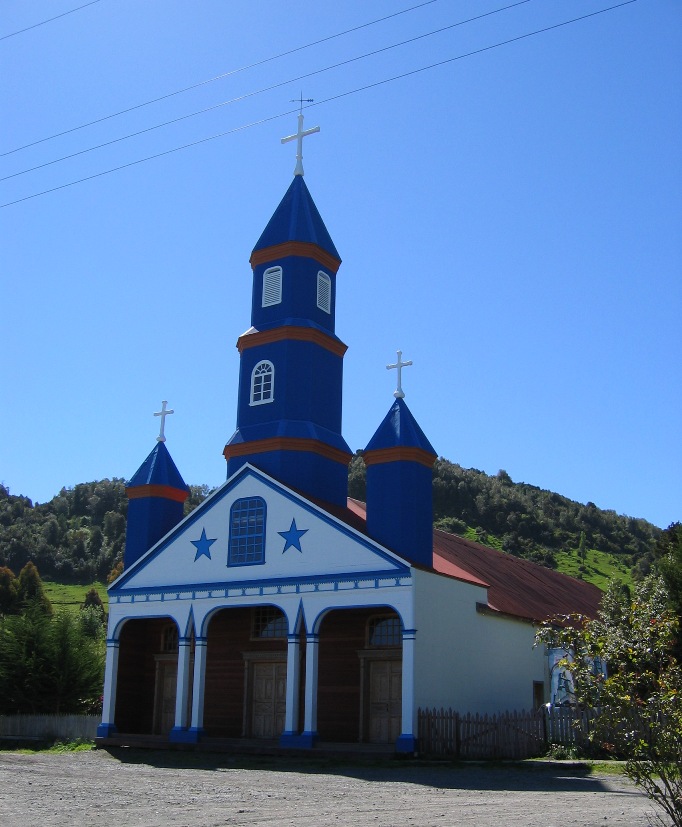
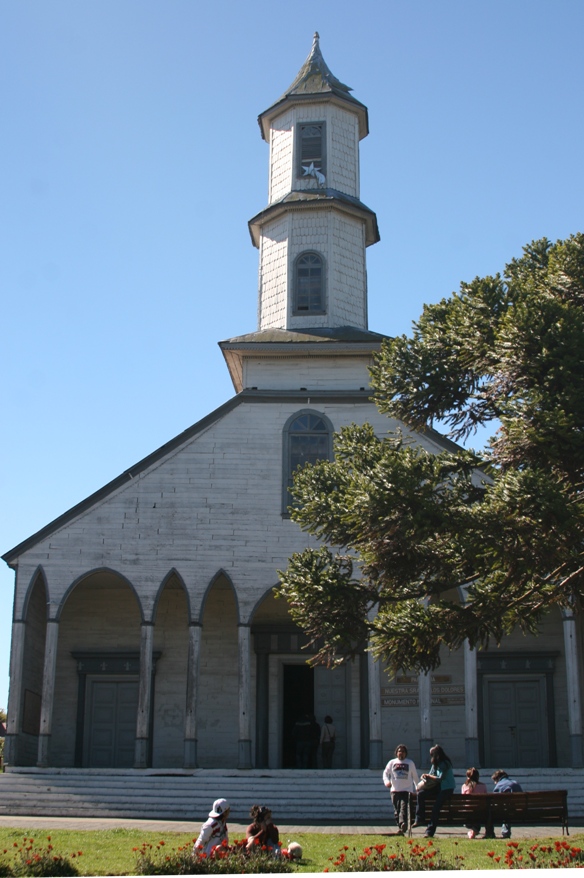
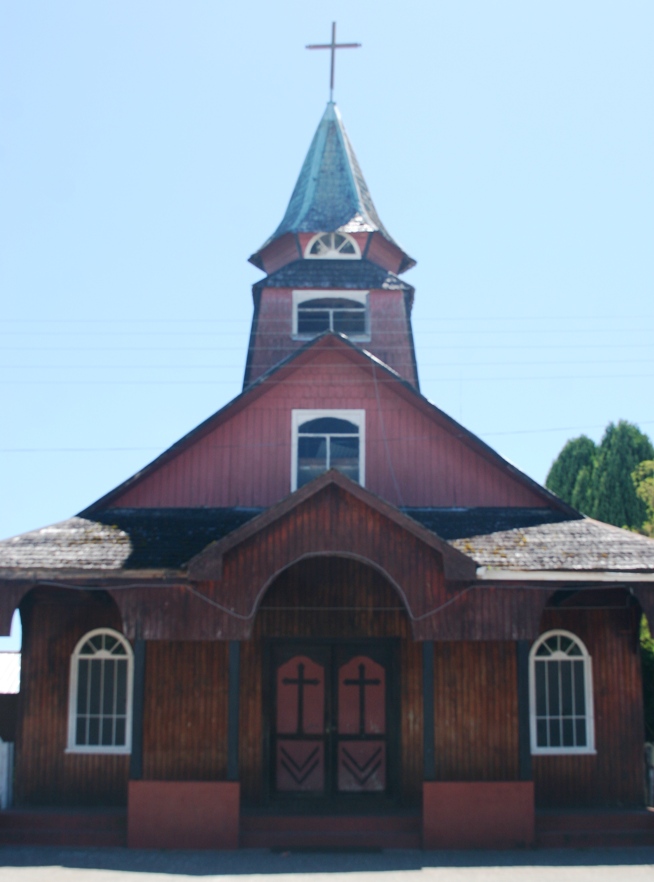
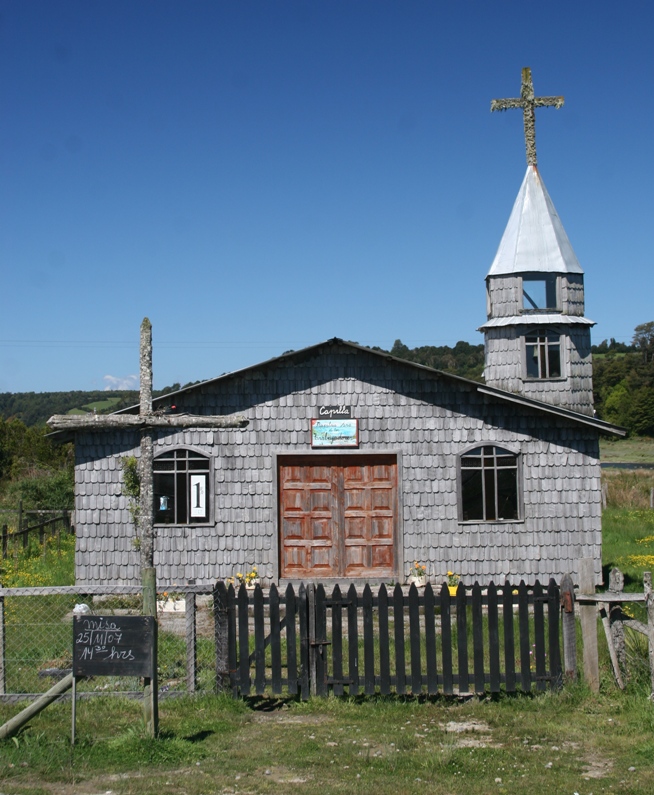
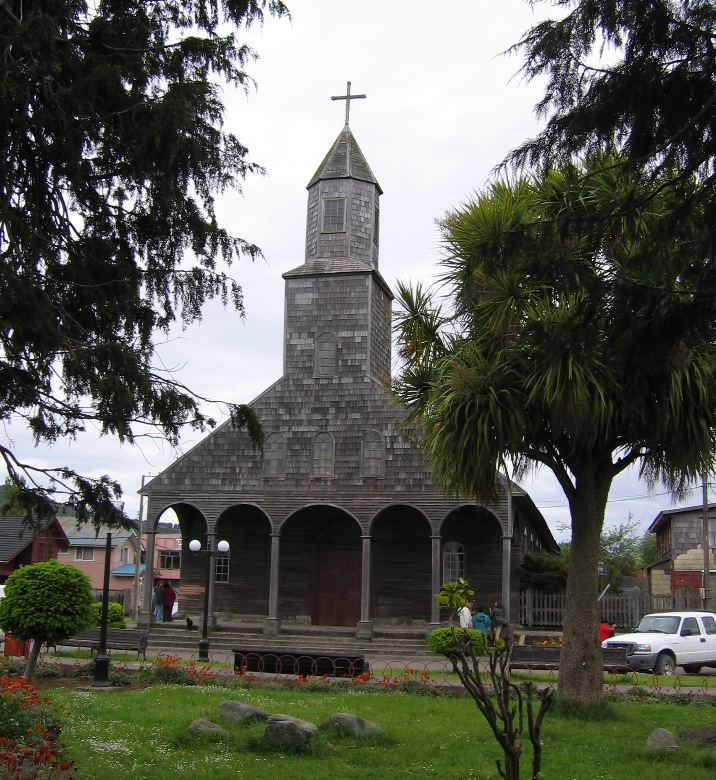
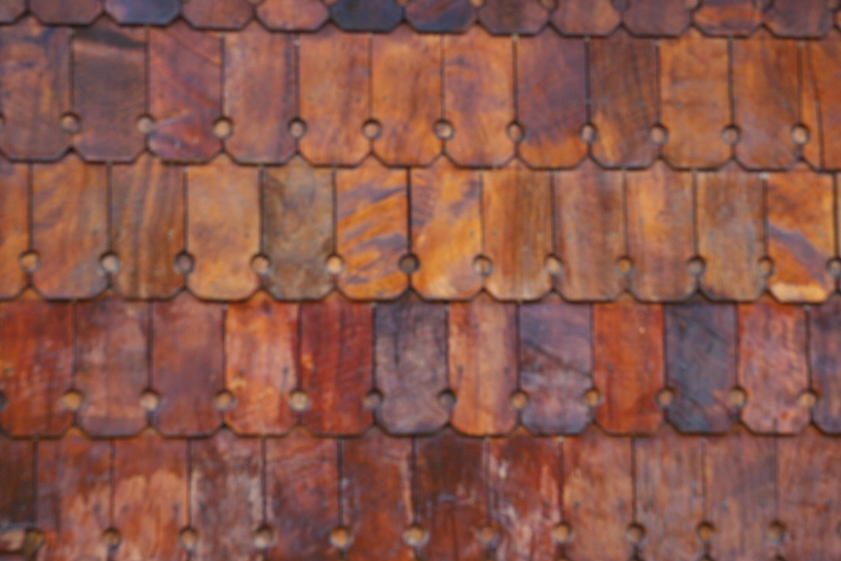
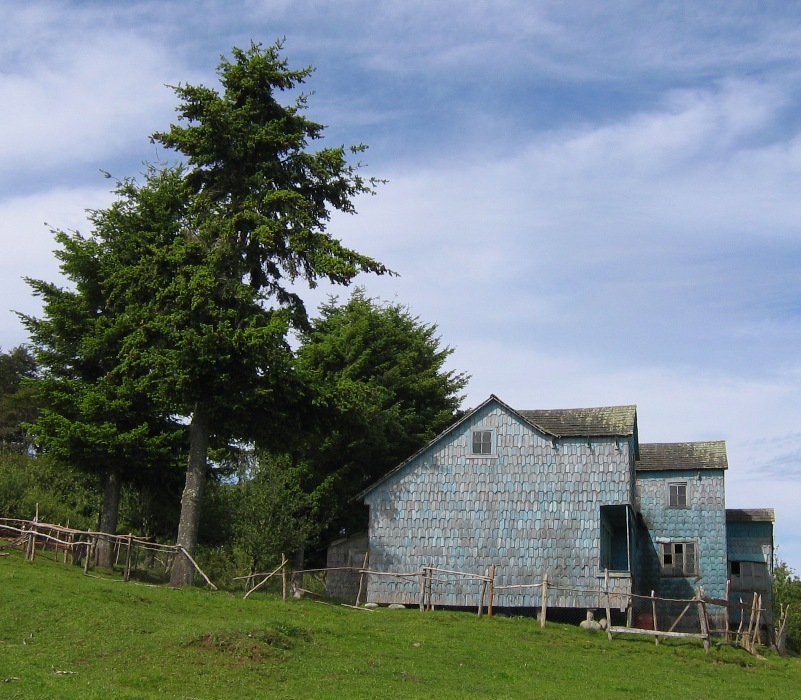
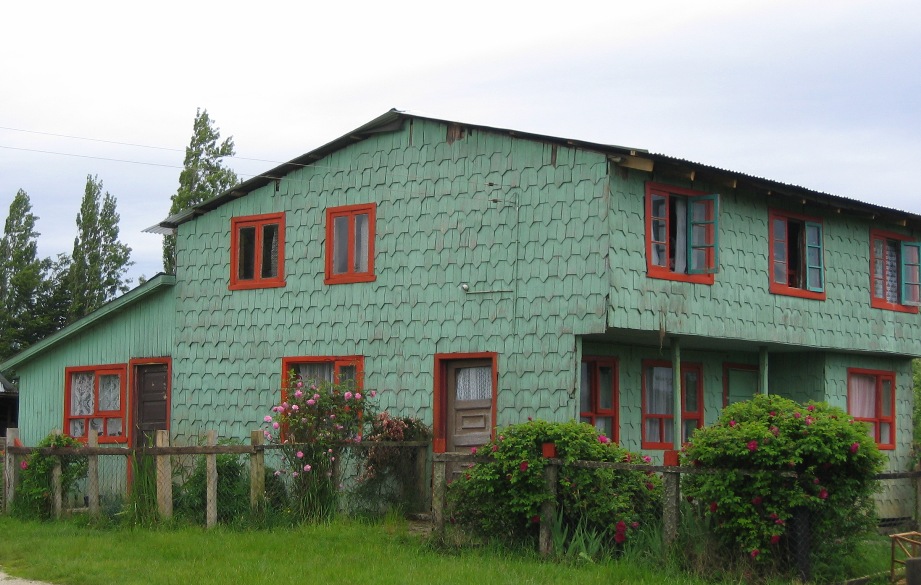
In addition to the characteristic churches of Chiloé, the houses have been being built with wooden shingle siding for centuries. The tradition dates back to early settlers who formed the island's first colonial outposts, and developed a construction technique that supposedly emulated slate tiles used in medieval Europe using the best substitute material readily available - the now rare Alerce tree.
Now if we were to build a little (or big) house on this island, we'd have to contend with the difficult choice of which shingles to use and which color to paint it. Here is a small sample of the various combinations we've seen employed on the houses of Chiloé. One of our guidebooks says something like "... there are a dozen or more different types of shingles." Lynn has pictures of at least 40.
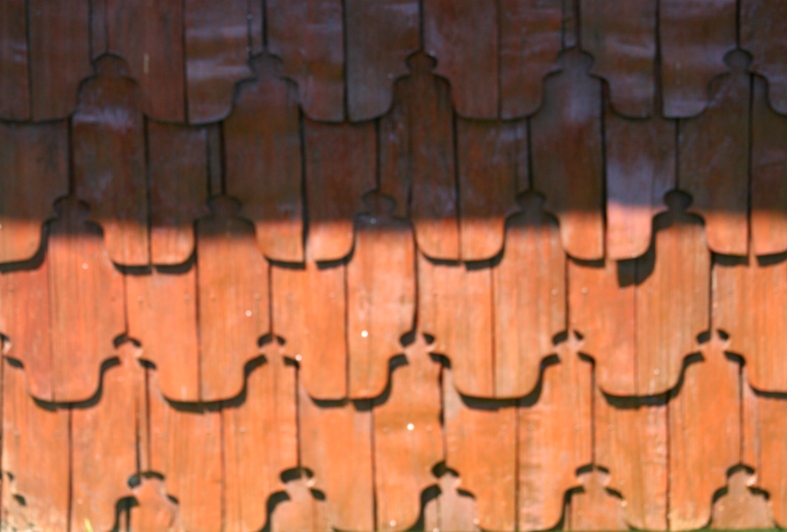
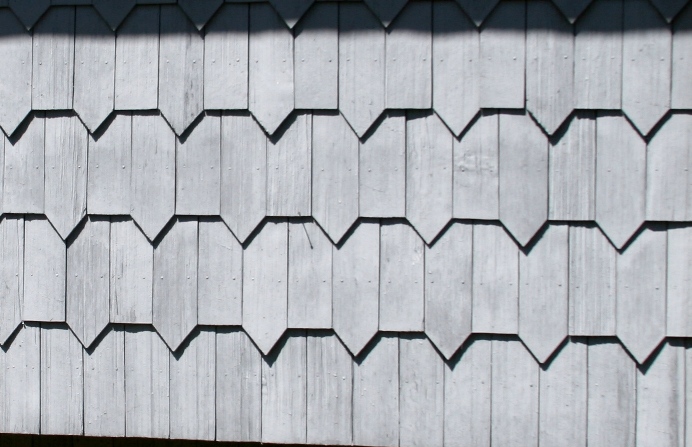
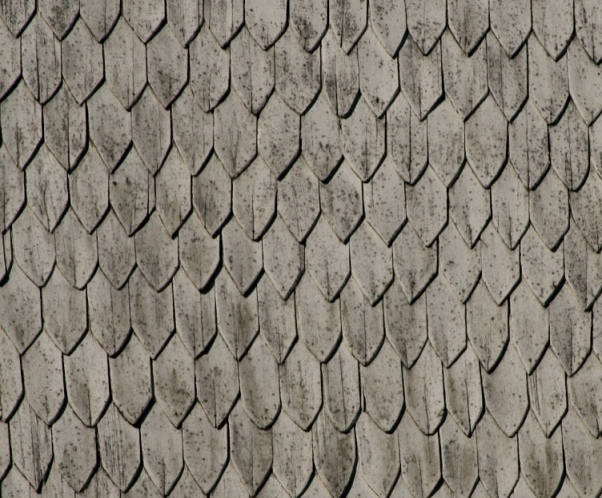
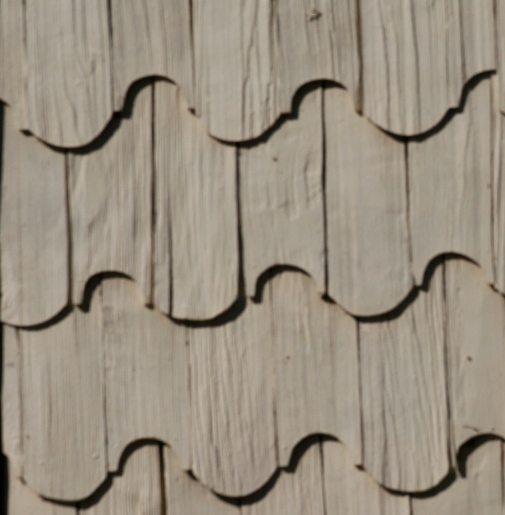
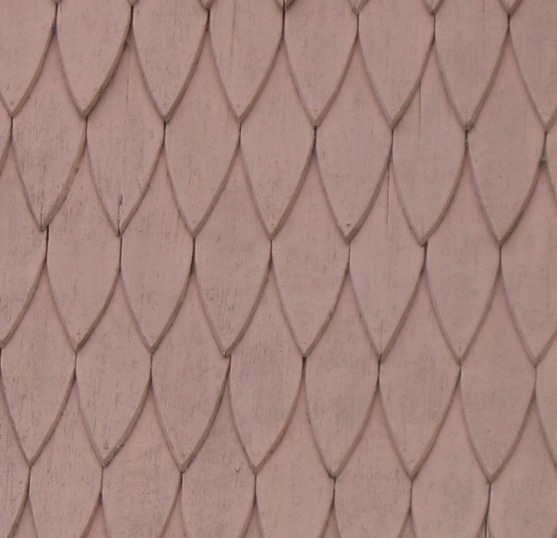
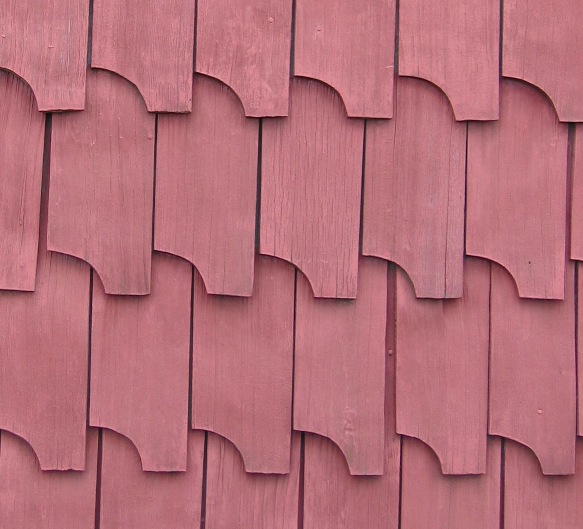
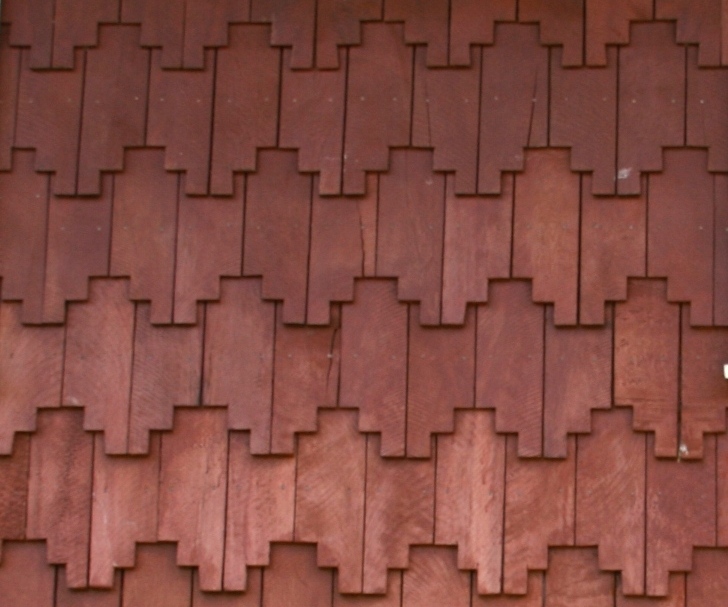
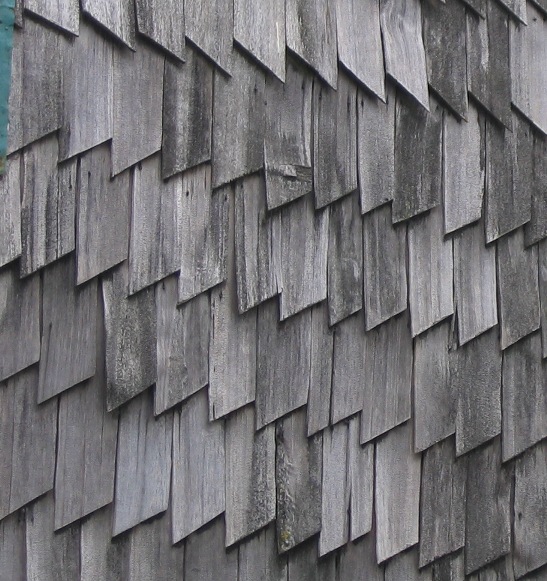
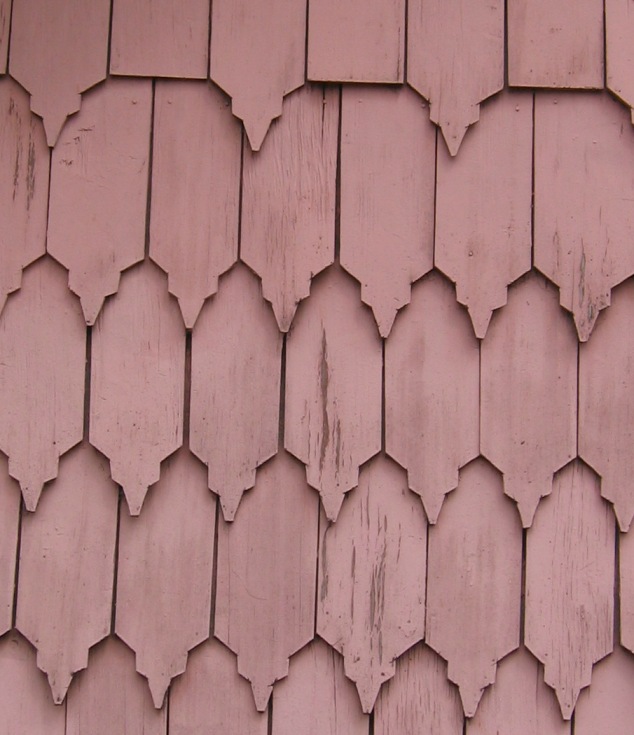
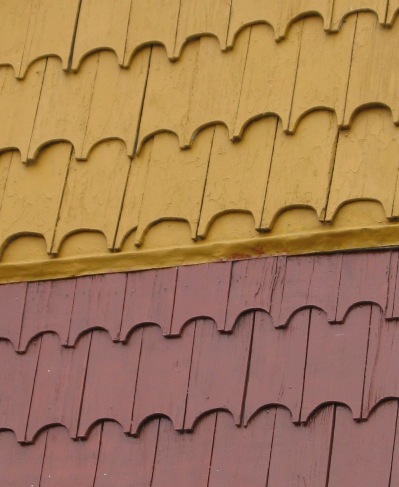
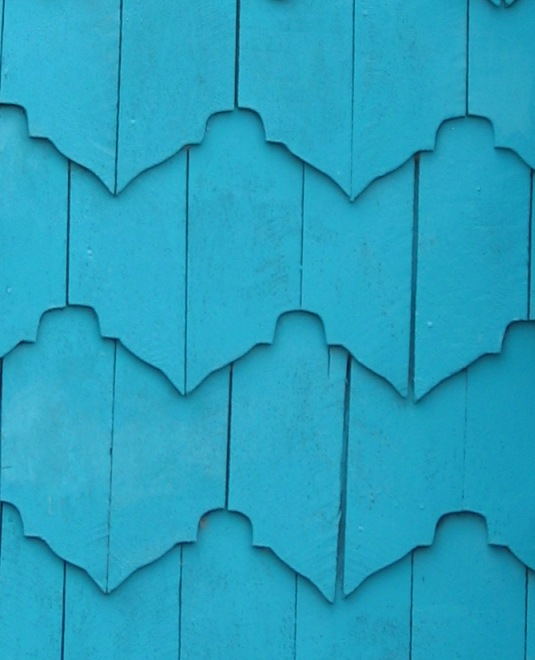
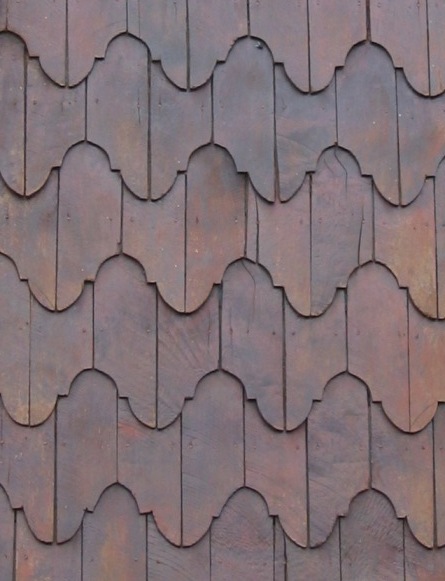
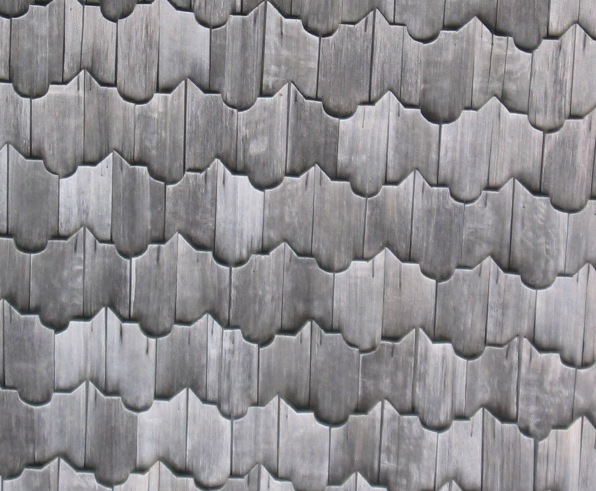
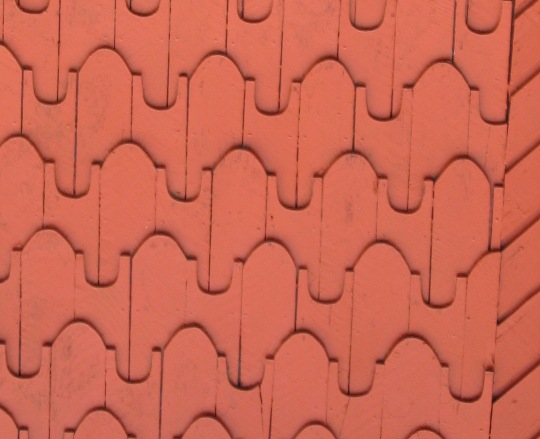
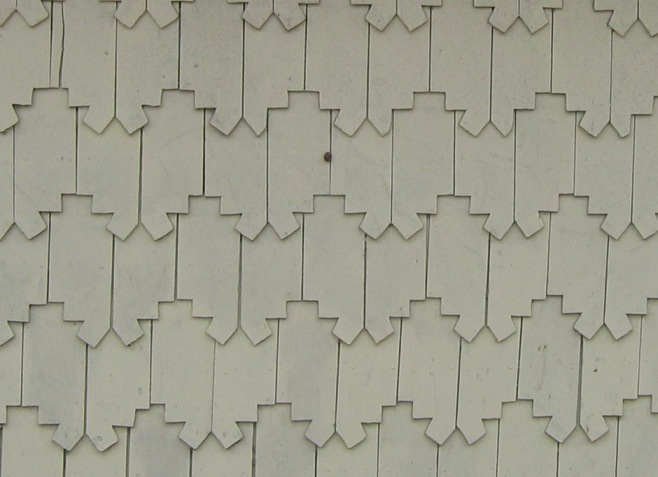
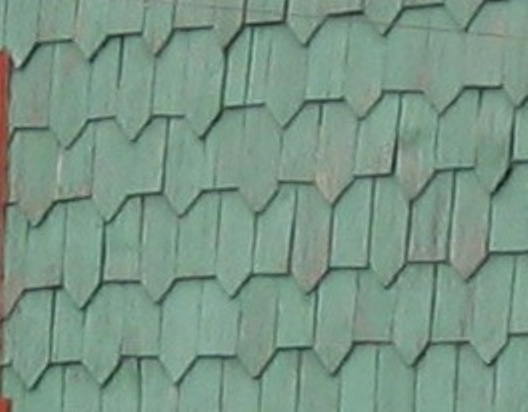
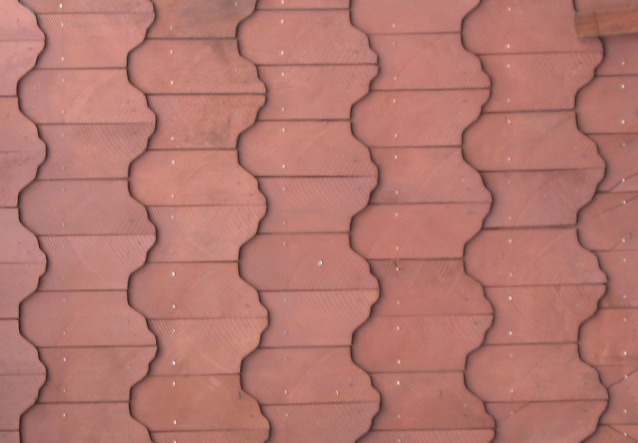
And here is what some of the "whole houses" look like. The variety of style is extremely varied, considering the basic tiled-siding theme.
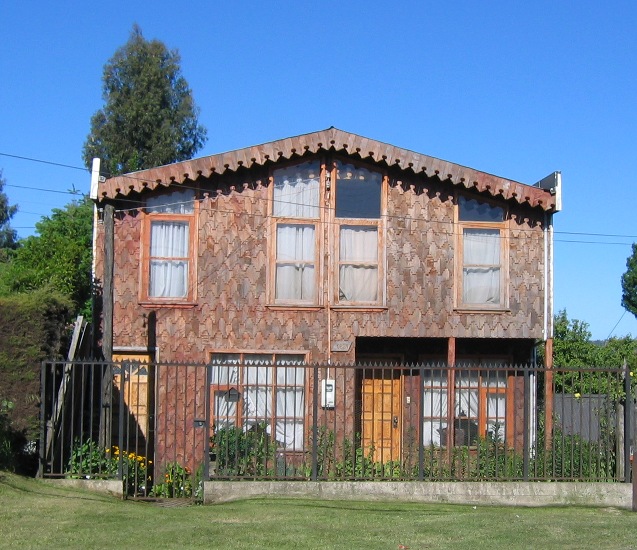
At Carlos' suggestion, we took a ferry over to the nearby smaller island of Lumay on Saturday and then spent 4 hours on a long walk down gravel back-roads through the farms of the island.
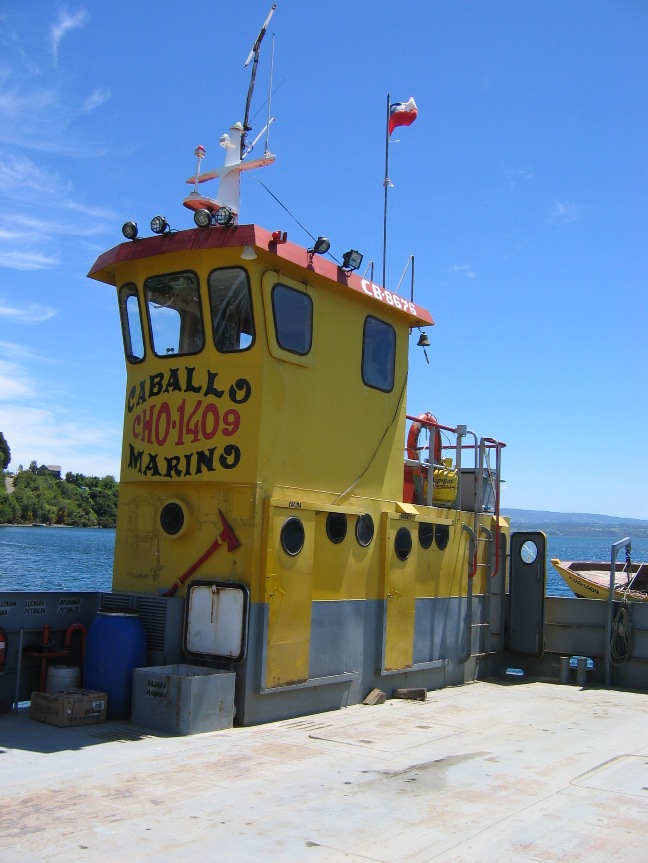
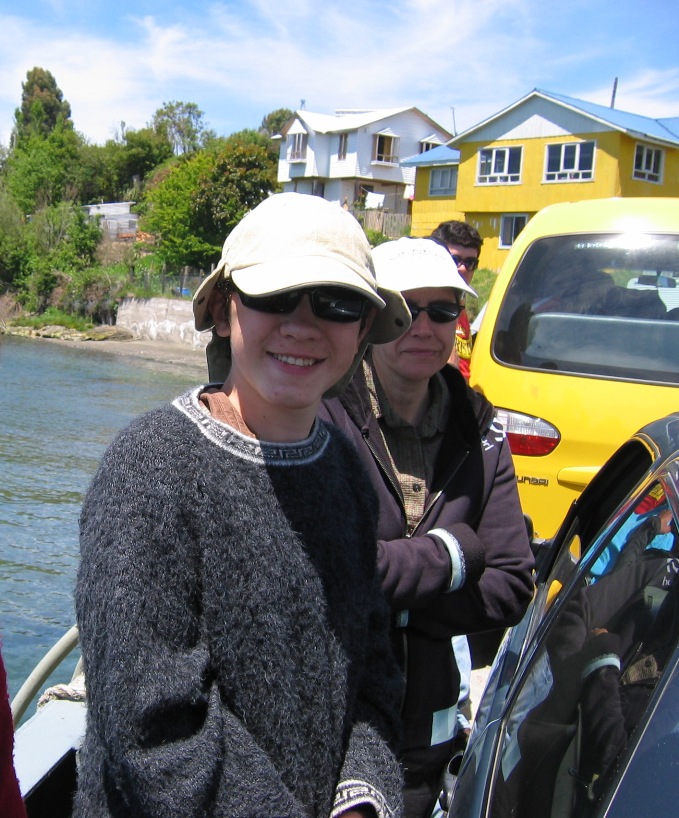
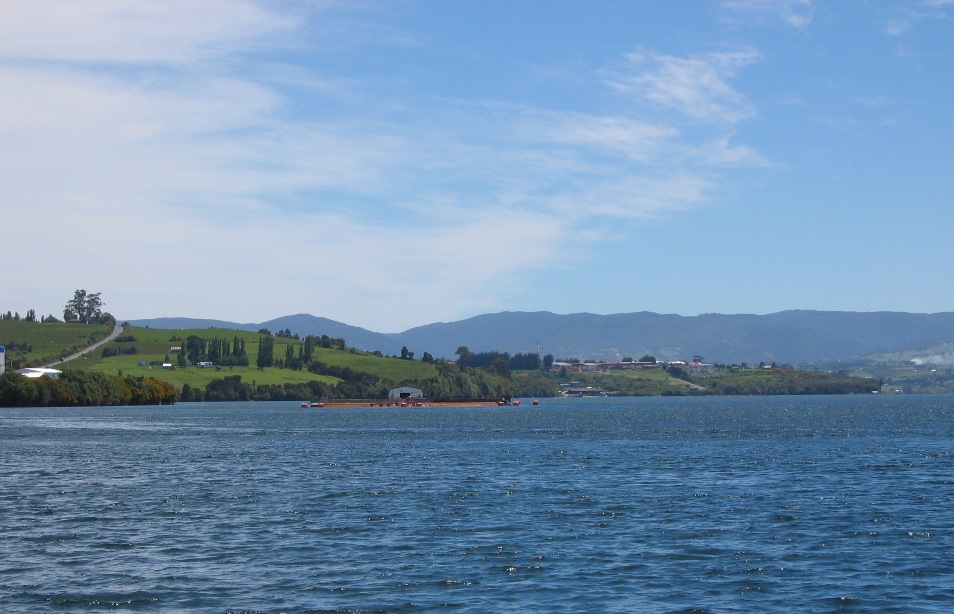
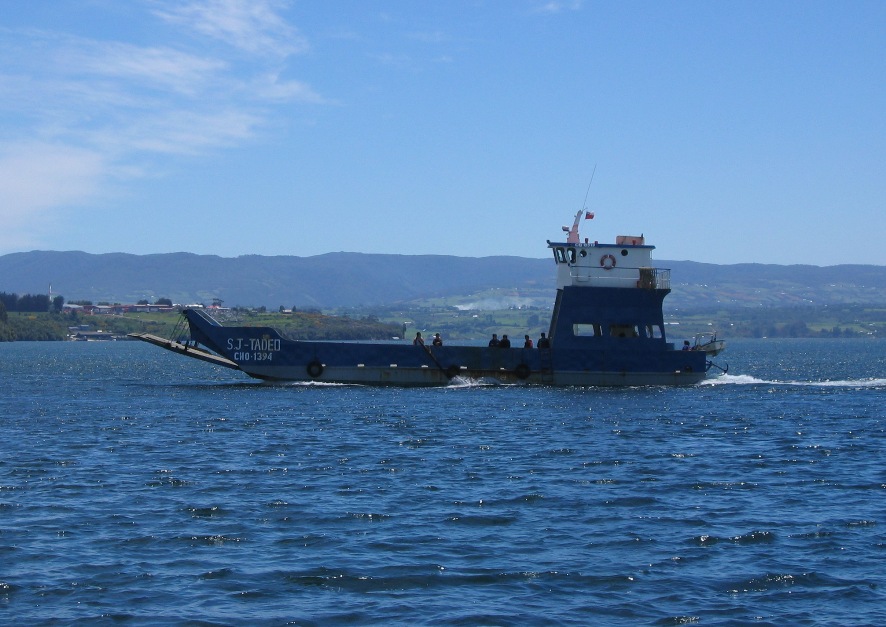
Crossing on the ferry (as pedestrians).
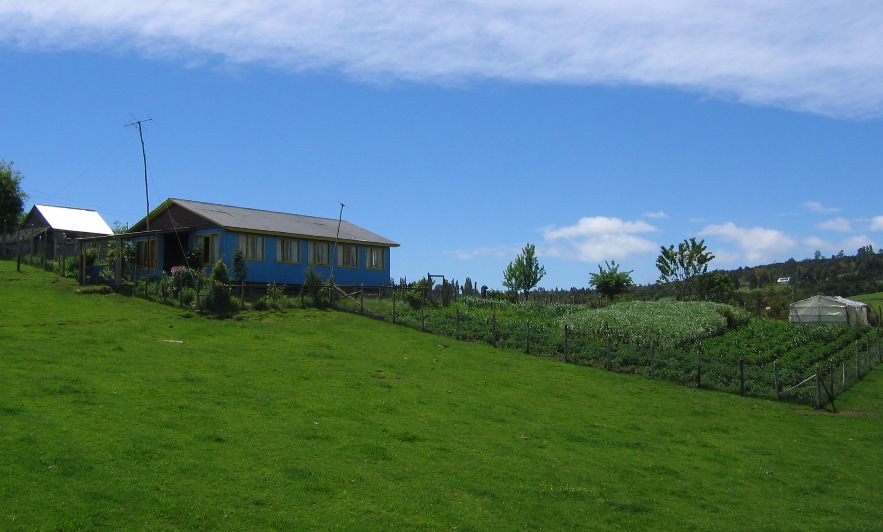
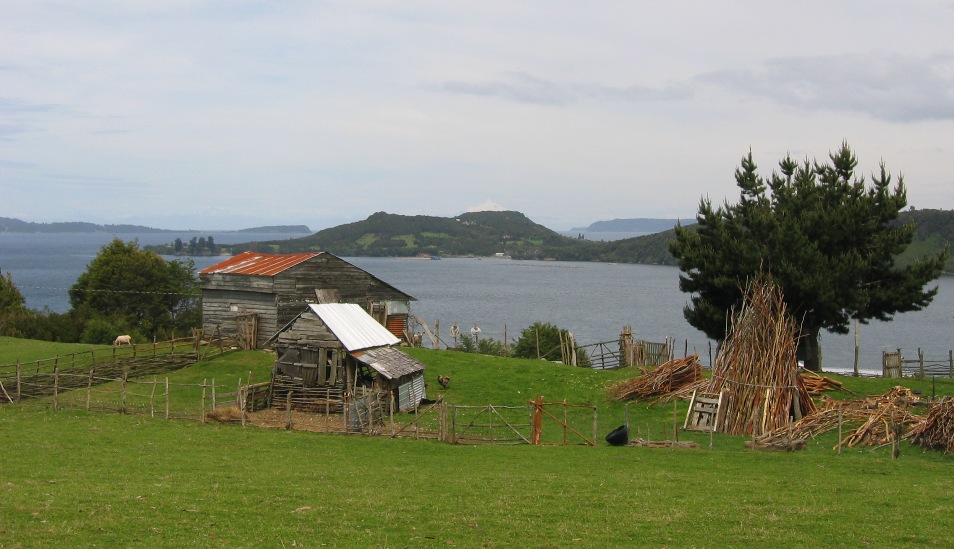
Homesteads of Lumay.
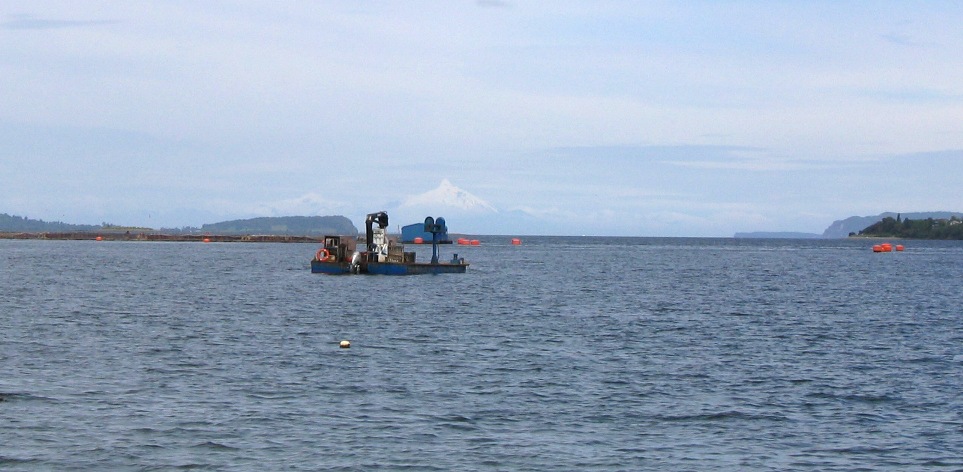
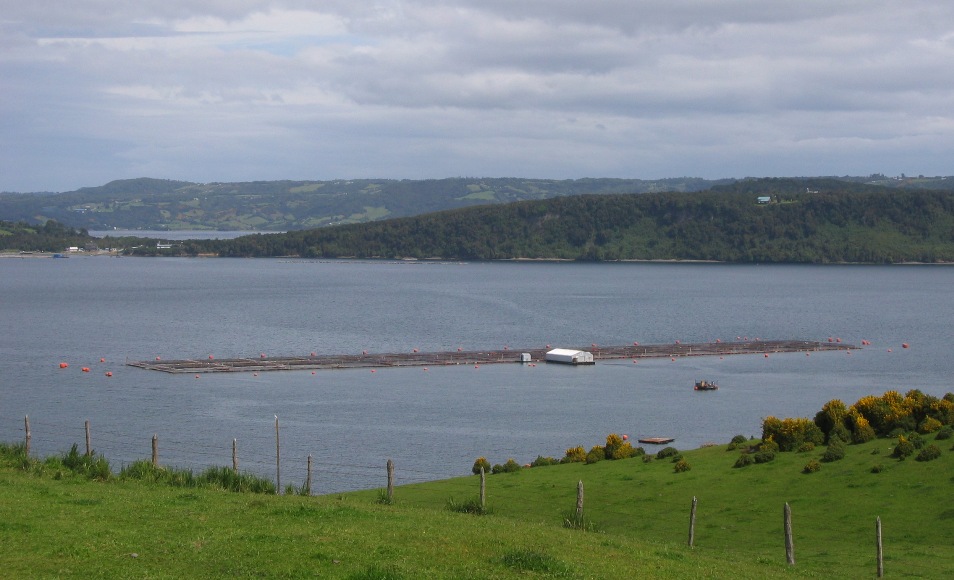
After walking about 4km down from the top of a hill, we arrived at a small village along the shore near one of the numerous salmon farms in the region.
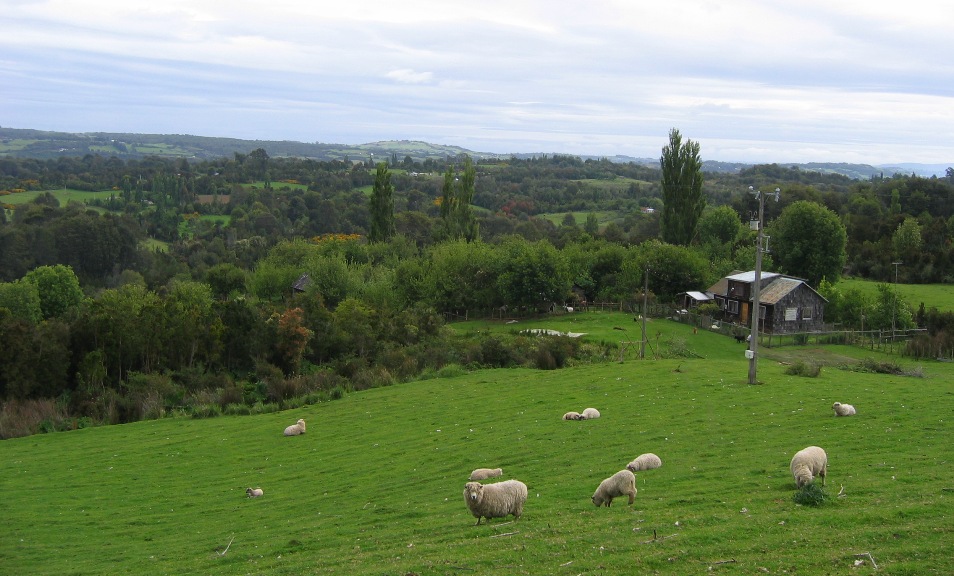
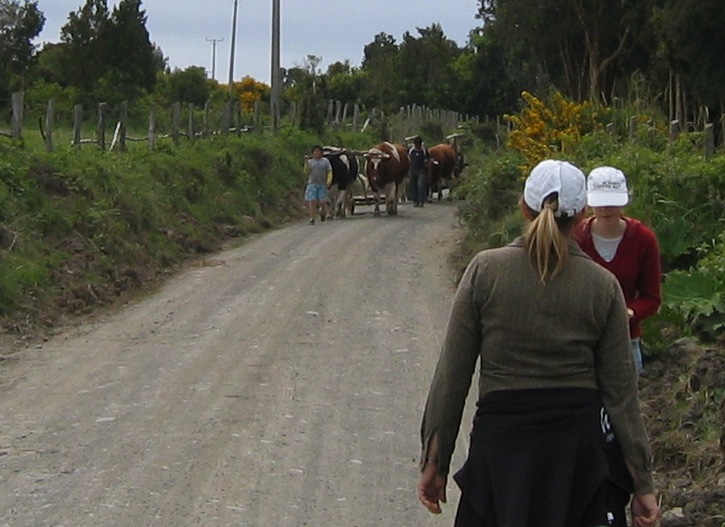
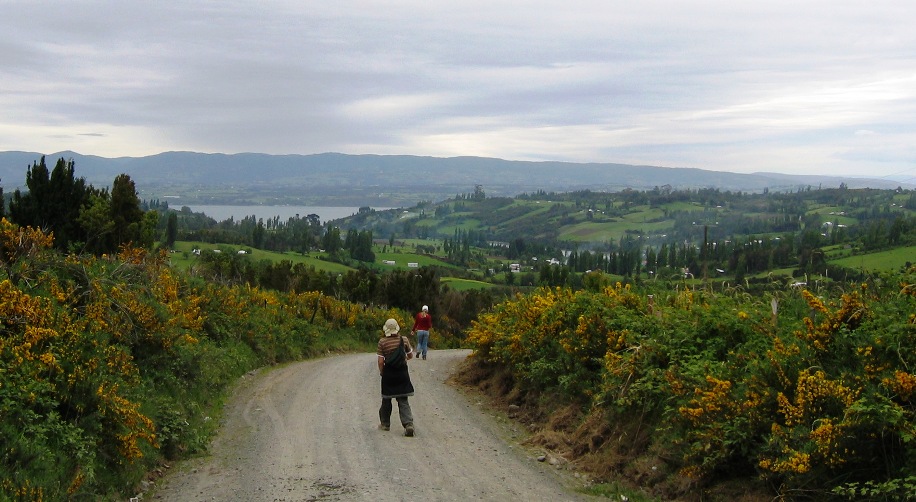
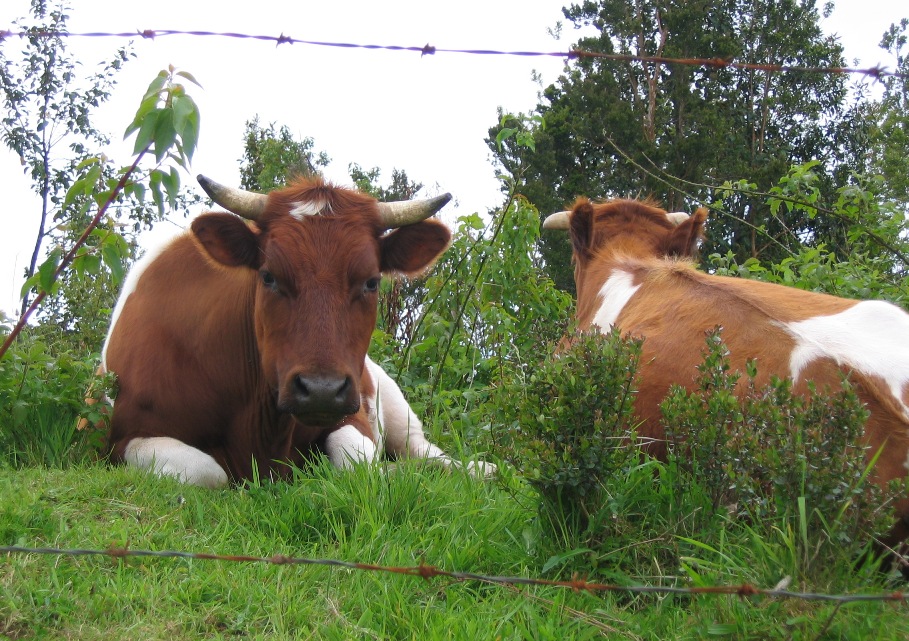
Then we walked back along a different lane.
Carlos told us that Chiloé is clearly the economic powerhouse of the 10th region of Chile, as its salmon farms are a multi-billion dollar a year business. He just wishes the government would return or re-invest more of the tax money that Chiloé sends it. But it explains why kids who live here are riding around on new mountain bikes on Christmas day - an unheard of luxury for most of the rest of rural Chile.
Sunday we drove west to the Pacific and picnicked at the beach for our "afternoon excursion."
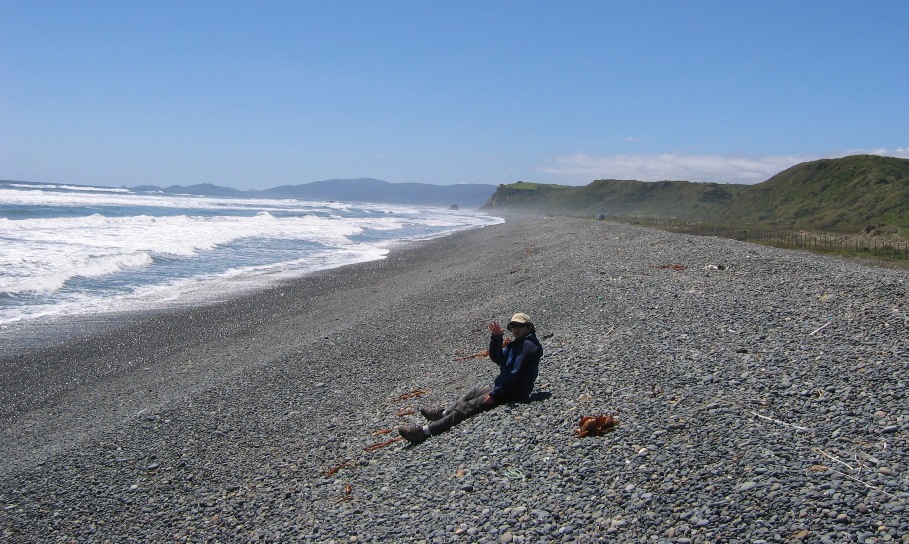
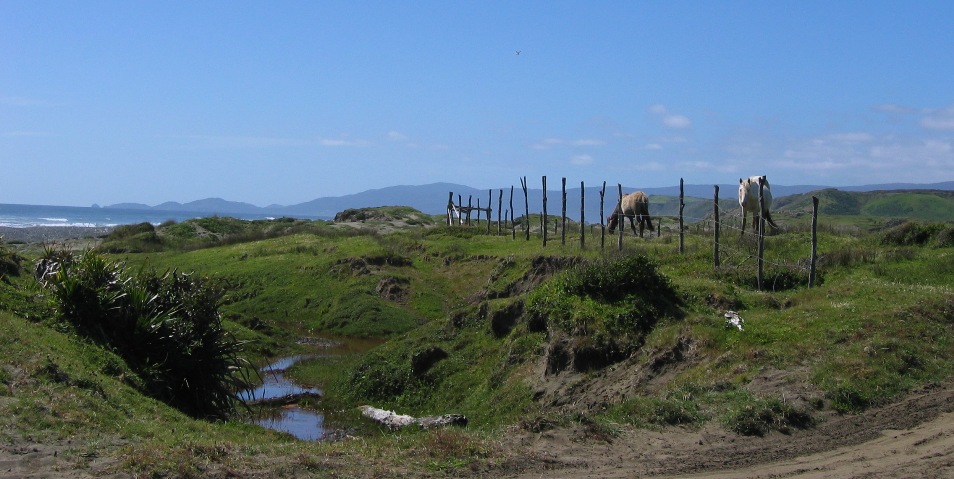
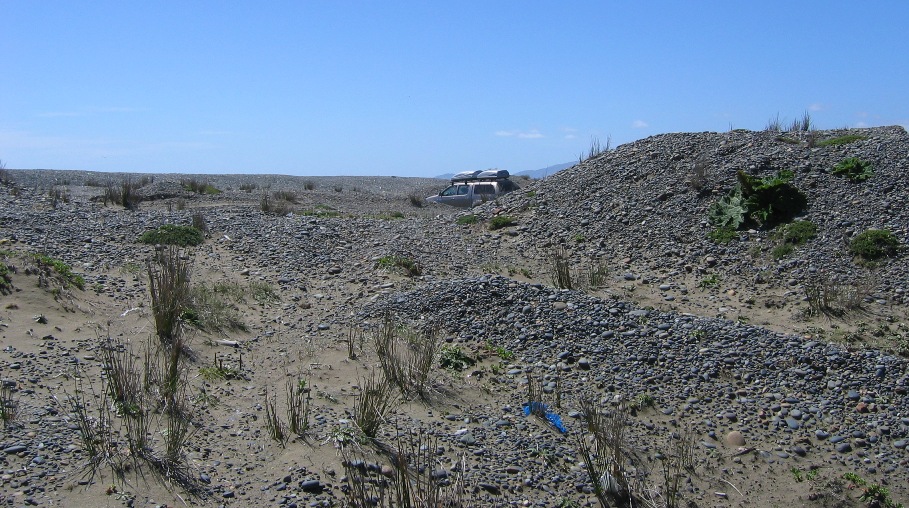
The truck is parked amidst the tailings from placer-gold mining activity which has taken place intermittently over the years. Apparently the concentration of gold was never very high and it took a lot of work to extract gold. Carlos told us that back in the 1940's, a large group of men from the town of Chonchi spent many months sifting through the dirt until they amassed 1 kilo of gold - and then used it to buy the 1927 fire truck that is still the main piece of equipment owned by the Chonchi fire department today.
Monday we visited another nearby island called Quinchao, this time taking our truck over the ferry and then driving around - something that allowed us to get to the far end of the island to see it's famous old church fairly quickly - but didn't give us quite the same spectacular views as our walk on the island of Lumay.
And today, Tuesday, our last full day on the island (as our escape ferry leaves tomorrow), we went back over to the Pacific coast. While we had turned left last Sunday when we reached the end of the westward heading road at the point where it arrived at the coast, today we turned to the right and drove north a short distance to take the nature walk of a (very) small National Park and then visit the beach again.
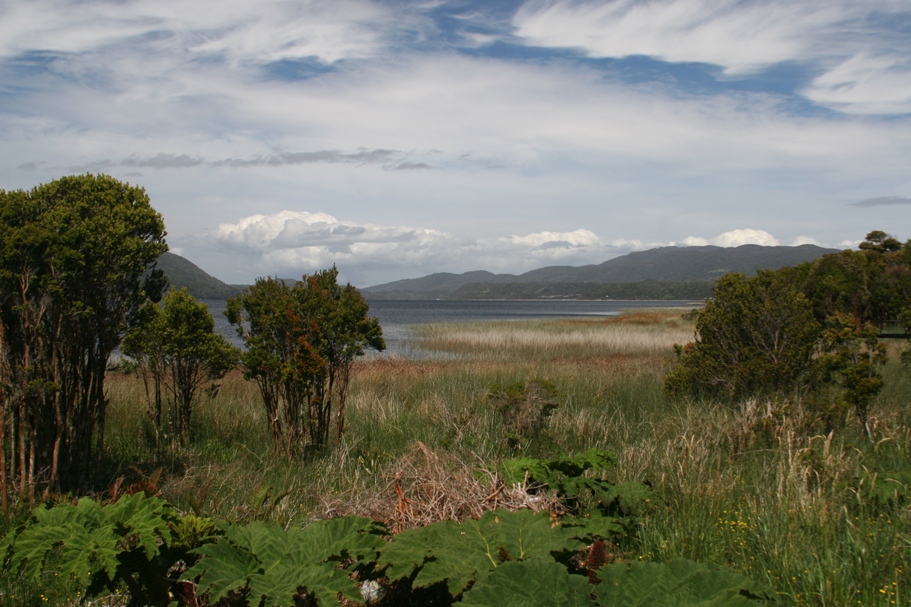
View from the National park on the nature walk.
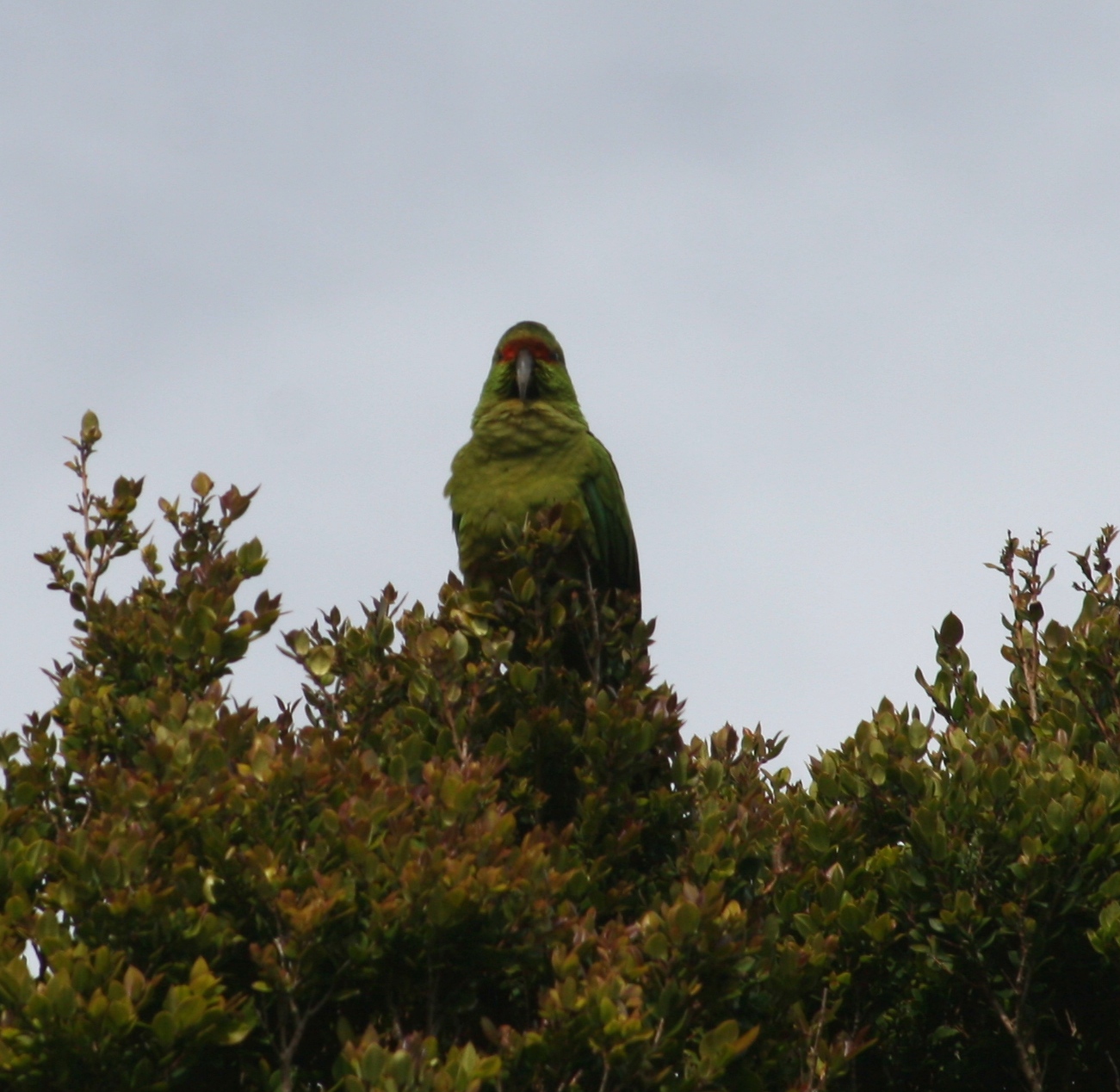
A Chory parrot. We also saw a Pudú - a small, tail-less deer with a big butt that is quite rare here on the island. It was lying in this brush and then bounded away quickly when another tourist stomped towards it to try and take a picture - so we have no real good photographs of it.
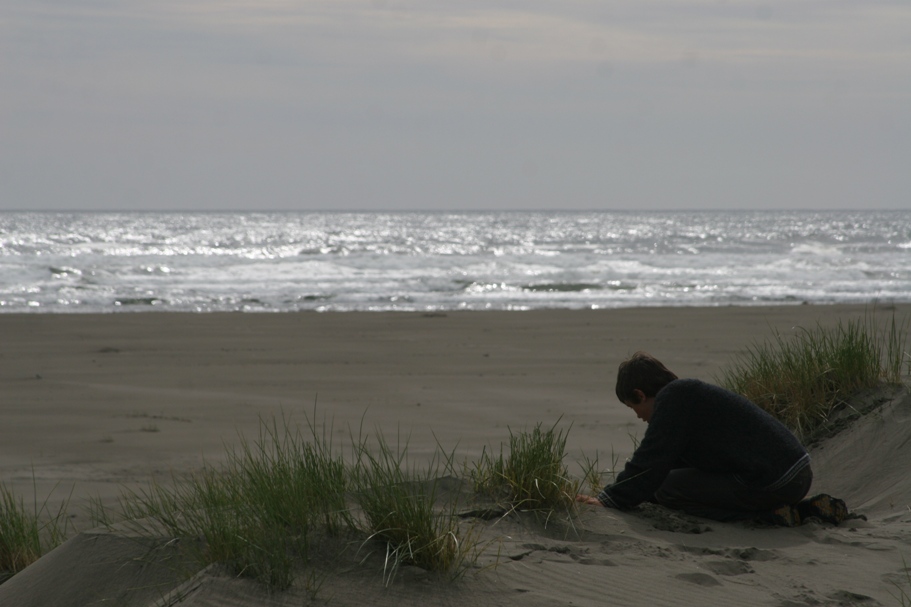
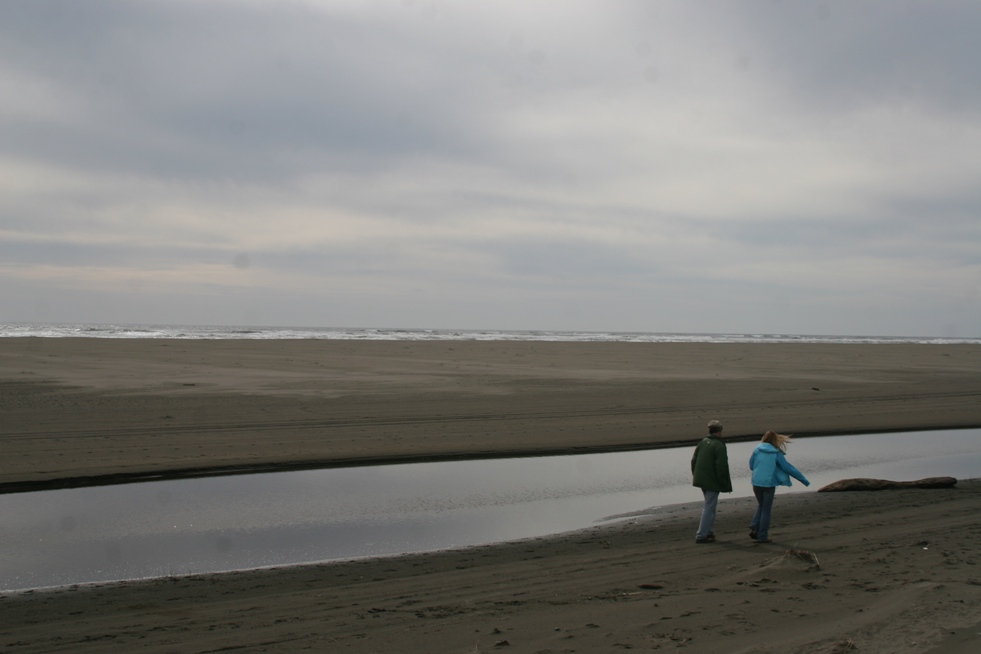
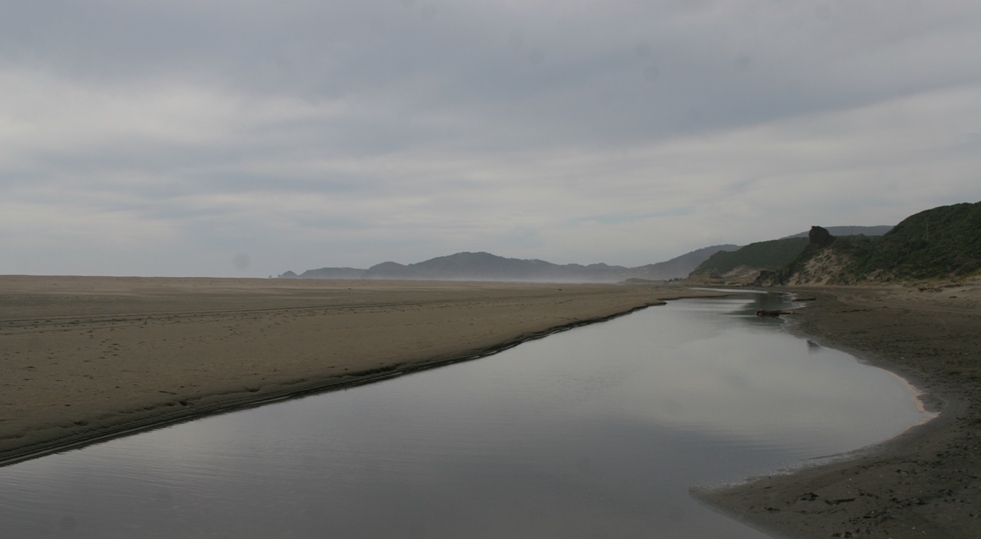
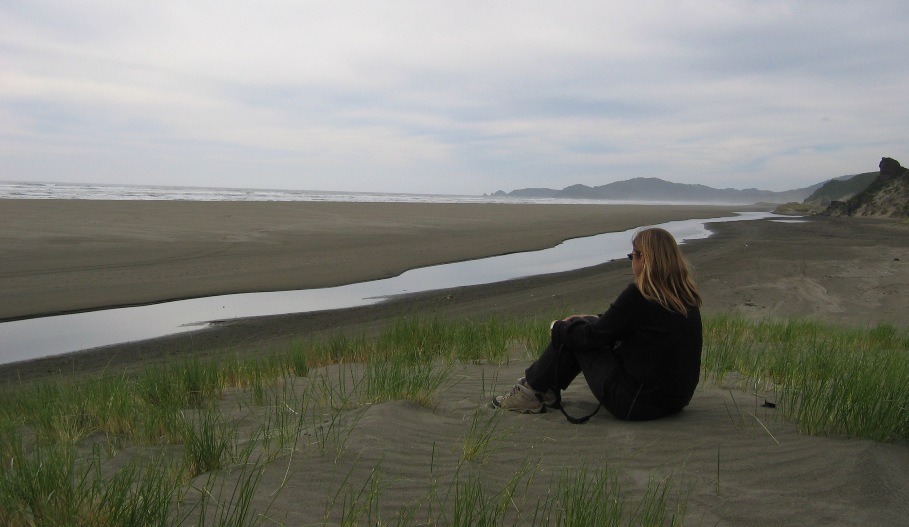
Hanging out at the beach... again.
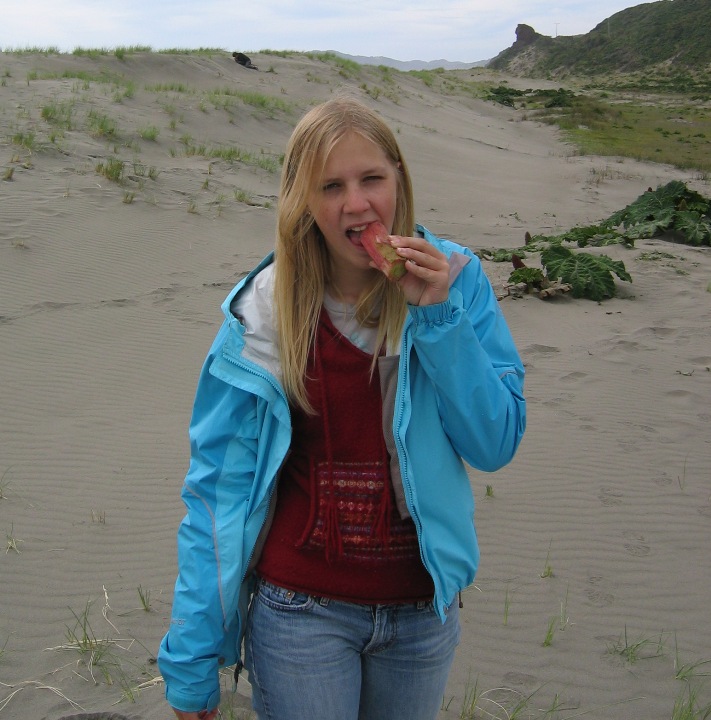
Anna convinced me to cut up a piece of the wild Chilean rhubarb we see growing like a weed everywhere - and especially here at the beach - and we both tried eating (like we've seen locals doing from time to time). It doesn't taste too bad - surprisingly mild - sort of like lemony celery. She's either very adventuresome, or perhaps she's bored to the point of eating weeds for entertainment.
Tomorrow we'll drive onto a ferry and say goodbye to the breathtaking beauty of this other-worldly other-Chile (although I don't think I really believe the "other century" line from the guidebook). What will we miss? Perhaps the unique building style and style of island living set amidst the admittedly stunning beauty... but definitely not our lumpy beds.
-Rolf