Cochamó
Riding the glacier & outlaw trail
Monday November 19, 2007
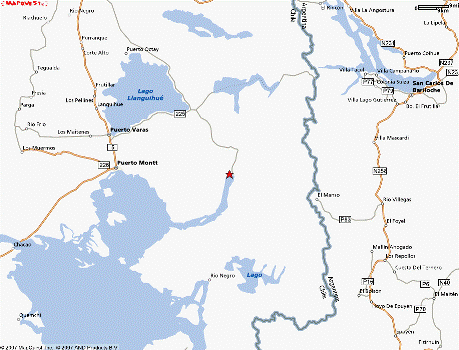
Click the map if you want to zoom or pan the Mapquest map of Cochamó, Chile...
It was a fairly short trip from Frutillar to Cochamó, starting with a a half hour drive south along the western shore of Lago Llanquihue to reach the larger city of Puerto Veras. After eating lunch and visiting the business office of Campo Aventura (the business name of the tourist ranch we were headed for), we rounded the southwest corner of the lake and drove about 45 minutes eastward along the southern shore before taking a right turn to the south. Proceeding near the bank of a south-running river for 20 kilometers, we arrived at the head of a the long glacier-gouged fjord Reloncavi - a long fat finger of blue on the map which would lead us 100km south to the gulf of Ancud and eventually the Pacific ocean if we were to start down it in some sort of boat. Having no boat nor desire to become impromptu mariners, we stayed in the car and on the road, following the eastern shore of this fjord on a gravel road for another 20 kilometers or so. A short distance past the bedraggled pueblo of Cochamó, we crossed a bridge over the Rio Cochamó (not far from where it dumps into the fjord), and abruptly turned left at the sign for "Campo Aventura."
Normally, this would be the end of our day's drive. Usually, when we enter the driveway for a hotel, hosteria, inn or ranch, there's nothing left to do with respect to the day's travels other than park and find the reception office. Here at the sprawling ranch of Campo Aventura, the "driveway" is almost a full kilometer long, so if we didn't want to carry our suitcases and schoolwork duffle bags 500 meters in the rain that was falling steadily at the time of our arrival, we would have to drive the truck through a tributary river which was running about 20 yards wide and between 2 and 3 feet deep.
"You can cross the river in your 4x4, but only at low tide," the proprietor Lex had told us in an email. I called him when we reached Puerto Veras and he told us we had 3-4 hours of "good crossing conditions" no problem - but it had been raining and we did enjoy leisurely lunch so now we were past 3 hours and pushing 4 from the time of the call. Fortunately, the truck chugged across without too much stuttering. And the water level stayed barely under the top of the rear bumper (and point at which it would flow freely up into the bed). Now if we can only figure out how to keep the water that falls out of the sky from leaking into that truck bed, we might be able to enjoy the next few months of travel.
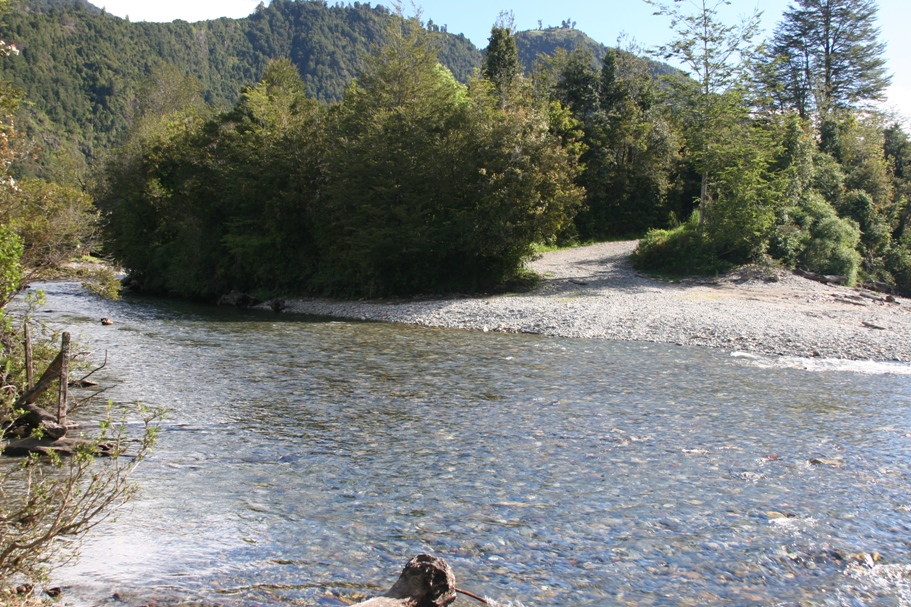
The water feature of the driveway to Campo Aventura (picture taken the day after our arrival at very low tide and a lower water level).
Lex and his wife Christiana met us at the end of the drive in front of the main guesthouse and dining room, introduced us to their young daughters, and then opened a gate leading to a grazing pasture in the rear of the buildings. Driving a hundred yards back into the pasture, we reached the "Family Bunk House," a cozy little cabin with electric lights, plumbing with hot water, and a roof that doesn't leak.
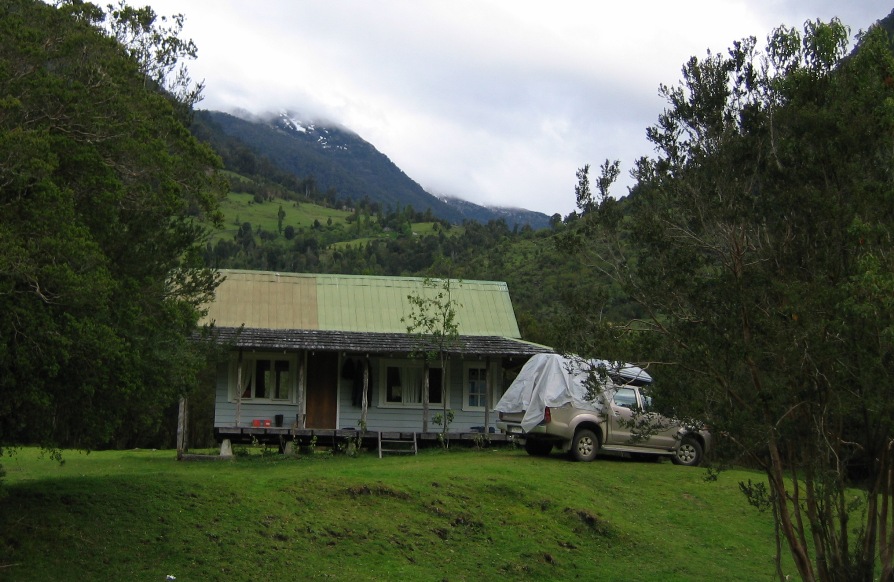
Parked in front of the bunk house, "Casa Gris."
What's the point of all the details of the drive? I'm not sure. For one thing, heading south from Lago Llanquihue and reaching the fjord means that we're on the verge of departing the "Lakes District" for what might be called "Southern Chile" or "Northern Patagonia." But for now, not wanting to start another regional category for the journal, I'll just say that this is still the Lakes District, as do most of our guidebooks.
Now regarding why we came here and what there is to see and do...
The Cochamó valley is called "The Yosemite of Chile," by both Campo Aventura and at least two of our guidebooks. It is the first classically U-shaped glacier-carved valley we will encounter as we head southward through Chile; the product of an ice age perhaps even pre-dating the one that carved Yosemite, complete with massive granite domes and cliffs. There is an old trail leading up the valley and over a pass to Argentina, created around the turn of the 20th century. It is locally accepted history that Butch Cassidy and the Sundance Kid used this trail to move cattle to a slaughterhouse in Cochamó from their first South American homestead which was located in on the other side of the pass in Argentina - a few years of attempted legitimate ranching before they supposedly gave up and started robbing mine payroll caravans in Bolivia. I believe we came to ride horses, see the spectacular valley and perhaps fish a little - and not to chase down stories about folk legends, but it's an intriguing bit of pan-hemispheric Americana nevertheless.
We arrived on a Monday, waited out a blustery and alternating sunny/drizzly Tuesday, and then spent the the remainder of the work-week on a three day horse trek excursion up the valley.
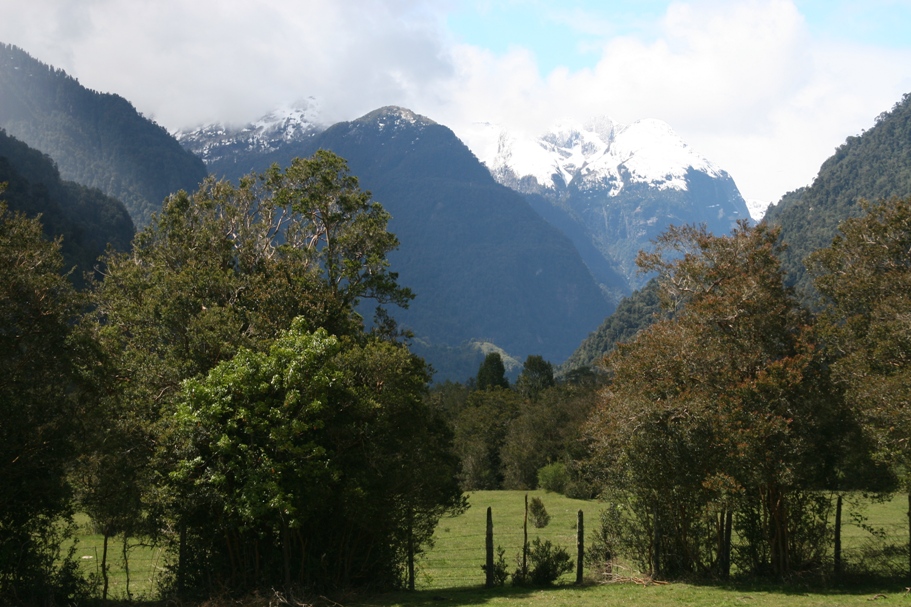
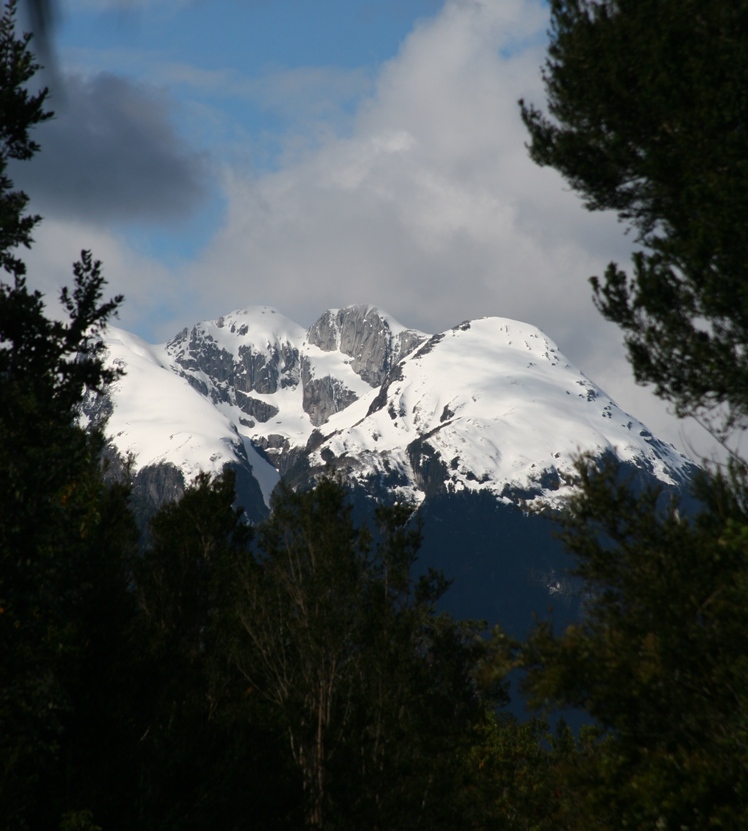
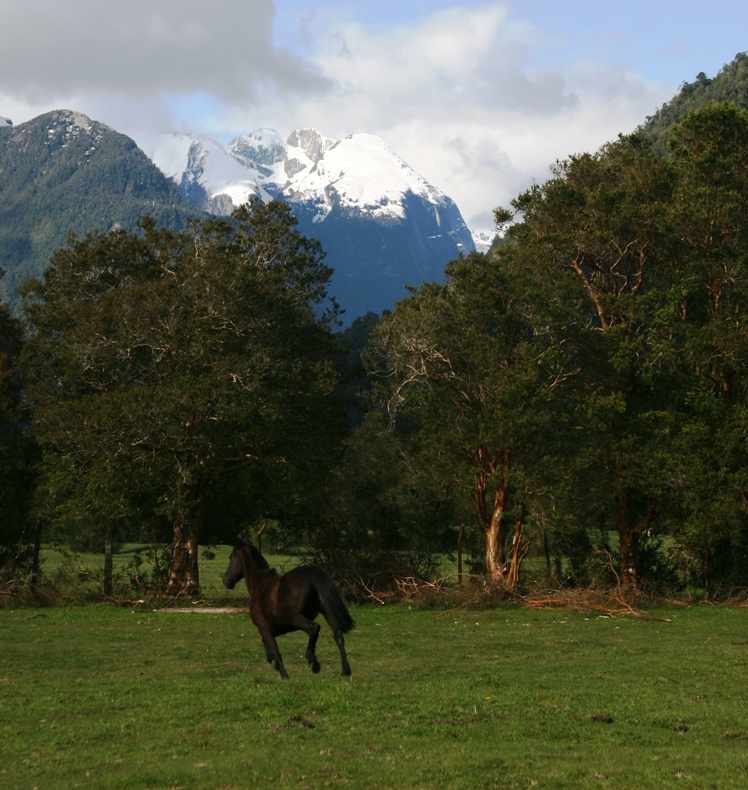
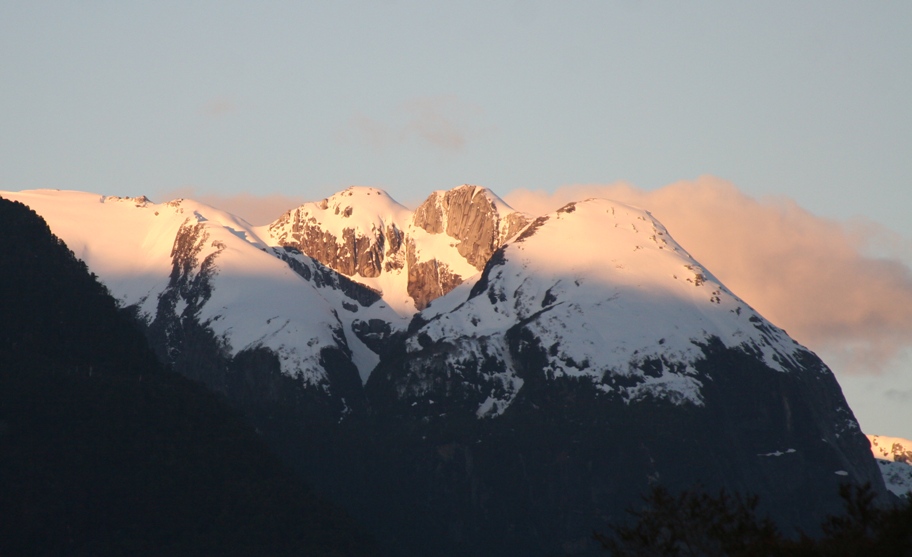
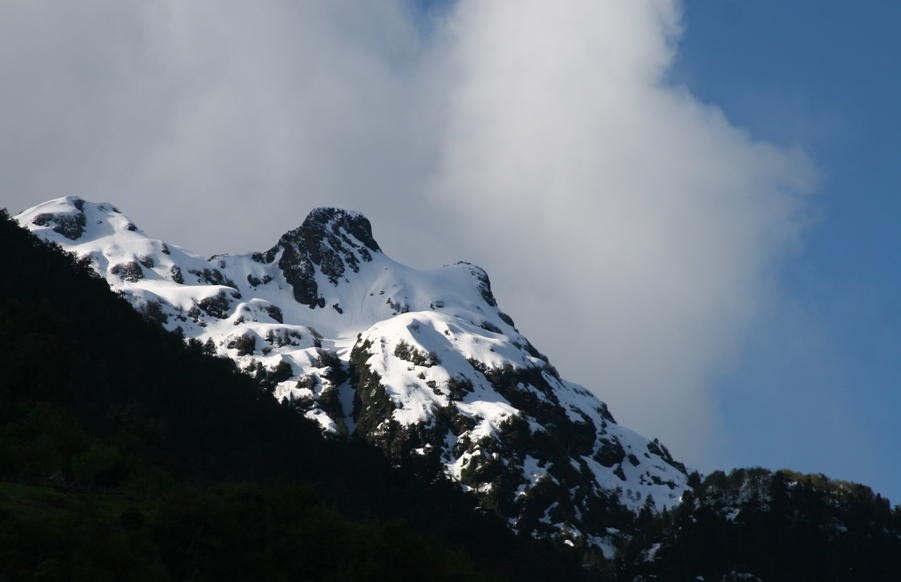
Views from Casa Gris.
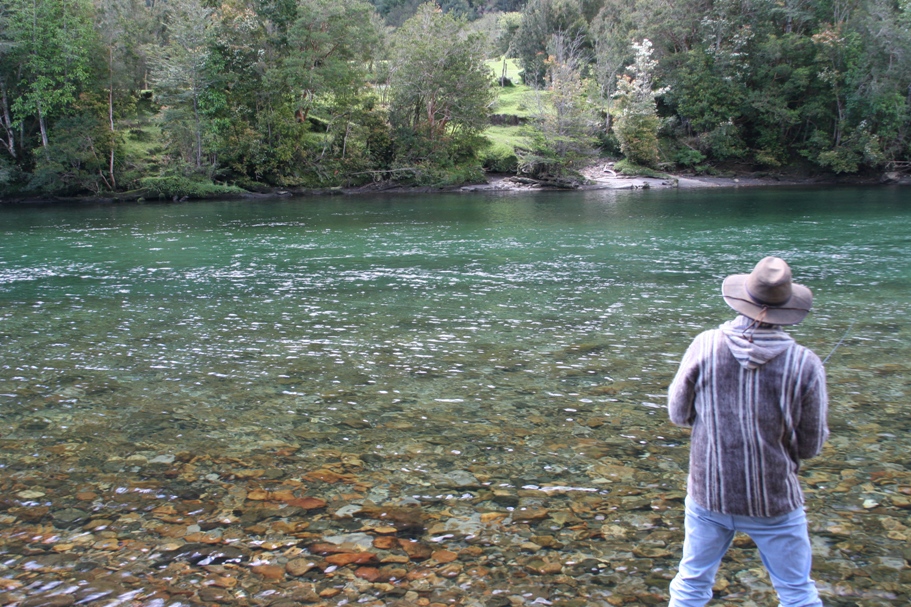
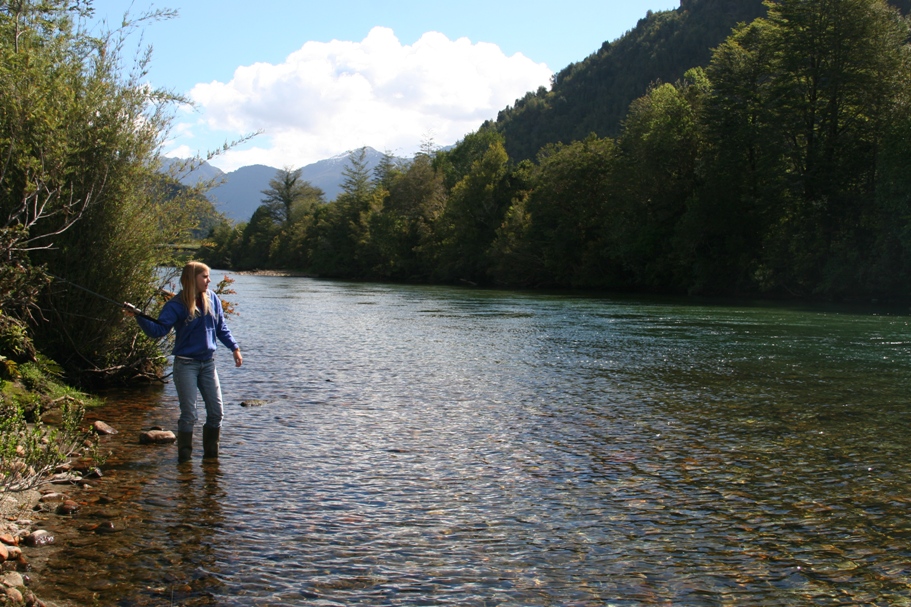
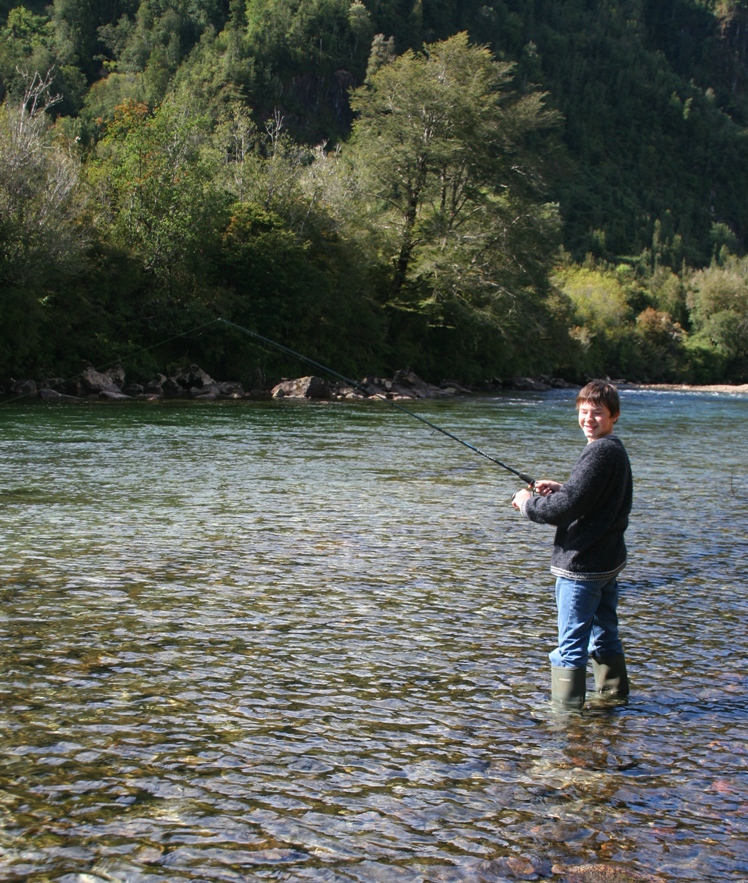
The sun finally came out for a good solid hour or two late Tuesday, so we spent a little time fishing in the river.
After a five hour ride on Wednesday which covered about a quarter of the old road-turned-horse-trail, we arrived at Campo Aventura's mountain lodge, which they call "La Junta" since it is located near the point where a river called La Junta enters the Cochamó. The old road has obviously deteriorated significantly since the Cochamó slaughterhouse closed down in the 1920's, being now reduced to a tangle of meandering braided ruts, 5 feet deep or more in places. The trail surface varied between 2-3 feet of mud, scattered loose rocks, small boulders, and a smattering of small-diameter logs and/or boards laid both length and crosswise. There were multiple stream crossings where the water reached up over our stirrups. Chilean trail horses are truly amazing - they calmly took us safely and securely over and through all of this terrain without the slightest hesitation or difficulty.
As the trail neared the mountain lodge at La Junta, we began getting a better view of the granite cliffs which have lead to comparisons between Cochamó and Yosemite. Finally the horses took us across a fast-running shallows in the main river to an expanse of open pasture surrounding several small wooden buildings that comprise the lodge. A young couple met us at the gate to a corral to help us dismount. Horacio and Anastasia are natives of the small Chilean village El Lyón, which is located, incredibly enough, two day's travel (via a combination of horseback and walking where the passage is really bad) further up the trail. We were a little less astounded to believe that people would actually still populate a village so far up this valley, served only by a trail such as this, after they told us that they now have a road suitable for automobile traffic that runs from the village over the pass to Argentina.
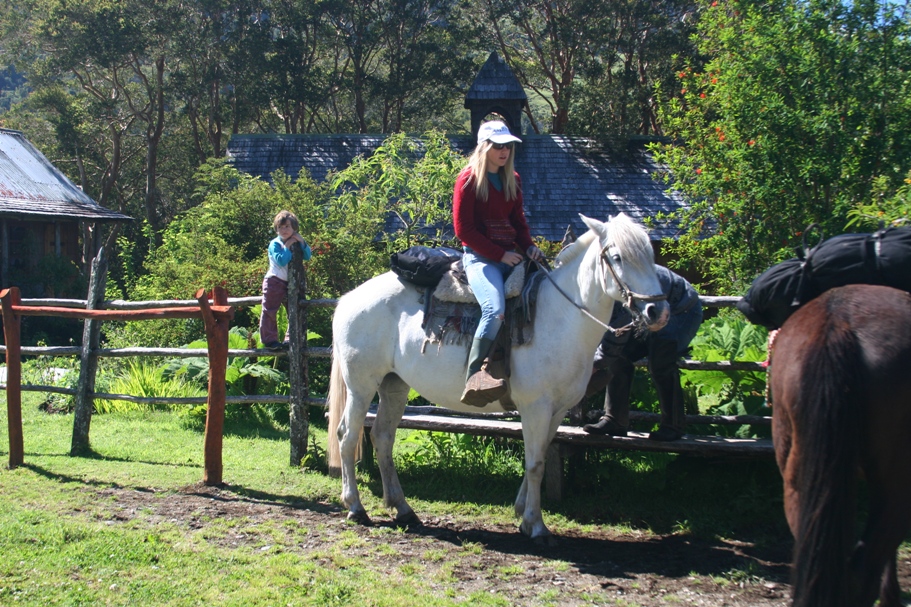
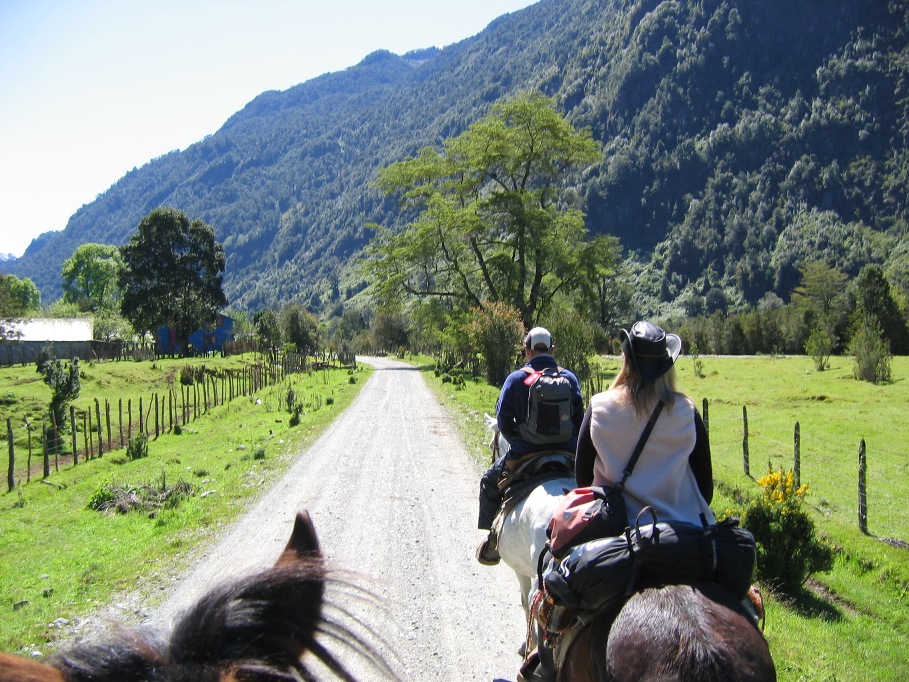
Starting the ride - the road is actually a road at first.
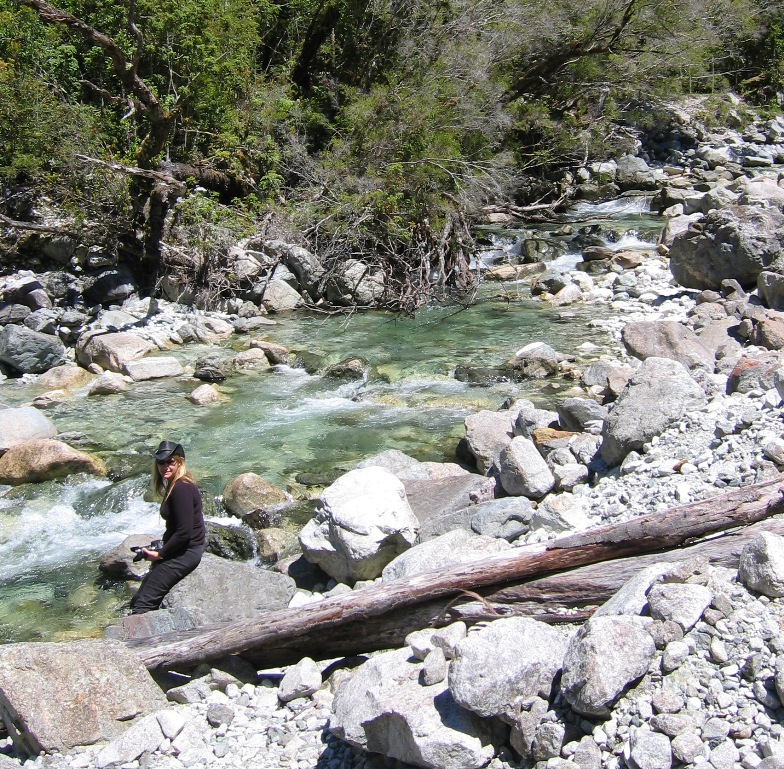
By the time we stopped for lunch, the road had turned mountain trail and the horses were scrambling through rocky streams like this.
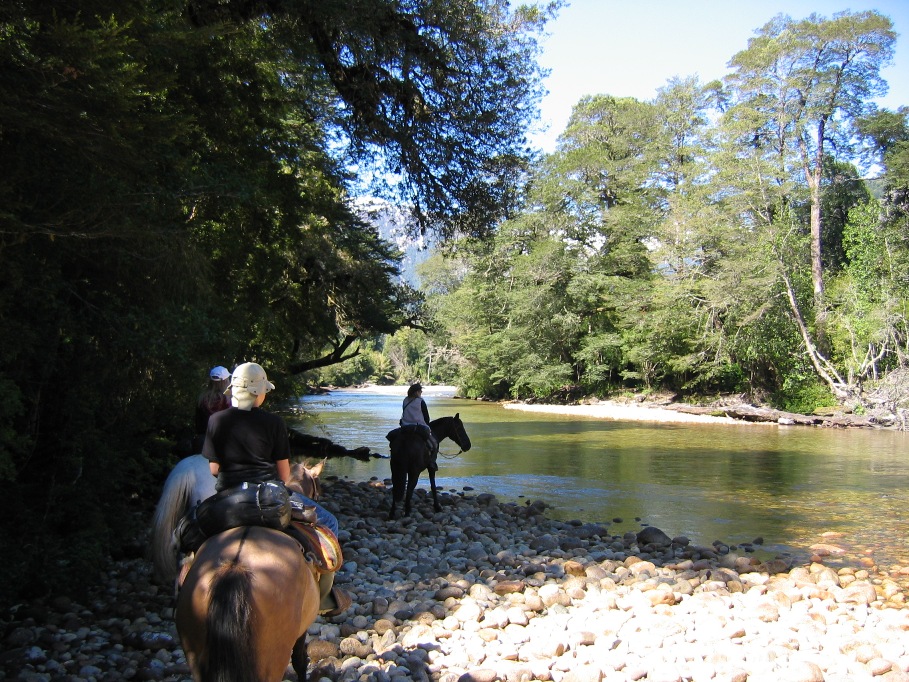
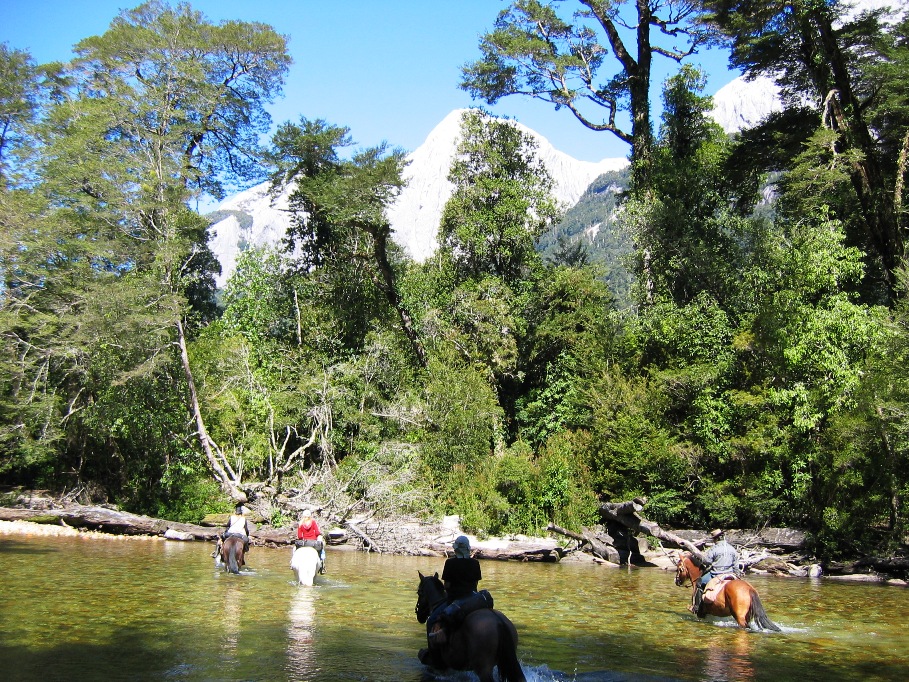
Crossing the Cochamó...
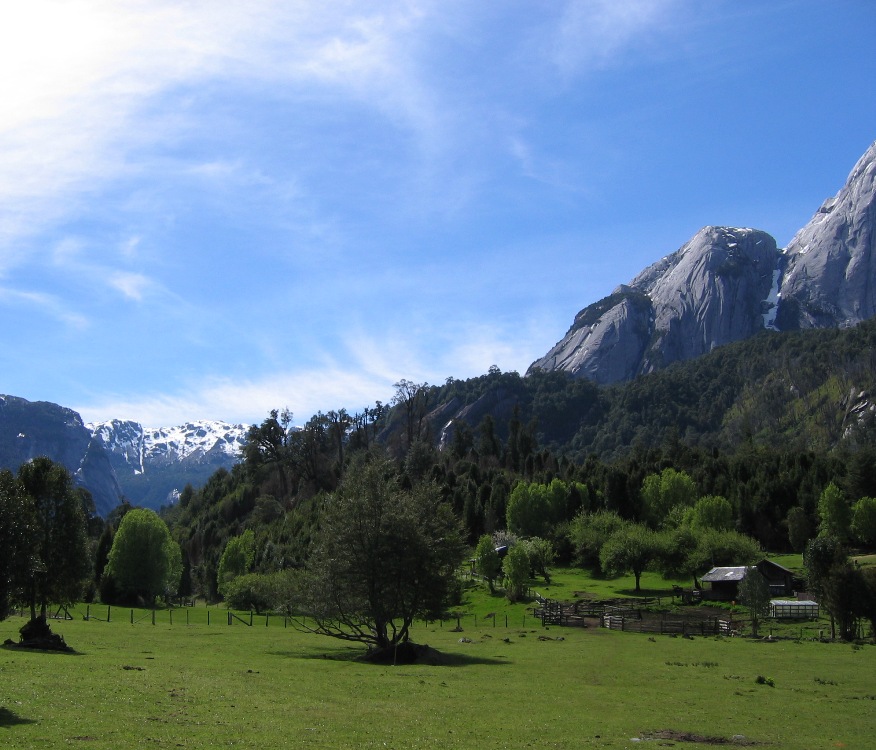
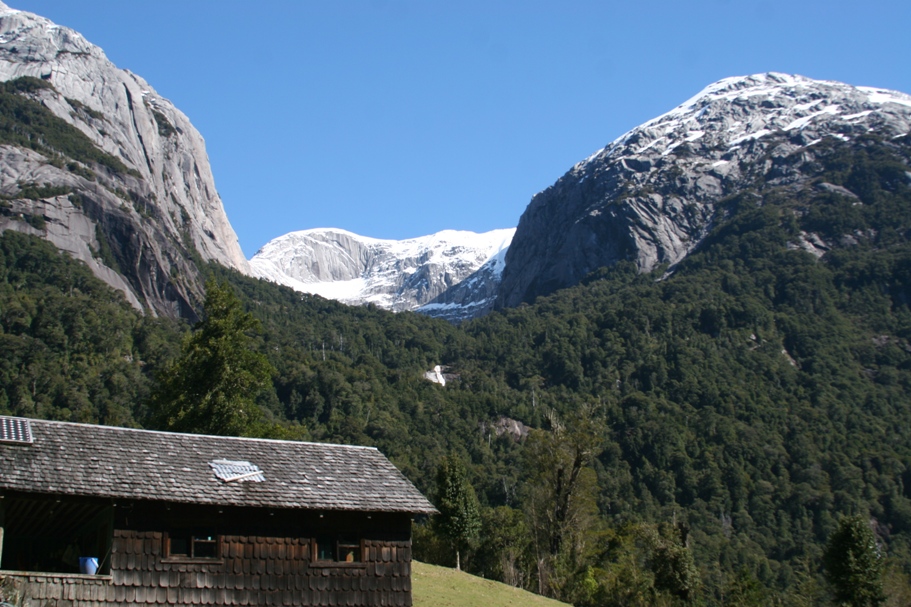
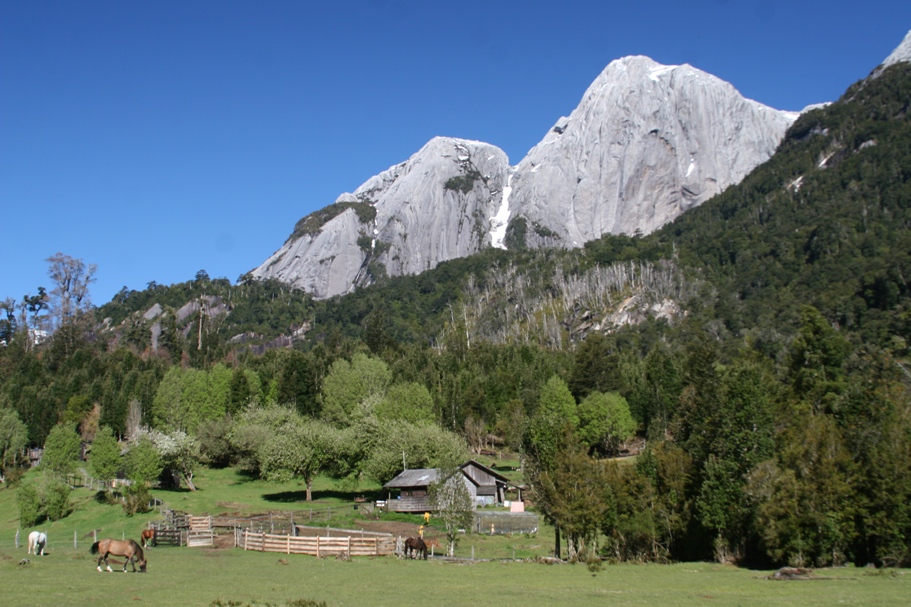
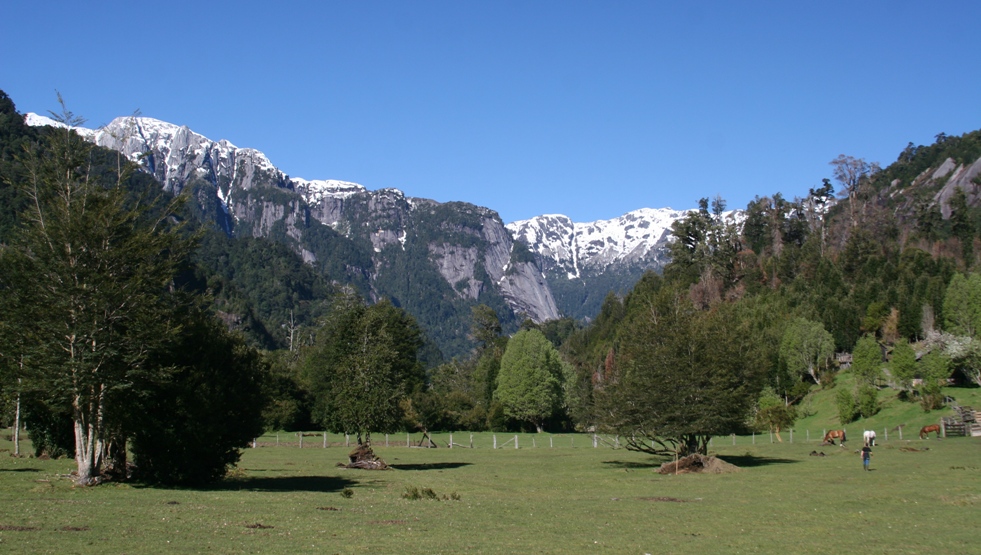
and arriving at the mountain lodge "La Junta."
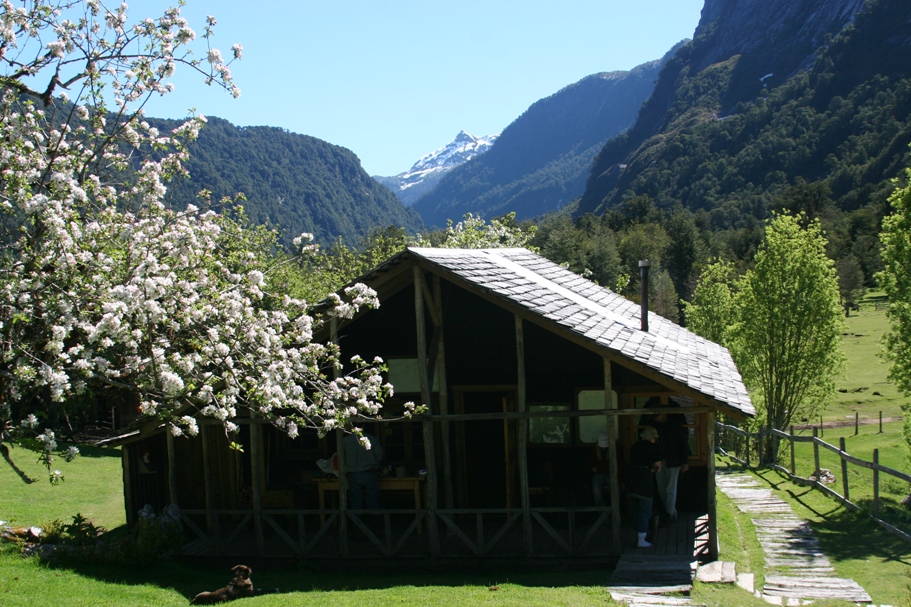
Our bunk house (with family members on the porch).
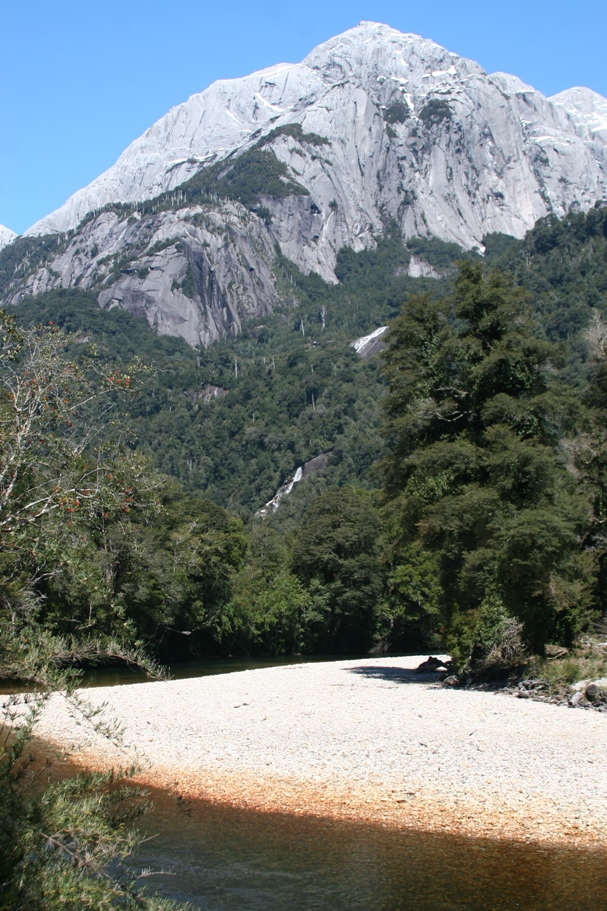
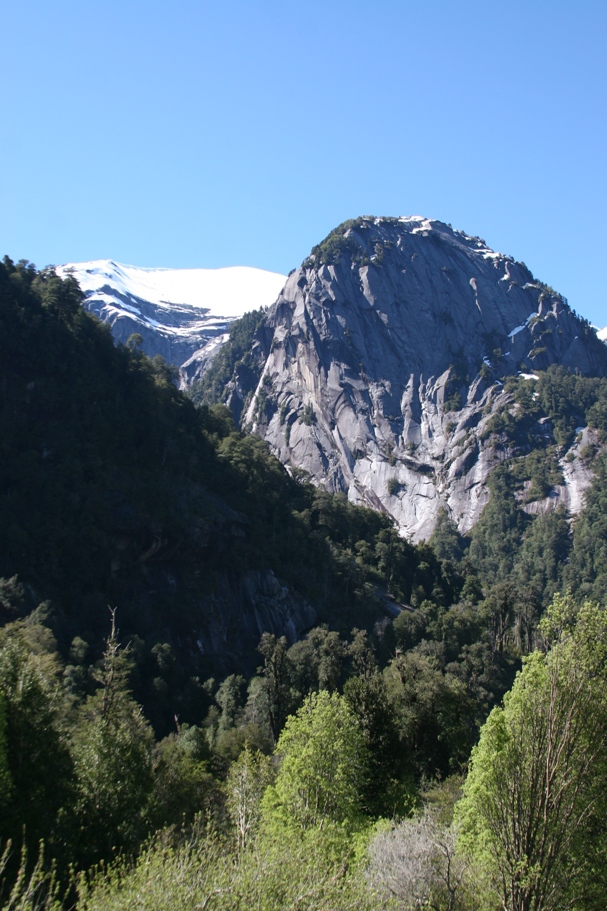
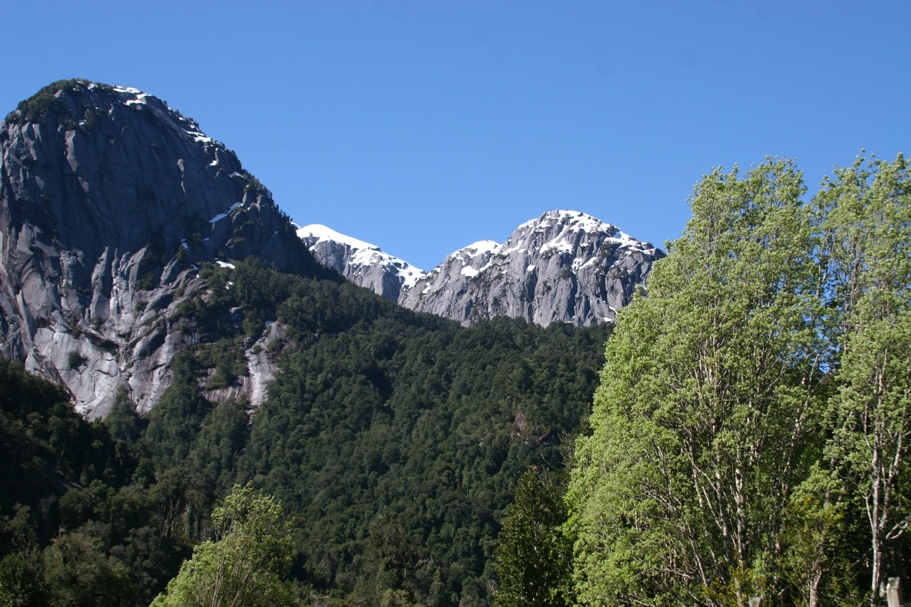
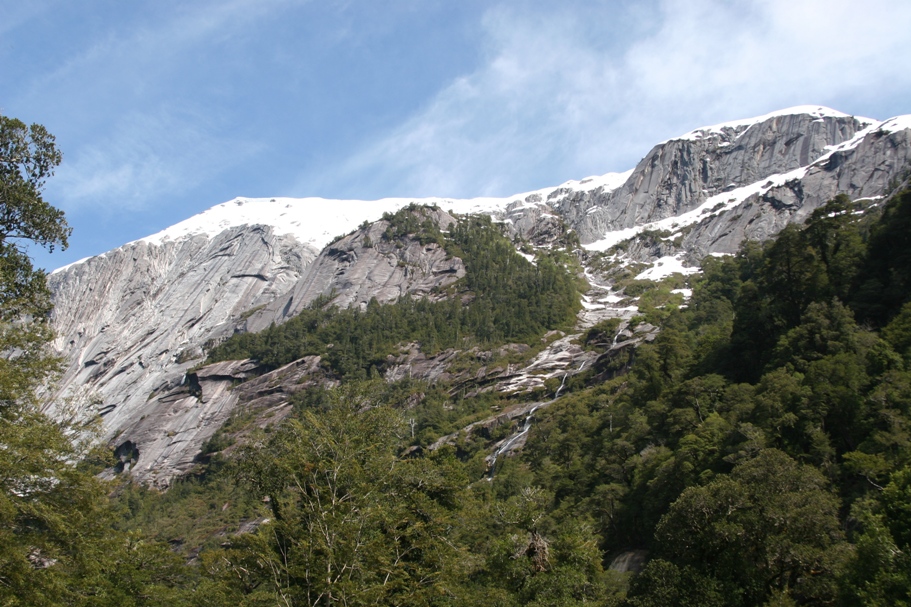
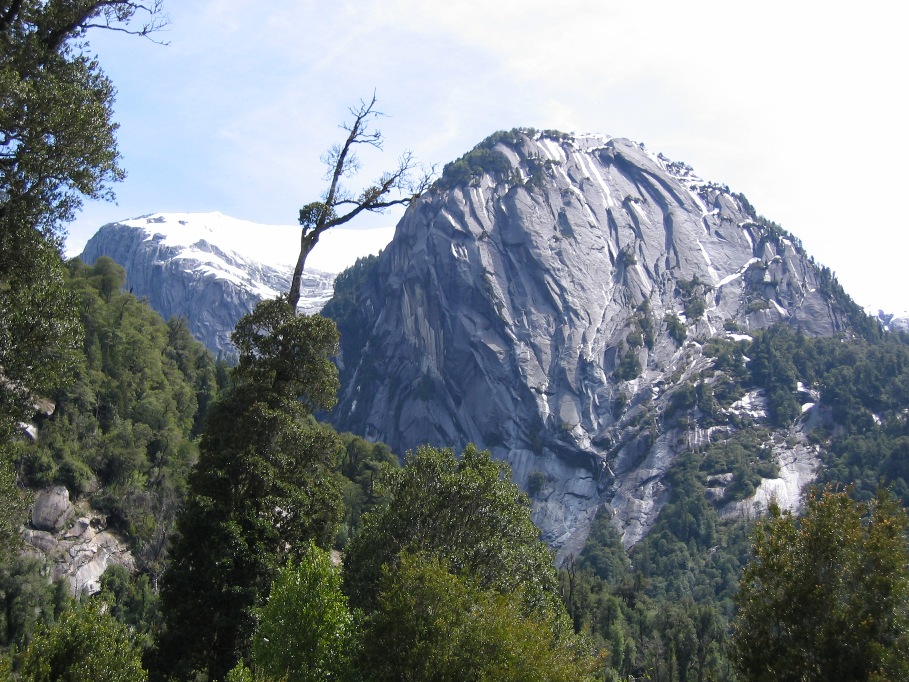
The "Yosemite-like" granite domes and cliffs of the Cochamó valley.
Our three day excursion provided us with a two night's stay at the La Junta lodge, with a "free day" on Thursday for hiking or whatever, before we had to ride back to Casa Gris at the Campo Aventura base camp on Friday. At the recommendation of Anastasia, we fished a little in the morning and then took a long hike in the afternoon to see a couple waterfalls.
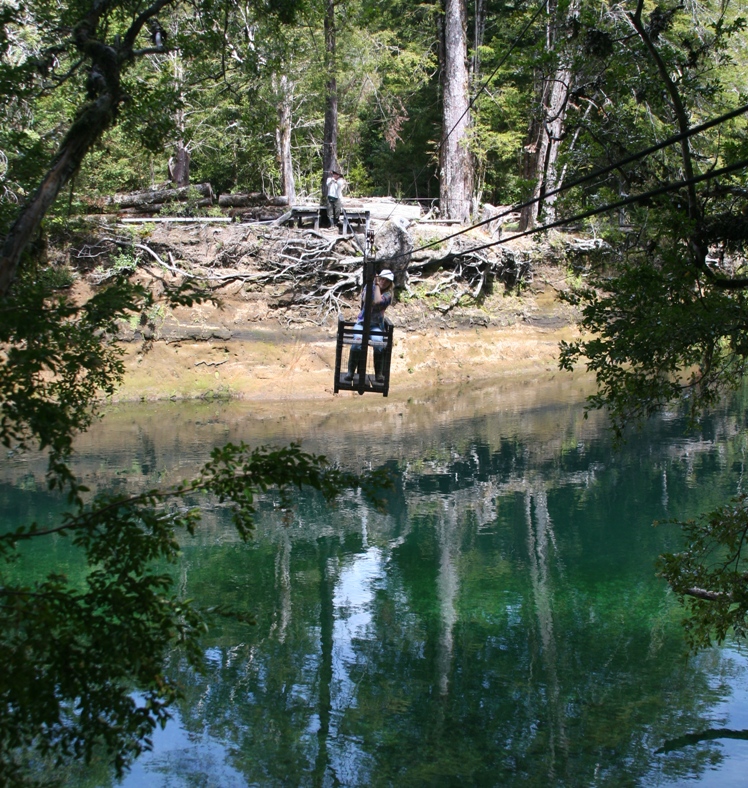
Anna crosses the river in a hand-cart.
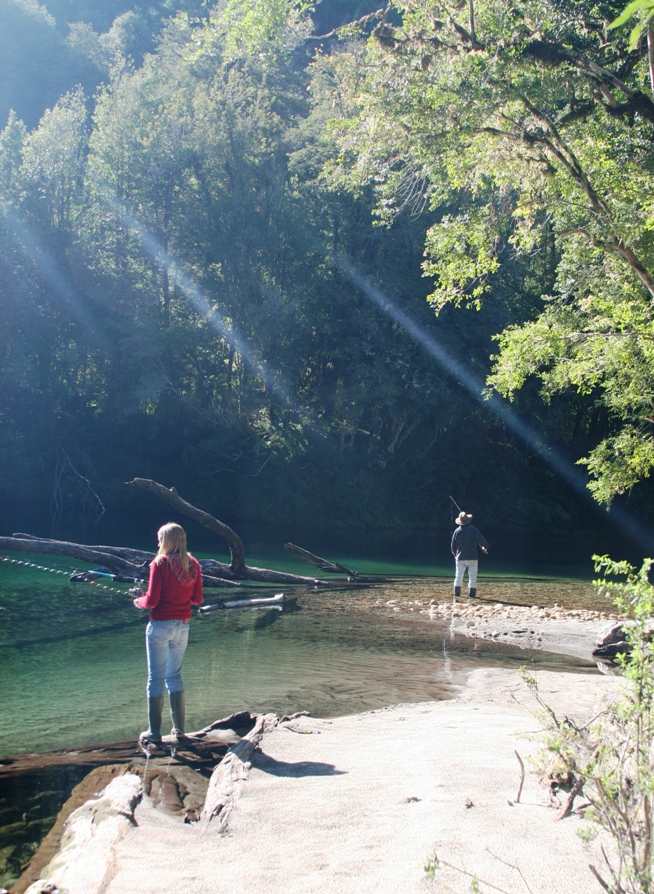
Anna and Rolf try to catch fish (but fail, unfortunately).
Now while there are some similarities between Yosemite and Cochamó, our afternoon hike highlighted a significant difference. This valley receives far more rainfall than any part of California, and the dense temperate rainforest is damp, lush, and dark beneath a thick canopy of towering trees. In addition to the massive, moss-covered hardwood Cuigues and redwood-like Alerces, there are thick stands of the smaller, orange-barked Arrayan tree, insanely huge ferns, and wild tangles of non-native bamboo.
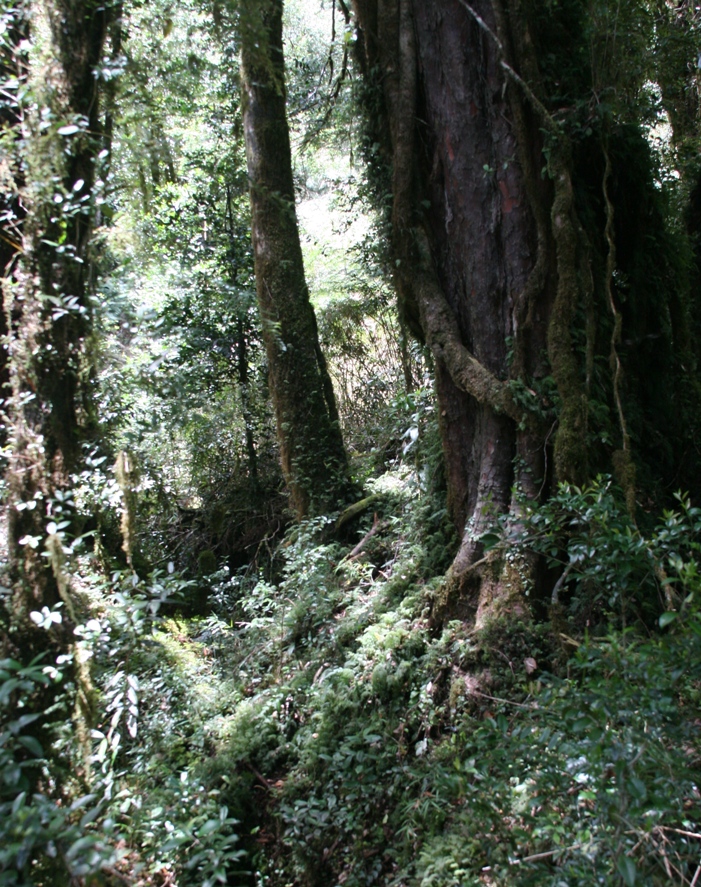
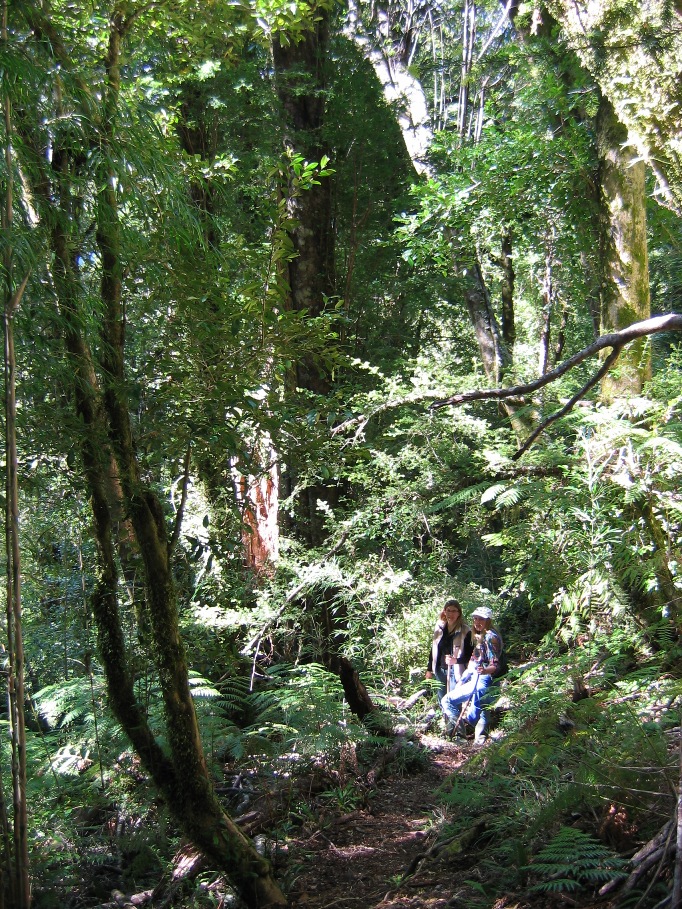
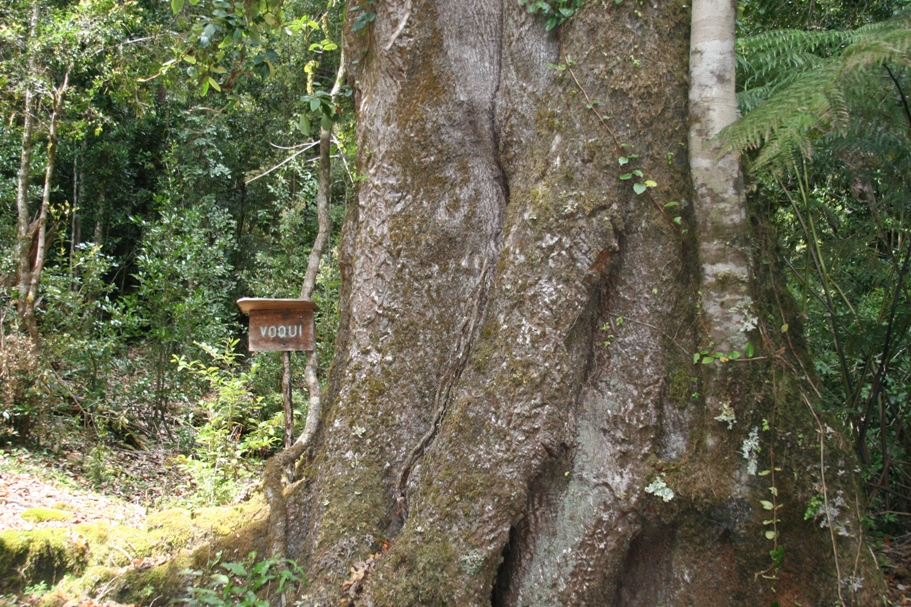
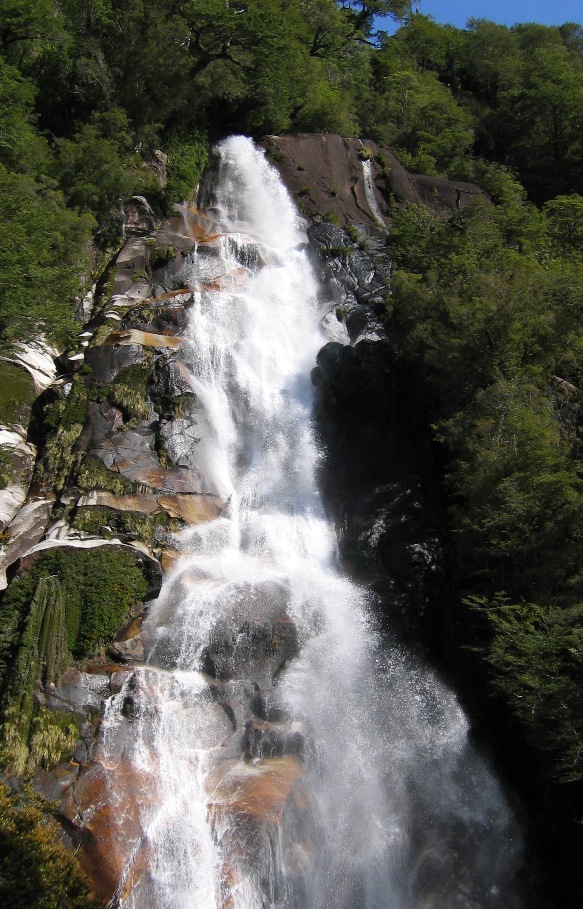
After about an hour on the trail, we arrived at this waterfall,
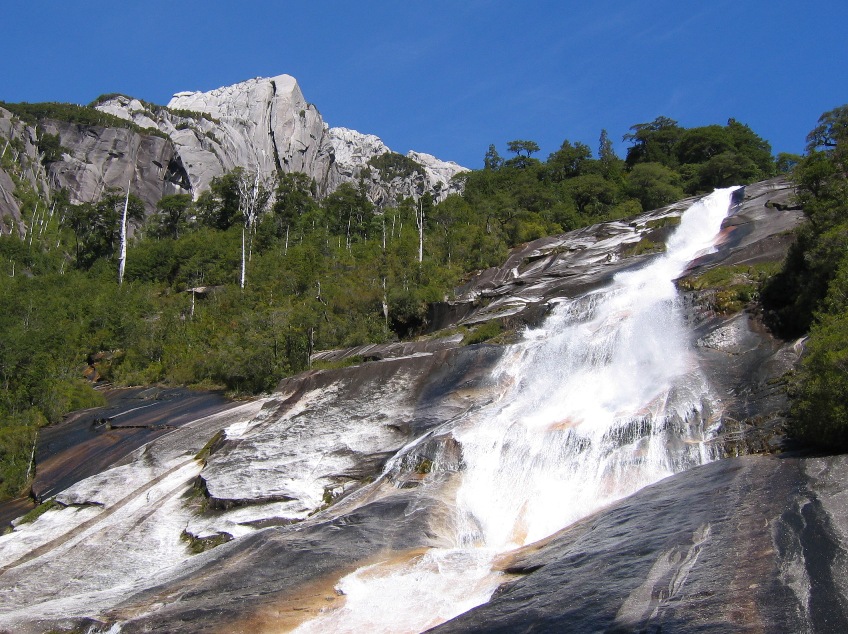
and another 45 minutes of steep, slippery switchbacks brought us to this one,
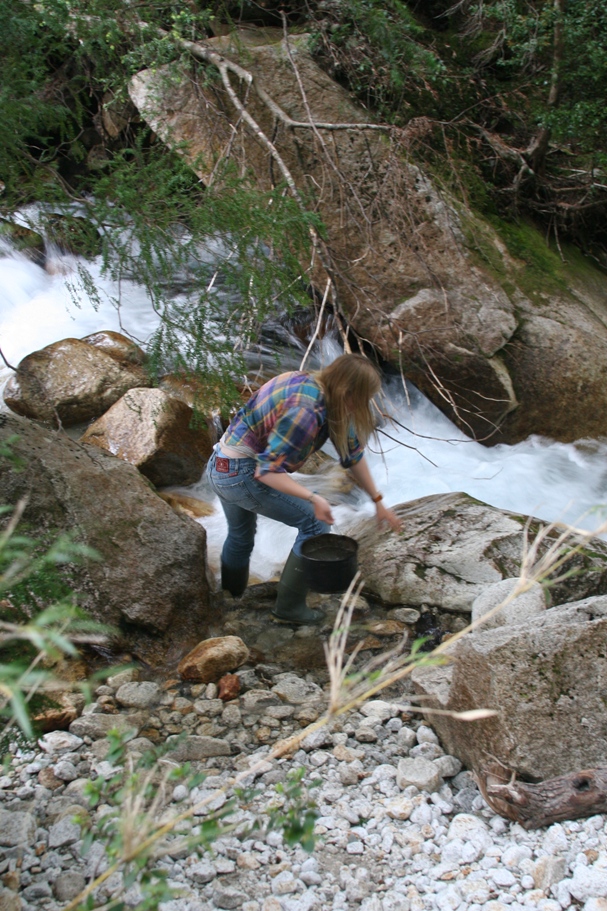
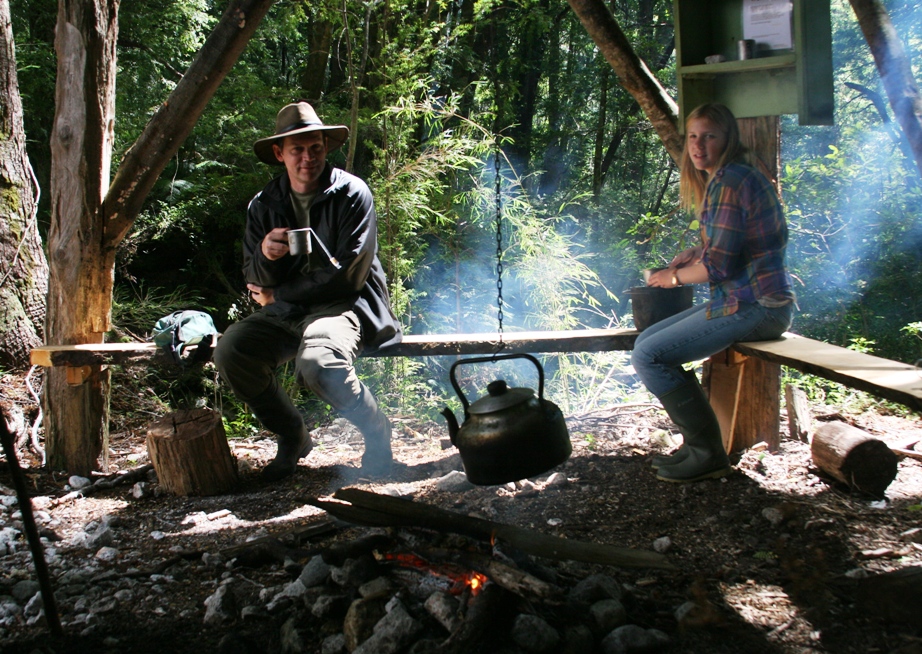
where some thoughtful lodge employee (most likely Horacio with the help of one or more riding guides) had built a wooden shelter with fire pit (called a "Fogon") where we could heat a kettle and have a cup of tea.
It rained steadily during our ride back on Friday. The muddy trail became muddier still, and the horses sunk almost to their hocks in places. Still they never faltered beyond a slight stutter-step or minor momentary stumble, and never uttered a single word of complaint.
*****************************************************************
On a less glamorous subject and probably less entertaining as well, it might be noticed that in the picture of "Casa Gris," our truck is covered with a tarp. Yes, it was still leaking during the rainy drive on Monday. Two boxes of books and papers were wetted enough to need spreading out to dry but seem to be in not too bad a shape to be salvaged. Still, how can we go on like this not knowing what will get damaged or destroyed next? On Tuesday, Lex the very helpful and generous proprietor of Campo Aventura spent most of the morning working with me on the problem. We performed numerous hose experiments trying to understand why the repairs to the obviously leaking windows that Lynn and I had made a few days earlier had not completely resolved the issue. Lex noticed that some rain-gutter drains were clogged with dirt, so we cut away decorative plastic trim pieces covering the drain holes that were helping hold the dirt in place. Then shortly later, when Anna was trying to clean out various debris clogging the holes, she made an astounding discovery. Someone had made several holes with a hand drill between the drain hole channel and the interior of the truck bed cap. What this means is that someone, like the installer or manufacturer, knew the truck cap windows leaked, and had tried to apply some sort of kluge of a remedy which obviously didn't work. They drilled these holes to give the water that leaked in through the window a place to escape - but the holes also allow water from the rain gutter drain to go where it shouldn't.
When we go back to Santiago, I'm going to have a serious talk with a particular car dealership!
Now to the good news. Lynn and I had sealed up the leaky window with silicone, which negates the need or usefulness of these "extra holes." Now sealing these holes up should (and I so dearly hope) finally solve the problem, or at least alleviate it to a level where there isn't major damage to something every time it rains.
*****************************************************************
Tonight is the last night we will sleep in Casa Gris here at Campo Ventura, and the weather today was marvelous. We took advantage by kayaking out on the massive fjord with one other tourist, Dan from Seattle, and guided by Peter from Ireland and Christy from Australia. Cameras tend to get wet and ruined on kayaking expeditions, so I didn't feel too bad when I realized that I'd forgotten the memory card for my camera and couldn't take pictures. Dan had a waterproof camera with him, took these pictures, and donated them to our cause.
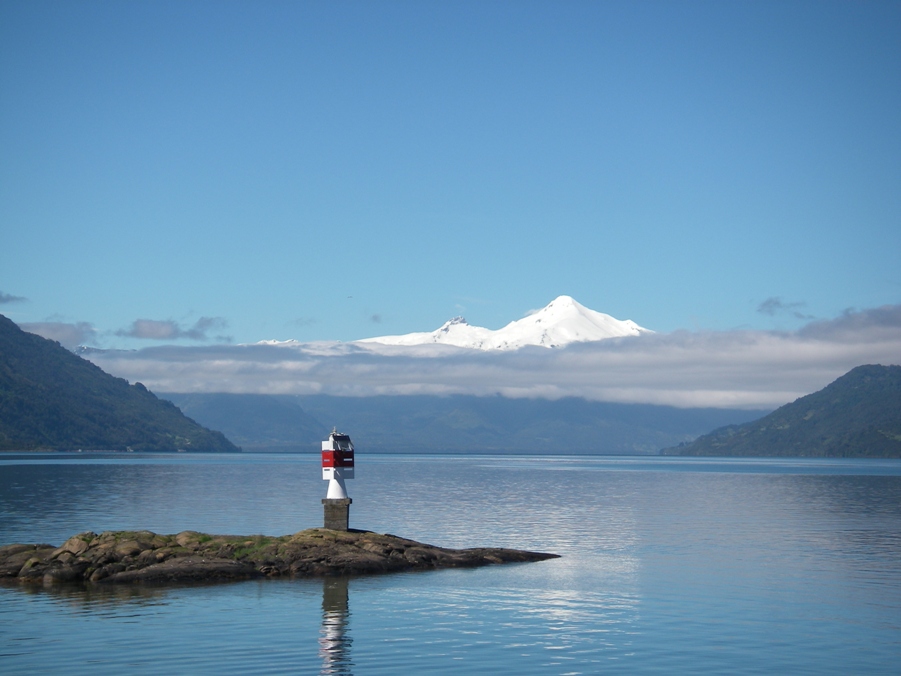
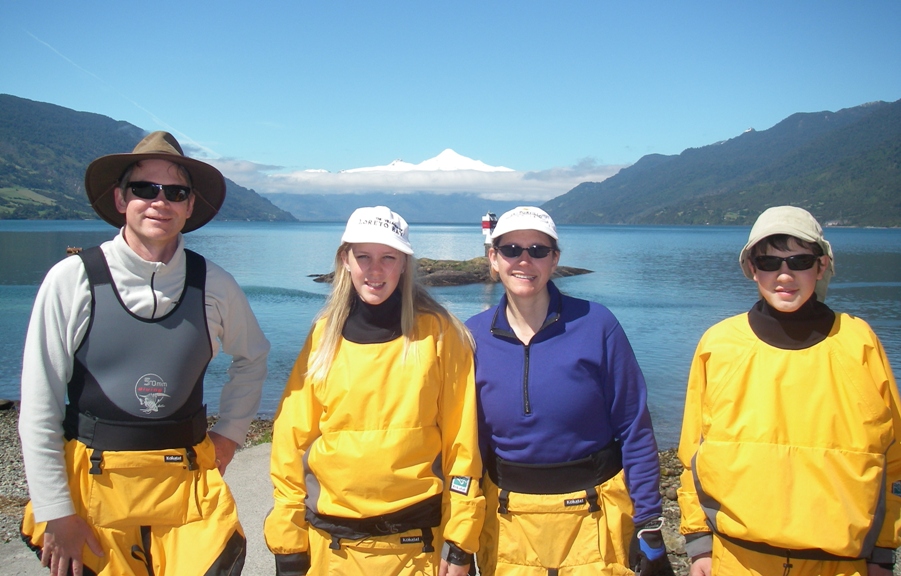
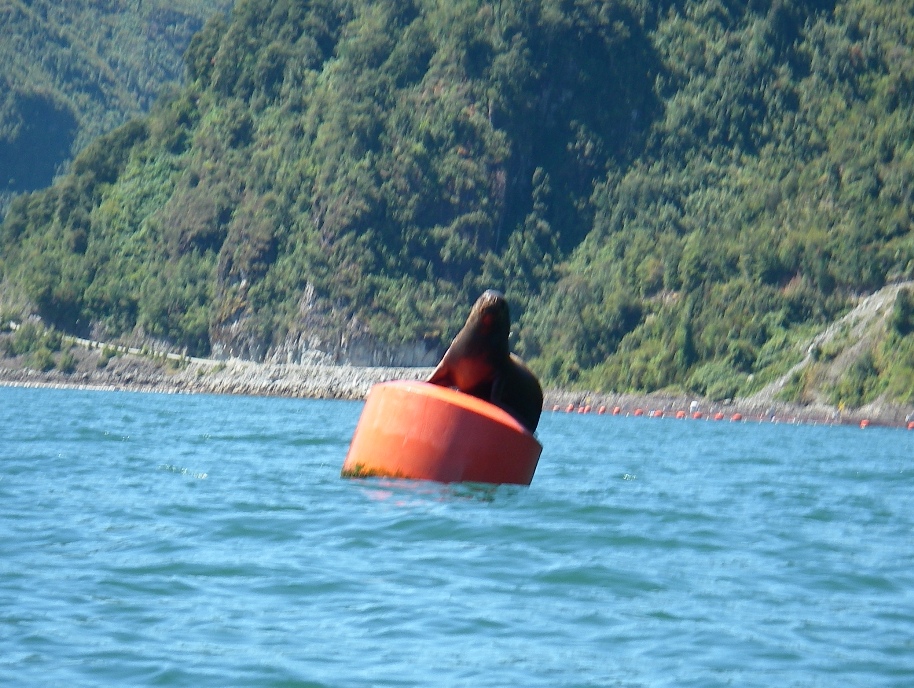
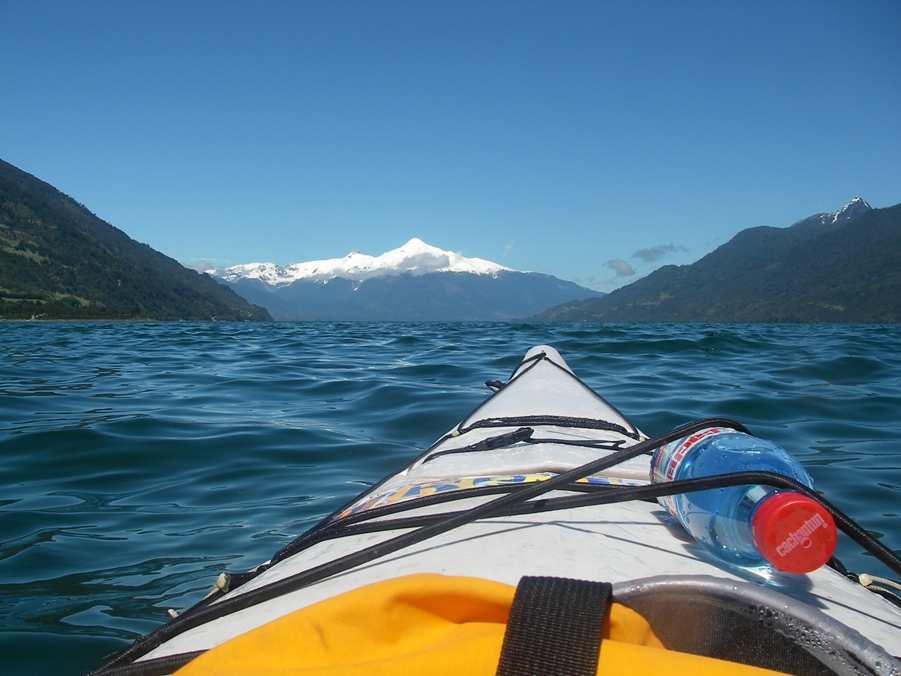
Kayaking in the Reloncavi fjord.
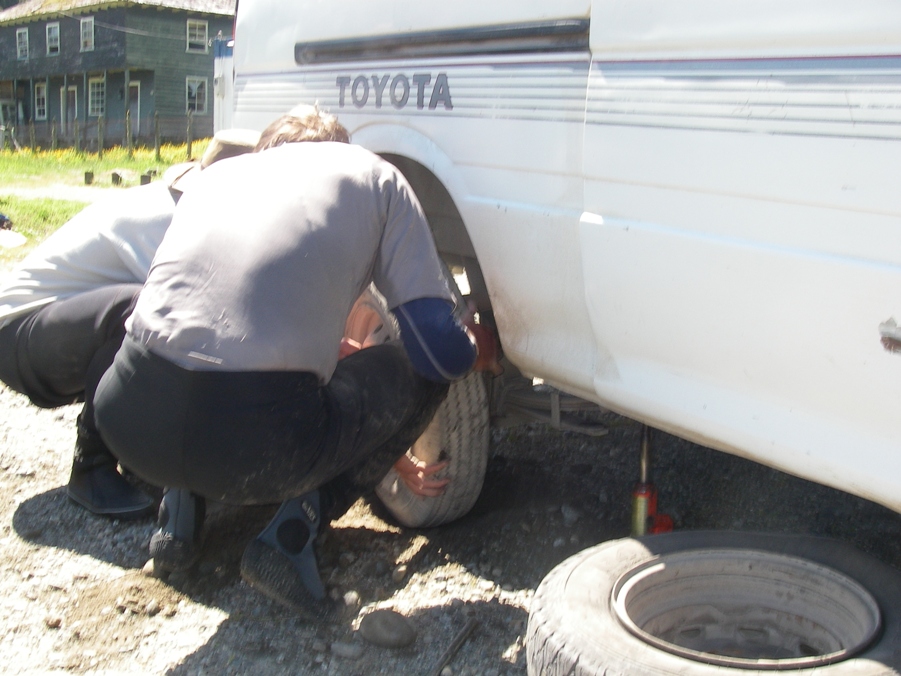
Rolf tries to help Peter change a flat.
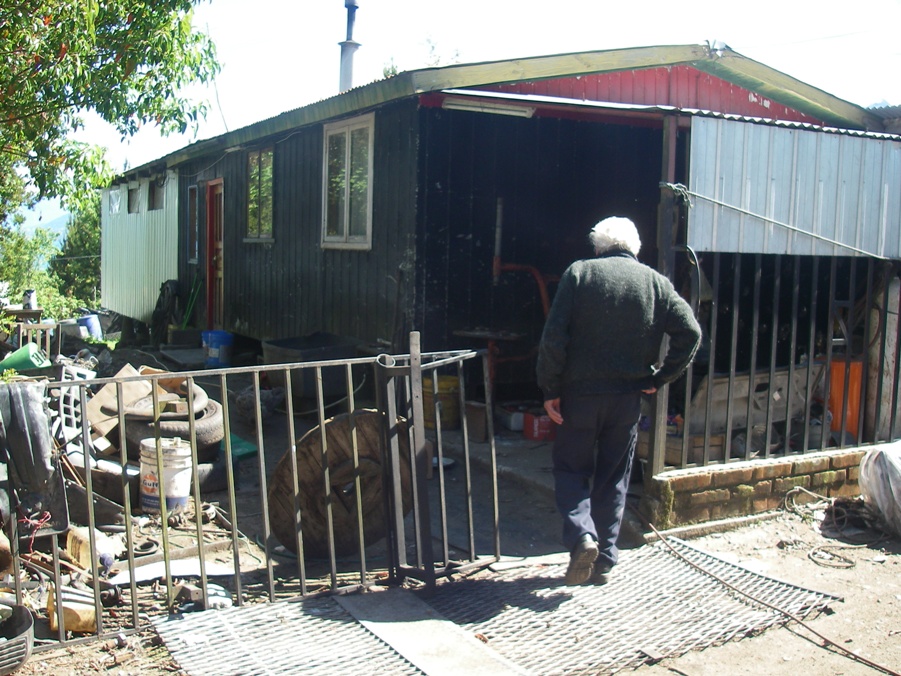
But his spare was on the wrong size rim, so we made a short visit to the central auto repair shop of Cochamò to re-inflate the flat (and then pray that it would hold air for the 4 km drive back to Campo Aventura).
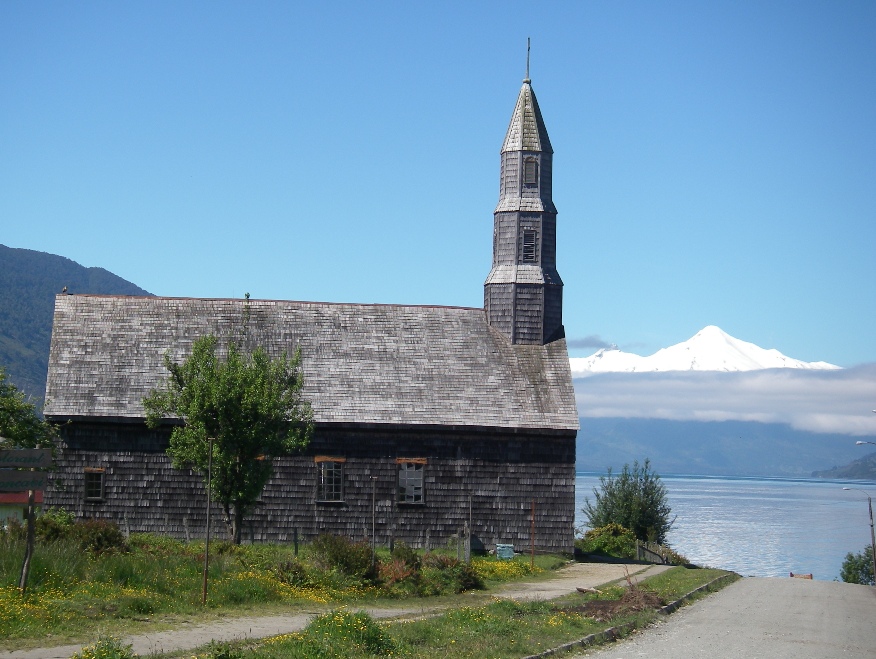
The church of Cochamó
Thanks for the pictures, Dan!
Now for the (keep our fingers crossed) best news yet. Yesterday's hole plugging patch had dried enough to withstand a fairly severe testing late in the afternoon when we returned from the kayak expedition. No leaking. Lets hope it stays that way.
-Rolf