Pucón
Riding (various things), Dry Skies, Wet Luggage
Monday November 5, 2007
A few more days of good weather in the beautiful region surrounding Lago Villarica had helped to lift our collective spirit a notch or two. It isn't difficult to understand why this place is so popular for summertime tourists, or to imagine how crowded the streets of Pucón must be on a holiday weekend in January or February.
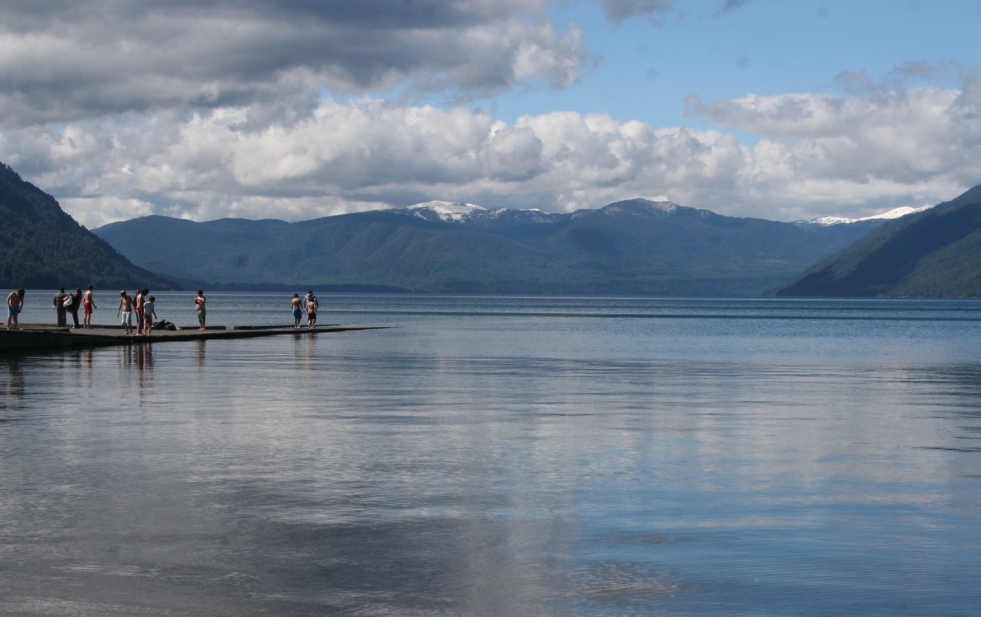
Saturday we drove the 25km northwest of Lago Villarica to visit Villarica's less developed sister lake Lago Caburgua. Other than the small town located where the paved road ends at one end of the long narrow lake, you can't see much of anything along the shore other than a thick forest covering steeply ascending hills. The trees do a good job of hiding a dirt road and a smattering of buildings that extend a little more than halfway along one side of the lake. Our fishing guide informed us that the "truly rich and/or important" Chilenos (including President Bachelet) have secluded vacation houses hidden in these woods near the shore. Although the water is what one of our guidebook calls "desperately frigid," it is one of the warmest swimming options in the region that doesn't require a paying ticket. Just enough heated thermal spring water gets added to the snow melt to raise this lake's water temperature a few degrees above that of Lago Villarica, and this being a holiday weekend in mid-Spring, a few dozen young boys were trying their hardest to enter the water past their knees - with varying degrees of success and plenty of shrieking.
Tom and I opted to float over the surface of the lake under the power of our own legs, renting a water cycle for 30 minutes and riding full bore in a large circular trajectory out into the lake. Anna and Lynn thought it was a little too blustery and didn't like the thought of wetting their shoes and pant leg bottoms so they walked around the beach, enjoyed the sunny day, and waited to see if Tom and I would ever come back.
C'mon someone... go for it!
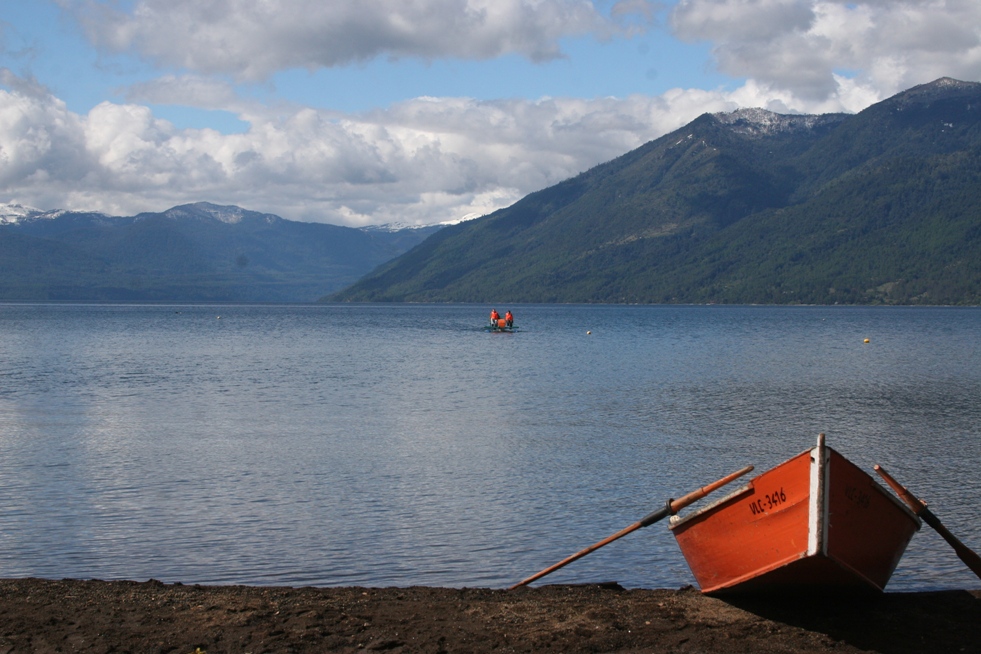
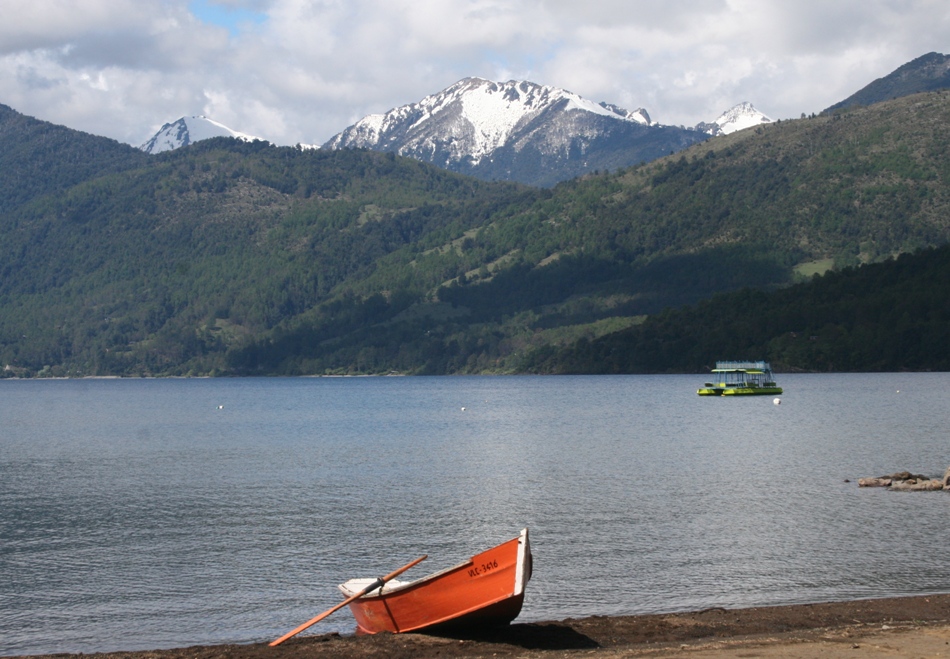
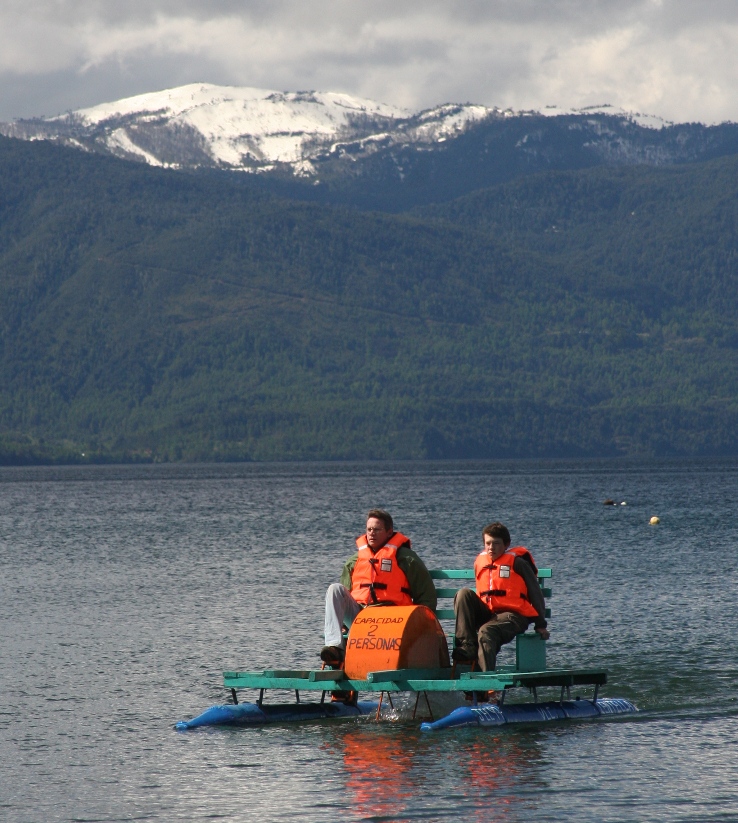
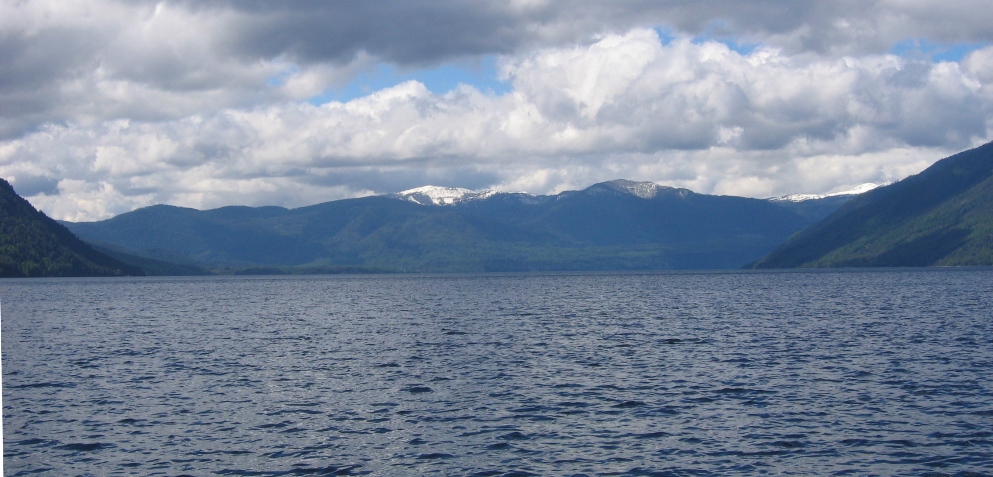
Riding on the lake.
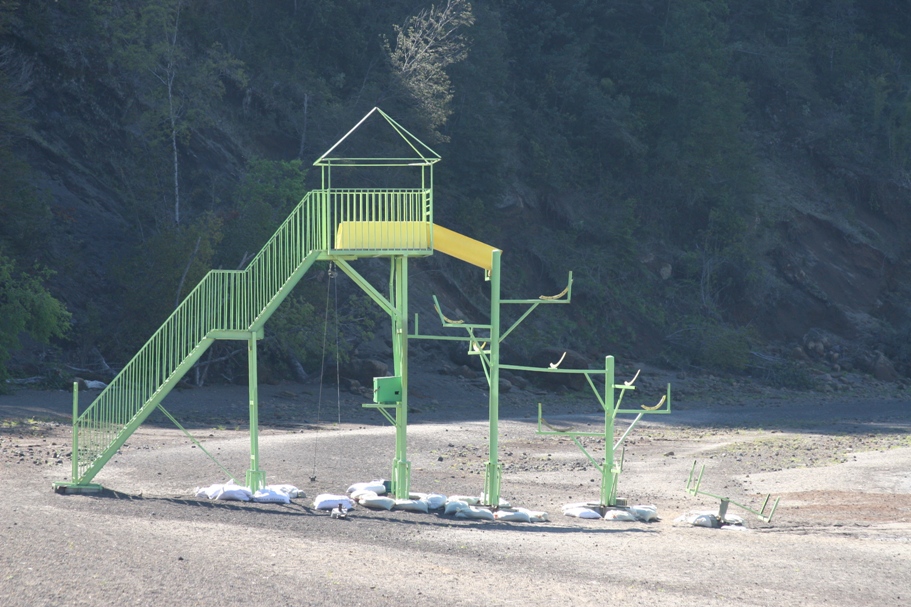
We wondered if this slide looks any different during the summer...
Although Lago Caburgua doesn't appear to have an outlet, it does. The lake was formed by a giant volcanic eruption approximately 2562 years ago, and this eruption damned a large valley with a wall of lava. Fissures in the damn of volcanic debris allow the waters of the lake to escape below the surface of the land. Running southwest towards Pucón, the water surges out of the ground a few kilometers away in a twin-falls sort of water feature called "Ojos de Caburga" (eyes of Caburgua) - so we dutifully drove a couple of kilometers off the paved road during our return drive in search of the ojos to take a few more pictures and enjoy another short hike.
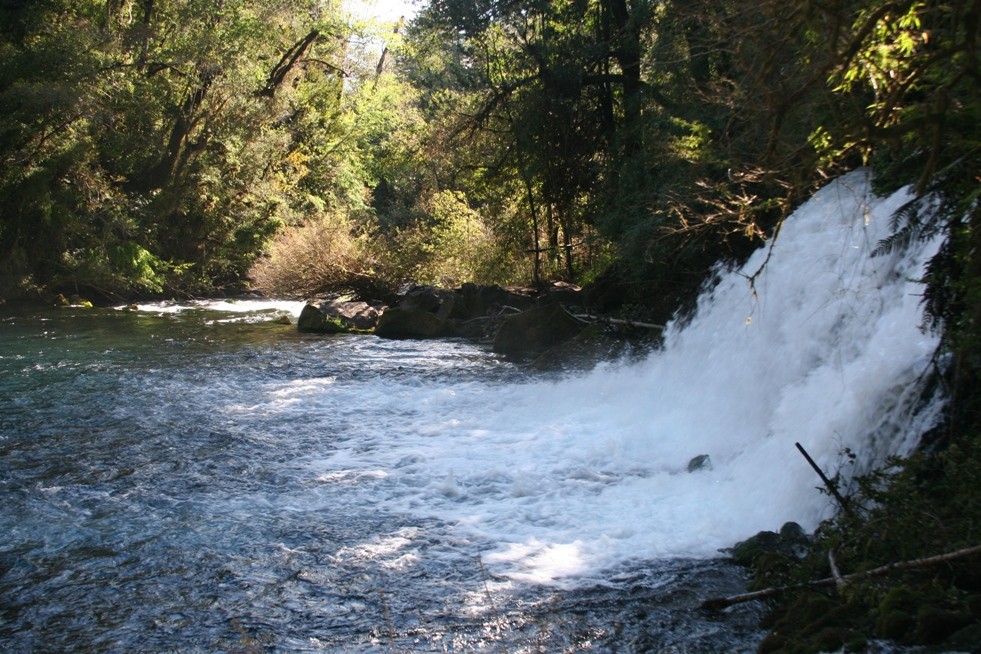
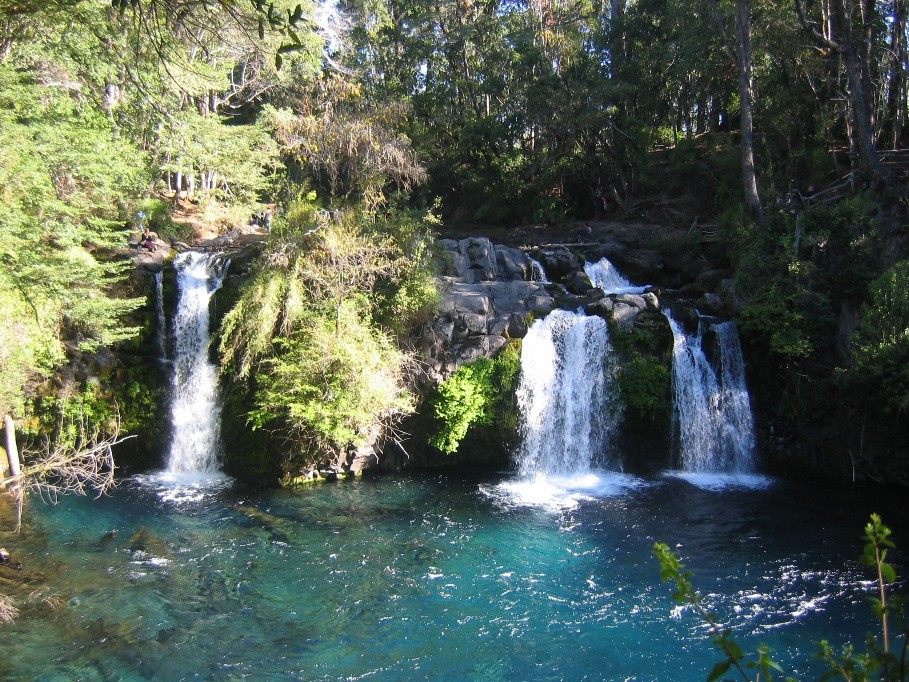
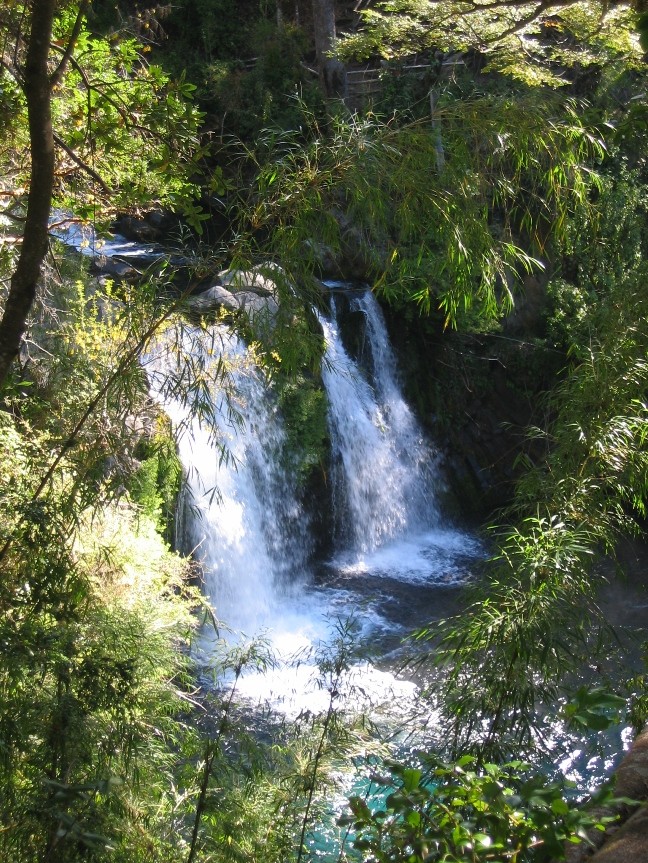
Ojos de Caburgua.
Sunday was a cabalgata day, spent visiting a horse ranch on the large ridge of the next valley further south from the one we had visited the day before.
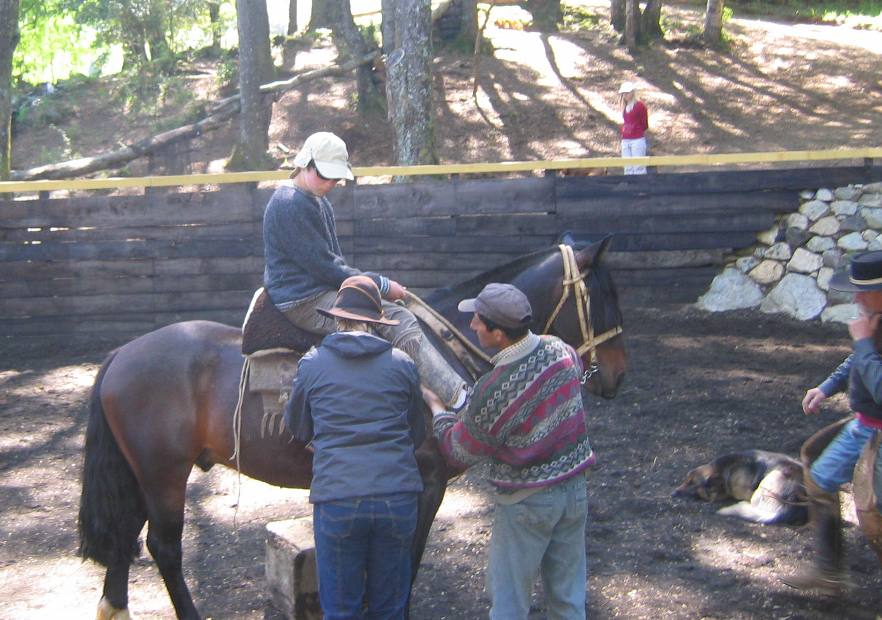
First they saddled us up inside the "media luna" coral.
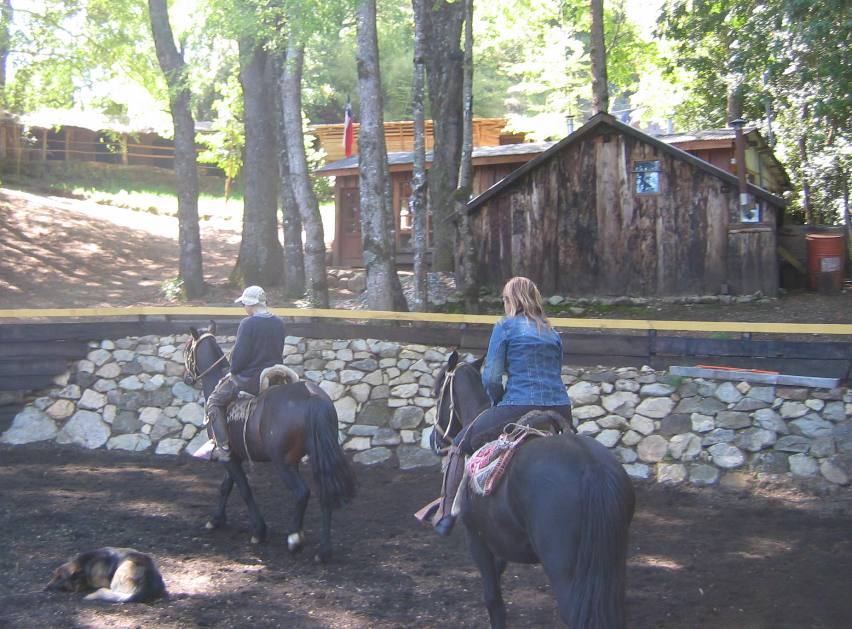
Then they made us practice by riding circles around the coral. Initially we wondered why this was necessary, but then our guide (the proprietor) Rudolfo explained,
"These horses are real rodeo horses, not your typical lazy tourist horse-ride horses - they are strong and have a lot of energy!"
He was right. At first it was a little intimidating, but eventually I learned to appreciate and enjoy riding a horse that required more effort to get it to stop than to get it to go.
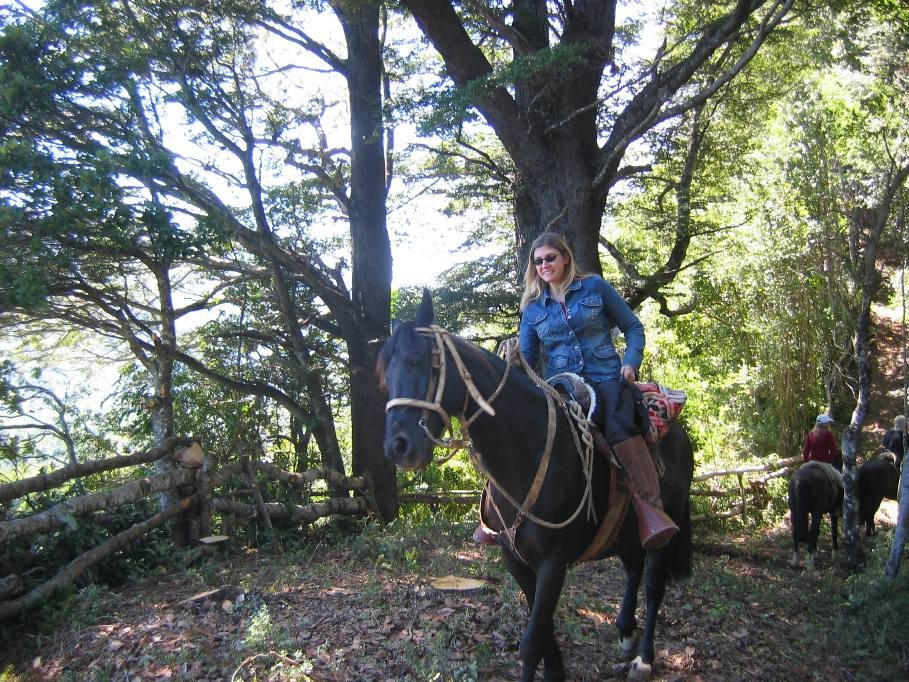
Having fun.
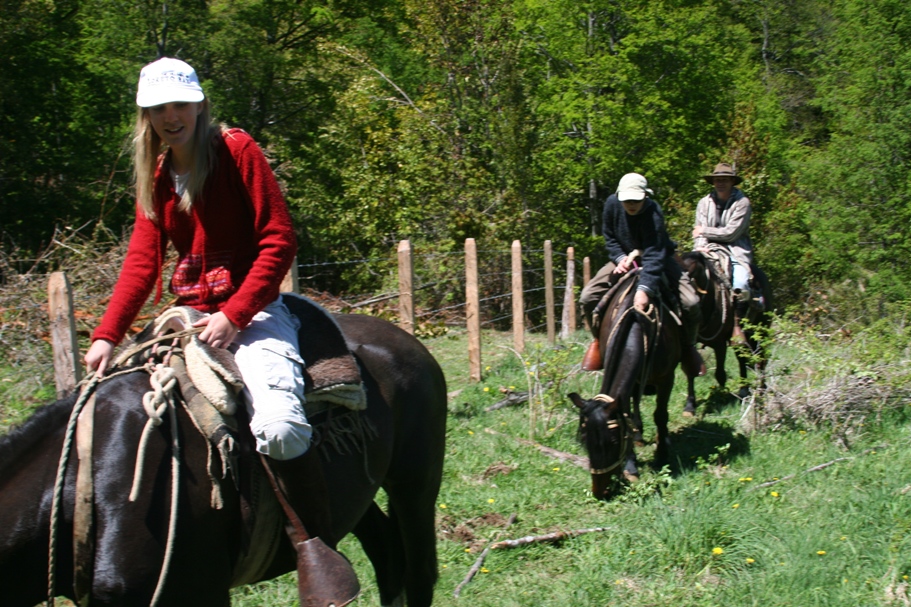
OK, sometimes even energetic and spunky horses stop to eat the grass when you don't want them to.
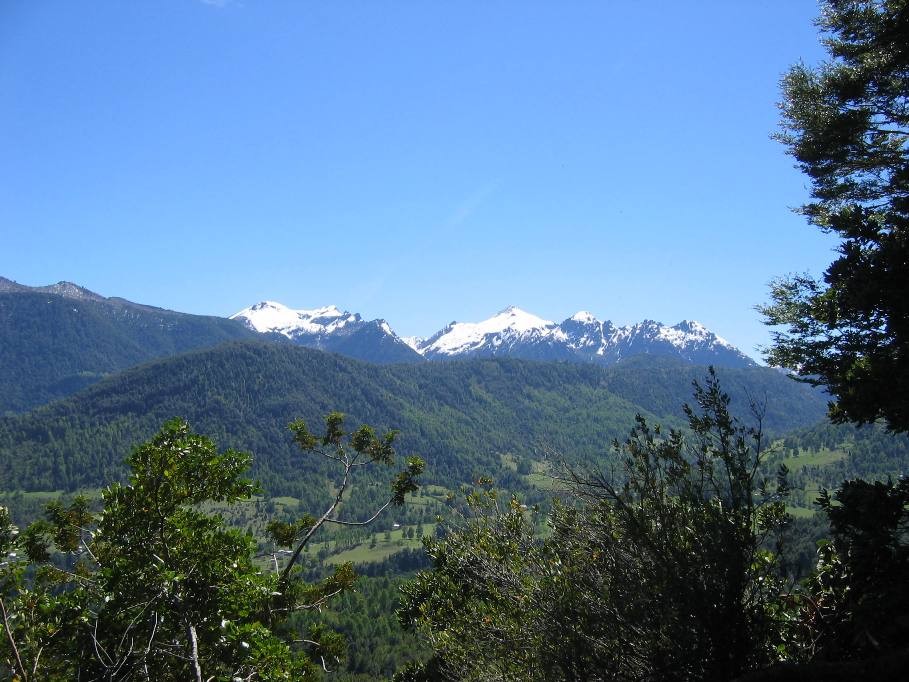
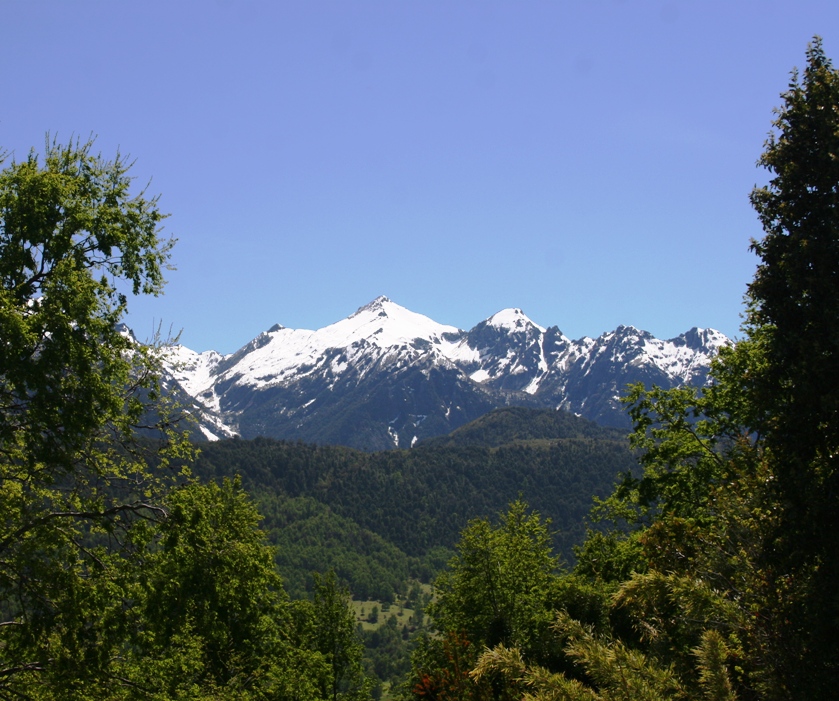
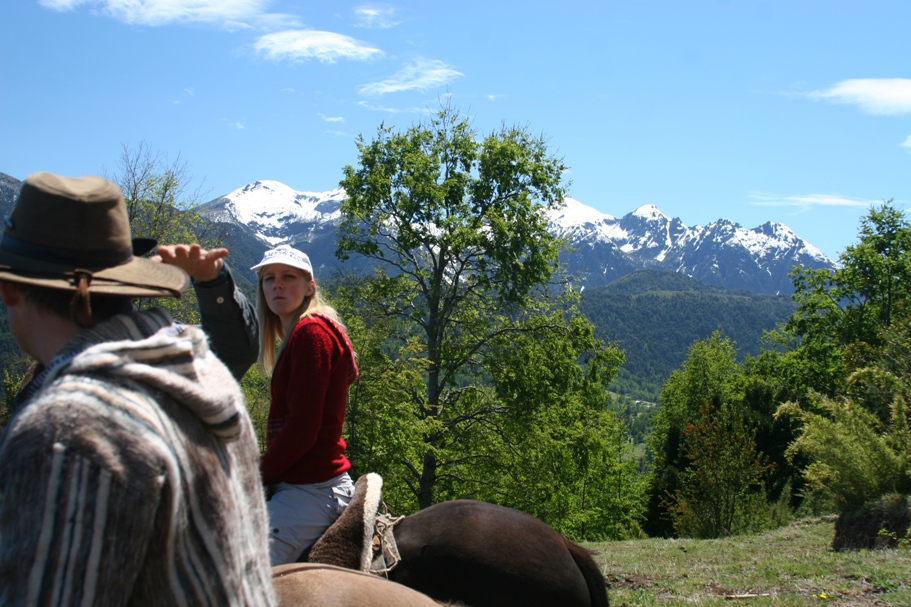
Looking off towards Argentina (I think...)
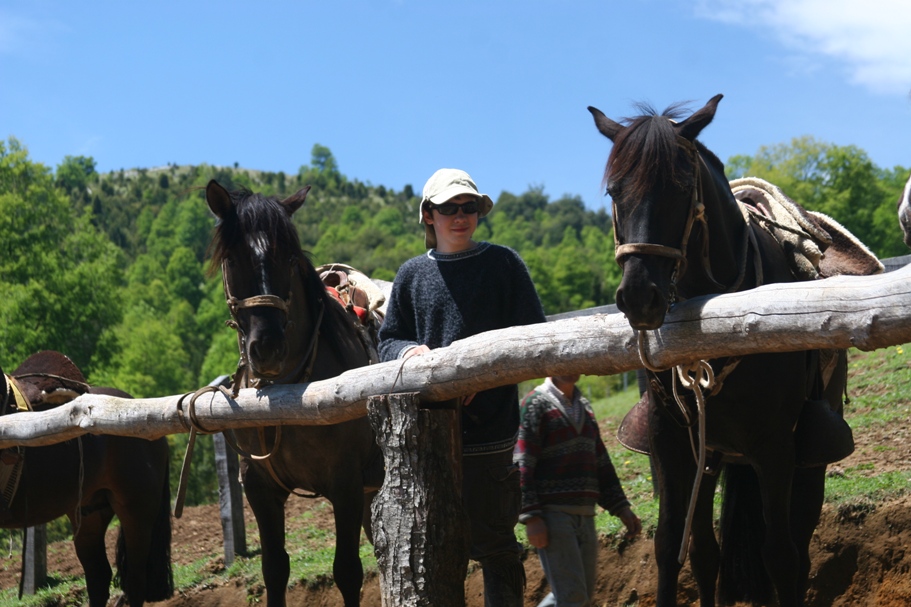
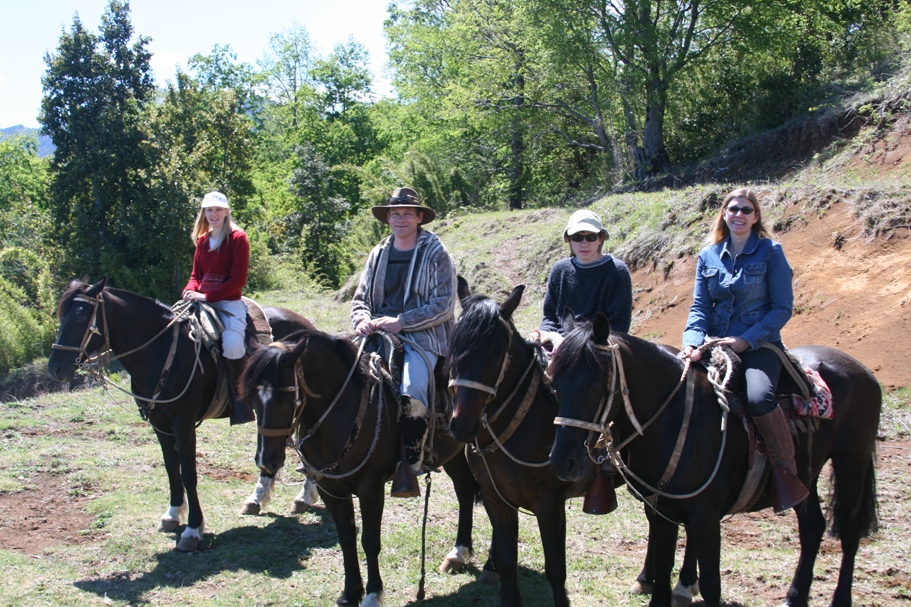
Tom, Anna, and Family pictures.
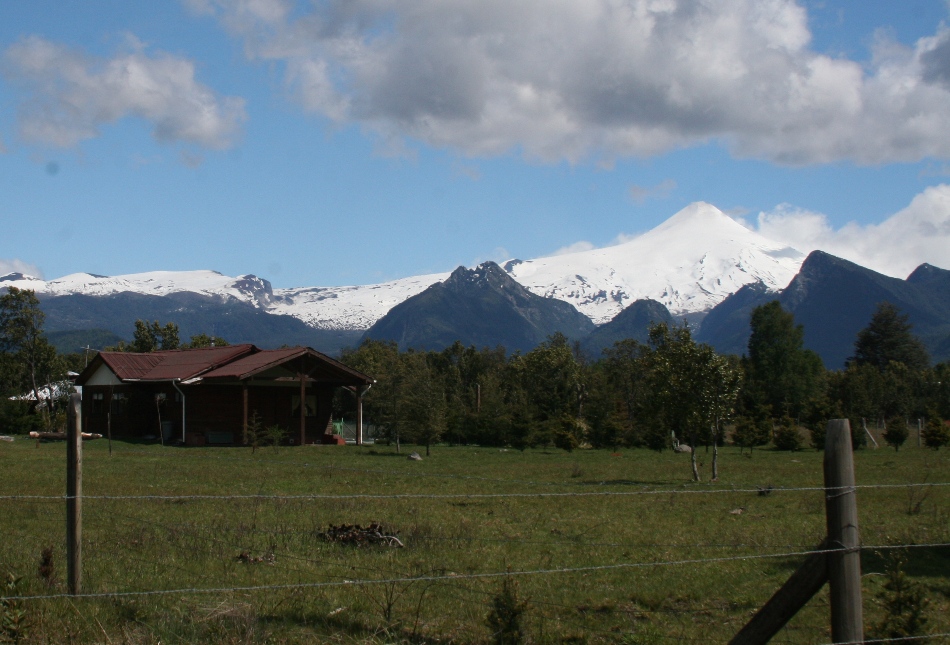
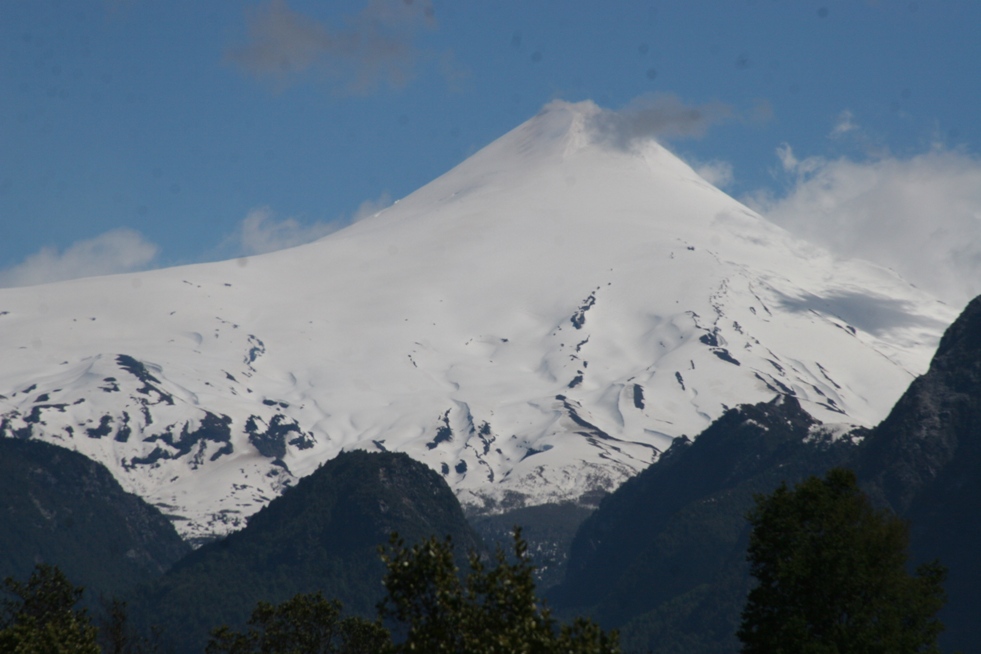
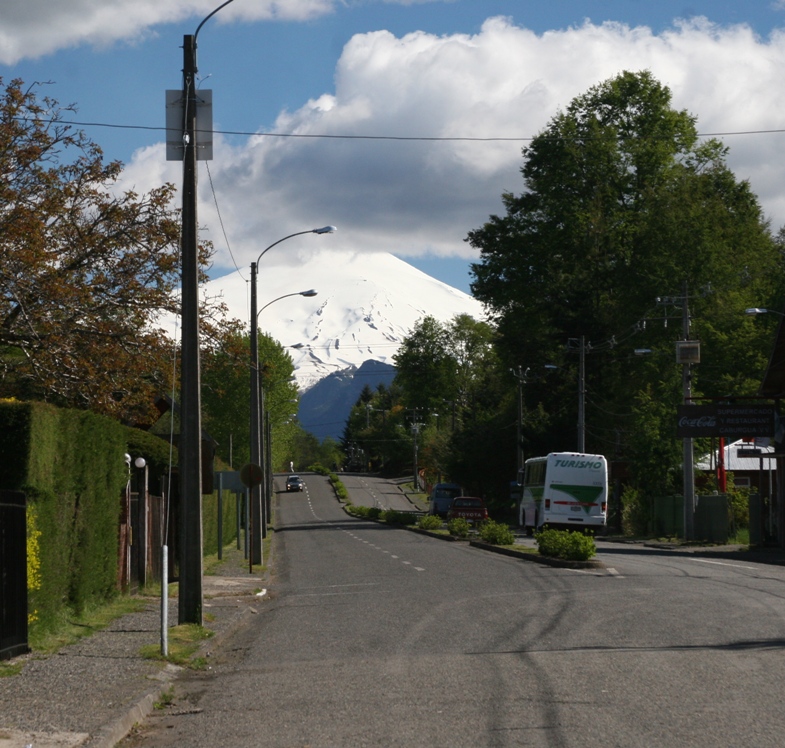
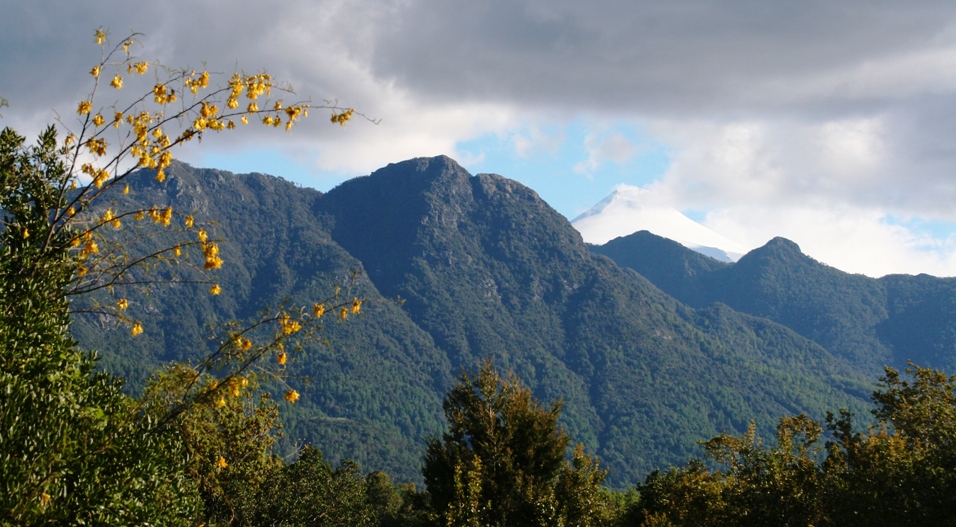
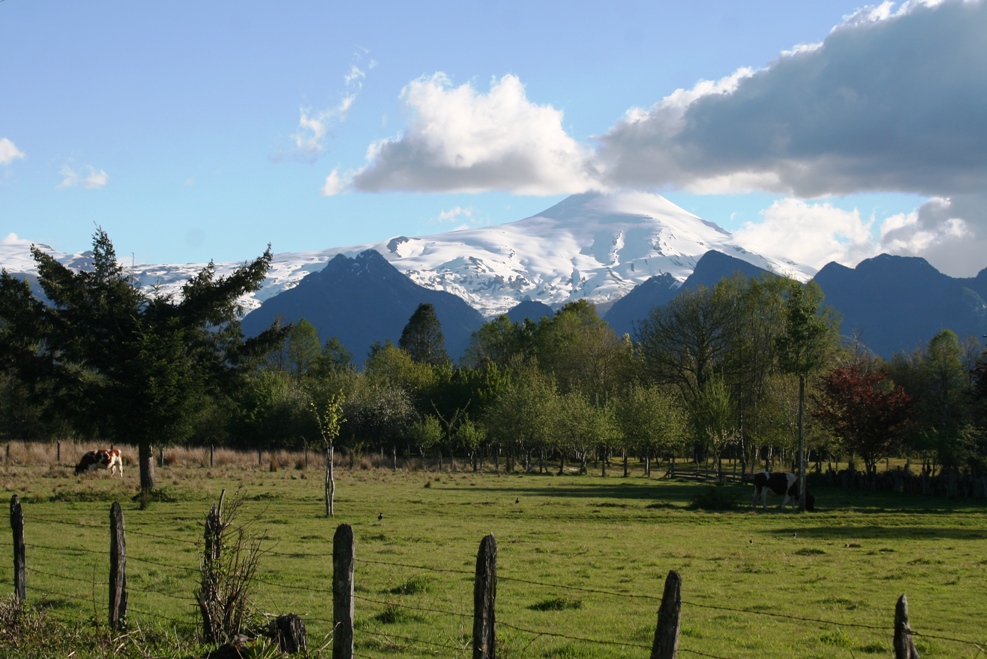
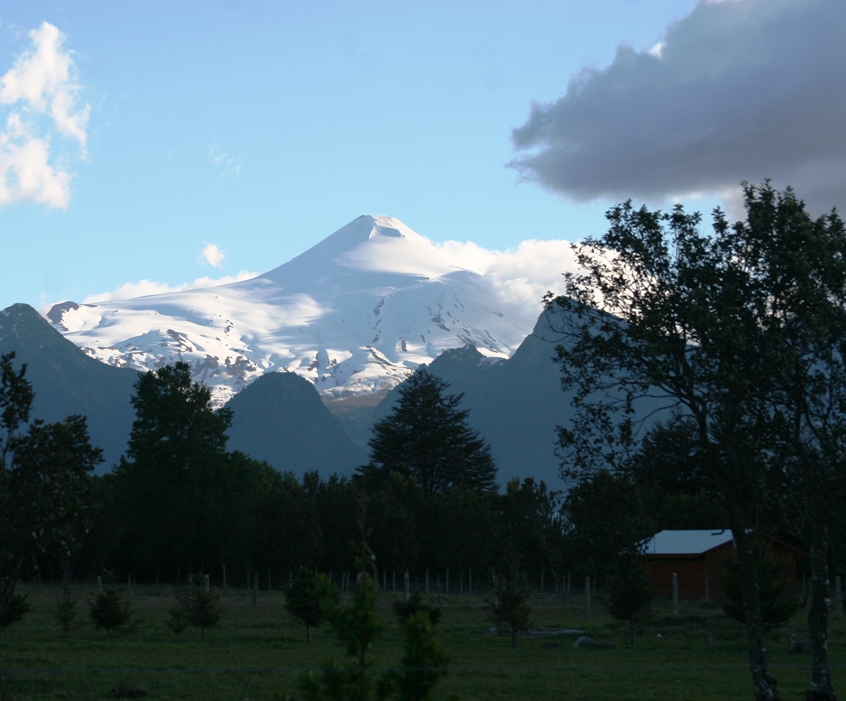
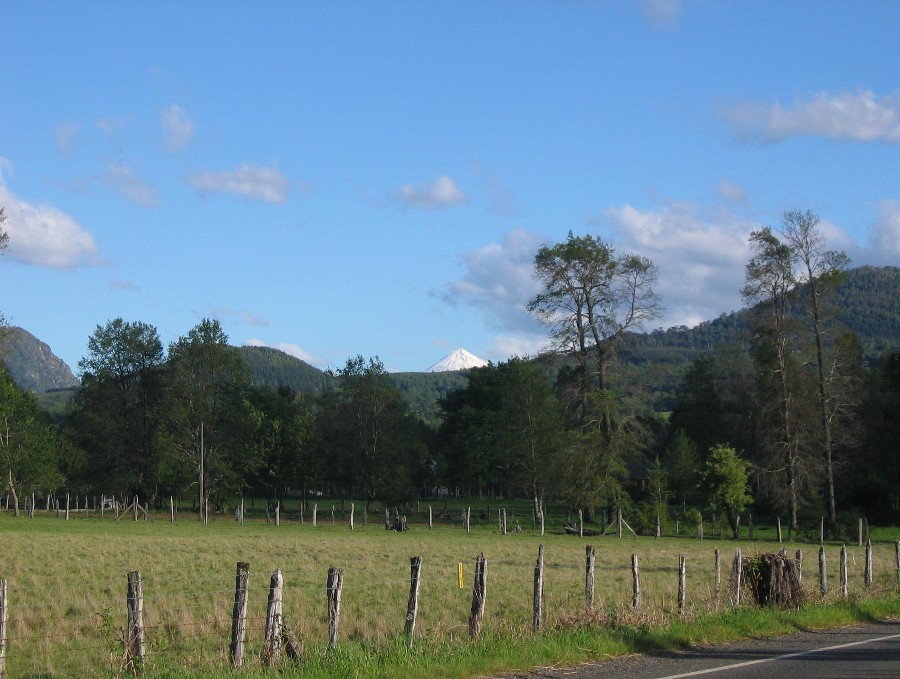
And more incredible volcano views on the car ride back from the ranch.
Monday was a day for yet a different type of riding. Anna, Tom, and I retraced, via terrestrial bicycle, much of the gravel-road drive (paralleling the highway) we took on the return drive from Lago Caburgua two days earlier. The place we rented bikes from drove us and the bikes up to the lake via pickup truck, and the same guy who drove the van that took us fishing a few days ago rode with us back to Pucón. Lynn decided not to take this ride. Having seen the road and fearing the ill state of repair of a typical rental bike, she opted to hang out at our cabin for a little private time and perhaps a shopping excursion in Pucón.
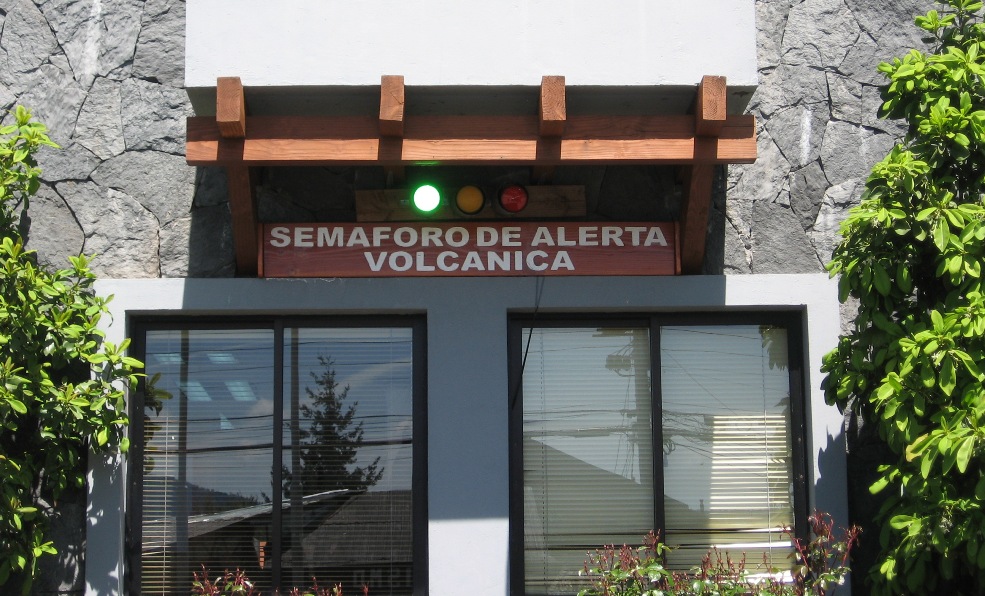
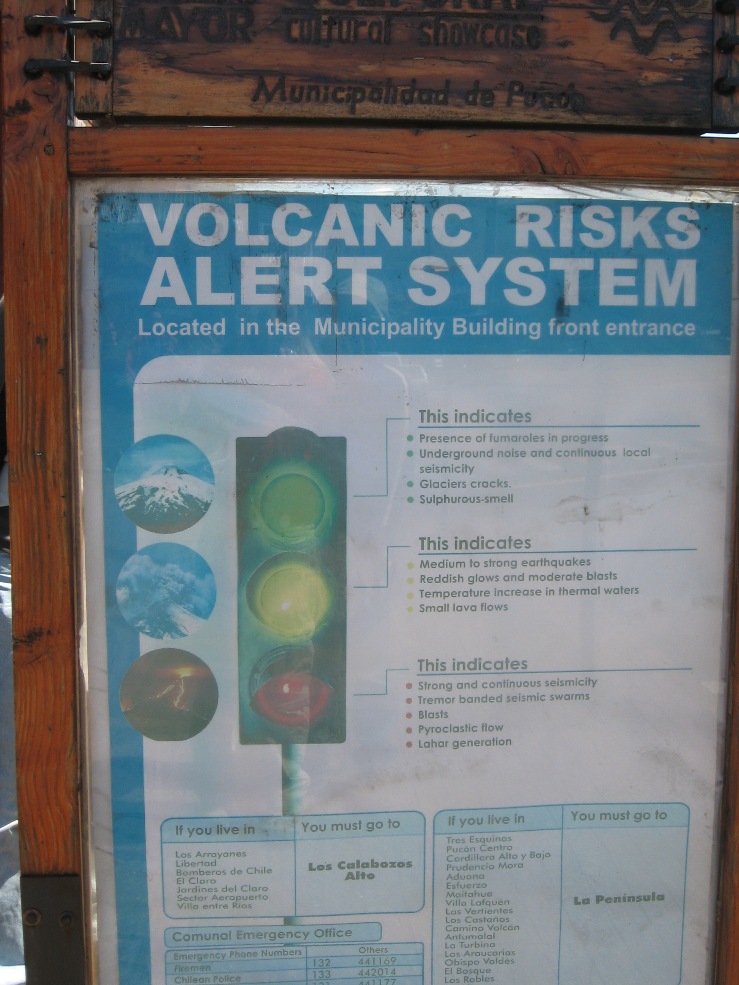
Right across the street from the bike rental shop, we encountered the famous "Volcano Traffic Light" of Pucón. The sign explains what the colors mean with respect to the volcano's eruption status. It also tells people from various neighborhoods "....where they must evacuate." Of course, nowhere does it say under what conditions they are supposed to evacuate (on neither the Spanish nor English side of the sign). It just says, basically, "People from these neighborhoods must evacuate here." Obviously, no one takes the sign literally, because we've been here for almost a week and no one has evacuated anything. At least there is a sign saying something. And all of the intersections of Pucón are clearly labeled with signs showing the names of both streets and which direction you are permitted to drive - a truly wonderful feature! This is definitely a town where it is understood that recently-arrived tourists might possibly not already know what streets go where and which is the right way on all the one way streets.
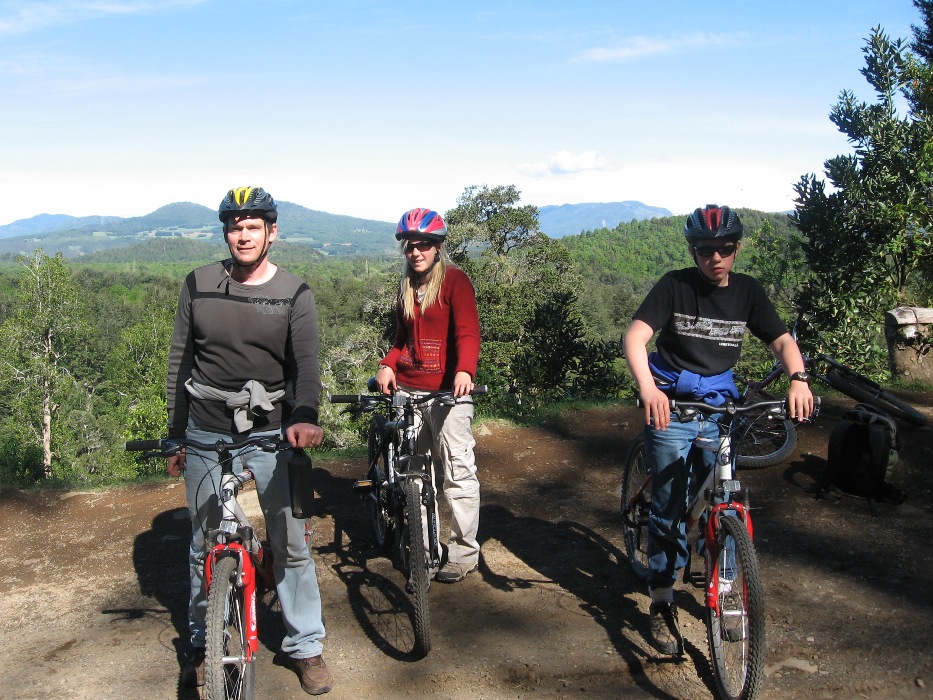
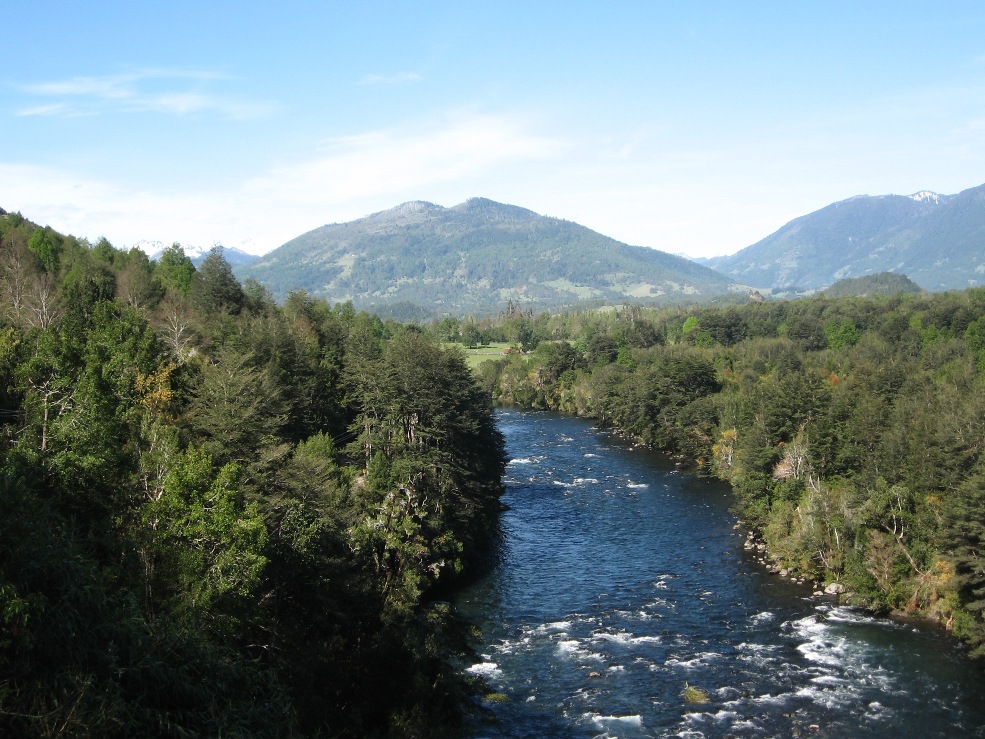
Riding our bikes back along the valley of Rio Liucura (the same river we fished on).
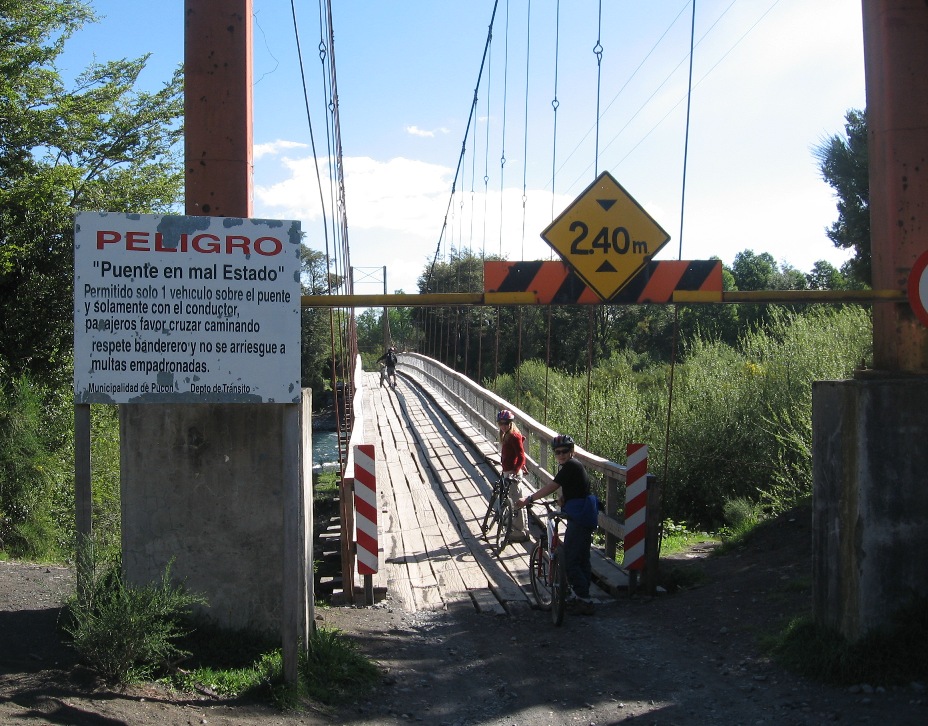
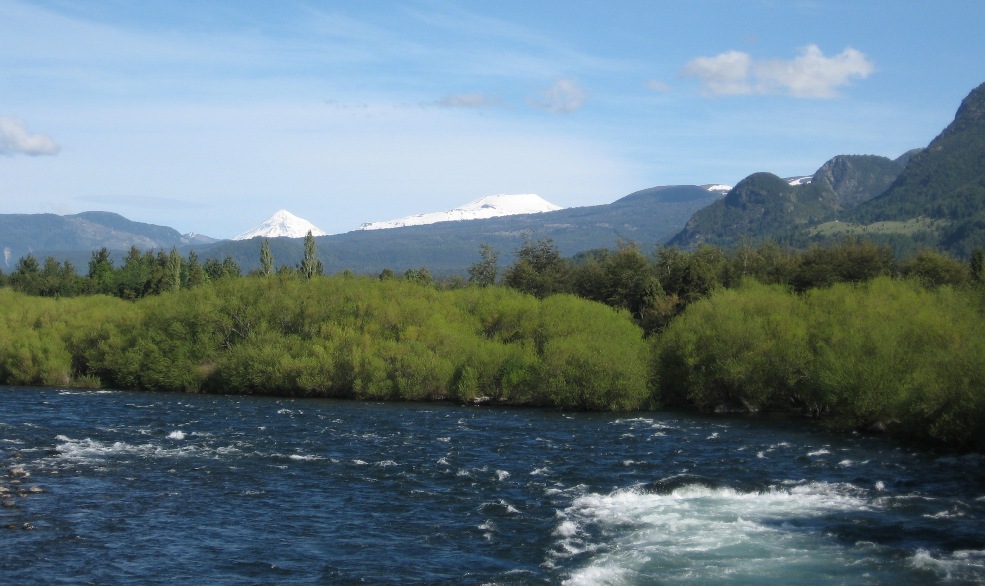
Crossing the bridge we were too afraid to drive our monster truck on when we drove this road two days ago (and then had to backtrack 11 kilometers!).
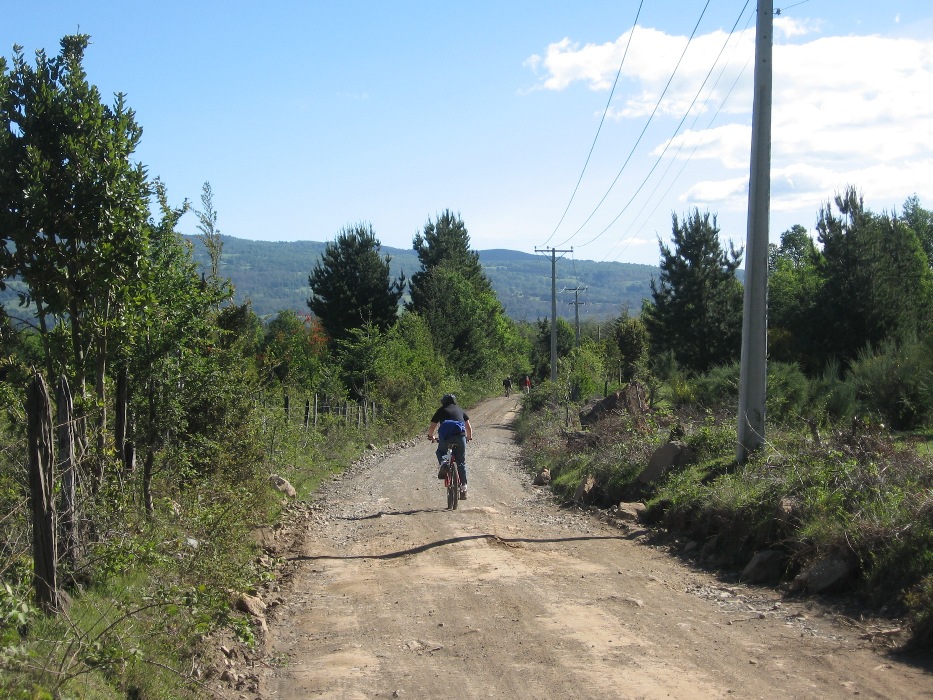
Tom did finally catch up...
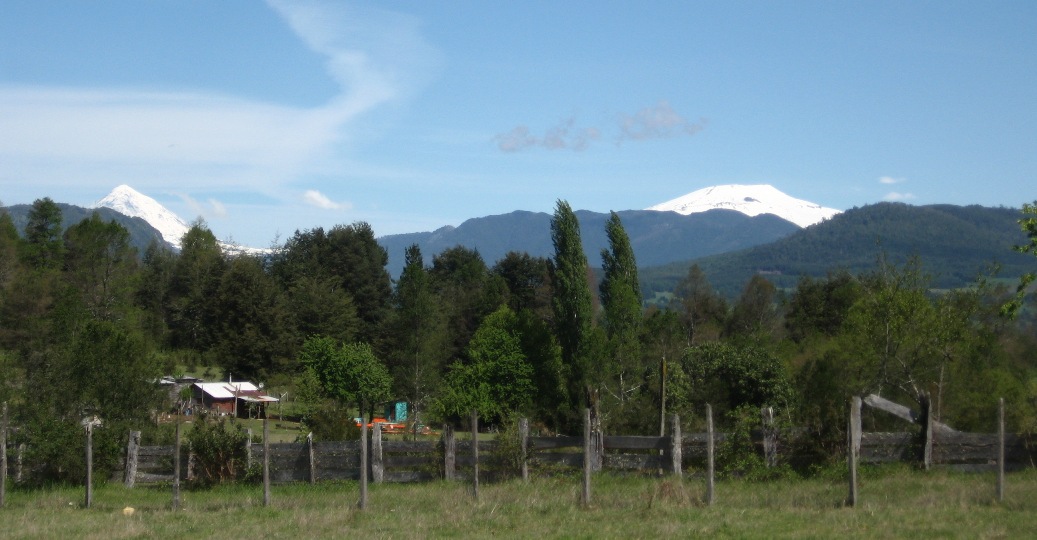
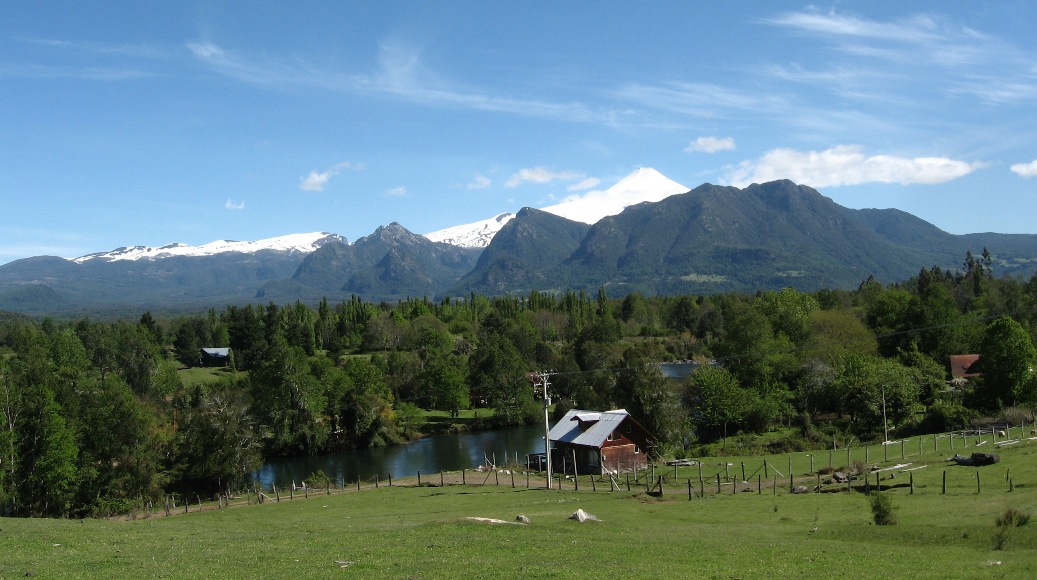
And yet even more breathtaking views of the volcanoes - the left-most volcano in the left-most picture is along the border with Argentina. The middle one is a very old dormant volcano, and the right-most volcano is Villarica.
Tom, Anna, and I returned to the cabin a little after 6:30pm, expecting to find a relaxed and happy Lynn, refreshed after a peaceful and enjoyable afternoon spent visiting the tourist shops in Pucón and/or hanging out in the hotel jacuzzi or gardens. But we entered the cabin to find her frazzled, distraught, and surrounded by a sea of papers and books set out to dry. She had poked into one of our large schoolwork duffle bags only to discover that it had gotten wet and much of the stuff inside was soaked and even moldy. So she had spent most of her "relaxing" afternoon in a gradually increasing state of horror and despair as she tried to salvage and dry all the papers and books and science lab equipment, one piece at a time.
The truck cap leaks! All the time I spent chasing down my computer charger in Concepción, and all the days since, one of our school duffle bags was sitting in a puddle in the back of the truck, created by the rainstorm we drove in on our way to Concepción. Now what? I managed to convince myself that I understand where the leak is by pouring water all over the rear of the truck with a jug. It's just one tiny little trickle from the side window frame that is easy to overlook but can add up over time, especially during a solid heavy rain. We have various ideas on how to possibly deal with this but nothing can undue the damage already suffered, and the depressing thought of a possible recurrence is difficult to handle. It's just a tiny little dribble, but water is truly insidious when it comes to finding an outlet to leak through and damaging things that aren't supposed to get wet. One thing I'd have to say for sure regarding our recent spate of "near-miss" problems, is...
Fifth potential disaster, not averted!
-Rolf