Parque Nacional Pan de Azucar
Spectacular Beaches, Humboldt Penquins, Home Cooking
Tuesday August 21
Apparently, according to our maps and guidebooks, we crossed the imaginary boundary between Chile's third and fourth regions shortly south of Taltal on Sunday morning. Now we've exited the Norte Grande and are back in Norte Chico. This close to the border, we can't see much of a difference, but we know that if we keep driving south, we should eventually reach more verdant and inhabited territories.
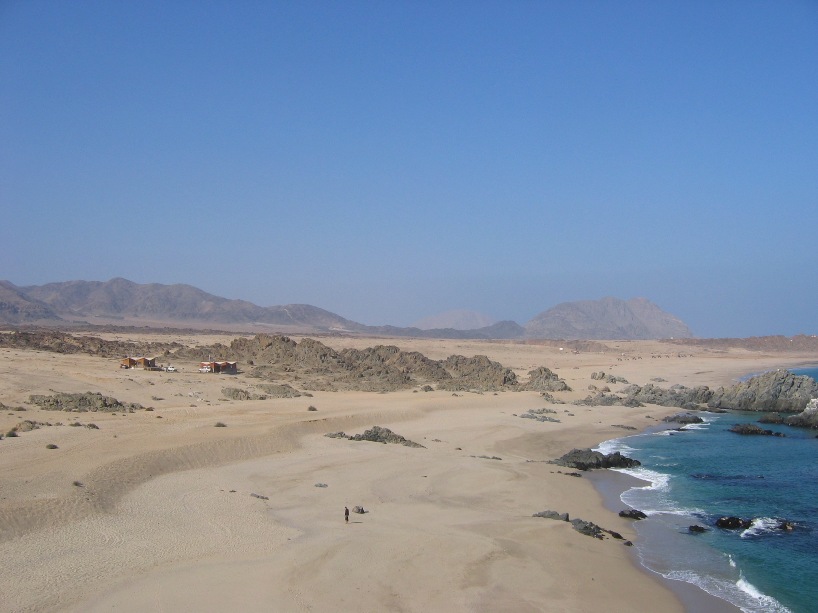
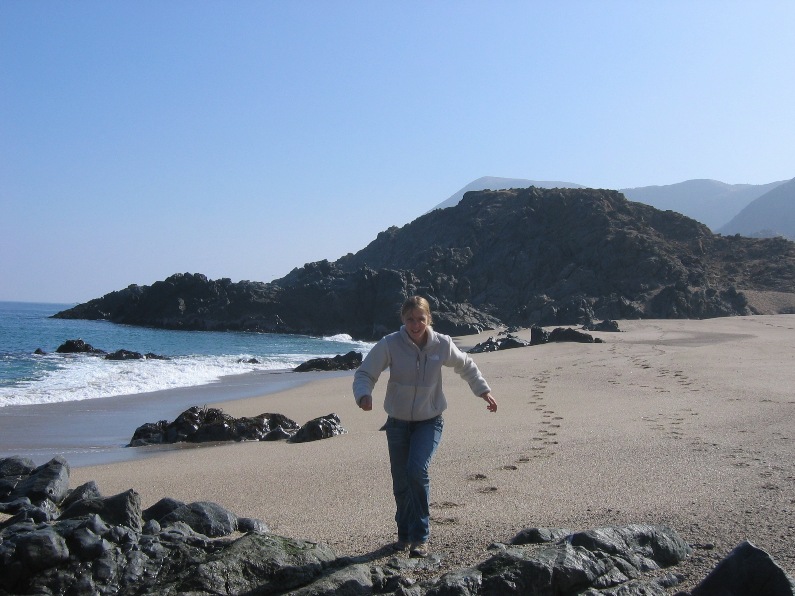
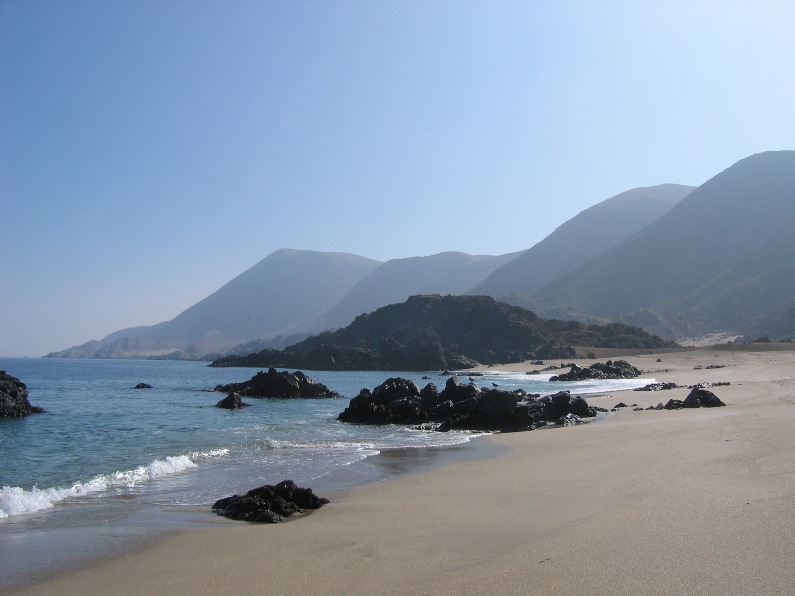
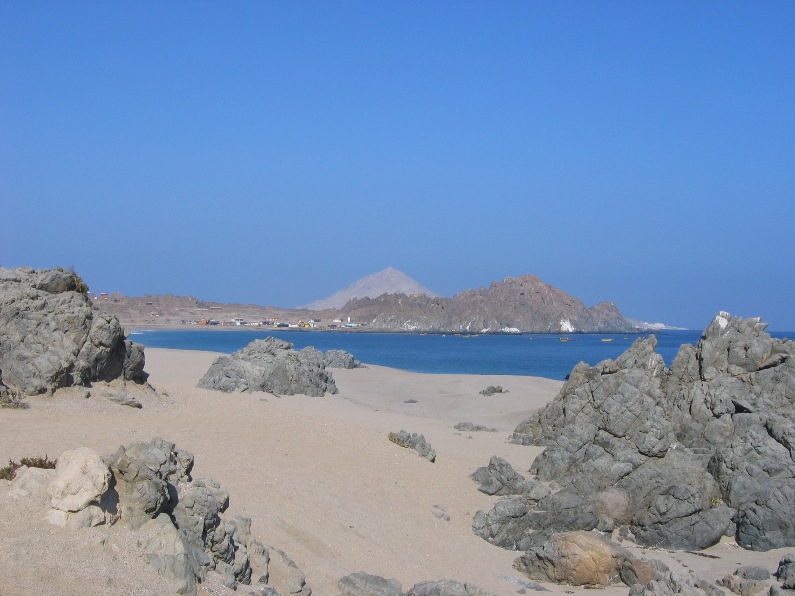
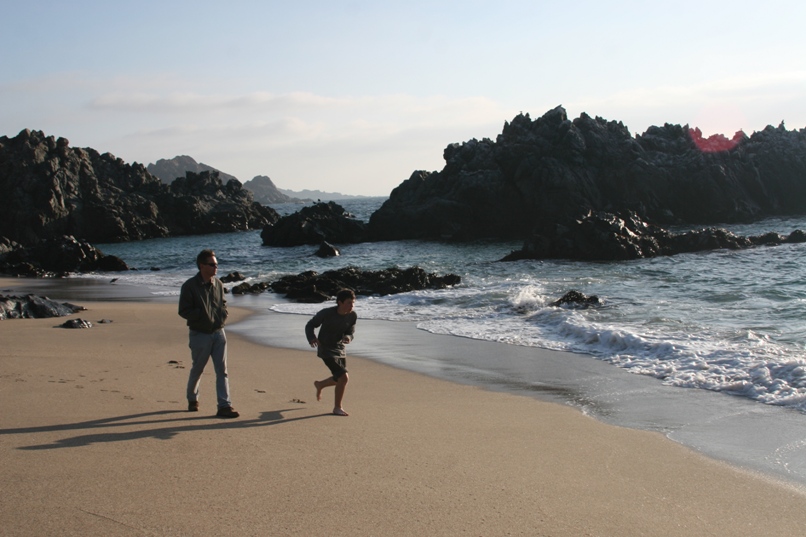
For the time being, it's just the "next beach down the coast," although Pan de Azucar does rate national park status. The long stretches of stark white beaches set between rocky peninsulas and against the backdrop of the stunningly immense coastal cordillera make for incomparable vistas. They are far too vast, magnificent, and every-directional to capture in photographs. But we try our best.
We arrived at an "administration office" (thatched hut marked by two tattered white flags protecting a desk, chair, and unplugged vending machine) shortly after the "closed-for-lunch" side of noon, so we decided to drive 20 km south out of the park to the city of Chañaral to have lunch and get groceries. I had high hopes for Chañaral, as it rated a bigger black dot and larger font than Taltal on my driving map. But as we were drawing near in the car, Lynn picked up a guidebook and read us a cheerless description which included phrases such as "...rag-tag collection of battered homes creeping up the hillside," "...over-abundance of street dogs," and " ... despite recent efforts to clean it up, the beautiful white beach still remains quite toxic after many years of dumping mine-waste."
Unfortunately, the guidebook was not unreasonably harsh in its appraisal of Chañaral. After eating lunch and then crisscrossing the crazy maze of narrow one-way streets for a few minutes, we finally found a not-so-super-but-open market and got some food we think we could stand to eat for the next three days. I couldn't understand why Lynn was so down on hot-dogs, especially since they had turkey-dogs. Finally, she rolled her eyes and whispered at me (like anyone else could understand her...) "Check the expiration dates!" I went back and started shifting through the pile. "Hey there's one package that only expired only half a week ago!" Fortunately, the fresh meat case had fresh-looking chicken. Of course we couldn't be entirely certain since there is no date on non-packaged meat. Canned tuna almost never goes bad, does it?
*****************************************************************
The only downside of this park at Pan de Azucar is the human occupation (or lack of it) and/or management (or lack of it) of tourist facilities. It is a far-from-anywhere sort of place with a far-from-used-much look and feel. But instead of being totally pristine and unoccupied, there is a typically Northern-Chile ragged little fishing/tourist/maybe-something-else little harbor village at Caleta Pan de Azucar and a smattering of shacks and cabañas in varying states of decay and disrepair strewn about the surrounding beaches. Not enough blight to be an eyesore, but nowhere is there anything as dependable as an open store or restaurant (just lots of weathered signs and boarded up buildings). Maybe it's a happening place in the summer, but from the looks of things, my hunch is that it's only a little bit more happening.
We pre-paid for three nights at a "fabulously located" (so says one of our guidebooks) cabaña a half-mile or so north of the fishing harbor. The cabaña is indeed fabulously located, but we won't go so far as to call it fabulously appointed, heated, or clean. It still beats camping on a windy beach without clean restroom facilities, hot water, or any hope of a fire (no trees = no firewood). Anna found the cabaña guest book and I amused myself trying to translate the Spanish. Nine-year-old Diego scolded the proprietors for not providing a TV set (sorry Diego, solar panels can light a few 12V light bulbs but not much else). Aside from those of the love-struck young man who proposed to his girlfriend and was too giddy to notice much else, the comments followed a universal theme.
"This park is spectacular and we can't believe how lucky we feel to experience the beauty of nature..." followed eventually by something like "...too bad this cabaña is so spectacularly filthy and decrepit, otherwise everything would be perfect!"
We decided that everything that needed to be said had already been covered by the previous entries, and did our best to enjoy the beach, the desert, a boat trip to the nearby island to view penguins, and a few very well-prepared meals.
The beach near our cabaña.
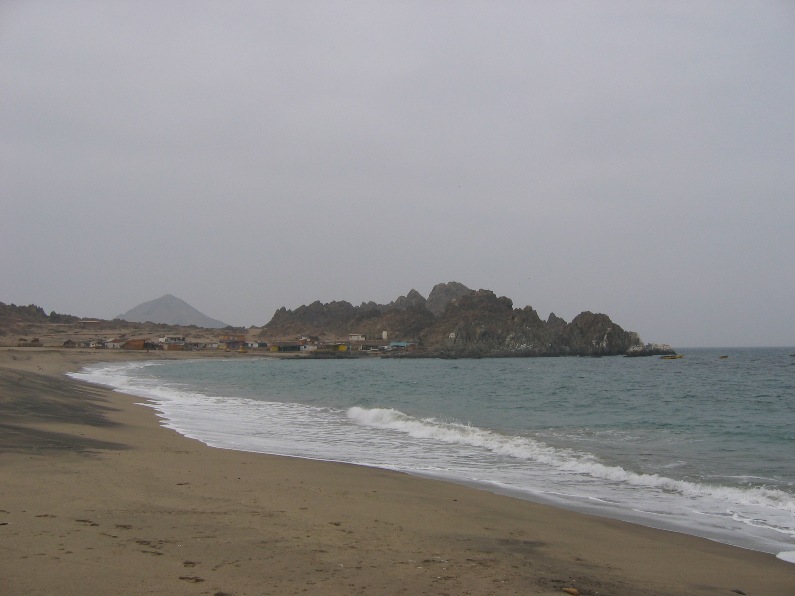
The fishing village of Caleta Pan de Azucar.
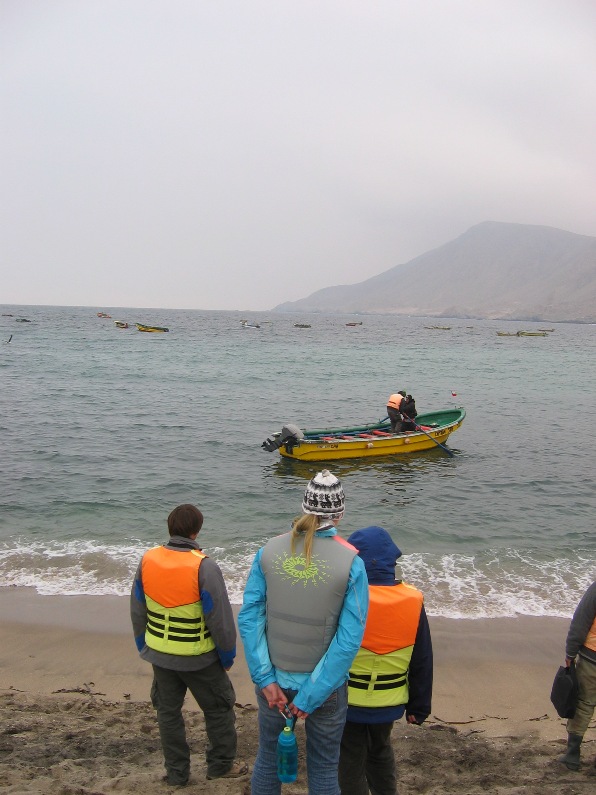
Waiting for the tour boat to take us penguin viewing.
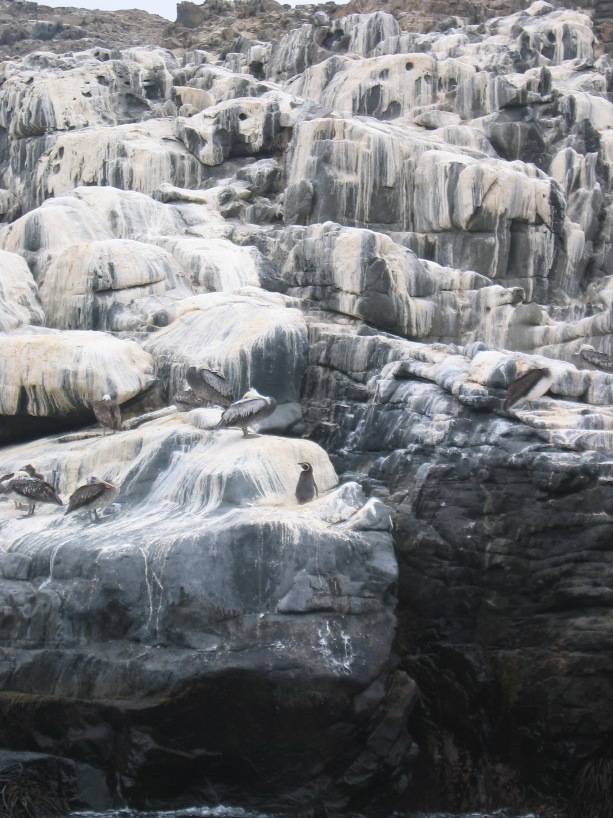

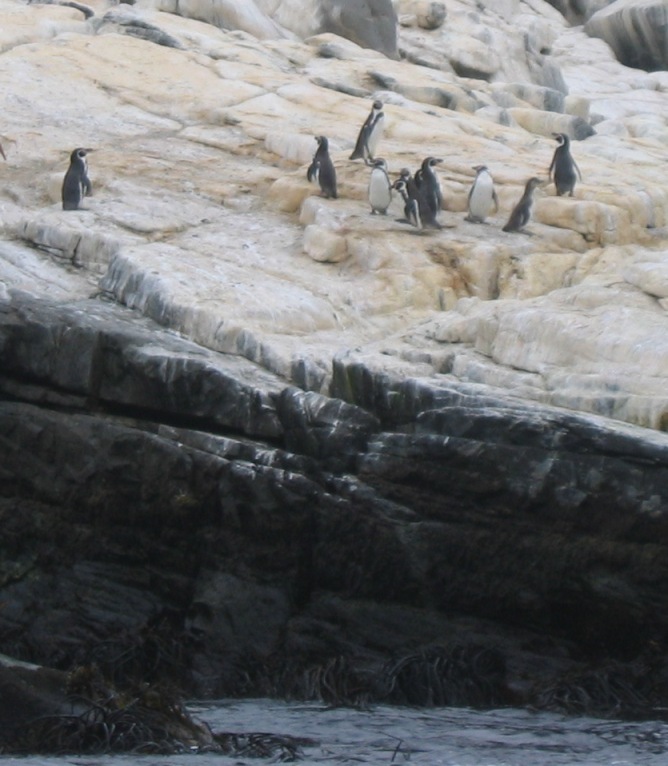
Humboldt penguins and (Peruvian?) pelicans. The boat driver told us some interesting things such as the fact that, due to the Humboldt current, the temperature of the sea water here is only 13 degrees C, despite the fact that we are just a hundred miles or so south of the Tropic of Capricorn. This is comfortable enough for penguins, but NOT for me. I did not try to swim in the tempting clear water, although I had been thinking about it.
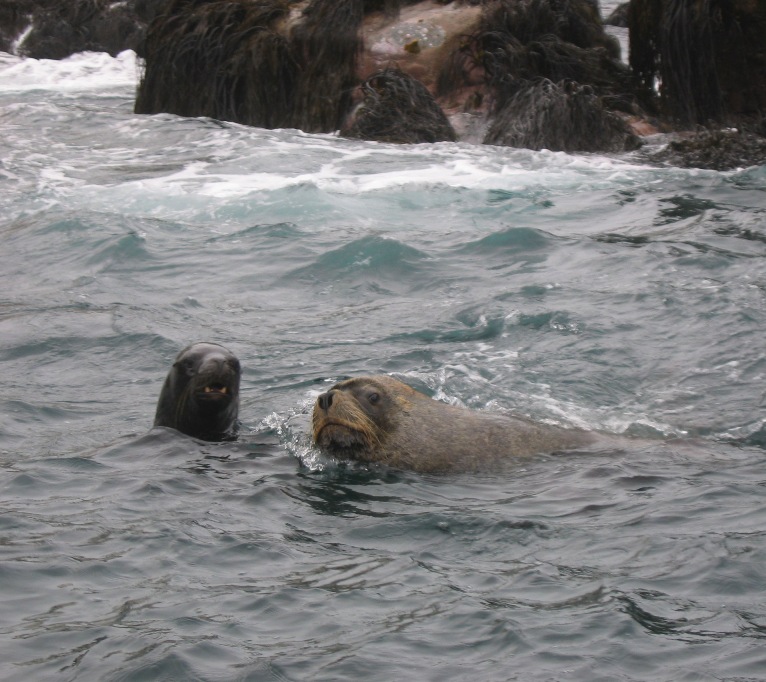
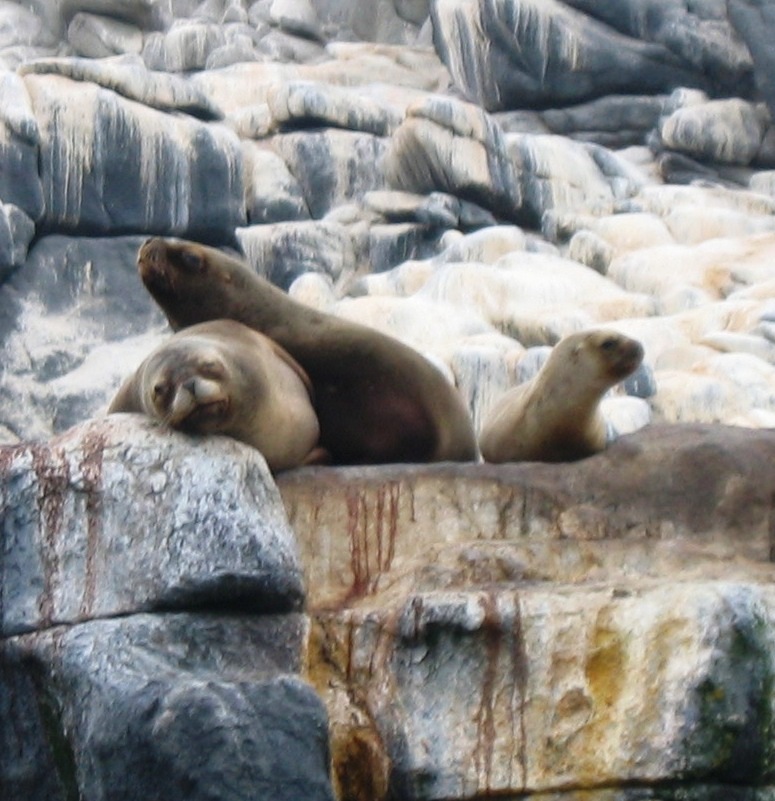
The sea lions, or "Lobos Marinos" (Marine Wolves). They do not eat penguins unless there are no fish to be found - which means they rarely, if ever, bother the penguins.
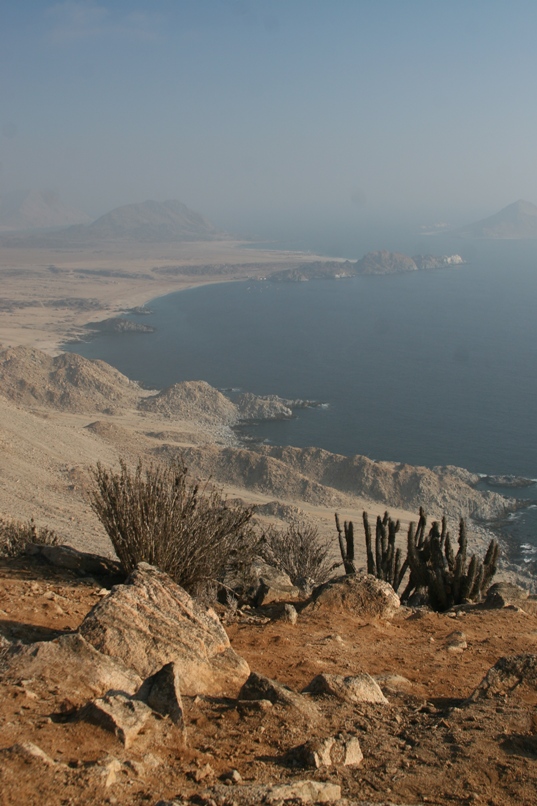
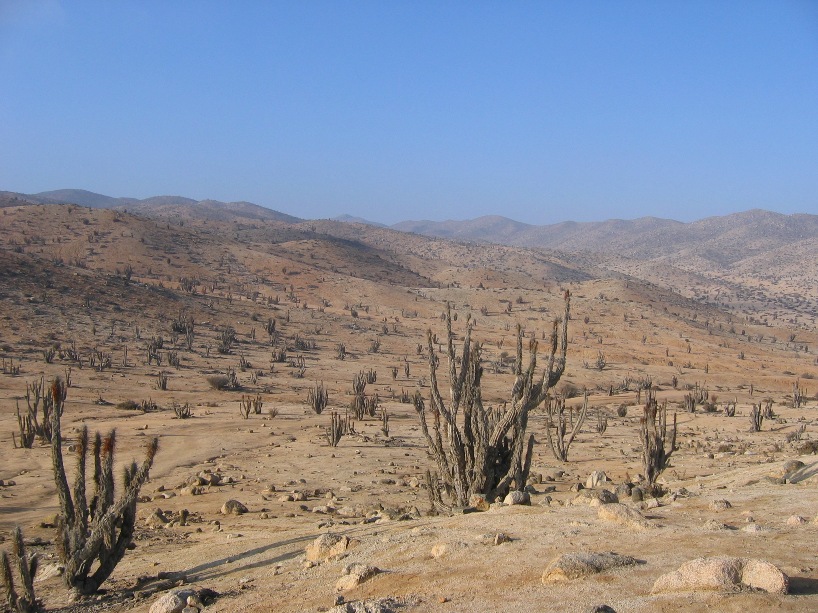
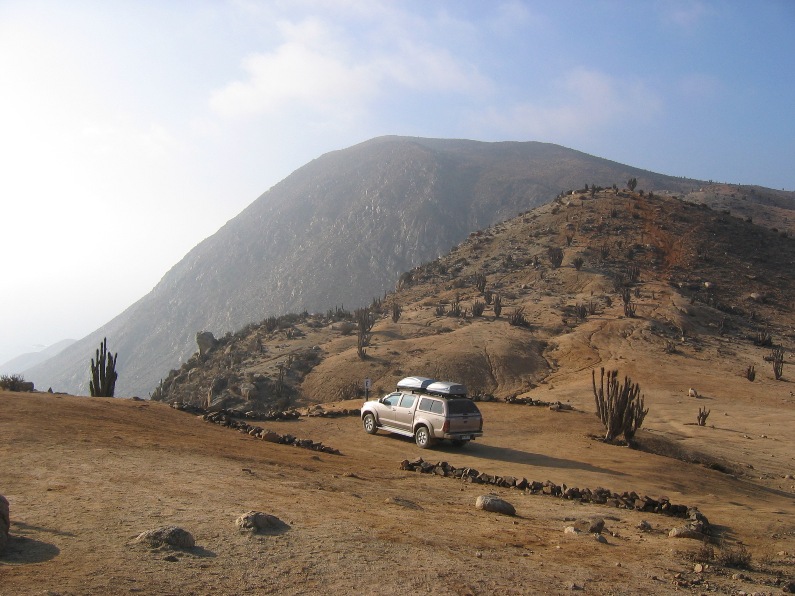
Cliff-side views from the top of the coastal cordillera. We always park in clearly marked and legal parking spaces.
Monday evening Lynn pulled off some culinary wizardry with the chicken from Chañaral. On Tuesday afternoon she sent Geoff and I into the fishing village, where we stood around waiting for three small boats to unload a couple of dozen sacks of sea-urchins before being allowed to choose our pick from the day's catch of fresh fish. The congrio and small sharks were both far too large, as were the 4 fish on a string (called something we couldn't understand but I think begins with "T") that collectively weighed a little more than 6 kilos. Although I don't think we ever succeeded in convincing the fishermen that 2 fish weighing 3 kilos would be enough to feed a family of 5, they eventually consented to sell us just two. I was mostly worried about how to clean the slimy bug-eyed things more than buying a lot and then being able to really pig-out.
Somehow, with several pans of water, a small cutting board, multiple plastic sacks, a short but very sharp pocket knife, and Geoff shuttling fish guts down to the beach to feed the gulls (they make excellent trash cans!), we were able to produce some acceptable filets without making a horrible mess. Then Lynn sautéed some onions, shredded some ginger, sprinkled a little pisco, and worked her magic in the kitchen again. Excellent!
Each day while we were here, a crew of 2-3 workman hammered and sawed steadily on the nearby "Cabaña number 2," seemingly to be doing what needed to be done to the "Cabaña number 1" where we were staying as well. It looked like they were completely gutting the insides of the building and replacing, walls, floors, windows, and all the furnishings. Perhaps we came just a few weeks too early, or we'd have gotten to stay in a clean, freshly renovated cabaña! Now if they can only take a little better care of these places once they are fixed up, maybe people will come and visit more than once or twice a month. And maybe they'll get some nicer comments in the guest book, too. But I doubt that Diego will ever get his TV.
-Rolf