Termas Socos
Chilean Cloud Forest, Day Tripping in Ovalle, Once de
Septiembre
Tuesday September 11
September 11 is an infamous (or famous, to some) day in Chilean history, and it has been so ever since Sept. 11 1973, exactly 28 years before the attack on the World Trade Center in New York.
On Sept. 11 1973, tanks rolled through the streets of Santiago and surrounded the presidential palace, marking the beginning of a military coup masterminded by General Augusto Pinochet. The country had been anticipating such a possible action for months, and although there had been military intervention in Chilean government affairs in the past, these had been relatively insignificant exceptions to the highly constitutional norm. The then current president, Salvador Allende, sequestered himself in the presidential palace to deliver a farewell radio speech as the military started bombing his house (and he was later found dead clutching a rifle - supposedly having shot himself). Can you imagine some US Secretary of Defense announcing "I'm in charge" and then ordering the Air Force to bomb the White House?
Nothing in the country's history prepared its people for the brutality of the new order imposed by Pinochet. In the days and weeks following the takeover, at least 7 thousand people - journalists, politicians, socialists, trade union organizers and the likes - were herded into the national football stadium where many were executed and still more were tortured. Curfews were imposed, the press was placed under strict control of the junta, and military officers were sent in to take charge of factories, universities, and any perceived seat of socialist support.
The coup was in no small manner directly abetted by the actions of the American CIA, which had been given an $8 million dollar budget and a directive from Richard Nixon to 'make the Chilean economy scream." As far as Richard Nixon and Henry Kissinger were concerned, a US-friendly military dictator would be better than a democratically elected socialist government lead by a president who named Fidel Castro among his friends. Among Kissinger's purported shenanigans is the attempted kidnapping of an honorable Chilean military general who refused to be manipulated into rebellious actions against the socialist government. The kidnapping was botched and the general murdered. Evidence directly implicating Kissinger remains sketchy and elusive, and although surviving relatives of the general have filed a civil lawsuit in the US, and lawyers in both Britain and Spain have tried to get Kissinger arrested under charges of war-crimes and terrorism (citing this murder as one of the principal offenses), he has to date successfully avoided any sort of incarceration or trial. So has Pinochet, for that matter - but he died less than a year ago.
The legacy of Pinochet is divisive, and controversial. Believe it or not, he is not universally deplored among Chilenos, as his free market policies eventual saw some level of economic success - especially for cooperative business and military leaders. Even today, after a return to a democratically elected constitutional government, there remains a significant number of devoted "Pinochetistas," who believe that Pinochet's "ends" of saving the country from communisms and fostering a free-market open-trade economy justified his brutal, crushing, and intolerant means.
But today the Pinochet era is clearly over - we hope. I think most Chileans want to put anything and everything to do with it far far behind. Parts of the main avenue in Santiago are still named "Once de Septiembre" (Sept 11), but I think this is more due to the administrative hassle and cost of changing maps and signs vs. a lingering sentimental desire to honor or even remember the notorious military government of the 1970's and 80's.
Henry Kissinger, by the way, was awarded the Nobel Peace Prize in 1973 for his role in arranging a non-lasting cease-fire in Viet Nam. The prize was announced about one month after Pinochet's coup and the violent death of Salvadore Allende.
********************************************************************
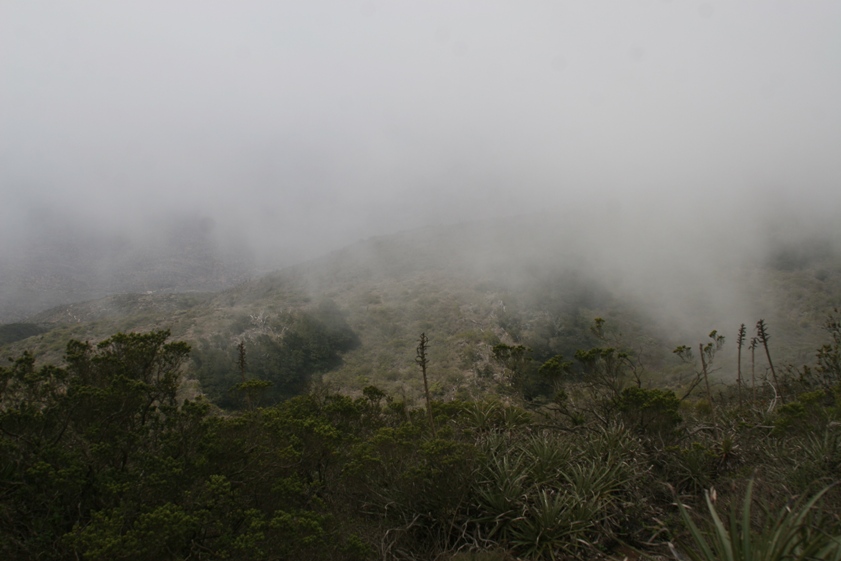
Our family woke up this Sept. 11 in a place called Termas Socos, a small creek-side resort just off of the Panamerica. We drove here yesterday from Las Tacas, taking a mid-day detour through Parque Nacional Frey Jorge, the scenic oddity of a cloud forest situated along the Pacific Coast less than an hour south of La Serena.
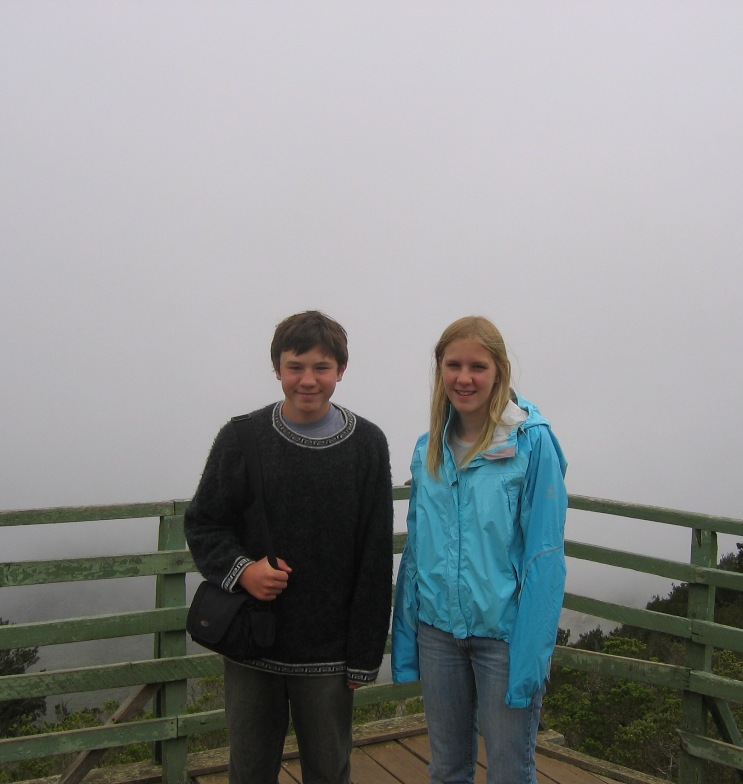
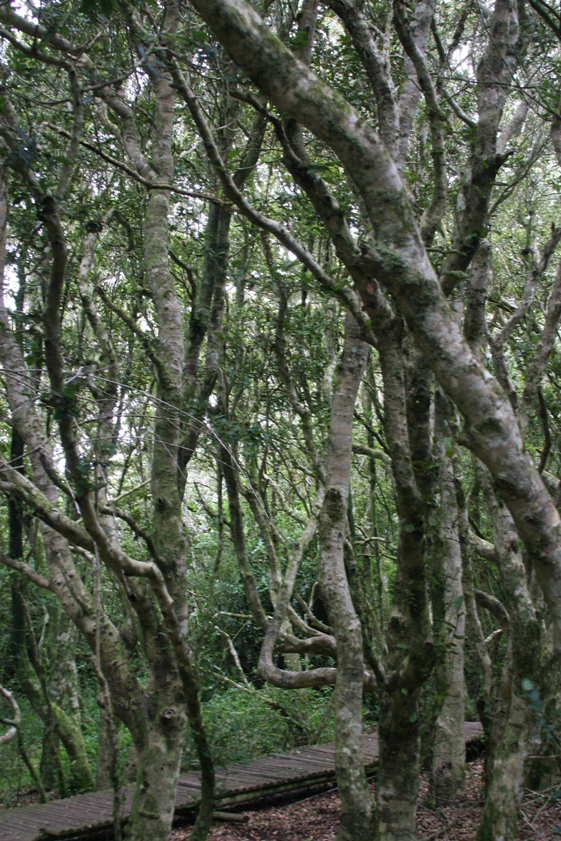
Bordered by the ocean on one side, and miles and miles of dirt-and-cactus desert on the other three, the constantly-cloudy hilltops of Frey Jorge support an unusual, unique, and beautiful assortment of plants and teen-age tourists.
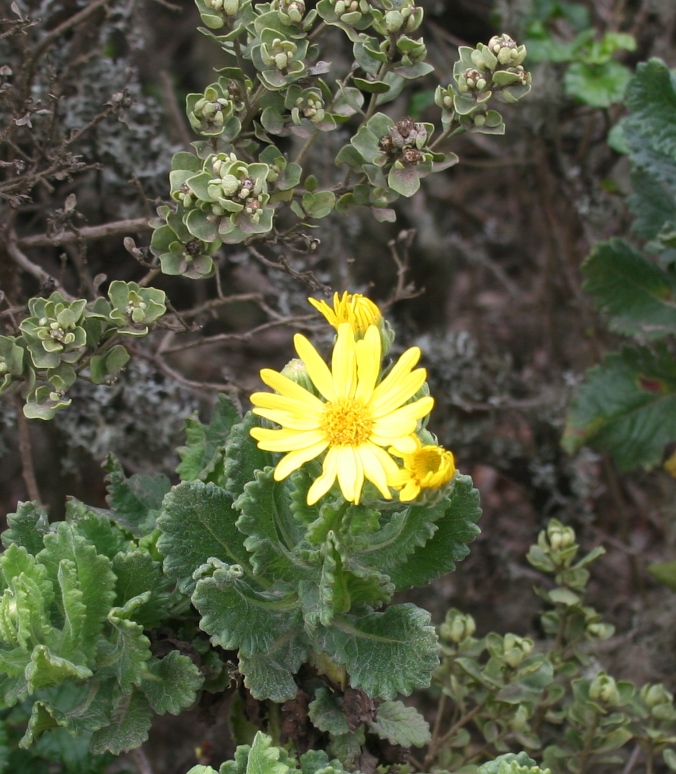
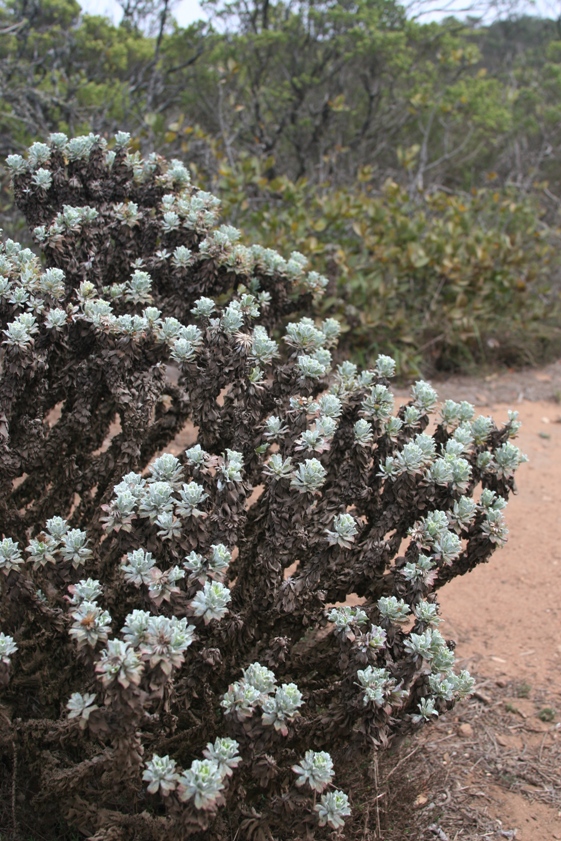
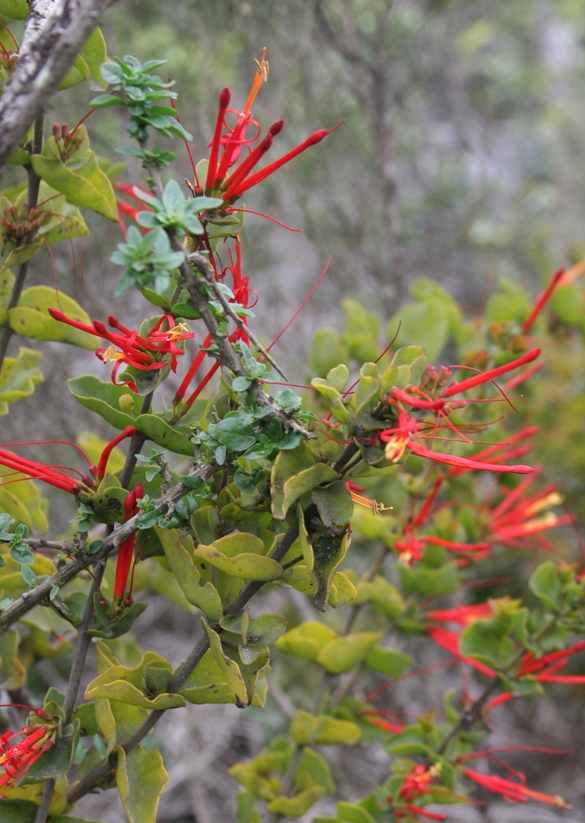
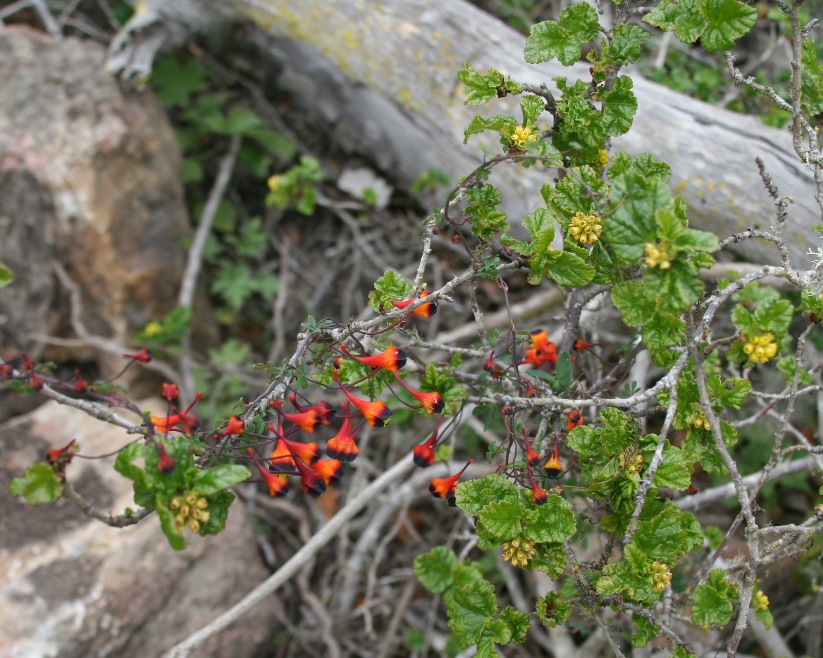
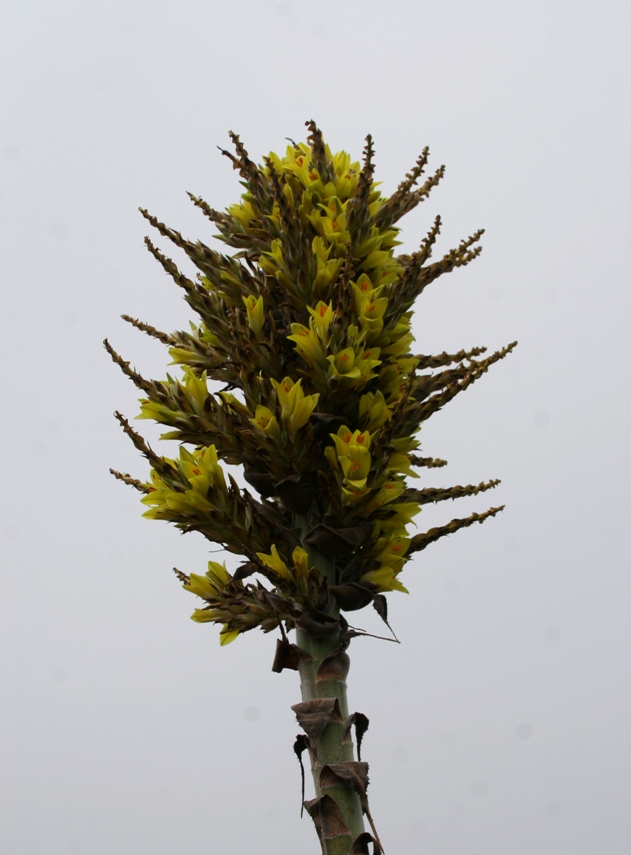
Flowers in the cloud forest.
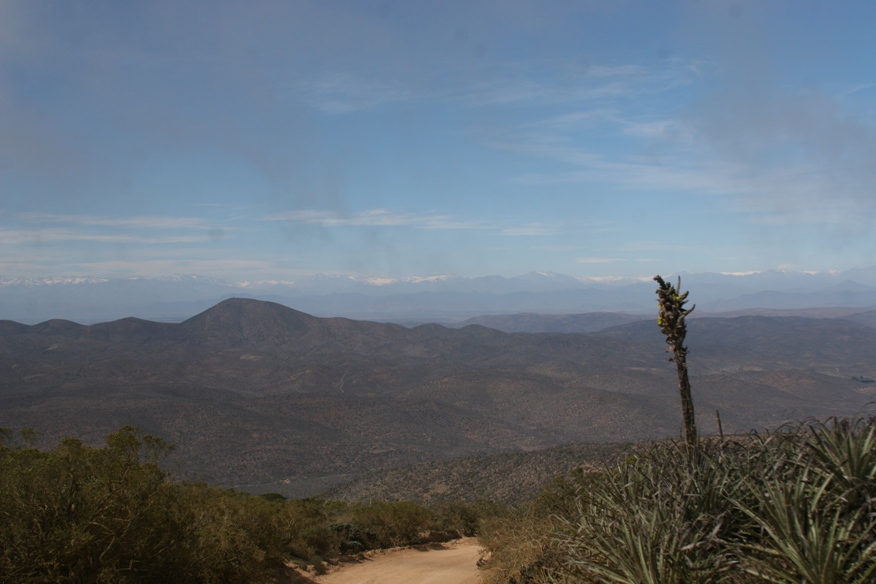
Looking to the east from the edge of the cloud forest towards the Andes. There are many places in Chile where you can literally "look across" the whole country.
Today we visited Ovalle, a nearby city of 60,000. We went to visit the museum full of Diaguita pottery and shop for Chilean stirrups, having become enamored with the latter during our trail rides at Hacienda Los Andes, and deciding they would make excellent decorations if we couldn't find a horse to hang them from.
Here in Ovalle, the impending Independence Day holiday clearly rates more attention and energy than the legacy of Sept. 11. La feriada "Dia de Independencia" technically occurs on Tuesday September 18, exactly one week from today. This is not too early for executing a brisk curbside trade in plastic Chilean flags (and the subsequent flying and waving of them in all manner of places), stocking up on party supplies, and setting up stages and platforms in the Plaza de Armas. As there is still one whole week before the actual independence day, I wonder just how much more of the city can and will get wrapped in red-white-and-blue bunting and draped with plastic flags.
From the look of things, the fiesta is spread out into almost two weeks of revelry, surrounding three actual legal holiday days: Monday, Tuesday, & Wednesday of next week. Many people will take a short work day this Friday before the weekend and then drag themselves back to work maybe-yes-maybe-no for the sillyshort work week of a hung-over Thursday and Friday. And from the looks of it, the rest of this week is already a virtual working holiday.
Getting back to why we went to Ovalle and what we did there - we found and bought some very nice hand-carved stirrups (yes, they carve them because they are wooden half-shoes sort of like Dutch clogs), enjoyed a fascinating, blissfully brief visit to the small museum, and mailed home two boxes of souvenirs along with some completed schoolwork. The "mailing stuff" part of the day was quite tedious, but at least we're now familiar with the topic. Today we used Chile-Express. Next time we'll try the regular Post Office.
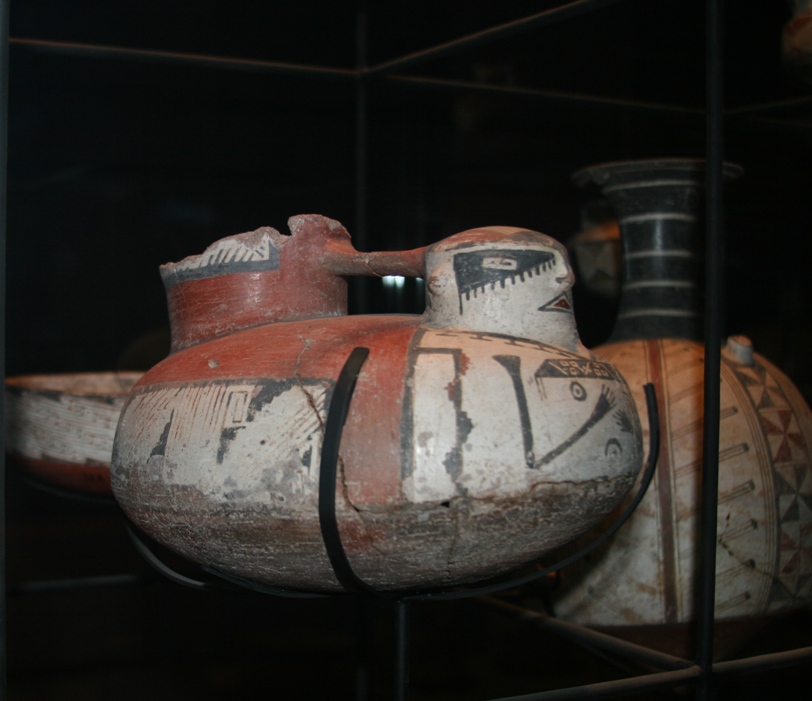
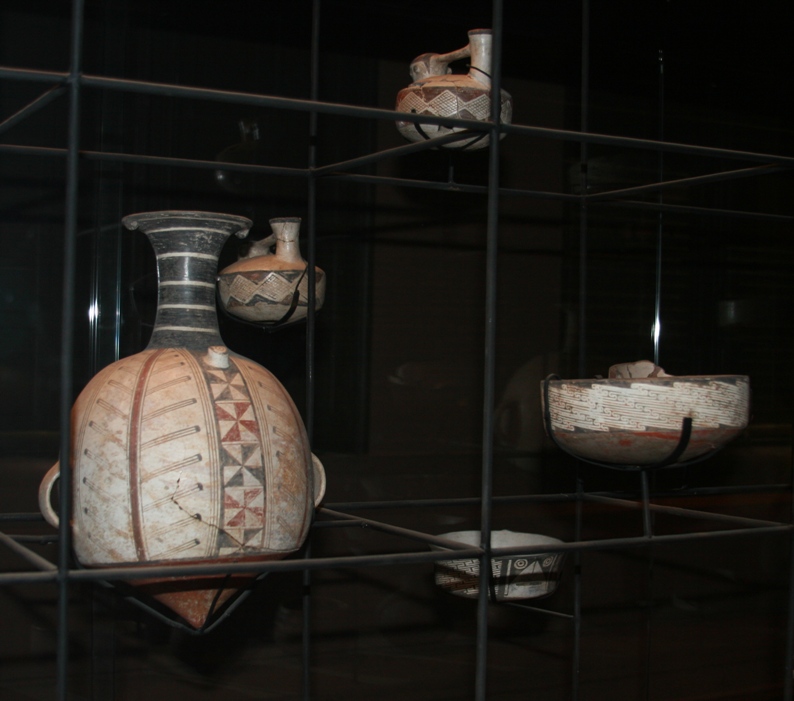
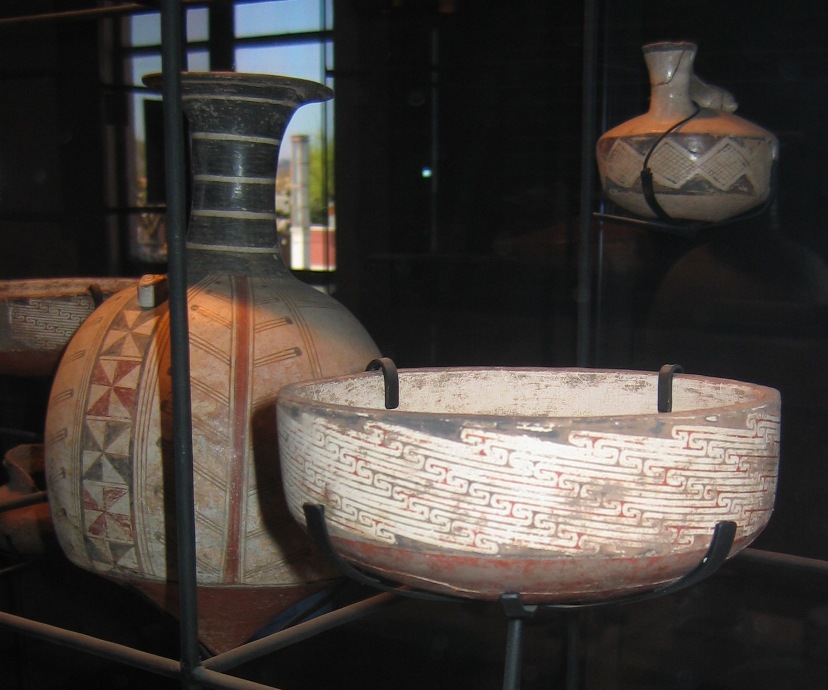
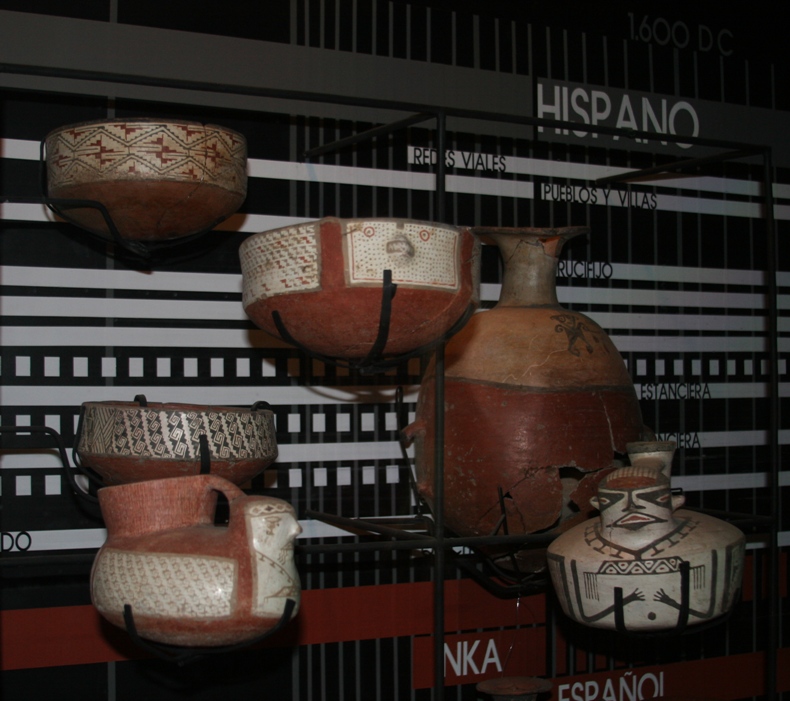
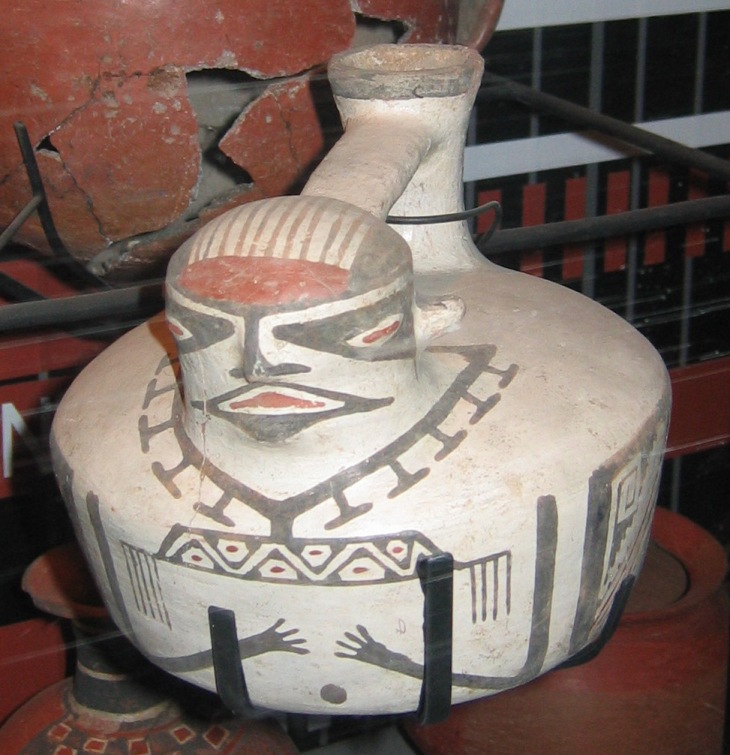
Diaguita pottery, excavated from the nearby river valleys in north-central Chile. This pottery is often said to be the finest (from an artistic and craftsmanship perspective) pre-Columbian pottery of all of the Americas.
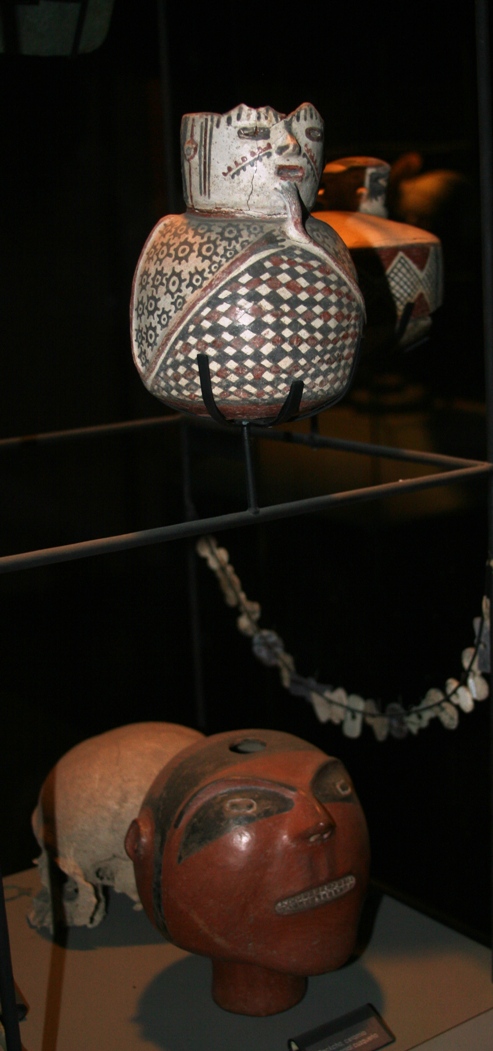
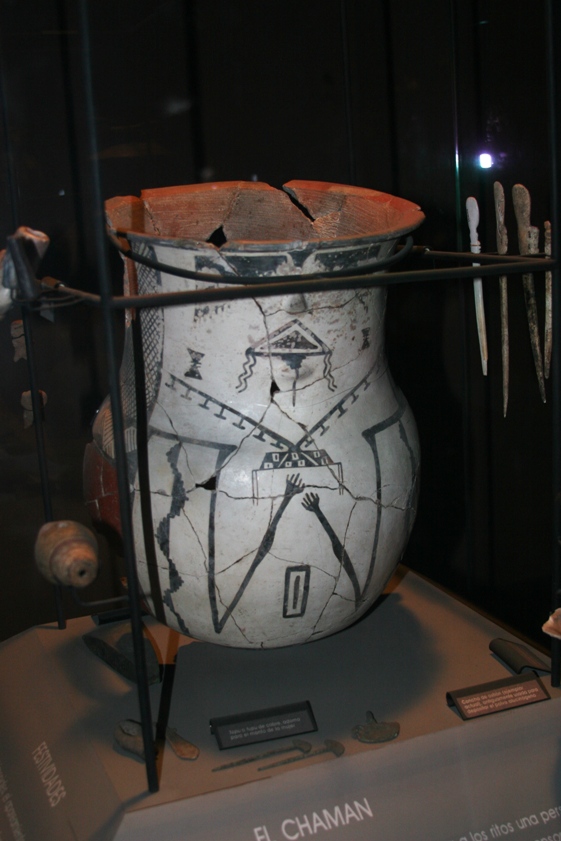
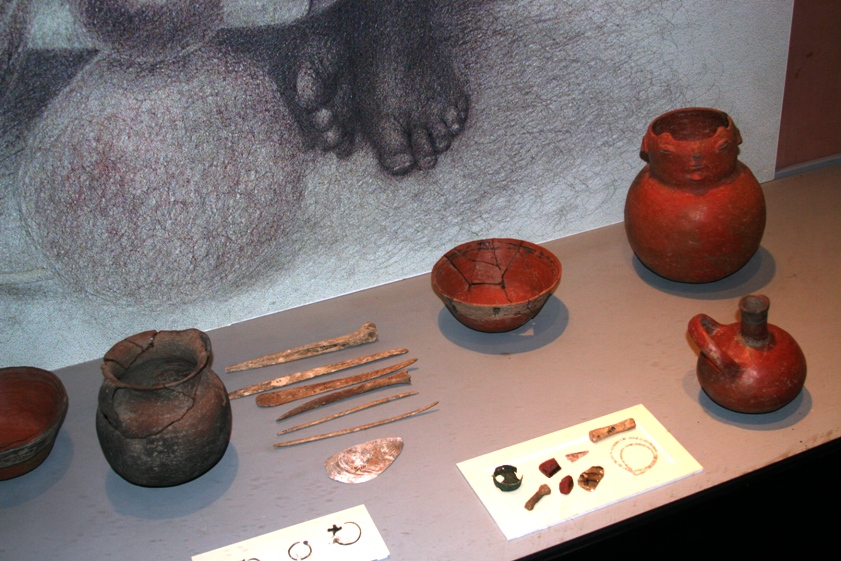
Other Diaguita artifacts.
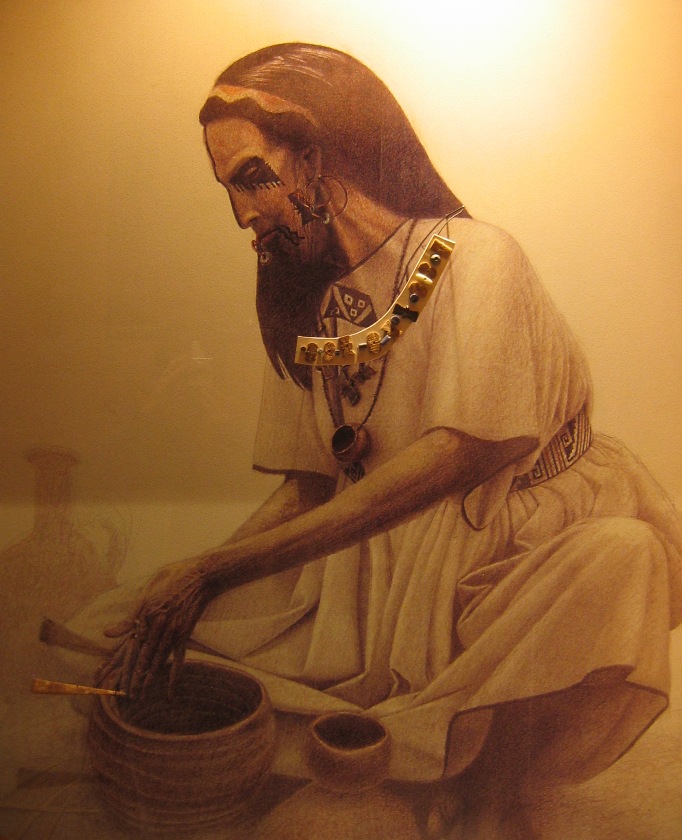
This ancient photo was found amongst other artifacts at a Diaguita archeological site. The photo (although it is not known for certain if the subject was male or female) clearly shows the manner of dress and use of jewelry and ornamental tattoos by the Diaguita peoples. The paintings on the pottery affect a similar style and show a devotion to the same animals and objects.
Returning from our successful foray back to Termas Socos in by mid-afternoon, there was still plenty of time to enjoy the warm baths and not-so-warm swimming pool. Not to complain about the pool - it is the warmest swimming pool I've tested so far anywhere in our travels throughout Chile. This isn't saying a whole lot - but for once I could swim for more than 5 minutes without my head growing numb, and I was truly grateful for the chance to get some decent aerobic exercise.
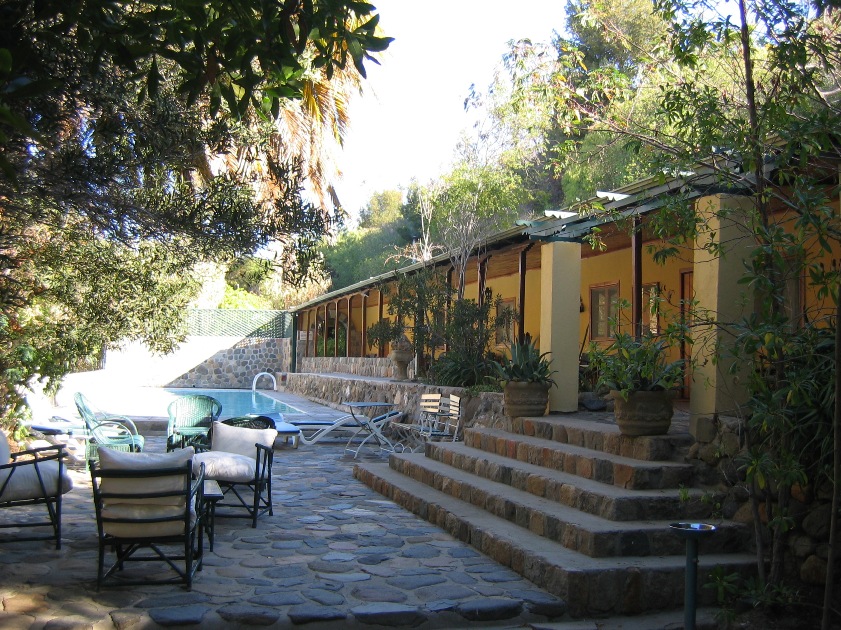
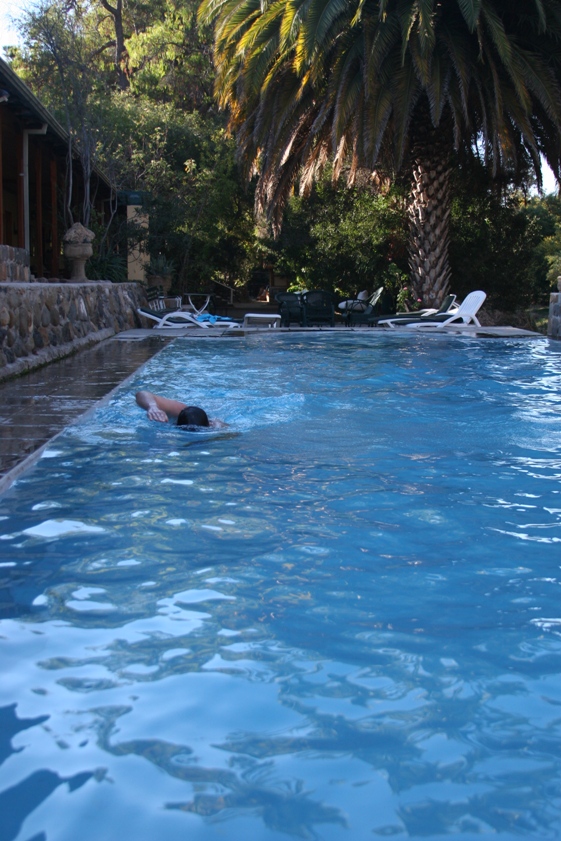
Termas Socos
-Rolf