Vicuña - Pisco Elqui - Bahía Inglesa
Pisco
Saturday July 14
The clouds and haze gradually dispersed during our excursion further up the Elqui River valley Friday, and by early evening, the sky was crystal clear. It soon darkened to an intense jet black, punctuated by a staggering array of piercing stars. This meant that in the evening we were able to drive up the hill north of Vicuña and take advantage of the excellent tours at the Mamalluca tourist observatory. We debated the pros and cons of requesting the tour in English or Spanish, and in the end decided that if we requested English, we might be the only people in our tour group. We guessed right.
We viewed star clusters and nebulae through a 30 inch telescope, and learned to identify some of the constellations of the southern sky. Our guide explained the popularity of Northern Chile with astronomers from around the world - there are three important requirements for the location of an observatory
- Very little light pollution (few nearby large cities - a relatively un-developed region)
- Clear skies for a large number of nights per year (in the range of 300-320)
- High Altitude (= less atmosphere to attenuate the light from celestial objects)
Almost no other place on the planet satisfies these requirements as well as northern Chile, which explains the abundance "observatory" icons speckling our driving maps. Some, like Mamalluca, are strictly tourist operations, but most are serious, full time research centers. Our guide told us of the plans of various countries and organizations to build new observatories with bigger and better telescopes. One of the current projects near Vicuña is the constructions of a 8.5 meter telescope, but they had to wait until the tunnel in the road could be widened so it would be large enough to carry the pieces for the telescope mirror. So with all the ultra high technology being put into these telescopes (they even shine lasers into the sky to measure atmosphere vibrations and then vibrate the telescope in a copycat manner), it really comes down to that ancient art that allowed the Romans to conquer so much of the world - building roads!
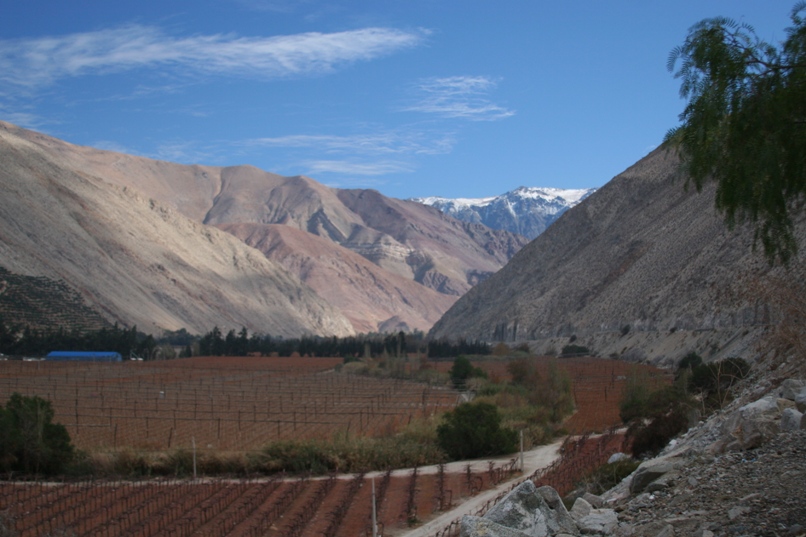
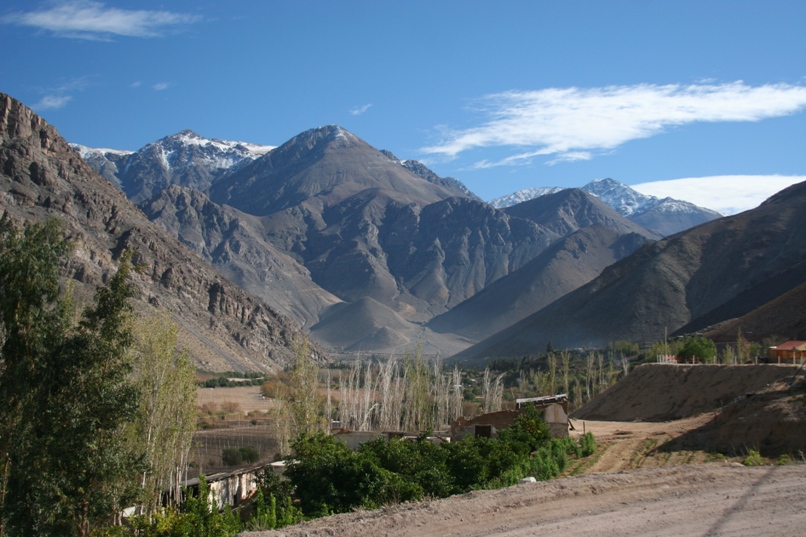
As we aren't experts in nighttime photography (yet), we'll have to rely on our memories for pictures of the tour at Mamalluca Observatory. However, earlier during the day, the sun was out and our cameras worked quite well with a simple push of the button. We had driven further west up the Elqui River valley to find what we could find and see what we could see.
Gabriella Mistral is the famous native daughter of the Elqui Valley. She was the first Latin American to win the Nobel Prize when she took home the prize for literature in the mid-40's. She was born in Vicuña, raised in a town a little further upstream called Monte Grande, and then taught for many years in La Serena, which is where the Elqui spills into the Pacific Ocean. The towns up and down the Elqui valley sport numerous Gabriella Mistral statues, busts, and small museums, and the artisans and hawkers place tid-bits of her poetry on or in their artistic creations and souvenirs. Her poetry matches her lifestyle - that of an austere, matronly, loving schoolteacher, intensely devoted to her students and children in general, and deeply attached to the land and place where she grew up and lived. I'm sure some of here verses have been loosely translated into English - especially one that reads something like
"If your child speaks to you - Listen!"
"If your child asks of you - Give!"
...etc (with about 15 more lines)
Before Gabriella Mistral became famous, the primary enterprise of the Elqui valley was the growing of grapes for the making of pisco - the well loved and copiously consumed Chilean (and Peruvian) brandy. Now that Gabriella Mistral is famous, they still grow lots of grapes and make substantial quantities of pisco in the Elqui valley. In fact, the city located at the terminus of our driving tour on Friday is succinctly named "Pisco Elqui." We viewed the statues, bought some "Gabriella stuff," strolled through a little Gabriella museum, and then toured a quaint distillery in Pisco Elqui.
After sampling two different types of pisco (straight), followed by a pisco sour chaser, Lynn, Geoff, and I wobbled up the street in search of lunch. Tom and Anna followed. Geoff was delighted to finally find a restaurant serving pastel de choclo (a kind shepherd's pie kind of thing except with corn-meal instead of mashed potatoes). Anna was smart and followed Geoff's lead. Lynn, Tom, and I had empanadas, which were ok, but note quite as tasty and enticing as those steaming, aromatic clay pots of pastel de choclo.
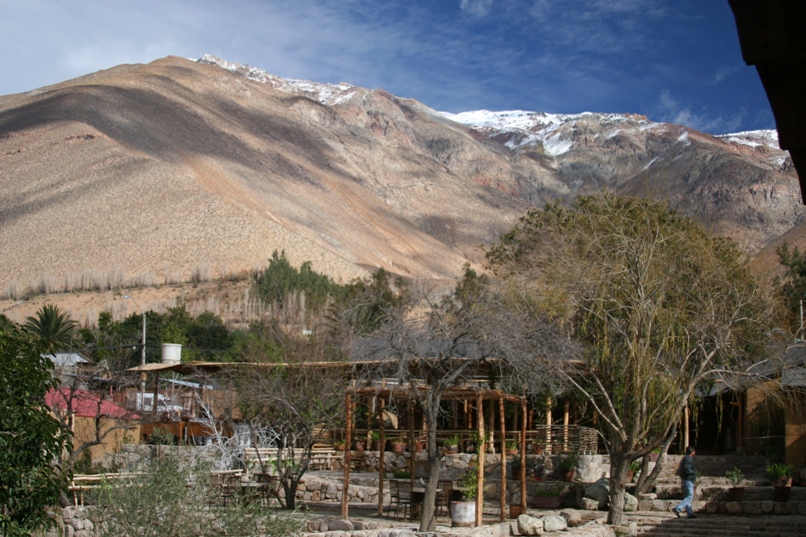
Views of the Elqui Valley
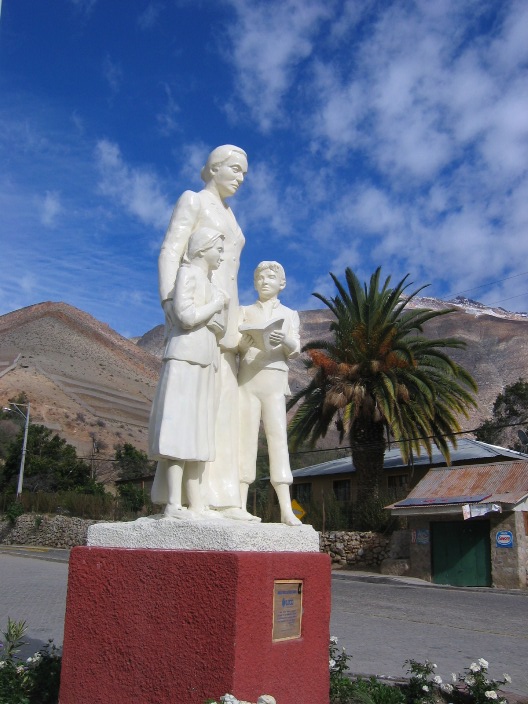
Gabriella Mistral Statue in Monte Grande
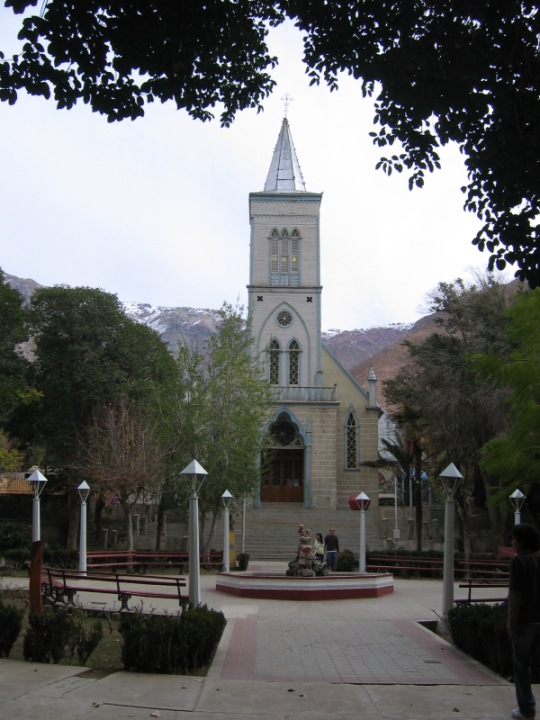
Town Square in Pisco Elqui
The distillery "Pisco Mistral" dates back to the early 20th century.
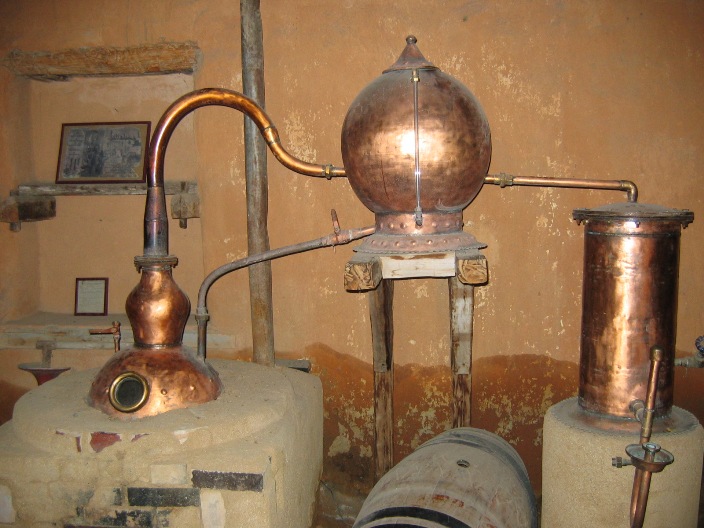
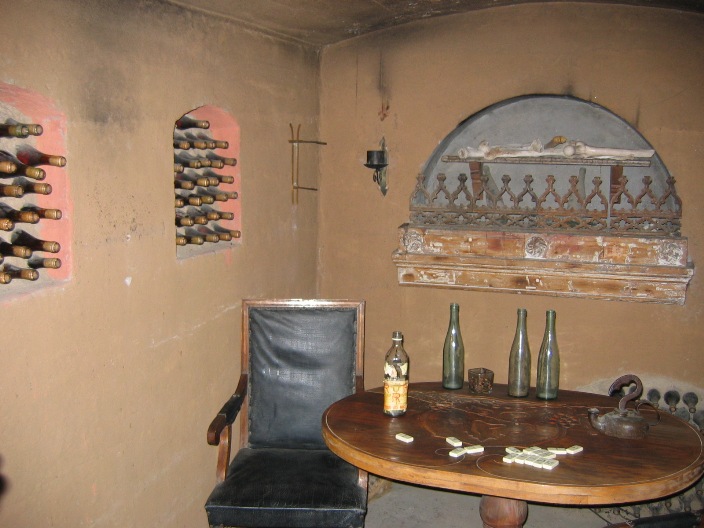
An original still, and the office and "domino room" of the founder of the distillery
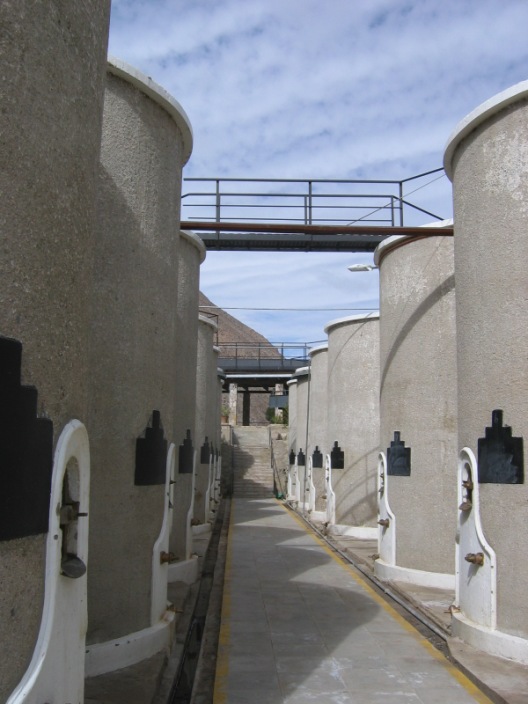
Settling tanks. To make pisco, the grape juice settles from the stems/seeds/skins in these tanks for about half a day. The the juice is moved to metal tanks where it ferments into wine which takes about 2 weeks. Then the wine is distilled into pisco, and aged for somewhere between zero days and 3 years, which determines the quality and price of the final product. What is perhaps most fascinating (to me) is that the tour was in Spanish and we understood enough to file this report (of course I'm not 100% certain of the facts, but the essential idea is correct).
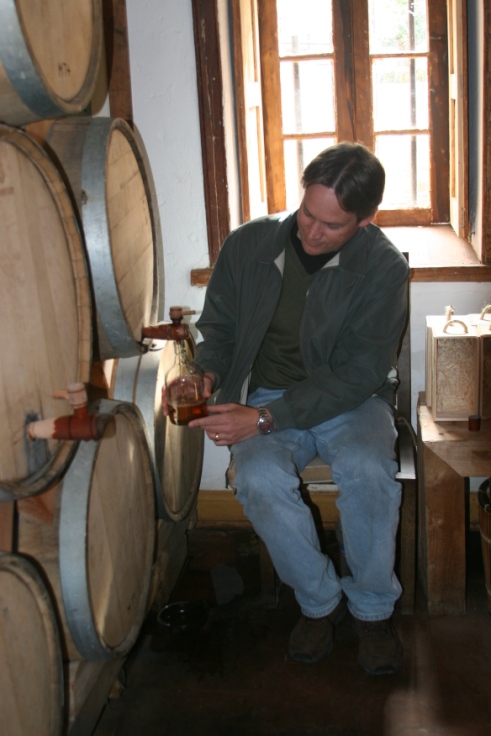
Rolf pours himself a small taste of pisco.
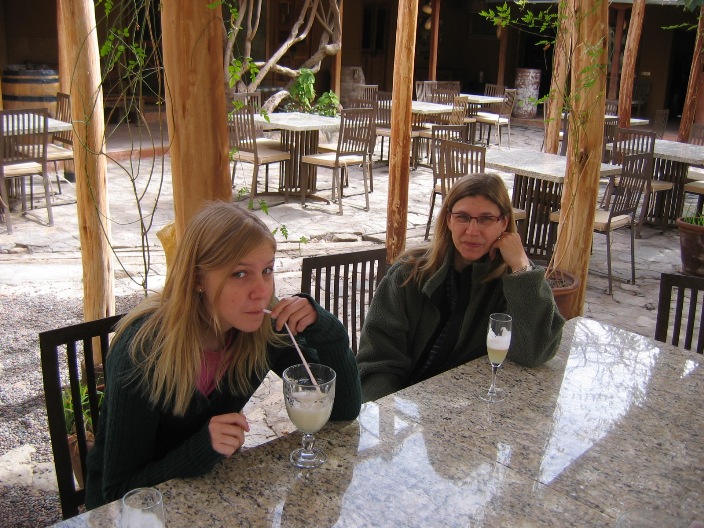
Enjoying after-tour drinks on the patio.
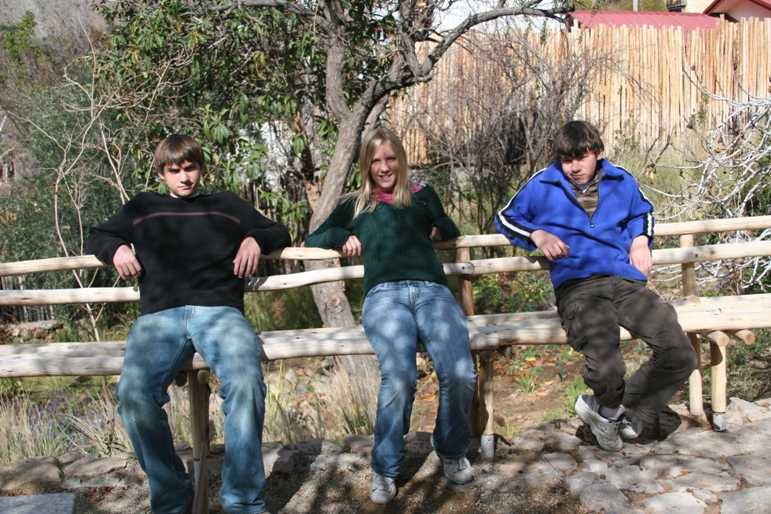
Kids on the rail.
Today was a driving day, so there is nothing much exciting to say, except that we got up, took some more pictures of the cute llama at Hosteria Vicuña in the morning, checked out, and then headed north again. Vicuña is small and dusty, but there is something to be said for any community where horse-drawn carts and state-of-the-art astronomy observatories are similarly common place.
The drive plowed through some monotonous desert, but we started a new audio book which helped. Lunch near the plaza of the coastal town of Vallenar was pleasant and enjoyable, and we basked in balmy mid-day sunshine during a short walk after the meal. About and hour and a half's worth of additional driving got us to Bahía Inglesa, which is our stopover for the night before pushing on to Antofogasta tomorrow. This is a tiny little coastal resort, with some funky little cabañas and hotels (like ours), and at least one very good restaurant (where we enjoyed a great seafood dinner). We have it on our schedule to come through Bahía Inglesa again on the return trip, right before Geoff leaves for home, and then our stay will be for several days. We're very pleased to see what we'll be able to enjoy more of later. Does that make any sense? It's getting late.
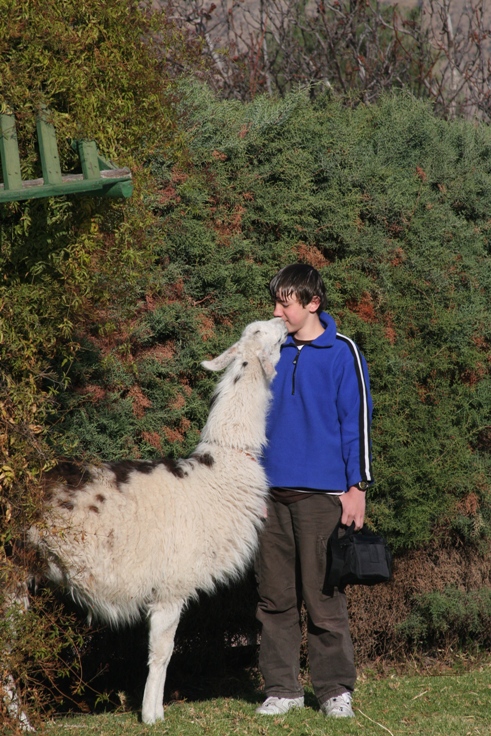
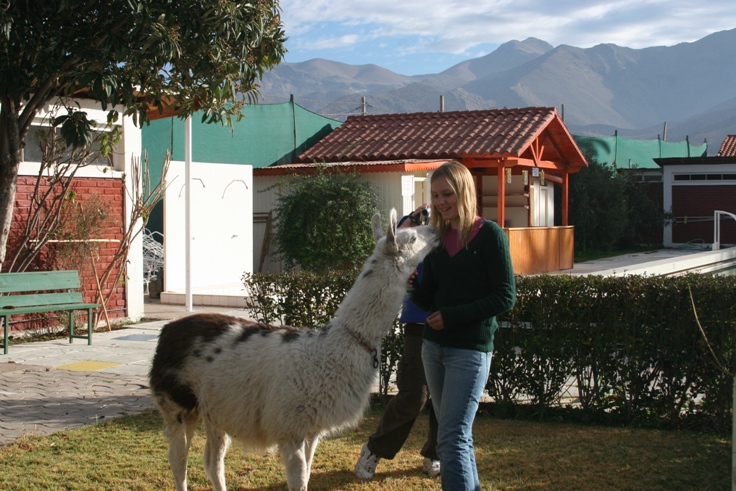
Regardless of how cold our rooms were, the llama (I forget her name) warmed our hearts. We thought llamas were supposed to be of a cranky and ornery temperament, like camels. This one snuggled like a puppy. Maybe the owners feed her by hiding food in collars and various pockets.
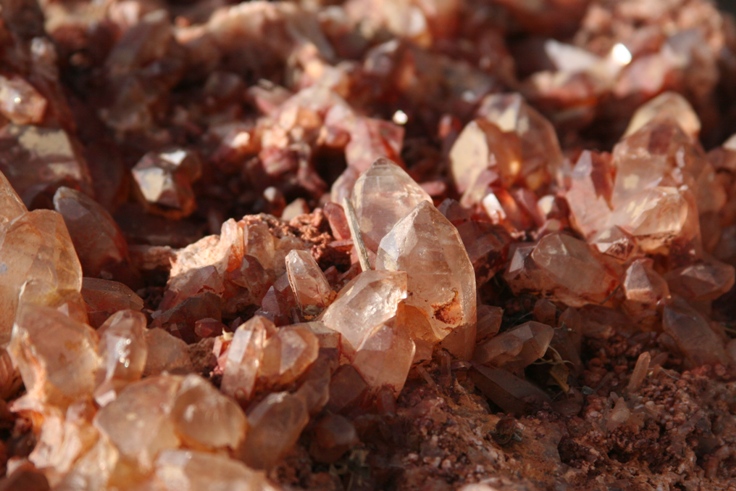
Lynn took a better close-up of that amazing hunk of rock, which was peppered with quartz crystals.
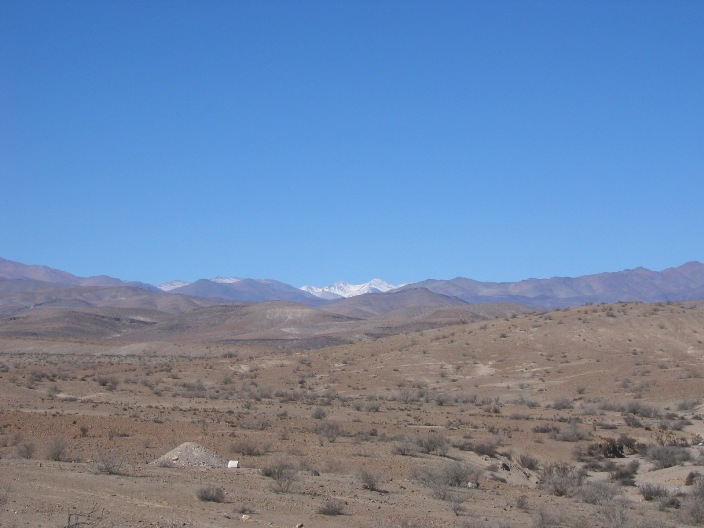
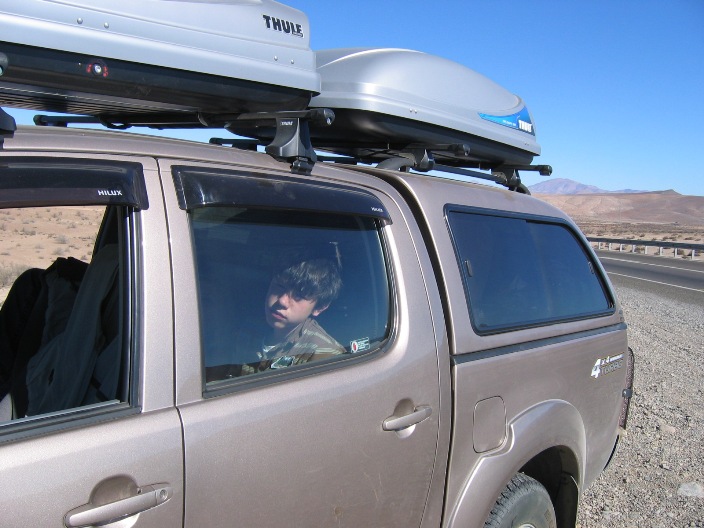
Today's drive. Tom was bored.
-Rolf
14 July 2007