Antofagasta - Taltal
R&R, School, Back through the Desert, Big
Telescope
Saturday August 18
Antofagasta provided the expected several days of relaxation in a clean-looking, fresh-smelling environment. This is a city where it rarely rains but somehow there are Palm trees and green boulevards and a lack of the heavy layer of dust that seems to hang in the air and coat every inch of Iquique. The central plaza of Antofagasta features a clock-tower gifted by Britain on the 100th birthday of Chilean independence (said to be a "mini Big Ben" but not quite exactly) and something I hadn't seen nor expected to see in Chile - Gypsies! How did they get here from eastern Europe? - just another unanswered anthropological mystery to add to the list.
We didn't do much here except shop for supplies (and the new Harry Potter book in English), enjoy a few very nice restaurants, work on school, and breath lustily and deeply whenever we were outside. We arrived on Sunday and then departed on Thursday, just before we had a chance to either get bored or try to experience anything more exotic that the city might have to offer. Perfect.
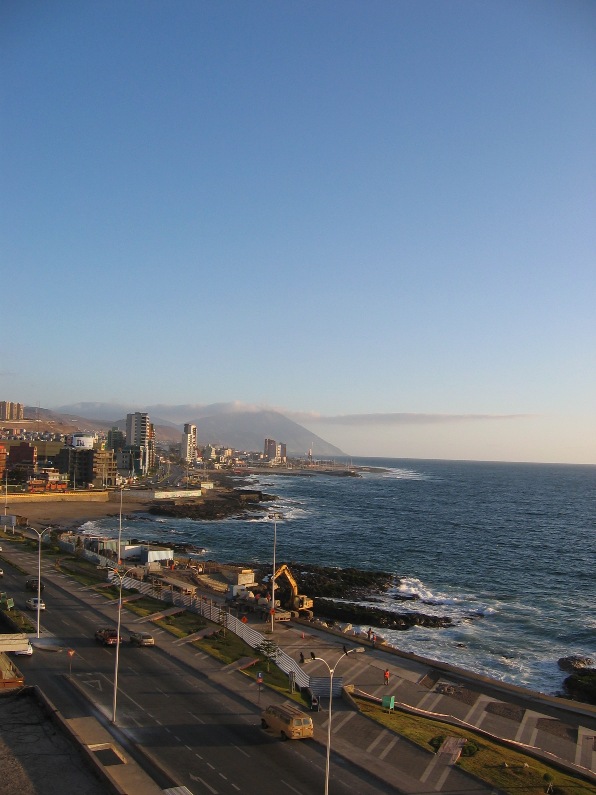
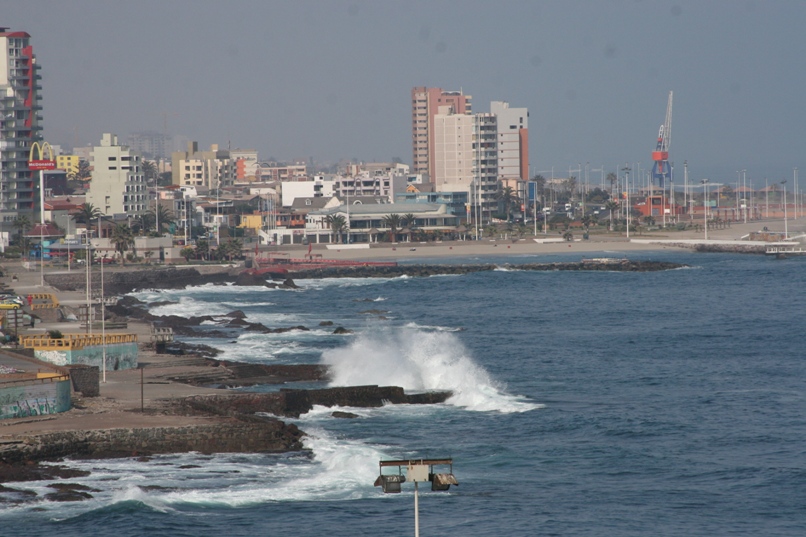
The coastline of Antofagasta.
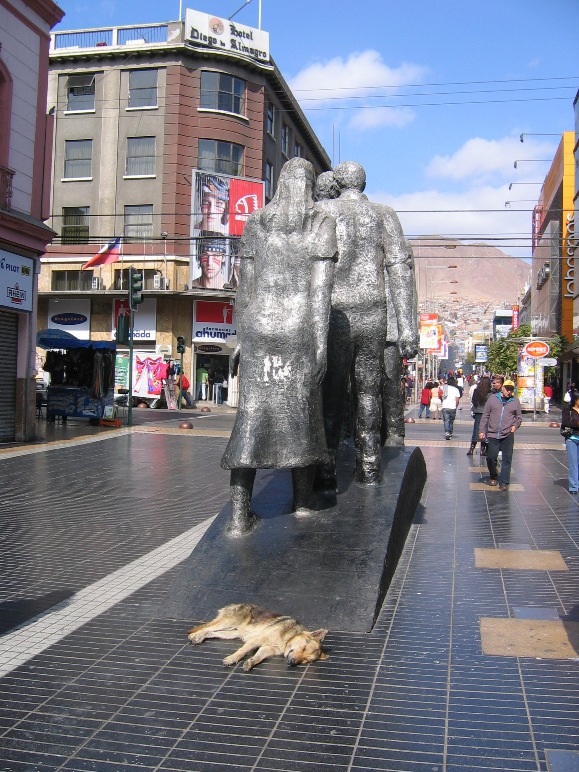
Zona Peatonal.
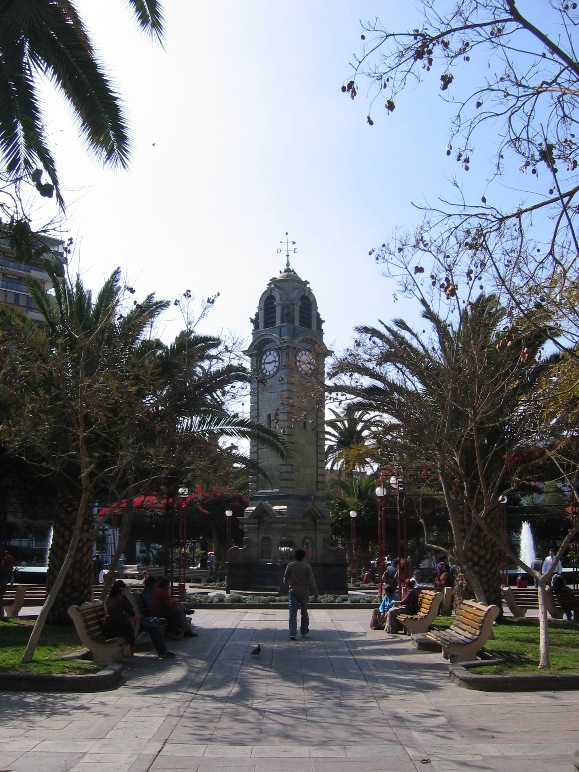
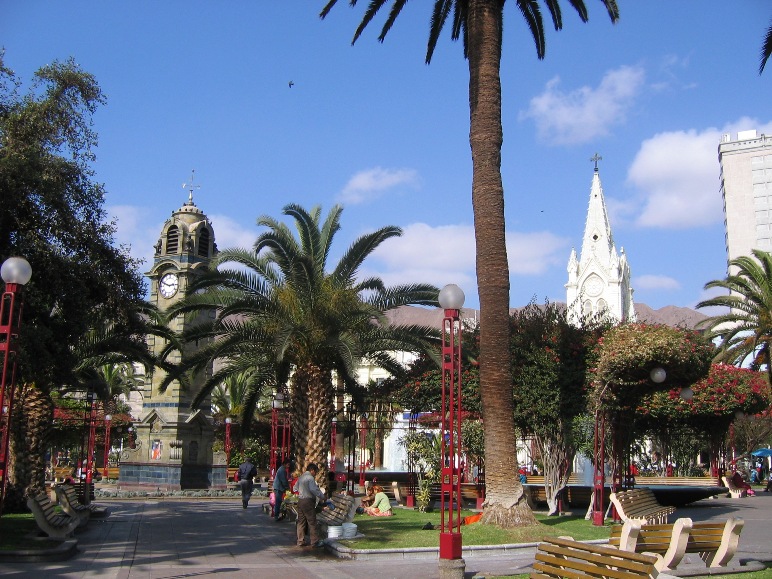
Central Plaza.
Since we left on Thursday to head for locations more desolate (either camping or staying in cabañas near the breach), we had to stock up on food at the supermarket on Wednesday afternoon. Then on Thursday morning after our last Holiday Inn breakfast, we stuffed ourselves and all of our stuff, the latter having gradually migrated out of the car and into our hotel rooms, back into the truck. Soon we were careening back through the now-familiar red-brown forever-desert heading southbound not far from the coast. In northern Chile the desert starts where the ocean stops.
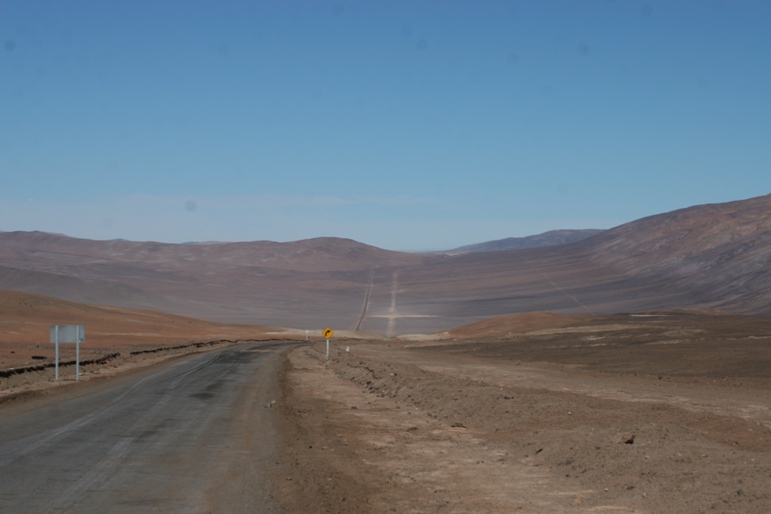
Another fine scenic road traveling south from Antofagasta, a few dozen kilometers inland from the Pacific ocean.
The guidebooks told us that there were camping beaches and perhaps a few cabañas available for rent in the small fishing village of Playa Paposo. When we arrived, we found a small rocky harbor servicing a small fleet of old wooden fishing boats, and a dusty little town with one nice school and a lot of little hamlets. After driving around for 5 minutes, and not feeling intrepid enough to ask any locals if they would put us up for a few nights (or let us use their toilet if we camped nearby), we decided to push onward further south.
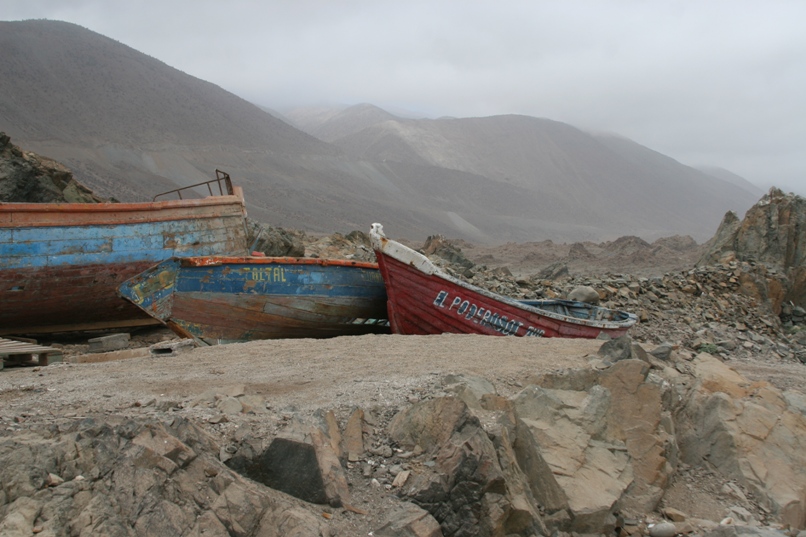
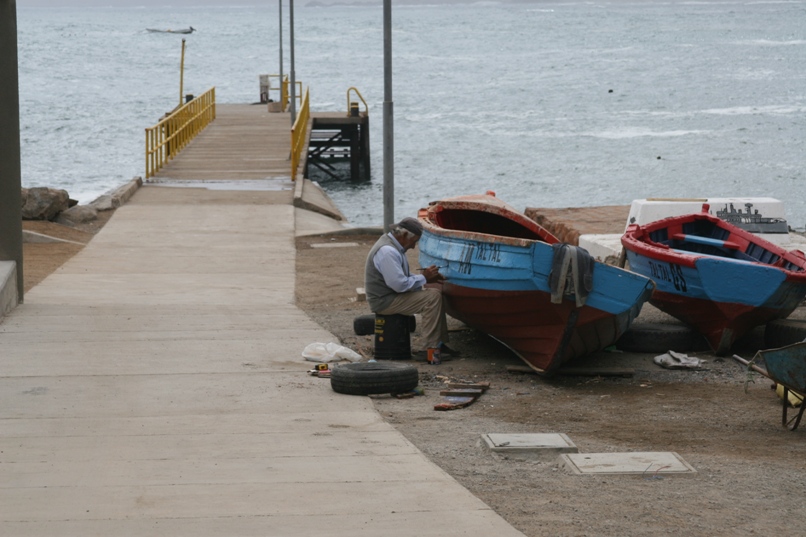
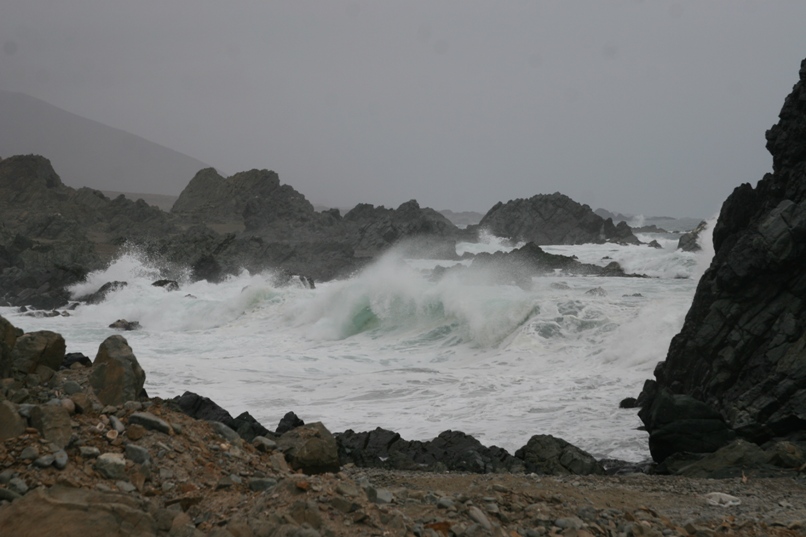
Playa Pasposo.
Another 50 kilometers south along the coast brought us to a cabaña resort just outside of the town of Taltal. This place seemed reasonable enough for us to stop and unload. The resort amenities probably hadn't been used all winter, but they were actually usable (save for the freezing cold pool). The kids spent a couple hours playing Foosball, tennis, and toying with a family of feral foxes that lurked by our cabin begging for handouts.
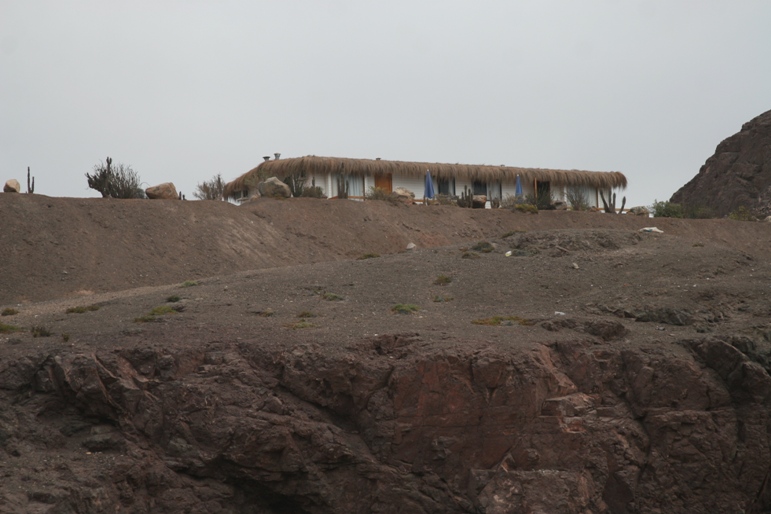
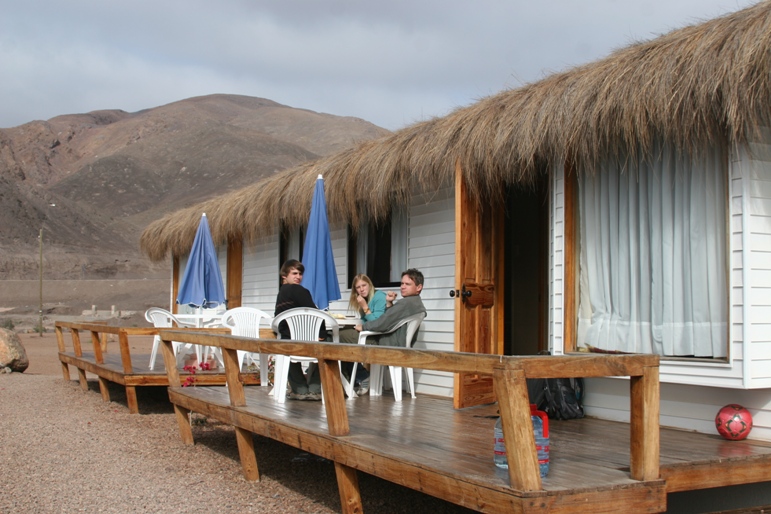
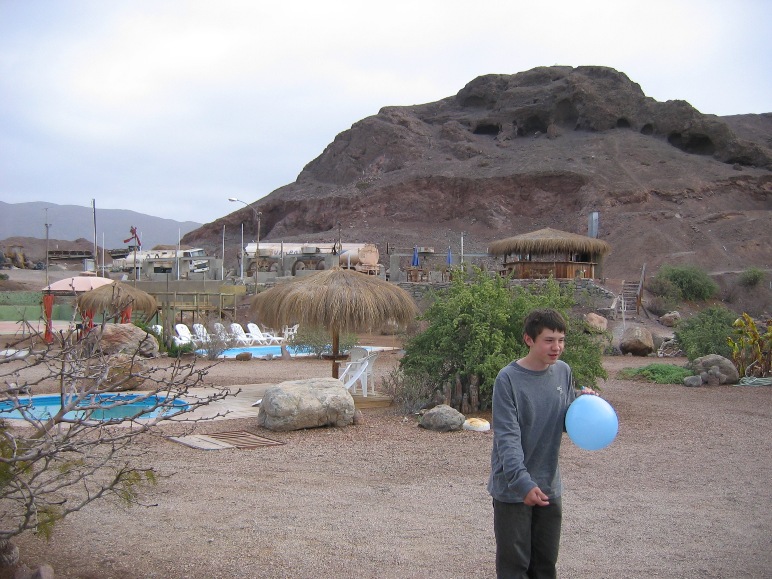
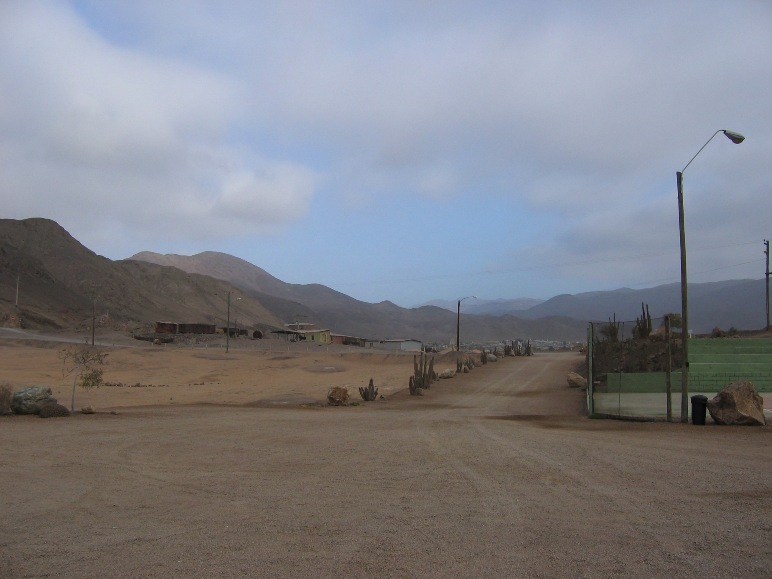
Cabañas Caleta Huaso
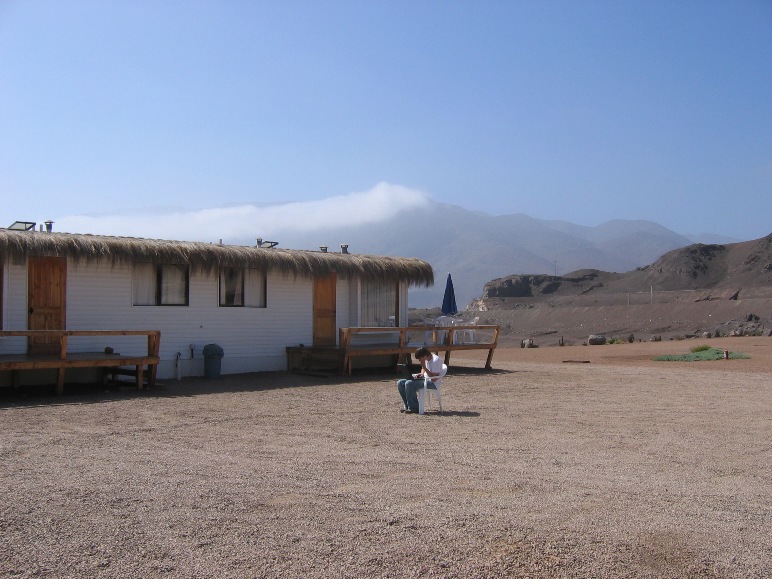
Geoff uses the internet café.
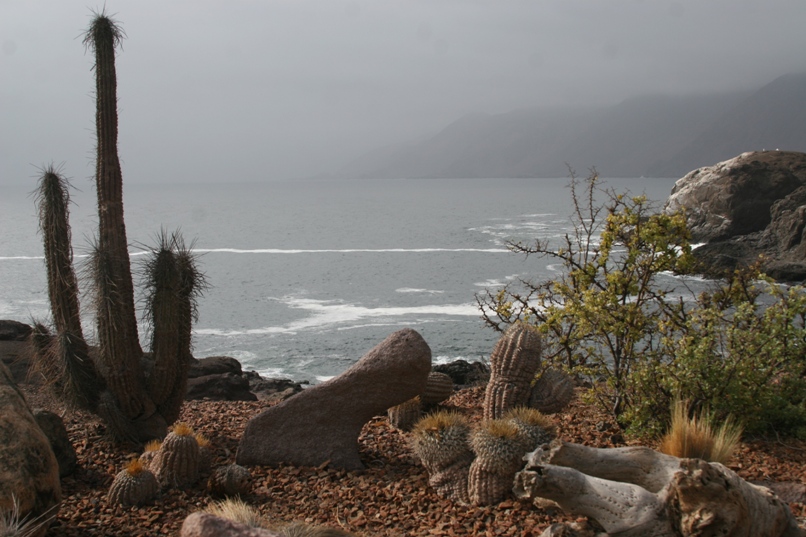
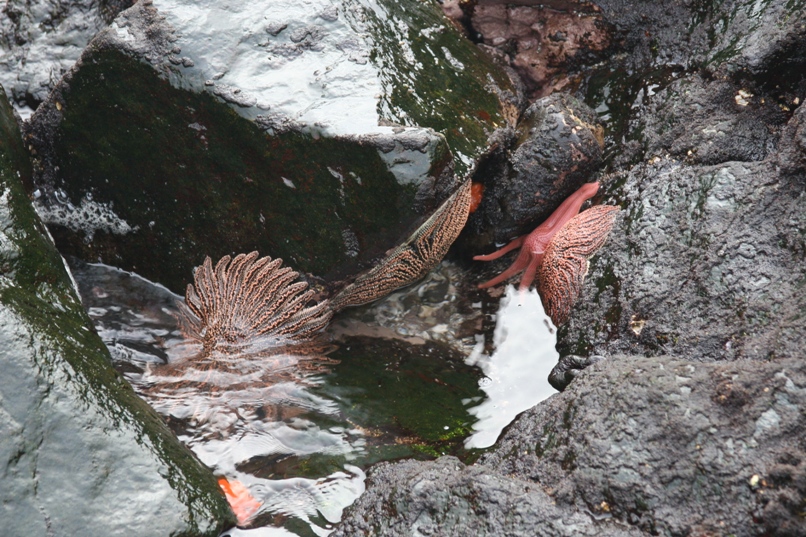
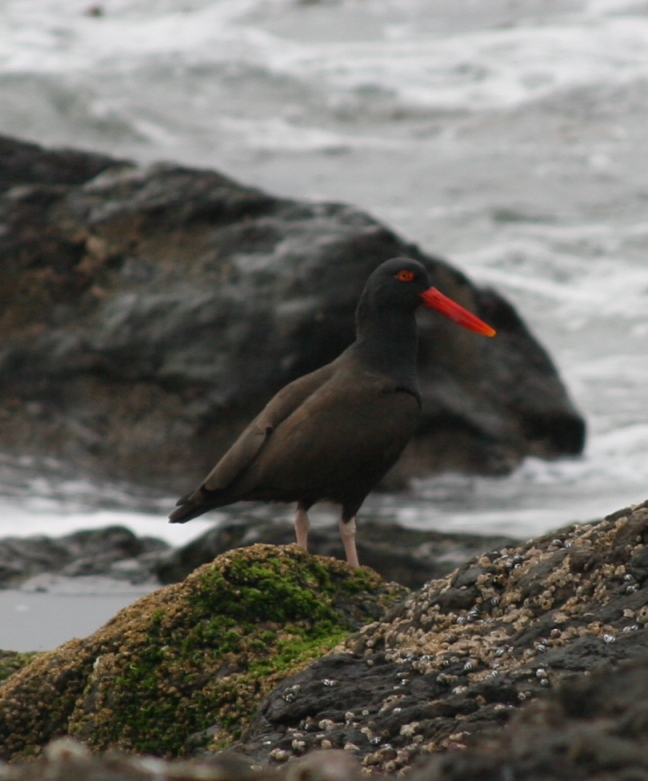
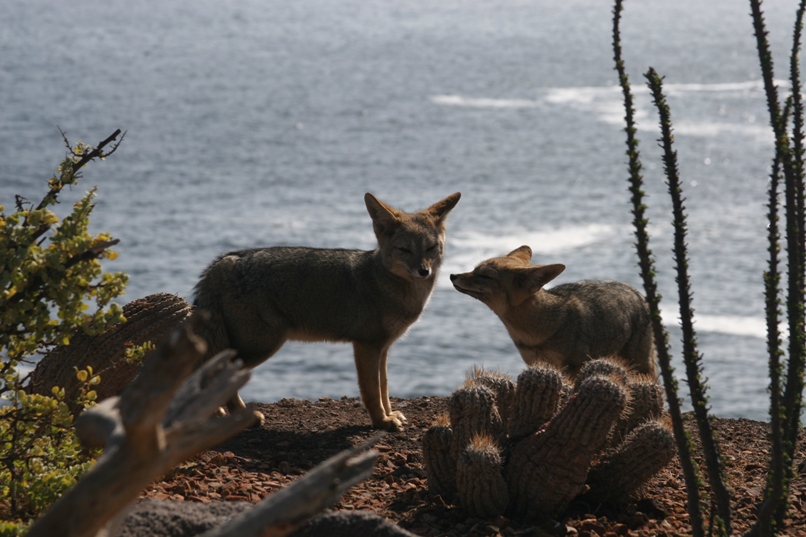
The shore in front of our cabaña.
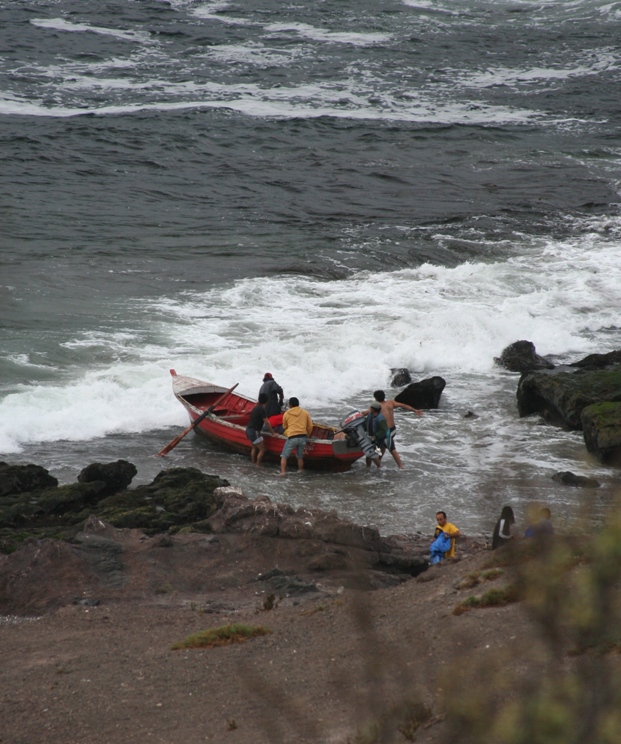
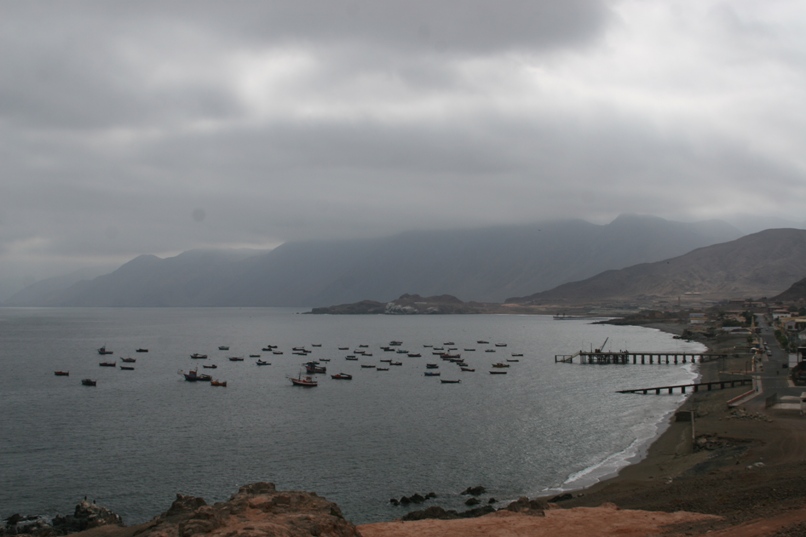
One of my guidebooks says that Taltal was an important copper port up until the 30's. Now they call it a "quaint fishing village." There are several dozen boats like this anchored in the harbor and a handful of them appear to go out every morning and indeed fish. It's difficult to believe that this is the the main economic activity for a city of about 30,000 people. More likely it is the seaside "Plant de Corporación Minera" located a short distance from our cabaña. It is a large yard filled with various colored heaps of dirt and bustling with large trucks. Every now and then a loud thundering boom shakes the ground and rattles the window of our cabaña. I assume and hope it has something to do with the legal and safe operating processes undertaken by this industrial facility, and that there are no harmful air-born chemicals (other than those naturally contained in the local dirt) involved. I was hoping that the guidebook would explain more about what goes on here, other than trucks playing with sand and making loud noises, but there is no mention of anything other than the "quaint fishing village" line. I think this dirt yard is clearly the main business enterprise within 100 kilometers of Taltal. It rates a selection of trucks and machinery that looks a lot more expensive than a slew of little wooden boats with outboard motors. But then what do I know about the economics of either fishing or mining? - admittedly, very little.
I drove by the "plant" on a short excursion into town looking for some forgotten groceries and perhaps an ATM, but still couldn't figure out what was so special about those piles of dirt. After meandering around town hoping to find something like a supermarket and finally giving up, I bought the groceries in a dimly-lit mini-market. Then a helpful pedestrian directed me to Taltal's only ATM in the only bank next to the plaza.
Being the only bank in town, it was clogged with people who formed a long snaking line waiting for tellers. The two cash machines were idle, but neither would give me any cash. While I was pondering whether it was worth standing in line to try and change some dollars into pesos (and deplete our supply of the precious commodity of US cash), a guy walked up and quickly withdrew some cash from the ATM. I tried again; "Unauthorized Transaction." We've encountered this phenomenon off-and-on throughout northern Chile, and I think it has something to do with small town banks not necessarily having their ATM's hooked up to a communications link or being even enabled to deal with foreign transactions. So we'll have to conserve cash for a few days. I hope the gas station takes a credit card.
Saturday, we drove back north for an hour and a half to visit the observatory at Cerro Paranal. This visit is the primary reason we considered staying at Playa Paposo in the first place (and were a little reluctant to drive further south to find better options). The further south we ended up, the further we'd have to back track to arrive at our tour appointment here at what they claim is the world's largest optical observatory. The observatory at Cerro Paranal is a project of a consortium of about a dozen European countries and the government of Chile (I think their website is www.eso.org)
This observatory is relatively new, having been completed in 2001, so there is a good chance the boast is still basically accurate. Here on the top of the hill at Paranal, they have four 8.2 meter telescopes and four 1.2 meter smaller ones that can each be operated independently, or the light from any combination of the 8 of them can be added in interferometer mode which produces the same effect as a having one huge huge telescope. Our tour guide told us that they spent more than 10 years looking for the sight for this observatory, and why it is so perfect for an observatory - 8000 ft in elevation (just a mere 12 kilometers from the coast!), 350 clear nights per year, low humidity, low light pollution, very little sky turbulence, and consistently cool temperatures.
As scientists must submit proposals to a review committee before being granted the right to use these telescopes for a night or two, they do not let tourists use them to gawk at the craters on the moon or the rings of Saturn. Our tour was during the day.
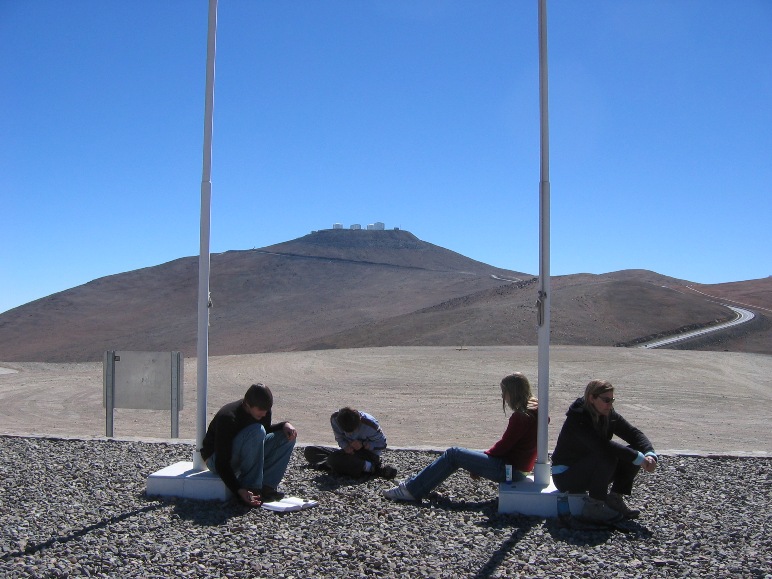
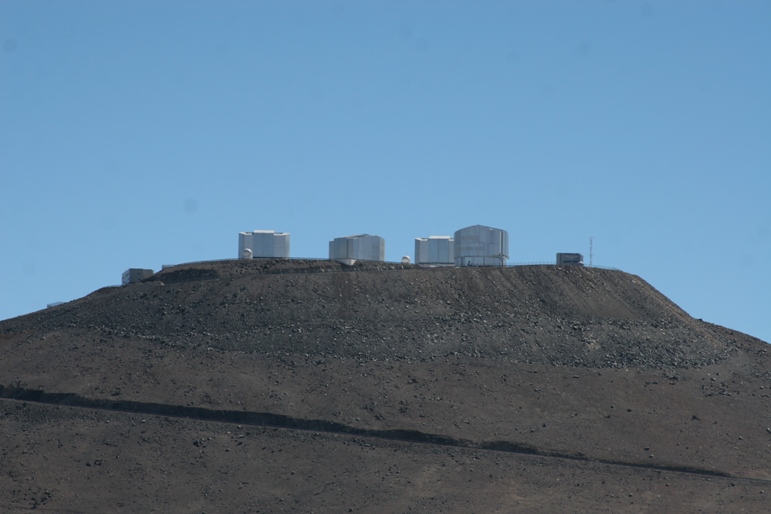
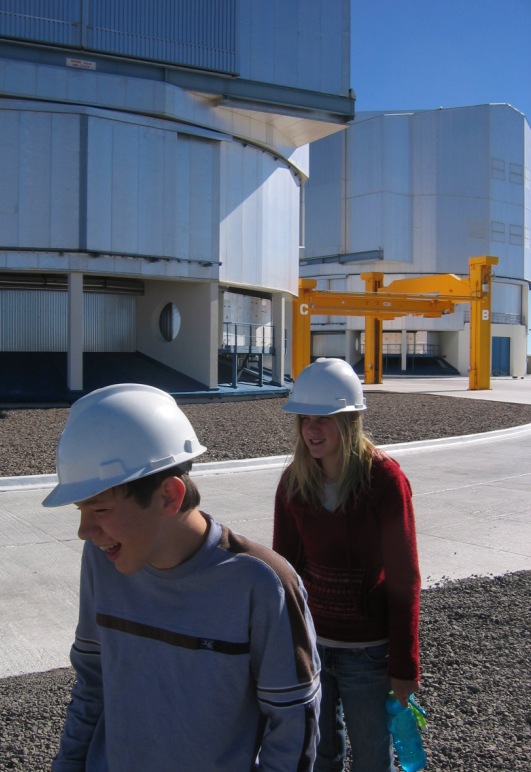
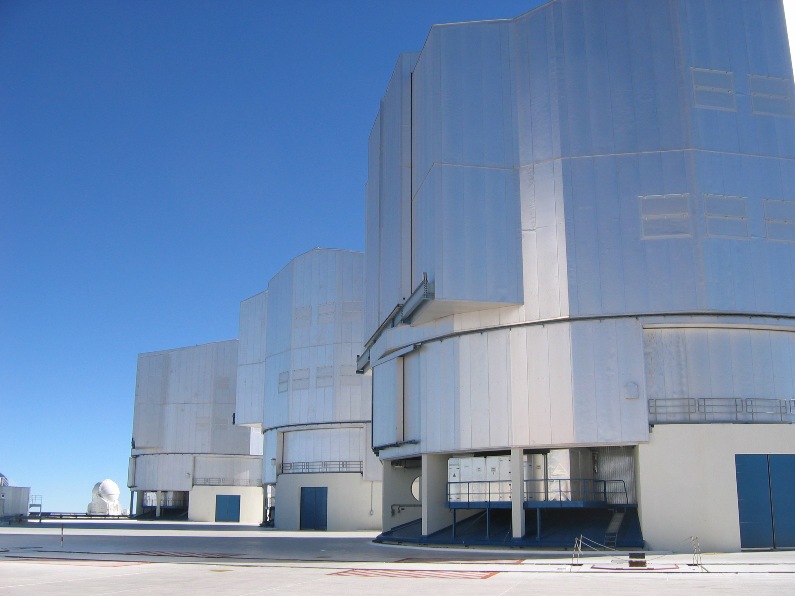
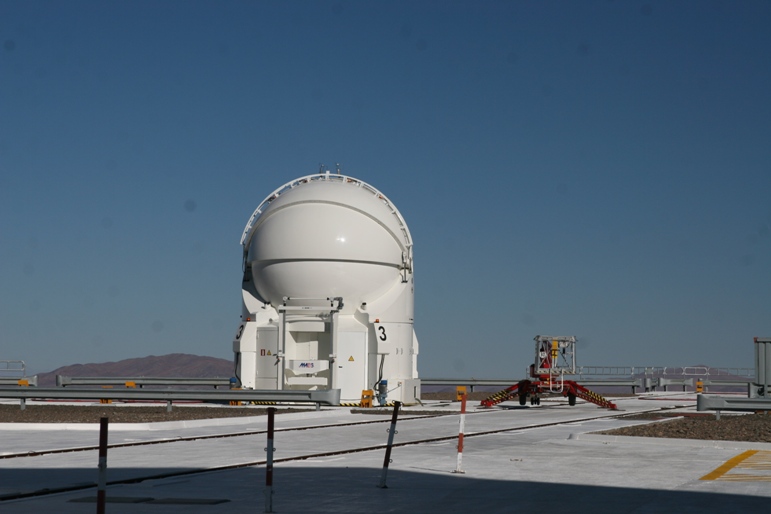
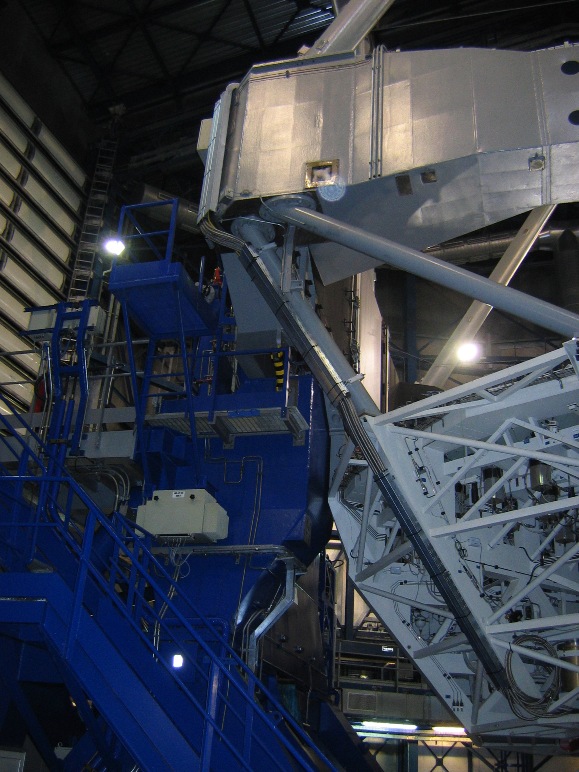
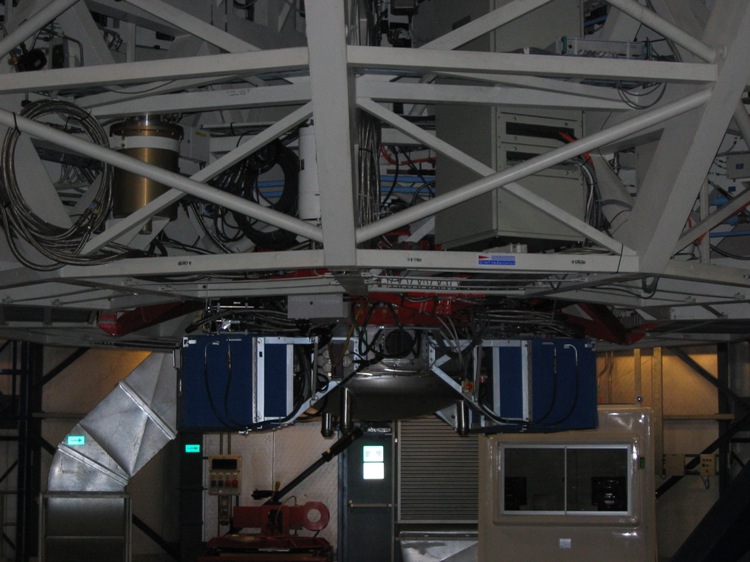
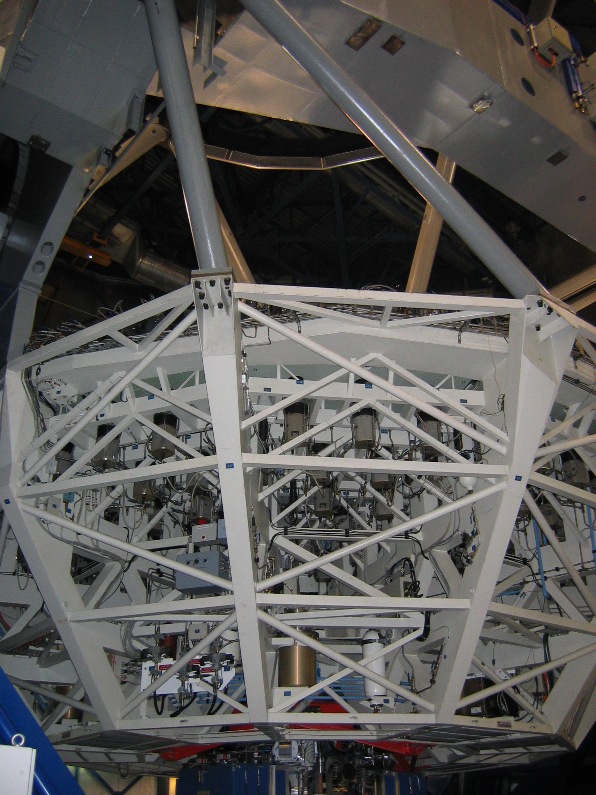
The main 8.2 meter telescopes didn't fit in my camera view.
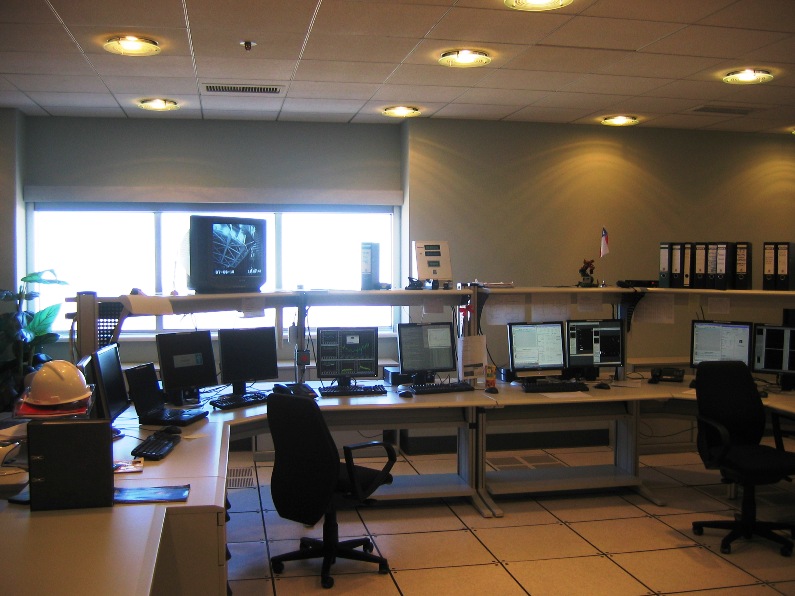
Control center. The guide compared the large telescopes to a 747 - they take two people to operate, and cost and weigh about the same.
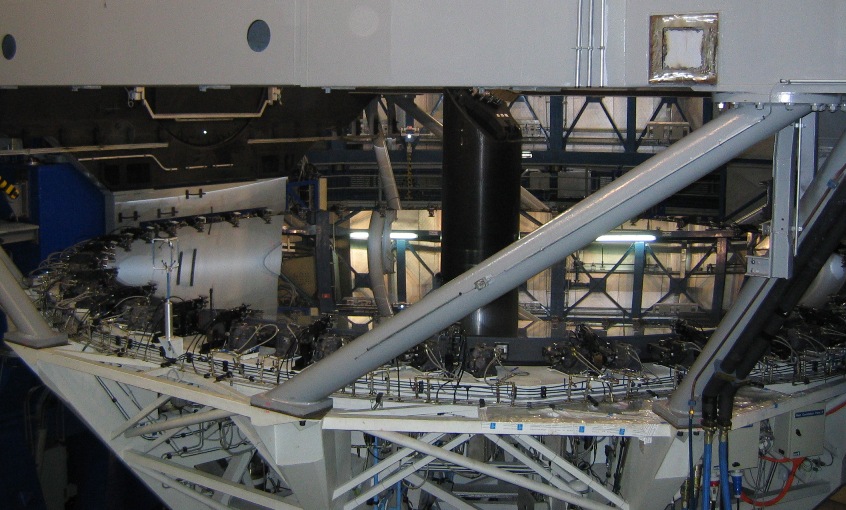
The 8.2 meter diameter mirror in one of the large telescopes. The mirrors are coated with a very fine layer of aluminum to create the reflecting surface. This layer is so thin that there is less overall material than there is in a Coke can. The mirror is removed and recoated (out in the parking lot) once per year, a maintenance operation that takes 10 days.
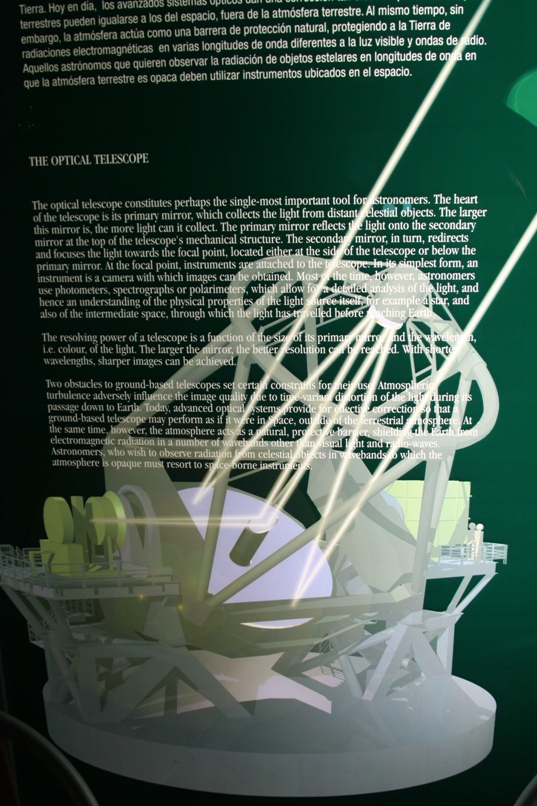
How does it work?
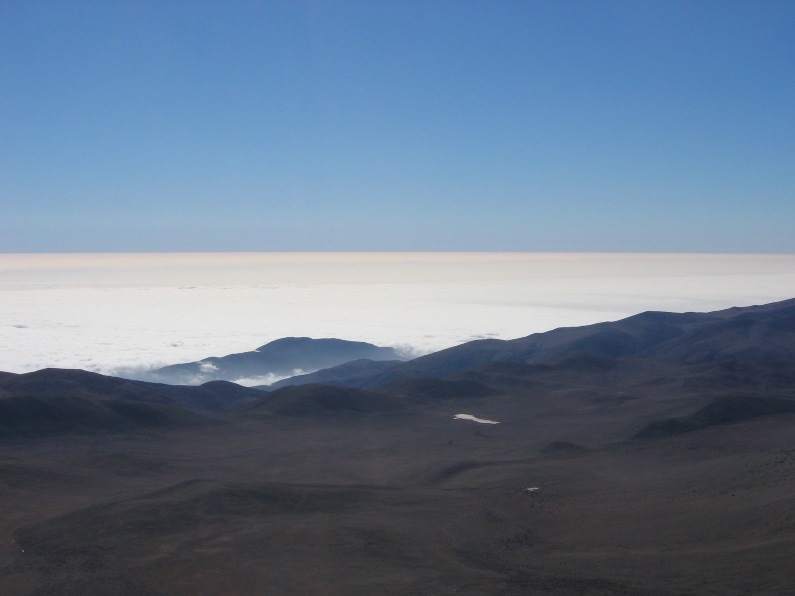
View of the coast from the top of Cerro Paranal.
If I lived in Taltal, I'd want get a job at the observatory instead of fishing everyday or working at that dirt plant... The fishing does seem rather tranquil and romantic, but it's cold and wet out there at 4am, and those little wooden boats look like they need constant maintenance. I think I got my fill of trucks and sand piles long before I finished elementary school.
-Rolf