Arica
Cemetary, Mummies, 'Glyphs
Friday July 20
Geoff accompanied me to the CONAF office in Arica this morning. He came along to help me communicate, as he is much better at understanding the locals than I. I am the mouth. He is the ears. I'm going to have to develop some ears of my own before he leaves for home in late August.
We were looking for better maps and hoping to secure some reservations. CONAF, or Corporación Nacional Forestal, is the Chilean government agency that manages national parks. When we leave Arica, we'll be haeding east up into the Andes. We're hoping to spend a couple of nights in the high country, sleeping in CONAF refugios which provide four walls and a roof's worth of shelter (if not running water and heat).
The helpful woman in the office warned us to take all the food and water we'd be needing, as well as extra gas. Being used to talking to tourists, she made a serious effort to speak both clear ly and slow ly. She also made sure we'd be driving a 4 wheel drive vehicle. She looked us both in the eye and said something like "it will be 20 below zero at night," trying to gauge our response to see if we fully understood what we were getting into. I assume she meant centigrade, but even so that's pretty cold. I stammered the best reply I could think of, given my limited Spanish vocabulary.
"We have blankets."
She asked where we were staying, then pointed to a spot near our hotel on a map.
"This is a mall. You can buy more here," she said, sternly. I think it was an order more than a suggestion.
Lynn was helping Tom and Anna do Spanish lessons at the hotel while Geoff and I were visiting CONAF. They were happy when we returned before noon, so we could head out for an excursion (and they could be done with the work).
Today's cultural/tourist activity was a short drive up the Azapa Valley, just a few kilometers east of Arica. The afternoon proceeded as follows:
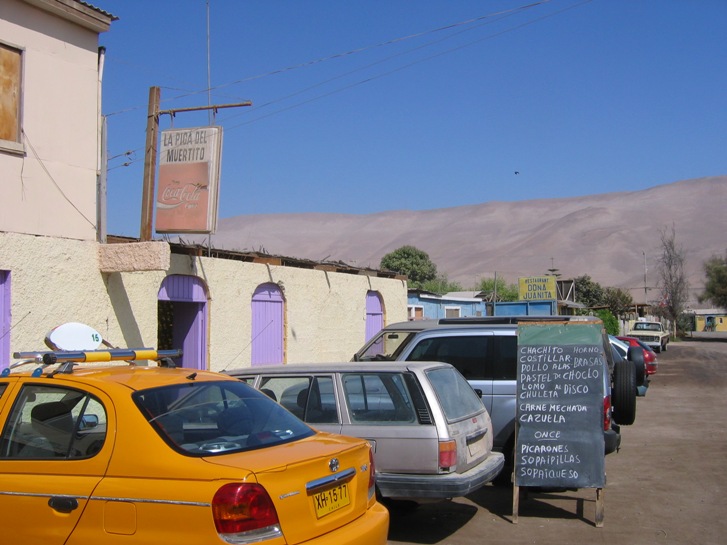
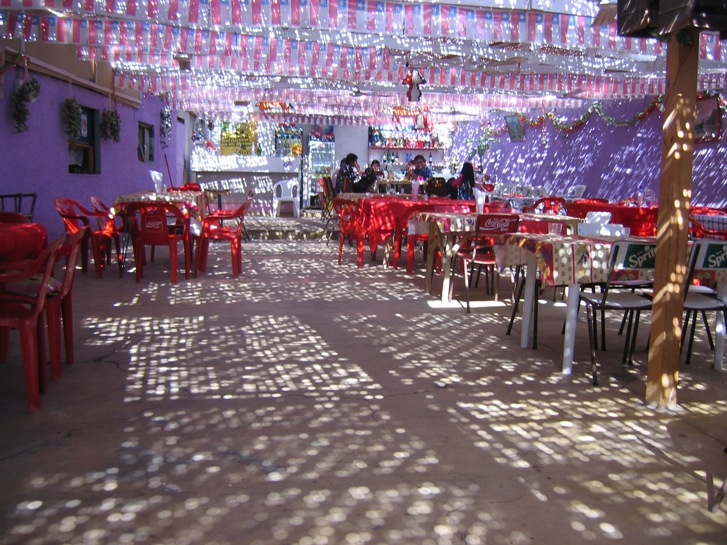
1) Lunch near a small town cemetery at a restaurant whose name translates roughly to "Snack Shop of the Little Dead One."
2) Visit to the adjacent cemetery.
3) Visit to an archeological museum with 8000 year-old mummies.
4) Driving around the edges of the valley looking for archeological sights and geoglyphs.
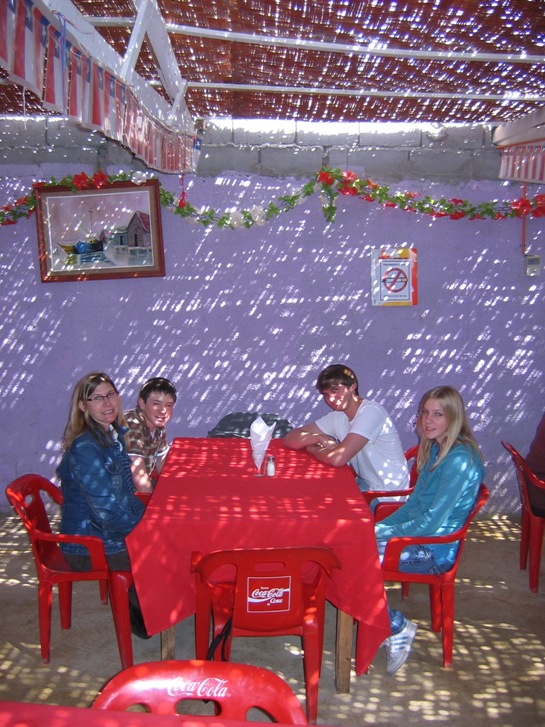
As the museum was closed mid-day for lunch, we started our excursion with our own lunch at the restaurant next to the cemetery...
and then walked through the fascinating hillside cemetery. Anna asked me if they had buried caskets or "just plain bodies." I told her they surely used caskets, and then the numerous small, body sized mounds of dirt got me to wondering the same question... naw, it must be just a symbolic tradition. Right?
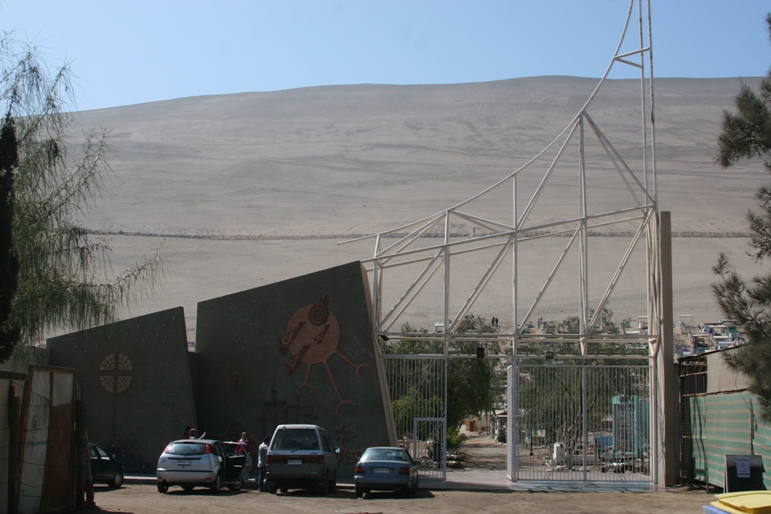
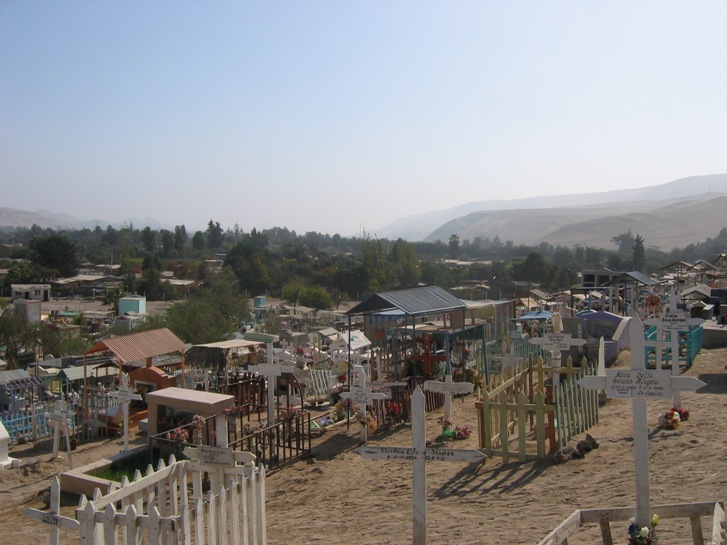
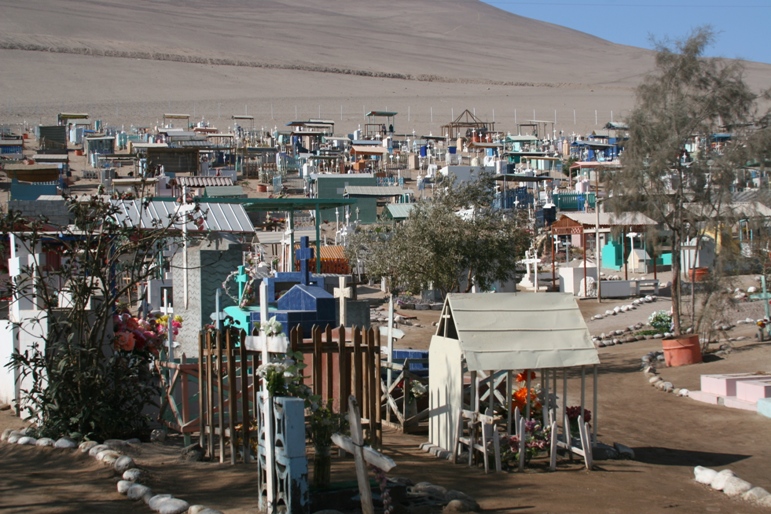
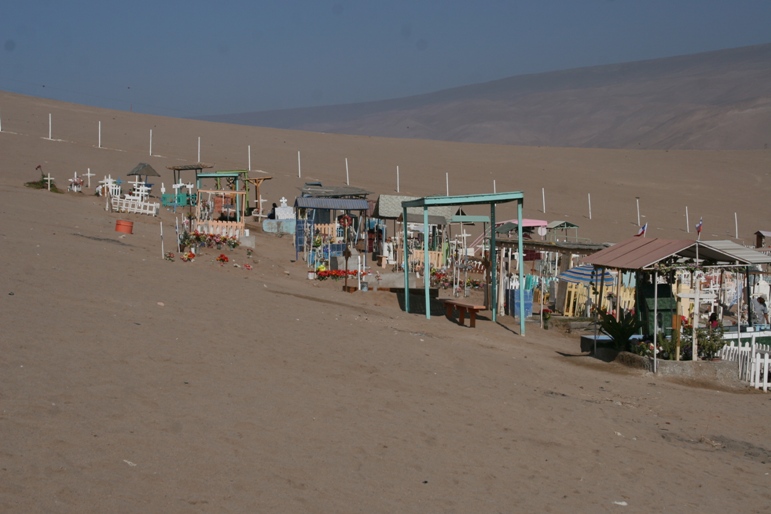
After the cemetery visit, we could go through the local archeological museum. This museum is home to an excellent collection of artifacts from local indigenous civilizations dating back more than 8000 years.
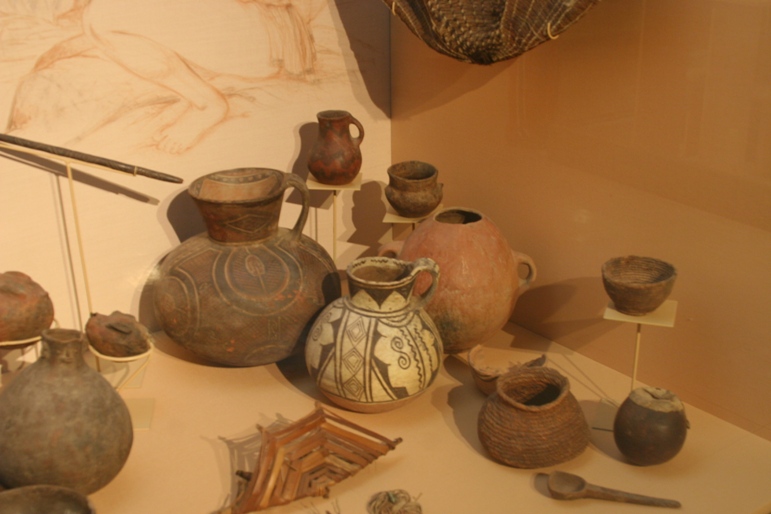
Pre Incan Stuff
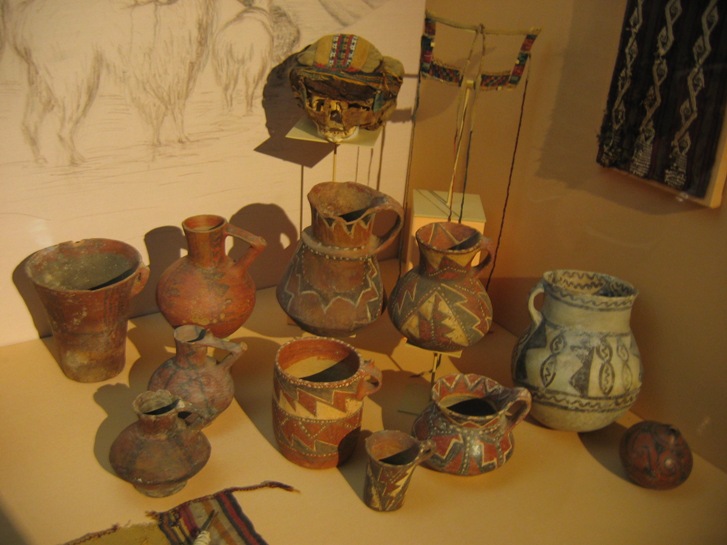
Incan Stuff
Although the similarity of these pictures may hint at sarcasm, the Incas really did bring significant change to the peoples of (what is now) southern Peru and northern Chile... but it was nothing compared to what those Spaniards did about 100 years later.
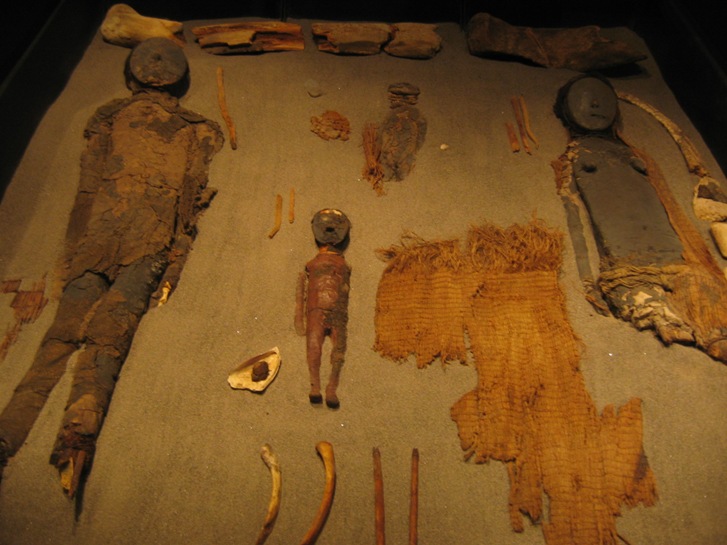
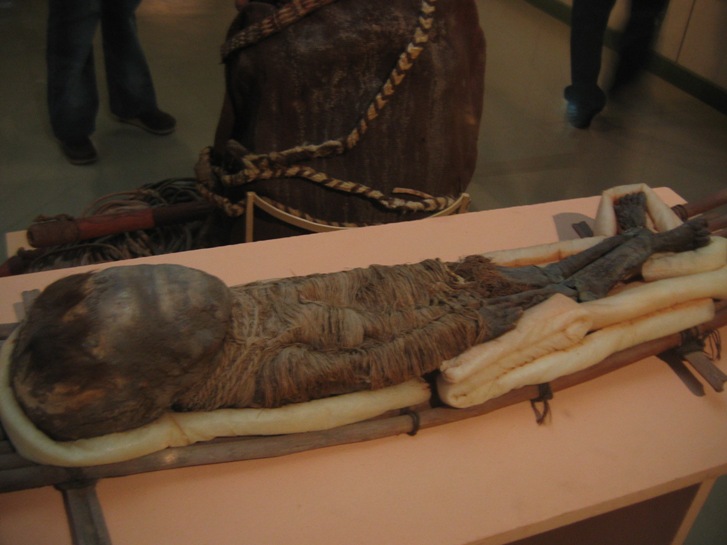
Of course, the most fascinating possession of this museum is its 8000 year-old mummies. The ancient peoples from this region practiced the art of mummification nearly 3000 years before the Egyptians did - using many similar techniques for preservation. The discovery of these Chinchoro mummies in the mid 1980's has generated a lot of anthropological questions about the history and origination of human civilization in the Americas. Did aliens visit our planet in prehistoric times? Did ancient civilizations travel the world using small boats - or perhaps they had mastered teleportation? Why didn't they write it all down?
Among other things, Spanish colonists brought the olive tree to the Americas. Here in the Azapa valley of northern Chile, olives are the cash crop and livelihood for practically everyone.
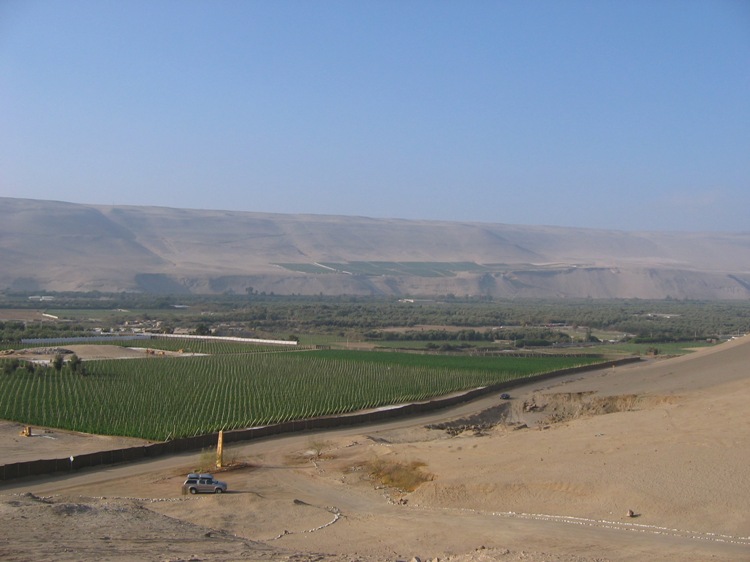
I'm sure that the olive trees need water some time or other, and that the mighty Azapa River is the primary source. Mid-winter is obviously not the time of year to take a drink.
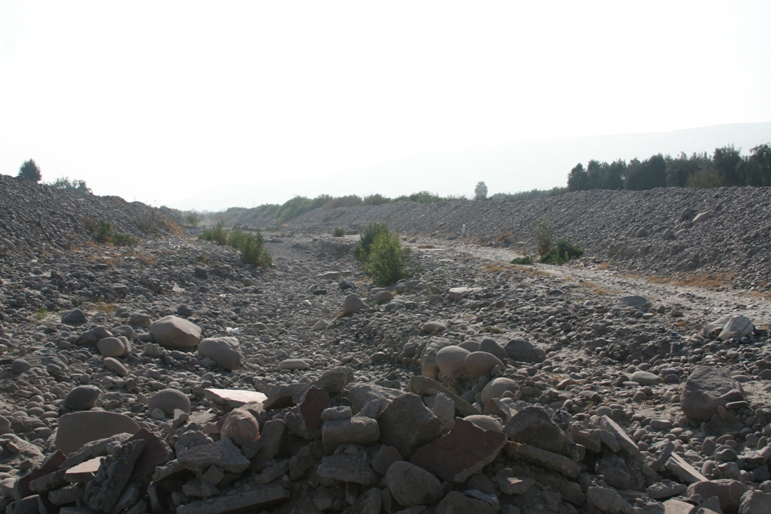
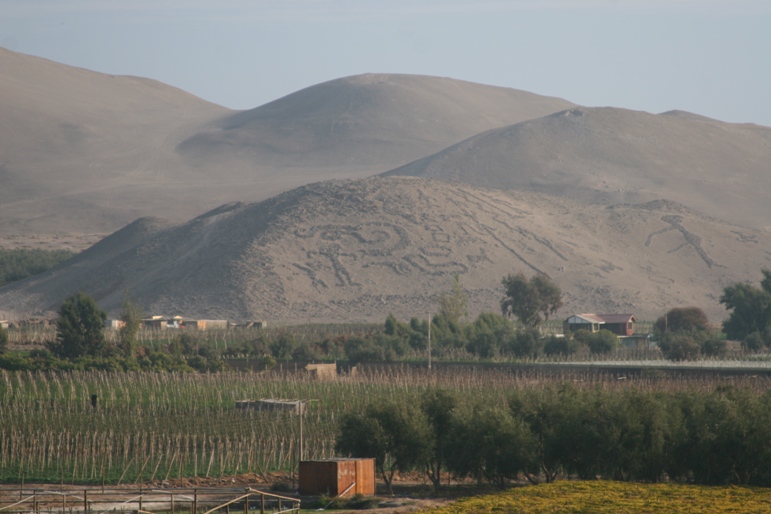
After a few short dead-end trips down heavily rutted side roads, we finally found the track that lead past the ancient remains of an indigenous village and numerous geoglyphs - the geoglyphs are huge, simple drawings of human and animal figures which have been constructed by laying rocks on the side of a hill. Clambering/jogging up and down on the hills was P.E. class for the day. The geoglyphs here are about 1000 years old, with a common theme of people, llamas, and dogs (maybe a chicken here or there, too). I'm intrigued that the figures have survived the ravages of time (and adolescent teens) and remained intact for so many centuries. But then if some hooligans went out and kicked the rocks around one night, it probably wouldn't be too difficult for the "Azapa Valley Archeological Preservation Society" to muster a crew of volunteers to go up and set things right. And we tourists would be none the wiser.
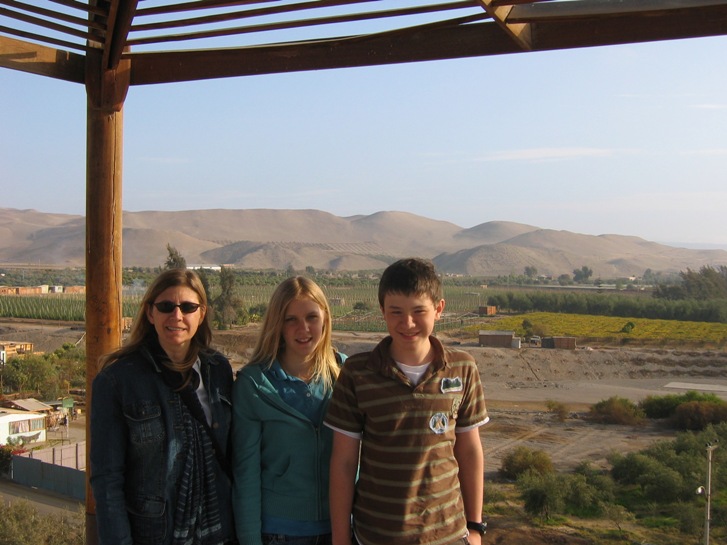
A nice family picture. There are some geoglyphs just to the right of Tom's left ear.
Last night, we were able to set up Lynn's telescope and use it for an hour or so before some light wispy clouds settled in. Tonight we'll have no such luck - there is a solid layer of clouds overhead. The hotel staff is running around frantically trying to prepare for a dinner party for 300 nurses. I think we'll head into town for dinner.
-Rolf