Bahía Inglesa - Antofagasta -
Iquique
Dirt, Ocean, Virgen del Carmen
Tuesday July 17
There is a small pad of solid ground lying at the foot of 800 meter high dirty dunes, encased on one side by the Pacific ocean, and by the inward-arcing wall of steep, dusty hills on the other. It rains about once every 10 or 20 years on the hard earthen pancake, and there is no reliable source of fresh water for dozens (or hundreds?) of miles.
For some strange reason, people have decided to place an industrial city and seaport on this limited piece of gently sloping real estate. The city is Iquique. One road and one railroad sneak up the coast from the south to enter the city on the shoulder of the monstrous coastal cordillera, and one other road angles steeply up the face of the escarpment and turns eastward as quickly and sharply as the gradient of the hill and judgment of the engineers would allow.
The two long sandy beaches seem to attract the attention of merely a tiny fraction of the city's inhabitants on a warm mid-week afternoon. Only a handful of surfers, children, and street dogs have the unadulterated common sense to enjoy the best feature of Iquique. There must be some other reason or reasons to explain why the city and all it's inhabitants are here. For our family, the reason we are here as temporary inhabitants is simple. The city exists - an oasis in the vast expanses of the great, bone-dry desert of northern Chile called "El Norte Grande." We can buy gas, sleep in a hotel, and find food and drink in a store and/or restaurants. These are sensible attractions for a traveler, but we didn't need a city with 200,000 residents to provide those services.
As usual, a couple of simple tourist guidebooks come to the rescue and give the answer without too many words or historical facts - just enough to paint the general picture and convince me that humans are not totally insane for building this city, devoting so many of their kind to maintaining and living in it, and a good number more to coming and going on a daily basis.
First, there are massive quantities of seabirds in the vicinity, and where there are birds, there are droppings. Pre-Columbian civilizations and eventually the Spanish colonists harvested guano from the rocks and caves to use as fuel and fertilizer. As a source of guano, the mine/port of Iquique never exceeded a few hundred people. What really made the city grow was the nitrite mining industry of the late 19th and early 20th century. The desert is rich in nitrites and Chile fought a war with Bolivia and Peru to gain control of El Norte Grande and mine the valuable minerals under the vast expanses of ruddy dirt. A trade embargo with Germany during WW1 proved to be a far bigger problem for the Chilean nitrite mining industry than it was for Germany. In short order, those crafty Germans had figured out how to create synthetic nitrites for their own fertilizer needs. After the war was over, the new synthetic product pretty much completely replaced nature's version in the world market.
What to do with the booming nitrate towns of northern Chile? I get a pervasive sense that "more used to be going on here" where ever we see some sign of human enterprise in northern Chile (other than the main highway and other vehicles on it). This occurs, on average, I think about once every 300 miles. Well, there still is one nitrate mine near Iquique, and a military base, but to a greater extent, Iquique now supports the inflow and outflow of a couple of "nearby" copper mines and has also turned to the production of yet a third type of fertilizer and animal feed in order to feed itself. This fertilizer/feed is fishmeal. I think the city looks and smells about as nice is possible, considering what value a ton of fishmeal must have on the world market, what fishmeal smells like, and the fact that a good, heavy rain never washes off the dust that perpetually floats over the top of the hill from the adjacent desert. I looked up "Iquique" on Wikipedia and was amused by the pictures. While they are good and accurate pictures, everything looks clean. I can't imagine how the photographer managed that trick.
I hate to think what would happen to those steep hills, all that dirt, and the city of Iquique if it ever did rain very hard for very long.
Oh, and I almost forgot to mention, the government of Chile has thrown Iquique another not-so-subtle nor insignificant financial bone, an economic life-vest of sorts for the large metropolis. Iquique is a duty-free zone, and goods of all sorts can be purchased without the 18% tax imposed throughout the rest of the country. This explains why, on the road up the coast to get here, about 100 km south of town, we had to pull over, park the truck, get out, wait in line, present vehicle registration and driver's license, and collect some semi-official looking stamped piece of paper.
When we leave the duty-free zone, we'll have to show this paper at some other check-point, and then list and explain what we bought duty-free. I'm assuming that's the point and that's how it will work. In reality, I have no clue whatsoever what the rules are, but I'm not terribly concerned as we don't intend to buy anything of significant value other than perhaps a few small souvenirs. And as we're tourists, technically, if we buy something here and leave the country with it, we're entitled to a tax-refund no matter where we bought it (if we can ever figure out the paperwork and how and where to claim our refund). The key point here is not to loose that piece of paper.
There is a large, rather tacky mall at the north end of Iquique. We found the "Zona Franca" shopping district by accident, trying to find the eastward escape route out of the city this morning without having consulted a map first (and erroneously assuming it would be simple). At the Zona France, or "Zo Fri," scores of buses, taxis, and mini-vans circle several large blocks of warehouses-turned-mall, while shopping tourists gorge themselves on medium-to-low-quality clothing and consumer electronics.
We arrived in Iquique after two long days of driving and one night spent in Antofagasta, a city with a river and hence a slightly more understandable reason to be what and where it is. The point of "racing up here," as Lynn put it, was to get here in time to attend the Festival de la Virgen del Carmen in nearby La Tirana, an event that draws tens of thousands of pilgrims and reminds us of our visit to the Virgen del Carmen fete in Paucartambo Peru exactly 5 years ago.
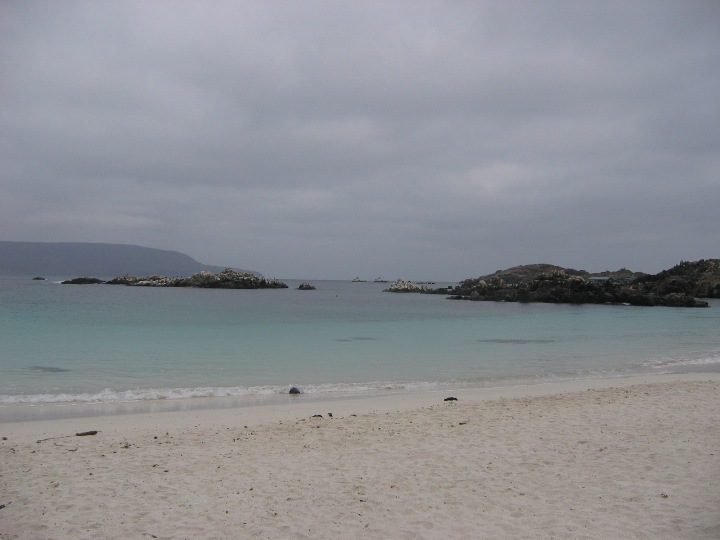
Backing up to the chronological start of this journal entry - on Sunday morning we strolled the foggy beach at Bahía Inglesa for a few cool minutes before the long drive to Antofagasta. When we arrived at about 5pm, Antofagasta was preoccupied with the end of the soccer match in the under-20 world cup. Chile ended up beating Nigeria 4-0 in the semi-finals. The success of their U20 team, "La Rojita" (the little red) affords Chileans an outlet for national pride and an opportunity to forget the scandal and disgrace generated by a recent incident involving the "over-20" national team, "La Roja." They got drunk and trashed a hotel room in Venezuela after a Copa America victory, and the fallout of the incident precipitated their exit from the tournament.
Now La Rojita is perhaps on the verge of winning a "junior" world cup (an unbelievable accomplishment for the historically uncompetitive Chilean soccer program), so the barachos from El Rojo can conveniently be ignored and forgotten. After we checked in, I went looking for an ATM machine. Cars honked for no apparent reason and people danced on street corners waving the Chilean flag. Brilliant conclusion #1: La Rojita won the match. Brilliant conclusion #2: act like I'm happy about it. I had watched some soccer on TV, so I knew what was expected of me and how not to get lynched.
"Chee chee chee - Lay lay lay - Vee-va, Cheelay!" I yelled and pumped my fist at the mob on the corner and they cheered and let me pass without a beating.
The kids have been bugging us about trying to find the new Harry Potter book when it comes out, even though we all believe we won't be able to find it in English. We decided to try and go see the new Harry Potter movie as a diversionary tactic. The theater in a nearby mall had both dubbed and subtitled versions playing, so we opted for the latter even though the earliest available showing was at 10pm. This meant we all got to bed very late, and despite our best intentions and efforts, we weren't on the road Monday until almost 11am. We've been traveling for only a week, and the kids can't seem to break the elusive "two hour barrier" in the race from bed-to-car. I have little more to say about Antofagasta at the moment, other than it looks relatively attractive and moderately interesting. We'll be returning for a proper visit on our return trip to the south.
Monday the 16th was the main celebration of the fiesta in La Tirana, and we had intended to pass through on our way up to Iquique. Our late departure dampened our enthusiasm for the driving deviation, and considering that the fiesta technically lasts for two more days after the 16th, we opted to drive straight to Iquique. Tuesday morning, after meandering haphazardly through the haphazard mess of city streets in Iquique for at least half an hour, we eventually found the steep road out of town (our now dirty and relatively "little" truck imbedded in a clog of much larger and even dirtier commercial trucks), and drove the 60 km to La Tirana. We passed a steady stream of mattress laden cars, pickups, and minivans heading the other direction. For a while, I was thinking that a lot of people must be moving to Iquique - then it dawned on me. The Chilean version of a sleeping pad for camping is a full size mattress! They probably don't use tents for anything other than changing clothes as there is no need for protection from the rain.
If Tuesday was a minor aftermath of the main fiesta, then we were glad to have avoided the insanity on Monday. A local newspaper headline proclaimed that 180 thousand pilgrims had attended mass in La Tirana on the 16th. Even if this estimation was twice reality, the tiny pueblo would have been an incredible gridlock of both cars and pedestrians. We found the situation plenty hectic , exciting, and LOUD on Tuesday. I didn't see a single porta-potty. Imagine (or better yet, don't!) 180,000 people and no public toilets - I don't want to go there (either physically or literarily).
We didn't stay very long because Anna has been feeling sick intermittently for a little more than a day. It wasn't too long before she was dizzy and wanted to rest. Her health situation is a little concerning, mostly because it's not obvious what the problem is. She'll feel better for a stretch, get her appetite, and eat and drink well (and yes, we're always trying to keep her hydrated). Then after a few hours or at the next meal time, she may feel lethargic and have no appetite. It's not the obvious cold, flu, or dehydration sorts of things we're quite familiar with. We enjoyed the rest of the day just hanging out; walking on the beach and doing some schoolwork. Geoff and I carried two large sacks of laundry to the lavenderia across the street and then visited a nearby supermarket to collect assorted foods for dinner, which we then ate all huddled together in front of the TV.
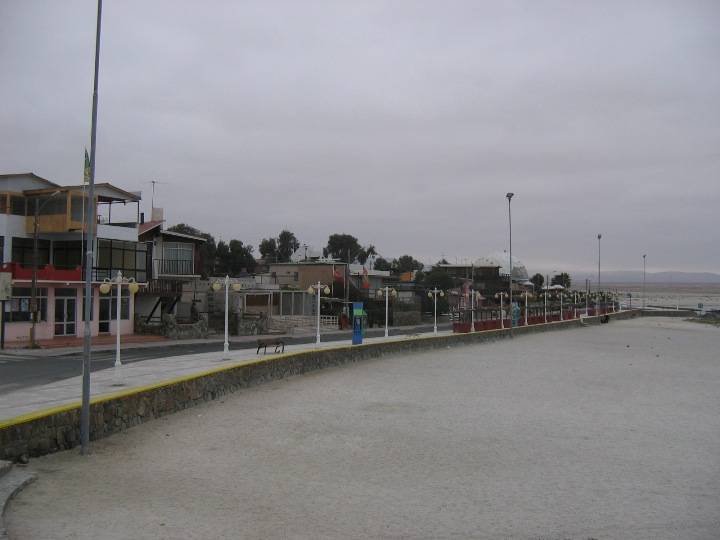
Quaint resort of Bahía Inglesa. We're coming back here in August for several days right before Geoff leaves for home (he'll fly out of the nearby airport for the city of Cópiapo). I can't wait to go for a swim!
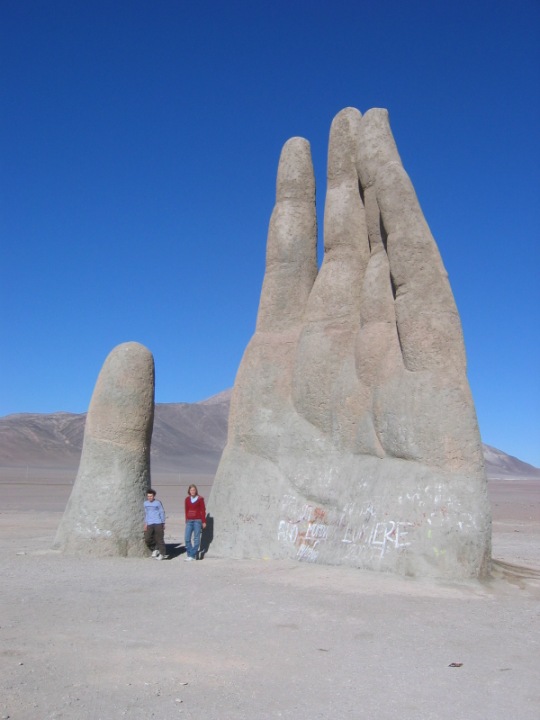
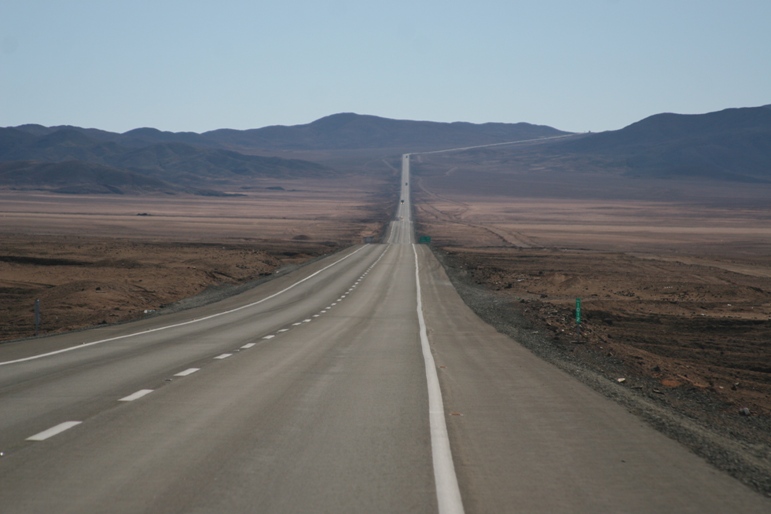
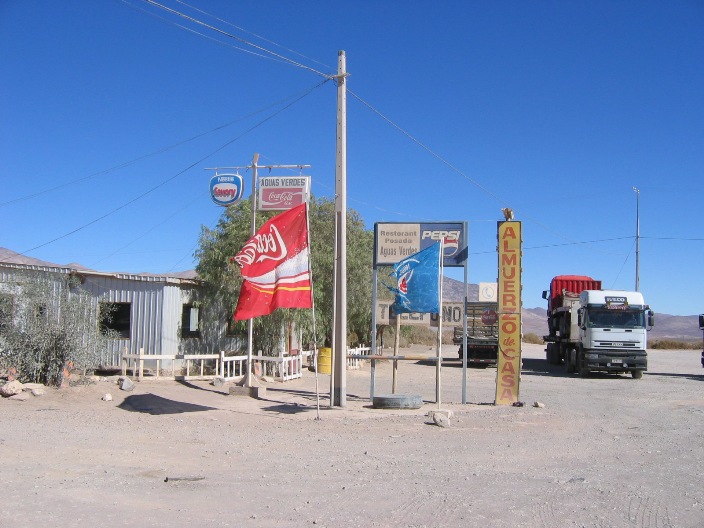
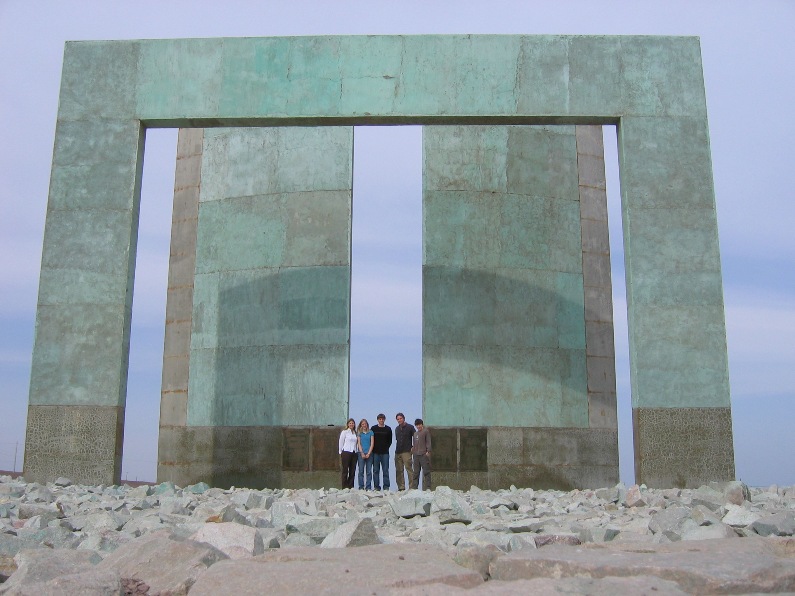
Sunday's drive. Two short rest stops - one to visit the "hand of the desert" sculpture (how did they come up with that name?), and the other to eat lunch at the nicest restaurant for 100 miles in any direction.
We drove north across the Tropic of Capricorn early Monday morning. Draining water swirls counter-clockwise on both sides of the Tropic of Capricorn.
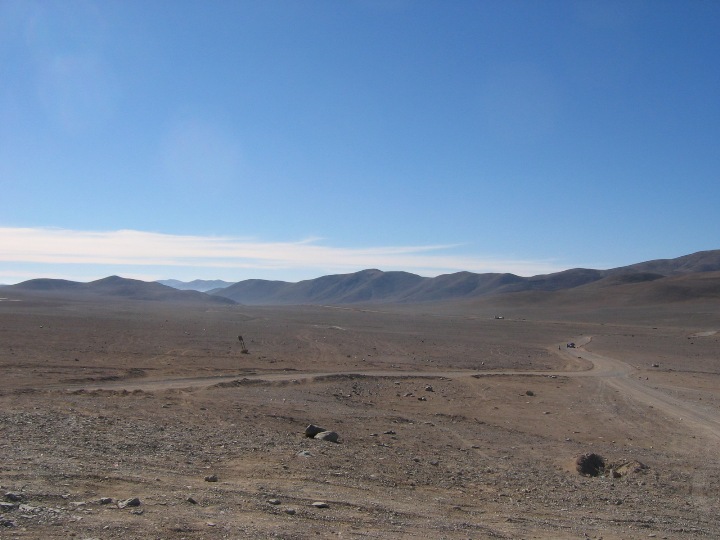
Four hours of the same scenery, broken up by lunch at Tocopilla.
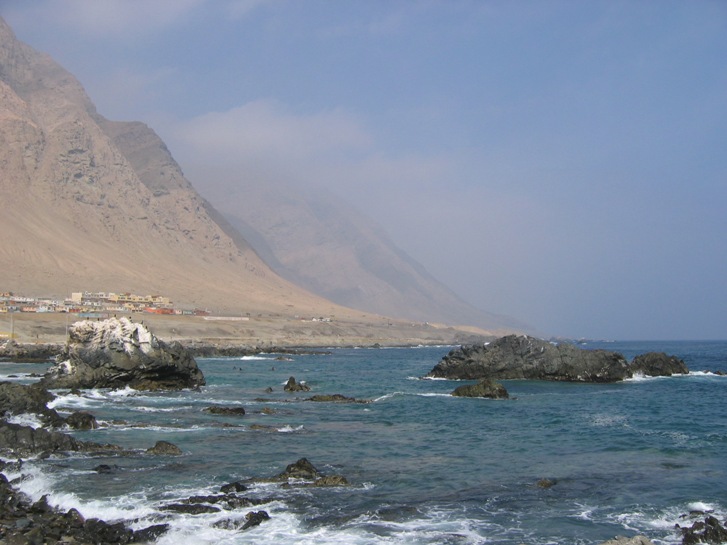
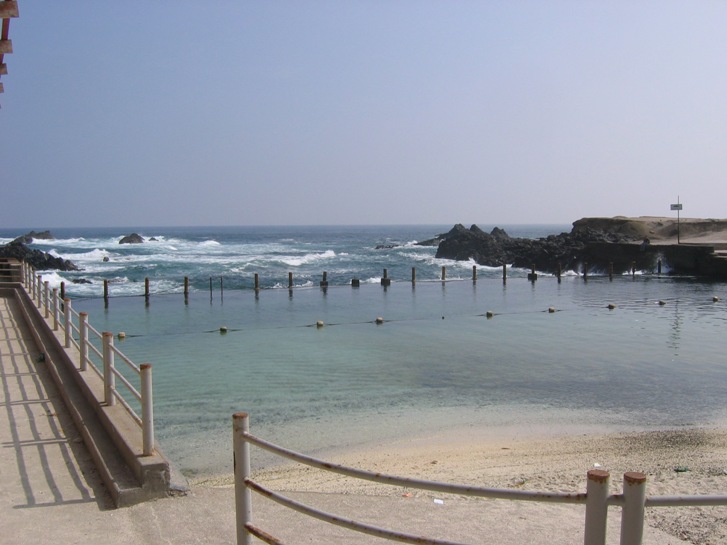
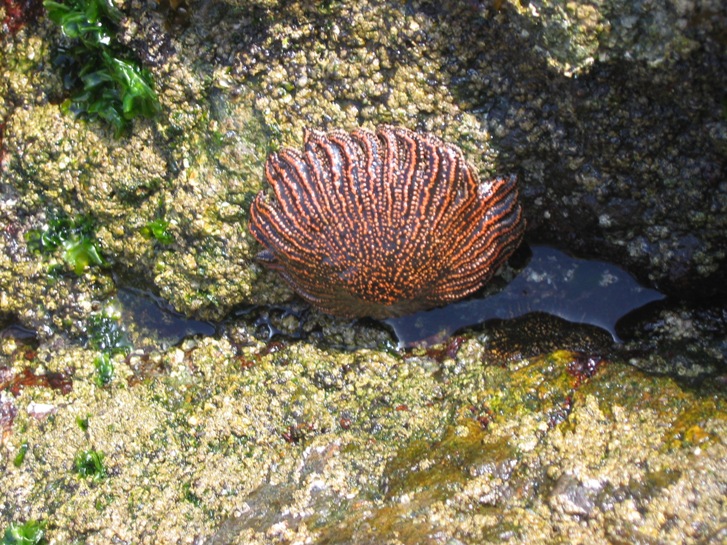
We ate lunch Monday in the city of Tocopilla, which provided a chance to scour tide-pools on the rugged coast. Tocopilla is a "medium sized" old port and mining center (pop 25,000?), with an increasingly familiar look of dusty, dirty, and gradually increasing dilapidation. The main enterprises are two thermo-electric power plants and a mechanized nitrate port. Neither employ very many people. The swim beach looked like it could have once been a very nice facility - perhaps it still is used in the summer but it seems unlikely. There is just too much broken glass and rust everywhere.
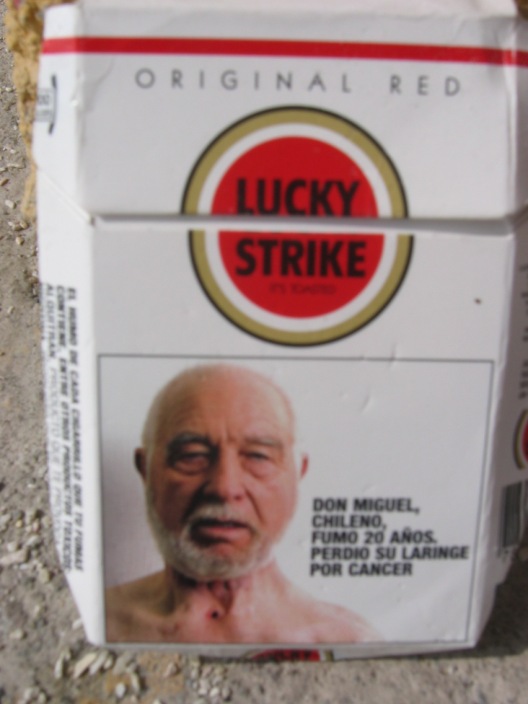
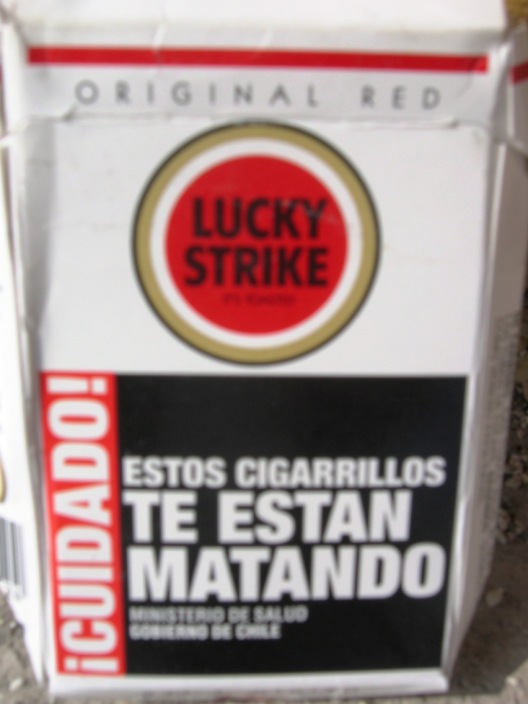
I grabbed this empty cigarette pack off the beach and took pictures of both sides to show the Chilean version of the "Surgeon General's" warning. "This man smoked for 20 years and lost his larynx," and "These cigarettes ARE KILLING YOU." Rather bold and in-your-face. We were a little worried about surviving and breathing in the Latin American smoker's culture. We've been pleasantly surprised. People don't smoke in the main room of restaurants or indoor public places. Of course, a crowded street corner can be quite full of cigarette smoke.
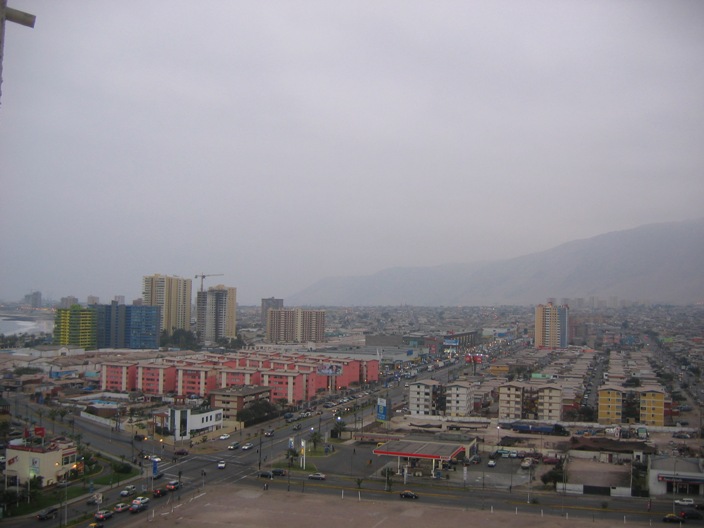
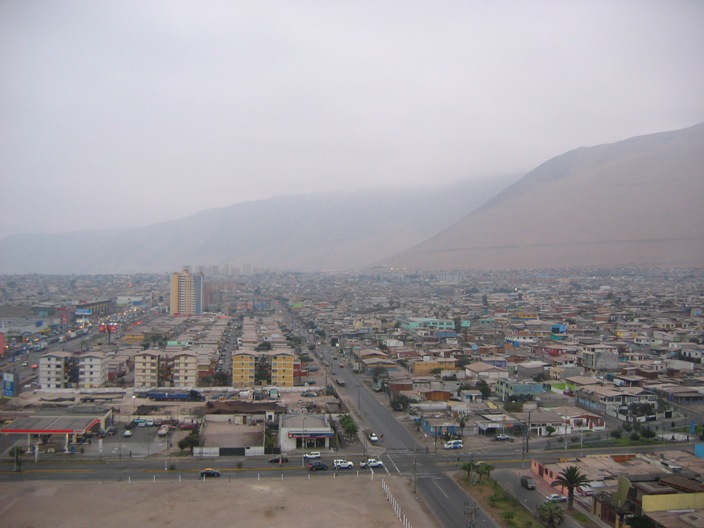
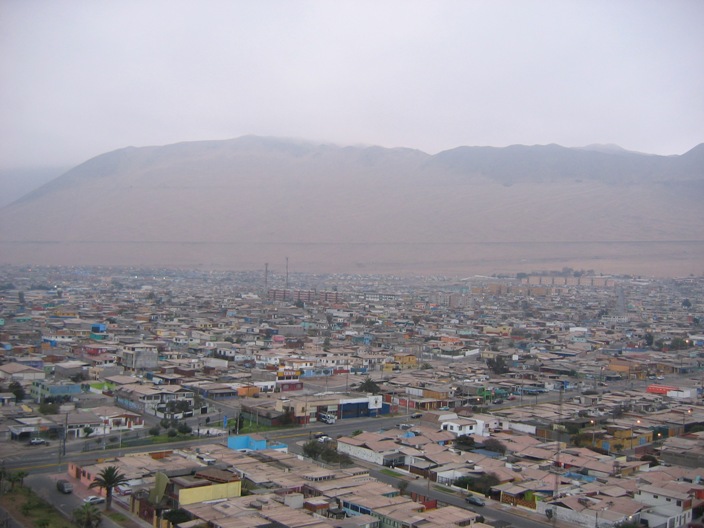
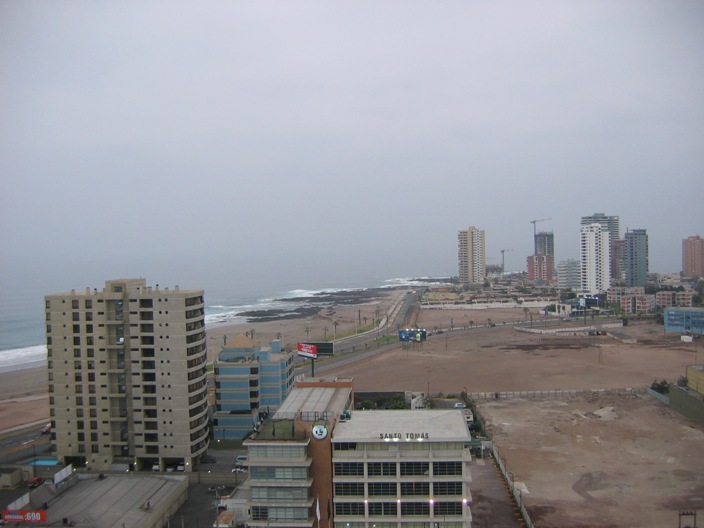
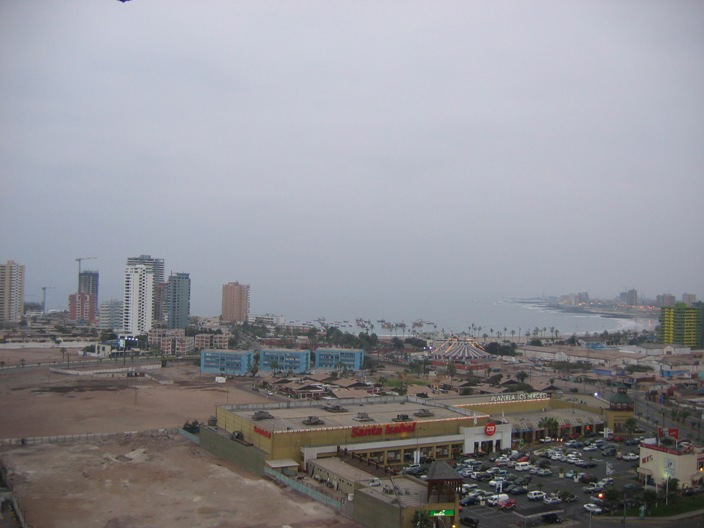
Iquique. I'm not fond of driving here. All streets are one-way, but not all have signs, and the pattern is not strictly alternating one way and then the other. People seem to drive in an orderly fashion most of the time on most of the streets, but on the smaller roads and alleys, there is a tendency towards anarchy. I just don't know what to expect or what I can or should be doing. I'm constantly confused and glad when the vehicle is finally either parked or outside the city limits.
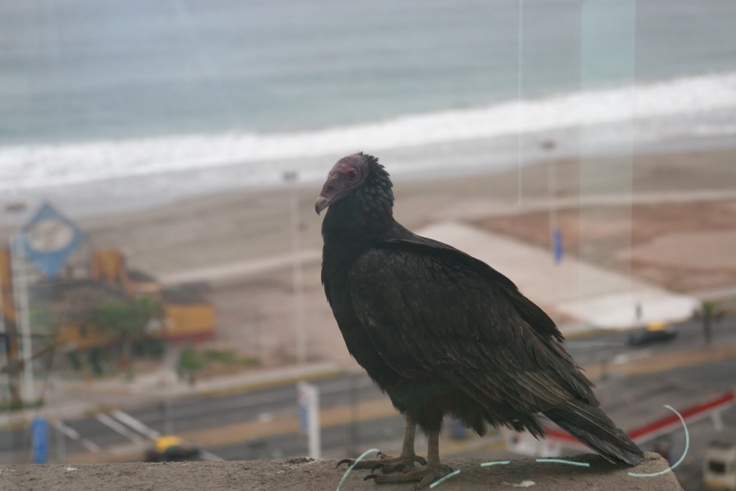
Vulture on the window ledge of our hotel room.
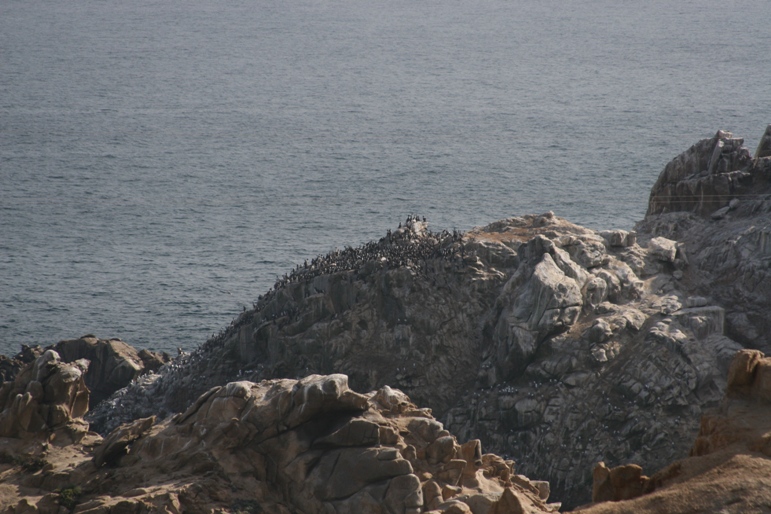
The guano mines of old Iquique - Free daily tours - Free product samples.
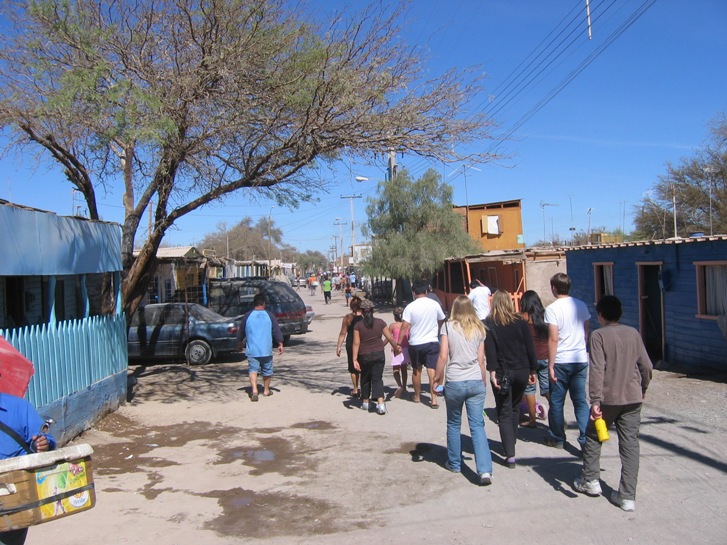
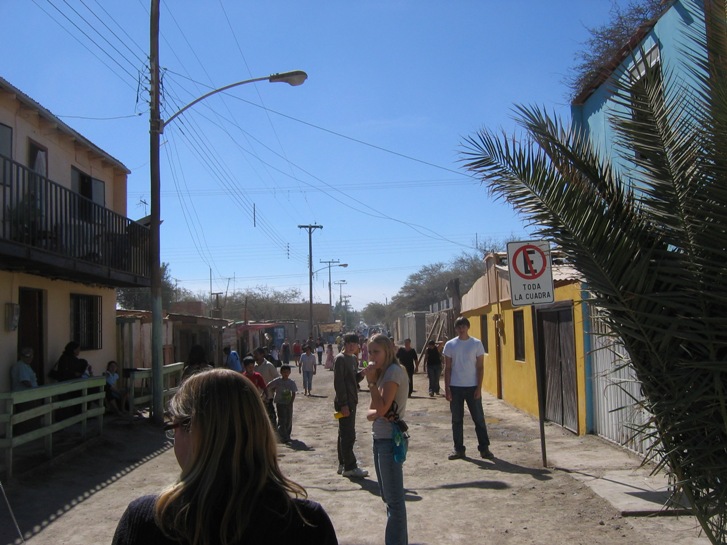
Heading in to La Tirana.
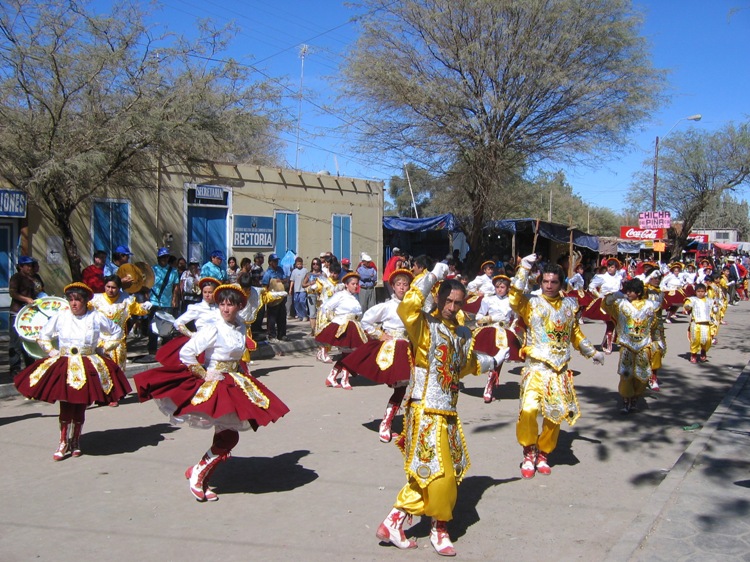
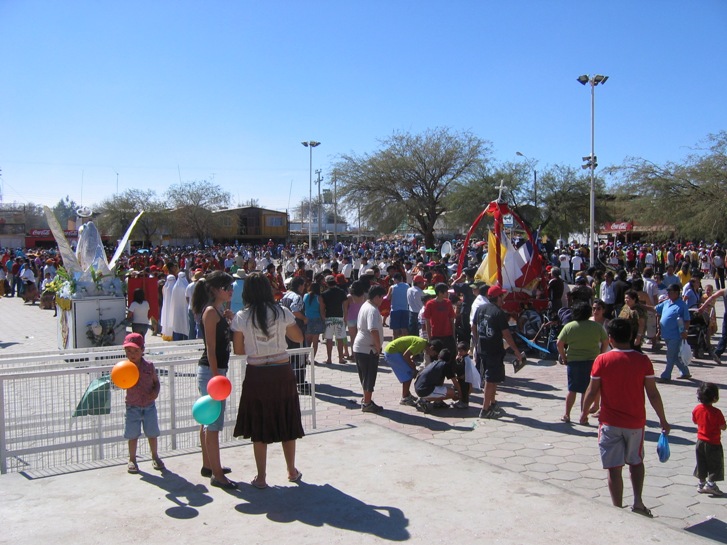
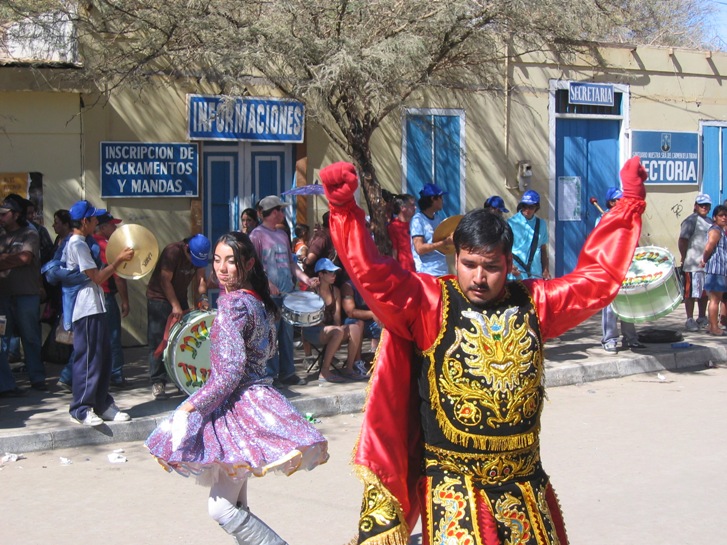
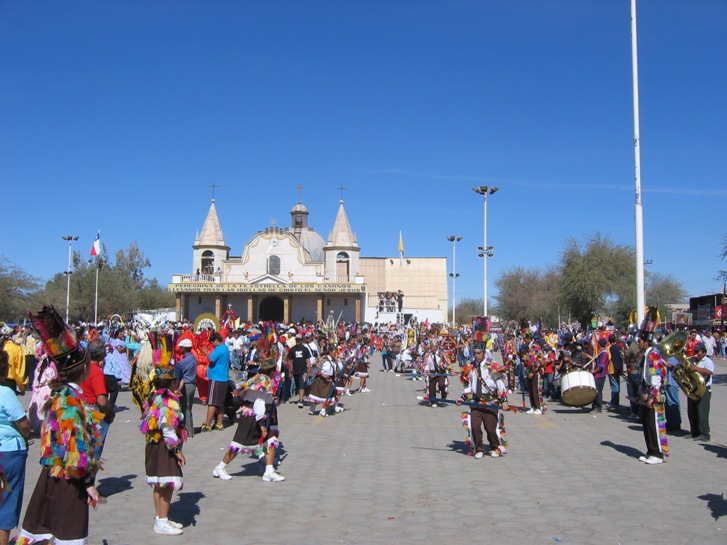
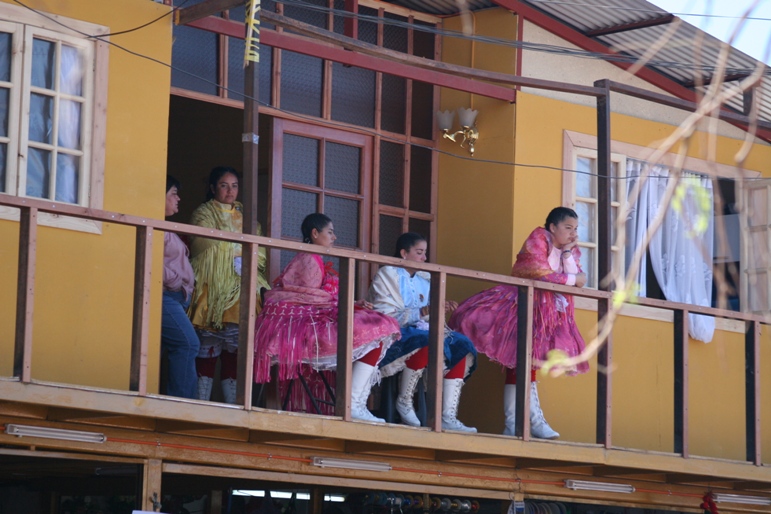
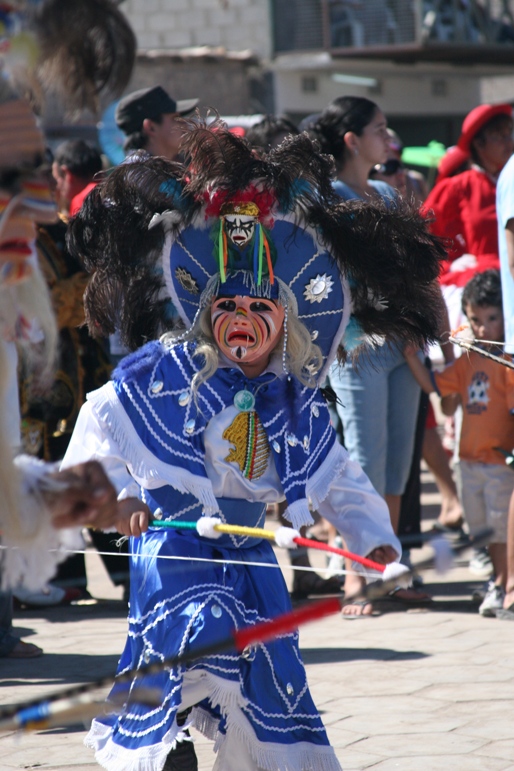
The streets are full of different groups, each dressed to represent a different theme or region, typically accompanied by a band of drummers and trumpets. They dance and play in the hot sun, non-stop, for hours at a time. Eventually they look pretty exhausted, but it is a great honor to perform.
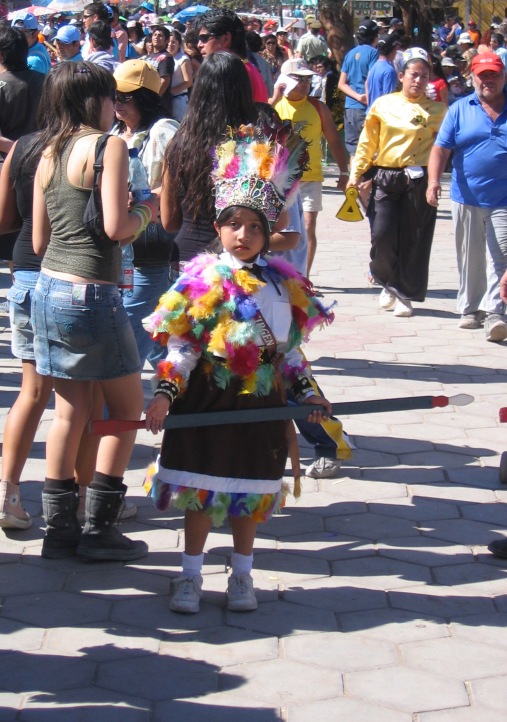


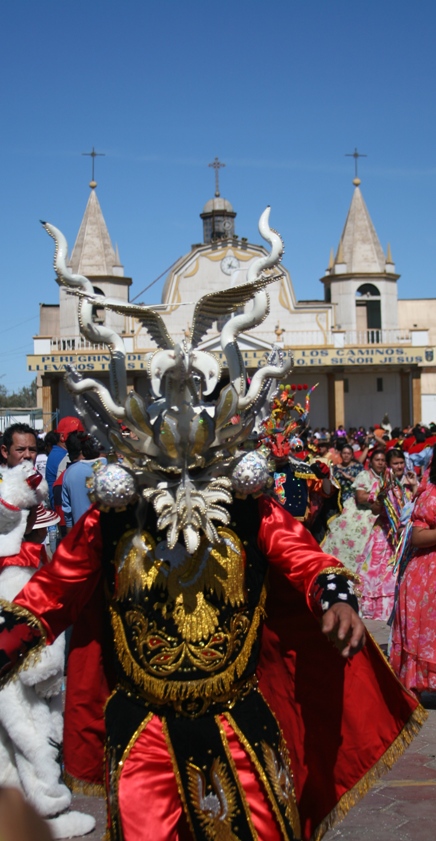
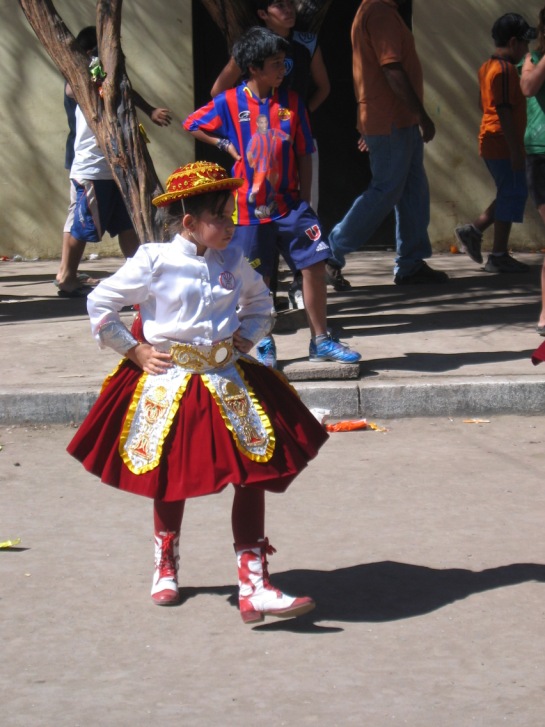
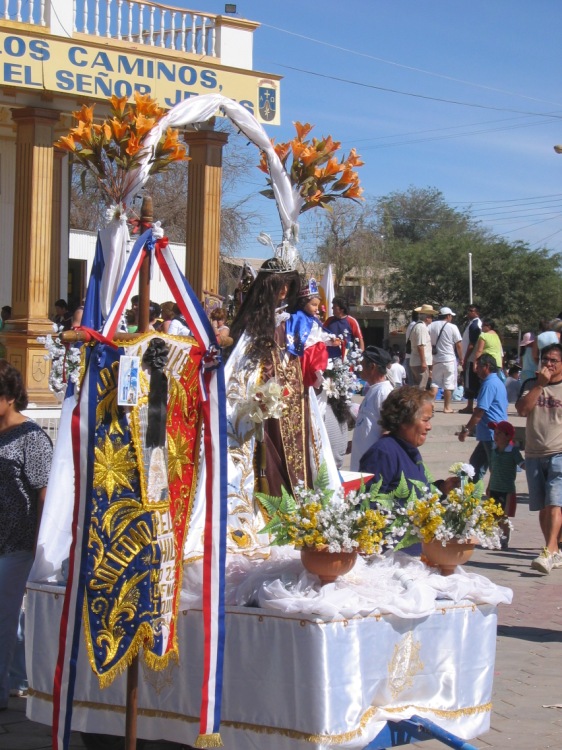
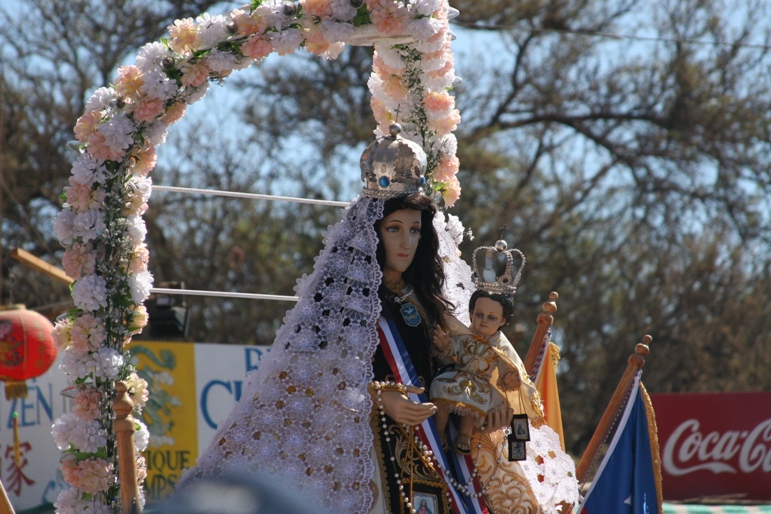
Many of the performing groups bring their own statue of the Virgen del Carmen, but there is a "main one" that is paraded around town and led to the church before mass on the 16th.
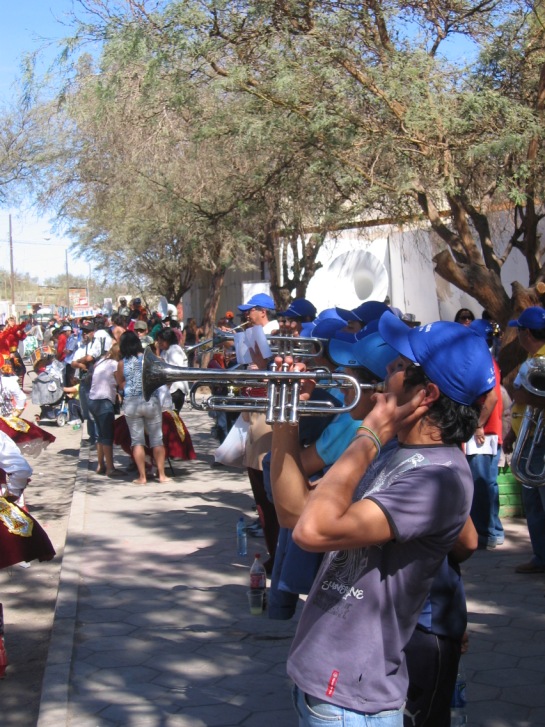
A dozen or so performing groups all drumming and blasting different songs at the same time in close quarters - how can yours be heard above the others? Play louder! Everyone adopts the same strategy. We were yelling at each other from inches away and still couldn't hear anything we were saying. We laughed at the people trying to use cell phones. No one thought to bring earplugs.
We got hot and tired just watching. Popsicles to the rescue!
-Rolf
17 July 2007