San Pedro de Atacama
Bicycles, Horses, & Tourists
Tuesday August 7
Guidebooks warned us that we might be taken aback by the density of tourists in San Pedro de Atacama - especially tourists from North America and Europe. Since we were prepared to be surprised we weren't truly surprised. Still the effect of driving into town and seeing so many gringos was slightly intimidating. How did they all get here without us seeing any of them anywhere else? The road into town was virtually deserted until we were within a kilometer or two. Did they sky-dive into town?
Within 30 seconds of driving into town, I think we'd seen well over 10 times the number of foreign tourists we'd seen during the rest of our entire month-plus spent in Chile. This is clearly the place to visit in Chilean Norte Grande. It must rate a large write-up in Lonely Planet, as most of the tourists here belong to the 20-something age demographic. There are enough other-types (older couples, even families with children) so that we don't feel completely uninvited and out of place - not to mention all the residents who make a living off of housing, feeding, and guiding the visitors.
I felt like an idiot unloading duffle upon suitcase upon telescope-case out of the truck in front of a throng of dreadlock topped day-pack toting minimalists. The rest of the family helped out and soon the luggage was safely hidden in our rooms. Then the hotel directed me to a sheltered parking garage a few blocks away where we could stash-and-forget the truck.
It took far longer to acclimate to the culture shock than to the altitude - the latter measuring a wimpy 8000ft or so above sea level compared to the lofty 11,000 - 15,000ft regions we've already explored. I had the impression that spring break had morphed into some sort of eco-cultural adventure experience on the streets around our hotel. We've been to other backpacker havens like Katmandu, but we've never been to Amsterdam. And we missed out on the hippie heyday of Katmandu, since we went there 6 months after 9/11/2001 while the local civil war was just starting to heat-up. The only other tourists were from China and Japan and I don't think these countries are known for having much of a hippie culture.
Here in San Pedro de Atacama the cafes play classic rock-and-roll and there are ATMs strategically located in or near the artisan arcades. The bulk-souvenir items such as wool hats and sweaters go for twice (or more) than what they charge at the dumpy arcade near the bus terminal in Arica. But what the heck, what difference does another $10-15 make to a wealthy tourist?
After napping (hiding?) in our rooms for a couple of hours, we hit the street and attempted to become one with the local scene. I eventually relaxed and concluded that this is truly a fun place. Maybe I'm the only one who was feeling shy upon our arrival and the rest of the family had figured this out long ago. I could have just been woozy from the drive. There's no doubt we should be able to have a good time here. There's a dozen or more good restaurants serving assorted cuisine and good wine. There are at least as many tourist offices proffering bicycles, horses, sand boards, as well as guided day trips to the various salars, lagoons, valleys and nearby foreign countries. If you walk for more than 5 minutes in any direction, you're out of the tourist neighborhood and back into the real-world of a desert pueblo in the Chilean Norte Grande.
Lynn had read guidebooks and led us to a cozy restaurant where we sat by the fireplace and enjoyed live native music while we dined. This tourist-Mecca thing isn't all that bad.
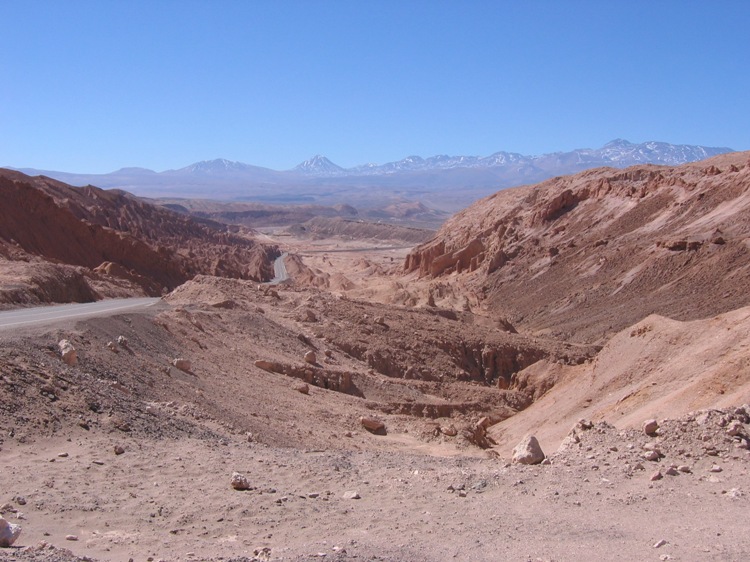
Heading into San Pedro de Atacama on the road from Calama.
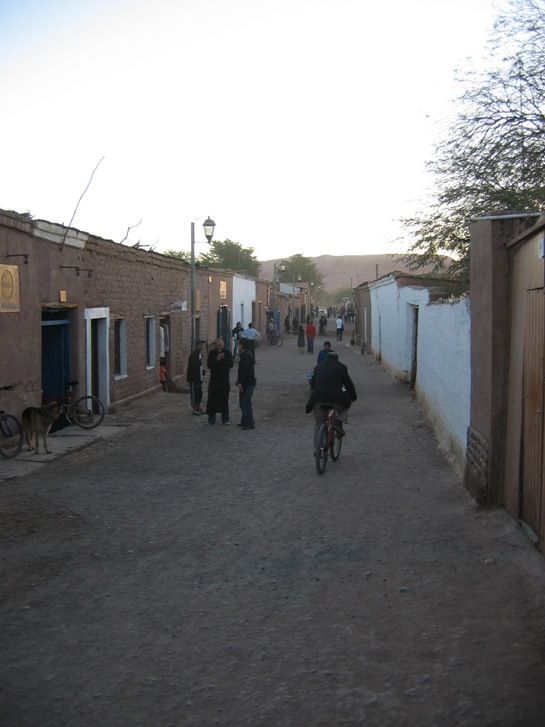
The pedestrian street in the tourist district.
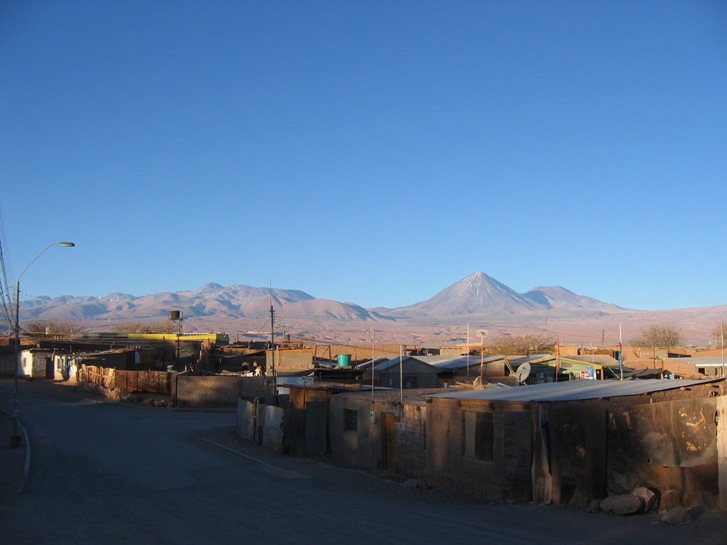
The outskirts where the real residents live.
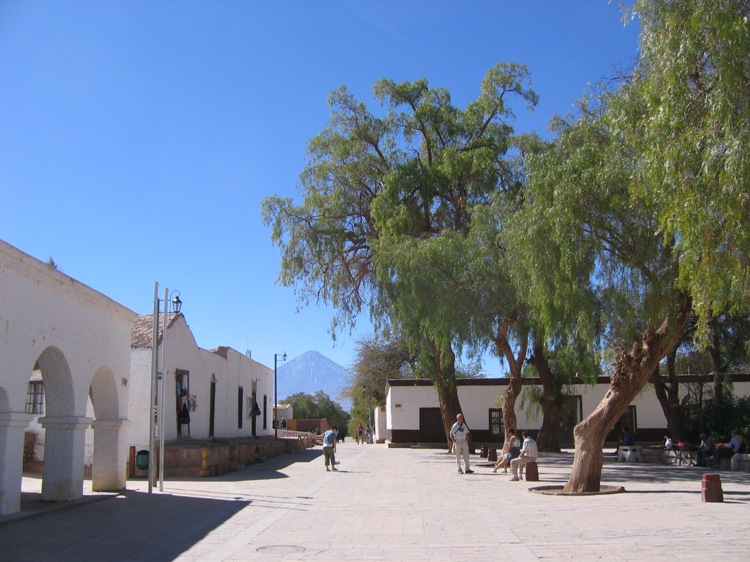
The handsome plaza (right next to our hotel!)
Sunday (the 5th, which was my birthday), we kept things simple and took rental bikes for a short ride in the late morning. Then we divided the rest of the afternoon up between strolling, shopping, lounging, resting, and home-working. During the ride Geoff asked me if I knew who won the Tour de France. Not only do I not know this, but I don't know which team is where in the American baseball standings either. Geoff cares enough about baseball not to let this information slide, and started filling me in on things I'm not sure I really care about. Later he found an internet lounge and lost himself in the webcast of an A's game. I'm glad he can take a break from his immediate family, although I nag him sometimes about how much time he spends on the internet. "You could do that at home!" I say. "We didn't come here to surf the net!" Then I go to my room and type on my computer and read emails.
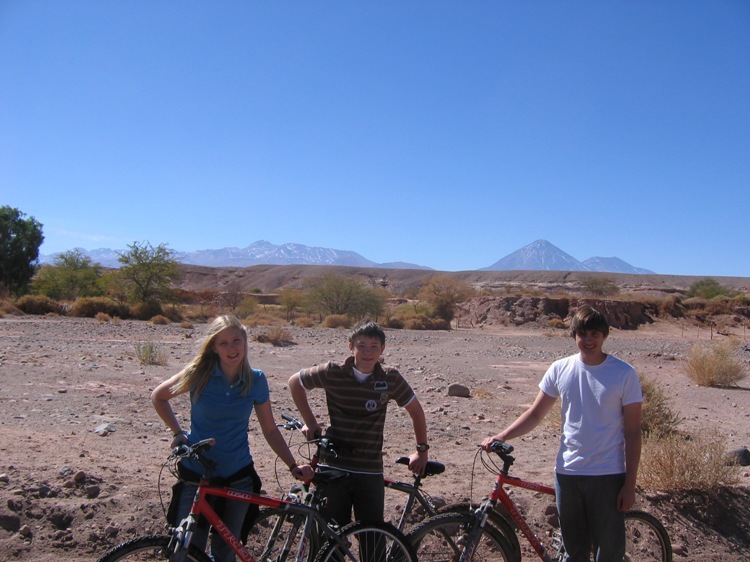
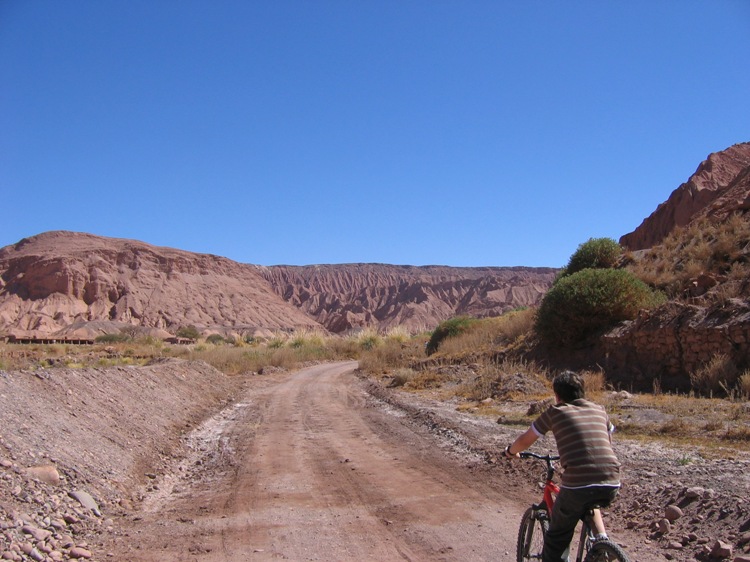
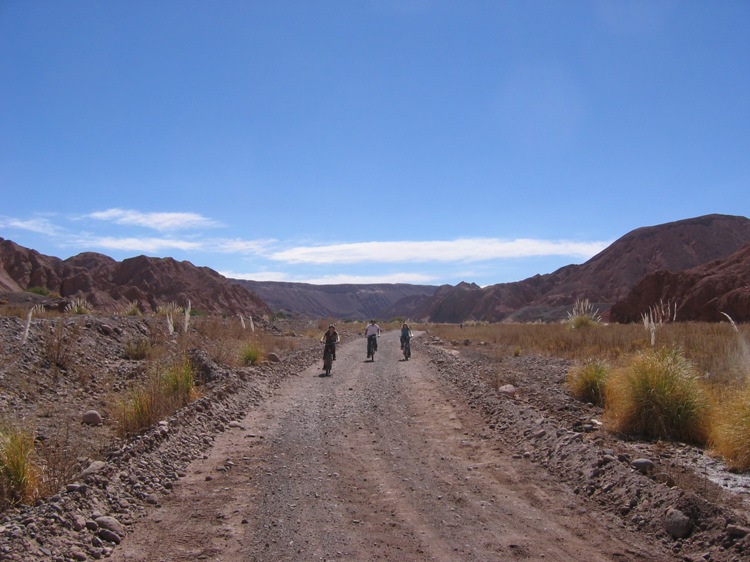
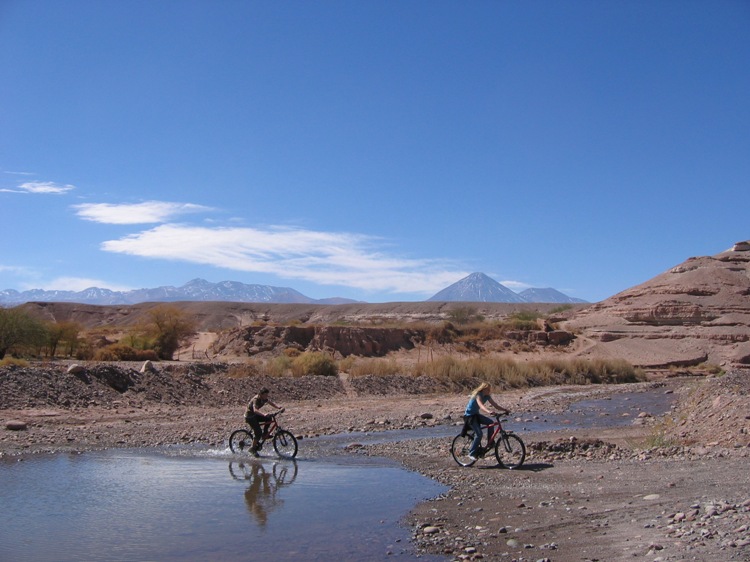
Riding bikes just north of town.
Monday we retrieved the truck from the parking lot and drove an hour south of San Pedro to visit the massive Salar de Atacama (the biggest salt flat in all of Chile). After trudging around taking pictures, intermingling with a few tour-bus groups, we returned the the truck to decide what to do next. The tour busses all turned north to head back towards San Pedro. We took this as a good indication to turn south and go someplace that the tour busses didn't go.
After a little more than an hour we had arrived in the tiny pueblo of Peine (literally "Comb"). All of our guidebooks have pictures of some famous pre-historic rock art from Peine. One or more also mention that this place was one of the southern most outposts of the Inca empire and was located at the terminus of an important ancient traveling route. First we drove up the steep narrow main road into the center of town and found a public parking lot next to the tiny church and plaza. We parked near a large, empty (save for a napping driver), shiny green bus. Then we walked back downhill towards the "Archeological Site" sign we'd seen on the way up the hill. The sign pointed to a dusty path that led us to a rickety locked gate. The path continued past the gate through someone's backyard. Clearly they had gotten tired of the throngs of tourists (a few every other month?) who flock to Peine to see the rock art.
Lynn and I were not to be deterred. We walked over to the neighboring shack and gingerly tiptoed through their broken-glass littered ,"yard" around the obstacle gate and down to a dry creek bed which we could follow back to the path. The children screamed in terror thinking that we would be shot or attacked by some mongrel dog (or killer llama?). We told them to stop being scaredy-cats and to come along. They eventually came, after we had disappeared from sight. After a few more yards along the path, we encountered a reverse-facing old sign talking about 3 different sets of rock paintings. We could barely make out one small clump of paintings. They looked nowhere near as sharp or intriguing as the guidebook pictures. I wondered how long ago those pictures were taken, who vandalized, hid, or otherwise removed/remodeled them, and just when anyone in their right mind stopped driving more than an hour through the desert to get here to look at them! We had intended to cross over the ridge east of Peine to visit some lagoons, but two guys in a sedan told us that the dotted-line road on our map did not go through. No serious problem - we simply drove back to San Pedro and had a good dinner. The green bus, empty, left the parking lot just ahead of us to head back to Calama.
This water-filled break in the crusty desert floor (picture below) is called a quebrada. San Pedro de Atacama sits in the Altiplano de Atacama, a high plane situated between the Andean and Salar cordilleras. All rainfall (most of it happens in the summer months which are also known as "Bolivian Winter.") that falls on the altiplano-interior slope of these two mountain ridges has no outlet to any ocean. It resurfaces in "fresh"-water springs (16 of them at or near San Pedro), or percolates to the surface to evaporate, leaving vast salt mineral deposits in the Salar de Atacama.
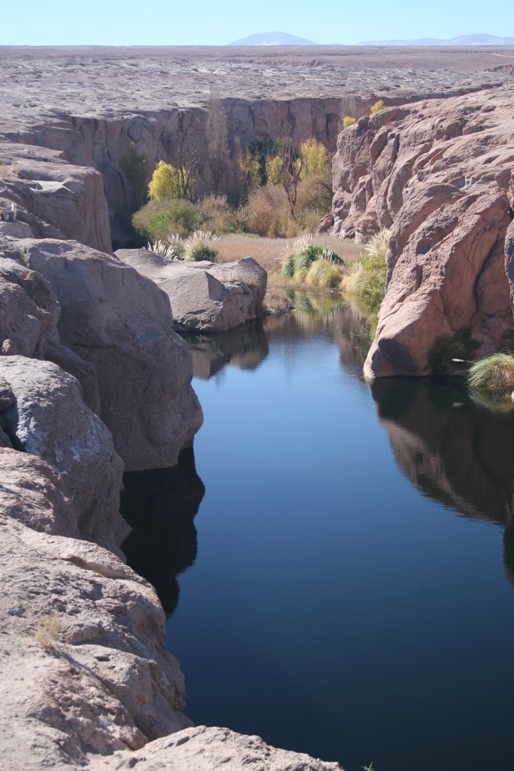
Quebrada.
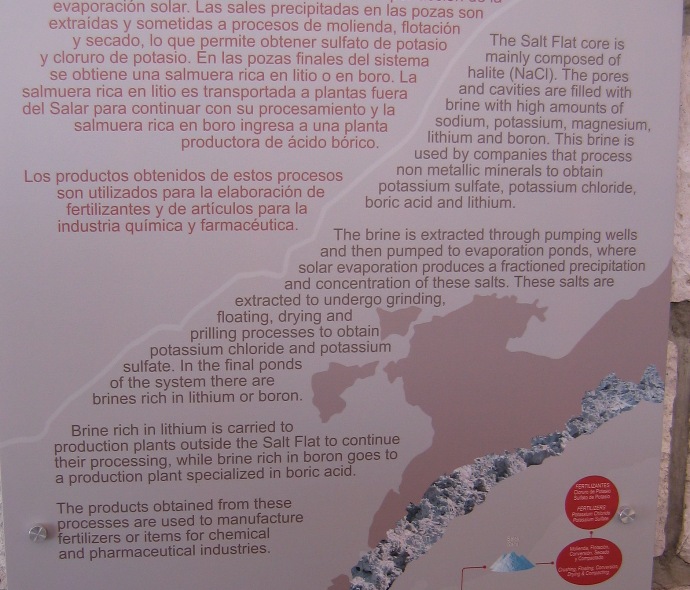
Description of the Salar de Atacama.
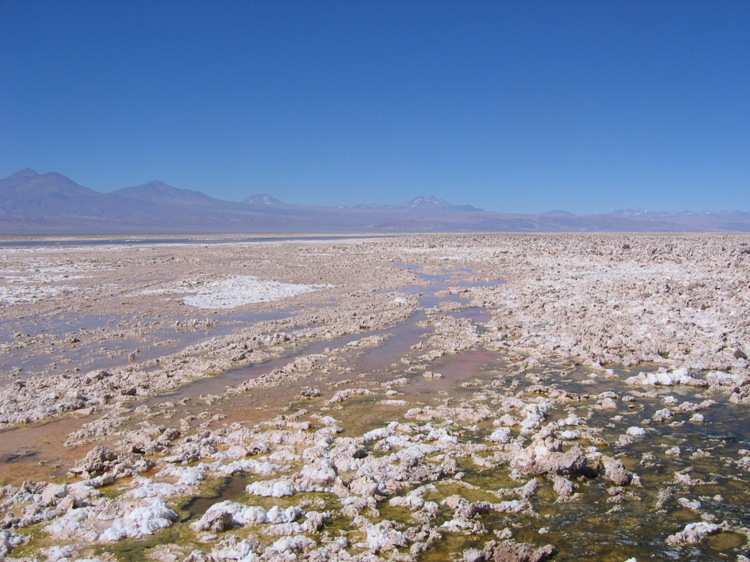
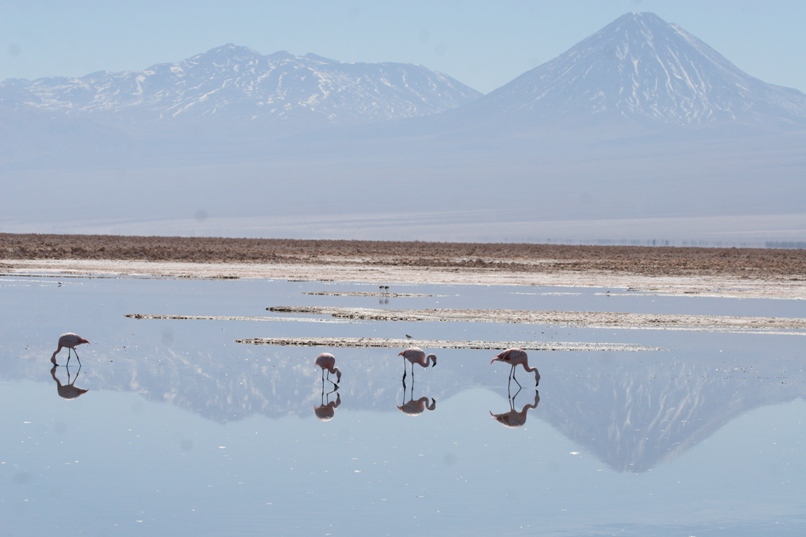
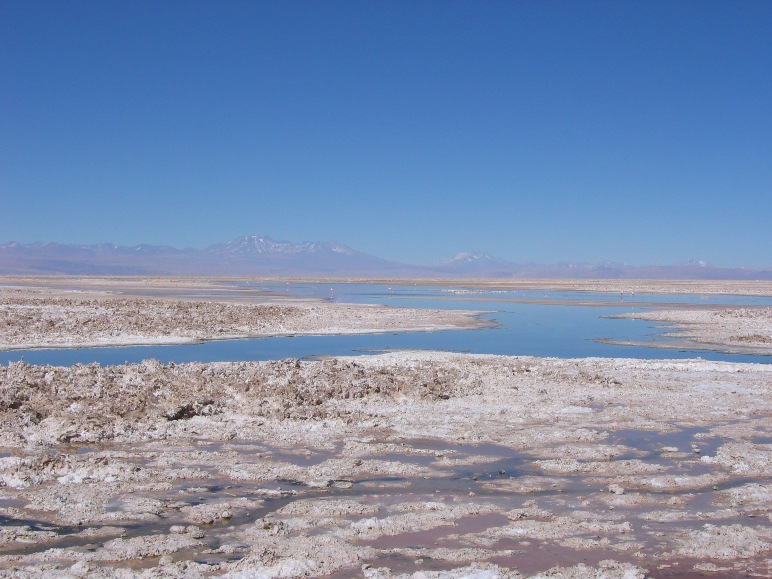
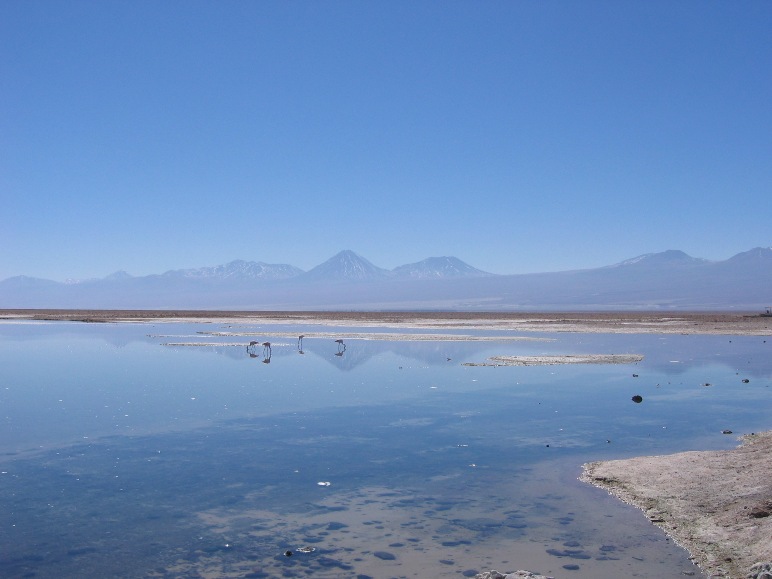
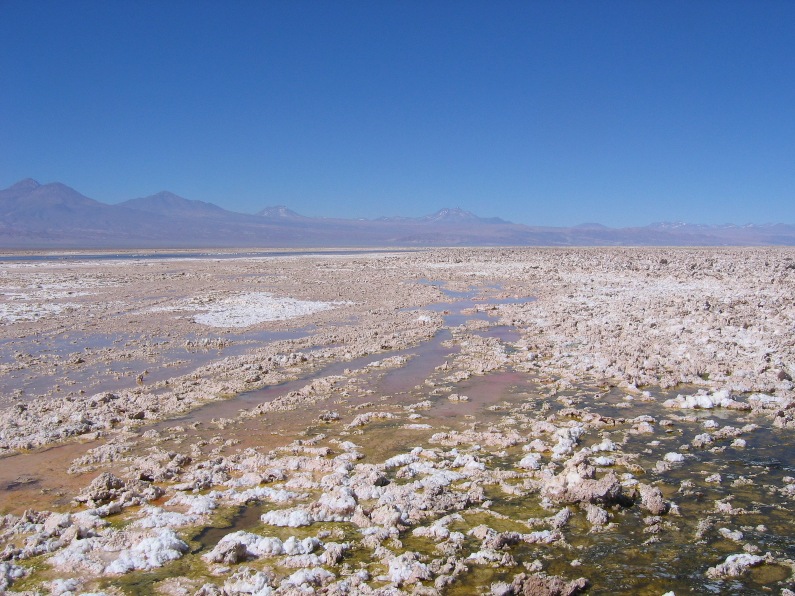
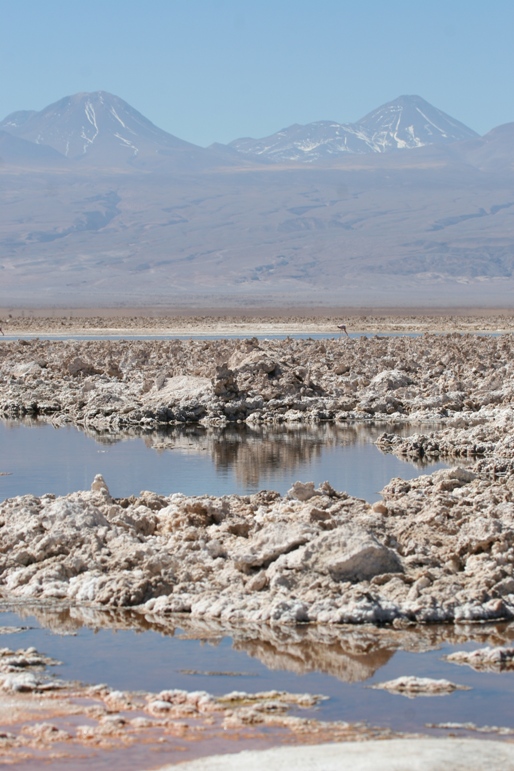
Pictures of the Salar de Atacama. Here we were finally able to see the third species of Flamingo that live in the Chilean Altiplano - the "Chilean flamingo." Perhaps the Chilean flamingos missing from Salar de Surire had only come down here instead of flying off to Bolivia. This is clearly one place you do not want to be stranded without proper, sturdy footwear.
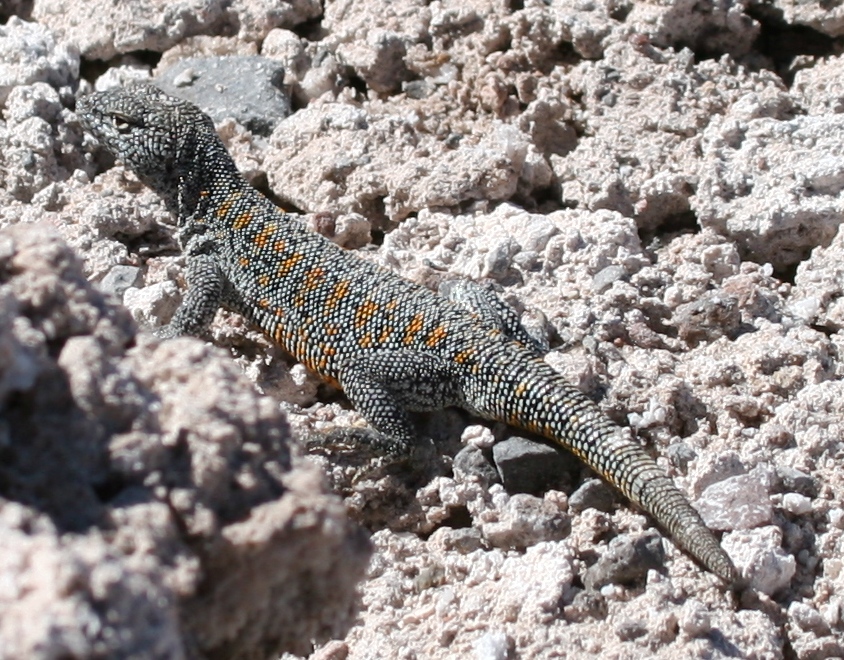
There are a few amazing species of fauna that survive (thrive?) in the salar, like this lizard. There is only one mammal, I tiny mouse that has adapted from its nominal vegetarian diet to survive in the salar. Here it eats bugs.
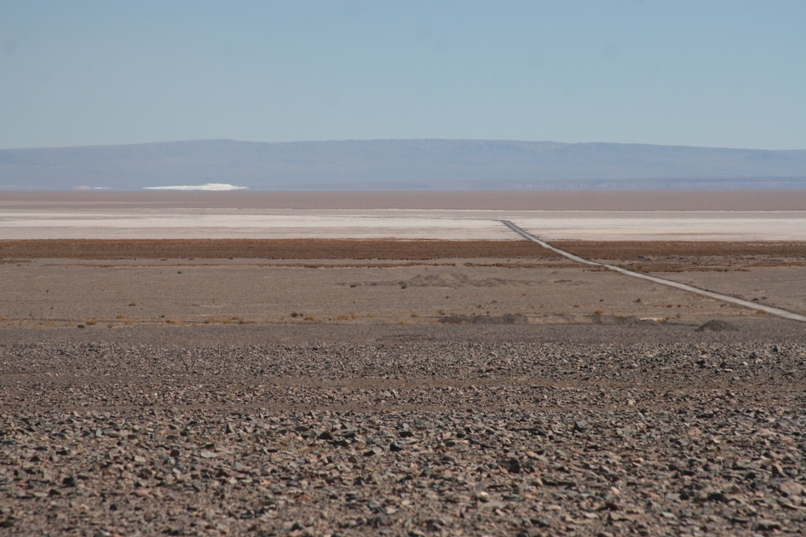
Driving to Peine.
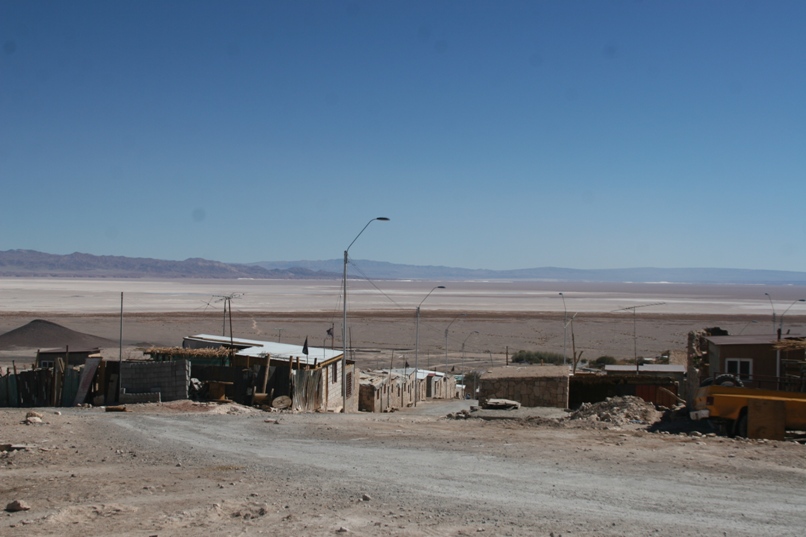
The invigorating and energetic town of Peine.
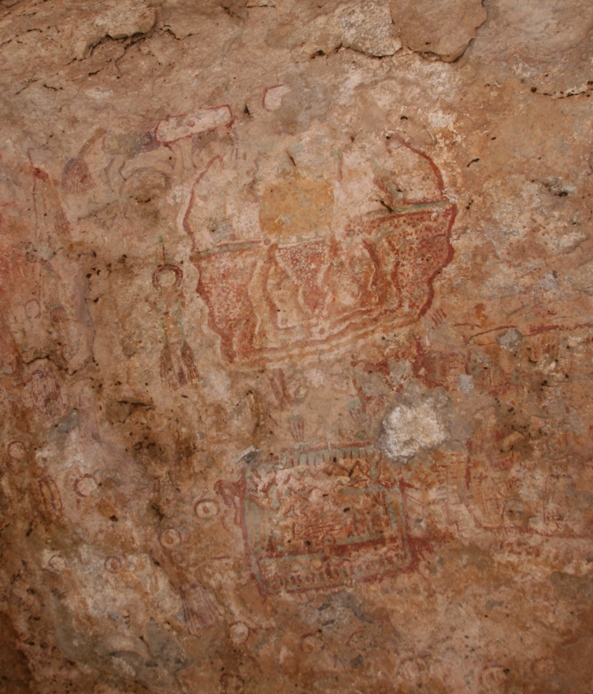
The rock art.
Today we took a 3 hour horseback ride to "Valle del Muerte" (Death Valley). Unlike it's North-American namesake, this Death Valley is far above sea level. Everything about the day was wonderful - for four out of five of us. Anna suffered a migraine about half-way through the ride, and the trail guide radioed for a pick-up to come pick her up. Then she spent the afternoon recovering in bed. We all feel very sorry for her. She's the one who loves to ride horses!
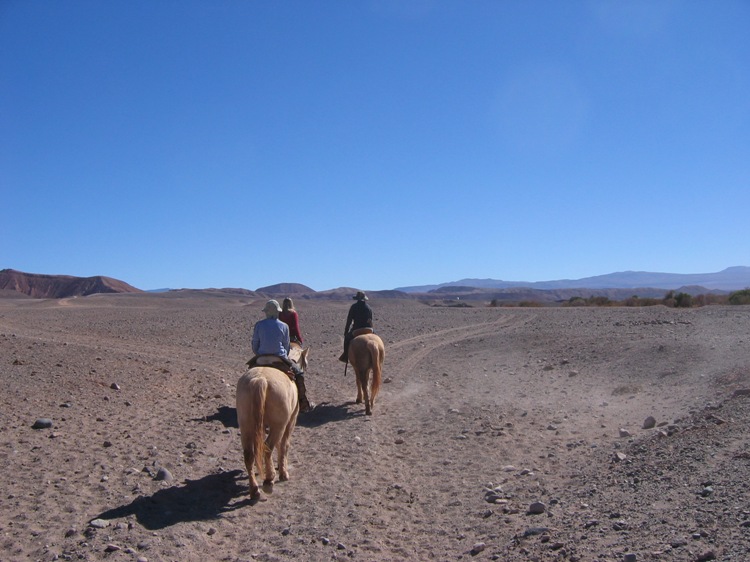
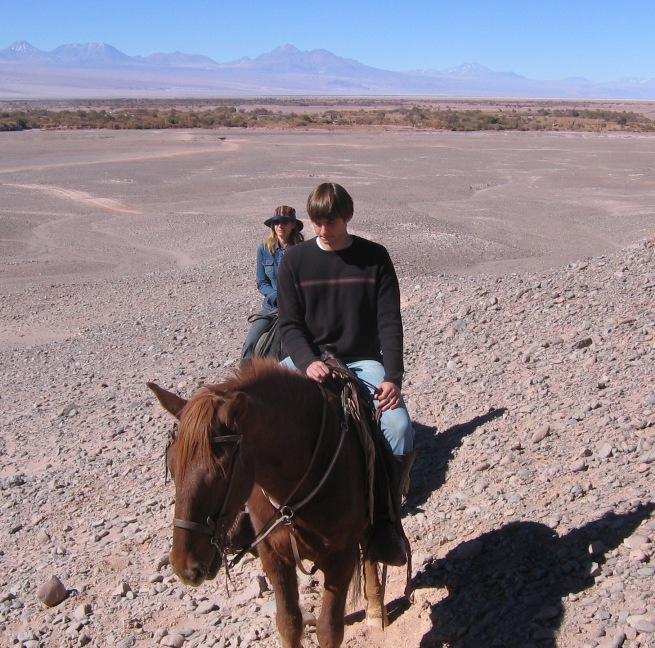
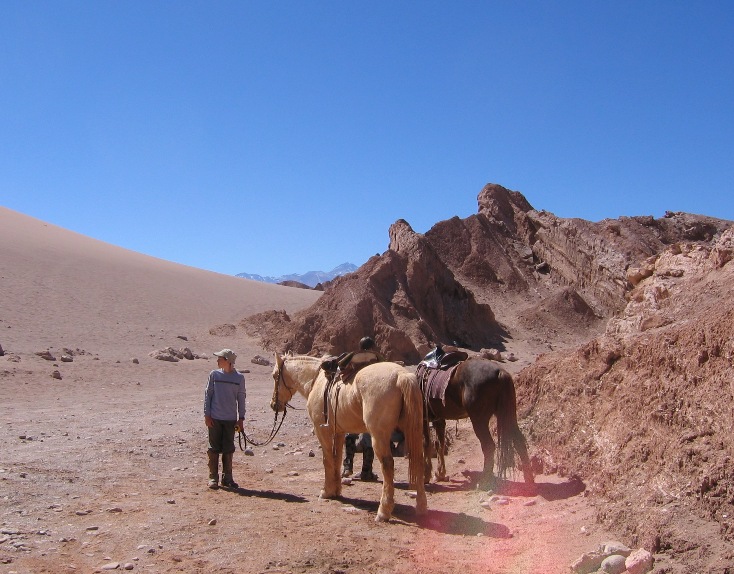
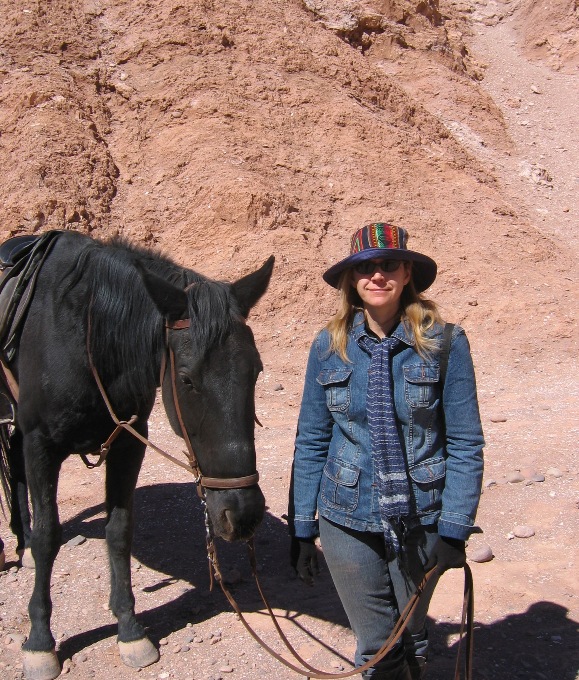
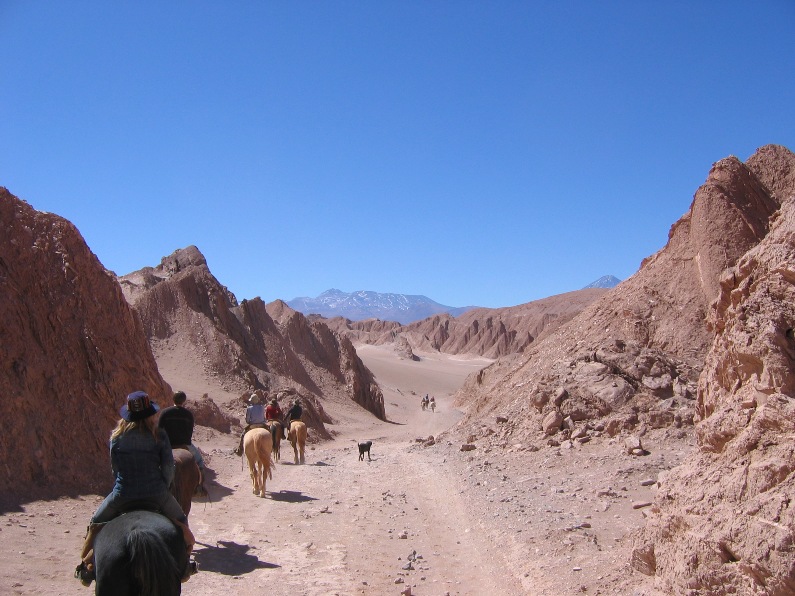
Riders.
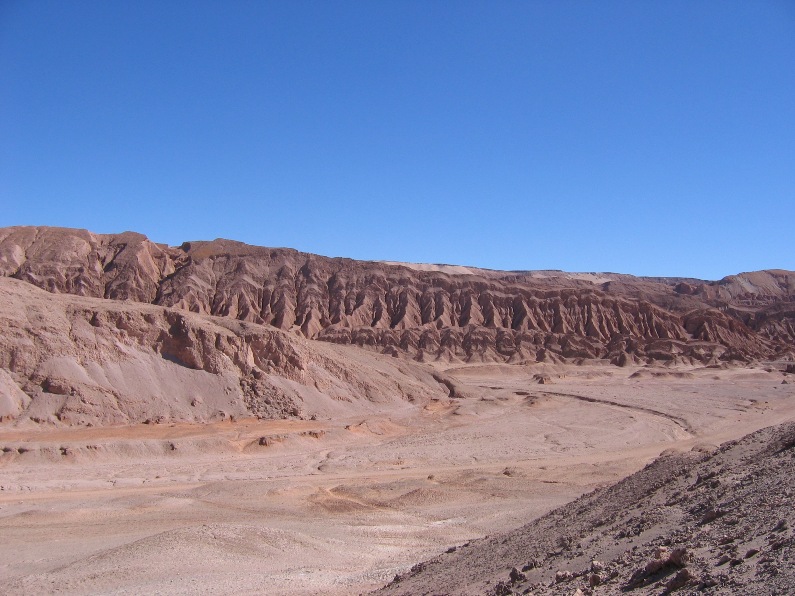
Valle del Muerte.
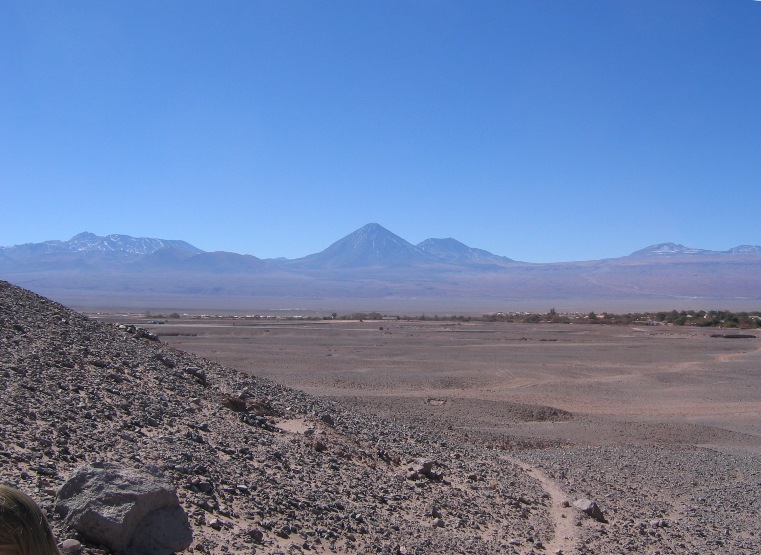
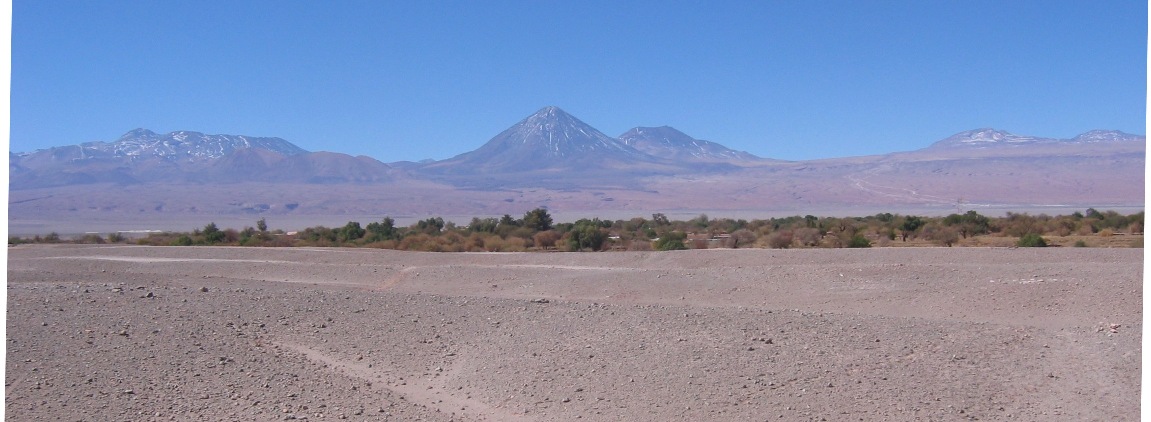
Pictures of the oasis San Pedro de Atacama. The most prominent volcano cone is called Licancabur - elevation just under 6000 meters. The Incas used to conduct ceremonies and leave offerings in the crater (my hasty research does not tell me what kind of offering!). The barely visible road heading over the pass to the right of the volcano leads to Argentina (just beyond the crest of the pass).
I put "fresh-water" in quotes earlier because I read somewhere that the spring water in San Pedro has arsenic levels 60 times higher than what is recommended "safe" by the World Health Organization. The local indigenous population has been surviving on this water for centuries, with little observable harmful side-effect. Us tourists drink bottled water or fruit juice.
We have more fun activities on the Agenda for later in the week, including visits to the famous Valle de la Luna, and a 5am departure to visit geysers (and more importantly, bathe in hot springs on the return trip). I just hope Anna has no more headache problems.
-Rolf